Unknown's avatar

About 4 Star Films

I am a film critic and historian preserving a love of good movies. Check out my blog, 4 Star Films, and follow me on Twitter @FourStarFilmFan or Letterboxd. Thank you for reading!

The Royal Tenenbaums (2001)

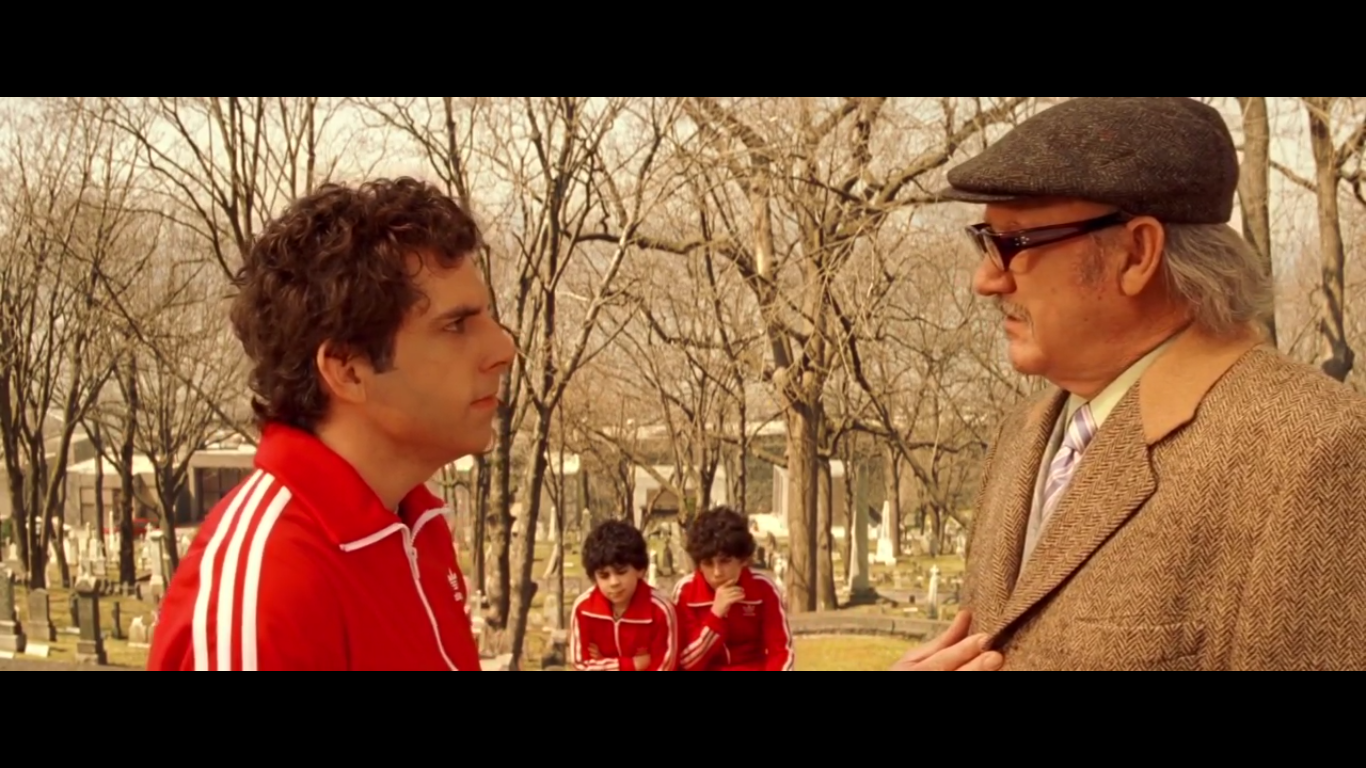
The Royal Tenenbaums maintains Anderson’s very literary style with narrative sensibilities that would crop up again in many of his movies including Moonrise Kingdom and Grand Budapest Hotel. It gives us a storybook reality firmly planted in the real world. Though he’s never seen onscreen, Alec Baldwin becomes an integral part of the story providing the voice of our narrator.

Gene Hackman is perfect for the role of Royal Tenenbaum, and it’s not surprising Anderson had him earmarked for the part. There’s an irascibility, even a callousness, to him that cannot totally quell his unquestionable charisma. By all accounts, Hackman was tough to deal with on set, but surely I’m not the only one who can think of countless movies where the actor was blustering or difficult; still, I could not stop watching him. It feels the same here. Because there is something genuine about his abrasiveness and his lying; we know people to be this way.

By now we are spoiled (or Anderson is spoiled) by amazing casts every time he makes a movie. However, this is the first time where it feels like he has assembled something special, from start to finish, and it really does feel like a cinematic family put together.

Although they spend most of their time in front of us as adults, the Tenenbaum children have core wounds and facades that prove easily identifiable. Anderson utilizes the voiceover as well as insert shots to reveal character early on. Most of their savant-like triumphs of childhood have given way to the mediocrity of adulthood. 

Richie (Luke Wilson) is still licking his wounds after a failed tennis career and looking to sort out complicated romantic feelings as he traipses around doing his best brown-haired Bjorn Borg impersonation. Margot’s (Gwyneth Paltrow) dark eyeliner and secret smoking habit feel like outcroppings of her own personal angst. She’s now married to a much older man (Bill Murray), one of many romantic partners in her fairly short life as a playwright of minor acclaim. 

Ben Stiller gives what initially feels like an uncharacteristic performance simply for the fact it’s not very charitable. He’s dealing with the death of his wife, the raising of two young sons, and bitterness toward a father who was always absent. Anjelica Huston and Danny Glover seem the most contented. She is the matriarch of the Tenenbaum household and he is her faithful accountant though they must both deal with the old bear, Royal himself after Henry proposes marriage.  It’s not an easy road to navigate for anyone. 

To say Anderson has watched The Gathering and constructed his plot is too dismissive. It’s true it follows this similar arc — a father reconciling with his children over his terminal cancer — but what’s important is how he’s able to express it in his own cinematic terms. Because it blends the sprawling family drama of something like The Magnificent Ambersons (1942) with the haunting depression of The Fire Within (1963) alongside countless other references. Still, there’s a specificity to his style and vision allowing it to grow and false start until it’s something else entirely.

There’s also always a matter-of-fact idiosyncrasy to his characters and, therefore, his plot developments. It’s what makes them interesting, mining these bits and pieces that at one time seem like one-note, throwaway gags and exposition, and yet they color his characters so distinctly.

There are BBs lodged in hands, lost fingers, people get shivved on the street corner, and we meet pet mice and a falcon named Mordecai. Even some characters like Eli Cash (Owen Wilson), Pagoda (Kumar Pallada), and Dudley (Stephen Lea Sheppard) feel like sidebars and afterthoughts who still manage to add something palpably absurd to the ensemble.

Although Anderson could not get the rights to some Beatles tunes, it would be remiss not to mention some of the impressive needle drops throughout from Charlie Brown and Nico to The Stones and Van Morrison. He uses the raucous fun of Paul Simon’s “Me and Julio Down by the Schoolyard” to encapsulate Hackman’s finest set of interactions with his grandsons. He lets them run wild, goof off, and really experience life like little boys are meant to.

However, the one choice that will remain the most impactful comes when Margot steps off The Green Line Bus to the sounds of “These Days.” It’s like a moment captured for us as Ritchie watches her come towards him, her hair perfectly fluttering in the breeze. Time all but stands still, and then we realize his feelings. He’s in love with her. It was an instant revelation for me. Because we see her through his eyes. 

There’s this immediate dissonance playing out in the background. She’s his adopted sister, right? This isn’t what’s normally supposed to happen between siblings, but that doesn’t stop his feelings from being genuine. It says so much in a single moment about both of them. We don’t need more. This one interaction informs the entire film going forward. 

For the rest of the movie, they must toil with these confusing pangs of love complicated by Margot’s uninhibited past and one of the most gutting suicide attempts ever captured on film. Despite this turmoil and even as Royal is outed and then castigated as a fraud, we are shown some form of restoration. It’s in the face of recurring and in some cases pent-up trauma leftover from an entire life thus far.

I won’t say everything is resolved. That wouldn’t be true. Royal is broke and becomes a doorman at a nearby hotel; there’s a car crash, and later a funeral. But there’s also a wedding and the family feels tighter and more together than they have been in years past. It’s not perfection and yet they have a newfound stasis, and since this is like a storybook, it only makes sense. We require an ending befitting the Tenenbaums. Thankfully we get it.

4/5 Stars

Rushmore (1998)

Through his quintessential use of camera, space, and symmetry, we already see the formation of Wes Anderson’s now easily attributed style incarnated in Rushmore. It makes us aware we are watching a movie just as it makes us keenly aware of the filmmaker. There is a meticulous storyboarded quality to it with telling POV and overhead shots laying the groundwork for his unmistakable aesthetic.

For some, this is a turn-off. It totally ruins the so-called suspension of disbelief. You don’t want to be reminded you are watching a  movie. You want to disappear into it. But Anderson’s style is so particular it’s hard not to marvel especially because it’s not simply a case of form over substance. This movie is about something meaningful.

Jason Schwartzmann proves himself an exquisite choice to play our lead. Max Fischer is a young teenager with such an impressive array of extracurriculars and side hobbies, he has no recourse to fail all his classes at Rushmore prep school. He’s too much of a driven, daydreamy kind of person to get stuck with his textbooks for hours on end. His aspirations seem to be focused on something more. 

One of those might be romantic love as the ancients would come to understand it. I think of the scene where he first makes the acquaintance of the pretty literature teacher, Ms. Cross (Olivia Williams) on the bleachers. Anderson frames them in individual shots, but then Max keeps on sliding out and back into the frame. It’s not in a continuous camera movement. Instead, these orchestrated moments add together to give us a sense of what’s going on – both good-humored and slightly awkward. 

But we must also talk about Bill Murray. I’m no Murray historian, but Rushmore and with it, the actor’s continuous collaboration with Anderson, seems to mark a distinct shift in his career. It may not be a Reinnaissance, but it effectively took an SNL phenomenon known for comedy films like Caddyshack and Ghostbuster, only to provide him a fresh dimension.

Perhaps it was always there before, but whether it was Anderson seeing it in Murray or Murray finding inspiration in Anderson’s material, I don’t see his work in movies like Lost in Translation or Broken Flowers coming to fruition without a spark.

It’s not that Murray is unfunny in any of these roles. Instead, like Robin Williams, Jim Carrey, and the like, he’s able to somehow take those comic eccentricities with his own core humanity, and make it deeply impactful.

In Rushmore, Murray gets his Dustin Hoffman “Graduate” moment submerged in the pool at his son’s birthday party. The allusion is straightforward enough. Meanwhile, Max goes and falls in love with his teacher — resurrects Latin class and tries to procure her some new aquarium tanks all as devoted acts of affection. He has other passions too.

He directs his own stage version of Serpico and the lifelike train noise and walkie-talkie sound effects mimic the attention to detail Anderson would have admired. But these are not all the stage elements. Because there’s a recurring sensibility that brings attention to the performance nature of the movie, whether it’s the curtains being pulled away with the changing of the months or Max’s never-ending thespian endeavors.

I’ve never known Luke Wilson’s filmography well, but I found his cameo almost endearing as he becomes the target of Max’s jealous and impudent ire. He’s not willing to relinquish Ms. Cross to any man even if he has no hold on her either as her junior.

This and other shenanigans get him expelled from Rushmore. Being caught smoking or failing his classes is far too mundane. He tears up the baseball field for the ground-breaking of his new aquarium. Thereafter he’s off to public school with a wounded heart, though he encounters several sympathetic spirits including Margaret Yang (Sara Tanaka).

Still, the movie becomes a love triangle with a 15-year-old and Murray’s grown man(child) going at it in their attempts to hurt one another like vengeful kids in the schoolyard. It proves how fickle they can be. But that’s not to say unlikeable. Because Herman and Max became friends and then turned into rivals. 

In fact, there’s a precociousness to Anderson’s adolescent subjects even as his adults have flaws and insecurities. It’s as if all his characters are on the same plane of existence. This is not Peanuts. There’s no chasm between the relatable kids and the unknowable adults. I’m not sure this makes it more realistic; Anderson does not strive for realism, but it reminds us that we all are not too dissimilar as people.

Dirk, Max’s most faithful friend, and Herman share a conversation near his car that in any other film would probably feel ludicrous; here they are able to speak to each other as equals, and they are not the only ones given this luxury.

It’s easy to feel sympathy for Rosemary because she has lost her husband, and she did not ask for Max to fall in love with her. She tries to navigate their interactions with warmth, but his boyish impulses and irrepressible spirit mean he’s never going to let her be. He can’t comprehend how one does that.  For a teenager, she must feel like Mrs. Robinson. In her own world, she’s just another confused and lonely person trying to make sense of things. 

At first, I was trying to figure out the purpose of the soundtrack: It’s full of agreeable British Invasion tracks from the likes of Chad & Jeremy or The Faces. The easiest answer is how it comes to represent nostalgia but also the prep school malaise. It’s Anderson’s version of the Simon and Garfunkel soundtrack for Dustin Hoffman — compiled for a slightly different segment of society and an emerging generation. It exudes a contemplative melancholy not without its quirks and humor.

From my vantage point, I can only watch Rushmore retroactively, having seen much of Anderson’s career unfold, but it does give me a different way in which to appreciate it. Here we see him coming into his own; he has a Truffaut-like eagerness for the cinema, and money hardly seems to be the signifier or measure of his film’s success.

Now he commands larger budgets and even more intricate and sprawling productions, but Rushmore shows what he is able to do as a filmmaker with his own sense of inventiveness, flair, and surprising resonance no matter the restraints put upon him.

For me, this is often the measure of a sublime director, and Anderson signaled his ambitions to the world with this movie. I found myself instantly fond of the film, and I can see this affinity only growing with time. Again, I appreciate the allusiveness of his films — how they are steeped in movie tradition and what feels like technical virtuosity — but even more so I feel compelled by these particular characters. What’s more, I want the best for them.

4.5/5 Stars

A Star is Born (1937) and Another Star Burns Out


A Star is Born is a Hollywood archetype and it’s a prevalent one at that. Why else would we have so many remakes — one as recently as 2018 — because the Hollywood success story is something that captivates us all. If we haven’t ever dreamed of being in the movies, then we’ve at least been taken with their magic. I never was in a hurry to watch any of the adaptations, probably because there was a sense I already knew them.

One of the shards of inspiration that gave me a greater interest in this story had to be the early relationship between Barbara Stanwyck and Frank Fay. For those unfamiliar, Fay was the father of modern standup comics on the vaudeville circuit and was also wildly popular in his day. Stanwyck married him when she was still an up-and-comer, but soon her blooming talent outpaced his as they headed in opposite directions. 

Although there’s something inherently tragic in this trajectory — perfect for a moving cinematic drama — it should be noted that fact wasn’t completely aligned with fiction. Because Fay was also an abusive alcoholic with a mercurial temper and fascist tendencies. If he didn’t exactly deserve his destitution in later years, then Fay wasn’t doing himself any favors. Some people are lost to time for good reason. 

William A. Wellman doesn’t immediately pop out as being a splendid match for the material but you could easily suggest this is a Selznick picture first and foremost as he showcases the latest Technicolor processes still being optimized in preparation for Gone with the Wind only a couple years later. 

As alluded to already, the picture is pregnant with the prototypical Hollywood fairy tale. Esther Blodgett is bitten by the Hollywood bug like many an impressionable young woman. It’s rather curious seeing Janet Gaynor in the part since she is a talent held over from Hollywood’s earliest days. I’m thinking of the likes of Sunrise and Seventh Heaven, but there’s also something apropos in this. Gaynor is such a sweet incandescent face and hearing her talk in the pictures makes her even more endearing. She’s robed in sweetness. We want her to succeed. 

In this way, we share the sentiments of her grandmother (May Robson), who reminds her of the differences between dreaming and doing, given her own upbringing as a pioneer. Going out west is a new frontier — a new wilderness to be conquered and many folks have been trying to cow it ever since. Screen acting feels positively twee compared to the furies of the pioneers, but the feeling remains true. 

Hollywood is introduced with the musical motif “California Here We Come” and the visuals are just as important: namely, Grauman Chinese. The footprints of Jean Harlow, Joe E. Brown, Harold Lloyd, Shirley Temple, and Eddie Cantor all canonized out front for the doting public. For now, Esther is one of them though she aspires to something more. For now, she is content following their footsteps and walking on the same hallowed ground where they tread. The chances are 1 in 100,000, but she’s the kind of idealistic girl not listening to her family, not listening to industry naysayers, and believing she is the one. 

Maybe she could be like the great Norman Maine (Frederic March); she spots him one evening out with her newfound beau (Andy Devine), and the acclaimed star is soused and belligerent at the Hollywood Bowl. The initial impression of the world is that there’s a spareness to it. In her boarding house, you never see any other tenants, only the skeptical desk clerk (Edgar Kennedy); this isn’t Stage Door, and when she gets a gig as a waitress for the Hollywood Elite, the party feels relaxed, hardly bustling as one might imagine.

Eventually, the break does come. She meets Maine at the very same party. She strikes up a relationship. Not in an opportunistic way. She never loses her sincerity, and she gets a screen test. In the aftermath, Esther is reimagined as Vicky Lester. 

The preview screening forecasts her as the next big talent, and for Maine, the writing is already on the wall. A star is born before our eyes and Norman is on the way out. Her ascension as media darling continues as he continues to slide into has-been territory.

Lionel Stander is their PR man bloated with every colossal idea in the book from padding starlets’ backstories, writing big news spreads about their private lives, and making a big to-do so everyone and their mother knows about them. It’s all Maine and Lester can do to keep him out of their business so they can live their personal life in peace, together.

For a time they are happy. Her talents continue to proliferate until the day that she takes home the Academy Award, but it’s too late. Norman is already finished. It’s sad really as he’s stashed away in a sanitarium to steady himself and beat his drinking habit. The industry has a convenient habit of burying those things it doesn’t want anymore.

When he comes out of rehabilitation, he’s at Santa Anita drinking ginger ale and walking around like a stale star of yesteryear. Not a smidgeon of respect from anyone. His old publicity man Libby gets ugly, exhibiting a great amount of relish dressing down the former heavyweight. He’s not simply dismissive. He’s incisive and cruel (even if Maine did bring most of it upon himself).

One of the few times it feels crowded is at the racetrack now that he’s a walking social pariah. It’s a pointed bit of staging as crowds all but materialize to emphasize his public ignominy. The irony isn’t lost on us because the biggest crowd he’ll draw comes only when he’s gone for good.

Personally, I’m partial to the comic proclivities of What Price Hollywood? but there’s something quintessential and iconic about this narrative even as it was remade countless times and was a loose reworking itself. It speaks to all the dreams and devastations of the Hollywood industry, highlighting them in all their complexities, while still managing to revel in them, in part, due to the coloring of the world. There’s something beautiful about this picture totally overwhelming any of the ugliness.

When we talk about beauty it’s not simply about a palette or elegance; this has to do with people and themes. Janet Gaynor for one and her love played out on the screen for her husband. It’s a continual reminder that the Hollywood mythos was not a new phenomenon and the industry was very well aware of the aura and the narrative it was projecting. It’s movies like A Star is Born putting Hollywood in dialogue with itself. Over 80 years later and we’re still engaging in much the same dialogue.

Although George Cukor may have passed on directing A Star is Born after having done What Price Hollywood?, there is something fitting in him taking the reins on Judy Garland’s musical version in 1954. It’s like the story continually reinvents itself for ensuing generations. Because if All About Eve feels more like our jaded reality, I think all of us want to believe in our heart of hearts that we can be that one star shining brightly. Then, we must ask, what star must die to make way for us?

4/5 Stars

Ladies They Talk About (1933): Starring Barbara Stanwyck

Ladies_They_Talk_About

“Too much deaconing took all the sweetness out of me” – Barbara Stanwyck as Nan Taylor

From its opening moments, the movie feels like a  fine prelude to Baby Face for Barbara Stanwyck, who flaunts her feminine wiles and indecent levels of charisma as a gangster’s moll.

After sending the police on a wild goose chase with an erroneous tip, she runs interference, schmoozing her way past the bank security guard. He obviously ignores protocol and normal operating hours in deference to a pretty face. 

Soon the thugs in the idling getaway car burst in and get down to business raiding the establishment and their inside man — actually their inside woman — plays the damsel in distress. She plays her part quite well fainting on the spot. But when a police detective comes onto the scene, her resourcefulness runs out. He’s familiar with her rap sheet and all of sudden she’s left holding the bag. Stanwyck’s made her M.O. quite clear. 

In stark contrast, the film introduces pious David Slade (Preston Foster), a young man on a righteous tirade against dirty politics, and he takes to the radio waves to mobilize the votes of the public with an “Old Fashioned Revival.” He’s the kind of principled, tough-on-crime type of person, who becomes a thorn in the backside of miscreants and city officials alike. Because he’s more than prepared to shake up the status quo. 

The narrative strands are tied together by our two leads because they have a shared past — from the same town no less — although they’ve followed starkly different paths. Nan rebelled against her father’s religiosity, and it led to a life in reform school. There are still fragments of goodness in her, and they make Slade fall in love with her. He sees only her innocence, all but ignorant of her past sins. 

One of the best sequences in the movie is understated — completely focused on Stanwycks’s emotive face as she finally levels with him about her past sins. Here she is being real for the first time and her savior takes offense. He thinks he’s been used. All we see are her eyes cast upwards before she senses the movement as he huffs away to his desk. It’s such a tiny moment within the film but how it’s articulated exemplifies such a lovely bit of nuance.

Because it’s imperative Stanwyck treads this line between vice and virtue as she gets caught between a man who wants her and a district attorney who wants to keep his job. However, she feels betrayed and castigated for finally laying herself bare. The window for them is closing. 

After opening up, she hardens again, closing up like a steel trap; this is what she knows. It’s a defense mechanism, and she’s not going to let the world hurt her anymore. Even if it means a prison sentence.

San Quentin Penitentiary feels a bit like the playground with everyone eyeing and feeling out the fresh meat. Nan throws her weight around not taking any flack from the “Daffodils” especially when it’s Slade speaking on the other end of the tube. Everything she loathes in life is exemplified in Sister Susie (Dorothy Burgess) a former sinner who now is hopelessly devoted to Slade’s righteous war. 

Nan is far more chummy with Linda, a fellow inmate who obliges by showing her the ropes. This is hardly what I was expecting from Ladies They Talk About; it becomes a bona fide story about incarcerated women. It has all the beats. A highlight is watching Stawnyck give a massive wallop to her rival even as she acclimates to life and earns a rapport with such chipper lifers as Aunt Maggie (Maude Eburne). 

Lillian Roth plays her streetwise yet amiable second banana with a casual charm. Doing some quick tabulation, my mind went to Susan Hayward and her role in I Want to Live. A few years after that she would actually play Roth in the biopic treatment of her life I’ll Cry Tomorrow. It’s nothing more than a trifle of an observation.

But a movie that started with a brazen bank robbery, must include an Alcatraz-level escape attempt. Once more Nan finds herself being the inside woman joining up with her old cronies. It looks like the movie can only have a tragic fall for Nan Taylor. She bides her time in the clink just to get another chance at the outside — an opportunity to face her old rival — and give him the business. 

Sure enough, she’s back at “The Old-Fashioned Revival,” runs into an old friend, and enters the reverent proceedings with a gun. There’s only one place this drama is going. That is until it gets maudlin. Although perhaps this is too harsh because, for once, the story relinquishes puritan religiosity for agape love — a sacrificial love that holds no record of wrongs. Given what it is in terms of genre, mixing a wayward woman picture with crime and prison drama, Ladies They Talk About is a hardy recommend if only for Stanwyck’s talents. 

There are some actresses you could watch in just about anything because they take on all sorts of roles and no matter the breadth or the make-up of the characters, they seem to intuit and then embody the humanity found therein. If the moral dichotomy of the movie is obvious and the tropes easy enough to guess, then Stanwyck elevates the material to a degree and actually makes us care for a moment, long enough to enjoy the thrills. It’s a solid Warner Bros. picture thanks in part to her. 

3.5/5 Stars

What Price Hollywood? (1932): Starring Constance Bennett

What-Price-Hollywood-Sherman-Bennett

Here is a film so completely attuned to Hollywood celebrity and fandom in its heyday. We open on Hollywood fashion magazines full of stockings and lipstick, and glossies of Greta Garbo & Clark Gable. Then, Mary Evans (Constance Bennett) pushes her retractable bed into the wall to head off to her shift and our dramatic situation is made instantly identifiable. 

She’s not there yet, but she has aspirations to be under the bright lights someday. For now, she frequents Hollywood haunts like the legendary Brown Derby, although she gets in by the back way — through the kitchen. You see, she’s a waitress there. She’s like so many bright-eyed starlets before and after her — even to this present day — looking for their big break. 

In her case, it comes thanks to a veteran director, Max Carey, whom she waits on. Lowell Sherman is not altogether well-remembered today, but he has a smoky idiosyncratic charm about him playing well off Bennett’s vivacity.

He’s not quite the eccentric heights of late-period John Barrymore nor is he equal to the quipping suavity of William Powell, but his career is as remarkable as it was preempted. Not only was he an actor but also a director of such films as She Done Him Wrong and Morning Glory. This was before his sudden passing in 1934.

The fact that Hollywood always seems self-absorbed and preoccupied with its own mystique and inner workings actually bodes well for all those who desire a microscope to see how the industry actually functioned in the past. For this reason alone What Price Hollywood is a lark from the get-go.

Through her cajoling and giddy persistence, Mary gets her bit part, works tirelessly on her craft, and it gets notices. During the rushes, she’s made a contract player on the spot by the demonstrative Mr. Sax, who offers her a notorious 7-year contract. Far from feeling like a straight jacket, it seems to encapsulate her life’s ambition. She’s on cloud nine even as Carey looks on wryly, sunken down in his theater seat. He’s seen this film before. 

You Ask Me! gossip column supplies juicy bits of exposition all throughout the movie charting the rise and fall of our stars. Mary begins her ascension in the industry even as Carey begins to falter. His films are over budget, he’s a bit temperamental, and his drinking problem has gone off the rails.

These are the obvious beats of melodrama, but in the hands of George Cukor, still an up-and-coming director exerting himself, the story is allowed to play like something more. There’s a lot of good-humored charm, but it’s not just about laughs. At the same time, because it leads with this kind of playful screwball sensibility, we never totally enter that perilous territory of overwrought melodrama. It feels quite light on its feet in all circumstances.

Mary has spunk flying out of her left and right, and it sees her straight to the top. Her first big picture gets her mixed up with a polo-playing playboy. Not only is Lonny Borden (Neil Hamilton) rich and dashingly handsome, but he’s also rather forthright. After setting up an extraordinary dinner, he’s not about to be stood up, and he pulls his date right out of bed to dine with our heroine kicking and screaming her way to a luxuriant dinner for two. What a lovely way it is to do romance, at least in the movies.  

The revelations continue as we get to stand with the grips and the stagehands behind the scenes of the magical world of Classic Hollywood. When Bennett sings her French torch song and we see the camera coming toward her, the light nearby and the spotlights up above shining down, it offers such a delightful visual anatomy of a scene.

While not quite Casablanca, we are afforded a different kind of atmosphere. It gives it breadth outside the bounds of typical movie scenes because we are seeing both what’s in front of and behind the camera in equal measures. It also gives Cukor greater narrative freedom, and he can show us more as Mary’s personal and professional life bleed into one. 

Although Max Carey and Lonny Borden never quite play as romantic rivals — the movie never aspires to be that kind of tripe — they do war for Mary’s affections because she has a soft spot for them both. The director and dear friend who got her into the business; the man who discovered her when she was a nobody, and then the other man who swept her off her feet. 

What Price Hollywood?, like so many other such examinations, must chart both a shooting star and a falling star. Mary wins her Oscar. Max Carey is now an untouchable drunk with no place left in the business. Mary remains his only friend even as her marriage takes a nosedive, and she’s forced to soldier on as a single mother. She’s a highly successful mother but alone nonetheless. 

In the final act, it looks like we might have spoken too soon. We’ve seen this melodrama coming from miles away. It’s embedded in the rhetorical evocation of the title. Mary is beside herself with the gossip and the baseless slander of the fickle journalist and viewing public. Now she only has one friend: the old softie Julius Saxe. The public will make you and break you. It’s true. 

But the movie doesn’t end in the pits. This might be the key. Forget a sudden move to Paris that feels all too convenient or another all too expected happy ending. In some ways, it stays true to the overarching mood of the picture. At its best, it channels the effervescence of Constance Bennett and reminds us why she was one of the unsung comediennes, and one of the unsung talents, of the 1930s. 

4/5 Stars

Show People (1928): Marion Davies Laughs

Some might recall one of the reasons given for Citizen Kane not actually being based on William Randolph Hearst is Welles’s assertion that Marion Davies was no washed-up actress being propped up by her influential husband.

In fact, it’s easy to imagine Hearst being more like a Howard Hughes, hindering careers with his meddling more than he helped them. However, up until this point, I had no way of knowing, aside from hearsay passed down through generations. Thankfully, with the medium of the movies, as long as there are artifacts left over, we’re able to draw our own conclusions.

King Vidor’s Show People is such a film for Marion Davies and now that I’ve seen it, there’s an opportunity to put the Kane myth to rest of my own accord. While I don’t know if I could quite call Davies a luminescent talent, what becomes even more evident is her sense of humor. She’s able to laugh at herself and do a send-up, but far from subjecting her to criticism, it allows her to gain more of the audience’s good graces.

Perhaps I only have a burr in my sandal — holding a rather jaundiced view of Hearst — however, it seems to me, he could not understand the movies with the good-humor of his mistress. He was afraid that she would be betrayed by comedy. It makes her look all the better over 90 years later.

The world is quickly introduced as one might expect with your prototypical portrait of Hollywood: the names emblazoned on all the billboards and everyone is looking to make it big at one of the studios. Southern gal Peggy Pepper (Marion Davies) comes out west with her father, bright-eyed and bushy-tailed. They don’t know any better, driving up to the studio gate as nice as you please, ready to get into pictures.

From the studio lot to the casting office, it’s an eye-opening experience to see the world as it was in 1928, fabricated for the movie mills of Hollywood or not. There’s a factory-like industry about it, but also the kind of bustling excitement we attribute to the movies when the industry was still in its infancy and the landscape was still wide-open enough that it feels like a Peggy Pepper can still make it.

Of course, even back then, it wasn’t a cakewalk, and she needs a way in. In the commissary, she and her father meet the madcap commoner Billy (William Haines) with a giant grin on his face and a friendly boast to help her crash the movies.

She shows up at Comet Studios where Billy’s talents are enlisted as a clown, and she gets a bit of a rude awakening if she hasn’t already been partially disillusioned by Hollywood. It’s not exactly becoming to find yourself sprayed in the face with seltzer water. Hearst probably wasn’t too keen on it, but Davies wears it well, and her audience behind the camera breaks out in belly laughs.

It’s fascinating to see Show People playing with this very concrete dialectic between the merits of drama vs comedy, which no doubt has been up for contention since the dawn of theatrical performance.

There’s often this unfair dichotomy between real art as opposed to content that makes people laugh and makes them happy. In this man’s opinion, comedy is one of the most underappreciated of the arts; it’s hard to be funny on cue. Penny and Billy sit in on a movie preview in front of Mr. and Mrs. Audience, and it’s in this environment — even frequented by their director — where they see the honest reactions of the general public. There’s nothing quite like it.

As Show People progresses, the well-worn archetypes feel like cliches because we’ve witnessed them for generations. It’s certainly familiar in one of the most persistent stories in Hollywood lore: A Star is Born. How many times have we seen it?

It’s inevitable that our two youthful talents — now deeply fond of one another — will be forced to traverse divergent paths laid out before them. Penny finds herself a highly sought-after starlet, and she doesn’t want to leave her man, but there’s no place for him. He takes it on the chin good-naturedly.

But time has certain effects. It changes Penny. Not only is she under contract at a studio known for high drama even taking on a more elegant moniker: Patricia Pepoire. More importantly, she’s become an incorrigible prima donna with an insipid sense of entitlement and self-importance. She’s not about to accept vulgarity or producers disturbing her equilibrium. All the life and vivacity Billy found in her seems to be gone. At the very least dormant.

He may still only be a clown doing stunts and she a highbrow moneymaking talent, but in the end, the audience is fickle. They are quick to turn on you. Who can you count on if not your friends? Show People‘s ending is too pat, but it’s probably a necessary conclusion. Penny skips out on a tasteless marriage for seltzer and custard pies in the face. Take your pick.

From a historical point of view, Vidor’s picture is crammed full of timely cameos — the most obvious to spot might be an autograph-seeking Charlie Chaplin (“Who Is That Little Guy?”). For that matter, silent heartthrob John Gilbert shows up multiple times on screen and in the flesh. It’s a definitive reminder that the celebrity cameo has been alive and well for a long time, particularly those involving Hollywood stars.

Because the laundry list of contemporary talents is quite long, which makes sense given Show People’s total engagement with Hollywood moviemaking and movie stars. One of its most prominent shots involves a track across a table during lunch as all sorts of personalities sit in one space. It might take some detective work for the modern viewer, but featured before us are the likes of Douglas Fairbanks, Norma Talmadge, and western star William S. Hart.

Similarly, Vidor gets an in-movie cameo playing against his leading lady — the real Marion Davies — and her alter ego catches them in action. Later, the director is shooting a war picture that might be a nod to the Big Parade, if only a fictitious rendition.

But we must return to that great monument of high comedy: Citizen Kane. Even if Hearst was convinced comedy would tank his mistress’s career, Davies shows a poise and confidence of spirit to give herself over to the laughs. The film’s dichotomy of comedy and drama plays out for us in real life. It ultimately paid heavy dividends at the box office, and Show People was one of the lingering successes of the silent cinema even as talkies were swarming the studios.

Although this was probably the pinnacle of her career, Davies also was not one of those trumped-up casualties of the revolutionized movie industry. Catch her in Going Hollywood across from a baby-faced Bing Crosby to find her talking (and alive and well). The same might not be said of William Randolph Hearst.

3.5/5 Stars

Note: The cut I viewed included a synchronized soundtrack similar to Sunrise: A Song of Two Humans.

The Bowery (1933) and Jumping Off Brooklyn Bridge

There is an immediate sense The Bowery was meant to capitalize on Wallace Beery and Jackie Cooper’s success in The Champ from the year prior, as well as the rising stock of George Raft after Scarface. In short, the creative paring works quite well because although Beery was the highest-paid talent at MGM, Raft proves himself to be a chipper and able sparring partner for his formidable colleague. 

The world being projected and explored is the relatively distant past of the Gay Nineties, and yet still recent enough to remain as a living memory for some contemporary audiences. The movie is capped off by a prologue touting the Bowery as “The Livest mile of the face of the globe,” and here we have our entry point into the turn-of-the-century milieu. 

Before The Rifleman, there was another Chuck Connors (Beery), who is a larger-than-life figure on the bowery with his bowler hat and brawny shoulders. He runs the local saloon, an expectantly raucous and bawdy place, it also carries with it a rather off-putting name. Strike one.

Of course, none of these folks care and why should they? They’re too busy knocking back a pint and ogling the floor show. And Connors is right in the middle of the daily bedlam. One of Beery’s favorite drinks is “boy-bin” in the local parlance. He’s also not above clubbing a woman who gets too touchy-feely with him. 

However, for all his boisterous show of bravado, he does have a soft spot. One of the most important people in his life is Swipes (Cooper) a young vagabond he adopted off the streets whose hobbies include throwing rocks at the Chinks. Strike two. Does it need to be said that, although these elements are period, they definitely don’t play now? Well, there you are. 

Despite, these immediate if realistic racial insensitivities, there is some instantly immersive world-building director Raoul Walsh synthesizes through a host of vignettes on the streets. It might only be a figment of my own mind, but there’s a reason Bowery sounds like Bowels because we’ve found ourselves in one of the lowliest, basest melting pots of the world.  

But there would be no movie without our two stars. If Beery opens the film and establishes himself, then George Raft comes right on his heels making an entrance of his own as Steve Brodie (Don’t ever say I don’t give you nothin’!). What they provide the movie is the simultaneous presence of two colossal movers and shakers in the local community. 

Beyond being snappy dressers, they are men of many hobbies and even bigger boasts. They’re both pugilistic promoters in the ring, and they run rival fire brigades on the side, which consequently are more like street gangs than civil servant assemblies. It’s all the better to whip up some brassy entertainment. 

The street brawl in the wake of a conflagration is extraordinarily choreographed as pure fist and brick-throwing chaos. While I’m not altogether enamored with the world, the ongoing sense of atmosphere is impressive in such moments of machismo.

What’s more, they become tempered and subsequently more complicated by the introduction of another character. Because the mantle of the movie is built off the trifecta of males, and they remain the focal point. However, then one Lucy Calhoun (Fay Wray) arrives on the scene. She’s a woman from Albany — a virtuous schoolteacher — who Chuck rescues from the depths of destitution. She’s eternally grateful and offers to clean house for him. The most telling outcome is the big man’s chivalry. 

It is a bit of a clash of cultures — she is not of this world — and it’s in part because of her vulnerability; he protects her from the wolves on the prowl. But if Lucy brings out another side of Chuck, the same might be said of Steve Brodie. He comes off as a brute in their opening encounter, everything we expect him to be, but then he warms and softens. And she does too.

She’s still devoted to Chuck (though Swipes can’t stand her much), but her romance with Steve starts to bloom. They have excursions out to the beach at Coney Island — romantic moments like that. The only question remaining is where will the movie go? 

For those familiar with the real-life Steve Brodie, it must escalate into a bet and a dare to jump off the Brooklyn Bridge, which he looks to weasel his way out of. Although, in the end, he’s forced to prove his mettle with the whole town gaping and the authorities on high alert. 

Walsh expertly understands the cadence of the scene with Brodie flying across the bridge in his carriage — the policeman sprinting after him in pursuit. Meanwhile, the director cuts across the panoply of humanity — the faces we know like Wray and Cooper — and the host of onlookers who fill out the world. It’s the strangest kind of social event, and yet how it’s delivered to us builds up the mounting tension of the moment.

Ultimately, Chuck loses at the hands of Brodie (and Carrie Nation!). His bar is flipped in the process. With his pride and joy taken away from him, and his gambling debts weighing him down, he winds up living a life of poverty as Brodie ascends and becomes the new grand man about town. The balance of power — their aggressive stalemate — has finally shifted, and there is a forlornness about it. What made them such formidable rivals before had to do with them both being on equal footing. It looks like one has finally won out. 

Being a proud man, Chuck isn’t quite over his vendetta, and knowing Brodie’s own wellspring of pride, they agree to a river barge face-off, man to man, just like the old days. But the most curious development is this. It’s summed up with only a few words: “Remember the Maine.” Suddenly patriotic fervor is afoot. There is a new enemy. Suddenly, the two sworn enemies make their amends.

Fay Wray is a mediator, and they agree to have themselves a lark in Cuba because with two palookas like them, the war’s bound to be over in a fortnight. So the Bowery’s greatest source of conflict simultaneously becomes its new hub of comedy and comradery as the rivalry evolves, and we get to see it turn. It’s yet another entry in the Walsh canon fully in tune with its own idea of fun. There’s never a sense this picture takes itself too seriously. 

I am not sure if the director had a certain preoccupation with the Gay Nineties from his youth or what have you — his filmography is very robust and equally diverse — but the Bowery certainly would pair nicely with the likes of Strawberry Blonde and Gentleman Jim in how they so readily evoke the era. Nothing speaks to that more than John L. Sullivan and a bit of temperance imposed by Carrie Nation.

4/5 Stars

Me and My Gal (1932): Spencer Tracy and Joan Bennett

Spencer Tracy falls easily into the role of an Irish cop on the beat, Danny Dolan, working in the heart of the pier on the Lower East Side. What stands out immediately is his humanity and good-natured benevolence extended to his neighbors. In a matter of minutes, he’s nabbed himself a banana, rescued a dog, and drummed up a bit of small talk with a pretty cashier (Joan Bennett).

The film itself provides a  fairly simple framework. Director Raoul Walsh finds himself sculpting a world out of characterizations and vignettes, not unlike future endeavors like Strawberry Blonde or Gentleman Jim. But it showcases precisely how a couple of weeks of shooting can translate into an enjoyable piece of work.

Dolan falls into company with a detective named Al (Adrian Morris) hanging around the docks and watching out for a big-time gangster named Duke Castanega. However, before they can roll out the welcome wagon, they get accosted and thoroughly distracted by the most persistent drunks in film history (Will Stanton). He’s in a perpetual state of belligerent inebriation only made funnier by the fact he’s probably the scrawniest character in the whole picture.

One of the other scenes bursting with life comes in the wake of the marriage of Kate Riley with her sister Helen (Bennett) by her side. Soon the minister has summed up the proceedings and every man looks to get a smooch from the bride before her nebbish husband can get in edgewise.

Soon the after-party is flowing with beer, belches, drumsticks, and boisterous conversation. Walsh pulls out a trick he would use later in Gentleman Jim where his characters speak to the camera. Actually, they speak over and past it and what it does is intuitive, bringing us into the fold of the movie. So right in this moment, we as an audience are there at the wedding experiencing the frenzy with everyone else.

The chemistry sparks early between Tracy and Bennett, and it slowly grows into a mutual appreciation. He does her a good deed at her sister’s wedding, turning a blind eye and earning points with her blustering father. Later, Danny and Helen trade advice: He straightens his new bowler and she stops chewing gum.

One of their lighter moments on the beat involves the aforementioned drunk in yet another altercation. This time they must defuse a confrontation involving a man who was slapped in the face with a fish. It doesn’t fall into the realm of high-brow comedy, but that doesn’t mean it can’t be delightful.

For Me and My Gal — like many films from bygone eras — also has standalone details we can look at from our current station in history and truly appreciate. A radio salesman pulls out all the tricks to get the Rileys to bite on his best merchandise. The budding couple eat vanilla ice cream together in the kitchen, and a cup of java is two bits.

Even better is the linguistic education. Sporting the new bowler, one asks the other “Well, how do I look?” They say “Jake”  with a playful flick of the brim and a superlative adjective is born. Likewise, the weighty insult getting hurled around on all sides is “beezock.” Look it up. 

In fact, nothing’s sacred. They take a few minutes to razz a contemporary moving picture where they say one thing out loud, and then a minute later express what they really think. The way they amuse themselves with this gag feels like unusual territory for the era as we hear their inner thoughts playing against their spoken words (in a prodding nod to the movie Strange Interlude). 

As he tugs her down and she plops on the couch next to him, they are such a wonderful portrait of romance so perfectly in sync. In these self-reflexive sequences, I couldn’t help but find my mind drifting to Joan Bennett and Spencer Tracy. They both had long and illustrious careers, and almost 20 years later they would play opposite one another in a starkly different picture: Father of the Bride.

For now, they are young and in love. Bursting with all sorts of sass and equally romantic elan. Take the scene later on when he charges into her hash house aiming to marry her, and she’s clattering around behind the counter giving him her glib repartee. It’s the way romance is supposed to play out and around all the cliché beats of wanted gangsters and what-have-you, these are the other elements of the movie that feel singular and almost transcendent.

These are the little “pieces of time” Jimmy Stewart said actors can give an audience. When they reach over the counter to kiss, the embrace sends both their feet shooting up in the air like a pair of cinderellas. Tracy’s a terribly genial chap, but he works all the better with an able sparring partner. Bennett has a whipsmart, blistering independence about her, and she’s also constantly at the defense of her cowering sister.

Kate’s one weakness is the man she’s trying to forget, an escaped gangster named Duke (Walsh’s brother George). We know where the picture is going after a prison escape, the sheltering of a fugitive in an attic, and a brazen bank robbery. Only one logical resolution remains. There’s the obligatory confrontation and Tracy becomes a hero. Why dwell on any of this? We’ve seen it umpteen times before (and after). 

Walsh seems to have a great deal more fun in the final minutes. Now there is a second wedding in process, and it’s yet another excuse for mayhem. We sit there trying to take it all in as Tracy and Bennett get whisked around, swamped by people, trading kisses. How lovely it is to be a part of this contingent living vicariously off their energy. 

Spencer Tracy always makes the toils of an actor feel effortless and Bennett does a swell job to counter him. People don’t talk much about their onscreen partnership, but it’s pleasantly appealing. In the back of our minds, we know with content in our hearts Me and My Gal was just the beginning. More people should seek it out.

3.5/5 Stars

Of Human Bondage (1934): Bette Davis Ascends

“There’s usually one who loves and one who is loved.”

Philip Carey (Leslie Howard) is a sympathetic man who made a go at an artist’s life in Paris. However, a mentor tells him to move on; worse than a failure, he’s a mediocre talent. Although he has the industry, he lacks the genius, so he resolves to devote himself to something else: pursuing medicine like his father before him. It also constitutes a move back to his native London in the process.

Although it has nothing to do with his individual strength of character, wherever he goes in society at large, he is forever marked by his club foot. His history of rejection sets the stage for the story at hand. Of Human Bondage is based on W. Somerset Maugham’s partially autobiographical novel from 1915. I know little about its source material, but the film obviously does condense the narrative and hone in on one relationship in particular.

On the behest of a medical school colleague, they strike up a conversation with an “anemic” waitress (Bette Davis) at a local tea room. There’s a shrill, hard edge to her — denoting the lower classes — and she wears a tough exterior. Howard’s corners are rounded and refined in comparison.

Davis uses certain ticks to her advantage, for instance, how she always tilts her head from side to side. She’s proud and aloof in spite of her upbringing. Philip gives her a playful going over, and yet can’t stop thinking about her. She holds a power over him.

After only one encounter he’s completely smitten, asking her out to the theater, then dinner, while she barely gives him the time of day. Her ploy is to keep him at arm’s length accepting his requests for companionship, even as she keeps company with other men (including Alan Hale).

For those who have been in love, it’s the greatest disappointment when feelings are not reciprocated. She becomes his mind’s primary obsession during medical examinations, totally commandeering his life. He is only a passing fancy for her. Nothing more. Given the circumstances, his hopeless devotion toward her can only end in one way: heartbreak. What’s worse than having it happen once, is the cycle continuing over and over again.

Because she tells him more than once, that she’ll never love him; they have no future together. She goes off and marries something else, only to get thrown back out on the street. Philip finds himself taking her in out of pity because her husband dumps her, and she has an infant child to care for.

Although he’s not well-off, he still extends his hospitality to her even as it scourges him to have her in his space. He knows he cannot give himself over to her again. It would only torment him more.

Even as his medical career progresses and he finds another woman, a decent woman, and one who genuinely loves him, the pull of Mildred is too great. Not that he loves her, but she is in need of someone, someone to have mercy and give her shelter to provide for her child. As there is no one else, it falls on Philip.

Thankfully, there are a few bright spots in his life. One of his patients (Reginald Owen) is a particularly jovial chap who welcomes him into his home after he’s received a good bill of health and even introduces his beautiful daughter (Frances Dee) to the eligible bachelor.

Mildred continues to be the noose slowly tightening around Philip’s neck. Despite all the generosity he’s shown her, she ultimately lashes out at him with a vindictive fury, trashing his apartment and desecrating the paintings he has cherished for so long. But he is a changed man and as Mildred sinks back into the gutter, he continues to rise out of it.

We have a budding love story on our hands and in the company of Thorpe Athelny (Owen) and his daughter Sally, Philip cultivates a life-giving bond with the makings of a happy ending. Suddenly, all the former heartaches and woes have passed away, and Philip is blessed with a new life. Mildred is not so lucky…

Leslie Howard is an able performer and his talents probably get overshadowed a bit today due to playing a supporting role in Gone With the Wind and dying so tragically during WWII. But in a picture such as Of Human Bondage, he exemplifies both a sensitivity of spirit and a capacity for love. Frances Dee holds what might be considered a token role, but she’s teeming with beauty opposite him as one of the unsung starlets of the decade.

However, as you might have guessed, there is no considering this picture in its full breadth without considering Bette Davis’s performance. In hindsight, it’s fascinating to think about how some of the greatest stars made their ascensions. If the role of Mildred acts as an inflection point for Davis, then it’s quite an extraordinary anomaly for the era, but also a stunning showcase.

In some way, Mildred runs very radically against the tide of the times — not the victim but the aggressor — and a femme fatale before they were thoroughly popularized by noir in forthcoming decades

We must marvel at the courage and foresight of Davis to fight for the part, to go at it wholeheartedly, and willingly play a so-called undesirable, unglamorous character. Because she realized in all the mess, all the vulnerability, there is a character worth considering. Frankly, she feels human and honest though we do see her most petty and debased inclinations. This is precisely the point. The actress’s own words do much to color her appreciation of the characterization:

“My understanding of Mildred’s vileness – not compassion but empathy – gave me pause … I was still an innocent. And yet Mildred’s machinations I miraculously understood when it came to playing her. I was often ashamed of this … I suppose no amount of rationalization can change the fact that we are all made up of good and evil.”

Davis seems supremely perceptive, and she touches on one of the keys to creating indelible performances. Great actors are able to empathize with all characters and find their core truth — the wounds and hurts and realities — making them into genuine, broken people. There are a handful of Bette Davis characters that are easy for me to dismiss; I usually look down on them because I don’t like them as people.

Only as I grow older do I realize their flaws momentarily look like my own. Don’t get me wrong, I don’t see myself in Mildred Rogers or Margo Channing, but I’d be remiss to say I’m better than them or totally impervious to similar sins. Bette Davis is such a legendary talent because she forces me to have empathy with wretches such as these. Because on my worst days (and some of my better ones), I am one too.

3.5/5 Stars

CMBA Blogathon: Fun in The Sun 1967 Double Feature

In honor of the Classic Movie Blog Association’s latest spring blogathon “Fun in The Sun,” I wanted to highlight two movies that might be outside the normal purview of what we cover on the blog.

However, if it’s not apparent already, I do have at least a minor interest in the subgenre of beach party movies that proliferated with Gidget and then Frankie and Anette during the 1960s. Here, without further ado, are two films that fit into the tail-end of this craze.

Clambake

My blog was initially founded on the idea of looking deeper at the best movies, but somedays you just need to lighten up and watch Elvis in Clambake. I’m no authority on the Elvis musicals, but Viva Las Vegas always feels like the standard by which to measure all future entries.

By my own admission, Clambake follows the same pattern and so you’re not watching to get blown away by the plot. This is purely a sun-soaked excuse to watch Elvis sing some tunes and woo the prettiest girl in the picture.

Scott Hayward was born into the family of a rich oil tycoon. Being Elvis, he’s also devilishly handsome and hopped up on fast wheels. However, he’s a young man who doesn’t want to be a victim of his money and possessions. If he meets a girl and falls in love, there shouldn’t be any strings attached. Like that would happen.

Still, he meets Tom Wilson (Hutchins) during a pit stop at a gas station on the way to Miami Beach. They strike up an immediate liking and look at each other’s life with a certain amount of relish. So they quickly agree to switch places and continue their journeys.

Elvis becomes the anonymous water ski instructor and Hutchins puts on his most pronounced Texas accent to carry off the overblown bravado of an oil kid. Arguably, the only other person to top him is James Gregory going for the fences as Presley’s dear old dad, who shows up later to check in on his boy.

For now, Bill Bixby is the most obvious antagonist as a wealthy moneybags who represents everything Elvis rails against. He can be found regaling all the pretty girls with his exploits and then picking the loveliest one to ride at his side. He’s accustomed to this kind of entitlement.

The movie itself is compromised of all the outlandish camp color schemes one would expect because it’s this kind of backdrop making these studio films what they were. There’s not one shred of nuance. There isn’t meant to be.

Clambake also feels like a last bastion of the teen films earlier in the decade even as Elvis’s own celebrity was in this complicated state with the cultural storm whipped up by The Beatles and Britishmania. Regardless, his charisma is undeniable whether he’s on the playground messing around with kiddos or dancing with pretty girls shimmying around at the clambake in their bikinis. I don’t actually remember too many of the tunes, it’s more so the experience that leaves a mild impression.

In a former life, Hayward was also an engineer who created “goop,” the colloquial term for a hardener that earns its own pop song replete with dancing girls and a refurbished boat hull. Beyond getting the pretty brunette Dianne Carter (Shelly Fabares), his other goal is to win the local Orange Bowl Regatta.

Like all the perennial Elvis movies, there’s a climactic race, this time on speedboats, and he gets the girl. What else? Shelly Fabares starred in three films with The King and their chemistry is affectionate even if the vehicles themselves are mostly paint-by-numbers and inane.

There’s a time and place for everything under the sun and given your disposition, Clambake definitely seems to fit the bill of “Fun in The Sun.” It’s easy enough to enjoy watching them drive off into the sunset. And it’s not so much about the foregone destination but the goofy, totally outlandish journey to get us there.

Don’t Make Waves

Don’t Make Waves stands at a strange crossroads as a starring vehicle for Tony Curtis, whose box office was mostly waning. You had the international appeal of Claudia Cardinale, and then the emerging allure of Sharon Tate.

Curtis was also reunited with director Alexander Mackendrick a decade after the prominent acclaim of Sweet Smell of Success. This is a much more puerile brand of satire extrapolated from the novel Muscle Beach by Ira Wallach.

Vic Mizzy, who famously penned the incomparable theme to Green Acres, composed the music, while the titular theme song was sung by none other than Roger McGuinn and Chris Hillman of the Byrds! It’s unmistakable even as they aren’t normally associated with the surf music scene.

The screwball antics of the movie are instigated with Curtis and Cardinale. She’s a fiery painter leaving a Malibu panorama behind and unwittingly sending his car freefalling down the coast. When it careens into the road below and causes a collision with her and an oncoming bus, she has the nerve to blame his incompetence. He’s left running around in his tidy whities, clothes on fire, with a car totally demolished in a matter of minutes. It’s a decent, if slightly exaggerated, way to begin a movie.

His Carlo Cofield, though destitute, takes an immediate interest in the local beach scene, and it’s true the ocean feels alive with activity, from bodybuilders, surfing dogs, and pretty girls. Despite all the bad juju, she’s brought into his life, Laura Califanti feels slightly responsible for him. Through her male friend (Robert Webber), Curtis somehow gets a gig as a swimming pool salesman, and although there are things that happen and these vague romantic hijinks, there’s not much of a motor to the picture.

Alexander Mackendrick had a fine pedigree with comedies in the U.K., but he can’t do too much with Don’t Make Waves because there doesn’t seem to be much rhyme or reason to the plot. Nor does its attempt at satire feel especially original or inspired.

But like a picture such as Harper or Bob Carol Ted and Alice, it’s another film looking to do its own pastiche of the counterculture. The funny thing is, it feels quite twee and out of touch if not exactly in the best taste. It tries its best to be salacious and cheeky.

Curtis gets manhandled and tossed around in his wince-inducing introduction to Sharon Tate’s bronze beauty Malibu. But it gets worse. He’s totally smitten spending extra time watching her acrobatic exploits doing flips on the nearby trampoline with the point of view shots lingering over her tanned figure.

Still, some of the holdovers from earlier generations are a pleasure. Although it was based on a novel, I feel like we could have entertained a movie with just Cardinale and Curtis if the writers had figured a way to flesh out this story around them. We also get a cameo from Mr. and Mrs. Jim Bachus. Future couple Mort Sahl and China Lee turn up and there’s even Edward Bergen in a bizarre supporting spot.

The finale does nicely to top the chaos of the opening as a notorious California mudslide swallows up Cofield’s new home on a hillside. It’s another totally outrageous setpiece that actually does the movie a few favors. At the very least, it’s memorable. Cardinale literally has to scramble for her life suspended over the abyss below.

There are a lot of curious elements in this movie joined together, and it makes for a few minutes of diversion even if it doesn’t always work too well. If any of the talents piques your interest, it might be worth some mild consideration.