Unknown's avatar

About 4 Star Films

I am a film critic and historian preserving a love of good movies. Check out my blog, 4 Star Films, and follow me on Twitter @FourStarFilmFan or Letterboxd. Thank you for reading!

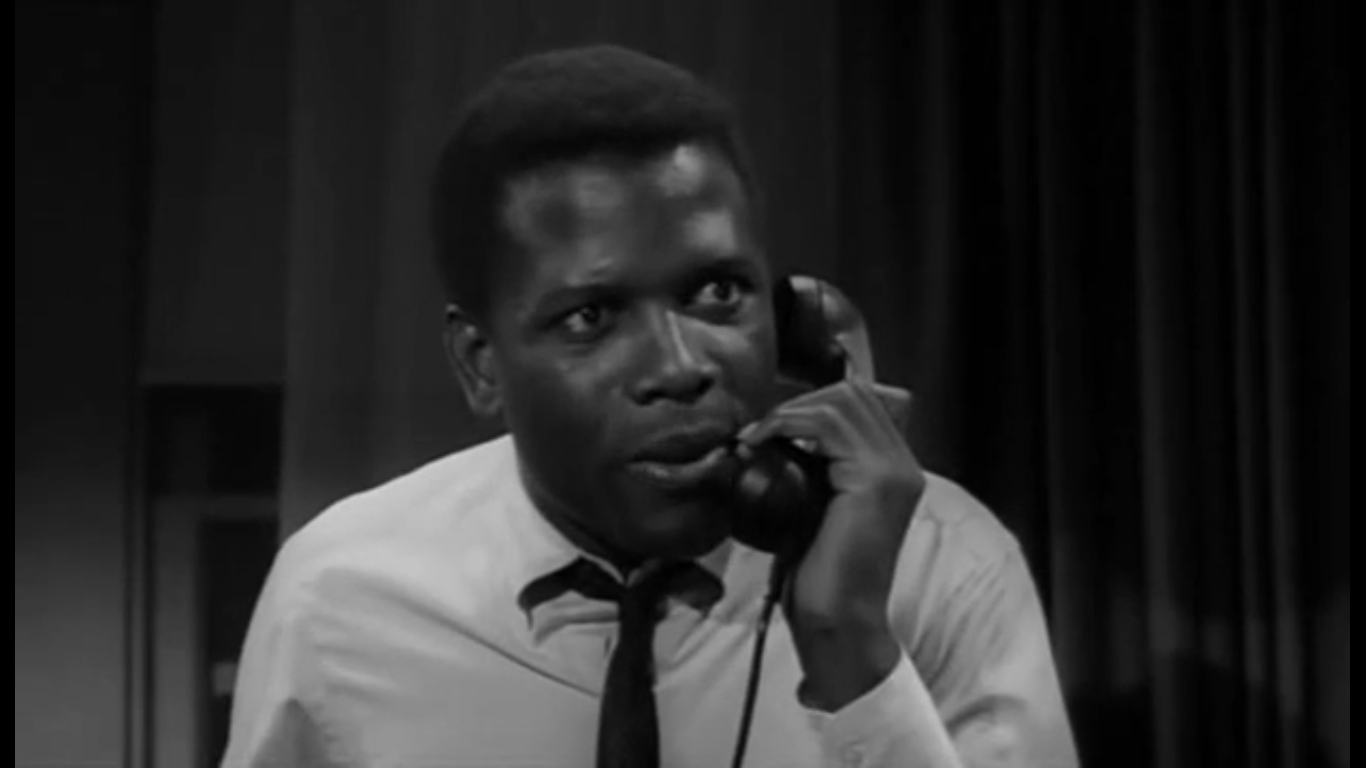
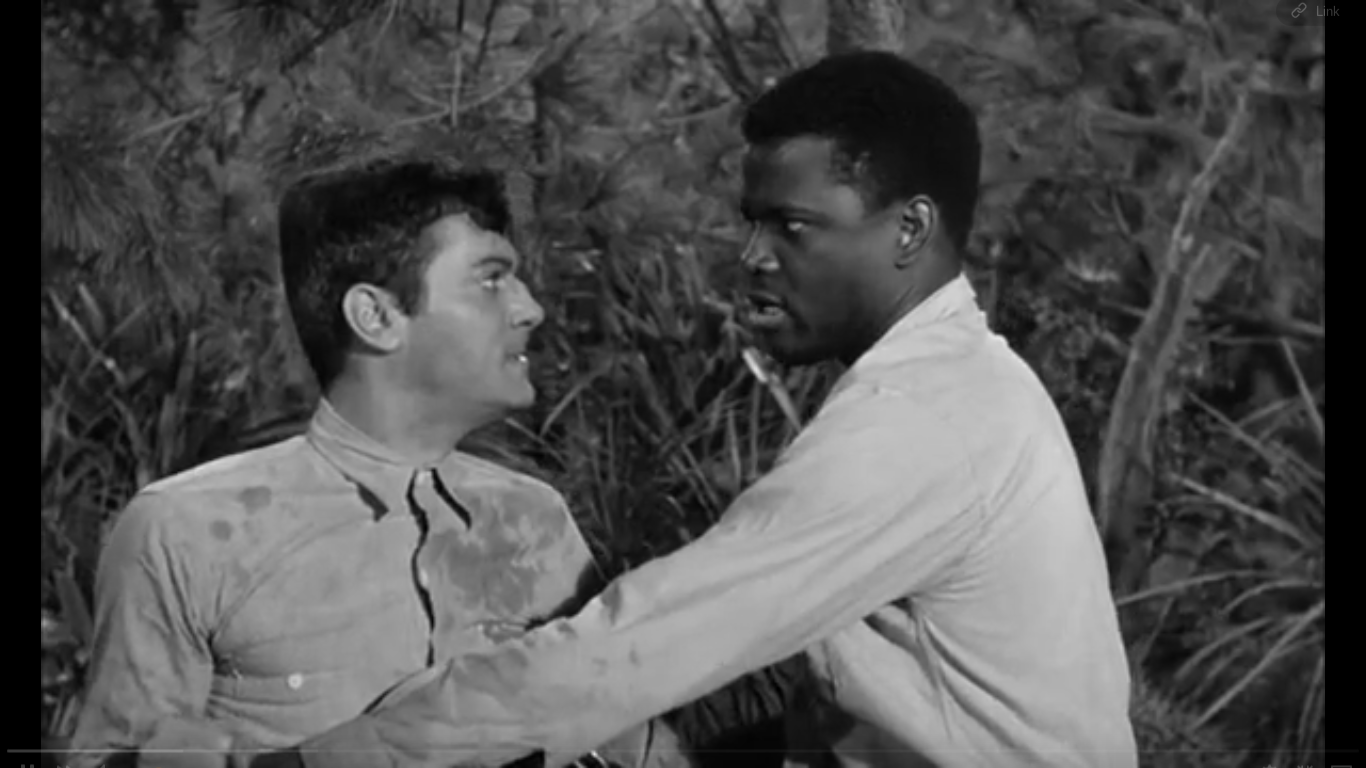
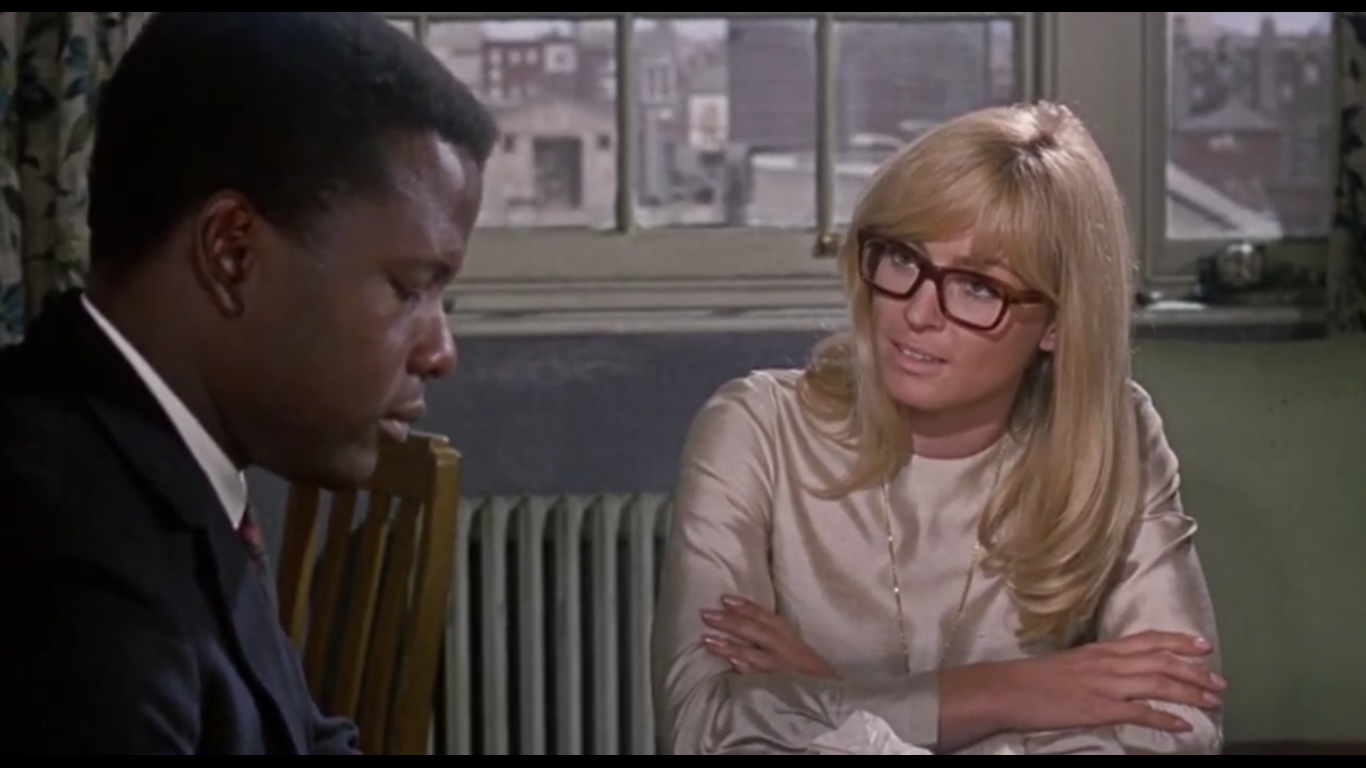
Lilies of the Field (1963): Starring Sidney Poitier

The ample joys of Lilies of the Field come out of it being a kind of modern-day parable. It’s a modest and simple story, shot over 15 days by director Ralph Nelson, with a source novel gaining inspiration from the passage of the Christian scripture:

“Consider the lilies of the field, how they grow: they neither toil nor spin, 29 yet I tell you, even Solomon in all his glory was not arrayed like one of these. 30 But if God so clothes the grass of the field, which today is alive and tomorrow is thrown into the oven, will he not much more clothe you, O you of little faith?”

It means different things for our two leads, one who keeps a handy pocket edition for easy travel and the other with a giant tome of a Bible ready to quash everything around it. The image becomes a pertinent one.

Because the film itself concerns itself with an itinerant handyman played by Sidney Poitier. His car is sputtering so he stops by the nearest establishment to get some water for his thirsty engine: it happens to be cared for by a troop of Nuns.

He wants to get out of their sphere of influence as soon as possible. They hardly speak a lick of English. They are Catholic and he is Baptist. And yet he finds himself doing work for them. At first, it’s hardly out of altruism but they are a persistent bunch.

Their leader, Mother Maria (Lilia Skala), has grand visions about what Homer Schmidt (Smith) can do for them thanks to his pair of strong arms. She’s resolute that God will build them a “shapel” and Homer is the readymade conduit.

Of course, he has no such ideas, and he’s interested solely in a buck. He’s ready to do one job for them, get a meal, and then move on with his life. Remember these were the early 60s. Poitier later in the decade would come off stately. He was a doctor, a police officer, a teacher. Here there’s a freedom and playfulness to his movements indicative of a different kind of man.

If there’s any major development to the movie it’s how they slowly teach one another something. Homer comes to understand what it is to slow down, to be present, and to bless other people with your skills. These sisters want nothing more than a place of worship, and he can give them so much. But it’s not just a selfish act of individuality and pride either. It becomes something when others join in to help finish what he began.

However, the Mother is a stern and unyielding lady in her own right. She believes in God’s daily Providence but sometimes at the expense of the human beings around her. She sees them only as tools in God’s plan rather than fellow human beings worthy of thanks and appreciation. Over time she too softens and admires Homer for the monumental thing he has accomplished.

Because ultimately he does bring their dream to fruition. He’s got the dogged resolve to make them their chapel, not because of monetary gain but just because he can. As alluded to already, it begins as a mission of self-aggrandizement.

Both Homer and the Mother can bear a little humbling, and yet in their corner of the world, they see some marvelous things. Homer uses his ingenuity to become the contractor for the project as the local members of the sisters’ parish help finish the building.

Although it’s not a movie of means, it makes up for it with heart and performance. On first look, it seems rather surprising the movie would be such an award boon for Poitier, and yet there’s something warm and appealing about his characterization. Years later there’s still something more to it. There’s a freedom and an energy imbued in him.

He can be exuberant with his shirt off, then badgered and forbearing. They feel like universally human traits that we can understand and relate to. The singing of “Amen” reverberates throughout the movie even if Jester Hairston’s resounding voice sounds nothing like Poitier.

Others like the affable bartender (Stanley Adams) are pragmatic when it comes to issues of faith, the local priest on wheels (Dan Frazer) isn’t overly pious, but he seems a decent human being with genuine aspirations and honest shortcomings. The one other solitary white man (Ralph Nelson himself), a local contractor, seems like he could represent a hedge of racism (Using the word “Boy”), but Poitier fires right back and readily treats him as an equal. They too form a mutual understanding even as he marvels at Homer’s accomplishments. He feels indispensable and Poitier certainly is for the movie.

Except for a rather conspicuous English lesson early on explaining what the colors “white” and “black” mean, from vinyl records to his skin tone, no reference to Poitier’s race is needed. It occurs to me this film, set out in the rural desert, feels like a tale of cultural outsiders, and if not outsiders then at least characters who rarely received Hollywood treatment in the ’60s. We have a black handyman, a parish of European nuns, and then a host of Latino workers.

They couldn’t be more disparate, and yet somehow their ecosystem comes together and blossoms. Whether it’s a shared sense of faith or even a basic human understanding, they gather together and create something beautiful. I can only imagine that this is part of what drew Poitier to such an unassuming picture. Today it still stands modestly alongside some of his best performances.

4/5 Stars

Pilgrimage (1933): A Mother’s Journey of Reconciliation

pilgrimage

It’s a private fascination of mine to consider the sanctity and sheer awesomeness of human life in a very particular context. How parents pass on their genes — a package of habits and physical phenotypes to their kids — that we can then witness before our very eyes. And this is even true of those who are dead and gone. Their children remain as a testament to who they were and still remain in our hearts and minds. By no means a carbon copy, but you can look into their eyes or see a photo and observe a brief glimpse of the person you knew before who is there no longer.

In some circuitous way, Pilgrimage becomes a story partially about this type of lingering memory. It is a journey and it involves certain people, but it evolves into something quite different than what I was expecting and this is to its credit. Allow me to explain.

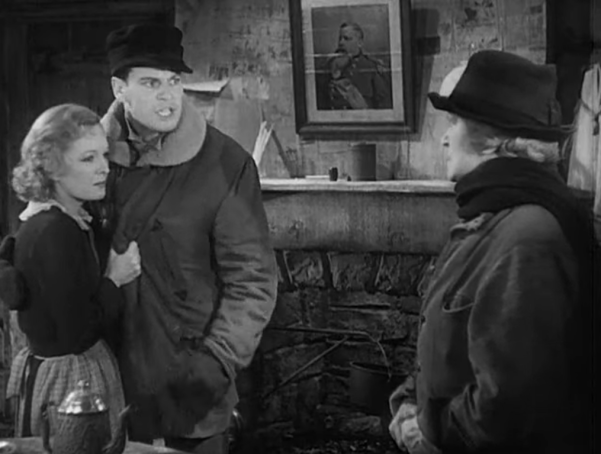
It’s one of those rural tales set in Three Cedars, Arkansas on the farmland of Hannah Jessop (Henrietta Crosman). The dynamic is simple. She’s a hard-bitten mother who’s lived a rugged life running her farm. Her son (Norman Foster) is a strapping, fresh-faced man in love with the girl (Marian Nixon) down the road and remains discontented with a life in the fields. There’s a chafing between mother and son.

She’s not going to let him marry a “harlot,” though there’s a distinct possibility she would never agree to any girl he chose to marry. Furthermore, she can’t understand how her boy can be so ungrateful and would willfully defy her. It’s a generational divide opening between them.

Watching a Ford picture, you’re waiting for those individual moments you can take with you. I’m thinking of Henry Fonda leaning up against the post in My Darling Clementine. John Wayne trotting off into the foreground at the end of The Searchers. In Pilgrimage, I’m reminded of a man sitting on his bed as he plays around with his dog — playfighting and having the animal crawl through his open arms.

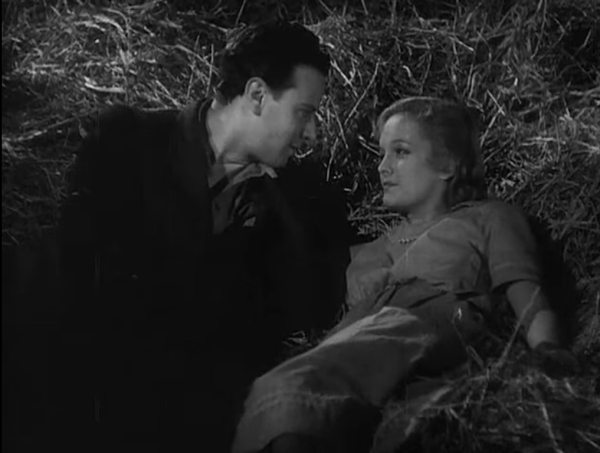
It’s actually a mechanism for biding time because he waits for his mother to fall asleep so he can drop out of his second-story window and race off to be with his love. Earlier, during their first official meeting in the movie, there are a pair of memorable subjective camera shots when the two lovers come upon one another with a pond between them.

I’m adding my own emphasis, but it’s as if to say this is supernal love — love supreme — and its not meant to be torn asunder. It has some of the poeticism of Sunrise and the pastoral imagery of The Southerner.

Screenshot 2020-07-05 at 6.07.04 PM

Still, ornery Mrs. Jessop vows to get in the middle of their marriage, and she does it quite handily. She signs her boy up for war — not out of any sacrificial heart and love of country — but purely out of selfish indignation. This act seems so egregious and totally indicative of her character.

What’s curious is how it is not so much dwelled upon as it becomes a reality in front of us. Perhaps her boy really wanted to go off to war and serve his country. We have some indication of that even as he only has a couple minutes with his betrothed before he ships out. It’s the first inclination that this is not about the lovers at all. Who does this event affect the most but Hannah herself?

It provides the needle in Hannah’s heart, and she has to live with her decision now for a lifetime. One of the film’s finest transitions comes with shots of enemy artillery caving in the trenches only to cut to a ferocious downpour at the Jessop farm. It’s two forms of chaos, one man-made and the other natural, but equally thunderous. In fact, the soundtrack is the same. They bleed into one another seamlessly.

Now the man we thought was one of our central characters is gone. It’s 10 years later and his mother is still there holding down her home. This might be when the lightbulb goes off. This was her story all along.

Soon a woman from the war department or some such organization shows up on her porch with the mayor to coax her to follow all the other Gold Star Mothers over to France bidding their sons one final tearful adieu. She surmises, “How reconciling it would be to stand beside the grave of one’s heroic death.” Of course, she’s doesn’t understand Hannah. It’s the bitterness and buried guilt still gnawing at her. She’s a proud woman, after all, and she’s adamant about not going. She very nearly doesn’t. However, if she never boarded that ship there would be no final act.

pilgrimage shooting gallery

Ford’s sense of war is exhibited in how he’s able to cast it as both this swelling, deeply patriotic thing and still something troubling. He is aware of the dissonance of the horrors of war. The most touching sense of it all comes with a procession around a grave inlaid in the ground and the ladies all lay their flowers down on the grave, even Hannah.

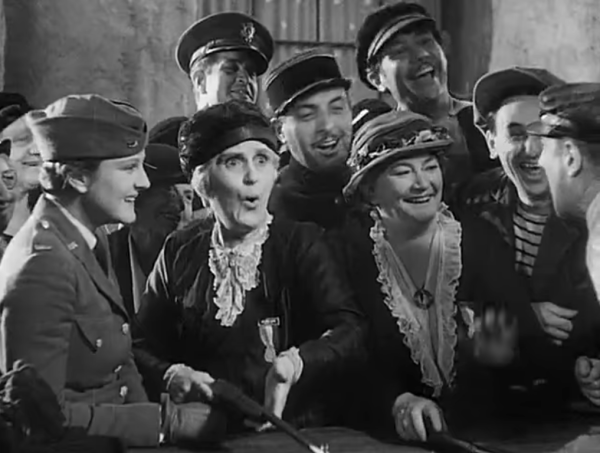
True, they do the tour of the whole place and build a kind of maternalistic camaraderie touring around the Bastille, and Hannah and one of her newfound companions (Lucille La Verne) even tear up a local shooting gallery for kicks. It’s a sign of Ford’s penchant for broad humor, and he can never totally mask it.

But the subject feels different. For one thing, Henrietta Crossman’s performance feels like one for the ages and deeply impactful even today in a medium where stories of the elderly often feel dismissed or invalidated. In her time, she was a giant talent on the stage and you cannot watch the picture without gaining an appreciation for her.

Because this is about her evolution more than anything else — this is her story — and she carries it with the kind of aplomb that’s capable of moving mountains. By that, I mean the audience’s heart. We eye her watchfully for the majority of the film, and she’s righteously stubborn and outright vindictive in her jealous affections. Although it takes time, she melts, and this progression is key. It becomes evident within her very being.

pilgrimage

The mode isn’t altogether subtle. She meets a boy on a bridge. Thoughts of suicide or something else might be swirling around in his half-drunken mind. She grabs him by the arm and by some force of compulsion takes charge of him. She feels a need to take care of him rather like with her own boy.

It’s true it’s a different actor and a different girl, but it becomes clear enough that they (Maurice Murphy and Heather Angel) are little different than her own boy and his girl a generation before. What has changed is her outlook. She sees their warmth, their fears, the hopelessly passionate affection they have for one another, and she sympathizes. Did she stop being a parent? Certainly not. Rather, her eyes have been opened just as she has been filled up with a far more benevolent spirit.

Finally, she comes to terms with being cruel. Finally, she realizes she had a convenient name for her attitude as “a God-fearing, hardworking, decent woman.” She talks some sense into another mother (Hedda Hopper of all people) in the straightforward manner she wished someone would have talked to her. It bears an incisive truth that’s hardly unloving. And it’s as if this is her slice of redemption because it is something we can see; Hannah sutures the wounds so they can heal. Both of another mother and her own.

She goes out to the Argonne somewhere and kneels before the grave of her son falling prostrate on it. For the first time, it feels she is actually able to grieve. It’s a cathartic release for a woman who has guarded her heart and buried her feelings and failures for years. What a glorious outpouring it is. All I could think of was that Pilgrimage has a sense of death Saving Private Ryan can never quite understand. The pain and relief of seeing this gravestone are so closely tied to our character. She is being made new in front of us.

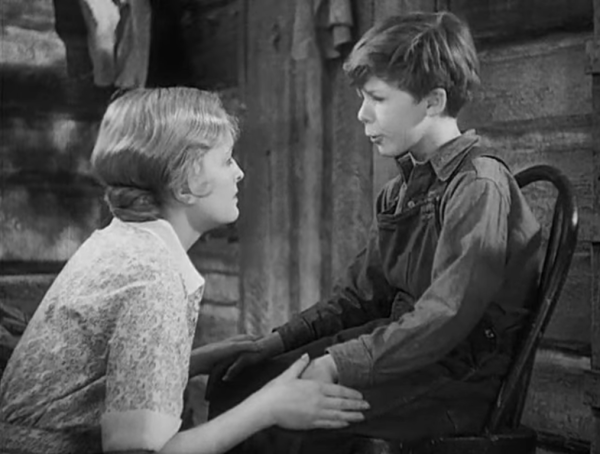
There is only one thing left to do and as a final outward expression of her reconciliation and renewed heart, she reunites with the only family she has left on earth. Her estranged daughter-in-law and quizzical grandson. She overwhelms them and grabs her boy up in her arms. Because that’s what he is of course. Little Jimmy is a stand-in for his father and so Hannah smothers him with her love. It was a Pilgrimage to be sure. Hannah traveled across the sea only to come back home a revitalized human being. Now she can look into Jimmy’s eyes and know full-well she is forgiven and loved.

4.5/5 Stars

The Lost Patrol (1934): A Tale of Survival

Screenshot 2020-07-03 at 11.12.23 PM

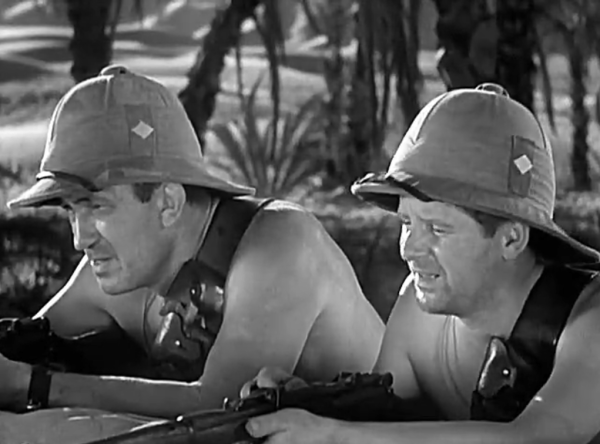
The Lost Patrol comes out of the colonialist traditions of the era with the white soldiers in Mesopotamia doing battle with an Arab enemy who strike like ghosts. They are phantoms and rarely seen in the flesh. It’s an unwitting bit of commentary but it also simultaneously becomes one of the story’s most unnerving assets. There’s a tension born in an adversary who is all but invisible and still has a deadly sway on the story.

The film’s opening images are telling in establishing setting and the man behind the camera. Because this is a John Ford movie. It’s a fairly early offering, but there are elements that feel unmistakably relevant to his oeuvre. There’s the shadow of horses trotting across the sand, and then a line of riders snaking their way across the wide-open vistas of the dunes. It’s a variance on the western form or at the very least a transplant.

During this journey, their thick-skulled commanding officer is knocked off unceremoniously. He also never thought it prudent to tell his second-in-command what their orders were. With him gone, the remaining contingent is left wandering through the desert wasteland without any kind of direction.

The Lost Patrol is an expeditious drama with little time to waste and so survival becomes its primary focus. It’s not searching out a destination or looking to vanquish the foe as much as it’s about these men living to fight another day. It’s a windswept character piece more than anything.

We see Victor McLagen at his most restrained and sensible. His wealth of experience has taught him to keep his head, and he makes darn sure that all his men stay on high alert. Take, for instance, the euphoric scene where the mirage is real, and they finally settle on a spring of water. The men are satiated by a cool drink — a lifeline in the midst of such an arid and desolate terrain — and they fall into it with joyous elation. Their Sergeant is the one man who holds back, chiding them to take care of their steeds.

If McLagen is one of the stalwarts, Boris Karloff is uncharacteristic as Sanders, a jittery and spiritually inclined fellow clinging to his belief although he seems ever ready to spout off jeremiads. For him, their latest discovery is tantamount to The Garden of Eden.

It is an oasis, but they’re also stuck there. Instead of being excommunicated, they might as well die where they stand if they can’t get support. Much of the film at this juncture comes from digging in and waiting it out. We get to know the band of men and at the time same are brought into the tension of their prolonged campaign of survival.

A young lad, wet behind the ears, is crazy about Kipling and the glories of war. Whereas he’s woefully ignorant of the tough side of the life he’s chosen. Morelli (Wallace Ford) is a bit more jocular blowing off some steam with his harmonica even as he brushes off his own bad luck, calling himself the Jonah of their expedition. Still, their leader doesn’t see fit in tossing him overboard. They’re only going to prevail if they stick together.

Because this is a Ford picture, there also have to be a couple token Irish old boys to round out the company. They’ve seen much of the world thus far, and they have more or less willed themselves to fight another day. It’s baked into their stock.

By far the most intriguing has to be Boris Karloff as he’s taken over by his religious fanaticism. And he’s not the only one to totter toward the precipice of insanity or unrest. There are others. In fact, how does one not lose their mind under such dire circumstances?

Their situation is laden with the kind of dread of a who-done-it murder mystery. Men get knocked off or become lost to the elements, one by one, until their mighty group is dwindling with the unseen enemies still lurking just beyond the sand dunes.
Though the parameters of the drama come out of a bygone era that we have left far behind, somehow Ford’s film maintains some amount of its mystique. He’s already well-versed in capturing the panoramas around him in striking relief. He’s actually aided even more by hardly showing his villain at all. Time honors this decision because it falls away, and we forget the stereotypes as much as we feel the specters hanging over the patrol.

To the very end, McLaglen is a stalwart and you can see how Ford is able to fashion him into a reputable even idealized champion. He’s not unlike a John Wayne or other figureheads Ford found ways to fashion into his personal visions of inimitable manhood. There’s something admirable about them — found in their mettle and loyalty — even as they exude a persistently evident humanity.

3.5/5 Stars

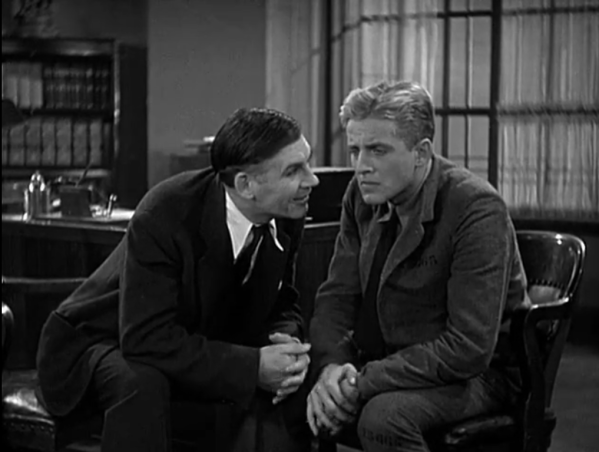
The Criminal Code (1931): Howard Hawks in The Big House

Screenshot 2020-07-03 at 4.26.44 PM

Although this is still a very early talkie, you can already see Howard Hawks developing a more intricate sense of dialogue which he would be known for in his pictures — most notably His Girl Friday. In the opening scene at the police station, we have dialogue piled on top of each other between pinochle and the lastest crime being called in over the telephone.

It’s a wonderful melding of both character and exposition being delivered fluidly in a manner that supplies us so much in such a short amount of time. Soon the two quarreling cops are on the scene at a nightclub where a fellow was knocked off.

The by-the-book incumbent district attorney, Mr. Brady (Walter Huston), sees an open and shut case, although it’s a rotten break involving a kid and a girl, and another man is dead. He concedes this and yet the law is his Bible — an eye for an eye, somebody’s gotta pay mentality — going back as far as the precepts of Hammurabi in ancient times. He’s not willing to budge an inch.

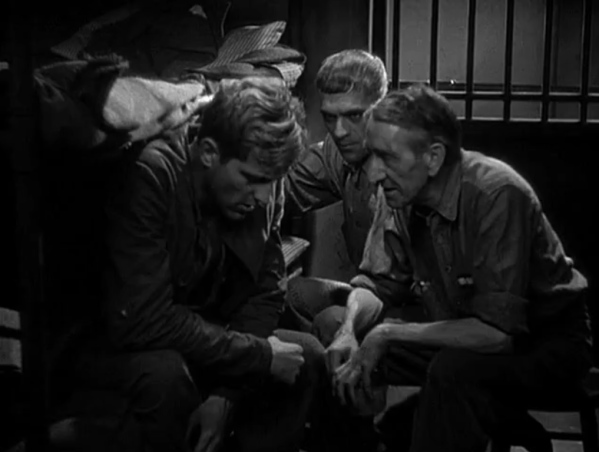
He unceremoniously consigns a young man (Philips Holmes) to 10 years in prison as penance for his wrongdoings. Even it if was only one false step, the law says he has to pay for his deeds. There is no other recourse. Time passes and prison life has gotten to him, left him stir-crazy and ragged. He’s no longer the fresh-faced kid he once was and news of his dear mother’s passing is yet another blow.

His bunkmates try and watch out for him and settle his nerves, but they’re not totally sympathetic. How can they be? Some of the men put in there by Brady feel duped. There’s this pervasive sense of restlessness and unease.

This prevailing mood only grows worse when Brady takes on the role of the new warden in the prison. The incarcerated mob ignites with yammering in the jail yard because the new man has come to town, and he was instrumental in putting so many of them away.

Brutal law and order are maintained by Gleason, the paunchy head prison guard, who’s not above threats and psychological intimation. There’s one in every big house, and he has a standing appointment with Boris Karloff’s Galloway.

In fact, Galloway is loaded with the kind of menace Karloff thrived on throughout his career, and he becomes a stellar conduit throughout the movie even as Gleason represents all that’s wrong with authoritarian power trips. They have a mental duel going on that takes a while to come to fruition.

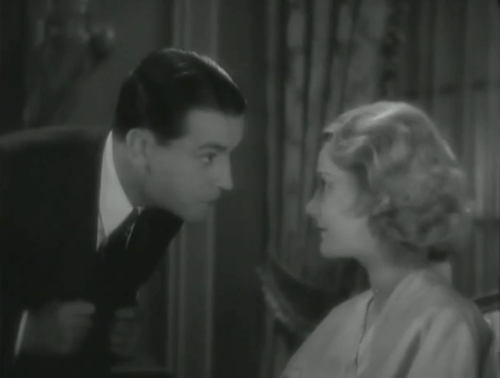
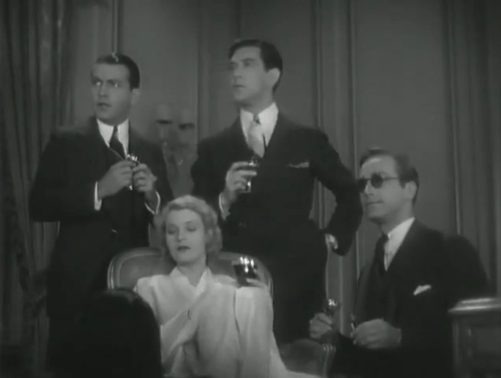
One bright light is Constance Cummings, a genial countenance of stylish propriety and beauty. Her very presence comes to represent so much in the movie, and it’s true she represents both a beacon and a sliver of hope for Robert. If nothing else, he wants to be in her presence — just to see her and talk with her — because she makes him feel human again.

Screenshot 2020-07-03 at 3.52.46 PM

The narrative wouldn’t be complete without a botched escape attempt, but what’s more intriguing are the consequences. Because the stool pigeon, a sniveling squealer named Runch gains the ire of the entire compound and there are rumblings of unrest. Retribution is brewing in some form.

Robert does his best to stay out of it, but he’s also not prepared to help the canary. In the resulting drama, he’s implicated while maintaining his innocence. It also puts him wholly at odds with the warden who looks to get him parole. Still, he’s beholden to the law in all things. It’s guided his entire life, his entire career. Leniency is not in his vocabulary.

Whereas Robert has become beholden to the other side and the honor among thieves, if we can call it that. You don’t rat and you keep promises because what good is it if you can’t keep your word? It shows his personal integrity. For his reluctance to speak he’s put in “the hole” and subjected to the malevolence of Gleason.

Although there is a standoff and the kind of finale we expect, the crux of the story — all its thematic ideas — come in this earlier portion. Because Mary returns from her time away and what it does is provide perspective. She loves this man, Robert, even though he’s never said it outright. She knows he is the one, and it causes her to confront her father with the truth.

Father and daughter have it out in civil discourse in the first moment where they aren’t pals and actually stand up for their personal prerogatives and what they believe to be right. While it’s not exactly Scarface, Hawks does a stellar job of grounding a tale of crime and punishment once again with a familial relationship. Phillips Holmes isn’t a particularly enthralling actor, but between the likes of Huston, Karloff, and Cummings, there’s a fine array of color. It more than deserves a spot as an unsung Howard Hawks picture.

3.5/5 Stars

More Film Reviews of 2021

Undine
Christian Petzold is the master of methodical cinema and with the conceit for Undine, he proves he’s more than up for imprinting his style onto a modern-day mythical fairy tale. He reunites again with Paula Beer and Franz Rogowski from Transit. Once more it’s a world from a distant past somehow planted in contemporary society. There are successive moments that feel so mundane it makes the scenes breaking the mold all the more startling.

They shatter an aquarium and lie sprawled on a coffeehouse floor. Undine pays a wordless visit to her former boyfriend as he does laps in his outdoor pool. The diver resuscitates her to the beat of “Stayin Alive” even as she resurrects him through some mystical romantic force. It borrows some visual language from underwater love stories like Creature from the Black Lagoon and Splash, but it’s also sculpted by the director’s unmistakable outlook from post-modern Berlin. What a pleasure it is to watch a filmmaker who doesn’t find a need to explain all his choices. We must watch them unfold and wait to be enchanted.

The Power of The Dog
The Power of The Dog is a fine film, and Jane Campion’s touch is deft in bringing her version of Thomas Savage’s 1967 novel to the screen. Benedict Cumberbatch plays a role almost antithetical to the image he’s slowly gone to work dismantling since the days of Sherlock and impeccably British dramas like The Imitation Game.

There’s something leathery and caustic about Phil Burbank, a man who has learned to lead the demanding life of a cattle rancher. And even as he remains skeptical of his brother (Jesse Plemons) marrying a new bride (Kirsten Dunst), and he openly belittles her tenderhearted son (Kodi Smit-McPhee), his persona continually erodes and shifts before us. It is a movie about a neutered form of masculinity. Although there aren’t too many pulse-pounding interludes, this element alone feels almost startling given the general conception of the western genre.

If there is any issue with the picture, it’s really no fault of its own. It’s simply not what I was expecting. But I don’t want that to totally sour my expectations. There’s a quiet tension to the picture as it goes through its paces. There’s no murder, no perpetual row of histrionic Oscar-worthy scenes of drawn-out drama, and it seems to continuously bend away from what is expected toward more nuanced observations.

It has the vistas one might expect from the West, set on a family’s ranch, and yet it’s strangely contained like it was perfectly suited for the Covid age despite being a 1920s period piece. Mostly it’s a film doled out in relational dynamics – this is its currency – the emotional and relational psychology that governs how people exist with one another. In The Power of The Dog, the evolution occurs gradually, over time, and it might just surprise you if not totally gratify your want for catharsis.

The French Dispatch
The French Dispatch is less of a narrative film and more of a clockwork cinema machine where we have the pleasure of watching Wes Anderson orchestrating his preferred world with its myriad of players. It’s an ode to the art of writing – the journalistic form – and its best spurts boast comic objectivity with a perfectly calculated and colored intricacy. The initial French milieu of Ennui-sur-Blase blended with this perspective feels almost Tatiesque.

It’s not so much a story as a style, and it’s an extraordinary style. Anderson is so singular in his aesthetic, and it seems so specific by now that it never wavers for a moment. We always know intuitively that we are existing fully in an Andersonian world as he splits his homage (or pastiche) into three distinct stories. Anderson’s stock company, which keeps ballooning while retaining all his own usual consorts, ensures the frames are full of familiar and eminent faces (even if some have next to nothing to do). There’s a trolly ride into a prison asylum that feels like it’s literally sagging under the weight.

There’s a droning literary nature to The French Dispatch as it dabbles in all sorts of creative whims. There’s Bill Murray as an avuncular editor. Benecio Del Toro and Lea Seydoux as a crazed artistic genius and his prison guard-turned muse respectively. Timothee Chalamet becomes a college-aged dissident plucked out of Godard’s Masculin Feminin (or David’s Death of Marat). The black and white mimesis and Lyna Khoudri are compelling if not the vignette itself. Jefferey Wright gives an amusing turn recounting a food column devolving into a kidnapping thriller. Oddly, there’s nothing to be taken too seriously in Anderson’s French Dispatch, which gladly gives itself over to ligne claire animation before writing its own editor’s obituary.

As an artistic achievement, it’s extraordinary though it lacks any true narrative absorption. We must appreciate the individual accents and moments, not a centralized sense of comedy or drama. By now Anderson’s vision is so well-attuned and everything is humming just as he likes it. He’s trusting his audience knows what they like too. Anderson connoisseurs should and for others, it could be a mixed bag.
King Richard
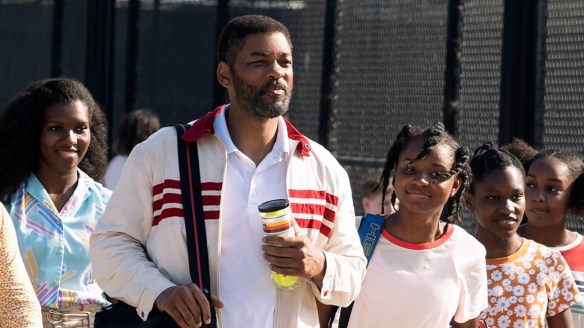
If King Richard were merely a rags-to-riches sports movie, I would hold issue with the fact there seems to be so little adversity on the road to professional success. However, to its credit, in an age where biopics need an angle if they’re ever going to see the light of day, here is a version of the familiar story that feels more like a character piece than your typical insurmountable sports story defying all odds. To be sure, it has all of that, but Will Smith, as Richard Williams, helps bring life to a deeply stubborn, idiosyncratic visionary, who helped cultivate his two daughters into the greatest tennis players ever.

I was chomping at the bit for more Venus and Serena, and Venus (Saniyya Sidney) grows into the movie as she gains traction in junior tournaments and then becomes one of the most sought-after endorsements while making her professional debut. In a conventional sense, these are the beats we expect, but the movie never totally pulls away from King Richard, whether he’s butting heads with his daughter’s well-meaning coaches (Tony Goldwyn and Jon Bernthal) or getting chewed out by his wife (Aunjanue Ellis) for his own delusions.

He’s not all saint and some grievances are aired, but no matter how odd his tactics seem, he still was a man of principles and someone who seemed to genuinely love his daughters. The adage holds true that it takes a village to raise a tennis player, but King Richard did something pretty spectacular. I’m not sure if this is Smith’s best performance, but the film will definitely resonate with the intended audience who appreciate this kind of uplifting story in a year where we could always use more. The fact that Serena is still in the cultural spotlight decades later still astounds me.

Nightmare Alley
Guillermo Del Torro’s version of Nightmare Alley vows for a methodical establishment of its world and characters. We get a sense of the carnie life and the 1940s sensibilities. The cinematic antecedents could be spouted off in passing like The Uknown, Freaks, and, of course, Tyrone Power’s own iconic turn as Stan Carlisle in Nightmare Alley (1947). While I don’t dislike Bradley Cooper, he somehow lacks the wheeling-dealing charisma of his predecessor. It comes with time, and yet he seems to play the role close to the vest until the drama really starts to capitulate.

They throw around the word panache though it hardly seems to characterize the kind of performance he’s looking to achieve. Willem Dafoe feels like a standout not solely due to the craggy contours of his performance. He feels like this film’s individual creation. Cate Blanchett is much the same taking arguably the juiciest secondary role from the original and turning it into a blood-red femme fatale.

This version does have the opportunity to be more shocking and vile in where it can take the material, and since it is hardly a contemporary picture, there’s a different kind of appreciation the set dressings can garner. A world seems to be resurrected before us. Del Torro’s chooses to draw out the story to become more of a psychological mood piece that lacks the more timely pacing of the earlier rendition though it does finally spiral into a dark abyss of its own making.

It’s this final chapter that earns the moniker of noir and though it doesn’t divert drastically from the original, the vision of its maker is unmistakable. He does his very best to make Nightmare Alley his own. I must admit I maintain a fondness for the original, and I’m not sure if he’s bound to find a broad new audience.

Last Night in Soho
There’s this sense Edgar Wright has been dying for this day: to curate a British Invasion soundtrack for one of his films. For him, this is all homegrown music. It’s set up immediately with a heroine named Ellie (Thomasin Mackenzie) who holds an obvious affection for all things retro – a college-bound fashion designer infatuated by Swinging London – and “World Without Love” feels like one of the quintessential anthems of the times (along with “Downtown”).

I was fond of Midnight in Paris because it reminded us that every generation wants to return to the good ol’ days. As Petula Clark also sang, “the other man’s grass is always greener.” But Last Night in Soho takes these sentiments and gives them the chilling tinge of horror. Nostalgia can be a deadly thing too.

It morphs into a nightmare of the sixties where the rose-colored glasses are cracked and whatever an immaculate soundtrack might suggest, we’re still left ill at ease by leering men and a kind of pervasively misogynistic culture. It’s precisely why a movie like The Knack..And How to Get It feels so offputting to me. Because you feel gross. Character identification becomes so crucial as we fill Ellie’s shoes and we empathize as the horrors engulf her and her surreal double (Anya Taylor-Joy).

It might just be the presence of Matt Smith, but there is a sense this could be an episode of Doctor Who in an alternate dimension while also paying homage to the old guard like Terrence Stamp, Diana Rigg, and Rita Tushingham. Still, it’s not like we were plucked out of one world and put in another. I also can’t remember ever seeing a Wright picture where there was such an obvious theme tied with the kind of unabashed entertainment he’s always capable of providing. The only problem is that in trying to derive a twisty payoff, he somehow muddles the meaning of the movie.
House of Gucci
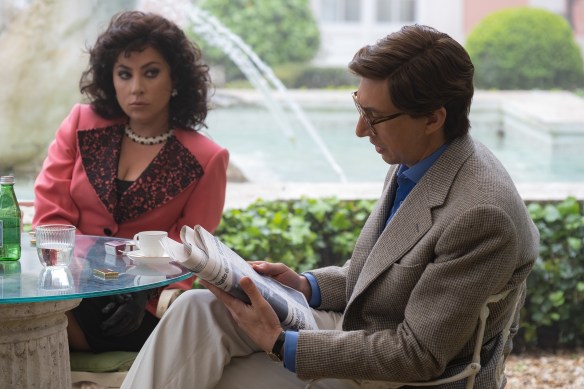
Trailer expectations make House of Gucci feel like a mild disappointment. There’s a hope that Ridley Scott’s latest film might lean wholeheartedly into the camp to become a bizarre story of decadence and machiavellian wheeling-dealing gone horribly wrong. We are being sold a murder in the upper echelon of the fashion industry. I’m reminded of I Tonya, a surprisingly ingenious film telling a larger-than-life story with conflicting perspectives on recent history that formerly covered the tabloids. The movie pays off thanks to the weight of the performances and the stranger-than-fiction narrative.

House of Gucci has some performances that work well enough. Lady Gaga gives her role a real go of it, but far from being just a backbiting femme fatale, there’s attempts to make her character, a woman who married into the Gucci family, more of a human being. This is not wrong, and it can be lauded as she gels with her new husband (Adam Driver) navigating the hierarchy governed by his father (Jeremy Irons) and his uncle (Al Pacino). But in trying to be a genuine relational drama while also jostling for future camp status, it’s not able to capably manage either.

It feels impossible to have our want of theatricality sated while getting the sincerity too, thus the movie falls into this realm of overlong mediocrity. It’s not bad in its totality, but we leave the story feeling mostly underwhelmed, especially given all the talents assembled. Like Gaga, Jared Leto, who readily “uglifies” himself for the role, looks poised to go for the fences. However, it represents some of what I dislike about this approach to acting at times. There’s very little that feels real about it, and I kept on questioning why they could not get someone else – someone older – for the role. It’s disheartening because I didn’t know what kind of story Gucci was trying to tell, and it suggests maybe the team didn’t know the best story to tell either.

No Time to Die
Daniel Craig burst onto the scene with Casino Royale as a darker, more mercurial Bond for the 21st century, and it gave the franchise a level of rejuvenation and relevance in the arena of action movies. Vesper Lynd gave Bond a bona fide relationship that did not feel totally disposable but in grappling with Hollywood expectations, demanded to be disposed of. So the fact Bond is found at Lynd’s grave marker, conveniently also setting up the film’s best setpiece, feels like an early signifier of good things to come.

No Time to Die gives Bond an inkling of a back story and the weight of a human connection (with Lea Seydoux) that almost feels incongruous with his very image where women are merely objects and enemies are to be vanquished all in a days work. It seems only fitting Bond feels more human than ever given Craig’s history with the character. Despite its runtime, it’s not a gargantuan, earth-shaking film. The villains as they are (Christoph Waltz and Rami Malik) are fine if not totally out of this world.

Still, in our restricted era, there’s something appealing about a globetrotting thriller married with a character who seems to recognize the weight of the real world. Whether it looks suave and debonair or not, sometimes it takes vulnerability and sacrifice to win the day. Bond seems to have stakes that he never had, much less cared about, before. It’s up to the viewer to decide if they embrace this or not.

The Card Counter
“Forgiving another and forgiving oneself are so much alike.”
There’s often an austere quality to Paul Schrader’s cinema, whether it’s about a priest or a card counter. A lot of it is inert and internalized. They are meticulous with composition books, deep in thought, and always ready with a drink to nurse nearby. His heroes seem to live by a certain code and more than simply being religious, they operate on a level of penance for sins, both their own and the world around them. These might seem like weighty words to describe movie characters, but then Schrader is not your typical, average, everyday filmmaker.

There are no warm and fuzzy feelings in The Card Counter nor the kind of comedy release valve we’re taught to expect in our movies. Schrader doesn’t seem to have time or patience for this as he tackles heady, more existential topics. It’s cool and brooding in tone and atmosphere, mostly shot in the fake interiors of casinos.

It’s poker as a character study rather than the crowd-pleasing sports drama of Cincinnati Kid, and Oscar Isaac is our hero, a war vet who also served a stint in military prison. Now he devotes his life to counting cards and playing poker but not for the normal reasons. His backer (played by Tiffany Haddish) pointedly tells him, “You have to be the strangest poker player I’ve ever met.”

It also doesn’t have the feel of a 2021 film, and yet the space from its historical past is probably necessary. Because it dredges up the crimes perpetrated in Abu Ghraib. Will says, “Nothing can justify what we did” And he cannot change the past so he looks to watch over a young man (Tye Sheridan) and search after the man (Willem Dafoe) responsible for all the evil in his past.
The first time I heard Pickpocket evoked in reference to The Card Counter, everything clicked into place; it all makes sense because Robert Bresson’s film was at the center of the cinematic transcendental revelation that hit Schrader in the mid-seventies. He does his best to evoke some of that here. Once it’s mentioned, you can’t unsee it.

Passing
There is no movie without the performances of Tessa Thompson and Ruth Negga. There’s something delicate and tempered about the way they carry themselves through this movie only matched by the 1920s color palette. It’s a curious reference, but I was thinking how, like the black and white in Some Like it Hot, here it allows us to buy into the charade that this woman would play: living the life of a white woman.

The world conjures up images of The Cotton Club, a space where we don’t see Jim Crow segregation as much as these oddly stratified and “separate but equal” spheres of existence. Blacks build a vibrant community for themselves in Harlem out of the prying eyes of whites because it is a fragile peace. We meet Irene (Thompson) in a scene where she attempts to pass as white. The one person who catches her, Clare (Negga), does so because she has made a life of infiltration. She’s married a white man and effectively given up her past life for the preferential status she now owns.

Passing is a quiet film, and there are only a few scenes I can look back on. The opening scene could have been the set-up for a chilling race horror film. Scenes in the jazz club are alive with the energy of the age. And the ending has an anesthetized tragedy to it. As we watch the snowfall on the street, we realize this is a story formed in the silent void and not in vocal tumult. In the ever-shifting, always malleable, and confounding spectrum of human identity, there are so many adjacent conversations to Passing that I find fascinating.

Rebecca Hall must as well or she would not have undertaken this story as her directorial debut. I need more time with it, but I couldn’t help thinking I liked the idea of the story (and the book) more than I actually enjoyed the film. Then again, maybe it falls to the fact the movie was not the one I was expecting. It’s not an easily digestible message picture. Somehow it’s more nuanced and complicated. It feels like this deserves further consideration.
The Last Flight (1931) and The Lost Generation

the last flight

The Last Flight could conceivably be tacked onto the end of The Dawn Patrol. Although there is only one full scene of aerial combat, it informs everything that’s to follow because this shared experience colors the lives of the men who pushed through it. Some of them have been pushed through irreparable change. They are men with PTSD before we ever had a diagnosis.

As two of them (Richard Barthelmess and David Manners) are ushered out of the hospital there is a sense of foreboding. The physician and the audience seem equally aware of it. The doctor likens them to a pair of fine Swiss watches crushed on the pavement. The question remains how do you assimilate them back into society? As he grows didactic or at least waxes poetic, he marks them as spent bullets; his prognosis comes very near to the sobering Korean drama Aimless Bullet a couple generations later.

In fact, The Last Flight could be an equally heavy and laborious affair given the context. These are men who must face something even more difficult than war. War is something they were trained for. Life afterward is uncharted territory. It’s not something that can easily be prepared for; it’s more daunting and laden with consequences.

This is another installment in the men returning from war sub-genre, and it’s no less striking every time I see it done well or at least in a new manner. Under the circumstances, the normal response is to seek to delay the future for as long as possible. These fellows take it to the extreme.

From a technical standpoint, talkies still feel new, and the dialogue is initially a bit stunted and awkward pushing the obvious wounds of its characters. This could be tepid going. Instead, The Last Flight bubbles with its own brand of lithe and breezy effervescence. This is the mood accorded by its main players because they are looking for a life far away from their war-torn experiences up in the air. Trauma is best remedied by drink and trivial conversation so they set flight for Paris.

By entertaining all the frivolous diversions they can manage and hardly acknowledging the war again, the film says so much about these characters (as does their idle talk). Their evening progress full of drinking, dancing, and more drinking.

One of the people they happen upon and make a part of their entourage is Nikki (Helen Chandler). She’s a ditzy girl and a bit like a forlorn little puppy so they absorb her into their group. She’s got money and doesn’t quite know how to take care of herself. They take it upon themselves to do just that, which includes guarding her against the advances of a conceited nincompoop (Walter Byron).

There’s not a whole lot to it, but it comes into its own spilling out of the confines of your typical fare much like the drinks they’re constantly consuming. They let their inhibitions go giving way to a giddy even laissez-faire attitude.

Among other diversions, Cary tells Nikki the tale of the world’s most famous lovers Héloïse and Abelard, and starts to fall for her, only to have his feelings hurt over a misunderstanding. Because she’s an unwitting girl who couldn’t hurt a fly. And so the gang and Nikki follow Cary to his train to Lisbon and cram into his compartment.  They’ve stayed together thus far, and there’s no reason for breaking up the team.

If you’re waiting for the bottom line of the movie, know that it never comes. Not really. There’s hardly a point to it, but then again that’s the point right there. It encapsulates the very existence of these men. One of their buddies gets mixed up in the bullfighting ring, another gets into a skirmish at a carnival shooting gallery. In both accounts, there are lasting consequences.

the last flight

All Quiet on The Western Front might be chosen as the emblematic film in considering the plight of WWI and how war is such a futile endeavor. It strips men of their youth, of their vitality, and of their very lives. And numerous films of different eras reiterated these themes with their own nuances. Take The Eagle and The Hawk as another fine example or even La Grande Illusion, or the aforementioned Dawn Patrol (also with Bartholmess).

However, The Last Flight might stand in what seems like a class of its own. It’s not about how men die in the morass of the battlefield or how they get crippled by the gross delusions of war. Because the whole film is built out of the interim period, the delay of going home. This reading of The Last Flight is so crucial to appreciate what it is. Most post-war films are about the return and coming to terms with life and transition.

These men never get that far. They make it to a kind of purgatory — they get out on the other side — and yet this is never a movie about acclimating back to home. It’s built out of the peregrinations and distractions of men who are completely listless.  They are the so-called “lost generation” of Hemingway and Fitzgerald.

For some, it’s almost a merciful end not having to touch down on American soil. Hence, this being their last flight together as comrades-in-arms. There was never a life for them outside of what they had already experienced, and they could never return home and hope to be the same people they were before. It’s just not possible.

If we’re instilled with anything, it is that The Last Flight is a film of brotherhood and a shared experience above all else. Simultaneously, its brand of freeform, invariably crude narrative is rather invigorating, since it cuts against the accepted grain of the times. It plays as a very singular time capsule speaking to the age like few other films I can think of.

3.5/5 Stars

Dawn Patrol (1930) and The Numbing Cycle of War


dawn patrol

Taken in the context of his entire career, Dawn Patrol becomes a prototype for a plethora of later Howard Hawks pictures involving aviation and male bonding, including the likes of Ceiling Zero, Test Pilot, and certainly, Only Angels Have Wings. As a WWI pilot, Hawks has more than a passing interest in flying. He seems totally invested in its depiction. But despite its inadequacies, Dawn Patrol has more to offer than a mere technical exhibition.

This one opens with a telling note about WWI and the nations “entrusting salvation to youth.” It’s a sobering thought, but the phrase makes more and more sense as the film progresses.

We meet Major Brand (Neil Hamilton) as he’s forced to pass hours at his desk. He goes out on the limb for his men with superiors having the gall to suggest over the phone that they’re not doing enough. It’s a thankless job that only gets worse when he listens to the planes touching down. He knows by the sound of the engines how many boys have come back unscathed (and how many have perished).

It’s a fine representation of how Hawks is able to indicate exposition through what is off-screen. Soon, the head of the flyers, Captain Courtney (Richard Barthelemess), checks in to give his report. He and Brand have a contentious relationship and every one of their conversations devolves into a yelling match.

The men standing outside, by the bar, give some suggestion it might be over a girl they both knew in France. All we have is the here and now, and that seems heated enough. We don’t envy either of their posts: The one giving the orders and the one obediently carrying them out.

Barthelemess never had much range, but this blandness does serve the picture well. He doesn’t need life. He needs to evoke the emptiness, the tiredness, the deadly monotony of his station. With every new mission, bright-eyed inexperienced kids arrive like lambs being readied for slaughter. It’s utter insanity, and we are there to witness it.

The chalkboard in their headquarters becomes one of the most sobering markers of the film. Because as the names come off and get replaced by a fresh batch, there’s something inevitable and terrifying about it. This suggests the impermanence of life with each name so easily wiped away from that board as each life is snuffed out.

His best friend, the affable Scott (Douglas Fairbanks Jr.), is one of the few pilots with enough skills, tenacity, and good fortune to survive their regimen of harrowing missions. He’s someone you can count on through thick and thin.

Similar to John Ford’s movies, songs become such an integral part of their community, banding together and joining their voices in an act of unity during their off-hours. It also settles their nerves.

dawn patrol

However, Dawn Patrol simultaneously considers the absurdity of war where you can share a drink, a laugh, and a hug with the man who shot you down out of the sky and was trying to kill you. How can it be? It only works if you can compartmentalize the experience and keep your feelings contained.

But this is only a temporary salve. Soon there’s a new villain on the rise — he’s a German ace named Von Richter — and more kids are called in to counter the havoc he’s wreaking on the allies. Although the chain of command changes with Courtney being promoted, the flaws and unyielding shackles of leadership become even more apparent. Soon friends are pitted against one another, fighting over the life of a hapless younger brother: one of the latest recruits. He knows not what he’s signed up for. They know only too well.

It causes a rift between the two men. In fact, it’s uncanny how much it’s like the row between Court and his Major before them. He’s become the distraught leader made callous and mercurial with daily stress and drink. But this is his best friend on the other side of the desk and the life of Scott’s kid brother is in the balance. Surely this should be different. What a horrible institution war is and what a terrible position to be in.

You survive long enough, and they stash you behind a desk so you get the unsavory job of sending men off to their deaths. What makes it worse is the sheer eagerness that all these fresh-faced lads take to their assignments. They brim with enthusiasm ready to do their part on behalf of the war effort and their country.

What a horrible cycle it is, and it seems ceaseless. The only way Court sees a way out of it means taking matters into his own hands — breaking the chain — and making the ultimate sacrifice on behalf of his best friend.

Because there is a suicide mission to be done. A volunteer is needed. Scott jumps at the opportunity, wanting to get out of that vile place and knowing full-well Court will be happy to see him go. Of course, this isn’t the case. There’s still a beating heart in there somewhere, and he takes on the bombing assignment himself.

In one of the last scenes, in the dark of night, they wait nervously ready to light fires on the runaway for Court’s return. Surely, he will come back! He always has before…They never see him. There’s only the faint motor of the plane and what a brilliant piece of exposition because the full import of the significance only hits us moments later.

If this scene is one of the most affecting, the last one is equally telling. No, the war is not over. That would be too clean, too easy. Instead, the chain of command has continued. The faces ready to take to the skies have changed just as new names get wiped off the chalkboard. What an abhorrent thing this is. What’s more terrifying is how numb we become to it.

3.5/5 Stars

Favorite Films of 2021

This has felt like a strange year in movies, and I’m not even trying to make reference to the pandemic. 2020 had a bounty of great movies, and 2021 did as well, but it somehow felt different. Still, here are a handful of films that I enjoyed for various reasons. I want to go ahead and highlight them now as our new (old) year runs ever onward.

Some minor spoilers ahead…

Drive My Car
Ryosuke Hamaguchi is well-aware of what he’s doing when the title credits show up 40 minutes into a 3-hour movie. Because without this opening prelude about a husband and wife, the film, while never a dramafest, would lose a dose of its quiet power dispelled over time. It does take some time to hone in its ambitions since it never feels like the characters have an agenda in a movie sense. They have jobs and relationships, but they just seem to exist, share conversations, and slowly over time we get to understand them better, even appreciate them.

Our protagonist is a theater director and so we spend our time observing the mechanisms of a multilingual stage production of Uncle Vanya he hopes to put on in Hiroshima. His Korean assistant is a fascinating individual fluent in Korean, Japanese, English and throw in some Korean sign language. He’s indicative of an entire cast who connect through their art form.

Kafuku-san directs the production but opts to give the lead role easily earmarked for himself to a young man who is very familiar. It comes out later he had his reservations because “Chekhov is terrifying. When you say his lines he drags out the real you.” They might be the words of Chekhov, framed by a story from Haruki Murakami, but the fact that we struggle and cry and God has pity on us is a message of some hope. That we will look back on our current sorrow with rejoicing and finally find rest…

In a movie about many things, it becomes a story about how we replay our deepest regrets, and they stay with us, gnawing at our insides. If they lay dormant and generally unspoken in most of us then it’s even more common in Japanese culture. Living in Japan, I very rarely hugged people, and so Drive My Car has one of the most tender embraces I recall in recent memory. It takes so much, means so much, and the moment itself plays like an understated exclamation point if there can be such a thing. If you sit with the movie long enough perhaps you’ll know exactly what I mean.

The Tragedy of Macbeth
I have a fear of Shakespeare on par with anyone else who’s ever looked at the bard’s work with trepidation. His words can be as witty to the ear as they are mystifying. However, in watching Joel Coen’s latest adaptation of his work, it felt like we were given something new and formidable without making a total mockery of the text. For lack of a better word, it didn’t feel stagy or at least it blended the forms of the stage with elements that make it deeply cinematic because this is the language that Coen knows best.

It’s suffused into his very DNA as a filmmaker and cineaste. You never want to overstep your bounds, but there’s a cavernous immersion and at times claustrophobic drama to the picture. It’s a bit like watching some of Welles’s European works: The Trial was literally made in a giant hangar and Chimes at Midnight provides his finest adaptation of the Bard full of his own artistry. Coen resolves for black and white, but he also shoots entirely in these manufactured and measured interiors.

Denzel Washington and Frances McDormand fill up the spaces to great effect. We see their age, but also the intent behind their eyes. It’s fierce before devolving toward the crazed and maniacal. We see the fruit of such fateful decisions as portended by the baleful Weird Sisters (Kathryn Hunter).

There’s thumping sound design, murders of crows, whirling cauldrons, an army of trees, and gorgeous mise en scene reminding me ever so briefly of monochromatic De Chirico paintings. But most importantly, beyond the artistry and the performative qualities is a film quaking with ready-made danger. Because it’s a crime movie. It’s about treachery and paranoia in the name of power. I’m not a foremost mind on Macbeth, but this is something that stays with me.

Petite Maman

I couldn’t help thinking how the title made so much sense in retrospect and yet Petite Maman quietly ambushed me. Here is a film about a little girl and in the wake of her grandmother’s death, she helps her mother sort through effects. She winds up going off into the forest and befriending a young girl, who’s her spitting image. It’s no coincidence. In fact, this little girl winds up being her mother!

Given the premise, it would be easy to take this film in either one of two ways: Either we’re befuddled by this development or we accept it unabashedly. Employing literalism doesn’t aid the cause. And yet if we embrace what’s laid out before us, we’re opened up to all sorts of cinematic magic. Celine Sciamma chooses to do the latter. It is a quiet fairy tale without special effects – a modern-day incarnation like Pezold’s Undine – though even more simplified.

Still, where so many other movies have plot points and reversals to move the story toward a specific destination, Pettite Maman is one of the lucky few that just seems to happen in front of us, and we can experience the minor revelations as they come unhurriedly. Two young girls acting out their story or making pancakes together in a fit of giggles. There’s so much palpable satisfaction in experiencing these moments and part of this is borne in the adorable performances of the twins.

However, there’s also a level of kinship in the movie that feels infectious, and it’s given a deeper level of meaning in that this is a mother bonding with her daughter in some form. They are equals and they can meet each other on equal footing. What a gift this is, and I’m sure all parents would love for such an opportunity. It does feel a bit like a miracle of a film.

MASS
There’s an idiosyncratic way in which Mass functions; I couldn’t help reminiscing about the free-flowing ensemble in Patrick Wang’s Bread Factory though this is even humbler in scope. The staff of the church with their particular foibles effectively prepare the table for the main attraction.

Mass has the sensibilities of the stage. It plays like a mini 12 Angry Men where you have this petri dish of two couples, one still together, and one we believe might be split up. We have four folks in a room navigating emotional space in such an excruciating scenario, dancing around the tension wedged between them by circumstance. They both had sons implicated in a mass shooting: one a victim, the other the perpetrator.

These are characters clearing their chests (and their minds) as they debate and discuss, slowly beginning to open up and let their own private hurts come to the fore. What I appreciate about Mass the most is how it doesn’t feel like a monumental drama, and it would feel like a lesser film because of it partially because any grandstanding would not fit the humble intimacy of the space or its budget.

Like Lumet before him, Fran Kanz, who utilizes some quicker cuts and an active camera nearing an hour in, is not about manufacturing drama. He trusts his material and his cast. These are theater actors so they know how to carry themselves. We witness forgiveness manifested in excruciating seemingly insurmountable circumstances. It’s fragile and imperfect.

There’s no clear mark of clarity or complete healing. This can never be achieved. What matters is the incremental steps that have taken place in this back room. But these events themselves are cushioned by the surrounding moments reminding us life is continuous; it keeps on moving. Even as our hurt lingers and grief waxes and wanes, we must find a way to muddle through as best as we can.

Bergman Island
When the name of Bergman comes off the lips of the locals it initially sounded unidentifiable to my ear, but over time it becomes familiar and like this film, the entire world begins to suffuse into our consciousness. The island of Faro just happens to be where one of the great masters of cinema made his home. It’s hallowed ground albeit idyllic and unassuming.

Could it be an enchanted space where the muse comes down to christen men and women in their creative endeavors? More likely the battle rages as per usual as a filmmaking couple (Vicki Krieps and Tim Roth) look to work on their latest projects. It becomes a landscape fit for this kind of pensive cinema, a meditation on love, art, and the creative process.

There’s a certain dissonance when the artists we love don’t behave well in real life. Strangely the lot we are given as human beings, having our fractured souls reflected back at us through a glass darkly, doesn’t make it any easier to come to terms with the outcomes.

Certainly, there are layers to be appreciated to the movie if you are familiar with the shadow cast by Bergman and his work, and yet I imagine there’s a different kind of mystifying quality of you don’t know him because it is a bit like he is floating around the edges of this movie like a spectral presence. We get to know him somewhat – see the spaces he frequented – and yet although this is intimate, it’s still rather like we’re trespassing on someone who is no longer with us.

Instead, it becomes about inspiration and conceiving movies. What holds us back and makes us anxious. We come to have life mimicking art or at the very least becoming the launching pad for stories. There’s a level of magic even seeing Chris’s movie materialize before us in the flesh. But it goes deeper than that where the creator gets to see her creations materialize before her. If there was something morose and at times oppressive about Bergman’s cinema, the film acknowledges these by sheer proximity, and yet Mia Hansen-Løve makes a dreamy film full of longing and warmth. It feels much more like the beginning of My Summer Monika than the end.

Belfast
It seems like every filmmaker has a personal story inside of them, and it’s a pleasure to receive Kenneth Branaugh’s latest offering Belfast. My face lit up immediately because from the first note I knew intuitively we were being blessed with the voice of Van Morrison. As we fall back into the late 60s, we appreciate the rhythms of a close-knit community nevertheless embroiled in The Troubles and the faultlines of Catholic-Protestant conflict.

The corollary to High Noon throughout the film including Tex Ritter’s ballad felt deeply moving. Because as someone who has cherished that film in my youth, it feels almost more universal to me than hearing Morrison. It has to do with those boyish inclinations – to want to see the world through the black and white mentality of the West. There’s a fork in the road and two obvious directions toward good and evil. Of course, rarely is it that easy to delineate.

Through the chipper, innocent eyes of Buddy (Jude Hill), we see events as only he can. His parents are not perfect, and yet to him, they are larger-than-life heroes, beautiful, beloved, and strong. Likewise, movies are revelatory, life-changing experiences like flying cars in Chitty Chitty Bang Bang. I’m not sure if the black-and-white images were something I necessarily needed, but the choice to put the scenes in the movie theater in color almost makes it worth it. Because it is in this space where Branagh suggests we can find magic, wonder, and sustenance to take back into our lives. This is a film where the little moments speak the loudest.

Spencer
Kirsten Stewart has grown steadily in my esteem thanks to her evolution from movies like Adventureland and then Cloud of Sils Mar. She continues to venture out into a territory fit for a consummate actor who looks to stretch herself and take on new and varied roles with worthy collaborators. Spencer is no different and she proves herself, not unsurprisingly, game for the task of taking on Princess Di.

I have to keep on getting my early notions of Stewart out of my head because with each new role she seems to exert herself as an ever-watchable performer and even walking the tightrope of the part that might so easily have pitfalls. Given the subject’s public persona, somehow it’s easy enough to buy her, and she falls seamlessly into the world with her mannerisms and the intonations of her voice.

It also helps Pablo Larrain’s film is a fable and not a biopic. Normally this term leaves room for Hollywood license and interpretation, but here the limits have been stretched even further as Spencer becomes more and more a character piece inside one woman’s splintering isolation on the eve of Christmas.

She begins to relate with Anne Boleyn, who had her head cut off for another woman; Diana can see the dissolution of her own marriage and her impending divorce before them with her own husband all but absent and Camila just off at stage right. Her relationship with her two darling boys is warm and affectionate. It only puts the rest of her royal world in sharp relief. If you don’t recognize the suffocating circumstances at first, it becomes supremely evident as we follow Diana at the hip. This is not a life we would wish on anyone.

Test Pattern
Test Pattern showcases a filmmaker with a level of bravery, and I don’t mean that primarily because of subject matter, although that is part of it. Because this is a film about an interracial couple (Britanny S. Hall and Will Brill). It is partially about the perplexing bureaucracy getting in the way of a resolution – the woman goes through a traumatic sexual assault – her boyfriend wants to get her answers. It leads to chafing, anxiety, and a relational tiff not because they don’t love each other but precisely because they do.

But the level of bravery comes with a filmmaker who is willing to hold their camera; it stretches out moments to the point of excruciation. It makes us uncomfortable and nervous waiting with the characters, breeding another form of empathy as we exist in the scenes alongside them caught up in their personal drama.

There’s nowhere to hide, and Shatara Michelle Ford doesn’t try to. What’s most petrifying is the fact we are left with no obvious resolution. Our couple, once so united and for one another, now feels listless and uncommunicative. Given the context built up for them at the beginning of the movie, it feels like the most troubling place to leave them. Again, this is brave. It’s not a giant send-off with a fight, but we feel this helpless sense of isolation even as they share the same space together. There’s no easy fix for what we have witnessed. It’s a sobering reminder for us all.

CODA
Coming of age films are a recurring pleasure of mine. They often traffic in very familiar ideas and tropes. CODA is no different, and it comes out of the East coast lineage of Mystic Pizza. It stars a young heroine (Emilia Jones) looking to find her voice, whether that’s by literally joining her school’s choir or sharing her feelings for the boy who doesn’t know she exists (Ferdia Walsh Peelo).

She has an impish best friend and a demonstrative teacher with a heart of gold as two primary talking partners. However, what sets the movie apart is her family life. The pun of the title becomes evident in this space. Because she is a child of deaf adults (Marlee Matlin and Troy Kosur).

She’s ashamed of how shameless her parents seem and also frustrated with how tied down she is to them. She lives by the lie that they are helpless without her that she can’t go off to college and leave them. Ultimately, she wants to protect them. The movie’s at its best not forcing conflict and leaning into these relationships.

Her budding boyfriend points out just how much he envies her because her parents actually love one another and their ramshackle abode is actually a home. CODA’s mixture of fishing milieu and glossy glee club covers don’t cater to my whims, but there is so much surrounding these nominal cliches making CODA wholly worthwhile. And any passing chance to get an earful of Marvin Gaye, Tammi Terrell, or Joni Mitchell is something to be appreciated.

Sing Street (also with Walsh-Peelo) was a favorite of mine. This is yet another movie where music becomes such a vital life force, and it can lead teenagers in pursuit of remarkable dreams. It’s the family in this movie that feels even tighter and altogether more extraordinary because we see very few like them put to film.

The Worst Person in The World
The title of Joachim Trier’s latest film is easily misconstrued to mean “bad,” whereas the suggested hyperbole is more about failure. We’ve all been there, feeling like we’ve flunked out of life. Julie is in her quarter-life crisis, pondering her career outcomes, her current relationship status, and the lukewarm feelings she has about having children at the moment. It feels a bit like The Graduate without a Mrs. Robinson. She has two men in her life, first a comic artist, older than her, who brings stability, and then a more carefree barista who she meets quite by chance.

There are times where it is scatological, moments where it’s downright trippy, but there’s also some serendipity sprinkled in. I think of the sequence when the world seems to stop – humanity is at a standstill, and we see two lovers existing together totally present with one another in the expanse around them. It shrinks their world down in such a romantic way. Still, life goes on. It becomes about so much more than a romance or even the arc of one character. It’s about the men in her life too.

Trier said, “The films George Cukor made, like The Philadelphia Story, were films not only about finding the right partner but existential films, films that dealt with important life choices.” It’s hard to totally dismiss the inspiration because The Worst Person In The World becomes a film about insecurities, about how we become petty, and even as people leave our life, the memories of them are never completely gone.

It’s progressively all the more evident that being the worst person in the world is simply a marker of being human. That is to say, we have all been there; we can all relate in some capacity. We’re all the worst person in the world. This is the greatest gift of Trier’s film, and Renate Reinsve gives a performance worthy of this superlative.

Attica

If Summer of Soul was one of the most joyous discoveries of 2021 — a piece of Harlem’s culture all but relegated to a historical waste paper bin, then Attica has to be one of the most devastating. In some ways, they seem to run parallel. Whether it’s my own ignorance or 50s years of mild suppression, my only inkling about the uprising is the famed evocation of Al Pacino in Dog Day Afternoon.

I didn’t live through those current events, but seeing them excavated in this documentary was deeply unnerving, and rightfully so. It brings together many of the eyewitnesses from all sides who were present during those days. Prisoners took control and found hostages, they brought their demands before prison leadership and waited only for negotiations to break down. Finally, everything spiraled toward premeditated chaos

I can’t explain what happened exactly and even though this event is notorious somehow the gravity and atrociousness of this third act of history still scalded me. It highlighted this uneasy gulf between the sides. You had discontented prisoners, the majority black, being subjugated and just wanting some human dignity — the rights Americans are supposed to be accorded. Their requests were not all unreasonable. Then, on the outside you have families worried sick over husbands, uncles, fathers being held hostage. It’s possible they might never see them again. The consequences are steep and racial tension is magnified.

We are forced to reconcile these spaces as viewers and come to terms with this void between them full of unrest and entropy that no one could have foreseen; not the news cameras or the mediators. And yet we cannot deny the facts. Something horrible happened, beyond belief, and we are forced to grapple with it. It makes me hope and pray for empathy and true justice even as I question the inevitability of violence sometimes. If there is so much humanity within the frames of this documentary, how did it still culminate in Attica? Each of us must point the question back at ourselves.

Wild Boys of The Road (1933): Another Wellman Micro Epic

wild boys of the road

We’re always told that teen culture was an invention of the 1950s and the post-war boon. To a certain extent this is true and yet watching something like Wild Boys is eye-opening. We open at the Sophomore Frolic. It suggests there were elements of this lifestyle generations before. Dances, girls, cars: they’re all still common hallmarks of youth.

But if this is the first realization, then the second reality is the extent of the depression. It’s also an ever-present reality in movies of this era, and here it’s no different. It affects all people no matter their station in life.

Wild Boys is at its best functioning in shorthand — scenes telling us the whole story in as little time as possible. Take for instance, when Eddie returns home. He reaches into the icebox pulls out a bottle of milk and a tin of pie. It’s a ritual many boys know. He’s getting himself a midnight snack. He carefully cuts off a sliver and then proceeds to leave the sliver and take the rest of the pie. This could be the end of it.

Instead, he sees his parents burning the midnight oil. They are somber, and he senses it immediately as they go over their finances. They do their best to downplay the moment, but it comes out. They’ve been hit hard. His father’s been laid off after years of faithful service, and it’s not easy for a man of his age to come by work.

If Eddie is introduced as your average, everyday youngster with the typical diversions, it’s in a quieter interlude like this where he shows a depth of character. He doesn’t completely comprehend the moment, but he’s still prepared to sacrifice and do his part, whatever that might be. We catch him going off to bed with his milk and the smaller piece of pie. What a lovely turn of significance where this incidental throwaway gag comes to represent the whole story moving forward.

Soon his buddy  Tommy and he are saying goodbye to their pride and joy: a rickety jalopy. It’s a genuinely heartbreaking ordeal. He’s put his blood sweat and tears into its upkeep, and it’s just as easily sent off to the scrap heap for spare parts. This is just the beginning.

Their next move is even more drastic. They take to the road not wanting to be an undue burden on their parents. It’s a kind of noble act of fortitude blended with their boyish enthusiasm for adventure out in the great unknown. After all, these are only young lads. They’ve never been introduced to the full gamut of hardships and human experiences. The world is their oyster.

As they set off, Wellman makes it fully apparent he’s the king of the micro epics. There’s Heroes for Sale for one and then Wild Boys of The Road for another. It somehow manages to be this sprawling tale stuffed with so much in such a finite amount of time.

Like any good pair of peripatetic vagabonds, they form a band of freight hoppers. A lass named Sally joins their rowdy company with a sweet smile and a funny way of scrunching up her nose as she masquerades as one of the boys. It’s somehow fitting actress Dorothy Coonan would become William Wellman’s wife, and they would remain married until her death. The only other name I could tell you from the cast is Sterling Holloway.

What becomes evident is how their blistering journey is stripped of any Hollywood illusions. Take, for instance, the scene where Tommy is barely able to get out of the way of an incoming train. It’s emotionally devastating. However, it’s not merely a ploy to manipulate us. To say he lives is hardly a spoiler. The movie goes the extra mile and does the harder work of showing what he must do to press on in life.

While it is a different era, the conflict between the police and the populous is still a difficult one to reconcile. Frankly, it tears my heart apart to watch it. The lads function in a kind of ragtag pack mentality as they live as fugitives fleeing the onslaught of railroad dicks until they finally get it in their heads to retaliate and hold their own.

Although they break the law and squat on land, there’s never a sense that this is a pure portrait of total chaos and the youthful generation railing against law and order. It’s akin to The Grapes of Wrath where you see and witness what poverty looks like and how widespread it was, decimating so much of the economy and the livelihood of so many people.

In the end, out of sheer desperation, Eddie gets suckered into a deal that makes him an easy target of swift and sure justice. But this is not the final word. There’s a touch of moralizing at the end.

I feel inclined to grant it the ending because one must remember the times were different. Yes, the world had gone through the war to end all wars, the economy was in dire straights, but people still maintained a dogged hopefulness. Post-modern pessimism had yet to breed so rampantly.

Is it too naïve to say, as a nation, we still trusted our leaders? Men like FDR could pull us out. Judges could be benevolent and kind. Greater still, we believed that America was the greatest land anywhere and that we could get out of the throes of the depression if we all did our part. If it’s not exactly preaching the fundamentals of capitalism, then it is buoyed by American idealism, and it’s beating in the hearts of all the youth in Wild Boys of The Road.

Ultimately, what lingers is a persistent reminder that this is not how life should be. Kids should be allowed to be kids. But sometimes life calls for them to grow up fast. Without dismissing the injustice, Wellman’s film does bring out the resiliency of his actors with uncompromising aplomb.

Frankie Darro’s not a household name, but he’s quite an apt avatar for an entire adolescent generation. After everything he’s gone through, he somersaults down the street, only to see his friend limping behind with his crutch.  It’s the exuberance and the tragedy encapsulated in a single moment. The movie is a friendship between both these feelings, and it is better for it. The joy leaves his face and it is replaced by duty — duty to his friend — and a desire to help each other along the road ahead.

4/5 Stars

Frisco Jenny (1932): Remembering Ruth Chatterton

frisco jenny

Pre-earthquake San Francisco was ripe for the Hollywood treatment, and there were a number of films to tackle this era including San Francisco or Barbary Coast. Frisco Jenny is more than at home in the same company. In the opening moments, the camera follows a constable into the local watering hole alive with song, dance, and the general gaiety one comes to expect in such places.

It’s like an ecosystem unto its own with certain laws. The female floozies know how to dip into men’s wallets while avoiding customers with chalk marks like the plague. They have already been picked dry, and thus the women help each other navigate the nightly circuit.

Preachers espouse their tirades from the bar counter on deaf ears. Conservatory-trained pianists hammer out second-rate compositions and some people get socked around. You get all types.

I recall being fairly impressed by the gravity of San Francisco‘s earthquake scenes from 1936, and I assumed Frisco Jenny might pale in comparison. But the fact the disaster goes on and on for several substantial scenes, made them harrowing with an all but palpable scope. It felt like genuine destruction was taking place, and the world was thoroughly disposable, even if it was only a movie world.

As we grow into the movie, Three on a Match becomes another reference point along with a touch of Stella Dallas and other such maternal dramas. Because the narrative is simultaneously all over the place — expansive in scope — and yet extremely elliptical in the story it sets out to tell. Time is so easily manipulated with years whittled down to moments and so on.

It’s thoroughly melodramatic, but it mostly works because it’s fully committed to the story being told. With her livelihood decimated and a young son to care for, Jenny turns her back on street corner spirituality and goes off on her own. She does it out of a deep-seated maternal affection, but it comes with consequences.

The only permanent fixture in her life, among the men like her first love (James Murray) and a dubious lawyer (Louis Calhern), is the faithful but utterly ridiculous Ahmah (Helen Jerome Eddy), the picture’s most unfortunate blind spot. But greater than its roving structure or any of the blemishes that come with age, it’s so emphatically contrived that it works for this very reason. It knows full-well what it’s setting out to accomplish, and it pays off.

Because now her son has grown up to become a district attorney avowing to get tough on crime. Unbeknownst to him, his mother is the notorious harpy Frisco Jenny. She won’t tell him lest it ruins his career. She finds her way into the courtroom. In fact, it’s this foremost scene that is seared into my mind.

Is Wellman whip panning around the courtroom again and again? It’s so unique as a way to reintroduce all his characters, and it stays with me. But this is a mere distraction to dress up the moment. We know why we’re here. We know what’s inevitable.

Soon Jenny Frisco is in prison. But Ruth Chatterton is fearless. The whole movie she’s made-up, attractive, and exuding a movie star ethos even as she suggests the rough existence of her character. Here there’s no pretense. She looks sorry and defeated. Stripped of everything and there she stands before us.

The true ending would have more relevance if not for yellowface. And even then, we hardly need this final moment. The movie was made in Ruth Chatterton’s final scene just as Cagney made Angels With Dirty Faces in those final moments. Their reactions are diametrically opposed and yet in both scenarios how they conduct themselves speaks volumes of who they are as human beings. We learn so much about people in moments of immense duress. On the doorsteps of death, there are many ways to respond.

Chatterton is galvanized as much by what she doesn’t do as much as by what she does. Before I knew her only mildly for Dodsworth, a picture that hardly puts her in a good light even if her performance is quite candid. Frisco Jenny is simpler, but it gives her the prime spotlight, and if you are mostly unaware of her, you need only look here.

In an industry mostly ruled by youth, she manages to exude both beauty and dignity as a woman over 40. We shouldn’t have to make a big deal out of this. Still, even today although the industry has changed, age can catch up with actors. Thus, it’s pleasant to be reminded of Chatterton. My esteem for her has grown even if this isn’t the most exemplary picture.

3/5 Stars