
 You could say that Fritz Lang was fascinated, even preoccupied with issues of justice. M, Fury, and You Only Live Once all take a particular interest in crime in relation to systems of justice while still functioning as tense thrillers. Although Fury was his first film across the pond in Hollywood, Lang maintained his fine form in a potent debut.
Joe Wilson (Spencer Tracy), is an average stiff. He’s got his name for a reason. He’s got a lovely girl (Sylvia Sidney) and they’re madly in love but he’s also hardly scraping by and the same goes for his two brothers. Still, he believes in his country and the fact that if he goes about his life honestly, he will ultimately be rewarded. But in truth, his idealistic convictions are soon put into question when he finds himself caught up in some unfortunate circumstances.
He’s arrested for the kidnapping of a small child, a crime that he’s innocent of no thanks to some circumstantial evidence and the suspicious local law enforcement. Soon a chain of “Telephone” spreads the juicy gossip like wildfire through the town of Strand. Everyone’s writing his confession of guilt for him and they rather enjoy it.
In the meantime, the excitable, uneducated masses aren’t about to wait for the district attorney and when the higher ups in the state government balk at sending in the national guard, the locals take justice into their own hands. It’s a bit like the storming of the Bastille — a tumultuous revolution of sorts — and yet this is Middle American in the land of the free and the home of the brave. Still, the sheriff’s jail is soon seized. It’s a barrage of brawling fists, chaos, and general mayhem that adds a noticeable edge to the drama. This is no joke. They want Joe’s hide and they’re willing to raze the jail to the ground if they have to.
The ensuing court case puts 22 men on trial for the senseless murder of Joe Wilson. But from the grave, he looks to get his sweet revenge as his killers get their due. Newsreel footage is brought in as evidence when the entire line of witnesses are all conveniently town locals not wanting to cause a stir. But there’s very little disputing images. They hardly lie. On the other hand, man is very prone to deceit and that’s a great deal of what Fury hinges on. Lies from defendants and witness, even from our protagonists. A couple of Joe’s personal traits serve an important purpose to the plot including his love for peanuts and a penchant for misspelling the word ‘memento.’ And it’s when the truth is finally settled on that real justice is able to be enacted.
I am not sure if I quite buy Tracy’s progression towards a raging vendetta completely but either way, it sets up a troublesome moral dilemma. The kindly and bright-eyed Sylvia Sidney as his girl ultimately acts as his compass. He is looking at trading justice, what is fair with what is not. That’s what he expects and not what he gets. The American justice system was and still is a flawed system but there’s still so much to it that champions justice for all (and liberty for that matter). That’s what Fury is really about — both sides of the coin.
The ending is obviously a Hollywood cop-out but if nothing else it highlights what we are called to do as citizens and more universally as human beings. Unfortunately, despite our best efforts, the world is not always fair nor will it ever be completely so. All we can hope to do is keep short accounts and forgive others with graciousness (God forgive him and our trespasses, as we forgive them who trespass against us). It’s at its most difficult in a situation such as this with such a horrendous wrong being committed.
But then, grace is a scandalous thing. When someone’s actions result in others obviously in the wrong getting what they do not deserve that rubs us the wrong way. That’s why justice, as well as grace, are so powerful when paired with wisdom. Everyone under the sun is at fault at one time or another. Joe lets vengeance guide his decisions rather than righteous anger. Fury envelops him. But he turns from that — however reluctantly — he still does.
4/5 Stars
-Let them know what it means to be lynched.
-Don’t you think they know by now?
– No.
-What you’ve felt for a few hours, they’ve had to face for days and weeks! Wishing, with all their souls, they could have that one day to live over again. Joe…don’t you see?
~ Joe and Katherine
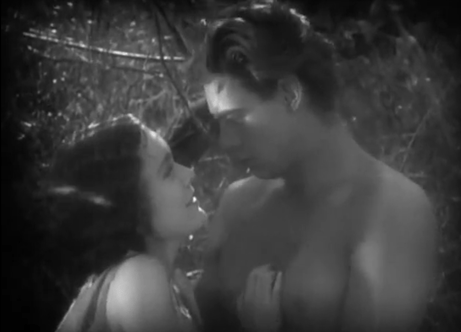 Despite being dated and marred by the imprint of imperialism, this initial entry of the well-remembered Tarzan serial of the 1930s and 4os, based on the works of Edgar Rice Boroughs, is a surprisingly gripping pre-code tale of perilous adventure.
 Furthermore, Johnny Weissmuller is not even the first Tarzan (purportedly the sixth incarnation) but he outshines all his predecessors who have been lost to history. It helped that he remains one of the most iconic Olympians and American swimmers of the 20th century, winning 5 Gold Medals. And he shows his prowess not only swinging from the treetops but in his true element, gliding through the water.
 As a young boy, no hero was greater in my mind’s eye than Robin Hood and only Star Wars held a more honored spot in my childhood imagination. Because, to this day, Robin of Locksley remains the quintessential hero of mythical lore. Part historical truth mostly canonized myth and that’s the beauty of him. We can believe in him — see how he was in so many ways real but in the same instance larger than life.
 From what I know from Robin Hood folklore, specifically Howard Pyle’s seminal edition, the film is surprisingly true to many of the origin stories and tales that have long since proliferated. As an audience, we become privy to the first meetings of Robin and the formidable Little John (Alan Hale) who lays him out in the local stream after a bout with quarterstaffs. Then, in another instance, Robin provokes the portly Friar Tuck (Eugene Palette) who happens to be a master swordsman and a lover of good food and drink. Still, other vignettes include Robin’s successful masquerade as a lowly archer who wins the grand prize at the Sheriff of Nottingham’s Archery Tournament.
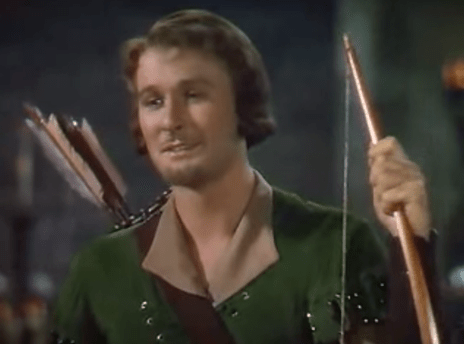 For me, the reason very few heroes surpass Robin Hood is based on his innumerable qualities. He’s a superior fighter with bow, sword or staff. He’s blessed with a wonderful wit and impressive leadership capabilities. He wins over the girl with his charm. He gets to live out in the forest with his best friends, eating great food. But most of all, he’s a rebel with a heart of gold, robbing the rich to feed the poor.
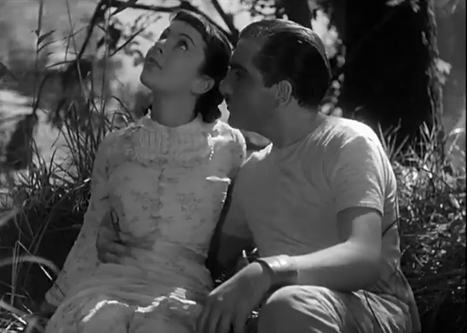 It’s only 40 minutes — hardly a feature film and more of a featurette, but Jean Renoir’s truncated work, A Day in the Country, is nonetheless still worth the time. Admittedly, I still have yet to venture to France and I hope to do that someday soon, but this film propagates marvelous visions of the countryside that resonate with all of us no matter where we hail from. Those quiet jaunts out in nature. Sunny days perfectly suited for a lazy afternoon picnic. Peacefully gliding down the river as men fish on the bank contentedly.
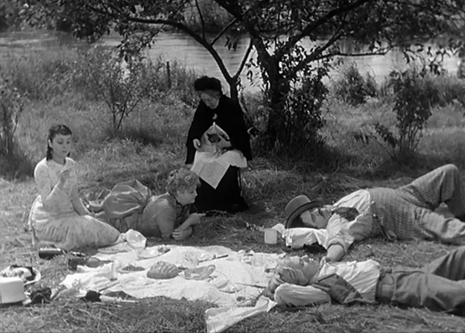 As always these characters set up Renoir’s juxtaposition of luscious extravagance with the earthier lifestyle of the lower classes. However, there is a geniality pulsing through this film, with Mrs. Dufour exclaiming how polite these young men are–they must be of good stock, obviously not tradesmen. Even Mr. Dufour is a good-natured old boy who gets fed up with the elderly grandmother, but he willingly takes the boys charity and advice when it comes to the prime fishing holes.
 We get the essence of what is there and we can still thoroughly enjoy Renoir’s composition. His is a fascination in naturalistic beauty where he nevertheless stages his narrative to unfold in time. But really this mise-en-scene created by the woods, and meadows, trees, and rivers really function as another character altogether. And when all the players interact it truly not only elicits tremendous joy but an appreciation for Renoir’s so-called Poetic Realism. Whether he’s capturing a woman swinging jubilantly on a swing or framing a shot within the trees, we cannot help but tip our hat to his artistic vision. If his father Auguste was one of the great painters of the impressionist era, then Jean was certainly one of the most prodigious filmmakers of his generation, crafting his own pieces of impressionistic realism. In fact, with father and son, you can see exactly how art forms can overlap on canvas and celluloid. They truly share a fascination in some of the same subjects. Universal things like nature and human figures interacting in the expanses of such environments. It’s beautiful really, even in its pure simplicity.
 “He spat on Balzac!”
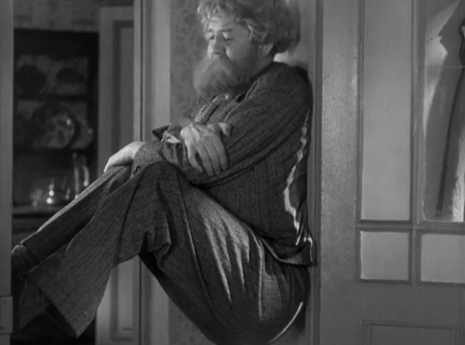 Soon Boudu is wrapped up in middle-class luxury that he didn’t ask for, at the behest of Edouard who takes an initial liking to this bushy-haired man he happened upon. After all, he is intent on playing savior and Boudu obliges. It’s in these forthcoming scenes that Renoir examines class in a satirical way, feeling rather like a precursor to some of Bunuel’s later work, without the religious undertones. And yet for some reason, we cannot help but like Boudu a lot more. True, he is loud, messy, rude and unruly, but there’s something undeniably charming about his life philosophy. There are no pretenses or false fronts. He lets it all hang out there. In this regard, Michel Simon is the most extraordinary of actors, existing as a caricature with seemingly so little effort at all. He steals every scene whether he’s propped up between two door frames or cutting out a big swath of his beard for little reason.
 Charity in a sense is met with scorn, but it feels more nuanced than, say, Bunuel’s Viridianna (1961). In many ways, Boudu seems like a proud individual or at least an independent one. He hardly asks for the charity of the wealthy, and he’s content with his lot in life, even to the extent of death. It’s also not simply chaos for the sake of it, and he hardly lowers himself to the debauchery of Bunuel’s unruly bunch. Still, he obviously rubs the more civilized classes the wrong way, by scandalizing their way of life and trampling on their social mores without much thought. It’s perfectly summed up by the last straw when a fuming Edouard incredulously exclaims, “He spat on Balzac.” The nerve!
 The Awful Truth came out of a trend that was in vogue during the 1930s. It’s called a comedy of “remarriage.” During the Hays Code era, it allowed films to nimbly skirt the whole issue of divorce and extramarital romance. We would see it again in the more remembered screwball His Girl Friday and various other forms as My Favorite Wife and The Lady Eve.
 Peter Lorre has a face that will forever live in cinematic infamy, and it started with M. In truth, Fritz Lang’s drama involving a serial killer feels fresh and engaging even after all these years, maybe because humanity hasn’t changed all that much. We still murder, we still kill, we still seek justice, we still give into our base desires, and there’s not a perfect person among of us. Each one of us has our faults — our own personal downfalls.
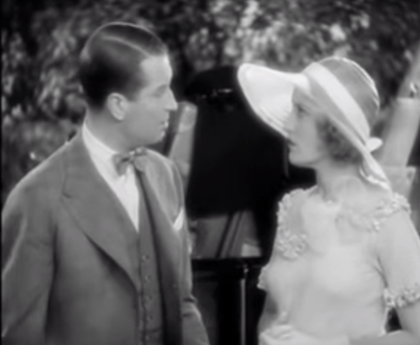 This is unequivocally the age of sound! That’s what this film proclaims from the rooftops with its symphony of syncopation as the world of Paris awakens from its slumber. Its opening rhythms are pure ingenuity and the glorious unfoldings never cease for the rest of the cheery production.
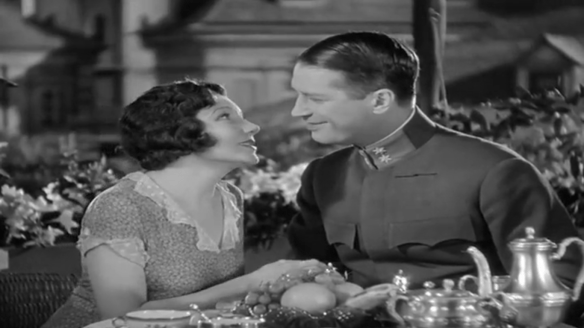 One would never think that one well-placed wink would change the course of an entire life or be the basis for an entire film, but on both accounts it is true. Ernst Lubitsch’s The Smiling Lieutenant represents all that is good and right about one of his films. It’s light and airy with a dash of charm and a tune in its heart. It’s light on its feet with humor and somehow maintains its self-respect, much like the man at the center of this one (Maurice Chevalier).
 But Lubitsch’s final twist is completely out of left field and a completely comic inversion of what’s supposed to happen — capping off his oeuvre of song, suavity, and sensuality in high fashion.
