I Walked with a Zombie (1943): Shadow and Psychology

IwalkedwithazombieThe film commences brilliantly as Frances Dee can be heard in voiceover with almost fond recollection, matter-of-factly stating, “I Walked with a Zombie.” The way she expresses it immediately debunks anything we might think from an admittedly exploitative title. Producer Val Lewton does not settle for a straightforward slapped together horror flick.

His ambitions were always to elevate the concepts he was handed into something indelibly interesting. Our heroine Betsy Cornell (Dee) is a Canadian nurse who applies for a position taking care of a man’s wife. It’s all very mysterious, but she’s eager to work and sets sail for San Sebastian where she will be in the service of Mr. Paul Holland (Tom Conway).

Lewton re-framed the source material into a Jane Eyre tale transplanted to the West Indies. Here Ms. Cornell arrives by boat, immediately struck with a callous first impression of the aloof Mr. Holland. He easily dismisses her childhood fear of the dark, while noting he never should have hired her.

I still contend most children are never afraid of the dark per se but what might come out of it. It’s the fear of an unknown thing lurking out of reach. Meanwhile, his younger brother (James Ellison) is a charming fellow who immediately takes a liking to the new nurse and helps to make her feel welcome. We have polar opposites set up and obvious points in a possible love triangle.

However, in following the plotting of Bronte’s work, the elder half-brother is tortured by a secret, literally locked away. It is, in fact, his mysterious wife, whom Betsy unwittingly meets one night, upon hearing a startling noise. At first, she’s taken aback by this specter of a woman, this ghost, this living dead.

But as her kindly doctor explains, supplying a firm foundation of ethos to this enigma, a portion of the spinal cord is burned out, and it has permanently made her a sleepwalker who can never be awakened. Aside from a potentially dangerous foray into shock therapy — to induce some sort of coma and hope for the best — her future prospects look dim. That is unless there’s an alternate means to bring about healing.

Like the Wolf Man before it, we are introduced to a stylized but nevertheless real locale that thrives by mixing the logical digressions that come from our world with ghostly influences. Screenwriters Curt Siodmak and Ardel Raye create a kind of poetic mythology for a supernatural conclusion to be crafted out of. Whether they meant to or not, they succeeded in canonizing zombies in the same manner werewolves were developed in Siodmak’s earlier script.

What’s lovely is how Betsy foreshadows all sorts of events to come and there are strangely mesmerizing objects to captivate us. The figurehead of a slave ship features Saint Sebastian himself pierced by arrows. It lends this undercurrent of the brutish injustices of the slave trade to the landscape we must come to terms with.

These very same traditions have the same weighty dolefulness but are also imbued with an otherworldly quality of its own. It gives this shading to the African-American characters who seem so happy-go-lucky like other Hollywood creations, and yet there’s an almost unnerving sense about them as if something is working under the surface. It’s hard to put an exact finger to it, but though they look similar, they aren’t quite straightforward stereotypes.

A local club singer chants an island song mixed with family folklore telling of the deep-rooted tragedies of the Holland family. The local populations are also adherents of local voodoo customs, and their nightly drumbeats ring out through the air ominously, picked up by the tropic winds. It’s yet another layer to this continually bewitching atmosphere.

Another character of crucial importance is Mrs. Rand, the deceased patriarch’s widow, and Wesley’s birth mother.  Her own station in life, as the wife of a Christian missionary, creates a juxtaposition between a so-called normal religion and a darker, more dubious strain.

Because it cannot help but bump up against the voodoo rituals even as black and white people now exist together. In fact, one might say the religious rituals become nearly intertwined. Betsy begins to realize maybe some powers at be might be capable of lifting the spell that has entranced Ms. Holland, even as she herself falls for the comatose woman’s husband.

As such, it is not horror lingering over the frames but a near mesmerizing catatonia. It carries you up in its grips from start to finish, trying to decipher what to make of such a vision. Enchantment, ugliness, cruelty all apply. And yet it’s difficult to cry out and out evil against the people partaking in these dances or voodoo ceremonies. The acts themselves might be evil, but the people are held in the grips of entrancement. Everyone is, to varying degrees, weighed down with desolateness even before the fateful dead are laid to rest.

We must recall the beginning voiceover once more. The fact Betsy walked with a zombie might hold an inherent element of terror, but more so, it carries with it a despondency that cannot be lifted. It hangs over us and haunts us just as the lurching Carrefour does throughout the picture.

The beauty of most any of the Val Lewton films of the 40s is how the studio and the audience expected one thing — a low budget horror flick with a provocative title — then the producer turned around to make micro-budget gems steeped in shadow and psychology. They have more depth and complexity than they have any right to.

Each entry boasts sumptuous visuals hiding weaknesses in the budget department to fully develop, not necessarily a world, but the impression of a world. One might contend the latter is far more powerful in an expressionistic capacity. Arguably, Lewton had no more formidable collaborator than director Jacques Tourneur who had an established knack for conjuring up the most splendid atmospherics.

This time he is aided by the black and white photography of Roy Hunt. In their hands, every character has a doppelganger in the form of shadows creeping along the walls with their human counterparts. It’s developed with the utmost efficiency, which seems all but a lost art these days.

But the astounding economy is matched only by a ceaseless ingenuity. Because the artfulness they managed to accomplish on the very same shoestring budget, is part of what makes them marvels even today. If you willingly invest your time in one of these RKO pictures, it’s very likely you’ll be met with a lasting impression. The dividends, as far as cinematic capital is concerned, are enormous.

4/5 Stars
The Third Man At 70

Oh, how I love The Third Man (or The 3rd Man). Regardless of how you write it, Carol Reed‘s post-war noir is one of those special films that was a case of love at first sight.  I knew some of the reasons already, but watching the film with a friend (on his first viewing) teased them out even more so. It was a nice reminder of why this film continues to enchant me and engage me on fundamental levels time after time.

Dutch Angles in Post-War Vienna

third-man1

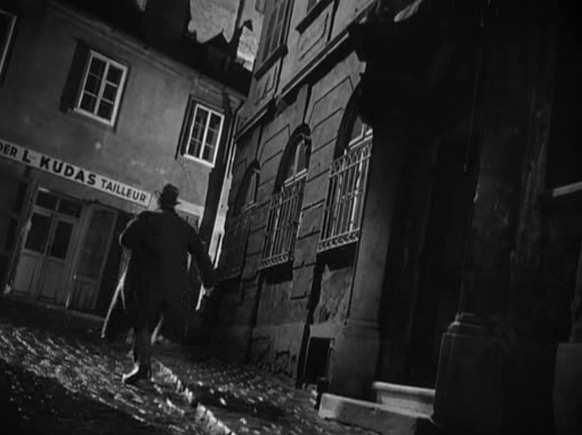
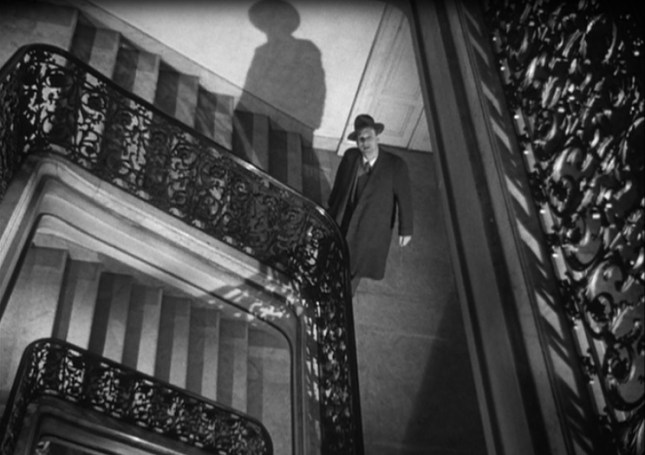
My buddy was right. The Third Man is inherently disorienting. Visually the film presents all of its subjects from a stilted perspective. They’re always slanted, featured in crammed together close-ups, and never quite sitting square in our line of vision from the camera’s uncomfortably low angles. Whether we realize them or not, there’s no doubt the dutch angels (from “Deutch” or German) manipulate how we experience the action.

Starting with these formalistic elements, the mood is perfectly ingrained in the fundamental building blocks of the story with the crumbling city sectioned off into its uneasy alliances between the WWII victors. We have a crosshatching of districts and a melting pot of language and objectives.

Thus, when the blundering American author Holly Martins walks into the story, he, like his audience, has very little understanding of what is going on. His level of comprehension is lost in translation even as he goes around trying to get to the bottom of the scenario. Joseph Cotten does a fabulous job in the part effectively becoming our eyes and ears in the environment.

And this strong association is part of the reason I so vehemently decried Netflix’s tampering with the original film’s ambiguity. If you’re like me and Holly Martins, you’re no polyglot, aside from a few token phrases here and there. When the old man or woman in the house rattles off something, you’re lost in the unfamiliarity. You’re waiting for someone to explain it, even trusting on the good graces of others. In some regards, you are helpless.

It’s part of the way the film toys with us. You realize the whole time maybe you’ve been played and a whole level of the film’s context has flown over your head. Subtitles alleviate our ignorance but also cause us to lose out on some of the perplexity felt as a result of such a global battleground. The Third Man capitalizes on the richness of these cultural ambiguities.

The Zither & Herb Alpert

going places

The music is next on my list. My friend was right again. The title song’s awfully familiar and after Anton Karas got plucked off the streets of Vienna to provide the lively but strangely hollow and foreboding soundtrack, it would go onto some acclaim on the music charts (including a guitar rendition by Guy Lombardo).

The tune is one of a select few early movie themes to hit the mainstream remaining fairly recognizable even today. This is even more surprising given its inauspicious roots. My friend connected the dots later only to realize he’d heard the particularly Latin-flavored version by Herb Alpert and The Tijuana Brass on their album !!Going Places!!  He taught me something new, but you learn a lot being friends with an avid record collection.

Quick Pacing

img_thirdman

It might be a mere generalization, but I feel like there are often complains leveled at films of yore that they languish, there’s too much talking, and they don’t boast enough action. But I think my buddy was spot on once more. The Third Man has surprisingly timely pacing (aside from the deliberate final shot).

One of the practical reasons for this might have been director Carol Reed literally being hooked on the stimulant Benzedrine to get through his hectic shooting schedule around the clock. This might be one explanation for the zip, even in the opening monologue. However, there’s also an undeniable drive to The Third Man because it’s stuffed with questions, mystery, and underlying tension.

As information begins to reveal itself, we have screeching taxi rides, reveals, harrowing meetings on Ferris wheels, and climactic chases sequences clattering through the rubble-strewn streets and labyrinthian waterworks. But the reason it grips us has to do with falling in with intuitively compelling characters. That’s as good a place as any to bring him up…

Harry Lime: Super-Villain?

welles_thirdman5

The final observation I found to be particularly interesting was my buddy’s acknowledgment that Harry Lime felt surprisingly modern, a precursor even to the current villain. I want to tease out this idea even more because I’ve been drawn to movies that layer their menace. I can think of the likes of Black Panther or Mission Impossible: Fallout as two recent examples.

However, what I mean by this is how you don’t quite know where the trouble is going to come from, who you can trust, and who will betray you. It makes for a glorious puzzle to navigate. Is Calloway someone we can give our allegiance to? He’s an awful stickler for the law without clemency.

Mr. Crabbin is an unnerving chap before we ever learn who he is and the shifty-eyed likes of the Baron, Dr. Winkel, and Popescu have far more to tell than they willingly divulge. The woman Anna (Valli), who loves Harry, is almost delusional with her unwavering love for a scoundrel. Even Cotten, our initial hero, lumbers around like a drunken idiot, thinking he has everything figured out.

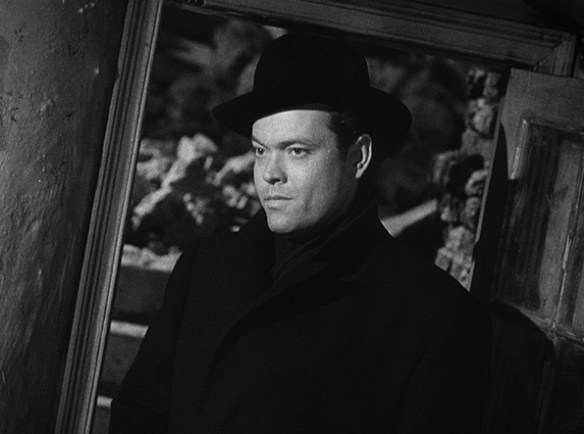
And of course, there’s Mr. Harry Lime himself. The most iconic charismatic, machiavellian anti-hero. Orson Welles makes him a dashing shadowy specter, larger-than-life and theatrical. But there’s no discounting the mercilessness pulsing through him. None of these characters are straight-laced by any stretch of the imagination. They have some flaw, evil, or vice dragging them down. Lime just remains the mastermind and the poster boy of it all.

The one character who seems like a generally agreeable chap is, of course, the one who SPOILERS gets it. Somehow it fits the times and the world. It couldn’t be any other way.

So 70 years on The Third Man still remains one of the preeminent examples of a quality thriller, pulsing with atmosphere, style, romance, and intrigue. To say they don’t quite make movies like this anymore is immaterial.

What’s truly staggering is how brilliantly Carol Reed’s film still holds up. I look forward to many more viewings to come, preferably with a friend or two. After all, they’re the ones who help me appreciate classics like these with new eyes.

Happy 70th Year to The Third Man! You’re still looking great!

I’m also proud to be a part of the Classic Movie Blog Association celebrating 10 years of existence. Here’s to many more.

A Tree Grows in Brookyln (1945): The Precursor to I Remember Mama

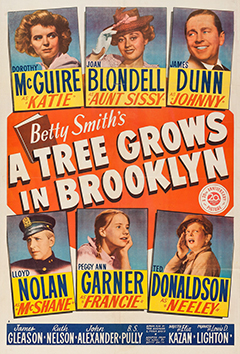
ATreeGrowsInBrooklyn1945Poster.jpgThe reveries of a Saturday afternoon in childhood are where A Tree Grows in Brooklyn chooses to begin and it proves a fine entry point, giving us an instant feel for the world the Irish neighborhood of Williamsburg in Brooklyn. Its contours are impoverished, even harsh, but also richly American.
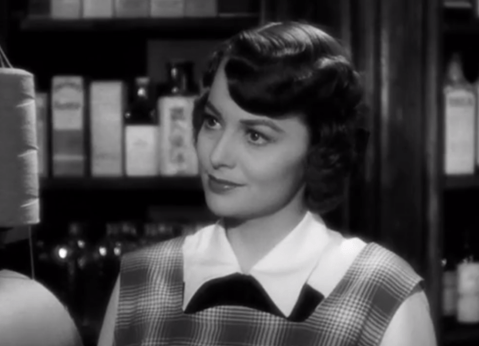
There is a mother (Dorothy McGuire) who is practical and ever-resourceful, scrimping and saving to eke by an existence for her family. She faithfully pays her family’s due to the door-to-door insurance man Mr. Barker, who is always ready to sow some juicy gossip around the community.

It occurs to me that Katie Nolan (McGuire) is a precursor to Irene Dunne’s role in I Remember Mama. But there is also a near-callousness that is lacking in the latter part, which is mostly sunshine. In this regard, it gleams with a certain individual truth. Struggling  to make ends meet, Nolan asserts, “My kids are going to be something if I have to turn into granite rock to make them.” She dishes out tough love and makes difficult decisions in what she deems is their best interest — an extension of her undying love for them.

There’s an extraordinary shot showing bickering wives, stories up in their apartments, with clotheslines strung up every which way and a man trying to fix the source of their problems.

Nearby sits the little girl enthralled with her book and you understand first hand the power of the library. Because with the internet, television, and movies we’ve deluded them but, at a certain time, books were a way of escape, of learning, and open avenues to distant places.

Francie (Peggy Ann Garner) is, without question, the emotional center and if we are to extend the earlier juxtaposition further, she is an analogous version of Barbara Bel Geddes’s character in I Remember Mama. We view the memories of the past through their impressionable eyes.

She too is captured by her imagination — the rapturous escapes that stories and music can provide a fanciful mind like hers in the station of life she finds herself in. Francie’s deepest wishes are granted when she is able to attend a fine school where her benign teacher gently cultivates her passions.

The advice passed down to her is empowering as Francie is inspired to be a writer. She must write about the things she knows imbuing them with truth, which can then be dressed up with the whims of her imagination.

It’s true Francie maintains an underlying sweetness and innocence even in the midst of heartache. For instance, there is the annual Christmas ritual retrieving discarded trees and boy do the kiddies bring home a whopper. Its presence alone puts some yuletide cheer and the smell of evergreen into their holidays.

It only takes such a minor yet meaningful Christmas scene to humble us in our modern tendencies so that we realize how off-base our modern celebrations are. These folks have nothing and yet to look into their eyes you see such contentment in the singing of a song and quality time spent together.

However, the most debilitating ideology in the film is the concept of neverending cycles — believing the lie that change is impossible and things will never be different. Because already you have a self-fulfilling prophecy. We see it most obviously in the marriage of Francie’s parents.

Johnny Nolan is an ebullient father bred on dreams and singing. There’s always a song in his heart whether “Swanee River” or “Sweet Molly Malone” and unfortunately, for the sake of his family, a bottle in his hand. His daughter memorializes him aptly, “He had nothing to give but himself but this he gave generously like a king.”

The words stand tall and true. To my mind, I have not seen such a compelling father finger as Johnny Nolan in some time and the reasons are as obvious as his flaws. He’s an alcoholic. He makes promises he can never keep. He’s practically useless when it comes to providing for his family. And yet through all his shortcomings shines a light of generosity and geniality that positively warms the cockles of our heart. We cannot condemn him without loving him just as deeply. There you have the testament of a truly impactful character.

Aunt Sissy (Joan Blondell) proves another bright spot in the film and her vivacity, much like her brother-in-law’s, injects the film with a buoyancy making us grow fond of them even as their flaws are laid fully bare. Sissy has her own struggles holding onto a marriage with a couple of husbands already coming and going. Her escapades leave her baby sister shaking her head and hoping to shield her kids. And yet even Aunt Sissy has her admirable qualities.

The local police officer Mr. McShane (Lloyd Nolan) walks his beat with a quiet integrity, disregarding any stereotypes of policemen and fashions them into compassionate people the world could probably use more of. Meanwhile, kind old Mr. McGarrity (James Gleason) heaps neighborly generosity on the Nolan’s in an effort to help the overextended Mrs. Nolan make ends meet.  It’s the benevolent spirits in the film who are quietly memorable.

Too blinded by the resonating sentiments, I failed to see the obvious denouement of A Tree Grows in Brooklyn, which nevertheless proves deeply satisfying. As its title suggests, out of death and decay can grow new hope. It comes from hardy stock and dutiful cultivation, which all seem integral to the American way of life.

For me, it’s almost unthinkable to think the man who played a small part as Googie in City for Conquest only 5 years letter would alight on a directorial career that shook Hollywood over and I don’t think that’s hyperbole. He brought us Brando and Dean, conquered stage and screen and left an indelible mark on film acting forever. Of course, we’re talking about Elia Kazan and here he has his first prominent muse Dorothy McGuire (a founding member of the La Jolla Playhouse) who is often an unsung star fitting as she’s playing an unsung heroine

It seems a fitting entry point into Kazan’s career as it is an immigrant story and he came from such a family. It makes no difference that he wasn’t Irish because we can surmise the essence is much the same. He believes in the American dream no doubt and the love and integrity that can see people through the turbulence of life.

However, perhaps the most striking acknowledgment has to do with the fact this story does not thrive on intensity — one might see that as being a marker of Kazan’s most noted works — it’s tenderness mostly. But then if you stop a moment and think of Brando slipping on the glove belonging to Evie (Eva Marie Saint) or James Dean crying to his father (Raymond Massey), you realize he never lost those sentiments. What made his films was the real emotions that reach out to us. He never allowed for those sensations to waver. There you have an integral element of his success.

4/5 Stars

To Each His Own (1946): Olivia de Havilland Does Melodrama Well

To Each His Own 1.png

Ginger Rogers purportedly passed over the script for To Each His Own because, at first glance, it’s hardly a glamorous role; but for the right person, it could be something unquestionably special. That actor was Olivia de Havilland.

Certainly, the production is bolstered by Mitchell Leisen, a mostly forgotten director who made a string of highly memorable comedies and romantic pictures during the 30s and 40s. It’s no different here. And then you have Charles Brackett, formerly half of the lucrative writing partnership with Billy Wilder before alighting on his own as a producer. None of that can be discounted nor a handily-played dual debut by John Lund. But we must return to Olivia de Havilland.

In the opening interludes, she comes off as acerbic and curt, a forlorn type of person. No relationships or community or people to worry about or to worry about her. She’s joined by another middle-aged man named Desham (Roland Culver) and they make quite the pairing, taking on the night watch duty over the holidays so others might celebrate.

He coolly makes the observation that people like themselves are alone for one of two reasons — not caring enough for other people or caring far too much. Though Ms. Norris divulges little, we instantly gather she fits into the latter category. This is what starts us on the journey through her past, which led her to a man named Bart Cosgrove (John Lund).

But before their fateful meeting, the flashback sets up the world of Pierson Falls, familiar to anyone who has glimpsed It’s a Wonderful Life with its parochial atmosphere and local drugstore. Match that with the jingoism out of Hail the Conquering Hero and you have a slice of life in this little town during WWI.

John Lund is sour and far harsher than I recall in say The Mating Season and it serves him quite well. He and his co-pilot (the always reliable Frank Faylen) are the two jaded flyers who get the hardiest of welcomes from the townsfolk. However, this is their umpteenth stop on an endless bond tour. They’ve become overly familiar with people like Bernadock Clinton (Arthur Loft) the asinine town cryer making a continual bother of himself ushering the flyers around like prized sideshow attractions. And it would be more of the same if not for the meeting of the flyer with the town’s most eligible gal.

To Each His Own 2.png

The heightened emotion of wartime uncertainty swirls around them and they share a rapturous, if whirlwind, romance that Captain Cosgrove was never expecting. All too soon, he’s off again leaving his newfound love behind and to use euphemistic vernacular, they’ve created a ticking time bomb.

Here To Each His Own enters its scandalous phase where Jody must confess to her father that she’s had a child out of wedlock. The old man (Griff Barnett), with the steady voice, sounds uncannily like Will Geer and spouts unassuming wisdom, “We don’t judge each other. We love each other.” But small towns are not usually as forgiving and so lest people talk, Jody decides to leave her child on a doorstep. Hoping to pick her child up later and “adopt him.”

Instead, a couple who’ve been tragically hit with a miscarriage are thankful for this second chance at cultivating life and they take the child. Of course, the couple is one of Jody’s old beaus and another peer. They got married because Jody rejected him. The dramatic situation is clear enough.

When the mechanizations of the plot become clear, it also becomes clear just how awful the circumstances are — just horrible. They’re apt to tear your guts out. After the passing of her father, Jody, who needs a job, proposes coming on as a nursemaid, but there is no compassion there. She gets pushed out of the scenario thanks to a jealous wife and a husband who still holds a boyhood crush.

She has no choice to move on and, being a go-getter, she takes charge of a bootlegging business and turns its front, Lady Windemere’s, into a legitimate international operation proving highly successful. Whenever she has a free moment, Jody does her best to manufacture chance encounters just so she can glimpse a few minutes with her son who is growing in knowledge and stature. But she knows deep down, with each passing year, little Gregory is less and less her son.

Melodramas or so-called “women’s pictures” can be hit or miss depending on how thick they lay it on and how much the music swells at the exact moments of deepest impact. But in full consideration, To Each His Own might be one of the finest such pictures to come out of the 1940s, and it’s no small coincidence that it shares that distinction with the thematically similar Stella Dallas.

When it’s all said in done, it’s about heartwrenching relationships between mothers and their children and when the mothers are portrayed by such stalwart titans as Barabra Stanwyck and, in this case, Olivia de Havilland; the drama enters territory that can easily pierce the heart to the core.

To Each His Own is also somehow akin to Random Harvest with dramatic irony being integral to the plot — one character knowing something that deeply affects how they live their life — except the person they care about knows nothing about it. This is by no means a criticism either but simply an acknowledgment that these stories can tug at the heartstrings with great fervor.

Again, it comes down to the players as much as the scenario. They must be people that we are capable of feeling great pathos for. Certainly Stanwyck, Greer Garson, and Ronald Colman and even Olivia de Havilland. Maybe she’s known for being difficult or a perfectionist or what have you, but that has nothing or maybe everything to do with her as an actress.

She makes us care about her as she moves from every stage of her life. And I say life because it feels less and less like a performance and more like real life. She, like Stanwyck before her, is able to carry the weight of youthful exuberance and maternal toil equally well.

Far from being unglamorous for winding up being mother to a grown son, I think a film like To Each His Own makes you appreciate the beauty of de Havilland even more. Because there’s a realness and a depth there that you would have never gotten in a career of roles opposite Errol Flynn. You just wouldn’t.

That’s part of what makes it special. And like the other previously mentioned titles, it goes out with a few tears but also espousing dreams. We can question the final moment — the rationality; the catering to the audience — or we can just enjoy it like a wedding feast with the ones we love.

4/5 Stars

Gentleman Jim (1942): Biopic by Marquess of Queensberry Rules

Gentleman_Jim_-_Poster.jpgBoxing movies and biopics are a mainstay of Hollywood. It’s an established fact so naming names is all but unnecessary. The affable brilliance of Gentleman Jim is its agile footwork allowing it to sidestep a myriad of tropes attached to biopics and the schmaltz that Old Hollywood was always capable of serving up.

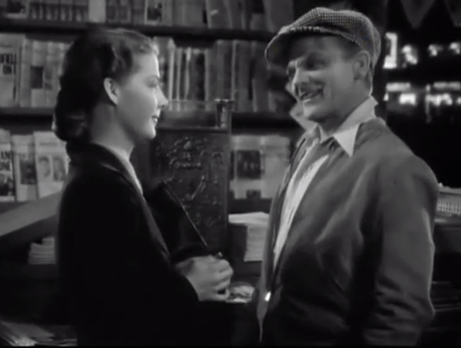
Certainly, a great deal of credit must be heaped upon Errol Flynn who seems to relish the very opportunity to portray such a magnetic man as James J. Corbett — always perceptive and driven with a bevy of tricks at his disposal to get ahead. I can’t help but hear Butch Cassidy’s words in my ears, “I got vision, and the rest of the world wears bifocals.“ Corbett could live by that credo too.

Authenticity is to be trodden upon softly and so there is a sense Flynn has taken the “gentleman” moniker of his namesake and fashioned the role around his own roguish charm, good looks, and irrefutable charisma. Thus, it becomes almost second nature for him to play the part because there’s this sense that he’s playing what he knows best, and loving every minute of it.

He’s meant to come from hardy Irish stock with a jovial father (Alan Hale), two boisterous older brothers, an awestruck sister, and the ever maternal mother figure. Around all these types Flynn and Jim feel like outliers. They’re not meant to fit into this family and yet it somehow manages to work — Marty McFly anyone?

The script, co-written by Vincent Lawrence and Horace McCoy, begins by drawing up the story in a most agreeable fashion that takes into account our hero’s life but also considers any number of stray antecedents that led to his rise in the boxing world.

Boxing in its most barbaric forms is being outlawed across the nation. Jim and his hapless buddy Walter (Jack Carson) spy the prominent higher-up from their bank at a fight only to have the police raid the event. Soon they’re all in prison with their prominent friend and Jim sees it as the perfect opportunity to earn some favor. Soon Judge Geary has brought on his young protege as a new brand of fighter: one with class.

Being a fast worker, Jim gets himself into the elitist Olympic Club doing his best to look the part of a  well-to-do gentleman, despite hardly having a dollar to his name. Concurrently he begins annoying the gentleman around him with his constant stream of boys sent around paging him.

It becomes quickly apparent that Gentleman Jim exists in a world, not unlike that of Walsh’s Strawberry Blonde (1941), where America seemed to have acquired a newfound propriety. Nasty pugilism had been replaced with marquess Queensberry Rules and someone like Jim Corbett was able to become something.

He soon is acquainted with Ms. Victoria Ware (Alexis Smith) who along with her family are members of the social elite and patrons of the bank. I must admit that the Canadian actress has all but slunk under my radar aside from her part in Conflict opposite Bogart.

But I have rectified the oversight because she gives a lovely turn opposite Flynn allowing the sparks to fly in the most vehement way possible. High-class respectability can only get you so far. Sometimes you just want to see someone get wailed on for their own good.

She has just about enough of his conceited ways finding him utterly infuriating with his faux polished manners and overblown head. He has the gall to criticize her idol worshipping of such an eminent legend as John L. Sullivan. Corbett being an utter nobody himself. But he’s got ideas and the fancy feet to go someplace.

Upon leaving their little tiff, he dances his way back down the street zigzagging through oncoming passerby. He’s got John L. Sullivan (an impeccably cast Ward Bond) on the mind now. Because there was no bigger national hero, icon, and legend than John L. Sullivan. The film even evokes the famous phrase, “I just shook the hand that shook the hand of John L. Sullivan!” He was that big of a celebrity.

Backed by William Frawley in his corner, Corbett is soon on the rise taking on anyone who will get him some visibility. In the ring, the suave-looking Irishman is a model of agility and impeccable footwork. Though Flynn, to his credit, stood in for most of the scenes his flying feet were spotted by world-class former welterweight Mushy Callahan.

Many of the sequences capture the immersive even suffocating atmosphere of a boxing match through fairly furious cutting, especially for an old film. Inserting shots of the ring, mincing feet, and a flurry of audience reactions throwing together a swirling experience.

The most frenzied is a back and forth river barge slugfest with haymaker after haymaker flying through the air. Corbett and his hulking opponent wind up decking each other flat again and again.  Flynn takes a plunge into the water only to lay out his competitor for good minutes later.

The victor is finally raised as the police arrive on the scene to crash the proceedings and all the spectators jump ship in the most tumultuous and mayhem-filled denouements to a fight you’ve ever witnessed. The beauty is we get an almost birdseye view of the madness from the cheap seats and we see on what a large scale everyone is frantically escaping. Jumping into the drink. Screaming and shouting. It’s the kind of bedlam that’s contagious and a real enjoyment from reel to reel for some inexplicable reason.

Surely the fight to top them all is Jim Corbett against John L. Sullivan. But just as important as the actual bout is the skirmish going on outside the ropes. As the telegraph lines are flooding the country with news round after round, Corbett’s clandestine backer watches expectantly for him to get clobbered.

Meanwhile, Ms. Ware’s father with a glint in his eye eggs her on very tenderly toward the most antagonistic man in her life and subsequently the most important. In the movies at least, the people who detest each other the most wind up making the most passionate romances.

Aside from love, Gentleman Jim is refreshingly light on heart-wrenching drama or needless sentiment for that matter. It slips up in one solitary moment where a gracious Sullivan looks back wistfully at an illustrious career and pays his respects to Gentleman Jim. If anything it shows that Flynn can play genuine just as he can slather on the charm.

For contemporary audiences, it no doubt carried a sardonic edge as the actor was simultaneously embroiled in a scurrilous court trial that all but ruined his reputation for months on end.

Regardless, standing on its own merit, Gentleman Jim might just be one of my new favorite boxing exhibitions and the key is that there’s seemingly no agenda. It ebbs and flows around a life and characters without concerted realism or a need for continual heightened drama. And yet we still find it compelling and jovial with all sorts of moments worth telling the folks at home about.

In fact, that might just be Raoul Walsh’s finest attributes making every scene, action, brawl, what-have-you, totally immersive, effectively involving the audience through his array of shots. While Flynn and Smith are finally in each other’s arms, Jack Carson makes one final call straight to the camera shouting that the Corbett boys are at it again, duking it out in the parlor. Some things never change and the beauty is that we’re in on the joke as much as anyone within the frame. What a delightful biopic. Shamelessly fun to the very last word.

4.5/5 Stars

The Sea Hawk (1940): Errol Flynn Against The Spanish Armada

sea hawk 1940.png

Anyone who knows even a smidgeon about historical dates knows what the big to-do with 1588 is. If anything, 1588 automatically means the sinking of the Spanish Armada by Queen Elizabeth’s forces. So when a film opens in Spain in 1585 we already have a good idea of where we might be going. It’s the voyage to get there which matters most.

I can’t quite help but see the parallels between Spain and the Nazis aspirations for world domination. Because in the year 1585 there is a King in Spain named Phillip II who not unlike an incumbent dictator in 1940 was looking to conquer all of Europe with England being a priority.

With this historical backdrop, Warner Bros. gathers another classic ensemble anchored by Errol Flynn and director Michael Curtiz along with the steady support of Alan Hale. Following his debut as a film composer in Captain Blood (1935), Erich Wolfgang Korngold returns to similar waters to provide the scoring once more.

The film does feel empty without Olivia de Havilland but she was by this point fed up with playing second or third fiddle in swashbucklers. Be that as it may, Brenda Marshall (the future Mrs. William Holden). with a shining countenance, fills in swimmingly in one of her most prominent performances.

Leading his pride and joy The Albatross in the service of her majesty Queen Elizabeth, English captain Geoffrey Thorpe (Errol Flynn) makes a glorious conquest of an enemy ship. The thrilling surf soaked cannonball-filled action picks up right in the same waters as Captain Blood.

He just happens to commandeer the boat carrying the Spanish ambassador (Claude Rains) across the English channels. It is the conniving man’s mission to ingratiate himself with the queen and being the two-faced scoundrel that he is, he finds Thorpe to be an incorrigible scoundrel.

Though he makes a monkey of court and her closest advisor Lord Wolfingham who seems quite sympathetic toward the Spaniards on a whole, Elizabeth is fond of Thorpe’s patriotic brand of cheekiness. Envisioning vast spoils at the hands of the Spanish, he takes on a clandestine mission off the record albeit with the Queen’s permission behind closed chamber doors.

Cloak and dagger countermeasures ensue as Don Jose looks to ensure that his mortal enemy will be cut off before he has any chance to do anything. Although initially turned off by the scoundrel, his daughter soon becomes enchanted by his chivalry even as she fails to intercept him in time. They are riding off into a trap.

They set out through the sepia-toned world of Panama in search of vast treasures to be plundered from their enemies. Instead, they get brutally ambushed and pushed back into the mosquito-infested swampland by the waiting conquistadors.

Whereas Captain Blood found Flynn starting at the bottom in The Sea Hawk he is brought down into the pits of despair once taken prisoner. He and all his men are imprisoned aboard a Spanish ship, oarsmen chained to their places and beaten mercilessly. They grind it out and take the torture while biding their time behind the oars.

It takes time but eventually, a chance is created culminating in a brazen escape attempt. The midnight mutiny is aided exquisitely moment by moment by Korngold’s score put on full display and nearly urging the men on in their quest while instigating an underlying tension.

The final burst of drama comes when Thorpe returns to shore, reunited with his love in her carriage making amends and sneaking back to the queen’s castle cloaked by night. Making it to the queen proves a nearly insurmountable task with all the guards on high alert and Wolfingham waiting to intercept him for one final duel. But Flynn could never be outdone and Henry Daniell is certainly no Basil Rathbone. The Queen gets the news and vows to battle the Spanish Armada. We know the rest of the story.

While not quite eclipsing the jaunty heights of Captain Blood, this worthy successor nevertheless has its own share of thrills and fine action with Flynn maintaining high form. Perhaps it’s partially a testament to how captivatingly the film opens because it’s difficult for any picture to maintain that kind of vigor all the way through. But with a valiant effort led by its charming rapscallion and his crew, they wade through any slow passages to bring us back around to the grade-A entertainment of a quality swashbuckler.

The production thriftily saved on funds by repurposing the exquisite period costuming from The Private Lives of Elizabeth and Essex from the prior year. They become a perfect extension of the storyline to match Flora Robson’s formidable turn as the Queen. Meanwhile, Claude Rains is transformed into a dark-haired Machiavellian villain which he pulls off with the required amount of duplicity. This time around, Flynn’s character is based on the legendary Sir Francis Drake and yet like Robin Hood before, the Australian falls into the part and makes it his own through magnetism, athleticism, and wit. It’s another sterling achievement.

Queen Elizabeth gives one final stirring message that again can be taken in its time as a veiled indictment of Hitler’s belligerent aspirations. America had yet to enter the war and yet in over a year’s time, they would be right by England’s side. It wasn’t quite the surprise defeat of the Spanish Armada but it would take long hard years of waves of sacrifice and hard toil against the enemy. Winston Churchill is said to have admired this picture immensely and it’s hardly difficult to see why. It sums up his guiding sentiments exactly. After all, he is the man who famously said:

“We shall fight on the beaches, we shall fight on the landing grounds, we shall fight in the fields and in the streets, we shall fight in the hills; we shall never surrender.”

4/5 Stars

Note: I watched the original restored uncut version of the film that clocks in at 127 minutes.


City for Conquest (1940): James Cagney, Ann Sheridan, and Arthur Kennedy

city for conquest.png

Upon being immersed in City for Conquest, it feels like a cast of millions because so many familiar faces make an appearance for any given amount of time. Surely, the most important coupling is James Cagney and Ann Sheridan who are paired much in the same way as Angel With Dirty Faces (1938), playing childhood sweethearts who end up growing up together.

The picture also provides a scintillating film debut for young Arthur Kennedy, forerunning his turn playing the younger brother to another boxer in Champion (1949), opposite Kirk Douglas. Cagney’s not a bad man to have for a brother either and their dynamic is one of the most compelling aspects of this relatively slight drama.

It all begins with a rather peculiar framing device with an all-knowing drifter (Frank Craven) posing his commentary on “The Big Apple” and the world of interpersonal relationships that exist all around him. Because each individual has different talents and aspirations, at its most instinctual level, City for Conquest is about the trajectory of each character in tandem to one another. Thus, the story is most concretely driven by its characters while being enriched by that prototypical Warner Bros. grit and street corner brand of atmosphere.

For one, Danny Kenny (Cagney) tries his luck in the boxing ring taking on the name “Young Sampson,” not necessarily because of ambition but for the pure fact, it puts grub on the table and provides means to pay for his little brother’s musical education. Backed by promoter Scotty MacPherson (Donald Crisp) and supported by buddies Mutt (Frank McHugh) and Pinky (George Tobias), he tenaciously makes his way up the ranks toward the welterweight title.

Although he has nothing to show for it yet, Eddie Kenny (Kennedy) has a knack for compositions and he’s moved his brother with his city symphony, despite his lack of musical knowledge, because music has the power to speak to even everyday folks on a visceral level.

Meanwhile, Peg Nash (Sheridan) is terribly smitten with Danny and yet in the same breath aspires to be a first-class dancer. She meets an arrogant yet talented bloke (Anthony Quinn) out on the dance floor and is enticed with a career just like she’s always dreamed about.

The girl breaks his heart as much as you can break Jimmy Cagney. He takes it like a man while still feeling betrayed. To add insult to injury, his climactic bout is rigged due to the resin dust illegally sprinkled on his opponent’s gloves. Not only does Danny unfairly lose the fight but his career is permanently terminated with his eyesight impeded for good. Eddie shouts for the senseless beating to end as Peg cries to herself over the radio broadcast besides herself over Danny’s loss. It affects Danny physically while the others are casualties of a different kind.

It’s all but inevitable that the picture will end in some gangster knockoff job with the boy’s big shot pal Googie (Elia Kazan) seemingly ready to give the crooked wrenches who tampered with the fight their comeuppance. And the side of the underworld set on the east river with bodies to dispose of certainly has its place. But the underlining factor is despite their struggles, our three protagonists are allowed to find a swatch of contentment.

Eddie is finally able to realize his musical ambitions and gain the repute of the masses in his first show while Danny and Peg are reunited to live life as they were always meant to — together. Though her dancing aspirations have been curtailed and his sight lost, their future remains shimmering with hopefulness.

One could easily comment that City For Conquest‘s themes riff off of Golden Boy in the way music and the boxing ring are juxtaposed, one next to the other. In this case, it’s the two brothers who represent the two seemingly incongruent worlds. And yet the biggest implication is that a rough and tumble guy like Cagney can still have a beating heart and a sensitivity for song even as he goes day in and day out pounding people in the ring. The two worlds are not mutually exclusive by any means.

We certainly know who our main players are but again it’s the robust and jovial nature of the full ensemble making it even more diverting. Ward Bond shows up as a disgruntled cop there, Charles Lane as a no-nonsense promoter here, and Jerome Cowan is ready to rib his competition over a few boxing ring bets. They don’t have to be the focal point because that’s not requisite for being entertaining. I greatly admire the character actors of old for what they are able to create even within meager means.

3/5 Stars

Review: The Lady from Shanghai (1947): Funhouse Film Noir

the lady from shanghai 1.png

Before I knew the word “auteur” I think subconsciously I began to realize Orson Welles was gifted with this kind of innate artistic force that cemented all his pictures together. It’s part of what made him such a terror to work with and simultaneously a genius of such mammoth accomplishments as Citizen Kane and Touch of Evil.

However, even his lesser-known pictures addled by studio meddling or lack of funds, bear his mark of visual ingenuity and singularity. Run down the line from The Magnificent Ambersons to The Trial and Chimes at Midnight and you get the idea perfectly. Of course, The Lady from Shanghai keeps this same company capably.

At its core is not just one luminary performer but two: Orson Welles and his wife at the time, Rita Hayworth. From a purely cinematic perspective, no one had seen either of them quite like this before. Welles acting as actor, director, and producer introduces the story in first-person voiceover cloaked in an Irish brogue. Meanwhile, Hayworth loses her trademark luscious locks to transform into a bleached blonde.

To look at its opening frames alone is to acknowledge that The Lady from Shanghai is noir in nearly every conceivable way. Further still, it never abates along these lines traversing a befuddling narrative arc. It ultimately fails to ever gain clarity while casting Michael O’Hara as a fated hero destined for some inevitable destruction as the narrative zips along with lightning-quick pacing.

He is instantly pulled into the entangling web of Rosalie Bannister though it’s as much a testament to the seedy characters in her stead than her own inclinations. Hayworth gives us an immaculate conception of a femme fatale who is in one sense deadly and still somehow trapped within her very existence.

Even as O’Hara’s concerns for her well-being rise, he only gets dragged deeper into the dark depths of the squalid world around him. Because this particular tantalizing siren is surrounded by a sea of ravenous sharks just priming themselves to rip each other to shreds. Even if he tells himself otherwise, he’s chasing after a married woman, biting off something much too big for him.

Invalid attorney Arthur Bannister (Everett Sloane) clings onto his “lover” like a trophy because the truth is, he has dirt on everyone in his life — keeping them right where they serve him best. It’s his shifty valet (Ted de Corsia), constantly lurking around, who surmises that tough guys always have an edge. The movie is filled with such shifty characters.

George Grisby (Glenn Anders) is the most unnerving as Bannister’s equally conniving partner. His cackling chills the bones while his continuous obsession about murder and O’Hara’s own scrape with it becomes a queer fascination of his. The reason is still left unknown.

Welles’ camera lovingly adores Hayworth. As she learns to smoke, picking up the habit after seaside excursions or basking in the sunbeams on deck. She the epitome of classic Hollywood allure. It was never her hair anyways. I think it’s something in her eyes gleaming with inalienable life.

However, I want to hate most of the close-ups — as a visceral reaction — because I rarely feel an actor breathing down my neck and yet Welles readily goes back to them again and again in a way that’s unnerving. The worst of them all is, of course, Grigsby.

In fact, Welles continually chooses the most perplexing camera setups. It’s such that you cannot help but allow his perspective to infiltrate your own and dictate how you see things. He’s allowed for no other way whether it be the harsh low angles, overhead shots or cutting between various close-ups to create the patchwork of a single scene.

O’Hara joins the jocund company on the yacht while the picture benefits from early examples of post-war on-location shooting sweeping through Mexico, New York, and ultimately San Francisco. Though it has its share of perceived opulence, not least among it the borrowing of Errol Flynn’s prized boat for the production, equally visible is a certain degradation and subsequent atmosphere that can be traced to Touch of Evil a decade later. It’s an unsettling juxtaposition to go right along with the menagerie of players.

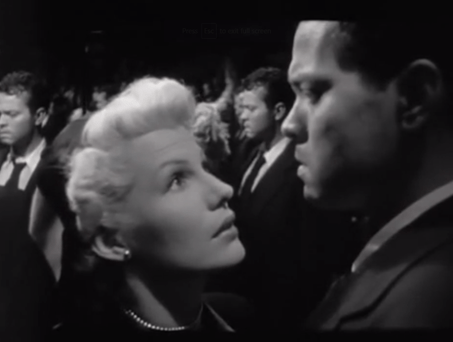
And if O’Hara’s own shark metaphors are not augurs enough, Welles has the gall to envelop himself and his lover in an aquarium where the sharks are literally circling in the background, magnified to almost inordinate proportions. The figures are black contours facing each other cloaked completely by the darkness, framed by the panes of the tanks. On the whole, it’s a definitive image of pure chiaroscuro photography, completely indicative of their fatalistic state.

Though the director’s picture originally clocked in at a whopping 155 minutes, it was slashed down to an expedient 87 minutes, which nevertheless means there’s not a continuous line of lucidity running through the drama. Because through outcomes that mostly elude us, O’Hara finds himself on trial for a murder that came to pass by means that are never quite expanded upon.

All of a sudden, he’s fighting for his very life by some cruel reversal. The most incongruous part is the very fact there’s almost a sing-song quality to everyone else from Bannister to Grisby to the District Attorney and the Judge presiding over the case to decide O’Hara’s life.

The flippancy to it all is disconcerting. It’s like Welles and Hayworth are caught in the ghastly webs of noir melodrama and no one else has the least bit of concern. It’s only a game to them. The doleful drone of the shipyards moan as the jury deliberates and Bannister all but admits he’s set O’Hara up for the gas chamber.

But the final act is quintessential Welles given the luxury of two fine setpieces. The creme de la creme is, of course, the funhouse hall of mirrors which is pure directorial showmanship, stylized with gunfire, broken shards of shattering glass, and images of our stars refracted in disarray. Words cannot do it the justice it deserves. It stands as a final testament to a picture that’s plot is about as wonky, unresolved, and inconclusive as any noir piece ever was.

But if you’re like me you get the sense Welles placed the utmost care in the aspects of the film that mattered most to him, namely the visual elan. Because certainly, Lady from Shanghai is a narrative mess. There’s probably little hope of actually justifying all of its leaps and bounds.  And yet in the same breath, it’s equally difficult not to concede how visibly delightful a feast it is.

Will it satisfy everyone? Certainly not. But that’s a part of what made Orson Welles an unprecedented mastermind. He very rarely catered to others and as a result, his films are usually creatures of artistic invention all their own. There will never be another Orson Welles. The same can be said of any so-called auteur. That’s what makes them special — their easily attributed individuality. No one else is capable of making the same exact film. As it should be.

4/5 Stars


Review: Cover Girl (1944): Hayworth and Kelly

cover girl 1.png

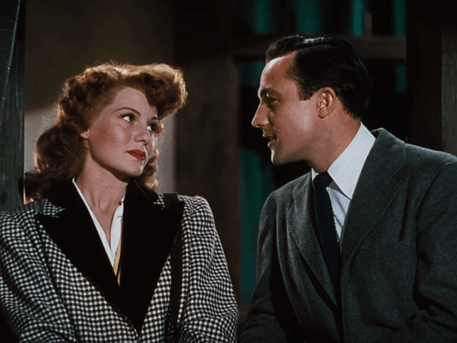
In the thick of the war years, Cover Girl stands as a beacon of unadulterated Technicolor lavishness permeating the screen. It proved a fine diversion from the day-to-day, which was wildly popular in its time as a vehicle for beloved screen star and pin-up, Rita Hayworth. Watching Cover Girl now, it’s become a fitting marker in the constellations of Gene Kelly’s career and the movie musical in general. We can easily use it to chart his course, culminating in later endeavors of the 1950s.

Because, while Hayworth is the most substantial star in director Charles Vidor’s movie, going from Brooklyn chorus girl to rising starlet of  Variety‘s Golden Wedding Girl Edition, Kelly was simultaneously given almost complete creative control over choreographing his numbers. He brought on a young man named Stanley Donen to help with the process. Already we have the roots of a partnership that meant so much for the exploration of musicals as a cinematic genre.

We also have music and lyrics provided by the heralded Jerome Kern and Ira Gershwin offering up “Long Ago (And Far Away),” one of the most mellifluous love melodies of the 1940s.

Rusty (Rita Hayworth) has a contented little life working at the hole-in-the-wall nightclub run by her boyfriend Danny (Gene Kelly). They work hard with rehearsals always at 10 am sharp, do their thing at night, and the after-hours are theirs to wile away dreaming.

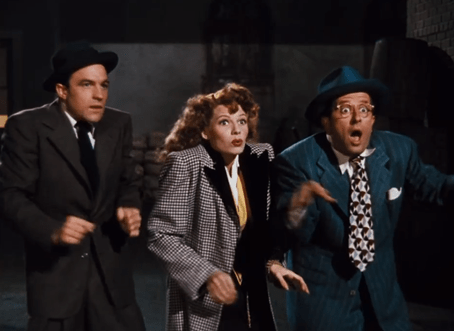
Her endearing pet name is “Chicken.” I’m not sure if we ever find out why. But their best pal, a goofy song and dance man, goes by “Genius” (Phil Silvers) and we know that’s in jest. Nevertheless, he’s their jovial third wheel as they always go to the same late-night hangout, order a heap of oysters, and go pearl diving. It’s a tradition and a habit but it also represents the dreams they haven’t quite reached yet.

“Make Way for Tomorrow” is a joyous romp preceding the palsy-walsy camaraderie of Don, Cathy, and Cosmo in Singin in the Rain (1952). It puts itself in line with all the great studio street corner numbers using extensive sets to create an indoor-outdoor world perfect for peppy outbreaks of dance. In his foresight, Kelly would have some of the set walls punched out so they could go about the number more or less uninhibited and it does wonders.

cover girl 2.png

So we see that Rusty is happy in this life and yet she still has personal aspirations. She tries her luck at a cover girl job. Cornelia “Stonewall” Jackson (Eve Arden with her usual verbal panache) is the executive tasked with culling through all the eligible hopefuls who walk into her office looking to impress. It’s a real cutthroat pack of wolves. On a side note, it’s fascinating to watch actual cover models from the era go from screen to pages of recognizable magazines. Oh, how things have changed in 75 years.

It’s Stonewall’s boss, magazine editor John Coudair (Otto Kruger), who picks Rusty as his newest star because she shares an uncanny resemblance to the girl he once loved in his youth, one Maribel Hicks. So there you have it! Rusty seems to have hit the big time. She puts Danny’s club on the map as their “Put Me to The Test” performance is a shining success and you’d think he’d be cheering for her.

But it’s his male prerogative to feel under attack. Suddenly she doesn’t need him and maybe she will leave him for the suitor and stage promoter (Lee Bowman) who is looking to move in.

Here we have an uncanny Deja Vu scenario as past and present overlap because by some strange coincidence Maribel Hicks was Rusty’s dear departed grandmother. Granted, it’s a weak piece of plotting but regardless, we have a spurned Gene Kelly on our hands. What it gives way to is the original shadow dancing, although reflection dancing is more like it.

It was one of the earliest Kelly innovations allowing him to dance alongside himself, the devil on his shoulder telling him he’ll never get Rusty back. It’s this lovely melding of character progression through the art of dance. Proving it can function elegantly as both.

In the end, Rusty realizes what was good for her grandmother, who lived a satisfying life, is good enough for her and she runs off from her wedding day to get back with a woebegone Danny. It’s a happy ending as the gang’s back together. Consequently, Hayworth would elope with her next husband Orson Welles around this time. But the real-life results ended up being far more tumultuous.

Pal Joey, which Kelly had starred in on the stage, was to be the next pairing of Hayworth and Kelly but alas it was never to be. It finally came to fruition over a decade later with Frank Sinatra, Kim Novak, and Rita Hayworth, but it lacks the magic this earlier proposed version might have coalesced. What I was left with is the fact that Hayworth has quite the distinction. She danced alongside the two greatest that film ever had to offer: Astaire and Kelly. She more than holds her own as a scintillating star in her own right. She was one of the generation’s brightest.

3.5/5 Stars

You Were Never Lovelier (1942): Hayworth and Astaire

you were never lovelier.png

Buenos Aires conjures up a very specific Rita Hayworth film — the one that remains emblematic of her career and also typecasted her — you probably know it too, Gilda (1946). Thus, when You Were Never Lovelier opens in the same city, there’s this instant evocation in the parallel worlds. Because if these pictures take place in the same location, in theory, then cinematically they are vastly different.

Our first introduction is a face wedged behind a pair of binoculars. Once they’re pulled away we see Fred Astaire looking glumly as his horse trots by to the finish in last place. It sums up his struggles with gambling. He is a loser. Why does it matter? Though he’s a famed dancer back in New York by the name of Robert Davis, in this foreign locale he’s just a hoofer in need of some cash.

Quite by chance, he runs into his old pal Xavier Cugat who forewarns him that local club owner Eduardo Acuna (Adolphe Menjou) is quite the disgruntled customer. He’s not very easy to please. His constantly harried personal secretary Fernando, a distant relation, proves a perfect example. Consequently, burlesque comedy veteran Gus Schilling just might be the most hilarious addition to the cast based on his huffy indignance.

But just as Cugat predicted Acuna isn’t impressed by Davis nor does he want to sign him. Right now he’s simply ecstatic that his eldest girl is just about to be married. Next, in line is his daughter Maria (Hayworth) who has her pick of all the boys in town, though she never commits to any of them nor shows more than mild interest in their advances.

It all almost feels too suffocating as an insufferably schmaltzy family drama. There was enough room in my heart for Three Smart Girls (1936) even Four Daughters (1938) but another such movie might be pushing it. Ingenue sisters bustling about, mothers providing sniggering inane conversation and the father is not even as lovable as Charles Winninger or Claude Rains, who instead holds onto a ludicrous tradition that daughters must be married off in order. Worse still, he manipulates his daughter into falling in love with someone who doesn’t exist. All in her best interest, of course.

Astaire and Hayworth couldn’t get together fast enough. But when they do its hard to take our eyes off so why bother getting stuck on all the various mishaps? For instance, the fact that Menjou is the hands-on father, he’s doing his best to manufacture a romance for Maria through boxes upon boxes of orchids filled with notes professing the love of a secret admirer. Its only function is offering a point of miscommunication and misunderstanding.

you were never lovelier 2.png

Despite a less than cordial introduction, Hayworth sees Astaire with new eyes when she mistakenly believes him to be her mystery man. Father feels like he’s in a bind and so he orders Davis to play the part and let her down easy. He’s not about to let his daughter get married to HIM!

Astaire keeps his physical talents on ice for a time barring a few foot taps, getting his first real showcase at a wedding where he flexes his vocal cords. His pure tonality and diction made them perfect pipes for innumerable American standards. Though he doesn’t heat up his taps until 35 minutes into the picture.

His first substantial meeting with Ms. Acuna and her family turns out far differently than any parties planned, namely Mr. Acuna or Robert. “I’m Old Fashioned” sums it up as our two stars go out on the veranda for some quality one-on-one time and share a dance together.

Hayworth sports the most seductively saucy raised eyebrow leading Astaire in one exchange to ask her, half-jokingly, to turn around. Staring at her face — beautiful as it is — melts him to jelly. He can hardly get his thoughts together in her presence. There’s also the dissonance of what he’s been instructed to do by Mr. Acuna and how he feels for this girl.

Despite purposefully forgetting to invite Mr. Davis to a fancy dress Anniversary Gala, an invitation manages to find its way to Robert regardless, setting up the final act in this tempestuous matchmaking affair. Acuna is in dire straits. The game seems to be up and yet the suitor he had long wanted to get rid of, falls on his sword and helps the other man save face.

Never fear. We know that our two stars are fated to be together. Later Astaire comes clomping around in a suit of armor and promptly tumbles right off under the fair maidens bedroom window. And yet his girl gladly takes him anyway derailing her white knight complex and dancing off into the distance as nice as you please.

As much as the mechanisms of this story drive me up a wall, I cannot dismiss Astaire and Hayworth. Its a minor vehicle for both but a spotty delight nonetheless. The very fact that Rita Hayworth herself considered it a personal favorite is merit enough. One might imagine that it’s every young dancer’s dream to keep time with Fred Astaire. It was no different for Margarita Carmen Cansino. Gilda was passion twisted up in perverse contortions. You Were Never Lovelier allowed it to be innocently saccharine instead, like a dream of childhood. Sometimes we need those movies.

3.5/5 Stars