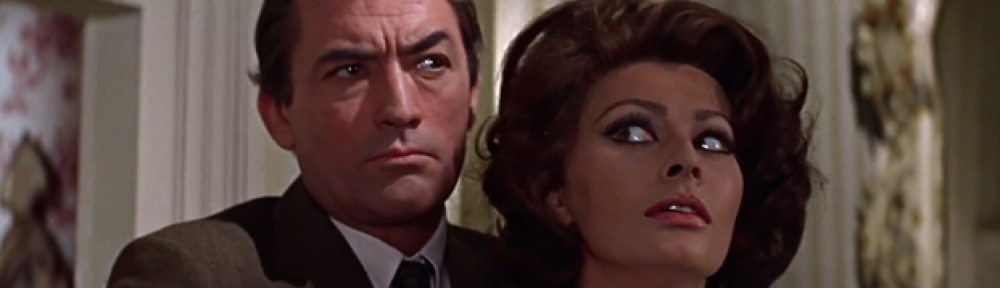
Review: The Philadelphia Story (1940)

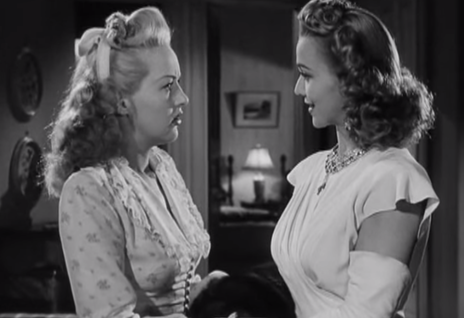
philadelphiastory1If there ever was a benchmark for the sophisticated, high-society brand of comedy, The Philadelphia Story is most certainly it. It’s less screwball because instead of Howard Hawks, George Cukor takes the helm and injects the film with his more refined sensibilities. It’s still very much hilarious and impeccably witty, but it’s not quite as scatterbrained as it could have been. Once more you have the iconic pairing of Cary Grant with Katharine Hepburn. Previously they had been in two other Cukor pictures (Sylvia Scarlett and Holiday) and of course Hawks’ romp Bringing up Baby. However, this time they’re joined by another cinematic titan in James Stewart and it proves to be a wonderful battle for command of the screen. The story ends up being a wonderful clash of classes and culture that also manages to illuminate a few bits and pieces of truth.

C.K. Dexter Haven (Cary Grant) had it out rather acrimoniously with his wife Tracy Lord (Katharine Hepburn) and now two years down the line, she is set to marry someone else. She couldn’t be happier to be rid of him and all his faults. Her new husband is a real “man of the people,” the wooden George Kittredge (John Howard), and he got his money doing an honest day’s work. In other words, he’s everything Haven isn’t when it comes to class and manners, but he’s also quite different than Tracy. But she doesn’t seem to mind. She’s on cloud nine to be rid of Haven.

Although Cary Grant does take a back seat at times, it’s only so he can manipulate and connive in the background, because he most certainly has an agenda. It’s great fun to watch. First, he brings in the folks from Spy magazine to do a full spread on the big wedding. There’s belligerent journalist Macaulay Connor (James Stewart) scoffing at all the opulence around him and then photographer Ms. Eilzabeth Imbre (Ruth Hussey), who has something complicated going on with her colleague.

They’re all here because the editor of Spy has a nice juicy expose piece on Tracy’s father and so C.K. advises her to go along with it. She suspects her old spouse has something to do with it, and it’s true, he didn’t put up much a protest when it came to taking part. However, Tracy’s not ready to let him ruin what she’s got going. She and her younger sister the crack-up Dinah (Virginia Weidler), put on a good show of upper-class snobbery to utterly bewilder their guests.

The funny thing is that while Tracy detests C.K. with the vehemence of the plague, her mother and sister quickly welcome the old gentleman back into their home with open arms. After all, what kind of trouble could he cause a couple days before the wedding, and Dinah is always game for a little chaos. She and C.K. have a mutual affection for each other. They’re both serial troublemakers.

After the surprise of Dexter wears off, the next person Tracy clashes horns with is the brusque newsman Connor, who is as turned off by her as she is annoyed by him. As she sees it, he’s invading her house as part of the paper’s plan to make her life miserable and steal away all her privacy. For him, she’s a stuck-up brat, who has had everything served to her on a silver platter in the west drawing-room. He thumbs his nose at the whole set-up. But a chance encounter at the library no less opens up a different side to these characters. Mike Connor is actually an accomplished poet far more skilled than his lousy journalistic pursuits would suggest. He learns just how perfectly imperfect she is.
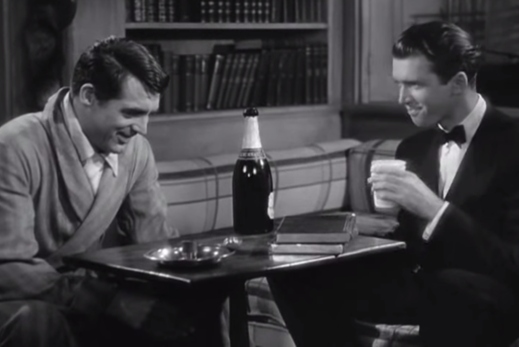
philadelphiastory2It’s at a party the night before the big day that things get particularly interesting. A lot happens when you fill people up with a little bubbly, some wine, and some early morning gaiety. Tracy is absolutely swimming in exuberance partially thanks to alcohol, partially because of the dancing, and maybe in expectancy of tomorrow’s high. But when things come a little loose around the edges, things happen that you regret. As it turns out Tracy doesn’t remember quite what happened that night, but Dinah saw all the good parts from her balcony. It involved a drunken Mike taking a jaunt to Dexter’s home at a godforsaken hour followed by Ms. Imbrie with an inebriated Tracy in tow. What this sets up is a wonderful little sequence where a hiccuping Stewart helps Grant orchestrate a plot to get back at Spy magazine editor Sidney Kidd. Then, Connor gets to spend the wee hours of the morning rambling on and on. It’s innocent enough, but quite the evening no less. It makes Kittridge quite distraught finding his bride to be in the arms of a man who is singing “Somewhere Over the Rainbow.” And of course, with such an unfortunate moment so close to the wedding it looks like things will be called off. But Kittridge is willing to make amends. It’s Tracy who realizes she has to break things off because ironically this man is too good for her.
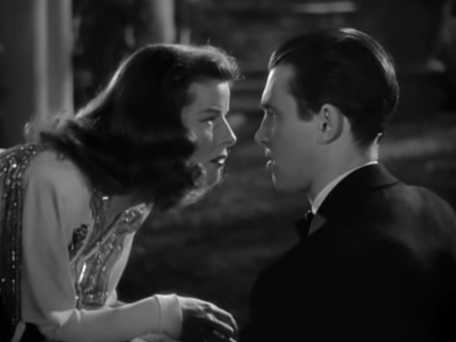
philadelphiastory3It looks like Haven has won, but in a split second Connor is proposing marriage and ready to tie the knot with Tracy to save the wedding. Once again Tracy makes a sagacious decision (which is surprising given her earlier condition). Hangovers on your wedding day are not usually a good thing. In this moment everything falls back into place as it should and as we want it to. These are characters that we grow to care about, despite their misgivings and class differences.

When reading up on this film I was astounded to hear that the film supposedly had no outtakes. Everything we see was as it was when it was first shot and that has to be a testament to the strength of these actors and maybe a little luck. It’s true that the film sometimes enters territory that feels unscripted and loose. That’s when it really gets fun. Stewart and Hepburn. Grant throwing a quick retort here and there. Imagine, this could have been a vehicle for Hepburn paired with Clark Gable and Spencer Tracy. I’m sure that would have been great, but the whole dynamic would be very different.

So who is the winner in this film? Grant as C.K. Dexter Haven? Hepburn as “Red?” Stewart as the “Professor?” The Philadelphia Story is a real winner for the audience. What more could you want in terms of high-brow comedy bursting with legendary star power?

5/5 Stars
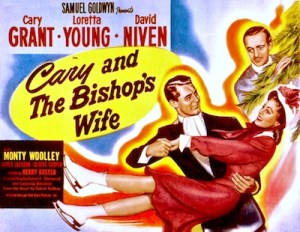
The Bishop’s Wife (1947)

Cary_and_the_Bishop's_Wife_posterAlthough its theology probably isn’t sound, rather like It’s a Wonderful Life, The Bishop’s Wife nevertheless utilizes its central plotting device wonderfully.
Imagine if on a whim an angel came to your rescue, and then imagine that the angel is named Dudley and looks and acts like none other than Cary Grant. In this case, the person in need is a distraught Bishop named Henry Brougham (David Niven). He is right in the middle of a major undertaking to build a new cathedral, and his primary benefactor Mrs. Hamilton (Gladys Cooper) is being a thorn in his side. The building project has consumed all his time and efforts, causing him to neglect his radiant wife Julia (Loretta Young), their little daughter Debbie, and the people from their old parish.

Director Henry Koster crafts a whimsical and rather sentimental film much in the same mold as Harvey (1950) which came three years later. This time Dudley is the character who exists outside of worldly convention. He is constantly kind, always patient, never hurries, and is always helpful to everyone in need be it blind man or bishop. In truth, everyone adores him, because after all, he is an angel. Everyone, that is, except Henry who needs him most. Henry unwittingly asked for help and now he has an angel in his midst, but Dudley will not allow that to be revealed to anyone else. It’s an unnecessary detail, and besides, he has much more pressing matters like attending to Julia and assisting Henry with his work. To her, he is purely a radically pleasant and good-hearted individual. With such positives, there hardly needs to be any explanation, only wonderment.

He takes Julia through the old town she used to live in happily with Henry. They meet old friends like the blustering Professor Wutheridge (Monty Wooley), who Dudley also happens to give inspiration to. He makes little Debbie a ringer in a snowball fight, and he and Julia are joined by a chipper taxi driver (James Gleason) in an ice skating adventure. Even a check in on the humble cathedral at St. Vincent’s leads to an angelic rehearsal by the local boy’s choir. Meanwhile, Henry is absent, attending to other matters.

Of course, he is as bitter and distressed as ever by his plight — his attention still skewed in the wrong directions. Even when Dudley goes to grumpy old Mrs. Hamilton and totally redeems her perspective in order to feed the hungry, Henry hardly seems pleased. His artifice, his tower is now even farther from being completed.

The final scenes of Bishop’s Wife are key because it’s in these moments where we see the change in Henry. Cary Grant might seem obviously miscast for this role, and in truth, it was originally supposed to go to Niven who was to play opposite the equally angelic Teresa Wright. But Grant’s debonair side is important for this final act because it makes sense when he makes a pass at Julia. It fits his screen persona as the suave bachelor, angel or not. You can debate whether he was actually in love with the beautiful mortal, or if he was just doing it to get a rise out of Henry. Whichever way you see it, for the first time Henry is driven to fight for his wife out of love and because of the human emotion that still pulses through his veins. Finally, he drops the peripheral and looks at what is central, his family and friends. Dudley, or Cary Grant, takes one final approving look and walks off in the snow. His work here is done. Peace on Earth and Goodwill towards men.

4/5 Stars

“We forget nobody, adult or child. All the stockings are filled, all that is, except one. And we have even forgotten to hang it up. The stocking for the child born in a manger. It’s his birthday we’re celebrating. Don’t let us ever forget that. Let us ask ourselves what He would wish for most. And then, let each put in his share, loving kindness, warm hearts, and a stretched out hand of tolerance. All the shining gifts that make peace on earth.”

~ Final Message given by Henry (David Niven)

Detour (1945)

detour1Hollywood is really missing out, because with the direction that the industry has gone there really is no space for a film like Detour to be made by conventional methods anymore. It was shot in less than two weeks. It cost a minuscule amount compared to the contemporary A-Pictures, and yet it used its low production values as an advantage, not a curse.  Director Edgar G. Ulmer was the king of so-called B-films of Poverty Row and Detour was his shining gem. It feels a lot like the later film-noir D.O.A. because both have a main conceit that might be hard to swallow at first, but if you do that initially, you quickly find the film thoroughly rewarding on its own merit.

The sets are simple. A diner, a car, a hotel room, and that’s honestly about it. The actors are pretty obscure by today’s standards. Tom Neal was made for this role of the fateful victim Al Roberts, with his constantly pouting face and a pair of despondent eyes. As he sits glowering in a roadside diner it’s hard to imagine he’s ever smiled in his life. He’s a real sourpuss.

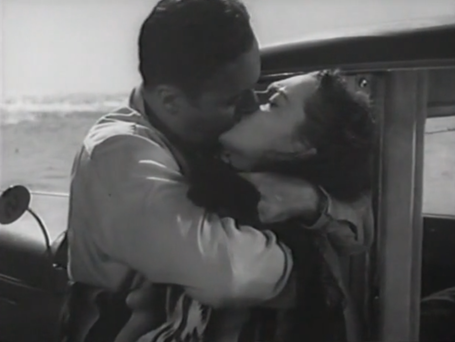
There was a time, back in the day, when he made a modest living as a piano player in a New York club. He had a girl named Sue, and he was relatively content playing the bouncy tune “I Can’t Believe You Fell in Love With Me” while making a few bucks. Now the song haunts him wherever he goes. Sue left to try her luck in Hollywood and soon after Al began his long hitchhike to California to rendezvous with her. On one unassuming evening, all his luck changed. Just like that.

An obliging fellow offered him a ride and they get on well enough. He’s a bookie, but not a bad fellow, so Charles Haskell and Al get on fine. Then they switch up driving duties and a little light rain starts coming down into the convertible. Al goes to put up the top because he assumes Haskell’s only asleep. But when he opens the side door, Haskell falls to the ground. DEAD! Al does what any normal human being would do and he freaks out. Should he dump the body? What should he do with the car? Did anyone see him? Will the people back at the rest stop be able to I.D. him? What will the cops say if they hear his story?

And so he ends up getting rid of Haskell (in a sense playing the role of guilt) and takes on the man’s identity. But wouldn’t you know it, the first person he picks up is the fiery Vera (Ann Savage), who looks apt to claw your eyes out. Of course, she too got a ride from the real Haskell and isn’t buying Al’s story. She’s got him on the rack and she’s not about to let him get off easy. She wants a cut, she wants to sell the car, and Vera’s the only one who is going to call the shots. Al is a stuck, trapped, and paranoid, as Vera waves blackmail in front of his face and won’t let him breathe. She’s got him around her finger and there’s absolutely nothing he can do. After all, who would believe his story?

But whether it’s fate or whatever you want to call it, he gets out of it much in the same way he got into it. The resolution makes me grin because it’s so wonderfully contrived. There’s a tacked on ending to mollify the Production Codes (because Al couldn’t get away with his crime), but although it is an easy fix, it hardly takes away the potency of Detour. I long for the days they made films like this. Ann Savage somehow is nastier and crueler in a few minutes than most any character is in an entire film. It’s a brilliant role and honestly, she’s not my favorite femme fatale, but she has to be one of the most notorious. She seriously sends shivers up the spine.

“Isn’t that a laugh? Haskell got me into this mess, and Haskell was getting me out of it. The police were searching for a dead man. I keep trying to forget what happened, and wonder what my life might’ve been if that car of Haskell’s hadn’t stopped. But one thing I don’t have to wonder about; I know. Someday a car will stop to pick me up that I never thumbed. Yes, fate or some mysterious force can put the finger on you or me for no good reason at all.” – Al Roberts

4/5 Stars

Review: The Grapes of Wrath (1940)

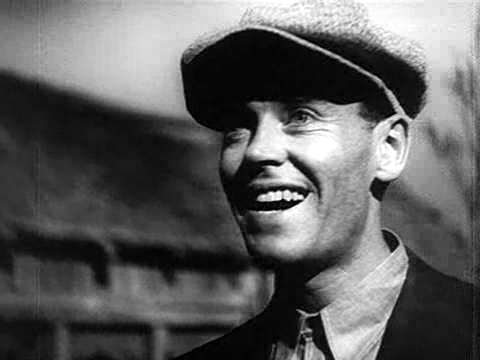
Grapes_of_Wrath,_The_-_(Original_Trailer)_-_01The Grapes of Wrath is in special company with a number of literary adaptations where film and source material are both so highly regarded and culturally significant. A few other names spring to mind such as Gone with the Wind, A Streetcar Named Desire, and To Kill a Mockingbird.

However, even more so than all of those stories John Steinbeck’s novel of exodus during the Dust Bowl has a universal ring reverberating for the common man. The Joads are a humble, simplistic Oklahoma clan, but they are only one family out of many who are forced to make the migration out to California. The Dust Bowl and big business push them off their homes and their only hope is the distant promise land of California. They cling to that hope which keeps them going resolutely onward toward the Orange Groves.

Tom Joad (Henry Fonda) who has just gotten out on parole is the figure from which we see the story through. He’s the focal point certainly, but he is defined by all those around him. Ma Joad (Jane Darwell) is the rock of the family, keeping them together, civil, and spirited even when the worst hardships of life hit.

Grandpa dies on the land that he called home. Grandma dies without the company of her lifelong partner. Rosasharn’s husband cuts out when prospects look bad. The family is slowly drained of money, food, gasoline, and hope when they see that the prospects in California are far from good. The book has so much to say politically and socially, using the Joads as a universal parable to reflect the reality of a great many people.

Obviously, John Ford’s film cannot contain all the exposition and commentary of the novel, but he uses the visual medium brilliantly and the Nunnally Johnson’s script fills the screen with all sorts of folks. There are no true villains and the only heroes are those who maintain their humanity and treat others well on a day to day basis. Ma Joad is one, offering food to starving children because it’s the right thing to do. A roadside waitress comes off brusque at first before extending a true act of kindness. You have the genial caretaker (Grant Mitchell) of the Wheat Patch Camp, who is angelic in comparison to so many of the other gruff people the Joads come in contact with.

There’s the scum of the earth. People just doing what they’re told, men just worried about profit, and crooked cops looking to run Okies out. There are those who just grin and bear it to feed their families. They’re part of the problem too and finally, you have Jim Casy and then Tom following in his footsteps.

Former preacher Jim Casy (John Carradine) is a critical figure because he, like so many of the other characters, has lost himself and yet over the course of the film he finds his purpose again. He’s the film’s Christ-like figure (with the initials JC), and yet he seems counter-intuitive to what we expect. But he has the most important things down. He fights for justice and lays down his life for his friends.

Rather like an extensive Dorothea Lange exhibition, cinematographer Gregg Toland shoots the film in beautifully austere and gritty black and white, which feels like a test run for Citizen Kane. However, it remains iconic in its own right with the ways in which it makes the plain, simple, and ordinary cinematic. It’s truly a visual snapshot of Americana with Henry Fonda as our All-American poster boy.

Speaking of Fonda, how could I have lost sight of his character here? Fonda in many ways synonymous with Tom Joad, and I always equate him being a kindly, true blue American. But that’s only part of him. That’s how he acts around his family, but he’s a young man disillusioned by the world. He speaks his mind and is not opposed to fighting back against the injustice. Because that’s what he sees around him. That’s why he kills the man who beats Casy and that’s why he goes out on the road; to be a champion of justice where there isn’t any. It’s an ending more suited for Hollywood at the time than Steinbeck’s original denouement, but it no less poignant or powerful. It doesn’t just stop with the Depression, but it ends up being a whole lot bigger and more universal than that. This is one of the great tales about the human condition, courtesy of one of America’s greatest directors starring one of America’s most legendary actors.

4.5/5 Stars

“I’ll be all around in the dark. I’ll be everywhere. Wherever you can look, wherever there’s a fight, so hungry people can eat, I’ll be there. Wherever there’s a cop beatin’ up a guy, I’ll be there. I’ll be in the way guys yell when they’re mad. I’ll be in the way kids laugh when they’re hungry and they know supper’s ready, and when the people are eatin’ the stuff they raise and livin’ in the houses they build, I’ll be there, too.” – Tom Joad

Cry of the City (1947)

cryofthe1Cry of the City is a lesser noir from director Robert Siodmak with an often arbitrary plot, but since he is a mainstay of the genre it’s still an interesting foray on a number of fronts. It’s visually striking and features a number of interesting characters, especially female characters of all sorts of ranges.

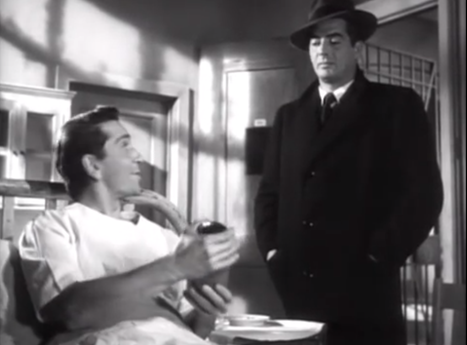
The film opens with thug Martin Rome (Conte) laid up in the hospital after shooting a policeman dead and receiving some crossfire. The police, including Lt. Candella (Mature), wait around uneasily wanting to make sure that the perpetrator will make it out alive, so he can pay for his crimes. He gets a visit from a specter of a woman (Debra Paget), who disappears as quickly as she arrived. Then a crooked lawyer tries to get him to take the rap for a robbery he didn’t commit. It would take the heat off one of his other clients.

The cops begin to canvas the streets for the mysterious girl since Rome will give them nothing. And then he escapes the prison ward, fearful that he and his girlfriend will be framed. But he’s still feverish and weak from his wounds so he calls upon the assistance of his family and an old girlfriend (Shelley Winters).

He then leads the coppers to the crooked masseuse (played by the imposing Rose Givens), but time is running out for Rome, and he is finally receiving retribution for the killings he committed and all the people he has used. It’s a chilling ending worthy of the noir world.

There’s something about Victor Mature that I don’t really care for. Maybe he just feels a tad plastic as an actor. However, it is a great deal of fun watching Richard Conte, because he can play meek fellows and baddies. In Cry of the City he plays someone in between who is wholly corrupt, but his family gives him a sliver of humanity.

The film has a Godfather-like Italian culture, and it draws a fine line between the good and bad guys since in many cases they come from the same background. In this case, Rome chose the road of excess and corruption while Candella took the so-called straight path that’s a lot less glamorous. The plot, on the whole, has uneven patches, unexplained jumps, and unanswered questions. Shelley Winters felt like a rather random addition to the storyline. And Debra Paget mysteriously shows up, disappears, and comes back again. Although the film doesn’t have much of a score, Alfred Newman’s music sounds vaguely familiar — could it be from another film? I think so.

3.5/5 Stars

I Wake up Screaming (1941)

iwakeup1So the title doesn’t have a bearing on much of anything, but who cares? It sets the tone brilliantly for this wickedly twisted noir. The film opens like other films, after the death of a beautiful young woman. Two people are getting grilled in adjoining rooms. Frankie Christopher (Victor Mature) is a promoter and the former love interest of the girl, so he also happens to be high on the suspect list. He lays out how he first met the pretty young waitress Vicky Lynn (Carole Landis). With the help of two conniving friends, he made her into the next big thing. The has-been actor Robin Ray (Alan Mowbray) helps her reach the higher echelon of society. Mustachioed gossip columnist Larry Evans (Allyn Joslyn) plasters her name and picture all over his paper until the world is bound to notice. They make quite the trifecta, all too happy to give this unassuming girl a break.

In the next room, Vicky’s sister Jill (Betty Grable) tells her side of the story: She saw how Vicky was beginning to change. She stopped working as a waitress, became entitled, and began to look down at all those around her. Now a real prima donna, she ditches her benefactors ready to head off to Hollywood for a screen test, and Christophers is understandably ticked. It doesn’t help that both Ray and Evans fell in love with Vicky. There’s also something going on between Jill and Frankie, because in the wake of the murder they turn to each other.

iwakeup2For a time the murder gets pinned on the switchboard operator — the always wide-eyed and nervous Elisha Cook Jr. But the menacing police officer Cornell (Laird Cregar), has an almost obsessive drive to find Frankie guilty of the murder. There’s something else going on here. Like so many films of this period, this story is full of men desiring women. Some of it is understandable, some of it is casual, and some of it is downright twisted.

Although she is out of the film early on, Carole Landis has the key role as the rising starlet and she is the closest thing to a femme fatale in this film. But there are a lot of characters of interest aside from our main couple of Betty Grable and Victor Mature. His two opportunistic friends are no-goods but thoroughly entertaining, and Laird Cregar is downright spooky. The film takes on another level of significance due to the tragic suicide of Carole Landis which occurred in 1948. There is most definitely an allure to her just like the women in prominent film-noir like The Woman in the Window or Laura (1944). Throughout some haunting refrains of “Somewhere Over the Rainbow” can be heard, helping to make I Wake up Screaming disconcerting from beginning to end.

3.5/5 Stars

The Treasure of the Sierra Madre (1948)

treasureofsierra2If you was to make a real strike, you couldn’t be dragged away.  Not even the threat of miserable death would keep you from trying to add ten thousand more.  Ten you’d want to get twenty-five, twenty-five you’d want to get fifty, fifty a hundred.  Like roulette. One more turn, you know.  Always one more.

If there’s anything to take away from The Treasure of the Sierra Madre it’s that wealth never satisfies, it only serves to compound our anxieties. John Huston’s film is without question an American classic pure and simple, and it maintains that distinction because it has lost very little of its power to this day. Huston returned from shooting WWII documentaries with this project waiting for him back home. He partnered once more with Humphrey Bogart, and he even cast his father in a role that proved to be the standout in the film. Also, he shot most of Sierra Madre actually on location in Mexico, while also hiring locals as extras. It adds to the gritty realism and it was a trend that was slowly becoming more popular.

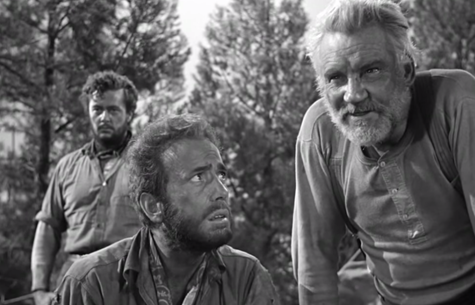
His prospecting adventure film with shades of western or even noir follows three men who join forces to prospect for gold in the mountains. They first cross paths in the town of Tampico where they’re strapped for cash and barely scraping even. Fred Dobbs meets Bob Curtin (Tim Holt), who shares a similar predicament and they stick together. Upon hearing the tempting tales of gold and riches from a loquacious old prospector (Walter Huston), he plants an idea in their mind. And with nothing to lose the three partners embark on this grand undertaking.

Humphrey Bogart is undoubtedly our main protagonist. In fact, he had been playing them ever since dropping the supporting roles and donning the fedora of Sam Spade in The Maltese Falcon (his first collaboration with John Huston). But down-on-his-luck, scraggly-faced Fred C. Dobbs is probably one of Bogey’s greatest performances. He’s a sourpuss and a bum, who’s begging for money and telling the local kids pestering him to beat it. These early sequences include a cameo from the director and young Robert Blake. I can also debunk a myth by confirming that Ann Sheridan is not the eye-catching woman walking down the street early on, at least not in this cut of the film.

These early moments set Bogart up in such a way that we feel pity for him, even if we are not completely sold on his moral character. Tim Holt’s Curtin likewise is a sorry fellow, and he’s far more understated which makes us want him to see success. Walter Huston steals his scenes because he fits his part so beautifully. He talks and talks and talks. Laughs, gives sage advice every once in awhile, and does a jig if he feels like it. He’s a completely free-spirit, comfortable in his years, and perhaps a little less invested than the other two. He’s in for the gold, but he realizes the transience of life.

treasureofsierra4

Their journey is plagued by harsh terrain, heat, banditos, and even a nosy fortune hunter from Texas named Cody. But Howard’s premonitions were right and they begin raking in a mother lode. It’s hard work, but it’s coming slowly but surely. This is the key turning point in the film and the keystone to Bogart’s whole performance.

The early warnings of Howard seem all too pertinent now, “Murder’s always lurkin’ about. Partners accusin’ each other of all sorts of crimes. Aw, as long as there’s no find, the noble brotherhood will last, but when the piles of gold begin to grow, that’s when the trouble starts.

And so it does. Dobbs is the perfect embodiment of what avarice does to a man. The paranoia builds up. Friends become foes, everyone is out to get him, and Reason no longer has any presence in his life. First, he wants to turn on Cody, who by all accounts wasn’t a bad fellow. Next, it’s Howard and then Curtin, who once was his closest companion. By the end of the film, “Dobbsie” has been so totally wrecked by greed, he no longer is the same person. In fact, Bogart has a similar trajectory to Gollum except he is not redeemed. The implications here are not simply some conclusion on wealth and gold, but more importantly what it does to the hearts and minds of men.

treasureofsierra3

However, with all the darkness and corruption pulsing through Sierra Madre, there also are some comedic undertones mostly delivered by Walter Huston. In a sense he was the mediator between Curtin and Dobbs, keeping things civil and so when he left them, they were left to their own devices. He also is the one who is able to look at the cruel hand that they are ultimately dealt and laugh it off. Thus, Bogart gave a wholly aberrant performance, Tim Holt was more morally steadfast, and Huston was the standout with his lively turn. Humor and treachery make strange, but thoroughly entertaining bedfellows indeed.

5/5 Stars

Hold Back the Dawn (1941)

holdbackthedawn boyer de havilland 5Hold Back the Dawn was written by the winning combination of Billy Wilder and Charles Brackett, but the director was actually Mitchell Leisen. That was the last time Wilder would let someone else take hold of his work. It’s actually rather meta, a film within a film. We see our director and a film being made (Complete with Veronica Lake), but that is only a pretense for this story to be told.

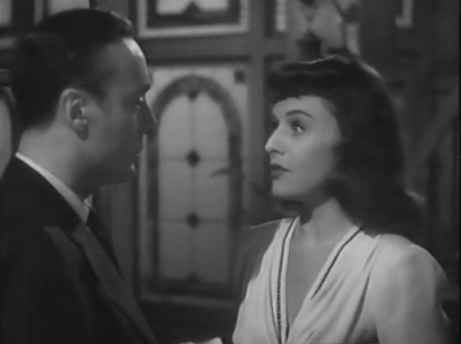
Georges Iscoveu (Charles Boyer) wanders into the studio hoping to tell his story to somebody who might help him. The tale goes something like this. Much like many other hopeful emigrants, he heads to Mexico in an attempt to try and get into the states, but he’s told that he’ll have to wait and so Iscoveu holes up at the Esperanza Hotel with all the other masses. Time passes and he is getting nowhere fast, but he does bump into an old partner in crime named Anita (Paulette Goddard). Undoubtedly using her feminine charms, she wrangled herself a husband in order to secure herself citizenship. Then she swiftly got a divorce to close the deal. She’s a real peach and she plants the idea in Georges because he is desperate after all.

The gears are turning and he sets his sights on the pretty young schoolteacher, who is in Mexico with some of her students. Their car is in the shop, and after swiping a sprocket, Georges goes into action.

With soaring rhetoric, he wins Miss Emmy Brown over and he puts a ring on it, a borrowed ring from Anita to be exact. He’s a real cad, but it is a Charles Boyer leading man.

To her credit, Olivia De Havilland plays this ingenue and small-town teacher with bright eyes and idealism. We cannot help but feel for her because this is a woman who is swept off her feet and she exhibits true affection. She’s naive, but as Georges acknowledges, she’s swell. Anita has plans for them to meet up once the marriage is terminated because she thinks that she and Georges can run in the same circles once more. But all the time he has spent with Emmy has not left him unchanged. Car rides and travels through Mexico becomes intimate and sweet. So somewhere there is a turning point in the psyche of Iscoveu. It no longer becomes a con game with Anita, but a true romance with Emmy.

However, the trouble comes when the inspector named Hammock (Walter Abel) comes sniffing around because the marriage of Emmy and Georges seems obviously fishy to him. But Ms. Brown does the noble thing and defends Georges not out of ignorance, but charity. She knows she was living a dream and is about to go back to reality, making the drive back to her home in Azusa, California.

Georgholdbackthedawn6es has what he had initially set out to get, but the story cannot be over. When he hears of a deadly car accident, he rushes across the border without heed of the law so that he can be with the love of his life. It’s a gushy conclusion that looks like it might end badly. After all, Iscoveu broke some major laws, but Hammock gives him some grace showing he’s a softy at heart. Even Anita gets what she’s always wanted.

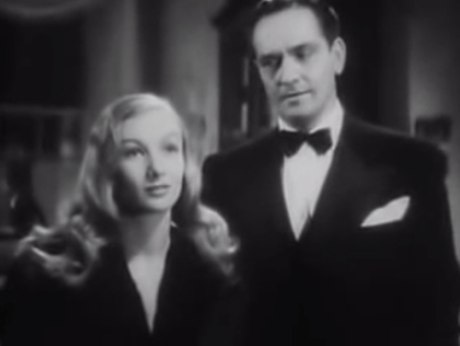
The film is a treat because we not only get an A-grade performance from De Havilland, there’s a conniving Paulette Goddard, and even a brief cameo by everybody’s favorite Peekaboo girl Veronica Lake. Curt Bois (the pickpocket from Casablanca) also makes a spirited performance in one of the minor plots.

Hold Back the Dawn certainly begs the question whether Wilder’s own experiences are infused into this story since he often told anecdotes about his emigration into the U.S. which ultimately led him to success in Hollywood. Also, this film suggests that Mitchell Leisen is not so much a great director or a maker of masterpieces, but he is in his element with romances. However, I wonder if part of his success was having the likes of Billy Wilder and Preston Sturges writing scripts for some of his most prominent films (including Easy Living, Midnight, and Remember the Night).

4/5 Stars

Review: Sullivan’s Travels (1941)

Veronica_Lake_and_Joel_McCrea_in_Sullivan's_TravelsIf Preston Sturges was a comic wordsmith then Sullivan’s Travels was his magnum opus. It has so many pieces worth talking about, despite it only running a meager 90 minutes. It is the kind of comedy that director John L. Sullivan (Joel McCrea) would want to make, and it’s a message movie against message movies. It’s a film about filmmaking (including mentions of Capra and Lubitsch). There’s even a scene where an ecstatic actress goes racing around the studio lot, completely disregarding the period piece she is acting in. The script has the undeniable frenetic poetry of Sturges and even takes time to wax philosophical at times. Sullivan opens the film with some very grandiose vision of what film can mean for the everyday filmgoer (I want this picture to be a commentary on modern conditions. Stark realism. The problems that confront the average man!).

Sturges’ film is scatterbrained and insane in its pacing at times. Take the opening speeding sequence as a newly bedraggled Sullivan tries to shake his caravan so he can really get a feel for the common man’s plight. It almost gives you a heart attack as they blitz down the road, people and everything imaginable flying every which way. It’s faster than most modern action sequences could achieve.

However, although Sturges is undoubtedly known for the strength of his scripts, it’s important to note that Sullivan’s Travels has some wonderful visual sequences. Many of them lack his typical lightning dialogue and instead rely on music and images to develop scenes. Sometimes it’s the plight of the homeless on the road as Sullivan and his companion make their way across country. I would have never thought of this comparison before, but sometimes his heroes elicit the same type of empathy that would be given to Charlie Chaplin or the Gamine (Paulette Goddard) in Modern Times. In that same way, this film so beautifully fluctuates between comedy and heartfelt drama.

Another beautiful thing about Sullivan’s Travels is the cast. Our star is Joel McCrea, who is sometimes known as the poor man’s Gary Cooper, but that is rather unfair because he’s a compelling actor in his own right. Just look at this film to prove his case. Also, he and Veronica Lake (Ms. Peekaboo Haircut herself) have a fun relationship going from the beginning when they first meet in a diner. You might say the shoe’s on the other foot since she thinks she’s doing a good deed for this down on his luck nobody. She has no idea that her “big boy” is actually a big shot movie director. However, it makes no difference, because in some ways she feels responsible for him, and so she takes part in his noble experiment even afterward. That’s where we build respect for them, and she, in turn, falls for him. It’s what we want as an audience. And we finally get it when Sullivan beats his death and a chain gain to return to civilization. His nagging wife has married some other boob, so Sullivan gets his girl.

Sometimes I feel like a broken record, but it definitely seems like they don’t make character actors like they used to. It helps that Sturges has a stock company of sorts and the studio system probably helped in propagating certain actors. However, there’s no doubt that players like William Demarest and Porter Hall are so memorable. Their voices. Their look. There’s no escaping them and there are numerous other faces that you get deja vu with. We’ve seen them before somewhere and just cannot place it.

Within this whole story of comedy, romance, and a heroes journey, there is, of course, a moral. However, I don’t mind Sturges and his simple didacticism. Because he ditches high rhetoric or sickening idealism for a simple conclusion (There’s a lot to be said for making people laugh). A Pluto cartoon short that brings a few giggles can be just as impactful in this world of ours compared to the next big Oscar drama. That’s what Sullivan’s Travels led to. A change in perspective through a hilarious itinerary.

5/5 Stars

I Married a Witch (1942)

I_Married_a_Witch_posterDirected by French emigre Rene Clair, I Married a Witch is a surprisingly cheeky comedy for the 1940s. The plot opens up with the Salem Witch Trials where a male and female witch are both to be burnt at the stake. However, before dying they cast a curse on the lineage of one Jonathan Wooley (played in Puritan garb by Fredric March), and so going forth all his ancestors are doomed to accursed marriages.

Now in the present (1942), the current ancestor Wallace Wooley (March) prepares for a run at the governorship as he also prepares to marry his disagreeable fiancee (Susan Hayward) to bolster his appeal on the campaign trail. Meanwhile, the spirits of Jennifer (Veronica Lake) and Daniel (Cecil Hathaway)  are finally released from their prison and they head out ready to cause all sorts of mischief. At first, they travel as smoke floating through the air and residing inside bottles. However, Jennifer has the brilliant idea of taking on human form so she can torment Wooley even more.

They follow to burn down the Pilgrim Hotel and then Jennifer gets Wooley to unwittingly rescue her from the burning remains, a hero. Little does he know what’s he’s done. She pulls all sorts of pranks on him that leave a bad impression on his housekeeper and are bound to get him in the doghouse with his fiancee. Veronica Lake is very alluring in a sing-song sort of way as her character tries to playfully seduce Wooley. She even crafts a love potion, but plans go awry when she actually ingests it. Now she’s hopelessly in love and she must try and crash Wallace’s wedding to win him back.

Joined by her father in physical form, they put the proceedings to a halt with a gust of wind and then Daniel tries to impede Jennifer by turning her into a frog, but he ends up drunk instead. Of course, Wallace is caught in yet another awkward spot with the witch. The wedding is off (along with the dreadful song “I Love You Truly”) and the campaign is done for…or is it?

imarriedawitch1

In the end, it looks like Wallace might lose his new found love, but she comes back to him, the moral of the story being, “love is stronger than witchcraft. It conjures up a Frank Sinatra song right about now.

This film has a whimsically absurd scenario bolstered by simple special effects that allow buildings to burst into flame, Jennifer to slide up the banister, and Daniel makes the car levitate. This is an obvious precursor to a pair of 1960s sitcoms. Veronica Lake’s performance is very reminiscent of Jeannie in I Dream of Jeannie and the plot feels like a plot line out of Bewitched since our heroine is also a witch. Too bad Robert Montgomery was not in this film. His daughter was a witch after all.

3.5/5