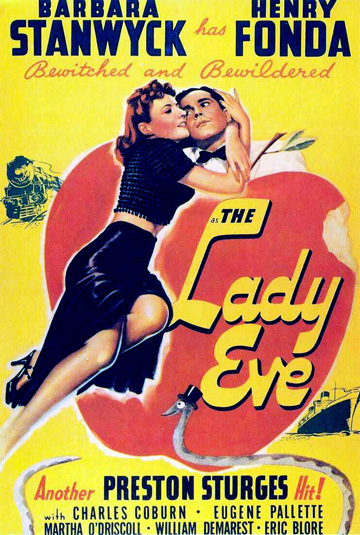
The Lady Eve (1941)

Starring Henry Fonda and Barbara Stanwyck with director Preston Sturges, this screwball comedy is a good one. The supporting cast is rounded out wonderfully by Charles Coburn, Eugene Pallete, and William Demarest. The story begins on a big ocean liner where a beautiful young woman (Stanwyck) tries to pull a con on a naive, rich bachelor (Fonda). Slowly however they begin to fall in love and they plan to get married. He catches wind of her notoriety and becomes cold and that ends their relationship. In an act of revenge she poses as someone’s niece, a Lady Eve, so that she can be close to him. Through a series of events he thinks she is a different person who looks similar and over time they decide to get married. When Eve tells him about all her boyfriends he feels he has made a mistake. Back on the ship he is ecstatic to see the first girl and they embrace. Fonda’s character feels guilty because he is already married but then again she is too…to him. This film has a great combination of wit and slapstick which makes it an enjoyable classic.

4.5/5 Stars

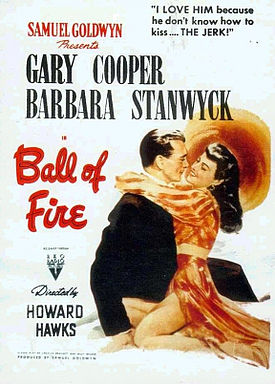
Ball of Fire (1941)

a5490-ball_of_fire_movie_posterStarring Gary Cooper and Barbara Stanwyck, the film revolves around a young man (Cooper) and seven older intellectuals compiling a Encyclopedia who get involved with a burlesque dancer (Stanwyck). They are interested in her constant use of slang and she is happy to use them as a cover to avoid the cops while she waits for her gangster boyfriend. However, things take a turn when the young man falls for her and proposes. Little does he know they are being used until they unknowingly transport her back to the gangster. He feels betrayed and she realizes her love for the corny intellectual. Although they are held by the gangster’s thugs, the intellectuals join their wits to overcome their foe. In the nick of time they stop the marriage and the true loves get back together. Howard Hawks directs a nice combination of humor and romance. The story by Billy Wilder, is Snow White and the Seven Dwarfs with some major twists.

4.5/5 Stars

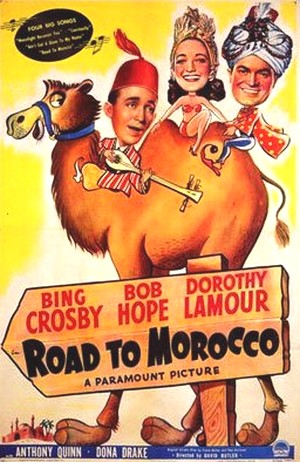
Road to Morocco (1942)

58f0c-roadtomorocco_1942Starring Bing Crosby, Bob Hope, and Dorothy Lamour in this third installment in the Road Series, this film has the boys floating towards Morocco as castaways. They finally reach land, hitch a ride on a camel, and just like that they are off on the Road to Morocco. They wander the streets looking for food at first then Jeff (Crosby) sells Orville (Hope) for money. Little does he know that Hope has been taken to the castle of a beautiful princess (Lamour) to be married in order to fulfill a prophesy. Jeff finds out soon enough and he tries to win the affections of the princess as well, but trouble arrives in the form of the jealous suitor of the princess. He takes the girl and the two lovebirds are left to chase after mirages in the desert. They are imprisoned, but after a daring escape they come up with a comedic solution to turn a visiting sheik against Kasim (Anthony Quinn). In the chaos both Jeff and Orville get away with a girl of their own. This has to be my favorite road picture. The title song is great, Hope has some great one liners, Crosby croons nicely, Aunt Lucy makes an appearance, there are talking camels, Hope tries to win an Oscar, and I love it when the three stars sing together in the desert.  Unfortunately the film is stereotypical, but as far as the Road pictures go it is a good one.
 
4/5 Stars

Road to Utopia (1946)

Starringc0cc6-roadtoutopia_1946 Bing Crosby, Bob Hope, and Dorothy Lamour in this fourth Road picture, this film begins in the present with an old marry couple who gets a surprise visitor. Then the story flashes back to the turn of the century where two lowlifes commit murder in order to steal the map to a gold mine. However, the police are on their tails so they duck into a vaudeville show where Duke (Crosby) and Chester (Hope) are performing. Eventually the two con men decide to part ways, but they double cross each other only to end up heading for Alaska on the same ship as the two killers. Through a bit of luck they get the map and take the place of the two killers, but trouble follows close behind them. The daughter of the man who was killed (Lamour) is intent to get the map back and she is unknowingly working with some undesirables. As always happen both hapless adventurers fall head over heels for Sal, who wants to get close to them for the map. However, the map is in two parts and then Sperry and McGurk are on the loose again. Duke and Chester’s real identities are revealed to Sal and now the trio must hightail it, with two killers and a multitude of others looking for them. Miraculously they escape by sled, but only two can get away so Duke heroically holds off the pursuers. This Road film is probably one of the best and all the stars are in fine form in Utopia.

4/5 Stars


Road to Zanzibar (1941)

3bcc4-roadtozanzibar_1941This is the second installment in the Road Series and it follows two con men who must go on the run which leads them to Africa. Crosby is pulled into saving Dorothy Lamour from a life of slaver. Little do the hapless con men know what her true motives are. They travel on a safari together and a midst the song and comedy love creeps up. Both believe Lamour has her eyes on them but then they figure out what is really going on and they head off on their own. However, all too soon they are captured by cannibals and it looks like they will become shish kabobs. That’s when a little game of “Patty Cake” comes in handy and in the end everyone is reunited. There are some choice moments in this Road Film but I think it was one of the weaker ones.

3.5/5 Stars

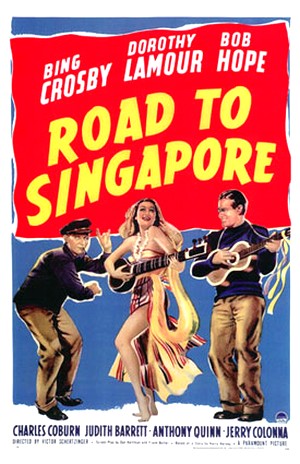
Road to Singapore (1940)

2e545-roadtosingapore_1940This is the Road film that started all with the brilliant comic pairing of Bing Crosby and Bob Hope. The two bozos both skip out on obligations and relationships back home and together they hightail it to Singapore. There they both fall head over heels for the same girl despite having vowed to give up women.  Together the trio hide from their respective pasts. However, with barely any money  they must muddle through with cons. Everything comes to fruition at a native marriage ceremony where Mallon’s father and fiancee catch up with him. In the end everything works out as it always does and Singapore was only the tip of the iceberg. The film works based on the chemistry of the leading trio and the ad-libbing and various gags such as “Patty-Cake.”

3.5/5 Stars

A Chump at Oxford (1940)

0132a-lh_chump_at_oxford_1940This short comedy film has Laurel and Hardy scrounging around for work and they masquerade as a maid and butler in a well-to-do home. As expected they cause loads of trouble and skip out. Next they are a pair of street sweepers who come upon some luck while on break. They unwittingly capture a bank robber and they are soon rewarded with  a free education at Oxford. There they are met with a group of haughty Oxford snobs who cannot wait to mess with the new arrivals. The ensuing moments include getting lost in a maze, dizzy spells, run-ins with the Dean, and a chance encounter with Oxford Athletic hero Lord Paddington, who shares an uncanny resemblance to Stan. Despite all the ups and downs, Stan and Ollie make it through and they succeed in making this comedy quite funny.
 
3.5/5 Stars

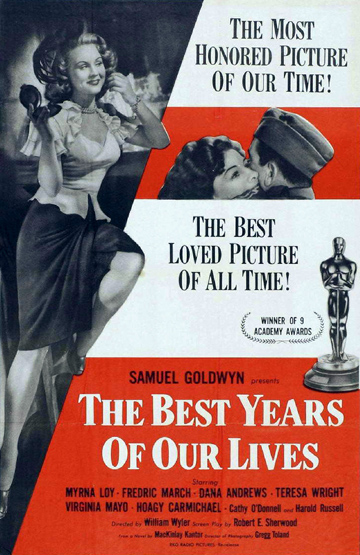
The Best Years of Our Lives (1946)

Directed by William Wyler, the film chronicles the lives of three men as they return from World War II. They feel joy and then angst trying to integrate back into society  with lives that are strangely different from when they left. They face various struggles like finding a job, holding a marriage together, to just trying to get used to a disability. Although they each have their own lives which we get to see first hand, they are still intertwined. Together these three men find it within themselves to make these the best years possible. Full of both highs and lows, this movie is extremely touching and leaves you with a smile. The cast is superb including Dana Andrews, Fredric March, Harold Russell (real life amputee), Myrna Loy, Teresa Wright, Virginia Mayo, and of course Hoagy Carmichael. This film is great because it does not try to glamorize and it stands the test of time in my mind.

5/5 Stars

The Heiress (1949)

fa57e-heiress_wylerStarring Olivia de Havilland and Montgomery Clift with director William Wyler, the film takes place in New York in the 1840s. Catherine is a shy and awkward young woman who lives with her domineering father who is a prominent widowed doctor. At a party a young man introduces himself and begins seeing Catherine frequently. Quickly their plans turn to marriage but her father will not approve. Since her lover is not rich, he sees him as a fortune hunter. Catherine decides to elope with her love, but he never returns leaving her feeling rejected and forlorn. soon the doctor gets ill and dies, but the relationship does not end will since Catherine blames her father. And in the process she has grown cold. Clift’s character finally returns and after some reluctance Catherine seems to agree to get married. he leaves to gather some belongings only to return to a bolted door. Catherine gives him some rejection of his own after what she endured. This films becomes interesting because you do not know who was truly in the right. First Clift seems to be the heel and then de Havilland evolves so much the audience turns on her.

4/5 Stars

Meet John Doe (1941)

Starring Gary Cooper and Barbara Stanwyck with direction by Frank Capra, the film begins with a news woman (Stanwyck) creating a made up story about John Doe, a man willing to commit suicide to protest big government. In order to keep the story going, they take a man off the street to effectively be John Doe. At first John (Cooper) and his friend the Colonel (Walter Brennan) are attracted by the chance to work. However, slowly he seems to become John Doe and the whole nation is seemingly behind him with Stanwyck’s character falling for his image as well. A political machine tries to discredit him and prove he never was John Doe. Now all along John decides to go through the suicide to prove his point to all. The political machine tries to stop him and Stanwyck finally does saying they can still keep the ideals of John Doe alive. Sharing some similarities with Mr. Smith, this film is one of those feel good films.

4/5 Stars