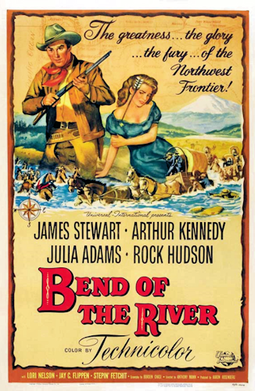
The Tall Target (1951)

the tall target 1.png

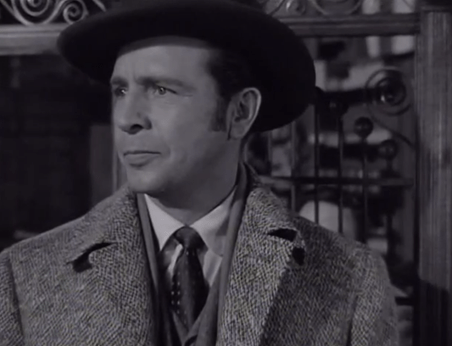
To set the scene our storytellers enlist an opening crawl that runs over the unmistakable strains of train noise. The year is 1861. The event being dramatized is the alleged Baltimore Plot and our hero is New York policeman John Kennedy (Dick Powell).

Despite being common and coincidental I can’t but help to acknowledge the bitter irony of our protagonist’s name. But he is not here to thwart a plot against his own life but a man with a much longer shadow.

His in-depth report warning against an impending threat to Abraham Lincoln on the road to his inauguration in Baltimore is dismissed by his superior as alarmist drivel. Nevertheless, the man finagles a way onto the Baltimore-bound steam engine finding an agreeable ally in Colonel Caleb Jeffers (Adolph Menjou). Kennedy once guarded Lincoln for 48 hours and yet in this perilous hour, he will go great lengths for the same man. However, we will soon find out that not everyone feels that way. He’s a very polarizing figure.

I’ve come to the not so startling conclusion that anything Mann touches turns into noir which I readily agree too. Much like Reign of Terror (1948) before it, the director transforms this antebellum train thriller into a reconstruction of history painted in tight angles, smoke & shadows, and coiled with taut action. We grow embroiled in his composed world of greasy close-quartered combat with grimacing faces and flying fists. Far from being constricting these elements are where the story thrives, trapped in corridors and hidden away in side-compartments with the characters that dwell therein.

Because moving through such a space forces Kennedy to brush up against so many individuals. A conductor (soon-to-be blacklisted Will Geer) who is trying to make sure everything goes as smoothly as possible only to be inundated by troublemakers and drama. A young mother (Barbara Billingsley) who tries to control her antsy son. An incessant windbag constantly worrying about her prized “jottings” and all she’s going to inquire to Mr. Lincoln about. A southern gentleman sounding off in his dismay with the countries future. You get the idea.

Despite the vague difference in context, it’s quite understandable to place The Tall Target up against another film from the following year The Narrow Margin (1952). Rather than try and decide which one is superior, it’s safe to say that both excel far beyond what their budgets might have you suppose and they utilize the continual motion of a train to an immense degree because in that way the narrative is almost always chugging along to a certain end.

the tall target 3.png

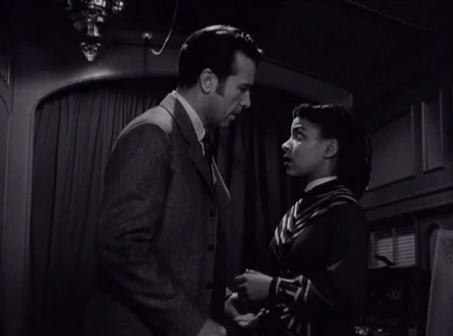
Ruby Dee has a meager but crucial part in The Tall Target that I deeply wish could have been more substantial. In fact, in an early version, the established star Lena Horne was supposed to play the part of the slave girl Rachel.

Though the movie doesn’t have too much time to tackle the issues at hand, with its limited runtime it does attempt some discussion in terms of African-American freedoms and the southern relationship to such an ideal as asserted in the 13th amendment. The dichotomy I’ve always heard repeated is that “the North loved the race but hated the individual. Southerners hated the race, but love the individual.” It’s a vexing sentiment that we somehow can see playing out here.

Ginny Beaufort (Paula Raymond) a proper southern belle notes that she grew up so close to Rachel treating her like a sister. So close in fact that she never even thought about giving the young woman her freedom. Meanwhile, her younger brother Lance is involved in more than he is letting on. The mystery is not in his objective — he’s made his sentiments fairly clear — he despises Lincoln. Rather what matters is who his compatriots are and how they plan to go after the future president.

For me, the illusion was broken in the final moments because up until that time the picture has kept its eponymous hero masked. He is the Tall Target and nothing else. When we see him somehow the mythos around him is broken and he becomes another actor more than the idea of the man we know as our 16th president.

Regardless, Anthony Mann’s effort, while not well received in its day, is another picture packed with exuberance. It gives us grit and intrigue aboard a train and like the best thrillers, it uses every restriction to keep the tension palpable while throwing around enough diversions to keep us in our seats.

3.5/5 Stars

The Furies (1950)

the furies 1.png

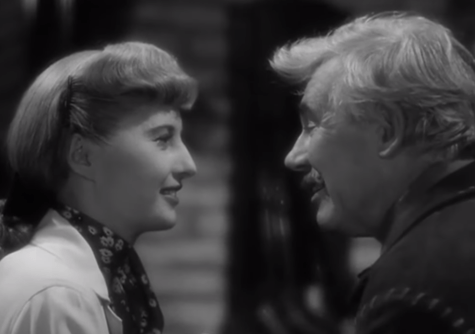
Frenzied opening strings from a score by Franz Waxman assist in introducing a film that positions itself as another textured portrait of the West boasting a pair of grandiose performances from Walter Huston and Barbara Stanwyck. This particular ride down the well-trodden paths takes place in New Mexico where cattle barons ruled the land like feudal lords. At its core is a warring clan and this is their tale of belligerent family drama that sprawls across the plains with a vengeance.

In fact, T.C. Jeffers (Walter Huston) is a man ruling his acreage known as “The Furies” with an equally-suited ferocity. He’s a larger-than-life figure who knows how to throw around his weight; the territory is scattered with his I.O.U.s christened T.C.s.

But his daughter Vance (Stanwyck) is no less imposing, knowing precisely what she wants — his empire — and chasing after it with the full intention of sinking her claws into it someday. When she finds the right man of course. We can liken them to Rockefellers of the West, ruthless while also being fiercely loyal and even generous to their friends. But they are not squeamish about going after their own.

The ensuing melodrama is laced with arsenic braced by Anthony Mann’s usual choices that ratchet the tension. While the scale has grown, his aptitude for projecting a certain raw volatility on the western frontier is no less apparent.

When rugged Rip Darrow (Wendell Corey) ambles into the Jeffers’ home during a lively gathering, Vance immediately tries to win him. It starts with a dance and goes from there.  Far more than a mere pretty face, Wendell Corey holds a grudge that really leaves an impression. He has long felt slighted by Jeffers for ending up with the land he long thought was his own and he gladly gets back at the man through his daughter. Except Vance feels betrayed when Rip takes $50,000 in bribe money never to see her again. That’s the termination of their relationship for good.

But it turns out that T.C. also seeks out companionship of his own and his chosen mate, Flo Burnett (Judith Anderson) proves to be a golddigger who hardly hides her intentions. She receives only Vance’s ire and Ms. Jeffords is not about to let this woman finagle her way into the family business even resorting to violence if necessary.

It’s yet another riff in this power struggle that reverberates again and again. Because this is an unrestrained showcase of opportunistic human beings who glory in their own avarice and pursuit of wealth. People pushing others around and undermining them with little regard for their well-being.

It ends up reaching its absolute zenith with a bloody shootout to push the Hererra Family led by brother Juan (Gilbert Roland) off the Furies once and for all.The skirmish results with one man at the end of a rope and Vance never about to let her father forget what he has done to one of her closest childhood friends.

But it doesn’t stop there because it never can. Not with people such as this. Daughter goes out across the frontier on a vendetta that will pay heavy dividends. She even reconnects with the other man she never wanted to see again. Together they scheme T.C.’s ultimate downfall but as he gets on in years the old warhorse is faltering a bit. His glory days are setting so maybe it’s for the best. One could say that T.C. got his comeuppance but by all accounts, he died a legend. The same cannot be said for many of his adversaries.

I can’t help but juxtapose Devil’s Doorway and The Furies. An interesting reference point is that Robert Taylor and Barbara Stanwyck were still husband and wife at the time but in both pictures, they try mightily to tame the West and hold onto what they believe is rightfully theirs. They have varying degrees of success.

The film also exhibits a racial element much like Devil’s Doorway because though it is rarely talked about, much of the mythology of the West is tied up in the white pioneer’s story. The marginalized folks like Native Americans, Hispanics, and certainly Asians are pushed to the edges of the frame. This film showcases the Herrera family.

Further still, there are an array of strikingly powerful women who exert their control in different ways. Though Beulah Bondi has a relatively small part you quickly realize that women such as her are important figures. Because they carry such crucial sway in the business of their husbands as the voices whispering advice into their ears.

Meanwhile, Judith Anderson while a bit of a tramp nevertheless is forthright and transparent about her intentions. She’s not a complete pushover and that makes a slight tussle with Stanwyck entirely credible.

Obviously, Barbara Stanwyck is phenomenal — one of the few performers who could have pulled off this role much like the matriarch in Sam Fuller’s Forty Guns (1957). It needs someone who is that assured and strong, who carries an unmistakable presence anchored by undeniable beauty. She was blessed with both.

Walter Huston would pass away the same year in 1950 but The Furies compiled his innumerable talents in one last monumental showing that’s a worthy swan song in a veteran career. What a way to go as T.C. Jeffords.

4/5 Stars


The Devil’s Doorway (1950)

devil's doorway 1.png

Right here we see the precise genesis of Anthony Mann as a director of westerns. To consider the string of modest classics that followed is nearly staggering. But he was well-suited for the transition taking his acquired skills over the years and translating them easily to the West.

The Devil’s Doorway is shot like his most gripping noirs thanks in part to John Alton’s continued partnership. Thunder sounding off in the background, low lights, and even lower angles when working in close-ups. Visually he certainly doesn’t pull any punches.

At first, I wasn’t sure if I would care for the picture since I knew next to nothing about it. However, in the first few minutes of expositional action, we learn something that sets up a striking dissonance not only within our character’s identity but in the West itself.

Lance Poole (Robert Taylor) comes back from the Civil War as a man who proved himself on many a battlefield from Antitiem to Gettysburg achieving the Congressional Medal of Honor for his heroics. Strikingly, for someone returning from such a divisive war, Poole has a fairly positive outlook. Except he’s rudely awakened when he comes home and finds that a different type of war is still raging.

This is the time to share the film’s major point and one that is crucial to getting into this narrative from screenwriter Guy Trosper. Poole is a Native American — a Shoshone by birth — but when he fought in the army no one judged him by the color of his skin. He shared food and quarters and fought alongside his fellow Americans.

And yet when he gets back to the land he calls his own, he finds that men have hardly changed even if the times have. White folk look at “Indians” with disdain and if not disdain then probably fear. There’s no sense of wanting to get to know them. Sure, there are a few who remain true to Poole from the old days like Zeke (Edgar Buchanan) and yet even they crumble under peer pressure. That means no drinks served to Indians in the saloon and certainly no owning property.

The Homestead Act is a grand proposition made for dreamers, rallying men to head out to the vast plains out west to stake claim to the territory and settle down. No such provision exists for the ones who have lived on the land all their lives.Under the law Poole’s not classified as an American citizen and what is he, you ask? Well, that’s very much what the picture is trying to address.

Even as desperate men surge toward Poole’s acreage of top land looking to move in, other Shoshone from a reservation, led by their chief (Chief John Big Tree) seek asylum because their current existence is a far cry from their former life of prosperity.

Poole knowing that the way of the white man worked for him during the war tries to seek out honest means of reclaiming his land. He forgoes the town’s crooked lawyer Verne Coolan (Louis Calhern) and calls upon Orrie Master (Paula Raymond); she’s a woman, not a man, which in itself is a statement.

Though reluctant, she takes his case because they need each other. She plays by the book, holding to the assertion that if something’s the law, we have to abide by it. Her faith, her religion of sorts, is the law and she treats it as sacred. But as those roads seem to lead nowhere for a man like Poole just because of the color of his skin, she tries to make him seek compromise — some amount of mutual understanding.

But when you have a bigot like Coolan doing everything in his power to push Lance off his property, such an agreement seems out of the question. Such a diabolical fellow is intent on inciting opposition and manipulating folks so that peace and compromise are no longer viable options.

People such as this are far too prevalent in this world and their philosophies poison the world for everyone. There is no understanding. There is no empathy and Lance is not about to wait around for it. He’s going to defend what he deems to be rightfully his.

Ms. Masters in near desperation sends out a distress signal to Fort Laramie calling on the Cavalry. It is her last hope for any type of peaceable resolution — even if it only stops the bleeding which has already begun between the natives and the homesteaders. We too look on powerless to stop the bloodshed because we are only an audience interfacing with a film. The question becomes what will we do with our reality if we see a parallel issue?  If and when former Union Officer Poole perishes there will be no one to play him “Taps” now will there?

Such a downbeat ending and harsh portrait was not something Hollywood was ready for and it seems that generally, Devil’s Doorway gets a bit buried. I think it’s about time that we all took our medicine and while not a perfect film it might cause one to perceive the Wild West of Hollywood lore with a very different heart.

To say it’s completely undermined by its casting is somewhat missing the point because its intentions are all but honorable and the picture lays in hard to issues that are not simply western issues but are quite easily transposed to post-war WWII, 1950s pre-civil rights America and obviously the present as well.

In fact, it hardly feels like jumping the gun to call Devil’s Doorway cutting-edge because like Broken Arrow (1950) of the same year, it actually concerned itself with the plight of Native Americans. But whereas the other picture is somewhat forgettable now, there’s still an undeniable bite to Mann’s effort. Even the black and white imagery aids in the tone (as well as practically masking a bit of Taylor’s makeup).

Here is a western that stars an “Indian” and an independent working woman who are not even romantically attached to each other. Beyond that, it straddles this line of muddied morality that hardly chooses sides but settles in the gray area that leads us to make some heady considerations.

Far be it from me to strip away visions of glorious gunfights and all-conquering heroes. But if you watch this story unfold — a grim statement of tenacity from Anthony Mann — those myths will be trampled on. You would do well to watch your step and open up your heart just a little bit, hopefully, more than when you first entered in the corral.

4/5 Stars

Wichita (1955)

wichita 1955.png

The more and more I get to know Jacques Tourneur the more it seems that he was content in making films on his terms no matter the budget or restrictions. His ambitions were not to win awards or garner acclaim yet he was a master craftsman painting in shadows, intrigue, and vibrant strokes.

Known in his early days for his lucrative partnership with producer Val Lewton on low budget horror movies that still stand the test of time as inspired works, the high watermark of his career is indubitably the noir masterpiece Out of the Past (1947). By the 1950s he had settled into making westerns, swashbucklers, crime pictures, and pretty much anything else handed him.

The striking realization is that he never really moved up the Hollywood totem pole which makes me suspect it was partially by choice. He was content with a certain stratosphere of production and when you watch a picture like Wichita you can understand why.

It takes many of the mythical staples of The West and insets them within the contemporary Hollywood framework that generated a lore of its own.The lineage that gave us a plethora of television classics like Gunsmoke, Bonanza, Rawhide, The Rifleman, Cheyenne, Bat Masterson, Wanted Dead or Alive, The Big Valley, Wagon Train, Sugarfoot, Have Gun Will Travel, and countless others that I either failed to mention or don’t know.

The tradition runs rich and deep. Where people address a hero like Wyatt Earp by his full name and there’s some sort of knowing comprehension. Where good and evil are unquestionable entities that we recognize outright. Where a final showdown is all but inevitable as is the town’s prettiest girl falling for our hero.

Wichita is such a picture and yet by some method of ingenuity and delight in his craft Tourneur makes it into something worth remembering. Part of that must be attributed to a script by Daniel B. Ullman which manages to have time for a big reversal and some social commentary in what otherwise could have been droll entertainment.

Meanwhile, though Joel McCrea might look a little decrepit and over the hill for such a role especially opposite a beaming Vera Miles, there’s still that same amiability and honesty that he was good for. James Stewart would look much the same opposite Miles in The Man Who Shot Liberty Valance (1962). But like that picture, the themes add a depth of character to the western making it a transcendent medium since it’s as American a genre as they come and it provides the perfect breeding grounds for allegorical tales.

Because before we meet our hero we meet a group of cowboys who are driving their cattle toward the rapidly growing destination of Wichita, Kansas. With the railroad turning it into a pitstop, the city shows no signs of slowing down and turning into a ghost town. Instead it aspires to be the next big Mecca in the Midwest bringing all sorts of people — the Babylon on the Arkansas River without the hanging gardens.

One such traveler rides as a solitary figure toward the cattlemen in one of the film’s most canonical shots and they oblige by offering him a meal. However, two of their band are mighty eager to swipe their visitor’s saddlebags when he beds down for the night.

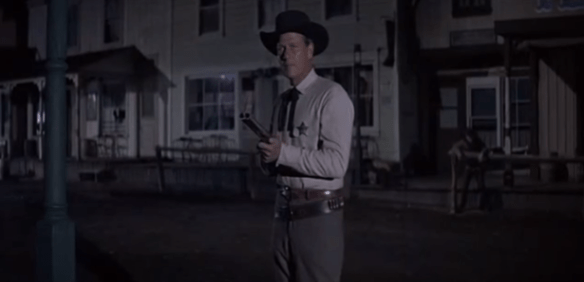
What follows is a preview of coming attractions and even as Earp (McCrea) goes on ahead to Wichita we know intuitively that there will be another confrontation. In the meantime, he rides into town under the banner reading: “Anything Goes in Wichita” and local floozies waving giddily as they pass in covered wagons.

As best as I can describe it the town is alive. Positively bustling with activity and it makes everything in the frame more interesting with this ever dynamic ambiance playing out in the background. I’d like to think that is what Tourneur is able to offer the material.

While we bide our time we watch Earp looking around for something to invest his talents in. He befriends the towns newsmakers a stodgy old veteran (Wallace Ford) and his ambitious understudy Bat Masterson (Keith Larsen).

Earp also ends up thwarting a bank raid raising the eyebrows of the local big whigs for his prowess with a six-shooter. Sam McCoy (Walter Coy) the man responsible for bringing the railroad to Wichita offers him the job of Marshall which Earp gently refuses on multiple occasions.

wichita 2.png

Twice already we have seen him use his gun but he embodies the archetype, an agile marksman who is hesitant to use his firearms and only under extreme provocation. But the final trigger comes when the cowboys from before roll into town with a hearty welcome. However, when their merrymaking devolves into belligerent hooliganism that leaves a young boy as collateral damage, Earp is finally ready to pick up the badge.

It ends up being a battle between the business-minded community members with political clout and a man whose number one priority is public safety. Others like Doc Black (a wily Edgar Buchannan) and even McCoy are willing to make concessions for what is termed progress but Earp once he’s taken his post is a hardliner.

He won’t budge an inch which is an admirable trait even as it doesn’t buy him many supporters. But sometimes that’s what the great men do and it is what few men seem willing to do now. Conceding their popularity for the greater good. However, I can hardly criticize any man for such a stance unless I convict myself too. As McCrea asserts it’s, “Not a question of who’s right but what’s right.” That’s the bottom line and he sticks to it.

In the final shot of Wichita as husband and wife ride off in their carriage together the image is all too familiar evoking for me High Noon (1952) one of the first westerns that truly moved me on a human level. This picture did much of the same though on a lesser more inconsequential scale. It caused me to place a magnifying glass to issues that we still see the U.S. confronted with right at this very moment.

“If men aren’t carrying guns they cannot shoot each other.” This common sense comes straight from the film and yet you can easily see how it becomes clouded with personal ambitions and polarizing politics. There’s no denying that. Sometimes it takes a personal tragedy to shock us into some form of action. The question remains what is the greater good? I feel like it comes into clearer focus when you get hit where you’re the most vulnerable.

4/5 Stars

“Serving God and serving the law are two different things.” ~ Bat Masterson

“To do either one, takes a dedicated man.” ~ Arthur Whiteside


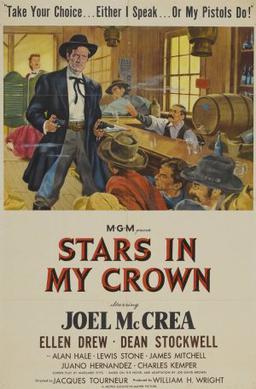
Stars in My Crown (1950)

StarsInMyCrown.jpg

It speaks not only to the man but to this film, that Joel McCrea rated Stars in My Crown among his personal favorites. (Hint: It’s not because of the imminent reunion of two cast members in Gunsmoke). The story is framed by the nostalgic recollections of an old man and it’s a singular story in the way that one life is a story. There are constant offshoots, revelations, and daily interactions with other human narratives.

John’s life (Dean Stockwell) could have been very different; it could have been drama because he was orphaned at a young age. Except he had Parson Gray (McCrea) and Mrs. Gray (Ellen Drew). Much like this film, his life was generally a joyous affair growing up as a young lad. Certainly, it was not without its roadblocks, disagreements, or minor quarrels but what remains is generally uplifting and good.

Stars in My Crown for much of its run is a vignette-driven tale but that proves to be the utmost blessing for this particular film. That inevitably brings us to Joel McCrea and why he must have relished this part. He’s a man of faith and no shame-faced Christian. There’s no denying his spiritual leanings. Still, while he’s not a spineless pushover, there’s not a condemning word that leaves his mouth either.

What keeps him upright and a pillar of the community is a quiet boldness and a genuine care for his parishioners. But that means not simply calling on the people who enter into his church on Sundays. I’ve heard it said before that it’s easy for anyone to love people who are just like them or who they like already.

What’s truly a test of someone’s heart is whether or not they are willing to reach out to those who seem alien and contrary to their station in life. The Parson is such a man. Not only does he care for the physically sick or the self-proclaimed churchgoers who are sick in the soul, he is there for those on the fringes too.

He faithfully calls on his boisterous war buddy (Alan Hale Sr. in his final role) who is larger-than-life with a strapping clan of sons (including James Arness) and a penchant for joking about religion. He’s waiting for the Parson to get God to plow his fields for him.

The good-natured Gray gently ribs him about his coming to church. But what strikes me is the worth he sees in his friend. In one resounding instance, when the local gamekeeper Famous (Juano Hernandez) has his land trampled by local bigots, it’s not the Christian folk but Jed who immediately comes to his aid. His beneficiary rightfully proclaims with all candor, “You’re a real Christian.”

Parson Gray’s rounds never seem to cease though in one instance they meet with opposition. Dr. Harris (Lewis Stone) has long been the town’s apothecary but with his ailing health, his intelligent yet rather brusque son (James Mitchell) is taking over the family business. Though more than capable, what the younger fellow is lacking is a genial bedside manner, at least upon first glance.

He does show a certain sensitivity to the local school teacher (Amanda Blake) and the certain tightness in Mitchell’s voice is stellar for articulating the feelings of a man who is hardly unfeeling — he just has trouble opening up. In fact, he’s adamant that the religious leader stays out of his way because he sees no place for such ritualism when he has practical science to help people.

The days roll ever onward with young boys lazily kicked back in a hay wagon surmising what they’d do if they were God. Namely, have it always be summer. Even Christmas would be in summer. Another time a Medicine Man (Charles Kemper) and his Carnival Show pay a visit and bring the town out of the woodwork for an evening of magic tricks and showmanship.

Then come the bad times when the typhoid hits and people are dropping like flies. First, John is sick then a whole host of others. The Doctor criticizes Gray for potentially infecting the entire population of school children and for the first time in a long time we see the normally even-tempered man angered.

However, the Parson is man enough to consider that he’s wrong because he very well could have been. He’s also humble enough to give the doctor room to work. For the sake of the people, he becomes isolated and as a result poor, bereft of his usual resources. Because all he had was out of charity and the tangible blessings of those around him.

He even goes so far as closing the church for the first Sunday service as far back as anyone can remember. It soon becomes evident how very humble and meager his portion is without the bulwark of community around him.

But it’s one of those things, out of the Parson’s seemingly selfless act comes a reciprocal act from the young doctor — the man who shed his rough exterior and became one with the people knowing full well all their suffering as well as their joys. It was this chance in the trenches with the lack of the sleep and onslaught of the slow fever where he realized there was a need for something else that he never thought was lacking before. If Ordet (1955) has the most striking resurrection scene that I can recall perhaps Stars in My Crown has the most gorgeously understated.

The final stand that the Parson is compelled to take is also weighty with significance. The townsfolk have repeatedly threatened Famous and now they’ve reached the end of the road. Stringing him up and taking his property is all that’s left to do.

When they leave that burning cross and the note, cloaked in white like cowards, it somehow brought the same realization that floods over me far too often. In some ways, this film is meant to be so archaic, reminiscent of a bygone era far removed from our present. And yet as much as we might try and move away, it sadly remains relevant.

So the Parson goes to Famous’s home alone knowing what is coming for them. He forgoes the guns of his good buddy Jed. That’s not his way now. Instead, he speaks to them resolutely as they get ready to take Famous away. He confronts them with the man’s own words and in the most piercingly moving moment of the entire picture we see how one man can be so selfless in the face of so much hatred. He can boast so many riches even if his worldly possessions seem totally inconsequential. His character speaks for itself.

Years later Atticus Finch would have a confrontation akin to this one and yet it came to an impasse. Here the Parson is able to speak the truth into each of these men’s lives and make them human again. All thanks to Famous.

So while the picture might fall too easily back into place (Klansman aren’t rooted out forthwith for instance) there’s no begrudging such a gentle and virtuous film its closure. Because these are as much the fond memories of a young boy grown old as they are the tale of one man who left an indelible impact on a life and on a community. I’m reminded that perhaps a church is not so much a building as it is a people. Though the picture is capped by the proud moment where the Parson sees his old war buddy welcomed into the fold, I would like to think he doesn’t see that as the ultimate victory.

If anything his life reflects the outpouring of an existence lived outside of the Sunday framework. He does not have compartmentalized faith — the kind of religiosity that makes people hypocritical and prideful. I can respect a man like that even if he doesn’t pack a gun.

4.5/5 Stars

I am thinking today of that beautiful land
I shall reach when the sun goeth down;
When through wonderful grace by my Savior I stand,
Will there be any stars in my crown?

Will there be any stars, any stars in my crown
When at evening the sun goeth down?
When I wake with the blest in the mansions of rest
Will there be any stars in my crown?

In the strength of the Lord let me labor and pray,
Let me watch as a winner of souls,
That bright stars may be mine in the glorious day,
When His praise like the sea billow rolls.

O what joy it will be when His face I behold,
Living gems at his feet to lay down!
It would sweeten my bliss in the city of gold,
Should there be any stars in my crown.

Day of the Outlaw (1959)

day of the outlaw 1.png

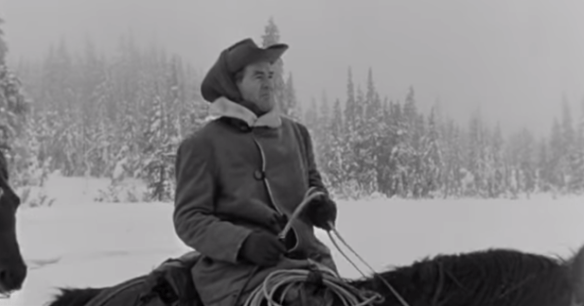
Filmed in Central Oregon on the eve of winter, Day of The Outlaw displays gorgeously fluffy photography as the snow covers the ground. With the leading part anchored by Robert Ryan, I could not but help recall his portrayal in Nicholas Ray’s On Dangerous Ground (1951), another project that made liberal use of immaculate winter exteriors. Likewise, that was only the backdrop for a tough and unfeeling world.

In this particular instance, Andre De Toth’s picture has grudges burning deep under the surface making relationships generally contentious. The story is as old as the western itself. At least its central themes make themselves known straight away. The conflict is between homesteaders and cattle ranchers embodied by two men. The aptly named town of Bitters, Wyoming has recently seen more folks settling down there. One of them named Hal Crane is intent on putting up barbed wire fencing to measure off the land for his new homestead for he and his wife.

As always, there are two sides to every field and the epically named Blaise Starrett (Ryan) is vehemently against the wire being put up because it will keep his cattle from roaming free across the land. He hasn’t minced words about what he’ll do if Crane tries it. He’s equally bitter, and he has some right to be because the way he sees it, he was one of the men who tamed the land with blood, sweat, and tears. The farmers are the ones who settled down in his shadow and now look to shoulder their way into what he has made.

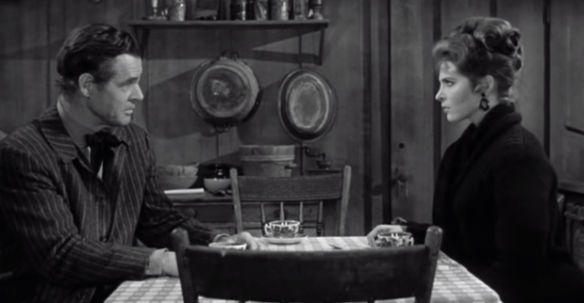
However, what makes the story even more embittering is the fact that Blaise once had a thing for the other man’s wife, Helen (Tina Louise). We witness them as they meet in the general store. And at first, they give off nothing away. All that’s there is seemingly a mutual distaste. But they sit down to a nice neighborly cup of coffee alone and something else becomes evident.

She starts the conversation and makes a cold observation, “You want another man’s wife but the man has to be dead before you take her.” It’s obviously a twisted David & Bathsheba triangle. It’s about to come to its boiling point when the two men look to have it out in the local bar. Finally, a moment of violent catharsis is at hand as a lone bottle rolls down the bar to an inevitable end.

day of the outlaw 2.png

But in a bit of serendipitous (or not so serendipitous timing) they’re bloodbath gets postponed by the entrance of a band of renegades who have just ridden into town fleeing the Cavalry for some unnamed crimes. Time to put all that we assumed the film to be about on hold and do an about-face.

Their fearless leader, a former Union officer Jack Bruhn (Burl Ives) is a surprisingly honorable man who vows to the people of Bitters that no harm will come to their women. He also forebays his men ffrom drinking, commanding the proprietor to get them some grub and lock away his liquor. Ives had a key role in the William Wyler western epic from the year prior The Big Country (1958). His performance here is fascinating for its nuance.

Jack Lambert is the quintessential baddy in my book right up there with Lee Van Cleef and he shows up in fine form here joined by a crew of other sneering malcontents just waiting to go crazy. You can see the pressure rising yet again. However, the fact that much of the film is confined to interiors makes the moments that we break out into the open that much more impactful and the imagery is equally rewarding.

One particular highlight is a fist fight in the muddy slush where Blaise puts up a good struggle but ultimately gets wailed on as an example to everyone else. Simultaneously the women folk fear for their well-being trying to make a break for it and a little boy is taken as a hostage. Another sequence involves a whirling dance hall gathering of forced fun. Bruhn’s men get riled up with the ladies but as their leader sees it, this is a safety valve to blow off steam, far better than more sordid alternatives.

Everyone knows this cannot go on forever and so Starrett agrees to lead them in their escape — a heroic act to remove the men from the town he helped civilize. The final ascent into the mountains to traverse a tortuous path through to the other side proves treacherous on multiple accounts.  While the ending might be yet another slow burn, it does the picture justice even if a fuller, happier ending would have been appreciated by contemporary audiences. We are given enough.

The picture successfully suggests that Tina Louise is far more than Ginger in Gilligan’s Island. She certainly leaves an impression. At first, I didn’t realize David Nelson was even in the picture. Besides, his brother was the true matinee idol and yet to watch him in this oater you see the tender-hearted candor in the older Nelson. Perhaps his father was trying to make both of his sons into western heroes in Rio Bravo (1959) and Day of the Outlaw respectively. Though this outing hardly gets as much respect, it’s nearly as entertaining.

Phillip Yordan’s work on the script does a fine job of creating numerous points of contention that get placed right on top of each other, tweaking the expectations of the audience nicely. What looks like a straightforward feud over a woman soon becomes far more volatile as old enemies must join forces to protect their town against the invaders. And yet the invaders are led by a man who has a sense of conscience. So the ticking time bombs are set off with his cronies hemming and hawing, private resentment still lingering under the surface, and a gunshot wound sustained by Bruhl threatening to put him out of commission permanently.

Day of the Outlaw is a genuinely satiating effort from De Toth that brims with brooding energy supplied by the perennial outsider Robert Ryan and aided by gorgeous snowscapes and a script brought to life by an engaging ensemble. If there is any one thing that hampers the picture, it could probably be chocked down to budget restraints. The production ran out of money in the end and so De Toth wrapped up filming prematurely.

That’s what makes it even more phenomenal the movie boasts undisputed quality as a truly unheralded western classic. Just as my estimation of Robert Ryan rises after every subsequent performance displaying his at times tortured and dogged resolve, I have a newfound respect for Tina Louise and their director. This would be Andre De Toth’s final time helming a western and there’s little doubt he went out with a winner.

4/5 Stars

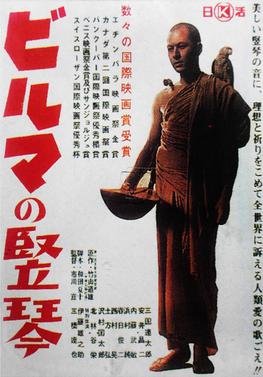
The Burmese Harp (1956)

The_Burmese_Harp_Nikkatsu_1956_poster.jpgPut in juxtaposition with Kon Ichikawa’s later rumination on WWII, The Burmese Harp is a romanticized even simplistic account of the Japanese perspective of the war. However,  this is not to discount the mesmerizing nature of the story that is woven nor the overarching truth that seems to linger over its frames.
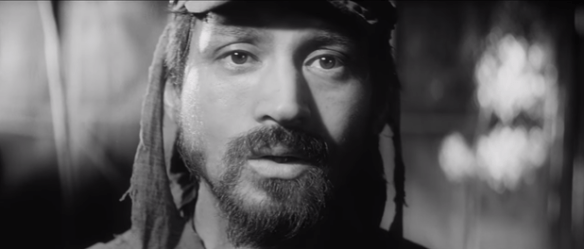
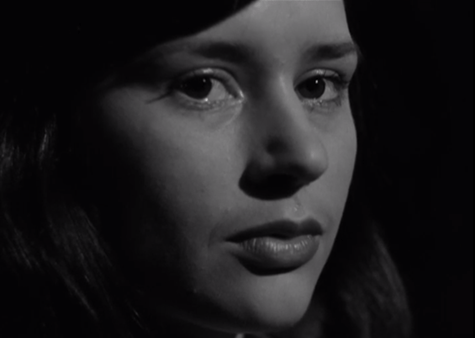
If anything, it humanizes the Japanese point of view and, rather remarkably, it does this so soon after the war’s conclusion. They were a nation deeply concerned with honor and the only way to get past such an egregious defeat was to frame it in such a way that empowered them for the future.

Because the men who came out of the war unscathed would be the shoulders on which to build a new democracy. You see that even in Ichikawa’s portrayal of the “enemy,” in this case, the English. There is no obvious ill-will. In fact, you could even consider it surprisingly laudatory. Because The Burmese Harp is not concerned with any types of residual politics or long-harbored injustices.

One could make the case it’s a far more universal and a far more moving portrait of the wartime landscape. The story, adapted from a Japanese children’s tale, plays out rather like a parable.

In the waning days of the Burma campaigns, a Japanese Captain named Inouye (Rentaro Mikuni), with a background in music teaches his group of men chorale arrangements which they sing to maintain their morale while they march and during their idle hours. One of their company, Private Mizushima (Shoji Yasui), quickly picks it up and becomes especially skilled at playing the harp to accompany their songs.

One evening they find their position in a local village surrounded by British soldiers in the night. The tense scene is diffused by music in a mutual connection reminiscent of the Christmas cheer in Joyeux Noel.

They learn that Japan has officially surrendered and so they lay down their arms peaceably. Although fearful and demoralized by months of struggle, they resolve to weather it all together. But one of their members is called upon to try and get some of their comrades to stand down before the British blast them to smithereens.

Mizushima volunteers to be the one to undertake this initial task as a liaison to try and avoid the needless loss of more countrymen. It is not to be. Even as the war is already over, it’s this event that proves to be galvanizing in the private’s new position as a missionary of mercy.  After being rehabilitated by a monk, he takes on their dress and shaves his head compelled to give a decent burial to all his fallen comrades.

Moved by the memorial hymn sung over the dead Japanese soldiers at the British Hospital, he realizes what his final calling must be. It’s easy to wager that the film’s most poignant moments occur in conjunction with song. In many of the best interludes, we hear the voices ringing out amid nature whether it’s the shade of the forest or the cleared terrain of a military encampment you can sense the notes rising up into the heavens with the strains of angelic melodiousness.

The same songs lift the spirits of our characters, comforts their souls,  and gives them the resolve to push onward for the greater good.  It has to do with an unswerving belief that each individual life holds dignity. Despite their many spiritual differences, there’s no doubt that this is a conclusion arrived at by both Buddhism and Christianity. Yes, the ugliness is unavoidable. But just as prevalent are immense reservoirs of beauty.

Mizushima is compelled in the inter most catacombs of his being to rescue the bodies of his brothers-in-arms that their spirits might rest in peace for posterity. It seems like such a small even insignificant act especially in response to such a cataclysmic war. But it’s one man’s calling. It is not for a mere man to know the answers to all the plaguing questions. All we can do is ease the suffering. For him, it is something. For him, it is enough.

What lends urgency to the story is the very fact that Mizushima’s entire company is frantically trying to obtain news of his whereabouts as they are getting ready to be shipped home. One of their most faithful messengers is a kindly old lady who learned some Japanese dialect. She can only give them small morsels but they cling to some hope. First, they think he’s been killed. Then, they think they’ve passed him on a bridge. Finally, they get their closure.

The candor is nearly startling especially put in relief with Ichikawa’s later work Fires on The Plain which paints a starkly different picture (or a very different side of the same picture). Likewise, this movie is aided by a script penned by his wife and close collaborator Natto Wada.

What we are left with are clear resounding strains of pacifism but by no means does it feel belligerent. What is conveyed is the sheer meaninglessness of war. However, it’s done through different avenues than his later work.

The film is bookended by the phrase, “The soil of Burma is red and so are its rocks.” The mind quickly flies to the pints of blood that were spilled across this terrain. It’s a grim reminder and yet The Burmese Harp, despite being a bittersweet tale, does boast hope. In the wake of war, such hopefulness is indispensable. You cannot progress without it.

4/5 Stars

Fires on the Plain (1959)

fires on the plain 1.png

The opening images of Fires on the Plain nearly catch you off guard. Not only are we thrown into a dialogue sequence that we have yet to grasp but much like Ozu would have a penchant for doing, director Kon Ichikawa photographs two Japanese soldiers head on so their conversation and reactions face the camera directly. It’s the first of numerous times where the film messes around with visual convention. But that’s not the half of it.

Fires on the Plain proves to be a repeatedly idiosyncratic war film while subsequently becoming one of the most appalling. As an audience, we are privy to one Japanese soldier’s listless pilgrimage across the bleak and generally decimated terrain. There’s no goal in sight. No reason even to stay alive. He is stricken with tuberculosis but the hospital, drowning in casualties already, won’t take him because he’s not fatal enough.

His commanding officer, who berated him in the opening minutes for returning to his starving unit, told him to try the hospital again or else use his grenade to kill himself and uphold his duty.

Ichikawa frames his pointless journey with unconventional camera setups that are considerably jarring if not completely detached. Private Tamura (Eiji Funakoshi) lumbers up each hill mechanically. Hacks his way through the underbrush. There’s little meaning to his movements. Any incoming threat seems inconsequential in spite of hikes in dramatic scoring. Still, he wanders through ghost towns and fresh graveyards. Rather haphazardly skewers a stray mutt with his bayonet. Guns down a local inside a hut as part of his constant search for food. Another villager gets away in a boat.

By this point, Tamura hardly cares anymore and proceeds to drop his useless firearm into a river; there are no bullets left. When he’s not alone he joins the most beleaguered band of squatters as they blindly wander toward their evacuation point together but no less pitiful.

It’s not a film to shie away from the stomach-churning, grotesque, forlorn, utterly hopeless realities of what war really is. Fields strewn with dead bodies. Heaps of skeletal remains. Hospitals with abhorrent conditions. Wild tales of men eating human flesh just to stay alive in New Guinea. Wading through mud. Playing dead with incoming enemy fighters. There’s little respite from this onslaught.

It becomes so absurdly hopeless it’s almost funny. What else is there to resort to? In the rain, trampling through the underbrush, first, one soldier sees a pair of discarded boots and switches his worn pair with these. This swapping continues with another man. The first man’s trash is his treasure. By the time our protagonist gets there, the boots left over are completely worn through but his boots have no soles either so he just tosses them on the ground and resigns himself to walking barefoot.

This is insanity. It’s cruddy. Absolutely dreadful imagery again and again and again. There’s a certain point where it simply becomes an act of survival — nearly monotonous in its never-ending, never ceasing plodding toward an ultimatum. We must begin to ask questions. Why do we do this to ourselves? Why must we go through this suffering and inflict pain and injury on our fellow man? We even resort to infighting just to survive.

If you came in with any idealized visions of warfare still intact, Ichikawa’s intent is to rip those preconceptions away limb from limb. There is no good in war. Only vile, putrid, horrible, unthinkable things that extinguish life and crush the human spirit.

Such moments prove to make Fires on the Plain a perfect counterpoint to Hollywood’s Bridge on the River Kwai (1957) going far beyond their choices in palette. Because Ichikawa’s film takes it’s black and white cinematography and carries it into all aspects of the production. It’s the nitty-gritty, the somber, the absolute disgusting side of war dolled out without much hesitation.

It fits nicely into the world developed in pictures such as The Steel Helmet (1951) and Red Badge of Courage (1951), except one can contend that Ichikawa takes it even further into the abyss. In fact, it would also serve as a fine companion piece for the provocative docu-drama The General’s Naked Army Marches On (1987).

However, not for a moment would I bash David Lean’s landmark epic nor the performances of such titans as Alec Guinness and William Holden. The pictures succeed in their portrayals in part because of their contrasting approaches to the same futility of war. That statement is made in both but the mode of expression is radically different.

If my recollections are correct we never hear explicitly where the action takes place though we can make many educated assumptions. Fittingly, in the last frame, we are told. The Philippine Front, 1945. Not that it matters. It could have been any war in any place.

There are anti-war statements and there are absolute anti-war immersions, arguably none more devastating than Kon Ichikawa’s effort here. Because to be trapped knee deep in this hell hole you know there is no way that such a world should exist. And yet we cannot be so naive to believe that such a shocking scenario is only of the imagination. It’s a troubling film to watch because we can’t help but be assaulted with the truth even as we would like nothing better than to bury it.

How can life get to such an intolerable point where death is perceived to be a greater gift than life? In not so flippant terms, maybe war is hell. Man turned against man. There is no harmony. There is no peace,  only chaos and destruction waiting for us around every corner.

The novel on which the film was based purportedly ends with our narrator taking on a Christian perspective and gaining a more optimistic outlook on Man and life after the war. However, I have few qualms with Ichikawa’s interpretation, though more downbeat, it makes the equally frank assertion that Man is prone to evil and violence. If Man was wholly good there would be no war. But something quakes within us that makes us belligerent. The age-old question remains what or who can save us from this world of death?

4/5 Stars

Summer with Monika (1953)

summer with monika (1953).png

If I didn’t know any better I would say what the desires of the kids at the center of this early Bergman picture, sound like the American Dream. Except maybe it’s the Swedish Dream and maybe the main tenets are all but universal to many of the wide-eyed, angsty teens out there.

The lives of Harry (Lars Ekborg) and Monika (Harriet Andersson) have undoubtedly been witnessed countless times. They’re both in unfulfilling jobs. He’s an introverted laborer at a packing house where he’s not particularly happy and his constantly sub-par work ethnic receives the repeated wrath of his superiors. Meanwhile, the spirited Monika spends her days at a grocery store with a skirt chaser. Hardly the ideal environment.

But between Harry and Monika love blooms. He buys her a small trifle. They go to the movies together and she cries over the reveries on screen. This only serves to magnify how unpleasant real life feels, a far cry from the dreams they hold as working-class youth in Stockholm.

However, on a whim, Harry commandeers his father’s boat and Monika leaves behind her two annoying brother and nagging mother for adventure on the high seas (or rather the archipelago). The sun is bright. The water glimmers with personified delight. And it’s much the same for these two as they frolick and enjoy the novelty of this romanticized getaway. Even though the film famously features brief nudity, rather than being utterly sexualized, in more ways it evokes the imagery of Genesis 2 (Adam and his wife were both naked, and they felt no shame). The shame comes later.

Right now, they’re yet another iteration of the love-on-the-run narrative that proves you only need a mode of transport and passion does the rest — carrying lovers away on its gleeful wake.

Because at that age we’re all grasping at something intangible that floats above us tantalizing us every day of our lives. There’s not enough experience in life yet to know any better and so we go out and crave these pie and the sky ideals. Until it turns out were really grasping at straws. There’s nothing there for us. Only a harsh reality check.

As they often have a habit of doing, dreams so quickly turn themselves into nightmares and all the hopes that we clung to are dragged through the brush and the briar. So by the end, they’re muddied with dirt. That doesn’t have to be the end, however. Nor do you have to give in to your dreams being trampled.

As in the case of Harry and Monika, you can try and make a go of it the normal way. Grinding out an existence, poor and trying to eke by paycheck to paycheck. There’s a child now and he’s going to school to earn a better life, nagging like a conscientious adult about saving money and making their rent payments on time. There’s the constant bickering when he comes home tired from work and she’s discontent with this very mundane, sedentary lifestyle. There’s no allowance to go to the movies or buy some new clothes.

Soon she’s going to the arms of another man. Divorce is all but inevitable. How could all this happen in rapid succession you ask? Perhaps Summer With Monika is an exercise in heightened drama but Bergman, in essence, seems to be plotting the cycles of life and what hard-edged reality does to you.

It runs you up against the rocks, often destroys all your well-meaning aspirations, and leaves you disgruntled. Especially when we’re young we run that risk but any type of love, even those relationships founded in shallow soil, are rapturous when times are good. It’s a true test of stability when the bad times hit or further still the banality of the everyday. If you are still in love with a person even in those moments, perhaps that’s when you know you have a marriage with staying power.

It didn’t occur to me until well into the picture because I can be slow-witted with a thick skull but early on in the film, we have one of the old-timers observing that it’s springtime. The film is Summer with Monika and that embodies the happy times in the sun. But of course what must follow is Fall where everything begins to fall apart and then there are the bleakest depths of winter which are trying for any relationship to attempt to weather. All Harry can do is look back and yearn for those summer months. Although by wintertime it’s already far too late.

Bergman’s ultimately portentous parable is gorgeously rendered as usual. In fact, I’m not sure if I have ever seen a film by the Swedish maestro that wasn’t so. There’s a crispness to the black and white that while unadorned and unglamorous is nevertheless pure and blatantly arresting. In the moments of free, uninhibited youth it so exquisitely captures that mood while just as quickly shifting into the frigid moments as youthful innocence is forced to die.

4/5 Stars

Pather Panchali (1955)

pather panchali 1.png

Pather Panchali is one of those films that instantly helps you to recognize the merit of the cinema. It’s a cultural artifact allowing us to come to grips with the fact there is a world far larger than our little pocket of existence. Satyajit Ray does that for us here in his affecting debut by relating India to us through stark realism. It pierces to the core and captivates its audience through simple beauties. Simultaneously, he manages to touch on universal truths that prove our very commonalities as human beings.

I must admit to being fairly ignorant about many of the nooks and crannies of international film and so I needed this movie just like I needed the work of Ousmane Sembène and no doubt the films of many other directors still yet to be discovered.

In this particular instance, I deeply appreciated Pather Panchali because this is not a story told by Rudyard Kipling about a British Colony or even a Hollywood adaptation of an albeit heartwarming tale like Lion (2016). This is Ray’s picture. For all intent and purposes, told from his perspective as he so chooses. He has agency if we desire to use the terminology. It allows this to be a truly intimate portrait crafted by a budding Indian visionary as a showcase to the world abroad.

Ravi Shankar is best remembered for his connection to George Harrison but his score featured here, consisting solely of his virtuoso sitar playing, adds a strain of traditional instrumentation, further blessing the film with a sense of native identity.

Maybe this is a highly romanticized portrait. I cannot personally speak to this either, but there is a paradoxical even spellbinding quality to the imagery as it unfolds. We are seeing the everyday lives of this family. We see them in their humble means, their poverty even, and yet though we are cognizant of it, somehow it doesn’t completely register because their world somehow manages to be so rich.

The reflections in a stream reminded me of the images in Kurosawa’s Rashomon (1950) when he captures the light through the trees. Ray is equally content with documenting the immaculate construction of nature at hand. Delicate as it is magnificent.

But against this backdrop, he unfurls a perceptive slice of life that’s its own brand of neorealism — never rushing the ordinary moments — allowing them the space to unfold of their own accord. It methodically seeks out the fascination in these common things such as the whistling of the wind, passing trains, water lilies, and incoming rainstorms.

Still, it’s about the people too and they make up the glut of the story. The most mundane of these moments made me smile with fond recognition. Two boys playing tic tac toe on their slate instead of doing sums at school. A dog and cat pawing at one another. A little boy combing his stringy locks of black hair or running around his family’s rickety home with his homemade bow and arrow as his mom chides him to finish his food.

Instead of an ice cream truck, they have a traveling sweet seller and they always beg their father for money when they see the man off in the distance. Sometimes they get it but more often they follow him to their neighbor’s to see if their playmates were so lucky as to get some sweets.

The individual characters we meet are no less intriguing and all of them, as far as I know, are amateur performers. The big sister Durga takes fallen fruit from a neighbor’s yard to give to her old auntie. But such practices get her accosted and labeled a nuisance. Auntie meanwhile, moves creakily, her face weathered by a tough life, hunched over and missing most of her teeth. Yet there’s still fight left in her and an indefatigable spirit.

The husband, though he struggles to provide for his family and oftentimes doesn’t even get paid regularly when he is working, aspires to write in his few idle hours because his forefathers were authors in their own right.

His wife has her own fears about being alone so often as he’s off at work or trying to find work. It leaves her by herself taking care of their degrading home and watching over their kids in a society with a poor support system. She has no one to turn too aside from the humiliating charity of neighbors.

Then, last but not least is little Apu and while he might not be our main character — all the family play equally important roles — it’s his point of view that’s most accessible. Ray clings to his face with soft zooms or closeups catching his reactions to all sorts of events. Young Apu peers at the world inquisitively with steely eyes. Very rarely does he speak but he’s a constant observer of the everyday.

He’s the herald of letters which come few and far between when his father is away. He and Durga frolick around the train tracks as the belching locomotive passes by. He gets into his sister’s humble cache of foil in her toy box to craft a prince’s crown. Then shares sleeping quarters with his sister in their meager lean-to that looks like it will all but collapse in the wake of the rainy season.

Certainly, there are dramatic turns in the broader story of this family unit but they are rooted in the real-life events that we experience in the day-to-day. Debts to pay off. Saving face with the neighbors who needlessly gossip. Family members passing away. Husbands gone with barely a word because lines of communication are difficult. The innate desire to want more out of life even if it’s a simple home to call your own and a better future for your kids.

What makes Pather Panchali resonate to the very last frame as we watch this family move on to the next stage in their life, is not how different they are from us. It’s how similar. Because, yes, this is a picture of an impoverished Indian family but it no doubt can speak into any person’s life who is willing to be open to its story like an inquisitive child. Ready and willing to see the world for all its innumerable complexities both the sorrowful and the joyously light.

4.5/5 Stars