Review: Rio Bravo (1959)

howard_hawksrio_bravo_trailer_39

During the 1930s and 40s, Howard Hawks was an unstoppable force of nature churning out a string of classics year after year: Only Angels Have Wings, His Girl Friday, Sergeant York, Balls of Fire, To Have and Have Not, The Big Sleep, and Red River. All these titles stand as a collective testament to his prowess.

Over a decade later, Rio Bravo is a film that reflects something of the mastery Howard Hawks still held as a filmmaker making his way through every interlude with impeccable skill. It showcases his ability to string together scenes in a perfect rhythm, balancing humor with tension, romance with conflict, and making the western into a thoroughly entertaining experience once more. To say Rio Bravo is Hawks’ greatest films is not too far off the truth. He makes it so easy, the way he constantly tracks with his characters in space — often just talking — sometimes serious others times not, and it’s all so fluid, natural, and fun. It’s what makes the film, that’s over two hours, run seamlessly like the sweetest of liqueurs.

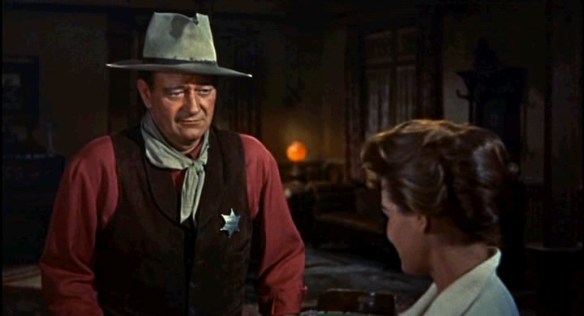
The script courtesy of Leigh Bracket and Jules Furthman is a bounty of inspiration and amusement. One such moment includes the perfect meet-cute between John T. Chance (John Wayne) and Feathers (Angie Dickinson) when she catches him in a compromising position with a pair of red bloomers. From that point on their dynamic is constantly churning with energy.

Dimitri Tiomkin’s score takes some cues from his earlier work Red River (also with Hawks) including the addition of the hauntingly sorrowful notes of “El Deguello.” With such talent as Dean Martin and Ricky Nelson, it also makes the prospect of a song a rich opportunity and Hawks finds ways to weave a musical aside into his film, showcasing the especially memorable tune, “My Rifle, My Pony, and Me.”

Howard_Hawks'Rio_Bravo_trailer_(31).jpg

Meanwhile, Hawks builds on this almost cartoonish mythology of the West where every person of interest lives life with a nickname spending as much time jawing and bickering as they do gunslinging. A great deal of that vibrancy is provided by the actors themselves with John Wayne as our anchor. Walter Brennan and Ward Bond prove to be his wizened counterparts while Dean Martin, as well as newcomers Ricky Nelson and Angie Dickinson, hold their own against the old vets.  It’s great fun to watch Dickinson spar with Wayne and Nelson lends his matinee idol looks to a laconic role as young gun “Colorado.” In an inspired bit of casting, Dean Martin plays a drunk and Brennan takes up his post in the jailhouse as a crotchety old man. It all fits nicely together.

But the question many engaged viewers might ask is whether or not Rio Bravo is a response to the earlier western High Noon. The concise answer is “yes” but that probably is not enough. It’s up to the viewer to discern which example is more truthful and honest in its portrayal of humanity. And High Noon certainly is a somber portrait full of doubt and inner turmoil. However, Rio Bravo is probably just as compelling because of its relational dynamics. John Chance is the sheriff, and as sheriff, he has a certain obligation to uphold the law. That means keeping murderer Joe Burdette (Claude Akins) behind bars. He’s the no-nonsense harbinger of justice that we expect and because he’s John Wayne he’s also tough as nails.
howard_hawksrio_bravo_trailer_26

But that’s what makes the first scene of the film so crucial. It’s notable because it begins with no dialogue, opening up on the town drunk in a saloon that also gets a visit from sheriff John T. Chance. Whether it’s an act of charity or disdain Chance saves El Borrachon’s self-respect only to get bashed over the head in return.

However, this moment is vital in how it sets up Chance’s character. Yes, he maintains a rough even grouchy exterior but looking closer, you see something else. He holds onto his friendships pretty tightly, namely old reliable Stumpy (Brennan) who he bickers with like an old married couple. Then his pal Wheeler (Bond) who comes into the bottled up Texas town with a load of supplies.

And they’re not the only ones. Chance looks to turn away a woman who’s got her face plastered on wanted posters, but slowly shows an affinity towards her. He certainly would not admit it at first but he ultimately does care for her deeply. Also, one of his most faithful allies is the spirited hotel owner Carlos (Pedro Gonzalez-Gonzalez) who is always ready to come to the sheriff’s aid while simultaneously talking his ear off.

Lastly, we go back to the Borrachon who was once Chance’s deputy but lost his sobriety in pursuit of a girl. Honestly, many people would not blame Chance for giving up on this man as a lost cause, and at several junctures, it looks like he has. But the bottom line is that he never does and in his own ornery way, he sticks by his old compadre — never deserting him or doubting him in crucial moments.

Thus, when we put High Noon up against Rio Bravo it’s not a weak sheriff versus a stalwart sheriff in the conventional sense as Hawks and Wayne might have supposed. However, what makes Chance strong are the people he surrounds himself with. In a way, when he is weak, then he is strong because he’s surrounded by people who are faithful and beholden to him. Yes, he’s still John Wayne and he’s one deadly man to cross, but he’s a lot more lethal with friends guarding his back. And that’s a testament to the people he surrounds himself with and also the ones who gravitate towards him. You get the sense that these are not fickle relationships — even in the cinematic sense. The characters can spend as much time ribbing each other as they do toting a gun through town. And perhaps the most telling part is that as an audience we grow to cherish these characters in a similar way. They’re fun to spend time with and that makes Rio Bravo a true gem.

5/5 Stars

Invasion of the Body Snatchers (1956)

film1956-invasionofthebodysnatchers-originalposterBody Snatchers works seamlessly and efficiently on multiple fronts, both as science fiction and social commentary. Don Siegel helms this film with his typical dynamic ease putting every minute of running time to good use. The screenwriter, Daniel Manwaring, put together perhaps one of the greatest political allegories ever penned and, on the whole, it’s a  taut thriller combining sci-fi and horror to a tee.
It’s a wonderful bit of ethos that our main hero Miles Bennet (Kevin McCarthy) is a well-respected doctor, a genuine guy who over time gets transformed into a blubbering paranoid mess. It begs the question. What would evoke such a change in this man? Because it’s true. When he starts out he seems immeasurably chipper. Shrugging off a euphemistic “trip to Reno” and the subsequent alimony as if it were nothing. His practice is well-respected and his old beau, the beautifully elegant Becky Driscol (Dana Wynter) has returned to their idyllic town of Santa Mira, California.

The film’s amiable leads are able to suggest chemistry in only a matter of minutes. And though Wynter hardly seems indicative of a small town girl, it’s strangely of little consequence. While their relationship is integral to the narrative it’s only suggestive of the broader issue at hand — this epidemic of mass hysteria that slowly ingratiates itself on the small town.

It’s a systematic takeover — a silent killer– that runs city deep from the farmers to the police and everyone else in between. It comes slowly at first, only evident from a few seemingly incidental cases of psychological duress and odd coincidence. Dr. Bennet has sick patients leave messages with him frantically asking for help, only to reverse their pleas for help later. Then Wilma insists her Uncle Ira isn’t the same. There’s something different about him that she can’t quite put a finger on. The same goes for a young boy who repeatedly runs away from home insisting his mother isn’t his mother.

Once more Dr. Bennet finds the behavior odd but isn’t ready to come to a conclusion on it. But the epidemic continues and pretty soon Miles and Becky are horrified to find a faceless body at the residence of their close friends. It’s at this point where the full-blown hysteria begins to deluge them as well.

They must fight to stay awake as they try and get to the bottom of this nefarious scheme. But that’s precisely it. These alien lifeforms are using human seed pods to duplicate and replace people. For all intent and purposes, they look, move, and talk exactly the same. But perhaps the most telling human characteristic is absent. Their sense of feeling. Their emotions.

And as Miles and his girl frantically flee the invasion it continues to become more and more obvious that this paranoia-filled chiller is putting a voice to the anxiety of the age. Both in Hollywood and elsewhere. Both because of the Red Scare and the backlash caused by Joseph McCarthy’s witch hunts. Because that was the fear. That the Communists were infiltrating us. We couldn’t see them. We couldn’t weed them out because they were too well concealed. But another horror brought up by this film are the implications of having those you know and love turn against you and betray you.

All of that is in this film whether you want to acknowledge or not. But on a more cursory level, it certainly delivers on the horror and it’s the best kind of horror that’s not so much popping out at us. In those cases, the scare soon dies. It’s gone. But in the case of Body Snatchers, the horror is much more insidious as it burrows further and further into our brains. It has us unsettled from the first frame and it does not subside really until the film is over. Even with a “happy” ending, that cannot fully neutralize the impact of this 50s classic.

4.5/5 Stars


Review: The 400 Blows (1959)

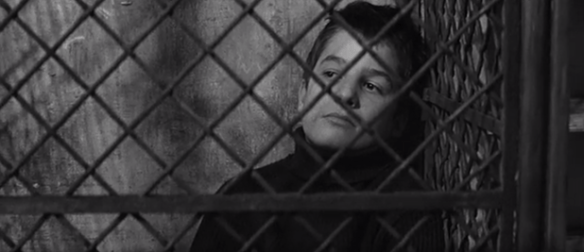
400 blows 1.png

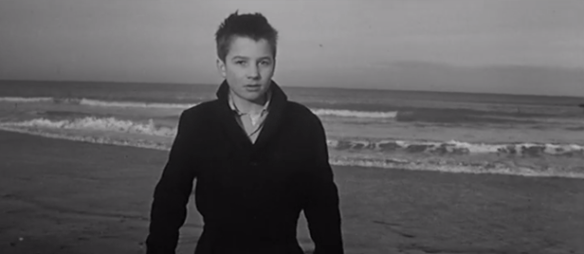
Being a great believer in context,  it was a wonderful thing watching 400 Blows once more because I felt like I knew this man behind the camera so much better and I knew this character Antoine (Jean-Pierre Leaud) even better than he knew himself. After all, he was just coming into his own in this initial film.  I was also aware of some cameos including Francois Truffaut himself, Jean-Pierre Brialy and of course Jeanne Moreau, all important forces in the French New Wave movement.

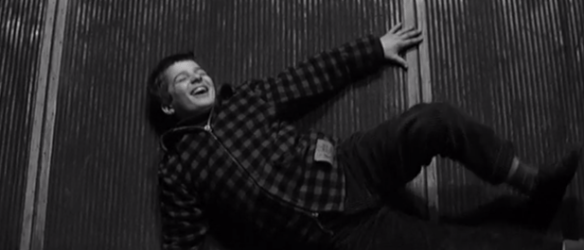
However, one the most powerful things is the degree of foresight we gain about Antoine Doinel. All the things that make up his life at this juncture in time have repercussions later on that Truffaut continued to examine as he matured. We can see the gears turning as the boy develops as an adolescent. He skips out on class to go to the cinema and the carnival. He purloins a bottle of milk out of thirst, steals little trinkets from the ladies room and finally a typewriter from his father’s work. He receives the ire of his teacher and goes home to the cramped conditions and turbulence of his home life. His mother and step-father are constantly bickering. His mother is having an affair. It’s not a very happy life or a firm foundation for a boy to grow up in. And it shows.

In many of these moments, the autobiographical aspects come to the fore. Before Antoine’s story was simply a depiction of realism but as time goes on it becomes more obvious that Truffaut is being very transparent in showing bits and pieces of his own experiences. What’s striking is that this is hardly a bitter film. Somber and melancholy, yes, but it hardly ever seems to cast blame. It shows the brief moments of reverie along with the pain and that’s why I am a great admirer of Truffaut. He’s a deeply heartfelt and personal filmmaker, no more evident than in The 400 Blows.

400 blows 4.png

Antoine Doinel is a vagrant and pretty dismal kid, getting in all sorts of trouble and yet Truffaut makes us sympathize with him and to an extent we see the director’s point of view too. He’s the one trying to fall asleep while his parents bicker about what to do with him. He runs away from home and relies on the charity of a friend. He’s being locked up in a jail cell on his way to juvenile detention. He talks to a psychologist candidly about his parents never trusting him. All those moments have the power to move.

And the film is so easy to watch, so simple and wonderful and honest and unassuming, it’s almost hard to remember how influential this film was for not only jump-starting the French New Wave but for rejuvenating cinema in general. Hollywood didn’t make movies like this. That’s all I had ever seen for the longest time. But the likes of Truffaut, Godard and even Renoir, De Sica and Rossellini revealed to me that there are numerous ways to make an impassioned cinematic experience.

400 blows 3.png

As always, my mind returns to the climatic freeze frame of The 400 Blows. It remains with me and part of its iconic status is undoubtedly due to how it sums up this boy so perfectly. There’s a sadness in the eyes that without saying anything denotes all that we have already seen. It’s the perfect summation of his story thus far and with that look, it’s difficult to forget his hardships–his flaws too. Perhaps it allows us to extend grace to him because we can see firsthand that he’s in dire need of some. He has not been offered much his entire life with true love and affection being traded for punishment and biting remarks. True, his story does not end here but it’s a telling chapter of his life. Arguably the most formative years for the rest of his existence.

Within the storyline, Truffaut includes passing references for his love of the cinema and even suggests his promise with his writing composition though his teacher accuses him of plagiarism. But from these troubled roots came a man who loved movies to an extent that few others could claim. He was passionate both as a critic, champion, and creator.

Thus, it makes perfect sense that this film was dedicated to the memory of Andre Bazin, the noted founder of Cahiers du Cinema. Truffaut undoubtedly owed a tremendous debt to the magazine and its editor but he also elevated it with his own amount of passion. That same passion comes out in The 400 Blows and really all the subsequent films he made before his death. His movies are wonderful because each one shows that he genuinely cares about the material on its own individual merit. That is the kind of director that I want to watch.

5/5 Stars

La Ronde (1950)

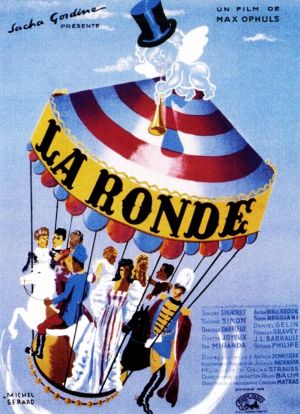
LarondeposterIf you know anything about director Max Ophuls you might realize his preoccupation with the cycling of time and storyline, even in visual terms. He initiates La Ronde with a lengthy opening shot that, of course, involves stairs (one of his trademarks), and the introduction of our narrative by a man who sees the world “in the round.” He brings our story to its proceedings, introducing us to the Vienna of 1900. It’s the age of the waltz and love is in the air — making its rounds. It’s meta in nature and a bit pretentious but do we mind this jaunt? Hardly.

It’s many vignettes of love and romance take us through drawing rooms and bedrooms, past bacchanalian gardens and statues involving a menagerie of figures from prostitutes and soldiers to poets and actresses. By the standards of the 1950s, it’s a highly overt and provocative film — even cheeky. And despite being set in Austria, it undoubtedly brings to mind the Rococo work of the likes of Fragonard or even Watteau’s “Embarkation for Cythera.”

Ophuls seems fascinated with the metaphor of carousels because, in a way, everything turns. Life is constantly of a cyclical nature just as film and the stories it tells always fluctuate from high to low and so on.

When I began my fledgling investigation of world cinema Simone Signoret and Simone Simon were two names that I egregiously intertwined. Now, forced to confront my confusion, I can say definitely that there is a clear distinction in my mind. They stand alone and really this is a film with some of France’s greatest female icons with Danielle Darreiux being another name of note.

However, this is hardly a story about a certain character, but more the themes running through the story and it gives Ophuls the means to exert his artistic mores. His shot lengths indicate just how assured he was in his work — commanding every detail.

When you think he’s going to fall back on a cut and move on, he finds yet another way to keep the shot going. It really is remarkable and it becomes noticeable just how continuous this film is at times. He’s also very much in his element with figures pirouetting on the dance floor. It’s only matched by the elegantly whimsical refrains of the score.

La Ronde actually brought to mind the biblical allusion from Ecclesiastes sung about so iconically by the Byrds. There is a season turn, turn, turn. Except in Ophuls’ case, he seems only interested in the idea of this carousel of romantic encounters. He never actually looks at the inverse of these fluffy tete-a-tetes — what happens when people are alone or their hearts are broken.

It’s very convenient actually, and it allows the film to maintain it’s light, airy quality. For instance, it never looks at the underlining issues that become apparent in a film like A Brief Encounter (1945). Still, I suppose its exquisite elegance and manners are meant to cover up the more base qualities of mankind. In the end, everything goes round and round. Whether or not there is a purpose to it all is for the viewer to decide.

4/5 Stars

Son of Paleface (1952)

Son_of_PalefaceIt’s hard to grow tired of Bob Hope. In many ways, he’s a universal entertainer — transcending time — circumventing the decades with a brand of humor that is timeless. And the same goes for his iconic persona. He can quip with his lips like Groucho Marx but he’s more of a lovable dope. He likes to think he’s clever and when he lets his mouth run off Hope certainly is, in a cheeky sort of way. It’s just his characters who are always dumb.
Whether it was his own stellar ad-libbing or a careful premeditation of calculated gags, there’s no doubt that Bob Hope has staying power. The Road Pictures with Bing Crosby are a testament to that, but in my own personal estimation, Son of Paleface is arguably one of his best films. Ironically, it came as a sequel to the standout hit Paleface from 1948. But for many, the second go-around is markedly better.

Here Hope is reincarnated as a pompous Harvard man, Junior Potter, a young college magnum cum laude who is intent on heading out West to collect on his heralded father’s long-lost fortune. He expects the welcoming committee to be waiting for him, but there’s only a town of locals intent to settle long-standing debts.

There’s also someone else who is quite interested in Junior Potter and most specifically his supposed fortune — the wanted outlaw The Torch. Of course, no one knows that this brazen outlaw comes in the form of sultry saloon owner Mike (Jane Russell) the jewel of every man’s eye. Junior’s not the least among them, not knowing what her true intentions are. He doesn’t mind getting to know her a little better and she obliges, though it doesn’t help he has all the charm of a bad toothache.

Mike’s not the only one masquerading, however, a government agent is undercover as well, bent on catching the notorious outlaw in his/her tracks. Enter Roy Rogers with his trusty steed Trigger stage right. Thus, the stage is set for a classic western showdown dragged through the mud and riddled with jokes thanks in part to Hope. Rogers and Russell are mostly serious but once and a while they offer a quip or two because Hope prompts such a response every now and then.

Frank Tashlin who helped script Paleface a few years before, wanted more creative control and found himself helming the sequel much more to his liking. But this a film propelled by its leads. There’s also are surprisingly good musical numbers starting with the earlier hit “Buttons and Bows” and bolstered by the catchy additions of “Wingding Tonight,” “Four-Legged Friend,” and”Am I in Love?”

It’s true with the great parodies that they know when to go for gags and when to play it straight. There needs to be a clash of tones, a cacophony of the outlandish with the dramatic. Hope supplies the pratfalls and one-liners with his usual aptitude — just like another walk in the park or an Oscar ceremony (he did host 19 times after all). Because it’s exactly that type of material that’s built into his persona free of charge. It flows out so naturally, with extreme ease. Breaking up the action is exactly what we expect from him. There are madcap chase scenes, catcalls and pratfalls,  fourth wall breaking, and numerous prattling asides that Hope fills with his usual wit. I used to watch Hope a lot as a kid and even after so many years it still feels fun.But that’s not to discount Roy Rogers and Jane Russell one bit. They make up a winning western trio indeed.

3.5/5 Stars

Don’t Bother Knocking (1952)

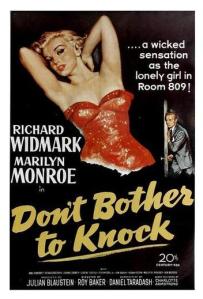
Don't_bother_to_knockYou’re silk on one side and sandpaper on the other.” – Richard Widmark as Jed Powers

For a film so short, Don’t Bother Knocking is overflowing with wonderful talent from Richard Widmark to Anne Bancroft to a haunting performance from Marilyn Monroe. Then Elisha Cook Jr. shows up as the obliging doorman, Jim Bachus as a young girl’s father, and even the prolific Willis Bouchey takes a turn as the bartender. It’s one of those story’s that revels in the classical age of the Hollywood studio actor. The familiar faces carry with them a certain amount of depth that allows the characters to mean so much in only a few fractions of the time normally required.

Anne Bancroft’s nightclub singing (in her screen debut) sets the background mood for everything going on within the  McKinley Hotel — a seemingly upstanding establishment. It’s precisely this aloof demeanor established by the music that lends itself nicely to the strangely haunting aspects of the film.

All characters seem to lack passion, emotion, and most any type of energy except the bubbly camera gal who goes around trying to sell snapshots to patrons. Widmark is at his morose dirtbag best yet again as Jed Towers, a guy who can’t figure why his girl has dumped him.

It’s a chamber piece, and while not a man on a ledge story like Fourteen Hours, it still uses the corridors and diegetic street sounds to create a mildly intriguing environment for some minor noir thrills. You can see the lust in Widmark’s eyes when he looks out the window at Monroe prancing and swaying about seductively. Little does he know what her deal is. His frustration with life and love is right at the center of this film and he must rectify his situation one way or another.

For her part, she has some telltale signs of psychological distress aside from a constantly glazed expression. Namely, scars on her wrists. Strings of little white lies, compulsive fibs that trickle out and a flustered edge that slowly becomes more and more demented by the minute.Whether it’s Monroe’s best performance is up for interpretation but it’s certainly her most terrifyingly dramatic.

She becomes the lightning rod for all the drama, lashing out against the little girl put in her stead and distressing her uncle (Elisha Cook Jr.) who got her this gig, despite her utter lack of experience. Nell Forbes flutters so quickly between fear and hysteria, at first wary of Towers and fawning all over him the next moment — afraid that he will leave her.

It’s her histrionics that force a reaction out of Jed. He must choose what type of guy he wants to be, whether he chooses the tame or wild side of life. And as it turns out, there’s absolutely no contest in the end. He knows full well which girl is for him.

Unfortunately, the ending is a bit of a cop-out, because it is the relational and psychological dysfunction of the characters that becomes most rewarding and, in the end, most indicative of the noir malaise. A happy resolution, therefore, does not stay true to the heart and soul of this film. Stone cold and depraved. Still, this one’s a winner at 76 minutes.

3.5/5 Stars

Gentlemen Prefer Blondes (1953)

Gentlemen_Prefer_Blondes_(1953)_film_poster“I can be smart when it’s important, but most men don’t like it.” ~ Marilyn Monroe as Lorelei

Marilyn Monroe and Jane Russell together. It’s a crackerjack combination and Howard Hawks milks it for all its worth. There’s streetwise Dorothy  (Jane Russell) wooing all the boys from here to kingdom come. She cares about more than just money, especially when it entails having fun. Her other half is the vivacious bubble-headed beauty Lorelei like only Monroe could pull off. She’s the girl looking to get hitched with her bookish millionaire and she’s not afraid to admit that his money sweetens the pot. It certainly doesn’t hurt (Don’t you know that a rich man is like a pretty girl? You don’t marry her just because she’s pretty. But, my goodness, doesn’t it help?).

Time and time again words and bits of dialogue leave her lips that are almost astonishing. She delivers them with such a fluid air of seriousness that they force a double take and each and every time she has the audience in the palm of her hand. We think she’s dumb, but whether it’s the just the persona she puts on or a bit of Marilyn Monroe herself, she is extremely intelligent. If nothing else she knows how to captivate an audience, not letting them soon forget her magnetic performance.

If she had been playing against anything else Jane Russell would have been the primary attraction and she’s always wry and lovely, but with Monroe in the equation, they develop into a dynamic duo, leaving a wake of hapless boys behind them. There’s the old playboy Piggy (Charles Coburn) with a tiara Lorelei has ambitions for, the hired private investigator Ernie Malone (Elliot Reid) who finds himself falling for Dorothy, the diminutive Mr. Spofford and, of course, the hapless Gus (Tommy Noonan).

It can be easy to write Gentlemen Prefer Blondes off as a superficial musical — a provocative color extravaganza aboard an ocean liner. After all, it’s a story complete with pools, water slides, romance and a whole squad of athletes with bulging biceps. But it is a genuinely enjoyable film with Howard Hawks once more showing his aptitude for skirting between genres, this case indulging in musical comedy.

The sparkling and most remembered number is, of course, Monroe’s sultry turn in “Diamonds are a Girl’s Best Friend,” clothed in velvety pink,  but really for the entire running time of the film, Monroe and her costar are continually strutting and snapping their way into the hearts of everyone they cross paths with. A final comedic twist of an ending, playing off the comedic dynamic of the film’s pair of heroines, gives Jane Russell an equal chance to show off her star power. This truly is a team effort, even if gentlemen circa the 1950s were discriminatory towards all non-blondes.  Obviously, this film and my commentary are not meant to be taken too seriously. Still, they can be enjoyable. At least in the case of this film. My commentary, not so much.

3.5/5 Stars

The Father of the Bride (1950)

FatheroftheBride1950I’ve seen both versions of Father of the Bride and Steve Martin is fine and dandy but there is no better lovable curmudgeon than Spencer Tracy and he dons the role of the protective and skeptical father so effortlessly.
Furthermore, all down the line this production is an impressive gathering of talent with a radiantly young Elizabeth Taylor embodying the role of Kay, Joan Bennett leaving behind femme fatale roles for that of the level-headed mother and, of course, Vincente Minnelli positioned behind the camera. All in all, it’s a delightful light comedy that also finds time to say something heartfelt about the relationships of parents and their children, especially between fathers and daughters.

It’s rather like sitting back for story time as Tracy struggles with his shoes and begins to regale us with the recent happenings — the events that left his stately home looking like a hurricane disaster zone. It was all as a result of his daughter’s wedding. The event that is bound to challenge his sanity and bankrupt him in the process. But it’s for his “Kitten” so he’s willing to go through it out of his unwavering love for her.

First, he’s dubious of his future son-in-law, cringing at the thought as he shuffles through his memories of Kay’s many beaus. In his estimation, none of them was a winner, but then again, no one is good enough for his daughter. He’s not too excited about giving his daughter away nor by the prospect of supporting her good for nothing husband either. I’m sure most every father has the same conundrum to wrestle with. And it’s important to note that it’s played for comedic effect but never in a way that belittles these characters.

Minnelli was always a master of the color medium but here he still takes on the important role guiding us through the comedic moments with a deft touch and allowing us to track with the mayhem at large when necessary.

There are also some wonderful spots for veteran supporting players like the overly stuffy wedding coordinator Leo G. Carroll and the charmingly enthusiastic Melville Cooper as he guides the wedding rehearsal with a chaotic vigor.  Then, of course, there’s the prospective groom Buckley, played by the always affable everyman Don Taylor.

But everything must return to Tracy and Taylor because they are the nucleus of the storyline and as such, they work well together. Admittedly, Taylor might feel slightly out of place in such a family, but she is Elizabeth Taylor and she’s captivating all the same. Putting her together with Tracy means a lot of poignant sequences. Those moments where he comforts her, encourages her over a midnight snack at the dining room table, and finally, willingly gives her up to the man she has chosen to have and to hold for the rest of her life. To its credit, the film strikes a fine balance between comedy and heart always returning to this father-daughter relationship.

3.5/5 Stars

Review: The Gunfighter (1950)

thegunfighter1“Ringo don’t look so tough to me.”

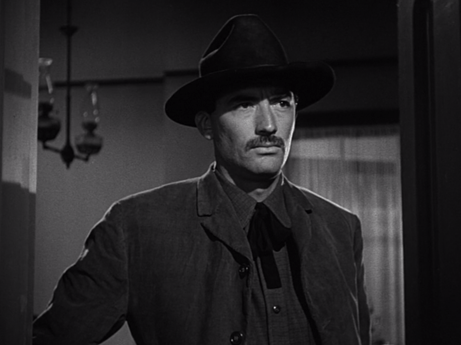
Those are the words that propagate a legend and simultaneously follow notorious gunman Jimmy Ringo wherever he goes. There’s always some impetuous kid looking to have it out with him and every time it’s the same result. The kid never listens and Ringo rides off to the next town, wearier than he was the last time.

The Gunfighter has a surprisingly vibrant script with numerous names attached to it at different times including William Bowers, Nunnally Johnson, and Andre de Toth.  It evolves into a sort of chamber piece made into a carnival show when Jimmy Ringo (Gregory Peck) comes to the town of Cayenne.Kids milling about peering in and catcalling as this “murderer” sits in the saloon like a sideshow attraction.

It’s an oddly compelling commentary on celebrity, and in this case, notoriety as everyone far and wide knows the name Jimmy Ringo and is either in awe of it or ready to prove they’ve got the guts to take him down. He’s constantly being sized up, continually being gawked at, or gossipped about. That’s the price of such fame.

But on the opposite side of the coin, and incidentally, the side no one much cares to think about, there’s a jaded man who’s made a life out of gunning down other men and moving from one town to the next to the next. There’s something very human about growing old and that’s what Jimmy Ringo has done. Because as the years march ever onward your whole mindset shifts along with your priorities. A life on the run doesn’t have the same luster. You want to be able to settle down, to be happy, to be at peace. But old vendettas take a long time to die, continuing just as long as the legends that they follow.

the gunfighter 2Of all men to understand Ringo, you would think that the local Marshall (Millard Mitchell) would be the last, but he happens to be an old friend of the gunman. They used to run in the same circles before Mark softened up. His life mellowed out, while Ringo’s reputation continued to build.

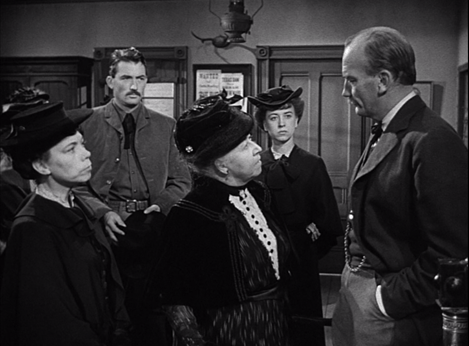
The subsequent sequence in the jailhouse illustrates just how much weight a simple name can carry. When the well-to-do ladies of the town come to the sheriff with their petition for justice, they think little of the stranger who tries to shed a little light on Ringo’s point of view. However, the moment they hear his name uttered, everyone is in a tizzy, rushing out of the jail lickety-split. It reflects just how hypocritical their form of morality is.

the gunfighter 3The main reason Ringo stays in a town that doesn’t want him is all because of a girl (Helen Westcott). He waits and waits, biding his time, for any word from her, and finally, it comes. He gets his wish to see her and his son in private. These scenes behind closed doors are surprisingly intimate, casting the old gunman in an utterly different light.

Of course, none of that saves him when he walks out that door back into the limelight, living the life of Jimmy Ringo, whether he likes it or not. If the three vengeful brothers don’t get him, there’s someone waiting for him up in a second story window or hiding behind a corner. A man like that can never win in the end.

It struck me that this film has some thematic similarities to another film of the same year, All About Eve. Aside from the fact that I personally enjoy Gregory Peck a great deal more than Bette Davis, both films focus on aging icons. While Ringo is not so much manipulated as undermined by his own legacy, his story ends with a young man much like himself riding off into the distance, to take up the life that Ringo led for so long. The specters of such notoriety will haunt the boy until the day he dies, and much like Eve, the deadly cycle begins again. Henry King made an unprecedented 6 films with Peck and this is probably the hallmark for both of them, certainly their most prolific western respectively.

4.5/5 Stars

Kansas City Confidential (1952)

KCConfidential.jpgSaying that Phil Karlson has a penchant for gritty crime dramas is a gross understatement. And yet here again is one of those real tough-guy numbers he was known for, where all you have to do is follow the trail of cigarette smoke and every punch is palpable–coming right off the screen and practically walloping you across the face.

Like all heist films, there must be a point of inception, however, Kansas City Confidential finds its story after the crime has been committed and the perpetrators have split up without a hitch. The man who takes the heat, their fall guy and the unsuspecting stooge is Joe Rolfe (John Payne who is adept at playing such roles) a nobody truck driver and a convict once upon a time.

It seems like the perfect crime as the three hired hands all wore masks and had no connection to each other, except for the stocky and demonstrative Mr. Big, the mastermind behind the whole operation and the one calling the shots. He sends each man off with enough money to tide themselves over until he contacts them to reconvene for their big payoff. Whether or not he will actually cough up the 300,000 clams he owes each of them is quite another story.

Still, each man heads his own way and Joe is getting grilled by the cops day after day in the hopes that he will crack. Finally, he is released, but with no prospects and no job, he sits in a bar stewing in his anger. The story takes it’s next big turn when he follows a lead down to Mexico to tail one of the hoods in on the job Peter Harris (Jack Elam). And although Joe is going in blind, he soon catches wind of the impending rendezvous in Barados and decides he’ll just show up as well, to get to the bottom of the entire mess.

It’s there where he first crosses paths with two other leering hoods, the beady-eyed Tony Romano (Lee Van Cleef) and the silently brooding Boyd Kane (Neville Brand). However, while keeping tabs on these cronies, he keeps company with a budding lawyer Helen Foster (Coleen Gray), who has come to call upon her protective father, the former policeman Tim Foster. If this set up isn’t plain enough already, it certainly becomes increasingly interesting as the gears continue to turn towards the story’s inevitable climax.

Most certainly Kansas City Confidential boasts jarring close-ups, low budget facades and perpetually sweaty faces that accentuate its unsentimental noirish qualities. However, Coleen Gray acts as a more enlightened noir heroine, who does not grovel for her man or weep incessantly at the thought of danger. Instead, she’s training to be a lawyer, and rational but still unequivocally kind. Despite not having a proper meet cute, the chemistry between Gray and Payne still works surprisingly well.

What makes the film inherently more interesting is how the crime is embroiled with family issues. Because, as an audience, we know Mr. Big’s identity: a corrupted cop who got a bum steer and now is going to reap the benefits of setting up some real losers. Still, that doesn’t excuse what he did and Joe got dealt a similarly sorry hand. The fact that Foster’s daughter is involved sheds him in a more humane light and in the same instance makes Joe a more likable figure. In many ways, she brings out the best qualities of both these characters. It’s the darker recesses that lurk behind their characters. Those are made more evident by the likes of Lee Van Cleef, Jack Elam and Neville Brand, a real rogues gallery of baddies if there ever was one.

4/5 Stars