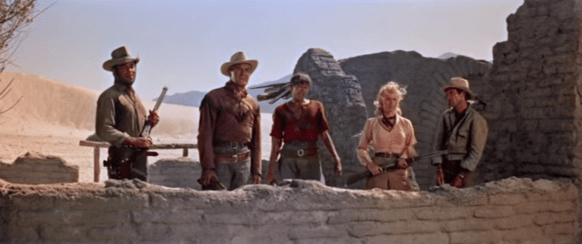
Warlock (1959): Fonda, Quinn, and Widmark

warlock

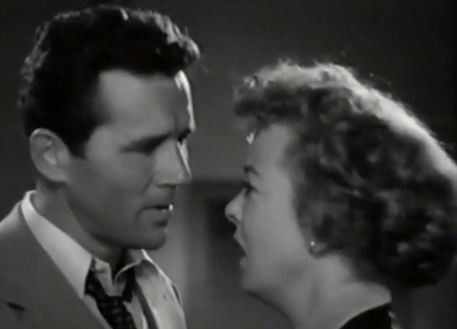
There are three names emblazoned over the title credits engulfing the screen: Richard Widmark, Henry Fonda, and Anthony Quinn. Somehow they all figure into this story — into the war that we are about to be privy to. The question remains, how so and on what sides? It turns out, it’s far from a clearcut answer.

As Warlock progresses, I couldn’t help but think of that quote: “Suppose they gave a war and nobody came?” Its variations have been attributed to individuals as diverse as Bertolt Brecht, Carl Sandburg, and the Vietnam-era Hippie movement. Regardless, the most overt sentiment remains the same. War is perpetuated by people who willingly show up to fight, whether it’s out of a sense of duty, an assertion of masculinity, personal advancement, or a desire to watch the world burn. 

The San Pablo gang frequents Warlock quite often, prepared to terrorize a town and demoralize all those who stand for law & order, even to the point of death. The incumbent deputy sheriff is sent out of town on an honor guard of emasculation. He’s the most recent casualty, yet another man who will have his name crossed out on the brick wall of the jail. Because everyone is keeping tally. The whole town observes the public humiliation with distaste and private shame behind curtains and tucked away on second-story balconies. 

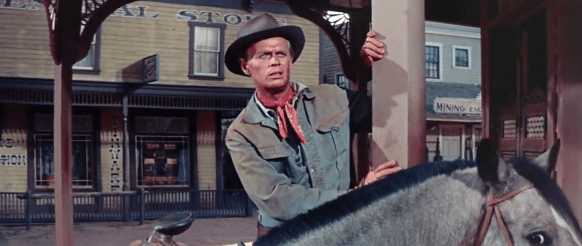
Richard Widmark’s Gannon consorts with the rebels, but he doesn’t like it. He looks decidedly conflicted in their company. It’s his baby brother (a scrawny Frank Gorshin), who keeps him connected to the gang by association. We must come to decipher where his allegiances lie just as he does. 

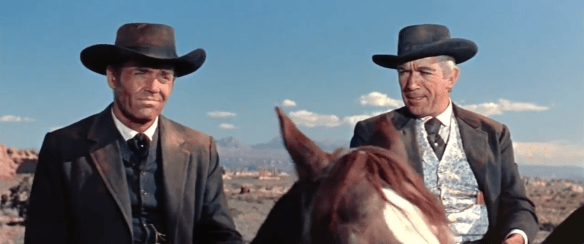
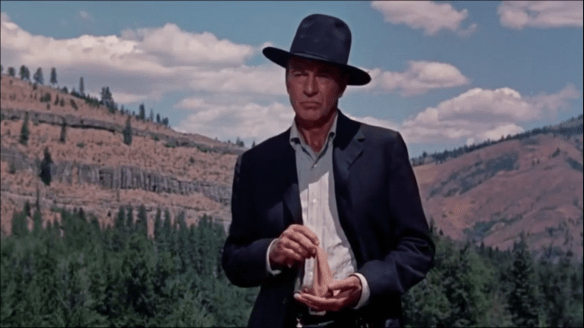
 What a majestic pair Henry Fonda and Anthony Quinn make together as they trot toward Warlock. They give off a sense of having traversed much of the world. Hank’s been installed as the new Marshall famed for his golden-handled colt revolvers.

From years of experience, he predicts the local community will be pleased with him until it grows into a general resentment as he maintains such a high degree of autonomy. But as their town has already given itself over to anarchy and murder, this is a form of salvation at a very high wage. It remains to be seen if it’s worth the price. 

warlock fonda and quinn

In this way, Warlock courts themes not unfamiliar to Wichita or Man with a Gun. Director Jacques Tourneur’s sense of the town somehow felt more atmospheric and real, and then Robert Mitchum in the latter film was a singular hero without peer, ready to go to war alone. In Warlock, the talent is more substantial and as such, we get something slightly more complex, if not always more compelling or artful than Wichita, in particular. 

One might be reminded that this is a Moab-shot western, and yet while there are some stunning exterior shots, what’s just as telling is how much of the movie takes place either in interiors or at the very least in the confines of the town. Director Edward Dmytryk finally ensconced again after the Hollywood Blacklist, looks far more engaged in the psychological underpinnings of his characters than he does in making the picture look pretty with sweeping grandstanding. The color schemes are bright if a bit gaudy, and the same might be said of the costuming. 

But what does it matter in comparison to his characters? Even someone like Deforest Kelley has a say as a delightfully thuggish heavy with a wicked sense of humor. Then, the stage brings Dorothy Malone. She’s not exactly an antagonist, but she owns a vindictive streak having it out with Quinn in back parlor rooms over past grievances.

In another scene, she lays flowers at the perfectly constructed Hollywood grave of the murdered Bob Nicholson. What’s curious is the scriptural epitaph: How long, oh Lord?” It’s the implicit question at the heart of the story.

If she is one surprise inserted into the storyline, another is Gannon volunteering to become Deputy Sheriff. It’s not out of any amount of duplicity or self-lobbying. There’s a sense he legitimately wants to pursue law and order — standing tall, knowing he’s committed to veracity for once in his life. It should be noted Fonda is a Marshall, and the film makes a distinction. He is not bound by the same strictures.  

Thus, Widmark becomes the fulcrum in the film’s dialogue covering all realms from law & order to the tenets of western masculinity. Where does Widmark get his teeth? Where does he get his sense of conscience? These questions might be up for debate, but to his credit, despite being the top-billed actor among a group of heavyweights, he’s brave enough in the role to come off as pitiful at times. It’s a deceptive performance, and I mean this as a compliment. 

Since this is a western, albeit set mostly in a specific locality, there are very few female characters — only two of note — and the leading ladies are both blondes, conveniently mirroring one another as they pair off with the leading men.  Jessie Marlow (Dolores Michael) is a creature of civility, who is surprised to find their hired gunman has a courteous manner. In his view, he practices with his pistols the way she practices the church organ. Their vocations are different, but as people, they have a surprising amount of common ground. 

Likewise, it is Lily (Malone) who rebuffs Morgan (Quinn) due to his undying allegiance to Blaisedel (Fonda) only to turn her affections to Gannon. Again, it feels like a curious pairing, but if the other couple functions, then so can they. 

If we are to analyze Warlock on a perfunctory level of criticism, the problem is that it has three climaxes, which means it possibly has none. However, there’s a nugget in here somewhere, and it’s couched in the ending. The whole movie is transmuted in the final visual summation. It’s announced by Henry Fonda with nary a word. If you want to call it a deconstruction of the West you can, a subversion of convention, that too, but what is it, if not a definitive statement?

Warlock is a talky western and perilously long, but in those final moments, it spits out our American genre back into the dust and leaves us to meditate on our corporate understanding of so many things. In Anthony Quinn, I see a character who is not willing to break with tradition. He is trapped in the habitual cycle of his ways, in a life that can never last, and out of preservation, he buries himself. It’s a tragedy, and not because he’s a cripple. Fonda has the whole town sing “Rock of Ages” out of deference to his lifelong companion.

Richard Widmark, time and time again, finds it within himself — this unexplainable compulsion to uphold the law — it’s as if once he pins on that badge, he’s devoted to his post. Whether it’s totally blind or not, he comes out of the picture with this peculiar kind of integrity we never would have expected. It’s not a flashy part, but it’s vital.

Finally, Hank Fonda. Good ol’ Hank. He feels like such an enigma for the entirety of the picture. He has that casual soft-spoken charm of his and yet he really is a vigilante; ironically, a symbol of chaos. It makes it all the more imperative to dwell on his final actions. I’m not sure if they’re warranted and from what we know of his character, I’m not sure they made sense. Maybe they do. But the image speaks volumes. It’s an ending to a western you won’t soon forget.

3.5/5 Stars

The Hanging Tree (1959): Delmer Daves and Gary Cooper

Screenshot 2020-07-15 at 5.59.37 PM

“You’re standing on the edge of a cliff. I don’t advise you going through life with your eyes closed.” – Doc Frail

Delmer Daves isn’t often remembered alongside the foremost western directors. Although in the 1950s, he crafted some stellar movies, and something less-heralded like The Hanging Tree is as much a testament to his legacy as anything he ever did. It puts a fine foot forward with a bouncy ballad courtesy of Marty Robbins and verdant imagery of epic proportions.

We’re in Montana, 1873, in gold country, and the local folks have caught the bug. Gary Cooper (in one of his last great performances) drifts into town on horseback. As he rides past, someone notes the local hanging tree makes people feel respectable. We know it will have imminent significance.

For now, he sets up shop as an M.D. named Doc Frail. The bustling town is being built as we speak, everyone in search of their own private “glory hole.” They are territorial and have no mercy for sluice robbers trying to pilfer their claims.

Frail is a curious figure because he hardly seems drawn to the same promise of riches as everyone else. There is a sense that this is as good a place to stop as any. Like Joel McCrea’s judge in The Stranger on Horseback, he is a man of vocation, who knows how to take care of himself while also adhering to a personal code of conduct. However, he also has a smoldering secret buried in his past creating a lingering specter over his present. Some men might deem him a saint and others a devil.

Could it be he has a higher calling altogether? His first good deed is to fix up the thief (Ben Piazza), who got winged in the arm. But he doesn’t let the young man named Rune off without payment. He salvaged the boy’s life and so he takes him on as a begrudging bondservant. Again, it feels like it’s all part of the veteran doctor’s plan.

Cooper takes to the role, and it informs the more casual even comical tone the film sets on initially. Sure there’s a lurking menace but for the time being Coop takes to the people and provides them the healthcare they desperately need. They’re obliged to him. What’s more, he’s not an outsider — some of the folks have made his acquaintance before — and he’s likable while ratting out the phonies.

Front and center is the jovial if slightly skeezy Frenchy, with Karl Malden turning in a vital performance to supply the story some direction. The other is a scripture-spouting drunkard named Bub (George C. Scott in an early role).

The rest of the tale is built out of the search for a lost stagecoach passenger. When she is found, the half-unconscious, blinded Swiss immigrant (Maria Schell) is nursed back to health by Doc. He shields her from both the light and the prying eye of the world outside.

If it’s not apparent already, The Hanging Tree gives off the aura of an entirely different brand of western, and it’s not just the Montana terrain. It also comes down to the pacing and how the characters relate to one another.

Over time, Rune feels beholden to Doc, and he becomes a loyal companion by association. The same might be said of Elizabeth as she has the doctor to thank for her health and her entire livelihood. For the time being, she “sees” only the good in him. But the movie would be too clean if he reciprocated directly.

He continually takes part in these elliptical games with others. His lady benefactor calls him cruel for bringing people close only to push them away, and she has a point. It’s true his decency and bedside manner is tempered by a bleakly cynical side. How do you reconcile such a thoughtful figure with the man in black who gambles by night?

One also comes to understand how ephemeral this community seems. Doc warns Elizabeth their current home is a crawling anthill that could blow away with the scum of the world. It’s true in six weeks it could be a ghost town. But she rejoins with a plucky resolve. There is no other way to tackle this world, and she takes to it gladly. She settles into her own grubstake, christened “The Lucky Lady Mine,” joining forces alongside Rune and Frenchy (and a silent partner).

The ending of the movie can only end in one place if it’s to make good on its title. It’s true we end up there. What’s curious is how joyous euphoria about striking it rich can turn people into a mob just the same if they were angry. Inhibitions get released and the world goes to hell with drink, lust, and incendiary male hedonism.

For me, everything falls together so conveniently I didn’t have time to consider the logic. There’s little need to. Gary Cooper sticks to his guns and does what he always has from the beginning of time and by that I mean The Virginian way back in 1929. His quiet boldness punctuates the madness, and it feels right, though not totally complete.

If nothing else, it’s worth the final shot and in case we didn’t catch the metaphor, a musical refrain reminds us, “The Hanging Tree was a tree of life for me.” Where the gold rush-crazed economy is gladly ditched for something more tangible and lasting. Where being granted eyes to see can be a sobering reality check while still leading us in pursuit of goodness. Because sometimes the hanging tree might just be the place we find salvation once we realize we’re not in control. We can’t always save others, especially when we are in need of saving ourselves.

3.5/5 Stars

The Last Wagon (1956): Morals Out On The Range

Screenshot 2020-07-14 at 8.29.15 PM

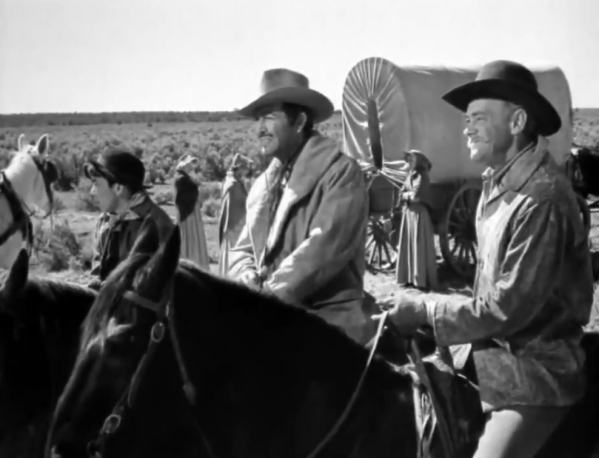
We’re in the Arizona territories. The year is 1873. Glorious overhead shots give us a sense of the vast panorama of the terrain in CinemaScope as Richard Widmark gets hunted down and returns the fire of his pursuers.

The distinctive red rocks have the hint of John Ford and if nothing else, remain a stunning reminder of America’s glorious topography. We really live in a gorgeous place if we take the time to get out in it.

For Widmark, it’s life or death as he kills one assailant only to get winged and dragged behind a horse by the wrists. It’s hardly water skiing. This is the untidy, rough-and-tumble law of the wide-open land. The victors are those who survive, whether through chicanery, brute strength, or guns loaded with lead.

It feels like we’ve been privy to a whole short movie before our main storyline has even begun. This is to The Last Wagon’s credit. It has robust beginnings and makes Widmark out to be an intriguing enigma right from the outset.

We find him finally, dead beat, strung up in a tree for safekeeping in the custody of a sadistic sheriff (George Matthews) as a wagon train of women and children scuttle by. They couldn’t be more diametrically opposed, but this is the entire premise of the movie right here.

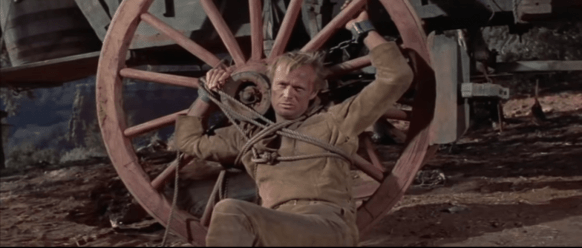
It’s their leader (Douglas Kennedy) who welcomes the lawman into their company, wary of both prisoner and his executioner. It’s an uneasy partnership to be sure. He makes his moral stance quite clear when he blesses their evening meal, “Teach us to live with open hearts and share with our fellow man our values.” It falls on the deaf ears of Bull Harper and “Comanche” Todd, who is trussed up to a nearby wagon wheel.

The wanted criminal doesn’t help his case when he murderers yet another man in view of a whole wagon train of incredulous witnesses. They aren’t accustomed to such savagery. He comes back sharply, “I had a right to kill him, but I suppose my side of the story doesn’t interest you none.” It plays as another pointed comment on who he is: both a murderer and a “white” Comanche, and then who they are, naive Christian pilgrims.

There are two individuals in their ilk, in particular, who show him a dose of Christian compassion. The young boy Billy (Tommy Rettig) brings him food, with all the candor in the world, asking him honestly if he thinks he’ll go to heaven. It’s hardly out of a place of browbeating or scorn, but genuine concern. He’d like to go scouting with Todd up in Heaven because Billy aims to be there. He wants the other man to be there too. His older sister Jenny (Felicia Farr in an amiable and lucid performance) also extends him a certain benefit of the doubt.

Unfortunately, the movie’s attempt at commentary on prejudice is partially undermined in all its good intention. It begins with Widmark. Although it’s partially explained away through exposition, he’s certainly no Indian by birth. Likewise, in a precursor to her mixed-race role in Imitation for Life, Susan Kohner is given the role of a half-Navajo girl, who faces bigotry with a stolid resolve. It is her bratty half-sister (Stephanie Griffin), white by birth, who encapsulates all the malicious prejudices festering on the range. This is made plainly evident.

However, Delmer Daves does not constrict his movie into being a mere morality play. In fact, The Last Wagon is hard to pin down. There are all these potential narrative offshoots, and it supplies some genuine moments of surprise while still mixing its messages and becoming an entirely different narrative on multiple occasions. One prime example is how the movie is both indicting prejudices against American Indians and still somehow using them as a mechanistic trope of the West.

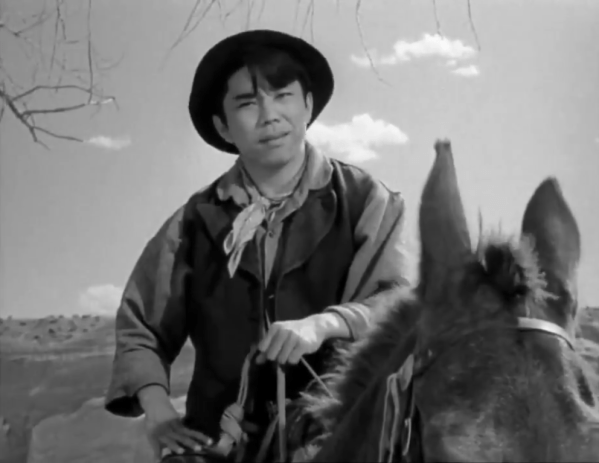
Gratefully, the movie splits off from the pack and hones in on the most intriguing characters. One drastic turning point comes when all the adolescents sneak off to go skinny-dipping, including the scandalized Valinda and the foxy Ridge (Nick Adams). They’re the story’s resident imbeciles. For the time they can frolic gaily only for the rapids to give them a scare, and then worse…

the last wagon

They return to nothing — a camp totally decimated — Widmark is the only one left, cast aside on his wagon wheel. Valinda chastises him, “You got no right to be alive when our people are dead!” Here we find the meat of our story. It settles into being a survival western with Richard Widmark anchoring the youthful contingent following his lead. Their objective is obvious, making their way through the aptly bone-chilling “Canyon of Death.” They have no other alternative. Widmark is the only one who knows what it takes to survive.

The Last Wagon has some downright bizarre moments — setting traps for food and Widmark makes it look like a breeze ambushing their dinner in a cave. In a matter of minutes, snake bites, apache ambushes, and they just keep on coming; it’s the kind of western melodrama not averse to tossing out all sorts of wrinkles, and why not? There’s a lot to work with. Either you laugh it off as absurd or you admire the commitment to making the story lively. The same goes for the dialogue. It’s not the most nuanced job, but it keeps the pulse going.

There are obligatory interludes too as he hacks off his handcuffs across from Farr while sharing his life story. We get something of his own spiritual belief system. His father was a circuit-riding preacher — he was even baptized — and his daddy looked to carry the word of his God to the whole world, that is until he died. The operative word is “his” God because Todd was adopted by a Comanche chief and never looked back. If this God wasn’t concerned with saving his father, then he wasn’t interested.

Still, they just might receive a providential intervention yet in the form of some horse soldiers. However, their saviors in Calvary uniforms turn out to be a reconnaissance unit, and with Indians on the warpath fast approaching, it becomes Todd’s time to rescue all of them. He knows the dilemma: Get them out of their hopeless predicament only to find himself on trial for murder.

It becomes a layman’s civil discourse. Law is law — Comanche or white — if it is just. The question remains who gets to decide Justice? Jenny comes to her man’s defense: The Good Book says something about taking life but what about giving life back? This is what he’s done for them — provided a lifeline in a hopeless scenario. Needless to say, whatever the parameters most human systems are flawed and infallible. They don’t always hold up.

In the end, there’s a kind of swelling sentiment as we watch redemption at work. The young men and women sitting before the courts as a testament to Todd’s decency. After such a treacherous journey, it’s convenient and painless. So be it. It feels equally grand to watch Widmark ride off with Farr and Rettig. It hits all the beats like a western such as this is supposed to. Nothing more is required.

Delmer Daves puts together an oater with a gorgeous sense of the Western vistas in its many earthy hues. Any ways in which it feels heavy-handed or derivative are mostly smoothed over by a typically stalwart performance by Widmark (and the fact I’m fond of Farr and Rettig). The Last Wagon is a pleasant surprise, and it need not be more.

3.5/5 Stars

Ride Lonesome (1959): One of The Best Ranown Westerns

Screenshot 2020-07-15 at 12.37.17 PM

“You just don’t seem like the kind of man who would hunt a man for money.” 

“I am.”  

Ride Lonesome has a setup as obvious as it is simple, further indicating why the collaborations between Budd Boetticher and screenwriter Burt Kennedy were so plentiful. It comes with supplying a concrete premise with an intriguing overlay of character dynamics.

But you also need an inscrutable hero. Here a veteran bounty hunter has a man to bring in. The hero’s name is Ben Brigade (Randolph Scott) and his quarry, Billy John (James Best), sits waiting for him. Brigade comes up to him nice and easy-like to take him into custody.

It’s right then Billy John grins and lets him know his cronies are spread out in the rocks up above. He’s trapped. If he turns his back and walks away, there’s nothing more to it or else he commits himself to what he started along with probable death. Right here in a moment of immeasurable tension, we see Randolph Scott at his capable, laconic best. He’s totally inexorable and nobody’s gonna get him to back down. 

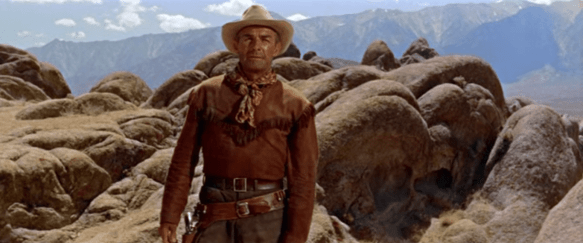
As the story progresses Santa Cruz becomes a kind of MacGuffin, as Alfred Hitchcock would call it. It’s where Brigade plans to take Billy John to be strung up. In case there was any doubt, he gets out of this opening scrape alive and with his prisoner still intact. So they mosey their way along the gorgeous craggy tundra of the West toward their destination. 

On their journey, they happen on a stagecoach outpost. It’s important for introducing three more of the film’s key players. Two of them are little better than bandits (Pernell Roberts and James Coburn), the third is a woman (Karen Steele) waiting for her husband to return with some much-needed provisions. She’s wary of her uninvited guests and not too pleased to have two more strangers passing through. 

With these newest additions, we have the requisite menagerie to give the story a renewed outlook because what are the Ranown westerns but character pieces with higher stakes than what meets the eye? Foes can come in many forms: a gang of outlaws, self-serving amnesty seekers, and who ruled the land before all others but the Native American population — out for blood to avenge the affronts to their cultural hunting grounds. 

ride

It makes for some of the most engrossing stand-offs and conflicts on multiple planes of contention. People are constantly being caught between other people. What makes it delicious is how it’s not totally vindictive. Some of these people form relationships and still feel compelled to kill one another for their own purposes. At least they stand prepared to and our hero is no different. 

Mrs. Lane drifts around with hardly any stake anymore with her husband murdered. She can’t understand why Roberts would want to save Scott’s life in one minute and hours later be meditating on killing him. They need him until the time is right, and then they have to take him down — as simple as that. 

It’s loose cannons like him giving this movie a new kind of dramatic depth. Because there are no longer any straightforward roads. Everything feels ambiguous.  We gravitate toward Scott as some kind of moral center because his pedigree in films tells us as much. Maybe we can sense the decency in him. Otherwise, his career path and his generally callous nature don’t do him many favors. But it’s a tribute to the picture. 

On a side note, it always astounds me how they were able to scrounge up such a stellar group of players for these westerns. Take stock of everyone for a moment. Of course, you have Randolph Scott but then Pernell Roberts, James Coburn, and Lee Van Cleef. That’s pretty remarkable for a low-budget flick.

Lee Van Cleef doesn’t have much to do aside from being a threat, and he’s good at this, prepared to search the bounty hunty out and reclaim his brother. Their meeting is inevitable. Roberts is chummy yet opportunistic, subverting his Bonanza infallible eldest brother on horseback in an agreeable way. Coburn plays a dimwitted second fiddle as he hasn’t quite ascended to the aloof heights of Britt in The Magnificent Seven. All in due time. Karen Steele doesn’t normally get much acknowledgment, as her career was mostly relegated to the small screen — you can’t quite call Ride Lonesome the big time — nevertheless, she is a stalwart in her own right and strikingly beautiful.  

 But we must remember, Brigade and his uneasy alliance still have a prisoner to get to Santa Cruz with Van Cleef’s Frank fast approaching for a showdown. It’s almost like the bounty hunter wants them to catch up…The question: Why? For that matter, if he gets out of one scrape, he still has two more guns to get past. He’s rapidly running out of time. 

The script quickly flips the inevitable on its head and instead of feeling like we’re subjected to the usual rhythms of the West or left hanging, so to speak, there is this sense of satiation. All loose ends are tied off, and the resultant humor comes with a sigh of relief. If there’s this touch of lightness, then the resolution is equally about making peace with the past as so evocatively captured in the final shots — an image that so easily becomes emblazoned in one’s mind. Brigade sets his specters ablaze ready to step out of the ashes a new man.

Ride Lonesome does its job well, and it’s such a delectable, economical delight. If it’s not the best of the Ranown cycle, it’s darn near the top and remains a classic reminder of why the Ranown westerns have maintained a pull on many of the genre’s aficionados. It’s a marvel that so much can be accomplished and so much emotion can be mined in a movie that clocks in nicely at under 75 minutes. 

4/5 Stars

The Defiant Ones (1958): Tony Curtis and Sidney Poitier

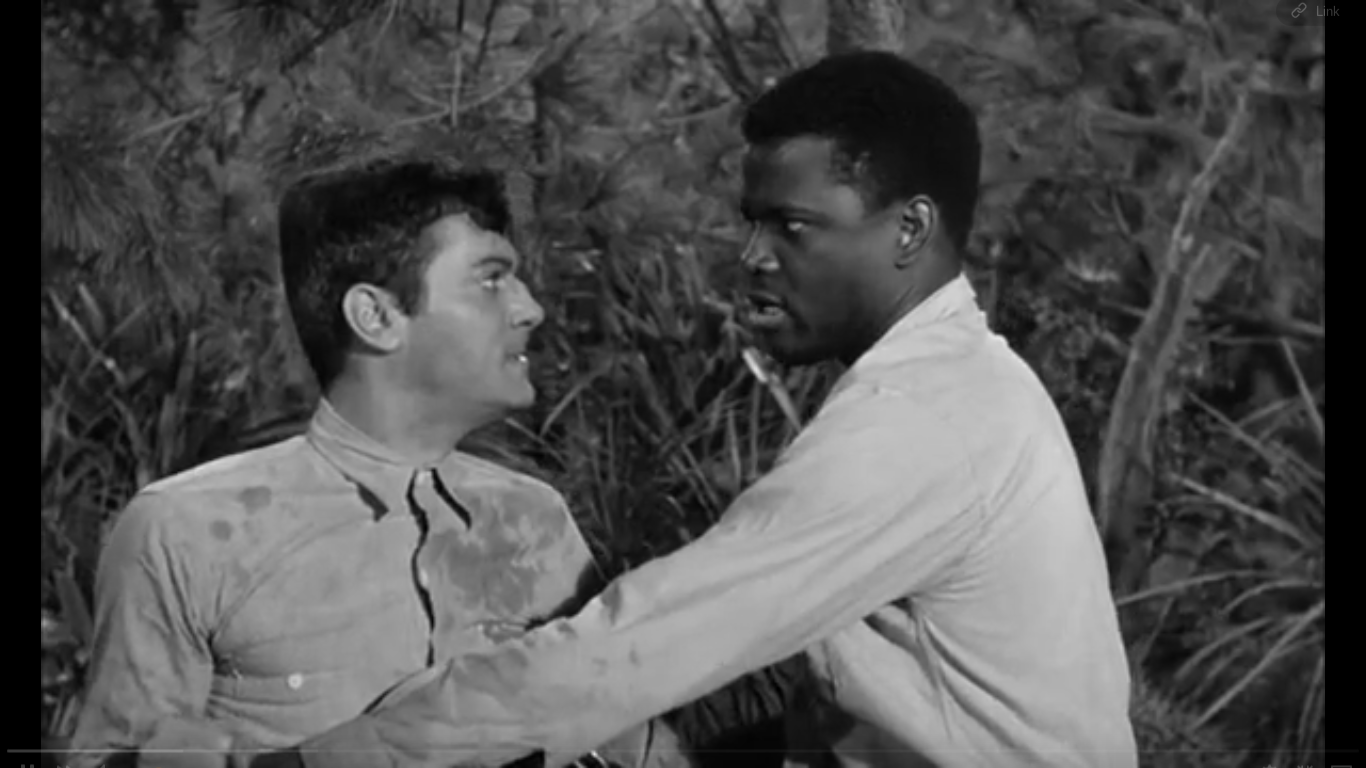
I can’t have made this up myself, but The Defiant Ones is a testament to the pithy axiom that proximity breeds empathy. Stanley Kramer has very clear intent when he builds the premise of his story out of a white and black prisoner, in the era of Jim Crow, who are chained together for the majority of the movie.

He’s not squeamish about hammering us over the head with the implications. These two men, who escape from a prison truck must work together in order to survive and evade the hordes of police dogs and trackers on their tails (led by Theodore Bikel and Charles McGraw). In fact, the push and pull between Bikel and McGraw in their carriage of justice is a mirror for our primary leads, a persistent reminder that these are four men separated mostly by circumstances.

At times, these circumstances all feel perilously didactic, but Noah (Sidney Poitier) and Joker (Tony Curtis) are the movie’s saving grace as it should be. What’s most phenomenal about Poitier and Curtis’s performances as they take on the harrowing terrain of the movie is just how taxing it seems, and there’s a definite physicality to their plight that fully manifests on the screen.

It’s torrents of rapids or getting trapped in a mud pit together and struggling to fight their ways up the sides These moments overwhelm us and at times feel excruciating. But they bring us into each moment and make them feel real and palpable even when the perfectly orchestrated set-up fails to do so. This is the underlying tension of the entire movie.

Although the two men could care less for one another, if not for self-preservation, there are momentary hints of altruism the farther they go along the trail together. They go through the wringer, nearly getting hung after making a desperate attempt to score some provisions in a local settlement after dark. Claude Akins is one of the warmongers with retribution on his mind. Again, Lon Chaney Jr. plays his counterpoint and a man with a timid reservoir of mercy.

In another prolonged interlude, after having survived, they sneak away to a rural homestead run by a widowed mother (Cara Williams). She at one time becomes their captive and then nursemaid, providing care and sustenance to a wounded Joker while only mildly tolerating Noah. It’s here in a formative moment where their physical chains are finally cast off, only for the bonds of camaraderie to cement between them. The once tenuous partnership has progressed toward something verging on mutual respect.

Even as the woman schemes to run off with her new man while leading Noah astray, Joker for the first time in his life fights against the color line. Because complicity is so easy. But his indignant conscience rumbles inside of him, and he goes after his friend to warn him of the hazards that lie ahead.

One of the most galling sequences occurs earlier in the picture when Noah recounts how he was always taught as a young man to “Be Nice” and then his wife went and taught his son the same thing. Of course, “Be Nice” feels like the coded language of deeply entrenched oppression with blacks having to play up to whites just for the sake of survival if not a seat at the social table.

What it engenders in Noah is deep-suited anger for all his natural life. It’s the kind of gall, Joker can’t quite understand. But when he follows Noah toward the Swamp, he’s showing incremental change can be a powerful thing in itself.

One could argue the ending shows how far the film was willing to go. In other words, The Defiant Ones could only go so far. James Baldwin talks in The Devil Finds Work (If my memory holds) about how Poitier’s character does the valiant thing in the end for the white man (while black audiences screamed at him to get away on the train car).

Obviously, if he did not sacrifice for his newfound friend it would sully the film’s theme while further complicating the resolution. The white world was not quite ready for that ambiguity even as black audiences clamored for greater freedom in life and on the screen.

But if I’ve learned anything about Stanley Kramer, his films very rarely aspire to social realism as much as they are parables under the guise of docudrama. Their purpose is clear and their messages unabashed. Years later we look at the Defiant Ones or Guess Who’s Coming to Dinner and we desire more out of them. Even Sidney Poitier as an actor was often admonished for never quite going far enough when it came to portrayals of his people. There was always something at fault.

Still, when I look at this picture, I see Kramer’s intentions and remember I am so quick to dismiss the past from my enlightened present. Because it’s so easy to do.

However, it feels apt to end with Poitier’s own words about his director:

“Stanley was always a forerunner of terribly good things; He was the type of man who found it essential to put on the line the things that were important to him. People have short memories: in the days he started making films about important social issues, there were powerful Hollywood columnists who could break careers. He knew this, and he said to himself, ‘What the hell’, either I do it or I can’t live with myself.’ For that attitude, we’re all in Stanley Kramer’s debt. He’s an example of the very best of a certain type of filmmaker.”

Kramer’s not one of the greatest filmmakers of all time, but perhaps as Poitier suggests he’s the best of a certain type of filmmaker. Surely that is enough.

4/5 Stars

Big Deal on Madonna Street (1958): A Heist Comedy of Errors

big deal on madonna street

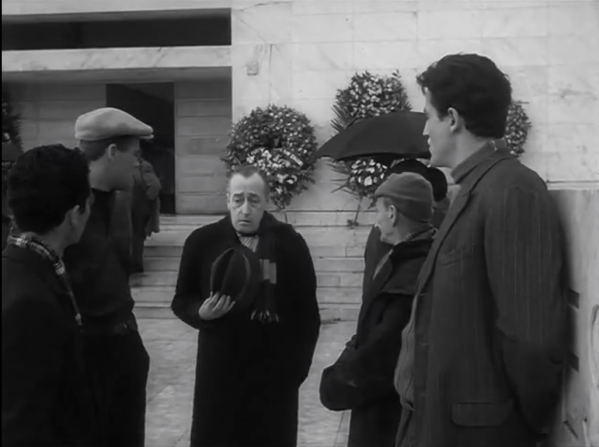
If you need only one scene to be indicative of everything Big Deal on Madonna Street exemplifies as a caper comedy, the opening scene puts it out on a platter, ready for consumption.

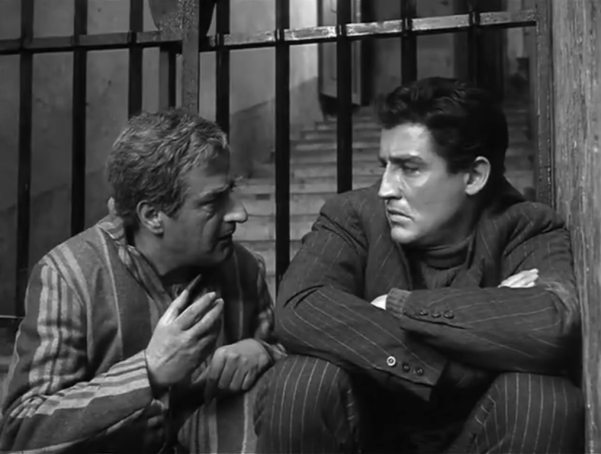
A shrimpy man with a mustache waits on the street corner as a lookout while another named Cosimo (Memmo Carotenuto) busts open a window to hotwire a car. Except he totally bungles getting nabbed by the cops for his efforts. Even as the alarm goes off, he’s too much of a stiff to make a break for it. Now he’s on the inside, and he deserves it, if not for his botched crime, then at least for being a numbskull.

But he’s also an idea man looking to get out of the can as soon as possible. The job now is finding someone to be his scapegoat. It’s not as easy as it sounds. Everyone has their underlining excuses. A wife already in prison. A baby to take care of. Previous prison time. It’s difficult to scrounge someone up when all your dopey friends are two-bit crooks.

Finally, they settle on Peppe (Vittorio Gassman), a beefcake with a glass jaw. He has no prior record and with a dead-end boxing career, he could use the dough. So he goes into the police precinct, lays out his sob story, and proceeds to get handed a prison sentence of his own. Now he’s in the clink to keep Cosimo company.

He requests at least the common courtesy to know why he had to end up in prison in the first place. Cosimo tells him about a golden opportunity in the form of a heist. He’s got it all planned in his head, sans all the gory details. Regardless, it’s going to be the crime of the century, or the decade, or the year, or maybe the month…You get the idea.

When he finally gets on the outside on parole, it’s now Peppe who gathers the usual suspects together to put their plans into action. Their first mistake is probably taking their cues from a lug head, but they’re desperate and a little loopy themselves.

Soon they’re casing the joint and making sure they know what they’re getting into. It’s all very “scientific,” but not quite foolproof. They’ve watched one too many crime movies. The first professional they actually cross paths with is a safecracker (Toto) — a real pro — but he just gives them advice; he’s not actually prepared to take on the job for himself. He’s got his own parole to think about. And so he supplies them some of the tools of his trade and wishes them well.

big deal on madonna street

Normally heist stories are constructed in a very specific manner. There’s the planning process, then the heist, and the reversal where everything goes haywire. Big Deal is made entirely in its foundation — the best-laid plans that have no choice but to go awry — and their continued complications and digressions only make the scenario more hilarious. Rest assured, we foresee the problems before they ever come to a head. How can we not? But they proceed to get worse and worse.

The vacant apartment they were going to use as their in-road has been filled and so they look to woo one of the tenants so they can gain access. Peppe dons his most charming persona to get a foot in the door, except he goes and falls in love with a maid (Carla Gravina) he’s supposed to be romancing, getting jealous of her steady row of suitors. Then, she gets herself fired and the whole reason she was of value to them in the first place goes out the window. Peppe still loves her.

What ever happened to Cosimo, you ask? He finally gets out, intent on his cut, only to then seek vengeance on his former compatriots, going so far as to ambush Peppe in the carnival’s bumper cars. The youngster Mario (Renato Salvatori) starts his own forbidden love affair with the chaste younger sister (Claudia Cardinale) of one of their co-conspirators. Soon he loses heart and drops out. The family man, Tibero (Marcello Mastrianni), struggles to take care of his son. He also gets his arm broken nabbing a camera for recon. Worse yet, the camera’s worthless.

Their luck never gets better, nor should it. When it comes time to synchronize their watches, of course, they don’t have any. They’re either too expensive or already hocked. A lover’s quarrel heats up, and with it, the lights go on, cutting into the crew’s surreptitious activities up above on the rooftops.  Their timetable is abruptly derailed.

Big Deal on Madonna Street milks comedy from the telling observation that life is never picture perfect and even the most tightly wrought plans have a way of being unraveled or upended by the most unsubstantial wrinkle. These fellows aren’t exactly master criminals to begin with so their brand of setbacks more than fit the size and scope of the crime.

When they do finally get inside, there are leaks. Noises. Cats. Midnight snacks. Major miscalculations. They continue bumbling their way through every waking minute and we wouldn’t have it any other way. Normally heist films go horribly amiss at the most inopportune moment. In Big Deal on Madonna Street, they shoot themselves in the foot countless times, and still, they go for it anyway.

You’ve got to admire their dogged determination and this motley crew is quite likable. It comes from knowing they are criminals who never will succeed. They are armed with a prevailing obliviousness. We can laugh at them and like them, and watch them stumble off into their lives, after having made a complete mess of everything.

Part of this comes with walking with them in their lives and seeing them as common folk with all the foibles that come with small-town life. What a lovable pack of misfits and malcontents they are and we learn them to appreciate them for precisely these reasons. They’re unequivocally silly. If nothing else, they provided their audience with some quality entertainment. As a heist film shot as a comedy of errors, Madonna Street has never quite found its equal.

4/5 Stars

The Trouble With Harry (1955): Hitchcock, Humor, and The Macabre

jerry mathers trouble with harry

Idyllic is the word for The Trouble with Harry, and it positively crackles with the autumnal delights one can only know in locales where the seasons give way one to another.

Alfred Hitchcock’s filmography boasts many opulent and gorgeously shot sequences, but Trouble With Harry might have some of the most supernal. Part of this comes from the fact it comes in such stark contrast to his environs in Northern California.

Because the East Coast — Vermont in particular — affords him a very particular canvass and he uses them to full effect. The story goes that he went so far as to have leaves pinned back onto trees to try and replicate the shots on a sound stage. Whatever the techniques it boasts something distinctly tangible.

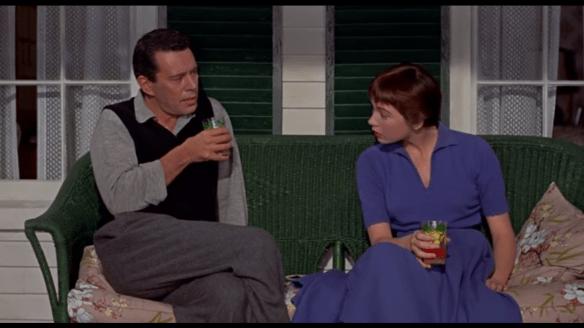
If the locale is not entirely functional, it still manages to be another integral character in the story just as the satisfying crunch of leaves underfoot or the thought of a lemonade out on the porch conjures up visions of a very specific sort. But of course, all of this connotation would be for naught if it was not juxtaposed with the typical Hitchcockian proclivity for the darkly macabre.

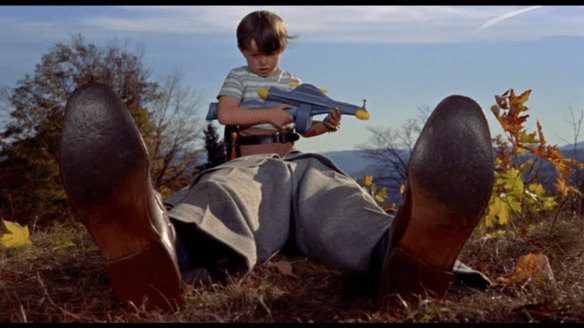
The Trouble with Harry might offer his lightest touch — it’s spritzed more evidently with humor than a great many of his movies — but the blackness at its core cannot go unnoticed. Take, for instance, that opening sequence. It’s emblematic of the whole picture. There’s tiny Jerry Mathers freakishly young (even before the days of Leave It To Beaver).

He’s running off on some boyish adventure his toy gun in hand, only to stumble upon the corpse of a man named Harry. The man’s nicely dressed. Laid out in the middle of an open pasture. More importantly, he’s dead.

Hitchcock employs a trick from the painterly masters using foreshortening to make the man’s body envelop the screen as the little boy stares down at him rather inquisitively, ready to run off and tell his mother. From the outset, Bernard Herrmann’s scoring is both rigorous and rather jaunty, perfectly in tune with the sense of place and tone.

But this is no conventional tale of malice or ill-blood. It is, however, the Macguffin to kick our story off. Edmund Gwenn is another fellow who comes upon the body quite by chance — he was out shooting rabbits unsuccessfully — could it be a stray bullet that took Harry out? He thinks it’s better not to risk it and decides to drag the body to more secluded terrain.

However, he’s met by one of his neighbors. John Michael Hayes’ script does splendidly in moments like these. It’s able to place small-town pleasantries up against a grisly murder as if it’s a small trifle — a mere afterthought to be dealt with in the manner of a pothole or a roach problem. In the end, Captain Wiles (Gwenn) and Ms. Gravely (Mildred Natwick), a kindly spinster, set up a date for afternoon tea with the promise of blueberry muffins and genial company.

forsythe macLaine trouble with harry

What of Harry? It’s true the whole world seems to turn up to find him. Soon little Arnie returns with his mother (Shirley MacLaine), and she hardly bats an eye. A local professorial fellow — his nose always in a book — trips over the body without much of an acknowledgment. Even local artist, Sam Marlowe (John Forsythe), has time enough to sketch a crude portrait of the dead man.

He’s your conventional starving artist. Kindly Ms. Wiggs (Mildred Dunnock) puts his particularly exuberant paintings out for sale near her Emporium, though he doesn’t stir up much business from the cows lingering across the pasture.

Ms. Rogers meanwhile is a twice-widowed young woman, and she admits her last husband was too good to live. She’s pursued by Mr. Marlowe even as the old-timers look to start courting in their own way.

The source of the frivolity and the casual delightfulness comes in painting the town as Hitchcock does — this combination of coloring the idiosyncrasies of the quainter side of life as well as the open-air mise en scene, whether pure illusion or not.

What’s lovely about Hitch is the way every movie becomes a sort of game or puzzle in its own right. Because The Trouble with Harry will never be held in the same regard as many of his most obvious successes — movies from this same period of time — but it’s ceaselessly interesting.

Audiences of the 50s would have had a time pinning it down in a conventional sense because it employs fairly frank dialogue whether riddled with innuendo or not, but it also lacks the kind of obvious star power big studios often banked on to sell tickets. Surely Hitchcock could have garnered the best talent and yet he chose not to.

This is a character piece, and it wasn’t meant for the Cary Grants or Jimmy Stewarts of the world — at least not in 1955. It called for something more mundane. And what of the humor? First of all, there are certain expectations from “The Master of Suspense,” and it’s hard to say they are met; it’s almost like he swapped the formula. He leads with the comedy with accents of suspense and the macabre.

A body buried and excavated, put back in the ground, and exhumed time and time again over the course of the day. It’s the film’s prolonged gag. One of the things that makes it feel continually comedic is the lack of a true villain of any consequence.

The closest candidate is Royal Dano, a slightly curmudgeonly sheriff who has a penchant for old cars. He’s sniffing around, always on the side of law and order. No, this is most definitely a comedy, and the two couples join forces to keep their local secret. Because they know quite literally where the dead bodies are buried. Though it’s quite possible none of them is the actual culprit. It’s typical of Hitchcock that his inclinations of Vermont are informed by murder instead of moonlight.

He is, after all, the man who keenly observed that the medium of TV “brought murder back into the home where it belongs.” The Trouble With Harry plays with the same form of morbid levity.

3.5/5 Stars

Stage Fright (1950): Hitchcock and Dietrich

wyman and dietrich

It’s true that “All the world’s a stage, and all the men and women merely players.” However, dress it up with murder and life becomes a series of stages and varying performances you’re putting on for different audiences — trying your best to play your audience — while not giving yourself away.

Stage Fright feels very much like Hitchcock getting back to his roots; there’s something simpler and yet still charming about the milieu he’s able to drum up evoking the British Isles. In reality, it was a convenient excuse to spend more time with his daughter Patricia currently away at school in the U.K. She even earned a small role. It’s also propitious he seems to be having good fun with the conceit: the combination of play-acting and murder with actors trying their hands at amateur sleuthing.

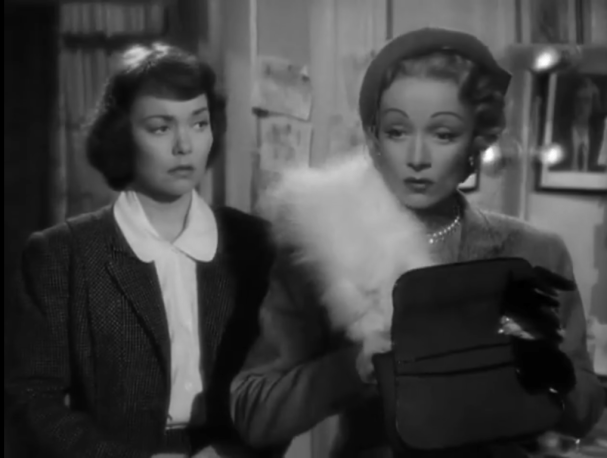
We are thrown into an almost instantaneous thriller. It dispenses with the lead-up altogether by showing a couple on the run in a car. A fledgling actress, Eve (Jane Wyman), is the complicit accomplice and Richard Todd is a man fleeing the authorities. Through an extensive flashback, he relates how he was pulled into the web of murder spun by his lover — the famed and gorgeous prima donna Charlotte Inwood (Marlene Dietrich).

He tries to touch up the crime scene she’s left behind only to get spooked by her maid turning up on the scene. The murder investigation commences in earnest including a respectable detective named Smith (Michael Wilding).

Eve sets the fugitive up with her father, out of harm’s way, before turning right around and hatching a plan to get to the bottom of the whole thing. One minute she’s trying to get close to the aforementioned policeman to somehow pump him for information with her damsel in distress act. The next moment, she’s putting her thespian training to good use posing as a cockney maid (and temporary replacement) for dame Charlotte herself.

It has some of the dynamics of an All About Eve between actresses though it’s admittedly hinging on cloak-and-dagger antics opposed to true backstage drama. Because it’s on this plane of performance that Hitch seems most intrigued — where acting becomes a conduit for understanding the mystery at the core of this movie.

sim and wyman stage fright

If there were any undisputed secret weapon, my bet is up for Alistair Sim. He was always a mirthful co-conspirator if I’m to recall a movie like Green for Danger. He’s eminently likable, though the spark in his eye suggests he’s ever prone to mischief. This accords him all the prerequisites to play a fine father figure opposite Wyman if only for the primary reason they both seem to relish the game and being a part of it together.

They have the most instantly vibrant relationship within the picture, and they give it the comic underpinnings one comes to expect from the director. Sim himself meets the macabre of Hitchcock thanks to a bloodstained dress on a carnival doll used to shock Dietrich out of her performance of “La Vie en Rose.” It mirrors the ugly token of her secret transgression.

In another sequence, the wanted man shows up during her performance — a particularly saucy rendition of Cole Porter’s “The Laziest Gal in Town.” Before this interruption, the scene is pulled out of the Hitchcockian world momentarily. It’s an individual moment where an auteur like Hitch gets totally overpowered by Dietrich or, in many ways, he acquiesces allowing her to be her scintillating self in the golden limelight before the mechanisms of the plot are meant to take over once more.

Stage Fright feels perfectly comfortable being so theatrical. However, the ideas never feel fully wrought; it’s a bit scattered and inconceivable — nor is Jane Wyman the most compelling Hitchcock lead. Mind you, I’m not expecting her to be a Hitchcock blonde or Ingrid Bergman, but she’s not quite on par with even someone like Teresa Wright in Shadow of a Doubt.

Likewise, the theater finale is terribly abrupt though it functions on the tenets of many of Hitchcock’s grandest set pieces by taking a novel environment and turning it into a thrilling locale for drama (Donen would rehash a similar sequence in Charade). The scenes in the build-up are of all shapes and sizes as Wyman rather coincidentally juggles a double life. It’s all highly circumstantial.

As it turns out, the lynchpin scene is right at the very beginning. Of course, we don’t realize that until the end, but right there is Hitchcock’s point. To see it any other way is a mistake. Because obfuscation and chicanery are the building blocks of not only acting but murder as well. Perceptions can change so quickly, and he was one of the greats at visual audience manipulation. In Stage Fright he takes it a step further. He lies to us outright on the screen.

3/5 Stars

Woman in Hiding (1950) and Worrying About Ida Lupino

Woman in hiding 2.png

Woman in Hiding doesn’t waste any time. A car races down a twisting highway only to go careening through the side rails into the drink. The car and its occupant look to be obliterated. Yet we have the dead talking, Ida Lupino whispering to us from the grave. Could this be a situation akin to Joe Gillis in Sunset Blvd (1950)? We’re forced to wait before making any prognostication.

The story is set in North Carolina and as such, you have this lingering undercurrent of southern glory and heritage wrapped up in the wounds of secession and racial prejudice. There’s even reference made to the deep lurking traditions of the South with its pitchforks and rocks, of people who wouldn’t give up and wouldn’t allow their way of life to die. It’s actually rather unnerving rarely seeing an African-American character in this Hollywood tableau almost as if they’ve been erased.

Still, the locals go about their business dredging the local waters for the automobile and the missing Mrs. Deborah Clark (Lupino), even calling on the assistance of an old cannon, yet another relic from the aforementioned lineage. This is the backdrop against which Woman in Hiding plays out.

Because Seldon Clark IV (Stephen McNally) came out of this pedigree — tall and handsome, but proud and driven with maintaining the family standing, even to the point of delusion. He’s worked in the mill of a Mr. Chandler making many unwanted passes at his daughter Deborah.

For the time being, nothing comes of it because her father gives the boy a stern talking to, seeing right through the arrogant creep and the rest of the buffoons who beget him. In fact, it is at this point Lupino feels sorry for him — trying to defend him.

The story takes its most drastically abrupt turn on a single cut, when, in a matter of seconds, it comes out the forthright and perceptive old man died in a freak accident. Who was by his side unable to help him? Seldon Clark of course. It’s an obvious equation of two plus two, but, again we must wait until everything unfolds.

Marriage is proposed the day of the funeral, thus tying the knot (and the mill) between Deborah and Seldon. Their subsequent honeymoon at a cabin getaway is rudely disrupted by a former girlfriend. Peggy Dow debuts as a conniving southern belle on equal footing with her darkly vindictive suitor. It instantly rips away any pretenses we might have from her more widely remembered turn in Harvey (1950) as she gets backhanded for her many scandalous insinuations.

Could she, in fact, be the victim of the scenario? Doubts creep in? The first of many as Seldon’s colors become more and more obvious even to his wife. One of the most generous compliments that can be offered to Woman in Hiding is how it wears its melodrama brazenly on its sleeves.

It evokes a helpless world akin to Road House (1948) where nature is a trap — a place in which to be hunted like an animal, in this case, confined to a nightmarish marriage. The narrative does fold over itself and we realize where we find Deborah.

She is a woman caught in a state of matrimonial helplessness, in a society where she has little agency to do or say anything to free herself. It’s the same anxiety film noir of the post-war era gorged itself on, for both men and women. Because it becomes apparent the dividing line between victim and femme fatale is razor-thin. Really all that matters is the point of view provided.

From Deborah’s flustered perspective, there is a vague sense of searching out Patricia Monahan (Dow) because maybe together their corroboration might be able to put Seldon away. Just maybe someone might listen to the truth then.

woman in hiding 1.png

For the time being, staying dead is the most auspicious decision. Deborah takes to the road to disappear for a while and make some money on the side waitressing. But there must always be a foil and in this case, it’s a man named Keith Ramsay (Howard Duff).

He’s the genial man behind a newspaper stand striking up a conversation with a woman on the run. He seems like just the type of character who might provide a shoulder to lean on, whether solicited or not. In a world where everyone’s overstimulated with get-rich-quick schemes and radio giveaways, he seems decidedly unconcerned with the rat race as he works at his pop’s shop.

However, he does become a shoulder to lean on — offering comfort — but he’s also a part of the problem. Because this tale gets its punch from a woman being hunted, when she should, in fact, be a victim. In this regard, it’s a precursor to the same problem at the core of Blue Gardenia (1953) as the newspapers start treating her as a fugitive.

Because even as the local hotel is overrun by a traveling convention of drunken out-of-towners and conga lines, darkness can still find its way back in down the stairwells. The most excruciating development comes with the connection between our favorite fellow and the dastardly husband. He has no idea what’s he’s doing when he makes the identification.

Even as Deborah is taken back by her husband and Monahan turns up again only to be stepped on, the story must culminate where it began. In the same small town, at the dead of night, inside the mill. There’s something to knowing what’s going to happen and still having a potboiler raise the pulse. It comes down to the old adage, it’s not the destination but the road taken.

It also comes from actually genuinely caring for a character and as one of the best — some might even say an underrated actress — Ida Lupino plays the victim with an inbred resiliency, making the audience strive for her safety even as we sit powerlessly in the theater seats. It’s not some monumental derivation of the tried and true formulas, but audience identification goes a long way.

3.5/5 Stars

Suddenly, Last Summer (1959): A Venus Flytrap of a Film

Screenshot 2020-04-26 at 7.59.33 PM

For some Suddenly, Last Summer plays like the Holy Grail of Classic Hollywood cult films. It’s a bit like seeing those old Warner Bros. Studio clips of famed actors muffing their lines and then proceeding to blurt out obscenities. It breaks all illusions for those who have a certain perception of what these old movies represent, whether it’s something twee or a sort of refreshing simplicity.

Somewhere between Tennesse Williams and Gore Vidal, we find the origins of something with the carnal instinct of a venus flytrap. Fitting, as the curious plants become one of the film’s earliest portents. One Mrs. Violet Venable (Katharine Hepburn) keeps them well-fed in her arboretum. Really, the space — like an overgrown Eden in her backyard — is in memoriam to her dearly beloved son Sebastian.

He’s never seen in the flesh, but he haunts this picture like a male equivalent to Mrs. Rebecca De Winter. The memory of him is kept alive by those closest to him almost to the point of obsession.

But to understand this we must start earlier. At Lion’s View State Asylum in 1937, a brain surgeon (Montgomery Clift) has made strides in lobotomy to provide relief to schizophrenic patients. It’s a primitive solution and his facilities are subpar at best. As a state institution, they lack the funds to take care of their growing population of patients.

Their savior might just come in the form of the same Mrs. Venable who is looking for some aid for her niece (Elizabeth Taylor), a young woman who has recently been interned at St. Mary’s hospitable. She’s purportedly prone to obscene outbursts and other unseemly behavior.

The way it’s described, she might as well be as mad as a hatter. Meanwhile, the way the lady talks about her departed son to the good doctor you would think the former poet was almost like a god. She sees both men’s art — that of surgeon and poet — as supremely powerful and grandly creative. What’s more, there’s no pretense. She’s absolutely infatuated with the memory of her dead son.

She’s further obsessed with everything she witnessed on her travels with Sebastian the year before: particularly birds devouring baby sea turtles. Nature is not known for its compassion, and we are all trapped in a devouring creation. In this world, the face of God is not a supreme being but a horrible inescapable truth. If anything, God is made in our own image and it’s a terrifying reflection.

Elizabeth Taylor finally makes her entrance, and she’s as alluring as ever. She’s hardly the world’s idea of an unhinged ward patient, done up as she is in her typical Hollywood glamor, with a slight redux free of charge.

As she meets Dr. Cukrowicz (Clift) and becomes accustomed to his calming presence, there’s an uneasy trust being formed. But if anything, it might as well play off the close friendship of Liz and Monty offscreen. He doesn’t do much — at least in a histrionic sense — and she commands most of the scenes, still, it only works if they are together. For all the struggles Clift endured after his career-altering injury, in tandem with the likes of Hepburn and Taylor, he works quite well.

Screenshot 2020-04-26 at 7.45.10 PM

Of course, there is no real pretense to believe this story is really concerned in any regard with mental health. Catherine goes wandering around the facility only to terrorize herself. If she’s not “mad,” it might all be subjective anyway. At any rate, it feels like a high-profile precursor to Shock Corridor.

However, in that film, the shock befits the low-profile punchiness of Sam Fuller more than Mankiewicz and his A-list cast. Here it feels more than a little dimorphic, bearing two forms that don’t fit together. To be sure, Suddenly, Last Summer transcends mediocrity altogether. It’s arguably something far better or something far worse than it seems.

These long, drawn-out scenes loaded to the gills with theatrical dialogue meet their piece de resistance as Taylor goes off — divulging all the secrets she’s been holding onto. However, if any of this gives off the putrid stench of convention, rest assured the finale is as striking as it is genuinely perturbing.

It paints in oblique language, clouded images, and the drone of Taylor’s own voice as we watch her terrorized face recount the horrors she witnessed. Suddenly, Last Summer reaches the summit with clanging drums and music, cobblestone streets, and streams of lecherous feet chasing after their prize. Here again the overgrown gardens, venus fly traps, and flesh-eating birds have renewed significance.

It takes her to the brink — a cinematic equivalent to visual insanity — and the precipice of reality, leaving her all but ready to jump off. Whether it’s totally effective or not, above all, it leaves a polarizing impression. Thus, the most surprising reaction to the picture would be one of total indifference.

What sets it apart from its brethren and even other Tennessee Williams pictures is how it’s able to lay into its themes even more overtly, almost on the encouragement of The Production Codes. Because it’s preaching a message of the twisted roads humanity can take, paths that ultimately lead to destruction. And yet with all those involved, there is this subversive sense of something else — something more, its screenplay’s skin is crawling with all sorts of undercurrents.

In what universe do Elizabeth Taylor, Katharine Hepburn, and Montgomery Clift star in a picture helmed by Joseph L. Mankiewicz culminating in cannibalism and interwoven with any number of delectably salacious taboos? It happens here. And yet more perverse still is how God or hope or meaning, in any form, is absent. From a worldview perspective, there is no such thing as Truth (or is it truth serum?). Take your poison.

Either is fitfully terrifying until it gives way to a meaningless apathy. No wonder the asylums are so full of patients. It might be the safest place to be in a world such as this. Our initial fear is poor Elizabeth Taylor receiving a lobotomy. Rest assured we get something far worse: a senseless, devouring world. It’s poised and ready to eat us all up.

2.5/5 Stars