Review: Chinatown (1974)

chinatown1Forget it, Jake, it’s Chinatown

The more you watch movies like Chinatown, the more you realize how much you’re still learning. I saw it the first time and I naively thought I knew everything about it. After all, it seemed fairly cut and dry. But the beauty of this film is a labyrinth-like story that can still keep me engaged after multiple viewings. There are things that I missed, things that I have to piece together once more, and more often than not details I simply forgot.

Robert Towne’s script has an intricacy to its constantly spiraling mystery plot that remains powerful and Roman Polanski — with cameo included — directs the film with a sure hand as well as a cynically bitter ending worthy of his work. At that point, he was returning to the same city where a few years prior his wife Sharon Tate had been brutally murdered and that certainly had to still be heavy on his mind.

Throughout, Chinatown has elegant visuals of a desert-dry Los Angeles circa 1930s, and it is aided by a smooth Jerry Goldsmith score made for such a period crime film as this. Jake Gittes (Jack Nicholson), is the smooth-talking, smart-aleck P.I. with a penchant for trouble, but that goes with the business. In the tradition of all his heirs like Spade and Marlowe, the whole story is told from his point of view and we get the details at the same pace as him. That means a lot of the time we are just as confused as him, trying to pick up all the pieces.

Aside from Nicholson, Faye Dunaway’s performance is an interesting reworking of the archetypal femme fatale, because she has a different side to her. Also, John Huston’s performance is wonderfully nefarious, because he plays Noah Cross with a top layer of geniality that is ultimately undermined by his base nature. It’s wonderfully wicked.

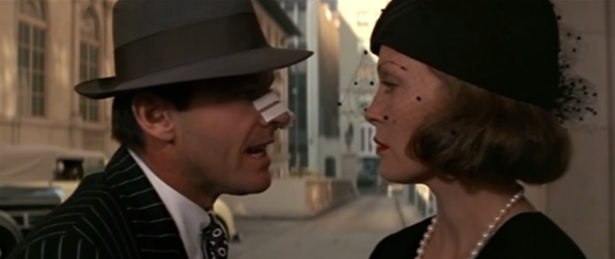
In the story’s first few moments of being in his office, we begin to learn a little about the means Gittes uses to appease his clients. Then, his newest client walks through the door, a Mrs. Mulwray, who wishes for him to tail her husband. And so he does, just like that, and he’s pretty good at it too. Hollis Mulwray (an anagram for Mullholland) happens to be an integral part of the L.A. Department of Water and Power as the chief engineer. From what Gittes sees, the bespectacled Mulwray seems to have his scruples, but he also has a secret girl, who the P.I. is able to snap some incriminating photos of.chinatown2 Back at the office, another woman shows up, a Mrs. Mulwray, but this time the real one. She wants to slam J.J. with a lawsuit, but he realizes he got framed, and in the end, she quickly drops her case. Pretty soon Gittes former colleague Lt. Escobar digs up Mulwray’s body and the cause of death is the height of irony. He drowned during a drought, a cruel demise, and his body is joined by that of a drunk, who also was wandering around the local reservoir. It’s time for our nosy P.I. to do a little more snooping, but he is scared off by two security guards from Water and Power who give him a deadly nose job.

None worse for wear aside from a small cast, J.J. knows the department is diverting water. It’s more than a little runoff like they contend. He gets lunch with Noah Cross (The great John Huston), who is the father of Mrs. Mulwray and the former business partner of the deceased. Like J.J., he’s curious about finding the mysterious girl, and he sweetens the pot for the P.I.

A bit of detective work takes Gittes to the hall of records and then a vast acreage of orange groves where he is mistaken for a member of the Department of Water and Power. They aren’t too happy to see him, but Mrs. Mulwray is able to bail him out. They check up on an assisted living home and tie it into the whole conspiracy. Someone is buying up land under the names of the unknowing residents.
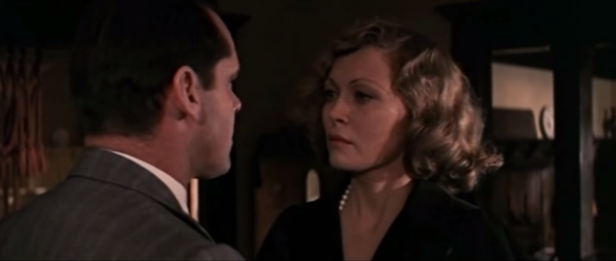
chinatown3But as it turns out, Mrs. Mulwray is hiding a major secret of her own that she’s been keeping. Another girl is murdered and since he’s found at the crime scene, Gittes is in a tight spot with the police and so he wants to get things straightened out. But he doesn’t quite understand what he’s gotten himself caught up in. At the last minute, he decides to take the hero’s path, but it’s to no avail. The good is snuffed out, the bad walk away free, and corruption still runs the streets of L.A. There’s not much the cops can do about it either.

chinatown4So many people remember the film’s final words, which epitomize this place of confusion, corruption, and helplessness. The final words of Jake are just as illuminating, however, because he repeats the words he spoke to Mrs. Mulwray earlier when she asked what he did when he worked a beat in Chinatown, “As little as possible.” It’s so pessimistic and yet it’s the truth that everybody knows. He must resign himself to doing nothing because there is no way he can win, no way to overcome the forces that be. It’s a haunting conclusion, but ultimately the most powerful one we could hope for.

Earlier I alluded to the fact that every time I watch this film I pick on things that I missed before. For instance, within Robert Towne’s script are some interesting instances of foreshadowing. The first comes in the form of a pun uttered by the Chinese gardener who is constantly muttering, “It’s bad for the glass/grass.”

Then, while they are in the car Mrs. Mulwray dejectedly drops her head on the steering wheel and it lets out a short honk. This acts as an important portent to the end of the film along with the blemish in her left eye. If you have not seen the film yet, this might sound very cryptic, but if you keep your eyes open these little details are rewarding. Chinatown is a fascinating place to return to again and again after all.

5/5 Stars
Review: The French Connection (1971)

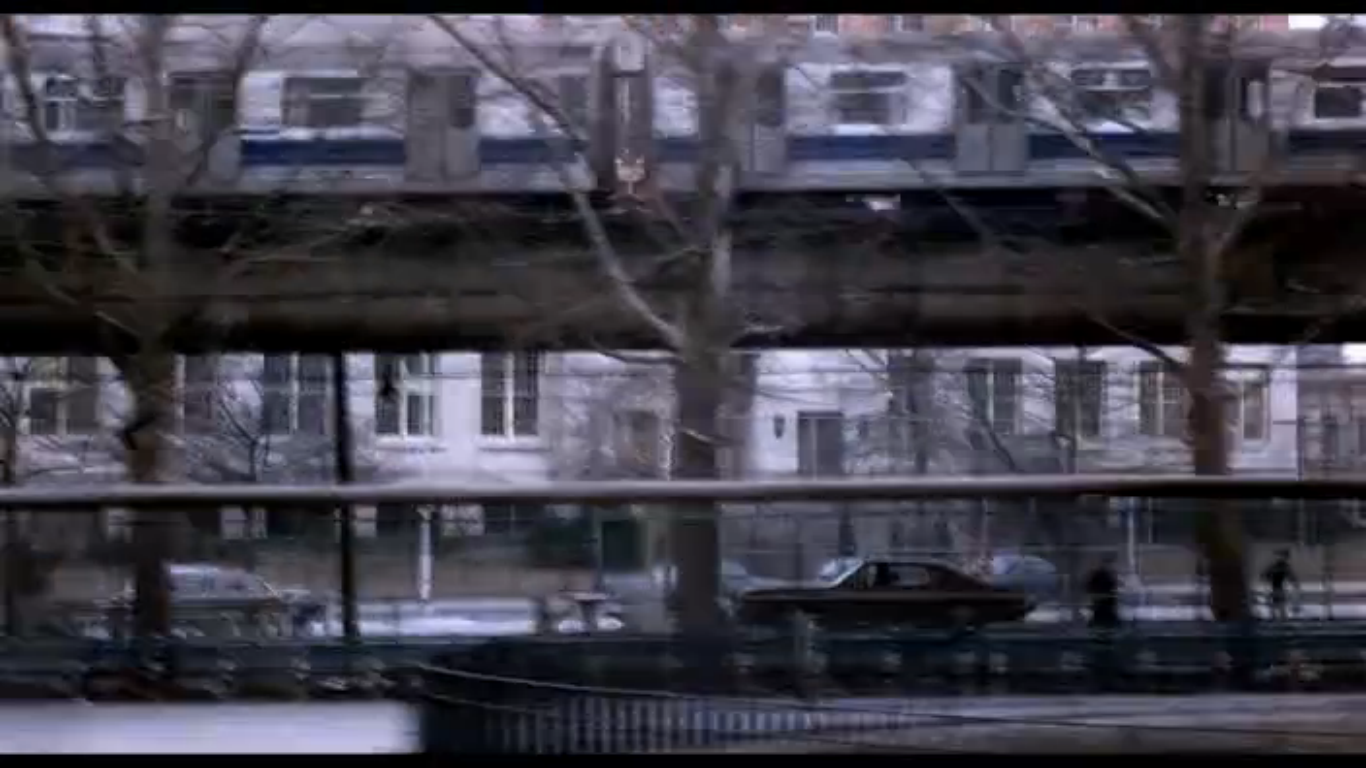
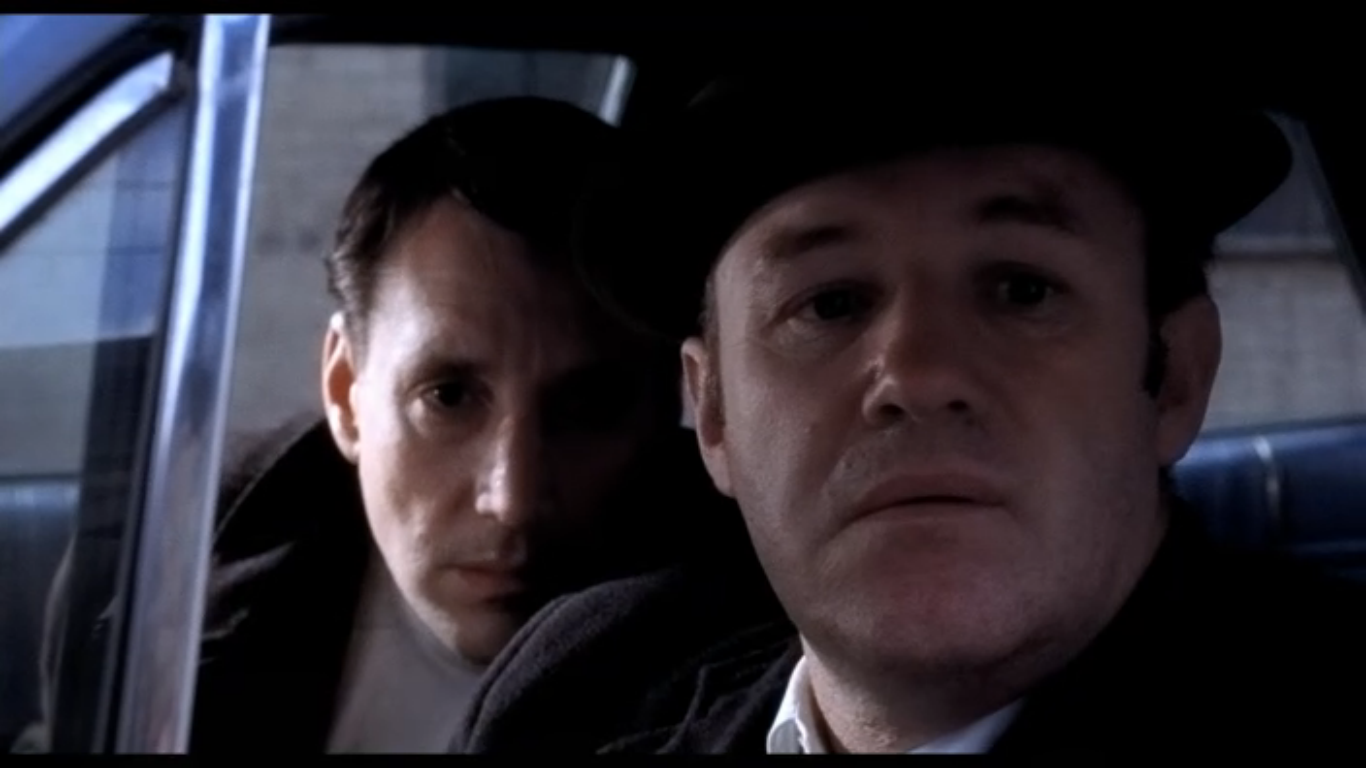
frenchcon5There is a pervading gritty realism to William Friedkin’s French Connection that undoubtedly took some cues from the French New Wave and the Neorealist movements. Hand-held cameras are taken to the streets of New York and to the train terminals. There is literally trash piling up in the gutters, old dilapidated bathroom stalls, and worn out facades all over the city. It’s urban, depressed, and a place of crime. In many ways this film is like Bullitt for New York, in fact, Steve McQueen was even offered the lead.

However, this time around our main cop is Popeye Doyle (played by Gene Hackman) and his partner Cloudy Russo (Roy Scheider). Both play a key role, but Popeye (the man with the hat) is of the greater interest. He’s a wise guy, belligerent, barking, loud-mouthed hot head, often driven by obsession in his job. He also happens to be an undercover cop in the narcotics division. He’s used to getting dirty and using the rough stuff when necessary. After all, it’s a jungle out there and there’s no room for pushovers.

From the get-go, we come to understand that this story has a French Connection, in Marseilles to be exact, and we know who is involved (Fernando Rey). We just cannot quite pick out all the details. Simultaneously, on a hunch, Doyle and Russo start running surveillance on a guy they happen upon in a club. Things don’t quite add up since he runs a deli called Sal and Angie’s by day and lives it up at night. An undercover informant also tips Popeye off to a big shipment of heroin that’s coming in.

frenchcon9Sal Boca has to be into something and so a game of tailing begins on the streets after he and his French contacts are spotted together. Frog 1 named Charnier (Rey) has Popeye on his tail only to shake him adeptly. That’s only the beginning, however, after a sniper comes after Popeye and yet another chase ensues. The fugitive boards a train and Doyle commandeers a car to follow close behind. Thus, was born one of the greatest car chases of all time and it doesn’t even involve two cars. After the adrenaline of that moment has worn off Doyle and Russo are on another stakeout and this time impound a car belonging to frog # 2 Henri Devereaux. Popeye has a gut feeling that the vehicle’s dirty and they literally tear it apart end to end, with little luck. But he’s a force of nature and very little will get in the way of his obstinate drive.

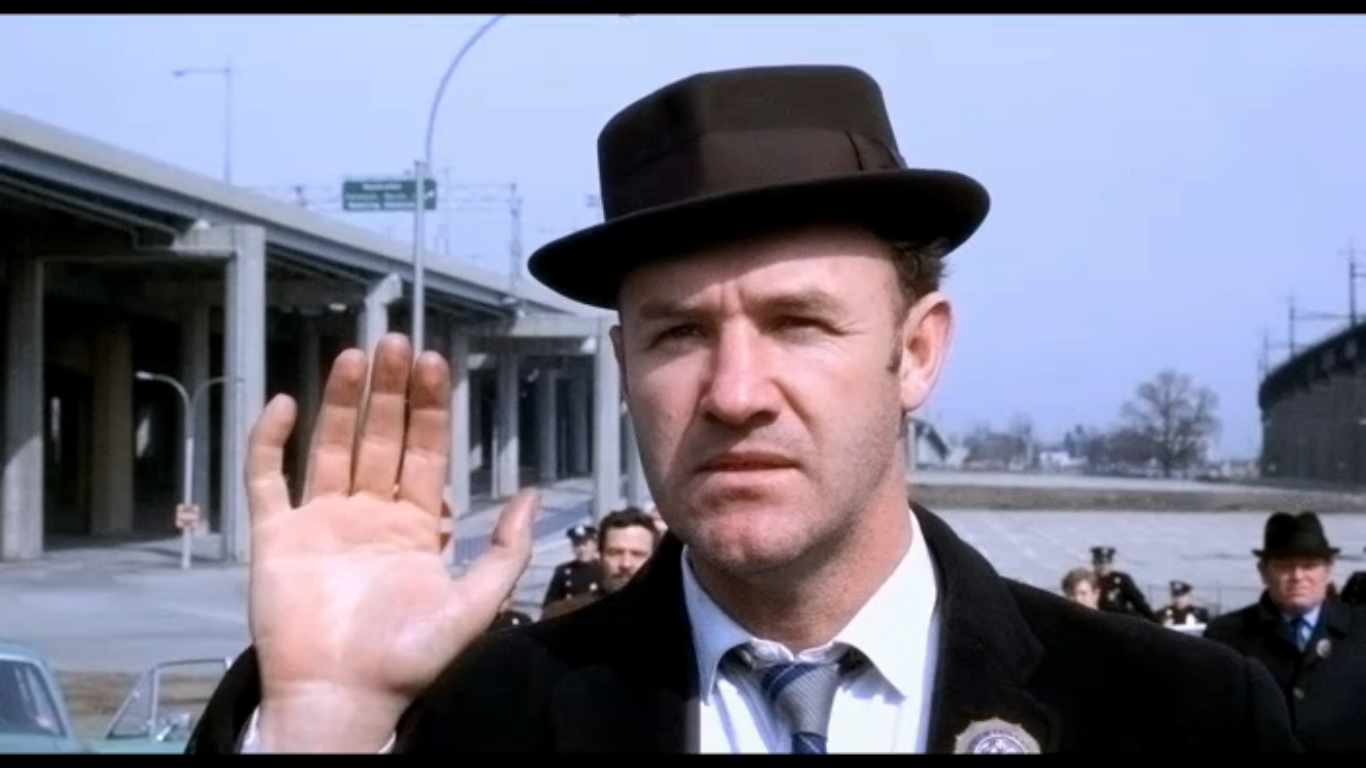
frenchcon11When the drop finally takes place everything goes off smoothly enough, but there’s a roadblock, and Popeye is waiting for them with a playful wave. He’s got them now. The final roundup leads him into an old warehouse as the hunt continues, but The French Connection finishes open-ended. Sal was gunned down, the meeting was busted, but not everyone was caught, and Charnier seems to have vanished into thin air. To top it off, Doyle shoots the wrong man and without flinching continues his obsessive hunt.

Friedkin’s film was partially based on true events from the 1960s and the two men the story was patterned after actually are featured as the boys’ superior Walt Simonson (Eddie Egan) and federal agent Bill Mulderig (Bill Hickman), who has a longstanding dislike for Doyle. Their presence in the production of this film helps to lend to the realism and nuances that the film is able to take on. The score isn’t all that noticeable, but it’s a tense arrangement that adds some underlining anxiety to some scenes. Stakeouts get more interesting than you would ever give them credit for. Really on the simplest level, this film is about one man’s hunt, his obsessive chase, which at times no longer seems about justice at all, but personal vindication.

4.5/5 Stars

Days of Heaven (1978)

Days_of_heaven1You can see Terrence Malick’s fingerprints all over this film and that’s certainly not a bad thing. It has his eye for the breathtakingly beautiful visuals and there is almost a spiritual quality of reverence to its pacing and tone. Slow, methodical, and ultimately deeply impactful. And there are so many Biblical parallels that can be taken hold of as well.

It’s as if Malick cannot bear to be stuck indoors. He hates having walls surrounding him especially when a camera is involved. He takes considerable interest in the sky, the landscapes, and creatures inhabiting the space around him. It’s not just his human subjects either, but everything of all shapes, sizes, and sounds. He cares about the exterior more than the interior, the earth and the heavens rather than anything made by the hands of man. It’s that type of approach that allows for such breathtaking visuals from Nestor Almendros and Haskell Wexler because the priorities are set. The sky is literally the limit.

The story opens during the presidency of Woodrow Wilson and a young man named Bill (Richard Gere) is forced to flee his mining job for Texas taking along his girlfriend Abby (Brooke Adams) and his younger sister Linda. They travel around hitching a ride on a train looking for work until they finally find seasonal jobs at a Texas ranch in the fields. Life is relatively tranquil, although the work is hard. Bill maintains that Abby is his sister to keep people from getting ideas, but they are very close.

However, the young reserved owner of the ranch is instantly taken by her. She does not share his feelings, but a marital union is formed on the advice of Bill. After all, then she would have a cut of the man’s inheritance and the farmer doesn’t suspect a thing. So in this way, the love triangle is put into place, and yet relations still remain genial between everyone. This is a life they can get used to, especially for young Linda. That is until the man notices the intimacy of Bill and Abby and it angers him deeply. It’s only exasperated because Abby is starting to have feelings for him causing the web of romance and feelings to become ever more complicated.

And of course, on the day of the locust, the final restraints holding the farmer in place are released, and he unleashes on Bill with all his wrath. He is incensed beyond reason and once again Bill finds himself in another incriminating situation which he must flee from. Abby must start over with a new life and Linda finds herself at a boarding house. It’s not where we thought we would leave them, but it nonetheless satisfies as a half-resolution. It might as well be.

Many might notice that the narrative of Days of Heaven is rather thin, being held together by the meandering narration of Linda Manz. All this took Malick over 2 years to weave together into cohesion and it may not be a perfect fit, but it was thoroughly captivating because his film-making style is so visually robust. It’s often shot at gloriously magical times of day where the outlines of people and things become beautiful contours or stylized shapes. The sky is often bursting with color or warm like a painting of pastels. Those are the images that you are left with.

On her part, Brooke Adams is a natural beauty much in the same way of a Katharine Ross. Richard Gere is necessary with his playful and still fiery ways. Sam Shepard has a plainness and a calmness to him, but he really made this film with his explosion of emotion at the end, because something needed to break through the muted characterizations. It changed how we see him and really ups the tension of a generally restrained film.

4.5/5 Stars

Review: Rocky (1976)

rocky2The original installment of the popular franchise, Rocky was the pinnacle, and despite innumerable remakes, it still has never been eclipsed.  World Champion heavyweight Apollo Creed (Carl Weathers) even outlines why Rocky is, in fact, so popular. There’s nothing more American than an underdog story. A bum, an Italian Stallion, duking it out with the big boys and getting a shot to prove himself. From Creed’s point of view it’s all part of the act, a fine publicity stunt to bring in the public, but the film Rocky works on a similar principle. Most people relate to Rocky (Sylvester Stallone), and maybe at the very least, they can find it within themselves to root for his character even if he’s different then them. The beauty of this film is that Stallone and his creation were unknowns. They were nobodies. By the time all the sequels came out he certainly had garnered a following, but some of the intrigue of this whole narrative was lost in the process. He no longer felt like a long shot.

Furthermore, this film could have easily been a run-of-the-mill boxing movie. We’ve seen acclaimed performances in them before from people like Brando or even Kirk Douglas and John Garfield. But the character of Rocky makes all the difference, allowing the old standard to work once more. He’s a bum like most of the film boxers we ever became acquainted with, and he’s a little short in the brains department, but perhaps without even knowing it he good-naturedly embodies the spirit of his native Philadelphia. We cannot understand what he grunts half the time, but his actions reflect “The City of Brotherly Love.”

rocky1He cares about others on a level that some people don’t dare, and it even creeps into his work as an enforcer when his boxing prospects aren’t good. He doesn’t like being hurt or made fun off, but at his core, he’s a gentle spirit. He can’t bring himself to break a man’s fingers, he wants the kids to get off the streets and uphold their reputations. Above, all he constantly cracks jokes to the younger sister of his best friend Paulie (Burt Young). Her own brother won’t give Adrian (Talia Shire) the time of day, but despite her timidity, Rocky pops in on her everyday holding one-sided conversations at the pet shop. It doesn’t feel like simple common courtesy. He really likes her and grows to care about her. So really if this movie was just about boxing it would probably have faded away with so many other like-minded movies.

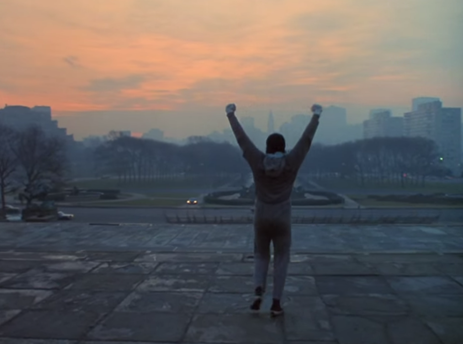
In the narrative, Rocky goes through all the hoops and finally reconciles with veteran trainer Micky Goldmill (Burgess Meredith), who looks to live vicariously through Balboa. He also deals with Paulie, who is prone to drinking which leads to volatile outbursts. And he even grapples with the media attention that comes courtesy of a bout with Creed. The montage of his training has become a thing of legend, hands outstretched with Bill Conti’s “Gonna Fly Now” ringing out over the steps below him.

Then there’s the showdown that the whole film culminates to and it’s nothing unusual, nothing we wouldn’t expect, but that’s the beauty of it because we want it anyway. We finally see everything on the line. Everything that Rocky has been working for is either to be realized or dashed to pieces. Well, the ending is a bit of a cop out, but you need some way to start the next sequel, right? This storyline is simple, almost naive in a way, but sometimes films like that are enjoyable and necessary. Every once and awhile we need a good underdog story to lift our spirits.

Sylvester Stallone burst onto the scene in lovable fashion and just like the film itself, I’m not sure he ever topped his original characterization of Rocky. He might be a broken coconut upstairs, but he certainly has a lot of heart. Humor me for just one moment because I have to say it at least once, “Yo Adrian!”

4.5/5 Stars

Review: Taxi Driver (1976)

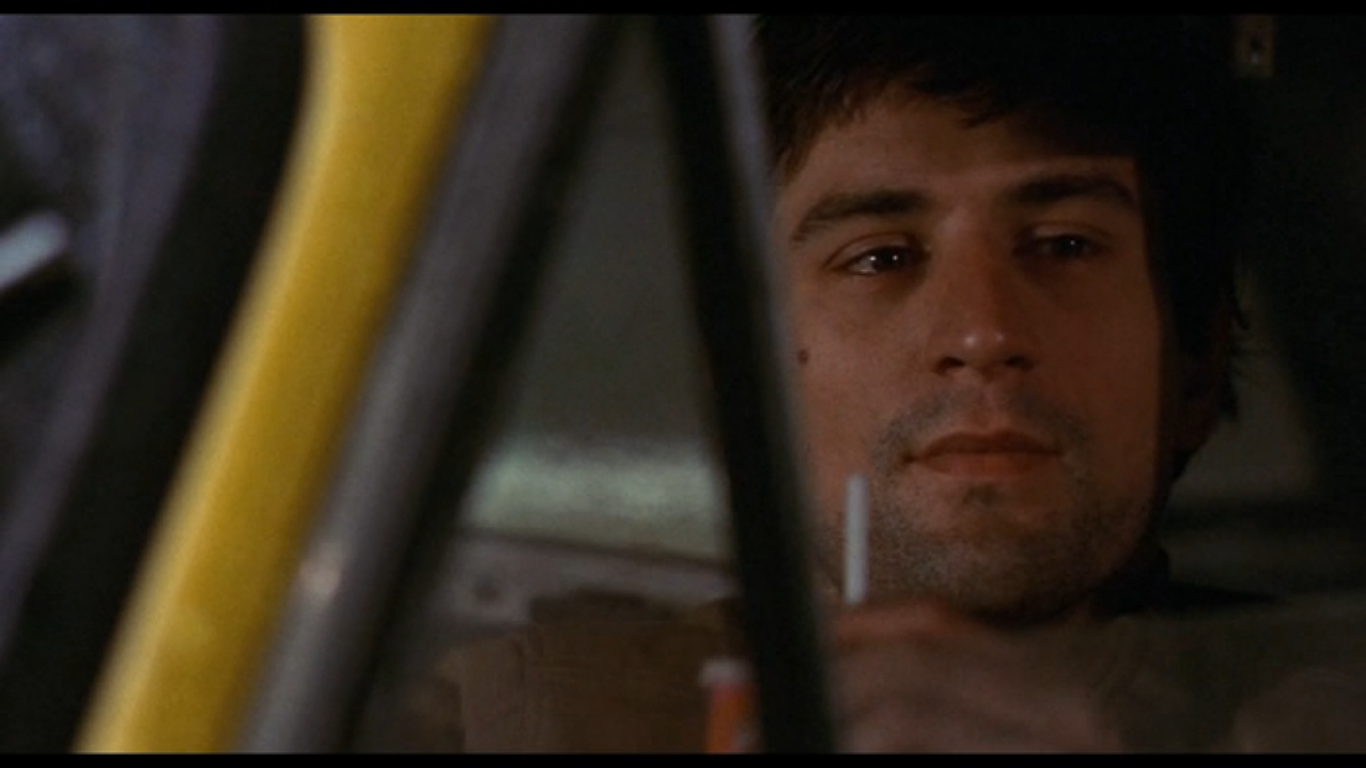
taxidriver1Well. Whatever it is, you should clean up this city here, because this city here is like an open sewer you know. It’s full of filth and scum. And sometimes I can hardly take it. ~ Robert De Niro as Travis Bickle

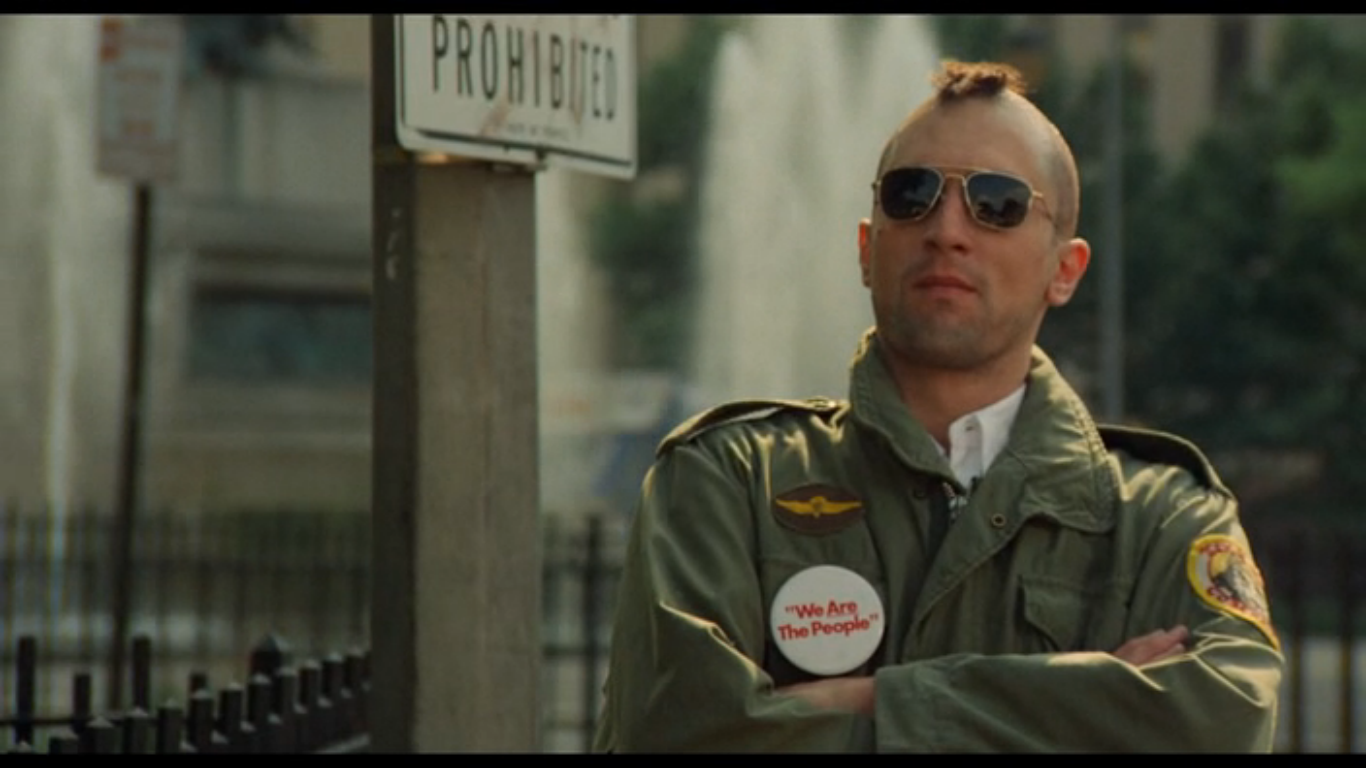
Taxi Driver‘s Travis Bickle is an American icon representing anyone and everyone who has ever felt like an outcast, outsider, or misfit. He’s the perfect embodiment of any of the angst or disgust that might surge through our veins at any given time. Except before I ever saw Martin Scorsese’s film, I always assumed him to be a thuggish villain. But his character is more complex than that. He’s far more relatable than I would have initially given him credit for.

The film actually opens feeling like the pilot of the Sitcom Taxi or something. There’s Bernard Hermann’s beautifully cool jazz-infused score and then the illuminating lights of an average New York evening. It feels strangely peaceful in spite of all that is going to go down.

Travis is an ex-Vietnam vet who takes a taxi driving job for the strangest of reasons. He just wants something that will have him working long hours and he isn’t too particular about what part of town he ends up in. From the get-go, he strikes the audience as a quiet almost silent observer of all that takes place around him on the streets every night. He’ll sit around with a couple cabbies as they chew the fat, but he’s essentially isolated — a repressed young man who doesn’t really express himself. His existence feels tragic and lonely, certainly not deadly.

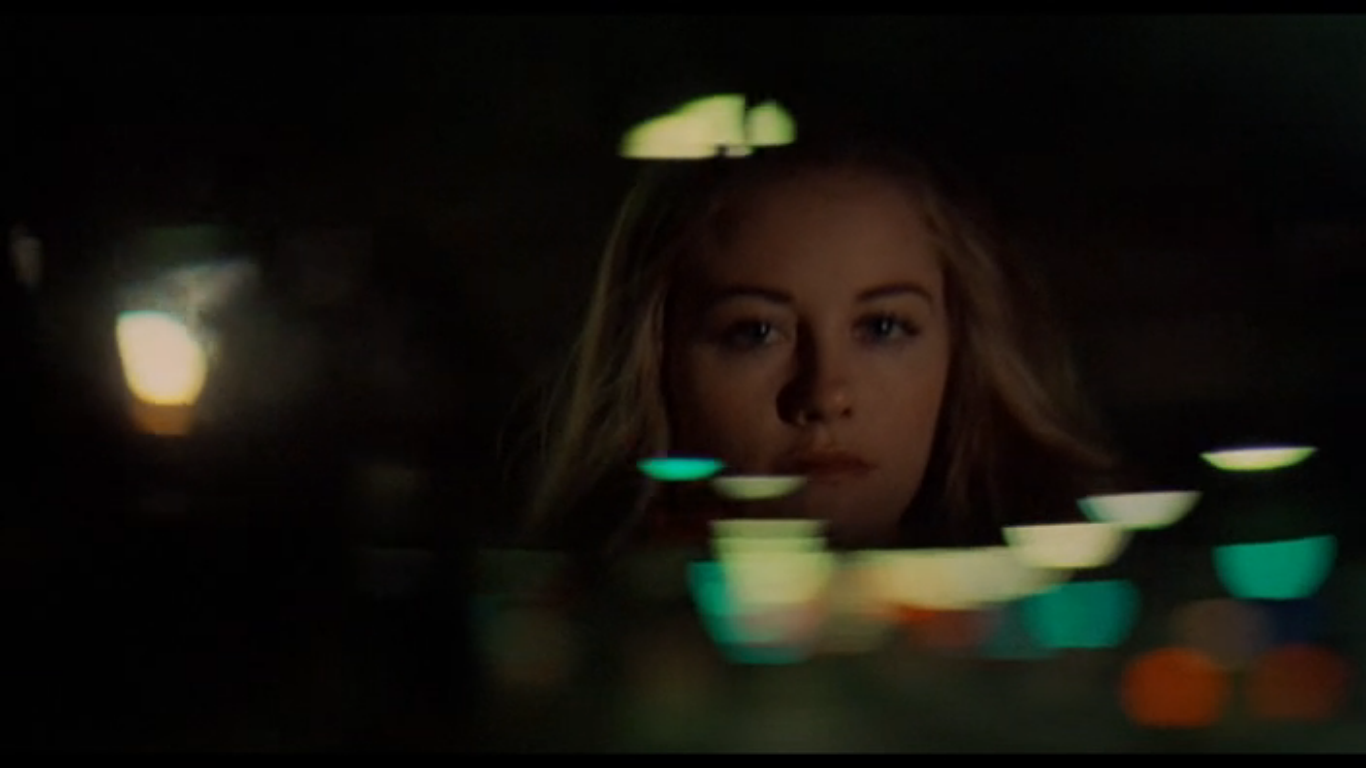
taxidriver2There is a small beacon of hope when a pretty campaign volunteer named Betsy (Cybil Sheppard) catches his eye, and he has an extremely awkward interaction with her but it lands him a date. But Travis just doesn’t quite know how to act, he hasn’t learned what it means to be in a relationship and he has an error in judgment while they are out. However, he doesn’t see it that way. He feels his attempts at kindness were completely rejected.

Then, he also begins to notice a young hooker out on the streets and his next mission is to get her away from there back home. He thinks it’s the right thing to do and he means well but young streetwise Iris (Jodie Foster) doesn’t seem to want his charity. So once again Travis seems unwanted and not needed when he is trying to do something nice.

Travis even acknowledges to his colleague Wizard that he’s getting all twisted up inside and confused. He’s distraught and he has no way to deal with it so his outlet includes a heavy strength regimen and loading up on a ton of guns. Never a good sign, but it his mind’s eye it’s all to clean up the streets of the scum of the earth.

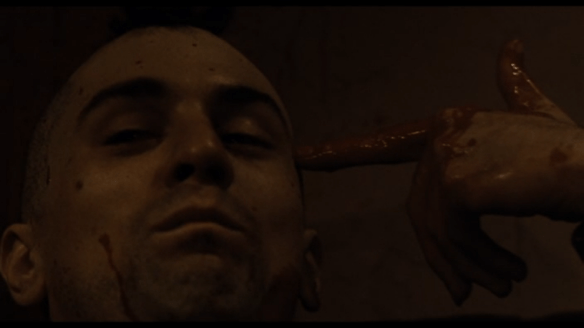
However, first he attends a rally for a presidential candidate that Betsy will be at and he has intent to cause harm, but he backs out at the last minute and goes to Plan B confronting Iris’s pimp Sport (Harvey Keitel) and shooting him. The inner demons of Travis are unleashed as he goes off, but his delusions of grandeur reassure him that this is all for Iris. This is for her good. All this bloodshed.

taxidriver4The final moments after his rampage have Travis receiving a letter from Irises parents who are grateful for his actions to save their daughter from corruption. Then, a fully recuperated Travis finds Cybil sitting in the back seat of his taxi cab in all her glory. It’s beyond his wildest dreams, which begs the question is this reality, or is this just a clever construction of his own brain? Another delusion of grandeur. It’s a wonderful open-ended finale.

Paul Schrader’s script is a wonderful character study giving introspection into one troubled man’s psyche. However, there is controversy on two fronts. It’s rumored that John Hinckley Jr. who tried to assassinate Ronald Reagan was influenced by this film and also the finale seems to reflect many people who commit mass shootings. Oftentimes they are people who are deeply troubled and are looking for some type of attention. But with that desire comes often deadly consequences.

taxidriver3Martin Scorsese’s film has also received pointed criticism for its violence which is hard to downplay. However, Taxi Driver remains interesting because it is not bloated with killing (in fact only one scene is actually bloody). Most of the film has to do with relationships or lack thereof because a lot of what Travis does is watch and listen. It might be Martin Scorsese in a cameo as a jealous husband or a presidential candidate asking Bickle’s opinion from the back seat. Furthermore, like any warm-blooded boy, he knows that Cybil Sheppard is a dream girl. And he has enough compassion to want Iris to have a normal childhood. It’s just that his conscientiousness is misdirected and subverted.
The film resigns itself to following this one man in the wasteland that is New York. It’s starkly beautiful and thought-provoking placing a troubled anti-hero in front a canvas of urban realism. I could never condone his behavior, but then again I could never be completely against him either.

4.5/5 Stars

Three Days of the Condor (1975)

Three_Days_of_the_Condor_posterIn the wake of Watergate, the 1970s saw the advent of many political thrillers with arguably the granddaddy of them all being All The President’s Men. Three Days of the Condor is another film that finds Robert Redford trying to get to the bottom of a web involving politics and intrigue. However, this film reminds me a great deal of The Parallax View which came out a couple years earlier. Similarly, this film has probably its most startling moments during its opening sequence and slowly unwinds after that into a thriller full of paranoia and uncertainty.

Sidney Pollack’s film kicks into high gear abruptly as all “Condor’s” colleagues at a CIA-backed literature research post are gunned down by unknown professional hit men. Joe Turner (Robert Redford) was literally out to lunch picking up sandwich orders, and he returns to find his colleagues dead. From that point on begins his life of constant fear, because he cannot know who is with him and who is against him. He can trust no one.

While taking a moments respite, Turner notices a patron named Kathy Hale who is about to meet her boyfriend on the slopes, and he follows her and holds her hostage so he can have a place to stay. It’s supposed to be a matter of chance, but I mean, it is Faye Dunaway so it cannot be that random right? No matter, she’s initially deathly afraid of him, and he does not give her any relief holding her at gunpoint and tying her up. They’re both afraid.

But whether it’s some form of Stockholm syndrome or the fact that she actually believes his predicament, Kathy agrees to help him, and they have the obligatory lovemaking session inter-cut with the stark pictures on her wall.

What happens after this is sometimes difficult to track with as Redford’s character begins his search for a government agent named Higgins, avoiding hit men, while trying to understand who is even after him. Why do they want him? He’s just a lowly bookworm with one cockamamie theory about the odd languages a certain thriller has been translated in.

This one idea has got him caught up in something much bigger than he can ever know involving a hired mercenary named Joubert, CIA Deputy of Operations Leonard Atwood, and oil! That’s what it was all about. That’s why 7 people died and Turner can do barely anything about it. After all, who will print his story? Who will believe him? That’s is the country and the era he lives in after all.

Redford gives an admirable performance, and I personally prefer him to Warren Beatty any day. Dunaway walked a weird line between being demure and submissive, while also dishing out some sass every once and a while. It made her character feel uneven in a sense and she came to like Turner rather abruptly. Then again it was Robert Redford.

All in all, this film’s plotting seems utterly ludicrous to me now, and it becomes more and more ambiguous by the end. It feels hardly like a conclusion at all, much like the Parallax View. And much like the other film I can understand how this story could really strike a cord, especially after Watergate, when so much governmental corruption seemed possible. The sky was the limit and so Three Days of the Condor was perhaps not as far-fetched as it initially appeared. That’s a scary thought indeed.

3.5/5 Stars

Review: Jaws (1975)

JAWS_Movie_posterAlfred Hitchcock once was quoted as saying, in typical Hitchcockian fashion, “There is no terror in the bang, only in the anticipation of it.” A young Steven Spielberg channeled this type of sentiment when he directed the smash hit and archetypal summer blockbuster Jaws in 1975. It’s still a cultural phenomenon and for good or for bad, it has forever instilled a fear of great white sharks in the general populous.

The film is a man-versus-beast type of story. It starts off on Fourth of July weekend on a New England resort town named Amity. After a girl is found the beach chewed up, it starts a frenzy. Well, not quite initially because although police chief and mainlander Martin Brody (Roy Scheider) wants to shut down the beaches, the local mayor will have nothing of it. Really, the first half of Jaws is very much political, as the mayor attempts to do anything he can to keep the masses flocking to his town because Amity gets all their revenue from the summer months. Meanwhile, Brody has the beaches monitored, but that does not stop a young boy from getting attacked. Up until now, we have only seen the handiwork of the beast, but in a brief instant we can catch a glimpse of him and it is shocking.

The vacationers flee the shoreline, and Brody is left to answer to the boy’s mother since he did not close down the beaches. She holds him responsible. However, Brody’s hands are still tied, especially when local fishermen catch another shark that they assume is the culprit that has terrorizing the town. He is met by a young marine biologist named Matt Hooper (Richard Dreyfuss), who also realizes the gravity of this shark problem. No one will take him seriously except Brody, and Hooper labels him the only other sane man on the island.

Because all the precautions that are taken cannot avoid still another shark attack from going down. And it is at this point that Brody and most certainly the Mayor, have to change things. At a tense news conference, they must walk a fine line in order to assuage the locals and the business owners. Ultimately, Brody convinces the mayor to let him go out with the salty veteran seaman named Quint (Robert Shaw) who agrees to take the shark down for a fee.

For most of us, the second half is what we all remember or at least equate with the film (probably for the iconic line, “We’re going to need a bigger boat.” It is this part of the story that breaks the adventure down to three men, our stars, going off on a mission to take on the terror of a great white (ie. “Bruce”). It feels very Captain Ahabesque, thanks to the addition of the grizzled fisherman Quint, but if he is a stabilizing force it soon becomes obvious that not even he is fully ready to take on this behemoth creature. It seems like no amount of barrels, harpoons, or even a “shark-proof” cage can humble it.

What we end with is utter destruction that spirals out of control. That’s what makes this shark such an intriguing foe because we certainly cannot really call it evil, but it certainly is an overpowering force of nature. Brody stands in for many of us who have an innate fear of the ocean and what lies underneath the surface. For all the plucky young adventurers they have a stand-in in Hooper. I am struck by how tense this film is even to this day, and Spielberg never seems to show is hand too early and he never gives us too much of the shark. Otherwise, it might look faker, and it would lose that heightened anticipation. Above all, John Williams lent a great deal of potency to Jaws, single-handedly, with his ominous score. Without his score, Jaws is nowhere as scary and certainly not as memorable.

5/5 Stars

Donkey Skin (1970)

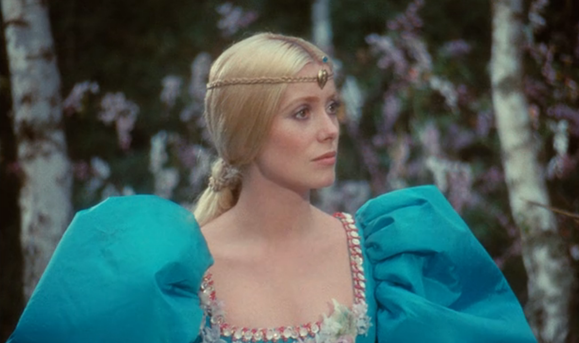
donkeyskin1Donkey Skin takes the unique world of Jacques Demy and steps it up a couple of notches. The story is based off a fairy tale and brims with all the necessary trappings accented by the French director’s own flourishes.

Once again the music is supplied by Michel Legrand and the songs are a mix of playfully fun and sometimes solemn songs that help dictate the path the story takes. As far as the tale itself goes, it revolves around a beautiful princess who sends herself into a forced exile wearing a donkey skin. It all sounds rather odd, but she is given the idea from her fairy godmother, in order to keep her father from marrying the princess.

The world is a fanciful array of gaudy fake interiors, blue people, red horses, a treasure-dropping donkey, oddly-masked creatures, a talking parrot, princesses, princes, and some rather alarming potential incest. This is no Disney endeavor by any means and its bright colors often call to mind Hippy culture.

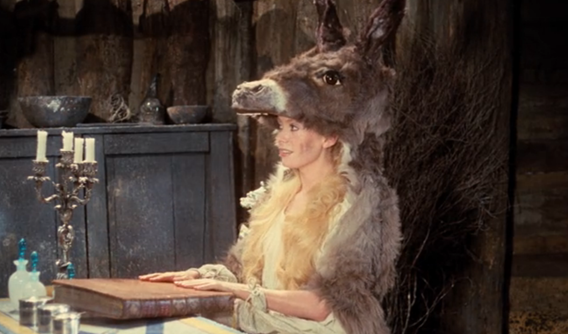
donkeyskin2Into this land, the princess flees covered in her donkey skin and takes on the lowly role of a scullery maid where she is belittled and looked down upon. However, a glum young prince happens upon her in all her beauty and wants nothing more than to marry her. In fact, he plays sick just so he can be with his gorgeous vision. Instead of Cinderella’s slipper, this story deals with a ring which is only to fit the finger of his true love. A whole to do is made out of it with people coming from far and wide. However, the prince already knows who he wishes to wear it, after all, it came in a cake that Donkey Skin baked for him.

In the end, this fairy tale receives the happy denouement that is expected with plenty of riches and love for all. The film used simple but nonetheless mesmerizing special effects that add a touch of magic to this tale. It also gets bookended by some obligatory narration concluding an enchanting fairy story fit for children, mothers, grandmas and anyone else who is willing to partake. Although not as memorable as his earlier musicals, it seems that Donkey Skin sees Jacques Demy at his fully realized creative powers in a way that is uniquely his and fits with many of the trademarks he developed earlier. Furthermore, Catherine Deneuve proved that she is beautiful even wearing a donkey skin hoodie. It’s hard to say no to a movie with her in it, no matter the topic.

3.5/5 Stars

Enter the Dragon (1973)

Starring Bruce Lee in his last major film before his death, Enter the Dragon has Lee going to a martial arts tournament on the isolated island of a former nemesis in order to infiltrate the proceedings and uncover what is really going on there. Along with Lee two other men are invited and we learn early on that they are chums and both very skilled in martial arts. 

Following the first set of bouts, the evening is extremely extravagant and each guest is treated like a king. While the other two revel in this grandeur, Lee tries to make contact with someone who was planted on the island. That same night Lee sneaks out to try and see what he can uncover with some luck. However, the next morning Han gives a stern warning to his visitors before the competition begins again. Later one man is accused of leaving his room and then Han tries to entice the other to join his operation. Lee again sneaks out and this time to messages for help but not before the alarm is sounded. 

What ensues is an epic display of martial arts mastery but Lee is finally quelled. The next morning things are looking bleak but Lee and his fellow competitor join forces against Han’s men and they eventually gain some help. This is the final showdown and while the all out fight continues Lee must chase down a fleeing Han. In a secret room of mirrors their conflict concludes but not without a great deal of devastation. 

This film is an unorthodox combination of a martial arts film and a Hollywood production. Bruce Lee is the undisputed star in an era where Asians were usually only supporting characters. For this reason as well as the action, this is a pretty good one to watch.

4/5 Stars

The Long Goodbye (1973)

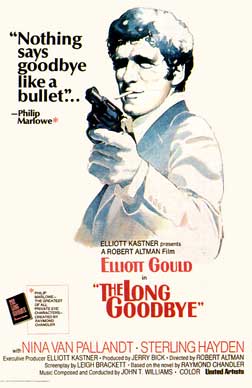
LongposterIn the storied tradition of film-noir comes another film in the canon and yet another depiction of Raymond Chandler’s Phillip Marlowe. However, the world with which Robert Altman places his private eye is far different than any place the character has ever inhabited before. Whereas another neo-noir such as Chinatown followed the storied tradition of noir in many ways, The Long Goodbye is often more of a satire than a new addition to the genre.

Elliott Gould as Phillip Marlowe has the smoking down like Bogart or Dick Powell, the garb, and even the car, but his environment is the 1970s, making him quite anachronistic, and that seems to be just fine with Altman. He subverts the genre by placing Marlowe in a world he does not seem to fit in and yet he himself does not seem to question it.

The girls next door are hardly your typical girls-next-door. The police station looks like it could be out of The Rockford Files. John Williams and Johnny Mercer’s title song pops up in all places from the elevator to the car radio. His tail Harry is an incompetent joke. Passing cars give the security guard time to practice his best movie star impressions. Marlowe as well proves he is not much of an animal guy with a cat that he loses and a dog that hates him.

The drama is not much better in that regard. Two murders take place (including the death of a friend), which are later followed by a man’s suicide and his beautiful wife fleeing the country. All the while, on the case Marlowe is scrounging around and coming up mostly empty. The cops bring him in, an unhappy thug roughs him up over some money, and he can get very little out of the drunken writer Roger Wade (Sterling Hayden) or his wife (Nina van Pallandt) before she disappears.

By now we know better than to compare this Marlowe to any predecessor. He gets smashed about by the waves trying to stop a suicide and ends up in the hospital after getting bowled over by a car. He seemingly does his best detective work in a stupor, and he somehow escapes a chilling confrontation where everyone is removing their clothes. All these scenarios make little sense and even with the twisted conclusion to the mystery, there still is no explanation for the way things are. Altman gives us a surprising end but no answers as we watch Gould dance off into the distance playing a mini harmonica. Marlowe can often be heard saying, “It’s okay with me.” It’s the story of his life and if he is fine with it, I suppose his audience will just have to accept it too, even if they do not quite like it.

4/5 Stars