 Stanley Kubrick is not generally known as a horror film director. His impact was far broader than solely one genre. How is it then that he made one of the enduring canonical films in the horror genre? It’s been over 30 years and people are still talking about The Shining — still using it in every kind of parody and homage imaginable. Like a Hitchcock or a Spielberg, he’s one of those directors with an eye for what’s thrilling as far cinema is concerned, but perhaps more so Kubrick deals in complexities. Ambiguity is his friend as much as the beautifully shot interiors of The Shining. He builds and constructs the perfect scaffold to work off of, and it’s full of tension and shock value, but it leaves the audience with questions. I watched Nosferatu recently and what I came out of it with was a conviction that it was not your typical horror film — it seems to follow you and haunt your thoughts in a sense. The Shining is a little more like a modern horror with frightening images, and yet it shares that same quality. You cannot help but ruminate over it or think about what you just saw and what it really means. Truth be told, I don’t know what to think about the cryptic ending and, in all honesty, I don’t care too much, although it makes for interesting discussion.
 This film found its source in Stephen King’s novel (which I have not read). For the life of me, I had never thought of the significance of the title, but Scatman Crother’s character explains it in the same way that his mama had before him. “Shining” is being able to talk without your mouths. The little boy Danny Torrance has such an ability, and it proves to be the entry point into this film’s conceit. Not only is he able to say things without talking, but he sees things, horrible things, that other’s cannot — rather like The Sixth Sense (1999).
His father Jack (Jack Nicholson) and mother Wendy (Shelley Duvall) take him to a Colorado mountain getaway for 5 months of isolation, because it seems like a good deal. After all, Jack wants to get some work done on his book and he could use the unbroken solitude, but of course, there’s an underlying tension that slowly builds as their time alone draws nearer. It’s done through the foreshadowing of cryptic images, violent tales of local folklore, and of course, a score that is constantly ringing in our ears. That’s the best way I can describe it. We know something is up.
So what does Room 237 mean? What about Grady and the bartender who serves Jack his drinks at the bar? They’re just as perplexing as Danny’s ability or the sudden change that seems to come over Jack. There are these perplexing moments that are difficult to account for whether it’s the initial introduction of the Chief (Scatman Crothers) and Danny, who he telepathically communicates with. Then, Jack Nicholson carries such a genial quality, and yet underlining all those Cheshire cat smiles is something deeply troubling.
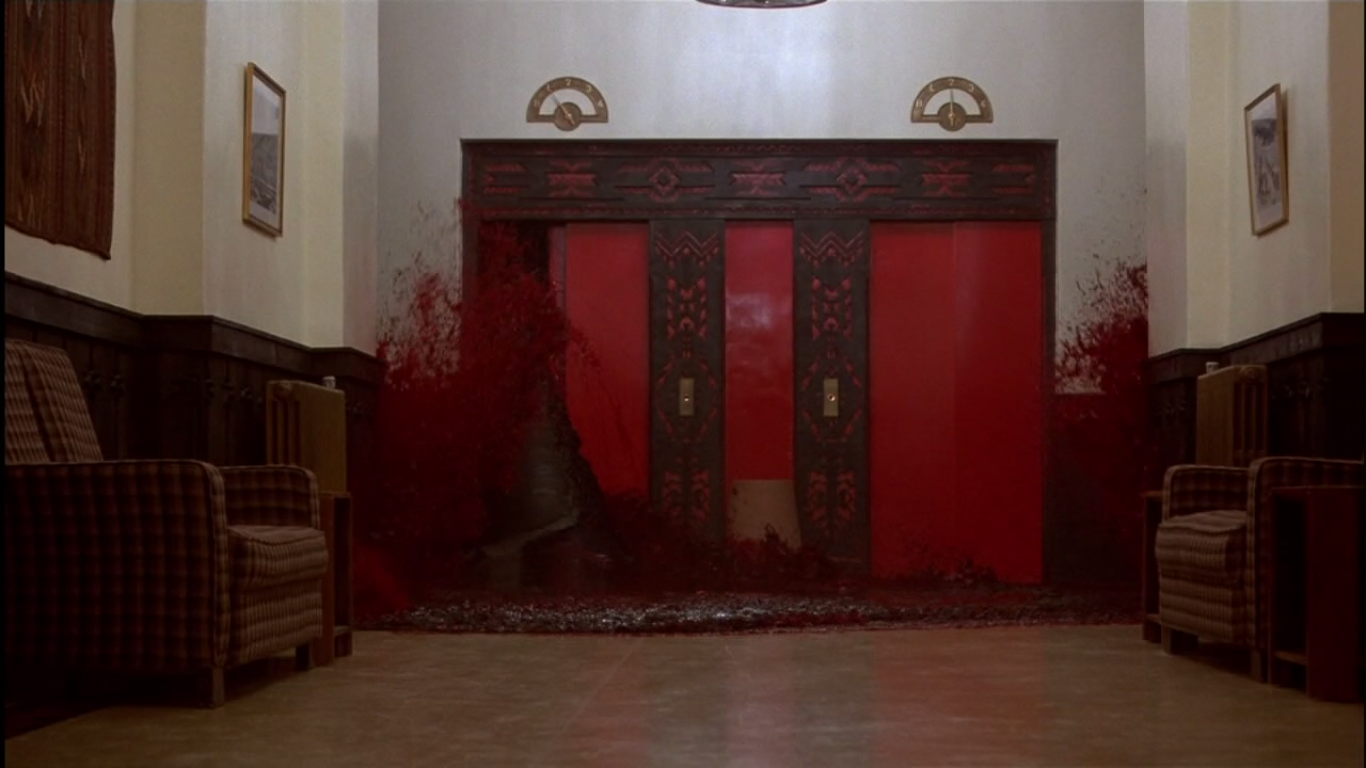 Amidst the dreams and haunting images that blur the line between fantasy and reality, past and present, there is a strange fascination that develops for The Shining. Almost a morbid fascination, because we know something is wrong, but we keep watching anyway. We want to know what happens and furthermore, Kubrick’s visuals are often mesmerizing, although they remain indoors for the most part. His camera often trailing characters as if they are prey.
He pays his audience the final respect of not giving us everything and not tying up all the loose ends. We are left with images and photos ingrained in our mind’s eyes. Admittedly, Shelley Duvall is not an actress I usually pay great attention to, and certainly, this is Nicholson’s film along with Kubrick. He was made for such a twisted, layered role, that overflows with a certain level of affability and then becomes completely psychotic. It makes him far creepier than any villain clothed in black because Jack Torrance will openly kill you with a sing-song voice. That’s pure evil.
4/5/5 Stars



 “Men and women can never really be friends”
 Now they have late night chats as they lie in bed listlessly or they grab a bite to eat at the local deli. In that perceived transitional period of loneliness, they find comfort and companionship. They discover what a platonic relationship can be without sex. Except much of their time is still spent talking about love and sex. Harry and Sally are so preoccupied with such topics they probably don’t even see what’s happening to them.
 Bob Reiner’s When Harry Met Sally… works unequivocably because, in many ways, it helped define many of the unspoken rules of the rom-com following the mold of Woody Allen’s Annie Hall. Overall, the addition of Harry Connick Jr.’s music gives the film a jazzy feel rather reminiscent of Allen’s work. In fact, it does feel like Reiner emulates Allen and in this case, mimicry is the highest form of flattery. Meanwhile, Nora Ephron’s script is often inventive, creating future cliches rather than falling into old ones. To his credit, Billy Crystal is able to play his role with sincerity and sarcasm when necessary, while Meg Ryan is full of a feisty vim and vigor in her own right.
 “Now there are just two of us – young Aubrey Montague and myself – who can close our eyes and remember those few young men with hope in our hearts and wings on our heels.” ~ Lord Lindsay
 Back in the 1920s, a brash young Abrahams (Ben Cross) is about to enter university at Cambridge intent on becoming the greatest runner in the world, and taking on all the naysayers and discrimination head-on. He’s a Jew and faces the antisemitism thrown his way with defiance and a bit of arrogance. He’s a proud young man who loves to run, but more than that he loves to win. His best friend becomes Aubrey, a good-natured chap, who willingly lends a listening ear to all of Harold’s discontent. Soon enough Abraham’s makes a name for himself by breaking a longstanding record of 700 years, at the same time gaining a friend in the sprightly Lord Lindsay. Together the trio hopes to realize their dreams of running for their country in the Paris games of 1924. They are the generation after the Great War and with them rise the hopes and dreams of all those who came before them.
 Simultaneously we are introduced to Eric Liddell (Ian Charleston) a man from a very different walk of life. He’s a Scot through and through, although he grew up in China, the son of devout Christian missionaries. Everything in his life is for the glory of God, and he is a gifted runner, but in his eyes, it’s simply a gift from God (I believe God made me for a purpose, but he also made me fast. And when I run I feel His pleasure). His sister is worried about his preoccupation with this seemingly frivolous pastime, but Eric sees a chance at the Olympics as a bigger platform – a platform to use his God-given talent to glorify his maker while living out his faith. Abrahams is a disciplined competitor and he goes so far as to bring on respected coach Sam Mussabini (Ian Holm) to help his chances. Liddell is a pure thoroughbred with life pulsing through his veins, and of course, they must face off. It’s inevitable.
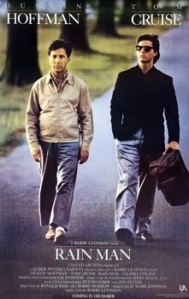 inson doesn’t have a masterpiece per se, but he has some thoroughly enjoyable films in his filmography including Diner and Good Morning Vietnam as two prime examples. Rain Man is similar in that it is an interesting film and a heartfelt film, but not, dare I say, a great film.