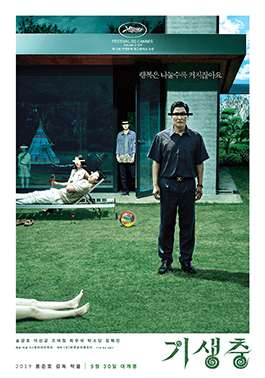
Parasite (2019): Bong Joon-ho’s Household Thriller

Parasite_(2019_film)

I heard in an interview director Bong Joon-ho had the idea for Parasite percolating in his mind for a long time, and it was born out of the most curious forms of inspiration. In college, he used to tutor English for the child of a rich family. From that point of disembarkation, he started asking “what if…” and all of a sudden his latest thriller was born.

Whether this story is completely true or not, it gets at what I relish about screenwriting and the inception of ideas in any form. Oftentimes they come straight out of real-life experiences only to be morphed and molded, burnished and extrapolated upon until they take on an existence entirely their own.

In some ways, Parasite feels very much related to the previous year’s Cannes darling Shoplifters, directed by Hirokazu Koreeda. In both cases, a story about an impoverished family becomes a handy jumping-off point for social commentary. But that’s just it. The premise provides a jumping-off point and there’s little else we can compare because the stories take drastically different turns simply adjudging from their creators.

Because the Kim family live crowded in a shoddy basement-dwelling leeching off the wi-fi of those who live around them, somewhat contented or at least resigned to their vagrant lifestyle. However, one day their teenage son, Ki-woo is enlisted by a friend to fill his position tutoring the daughter of a rich family.

His family helps him with the con using their skills of photoshop, composition, and dramaturgy to pull off the masquerade and ingratiate themselves. It helps that their mark is a simple-minded, trusting, and generally kind matriarch. There’s a touch of Luis Bunuel in the depiction of this rather naive and vacuous bourgeoisie family getting overrun by the lower classes.

And yet a distinction must be made here too because Bong does not altogether mock them. There is the inkling of affection for all his ensemble even as he teases them. This is one of the keys to the movie’s success. The message is not hammered home at the expense of the characters. 

One thing leads to another and the household vacancies begin filling up. First, an English tutor, then an art therapy instructor, next a new chauffeur, and finally a housekeeper. If the early dynamic is a tad like Shoplifters, as Parasite gears up, I couldn’t help but feel this same pervading unease experienced throughout Jordan Peele’s Get Out. While it might seem like a curious touchstone, what both films fashion are compelling thrillers carved out of the home.

The domicile and symbol of social capital, stability, even the family unit, is turned into this perturbing space that can be easily sabotaged and infested. It doesn’t matter if the main thematic element is race or class. They can both function in an insidious manner as a source of tension throughout the picture, seeping in through the cracks. Where you can live life from the heights of privilege or sunken in the subterranean void below. 

While the cat’s away the mice will play, and it’s at this point we ponder where we could possibly be headed. The Kims succeed in totally taking over the house and lounging in all its decadent luxuries. This could be the end of the story. Thankfully, we are in the hands of someone who knows full-well what they are looking to accomplish. 

Part of the ingenuity of the film comes in how form follows function in this very tangible way. Because the visual and environmental disparity trickles down through the story until it emphatically erupts. The metaphor takes on a very real and concrete form throughout the picture. But for the time being, it’s all about building the mounting suspense to a crescendo.

Bong is a disciple of Hitchcock, and thus he’s taken to heart the pervasive power of dramatic irony. He can both manipulate the audience while implicating us and making us totally invested in the charade at hand.

Though Parasite does have twists — one particularly harrowing in nature — it is built out of this maintained sense of dread and tension. It only works because the director has taken us into his confidence and we know something other characters do not.

The film is also built and developed out of not only its architecture but the sound design helping to create a distinct space and also a rhythm conducive to the action. A chaotic scramble to neutralize, not a gun, but a phone with social media capabilities is the centerpiece of one memorable scene full of struggling bodies, flailing arms, and the like, choreographed to perfection.

There are certain scenes like this one where they cease to be bits of exposition and dialogue, and they feel more and more like they’re verging on visual symphony as we watch images and actions flash by with a very particular cadence. They have the force to carry us away in the moment — cutting to the music — like many of the greats have done, from Hitchcock to Scorsese. 

When the Kim family is finally at their lowest point, sleeping on a gymnasium floor, their patriarch utters the film’s one line which feels like some kind of worldview tucked into a movie that otherwise functions only as a satire, if not an out-and-out black comedy. He says the best plan is no plan because nothing works out the way you mean for it to anyway. It doesn’t matter if you kill someone or commit treason. Nothing matters. Nihilism is alive and well.

Still, the beauty of this is even while Mr. Kim says these things, there is a director behind him — an artistic creator — who has more than a vision for where he will end up. There is a purpose to everything that is happening to him. 

If the majority of the movie is an exhibition in Hithcockian manipulation, then the ending is suitably macabre for someone totally versed in the Master of Suspense. Bong somehow manages to be playful, shocking, thrilling, and a tad somber all in the course of the final hour. The film is lengthy; we don’t always know where it will wind up, and yet it ends up in places that continually lead to further questions.  You cannot unsee it or quite forget about what we have witnessed. 

Parasite has an undisputed climax and still the story continues allowing itself to sink back into a newfound despondency and the original status quo. I still cannot decide if this suits everything we have been subjected too thus far.

Although another joy of screenwriting is narrative symmetry when we can take a movie back to where it began. Because so much has happened. We have weathered so much as an audience, watching and in some perverse way, rooting for this family, only for it to end up back the way it was, under very different circumstances.

All I know is that this is one of the most wickedly sharp and ingeniously pulse-pounding movies I’ve seen in quite some time. It irks me and yet in the same instance, I cannot quite turn away.

If there is any more fruit, broader still, it will come from the phenomenal press the film has received, and in an age where acclaim still guides public opinion, like Bong said himself, maybe this can be the film to help the general public conquer their fear of subtitles. Because if Parasite‘s any indication, it wields the power to open people up to expansive avenues of cinema. This is only the tip of the iceberg.

The joy of making the leap is the realization that you are not being pulled further away from what you know. More often than not, you’re getting closer — closer to the things that feel universal — the human predilections connecting us on an intimate scale. Both the parasitic and the hospitable, the good and the evil. 

Although they couldn’t be a more diverse company, you see it in Hitchcock (a Brit), Koreeda (a Japanese), Bunuel (a Spaniard), Bong (a South Korean), and many others. Go watch them if you have the chance. My hope is you will be glad you did. 

4.5/5 Stars

Zelig (1983) and Gordon Willis’s Mimicry of Classical Hollywood

Zeligposter.jpgI never thought I’d be saying this about a Woody Allen film, but it feels more like a technical marvel than purely a testament to story or dialogue. Although The Purple Rose of Cairo did something similarly compelling, Zelig is literally a film relying on a look that is authentic to a time period. Allen even goes so far as using old-fashioned cameras, lenses, and techniques to try and get them as close to classic filmmaking as possible.

Preceding the cutting-edge footage in Forrest Gump, we have Woody Allen as his alter ego, Leonard Zelig, being inserted in all sorts of images. It’s spliced together in such a seamless way we wonder if some scenes were simply chosen because they featured a lookalike of Allen to fit with the rest of the film.

Shot as an obvious mockumentary, which could be likened to Citizen Kane‘s News Marches On segment, one might concede Zelig is humorous in a similar vein. It’s not like Take The Money and Run (1969), Sleeper (1973), or even Annie Hall (1977), each offering genuinely zany and laugh-out-loud gags.

By playing something so ludicrously out of left field, completely straight, Allen has his comedy. He goes to the furthest extreme to make this feel like a real Ken Burns-esque documentary complete with talking heads giving their dry, poorly lit commentary from the present. They lend this credence, this seemingly real-world ethos, to something so utterly ridiculous. This juxtaposition gets at the humor precisely.

The story itself isn’t much of anything at all, loosely tied together over the course of an hour. Zelig (Woody Allen) is a generally non-descript Jewish man (Allen’s usual archetype) with a curious tendency brought on by an undying need for approval.

Dr. Eudora Fletcher (Mia Farrow) is intent on helping him and confirming her findings that he is indeed suffering from a chameleon-like disorder, causing him to transform his appearance to assimilate with whoever he’s with. It could be politically, socially occupationally, even racially, as he is found speaking Chinese and frequenting an African-American jazz club in two separate instances.

In the good doctor’s presence, he conveniently thinks he’s also a psychologist trying to do therapy with her, even having a fine approximation of the vocational jargon. But this is just a cursory sign to a much deeper-seated issue.

It turns out he’s unwittingly duped tons of people with wives married, babies delivered, and all sorts of other feats and accomplishments undertaken in different lives. He’s the most interesting man in the world who consequently has no idea about any of his accomplishments.

The laundry list of real-life icons is too delightful to pass over from F. Scott Fitzgerald, Charles Lindbergh, Al Capone, Babe Ruth, Lou Gehrig, Bobby Jones, and the list keeps on going and going. William Randolph Hearts himself (a Kane archetype) and his mistress Marion Davies show up along with Charlie Chaplin, Clara Bow, Carole Lombard, Marie Dressler and a host of others I failed to mention. You get the idea. It’s among the ranks of all these folks, Zelig was able to take on his chameleon-like personality and win their friendship.

It also occurred to me that Allen always makes his admiration for Ingmar Bergman fairly obvious. Like the other director’s films, which are always inhabited by interesting female characters, Allen settled on his own muses in Dianne Keaton and Mia Farrow. Farrow in this picture, captured completely in black and white, even gives a striking visual approximation of Liv Ullmann in Persona. I’m not sure, but it seems too close not to be an obvious nod, albeit with a typical Allen twist. The added punchline is that Farrow’s character ultimately falls for her highly neurotic patient. It’s of little surprise.

Like many of the New York-based auteur’s work, Zelig doesn’t leave me with any nuggets I want to hold onto. Conceptually, it’s somewhat arresting and the execution is phenomenal. I can understand with all the credits to his name why Gordon Willis might have considered this to be one of the most difficult he ever undertook.

If I were the director of photography, I would want to pull my hair out too. But his work and attention to authenticity is probably the greatest takeaway from Zelig. Modern films pale in comparison when it comes to mimicking the past. There’s little to no contest. If nothing else, Zelig stands as the crown jewel of Classical Hollywood mimesis.

3.5/5 Stars

Note from September 2018: I did not address the allegations to Allen in this review, but I must acknowledge they now linger over any film of his we watch, especially those seen in retrospect. It’s a topic I do not know enough about, and I do not feel privy to the conversation, so I will leave it to others at the moment.

Slacker (1991): Richard Linklater’s Ultimate Independent Film

Slackerposter.jpgKudos must be extended to Richard Linklater for actually being proactive and going out to shoot the movie countless of us have doubtlessly tossed around in our mind’s eye. Taking our town — the places we know intimately — and building a portmanteau out of it with a group of friends.

There’s nothing flashy or that original about this universal concept per se, but it always strikes one as more than just a straightforward story. There is a bit of artistry to its execution, while still functioning on the most shoestring of budgets.

Even one of my favorite bands in high school, Reliant K made their own rendition involving a soccer ball. But again, Linklater has time and history on his side, because he was the one who actually got it made. Few others would have the wherewithal to get it off the drawing board.

What’s more, Slacker actually has some genuine life to it by capturing a very specific subculture and locale like a time capsule of 1990s Austin, Texas. It takes pieces of the world he knows and promotes them to a wider audience, which is one of the cool perks of cinema. It’s able to take a localized image and globalize it, despite how humble the reach might have been, to begin with.

Better yet, the up-and-coming director dares to open the picture with his own monologue, musing about his dreams and alternate realities to his uninterested taxi driver. He teases a hypothetical scenario where he was invited into a beautiful girl’s hotel room just for standing at the bus stop. He matter-of-factly curses to himself that he should have stayed behind, before picking up his bags to go, effectively choosing a different fate.

From thenceforward, the camera is on the move as well. Because this isolated sequence is only one among a whole bunch of other asides helping to predict the conversing integral to The Before Trilogy or even a more communal vision like Dazed and Confused. Though the characters nor the dialogue builds that same type of rapport with the audience, one could easily argue they are not supposed to.

This is a near stream-of-consciousness exercise with the camera following its whims, roving around, and taking an almost bipolar interest in everything. You get the sense Linklater knew full-well what he wanted to capture; still, he makes it look organic. There’s this constant mixture of intellectualization and socializing going on.

A mother is run over by a car. A husker sings his tune on a street corner. People run into each other serendipitously. Handheld walk-and-talk scenarios make the action simple and fast.

Some of the characters are definitely “whack,” but that’s all part of the fun. The dialogue grabs hold of any weird quirk or a bit of oddness it can from conspiracy theories, aliens, television, the JFK assassination, anarchy, literally anything at all.

This one is an important landmark of indie filmmaking right up there with Cassavetes works or Soderbergh’s Sex, Lies, and Videotape (1989), paving the way for everything from Clerks to the wave of indies that came to fruition in the mid-90s and early 2000s.

While I don’t find it quite compelling in this given era, there’s no way to underplay what it means for movies. Many are indebted to Linklater, and the beauty is that the director is still churning out quality work, both personal and commercial.

In fact, I’m a little in awe of him, because it seems like he’s constantly managing to make the projects he wants. He will not give up on his own artistic aspirations. In the age of the blockbuster, those are admirable motivations.

3/5 Stars

Yesterday (2019): How I Longed for a Bit More

Yesterday_(2019_poster)The majority of movies have to fight to earn our allegiance. However, Yesterday really does have a foolproof premise because, from the outset, it can bank on a viewership who will already have memories crowded with the Beatles and as the Fab Four play a key role in the story, you already have a huge cross-section of humanity as a potential fanbase.

Then, for good measure, you have Ed Sheeran for any of the younger folks who might not be old enough to remember the good old days. If its goal was to come out a little better than even, it would almost be there before the movie began. Although this might be too cynical an outlook for such a delightfully sentimental endeavor like this, and Sheeran is actually quite likable having a go at playing himself.

Regardless, Yesterday is the definition of a high concept storyline. Imagine something like this. You woke up tomorrow, after a freak of nature, and you were the only person in the world who knew The Beatles. All credibility aside, it does tickle one’s fancy and Danny Boyle and Richard Curtis work accordingly during some of the movie’s best bits.

There are endless possibilities to explore including other pop cultural staples also getting disrupted in a similar vein. The film chooses a few that feel completely arbitrary but no less enjoyable: cigarettes, Coca Cola, Oasis, and you guessed it, Harry Potter.

The other component a Beatles saturated audience will appreciate is Jack Malik’s (Himesh Patel) daily struggles to drum up all the lyrics to tunes like “Eleanor Rigby.” Because, of course, he doesn’t have the safety net of the internet to help him recall “she was picking up rice in the church” or that “Father McKenzie was “darning his socks in a night where there’s nobody there.” He must go at it — quite comically — by trial and error.

In this way, Yesterday manages to touch the surface of its potential though it admittedly doesn’t feel complete — at least in a satisfying manner. Granted, I only feel an obligation to point this out since it proves such an agreeable film, directed by a veteran like Danny Boyle, that also happens to be bolstered by the catalog of the greatest band of all-time.

Richard Curtis remains the great British romantic, and we see this throughout the movie. It always seems to be his greatest asset and also his major undoing. In his favor, Patel and Lily James have an unadorned if altogether amiable chemistry. There’s little legwork to get us to like them, and so we can cheer for them unabashedly.

We can say much the same about their peanut gallery (including Sheeran), although there are a few misses. Their roadie Rocky ups the oddball quota as the dysfunctional sidekick while Kate McKinnon, a particularly irksome American road manager, feels like less of a much-needed antagonist and more of a pale imitation to lampoon a self-possessed music industry.

The core romance is a crucial piece, but it felt like it might have come off more substantially had there been more supplementary elements. I can think of a couple areas going beyond simply playing with the new reality more extensively. Themes of fame, art, and authorship in a generation drunk on social media, 15 minutes of fame, and remixes also come to mind. We start to see how it impacts Jack, but it never feels like it gets to its fully-realized potential.

The closest I can come to explaining it is the fact Yesterday never earns its Groundhog Day finale. Because, like Phill Connors, Jack is given an extraordinary power — in this case the Beatles’ catalog — but it never feels like he reaches the same depths of despair before he is granted his revelation and the love of his life.

It feels like Yesterday takes liberties or short cuts with its story, since it thinks we already understand, and instead of wanting it to go anywhere more challenging, we’re here for the music (which isn’t entirely false).

Whereas Jack is only one individual, what made the Beatles was the fact there were four of them. He sings the whole catalog and yet they belong to this group who rode the wave of Beatlemania, fame, critical success, and impending discontentment together.

Malik does get a brief moment with two people who at least share the same knowledge he has and yet in all other regards, he’s by himself as a singer-songwriter. We never really comprehend what one would imagine is the sheer debilitating weight of loneliness in its full force.

I am intrigued by Jack Barth’s original story and where it might have taken the conceit. Logistics or licensing aside, what if Paul McCartney and Ringo Starr actually did come out of the woodwork to oust the imposter (instead of merely being teased in the James Corden dream sequence).

What if the two Beatles fan who actually did still remember the old songs came not bearing olive branches in the form of a yellow submarine, but some malicious intent? It’s not much and yet would it have at least given Jack more hurtles to work past?

As is, a lot of the movie feels like clip shows featuring montages played to iconic tracks. It’s easy enough to get away with it because the songs are beautiful, Patel is charismatic and a fine vocalist and nothing else ever ruins the mood.

SPOILER ALERT: What could be better than bringing John Lennon back from the dead to share a bit of sage advice to the pilgriming stranger he doesn’t know? He feels like a wonderfully insignificant man of 78 living a peaceful life of contented solitude. It’s another agreeable invention.

And yet, if I’m honest, I’d rather listen to McCartney’s own remembrance “Here Today.” Then, instead of seeing Jack go gallivanting around Liverpool for inspiration or trying to fake to Ed how he was inspired to write “Hey Jude,” I’d rather see Paul return to his roots with James Corden in Car Pool Karaoke.

That’s it isn’t it? The Beatles are so much about context and what we bring to them. In one way, Yesterday works so well because even the titular track allows us to wax nostalgic by tapping into what we carry with us.

But it can’t quite get us over the hump, because it is an imitation; it is not the real thing, and part of what makes these songs great is where they come from and the lads who brought them into the world. Their fingerprints are all over every one and so history is not some plug-and-chug phenomenon where any four fellows could have been stuck together to become the Beatles.

Jack realizes something along these lines, which is part of the reason he makes the final decision he does — to crowdsource them, in a sense. But for the sake of the movie, there’s nothing to be done about it. We’ve spent the entire film listening to a stand-in, though the love story does leave us some breadcrumbs to pick up and feel warm and fuzzy about.

It was partially a joke when I told myself the end credits were the best part, but I got to listen to the real “Hey Jude” for seven glorious minutes. There’s nothing that can beat that. If you’re a Beatles fan with a generous streak Yesterday might very well be an unmitigated delight. There’s a lot to like. Whether it’s entirely greedy or not, I found myself wanting a bit more.

3/5 Stars

Love in The Afternoon (1957): The Wilder Touch

220px-Love_in_the_afternoon_(1957)_-_movie_poster.jpgBilly Wilder, more than any screenwriter I’ve ever known, has a knack for voiceover narration. What other novices consider a crutch to feed us information, he uses as an asset to set tone, story, and location, while offsetting the image with the spoken word.

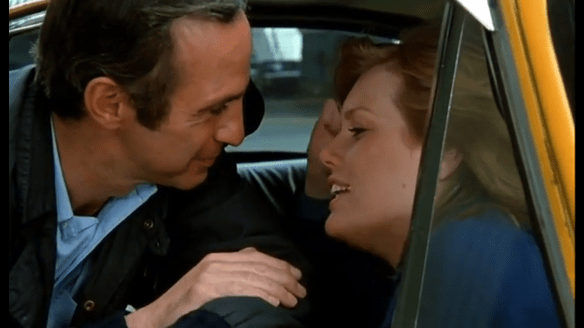
Take the beginning of Love in The Afternoon, for instance. The voice is unmistakable. The place too. The tone, typical Wilder. We are given a tour of the Left Bank, The Right Bank, and in the in-between, where men and women can be seen in the throes of “amour,” as it were.

The presence of Maurice Chevalier is unquestionably a nod to Wilder’s hero Ernst Lubitsch who utilized the dashing Frenchmen in many of his most successful operettas. Now, although graduating to a more mature part, he nevertheless maintains a similar persona. He is suave, charming, and still embroiled in romantic trysts, albeit on the outside looking in, literally — as a highly adept private investigator.

Already in the opening sequence, although this might be the closest Wilder ever got to his idol in content, it becomes obvious their definitive styles could not be more diametrically opposed. “The Lubitsch Touch” was very much trying to put a name to an impeccable sense of visualizing comic situations with a kind of shorthand, provided the audience is in on the joke as well. Not that Lubitsch’s work with screenwriter Samson Raphaelson lacked verbal wit or that the younger filmmaker’s oeuvre lacked visual flair. Far from it.

However, Wilder’s style is predominantly devoted to the written word, imbuing the comic situations with a bite and wittiness, which under other circumstances might be stale. The beauty is one approach is not inherently better than the other and as time has been fairly good to both men, it’s needless to pick favorites (though I do love Wilder).

John McGiver, by all accounts, is in his debut, but he’s got the flustered British husband down, fully intent on finishing off his rival who has stolen away his wife from him. He called on the services of Claude Chavasse (Chevalier), and the man’s almost too successful.

Legendary international playboy extraordinaire Frank Flannagan (Gary Cooper) almost ends up shot to bits, if not for Chavasse’s own daughter. His pride and joy, Arianne (Audrey Hepburn), is currently attending a music conservatory, and her father has kept her shielded from his sordid work life. This has hardly kept her from sneaking into his files and being enraptured by the romantic trysts and fairytale romances found within his records.

The cream of the crop is Flannagan who is experienced in the ways of the world and romancing — an attractive existence she can only dream of. It tickles her fancy and so she goes to save him. It’s her good deed, to allow his life to continue as is.

One invaluable component of his seduction is the four-piece ensemble “The Gypsies” and their tune “Fascination” becomes a bit of a code word for the certain je ne sais quoi that happens between two people caught up in passion.

Billy Wilder has an equally astute ability in using music to punctuate his comedy through frenzied strings, featured in everything from Love in The Afternoon to Some Like it Hot and One, Two, Three. If those tactics don’t quite pan out, he inserts a handy bit of Americana like Mickey Mantle’s batting average.

The greatest development in this rom-com occurs when Flannagan finds himself enthralled by the peculiar girl who wound up on his balcony and saved his neck. She is so sensitive, a wisp of a girl, so different than the women he has known before. He also knows very little about her but desires to entertain her along with his other conquests.

Not to be outdone, Ariane strives to play a part worthy of his reputation. She takes on the facade of a femme fatale with rows of lovers of her own to rattle off in her dictaphone for his bemusement — completely turning the tables on him. Truthfully, she couldn’t be more in love with him, but she suspects a man of his reputation is not quick to change his womanizing ways.

Before getting to the goods, it seems necessary to mention the elephant in the room. Gary Cooper was about 56 years old when this picture came out, and Audrey Hepburn was 28. Just looking at the numbers makes one cringe a bit, and the most uncomfortable thing is how it shows up onscreen.

I do adore Audrey Hepburn. She’s so innocently sweet with the same demure eloquence and pristine diction exhibited in every one of her pictures. Crawling around in her elegant attire looking for her lost shoe is as endearing as any moment she has. It makes us appreciate her all the more. Because she is so very lovable.  And Gary Cooper is usually fine — everyone knows him as the 20th-century representation of All-American manhood — but together it does feel a bit stiff and uninspired.

Our star does his best but he was never a romantic comedy lead in the manner Cary Grant was. There you have part of his problem. Because even the two Lubitsch comedies he appeared in — Design for Living and Bluebeard’s Eighth Wife — were hardly the preeminent offerings from either man.

In some cases, one plus one does not always add up sufficiently. Although it’s the greats who often transcend such equations to give us something of exponential worth. Unfortunately, Cooper plus Hepburn is fine but never enters any purely magical, uncharted territory. Like she did with Gregory Peck or maybe even Cary Grant. It’s not simply a matter of the uncomfortable age discrepancies. It has to do with out and out compatibility.

There is another major qualm too. Namely the mammoth length of the narrative seemingly dragging leaden in the middle. Because it relies on the chemistry of our leads more than any other element or supporting character, the subsequent weaknesses become all the more evident.

However, you might remember a few years after starring with Audrey Hepburn, Cary Grant had one of his first non-romantic rolls playing matchmaker in Walk, Don’t Run. Maybe it’s a thankless job, but without the piece (seen also from Charles Coburn on occasion) you would not have the glue to hold the movie together. Here Maurice Chevalier swoops in lithely again to bring the story to its closure.

He puts the ball in Cooper’s court, to evoke an American sporting metaphor, giving the man his daughter is in love with the license to play with the dramatic irony. Their relationship is only resolved in the last possible moment. In the nick of time, Frank Flannagan saves his reputation — maybe he’s not a bad sort after all — though the final kiss is still a bit disconcerting. (What I wouldn’t give for Jack Lemmon right about now.)

We can concede Love in The Afternoon comes in for a final landing tying everything together along those two lines, with the Parisian passion shrouded by the Wilder malaise and yet supplied a touch of tearful sentimentality. In the end, Ariane and Frank spend a life sentence together of the best sort. If you’ve been in love you know what it’s like. You don’t need this movie to show you.

3.5/5 Stars

They All Laughed (1980): Peter Bogdanovich’s Melancholy Screwball

they all laughed 2.png

A version of this review was published over at Film Inquiry.

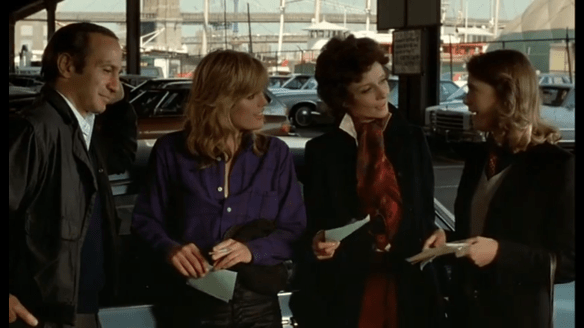
I recently watched an interview between Peter Bogdanovich and Wes Anderson reminiscing about the film. One of the most striking suggestions is the inferred sadness in “They All Laughed.” It takes its title from a song but while we think of laughing as an action full of joy, the past tense of the word sets it off. It is something transient — bound to change at any time. Unwittingly it becomes the perfect encapsulation of this most intimate project.

To describe it as a private investigator infused screwball romance is merely confining it to typical genre fare. Realistically, it is none of the above. At least not in the sense we might expect.

We have to play catch up with most of the story although we do settle in eventually. What helps are not only the characters but the actors themselves who are of a generally affable breed. We like getting to know them even when we don’t quite grasp their circumstances.

Also lets clear this up. This is not What’s Up, Doc? (1972). It’s lacking all the goofy witticisms of screenwriter Buck Henry or the wonderfully epic set pieces. Many have probably written it off because of this; furthermore, it was not very commercially successful upon its initial release (this must come with an asterisk).

However, They All Laughed is a surprisingly good-natured effort and some of the same cadence can be found, especially in Charles (John Ritter) and Christy’s (Coleen Camp) conversations, mirroring Howard and Eunice from the earlier picture. Names are swapped with every other sentence while their patter is frantic and harried in a similar manner.

they all laughed 7.png

Is it wrong to see a bit of Robert Altman’s Nashville (1975) in between the lines as well? Perhaps it’s the obvious strain of country music that cuts through the New York scene, of all places. If anything, it is a condensed version of the former film shot on the streets of New York with a skeleton crew and fewer actors. The same fresh near-improvisational feel is present with interweaving narratives.

Camp probably gets her best scenes not with dialogue but when she’s singing and simultaneously giving people wandering by an evil eye or a wink of acknowledgment. Like The Last Picture Show, we have another musical collage of classics composed of Jazz tunes of Benny Goodman, Louis Armstrong, and Sinatra with the more earthy diction of Johnny Cash and Waylon Jennings. It just works.

It’s not executed in the same fashion as Nashville, with fewer moving parts and lacking the same brand of weighty commentary underneath the humor but nevertheless, there’s something here. It’s memorable just for the characters and moments and themes of love Bogdanovich seems to be having a grand old time playing around with.

The relatively plotless meanderings might test the patience of some viewers, but if your itching for authentic views of New York and a handful of hi-jinks and neurotic characterizations, you will get some.

Ben Gazzara is the quintessential dashing philanderer who holds something quietly mischievous in his eyes while still providing a sense of regret. He has two young girls from his first marriage and rarely sees them. We understand the scenario.

they all laughed 8.png

John Ritter exerts his comedic chops as a gutless private eye on a tail. From a purely visual likeness, he can easily be seen as a stand-in for our director who was himself in love with Dorothy Stratten. Like Antoine Doinel’s attempts at private-eyeing, he seems like a hopeless case, but once again, the film is hardly about his day job. Nor is it about Gazzara, another P.I., or their partner in crime, the frizzy-haired, roller skating, joint -smoking pick-up artist Arthur (Blaine Novak).

It’s all merely a pitch-perfect excuse to further complicate the scenario by throwing all sorts of situations together. And if there are glimpses of Doinel in Ritter, by transitive property there must be Tati-like scenarios as well, not least among them positioning the viewers on the outside looking in at apartment buildings seemingly made entirely of glass.

Like the worlds of these French filmmakers (Jacques Demy included), the version of New York depicted here verges on the most agreeable of romantic fantasies where relationships are forged in meaningful even momentary encounters. There is a sense of preordained fate wafting through the air even as a wistful malaise lingers too.

Dorothy Stratten manages to be an ethereal beauty of simultaneous youth and maturity. Bogdanovich’s obvious affection for her is on display in every scene she is in front of the camera.  Meanwhile, Patti Hansen — Mrs. Keith Richards — has a part to play as “Sam” the cabbie, which is no less charming. It does appear as the world is made up of attractive women although she is someone with a different type of experience. She’s been around and you cannot phase her. There’s something simultaneously charming and disarming about her self-assured confidence.

they all laughed 3.png

But, of course, I must save the best (subjectively speaking) for last — it’s time to talk about Audrey — who gets top billing, understandably so. Though I barely recognized her at first behind her shades, she still maintains the same congenial elegance, even in eighties attire. If anything she’s more grounded. Somehow she almost doesn’t belong but she didn’t belong in Breakfast at Tiffany’s (1961) either and yet her warmth made the movie special.

In fact, it struck me momentarily, this picture is a full 20 years after Tiffany’s and New York, while it has evolved, still holds a nostalgia about it. Because looking back in time with rose-colored glasses, we cannot help seeing it in such a light — not like the grungy, noisy dump of the here and now.

With every one of these characters, there manages to be utterly transparent shades of reality. The details are there if you’re willing to look at them in the most personal light possible. It’s a prime case of when real life seeps into fiction and they feed into each other in a continuous loop. Where one ends the other seems to begin and vice versa.

Take each character and examine their reality and see what sings with the sound of truth. I think Bogdanovich would heartily acknowledge the best films and the best actors are in some way, shape, and form audaciously personal — in this way, they bear something and offer it to the audience.

But even in its themes of infidelity, heartache, and loneliness, They All Laughed somehow manages to cling to the humor found in its title. There is a pervasive conviviality that might feel counter-intuitive to both our plot and the location our story takes place. But it’s indisputably light.

Due to a lack of commercial success — Bogdanovich tried his luck distributing the film himself unsuccessfully — They All Laughed is considered to be one of the ending markers of The New Hollywood Era instigated by a generation of dynamic, young American directors. No one can completely blame him for his decision as he was stricken with immense grief at the time. Because of course, the aftermath of such a warm picture was marred with a tragedy of the worst kind — the murder of rising talent Dorothy Stratten. It proved to be the darkest possible closing note on this story.

Then, for New York a full 20 years after this film came out, The Twin Towers (visible in the opening credits) would be gone. There is so much suffering visible and yet invisible at the same time. Because They All Laughed is a film managing to capture a happy time even if a sobering road was waiting up ahead. Sometimes we need light, frothy movies to remind us of such things.

they all laughed 6

When Peter Bogdanovich revisited the film at a public screening, he was openly emotional to the point tearing up. One can gather it was not simply because of the pain at the loss of someone dear to him, but also because those were happier, dare we say more innocent years. We can never have them back as they were before. Still, no one can take away the memories.

For others on the outside looking in, The Last Picture Show, Paper Moon, or even What’s Up, Doc? might ring of superior film stock but it’s not too difficult to understand Bogdanovich’s own sentiments. This is about as personal as a movie can come even as its weaved into a hybrid private eye screwball tale. It’s not the content speaking, but the moments and happy accidents with friends and people he deeply cherished.

This palpable exuberance exuded by the director and his cast is infectious if also a bit doleful. Bittersweetness has to be one of the most maddening of human emotions. It points to something not yet satiated within us. We are always waiting for the next time we will laugh again or better yet when we never stop laughing.  The tears won’t hurt as much then.

4/5 Stars

San Diego, I Love You (1944): Featuring Buster Keaton

12362-san-diego-i-love-you.jpgI came to this movie because it has San Diego in the title: my home away from home for some time. Taking stock of its assets is simple enough. It’s a B-grade film set during the War Years housing crisis. Judging by film output at the time like More The Merrier (1943) and Standing Room Only (1944), it seemed a very popular subject matter. But also crucial to this plot is the invention of a special one-man life raft. All the immediate details are of lesser concern.

It’s all an excuse for the “McCooley Republic” made up of patriarch Phillip (Edward Everett Horton), his eldest daughter Virginia (Louise Albritton), and four young boys, to travel down south toward the border. They pick up and leave behind pop’s monotonous job teaching the classics as a high school teacher in quaint Waterville, CA.

Spurred on by the prodding of his daughter, they look to get Phillip’s piece of ingenuity to the bigwigs in San Diego to see if they can land funding. One never knows what might be beneficial to the war effort (Hedy Lamarr and George Antheil’s Frequency Hopping anyone?).

What a lovely surprise we get not only Everett Everett Horton but also the ever huffy Eric Blore as Nelson the perpetually fired valet who is always left whimpering pitifully. Even “The Great Stone Face” himself turns in an extended cameo as a disgruntled bus driver who decides to break with the daily grind. Buster Keaton may have never reached the same apex of the 1920s, but it is unfair to say the rest of his career was pointless. He has a couple minutes of fun to offer us here driving his bus off-grid along the beach.

These are a few of the true nuggets of this picture, an obvious forerunner to many a run-of-the-mill TV sitcoms a generation later. What set many of those apart were not simply the situations but the casts they were able to wrangle together. Our romantic leads, by most accounts, are forgotten today. Louise Albritton is another perky girl-next-door for wartime audiences like a Betty Hutton (Miracle of Morgan’s Creek), Gale Storm (It Happened on Fifth Ave), or Jeanne Crain (Apartment for Peggy). Likewise, John Hall has a modicum amount of fame playing opposite Maria Montez in a string of exotic extravaganzas.

But the aforementioned veteran characters are enough to whet my appetite well nigh 10 years after their greatest screwball successes. The chance to see some dated footage of San Diego — a la Some Like It Hot (1959) — had me on the edge of my seat but alas, from what can be gleaned, most of the shots are on a studio backlot. Still, there are a few stray mentions of Balboa Park and sailing a raft to Point Loma and some scenes set at the San Diego Zoo. I guess I’ll have to be content with that.

3/5 Stars

Design For Living (1933): An Atypical Lubitsch Comedy

design for living 2.png

“Immorality may be fun but it’s not fun enough to take the place of virtue and three square meals a day.” 

All director Ernst Lubitsch has at his disposal is a train compartment and three actors. Yet the opening scene of Design for Living positions itself as one of the most delightful moments in this entire picture. It’s a pure testament to bold visual filmmaking with nary a word spoken for at least 4 or 5 minutes. Few modern filmmakers would have the gumption to attempt it.

Lubitsch knows exactly what to do with such situations, and he was bred not only in sophistication but silent comedy. Because you see, the ultimate joke is when they actually start conversing with one another these three very familiar faces open their mouths and French comes out (Gary Cooper apparently was fluent).

Simultaneously, the director has also set up the relational dynamic of the film without a peep of dialogue. It really is a superb opener. However, this opening scene is almost too delectable for its own good. The film cannot possibly sustain such a  level of perfection. But more on that later.

When the three expatriates finally switch over to their native tongue, we have an uproarious discussion on art versus commercialism, Napoleon wearing a coat, and Lady Godiva riding a bicycle. Don’t ask for any explanation. In the parry and thrust of their conversation, we find out one is a painter (Cooper), the other is a playwright (Fredric March), and both are failures for the time being.

We are instantly reminded by a certain level of sauciness this is the Pre-Code era, though we are on the cusp of harsher censoring to come. For now, the picture is able to nonchalantly hang its hat on a central plot point involving our leading lady (Miriam Hopkins) and her two men embroiled in a menage a trois — a so-called “Gentlemen’s Agreement.” Her conundrum is very male and libertine in nature. She has different men to try and she likens them to hats she wants to put on.

Yes, there is innuendo and some contemporary audiences might have shuddered at the admission they mention the word “sex” out loud on multiple occasions. And yet none of this titillating attraction speaks to much of the underlying allure of this picture.

design for living 3.png

Look at who we have assembled on top of the acting talent. It sounds too good to be true. If the name Noel Coward doesn’t carry emphatic weight in your life, you might as well cross it out and consider this a Ben Hecht picture. He was, of course, one of the great purveyors of Americana through aphorisms and pervasive wit.

He famously scrapped all of Coward’s play aside from a single line of dialogue. Leaving a mark on the material in a way that was far more suitable to not only Lubitsch but an American audience.

All the gloriously tantalizing pieces are in place but the question remains, Is comedic cohesion possible? Understandably, Hopkins and Edward Everett Horton take up their allotted positions with ease invariably suiting them. Though their own personas aren’t on par with Chevalier or Herbert Marshall, the two American lads do their darnedest. The fact Cooper always feels so awkward in comedy somehow even plays a bit to his favor.

Unfortunately, it just doesn’t take. Again, we are putting it up rather unfairly against the likes of Trouble in Paradise or even The Smiling Lieutenant. Those are high benchmarks indeed. Put simply, the buoyancy is not there frequently enough.

Instead, we have a residual wistful melancholy that feels atypical for your usual Lubitsch drawing-room comedy. Cooper and March become a pair of “Gloomy Gusses” as Hopkins winds up marrying Horton to save them all grief. Even before that, the trio has their share of disagreements simply sorting out their inevitably complicated relationship.

If anything, it suggests in more rational terms that such an existence, as bohemian and open-minded as it may be, also becomes one of the most emotionally taxing. Not to mention relationally murky. In real life that is.

But when you expect something effervescent and gay, Design for Living is a bit of a letdown as a movie. After such a strong charge out of the starting gates, the storyline feels wanting in the middle, sluggishly rolling into the final act. One could wager whether or not plucking more out of Coward’s play might have been the most prudent choice. It’s possible it might have made the setup even droller. I can’t say.

Then again, maybe my own comic proclivities range toward screwball and the overtly visual far too much. It is true it often takes finer sensibilities to appreciate ironies and an astute sense of perception to read between the lines. An appreciation for wit and not solely physical comedy is key.

At least in my estimation, the movie is aided by a final party crashing in an attempt to get their girl. These bookends at the front and back half of the picture are vitalized by our stars being brought together. In such close quarters, there’s this inherent possibility for inspiration.

Lubitsch or not, if you have Gary Cooper, Miriam Hopkins, Fredric March, and Edward Everett Horton together in a room, it’s infinitely better than watching grass grow. The same might be said of Design for Living because if it speaks to anything, the final notes impart a lightness of camaraderie and lithe romance rather than any morose confusions. As it should be. Though it winds up being too little too late.

3/5 Stars

Lady on a Train (1945): A Pleasing Blend of Screwball and Noir

lady on a train 1.png

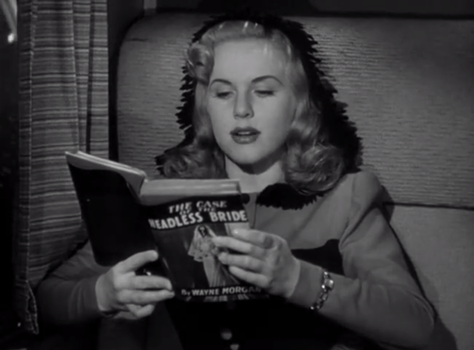
The ever effervescent Deanna Durbin is sprawled out on the seat of a train car feverishly reading the pages of her thrilling mystery novel aloud. She happens to glance out the window only to stop and see a man bludgeoned to death with a crowbar! It was through the window shade, and we don’t see any blood, conveniently, but we do have a story.

Although it’s a corny hook, Lady on a Train goes with it full throttle. She’s left her loving daddy behind in San Francisco for the streets of New York City. H.G. has entrusted her to one of his most accomplished underlings, Haskell of the New York office. That’s all well and good, but the best part is the typically befuddled, huffing, stuttering shtick of the every reliable Edward Everett Horton.

Durbin brings her chipper energy into all sorts of scenarios beginning with her leaving her oblivious minder in the dust as she looks to get the word on the murder she witnessed. The police station is manned by an officer (William Frawley) who finds her story pretty thin and how could you blame him? It’s utterly ludicrous.

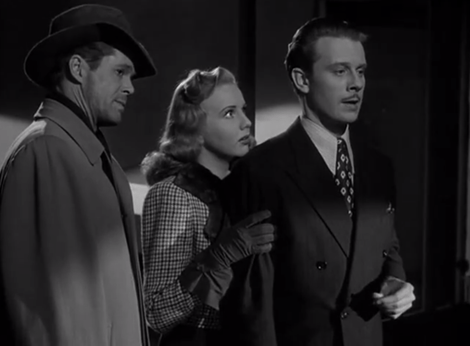
But always the fix-it girl, Nicki Collins goes sleuthing on her own, with a little qualified help that is. She resolves to track down the mystery writer of her new favorite page-turner, Wayne Morgan (David Bruce), accosting him at work and following him and his put-upon fiancee (Patricia Morrison) to the theater, bugging him even more.

All these elements feel like well-trod screwball paces, which they are. Surely, this is the man who will fall for her persistent charms — eventually. Thankfully Lady on The Train is a mash-up, leveraging all of its assets. Because we never forget this is a mystery and yet set during the Christmas holiday as it is, we have dashes of yuletide cheer sprinkled in.  Of course, Durbin has quite the pair of pipes so we have to have a few token tunes thrown in. It always keeps us entertained.

However, it’s at the very same newsreel she crashes, Nicki realizes the man she saw murdered — Josiah Warring — shipping magnate and newsreel star. What else is there to do but go traipsing around the frozen grounds of the deceased in her heels — of course. She somehow wanders in on the reading of the will and finds herself conveniently dawning an alias as Margo Martin who just so happened to be the fiancee and rich new heir to the dearly departed.

His two dear nephews are present (Dan Duryea and Ralph Bellamy) as well as the scandalized Aunt Charlotte. She cannot stand such a harlot in her presence. Of course, other menacing characters are working behind the scenes. A thick-jawed chauffeur (Allan Jenkins) and a dubious man with glasses (George Colouris) always stroking his cat sinisterly, run things in the creaky old manor. Somehow Nicki gets out of quite the jam and even makes quite a convincing chair as well. Lucille Ball would be proud.

The music mentioned in passing arrives. It brings the story to a standstill with a version of “Silent Night” relayed over the phone to her father, melodious but completely out of left field. When you have Deanna Durbin it’s a must to have her sing. She does it later as well giving a knockout floorshow to keep her cover, conveniently locking her alter ego in a closet and getting everyone else to keep mum.

lady on a train 2.png

The movie is continually piled high with bits of mischief comical and otherwise. Her mystery-writing partner-in-crime gets in a wine cellar fistfight as she looks to evade the men in pursuit of her. She conveniently holds the plot’s MacGuffin in her possession — a pair of bloody slippers — while also turning his girlfriend off for good. The final act keeps up the shenanigans as the murder plot is revealed in a pleasing fashion.

It’s true The Lady on a Train finds itself an agreeable niche between screwball and mystery drama. As such, it just might be about the perfect vehicle for Deanna Durbin’s talents, although she, regrettably, would leave Hollywood for good soon thereafter. The story is not afraid to get a little crazy — leaning into its wonkiness outright — and yet there are interludes of definite intrigue.

It comes down to the actors. Horton and Bellamy come off as screwball mainstays. The likes of Duryea and Coulouris couldn’t be more noir if they tried, with archetypes literally inbred into their character DNA. It’s Deanna Durbin’s charm that allows the picture to carve out its rambunctious path. She spearheads the wild ride with all sorts of plates spinning and bits of thread getting tangled, representing all the people and things she finds herself caught up in.

To its credit, what could have been a jumbled mess endears itself as a mixed-bag of all sorts of fun. It’s one of Durbin’s finest outings. Pleasant surprises, however small, are sometimes the most enjoyable.

3.5/5 Stars

Jojo Rabbit (2019): Taika Waititi’s Newest Coming-of-Age Story

Jojo_Rabbit_(2019)_poster.jpgWe must acknowledge the elephant, or rather, the rabbit, in the room. Grappling with the intersection of Nazis and humor has always been a loaded and controversial topic. But usually, it fosters conversation nonetheless so here’s an attempt to provide some meager context.

The Great Dictator (1940) and To Be or Not to Be (1942) are two of the most prescient films to come out of their era, years before we would get the campy buffoonery of Hogan’s Heroes (1965-71) or Mel Brooks’ irreverent breakout The Producers (1968). Even something more squarely dramatic like Roberto Benigni’s Life is Beautiful (1997) is still buoyed by laughs. Understandably, with each of these examples, there have been detractors who have called into question the ways in which they tackle the historical moment given the subject matter.

I am not here to tell anyone they are wrong. There’s also the reality that the issues being wrestled with are still very real, and even after 75 years, in many cases still very raw. All of this must be taken into account.

For instance, I recall the first time I learned about Alfons Heck, trained up from the age of 6 to be a loyal cog in the Nazi propaganda machine. Only years later, did he come to terms with all the lies he and his generation of German youth were being peddled. He subsequently toured the university circuit in the states with Holocaust survivor Helen Waterford denouncing the ills of ideological brainwashing, lest we forget it ever existed.

Or I was reminded of Hans Detlef Sierck (better known as renowned film director Douglas Sirk), who after marrying a Jewish woman, was blocked by his first wife, an ardent Nazi supporter, from seeing their son Klaus. The boy would become a child star in Nazi cinema, although he eventually died in combat in 1944. Sirk never saw him again.

These are stunning reminders of how virulent ideologies can tear lives apart and this is much of what Jojo Rabbit occupies itself with. But the difference is taking the negativity and making it positive. This is a tale about empathy, understanding, anti-hate if you will. If you accept the term leniently, it is a satire, but I tend to see that word coming with a bite or an irony (not unakin to Sirk or Billy Wilder).

However, this story is mostly full of warmth, good-humor, and because this is a Taika Waititi production, wackiness. Mind you, that’s generally a compliment. The opening refrains of “Komm, gib mir deine Hand,” known in the English-speaking free world as “I Want to Hold Your Hand,” equates the nationalistic fervor to Beatlemania, recontextualizing the history but also giving it a raucous vibe. 

Consequently, some people will find Jojo Rabbit at best inane and inconsequential and at worst, offensive — as is the case when anything as sensitive as the Nazis is brought to the fore. In an age of political correctness, it’s a film trampling a danger zone where racial epithets and maledictions leave the tongues of oafish buffoons. One decidedly ironic line curses a “female, Jewish Jesse Owens.”

This is where the movie and Taika Waititi — as an emblematic supporting character — are able to succeed. It sings with a warm benevolence that proves unerringly sweet. Empathizing with those with whom we would do well to connect with and undermining the villains’ remnant of cultural clout.

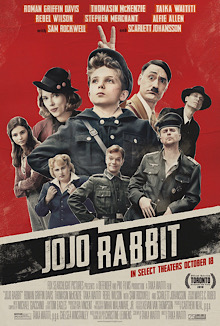
It starts with our hero Johannes “Jojo” Betzler (Roman Griffin Davis) a kind-hearted young boy. His is a bildungsroman story like we’ve seen time and time again (even from Waititi). Because he is a creature of innocence, despite what the culture leads him to believe about himself. Because the difference is he, like Heck or Sierck, is coming to age in the fanatical regime of the Nazis where he is being trained up to be a good little soldier.

He’s adorably inept and faint of heart like any young lad dealing with the peer pressure around him. As a 10-year-old he still can’t tie his shoelaces nor can he muster up the needed brutality to kill a bunny during the local war games. His only real friend is the rolly polly, bespectacled Yorki. He also has an invisible friend: the imaginary dopey incarnation of Adolf himself, portrayed by Waititi.

In a sense, taking this prominent role on, with his inherent slapstick and humor, allows the director to possess the man and deconstruct him, ridiculing him from within. It’s not elemental but like many of the Nazis portrayed in Hogan’s Heroes, Waititi has some Jewish heritage, further underlying his caricature.

Rebel Wilson is good for a few of her typical bawdy punchlines and Steve Merchant as the creepily skeletal, smiling Gestapo man manages to walk the film’s tightrope of humor and lingering menace quite well. Sam Rockwell is another walking joke waiting to go off, and yet even he is allowed moments of warmth and ultimate redemption.

Scarlett Johannson asserts herself in a maternal role as one of the legitimately decent people in the movie. Whether or not it’s one of her best performances, I’ve never seen her quite like this and that is compliment enough. She reminds us, through her affectionate devotion toward her son, the powerful, if monumental, undertaking parenting can be. How goodness and decency can cover a world of sins. How laughter and yes, even dance, can be a window to some small semblance of humanity.

One is also reminded Waititi is a genuine storyteller because it’s a tenuous line to balance humor with the bleakness, injecting the story with tension and tragedy in equal measures. You half expect the film to skimp on the ruthless nature of Nazism in favor of far easier put-downs. Instead, it searches out hope within the world and less fickle themes, without entirely dismissing reality.

Thomasin Mackenzie (the brilliant actress from Leave No Trace) goes part of the way in making this possible. Because she is the girl in the walls. She’s not a rat. As Jojo comes to realize, she’s a person. A victim certainly, but she’s also got strength and defiance. After all, her people have a history of wrestling with angels. She comes out of the same hardy tradition.

What she brings into the picture is a complexity to upend everything in Jojo’s fanciful mind. What first begins as a horror trope quickly evolves almost reluctantly into mutual understanding. If his relationship with his mother holds such a stake in his life, this curious new friendship is the crutch of the film, containing its message.

In the final moments, life is back to some form of normalcy. They stand out on the streets letting their bodies free for the first time set to David Bowie’s “Helden” (or “Heroes”). Instantly this feels like Perks of Being a Wallflower and yet somehow this kind of association doesn’t feel wrong because I think Waititi worked so hard to not make this just another WWII movie cut out of the same mold.

It has this universal feeling of adolescence while not totally disregarding history and yet it’s free and comfortable enough to pull it out of its context and flair it with colors and touches of humor. The joy is how heart and hope are the final building blocks even beyond the laughter. The key is how it’s never at the true expense of the victims. Somehow it’s more tender than I was ever expecting. It wants to continue the conversation. Whether or not you agree entirely with its methods, it does seem like a noble task to undertake.

3.5/5 Stars