The Mouse That Roared (1959)

There’s something illuminating about getting a movie from our neighbors across the pond that offers a winking look at American society. The movie takes its title quite literally, scaring off the Columbia lady with a critter who subsequently carries away the animated title sequence. Because the U.S. might be the prototypical lion, but Grand Fenwick is the mouse that roared.

The minuscule duchy of Fenwick — a measly nation if there ever was one — remains stagnated in the medieval ages, economically and otherwise. Their major exports are wine, particularly popular on the West coast, though competition in the form of copycat businesses proves steep competition.

Teetering on the brink of bankruptcy, the Fenwick leaders resolve to declare war on America. It’s really all part of their contingency plan expecting that their quick and inevitable defeat will lead to American rehabilitation and, thus, newfound prosperity for their little principality. They no doubt are well aware of the Marshall Plan and the U.S.’s undying interest in any floundering nation, they can look to capitalize on. Better us swoop in than have the Soviets socialize them, right?

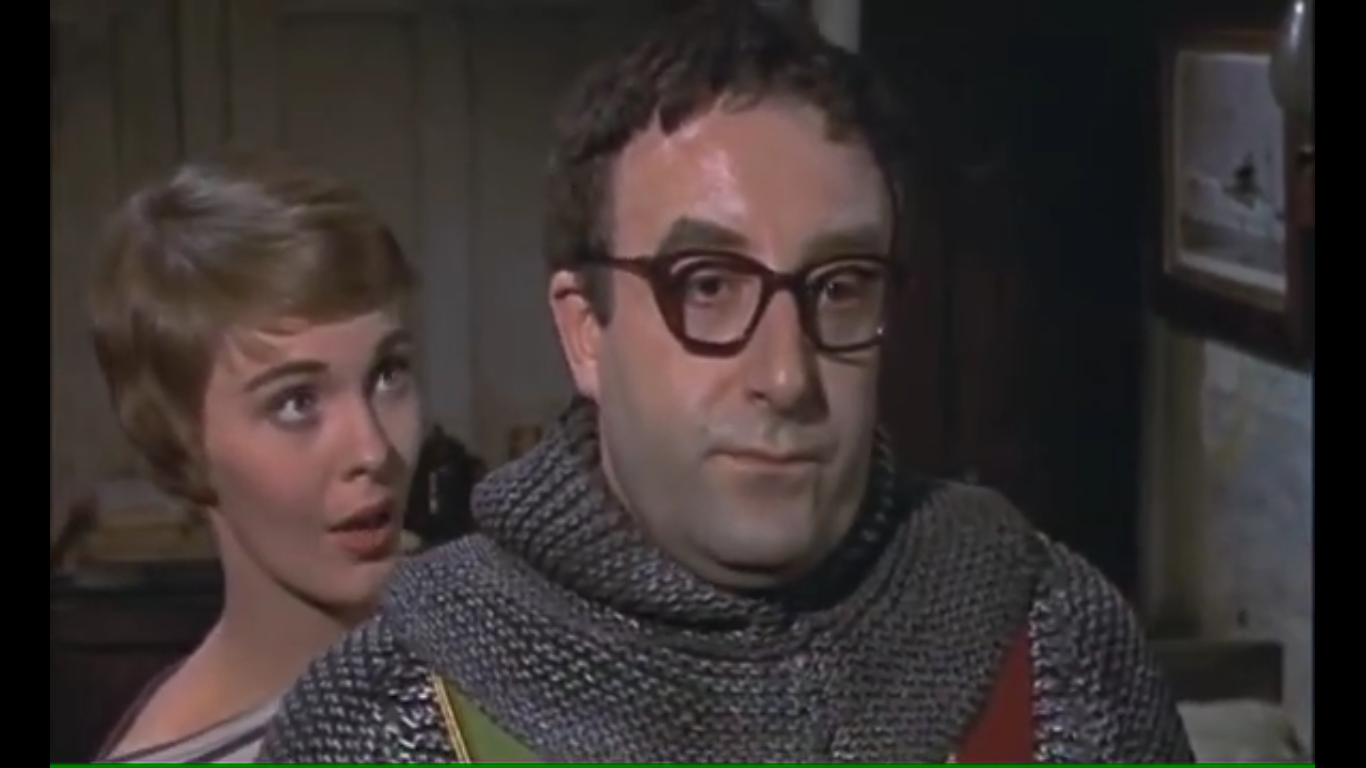
Regardless, all this poppycock and tomfoolery is made even more palatable thanks to the talents of Peter Sellers. He hasn’t reached Clousseau status nor the apex of his stardom in the 1960s, but he would be an international icon soon enough. For now, we get to sit back and witness him in dialogue with himself. First as the Machiavellian prime minister Mountjoy, then the Queen Victoria knockoff, Duchess Gloriana, and finally, the ultimate Sellers hero, Tully Bascomb.

Because it is this meek and unassuming game warden, who is called upon to lead the charge across the sea onto enemy territory. Armed with their bows & arrows, chainmail, and Fenwickian pluck, their force, 20 men strong, sets off. I mention Bascomb as the prototypical Sellers hero because he’s such a small character, and yet since he is lacking in much, it works impeccably well with the utter outrageousness of the comedy blowing up around him.

Before Monty Python and even before Dr. Strangelove, there was The Mouse That Roared, and not simply due to the trio of roles carried by Sellers. Like its future scion, it takes no umbrage about trampling over Medieval iconography in all its antiquity and finding wells of humor therein. It’s also an atomic bomb-conscious comedy. Surely, you could say almost all comedies of the 50s and 60s were informed by this reality — this pervasive fear — but Mouse takes these themes to heart.

For what generally feels like a humble picture, the moving parts are rather extraordinary. Beyond Sellers, we have director Jack Arnold remembered mostly for his Sci-Fi and monster movies of the 1950s. The marriage sounds less outrageous than it is (or maybe it’s just outrageous enough) because this is meant to be a farce. There are no creatures from the black lagoon or incredible shrinking men, but there is some extraterrestrial hysteria.

It plays with all the alarmist tendencies of the age when the Fenwick contingent prey on a passing truck and punctures its tires, leaving the victims thinking the nation’s being invaded by men from outer space. This streak of nuclear age anxiety with a distinct message is more than enough to wedge it into the rest of Arnold’s canon.

But we have yet to mention Jean Seberg. She’s no doubt at her most childish — she’s only 20 or 21 years old, after all — playing the peeved daughter of a famed scientist. It hardly accentuates her talents nor her playful mystique like Breathless or even Bonjour Tristesse, but it is something different. Because it’s her father’s Q Bomb, which could eat an H Bomb for breakfast, that is currently being tested and is accidentally discovered by the Fenwickians.

In a serendipitous act of lunacy, they instantly become the aggressors ready to take advantage of the situation and bring America to its knees by kidnapping some of its most fundamental assets. It’s the kind of goofy, lightweight stuff taking the edge off. Although there’s an agenda, no matter what implications it might have in the nuclear age, The Mouse That Roared is the perfectly tame goofball comedy we expect to see when we visit sitcoms of the 50s and 60s.

The fish out of water commentary about America dries up when the prisoners are carted back across the pond. Tully and his men make a triumphant return only to be met with some chagrin from the hoodwinked cabinet. They’ve mucked things up. Not only have they not surrendered, they’ve gone and taken hostages and ran off with the most dangerous superweapon in the world!

By this stage, the heart of the comedy has mostly dried up too, though there are a few passing gags relating to the hot potato bomb that wheezes and sizzles to the touch just waiting to annihilate mankind. Likewise, Tully finds himself smitten with feisty young Helen in a love affair that could be telegraphed from miles away. Ultimately, it plays the best when its intentions are made clear with the goofball inanity of it all before didacticism and treacly romance are allowed to give their final stamp of approval on the story. For what it’s worth, I’m one Yank who enjoys being invaded in such a manner as this.

3.5/5 Stars

Bonjour Tristesse (1958)

Otto Preminger famously combed through headshots and plucked Jean Seberg out of her Iowa hometown to be groomed as his latest star. St. Joan was far from a stunning ascension for the young starlet, but her follow-up with Preminger, Bonjour Tristesse, showcases her incandescence.

Adapted from Francoise Sagan’s novel about youth set on the French Riviera, I cannot think of a better environ to augment Seberg’s talents. Her Cecile is a carefree spirit and rather noncommital when it comes to anything like marriage, but Seberg imbues her with a poise well beyond her years.

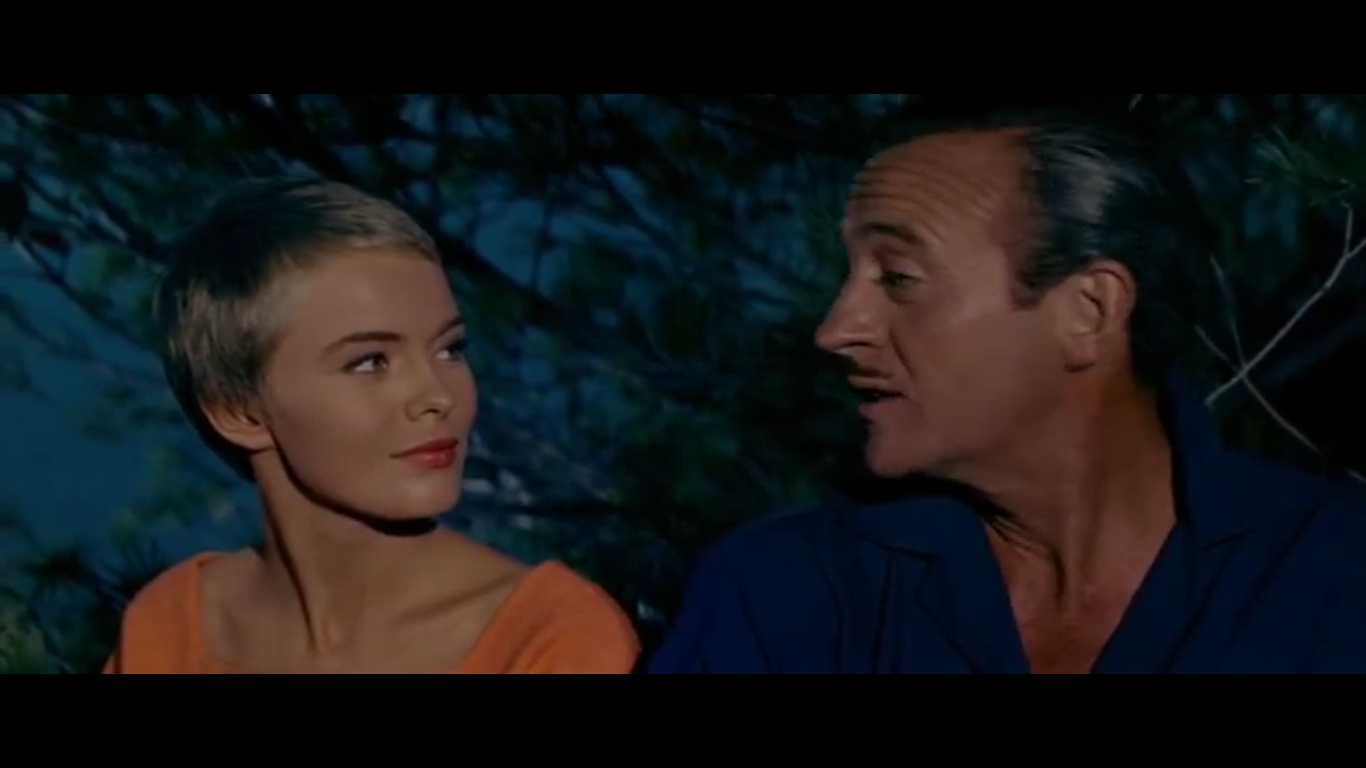
The fact that the picture is positively cascading with ritzy, sun-soaked opulence more than suits a jaunty David Niven and the pixie-haired Seberg — they’re a father and daughter duo — who know no other existence than utter extravagance. Preminger more than matches his stars with gorgeous tones drifting from black and white to vibrant color.

They feel all but compelled to recline on the veranda to soak up the sunbeams with a cool beverage or take a refreshing dip in the water. Who can blame them?  The audience is allowed to live vicariously through all their pleasures, and it makes the interim portions of Bonjour Tristesse both light and luscious in content.

If you haven’t gotten the idea already, Preminger’s picture conjures up ample comparisons to Hitchcock’s To Catch a Thief or Demy’s Bay of Angels sharing much of the same world. What happens exactly? That is and it isn’t easy to say because it’s the mood and the time spent with the characters in their environs that’s both scintillating and charming. Some characters almost evaporate between the beaches, casinos, and champagne bubbles. The most important ones give the film buoyancy and a dash of substance sprinkled in.

However, to hone on any sort of plot, it begins rather simply as a comedy of the situation with father and daughter pulling off shenanigans together. They have such a cultured camaraderie, that it’s second nature to refer to each other by their first names. Romantic dalliances are also expected, between Elsa (Mylène Demongeot) the pretty young thing Raymond traipses around with and Cecile’s latest fling, a strapping young man named Phillippe (Geoffrey Horne). He’s one out of a laundry list of past suitors. They’re contented enough with their free-flowing lifestyle.

Then, follows the auspicious day when Anne (Deborah Kerr) arrives. She’s been invited for the summer holiday as a friend of Raymond’s late wife. She’s not of their ilk with a sense of propriety that they’ve never taken much time to worry about or even consider. One can only imagine what she will think of the laissez-faire romantic lifestyles of Cecile and Raymond. The tensions in the fresh sea air from the outset.

However, we must take pause because there is also a sense of deja vu in the atmosphere. Surely Niven and Kerr have played these characters before in other movies — their dashing playboy and refined prude — this time falling in love with each other. Even Seberg with her iconic pixie cut looks utterly familiar if only due to the ubiquitous iconography of Breathless a few years later.

Whether totally conscious or not, it does feel like Bonjour Tristesse is totally in dialogue with the onscreen personas of its three stars. This feels very much like a component of Old Hollywood where stars were built around their types and somehow instead of disappearing into roles, they brought their own individual sense of authenticity and emotional truth to whatever part they played. For the best ones, it’s like each subsequent role was built on the foundation of their previous work.

Jean-Luc Godard even acknowledged, “The character played by Jean Seberg [in Breathless] was a continuation of her role in Bonjour Tristesse, I could have taken the last shot of Preminger’s film and started after dissolving to a title: “Three years later.”

In the latter half of the film, it’s the character’s youth that becomes strikingly apparent as she grows jealous of their new houseguest who has tamed her father and taken away some of her long-held freedoms in an attempt to make her a more traditional young lady.

And yet the happy-go-lucky gaiety remains up until the very brink of devastation. Otherwise, we watch with rapt interest as she goes darting after her lady oppressor like the epitome of her gamine self ready to watch her fall into the emotional trap orchestrated by her girlish ploys. Suddenly all the merriment isn’t so merry after all and it’s terrifying in its incisive cruelty. We are reminded of the selfish vindictiveness of youth. C’est la vie.

For garnering such a tepid response in its heyday, Bonjour Tristesse represents much of the allure of Old Hollywood though it rarely gets the plaudits of some of its brethren. Somehow, between Preminger and Seberg, Niven and Kerr, and sweeping Cinemascope, it’s easy for the picture to get lost in the shuffle because the four of them have innumerable other productions of note.

This one deserves at least a second chance for its mise en scene alone. Preminger actually does something with it to the point that the final moments of the movie mean something. It’s not the same film we thought we were signing up for.

It’s gorgeous, vain, at times, even superficial, but we would be remiss not to pick up on the inherent melancholy played in sharp contrast to the vibrant palette. Suddenly, it makes complete sense why their present is in black and white and only the past can remain in color.

4/5 Stars

Pigs and Battleships (1961)

If you want to make some sense of the rise of Shohei Imamura, it’s convenient enough to fit him into the context of two of Japan’s foremost filmmakers. During his time as a university student at the prestigious Waseda University, he saw a screening of Akira Kurosawa’s Rashomon, which not only became a catalyst for Japanese film worldwide but also for young men like Imamura.

However, upon arriving in the film industry he found himself working with another acclaimed master, Yasujiro Ozu. The only problem is that Imamura’s own sentiments played in stark contrast to his elder’s fairly sedate albeit meticulous style. Imamura wanted to get into the issues and the conflicts of the times. He feels like both a  nonconformist with a bit of a rebellion in his blood and someone with an acute appreciation for humanity.

Here he positions himself as a Japanese New Wave iconoclast having some fun at the expense of his countrymen and their most prominent post-war ally: the United States. In his own words, he was an anthropologist using his films to analyze humanity in all its foibles and messier predilections.

This might be as good a place as any to provide a jumping-off point for Pigs and Battleships. It plays as the antithesis of his elder Ozu by readily showing Japan at its most pathetic with a host of men who might well be a circus of dim-witted ignoramuses in a comedy of errors.

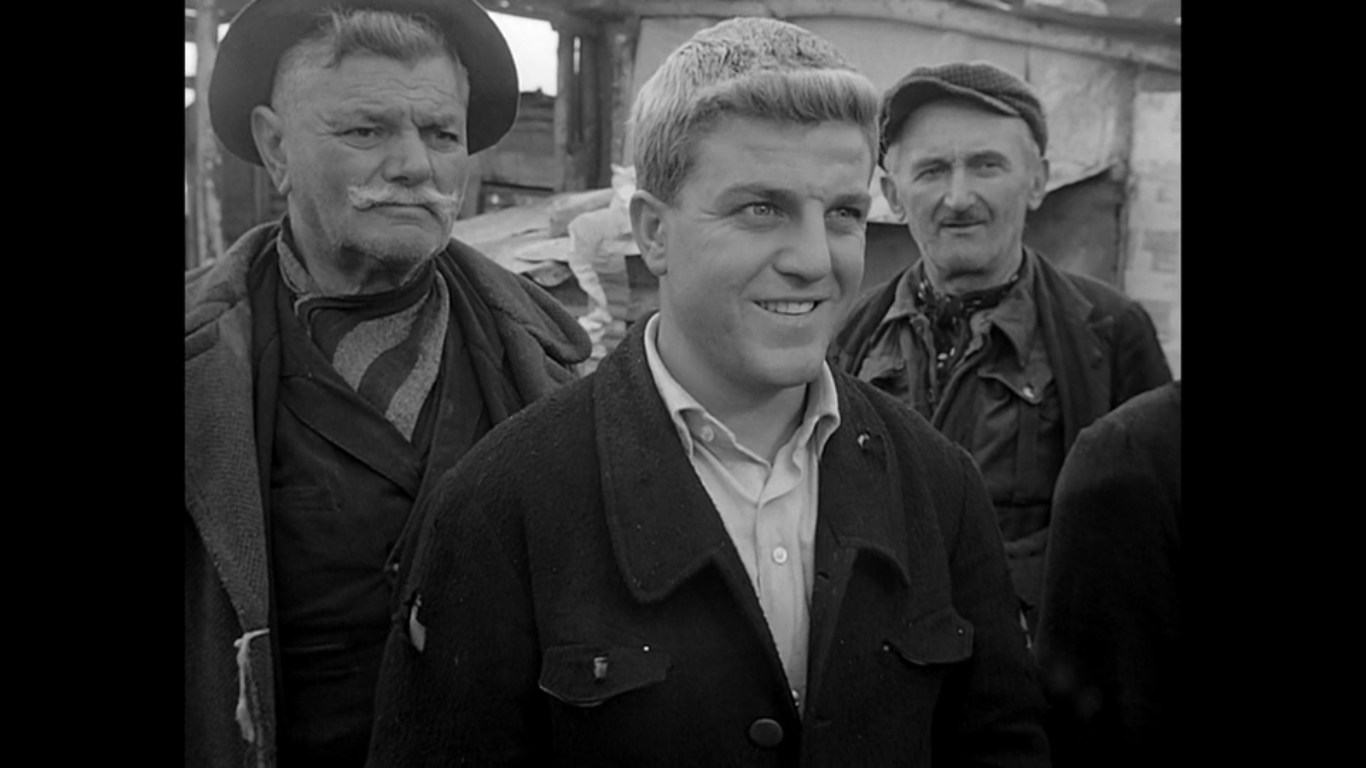
In the opening frames, you get an instant impression of the backstreets and alleyways frequented by American sailors, bums, and pretty girls with their come-hither looks. Vagrants of all sizes can be found scampering around town messing with sailors — swiping their hats — and generally causing mischief. Some of this is organized.

This is the unruly underbelly of Japan as represented by the seaport of Yokosuka and those with a certain perception of civilized Japanese society, would do well to avert their eyes. Imamura has no intent to present some idealized or cloying sense of his homeland

Kinta is one of the ilk of street trash gaining our attention for whatever reason. He’s a lowly gangster yet to earn his stripes.  Hiroyuki Nagato plays him in such a way that his movements come off as those of a callow, entirely overgrown child. While he tries to make a name for himself among the local gangsters, he has an on-and-off fling with a local girl named Haruko.

She’s not a glamour queen, but there’s something good and decent about the naivete found in her eyes. However innocent she might be, she still chides Kinta to get out of the racket and take up a steady factory job out of town.

Whether he meant to or not, you begin to see how the Japanese New Wave was carried on the shoulders of filmmakers such as Imamura. He accentuates a certain world through a particular methodology.

Where hoodlums feel more like snickering hyenas in baggy clothing ready to pound the populous for a good laugh. These aren’t criminals given any amount of deference or import. It feels like we should scorn them even in their hijinks trying to make some money off a drove of pigs.

However, the movie is not without a shock factor. You know when a man’s head is dunked in a tank of gasoline and a thug waves a lighter in front of him ominously, he’s making the threat count. It’s easy to see the director pushing back against any post-war American tokenism. Because Kinta is found right in the crosshairs.

Where being American is king and if you can’t be white Anglo-Saxon — victors of WWII and wooer of Japanese women — at least with the gangs you get to do something cool with your life. You belong to something bigger than yourself. Anything honest and menial is frowned upon. There’s a self-contained scene when a little boy reads out loud how refined and highly cultivated Japan has been able to fluidly integrate aspects of other nations, the irony is not lost.

You only must watch what happens before and after to have a good laugh. The hiccups keep on coming. The mobsters have their hands full disposing of a body, and it feels like a bout derivative from The Trouble With Harry than any hardened crime drama. Try not to giggle with morbid glee when they find a false tooth inside the pig they’re chowing down on!

Even, the yakuza boss, that symbol of towering and lethal villainy is a sorry figure. He’s dying of cancer — looking pitiful when his little brother comes to visit him — the gang gathered around his bedside. He thinks he only has days to live and there are so many affairs to get in order. Namely, all the debts he still needs to collect!

We also meet the man known only as Sakiyama at a bar talking with a Chinese fellow. They’re involved in this pork deal between the Americans and the locals. Although the “Japanese-American” man speaks English, it’s easy enough to tell in a moment it’s not his native tongue. This actor is Japanese and so the illusion is broken, but given the carnivalesque bits of business we’ve already been privy to, it’s not completely out of place.

Because things just keep on falling apart in this ever-changing state of fateful narrative entropy. For most of the film, Imamura remains an observer, but in one specifically pointed setup, he inserts himself into the action. It happens in the aftermath of a row between Kinta and Haruko. They’re probably not getting back together, and she vows to get drunk and party with American seamen as an act of spite.

Instead, she ends up in an empty hotel room with three brawny men prepared to overpower her in their stupor. The overhead shot of Haruka and the three boisterous sailors might be the pinnacle of the film’s hysteria in this intersection of worlds and toxic schemes of life. It breaks the moment down to its most pointed elements as we spin toward oblivion and a horrible outcome that cannot be undone.

Going with its prevailing tone, Pigs and Battleships owns a final act built on total futility. However, there’s something about seeing pigs roaming in the streets that made this feel like Pamplona for porkers. It’s a hilarious image even as the film comes to terms with its own human tragedies. Ozu would never make this movie; not even Kurosawa with his more dynamic proclivities. No, this is something new.

Most important is the implicit message found in the title and much of the comedy. In the post-war landscape, Japan was very much subjugated to America, and they too became conduits of Capitalism.  However, in case it’s not already apparent, our way of life and systems come with their share of flaws. Pigs and Battleships begins to suss out the complexities of this relationship. We’d do well to consider it.

3.5/5 Stars

The Paleface (1948)

As a kid, I was fond of Frank Tashlin’s Son of Paleface for a myriad of reasons. Thanks to that esteemed institution known as the local library I was well-versed in the Hope & Crosby Road Pictures by an early age and Roy Rogers was probably second-only to Gene Autry as king of the Singing Cowboys. Jane Russell wasn’t too bad herself.

More recently, coming to understand Tashlin himself — his background in animated comedy and his partnership with Jerry Lewis — gives greater context to his place as a creative visionary. Because it’s true he blends the gray area between live-action and the cartoon logic of animation better than almost anyone else.

In an interview with Peter Bogdanovich, Tashlin had these unsavory words for The Paleface and its director:

“After seeing the preview of it, I could’ve shot Norman Z. McLeod. I’d written it as a satire on The Virginian (1929), and it was completely botched. I could’ve killed that guy. And I realized then that I must direct my own stuff.”

While it’s true the original movie doesn’t have the same outrageous commitment to comic gags that its successor did, if Tashlin was not so close to the material, he might be able to appreciate some of its elements.

However, before we go there, it seems necessary to introduce a caveat. The Paleface is a film out of a different era. If you’re an immediate impression of the movie is one of distaste, there aren’t any surprises here. Particularly jolting is when they are taken in by the local Natives to die some gruesome death only to be saved by Hope’s masquerading as a medicine man armed with the black magic of dynamite.

But if you have a sense of nostalgia, can look past the blind spots, or have a reservoir of goodwill toward Bob Hope, it delivers alongside the best of his comedies by providing a genre and allowing him to bend it to his will, courtesy of his usual feckless, smart-aleck shtick.

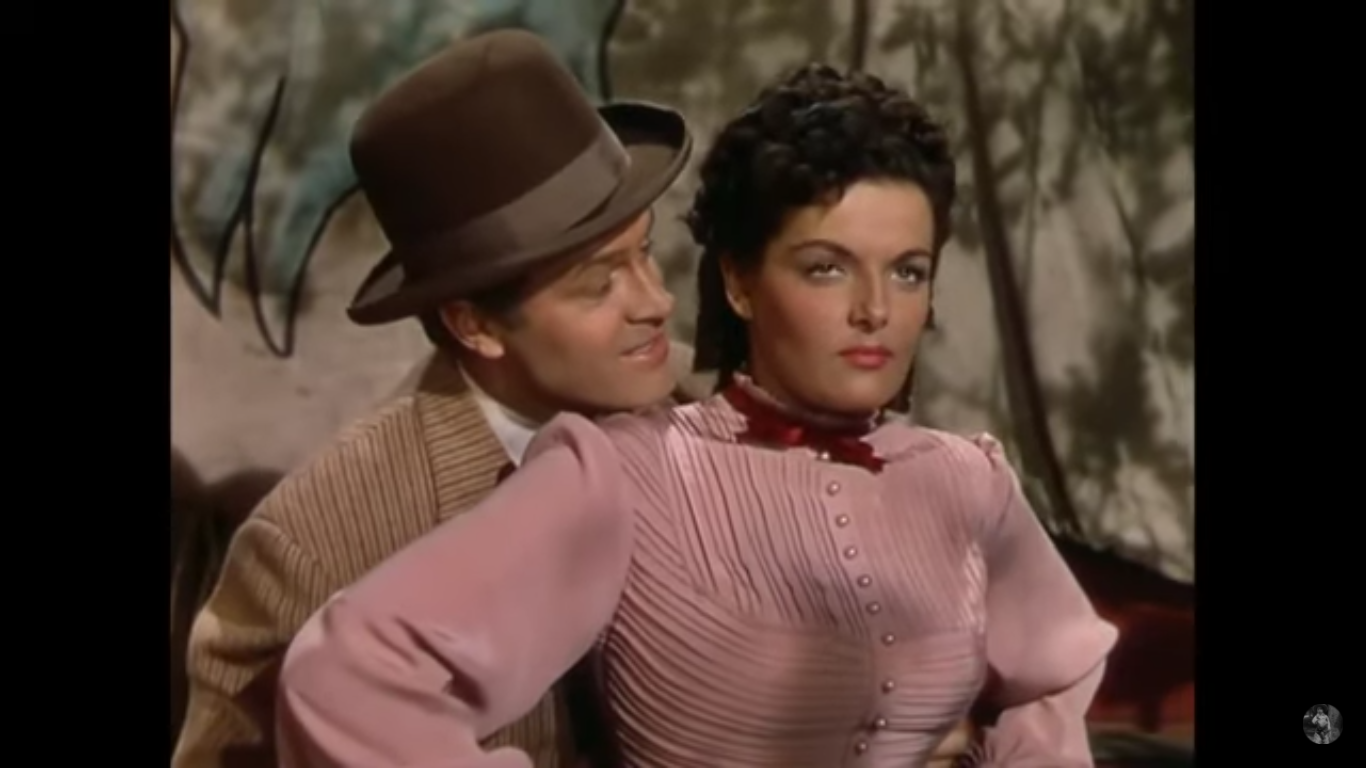
It works by first introducing all the western tropes Tashlin was mentioning. Russell, the feisty female outlaw, Calamity Jane, is enlisted by the government to investigate clandestine operations supplying the Indians with firearms. She joins a wagon train after outsmarting some adversaries in the ladies’ showers. It allows her to do some recon and she uses a first-class boob as her cover.

Bob Hope (as Painless Potter) is showcased with a row of dentistry gags including his canister of laughing gas, which becomes a recurrent plot point throughout the picture. When he’s not getting them lost in the woods, he knocks back “Buttons and Bows,” a tune that has remained a lasting relic of the movie, thanks to renditions by the likes of Dinah Shore, and its reintroduction in the sequel.

Every kiss he shares with his costar is like a rap over the head with the butt of a pistol. But along with being the aggressor, Russell also does his shooting for him on multiple occasions. In fact, when he is goaded into a shoot-out over the hand of a woman in a saloon, the outcomes prove surprisingly close to The Man Who Shot Liberty Valance (Paleface was released over a decade earlier). Could it be John Ford was influenced by Paleface? I’ll let you be the judge.

As for Norman Z. Macleod, I’m inclined to give him my good graces given his pedigree with Marx Brothers and screwball-like comedies of all sorts. While he might not commit to gravity-defying visual gags as Tashlin would have — we understand how he would be able to expand and punctuate them — Macleod always seems intent on zipping the pace along and keeping the tone zany.

This suits Hope even as Russell and the other characters allow the story to still stay true to many of the western tropes of cowboys, Indians, and western towns needing to be tamed. This melding of the usual beats with the wacky subversions instigated by Hope is the crux of the movie and blended with its color photography and the antagonistic chemistry of its stars, it’s more than enough to garner a watch. My own biased nostalgia still makes me partial to The Son of Paleface.

3.5/5 Stars

The Royal Tenenbaums (2001)

The Royal Tenenbaums maintains Anderson’s very literary style with narrative sensibilities that would crop up again in many of his movies including Moonrise Kingdom and Grand Budapest Hotel. It gives us a storybook reality firmly planted in the real world. Though he’s never seen onscreen, Alec Baldwin becomes an integral part of the story providing the voice of our narrator.

Gene Hackman is perfect for the role of Royal Tenenbaum, and it’s not surprising Anderson had him earmarked for the part. There’s an irascibility, even a callousness, to him that cannot totally quell his unquestionable charisma. By all accounts, Hackman was tough to deal with on set, but surely I’m not the only one who can think of countless movies where the actor was blustering or difficult; still, I could not stop watching him. It feels the same here. Because there is something genuine about his abrasiveness and his lying; we know people to be this way.

By now we are spoiled (or Anderson is spoiled) by amazing casts every time he makes a movie. However, this is the first time where it feels like he has assembled something special, from start to finish, and it really does feel like a cinematic family put together.

Although they spend most of their time in front of us as adults, the Tenenbaum children have core wounds and facades that prove easily identifiable. Anderson utilizes the voiceover as well as insert shots to reveal character early on. Most of their savant-like triumphs of childhood have given way to the mediocrity of adulthood. 

Richie (Luke Wilson) is still licking his wounds after a failed tennis career and looking to sort out complicated romantic feelings as he traipses around doing his best brown-haired Bjorn Borg impersonation. Margot’s (Gwyneth Paltrow) dark eyeliner and secret smoking habit feel like outcroppings of her own personal angst. She’s now married to a much older man (Bill Murray), one of many romantic partners in her fairly short life as a playwright of minor acclaim. 

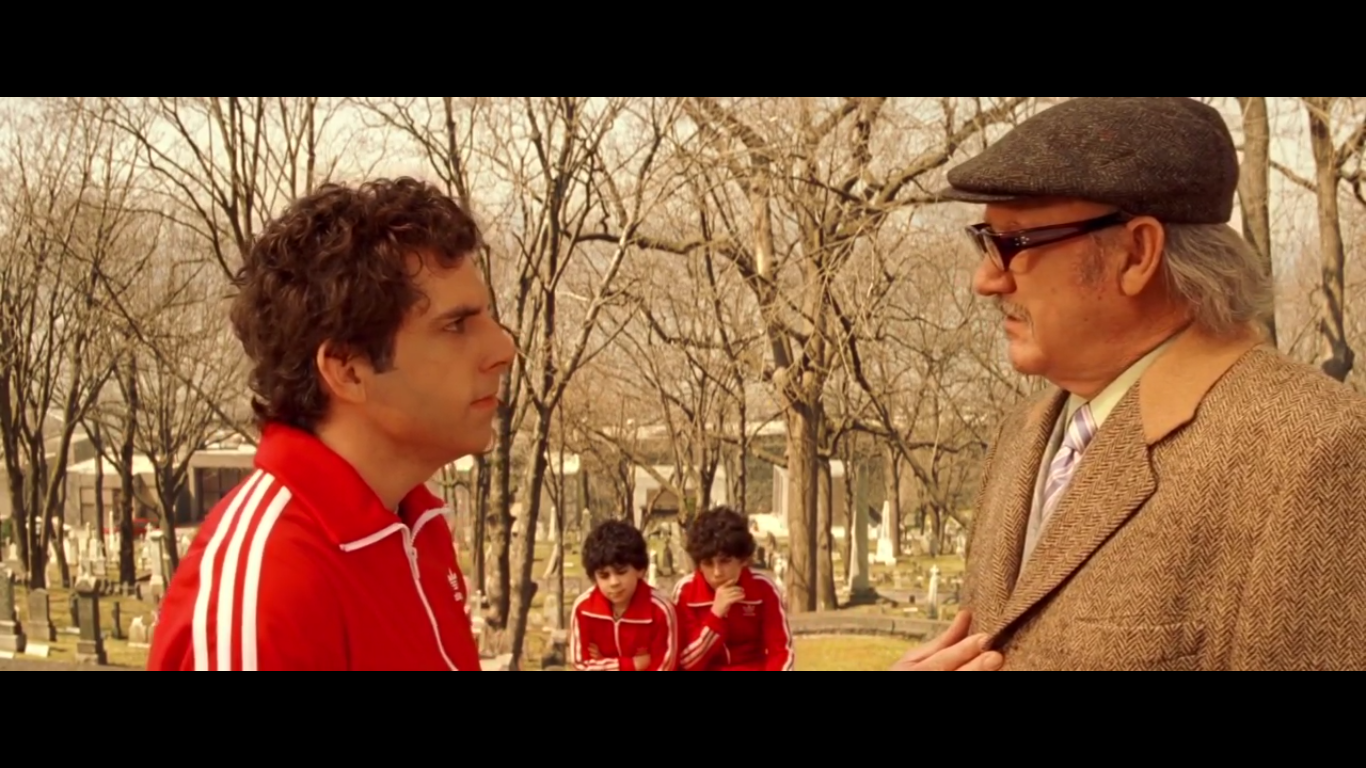
Ben Stiller gives what initially feels like an uncharacteristic performance simply for the fact it’s not very charitable. He’s dealing with the death of his wife, the raising of two young sons, and bitterness toward a father who was always absent. Anjelica Huston and Danny Glover seem the most contented. She is the matriarch of the Tenenbaum household and he is her faithful accountant though they must both deal with the old bear, Royal himself after Henry proposes marriage.  It’s not an easy road to navigate for anyone. 

To say Anderson has watched The Gathering and constructed his plot is too dismissive. It’s true it follows this similar arc — a father reconciling with his children over his terminal cancer — but what’s important is how he’s able to express it in his own cinematic terms. Because it blends the sprawling family drama of something like The Magnificent Ambersons (1942) with the haunting depression of The Fire Within (1963) alongside countless other references. Still, there’s a specificity to his style and vision allowing it to grow and false start until it’s something else entirely.

There’s also always a matter-of-fact idiosyncrasy to his characters and, therefore, his plot developments. It’s what makes them interesting, mining these bits and pieces that at one time seem like one-note, throwaway gags and exposition, and yet they color his characters so distinctly.

There are BBs lodged in hands, lost fingers, people get shivved on the street corner, and we meet pet mice and a falcon named Mordecai. Even some characters like Eli Cash (Owen Wilson), Pagoda (Kumar Pallada), and Dudley (Stephen Lea Sheppard) feel like sidebars and afterthoughts who still manage to add something palpably absurd to the ensemble.

Although Anderson could not get the rights to some Beatles tunes, it would be remiss not to mention some of the impressive needle drops throughout from Charlie Brown and Nico to The Stones and Van Morrison. He uses the raucous fun of Paul Simon’s “Me and Julio Down by the Schoolyard” to encapsulate Hackman’s finest set of interactions with his grandsons. He lets them run wild, goof off, and really experience life like little boys are meant to.

However, the one choice that will remain the most impactful comes when Margot steps off The Green Line Bus to the sounds of “These Days.” It’s like a moment captured for us as Ritchie watches her come towards him, her hair perfectly fluttering in the breeze. Time all but stands still, and then we realize his feelings. He’s in love with her. It was an instant revelation for me. Because we see her through his eyes. 

There’s this immediate dissonance playing out in the background. She’s his adopted sister, right? This isn’t what’s normally supposed to happen between siblings, but that doesn’t stop his feelings from being genuine. It says so much in a single moment about both of them. We don’t need more. This one interaction informs the entire film going forward. 

For the rest of the movie, they must toil with these confusing pangs of love complicated by Margot’s uninhibited past and one of the most gutting suicide attempts ever captured on film. Despite this turmoil and even as Royal is outed and then castigated as a fraud, we are shown some form of restoration. It’s in the face of recurring and in some cases pent-up trauma leftover from an entire life thus far.

I won’t say everything is resolved. That wouldn’t be true. Royal is broke and becomes a doorman at a nearby hotel; there’s a car crash, and later a funeral. But there’s also a wedding and the family feels tighter and more together than they have been in years past. It’s not perfection and yet they have a newfound stasis, and since this is like a storybook, it only makes sense. We require an ending befitting the Tenenbaums. Thankfully we get it.

4/5 Stars

Rushmore (1998)

Through his quintessential use of camera, space, and symmetry, we already see the formation of Wes Anderson’s now easily attributed style incarnated in Rushmore. It makes us aware we are watching a movie just as it makes us keenly aware of the filmmaker. There is a meticulous storyboarded quality to it with telling POV and overhead shots laying the groundwork for his unmistakable aesthetic.

For some, this is a turn-off. It totally ruins the so-called suspension of disbelief. You don’t want to be reminded you are watching a  movie. You want to disappear into it. But Anderson’s style is so particular it’s hard not to marvel especially because it’s not simply a case of form over substance. This movie is about something meaningful.

Jason Schwartzmann proves himself an exquisite choice to play our lead. Max Fischer is a young teenager with such an impressive array of extracurriculars and side hobbies, he has no recourse to fail all his classes at Rushmore prep school. He’s too much of a driven, daydreamy kind of person to get stuck with his textbooks for hours on end. His aspirations seem to be focused on something more. 

One of those might be romantic love as the ancients would come to understand it. I think of the scene where he first makes the acquaintance of the pretty literature teacher, Ms. Cross (Olivia Williams) on the bleachers. Anderson frames them in individual shots, but then Max keeps on sliding out and back into the frame. It’s not in a continuous camera movement. Instead, these orchestrated moments add together to give us a sense of what’s going on – both good-humored and slightly awkward. 

But we must also talk about Bill Murray. I’m no Murray historian, but Rushmore and with it, the actor’s continuous collaboration with Anderson, seems to mark a distinct shift in his career. It may not be a Reinnaissance, but it effectively took an SNL phenomenon known for comedy films like Caddyshack and Ghostbuster, only to provide him a fresh dimension.

Perhaps it was always there before, but whether it was Anderson seeing it in Murray or Murray finding inspiration in Anderson’s material, I don’t see his work in movies like Lost in Translation or Broken Flowers coming to fruition without a spark.

It’s not that Murray is unfunny in any of these roles. Instead, like Robin Williams, Jim Carrey, and the like, he’s able to somehow take those comic eccentricities with his own core humanity, and make it deeply impactful.

In Rushmore, Murray gets his Dustin Hoffman “Graduate” moment submerged in the pool at his son’s birthday party. The allusion is straightforward enough. Meanwhile, Max goes and falls in love with his teacher — resurrects Latin class and tries to procure her some new aquarium tanks all as devoted acts of affection. He has other passions too.

He directs his own stage version of Serpico and the lifelike train noise and walkie-talkie sound effects mimic the attention to detail Anderson would have admired. But these are not all the stage elements. Because there’s a recurring sensibility that brings attention to the performance nature of the movie, whether it’s the curtains being pulled away with the changing of the months or Max’s never-ending thespian endeavors.

I’ve never known Luke Wilson’s filmography well, but I found his cameo almost endearing as he becomes the target of Max’s jealous and impudent ire. He’s not willing to relinquish Ms. Cross to any man even if he has no hold on her either as her junior.

This and other shenanigans get him expelled from Rushmore. Being caught smoking or failing his classes is far too mundane. He tears up the baseball field for the ground-breaking of his new aquarium. Thereafter he’s off to public school with a wounded heart, though he encounters several sympathetic spirits including Margaret Yang (Sara Tanaka).

Still, the movie becomes a love triangle with a 15-year-old and Murray’s grown man(child) going at it in their attempts to hurt one another like vengeful kids in the schoolyard. It proves how fickle they can be. But that’s not to say unlikeable. Because Herman and Max became friends and then turned into rivals. 

In fact, there’s a precociousness to Anderson’s adolescent subjects even as his adults have flaws and insecurities. It’s as if all his characters are on the same plane of existence. This is not Peanuts. There’s no chasm between the relatable kids and the unknowable adults. I’m not sure this makes it more realistic; Anderson does not strive for realism, but it reminds us that we all are not too dissimilar as people.

Dirk, Max’s most faithful friend, and Herman share a conversation near his car that in any other film would probably feel ludicrous; here they are able to speak to each other as equals, and they are not the only ones given this luxury.

It’s easy to feel sympathy for Rosemary because she has lost her husband, and she did not ask for Max to fall in love with her. She tries to navigate their interactions with warmth, but his boyish impulses and irrepressible spirit mean he’s never going to let her be. He can’t comprehend how one does that.  For a teenager, she must feel like Mrs. Robinson. In her own world, she’s just another confused and lonely person trying to make sense of things. 

At first, I was trying to figure out the purpose of the soundtrack: It’s full of agreeable British Invasion tracks from the likes of Chad & Jeremy or The Faces. The easiest answer is how it comes to represent nostalgia but also the prep school malaise. It’s Anderson’s version of the Simon and Garfunkel soundtrack for Dustin Hoffman — compiled for a slightly different segment of society and an emerging generation. It exudes a contemplative melancholy not without its quirks and humor.

From my vantage point, I can only watch Rushmore retroactively, having seen much of Anderson’s career unfold, but it does give me a different way in which to appreciate it. Here we see him coming into his own; he has a Truffaut-like eagerness for the cinema, and money hardly seems to be the signifier or measure of his film’s success.

Now he commands larger budgets and even more intricate and sprawling productions, but Rushmore shows what he is able to do as a filmmaker with his own sense of inventiveness, flair, and surprising resonance no matter the restraints put upon him.

For me, this is often the measure of a sublime director, and Anderson signaled his ambitions to the world with this movie. I found myself instantly fond of the film, and I can see this affinity only growing with time. Again, I appreciate the allusiveness of his films — how they are steeped in movie tradition and what feels like technical virtuosity — but even more so I feel compelled by these particular characters. What’s more, I want the best for them.

4.5/5 Stars

What Price Hollywood? (1932): Starring Constance Bennett

What-Price-Hollywood-Sherman-Bennett

Here is a film so completely attuned to Hollywood celebrity and fandom in its heyday. We open on Hollywood fashion magazines full of stockings and lipstick, and glossies of Greta Garbo & Clark Gable. Then, Mary Evans (Constance Bennett) pushes her retractable bed into the wall to head off to her shift and our dramatic situation is made instantly identifiable. 

She’s not there yet, but she has aspirations to be under the bright lights someday. For now, she frequents Hollywood haunts like the legendary Brown Derby, although she gets in by the back way — through the kitchen. You see, she’s a waitress there. She’s like so many bright-eyed starlets before and after her — even to this present day — looking for their big break. 

In her case, it comes thanks to a veteran director, Max Carey, whom she waits on. Lowell Sherman is not altogether well-remembered today, but he has a smoky idiosyncratic charm about him playing well off Bennett’s vivacity.

He’s not quite the eccentric heights of late-period John Barrymore nor is he equal to the quipping suavity of William Powell, but his career is as remarkable as it was preempted. Not only was he an actor but also a director of such films as She Done Him Wrong and Morning Glory. This was before his sudden passing in 1934.

The fact that Hollywood always seems self-absorbed and preoccupied with its own mystique and inner workings actually bodes well for all those who desire a microscope to see how the industry actually functioned in the past. For this reason alone What Price Hollywood is a lark from the get-go.

Through her cajoling and giddy persistence, Mary gets her bit part, works tirelessly on her craft, and it gets notices. During the rushes, she’s made a contract player on the spot by the demonstrative Mr. Sax, who offers her a notorious 7-year contract. Far from feeling like a straight jacket, it seems to encapsulate her life’s ambition. She’s on cloud nine even as Carey looks on wryly, sunken down in his theater seat. He’s seen this film before. 

You Ask Me! gossip column supplies juicy bits of exposition all throughout the movie charting the rise and fall of our stars. Mary begins her ascension in the industry even as Carey begins to falter. His films are over budget, he’s a bit temperamental, and his drinking problem has gone off the rails.

These are the obvious beats of melodrama, but in the hands of George Cukor, still an up-and-coming director exerting himself, the story is allowed to play like something more. There’s a lot of good-humored charm, but it’s not just about laughs. At the same time, because it leads with this kind of playful screwball sensibility, we never totally enter that perilous territory of overwrought melodrama. It feels quite light on its feet in all circumstances.

Mary has spunk flying out of her left and right, and it sees her straight to the top. Her first big picture gets her mixed up with a polo-playing playboy. Not only is Lonny Borden (Neil Hamilton) rich and dashingly handsome, but he’s also rather forthright. After setting up an extraordinary dinner, he’s not about to be stood up, and he pulls his date right out of bed to dine with our heroine kicking and screaming her way to a luxuriant dinner for two. What a lovely way it is to do romance, at least in the movies.  

The revelations continue as we get to stand with the grips and the stagehands behind the scenes of the magical world of Classic Hollywood. When Bennett sings her French torch song and we see the camera coming toward her, the light nearby and the spotlights up above shining down, it offers such a delightful visual anatomy of a scene.

While not quite Casablanca, we are afforded a different kind of atmosphere. It gives it breadth outside the bounds of typical movie scenes because we are seeing both what’s in front of and behind the camera in equal measures. It also gives Cukor greater narrative freedom, and he can show us more as Mary’s personal and professional life bleed into one. 

Although Max Carey and Lonny Borden never quite play as romantic rivals — the movie never aspires to be that kind of tripe — they do war for Mary’s affections because she has a soft spot for them both. The director and dear friend who got her into the business; the man who discovered her when she was a nobody, and then the other man who swept her off her feet. 

What Price Hollywood?, like so many other such examinations, must chart both a shooting star and a falling star. Mary wins her Oscar. Max Carey is now an untouchable drunk with no place left in the business. Mary remains his only friend even as her marriage takes a nosedive, and she’s forced to soldier on as a single mother. She’s a highly successful mother but alone nonetheless. 

In the final act, it looks like we might have spoken too soon. We’ve seen this melodrama coming from miles away. It’s embedded in the rhetorical evocation of the title. Mary is beside herself with the gossip and the baseless slander of the fickle journalist and viewing public. Now she only has one friend: the old softie Julius Saxe. The public will make you and break you. It’s true. 

But the movie doesn’t end in the pits. This might be the key. Forget a sudden move to Paris that feels all too convenient or another all too expected happy ending. In some ways, it stays true to the overarching mood of the picture. At its best, it channels the effervescence of Constance Bennett and reminds us why she was one of the unsung comediennes, and one of the unsung talents, of the 1930s. 

4/5 Stars

Show People (1928): Marion Davies Laughs

Some might recall one of the reasons given for Citizen Kane not actually being based on William Randolph Hearst is Welles’s assertion that Marion Davies was no washed-up actress being propped up by her influential husband.

In fact, it’s easy to imagine Hearst being more like a Howard Hughes, hindering careers with his meddling more than he helped them. However, up until this point, I had no way of knowing, aside from hearsay passed down through generations. Thankfully, with the medium of the movies, as long as there are artifacts left over, we’re able to draw our own conclusions.

King Vidor’s Show People is such a film for Marion Davies and now that I’ve seen it, there’s an opportunity to put the Kane myth to rest of my own accord. While I don’t know if I could quite call Davies a luminescent talent, what becomes even more evident is her sense of humor. She’s able to laugh at herself and do a send-up, but far from subjecting her to criticism, it allows her to gain more of the audience’s good graces.

Perhaps I only have a burr in my sandal — holding a rather jaundiced view of Hearst — however, it seems to me, he could not understand the movies with the good-humor of his mistress. He was afraid that she would be betrayed by comedy. It makes her look all the better over 90 years later.

The world is quickly introduced as one might expect with your prototypical portrait of Hollywood: the names emblazoned on all the billboards and everyone is looking to make it big at one of the studios. Southern gal Peggy Pepper (Marion Davies) comes out west with her father, bright-eyed and bushy-tailed. They don’t know any better, driving up to the studio gate as nice as you please, ready to get into pictures.

From the studio lot to the casting office, it’s an eye-opening experience to see the world as it was in 1928, fabricated for the movie mills of Hollywood or not. There’s a factory-like industry about it, but also the kind of bustling excitement we attribute to the movies when the industry was still in its infancy and the landscape was still wide-open enough that it feels like a Peggy Pepper can still make it.

Of course, even back then, it wasn’t a cakewalk, and she needs a way in. In the commissary, she and her father meet the madcap commoner Billy (William Haines) with a giant grin on his face and a friendly boast to help her crash the movies.

She shows up at Comet Studios where Billy’s talents are enlisted as a clown, and she gets a bit of a rude awakening if she hasn’t already been partially disillusioned by Hollywood. It’s not exactly becoming to find yourself sprayed in the face with seltzer water. Hearst probably wasn’t too keen on it, but Davies wears it well, and her audience behind the camera breaks out in belly laughs.

It’s fascinating to see Show People playing with this very concrete dialectic between the merits of drama vs comedy, which no doubt has been up for contention since the dawn of theatrical performance.

There’s often this unfair dichotomy between real art as opposed to content that makes people laugh and makes them happy. In this man’s opinion, comedy is one of the most underappreciated of the arts; it’s hard to be funny on cue. Penny and Billy sit in on a movie preview in front of Mr. and Mrs. Audience, and it’s in this environment — even frequented by their director — where they see the honest reactions of the general public. There’s nothing quite like it.

As Show People progresses, the well-worn archetypes feel like cliches because we’ve witnessed them for generations. It’s certainly familiar in one of the most persistent stories in Hollywood lore: A Star is Born. How many times have we seen it?

It’s inevitable that our two youthful talents — now deeply fond of one another — will be forced to traverse divergent paths laid out before them. Penny finds herself a highly sought-after starlet, and she doesn’t want to leave her man, but there’s no place for him. He takes it on the chin good-naturedly.

But time has certain effects. It changes Penny. Not only is she under contract at a studio known for high drama even taking on a more elegant moniker: Patricia Pepoire. More importantly, she’s become an incorrigible prima donna with an insipid sense of entitlement and self-importance. She’s not about to accept vulgarity or producers disturbing her equilibrium. All the life and vivacity Billy found in her seems to be gone. At the very least dormant.

He may still only be a clown doing stunts and she a highbrow moneymaking talent, but in the end, the audience is fickle. They are quick to turn on you. Who can you count on if not your friends? Show People‘s ending is too pat, but it’s probably a necessary conclusion. Penny skips out on a tasteless marriage for seltzer and custard pies in the face. Take your pick.

From a historical point of view, Vidor’s picture is crammed full of timely cameos — the most obvious to spot might be an autograph-seeking Charlie Chaplin (“Who Is That Little Guy?”). For that matter, silent heartthrob John Gilbert shows up multiple times on screen and in the flesh. It’s a definitive reminder that the celebrity cameo has been alive and well for a long time, particularly those involving Hollywood stars.

Because the laundry list of contemporary talents is quite long, which makes sense given Show People’s total engagement with Hollywood moviemaking and movie stars. One of its most prominent shots involves a track across a table during lunch as all sorts of personalities sit in one space. It might take some detective work for the modern viewer, but featured before us are the likes of Douglas Fairbanks, Norma Talmadge, and western star William S. Hart.

Similarly, Vidor gets an in-movie cameo playing against his leading lady — the real Marion Davies — and her alter ego catches them in action. Later, the director is shooting a war picture that might be a nod to the Big Parade, if only a fictitious rendition.

But we must return to that great monument of high comedy: Citizen Kane. Even if Hearst was convinced comedy would tank his mistress’s career, Davies shows a poise and confidence of spirit to give herself over to the laughs. The film’s dichotomy of comedy and drama plays out for us in real life. It ultimately paid heavy dividends at the box office, and Show People was one of the lingering successes of the silent cinema even as talkies were swarming the studios.

Although this was probably the pinnacle of her career, Davies also was not one of those trumped-up casualties of the revolutionized movie industry. Catch her in Going Hollywood across from a baby-faced Bing Crosby to find her talking (and alive and well). The same might not be said of William Randolph Hearst.

3.5/5 Stars

Note: The cut I viewed included a synchronized soundtrack similar to Sunrise: A Song of Two Humans.

The Bowery (1933) and Jumping Off Brooklyn Bridge

There is an immediate sense The Bowery was meant to capitalize on Wallace Beery and Jackie Cooper’s success in The Champ from the year prior, as well as the rising stock of George Raft after Scarface. In short, the creative paring works quite well because although Beery was the highest-paid talent at MGM, Raft proves himself to be a chipper and able sparring partner for his formidable colleague. 

The world being projected and explored is the relatively distant past of the Gay Nineties, and yet still recent enough to remain as a living memory for some contemporary audiences. The movie is capped off by a prologue touting the Bowery as “The Livest mile of the face of the globe,” and here we have our entry point into the turn-of-the-century milieu. 

Before The Rifleman, there was another Chuck Connors (Beery), who is a larger-than-life figure on the bowery with his bowler hat and brawny shoulders. He runs the local saloon, an expectantly raucous and bawdy place, it also carries with it a rather off-putting name. Strike one.

Of course, none of these folks care and why should they? They’re too busy knocking back a pint and ogling the floor show. And Connors is right in the middle of the daily bedlam. One of Beery’s favorite drinks is “boy-bin” in the local parlance. He’s also not above clubbing a woman who gets too touchy-feely with him. 

However, for all his boisterous show of bravado, he does have a soft spot. One of the most important people in his life is Swipes (Cooper) a young vagabond he adopted off the streets whose hobbies include throwing rocks at the Chinks. Strike two. Does it need to be said that, although these elements are period, they definitely don’t play now? Well, there you are. 

Despite, these immediate if realistic racial insensitivities, there is some instantly immersive world-building director Raoul Walsh synthesizes through a host of vignettes on the streets. It might only be a figment of my own mind, but there’s a reason Bowery sounds like Bowels because we’ve found ourselves in one of the lowliest, basest melting pots of the world.  

But there would be no movie without our two stars. If Beery opens the film and establishes himself, then George Raft comes right on his heels making an entrance of his own as Steve Brodie (Don’t ever say I don’t give you nothin’!). What they provide the movie is the simultaneous presence of two colossal movers and shakers in the local community. 

Beyond being snappy dressers, they are men of many hobbies and even bigger boasts. They’re both pugilistic promoters in the ring, and they run rival fire brigades on the side, which consequently are more like street gangs than civil servant assemblies. It’s all the better to whip up some brassy entertainment. 

The street brawl in the wake of a conflagration is extraordinarily choreographed as pure fist and brick-throwing chaos. While I’m not altogether enamored with the world, the ongoing sense of atmosphere is impressive in such moments of machismo.

What’s more, they become tempered and subsequently more complicated by the introduction of another character. Because the mantle of the movie is built off the trifecta of males, and they remain the focal point. However, then one Lucy Calhoun (Fay Wray) arrives on the scene. She’s a woman from Albany — a virtuous schoolteacher — who Chuck rescues from the depths of destitution. She’s eternally grateful and offers to clean house for him. The most telling outcome is the big man’s chivalry. 

It is a bit of a clash of cultures — she is not of this world — and it’s in part because of her vulnerability; he protects her from the wolves on the prowl. But if Lucy brings out another side of Chuck, the same might be said of Steve Brodie. He comes off as a brute in their opening encounter, everything we expect him to be, but then he warms and softens. And she does too.

She’s still devoted to Chuck (though Swipes can’t stand her much), but her romance with Steve starts to bloom. They have excursions out to the beach at Coney Island — romantic moments like that. The only question remaining is where will the movie go? 

For those familiar with the real-life Steve Brodie, it must escalate into a bet and a dare to jump off the Brooklyn Bridge, which he looks to weasel his way out of. Although, in the end, he’s forced to prove his mettle with the whole town gaping and the authorities on high alert. 

Walsh expertly understands the cadence of the scene with Brodie flying across the bridge in his carriage — the policeman sprinting after him in pursuit. Meanwhile, the director cuts across the panoply of humanity — the faces we know like Wray and Cooper — and the host of onlookers who fill out the world. It’s the strangest kind of social event, and yet how it’s delivered to us builds up the mounting tension of the moment.

Ultimately, Chuck loses at the hands of Brodie (and Carrie Nation!). His bar is flipped in the process. With his pride and joy taken away from him, and his gambling debts weighing him down, he winds up living a life of poverty as Brodie ascends and becomes the new grand man about town. The balance of power — their aggressive stalemate — has finally shifted, and there is a forlornness about it. What made them such formidable rivals before had to do with them both being on equal footing. It looks like one has finally won out. 

Being a proud man, Chuck isn’t quite over his vendetta, and knowing Brodie’s own wellspring of pride, they agree to a river barge face-off, man to man, just like the old days. But the most curious development is this. It’s summed up with only a few words: “Remember the Maine.” Suddenly patriotic fervor is afoot. There is a new enemy. Suddenly, the two sworn enemies make their amends.

Fay Wray is a mediator, and they agree to have themselves a lark in Cuba because with two palookas like them, the war’s bound to be over in a fortnight. So the Bowery’s greatest source of conflict simultaneously becomes its new hub of comedy and comradery as the rivalry evolves, and we get to see it turn. It’s yet another entry in the Walsh canon fully in tune with its own idea of fun. There’s never a sense this picture takes itself too seriously. 

I am not sure if the director had a certain preoccupation with the Gay Nineties from his youth or what have you — his filmography is very robust and equally diverse — but the Bowery certainly would pair nicely with the likes of Strawberry Blonde and Gentleman Jim in how they so readily evoke the era. Nothing speaks to that more than John L. Sullivan and a bit of temperance imposed by Carrie Nation.

4/5 Stars

CMBA Blogathon: Fun in The Sun 1967 Double Feature

In honor of the Classic Movie Blog Association’s latest spring blogathon “Fun in The Sun,” I wanted to highlight two movies that might be outside the normal purview of what we cover on the blog.

However, if it’s not apparent already, I do have at least a minor interest in the subgenre of beach party movies that proliferated with Gidget and then Frankie and Anette during the 1960s. Here, without further ado, are two films that fit into the tail-end of this craze.

Clambake

My blog was initially founded on the idea of looking deeper at the best movies, but somedays you just need to lighten up and watch Elvis in Clambake. I’m no authority on the Elvis musicals, but Viva Las Vegas always feels like the standard by which to measure all future entries.

By my own admission, Clambake follows the same pattern and so you’re not watching to get blown away by the plot. This is purely a sun-soaked excuse to watch Elvis sing some tunes and woo the prettiest girl in the picture.

Scott Hayward was born into the family of a rich oil tycoon. Being Elvis, he’s also devilishly handsome and hopped up on fast wheels. However, he’s a young man who doesn’t want to be a victim of his money and possessions. If he meets a girl and falls in love, there shouldn’t be any strings attached. Like that would happen.

Still, he meets Tom Wilson (Hutchins) during a pit stop at a gas station on the way to Miami Beach. They strike up an immediate liking and look at each other’s life with a certain amount of relish. So they quickly agree to switch places and continue their journeys.

Elvis becomes the anonymous water ski instructor and Hutchins puts on his most pronounced Texas accent to carry off the overblown bravado of an oil kid. Arguably, the only other person to top him is James Gregory going for the fences as Presley’s dear old dad, who shows up later to check in on his boy.

For now, Bill Bixby is the most obvious antagonist as a wealthy moneybags who represents everything Elvis rails against. He can be found regaling all the pretty girls with his exploits and then picking the loveliest one to ride at his side. He’s accustomed to this kind of entitlement.

The movie itself is compromised of all the outlandish camp color schemes one would expect because it’s this kind of backdrop making these studio films what they were. There’s not one shred of nuance. There isn’t meant to be.

Clambake also feels like a last bastion of the teen films earlier in the decade even as Elvis’s own celebrity was in this complicated state with the cultural storm whipped up by The Beatles and Britishmania. Regardless, his charisma is undeniable whether he’s on the playground messing around with kiddos or dancing with pretty girls shimmying around at the clambake in their bikinis. I don’t actually remember too many of the tunes, it’s more so the experience that leaves a mild impression.

In a former life, Hayward was also an engineer who created “goop,” the colloquial term for a hardener that earns its own pop song replete with dancing girls and a refurbished boat hull. Beyond getting the pretty brunette Dianne Carter (Shelly Fabares), his other goal is to win the local Orange Bowl Regatta.

Like all the perennial Elvis movies, there’s a climactic race, this time on speedboats, and he gets the girl. What else? Shelly Fabares starred in three films with The King and their chemistry is affectionate even if the vehicles themselves are mostly paint-by-numbers and inane.

There’s a time and place for everything under the sun and given your disposition, Clambake definitely seems to fit the bill of “Fun in The Sun.” It’s easy enough to enjoy watching them drive off into the sunset. And it’s not so much about the foregone destination but the goofy, totally outlandish journey to get us there.

Don’t Make Waves

Don’t Make Waves stands at a strange crossroads as a starring vehicle for Tony Curtis, whose box office was mostly waning. You had the international appeal of Claudia Cardinale, and then the emerging allure of Sharon Tate.

Curtis was also reunited with director Alexander Mackendrick a decade after the prominent acclaim of Sweet Smell of Success. This is a much more puerile brand of satire extrapolated from the novel Muscle Beach by Ira Wallach.

Vic Mizzy, who famously penned the incomparable theme to Green Acres, composed the music, while the titular theme song was sung by none other than Roger McGuinn and Chris Hillman of the Byrds! It’s unmistakable even as they aren’t normally associated with the surf music scene.

The screwball antics of the movie are instigated with Curtis and Cardinale. She’s a fiery painter leaving a Malibu panorama behind and unwittingly sending his car freefalling down the coast. When it careens into the road below and causes a collision with her and an oncoming bus, she has the nerve to blame his incompetence. He’s left running around in his tidy whities, clothes on fire, with a car totally demolished in a matter of minutes. It’s a decent, if slightly exaggerated, way to begin a movie.

His Carlo Cofield, though destitute, takes an immediate interest in the local beach scene, and it’s true the ocean feels alive with activity, from bodybuilders, surfing dogs, and pretty girls. Despite all the bad juju, she’s brought into his life, Laura Califanti feels slightly responsible for him. Through her male friend (Robert Webber), Curtis somehow gets a gig as a swimming pool salesman, and although there are things that happen and these vague romantic hijinks, there’s not much of a motor to the picture.

Alexander Mackendrick had a fine pedigree with comedies in the U.K., but he can’t do too much with Don’t Make Waves because there doesn’t seem to be much rhyme or reason to the plot. Nor does its attempt at satire feel especially original or inspired.

But like a picture such as Harper or Bob Carol Ted and Alice, it’s another film looking to do its own pastiche of the counterculture. The funny thing is, it feels quite twee and out of touch if not exactly in the best taste. It tries its best to be salacious and cheeky.

Curtis gets manhandled and tossed around in his wince-inducing introduction to Sharon Tate’s bronze beauty Malibu. But it gets worse. He’s totally smitten spending extra time watching her acrobatic exploits doing flips on the nearby trampoline with the point of view shots lingering over her tanned figure.

Still, some of the holdovers from earlier generations are a pleasure. Although it was based on a novel, I feel like we could have entertained a movie with just Cardinale and Curtis if the writers had figured a way to flesh out this story around them. We also get a cameo from Mr. and Mrs. Jim Bachus. Future couple Mort Sahl and China Lee turn up and there’s even Edward Bergen in a bizarre supporting spot.

The finale does nicely to top the chaos of the opening as a notorious California mudslide swallows up Cofield’s new home on a hillside. It’s another totally outrageous setpiece that actually does the movie a few favors. At the very least, it’s memorable. Cardinale literally has to scramble for her life suspended over the abyss below.

There are a lot of curious elements in this movie joined together, and it makes for a few minutes of diversion even if it doesn’t always work too well. If any of the talents piques your interest, it might be worth some mild consideration.