Shoplifters (2018)

Shoplifters_(film).jpgHirokazu Kore-eda has quickly become one of my favorite Japanese directors, and I consider it fortuitous that this affinity has cropped up in such a fertile period. Shoplifters is a high watermark in his already illustrious career.
Many folks are probably quick to label him the modern generation’s Ozu because it is an easy and harmless claim to make — a very complimentary one at that. Though, Kore-eda himself rightfully likens his work to Ken Loach or even Mikio Naruse. But if we conjure these names it seems equally apt to consider Vitorio De Sica, particularly The Bicycle Thieves, especially in the context of this film.

He’s shown it before but Kore-eda exposes us to a different stratum of Japan. It is more personal, humble, and if we can make the claim, more realistically transparent. You will not see his world in Lost in Translation (2003). Because he shows us something that many people probably would not want to acknowledge, much less those making the laws and running Japanese society.

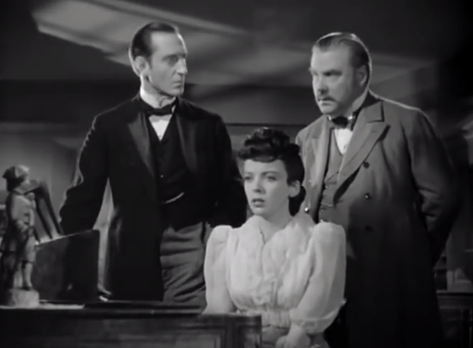
His central characters are a husband and wife, Osamu (Lily Franky) and Nobuyo (Sakura Ando), who approach life as counter-cultural enigmas within the country at-large. He is a struggling day laborer, hampered by a sprained ankle, and she is ultimately laid off from her position at a local laundry firm. These are hardly spoilers and more so remarkable indications of just how extraordinary their relationships are. Because together they form a ragtag yet tight-nit nucleus of a family.

Living with them are Grandma (Kiki Kirin), a runaway hostess club worker named Aki (Mayu Matsuoka), and a taciturn son named Shota. The beauty is how we know these individuals as part of a symbiotic unit. We assume each one is a sister or a son until we realize just how unique this “family” really is.

It begins coming into focus when the “parents” take in a lost little girl named Yuri. There are signs of neglect and even abuse on the part of her parents that leave her seemingly detached from the world. But through constant nurturing and their own brand of endearment, she begins to come out of her shell and feel safe once more. It is through the lens of her situation we most distinctly view the discrepancies apparent in such an overtly unified society.

It is a movie that I must consider in the context of actually spending a great deal of time living in Tokyo. Because the city itself is wonderful, the streets are clean, everything has order and tranquility. But it all comes down to being perceptive. If you look around you begin to see the flaws, the skeletons in the closets, and the issues residing very near the surface.

You have this monumental epidemic of loneliness in this sea of humanity, the reality that many old people die alone without a network of community. Similarly, because they have little welfare or funds, the elderly often take up menial jobs just to survive in their old age. Fewer and fewer people are getting married. The population in Japan is slowly declining.

All types of folks fritter away their days (and money) in Pachinko parlors, or they seek out some kind of intimacy through tawdry forms of sensual pleasure. Even well-to-do families — those who represent what we might call “The Japanese Dream,” fathers with well-paying jobs, a beautiful wife with fine, intelligent kids — they can be dying a little bit every day on the inside too.

If the Shoplifters is capable of pointing us to anything meaningful, at the very least, it suggests how imperative personal relationships are. They must be built on affection and genuine concern. There must be space for feelings and love and closeness. Ironically, for a place with so many people, Tokyo is just about the most isolating place you can possibly exist in.

The film also creates this utterly riveting dichotomy that we might tie back to De Sica’s famed neo-realist picture. Because many people will see the film’s title and frame the entire narrative through that window of perception. Here is a family living in poverty and stealing produce and things to make ends meet. On a surface level, this is all true. In fact, we meet Osamu and Shota in the act of their very meticulous thievery of a grocery store. It begs that question, what would you do to provide for your family?

However, one could argue Shoplifters takes it a step or two further along this moral gradient. What really is right and wrong? Are the ways we monitor the differences in society really just or is there more nuance to the definitions than we normally give allowance for?

To another point, yes, this family is breaking the law. There is no doubt about it whatsoever, and yet you look at how they treat one another and live with such close-knit bonds and you wonder. Again, it is the so-called “honest citizens” who treat their children’s lives with such detachment or worst yet derelicting their duties as parents entirely. They substitute material things for true concern. There is no competition. One is utterly infectious and meaningful, brimming with life and authenticity. The other feels callous, shallow, and fake.

If it is a critique, then it works in the most benevolent commentary known to man. Kore-eda has such an elegant, non-confrontational approach to his material, you never feel like you’re are being preached to. Instead, he rightfully invests in onscreen relationships to make them feel genuine.

Because if shoplifting is in the title, this movie is, nevertheless, an exploration of so many vast and varied topics that are well worth our time and money to consider. Kore-eda makes each one more than worthwhile through his deft touch and handling of each character. His children feel real and genuine even as his adults have multi-faceted contours worth pulling back.

In Matsuoka’s scenes at her work, the few solitary moments we have there somehow evoked Paris, Texas (1984) for me. Because in one sense, we are provided certain expectations — this outer veneer with preconceived notions of what this place will be — only to have them be subverted in the most beautifully illuminating manner possible.

The most meaningful revelation comes when she finally comes face-to-face with one of her customers in a small, intimate space. The man, who barely utters a sound, does not even crave sexual intimacy but simply contact of the most basic nature. He’s lying in her lap docilely, just listening to her talk and sharing a moment for a couple of solitary minutes. They form a connection even in this short span — perhaps more affecting than anything else that has happened to either of them in recent memory.

Out of all the scenes in the movie, this one literally broke my heart. It’s difficult to describe but it is one of the best examples I can put to the debilitating loneliness often found in a place like Tokyo. You begin to understand how monumentally alone people might feel. These are not depraved folks seeking out sensual gratification; these are the isolated men and women looking for some human contact; any contact. You don’t hug in Japan. Even the physical touch in itself is life-giving. Our main family embodies this kind of affection to the core of their being.

While the final act takes us into new territory and for different reasons the makeshift family gets pulled apart at the seams, there is still this wistful sense of relationship. It was never discord that was going to break them apart. It always had to do with the outside stressors and rigid reinforcement of the world around them.

Even in this social structure they still find brief momentary nuggets of continual joy and familial warmth. These emotions are so powerful and so very difficult to hold onto but when you can they imbue life with so much meaning. One prime example is a family pilgrimage to the beach — getting them out of the hustle and bustle of Tokyo life — for a bit of freedom.

Kirin Kiki is phenomenal again in this picture and while not her actual swan song, it is a fitting final testament to her versatile and highly perceptive talents. Although I’ve become acquainted with her quite recently, she will be dearly missed on the cinematic landscape.

The ultimate beauty of this film, however, is the very fact it is not about one individual but the whole interwoven network of lives stitched together. It does feel like a humbling experience. It is a film that suggests revelation can come from the most unassuming of places. We can learn more from a lowly thief than we might ever learn from all the professors, salarymen, and bigwigs in Tokyo. It is a stirring reminder of where true worth and priorities need to come from.

4.5/5 Stars


Summer with Monika (1953)

summer with monika (1953).png

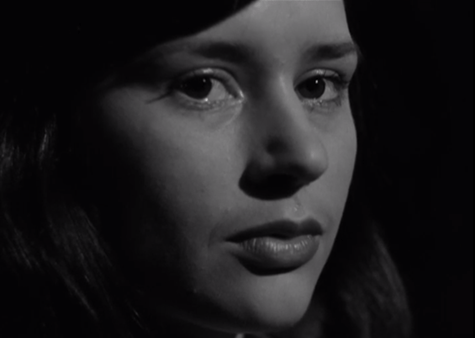
If I didn’t know any better I would say what the desires of the kids at the center of this early Bergman picture, sound like the American Dream. Except maybe it’s the Swedish Dream and maybe the main tenets are all but universal to many of the wide-eyed, angsty teens out there.

The lives of Harry (Lars Ekborg) and Monika (Harriet Andersson) have undoubtedly been witnessed countless times. They’re both in unfulfilling jobs. He’s an introverted laborer at a packing house where he’s not particularly happy and his constantly sub-par work ethnic receives the repeated wrath of his superiors. Meanwhile, the spirited Monika spends her days at a grocery store with a skirt chaser. Hardly the ideal environment.

But between Harry and Monika love blooms. He buys her a small trifle. They go to the movies together and she cries over the reveries on screen. This only serves to magnify how unpleasant real life feels, a far cry from the dreams they hold as working-class youth in Stockholm.

However, on a whim, Harry commandeers his father’s boat and Monika leaves behind her two annoying brother and nagging mother for adventure on the high seas (or rather the archipelago). The sun is bright. The water glimmers with personified delight. And it’s much the same for these two as they frolick and enjoy the novelty of this romanticized getaway. Even though the film famously features brief nudity, rather than being utterly sexualized, in more ways it evokes the imagery of Genesis 2 (Adam and his wife were both naked, and they felt no shame). The shame comes later.

Right now, they’re yet another iteration of the love-on-the-run narrative that proves you only need a mode of transport and passion does the rest — carrying lovers away on its gleeful wake.

Because at that age we’re all grasping at something intangible that floats above us tantalizing us every day of our lives. There’s not enough experience in life yet to know any better and so we go out and crave these pie and the sky ideals. Until it turns out were really grasping at straws. There’s nothing there for us. Only a harsh reality check.

As they often have a habit of doing, dreams so quickly turn themselves into nightmares and all the hopes that we clung to are dragged through the brush and the briar. So by the end, they’re muddied with dirt. That doesn’t have to be the end, however. Nor do you have to give in to your dreams being trampled.

As in the case of Harry and Monika, you can try and make a go of it the normal way. Grinding out an existence, poor and trying to eke by paycheck to paycheck. There’s a child now and he’s going to school to earn a better life, nagging like a conscientious adult about saving money and making their rent payments on time. There’s the constant bickering when he comes home tired from work and she’s discontent with this very mundane, sedentary lifestyle. There’s no allowance to go to the movies or buy some new clothes.

Soon she’s going to the arms of another man. Divorce is all but inevitable. How could all this happen in rapid succession you ask? Perhaps Summer With Monika is an exercise in heightened drama but Bergman, in essence, seems to be plotting the cycles of life and what hard-edged reality does to you.

It runs you up against the rocks, often destroys all your well-meaning aspirations, and leaves you disgruntled. Especially when we’re young we run that risk but any type of love, even those relationships founded in shallow soil, are rapturous when times are good. It’s a true test of stability when the bad times hit or further still the banality of the everyday. If you are still in love with a person even in those moments, perhaps that’s when you know you have a marriage with staying power.

It didn’t occur to me until well into the picture because I can be slow-witted with a thick skull but early on in the film, we have one of the old-timers observing that it’s springtime. The film is Summer with Monika and that embodies the happy times in the sun. But of course what must follow is Fall where everything begins to fall apart and then there are the bleakest depths of winter which are trying for any relationship to attempt to weather. All Harry can do is look back and yearn for those summer months. Although by wintertime it’s already far too late.

Bergman’s ultimately portentous parable is gorgeously rendered as usual. In fact, I’m not sure if I have ever seen a film by the Swedish maestro that wasn’t so. There’s a crispness to the black and white that while unadorned and unglamorous is nevertheless pure and blatantly arresting. In the moments of free, uninhibited youth it so exquisitely captures that mood while just as quickly shifting into the frigid moments as youthful innocence is forced to die.

4/5 Stars

Mirror (1975)

the mirror 1975.png

Andrei Tarkovsky has already left such an indelible impression on me even after only seeing a couple of his films. This already makes it very easy to place him atop that ever fluctuating, never quite established, constantly quarreled over, list of the greatest filmmakers of all time. He’s subsequently one of the members of the fraternity with the least recognition; the key is visibility or lack thereof. Because once you see his work, even if it doesn’t completely speak to you, something is released that’s all its own with a singular vision and the unmistakable brush strokes of an auteur.

There has never been a film more fluid and uninhibited in the distillation of memory than Mirror as it slowly slaloms between the past and the present, enigmatic dreamlike movements with unexplained conversations and encounters, spliced together with bits of wartime newsreels and spoken poetry.

In order to even attempt to ingest any of this rumination at all, there’s a near vital necessity to shed all the traditional forms and languages that you have been taught by years of Hollywood moviegoing.

Not that they are completely excised from Mirror but it’s never driven by logical narrative cause and effect. Rather it’s driven by emotion, rhythm, and feeling — what feels intuitive and looks most pleasing to the eye.

It’s precisely the film that some years ago might have been maddening to me. Because I couldn’t make sense of every delineation culminating in a perfectly cohesive, fully articulated thesis, at least in my mind’s eye. It’s far too esoteric for this to happen. But this unencumbered nature is also rather freeing. There’s no set agenda so as the audience you are given liberty to just let the director take you where he will.

To its core, Mirror gives hints of a very personal picture for Tarkovsky as it memorializes and canonizes pasts memories and shards of Soviet history. Because they are tied together more than they are separate entities. And yet, as much as it recalls reality, Mirror is just what it claims to be. It is a reflection. Where the world is shown in the way that we often perceive it.

The jumbled and perplexing threads of dreams, recollections, conversations, both past and present. Childhood and adulthood, our naivete and our current jaded cynicism, intermingled in the cauldron of the human psyche. Back and forth. Back and forth. Again and again.

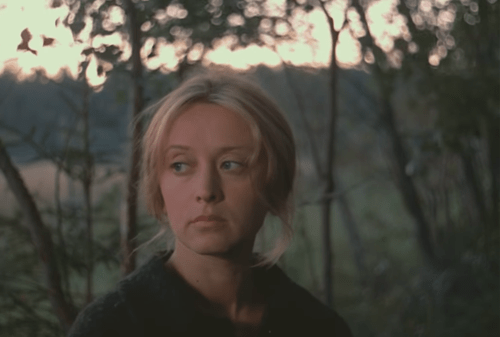
Because what we watch is not simply about one individual. As with any life, it’s interconnected with others around it. A woman (Margarita Terekhova) sitting on a fence post during the war years in an interchange with a doctor. In the present, Alexei, our generally unseen protagonist, converses with his mother over the phone. We peer into the printing press where she worked as a proofreader. Rushing about searching for a mistake she purportedly made. Regardless, it hardly matters.

In the present, Alexei quarrels with his estranged wife on how to handle their son Ignat. The fact that his wife is also played by Terekhova is more of a blessing than a curse. In a passing remark, he notes how much she looks like his mother did and it’s true that she is one of the connecting points. Even as she embodies two different people, the performance ties together the two periods of the film. Visually she is the same and that undoubtedly has resonance to Tarkovsky.

As the film cycles through its various time frames so do the spectrums of the palette. The color sequences have a remarkably lovely hue where the greens seem especially soft and pleasant as if every shot is bathed in sunlight. It’s mingled with the black and white imagery as the story echoes back and forth, past and present, between different shades and coloring. But whereas these alterations often provide some kind of cinematic shorthand to denote a change in time, from everything I can gather, Tarkovsky seems to be working beyond that.

Because there are scenes set in the past that are color, ones in the so-called present that are monochrome, and vice versa. It’s yet another level of weaving serving a higher purpose than merely a narrative one. If I knew more about musical composition I might easily make the claim Mirror is arranged thus — the cadence relying more on form than typical cinematic structure.

mirror 2.png

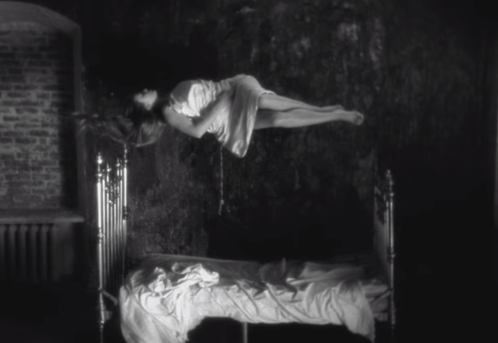
That and we have Tarkovsky’s long takes (though not as long as some) married with his roving camera that nevertheless remains still when it chooses to. The falling cascades of rain are almost otherworldly in their spiraling elegance. The wind ripping through the trees a force unlike any other though we’ve no doubt seen the very same thing innumerable times. Fires blaze like eternal flames. Figures lie suspended in the air, isolated in time and space. Each new unfolding is ripe for some kind of revelation.

We also might think our subjects to be an irreligious people but maybe they still yearn for a spirituality of some kind. I’m reminded of one moment in particular when, head in her hands, the wife asks who it was who saw a burning bush and then she notes that she wishes that kind of sign would come to her. If there is a God or any type of spiritual world, the silence is unappreciated.

I recall hearing a quote from the luminary director Ingmar Bergman. He asserted the following, “Tarkovsky for me is the greatest, the one who invented a new language, true to the nature of film, as it captures life as a reflection, life as a dream.”

The words are striking to me because you could easily argue Bergman’s films also had such an ethereal even refractive quality. Look no further than Through a Glass Darkly (1961) or Persona (1966) and this is overwhelmingly evident. And yet he considers Tarkovsky the greatest.

This isn’t the time or place to quibble over the validity of the statement. But it seems safe to acknowledge the effusive praise the Soviet auteur has earned for how he dares play with celluloid threads and orchestrate his shots in ingenious ways. He exhibits how malleable the medium can be as an art form while never quite losing its human core.

4.5/5 Stars

Pather Panchali (1955)

pather panchali 1.png

Pather Panchali is one of those films that instantly helps you to recognize the merit of the cinema. It’s a cultural artifact allowing us to come to grips with the fact there is a world far larger than our little pocket of existence. Satyajit Ray does that for us here in his affecting debut by relating India to us through stark realism. It pierces to the core and captivates its audience through simple beauties. Simultaneously, he manages to touch on universal truths that prove our very commonalities as human beings.

I must admit to being fairly ignorant about many of the nooks and crannies of international film and so I needed this movie just like I needed the work of Ousmane Sembène and no doubt the films of many other directors still yet to be discovered.

In this particular instance, I deeply appreciated Pather Panchali because this is not a story told by Rudyard Kipling about a British Colony or even a Hollywood adaptation of an albeit heartwarming tale like Lion (2016). This is Ray’s picture. For all intent and purposes, told from his perspective as he so chooses. He has agency if we desire to use the terminology. It allows this to be a truly intimate portrait crafted by a budding Indian visionary as a showcase to the world abroad.

Ravi Shankar is best remembered for his connection to George Harrison but his score featured here, consisting solely of his virtuoso sitar playing, adds a strain of traditional instrumentation, further blessing the film with a sense of native identity.

Maybe this is a highly romanticized portrait. I cannot personally speak to this either, but there is a paradoxical even spellbinding quality to the imagery as it unfolds. We are seeing the everyday lives of this family. We see them in their humble means, their poverty even, and yet though we are cognizant of it, somehow it doesn’t completely register because their world somehow manages to be so rich.

The reflections in a stream reminded me of the images in Kurosawa’s Rashomon (1950) when he captures the light through the trees. Ray is equally content with documenting the immaculate construction of nature at hand. Delicate as it is magnificent.

But against this backdrop, he unfurls a perceptive slice of life that’s its own brand of neorealism — never rushing the ordinary moments — allowing them the space to unfold of their own accord. It methodically seeks out the fascination in these common things such as the whistling of the wind, passing trains, water lilies, and incoming rainstorms.

Still, it’s about the people too and they make up the glut of the story. The most mundane of these moments made me smile with fond recognition. Two boys playing tic tac toe on their slate instead of doing sums at school. A dog and cat pawing at one another. A little boy combing his stringy locks of black hair or running around his family’s rickety home with his homemade bow and arrow as his mom chides him to finish his food.

Instead of an ice cream truck, they have a traveling sweet seller and they always beg their father for money when they see the man off in the distance. Sometimes they get it but more often they follow him to their neighbor’s to see if their playmates were so lucky as to get some sweets.

The individual characters we meet are no less intriguing and all of them, as far as I know, are amateur performers. The big sister Durga takes fallen fruit from a neighbor’s yard to give to her old auntie. But such practices get her accosted and labeled a nuisance. Auntie meanwhile, moves creakily, her face weathered by a tough life, hunched over and missing most of her teeth. Yet there’s still fight left in her and an indefatigable spirit.

The husband, though he struggles to provide for his family and oftentimes doesn’t even get paid regularly when he is working, aspires to write in his few idle hours because his forefathers were authors in their own right.

His wife has her own fears about being alone so often as he’s off at work or trying to find work. It leaves her by herself taking care of their degrading home and watching over their kids in a society with a poor support system. She has no one to turn too aside from the humiliating charity of neighbors.

Then, last but not least is little Apu and while he might not be our main character — all the family play equally important roles — it’s his point of view that’s most accessible. Ray clings to his face with soft zooms or closeups catching his reactions to all sorts of events. Young Apu peers at the world inquisitively with steely eyes. Very rarely does he speak but he’s a constant observer of the everyday.

He’s the herald of letters which come few and far between when his father is away. He and Durga frolick around the train tracks as the belching locomotive passes by. He gets into his sister’s humble cache of foil in her toy box to craft a prince’s crown. Then shares sleeping quarters with his sister in their meager lean-to that looks like it will all but collapse in the wake of the rainy season.

Certainly, there are dramatic turns in the broader story of this family unit but they are rooted in the real-life events that we experience in the day-to-day. Debts to pay off. Saving face with the neighbors who needlessly gossip. Family members passing away. Husbands gone with barely a word because lines of communication are difficult. The innate desire to want more out of life even if it’s a simple home to call your own and a better future for your kids.

What makes Pather Panchali resonate to the very last frame as we watch this family move on to the next stage in their life, is not how different they are from us. It’s how similar. Because, yes, this is a picture of an impoverished Indian family but it no doubt can speak into any person’s life who is willing to be open to its story like an inquisitive child. Ready and willing to see the world for all its innumerable complexities both the sorrowful and the joyously light.

4.5/5 Stars

Review: The Quiet Man (1952)

John_Wayne_Maureen_O'Hara

When you think of the combination of John Ford and John Wayne, it’s only normal to conjure up the quintessential western pairing. It’s true there are so many films that we could pay a nod to like Stagecoach (1939), The Searchers (1956), The Man Who Shot Liberty Valance (1961), etc.

Thus, when considering such company The Quiet Man always felt like an obvious outlier and yet I’ve always been taken with it for those exact reasons. John Ford was an Irishman through and through. He made The Informer in 1935 and though How Green was my Valley (1941) was based around a Welsh family it might as well be considered an analogous world.

But with this picture, we see Ford’s final venture into such a country — the homeland of his people and there’s certainly an idealized quality to it. Where the Catholics priests (Ward Bond) pretend to be Protestants when the local magistrate comes through the village to inspect the parish. Where the colorful figures of the village, despite small stature, are painted with bright and jovial strokes that nevertheless seem larger than life. There’s nothing lackluster about them and no harm in that.

Stereotypically wrought or dated by today’s standards you might say but Ford is undoubtedly paying a final homage to the lore of his ancestors. A history that stretches further back than many of us might be able to comprehend. There’s a surprising affection that courses through the picture. If not simply in the people than certainly through the capturing of scenery as well.

Exterior sets aside, the on-location imagery is on par with John Ford’s most  resplendent scenes from Monument Valley. There couldn’t be a sharper contrast either in Winston Hoch’s photography of rolling hills with the arid plains that define most of the indelible visuals from Utah. Again, that makes them all the more resonate, the true epitome of lush mise en scene.

Because The Quiet Man is a film that is continually blessed by a big screen where the Technicolor tones overwhelm you with their fervent grandeur only surpassed by the feisty fire bursting forth from Maureen O’Hara. Ireland has never looked more gorgeous and the same can be said of the bonniest lass I did ever lay eyes on clothed in red and blue. Victor Young’s score proves to run the paradoxical gambit between utter serenity and majesty with playful dips to match the film’s own backbreaking brand of broad comedy.

Sean Thorton (John Wayne) makes the pilgrimage to the little community of Innisfree intent on buying back his childhood home and finding himself a local bride. He’s reticent as to why exactly he’s decided to return. But regardless, the yank is not accustomed to the way the world works in the old country. He is in need of some sagely council.

Sean’s main guide is the bright-eyed leprechaun in human form (Barry Fitzgerald) who becomes his matchmaker, the liaison between him the and barrel-chested bully Will Danaher (Victor McLaglen). Though Sean is taken with the man’s sister, he can’t call on her until the squire gives his consent and a squabble over some real estate makes their relationship tenuous at best.

There are certain sensibilities. Certain customs that are unspoken law of the land. Life moves a little slower too.  But when it does move it rolls down the roadways with a blistering pace of good-natured thunder. Local horse races become the arena for men to exercise their prowess and win the favor of the local ladies through feats of athleticism leading to a bonnet-lined finish.

Sean finally gets some consent and the courtship begins though Flynn constantly warns against any amount of “Paddy Fingers.” And they get on well enough until Mary Kate, being the proud woman that she is, demands her husband collect the dowery that is rightfully hers. He could care less about the money or her hulking brother and yet he declines. She figures him a coward and not to be touted as such, he finally relents, ready to have it out with his rival onece and for all.

To make his point, he deals with both of them setting up The Quiet Man’s exemplary showdown. It’s a final fist-throwing wallop fest that’s all spectacle. The whole town runs rampant across the countryside as the two men (Wayne and McLaglen) wail on each other. Back and forth. One decked. The other pushed, kicked or whacked. They’re on the receiving end of a face full of water and start it all over again. In the end, its all in good fun and that’s how this movie would have it. There’s little need to take it too seriously. The pure enjoyment factor is one of its most laudable virtues.

It’s also the stuff of legend what Maureen O’Hara was coaxed by her director to whisper to Duke in those last moments. The words are said michievously and his face lights up with sheer incredulity. For me, it doesn’t matter because his expression says it all and the way she playfully leads him off into the distance, enticing him to follow her across the row of stones, is so candid.

The chemistry between them is as real as anything I’ve ever seen on screen. He whips her around and drags her along, gives her a slap, and yet she’s got fire enough to face off against him and give him a run for his money. She keeps him on his toes and he goes to great lengths just to be with her. The Quiet Man works because that central dynamic is robust and still equally passionate. Their natural affinity for one another cannot be counterfeit. It’s too sincere. It’s what made them so iconic together and it’s part of what made John Ford’s The Quiet Man an idiosyncratic and still thoroughly luxuriant classic.

5/5 Stars

Paris, Texas (1984)

Paris,_Texas_(1984_film_poster).pngIt occurs to me only someone with an outsider’s perspective would choose to make this movie, which is void of any typical Hollywood flair. No American would have thought in a million years to cast Harry Dean Stanton (a lifelong character actor) and Dean Stockwell (an all but forgotten child star) while capturing such a cross-section of America. Therein lies a moderate amount of the allure in Paris, Texas

We must begin with the locales. There’s little doubt they are indeed as American as they come and yet director Wim Wenders, backed by a joint French and West German venture, has embarked on something distinctly his own. The film’s title perfectly reflects this blending of Americana with European sensibilities. 

Of course, the Heartland of the U.S.A. is evident as well. Anyone who has trekked across Middle America stayed in a cheap motel or found the nearest rest stop knows it well because it turns up so many other places aside from Texas.

It is a film reflecting the degradation of America as much as the austere beauty. Cinematographer Robby Muller captures rundown junk, forgotten turn-offs, billboards, and roadside diners because they are just as much a part of the American experience as any amount of decadence. One might say they are even more indicative of the generally accepted cultural status quo. 

Especially in its opening moments, Paris, Texas readily evokes a bit of the ruggedness of the Old West. What others might envision as the mystique of America with one of its distinctly original mythologies. It is the kind of imagery at home in a Ford picture who was himself one of the foremost purveyors of the American mythos.

The hard-edged twang of Cy Cooder’s utterly distinctive slide guitar score gives us a very concrete inclination of our world. The only time I can recall anything similar might be the minimalist music to go along with Murder by Contract (1958).

Travis materializes in our story almost like an extra-terrestrial life form. He wears his iconic ensemble of a red baseball cap with his suit and tie. Red tones course through the entire film in fact. There’s no missing it again and again. However, in these opening moments, it does feel like Travis never had a true beginning just as he merely dissipates in the end. This almost otherworldly quality readily dictates the entire conventionality of the landscape.

When his brother Walt (Stockwell) receives news of his whereabouts he goes to fetch him. He and his wife (Aurore Clement) are the ones with feet firmly placed in a sort of reality. He is a billboard ad man and they have taken in Hunter (Hunter Carson) as their own son.

Stanton is catatonic and yet there is a near robotic purposefulness to his steps. He has a bit of Forrest Gump but this is not quite right. He undoubtedly is plagued by some form of amnesia, which nonetheless is never fully acknowledged. Walt expects his brother to talk after four years off the grid and he rarely obliges. 

As they travel back to Los Angeles, the movie rolls along leisurely, content to be almost cavalier with its runtime. Because it wouldn’t be a road trip if you didn’t take your sweet time but it’s certainly a European strain of road film.

As such we might easily segment Sam Shepard’s story it into three parts. The opening moments in Texas set the scene, there’s the interim in Los Angeles, environmentally so different, and then the final odyssey back into the heart of Texas.

Surely the film lacks pure authenticity but instead, we are met with a spellbinding subtlety equal parts poetic and mundane. We must only watch the characters a few moments to know they hardly function as we would.

It starts with Stanton and radiates out from there down to his son and finally his long-lost wife Jane (the exquisite Nastassja Kinski ) who is the object of his journeying. There is parental negligence going all but unquestioned. They never seem to cling to bitterness even the little boy seems mature beyond his years, ready to embark to the ends of the earth with his recently arrived father. It’s as if this one quest galvanizes their relationship without question. There is no need to put words to it. They intuitively understand each other as flesh and blood, no matter the years that may have gotten between them.

Stanton himself is a walking corpse who nonetheless never seems in need of sustenance or sleep. And the extraordinary phenomenon, thanks to time, is the establishment of a new status quo, a slightly modified version of the world, which we readily come to accept. Maybe it’s the foreigners perspective I mentioned in passing or a more pensive contentment with the world. I cannot say exactly lest the film loses some power.

Regardless, the final act by some piece of cinematic ingenuity manages to be gripping. Perhaps as an audience, we become more attuned and simultaneously conditioned to the pacing. Because while the journey might seem slight it’s no less of a journey. 

With one concrete lead — a bank in Houston, Texas — father and son set off to find the third member of their fragmented family, staking out the bank with walkie-talkies and waiting for her to arrive. Finally, she does and Travis finally makes contact in a garish back alley peep show.

However, ironically, despite the sullied outer layer, it’s in this environment of anonymity provided by a phone connection and a two-way mirror that allows him to communicate with her in the adjoining room. The pretenses of such a place fall away as the film manages to unearth a tragic intimacy of heartbreak and melancholy in the wake of lost love.

The immaculately staged climax is made up of a monologue — a moment shared between a man and a woman — as he recounts their story. It’s a single scene that must go on for 10, 15, 20 minutes. Except we never realize it. She thinks she is providing a service to the person on the other end of the line, being a listening ear, and she is. But then he solemnly recounts their romance and recognition begins to don on her face.

He pours out his heart matter-of-factly and honestly, turned away from the glass as not to see her in this compromising world. It makes it exponentially easier for the words to leave his lips as she listens captured in every painful recollection just as he is. But there is no emotional outbreak, breaking of glass, or the like. This is purely an exercise in loneliness and regret.

Not until after the fact does the boldness of this scene set in because it’s so easy to get caught up in the moment. We understand the implications and yet we’re desperately trying to perceive the situation, wanting to know if she recognizes him. Even more so we want to know what they will do.

Striking the perfect note of resolution and continued inscrutability, mother and son are finally reunited in a maternal embrace and just as he arrived into the world, Travis fades into the night just as easily.

I can imagine Paris, Texas is a place that is meaningful to Travis just as Nevers and Hiroshima hold importance to the lovers in Hiroshima Mon Amour (1959). It’s really not a place at all but a part of his identity, a destination he is hoping to get to, a dream he is doggedly pursuing on earth. He is ever searching, always wandering, but in the midst of it, he maintains an unswerving capacity for love. Even though he’s made mistakes we can hardly comprehend, family remains his guiding compass.

4.5/5 Stars

Heroes For Sale (1933)

heroes for sale.png

We are inserted, presumably, into a war picture courtesy of William A. Wellman, situated in WWI trenches. The downpour is compounded by the constant hail of bullets as a group of men conduct a near suicide mission. One of the soldiers, Tom Holmes (Richard Barthelmess) proves his heroics on the battlefield while his friend Roger dissolves in fear. But the battle leaves Tom, now a prisoner, with debilitating pain from some splinters of shrapnel lodged near his spine. He’s given morphine to keep it manageable.

He comes back from the war addicted. He gets the shakes at his bank job where he works under his war buddy Roger and the other man’s father. Tom is constantly in need of his fix and it just keeps on getting worse and worse.

Early on, the picture begs the question, how are heroes made? We turn them into near mythological beings and even if it’s well-vested that doesn’t mean that they consider what they did to be anything extraordinary. Imagine if it’s not deserved. Tom and Roger understand exactly what this is like. In the wake of a scandal and his ousting from the bank, Tom gets interned at a drug clinic only to come out a year later a new man ready for a fresh start.

It struck me that in a matter of minutes the film drastically shifts in tone, suggesting at first the dark shadows overtaking a picture like All Quiet on the Western Front (1930) only to come out unscathed and don the coat and tails of an industrial comedy-drama. I must say that while the former feels more akin to Wellman’s usual strengths, I do rather prefer the latter, though the picture doesn’t dare end there.

Wellman introduces us to our latest locale with a dash of humor delivered through an array of pithy signs adorning the walls of an old diner. But it’s the people under its roof that make it what it is. Pa Dennis (Charley Grapewin) is the most genial man you ever did meet and he would give you the shirt off his back if you needed it. His daughter Mary (Aline MacMahon) is little different though she chides her father for his loose finances.

heroes for sale 1.png

Still, her jovial hospitality charms Tom into striking up a conversation and considering renting a room from them. Meeting the disarmingly attractive Ms. Ruth Loring (Loretta Young) from across the hall all but seals the deal. Cue the music as Young enters stage right and let’s disregard it and just say she more than deserves the fanfare.

You would think the inventor with overt “Red” tendencies, adamant criticisms of capitalism, and a chattering habit like a squirrel would be a turnoff for prospective boarders. Not so.  Soon Tom joins the ranks of the local laundry where Ruth also works forging a happy life for themselves.

The mobility of Heroes for Sale is another thing that struck me. It results from a different era but this is also very much a Depression picture in the sense that we are seeing what a man can still do even if times are tough as long as he has a strong head on his shoulders. Machinery is implemented not to steal work away from eager employees but to cut down on long working hours and increase output. All in all, it sounds like a thoughtful and humane objective.

But a heart attack leaves the company in different hands that are looking to work only in dollars and cents, not in humanity. Thus, it looks like Tom’s idealistic enterprising has been turned on its head, now completely sabotaged. All the folks who put their trust in him are bitter with the prospect of losing their jobs. Put out of business with their own funds.  This same unrest runs through the pages of Steinbeck’s Grapes of Wrath (1940) too as modernity begins to put out all outmoded methods standing in the way of so-called efficiency.

What we have here is a populist picture daring to show the plight of the people. Richard Barthelmess is an affecting lead because he seems almost unextraordinary. His voice is steady and calm. He’s not unkind. But there’s an honesty to him that asserts itself. The fact that he gets a bum steer and takes it without so much as a complaint speaks volumes so he doesn’t have to.

Heroes for Sale feels like a micro-epic if we can coin the term. It’s ambitions somehow manage to be grandiose as it sweeps over cultural moments like WWI and The Depression which underline further social issues including heroism, drug abuse, communism, and worker’s rights. All done up in a measly 71 minutes. Look no further than the standoff between an angry mob and the riot squad for squalid drama. This is no minor spectacle. Nothing can quite express the anguish watching Young frantically run through the violent frenzy in search of her husband.

There is no excuse if this is the standard we put longer films up against. Not a moment seems wasted. Yes, it goes in different directions. Yes, it feels like a couple different films and yet what connects it all is this abiding sense of Americana. Themes that resonate with folks who know this country and its rich history made up of victories and dark blots as well. Most brazenly it still manages to come out of the muck and the mire with a sliver of optimism left over. Heroes For Sale is no small feat.

4/5 Stars

Employees’ Entrance (1933)

employee's entrance 1.png

Not only is Employees Entrance a film made for the Great Depression, but it’s also a project that would have no life if it were not for the lax enforcement of the Production Codes at the time. The same could be said of its protagonist — if he can dare call him that.

Warren William embodies the mercilessly driven businessman named Kurt Anderson like few men before, or even after him, could. He’s a brutal taskmaster who has no sense of integrity. A John D. Rockefeller except less religious. So he has even less of a moral framework. His main purpose is to crush other people because he’s running a business, not a charity ward.

He throws out the weak and surrounds himself with like-minded people. It’s how he’s managed to keep Monroe Company Department Stores a flourishing enterprise even after “The Crash.” Not everyone can say that.

An ambitious, young man named Martin West (Wallace Ford) impresses the autocrat with his idea of upping sales of men’s drawers by selling them to women. Meanwhile, Anderson finds time to sink a clothing supplier who can’t deliver on a shipment and fires a senile department head who nevertheless has stayed with the company well-nigh thirty years.

Thus, we get this sense that he wields a two-edged sword. Anderson is surprisingly generous and accommodating to those who fit into his scheme of things. For instance, increasing a certain models salary if she distracts his colleague next door. Yet he will just as quickly dump someone who is not pulling their weight. That’s how survival of the fittest works. We know this already.

What suggests this more than anything, however, is his treatment of women. Loretta Young sporting those luminous doe eyes of her is gorgeous as Madeleine, a woman who is nevertheless down on her luck and looking for work at Monroe’s. She meets Mr. Anderson quite by chance, after hours, as she has made the stores home decor section her temporary domicile. He’s immediately taken with her. Is there a tenderness unveiled perhaps?

employee's entrance 3.png

Ultimately, he rewards her with a job and she’s quite the success on the floor. Even catching the eye of Martin. He professes his undying affection wordlessly through adverts. And they do the one thing that if he knew about it, Mr. Anderson wouldn’t approve of. They fall in love. In his estimation love is for saps, marriage gets in the way, and he wants his people to be enamored with their work as much as he is.

Young proves adorable even when she’s tipsy, bopping and popping balloons. But as often happens, people make decisions that they will come to regret while inebriated at parties. This film is little different.

The tone and trajectory break with the entire order that the Production Code soon set in place such that we never would see the likes of this again in Hollywood, at least not for a very long time.

It’s this seemingly admissibly trenchant material that makes navigating Employees Entrance onerous, similar to problems I have with more modern works. It comes down to not only issues of tone; because this is a humorous film undercut by some severely dark realities, even suicide and rape, but it also has to do with the integrity of our lead.

For all intent and purposes, our anti-hero hardly has an ounce of likability. The best that can be said for him is he’s enormously successful and good at his job in a tyrannical, ruthless sort of way. Otherwise, he has no heart, no soul, and he’s a misogynistic lout to boot. The fact that any of those characteristics got put into a man who is not cast as a villain truly is a marvel. It’s definitely worth taking note of.

But this is also a somewhat saucy Pre-Code number and the certain playful impertinence is personified best by Alice White who burst onto the stage during the flapper craze of the 1920s. In one particularly rewarding moment, she tells a stuffy old crone that the basement is on the 12th floor as nice as you please. It’s classic lip.

However, there’s this instant realization that Warren William was made for films such as this. The implications hit like a ton of bricks. He all but disappeared from movies since Joseph Breen literally excised his entire character type out of Hollywood’s new imposed master narrative.

Others might be able to do a far more convincing job of making the case but like his contemporary Kay Francis, it’s time for the likes of Williams to be resurrected from near obscurity. Certainly, not everyone will like him, particularly in this film, but there’s no question that he has something. It allows him to play those scathing characters with an unparalleled precision.

But I’ll be honest, I’m genuinely beginning to think that Loretta Young deserves a spot as a Pre-Code icon as well. In 1933 alone she was featured in nine films! The only problem is her efforts from the 1940s are more well-known. The Stranger (1946) and The Bishop’s Wife (1947) seem to overshadow most anything else. Yet another reason to uncover Employee’s Entrance.

3.5/5 Stars

The Bitter Tea of General Yen (1933)

bitter tea of general yen.png

The Bitter Tea of General Yen is no doubt a perplexing film to come at today but, in some respects, that makes the experience all the more gratifying. There’s still something within it 80 years on that will simultaneously rub up against our contemporary perspective while also surprising us with a certain adroitness. So many issues are stacked up one on top of another, it’s a weighty task to begin trying to unpack them all.

Certainly, we have the strains of colonialism driven by western missionaries looking to share the Christian faith with the outer reaches of the world. In fact, we can probably derive some similar themes from films such as Keys to the Kingdom (1944) and Silence (2016) which provide a myriad of questions in their own right. Are these missionaries really making a difference? Is their Gospel even being comprehended? Should they be so bold as to force their beliefs on other people groups? All of these are up for valid consideration.

Racism must also be tackled whether it is shown to prove a point or is simply a casualty of a previous generation’s approach to Asian portrayals. We hear the words of one elderly lady who in one moment is going on about how lovely a wedding is going to be and then the next she shares her true sentiments about the Chinese.

“They’re all tricky and immoral. I can’t tell any of them apart. They’re all Chinamen to me.”
It’s this kind of narrow thinking, this blatantly obvious cultural insensitivity, laid right out in front of us. Thus, it seems likely the film’s main thesis might be to prove the exact opposite. That in itself seems monumental.

We have the casting of a Scandinavian in Nils Asther for the role of the Chinese general to contend with as well. And while it’s easy to get stuck on this or go the complete opposite end of the spectrum and take it for granted given the cultural moment it came out of, I hope to arrive at another conclusion. “Yellowface” always perturbs me and yet I also realize we have to understand the intentions and so I’m apt to read this picture much as I would Broken Blossoms (1919).

Whereas Mr. Moto and Charlie Chan work in stereotypes and the Fu Manchu archetype is the demonizing of a race, you do not quite get the same sense here. Even with the problems inherent in the characterization, what comes through emotionally is resonant. Then, further still is the landmark consideration of interracial romance, no doubt a turn off for many contemporary viewers — or at the very least taboo.

The whole narrative is really about the steadily evolving relationship between an American woman (Stanwyck) and this Chinese General (Asther) who keeps her in his domain on the pretense that it is for her own safety with the civil war still raging at large.

Megan is one of those naive yet well-meaning individuals who comes to a foreign land to do good. This is the imperative of “The Great Commission” and bless her soul, she takes her faith seriously, coming to join her soon-to-be husband wherever he may go.

But soon she is struck with a reality check. Her fiancee and she try and rescue some orphans caught in the middle of the hellish war zone, but the pass they’ve been provided is no good. In the ongoing turmoil, Megan finds herself brought to the palace of General Yen for safekeeping, her husband lost in the chaos.

What follows is an exercise not so much in polarizing romance, which would be the easier road to traverse, but instead cultural understanding through candid dialogue. He criticizes what he sees as a flaw in her man, that he will betray her every time for his God. Meanwhile, the idea all humanity is one flesh and blood is almost laughable to him.

And yet, again and again, he is drawn not only to her exquisite appearance but the undeniable sincerity that guides her every action. She, in turn, recognizes something of a hidden sensitivity welled up inside his soul. As he notes, “There has never been a people more purely artist, and therefore, more purely lover, than the Chinese.”

The most straining circumstance involves the General’s lowly concubine Mah-Li (Toshia Mia) who has all but disobeyed him. Megan chides him to forgive her even in her insolence (“I want you to see the beauty of giving love where it isn’t merited”) and for the greater offense of passing secrets which gives him the grounds to have her killed. You can either say he softens or finally lets down his guard. It’s semantics really.

This might very well be the Capra picture people don’t expect because it flies in the face of all the criticisms usually leveled against him. Specifically, that he always made overly sentimentalized films without a shred of hard reality. I’ve tried to push back against this presupposition countless times and I think The Bitter Tea General Yen is another fine counterargument. Look no further than the excruciatingly frank depictions of military executions, soldiers decimated by Gatling guns,  betrayal, suicide, and near surrealistic dreams that invade a woman’s consciousness.

However, it’s difficult not to begin comparing it most obviously to Shanghai Express (1932), a picture that reveled in its atmosphere and featured Josef von Sternberg’s visual infatuation with Marlene Dietrich. Frank Capra does Stanwyck justice in his own right because there’s no doubt she’s vibrant and alluring throughout. It’s brought into sharp relief through numerous stunning close-ups that capture the softness of her features. Not to mention the tears. Something that makes her different and more vulnerable than her German contemporary.

But we must ask the question. Is it a type of Stockholm Syndrome? Is it a true romance or simply an affection for a man who had more beauty, more artistry, than she would have initially given him credit for? I’m not sure we know and the ingeniousness, I realized retrospectively, of the film’s ending, is that we never hear Barbara Stanwyck’s thoughts on the matter.

Walter Connolly just won’t shut up and he’s supposing all these different things. Recalling what a great guy the General was, considering what Megan will do next, and summing up the General’s spiritual proclivities. Maybe he’ll come back in some new incarnation. But the lady says next to nothing and there is a cryptic power in this. Because The Bitter Tea of General Yen allows us to ruminate over the material and draw out conclusions of our own.

3.5/5 Stars

Taxi! (1932)

taxi! 1.png
Taxi! is indubitably parked in the pantheon of misquotes and few people probably realize it. Yes, this is the film where Warner Bros. tough guy James Cagney purportedly sneered, “You dirty rat, you killed my brother!” I remember hearing the line in everything from The Monkees to M*A*S*H and it no doubt showed up in just about every show from here to eternity. Right up there with Cary Grant’s apocryphal line “Judy, Judy, Judy.”

But none of that speaks to this film or what it’s actually about. Well, the title says it: Taxicab drivers. So let’s talk about the talent instead and when I say talent that mostly means two people, James Cagney and Loretta Young. They’re the main draw.

In the opening gag, we see James Cagney using his Yiddish to placate a customer who can’t seem to get any help from a policeman. But he’s also back to running off his mouth and throwing his fists because after all, this is the same man that electrified the world with his portrayal of a gangster in William Wellman’s Public Enemy (1931) of the previous year.

The crucial event in this film is a rash of strong-armed maneuvers pulled by a taxi conglomerate in New York City looking to shoulder their way into the industry through scare tactics and willful sabotage of their competitors.

One of their victims is a veteran cabbie (Guy Kibbee) who isn’t about to take this lying down and he guns down one of the perpetrators of injustice. Justice is swift and he is given a prison sentence in lieu of death. But it might as well have been. His life is all but over.

In the wake of this outrage, Cagney begins a call-to-arms for his fellow colleagues to fight back and fight fire with fire as it were. The incarcerated man’s daughter (Young) stands tall as well and calls for action by peaceful means. She receives the disdain of Nolan for behavior that he sees as selling out her own father. Of course, he doesn’t know the whole story.

For some inexplicable reason, maybe it’s his animal magnetism, Sue falls for the cad of a cabbie. What follows are dates at the picture show which provides some free publicity including a weepy starring Donald Cook and a poster for The Mad Genius (1931) starring John Barrymore.

Sue’s fellow waitress at the local grub hub, the oddball chatterbox Ruby (Leila Bennett) even makes a passing comment to her beau about Frederic Marc though Joe E. Brown is still here personal favorite. It makes sense.

Next, comes a Peabody contest at the nightclub, featuring an appearance by George Raft, where the fiery Cagney tries to wail on his real-life friend. If it’s not that then it’s a fat man in an elevator or most obvious of all Buck Gerrard the big oaf who had a part in the shady tactics that landed Sue’s father in jail.

Matt’s not a happy camper for most of the film and yet he still manages to keep his gal. After a lover’s quarrel, a silky smooth Cagney takes his love in his arms and they dance while he slips a ring on her finger. He’s also a self-confident son-of-a-gun.

But as electric as Cagney is, one of the best to ever light up the screen — there’s no doubt about that — I’m not sure if I can forgive him slapping around someone as loving and as innocent as Loretta Young. Especially today, it just doesn’t come off very well. She deserves someone better.

3/5 Stars