Baby Face (1933)

baby face 1.png

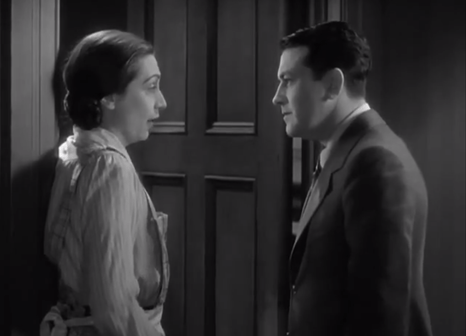
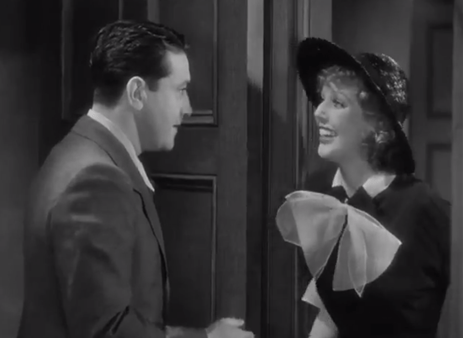
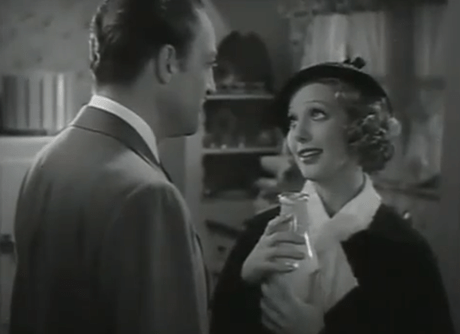
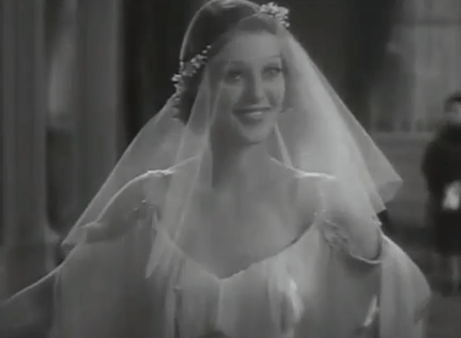
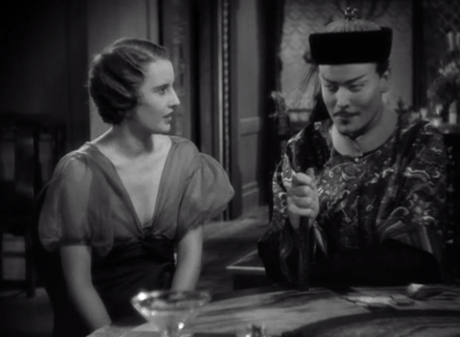
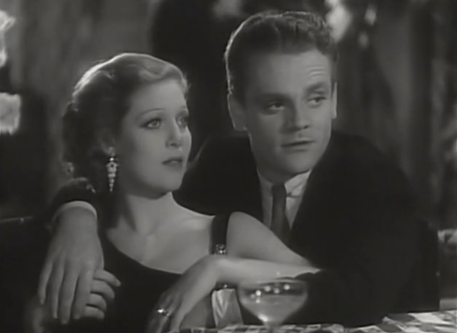
Even in its opening moments, Baby Face made my heart heavy. I look at Lily, this young woman played by Barbara Stanwyck and sadness wells up within me. Because her environment is so oppressive. Getting constantly pawed at and manhandled with a father who has no conception of love. Then, she opens the window to get away from the asphyxiating haze of cigarette smoke only to be met with more smoke from the steam engines outside. This isn’t a life that anyone should be subjected to and it’s brought into sharp relief because she is surrounded by so many filthy men: Mangy scuzzballs, if you want to get scientific.

But the picture, even in this opening moment, before it gets to the nitty-gritty at hand, grieves me because it still has increasing pertinence in the present world we find ourselves in. Isn’t that strange? But I am met with this fact time and time again. You would think I would be less surprised there is still nothing new under the sun. In such an environment, Lily is essentially perceived to be worthless and the men around her keep her down.

However, there’s one man in particular who rallies her to get off the trash heap. In fact, Bragg is a man who broadens her perspective and helps her to realize her own worth.  The only unfortunate part is that he bequeaths her the philosophy of Nietzsche. And I say unfortunate very purposefully because the language he provides her is like so.

“You must be a master, not a slave. It’s about exploitation using men and being strong to get the things you want.” It’s laid out as overtly as you could possibly expect. This remains only the root of a wider problem that is exasperated because, of course, this is exactly what Lily ends up doing.

baby face 4.png

She goes to New York with her constant companion Chico (Theresa Harris) and subsequently charms her way into a job, slowly moving up the ranks due to her ambitions and calculated manipulation. There’s no other way to put it. She’s systematically sleeping her way to the top.

The funniest anachronism of them all is seeing John Wayne, young and handsome, behind a desk in a corporation. He is one of Baby Face’s early conquests. But believe me, there will be more. No sooner has one top employee lost his job due to Baby Face then another man has become seduced by her inviting eyes and soft touch. There’s one particular mirror shot from the ladies’ room that says it all. The man is saying one thing and when he sees her his whole demeanor changes. Like putty in her hands.

But there’s another running gag easily understood with a little inference. A close up on the exterior of the mortgage department with a soft pan to the accounting department or wherever else ambition takes her, the score playing “St. Louis Blues” saucily to say all that needs to be said. And you get the sense that it’s for these very interludes that the film was marketed.

It pushed the boundaries of the censor’s board at the time and many have supposed, rightfully so, that Baby Face was one of the pictures which actually led to greater enforcement of the production codes in 1934. Certainly, all this is true.

But more than anything, the most troubling thing for me is her Nietzschean code of conduct continually dictating her worldview. He is the man who most famously said “God is Dead,” not as a derisive proclamation but more so a disillusioned fact. There is no hope or grace found in such a point of view. But of course, Lily never received any of those things in her formative years so how is she to know? She just keeps plodding on using her attributes the best she knows how to make a comfortable life for herself.

To quote Proverbs, “her lips drip honey and yet her feet go down to the grave.” She’s nothing but trouble and yet I would never hold it against her. She makes us so conflicted because there is so much manipulation there — even vindictiveness — while she still nurses wounds from youth that we cannot even begin to understand.

Stanwyck never ceases to amaze me with her incredible range of performances and the deep truth she seems to mine in each and everyone to make them charming, funny, or heartbreaking — whatever the tone calls for. She always seems to have it in ready supply. It’s little different in Baby Face.

As far as the film itself, what we have here is the epitome of efficient Hollywood filmmaking that somehow is still laced with a potency of emotion, at times heartbreaking and at others verging on the salacious. Still, it’s a picture that leaves you with something. There’s no way that any of the Barbara Stanwyck faithful would forget her, but this picture gives another reason to stand up and take notice.

It’s a striking image as the phonograph turns and all the men in her life flash by. In such a short time there’s been so many and yet some passed by like a blip we almost forget they were there. George Brent is the most substantial and even he comes into the storyline far later. That’s purely a testament to the picture’s ability to really fill out the entire scenario with surprising depth.

However, it’s crucial for the film to end on a realistic and deadly note because anything else would be untrue to the life that Lily has lived thus far. It was never pretty. The denouement cheats a little bit by leaving events open-ended but all that’s left to say is Stanwyck is devastating. She just might bowl you over.

4/5 Stars


Miracle Woman (1931)

miracle woman 1.png

“Beware of False Prophets which come to you in sheep’s clothing” – Mat. 8:15

The Miracle Woman is offered as a rebuke to anyone who, under the cloak of Religion, seeks to sell for gold, God’s choicest gift to Humanity —- FAITH. 

There are title cards that open up Miracle Woman to make it crystal clear what its intentions are. Though pointed, they hardly seem necessary given the motion picture we are about to witness. The images speak for themselves.

Inside an old-fashioned church building, we hear the opening throes of “Holy, Holy, Holy.” Most every contemporary audience knew that standard hymn well — cherishing its heavenly imagery. But when Barbara Stanwyck steps into the pulpit to pass along her father’s final words as pastor she breaks into the reverie and brings the house down. If there’s ever been a stirring depiction of righteous indignance she is most certainly it.

Like Jesus clearing out the temple of all those peddling their goods, Stanwyck empties out the entire building condemning the pews of hypocrites and lukewarm believers who sit before her. They willfully tossed her father aside for a younger man once they had no use to him. He died of a broken heart and Florence feels affronted.

A few voices chime in on her behalf but she’s all but left to wallow in her sorrows alone. One man stays behind and he’s important for this story. Bob Hornsby (Sam Hardy) was just passing through town and stopped by the church but was impressed by Fallon’s knowledge of scripture and charisma up in the pulpit. With his streetwise business acumen and her stage presence, he thinks they can really make something for themselves.

They soon resurrect a “Temple of Happiness” from a converted barn and it has the words Florence Fallon, Evangelist, and FAITH boldly emblazoned on its front for all to see. The main thing that has changed in 85 years is that the Christian faith has become less widely practiced compared to back then. But this narrative puts a voice to issues that have long plagued the organization of the church in the United States.

Namely, people make a near sideshow attraction out of the whole thing with brass bands and showmanship while simultaneously promoting selfish gain over any kind of advancement of the pronounced commandment to “love God and love thy neighbor.” I am grieved to say those root issues look very much the same all these years later.

We watch as Florence is slowly persuaded into getting back at the fickle people who sold her father out and she’s very good at it, even sincere, while Hornsby runs everything else from hauling in donations to dreaming up the next gimmick.

miracle woman 2.png

However, whether she meant to or not, Florence’s voice on the radio convinces a blind man (David Manners) to not give up on his life though he is struggling mightily. For that he is grateful but it becomes even more personal when he gets up on stage with her and then after that meets her face to face. There’s something inside of him that’s so genuine and attractive to a woman who is used to working with shifty characters.

The boy shows her a good time with some parlor tricks including a music box, cards, and his roommate a very forthright dummy named Al. In many ways, it’s this wooden doll who speaks for him from the depths of his heart. The things he doesn’t know how to say outright start spewing out of the little man.

While Florence finds herself falling for John, her partner who was so warm and genial that first day they met has started to get more demonstrative — even aggressive. Because Florence means a lot to him, not only as a companion but also his current livelihood. She’s fighting against him but it looks like he’s got her where he wants. She will have one final swan song and then has no choice but to go off with Bob, never to return.

However, John looks to manufacture his own miracle for her but unlike her other man, it’s not to sell tickets or pull the wool over the eyes of the public. It’s purely an act of love. He takes it a step further by fearlessly saving her life in the face of a hellish conflagration.

Capra never struck me as a terribly religious person but there’s no doubt he believed in humanity and he had faith in their capacity for good and their ability to love others. I think that perhaps this is the core of the whole “Capracorn” slogan. Because Capra as a director ultimately dwells on what he perceives to be the inherent good in people. That is not to say the conniving, corrupted, licentious side isn’t given any screen time. No place is that more clear than in Miracle Woman.

And yet the final image is of Barbara Stanwyck parading with a Salvation Army band singing “Glory, Glory, Hallelujah.” True, she gave up a lucrative career worth more money than she could imagine but she gained something worth exponentially more — her soul. She has learned how to love again and how to trust a man who in turn loves her deeply. That’s enough of a miracle.

One does have to question where her belief in God stands or if she deems the romantic love of her life to be enough. Regardless Stanwyck gives a stirring ever-impassioned performance that put her on track for continued success. She was a wellspring of talent even at this early juncture in her career.

4/5 Stars

“What God? Who’s God? Yours? This isn’t a House of God. This is a meeting place for hypocrites!”

Night Nurse (1931)

night nurse 1.png

We’re introduced to the day-to-day in a hospital ward with mothers giving birth, delinquents under police custody, and bootleggers coming in on the lamb with mysterious ailments. Barbara Stanwyck arrives in the office inquiring about a position as a nurse and she is flatly rejected for her references and lack of a full high school education.

Reluctantly she exits only to make a connection in the revolving door with a white-haired genial doctor (Charles Winninger) who pulls some strings and lands her a spot as a trainee. Her roommate and guide to this new existence is the lively Maloney (Joan Blondell). The male interns send her a warm welcome too. Namely a skeleton in her bed which gets her in particular trouble during a late night bed check from the head nurse who rules the nurses quarters with an iron fist.

This is all only a setup of the films main concerns which have roots in sordid drama and soap opera-like thrills. The melodrama comes into full view as we are introduced to none other than a mustache-less macho Clark Gable who upon being asked who he is, replies “Nick the Chauffeur” only to be captured in closeup while eliciting a gasp from a night nurse.

It’s textbook stuff and then he proceeds to wallop her as she tries to use the telephone. But a smidgen of context is in order. Lora starts her first shift as a night nurse looking after two darling little girls. But from what she can tell they are systematically being starved and their perpetually tipsy mother, Mrs. Ritchie, seems to have very little input. Meanwhile, the doctor who took over the case when Dr. Bell was deposed is shady at best. All the while, Nick leers and strong arms his way around, making sure that Lora doesn’t do anything against the doctor’s orders. Conveniently that means no nourishment.

But “Little Miss Iodine” doesn’t go down without a fight. With the girls slowly wasting away upstairs and needless extravagant parties being held continually downstairs with booze freely flowing, Lora lays down the law. She smacks the girls’ mother around a little for her parental negligence. Also, it turns out that Lora’s new boyfriend comes in handy when he’s not bootlegging. They make a swell couple.

On the whole, this picture of emaciation is slightly disjointed and hyperbolic in its own right. There’s also probably too liberal an amount of undressing on camera. Because it’s only purpose is to be provocative.

I’m not quite sure if I ever figured out the mechanics of it all but there is an undeniable fury to it and William Wellman directs it as such through every beat from comedy to romance to mystery thriller. So with stalwart performances by Stanwyck and a no-good Clark Gable on the rise, matched by a certain enigmatic potency, there is enough meat here to make it a mildly diverting Pre-Code effort.

3/5 Stars

The Virginian (1929)

220px-Poster_-_Virginian,_The_(1929)_01.jpgThough the image quality of the print I saw hardly stands the test of time, there’s something almost modern about The Virginian’s characterizations or at least what it deems interesting to show.

There’s actually a layering of tones and a fluctuation in the moral dilemma at its core that feel a great deal more nuanced than a cut-and-dry shoot ’em up western beholden to the stereotypes that the genre was founded on.

In Victor Fleming’s hands, The Virginian was not only a western but an early talkie extending the possibilities of the medium. It’s true that at this point there was a lot of pioneering still to do in film as there had been in the West.

One aspect this picture took advantage of in particular was exterior shooting which gives the West an almost palpable nature because we see the dust swirling up from the feet of the cattle, we hear the constant chorus of animal sounds, and the expanse of the prairie is daunting but also starkly majestic.

Beyond genre conventions, it’s indubitably a seminal picture since we get the overwhelming sense that we are seeing a persona coming into his own — the crystallized image of stalwart Americana — Gary Cooper. Although he was a minor star and this was not only his first starring role in a western but also his first talkie, soon enough he would be one of the most beloved actors of his day.

True, he also made many pictures outside the genre of considerable repute in their own right, and yet there’s no underselling how important the western was in further instilling Cooper’s legacy for generations of faithful fans. His eponymous character in The Virginian is an early marker of the mythology of western masculinity that would stretch all the way to High Noon (1952) and Man of the West (1958). In fact, at times this picture, featuring an imminent showdown, looks eerily similar to its future brethren from two decades later.

His cattle foreman character is a man’s man. He’s a plain-speaking, straight-talking man of few words (Yes ma’am, No ma’am), who nevertheless cares deeply about honor and personal integrity. Yet he still gives off the homely qualities of a man of the West. And it’s true that much of this film adaptation of Owen Wister’s novel and subsequent play is concerned with the butting of heads that comes with the clashing cultures between West and East.

On one side you have the Virginian and the rest of the townsfolk and on the other is the new schoolmarm, Molly Stark Wood (Mary Brian), who causes quite a stir among the men in town and is a welcomed bit of civility to everyone else.

There is a sense that she can help tame this uncivilized world that lacks manners, education, and law and order. The themes would crop again and again most notably in Ford’s own moody rumination The Man Who Shot Liberty Valance (1962). But here there’s an oddly good-natured comedy streak. It’s not all horse opera.

The Virginian and his old pal Steve have a fine time switching the babies about to be christened by the parson which causes quite the hubbub. But the two men also jockey for the new gal’s affection in all matter of things. Looking to carry her bags or get a dance with her at the community gathering.

The Virginian and Molly even conduct a discourse on Romeo and Juliet which proves to be an enlightening distillation of their two differing perspectives. All of this is fine and dandy. Even the swapping of infants like a pair of regular cow rustlers feels innocent enough. But there’s another side of this world as well.

The main antagonist named Trampas (Walter Huston) wears black and yet he’s more of a cunning thief than an ornery devil, all guns a blazing. He’s more apt to shoot a man in the back when he’s not looking like a coward than actually face him man to man.

He also happens to be a cattle rustler himself and he’s pulled Steve in with him because it’s a pretty easy business. Lots of reward for little risk. Except if and when you get caught there are no two ways about it. The law of the land says you’ll be strung up even if you’re a friend.

And so The Virginian doesn’t shy away from the harsher realities of this lifestyle whether it be hangings or the prevalence of gun duels. It’s a part of the life but also so at odds with what is considered respectable in other parts of the world. Thus, not only the schoolmarm, but the audience, and really everyone else involved must grapple with what is right and what is wrong and how we reconcile those perceived differences.

4/5 Stars

“When you call me that, smile!” – The Virginian

Clash By Night (1952)

clash by night 2.png

Clash By Night comes from a stage play by Clifford Odetts and, in one sense, it’s extremely evident. However, being blessed by a still capable director in Fritz Lang and bolstered by quality talent does wonders for this squallish RKO drama. The portentous symbolism of Lang is on full display from crashing waves to billowing clouds in the skies up above.

We spy circling seagulls and seals perking up, creatures obviously hungry for something — in this case the fish being harvested on the trawler right nearby. Here we have our environment, a cannery that sustains an entire community with work. One of the seamen is Jerry (Paul Douglas) a teddy bear of a man who works on a fishing boat as his father did before him. He now supports his senile father along with his idle good-for-nothing uncle.

When Mae Doyle (Barbara Stanwyck) comes back to her family home after being away well nigh a decade, the summation of her activities is terse, “Big dreams, small results.” She’s very dismissive and aloof in every interaction; she’s not about to give herself to anyone or fall in love. But when the good-natured Jerry comes to call on her she actually accepts. Maybe she can learn to like a nice guy and have a home and a family. They try on all accounts and get married. Every attempt is made to convince herself that this is what a normal woman is supposed to aspire to.

However, Jerry’s buddy, the local projectionist at the movie theater, the outgoing, slightly patronizing stiff Earl (Robert Ryan) offers an inkling of something else. He has raw even carnal energy and a cynic’s outlook on love. Mae despises his personality type probably because it’s too close to home — too akin to how she sees the world. But his raffishness can easily get contorted into something volcanic, flaming with an attraction that draws in a wife desiring something more.

What’s staged thenceforward is a showing that hits the throttle on several occasions to heated extremes. It’s the utter epitome of ’50s hothouse drama that can feel overwrought and stagy; the emotions at times become heightened to an unbelievable degree. Sweat and manic attacks of rage that lead to blows ensue. Not to mention countless mentions of the rise in temperature.

Even the early dialogue at times feels too cute, manufactured to be read off and yet to their credit the stars come with fury at times heartless and tender and full of self-loathing. Stanwyck is a mess of tortured dissonance subjecting herself to emotional whiplash, never truly contented. However, feeling completely sorry for her proves difficult.

Though Marilyn Monroe received her first prominent billing, she comes off as more of a side note than an integral part of the picture at least in front of the camera. There’s little doubt she was causing her usual media frenzy behind the camera and headaches for her director due to her often temperamental ways. Those would hardly change but superstardom would only continue to descend upon her.

Always the consummate professional, Stanwyck was in the middle of divorce proceedings with Robert Taylor and as art often mirrors life you get the impression that just possibly she might be channeling some of that emotion into her performance. If she is, it’s nearly impossible to tell as she carries herself with the same self-assured composure in every scene, touching every note, regardless, with her accustomary ease.

Even for a black and white piece filmed by Nicolas Musuraca, Clash By Night is not necessarily a typical Lang exhibition in expressionistic, noirish tones but the expression comes boiling up from within his actors. That is enough. The picture could have done well to smolder until the end. Instead, it chooses a more forgiving road. Jerry relents saying, “You gotta trust somebody. There ain’t no other way.” He’s taking a beating and yet his heart is still large. There’s no word on whether it will be torn out again.

3.5/5 Stars

Whirlpool (1949)

whirlpool 1.png

Despite being ludicrously absurd, it’s impossible not to get whisked away by the swirling cauldron of psychological drama found in Whirlpool. Otto Preminger adds yet another perplexing noir to his filmography and it seems reasonable that Whirlpool along with The Fallen Angel (1945) and Angel Face (1953) deserve more recognition though, it’s true his debut, Laura (1944) will forever be the benchmark.

But these three films share such fascinating themes beyond beautiful photography and quality staging. They find roots in some odd bits of quack chicanery like fortune tellers and astrologers while interesting themselves in psychologically unstable women and male confidence men who like nothing more than taking advantage of others.

Whereas Laura (1944) works exquisitely because the title character casts a spell on everyone else, Whirlpool functions in part because our protagonist falls under another man’s spell. But it takes something else, something in her past that he can prey on and exploit.

You see, in the opening moments of the film we find out something about Gene Tierney’s character. She’s a kleptomaniac which in itself is a fairly startling albeit intriguing revelation. And we don’t see it occur just the aftermath that follows. But here is a dilemma already. Her husband (Richard Conte) is a renowned psychoanalyst. How would it look if his wife was found shoplifting from a reputable establishment? The house detective catches her. The manager is looking to bring in the police. The wheels of justice are turning and scandal looks all but inevitable.

Then, in walks David Korvo (Jose Ferrer) a man with a certain magnetism that still makes him a tad unsettling. In fact, it’s pretty easy to assume he has ulterior motives. Because he so easily smooths things out for Mrs. Sutton so she is, to a certain extent, indebted to him. Something like that can quickly turn into a splendid opportunity for blackmail. Except the check comes and he rips it up so from thenceforward it’s a little more difficult to discern his intentions and it proves to be a wonderfully enigmatic performance from Ferrer start to finish.

It’s true. He is a charlatan. He’s preoccupied with astrology and then hypnotism which he uses on his new “patient” supposedly for her own good. But he’s had other women who have called on his services before. In fact, one of them has now sought help from Mrs. Sutton’s husband. Because Korvo had made her life miserable coaxing her to withdraw her daughter’s inheritance and leeching her happiness. Soon Theresa Randolph is found dead with Ann at the scene of the crime — the prime suspect.

By this time, you almost forget that Charles Bickford is in the film because the bewitched Tierney and stolid-faced Ferrer steal the show. But it is Lt. Colton (Bickford) who must get to the bottom of this whole twisted affair. He and Dr. Sutton are quick to write off the poor woman with a closeted kleptomania hidden under the cloak of a respectable suburban housewife. However, after hitting the beat, they know it stinks to high heaven but there’s no proof.

What can be said of Ben Hecht’s script is the very fact that it relies on unbelievable occurrences in both its beginning and ending. But in this very reality, there’s a certain continuity where the psychologically dubious extrapolations become the new normal. That in itself is unsettling.

It’s notable that when he has multiple figures Preminger never seems content to be stagnant, instead constantly utilizing close-ups and see-sawing camera movements that readily change the dynamics of scenes. The climactic moments proving a prime example.

The power struggle dictates itself in other ways too, namely in the physical staging of characters. Ferrer hanging over Tierney as he begins to hypnotize her. Bickford questioning Ferrer who himself looks so vulnerable lying in his hospital bed. But even that composition in itself is at times a put on as we soon find out. However, it’s phenomenal that the very projections up on the screen are indicative of what is going on with the film’s main point of conflict. This quality we can safely assume can be attributed to Preminger himself. He has an intuitive understanding of cinematic space and how to utilize it to his greatest advantage.

3.5/5 Stars

Daisy Kenyon (1947)

daisy kenyon 1.png

Otto Preminger always moves through space so fluidly with his camera, and Daisy Kenyon is introduced with a single scene, but it’s the perfect post for the film to hang its hat on.

There’s Dan O’Mara (Dana Andrews) trying to get the cabby to keep the meter running only to relent when the cabby gives him the statistics on New York’s taxi shortages. Joan Crawford’s punching pillows as Daisy Kenyon, a successful artist who has had an amiable fling for some time with the man. He already has a wife and kids. It’s not where she wants to be. She’s not looking to be a homewrecker. But it’s partially O’Mara’s fault, a successful lawyer who walks in and grabs himself a cup of coffee as nice as you please — all part of his normal routine.

Moments later, another cab appears with Henry Fonda, the understated G.I. Peter Lapham, who winds up on Daisy’s doorstep to call on her for a date. In this opening moment, it takes us so long to know how these characters relate to each other. Maybe it’s the fact that for two people not married to each other Crawford and Andrew’s characters have such a casual, even comfortable, relationship. This isn’t the passionate tryst we’re accustomed to seeing. That’s a beginning and it only gets more fascinating as time marches on.

Henry Fonda feels like he should be the third wheel of the picture and though recognized as a phenomenal actor, he had been out of the game so long like his buddy James Stewart; it’s hardly possible to know what to expect from him. We have My Darling Clementine (1946) and that’s about all. When he pops up, we almost lose him behind the personality of Crawford and Andrews’ own brand of charisma.

But that’s why I’ll always admire Fonda as an actor, because his natural delivery leaves an impression that’s a perfect counterbalance, almost to the point of undermining what his costars are doing.

Meanwhile, Dana Andrews doesn’t appear to make a very convincing father, because every time you hear him say “Baby” to his daughter, a noir dame like Gene Tierney or Linda Darnell springs to mind. The associations have already been made long before this picture. It makes it hard to go back now. Remarkably, in all other respects, he fits the bill and he hardly places a foot wrong. It’s the side of Boomerang (1947) that’s rather more interesting. A big-time lawyer’s family life going to shreds outside the courtroom, spilling into his work as well.

Thus, Daisy Kenyon rolls out the carpet in the fashion of a romantic love triangle and we can make that assumption right off the bat with the stars whose names flash above the title. But what sets this picture apart mostly has to do with the account of the ensuing melodrama. Because it’s hardly melodrama at all, or at least, it’s a more authentic, even honest strain that feels noticeably genuine compared to what Hollywood generally seemed capable of in the 1940s.

daisy kenyon 2.png

Case and point is a very simple sequence around a table at a bar. Our three stars are gathered there together to talk things out like rational-minded adults. They’re the kind of conversations that can be unpleasant and most certainly of a private nature. Still, in another picture, they might have continued the dialogue as the waiter comes up without a second thought, but here the conversation ceases because that’s more like real life. The film itself seems openly aware of this fact as well.

What becomes equally noticeable is the lack of the kind of soppy manipulative scoring we might see in other works. Embraces and kisses and sweet nothings but none of the same mood created. Again, a little like the real world. Choirs only play in lovers’ heads.

I do greatly appreciate David Raksin’s score, his work in Laura (1944) being transcendent, and here it fits the mood with its sparing arrangements around certain moments to accent nightmarish attacks and more tranquil interludes. It’s almost counter-intuitive if not refreshing.

Subsequently, we witness the most painful sequence of infidelity. Just watching things unravel gives me a heavy heart and I want to grieve even if this is only a cinematic space within which the events are taking place. Because it feels so brazenly real as the lines get crossed and irreparable damage is done.

A part of this messy process is the ensuing complications like divorce, settlements, splitting up custody of the kids, and all the future roadblocks that make people more embittered and jaded when it comes to life.

Though by title and content alone it doesn’t let much slip, there were also murmurs that Daisy Kenyon featured Japanese-Americans in its storyline and as one myself I usually jump at the chance of any such story. Because normally, they are few and far between in Classic Hollywood. That makes any picture with such content a minor revelation for me whether it was Preminger’s impetus or not.

At any rate, The Civil Rights Association comes a calling on O’Mara to represent a Nisei war veteran named Tsu Noguchi who came home to find his farm had been legally taken away from him. We never see the man and there’s not that much more said on the issue except that “It isn’t anyone’s kind of case” but Dan takes it up, assumedly because he wants to impress Daisy and there’s an inkling that he has a shred of decency in his being too.

Now here is another picture to add to that modest but still formidable list including The Steel Helmet, Go for Broke!, Japanese War Bride, and The Crimson Kimono. It proves to be a victory for even conceding that such a world and such a history existed. That is enough for me.

It’s an extension of the entire film really, constructed of minor intricacies that succeed in making this picture an unprecedented example of 1940s Hollywood. It’s ending is wonderful for how it defuses everything we expect from a courtroom drama or a woman’s picture or any other genre convention. It ends on a natural, smooth note like a nice glass of bourbon cradled in the palm of your significant other. Like clockwork, there’s Henry Fonda again. The man we should never, ever write off. What is the age-old adage? He who laughs last, laughs loudest? Yes, indeed.

4/5 Stars

Boomerang (1947)

Boomerang!Boomerang shares some similarities to Call Northside 777 (1948) and Panic in the Streets (1950). Like the latter Elia Kazan film, this one boasts a surprising amount of real-world authenticity and a loaded cast of talent. Those are its greatest attributes as Kazan makes the bridge between the stage and the silver screen. He brings with him a sensibility for a certain amount of social realism matched with quality acting connections he had accrued in his career thus far.

The only problem is it’s not very compelling just a good, solid, well-made human drama without much fanfare. At the very least, it hits all the procedural beats it’s supposed to. Sometimes that’s alright and it is interesting the narrative goes fairly in-depth into actual events which occurred back in 1926.

In that year a beloved local preacher in Connecticut was gunned down by a fugitive who ran off in the night before he could be apprehended but not before seven witnesses caught a glimpse of his face. The rest of the film is a buildup of the frenzy churned up in the aftermath. The police frantically try and catch the man-at-large with the papers on their back and several political reappointments hanging in the balance.

It’s true Boomerang does become a more interesting exercise once we’ve entered a courtroom and a man (Arthur Kennedy) is put on trial for the murder of the aforementioned minister — a defendant who has pleaded his innocence since the beginning although the evidence is stacked up against him including a vengeful witness (Cara Williams). Except the district attorney (Dana Andrews) takes a stand to promote his innocence. In this case, it’s not quite so straightforward.

True to form and all parties involved, the acting is a great joy to watch with a mixture of untrained actors filling in as the locals of a sleepy Connecticut town and then bolstered by a formidable supporting cast.

We have Dana Andrews at the center but he is buttressed by some quality performers who would make a name for themselves in subsequent years on the stage and screen. These include Lee J. Cobb, Ed Begley, Karl Malden, and, of course, Arthur Kennedy.

Not one of them is a classically handsome or groomed Hollywood star but in the post-war years, they would be crucial to the trajectory of noteworthy films of the decade. Look no further than Death of a Salesman, A Streetcar Named Desire (1951), On the Waterfront (1954), or 12 Angry Men (1957) as living proof.

The underlining moral conundrum of this film is evident as Henry Harvey is faced with political opposition and heady threats with his doting wife (Jane Wyatt) acting as his pillar of strength. The sides begin to get drawn up as the District Attorney takes a stand to uphold real justice and not just win another conviction and approval from the local populace. It’s a risk but also a move of immense integrity.

The real-life inspiration for this man, Homer Cummings, far from becoming governor took on another position instead, as Attorney General of the United States under FDR. Not too shabby.  The same can be said of this picture. Not too shabby as far as docudrama noir go.

3.5/5 Stars

Shanghai Gesture (1941)

shanghai gesture 1.png

Josef Von Sternberg always seemed preoccupied with telling stories involving places that he indubitably knew little about but therein lies the allure. He could develop the Moroccos, the Shanghais, the Macaos into places imbued with far more meaning than they probably ever could have in real life.

Because he is hardly working in reality but with the inventions of his own mind and he was a master when it came to setting the scene and texturing atmospherics. He was a world maker and one of the finest craftsmen in Hollywood exoticism.

The opening prologue juxtaposes the seedy underworld that we are about to witness to the last remnants of the Tower of Babel where Man coalesced in his indiscretions before being scattered over the ends of the earth. It proves to be a rather odd analogy as the film revolves around a velodrome of gambling — a pit of worldly devices that the camera slowly descends on.

Visually it’s the inverse of babel as our eye is led to sink into this world of Mother Gin Sling’s establishment, joining the ranks of Rick’s Cafe, the Cantina, and countless others in the pantheon of dubious melting pots of humanity captured on the screen.

We meet a fair many of the individuals who play a small part in her operation including Dr. Omar (Victor Mature) and Poppy Smith (Gene Tierney), a young provocative beauty looking for a good time and a glimpse of the notorious proprietor.  Then our friendly neighborhood dragon lady (Ona Munson) makes an appearance and things are in full swing.

The kind Doctor easily distracted by an attractive young woman, lets himself get wrapped up with Poppy while still sharing drinks with Ms. Dixie Pomeroy. But this is only a minor spat.

The main problem is Mother Gin Sling’s who has been ordered to relinquish her property and move her establishment to the Chinese sector which is far less profitable. But being the conniving magnate that she is, she’s not about to go down without a fight before the New Year.

She will host a little dinner party inviting many prominent guests including Sir Guy Charteris (Walter Huston). All of this feels fairly straightforward and mundane though there is an obvious sense that dark secrets are being veiled in shadows to be revealed at the most advantageous moment.

Though it never truly grips us with a substantial climax, the film’s laurels rest mostly on its setting and the breadth of its character reservoir. It always makes me sad to see Marcel Dalio relegated to a roulette man following the work he commanded in the films of Jean Renoir. Meanwhile, Eric Blore always delights me even in his smallest, most insignificant appearances. In this picture, he plays the Bookkeeper. There’s not much to be said about his cruciality to the plot but he’s delightful all the same.

The feisty Phyllis Brooks delivers an acerbic and spirited performance as the chorus girl that comes with a lot of panache even if it feels so at odds with the world she has fallen into. Perhaps that’s the point.

But rather remarkably her screen presence is only surpassed by Gene Tierney in a seemingly uncharacteristic role — though I admit that the assertion is made with a certain degree of foresight glancing over the extent of her career.

In Laura (1944),  Tierney played a character who was a femme fatale without ever trying to be — men simply got drawn under her spell but in Shanghai Gesture, there’s a markedly different glint in her eye. It’s probably the same glint that would make her so deliciously evil in Leave Her to Heaven (1945). But no matter, she’s a conceited and ungrateful woman with a compulsive nature for the roulette wheel. Thus, her main companion is not Dr. Omar but gambler’s fallacy.

While there are some enjoyable performances, the aforementioned providing perfect specimens, the holes or inadequacies of the cast in certain areas is also an obvious weak point. Yellowface and other types of whitewashing are not just a matter of bad taste they simply take the world of the film and make it feel a little bit hokey when you think of the alternatives.

It really is a shame that at the very least Anna May Wong couldn’t have donned the role of Mother Gin Sling, especially because she appeared prominently in Shanghai Express (1932). Some might consider this as a spiritual sequel to von Sternberg’s earlier film barring the absence of two of its finest assets, namely Marlene Dietrich and Wong.

True, once again even if she was cast, there could be another digression on perpetuating negative stereotypes but if you don’t even have a part, to begin with, that’s a whole different problem. No disrespect to Ona Munson whatsoever but she seems woefully miscast. Anna May Wong would have at least been a step in the right direction.

There’s also the issue of the Hays Code which called for a markedly different script and numerous rewrites. Much of the content changes were for its earthier more debauched aspects, but another crucial change was Dr. Omar replacing a character named Prince Oshima.

Instead of the plastic piece of eye candy Victor Mature, we could have had someone maybe a little more authentic like a Keye Luke, Philip Ahn, or Richard Loo. And I’m not being very discriminating about acting styles just the fact that these men are actually Asian (not even Japanese) and they had some prominence in Hollywood. Just not enough to wind up in a film such as this — set in Asia — though completely enveloped in Hollywood’s own distillation of reality. Not even von Sternberg could save the film in that capacity with his production values. Still, fezzes are cool. It’s an undisputed fact. But if I had to make a personal preference I would take Greenstreet in Casablanca (1942) to Victor Mature here.

3.5/5 Stars

Scandal Sheet (1952)

scandal sheet 1.png

There’s no need to mince words here. With a film christened Scandal Sheet you already have a good idea of what you’re probably going to get before it arrives. That’s fine. Straight to the point can be good.

But the media angle is only a half of it. It’s as much a film of lurid cover-ups and back-alley beatings as it is about dirty journalism. You need those lightning rods for a juicy scoop and it’s precisely these types of events that bring the newspaper hounds out of the woodwork.

If Samuel Fuller couldn’t wind up being the director of his original story, The Dark Page, then there’s arguably no better man to take up the project than Phil Karlson who has comparable sensibilities and an appreciation for gritty crime pictures and pulp fiction though he’s not quite as dynamic.

It’s true at one point Howard Hawks even had the project flagged to star two of his past favorites in Humphrey Bogart and Cary Grant. What a film that would have been. But when Karlson came aboard John Payne was offered the role (he would work with Karlson later on) that ultimately went to John Derek.

He and his faithful cameraman (Henry Morgan) are integral pieces of one of the most parasitic relationships on the Bowery that develop between newspapermen and the police. They’re rather like scavengers picking over the carrion or any other delectable scraps that might perchance be tossed their direction.

However, oftentimes the methods of an organization are employed from the top down. In fact, Steve McCleary (Derek) has become the star reporter under the tutelage of Mark Chapman (Broderick Crawford) the man who has taken over the helm of the New York Express. He took the once reputed but faltering behemoth and turned it into a sensationalized tabloid that subsequently has the highest readership it’s been able to attain in years. There’s no denying the stuff sells like hotcakes fresh off the griddle. What can you say? Sensation is tasty stuff and scandal is the favorite food of the masses.

The paper’s latest gimmick in pursuit of ever-rising levels of circulation is the implementation of a Lonely Hearts Ball trying to play up the angle of a few nobodies falling in love. It’s a real sob fest with all the trimmings for a great story. No one knew how right that assertion was.

What follows is a conflict of interest that’s ripe with dramatic irony. There’s a murder investigation and the paper is embroiled in the middle of it trying to drudge up the answers with the help of their readership. With such hysteria at its core Scandal Sheet shares, some of the same journalism beats of While the City Sleeps (1956).

However, in this picture, Donna Reed is the moral center because how could we ever suspect her of being anything other than that clean, respectful, Midwestern gal with heaps of integrity? She’s much the same here not wanting to besmirch her editorials with sleaze and believing in old washed up writers when no one else will give them the time of day. Even when her boyfriend is guilty of precisely that. In fact, that’s where a bit of their romantic tension is founded.

Steve’s good at his job and a real bloodhound on the beat and a handsome devil at that but a fairly ignorant stiff, the most aggravating reality about the picture being just that. The case is right under his nose and he doesn’t see it for the entirety of the film.

The easiest way to try and explain it away is much the way Walter Neff did in Double Indemnity (1944) though the roles are reversed, “The guy you were looking for was too close. Right across the desk from ya.” Except Broderick Crawford is no Edward G. Robinson and there’s not the same genial relationship that can be attributed to the earlier picture. It’s all business.

That’s why his romantic ties are so important. Because that’s the one area where he is steered in the right direction. Once again, Donna Reed is that crucial moral compass in a choppy sea lacking any amount of rectitude otherwise.

But then again, you get the feeling Donna Reed would never turn up in a Sam Fuller picture if this was his. Still, that should not completely neutralize what Karlson was able to do here — developing a film that’s pretty much as advertised. A gritty bowels drama that cases the insides of New York drudging up all sorts of drama in the name of yellow journalism. If that’s what you’re looking for you’re in for a treat.

3.5/5 Stars