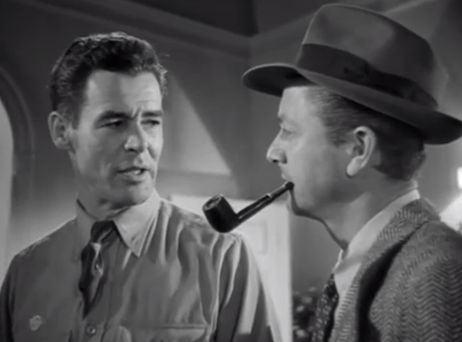
Detective Story (1951)

detective story 1

“Who are you, God? Didn’t you ever make a mistake?” – Cathy O’Donnell as Susan Carmichael

Counselor at Law (1933) was an early William Wyler film from the 1930s that shares some cursory similarities with this feature. Along those lines, Detective Story proves to be an exploration into the life of a cop much as the earlier film allowed us to look through the keyhole at the life of a lawyer (John Barrymore). Fundamentally they also both provide the same cross-section of society with Wyler navigating the space in such a way to tie the threads together while keeping things engaging.

Detective Story proves to be a stage play and a morality play in one fell swoop and that is decidedly both good and bad. It’s true that the crossroads of so many films and talents meet here and all share a room together.

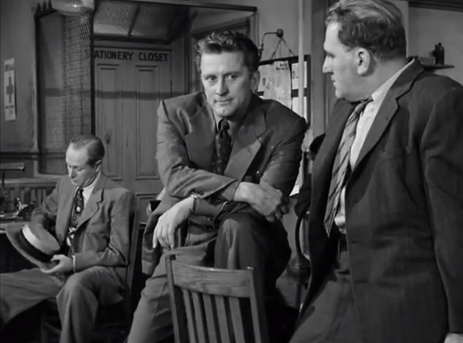
There’s another fiery role for “Mr. Instensity” himself Kirk Douglas as Jim McLeod, a man who strives to rid the streets of criminals and put them where they belong: The electric chair. He wants to be judge, jury, and executioner if at all possible. His all-out war on crime can be traced back to his lousy father. Ever since those days, he’s vowed to be everything his old man never was — not tolerating any kind of infraction of the law. It’s a thoroughly intense portrayal though it jumps off the emotional deep end a few times too often.

It’s his supporting cast that steadies him and guides the film toward something more authentic and attainable. William Bendix was potentially slated for a reunion with Alan Ladd before Douglas ultimately took the role. However, he trades out his image as a heavy for a policeman with a decent dose of humanity.

Frank Faylen is the acting desk clerk who fields all the incoming calls that come his way. Meanwhile, Lee Grant is a skittish young purse snatcher who winds up at headquarters for her first offense. Cathy O’Donnell (wife of screenwriter Robert Wyler) plays her always immediately likable ingenue role as the young woman trying to bail out her childhood friend on a charge of theft.

There are a number of others including journeymen cops, journalists, and four-time losers and then there’s McLeod’s wife Mary (Eleanor Parker). I’m not sure what to evaluate Eleanor Parker on but in the recent months, I have gained an appreciation for the fact that, good or bad, she will fearlessly commit to a role and pour her all into it. She owns a very eclectic body of work as well but Detective Story sees her succumbing to histrionics much like her onscreen husband.

Because at its best Detective Story is a slice-of-life drama that gives us insight into humanity much as Counselor at Law (1933) did. But this picture is high on the dramatics and whether or not they are completely believable is up for contention.

It’s also a fairly frank picture at that — at least for its day — though it does point out the duplicity that’s so blatantly clear.  Here a taboo is utilized as the fodder for melodrama as something so despicable. Yet in the heart of Hollywood itself, there were undoubtedly many women who did similar covering up jobs to save their reputations.

The Hays Code could try and keep taboos under raps but in doing so they were ignoring an unfortunate reality. It is necessary to remove the shrouds and let these things live on in the light.

But far from seeing this film with our enlightened postmodern sensibilities and condemning it for making such a frank subject seem sullied and unseemly, I would contend that this picture leaves me melancholy. Not for the reasons you might expect either.

I feel sorry for women ostracized and labeled as “tramps” like Mary is. I’m ashamed that there is a standard that everything must be good and pure. There is no room for grace. It’s this hypocritical nature that’s blatantly obvious in McLeod with the bitter irony coming to fruition. He became the very person that he was striving never to become.

The depressing depths of the drama suffocate any chance of a laugh by the film’s latter half and so while I’m all for fatalistic even tragic denouements in the right context, this film is so utterly discouraging and it has nothing to do with desiring a happy ending. It’s more closely related to the lens in which the film seems to use. There’s no integrity left in humanity. A world where beating hearts of flesh have been transformed into hearts of stone. That’s a very dark world to try and reconcile with.

Worst yet it does try by heaping on more drama and last minutes heroics to right all the wrongs in a matter of seconds. So we lose on two accounts. The picture doesn’t have the guts enough to dig into its disconsolate inclinations and still for almost its entire runtime it’s focused on those precise conflicts making it supremely difficult to enjoy Detective Story as much as we could have.

3.5/5 Stars

House on Haunted Hill (1959)

house on haunted hill 2.png

The finest compliment I can extend to House on Haunted Hill is how it manages to exemplify many of the tropes we have come to imagine in old horror movies of yore even without having seen one. Because the hallmarks of the genre, by some curious form of cultural osmosis, have been passed down through the generations. Rather than a blank slate, an entire history of preconceived notions serves you well since many of us do not have the benefit of the former.

Much like Psycho (1060), we have some vague sense of what we have consigned ourselves too before we’ve begun. In fact, the low budget success of director William Castle’s picture is said to be behind Hitchcock’s own impetus to make a low budget horror flick. It, of course, paid absurd dividends at the box office. But now for House on Haunted Hill which proved successful in its own right.

In the very nature of its quintessential campiness, this haunted mansion seems to have just about everything. We are met with shrieking screams in the night and for someone like me who partook through in-home viewing, we have to use our imaginations in order to fully appreciate what a pitch black theater and surround sound would do to the nerves.

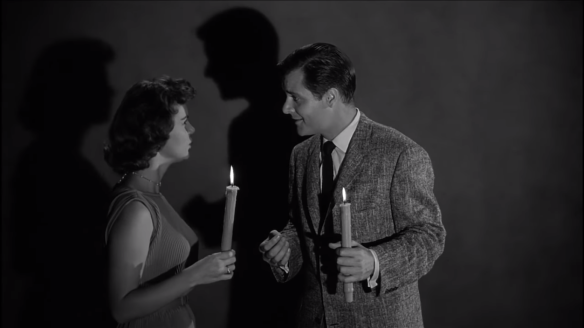
Because House on Haunted Hill is very much about a created atmosphere both architecturally with the facade of the house in exterior shots and then interiors which though obviously shot on sound stages, develop the ever-present eeriness handily. The soundtrack as well is an integral component with creaking doors, the liberal use of the theremin, and of course, a blood-curdling scream sprinkled throughout every now and again.

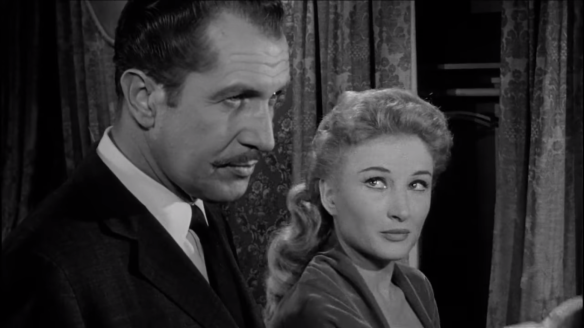
Our first introduction comes in the form of the disembodied heads of first Elisha Cook Jr. and then our host. While the memorably flighty actor preaches a message of spooky legends, Mr. Vincent Price comes in to recount how he and his wife decided to throw a little spend the night ghost party.

With the trademark condescending lilt of his voice, he introduces his guests and blandly acknowledges how amusing his wife, Mrs. Loren, is for planning such an affair. However, it really does seem like he had a major hand in it, providing an incentive to each guest of $10,000 apiece if only they manage to stay in the building alive through the night.

Whereas his wife Annabelle (Anna Ohmart) seems generally lukewarm about the gathering, he seems strangely obsessed with it. A bedroom encounter sets up just how dysfunctional their relationship is hinging on dueling strains of jealousy and avarice. What makes it delightful is the playful threats embedded in their jousting. They are cajoling each other constantly but there’s also something sinister lingering behind their words.

house on haunted hill.png

The guests themselves are wide-ranging. Watson Prichard is called upon to make the festivities more chilling. The rest of the continent include a dashing airline pilot (Richard Long), a distinguished psychologist (Alan Young), a local newspaper columnist (Julie Mitchum), and lastly a young secretary (Carolyn Craig) employed in Mr. Loren’s company. What ties them all together is their desperate need for cash even if some veil their intentions behind personal preoccupations.

Their welcome is hardly cordially as they let themselves in and have a moment to get acquainted and get accustomed to their surroundings — hardly a place of gaiety and warmth. Finally, Mr. Loren makes his entrance. By now, we know his relationship with the missus is a troubled one but that is privileged information.

For the time being, he leads the guests on a tour of his recently acquired property as Prichard recounts tall tales of severed heads of his ancestors among other legends. Ceilings dripping blood and a basement complete with a trapdoor leading to a vat of acid are two of the most harrowing attractions.

But Mr. Loren relishes to make the occasion interesting and after his wife makes a stunning appearance he passes out the party favors — in the form of handguns.  They aren’t much use against spirits so one must gather they are to fend off humans. It’s a startling twist to the proceedings though he doesn’t give much explanation for such a deadly gift.

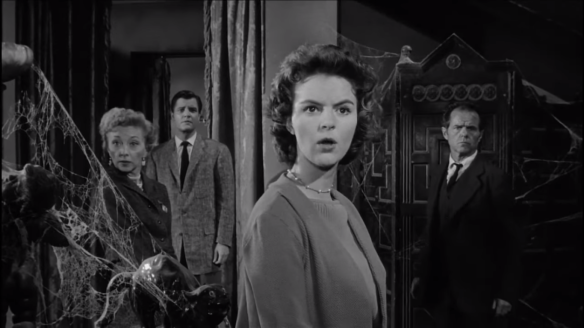
Everyone decides to lock themselves away in their rooms. Easy enough right? Wrong. Because Ms. Nora Manning seems especially susceptible to scares at the hands of horrible creatures lingering in the shadows. They frighten her out of her wits and she races around looking for some friendly face. Only time will tell what other hideous unspeakable acts she will witness.

house on haunted hill 3.png

But House on Haunted Hill has far more human origins than we might initially suspect. It’s not just a pop out at you scary movie. Though the atmospherics are a large part of the allure, there is also an underlying motive to all we see. It provides a crucial tie back to the real world and the people assembled.

So, in the end, it works best blurring genre lines between mystery, ghost story, and a tale of murder. It’s served by elements akin to Diabolique (1955) as much The Spiral Staircase (1946) though admittedly catering to the B-grade crowd. Mind you, that’s not meant to be an insult because in its own right House on Haunted Hill is a ghoulish delight.

Although I have to admit I couldn’t help but smirk when Vincent Price’s skeleton came alive again, it is soon tied back to something rational we can comprehend. The movie plays all these pieces as parlor tricks as much as supernatural acts. And this melding makes the dividing line between the two blurry. It could be everything Watson Prichard spouted was the truth. Then, again, it’s not hard to believe everything was a fabrication utilized solely for human gain. Because everyone in this picture wants something. This is important.

As per usual, it’s hardly difficult despising Vincent Price’s characters. However, in some paradoxical way we like him for the sardonic edge. Because he holds undying scorn for just about everyone. It’s so very easy for him to turn into a parody of himself but then again in a genre such as horror so often prone to parody, it rather works to his advantage.

3.5/5 Stars

Boom Town (1940)

boom town 6.png

Clark Gable was anxious to do a movie about oil — wildcatters as they call ’em — because his father had been an oil man. Of course, MGM was looking to put him in such a picture too and when a certain story was published in Cosmopolitan it would prove the inspiration for Jack Conway’s Boom Town.

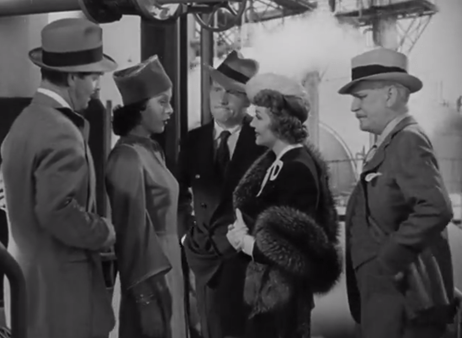
The most obvious attraction to this picture then and now is the copious amount of star power. We already mentioned MGM’s beloved Gable but Boom Town has Spencer Tracy, Claudette Colbert, and Hedy Lamarr all readily available. This would be the two men’s final film together out of three outings. It’s not so much that they didn’t like each other but the fact that they were both formidable attractions and Tracy was starting to command top billing.

In an industry consumed with A-list and B-list stars, MGM didn’t quite know how to go about keeping them together and so they never appeared in the same film again. I can’t say that it leaves me heartbroken.

They meet on a plank crossing a muddy mining street. Whether it was purposeful or not you can’t help but recall the fateful meeting of Robin Hood and Little John. Except these two men share the same name. The local saloon keeper christens them Big John (Gable) and Square John (Tracy) respectively. They’re none too amicable at first but after a bar brawl that looks more like lawn bowling, they’re pals enough. Those type of things builds camaraderie in hard-bitten men like these.

Soon enough they are going halfsies on a piece of land “Shorty” has been aiming to drill on. Frank Morgan isn’t much help as the begrudging equipment salesman and so they take matters into their own hands. A lovable Chill Wills plays a drawling Sheriff with a penchant for cookbooks and a decent shot with a rifle.

The film could have been a gusher laden with drama but most of the blasts of energy are few and far between hidden under layers of good luck and hard luck, romantic interplay, and the ever-changing tides of the oil business. Some of these themes would be echoed again in works like Giant (1956) and There Will Be Blood (2007).

The most rewarding scene by far is watching Gable and Tracy brawl it out in an office. By now they’ve both been big men who have known both failure and success. But this strips everything down to the two of them and the woman caught between them.

boom town 8.png

I must admit that Hedy Lamarr’s part is rather uninteresting — little fault of her own — though most would note that she is as alluring as ever as the ingenious socialite and serial eavesdropper who helps McMasters take over the New York market.

Claudette Colbert is compelling enough in a role that reunites here with her It Happened One Night (1934) leading man, though the role was written initially for Myrna Loy and there is an innate sense that if she could have repeated her spectacular turn in Test Pilot (1938), this picture now transplanted to the oil fields would have been better for it. As it is Gable and Tracy do seem to command most of the attention. After all, this is really their story as we watch them rise, fall, and come back clawing again and again.

The final big moment, however, goes to Tracy standing up at the witness stand and even though he and McMasters have long since parted ways, pushed each other out of business, and even come to blows, he still manages to exonerate the man of any wrongdoing.

Because if nothing else they are both oil men with ideals of what the country might be if we take care of our limited resources for our children. You might call “Hogwash” but it’s a nice sentiment anyways and as usual, Spence delivers it with his typical candor that silences any naysayers. However, one wonders what the picture might have been if Colbert and Lamarr were given a bigger stake.

3/5 Stars

San Francisco (1936)

san francisco 1.png

There was a time when San Francisco was synonymous with the earthquake. Before Rice-A-Roni, The Golden Gate, Bullitt, or heaven forbid, The Giants. For me, it’s hardly a major spoiler to say this film revolves around this tragic date back in 1906 (a strikingly recent 30 years before the film came out).

What the film does for most of its runtime is stack the bricks of the foundation while developing some kind of connection to the material through the world of that age. Because for destruction to mean anything there must first be context.

Clark Gable is Blackie (a name he also carried in Manhattan Melodrama), a man who runs a club in the dubious Barbary Coast sector of the city. It’s not a ritzy joint by any means but due to his outspoken nature, he’s a beloved pillar of society — especially when the society is a difficult place to live in.

Similar to the earlier film, it’s about people on the opposite side of the railroad tracks at least when their vocational calling is concerned. You see, Blackie can at best be called a saloon keeper moonlighting as a gambler and his best bud from childhood just happens to be a priest — Father Mullins (Spencer Tracy) — who runs the local parish.

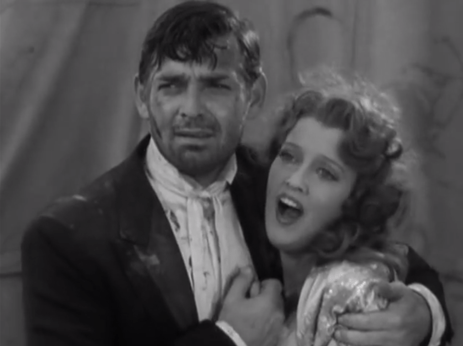
An up-and-coming Mary Blake (Jeanette MacDonald) is hired on to sing San Francisco honky-tonk by Blackie because she needs work bad. Despite the prominence of the male actors, this was actually meant to be a vehicle for MacDonald and though she is no doubt vocally powerful, she’s not my favorite, blasphemous as it might be. Clark Gable didn’t like her much in real life for some reason.

Their relationship within the film proves to be a complicated one because she is a preacher’s daughter and her style of singing cannot find its true audience in Blackie’s place. She has the training of an opera singer who is far above the trash that’s she’s expected to peddle. But she is loyal to him and the favor he has shown her. She becomes a fan favorite.

That doesn’t make the tantalizing glow of the opera any less seductive nor her relationship with the man who made her any less difficult. Father Mullin tries to reform his good friend and he sees Mary as the perfect figure to help him in his crusade and yet in the same instance, he wants her to get away from Blackie’s influence. There are some happy times dancing in the park (“Would You”) but ultimately it seems she can find nothing but heartbreak in his presence.

san francisco 2.png

Meanwhile, Blackie is coaxed into making a run at the position of local supervisor to finally get some reforms including fire regulations. Father Mullins has long been trying to scrimp and save for an organ to have at the church. Without batting an eye Blackie donates one to his old pal. And that’s what makes this character fascinating given his paradoxical qualities.

He’s a tremendous force. He lives by a code and always has. But to him, religion is just a bunch of hocus-pocus making monkeys out of everyone. He’s a relativist. If that’s what you believe it’s alright by him. He won’t hold it against you for being a sap. But in his world, Blackie is number one.

Now that the context is set, the forthcoming impact is inevitable and it’s one of the great setpieces of its day. In fact, it’s a sequence so overwhelming even today and that import is placed on it because we have been so conditioned; it leaves us feeling truly shaken to the core. Yes, it’s a visual feat, to be sure, but there’s an equally crucial understanding to be had. There are consequences to this horrendously devastating disaster. It matters deeply. Not just the damage from the earthquake but the ensuing rash of fires that broke out all over town too.

I must admit I balk slightly at the film’s finale, however, as we see Blackie fall to his knees and pray to God after all the destruction he has experienced first hand. I want this transformation to be true as much as the next person but I couldn’t help thinking that this is often not how the world works or at least based on the little I know of humanity. Would a man who has no belief in a God all of a sudden drop to his heels and be made prostrate?

If anything he would seem more likely to lash out in anger. How could a loving God let this happen? How could He be silent with so much suffering? Those are the questions that ring out within me. Those are the burning thoughts that need an answer. And usually, I get them but in my own way. Still, what do I know?

Each person processes through grief and tragedy in different ways. I’ll begrudgingly give the film San Francisco its happy Hollywood ending. That might speak truth to somebody. There’s no doubt powerful emotions course through the scene based on all we have already witnessed thus far. I’ll willingly concede that. The emotional resonance in the wake of the visual horrors is unparalleled. It actually does make me feel something. That alone is something to marvel at. Not whether or not those emotions are logical or so-called correct. They very rarely are. I’m realizing now that that is okay.

Although I must admit it’s rather strange that MacDonald belts out a few rallying lines triumphantly as Clark Gable holds onto her and he just walks forward silently. Somehow it lacks camaraderie. It was as if he was implicitly saying, “You can sing but you won’t get me to do it in a million years.” However, don’t let this completely detract from the moment.

3.5/5 Stars

Manhattan Melodrama (1934)

manhattan melodrama 1.png

The stars are out for Manhattan Melodrama, at least three of the biggest from the 1930s, in Clark Gable, William Powell, and Myrna Loy. Except the latter two had yet to start their star-making run with director W.S. Van Dyke in The Thin Man until later in the year. This picture would prove to be a boost and a portent of good things to come.

The opening scene captures the bedlam during a fire aboard a riverboat with an alarmingly raw energy. One might even stoop to call it pure melodrama but to the film’s credit, it’s not faulty advertising since right from the beginning it goes for the jugular.

In fact, it continues to stack the tragic setpieces one on top of another. The next is a politically charged riot between capitalist and Soviet sympathizers. That brings with it yet another bitter tragedy already upon us in only a matter of minutes.

Because the aftermath of such events means many kids are left without parents (including Mickey Rooney’s character Blackie) and many parents are left without kids. One man resolves to fill in the hole in his heart. Of course, it doesn’t last for long when he is run over by a horsecart. Two boys are made orphans yet again.

So no time is wasted whatsoever suggesting that this is their story. The stage has been set. Our two divergent heroes head their separate ways while nevertheless remaining lifelong friends.

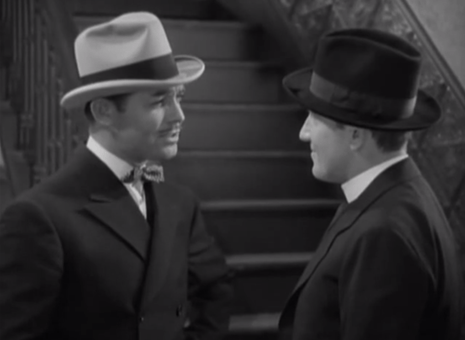
Blackie’s (Gable) adult life is really an outcropping of his childhood pursuits. Namely, gambling and getting other people’s money. He’s a smart character who has the police paid off and his slightly suspect establishment is running on all cylinders. But he’s hardly a bad fellow, mind you.

That’s what allows Jim (Powell) who has pursued a law degree to still be fast friends with his old chum. What they do for a living never impedes on the affection they have for one another. And for a long time that works fine. Blackie’s girl Eleanor (Loy) tries to coax him away from the life he leads — to something close to a marriage — but that was never quite him.

manhattan melodrama 2.png

One evening when she is supposed to hold onto Jim before Blackie gets there so they can all celebrate Jim’s ambitious rise, she finds herself taken with a man who is what Blackie can never be for her. She goes for Jim since he is the man who can make her a happy wife. Again, there’s no ill-will. Blackie only wants the best for his friends.

The ominous sounding tune “The Bad in Every Man” plays quite prominently in this film and many audience members will undoubtedly recognize it under a different name it would have later in life,   “Blue Moon.” For now, it’s a nightclub number that adds a palpable atmosphere to the world and especially our impression of the male protagonists.

Blackie proves to be so deeply invested that he does everything in his power to keep his friend on the path of the straight and narrow without any hindrance from a no-good degenerate like himself. He would never jeopardize Jim in his rise from district attorney to governor and so on. In fact, he would even take a hit for him. Because the film ends with Jim tossing Blackie on the funeral pyre. He’s gotten tough on crime and that means not backing down on murder raps — even involving a friend. Little does he know what Blackie has done for him. But his wife knows.

This is, of course, the picture that has the notoriety of being the last one John Dillinger viewed before being shot by Federal Agents outside the Biograph Theater in Chicago. He purportedly came out of hiding just to see Myrna Loy.

The picture itself begs the question if there was more to Dillinger. Did he have a troubled past or someone else on the other side of the train tracks who made good? More likely than anything else he was a little insignificant man and his violence was met with violence in an equal and opposite direction. His death helped sell tickets no doubt. It was probably even made into a couple of movies. But it couldn’t be a movie. Life never is.

In that sense, this film hardly seems authentic or real even when we juxtapose it with reality. It’s a nice thought, Clark Gable going off to the electric chair grinning — no good but at least a man of principle. If you want arguably a similar look with a slightly different outcome Angel With Dirty Faces (1938) provides it. John Dillinger never got around to seeing that picture though. For him, real life happened with real consequences. There was nothing idealized about it.

3.5/5 Stars

One Way Passage (1932)

one way passage 1.png

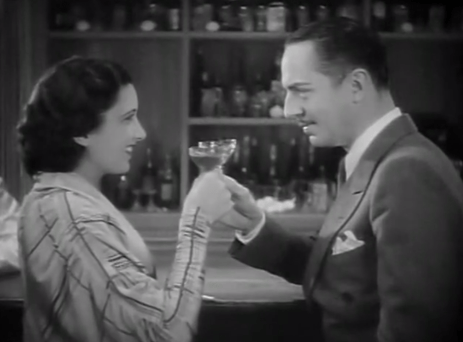
There’s a myth that makes the rounds every so often suggesting films of yore were always stagnant affairs. You only have to look at the opening bar sequence directed by Tay Garnett in this picture to confirm such an assertion is an unequivocal falsity. The camera is alive and well in One Way Passage.

William Powell is beloved by classic movies fans the world over but you genuinely wonder if he’s much remembered outside of that faithful populous. The broader public has more wherewithal than often their given credit for and yet there’s no doubt Powell is less heralded than his gangster compatriots at Warner Bros.

Meanwhile, Kay Francis is an all but forgotten flame of the 1930s who is no less glamorous or alluring today. If you run the numbers, she was one of the highest paid and biggest box office attractions well into the mid-1930s. Although soon Bette Davis would take on the mantle. But this context will seem insignificant 80 years on. That’s why it’s such a charming realization this film is a true gem worthy of the talents involved and certainly worthy of being rediscovered today.

All we need is a bar. It becomes one of the crucial settings in the picture. A pair of memorable bartenders played by Mike Donlin and Roscoe Karns give each some added coloring. People are gay and jovial. Two merrymakers accidentally clip each other but it hardly feels like a clumsy meet-cute or it’s exactly that.

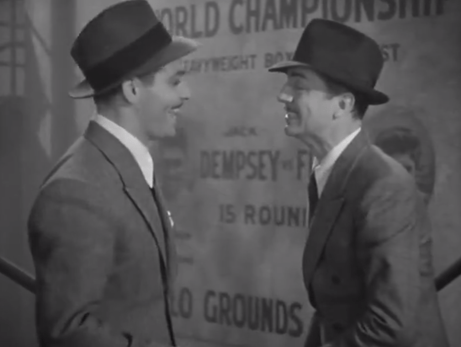
Except there’s a star-crossed undertone to it all. No time is spent piddling around. We look into their eyes and meet the gazes of Joan (Kay Francis) and Dan (William Powell). They share the moment and it’s lovely but they bid adieu and head their separate ways to forego ruining the electricity they achieved.

Little do we know we have been introduced to a debonair criminal. A gentleman scoundrel if you can imagine the prototype.  The shorthand is in place and it’s easy enough to decipher so there’s little to no need to mince words or drag out the exposition.  In fact, Jim’s so charming we don’t even realize he’s on the wrong side of the law until a copper sticks a gun in his back.

That’s the key to this picture because at such a short running time it cuts its story down to the essentials, excising the superfluous information and streamlining the events in such a way that is endowed with a playfulness but moreover a grand passion.

Because the inevitable happens and they pass not like ships in the night but aboard an ocean liner named the S.S. Maloa making its way toward Hawaii and ultimately San Francisco.

Far from sputtering, their initial connection only blooms with each passing day together. Of course, she doesn’t know he’s being sent to San Quentin and he has no idea she is terminally ill even near her deathbed. But in this respect, their obliviousness puts them on equal footing.

one way passage 2.png

Joan says she wants to crowd all the intense beautiful happiness into the life she has left. It’s the perfect aspirations for this picture to deliver on because there’s this heightened intensity and that allows it to provide such a potent story in a matter of a few minutes. As things look that’s all they have.

They are going out in a blaze of glory and there’s no more apt description than that. The picture has no time for realism and so it foregoes that for something far more moving in at least in this particular instance. They are imbued with the poetry of star-crossed lovers aboard a sea vessel with an imminent conclusion already in place.

The cop Steve (Warren Hymer) seems like a real brusque stickler and yet he’s baffled by Dan’s charity. He relents since the man saves his life. It’s the only thing that allows this captured petty thief to maintain some kind of pretense of normality with Joan. Steve has enough pity to allow his prisoner the dignity of playing the role he has been cast in.

Of course, Dan also gets some help from the constantly swacked Skippy (Frank McHugh) a con man with a sore spot for cops and the bane of every bartender he comes in contact with.  Then there’s Betty a fellow con woman masquerading as the “Countess Barihaus” (Aline MacMahon in a glowing performance), who has the entire ship cast under her spell including Steve. Not only do they provide the film with an amiable strain of comedy, but they also buy their friend his few hours in paradise with his constant companion. But the dread comes upon us because we realize even as the film’s minutes tick away so rapidly — this euphoria cannot last. It will not.

one way passage 3.png

They share one last tearful kiss and wave goodbye  with one final “Auf wiedersehen.” But the perfection of it is that the illusion they’ve managed to hold onto isn’t even broken in their final moments together. There’s such an undercurrent to the scene — so many things they could bring up or that they could say — and yet they are content in truly cherishing it. The sequence is wafted over with the epitome of bittersweet emotions. And yet they can hold onto the next dream — a reunion on New Year’s Eve.

When it’s all said and done, it’s a wonderful ending that lets us float away on our doubts clinging to the hopeful ending we want to be true. That’s what the great romances do. They do not quash the sentiment beating inside our hearts but they suggest even if it is folly there still is some insurmountable worth in striving for love. Let that connection between our heart and our emotions never be absolved. Because yes, we are rational beings but what does that do for us if we have not love? This picture will probably rip your heart out but it does so tenderly and with the utmost amount of tact. It deserves to be seen by more people.

4/5 Stars

Tristana (1970)

tristana 1.png

In the Hebrew Pentateuch, the Levitical law lays out a framework of precepts quite clearly that the people were meant to follow. One iteration can be paraphrased like so: If a man marries both a woman and her mother it is perversion. There must be no wickedness among you.

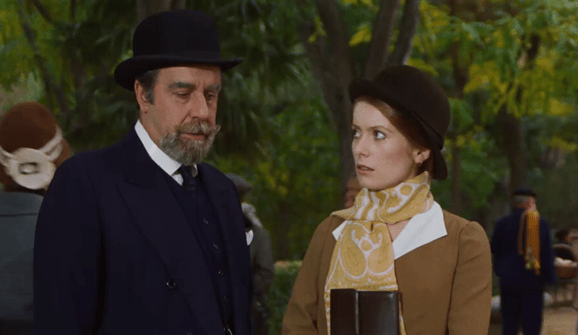
Doing a once over of the Spanish elite Don Lope (Fernando Rey), we see in him a man who came out of nobility and nevertheless lives a fairly humble life for the very fact that he’s never held a day job. He’s upper class by title and pretense only. Subsequently, his moral makeup is very much the same as he nobly provides a home for an orphaned ingenue (Catherine Deneuve).

Like his status, it is nearly all for show. It’s under the pretense of charity and the guise of a gentleman that he takes in the young Tristana, still in mourning following her dear mother’s death. Don Lope touts himself as a gallant defender of the weak and undoubtedly sees himself as a dying breed of man. Still, as his devoted housekeeper, Saturna remarks, when it comes to women he’s got horns and a tail. It’s hardly a secret.

We note the times in Spain during the 1920s or 30s. It is an irreligious generation as reflected in the deterioration and lack of importance placed in the church bell tower which used to be crucial to the daily rhythms of people’s lives. Now they’re too distracted by other pleasures.

Don Lope for one, does not concern himself with issues of money. Haggling is of great distaste to him. Instead in the quiet corridors of some great cathedral, he asks Tristana for a clandestine kiss. It’s the root of his perverse desires. Afterward, he makes troubling statements like, I’m your father and your husband and he seems to wholeheartedly believe them.

So despite the presence of Deneuve, in some respect, the narrative is more akin to Viridiana (1961) than Belle de Jour (1967) with Rey once more involved in a romantic tryst where he seems to be the main proponent of the relationship.

His spiritual beliefs come down to a few basic points including the assertion that Jesus was the first socialist and that the real priests are the men who look after the weak, fighting against hypocrisy and the powerful. He’s not altogether wrong but the words prove ironic coming from his lips. Because we know full well his own seemingly incongruent behaviors.

Still, it’s too true that we can equally criticize the advice of the local priest. However benevolent he might be, his words to Tristana stands in the face of what seems to be inherently right. He knows full well what Don Lope has done and yet he does next to nothing to protect the girl. All he can entreat her is to stay with him because he seems to have changed and treats her well enough.  That is all.

Fernando Rey’s character is obviously problematic to grapple with even if the performance itself is of merit. Because he’s this baffling mixture of old-fashioned values which give the pretense of respectability and honor. He’s not outrightly despicable, masking his indiscretions well. Perhaps because in his own mind’s eye these are hardly sins at all.

In realizing this we’ve come to what’s most problematic about him. Because he’s created his own code, in a sense, since there is no universal moral code that he falls back on. He is a strict adherent to moral relativism. You see, usually religious people, people who grew up in faith have something to check themselves with — Levitical law for instance.

Far from being legalistic, grace was in theory supposed to accord adherents the ability to forgive others but also be forgiven and live in complete freedom if they were penitent. But Don Lope can’t be troubled with religiosity, the commandments, and dos and don’ts of the church are all he sees. They seem so restrictive. Undoubtedly because most of the people living by them misinterpret their intentions and as a result carry on repressed even harshly ascetic existences. And yet in disregarding the same, Don Lope’s own “morals” cause him to step over accepted boundaries.

Thus, his relationship with Tristana from the day he betrays her innocence is forever tainted. And there is no grace there and no sense of repentance as if he actually did nothing wrong, and so he doesn’t really change. It only serves in making his victim more bitter by the hour.

Rey’s performance might be the most crucial but being partial to Catherine Deneuve there’s no question that her transformation from a young grieving woman of such pure naivete is striking. Because she’s so innocent only to become tarnished by Don Lope’s behavior. She’s a far cry from the woman she arrived in his home as — both physically and mentally. It’s taken its toll.

She is plagued by morbid dreams but Bunuel has gotten a great deal more subtle with his surrealist diversions skillfully weaving them into the framework of reality with seamless aptitude. There are individual moments that you don’t realize are actually dream-like until the bubble has burst and you’re out of them.

So the film utilizes a fairly straightforward narrative for Bunuel but that must be taken with a grain of salt. Because it’s contorted along the same lines of subversion and social norms that the Spanish director is usually fond of lambasting with his typical iconoclastic verve. It’s not always blatant in this picture but still evident.

Ultimately it becomes a story of revenge as Tristana finds love with another man (Franco Nero) and yet still feels trapped by Lope. As a result, her heart grows hard and full of resentment toward the old man who ruined her. To return the favor, she is all but ready to ruin him. It’s a lovely sentiment.

In reading some over the career of Luis Bunuel I’ve realized the correlation between him and Alfred Hitchcock in a couple areas. First, they were very much visual filmmakers who knew what they were shooting before they ever got on set. The movie was already inside their heads and made. They simply needed to use the actors and equipment at their disposal to get it done.

Furthermore, thematically since they both had a Catholic background and a slightly sardonic wit, you often see touches of those sensibilities throughout their pictures. Hitchcock in the likes of Rear Window (1954) and Vertigo (1958), also considered themes of sexual obsession and deep-seated vices which Bunuel held a similar preoccupation with. I’ve always held a preference for “The Master of Suspense” but I must still pay my deference to the latter as a tirelessly inventive filmmaker who proved to have remarkable longevity.

4/5 Stars

Diary of a Chambermaid (1964)

diary of a chambermaid 64 1.png

Luis Bunuel made a name for himself ever since his early work on Un Chien Andalou (1929) as king of the surrealist filmmakers. That and bashing the bourgeoisie. Some might be surprised in finding that Diary of a Chambermaid, adapted from the eponymous 1900 novel of Octave Mirbeau, is a fairly straightforward narrative for him.

From what I gather, that’s not to say its fully faithful to its source but more so it does not send the narrative hurtling into surrealistic visions like many of his other prominent works. What’s not missing is his typical acerbic wit that belittles the lifestyle of the upper class partially through the eyes of a Chambermaid named Celestine (Jeanne Moreau).

Before it’s begun we already know it’s charted out a diverging course from that which Jean Renoir’s Hollywood effort tread. That goes without question because not simply the directors but the systems that they were working under prove drastically different. Thus, there’s little reason to label this a remake. It’s an entirely different beast.

Furthermore, their leading ladies, the vivacious Paulette Goddard, and the aloof Jeanne Moreau could not be more different muses. The latter dame of France projects even a mild indifference to the hoops she’s put through.

Moreau actually received the part over Silvia Pinal who was intent on being in the picture (even learning French for the role). Bunuel was no doubt happy to have Pinal aboard as well but ultimately the French backing won out.

While he did not get his initially chosen leading lady, Bunuel nevertheless was blessed with one of his other most prolific collaborators the young French screenwriter Jean-Claude Carriere who would go on to work with the director on many of his most prestigious later works.

Celestine, as portrayed here, is not an altogether awful human being — she does show some amount of heart even — but that does not mean she fails to realize the degree of power she has over people.

Yes, she’s only a chambermaid. There’s an elder gentleman who resides in the manor. His adult daughter who oversees much of their affairs. And we have the upstairs-downstairs drama at hand most certainly with gossip being traded. Especially about the Madame’s husband (Michel Piccoli) whose raging libido means he is just about to pronounce his love for anything that moves.

However, in this particular picture, the Monsieur Monteil also has an ongoing feud with the retired army officer next door who is constantly ridiculing him and tossing refuse onto his property. In fact, there are numerous other exemplary moments of wry humor like when a pronounced animal lover annihilates a butterfly at point-blank range his first time using a shotgun. Or the fact that the same man who turns out to be Lord of the manor finds Celestine far too long a name and christens her Marie; that’s what all his past maids went by.

But as Bunuel pictures are accustomed to doing, this one slowly begins to roll out the carpet of perversity masked under refined sophistication. The master has Celestine read to him in the evenings and quite nonchalantly asks to touch her calf. He says she has nothing to fear and otherwise he might be the most charming individual in the home. He’s simply exercising a few whims, after all, he’s advanced in years. He should be given leeway… That’s how the rationalization goes anyway. However, the moment is as cringe-worthy as it is despicable especially in an age where such acts of sexual harassment are finally being brought to the fore and into the light.

Except in a Bunuel picture these proclivities were never really hidden. He tantalizes and nearly taunts you with them. Because this elderly “gentleman” is not the only one. The perpetually vexed husband keeps inquiring if Celestine has settled in because he wants to have a love affair with her. He promises that he’s not a brute though his past history seems to suggest otherwise.

Then, there’s brusque chauffeur Joseph who initially picked her up at the station. He relishes the opportunity of making the goose for dinner suffer because they taste better that way. And he also brandishes callous statements about killing jews after scanning the newspaper headlines. His anti-semitic sentiments are never in question.

The crass behavior doesn’t end there either. The father dies and on the very same day, a darling little girl that Celestine had taken care of is prematurely pulled from the picture as well. Both have dubious shrouds lingering over them. Amid it all, Celestine nearly leaves her post but comes back and the marriage proposals keep on coming from every man. She finally ends up with probably the nicest of the lot. It turns out hurling insults and garbage is almost docile.

Even the priest while not necessarily a wayward figure provides no type of spiritual guidance. He has no wisdom to impart. Instead entreating his parishioners to give to his church. There is no one righteous, not even one.

One of the few moments Bunuel does stray from normal classical filmmaking comes in the final frames. The first time you see it the immediate assumption is your eyes must be playing a trick on you.

But then we see a mass of protesters jump once, then again, and one final time so that they have all disappeared from the screen with each subsequent cut. One final lightning bolt for good measure and the books close on Bunuel’s rueful indictment of the bourgeoisie. It was very much his favorite pastime.

And yet any neat explanation of the film — even if it is more conventional as a narrative — is soon eviscerated by any number of complications. The contradiction in character, political undertones, and even a finale that indubitably has ties to Bunuel’s early career all spring to mind. His picture L`Age d’Or (1930) was decried with a similar protest. There’s no doubt that with each subsequent picture, the director pushed the cinematic boundaries with schemes of visionary ingenuity. Love him or hate him, there is no denying the skill in his craft.

4/5 Stars

Los Olvidados (1950)

Los-Olvidados-Poster.jpg

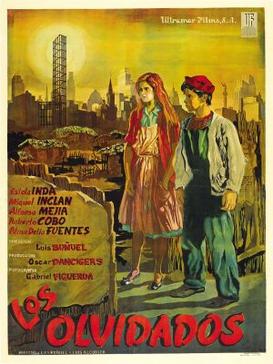
The opening narration of Los Olvidados asserts that the great modern cities of the world including New York, Paris, and London all mask issues of poverty and delinquency amid their magnificent structures. This is a universal problem that plagues Mexico as well.

In Los Olvidados a test case is being proposed and the solution left open-ended because change is still necessary. There’s still need for some kind of resolution. Whether it’s completely true word for word is nearly beyond the point because it feels authentic. There’s little need to make up a world as dire and ugly as this one unless there’s at least a grain of reality in every frame.

Where boys break out of reform school, stone blind beggars in retaliation, and form gangs as a kind of social safety net to lash out at their environment. Beating up the poor and the helpless. They too are poor but this band of theirs allows them to be less helpless and prey on others instead. That’s their main tactic of survival in their life of impoverished vagrancy.

It proves to be a harrowing exhibition in social realism and though defamed in its day, its candid and at times brutal depiction of juvenile delinquency has gained it a spot as one of Mexico’s most prestigious pictures. There’s no doubt that it’s a violent picture seething with adolescent rage. The only question is how much is environmental and how much is a product of the individuals?

As much as this film is disquieting and repulses me to the core of my being, I cannot deny its place as an important commentary and cinematic landmark from Luis Bunuel. The Spaniard is a master who always makes my skin crawl and challenges my very convictions. Los Olvidados succeeds in doing the very same thing again by forcing us to acknowledge the loathsomeness in the world that we so often want to brush under the rug. It’s there. There’s no denying it. Man left to his own devices will send the world hurtling towards malicious chaos.

There’s an intent to every moment with action streamlined but never feeling rushed or forced in its everyday rhythms that provide a seamless illusion of real life. Luis Bunuel still finds space to imprint Los Olvidados with his own surrealist vision as a young boy, Pedro, is haunted by a grinning corpse to mirror the dead body now laying in a ditch where he served as an accomplice. However, his disquieting nightmares are compounded by a mother complex. He wants her love and yet seems to do everything to receive her ire.

In a world such as this where we see the brokenness and the sheer depths of poverty, it seems like it would be easy to empathize and yet this film makes it rather difficult. Because some of these boys are so boorish. So violent and dirty-minded. There’s no sense of decency even if they wanted it and their leader Jaibo is the worst of the lot.

But there are two boys that I do have some lingering sympathy for. Pedro is not unlike the others. Out on the street getting into trouble and the like. And yet there’s something in him that is trying to reform. He looks to find work and he wants the love and affection of his mother once more. The problem is she’s already given up on him. There is no love in her heart. And his pals are constantly impeding his road to reform. That’s as much as an indictment as the city that has no effective system to give these boys a better life or the boys themselves who live wayward existences.

The second sympathetic figure simply goes by “Eyes” and he’s been waiting patiently for his father to return. He hasn’t. Instead, he becomes the guide to the ornery street musician who makes a living in the town square when he’s not accosted by young gangsters. “Eyes” gets pulled into the drama too but there’s an innate integrity that’s lacking in most of his contemporaries. He generally treats the old man well and respects the pretty young ingenue Meche. That cannot save any of them from an awful existence.

The final image is grotesque. Not for the graphic nature of the imagery but the metaphoric juxtaposition. A body thrown into a trash ditch like a bag of flour. There’s no value to it and the people who do it while not the perpetrators are further implicated in this societal problem. They trade pleasantries with the mother as she searches for her son — a son she never seemed to love — until he’s in trouble. The issues run so deep it hurts to watch. The finger can be pointed in any direction.

The problems must fall on the parents, adults, and peers who do not find it within themselves to speak up or to continue loving or fighting for change. Complacency and hard hearts are just as bad a problem as juvenile delinquency. Put them together and you sow nothing but generations upon generations of human beings damned before they even have a chance at a decent life. It’s over 60 years on and we’re probably still searching for many of the answers to these very same issues. As much as I would like to admit that this film is outdated, to make such a statement would be heedlessly ignorant.

Because of course Los Olvidados in English is literally translated to “The Forgotten.” There’s part of your problem right there. As humans we so easily forget. We brush problems under the rug, pass the buck, and so on. Before you know it years have gone by and a new generation of youths are all but forgotten. The deadly cycle begins again and never ends until someone champions radical change. Until that day they will continue as the unnamed, unwanted, forgotten foes of society. Los Olividados.

4.5/5 Stars

The Southerner (1945)

the southerner 1.png

It’s easy to infer there is an innate kinship between famed director Jean Renoir and the folks within this picture. Certainly, he was no peasant, by any means related to those found in Millet’s The Gleaners. However, like his painterly father Auguste Renoir (a figure I always find myself reverting back to) he had a penchant for people and nature underlined by a genteel eye for beauty.

That is not to say, Jean was exactly the same. His films can often be socially-minded, capable of both satire and commentary. But underlying such themes is always this same sense of natural and artistic pulchritude.

Though his output in the states is generally forgotten, upon closer analysis, efforts like The Diary of a Chambermaid (1946) and The Woman on The Beach (1947) have glimmers of his brilliance as an auteur. We can even see how the content often fit Renoir, though the system and in some cases, the performers might not have.  However, in its day, most everyone seemed to agree that of all his efforts as an expatriate, The Southerner was his finest achievement stateside. I don’t disagree.

At its core, Zachary Scott gives an understated performance full of grit and common decency as the head of the Tucker clan. Right beside him, his wife, Nona (Betty Field) exhibits a stalwart character exuding both affection and maternal grace, a constant rock to steady her man. In an inciting event that feels strikingly similar to The Grapes of Wrath (1940), Gramps dies and the family sets out on a pilgrimage in search of a new life. This will eventually lead them to a strip of land to call their own.

While Scott’s no Henry Fonda, I’m pretty sure even John Ford would consider Jean Renoir his equal if not a superior director. Regardless, both are visual filmmakers of the most visceral kind. In fact, Poetic Realism was an attempt to put a label on Renoir’s exquisite naturalism, placing the human form in environments like modern day evocations of the Garden of Eden in an otherwise sullied world. A Day in The Country (1936) or even Toni (1938) stand as stunning earlier examples from his native France.

Compared to his other American efforts, The Southerner has the most straightforward and even conventional narrative. Because the story is simplistic and the dialogue unadorned; at it’s worst it’s throwaway. However, it effectively provides a bulwark for Renoir to capture strains of humanity with a truth that gleams with his usual sensibilities. Again, like Ford, such a minimal plot frees him up for digressions that are more lyrical and character based so by the end of the picture as short as it is, we feel like we have witnessed something full-bodied and singular.

The Tuckers have the most darling little kids. Beulah Bondi subverts her angelic image as the cackling, particularly ornery granny. Their new life is hard, their resources scant, and yet the Tuckers are cisterns full to the brim with indefatigable spirit. Sam is driven by the humble desire of Man to cultivate his own land. He never says it implicitly but God was a Creator and so it’s almost innate for him to want to do some of the same.

But Tucker, like Job, is born to trouble with backbreaking labor and constant devastation. His boy is stricken with sickness needing nutrition from vegetables, lemons, and milk that they either don’t have or can’t afford. The Tuckers live by a creed of family and neighborliness but they receive no such charity from those nearest to them. It’s like the gruff farmer next door is seeking to see them fail. Nature too is all but looking to sink them. There’s no amount of clemency

In one pleading moment, Tucker even walks out to his decimated crop he’s toiled over for so long and talks to God in the most candid of ways. It’s like a modern-day psalmist asking the honest questions. His resolution is to keep going and hold his family together thanks to the unremitting determination shared by his wife.

However, overlaid on this is also the struggle between the new urban centers and all the natural wonders of God’s green earth. We saw it in Renoir films such as The Human Beast (1938). In Sam’s case, his friend all but guarantees him a steady factory job and yet he continually balks at the chance. His calling is to be in the fields no matter how inexorable his opposition might prove to be.

The beauty is that we get a bit of a reprieve from the constant barrage of misfortune. It comes in the form of a wedding when two jolly old folks get hitched and it births the most joyous occasion. Partying ensues full of good-old-fashioned gaiety and square dancing brimming over with laughter and hilarious antics made 10 times more humorous in the company of others. Each and every one of them is a part of this grand joke. The Job-like assaults keep on coming and yet in the company of others they hardly seem as catastrophic. There you have a secret to life.

I rather like the conclusion Renoir’s film makes tacitly. It’s quite evident in the following aphorism voiced by one of the characters, “It takes all kinds to make up this world.” So this is not the Romanticist where everything mechanical and technological is inherently bad. Nor is farming or the land being tilled and cultivated any less important. They share equal footing and they need each other.

Again, it’s the humanism of Renoir fully realized. This is an American story, the most American narrative undertaken by the French director. However, in the waning days of WWII, you cannot help but see this as a universal rallying cry. Out of the ashes of destruction and international animosity, ill-will, and hatred, we need each other. Come to think of it, the credo is a timeless one at that. We could use these words now as much as we ever did. There you have a secret to the relevance of Jean Renoir.

4/5 Stars