A Clockwork Orange (1971)


a-clockwork-orange-1“He will be your true Christian: ready to turn the other cheek, ready to be crucified rather than crucify” ~ Minister of The Interior

Anthony Burgess’s A Clockwork Orange began as a troubling book and it becomes perhaps an even more troubling film full of volatility placed in the hands of Stanley Kubrick.

At its core are many deep-rooted issues of violence, morality, and free will all coming to the fore because of one teenage hoodlum and his rehabilitation from a life of savage juvenile delinquency.

Whereas Burgess created this parable in all sincerity to consider these very issues of morality, it’s easy to get the sense that Kubrick simply found this moral conundrum a fascinating exercise in itself. You only have to look at Dr. Strangelove to see his proclivity towards wicked wit or only to venture with 2001 to observe his penchant for deep philosophical paradigms wrapped up in the science fiction.

A Clockwork Orange has all of that and it’s a perturbing practice in both satire and science fiction. It hums with classical music and synths, shot with distorting wide-angle lenses, while also modeling Kubrick’s perfectionist tendencies.

Malcolm McDowell’s voice-overs as the main hoodlum Alex DeLarge are a major component of the film’s structure, recalling the phraseology and world developed in Burgess’s original source material. For instance, Beethoven becomes Ludwig Van. Droogs are friends. Horrorshow is good or well. Then, Ultraviolence and the old in-out don’t need much explanation.

In fact, during the course of this film, Alex takes part in equal measures of both, causing havoc with his friends and bedding a pair of girls. There is seemingly no end to his depravity and the fascinating part is that he seems to enjoy it all.

That is, until, the government steps in to reform him. Alex is sent from prison to the Ludovico Medical Facility where he is to be issued a new variation of aversion therapy. And this is where, rather ironically, the famed sequence of Malcolm McDowell, eyes wide, screaming at the images passed in front of him entered the public consciousness. His corneas actually getting scratched in the process and the images forever ingrained in our society from that point forward.

But all of this early depravity, followed by his rehabilitation are only the beginning.  And it’s in these interludes that Kubrick tries to impress upon us the idea of Alex being our hero. It’s a difficult thought to deal with. But that’s of little consequence compared to the moral issues that hang in the balance here.

You cannot watch this film and not only feel somewhat dirtied but also saddened at what man is capable of doing. And it’s not only in the case of one man to another, or a small group to another. But, in this case, an entire bureaucracy of people systematically ridding their streets of crime. It’s a strange question maybe, but the question must still be asked, at what cost is all of this? It deserves our attention.

And to try and tease out some answers it seems crucial to look back to Burgess because although these are questions that undoubtedly intrigued Kubrick as well, but it was Burgess who first brought them to the fore. In this case, the author’s own religious background seems to have telling implications for this moral tale that he wove. He intended A Clockwork Orange to be a parable of what defines free will and forgiveness from a Christian perspective in particular.

What is goodness or forgiveness if we lose our free will — if we are only machines — functioning without beating hearts and all that is human within us. What kind of good would the greatest act of love in the universe be if it was done out of compulsion — not genuine love and charity?

In the case of Alex DeLarge, he no longers craves ultraviolence or his former lustful desires for women, but it has nothing to do with a change of heart. He’s simply learned to be repulsed by them. Kubrick’s picture is darkly perverse and the film ends not with the promise of the novel but a thoroughly downbeat ending that rings hollow.  It becomes obvious that Alex’s core desires have hardly changed. He’s simply been conditioned to know what is “good” and “bad.” That’s perhaps an even more terrifying reality than one of violence and evil.

The story goes that when Gene Kelly crossed paths with Malcolm McDowell he coldly walked away because it was in this film that his iconic tune “Singin’ in the Rain” was notoriously tarnished. But really this entire film is a dark blot and it’s truly horribly dismal to watch at times.  I cannot even manage to watch it in its entirety. Not simply for its graphic nature, but the tone that it endows. While Alex DeLarge is far from a sympathetic protagonist, it’s hard not to pity him — poor fool that he is.

3.5/5 Stars

Chimes at Midnight (1965)

chimes of midnight 1“There live not three good men unhanged in England. And one of them is fat and grows old.”
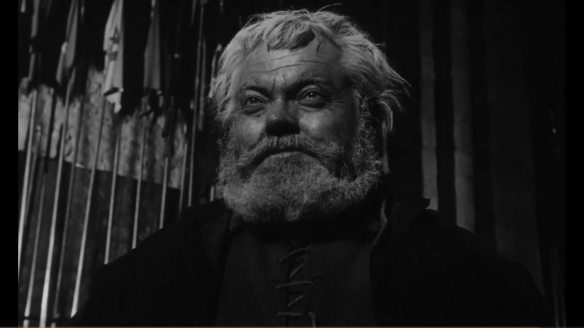
It seems Orson Welles never did anything on a cursory level. There’s always a gravitas — the unique personality of the man displayed in his work whether it is behind the camera or in front of it. But in the same breath, he never takes himself too seriously. And it’s no different in his orchestration and portrayal of the character Falstaff in Chimes at Midnight. It’s easy to argue that Charles Foster Kane was more memorable, Harry Lime was more beloved, and Hank Quinlan more remembered, but truly Shakespeare’s Falstaff just might be Orson Welles’s greatest role. At the very least his most underappreciated role for the very fact that far too few people have seen it.

He’s blustering and rotund, filling up the frame not only with his girth but with his witticisms and tall tales. But as much as this is a comic tale of farcical proportions, it’s also a storyline of tragedy and betrayal.

Being woefully under-read when it comes to Shakespeare, it was hard to come into this story because I had very meager reference points. However, Welles fuses together fragments of four narratives into an epic tale of his own creation, so prior knowledge perhaps was not admissible. The works he picked from include Henry IV Part 1 and 2, Richard II, Henry V, and The Merry Wives of Windsor.

Still, when I do get in such a state of disarray, I have learned not to fret and to simply sit back and partake of what is offered me. With Welles, this is not a difficult task at all because of what he gives the viewer. It’s always spectacular, grandiose, and richly wrought in some way, shape, or form. And for Welles the impresario, the Bard is a source of inspiration that is truly worthy of him, or you could say it the other way around even. He is worthy of the Bard.

chimes of midnight 2The triangle with Prince Hal (Keith Baxter) vying for the affection of his father King Henry IV (John Gielgud), while simultaneously holding onto his relationship with Falstaff is an integral element of what this film is digging around at. But there’s so much more there for eager eyes.

Once more, rather like The Trial, it’s easy to marvel at the restrictions that Welles faced and what he still accomplished within that forced economy. He took the Spanish countryside, a budget of less than $1 million, and crafted a work that is often considered the best Shakespearian adaptation ever and some say even the best of Welles. If the man himself was any indication, then maybe so, because he was fond of this work in particular.

From an audience’s point of view, he does some truly spectacular things. Despite the poor sound quality really throughout the entire film, the interiors of the castle are expressive in the same way The Trial’s cavernous alcoves were. Equally telling are Welles’ trademark low angles.  But Chimes at Midnight also spends more time outdoors, the most spectacular scene being the battle sequence portraying the Battle of Shrewsbury.

Welles uses every imaginable trick in the book to make 18o extras and the Spanish countryside work for him to the nth degree. It develops one of the most dynamic, perturbingly chaotic war zones ever through cross-editing, trick shots, speed changes, and an elaborate patchwork of images that turns war into something unfathomably ugly. His smoke and mirror techniques matched with the chaotic clashing of metal, weaponry, bodies, and jarring visuals is a superb showcase of a truly inspired filmmaker. Because the images are so evocative, adding to something far greater than their individual parts.

chimes of midnight 3And it’s only one high point. Aside from Welles’s towering performance, Jeanne Moreau stands out in her integral role as Doll Tearsheet, the aged knight’s bipolar lover who clings to him faithfully. The cast is rounded out by other notable individuals like John Gielgud, Margaret Rutherford, and Fernando Rey.

Honestly, few others can hold a candle to Falstaff. A great deal of that lies in the similarities between the character and the man playing him. He’s portly,  speaks in rich tones with tremendous wit but the bottom line is that he is met with tremendous disappointment, despite the towering heights of his reputation. He’s constantly short on funds trying to get what he needs from the relationships he’s cultivated with the people around him. However,  in the end, he wasn’t so lucky and the same could be said of Welles. Although Falstaff was exiled from the King’s presence, whereas Welles put himself through a self-made exile of his own. Still, he managed to come out with a work as stunning as Chimes at Midnight. That in itself is a tail worth noting about a man who was larger than life in his own respect. This is a miracle of a film not because it is perfect. It’s far from it, but it has so many remarkable moments in spite of its circumstances. It deserves to be seen by more people.

4.5/5 Stars

The Bicycle Thief (1948)

Enzo_Staiola_in_Bicycle_ThievesThe original title in Italian is Ladri di biclette and I’ve seen it translated different ways namely Bicycle Thieves or The Bicycle Thief. Personally, the latter seems more powerful because it develops the ambiguity of the film right in the title. It’s only until later when all the implications truly sink in.

Vittorio De Sica’s film is unequivocally emblematic of the neorealist movement.The most notable traits are the images taken straight off the streets of Rome, depressed and forlorn as they are. The setting truly does act as another character, adding a depth to the film that cannot be fabricated. You can’t fake some of these scenes either whether it’s Antonio scavenging for his bike in the pouring rain or the sheer mass of humanity that is found in places like the Piazza Vittorio.

It’s all there out in the open, with an apparent authenticity. In its simplicity, it feels like a real story with real people. This too is aided by De Sica casting non-actors in the main roles. In fact, Lamberto Maggiorani’s gaunt face is somewhat unremarkable (sharing some resemblance to Robert Duvall). Put him next to a poster of Rita Hayworth and it becomes even more evident. Still, he too feels human in a way that Hollywood stars just cannot quite pull off. It’s easy to believe him and invest in his story.

The same goes for his young son Bruno. He’s one of the cutest precocious kids you’ve ever seen, reminiscent of Jackie Coogan in Chaplin’s The Kid. But it’s also his point of view that makes this film even more tragic later on. This father-son relationship has weight to it.

And that makes Antonio’s dilemma that much more perturbing and ultimately so traumatic for the audience. De Sica’s film is so humble and yet its depths are ripe with so many universal truths and moments of sincerity.

Here is a man trying to provide for his family. His wife, his son, and his baby. Work is hard to come by in the post-war years. Any opportunity is a good one and Antonio gets that. But he needs a bike. His wife sacrifices her sheets so he can get his bike — so he can maintain their whole livelihood as a family.

That’s why it’s so crushing. Everything hangs in the balance of this unfortunate but seemingly mundane event. When Antonio’s bike is stolen it truly means tragedy because there is no lifeline, no direction to turn.

And he does his best to recover his stolen property. Going to the authorities, rounding up his friends to search for it, even tracking down the boy who undoubtedly nicked his bike, but none of it leads to a successful conclusion.

Another day finished with no hope for tomorrow, no money to bring home to his family so they can eat and live. He’s got nothing — a reality that’s made painfully obvious when he and Bruno sit down for dinner at a restaurant. They eat a meager meal as those just behind them gorge on a full buffet of courses. Bruno eyes them longingly and his father tries to lift his spirits, secretly knowing that he can never offer that to his boy.

It puts his lot into a jarring perspective, suggesting the state of the affairs in Italy. But what makes the Bicycle Thief truly timeless is not its scope or what it says on a grand, majestic scale. It’s an intimate film and perhaps the most personal story ever put to film. In a matter of a few moments, it says more with the moral dilemma of Antonio than many lesser films conjure up in a couple hours.

And because this is not a Classical Hollywood film, it does not sell out to its audience. There is no obligation to the viewer to keep them from being downtrodden — because that might rub them the wrong way and actually evoke a searing response. But there can be beauty in that and De Sica’s film is certainly beautiful for precisely those reasons.

It feels real, it feels honest, and rather than sugar coating the world, it draws up a reality that is almost as old as the world itself. So yes, this film is so-called “Neorealist” and yes, it most certainly makes good use of its contemporary setting of Rome in the 1940s. But if any film can claim timelessness Bicycle Thief might just be the best bet because at its core are the type of issues that are not unique to time, space, language, or any other man-made barrier. Every person knows what it means to steal — to battle with their conscience — upending the moral framework that guides their lives. That hasn’t changed even if the context has and that makes The Bicycle Thief continually relevant.

It ambushes us with the same emotional wallop each and every time. I mentioned Chaplin before briefly, but it didn’t occur to me until some time later that we leave our characters walking off into the sunset rather like Chaplin’s Little Tramp, except it’s a very sad sunset indeed.

5/5 Stars

Love on the Run (1979)

love on the run 2You can’t just do anything at all and then say ‘forgive me!’ You haven’t changed a bit.” ~ Colette

The prospect of watching Love on the Run saddened me and not for the reasons you might expect. Not because it’s noted as the weakest film in Truffaut’s famed Antoine Doinel series, although that it is. Not because it utilizes a clip show rather like a lazy sitcom as some will undoubtedly note (although this does actually give way to some rather entertaining reminisces as Antoine crosses paths with two old acquaintances). And it’s not even because this is the last film in the series and Truffaut never got around to any more installments before his death in 1983. Though that is sad.

The truly heartbreaking thing about this film is not even the fact that Antoine and Christine (Claude Jade) are getting a divorce although that is at the core of it. It’s that Antoine, who has long been the focal point of these films with his certain brand of charming charisma, really has not changed a great deal.

Time and time again, his superficial relationships with women are explored and time and time again his self-destructive habits hardly seem playfully entertaining but if you want the most honest answer, it’s all rather disheartening.

He has a new girl who we meet in the opening credits. Her name is Sabine. She’s young, radiant, very pretty and works in the local record shop. If we didn’t know any better we could easily make comparisons between her and Christine.

We see that little boy from 400 Blows and even that same young man looking to win the affection of a cute brunette named Collete. However, now a few years down the road, none of that panned out. He’s terribly selfish, undeniably a cad and always trying to say he’s sorry to save face. Sabine says it well when she calls him a pickup artist (You sure have a strange idea about relationships. You seem to only care about the first encounter. Once they’re together it’s all downhill).  

However, if we look again we remember that Doinel’s home life was hardly a prize, schoolmasters were unfeeling and his mother passed away — the only real family he had in the world.
Maybe, love on the run 1Antoine Doinel is a character who thinks only in the cinematic and it is true that he often functions in a bit of a faux-reality. He seems normal but never quite is. He seems charismatic but we are never won over by him completely. Still, we watch the unfoldings of his story rather attentively.

Like all the women who he tiptoed around with, as an audience, we have liked him but never truly loved him — an important distinction to make. And coincidentally, we also see right through him. Perhaps because he’s often too much like us or other times not enough like us. It’s hard to put a finger on which one it is exactly.

We leave the film essentially where it began. Antoine has once more been scolded by his girl and made up. It’s difficult to know quite precisely how to feel about that. Love on the Run is worth its nostalgia, woven in between the most recent moments of Doinel’s life. While his character is trying, he is still strangely compelling. But at this point, it’s hard to know what to do with him. Nevertheless, Francois Truffaut was unparalleled in the continuous narrative he was able to craft — flawed, personal and most certainly memorable.

3.5/5 Stars

A Short Film About Love (1988)

a short film about love 1Why do you watch me? -Magda

Because I love you – Tomek

Early on it becomes evident that Tomek is a very lonely young man. He lives in Warsaw in a room belonging to the elderly mother of his best friend, who is off deployed by the U.N. There is also some brief suggestion that Tomek’s parents left him when he was very young. Look at him now and this taciturn lad of 19 is all alone. He has no true friends.

Every evening his routine involves waiting for his alarm clock to go off at precisely 8:30. He pulls out his telescope from under its covering and readies himself for another evening of people watching.  Except he is interested in one person, in particular, his strikingly beautiful neighbor across the way. So, yes, he’s a peeping tom and his voyeurism is a bit reminiscent of Rear Window without the pretenses of a murder mystery.

a short film about love 2And despite the clandestine nature of his activities he still somehow remains innocent in the eyes of the beholder. Daily he works at the post office behind the glass and in the evening he studies languages. But he’s continually drawn to this lady across the way. He feels like he knows her. He wants any pretense to meet her and so he creates a bit of fate anytime he can.

It means sending her fake money orders just so she enters the post office and he can interact with her. It means calling her home at night and hearing her voice over the telephone or taking on a job as an early morning milkman just so he can get another chance encounter with her. It even strays into the territory of purloining her mail and calling the gas company just to disrupt her life a little bit.

All these facets easily push Tomek over the line and his bit of obsession could easily be seen as creepy, in fact, it is creepy. However, when he runs after a distraught Magdelena leaving the post office and discloses his activities, everything changes.

He is ashamed. She is repulsed by his admissions. And that looks to be the end of it. But she ultimately realizes the innocence in his eyes, the sincerity in his voice. He says in the most genuine way possible that he loves her.

Intrigued she pries more. What is it he wants? To kiss her, to make love, to run away together? His answer? Tomek wants nothing, nothing. This surprisingly tender conversation leads to several more encounters. First, she willingly masquerades in front of his telescope and then they meet for ice cream in a cafe.

a short film about love 3However, often times sex and love become synonymous terms and that is the underlying tension between Tomek and Maria Magdelena’s relationship. Though innocent, he wants true love, a love that transcends a simple physical act and is summed up with affection, intimacy, and an inherent closeness. He is taken with her beauty certainly but even more so he is invariably alone. Meanwhile, she is so enraptured with sex and denigrating such a grand (and admittedly messy) thing as love, to a simple physical act. She can’t understand this wide-eyed boy and his delusions. She’s ready to open him up to the way the world actually turns. And her callousness ultimately crushes Tomek’s tender heart. She broke it not by simply rejecting him, because this is a ludicrous love story, but truly obliterating any of the naive aspirations he had for love.
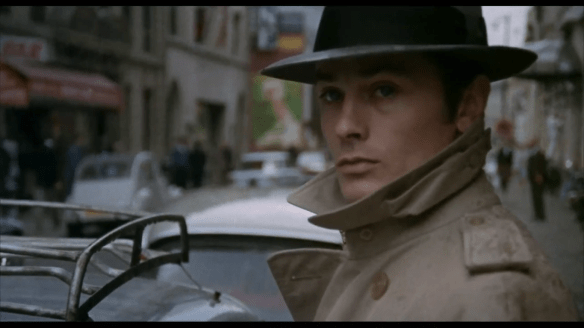
The final act is executed with pristine restraint because Kieslowski does not sink into melodrama but the twinges of emotion begin to overcome Magda as she comes to realize how much she devastated her young admirer. Now she looks out her window every night for any sign of his return. She tries calling him up to acknowledge her mistakes and even goes to see his Godmother.

In the final contemplative moments, Magda is finally given a view into Tomek’s perspective — seeing exactly as he had seen — envisioning the scene from across the way.  As is his nature, Kieslowski’s film is insightful and thought-provoking, a fuller examination of his work in the Decalogue. It’s a rather perturbing parable in some respects, but that is only due to the perversity and desires that dwell within the human heart. It’s a telling Biblical allusion that the main female heroine is named after Mary Magdelena, a woman who was historically known for her dubious reputation and promiscuous ways. But it was the exact same woman who went to a redemptive transformation in the Biblical narrative.

Kieslowski leaves his film essentially open-ended but the character’s name is a powerful one because it somehow suggests even to the tiniest degree that these characters too can be redeemed. There is still hope. It’s certainly a tall order to make a short film about love that still manages to leave its mark and yet Kieslowski does it with immense grace. He employs brevity while still succeeding in delivering a thoughtful study on one of the world’s most perplexing mysteries: Love.

4/5 Stars

Review: Le Samourai (1967)

le samourai 1There is no solitude greater than that of the samurai unless it be that of a tiger in the jungle… perhaps…
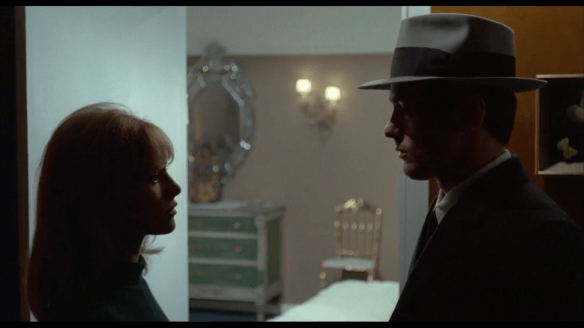
It would be easy for some to call Le Samourai flat and pedestrian due to its visual style and even the workings of its plot. All very straightforward with cool tones and characters who barely crack a smile. Emotions are even less common. But that’s disregarding how exquisitely confident it is in its execution. Jean-Pierre Melville is a director who evolved into one of the great forgers of crime films for the very reasons mentioned above.

His hero played so iconically by Alain Delon is one of those great film characters who does not need to fill every moment of silence with a witty comeback. In fact, Jef Costello is not one to spitfire witty repartee at all. Instead, he’s calculating, steely-eyed and ridiculously phlegmatic. He fits the corridors of this film like a glove, perfectly suited for the cold exteriors and drab interiors.

We meet him not in some moment of dramatic action, but while he reclines silently on his bed, veiled in shadow, cigarette smoke clouding over him and the chirps of his caged canary piercing through the traffic sounds murmuring outside his window. Although we linger there for a time as the credits roll, it takes a moment to acclimate. If you’re not paying attention, the contours of his body are almost lost to us — an extraordinarily ordinary man. But that’s precisely what he wants you to think.

Meanwhile, he highjacks cars, puts an airtight alibi in place, takes on a hit at a local nightclub with ease and disposes of all evidence without even a hiccup. Veins of ice and nerves of steel give him the perfect physique for a hitman. Top it off with his uniform — a trenchcoat, fedora, and cigarette, bolstered by Delon’s imperious stare and it’s difficult not to be mesmerized by his every movement.

It’s the kind of self-assuredness that allows another character to ask him, What kind of man are you? and no answer is needed — at least not with words — because with every action, every look, he tells us precisely what he is. An aloof assassin of the highest order. Yes, if you want to make the comparison, a samurai.

le samourai 2And though he does call on his lovely girlfriend (Nathalie Delon), who is absolutely devoted to him, as well as making eyes at the nightclub pianist who is the main eyewitness to his hit, Jef for all intent and purposes, is alone. It’s a kind of forced solitude, a self-made exile created by his trade. After he goes through with the hit, he must shut himself off more and more. That is his job.
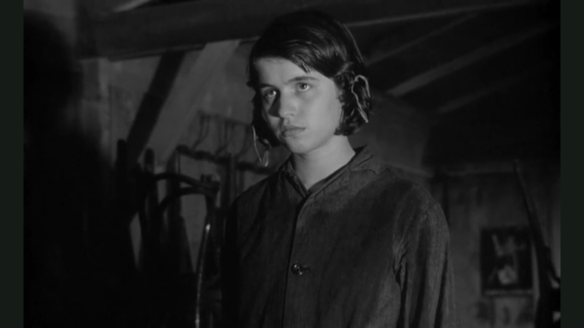
So he goes to the police station to be questioned. Goes through the lineup. Stairs down the witnesses and goes home. Not to his girl but the dismal flat with his mournful canary. His contractors are out to get him, the cops are looking to catch him in his fabricated alibi and still, Costello maintains his composure as is his habit. He’s unphased by bugs or tails and when he has a gun to his face he never blubbers, only proceeds with beating up his assailant when the opportunity arises.

And although there is never much of overt romance in Le Samourai — Jef never shows any kind of passion — there are still glimpses that he cares about people. Perhaps he holds onto chivalry as part of his moral code. Even after staying away from his girlfriend for many days he comes back to her not expectant of anything but asking her if she’s alright. Pragmatic but concerned. Distant but still invested.

The same can be said for the film’s tremendous finale. Le Samourai is not a film of gratuitous killing but pointed moments of violence that are careful acts of deliberation. Costello kills two people and the film ends with his third and final hit. But it is in these tense moments that we gain yet another insight into the moral makeup of a world-class hitman.

Melville was obviously an admirer of American gangster films but what makes his vision of the genre so fantastic is the demeanor of his characters. Again, some might say boring, but that is probably a predilection of those raised on Hollywood action. There is no aura left. No shred of intrigue or tension left to be examined. Le Samourai is a crime thriller that performs differently, its pacing is entrancing and far from being tepid, it elevates the hitman to enduringly riveting heights to the last bullet fired. It doesn’t hurt that Jef Costello just might be the coolest action hero of all time.

5/5 Stars

Mouchette (1967)

mouchette 1Robert Bresson’s film is an extraordinary, melancholy tale of adolescence and as is his customs he tells his story with an assured, no-frills approach that is nevertheless deeply impactful.

There is one moment early on that sets the tone for the entire story to follow. Mouchette stands in her class as the line of young girls around her sing a song in harmony with one another. She is the only one not involved, standing sullenly as her headmistress passes behind her.

In front of the whole class, her face is dragged down to the piano keys and she is forced to sing aloud, her pitch nowhere near the mark. She goes back in line with tears in her eyes as the girls around laugh at her sheer pitifulness. But as an audience, it makes our hearts twinge with pain.

She is the girl who looks out of place at a carnival, her clothes frayed and clogs constantly clomping. She is the girl who doesn’t have enough money to pay for a ride apart from charity. She is the girl who gets hit by bumpers cars. She is the girl looking for a friend, but none can be found — the school girls having nothing to do with her and her father scolding her if she ever made eyes at a boy.

She is forced to be mother, housekeeper, and caretaker as her mother lies in bed deathly ill and her swaddled baby brother cries helplessly night and day. When her father comes home he’s of no use and when he’s out he’s quick to drink.

So in many ways, Mouchette understandably finds life unbearable. She never says that outrightly. In fact, I doubt a character in a Bresson film would say something like that because it wouldn’t feel real. It wouldn’t fit his MO. Still, every moment her head is tilted morosely or she trudges down a street corner dejectedly nothing else must be said. That’s why she slinks off into the surrounding forest and countryside to get away from all that weighs on her.

And even there she cannot find complete relief. One such night during an escapade she witnesses what looks to be a fight between two men from town who have feelings for the same woman. As they are drunk in the rocky depths of a stream, such a confrontation does not bode well. When both men go tumbling down and only one gets up, Mouchette believes she is privy to a murder. The perpetrator Arsene sees her and coalesces her to keep a lie for him, making sure she doesn’t say anything. But she’s also not safe in his presence and so she eventually flees into the night.

In the waning moments of the film, what we expected from the outset comes to fruition and Mouchette loses her mother, the only person who seemed to deeply care for her with reciprocated love. And as she wanders through town to retrieve milk for her brother, she turns off anyone and everyone who makes any pretense to help her. Of course, their help is always a backhanded or pious type of charity and in the same breath, Mouchette is not about to be thankful for them. It’s a self-perpetuating cycle of sorts. All parties are to blame.

In the end, she seems to be at her happiest rolling down the grassy hills away from any sort of human sorrow or interaction. It’s a sorry existence highlighted by very few silver linings. Bresson’s film hits deep with numerous bitter notes, offering up a life that is wounded and broken. Mouchette’s tragedy is great but perhaps the most important question to ask is where does her solace come from?

It’s interesting how Bresson often focuses on bodies in action, at times it almost feels like the characters are faceless. We know them, we see them but what they do and how they move speaks volumes about who they are. Posture, actions, desires, these are the things that define characters far more than even the words that cross their lips.

4/5 Stars

Close-Up (1990)

close up 1I’ve heard people like director Jean-Pierre Gorin say that there is little to no distinction between documentary and fiction. At first, it strikes us as a curiously false statement. But after giving it a moment of thought it actually makes sense, because no matter the intention behind it, the medium of film is always subjective. It’s always a created reality that’s inherently false and even in its attempts at realism — that realism is still constructed.

So you see, this is the start of an interesting idea. Film is about what you decide to put within the frame and what you keep out. Directors, cinematographers, screenwriters, and editors among others all play a part in this process. They all formulate what we see on the screen — the reality that we perceive.

It occurs to me that Abbas Kiarostami’s film Close-Up stands at the crossroads of the documentary and classical fiction filmmaking with the two lineages blurring together like very few undertakings have ever been able to do, at least to my knowledge.

The story feels simple. It follows the real-life trial of a man who impersonated popular Iranian film director Mohsen Makhmalbaf in order to gain the confidence of a family of film enthusiasts. He wanted to make a movie and they were to be his actors. Abbas obviously took interest in the story that he read of in a magazine because of its relation to film. Here was a seemingly ordinary man who loved movies so much, that he was willing to masquerade as a film director. The irony is that this cinephile Hossain Sabzian also became an actor in the process, donning this role for the family. The family who accused him consider him a confidence man, even a burglar but that’s not how he sees himself. In fact, in a way, this film reminds us that we’re all actors. It all depends on your definition and the circumstances at hand. In some way, shape or form at a given point in time, we’re playing someone who is supposed to be us.

close up 2The beauty of Close-Up that not only does it feature the real individuals involved in this whole ordeal: There’s Sabzian playing himself, the Ahankhah family who brought the case to court, and Kiarostami appearing as well. But it blends the actual footage from the trial with reenacted scenes set up by the director as if they are happening for the first time.

One of the few things to tip us off that some of these moments are reenactments is that we see the same sequence twice, just from different perspectives. Thus, the whole docudrama becomes this blend of reality and falsity. Documentary paired with purposeful re-creation, utilizing a kind of cinema verite filmmaking. I almost don’t want to know what is real and what is fake and in some respects, I don’t care. And that’s what’s fascinating about Close-Up. The story is not altogether extraordinary but, again it’s this dichotomy between reality and fiction. The dividing line proves to be paper thin.

Since much of the film is made of a close-up on Sabzian’s face, it does bring up some questions about the defining factors of identity. Is this man in front of us really what he says he is? Is how he is acting genuine and real. Is it all a facade? Was this whole sequence contrived by a director for the benefit of the viewer? You could go on and on with such assertions and with such questions I think you start getting at the profound aspects of Kiarostami’s film and film as an artistic, expressive construction.

If you’re ready to actually consider what you are being fed, what you are viewing and how you can react to it, this is a film worth your time. I have never known a film to be more engrossed in the dilemma of reality versus fiction.  It took me long enough to see a film by this late great of Iranian film, but now that I have been opened up to his oeuvre, I look forward to more on my horizon from Abbas Kiarostami.

4/5 Stars

Model Shop (1969)

Model_Shop_FilmPoster.jpegAt face value, Model Shop is an ordinary film of little consequence but look a little deeper and it’s actually a fascinating portrait of the L.A. milieu in 1969. Part of that is due to the man behind it all.

Jacques Demy is among the foremost of French directors, most obviously for his work in musicals like The Umbrellas of Cherbourg and The Young Girls of Rochefort. And Model Shop, his first American production, functions in some capacity as a type musical (featuring a score from SoCal rock band Spirit), while also incorporating Anouk Aimee’s character from his earlier success Lola (1961).

It’s a musical in the way that American Graffiti is a musical except its soundtrack is a mixture of Spirit and classical music in equal measures emanating from car radios. But it also maintains Demy’s type of storytelling where he weaves characters together with acts of fate.

The film follows a typical day in the life of Gary Lockwood who is an architecture grad floundering in a general malaise as he lives in a shack with his girlfriend who is making a go of becoming an actress. He’s not ready for a long-term commitment and the fact that his car is about to be impounded pretty much sums up his life.

On a whim, he follows a beautiful woman up into the hills by car and nothing happens right away, although he is taken by the panoramic views of Los Angeles. The sequences that follow develop L.A. into a character on its own. One moment George stops for a girl who quickly rolls a joint and offers him one as KRLA hums over the radio waves, in another, he is making his way down the Sunset Strip. There’s a substantial cameo from Spirit keyboardist Jay Ferguson, who genially gives George a helping hand while trading a bit of small talk. It’s might seem a rather odd inclusion and yet from Demy’s point of view, this group evokes something of the L.A. ethos. It’s understandable.

The biggest reveal comes midway through the film when George learns he’s been drafted to go fight in Vietnam. It’s a bitter twist of fate that shakes up his existence in only a matter of minutes. His freedom has instantly been constrained to a matter of days. That’s all the time he has to get to know this mysterious woman who he professes love to. These are the last moments he will see his girlfriend as their relationship subsequently goes down the tube.

So in some ways, Model Shop shares a bit of Demy’s earlier sensibilities but it by no means feels like he’s trying to transport his style flatly to an American audience. If I didn’t know any better, initially, I would say that this was a purely American production because it feels relevant and realistic to the degree that it can be. Except as he always does Demy is making a sort of fantasy, even if we don’t realize it at first. There’s the reverence of an outsider, someone who sees this City of Angels for its beauty and utopian qualities, while others have begun taking it for granted, seeing only the smog and the violence. That’s what Demy lends to this story, a hint of admiration. And in the moments the dialogue gets more introspective it hardly feels stale but really evokes a candidness.

It strikes me that George is mesmerized by the French woman, although his own girlfriend is very pretty. In my own mind, for me, it becomes a sort of an allegory for European versus Hollywood cinema. One perhaps is more glamorous, namely Hollywood, but other countries oftentimes have far more intriguing films. However, it’s important to note that Demy seems to have an appreciation for both. He more than some had a deep admiration for the musicals of Hollywood’s Golden Age especially.

Another fascinating caveat about this unassuming film is the fact that it could have featured a performance from a young unknown named Harrison Ford. Wouldn’t that have been interesting? But in the studio’s infinite wisdom they assumed Lockwood would be a bigger box office draw. It’s probably because he was in a little film called 2001 A Space Odyssey the year prior. For what it’s worth, Demy’s film didn’t do so well and it still resides in relative obscurity. However, it gives an image of Los Angeles that is rather like a time capsule, starkly different than Demy’s other work and still beautifully tied together with his previous films through a photo album showcasing faces that are very familiar. It’s a striking callback and in some strange way, it connects the director’s work together in a surprisingly satisfying way. Jacques Demy is still worth a watch.

3.5/5 Stars

Red Desert (1964)

red desert 1John Donne is noted for writing that no man is an island, but if this film is any indication, there might be a need to qualify that statement to suggest that some women are islands — at least when portrayed by the elegiac Monica Vitti. Red Desert begins with blurred images and a high-pitched piercing melody playing over the credits. From its opening moments, two things are evident. It gives off the general sense of industry and it features one of the most extraordinary uses of color ever with the blues and grays contrasting sharply with the brighter pigments.

In fact, it’s oftentimes easy to think of Michelangelo Antonioni as a filmmaker well-versed in the poetic imagery of black and white but you have only to see Monica Vitti in her green coat standing with her son like two solitary beacons, to know that he is equally fit for color. He is a master equally skilled with a new palette.

You could make the assumption that the world has become a sort of wasteland. More comic depictions of these themes are obvious in the works of Chaplin and Tati. In my own mind, a bit of Modern Times and Playtime began to float to the fore. There were bits and pieces of those films that felt like they could be analogous to what Antonioni is trying to accomplish here with his images of the industrial Ravenna. There are smokestacks, bells, whistles, factories, machines and so on.

It’s easy to quickly surmise that this is all a condemnation of the world slowly going to hell because there’s no doubt that many of the opening visuals are bland and austere. But underlying Red Desert is a stark beauty that permeates the entire landscape. Thus, Antonioni’s perspective is perhaps a lot more nuance that the viewer will even acknowledge at first.

In an interview, he once said the following, “It’s too simplistic to say—as many people have done—that I am condemning the inhuman industrial world which oppresses the individuals and leads them to neurosis. The line and curves of factories and their chimneys can be more beautiful than the outline of trees, which we are already too accustomed to seeing. It is a rich world, alive and serviceable.”

red desert 2However, even if this word does reflect its share of beauty, it is Monica Vitti’s character who still embodies paranoia and disorientation with the modern civilization. In other words, she is the one out of step with the contemporary world that she finds herself in, due in part to an auto accident and a subsequent stint in a hospital. She is struggling to readjust to reality.

And it’s no wonder that Antonioni made a string of four films with her because she has a remarkable gift for personifying all that is distant and aloof in a human being, while still bearing immense powers of attraction. In this case, it’s the visiting recruiter (Richard Harris) who is taken with her. But not even a fling with him can remedy what she is struggling through. There’s no one who can fully understand her, not even the audience.

red desert 3As per usual with Antonioni, his film invariably feels to be altogether more preoccupied with form over content and that’s what is most interesting. It’s fascinating some of the environments he develops. Atmospheres full of billowing fog, wispy trees, stark alleyways, gridiron structures, and all the while the color red pops in every sequence. There’s no score in the typical sense, instead, the dialogue is backed by foghorns, machinery, and an occasional electronic sound effect.

We get a little better understanding of her psyche when she recounts a mesmerizing story to her young son about a young girl who spends her afternoons swimming in the glassy water off the coast of an immaculate island. The pantheistic fantasy she so vividly paints for him is strikingly juxtaposed with the world around her — a world she has yet to feel fully comfortable in. However, both worlds somehow seem empty.

4.5/5 Stars