 Anime is very much a Japanese art form denoted by its style, the visuals, and even the depiction of its characters with wide eyes all the better to convey emotions. Oftentimes the images onscreen are a great deal more stagnant than the real-time action that American animators try and replicate with a greater frame rate.
Maybe American animation is more “realistic” but what the Japanese films have is an unrivaled beauty almost like watercolors or as if canvases of actual paintings are making up the backdrop for our characters to reside in. There’s even a line of inspiration that can undoubtedly be drawn from Japan’s own rich tradition of vibrant scroll and woodblock paintings. Far from being derided as childish fare, cartoons are given a platform as art and they are executed as such.
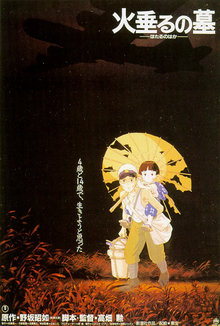
Thus, it’s fitting that Grave of the Fireflies brought to us by renowned Ghibli Studios and the acclaimed director Isao Takahata would utilize this very Japanese style to tell a native story full of pain, suffering, chaos, and survival. His canvas includes exquisite landscapes that glorify the Japanese countryside but more often than not provide a muted even sobering lens to view the ashes and destitution that war sows. The wounds and the scars. The dead bodies left in the streets and the dirtiness that pervades daily life. It’s offensive to the eyes. All of this because American planes drop fire bombs to break the will of the enemy.
In western minds, it almost seems like an incongruity that a film can be both a stark war-torn drama and an animated picture but Grave of the Fireflies proves emphatically that this simply is not the case.
There are very few films brimming with so much emotion, so powerful and evocative and so fully invested in the human experience. There is an innate understanding of the pure destructiveness in the totality of war. It breeds very little that is good. Ripping families apart, causing children to grow up too fast, and subjecting mankind to excruciating loss and indignity.
But in my estimation, it remains far too simplistic to simply state that Grave of the Fireflies is an indictment of the carnage of war or that it is an anti-war picture because its scope is so much greater than that.
Notice what Takahata doesn’t do. He doesn’t make the Americans into dehumanized monsters or anything else. They are just absent, faceless individuals that we will never know. However, he does give us a front row seat to the events through the eyes of two other people.
I think it’s an especially uncomfortable and maybe an important perspective for Americans because instead of seeing ourselves front and center of this epic story of WWII amid both its victories and tragedies, we are only a distant force. This film causes us to take on the viewpoint of those on the other side of the Pacific. This wasn’t just an emblematic figure like Tojo or some crazed, inhuman killer that we were looking to take down.
It becomes clear from the outset that the people being displaced from their homes by firebombs and struggling with rationing and families getting split apart by conflict are not so unlike us.
Takahata brilliantly gears us up for a story that could not be more universal. It doesn’t take place on a battlefield. It doesn’t involve war rooms or army barracks. It’s about two siblings. An older brother Seita and his little baby sister Setsuko.
Together they provide the core of the film. Because Setsuko is one of those precocious little kids who undoubtedly does not comprehend the gravity of all the chaos that swirls around her. All she knows is that she wants to see her mother or that she’s hungry or that she wants her favorite Sakura fruit drops. And her brother provides for her and sticks to her closely with fortitude and faithfulness that makes their bond one of the most affecting connections between cinematic siblings.
I would be hardpressed to guess how old Seita is but there’s no doubt that he’s forced to act quite a lot older than should be necessary under normal circumstances. His father is gone in the navy. His mother is debilitated. He must be his sister’s keeper and everything else for her. Her friend, her playmate, and her protector from a traumatic world that she cannot begin to understand. Since they only have each other and as they skrimp by, as an audience we realize just how abhorrent their conditions are and how no child should ever have to know a life of malnutrition or obliteration.
It’s easy to marvel at the animation because whereas normally we would probably take care in depicting actions of great consequence, a picture such as this finds time to articulate the little things that feel so human. Fiddling with a piece of clothing, scratching an itchy mosquito bite, or simply frolicking along the shoreline for the sheer relish of the moment.
It’s these smaller interludes and touches that give even greater import to the larger ones. A childhood home burning down with a whole host of others so that an entire town looks drastically different. A brother and sister who are forced to live on their own thanks to the glacial welcome they receive from distant relatives. And ultimately the inevitable comes knocking: death.
But just as the titular fireflies fill young Setsuko with a certain awe and wide-eyed wonderment, even in death there seems to be some distant even elusive sense of hope. In a world that can hardly be fathomed, Seita and Setsuko are reunited; no longer plagued by their suffering, their path illuminated once more by nature’s shining beacons of light. While we might have slightly different views about the afterlife, there’s no doubt that we share a desire for such an outcome after death.
Where graves will be emptied. Death will be no more. Pain will have ended. War will be over. Families will be restored. Wounds will be healed and peace will be the final resounding note. Do not let your flame be extinguished by hate, burdens, or dissatisfaction but know that there is so much more to life. In their enduring innocence in the face of such devastation, Seita and Setsuko are a stirring reminder.
Because life is not simply upended by tragedy. It is also fortified by hope. That’s part of what makes it worth living. As Dylan Thomas once eulogized, “rage, rage against the dying of the light.” Do not let your youth be quelled. Do not let your optimism be forfeited. Do not give up your capacity for love. It’s well worth the fight.
5/5 Stars
 Juzo Itami’s so-called ramen western Tampopo is unequivocably original in its hilarity, opening with what could best be called a public service announcement. A suave gangster is getting ready for the movie screening only to be disrupted by a noisy bag of curry potato chips. He threatens the foodie and sits back down to enjoy the entertainment, concluding the film within a film.

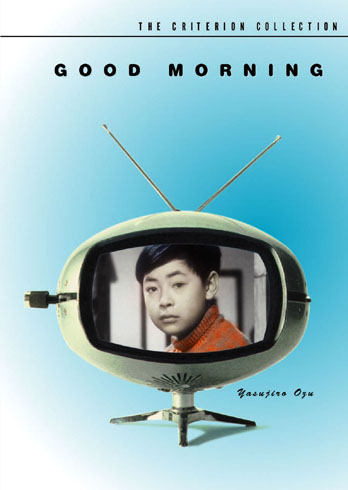 If Yasujiro Ozu can be considered foremost among Japan’s preeminent directors then there’s no doubt that Ohayo (Good Morning in English) is one of his most delightfully silly films. But that’s only on the surface level.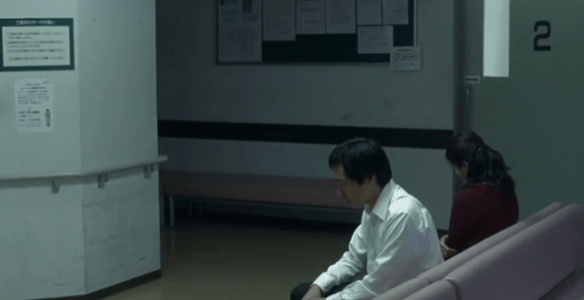
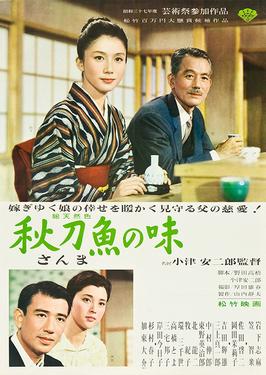 There’s something overwhelmingly soothing about Ozu, simultaneously slowing my pulse and calming my nerves. Yes, An Autumn Afternoon stands as his final film. Yes, he would sadly pass away the following year. But there’s a comfort to watching his films unfold — even his last one. The drama is everyday and somehow disarming and pleasant. We often take for granted that Ozu was not planning to end here. This was not supposed to be his last film. It just happened that way.