10 Things I Hate About You (1999)

10_things_i_hate_about_you_filmThe opening notes of Joan Jett hollering “Bad Reputation” made me grow wistfully nostalgic for Freaks & Geeks reruns. The hope budded that maybe 10 Things I Hate About You would be the same tour de force narrative brimming with the same type of candor. It is not. Not at all. But that’s okay. It has its own amount of charms that forgive the obvious chinks in the armor of this very loose adaptation.

True, its story reads exactly like a book or rather a play, William Shakespeare’s Taming of the Shrew to be exact, but 10 Things I Hate About You succeeds due to the chemistry and charisma of its players. There is a genuine concern on the part of the audience as we watch them go through the interludes and rhythms that we already foresee beforehand. This is not the reinvention of the wheel in terms of high school romance films — not by a long shot — but the script coauthored by Karen McCullah Lutz and Kirsten Smith is equal parts lithe and witty. There’s actually some life to it, even if the plot is an age-old rehash of the Bard. It makes knowing what will happen next of lesser importance and more crucial how the resulting events will affect our protagonists — how they will deal with the inevitable teen drama.

Because the set-up is simple. There are two sisters. For arbitrary reasons, one of the said sisters cannot go to a party unless her older sister is also present. That’s at the behest of their resident oddball father who’s also a bit of a worrywart. Important for this tale is that everyone in school seems to know the set-up too. The smart aleck cool kid Joey Donner is looking to bed the perky Bianca (Larisa Oleynik) for the very reason that she is untouchable. Meanwhile, the starry-eyed new kid Cameron (Joseph Gordon-Levitt) falls instantly in love with this blonde vision. He doesn’t realize he has competition.

However, it all seems for naught due to Bianca’s “shrewish” sister Katherine (Julie Stiles) whose acerbic outlook on life seems destined to lead to dismal isolation. It’s no wonder she curls up in her living room with Sylvia Plath. Still, not to be outdone Joey enlists the help of resident bad boy Patrick Verona (Heath Ledger) to win Kat over and get her on a date. So right there you have the basis for the entire film with our two sisters and two parallel love stories (or loathe stories) with the cool kid running interference while also putting Patrick on his payroll.

At this point, it’s not necessary to get into all the gory details because we’ve probably seen them all before. But for some strange unknowable reasons I accept its cliches and sappiness and that, once again, I credit to the cast. Ledger and Stiles work well together churning up the sparks, he by exemplifying an equal dose of good-natured charm and roguishness.  She is simultaneously able to balance the necessary contempt with genuine care. She cares for her sister, her father, and ultimately Patrick as well. Larisa Oleynik is a capable counterpoint to Stiles and although his role feels relatively minor, Levitt wins the sympathies of any person ever on the outside earnestly looking in.

A major highlight involves Ledger lip syncing to Frankie Valli with synchronized band accompaniment as he tries to win back Kat while concurrently evading campus security. It’s in such a devilishly charming (or dorky) moment where he seems to have won Kat over for good. Although that’s not quite the case, he has the audience on his side for a great deal of the time after that. It only takes the final act for Kat to get there too. It takes a literature assignment of gushy poetry about how much she hates him, for her to realize that she hates being without him even more. Is this destructive? Maybe, but this is a movie about teenagers and teenagers aren’t supposed to have everything figured out. That’s part of the reason why we still readily watch movies about them.

3.5/5 Stars

4 Living Legends Part 2

day-midnightlaceHere is another entry in our ongoing series of Classic Hollywood Stars who are still with us.

Michele Morgan (1920-)

A French beauty and leading lady for numerous decades known for integral roles in films in her native France and across the globe. Her filmography includes Michel Carne’s revered classic with Jean Gabin Port of Shadows as well as Carol Reed’s adroit drama Fallen Idol.

Nanette Fabray (1920-)

Fabray had her roots in vaudeville and musical theater and I know her best for her memorably fun role in the Stanley Donen musical Band Wagon alongside Fred Astaire, Cyd Charisse, and of course, Oscar Levant. In the 1950s she was also paired with Sid Caesar on his eponymous “Caesar’s Hour.”

Rhonda Fleming (1923-)

If Maureen O’Hara was Classic Hollywood’s favorite fiery redhead, Rhonda Fleming deserves to be thrown into the conversation as well, lending herself to many intriguing film-noir including classics like Out of the Past and lesser-known gems like The Spiral Staircase,  Cry Danger, and While the City Sleeps. The true “Queen of Technicolor” is still up for debate.

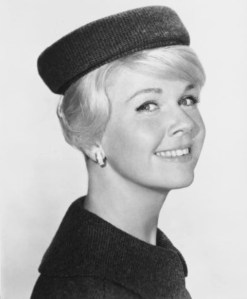
Doris Day (1924-)

Undoubtedly the biggest star on this list, Doris Day was quite the extraordinary performer as a singer, actress, and comedienne. Her string of romcoms with Rock Hudson and Tony Randall were memorable including Pillow Talk. However, she also paired with the likes of James Garner and Cary Grant in Move Over Darling and That Touch of Mink respectively. If there was a big-name leading man in Hollywood there’s a good bet that Day sparred with them. She also showed off her dramatic chops in Hitchcock’s The Man Who Knew Too Much, a film that boasted her signature song, “Que Sera, Sera.”

Film Theory, Film Criticism, Film History and Where I Stand


Someone posits the following question: Are you interested in critical film theory?

My first response is what even is “critical film theory?” And I know in academic terms they are probably talking about film theory or film studies and the many strands of thought and analysis that have come out of academia in the post-war years. That’s good and fine but I would say that I am not a steadfast adherent to film theory and I’m hardly a disciple of any singular dogma, but it got me thinking at least a little bit of where I’m coming from and what my influences are.

I’m educated but hardly an academic. If I’m a critic then some would undoubtedly criticize my less than critical style. As far as film history goes, I love it! If I had to choose between any of these three entities I think I would easily take the mantle of a film historian first and foremost, although in that discipline I am an amateur. But I am a passionate amateur, self-made, self-taught and the last half dozen years or so I’ve amassed a great deal of film knowledge cramming so many cinematic facts in my head, it sometimes amazes me that I can remember most of them.

But I love the way that film is both a historical and visual medium. It can act as a time capsule taking us to different eras, places, and worlds. Introducing us to every type of person imaginable involved in every type of story. And the beauty is that even when those stories are not exactly planted in reality, they have a backstory. Actors, directors, the historical backdrop. All that plays into the film no matter the subject matter. It’s that context that fascinates me. So yes, I would probably consider myself a historian.

However, in order to get others to listen, even if it was only a very few, the need to take on the role of a film reviewer and, dare I say, a critic seemed necessary. As I said before I am self-taught so my reviews are hardly analytical in the academic sense. More on that in a moment.

In passing a few critics that I’ve admired over the years are certainly Roger Ebert, James Agee, Francois Truffaut, and more recently Alissa Wilkinson and Justin Chang. From time to time, I’ve read Kenneth Turan, A.O. Scott, Richard Brody, Anthony Lane, Matt Zoller Seitz, Eric Kohn, Leonard Maltin, Pauline Kael, Manny Farber, Vincent Canby, Andrew Sarris, Kenneth Morefield, Jefferey Overstreet, Brett McCracken, Joel Mayward, Dennis Schwartz, Jefferey M. Anderson, Tim Brayton, and some of the other prolific Rotten Tomatoes reviewers who take the time for lesser-known films.

But going back to my point of view. There’s not one perspective that I feel attached to because that’s precisely why I enjoy writing. I can put on different lenses based on the context and what I want to say. I can be formalist in my admiration for a film’s structure and composition. I can take a more contextual or cultural approach which ties into my appreciation for history, but perhaps most important to me in the progression of my own writing is what might best be described as a humanist approach. I hesitate to use this term because I would not necessarily consider myself a humanist in the generally accepted sense but I believe this lens informs my own often spiritual perspective.

Because my baseline for watching films is ultimately what they can tell me about humanity and more exactly what a film can tell me about myself, broken and confused as I am. It becomes obvious that it’s easy to criticize this perspective as being emotional and unfounded in rational thought. But I would interject that this is why I try and temper this sort of approach with the aforementioned strategies, namely formalism and historical context.

Furthermore, if I had to tie myself down to one sort of thought I guess I would have to admit paying a debt to the auteur theory which indirectly ties back to formalism. Some people might scoff at this point and that’s alright. I never admitted to being an academic or a professional critic. I just love movies and I love writing about them.

But I would say that I was influenced by the auteur theory without realizing it at first. On a practical level, it’s easy to begin cataloging and categorizing films based on their directors. You begin to take mental notes and draw up distinctions. Certainly, there are not always clear lines drawn up since a film production is made up by a lot more entities than just a director. I am astute enough to know that the director being everything is simply not the truth.

However, I would concede that in general the director, more than the screenwriter, cinematographer, or even the actors, can be the author of a film if that is their impetus. Because film is a visual medium and as the orchestrator of that process it makes sense enough that the director can utilize the script, the camera, his actors, the editing etc. to realize a certain vision. This might be artistic, commercial, or simply for entertainment but such a quality is evident in many of the most noteworthy directors. Once again, it’s easy to grab hold of a director that we like because we see certain qualities or themes or even collaborators who we really appreciate.

Another thing about the champions of the auteur theory at Cahiers du Cinema and namely Francois Truffaut is that they seemed to be attempting to put film on equal ground with other classical arts. I’m not sure what I think about that or whether that even matters but I will say that film has been and still is a powerful outlet of artistic expression.

Furthermore, the fact that these men championed underappreciated directors but also those movies and genres that might be dismissed in other circles really intrigues me. It’s this idea that no film is inherently better than another whether an Oscar winner, a foreign film, a comedy, a drama, a black and white flick or a modern blockbuster. The fact that they are different makes them interesting and they can all have merit or weaknesses on their own. So I’m allowed to appreciate a pulpy B Film-Noir as much as a prestige picture. Whatever that means.

Still further, rewinding a bit, it is the formalist theory that allows us to appreciate the work of an individual director because we can begin to pick up on and decipher themes, styles, and the like which become pervasive in their oeuvre. For instance, Hitchcock always had cameos, maintained a droll sense of humor, worked in the thriller genre almost exclusively, was concerned with innocent men on the run, crammed his plots with psychological tension, and almost always cast icy blonde actresses. On top of that, he was always one to experiment with inventive techniques and gimmicks. It makes him almost instantly recognizable. In other words, it doesn’t take a genius to latch onto his genius.

But going back to the boys at Cahiers du Cinema, I think I appreciate them not simply because they formed the backbone of the cinema-shattering Nouvelle Vague but because they put their money where their mouths were in a sense. The fact that they went from being mere critics to actually creating on their own seems to lend some credence to their words. Francois Truffaut is a striking example of this because out of all the men who came out of the movement he is probably my favorite. His films are personal, entertaining, and accessible. He loved movies too and he left his mark on each picture.

So does that clear up anything on where I stand with Film Theory, Film Criticism, and Film History? Probably not but all I ever claimed is that I really appreciate movies and that I get the privilege to write about them. Even if that writing is only for myself. That’s quite alright because I believe that I have been allowed a God-given passion for film, history, culture and the like. It’s this joy that I want to share with others to cultivate relationships and dialogue with all sorts of people. Because each one of us has worth, despite our very shortcomings. Once more, that’s once and for all why I watch movies (Side Note: This is also why I write humanistically).

Thanks for listening to me pontificate on this seemingly arbitrary topic. I promise this will be one of the few times. After all, that’s not what I want my modus operandi to be. Soli Deo gloria.

4 Living Legends Part 1

800px-danielle_darrieux_five_fingers_2I said a while back that I wanted to acknowledge a few living legends who are still with us in a series of short posts and I’ve finally gotten around to it. Enjoy!
Olivia De Havilland (1916 – )

One of the famed sisters who starred in numerous Hollywood especially in the 30s and 40s, Olivia De Havilland will always be synonymous with her pairings with swashbuckler Errol Flynn and my personal favorite with always be The Adventures of Robin Hood (1938). Other films of note included Hold Back the Dawn, The Snake Pit, and The Heiress.

Norman Lloyd (1914 – )

I regret to say that I don’t know more about Mr. Lloyd and I  have yet to watch Hitchcock’s Saboteur (1942) which has been on my to-do list for some time now. St. Elsewhere is also on the watchlist.

Kirk Douglas (1916 – )

The credits belonging to Kirk Douglas as an actor and producer are long and illustrious. He started out in film-noir with such films as The Strange Love of Martha Ivers (1946), Out of the Past (1947), and Champion (1949). However, his career continued to evolve including a lifelong collaborative partnership with Burt Lancaster and landmark films such as Ace in the Hole (1951), Paths of Glory (1957), and Spartacus (1960). His son Michael Douglas has continued the families acting dynasty well into the 21st century. He was named # 17 on the AFI list of greatest actors of all time for good reason.

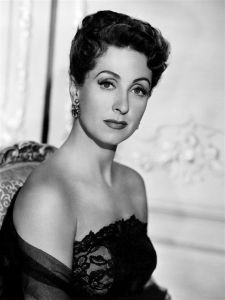
Dannielle Darrieux (1917 – )

A mainstay of French cinema as well as Hollywood films, Darrieux is especially memorable for her work with Max Ophuls and I personally know her for roles in both the thriller 5 Fingers (1952) and Jacques Demy’s lovely musical The Young Girls of Rochefort (1967).


What I Learned from 12 Angry Men

Recently I got the chance to sit down with a group of friends and watch 12 Angry Men together. Many of them had never seen it and hearing their reactions was immense fun for me. But as we talked for a few minutes afterward, I began to realize that really each of these characters represents something in myself or perhaps something I see in others. Each man represents a fault or a warning sign, or even a shining example for how I want to lead my own life. And like any film 12 Angry Men is far from perfect. One of my friends pointed out, rightly so, the glaring omission of any women in the film. And it’s true. The film lacks a high degree of diversity and yet at the core of each of these characters is something that I can take away.

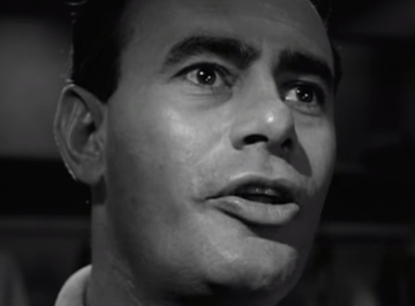
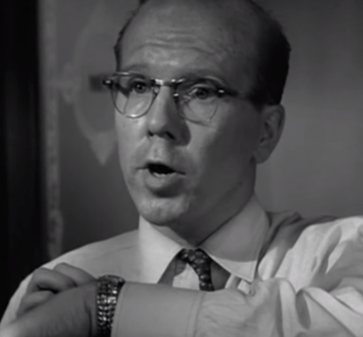
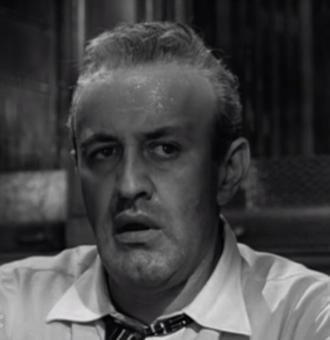
So I would like to go down the line and pay a few words to each of the jurors. Because although they work so well on a collective level, it is their individual personality traits and characteristics that turn this courtroom classic into a fascinating study of human nature and interpersonal communication. Without further ado, this is what I learned from 12 Angry Men:

juror 1.png

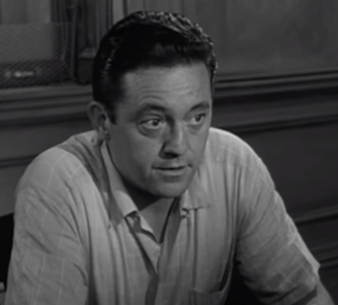
Juror # 1 (Martin Balsam): He takes on the role of foreman and leads the conversations. He’s not  a big personality but he remains fair and level-headed. Even though he starts out on the guilty side of the verdict, I always deeply respect his demeanor. His feathers do get ruffled so he’s not impervious but he lends a nice degree of order to the proceedings. And that is needed within any body of people — someone who is willing to take the lead.

juror-2

Juror # 2 (John Fiedler): I’m a big fan of John Fiedler and he plays the type of character he was generally best known for. A timid bank teller who is easily dominated by the larger personalities around him. He’s also noticeably younger than many of the men on the jury. However, he reminds me that though I too am a quiet personality, there is still need at times to speak up and most importantly to stand by your convictions. Furthermore, never allow others to look down on you simply because of your years. You can still bring something to the table since you have a different perspective on life that is valuable.

juror 3.png

Juror # 3 (Lee J Cobb): He is always the antagonistic force of the film and his role in the film always acts as a bit of a reminder not to allow the root of bitterness infect my life so that it clouds my judgment. For your peripheral relationships to be healthy it is vital that your relationships to those closest to you are flourishing. Family is important. Do your best to foster those relationships whether it’s with parents, siblings or children.

juror no 4.png

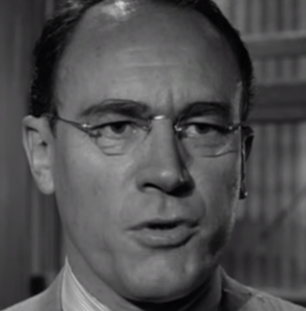
Juror # 4 (E.G. Marshall): Rational thinking and intellect are wonderful and necessary things in this world that we live in. After all, humanity is blessed with brains and it seems like a good thing to put them to use. However, it’s also important to not allow your whole existence run on intellect alone. Things like emotions and feelings have a place in life too because while we are rational beings we are also empathetic ones. We were not meant to live life like machines. Do not become a slave to intellect. Do not become unfeeling.

juror 5.png

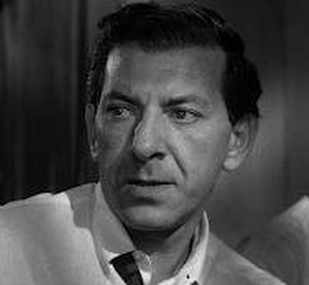
Juror # 5 (Jack Klugman): Here’s a man who is fairly quiet and unassuming at first. But he’s a different sort than juror # 2. It’s less about his temperament and more the fact that he has probably lived his entire life in the shadow of other people. People who keep him down and tell him that his people are no good. But ultimately he gains resolve to stand up for himself. The way he was brought up and the convictions that course through his veins. He too is granted a voice in this forum and notably others begin to listen. He has his own kind of wisdom to offer up as do I.

juror 6.png

Juror # 6 (Edward Binns): While not the most intellectual of the men sitting around the juror’s table, there’s something quietly noble and upright about this man. He doesn’t talk all that often. He’s not one for deeply thoughtful statements. But he’s a humble, straightforward man who believes in a bit of chivalry still — standing up for others when necessary. That’s something I deeply admire in other people. I know I’m not the brightest mind in the room, but humility and genuine character goes a long way sometimes.

juror 7.png

Juror # 7 (Jack Warden): Jokes are a wonderful thing. Laughter is good for the soul and it can add tremendous richness to conversation and human interactions. But there’s also a time and place for playing the clown. We cannot just go through life making light of everything, trying to spin every situation into a joke, because life cannot function like that. There comes a time for being serious and growing a backbone for that matter. Don’t simply go along with others in an attempt to hang with the crowd or get by with the least amount of resistance.

juror 8.png

Juror # 8 (Henry Fonda): Obviously he is our hero as a man who is willing to go against the grain and be the voice in opposition of the norm. He shows tremendous integrity and courage to ask the honest questions and even admit his own doubt. That is a man to be admired. Because while he does want to talk it out and consider the gravity of the situation, he very rarely takes the unnecessary high road of self-righteousness. He openly admits he doesn’t know what the truth is but he’s willing to at least dialogue about it. Those are the people that we need more of. Open, honest, and genuine folks who are willing to talk, willing to listen to reason, and most importantly stand up for their personal convictions. That’s what I want to strive after in my own life.

juror 9.png

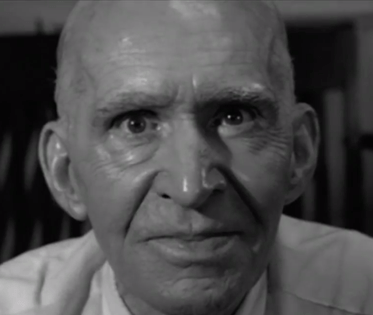
Juror # 9 (Joseph Sweeney): Here is an older gentleman who reminds us that there is a great deal of wisdom that can be gleaned from our elders. We should rightfully so pay them the respect that they are due because there is so much that they can offer us since they often come from a different time and place than we ourselves know. This differing perspective is something to be valued. They often carry insights and values that we might initially disregard, only to find out that they have a great deal that they can impart to us.

juror 10.png

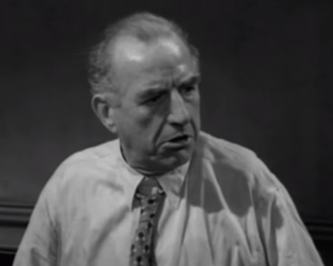
Juror # 10 (Ed Begley): There are few things as abhorrent and insidious as narrow-minded viewpoints. Because it is these people — people who fall prey to prejudice and the categorization of others — who are quick to pass judgments. They allow bigotry to dictate what they say. There is no room for nuance or listening to other people’s voices. In fact, through their actions, they are inhibiting others and leaving no room for any type of dialogue. It’s this interpersonal dialogue which 12 Angry Men is all about and more broadly our own lives as well. I don’t want to be a person who is too closed off to at least listen to people and try to undertand where they are coming from.

juror 11.png

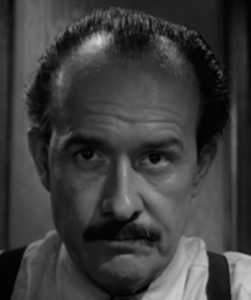
Juror # 11 (George Voskovek): He is one of the most notable jurors because in this day and age he represents so much. In the film, he is the one obvious outsider, the foreigner, the other, and yet he is represented as a thoughtful and articulate man. Most importantly he has a tremendous reverence for the American way of life and the statutes it was founded on. We can learn so much from him because he time and time again subverts most of the labels that are often put on people who are different. But, in fact, those “others” are often the very people we need. Because they bring yet another perspective to facilitate richer, deeper dialogue.

juror-12

Juror # 12 (Robert Webber): Let your ‘yes’ be ‘yes’ and your ‘no’ be ‘no.’ Don’t be a flip, flopper. This resonates with me so deeply. Sometimes even if you shy away from conflict or crossing others, it’s absolutely imperative to take a stand. Once again, jokes can be a wonderful way to ease tension but there comes a point where you have to face the reality. If someone’s life is hanging in the balance,  you have to come to terms with the gravity of the situation.

That’s some of what I learned from 12 Angry Men…

12 people means 12 different viewpoints — 12 perspectives that we can learn something new from. I will always return to this film for those very reasons. In many ways, it models real life for me.

What I Learned From George Bailey

its-a-wonderful-life

It’s a Wonderful Life is a perennial classic for many people but it was not until I saw it in a theater during high school and rediscovered it with new eyes that I  came to truly appreciate this film on a deeper level.

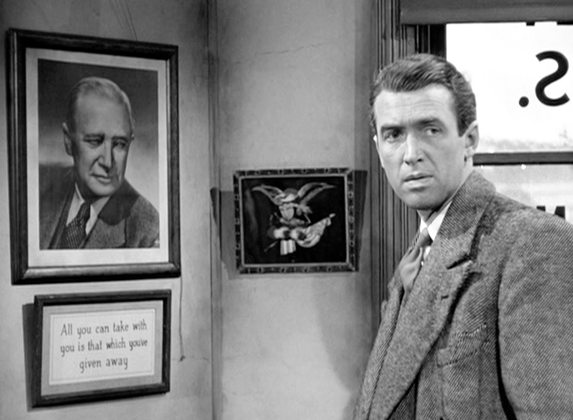
On subsequent viewings, so many scenes resonated with me and gained new profound meanings. However, one of the most prominent is really in the periphery. It came with looking closely at the wall of Mr. Bailey’s building and loan. Clearly visible on the wall of the old building is a short epithet. “All you can take with you is that which you’ve given away.” It’s a strikingly beautiful and pithy statement. I have no way of knowing who thought of having this quotation up on the wall but it perfectly encapsulates many of the central themes of the film.

More than anything, the rise, the fall, and the final redemption of George Bailey reminds me what the true meaning of life is. It is to strive to love others–loving them even as much as you love yourself if that’s your wife or your kids or the people that you cross paths with each and every day. Mary, Zuzu, Uncle Billy, Violet, Burt, Ernie, and yes, even the Mr. Potters.  Simple, everyday, common decency is something to be clung to. It might be unassuming and the people who wield it may remain unheralded but that hardly discounts their impact. They know what they’ve done and that’s enough. Trial and tribulation might come again and again, still they never tire of doing good.

“All you can take with you is that which you’ve given away.”

If we look at the life of George Bailey, he is precisely one of these individuals. This whole film is a culmination of his charity and love towards his fellow neighbors. He never wearies of doing good until the moment when his life comes crashing down on him. It’s at this moment where he finally begins to question the trajectory of his life thus far. He feels like a failure.

And this also speaks into our discontentedness as humans. Like George we want to do great things, gain acclaim, explore the world, and shake off the dust of our crummy lives. Often when life doesn’t wind up the way we want, we think that we’re failures. Our lives have seemingly become so mundane and insignificant. At least that’s what we tell ourselves. That’s what George tells himself for a time and he lets bitterness dictate his life.

But it’s precisely in those moments that he is reminded that no man is a failure who has friends–a community around him who is willing to lift him up and rally around him when he’s at his lowest. That’s why the final moments of the film always ring so sweet because to me they reflect the perfect community — surrounded by all these people that George impacted in one way or another. They are a testament to the life he led, all singing “Auld Lang Syne” in a joyful chorus. And the money they bring to bail him out is only a visible outpouring of their affection for him.

“All you can take with you is that which you’ve given away.”

Ultimately, George reaped the reward for all his sacrifices and everything he gave up for others. But it hardly seems like a matter of karma. George did these things because he truly cared about people. As his father did before him. He was never looking to gain anything from them. That was not his character.

And this always leads me to  a bit of soul-searching. George with the help of Clarence literally sees the world as if he never existed and we too can play this kind of hypothetical game. If I died tomorrow or disappeared off the face of the earth, would anyone care? It’s a sobering question, but if we look at George Bailey the answer is an emphatic “YES!” His not having existed has seismic consequences on his surrounding community. It’s entire identity literally changes when he’s not there.

George Bailey taught me and continues to teach me time and time again what it means to leave a positive impact on the world at large. In my life, every day, I want to make the most of the time I have with other people. Because each life has the opportunity to touch so many others. To put it another way, I’ve read before that there are no neutral encounters you either breath life into other people or you take it away. I do not want to squander the opportunities afforded me and George Bailey models that so exquisitely.

“All you can take with you is that which you’ve given away.”

Catherine Deneuve as Geneviève Emery

umbrellas10.png

I still maintain Audrey Hepburn and Grace Kelly are my two favorite actresses respectively. That started early on thanks to films like Roman Holiday and Rear Window and quickly blossomed even more following subsequent film viewings. But it’s important to note that both of these actresses came out of Hollywood’s Golden Age. Both actresses were English language stars. And both are, sadly, no longer with us.

In all honesty, I cannot quite remember the first time I ever saw Catherine Deneuve, whether it was Belle De Jour, The Young Girls of Rochefort, Repulsion or somewhere else. However, seeing this 19 year old girl, so serenely and quietly beautiful in Umbrellas of Cherbourg, certainly left an impression on me during my own teen years.

umbrellas12.png

While Jacques Demy’s whimsical operatic love story of fate charmed me, it was Deneuve who was an emblem of this film. The fact that Geneviève was herself wrapped in a glorious love affair that slowly became tragic, only made her more beautiful in her solemnity. Her piercing eyes. The loneliness that dwells deep within her. The tears slowly trickling down her cheeks. It only enhances her eternal grace — seeing her so melancholy and distant.

Also, it probably helped, ironically, that I don’t speak French. It is yet another barrier between me and this character of Geneviève. I cannot fully understand her plight, because I cannot even completely comprehend the language that she speaks, as melodic as it may be. The heart-wrenching melodies of Michel Legrand as well as Umbrella’s vibrant palette of colors are equally evocative. It’s no fluke that Deneuve bursts onto the scene right here. Everything is going for her with Jacques Demy at the epoch of his creative powers.

And the fun of this particular story is that Catherine Deneuve is still with us and still making a good many movies. Admittedly, I haven’t seen many of her newer roles after The Last Metro (1980), but I’ll get around to them someday. It was fun to find a star of a bygone era, who did not die 20 years before I was even born and for that Deneuve was a welcomed discovery. She continues to fascinate audiences, not least among them me.

I still am partial to Audrey and Grace, but I would say unequivocally that Catherine Deneuve comes in a close third. How can you not be won over by Umbrellas of Cherbourg, an extraordinary debut from a phenomenal body of work?

umbrellas5.png

Teresa Wright in The Best Years of Our Lives

teresawright.jpg

I was born and bred a California boy, but there’s a certain something about the girl-next-door. Maybe it’s my midwestern roots, because after all, my mom was born in Iowa before making the move westward.

Anyways, the first time I saw Teresa Wright onscreen I was immediately smitten. She is the complete antithesis of the blatant sexuality of a Marilyn Monroe, a Sophia Loren or Elizabeth Taylor. Granted, all very beautiful women of Hollywood’s Golden Age, but as their predecessor, a very different sort of actress, Wright exudes a certain sweet charm that epitomizes the ideal American girl. Before Donna Reed or Doris Day.

In The Best Years of Our Lives she plays Peggy, the thoughtful, funny and mature daughter of Al and Milly Stephenson. Right from the get go, it’s hard not to love this girl from the quintessential post-war family. She knows how to cook, drives well, has all the skills that are desirable of a lady circa 1946. But the bottom line is her utter sincerity. She seems real.

When she first meets Fred Derry then, there’s no agenda or master plan to seduce him or make him fall in love with her. It just happens. She doesn’t quite want it to happen and she tries to resist the urges. She’s not prone to drama. She’s above that kind of behavior. In other words, she’s a real winner.

Thus, the moment when she begins to fall for a married man, unhappily married, our heart aches for her–at least that’s what I felt, because she deserves to be happy. How could Teresa Wright not be happy? And in the end she gets the ending that she deserves–the one we want for her and Fred.

The legendary critic James Agee wrote this of her performance:

“This new performance of hers, entirely lacking in big scenes, tricks, or obstreperousness—one can hardly think of it as acting—seems to me one of the wisest and most beautiful pieces of work I have seen in years. If the picture had none of the hundreds of other things it has to recommend it, I could watch it a dozen times over for that personality and its mastery alone.”

Took the words right out of my mouth J.A.

And beyond simply this film, there was a string of equally amiable performances that came before and after. She’s the sweet innocent ingenue in The Little Foxes and Mrs. Miniver. In The Pride of the Yankees she was the perfect incarnation of Lou Gehrig’s faithful wife, while also playing the intrepid “Charlie” in Hitchcock’s home thriller Shadow of a Doubt. Later on in her career she would star in the psychological western Pursued and opposite Marlon Brando in The Men.

Perhaps the roles share a degree of similarity, but it should not go unnoticed that Teresa Wright had a string of three academy award nominations, that suggest that she was a pretty big deal in her day. To this day, no one has equaled that feat of hers.

But why had I never heard of this wonderful, pure actress until so much later in my cinematic odyssey? She had slipped through the cracks and crevices of my film education. And that might best be explained by Teresa Wright’s own words:

“I’m just not the glamour type. Glamour girls are born, not made. And the real ones can be glamorous even if they don’t wear magnificent clothes. I’ll bet Lana Turner would look glamorous in anything.” 

“The type of contract between players and producers is, I feel, antiquated in form and abstract in concept. We have no privacies which producers cannot invade, they trade us like cattle, boss us like children.”  – (Wright would not allow herself to be shot in certain manners for publicity photos and ultimately lost her contract with Samuel Goldwyn)

“I only ever wanted to be an actress, not a star.”

So certainly this girl was not your typical Hollywood movie star. She lacks flamboyance and your typical glamour, but she makes up with it by being a deeply heartfelt and sincere individual onscreen. She feels real and in her earliest roles, completely innocent. It’s hard not to fall head over heals for a girl like that.

Noah Beery Jr. (1913-1994)

It’s putting itbeery-red-river lightly to say Noah Beery Jr. came out of an acting family. His father, and namesake, Noah Beery Sr., much like his son, was a character actor well respected during the dawn of the film industry. He appeared in both silents and talkies as diverse as The Mark of Zorro (1920) and She Done Him Wrong (1933). Young Noah’s uncle Wallace Beery achieved a wide degree of fame during the 1930s with such classics as The Champ (1931), Grand Hotel (1932), and Dinner at Eight (1933). Even Noah’s mother Marguerite Walker Lindsey was an actor at one point.

Thus, it makes complete sense that Noah Beery Jr. followed in the footsteps of the family lineage. Some of his most notable films included: Only Angels Have Wings (1939), Of Mice and Men (1939), Sergeant York (1941), Red River (1948), Jubal (1956), and Inherit the Wind (1960). And he could always be counted on to play a slightly pudgy, generally good-natured side kick or victim. That was his niche in Hollywood and it served him well even if it was not the most prominent of careers. However, it would prove useful in his later years.

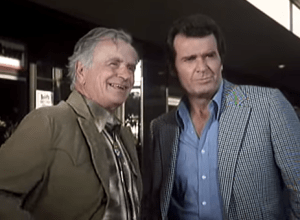
Noah_Beery_Jr-stillFor most of us, including myself, Noah Beery Jr. will always and forever be the beloved “Rocky,” the concerned and often comical father of Private Investigator James Rockford (James Garner) on The Rockford Files (1974-1980).  What made the show work was the fact that they gelled so well together, because the roles already seemed to fit who they were so perfectly. It could have been just another cop show from any decade really, but that duo made the show a cut above. We wanted to watch them together, because it was good old-fashioned fun and we actually cared about them as individuals.

Fittingly Beery and Garner began in westerns. Beery in mostly films and Garner as the gambling drifter Bret Maverick in the TV western Maverick. By the 1970s they were both a pair of vets and the chemistry they created was perfection. There was no need to don a role, because they appeared to be playing themselves or at least the version of themselves that they had played for so many years now.  It felt like a genuine relationship between a son and his father. Even facially they share some resemblance.

noahbeery
I truly love James Garner, undoubtedly like many others. He made the Rockford Files  a perennial favorite, but Rocky gives the character of Jim even more depth. In fact, I will go out on a limb and say that in the world of fictional television parents Rocky is one of my personal favorites. Maybe he feels different than most because his son is grown up, but he still has such a tremendous relationship with him. Rocky’s a bit of a country bumpkin,and still a generally caring man who worries about his son and can be a nag like any good parent. He has to let Jim be, and yet that doesn’t mean he can’t worry about him still.

Invariably some of the greatest moments in Rockford came not in the climatic car chases or frequent fist fights (which are great!), but in the equally frequent family squabbles between father and son. Maybe Jim borrowed something like Rocky’s truck or Rocky needs a favor, but in every one of these instances we feel connected with these two. Their lives play out in that beat up Malibu trailer much like our lives play out in reality. They come across as so human, and that has been rewarded over the years by a dedicated fan base.

I just hope no one every calls me “Sonny.” Rocky can get away with it but no one else! Here’s to you Noah Beery Jr. Here’s to you Rocky!

Movies to Keep an Eye on in 2015

The_Revenant_2015_film_posterBridge of Spies – Spielberg Cold-War drama
Steve Jobs – Danny Boyle’s film written by Aaron Sorkin and starring Michael Fassbender
The Martian – Ridley Scott’s latest endeavor starring Matt Damon among others
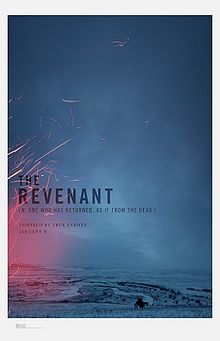
The Revenant –
Sicario – Emily Blunt starring in an intense thriller
Room – Brie Larson’s latest star turn
The Hateful Eight – Quentin Tarantino’s tantalizing western chamber piece.
Spotlight – an all star cast
Joy – The dynamic pairing of David O. Russell with Jennifer Lawrence once more
Carol – Period drama featuring Cate Blanchett and Rooney Mara

Snowden – Joseph Gordon-Levitt and Shailene Woodley working with Oliver Stone
Burnt – Bradley Cooper as a chef
Beasts of No Nation – Idris Elba paired with Cary Fukinaga
Spectre – The latest Bond with Daniel Craig facing Christoph Waltz
Star Wars – The return to a Galaxy Far Far Away after 30 years of waiting
Mockingjay Part 2 – The final installment of the blockbuster smash
The Big Short – all star cast including Christian Bale and Steve Carrel
Youth – Michael Caine in a starring role
Brooklyn