Blow-Up (1966)

40940-blowup_posterDepicting the time and place of Swinging London in the 1960s, this film is directed by Michelangelo Antonioni and it stars Peter Hemmings as the protagonist. He is a fashion photographer in a hopping city. He spends his day working with models with countless photo shoot after photo shoot. He is skilled at his job and as such he is temperamental and at times irritated by his fashionable but arduous occupation.

After one such string of photo shoots he goes off on an excursion to an antique shop and a park where two lovers have met. He sticks around and snaps pictures of them before he is chased off by the woman. The next day the attractive woman comes to him asking for the negatives and at first he refuses. After she has left he develops the negatives and blows them up only to find something very intriguing. He goes back to the park at night and finds something very perilous indeed. He returns to his flat and then he spots the woman at a club only to lose her during a concert.

Following the lively evening he returns once more to the park, this time to find something even more unusual. Despite all his efforts everything is still a complete mystery that he cannot hope to solve or understand. There seemed to be some superfluous scenes in this film but it was interesting to watch it unfold. The photographer has an intriguing lifestyle but he is not a very likable character. Following the blow up of the image everything begins to change and we begin to sympathize with him. When the film ends and the mystery is still unresolved, it forces him as well as the audience to simply accept it and move forward. This is an anti-mystery if there ever was one.

4.5/5 Stars

The Conversation (1974)

6d644-theconversationDirected by Francis Ford Coppola and starring Gene Hackman, this film begins with a commonplace conversation between a young man and woman in the relatively busy Union Square in San Francisco. As they make their way around their words seem of little importance and yet unbeknownst to them they are being followed and recorded. 

The mastermind behind it all is the surveillance expert Harry Caul who uses his know-how and a small team to track their words from a van.  As a professional and a highly respected member of his field, Caul is guarded and he tries not to concern himself with the reasons behind his surveillance. However, as he works his magic in his private lab space, Caul finally does become affected when he picks up on bits and pieces of the conversation. It deeply troubles him and he continually plays the tapes back. 

Because of his concern, Caul holds out on giving the tapes to the assistant of the Director, the man who commissioned the job. The aide pressures him more and more and then finally Caul finds the tapes are stolen. Fearing that the couple is in grave danger, Caul takes the room right next to theirs, but unfortunately despite his best efforts, his fears seem to be confirmed. After searching the empty room Caul goes to confront the Director only to find that things are not as they seem and Caul is the only one who realizes it. The disillusioned man is then threatened over the phone and informed that now the shoe is on the other foot and he is under constant surveillance. Little did he know the implications of the conversation… 

Gene Hackman may have played more memorable characters like Popeye Doyle, Lex Luthor, or even Norman Dale in the Hoosiers, however, I am not sure if he played a more complex character than Harry Caul. He is a detached man who has no telephone, tells white lies about his birthday, has multiple locks on his door, keeps his equipment caged and he has no significant relationships. The other side of him loves the saxophone and is a devout Catholic. He is no hero and not what we would normally call a villain. He is Harry Caul a lonely, confused human who has tendencies for good but still constantly struggles to reconcile that with his career. Above all, The Conversation is a thought-provoking psychological thriller which gives the audience lots to mull over.
 
4.5/5 Stars

Gone Girl (2014)

b15ec-gone_girl_posterMy only advice for Gone Girl is to leave all your preconceived notions at the theater entrance because you are about to be blown out of the water. This is not the movie you were expecting–probably very few people were.
The story is based on the source novel of Gillian Flynn who also happened to be the film’s screenwriter. Behind the camera is mystery-thriller phenom David Fincher (Se7en, Zodiac) directing his two stars Ben Affleck (Argo) and Rosamund Pike (Pride and Prejudice).
From the beginning, we get a personal view into the married life of Nick and Amy Dunne. Back in 2005, the romance was just beginning to bud. Now on their 5th wedding anniversary, Amy is gone. Nick is the obvious culprit and we suspect him from the outset of the film, but why would he call in the police to search for his wife? He seems genuinely worried and befuddled by it all.
Soon the police are being taken on a treasure hunt while the whole town becomes frenzied behind the giant media carnival which is having open season on the find Amy campaign. The underlying tension of every present day sequence makes for a nerve-wracking procedural juxtaposed with the romantic journal entries of the gone girl. The race to find Amy is on with the days counting down and Nick collaborating with Detective Boney (Kim Dickens).
By this point, it is insanely difficult to catch up with the narrative because just when a conclusion seems certain a new wrinkle is inserted. There are no givens. Is Nick good? Who is Amy really? Who Knows?
Fincher’s film has one last grand ploy. It shows its hand earlier rather than later, feeding its audience one juicy twist. Far from being done, it continues to follow the fate of poor Nick and Amazing Amy. Gone Girl grows more and more uncomfortable as the days pass and not for the reason you would suspect. On the surface, life seems perfectly normal once more to the still clamoring media, but it’s not the first time that the cameras and reporters fail to see what is really going on.

This is one of the most intense dramas that has come out in years and it in many ways functions as a thriller, a black comedy, and even a satire of the media. The often grisly depictions of violence make the proceeding moments of laughter all that more uncomfortable. Fincher made thrillers before, but nothing quite like this. It’s fidget-inducing, spine-tingling, and utterly perplexing.
 
4/5 Stars

Gaslight (1944)

eb609-gaslight-1944Directed by George Cukor and starring Ingrid Bergman, Charles Boyer, and Josesph Cotten, with Angela Lansbury, this film begins rather abruptly with a young girl in England who witnessed the aftermath of her aunt’s murder. Then in a whirl wind she has become married to a nice young pianist and they move back to her old home in England to settle down to together. From that point on everything begins to change gradually. Gregory has a violent outburst over a letter, Paula loses her brooch mysteriously, a picture is misplaced, there are seemingly footsteps from above, and the gaslights change for no apparent reason. Gregory continues to manipulate and isolate his wife telling her it is for her own girl. A traumatic night at the opera and the new maid only worsen Paula’s mental state. She soon believes she is sinking deeper and deeper into hysteria thanks to Gregory. However, a former admirer of her aunt becomes curious of Paula and tries in earnest to meet her as he reopens her aunt’s case. Finally, they meet and together they piece together what is really going on. In the final climatic moments the inspector comes to Paula’s aid and she turns the tables on her husband. All the main players do a wonderful job, especially Bergman, and this film was built up nicely. My only qualms would have to be Joseph Cotten playing an Englishman and I found it hard to follow in the very beginning.

4.5/5 Stars

The Prestige (2006)

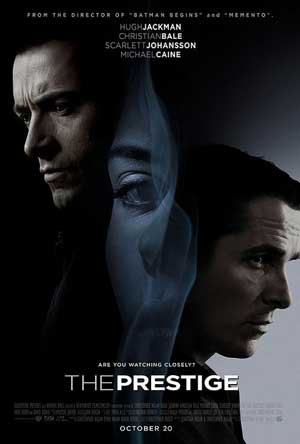
87836-prestige_posterStarring Christian Bale, Hugh Jackman, Scarlett Johannson, and Michael Caine with director Christopher Nolan, this film is about two magicians who ultimately become rivals. After the death of Robert Angiers’ wife, he blames Alfred Borden and thus begins their quest to become the greatest magicians the world has ever seen. Along the way Borden finds a wife and has a daughter, while Angiers tries to discover Borden’s secrets various ways. Both men will stop at nothing to succeed even if it means sabotage, wounding, or even traveling to Colorado in Angiers’ case. With Borden in jail for murder of his rival, it appears as if Angiers has won. However, in the end all is not as it seems and it is revealed to the audience. Once again Nolan uses non linear storytelling to develop this intriguing mystery. I was not much of an authority on magic but now I know you have the pledge, the turn, and of course the prestige.
 
4/5 Stars

Diabolique (1954)

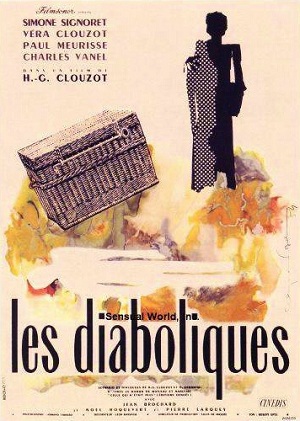
3bb85-lesdiaboliquesposterThis French thriller begins at a small boarding school for boys. The principal is a difficult man who is married to a wealthy but frail teacher, and his mistress is another one of the teachers. Because he has been awful and abusive to both of the they befriend each other and devise a plan to kill him. They lure him away from school and eventually drown him in a bathtub. They go back to the school and dispose of the body in the murky pool. The deed is done and they are both apprehensive, especially the frail wife. When the pool is finally drained there is no body! This and other strange occurrences further frighten the wife and she becomes sickly. However, she could never expect what she saw one night that led her to die of fright. The twist at the end of the film is good. It is rumored that Hitchcock tried to get the rights to this story. He would just have to settle for making Psycho instead. What a shame.
 
4.5/5 Stars

The Big Sleep (1946) – Film-Noir

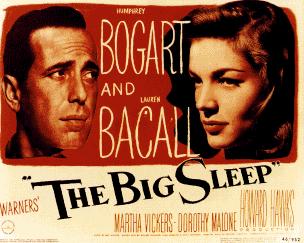
e3d1f-bigsleep2This noir, crime-drama starring Bogey and Bacall with director Howard Hawks, follows private eye Phillip Marlowe (Bogart) in Los Angeles. His difficult and ever changing case has him interrogating every one under the sun and following every lead. In typical Bogart fashion, Marlowe is a tough guy who does not shy away from danger and he has the eye of many a woman. What starts off as a normal case quickly turns deadly, setting the plot off. The constant twists and new characters complicate Marlowe’s case and get him in numerous messes. However, thanks to his grit and wit he comes out on top, falling for the girl, and overcoming his adversary. One word that sums up this film is incomprehensible. Despite the confusion with the plot, this film is very enjoyable and seems to work itself out.

4.5/5 Stars

In honor of Lauren Bacall

Review: The Third Man (1949)

5873f-thirdmanusposterI am continually drawn to The Third Man for a number of reasons, which I would love to highlight right now. To begin with, the opening credits come up and yet behind them is the rather odd image of a row of strings. As an audience, this is our first introduction to the zither, the twangy instrument that will create the strangely haunting score over the course of the film.

Then, we are fed a casual bit of narration that quickly throws us into the story of western writer Holly Martins (Joseph Cotten), as he heads to Vienna to meet his old school chum Harry Lime (to be revealed later!). It seems safe to say that World War II was not good to the city, which is a mixture of ruins, cobblestone streets and ornate architecture that lend itself to an uneasy feeling. In other words, what happens in Vienna, stays in Vienna. Everything is zoned off nicely, and the authorities try and stay out of each other’s way.

Martins learns soon enough that Lime is dead and yet it doesn’t add up. His best friend was hit by a car driven by a colleague, carried off the road by two friends, and diagnosed by his personal doctor who all happened to be present. Martins is urged by a Major Calloway to not get involved. Heading home would be a much better solution.

But of course, Martins does not heed this advice. He meets Harry Lime’s girl, the beautiful but somber Anna (Valli), who has her own troubles with the authorities. Further investigation points to a mysterious third man who a local porter saw from his window. The old man winds up dead and soon Martins himself is threatened. Calloway encourages him to leave again before reluctantly disclosing that Lime was dealing diluted penicillin on the black market. That batch ultimately killed and harmed many a patient.

It’s a whole different ballgame now. But wait, after dropping in on Anna, Martins sees a shadowy figure out her window and in a dramatic entrance Lime shows his face. A magnificent magic trick and fully alive. The next day on a Ferris wheel Lime’s true character comes out. All I will say is that he would have been at home in the Borgia family.

Now Holly is conflicted about helping the police snag his old friend or heading home, wiping his hands of the whole ordeal. He finally reluctantly swings a deal because of his love for Anna. Plans are set and soon a trap is sprung for Lime. He is tipped off by a still faithful Anna, but the police force him to make his getaway into the sewers. That is where it all goes down for good. The next day Holly Martins waits at the side of the road for Anna. She slowly makes her way in his direction and without any acknowledgment, she keeps on walking on. She is now out of the picture and all he can do is light yet another cigarette. That is the cold and painful ending to The Third Man, a perfectly suited story for Post-War Vienna and a great Film-Noir.

We become constantly aware of this film’s almost painful camera angles, at times, which slightly distort scenes and close in on faces. It is an unnerving feeling for the viewer which is only compounded by the bleak and shadowy cinematography, along with the haunting music. It all adds up to a perfectly chilling composition. The story feels starkly real too thanks to the on-location shooting and the mixing in of the German with the English. As a non-German speaker, this extra language only furthered my confusion and, at times, my paranoia. Along with Martins, I often could not understand what was going on, causing me to be more and more befuddled.

All in all, although Orson Welles stole the show, both Joseph Cotten and Valli were superb. The two of them had the most screen time and it certainly was not wasted. Whether they were walking or talking they always made for an interesting contrast. Their accents, their demeanor, even their opinions of Lime were often in juxtaposition. I was not a fan of Trevor Howard, but he was not meant to be a likable character. Bernard Lee, on the other hand, had to be my favorite supporting role.

The Third Man is already on my watch list again and for good reason! Well done Carol Reed, Grahame Green, and Anton Karas!

5/5 Stars

The Maltese Falcon (1941) – Film-Noir

4ef67-falconmThis archetypal film-noir directed by John Huston, stars Humphrey Bogart as the detective Sam Spade. After an initial conversation with a mysterious woman, that same night two men end up dead. As Spade tries to understand what is going on, it puts him in contact with a paranoid little man and another man who is trailing him. All of them have something to do with a black bird and the situation gets more complicated when Spade meets the fat man. Rather surprisingly Spade ends up with the falcon but of course there has to be a twist. Soon enough the truth comes out of Brigid O’Shaughnessy and Spade coldly does his work. This film has great characters played by Mary Astor, Peter Lorre, Sidney Greenstreet, Ward Bond, and Elisha Cook Jr. The directing is good as well as the cinematography. This is the film that finally made Bogart a star and he would never look back.

5/5 Stars

To Catch a Thief (1955) – Alfred Hitchcock

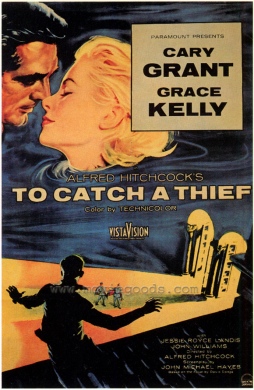
1b4d6-to_catch_a_thiefStarring Cary Grant and Grace Kelly and directed by Alfred Hitchcock, this film follows the life of a former cat burglar who is accused of thievery in France. An outbreak of thefts seem to point to John Robie and he seeks refuge with some old friends. He plans to clear his name by catching the real thief. He learns that a vacationing mother and daughter have the most expensive jewels and he strikes up a relationship. The daughter realizes what he is and goes on to tempt him to steal her valuables. When they actually go missing she suspects him. Trying to figure out what is going on Robie struggles with a possible burglar who falls to his death and he attends a ball with Francie who has pronounced her love for him. After a clever switch Robie waits for the real perpetrator only to be surprised. As a thriller and romance this is a fun film. The cinematography is excellent and Kelly’s wardrobe done by Edith Head is memorable. Cary Grant and Grace Kelly are certainly a memorable screen couple.

4/5 Stars