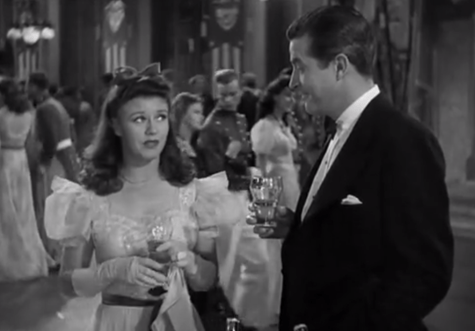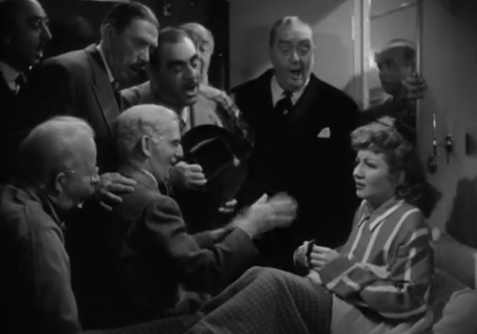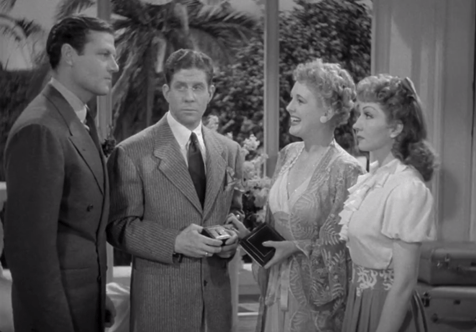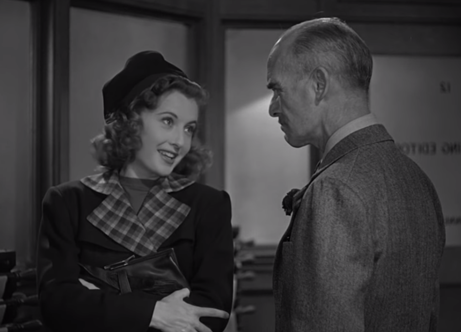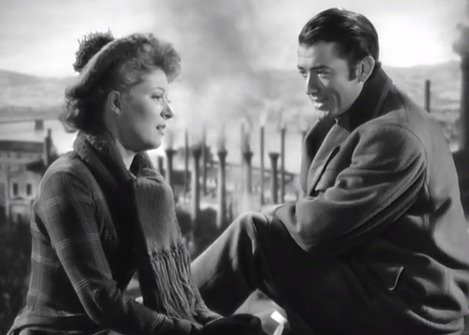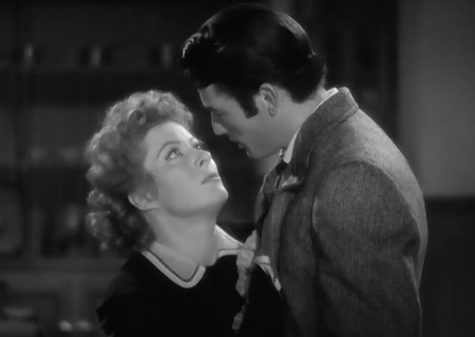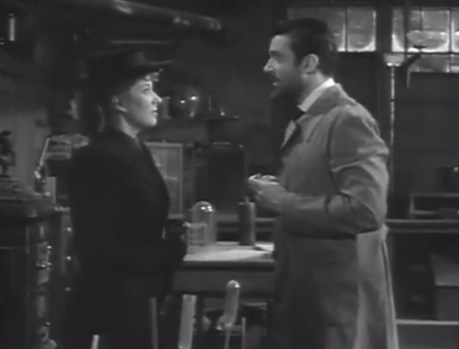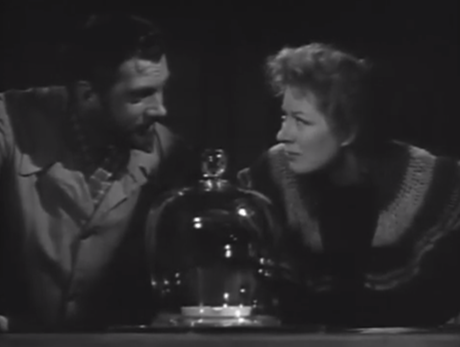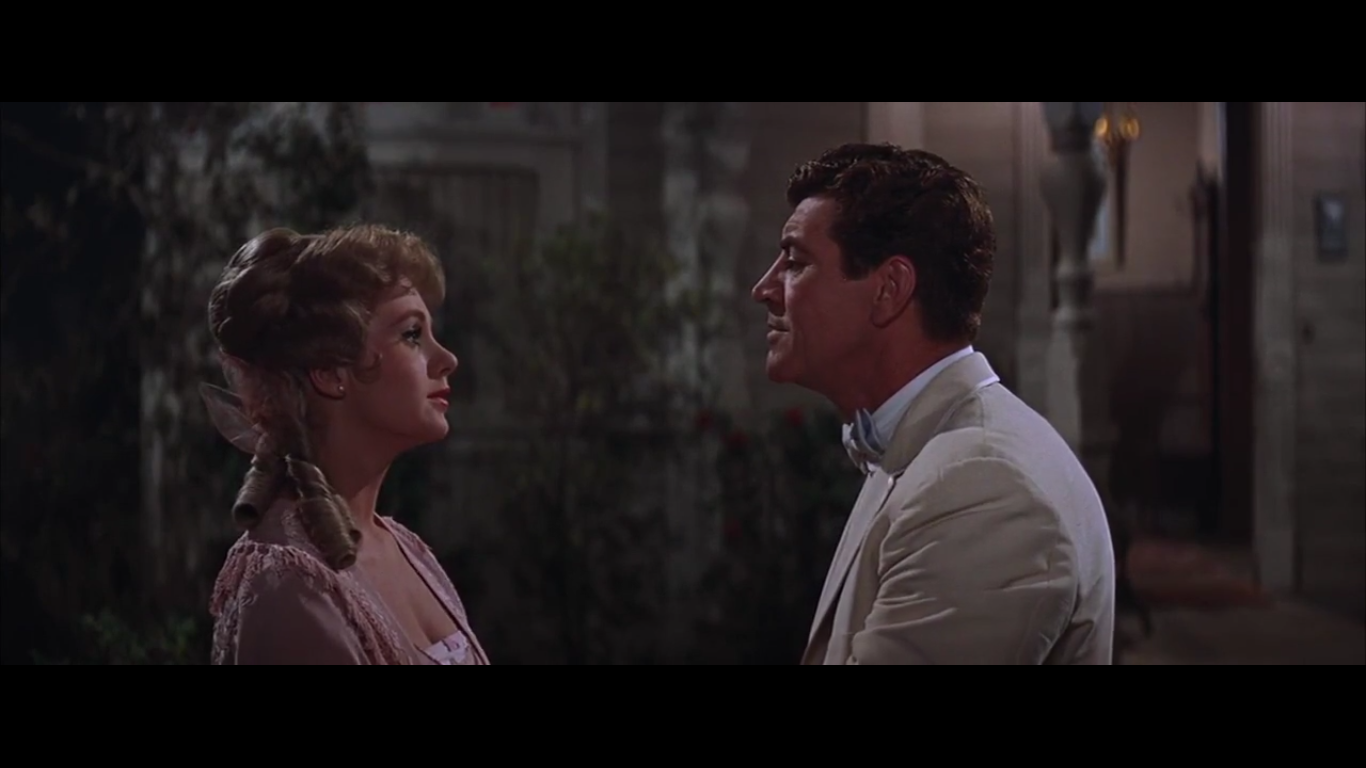
Meet John Doe (1941) and The Woman Who Made Him

meet john doe 1

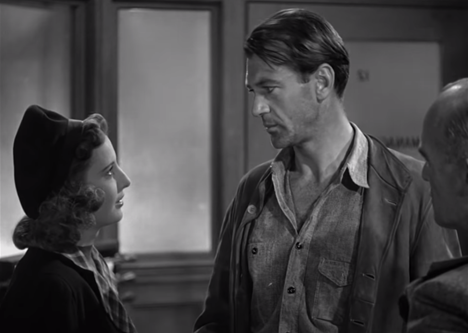
“You don’t have to die to keep the John Doe ideal alive. Someone already died for that once. The first John Doe. And he’s kept that ideal alive for nearly 2,000 years.” – Barbara Stanwyck as Ann Mitchell

In their final collaboration, Capra and Riskin draw on the same cisterns with their usual success. Even the opening images matched with music, summons strains of unmistakable Americana from “Take Me Out to The Ballgame” and “Oh Susanna” mixed with “Roll Out The Barrel.”

It taps into the precise sentiment all but embodied and propagated by all their pictures together. There’s always a point of inception. In this case, it begins with something bad. The Free Press gets axed for a new and improved streamlined paper and with the changes, some of the faithful employees get knocked off too. Among them is feisty newspaperwoman Ann Mitchell (Barbara Stanwyck) supporting her family on her measly paycheck. Now the new regime wants to take that away from her too.

I must open with this. I love Barbara Stanwyck to death. There’s something so energetic and alive about her, even the tonalities of her voice feel fresh and appealing. 1941, without a doubt, was a bumper crop of a year for her — the finest of her career — and she churned out three classics. The Lady Eve, Meet John Doe, and Ball of Fire all capitalized on her ready-made brand of wit, strength, and innate beauty.

Twice she plays Gary Cooper, once it’s Henry Fonda, and yet in all cases, she falls in love with the man. So much so she’ll fight to get them back. And they can be fiery in other movies, but when she shares the screen with them, they don’t have to be. She can supply enough verve and vivacity to cover both of them. It’s phenomenal to watch how she effortlessly commandeers scenes.

But this is jumping the gun. For the time being, she hasn’t met her man yet. She’s too busy being miffed, trying desperately to dream up one final hair-brained idea to reclaim her job. It comes with dreaming up an idealized man — the man she will come to fall in love with.

The origins are innocent. She wants to get back at the brusque editor (James Gleason) trimming the fat like there’s no tomorrow. Her Lavender and Old Lace column is too blase for what they’re looking for. They want fireworks. Well, she’s prepared to give them absolute dynamite. Because in a Capra-Riskin picture, ideas can flip the world upside down.

This one involves a universal “John Doe,” who has sent a letter to the editor to protest the state of the world and the lack of brotherly love. As an act of protest, the mystery man asserts he will commit suicide by jumping off a government building on Christmas Eve merely on principle. While it’s one last feisty stab at keeping her light burning, the John Doe column starts a wildfire across the country.

It’s a national phenomenon. People are clamoring for action to stop this preventable tragedy. They want John Doe to be reinstated into society, even bending over backward to offer charity. The idea is almost too big. The paper is forced to back up the lie by instigating a national search for the one and only John Doe.

meet john doe 2

Wouldn’t you know it, among all the bums and vagabonds is Gary Cooper, tall and self-effacing as ever, accompanied by his buddy, The Colonel (Walter Brenan), a man continually suspicious of the helots. Moments later, Stanwyck beams up into Coops big brown eyes forming an instant connection. He’s the one.

With their substantial public support and the silent backing of a perfidious magnate D.B. Morton (Edward Arnold), Meet John Doe fits easily on the same plane with Mr. Smith Goes to Washington and A Face in The Crowd.

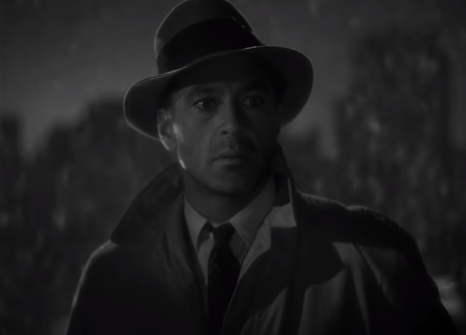
Long John Willougby (Cooper) looks to be propped up as a spineless ‘yes man’ and yet even with his national sway, he’s hesitant to use it. This makes him the utter antithesis of Lonesome Rhodes. He has his own choices to make because as it goes, indecision is a decision in its own right.

Thankfully, the flimsy gimmick deepens as Stanwyck humanizes it with her deceased father’s words. It’s no longer a totally phony-baloney stunt. She legitimizes it and falls for the ideal she’s created in its wake. The man standing in for her vision is the washed-up big-league pitcher who is simultaneously falling for her.

It’s pure Capra, pure Riskin, even as a rival newspaper tries to bribe him with 5,000 clams to read an alternate speech, effectively ousting himself as a phoney. He’s can’t help but be smitten so he goes forward as planned, and there’s arguably no better man to orate the words than Gary Cooper. He calmly calls on his fellow countrymen to tear the fences down between neighbors because the trouble with the world is people being sore at each other.

A grassroots populism shoots up across the country in response to his amicable radio rally. John Doe clubs dotting the country are almost a kind of humanistic church meeting ground, altogether apolitical and not overtly religious.

Regis Toomey represents the masses as one of the many folks taken up by Doe’s words. Ann Doran is all but uncredited as his doting wife and the guiding light behind his resolve. His candid soliloquy speaks to the same messages of brotherly love. It’s Williloby’s first realization that he’s a part of something far larger than himself. He has some sort of concrete responsibility to these people, whether real or imagined. 

meet john doe 3

The story could end here on this most saccharine note if not for the customary sinister twists alluded to by the foreboding closeup on Mr. Morton as he eavesdrops on his help. He knows he’s in on something that he can use for his personal ends. The greedy are capable of taking something pure and twisting it with their duplicitous intentions.

He proves just how Machiavellian he is willing to stoop, ready to kill an idea when it gets in the way of his political ambitions. Prepared to ground Doe into the dirt and turn the whole nation against him with his amble sway in the media. The man who once promoted him, calls John out as a fake, a man paid off with 30 pieces of silver like Judas Iscariot — the most ignominious traitor the world has ever known.

Stanwyck can’t save him in the moment and she cries out, “They’re crucifying him!” The same people who loved him. A fickle generation fed on lies. Now with the biblical imagery increasingly clear, John Doe is prepared to be the sacrificial figure they don’t deserve.

The following Christmas Eve is understated and dismally captured. Instead of a bridge in Bedford Falls, it’s the top floor of City Hall where our man bides his time, resolved to jump to his death as not only an act of silent protest but sacrificial love.

Capra famously shot about four or five different endings to the picture trying to figure out how to resolve the story in a satisfactory manner. Whether you agree with the choice or not, one must admit he kept with the unifying thematics of his oeuvre. For me, Stanwyck is the standout MVP to the very last scene.

4/5 Stars

Johnny Belinda (1948) and Evoking Silent Cinema

johnny belinda 1

I must admit to committing an unforgivable fallacy. Maybe I’m the only perpetrator, but there might be others too. In my own mental computations, I often attribute Jane Wyman as the first wife of Ronald Reagan more than I equate her with her acting career. And though Nancy Davis hardly built such a substantial Hollywood career, I am quick to remember her because she was, after all, the First Lady.

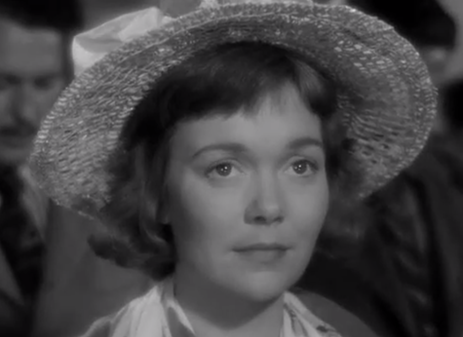
However, with viewings of the Yearling and especially Johnny Belinda, I hoped to remedy this by recalibrating my brain’s gut responses. It was a stunning success. I’ve never been more mesmerized with Jane Wyman, and the core of Johnny Belinda’s merit lies in how simple it is. She does so very much with so little and in a medium often hampered by excess, Johnny Belinda is, in its finest moments, a quietly moving examination of a human being.

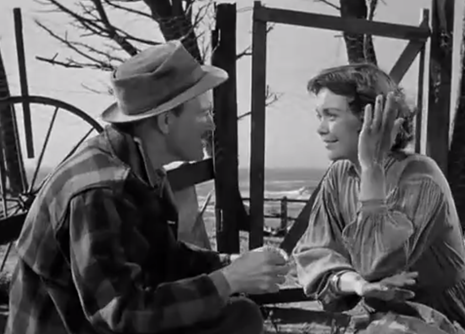
Cape Breton can be easily placed. There’s a wharf and a cannery. Men work at sea bringing in the days catch, and there’s nothing glamorous about their existence. The work is hard and the people blue collar. It’s the wrong coast, but these are the kindred of Steinbeck and certainly, you cannot help but think of Fritz Lang’s Clash by Night with its seascape and gale of drama.

However, I happen to think Johnny Belinda weathers the drama with a more delicate touch. We must turn to the characters to understand how this really happens. Because the small-town setting is stocked up with all types and shades of people. An amiable doctor named Richardson (Lew Ayres) has recently set up practice on the island making housecalls aided by a pleasant bedside manner. His swooning young housekeeper (an oft-forgotten Jan Sterling) is smitten and wishes above anything to be noticed.

It’s true he’s both a generous and obliging fellow though he doesn’t go to church on Sundays. It’s one reason for the old ladies in town to still somehow doubt his sincerity. He certainly can’t be familiar with “Christian charity” as they are!

Aside from the run-of-the-mill gossips, there’s the slimy reprobate Locky McCormick (Stephen McNally). Presently we might label him rightly as a bastion of toxic masculinity. However, the bottom line is he’s a vain and destructive human being who is able to fly under the radar due to the town’s hypocrisy. In other words, he goes to church on Sundays and manages to be romantically linked to the aforementioned housekeeper Stella.

We must also mention the gruff but not unkind farmer Black MacDonald (Charles Bickford). In fact, over time, he starts looking better and better as his work ethic and old-fashioned decency begin to let slide his affection for his daughter (Wyman). Meanwhile, his sister is played by Agnes Moorehead, a criminally underrated actress, perhaps because people do not superficially tout her looks. And yet she is a remarkable performer bringing strength and an acerbic edge to her part.

Even with these people, the spokes of a story aren’t altogether obvious as the kindly doctor takes the dumb and mute young woman under his tutelage, perceiving her intelligence and the dormant curiosity inside of her.

Wyman models her transformation exquisitely, first, picking up signing, then learning basic gestures of communication. However, in a town like this, there are certain types of ignorant people. People who will only ever see her as a “dummy.” There is no beauty or intelligence to unlocked inside her countenance because they can only comprehend the physical.

One prime example is when some merrymakers have an impromptu shindig at MacDonald’s barn fater picking up their weekly order of flour. The good doctor stands by Belinda beaming, showing her a fiddler plucking away joyously on his strings. The discovery is manifested on her face as she touches the violin with its vibrating strings and her feet begin to patter modestly. Her legs move tentatively but sweetly as if unshackled for the first time.

Others see it too. First, Locky his eyes burning with lust and then his jealous girlfriend trying to win back his affection with a carnal kiss. These are the only things they know about passion and romance. Add alcohol to the mix and it’s a volatile cocktail.

The film’s most helplessly terrifying moment comes when the belligerent thug wanders off from the party and finds a peaceful Belinda. His eyes burn with malicious intent. She has only innocence which quickly turn to fear as he encroaches. The subsequent inference of images and cuts speak for themselves as do ensuing events…

johnny belinda 3

Recently I’ve been pushing back against the era’s tendency toward over-illumination when it comes to spelling information out. However, some of the greats, Hitchcock and Lang among them, were able to imbue sound films with a certain silent sensibility where passages rely on the primacy of image over sound.

I won’t put Jean Negulesco in the same group as these others, but nevertheless, his premise necessitates a certain amount of nuance in order to approach the subject matter. It’s a tact that I very much appreciate because the film ably takes on the restraint and the functionality of a silent film especially when considering the subject of Belinda.

Consider, for example, a near-wordless entrance into the church with the stunned congregation looking on as a lovely Belinda enters in her Sunday best. In the same sequence, Dr. Richardson watches Belinda’s face swell with apprehension upon seeing McCormick for the first time. The power comes in this unspoken revelation.

The story must progress, and it evolves into a modern play on The Scarlet Letter with pernicious scandal digging in. You must remember this is the same small town with ears and eyes on every street corner. News travels fast that Belinda has a child and everyone has their preconceived notions on who the father is. They are intent on taking matters into their own hands. I need not expound upon this anymore.

More useful still are the impressions of the following scenes. In a strikingly poignant interlude, Belinda signs “The Lord’s Prayer” as the solemn bystanders join her in grieving the dead. We are reminded this is a different era imprinted with Christianity and a God who was a present comfort in the face of adversity.

Her moments taking care of her baby are also so tender and one is reminded of the universal experience of parenthood. Belinda might not be able to speak or hear but she feels and becomes both guardian and protectorate of that little bundle of joy no matter the cost.

An ensuing trial has her in the defendant’s seat and these scenes are generally conventional. They crop up in any amount of noir, melodrama, screwball comedy, whatever. It’s the precise circumstances that make it an engaging end. Because court is all about testimony and defense. What if someone is barely able to defend themselves?

They require others to intercede on their behalf. The final safety valve providing the audience a release is overblown and a foregone conclusion, but up to this point, what a joy it is to watch events unfold moment after moment.

This is a fine turn by late-period Lew Ayres although he is nothing without the quiet dignity and sprightly inquisitiveness of Jane Wyman. Johnny Belinda is a stunning reminder truth need not only come in the powerful wind or the quiet whisper. It can come in silence as well.

4/5 Stars

Valley of Decision (1945): Greer Garson & Gregory Peck

valley of decision 1.png

Gregory Peck’s pleasantly resonant voice brings us into the moment. The scene is unimaginative yet unmistakable with its obviously scaled-down establishing shot. Pittsburgh. Smokestacks and steel. These are the days of Andrew Carnegie and the transcontinental railroad wrapping its way east to west, making mythical magnates out of mortal men.

Valley of Decision is about this same monumental national narrative albeit stripped down to a microcosm meant to be far more intimate. In a manner of speaking, it succeeds by first setting our sights on a group of Irish immigrants. They are stereotypically spirited with a brogue to match.

Mary Rafferty (Greer Garson) makes her way home through the humble neighborhood she calls home to announce the latest piece of news. Amidst tough times, she has found herself a decent wage! The only complication is that she’ll be serving as maid to the Scott family, owners of the town’s local mill. Although Mary’s not a girl to turn down a job, her curmudgeon father (Lionel Barrymore) has maintained a lifelong grudge against Mr. Scott, seeing as it was the factory that lost him the use of his legs. He’s never forgiven them even with the recompense they’ve provided.

This is an instant source of conflict although it’s initially unrealized. Because given how they are built up, it’s rather surprising how everyone in the Scott household seems generally benevolent, if not a bit stuffy.

Mary arrives and we’re curious to know her place. We get our first look at Gregory Peck. He sneaks up the stairs to be rushed by his affectionate siblings. His mother (Gladys Cooper) follows in all civility. Each moment is taken in by the new help, perched in the drawing-room with each reaction made blatantly obvious. This is her first impression as well as ours and she beams ear to ear.

Garson’s character girds a spellbinding wit of the Irish about her, settling into her new occupation for the Scott family quite seamlessly and casting off her early nerves. Between the dishes and the spoiled children, she handles it with disarming aplomb and a certain bright-eyed reverence as only Greer Garson can supply.

valley of decision 2

If it’s not obvious already, Valley of Decision is a social drama with characters tied closely together. There’s the sectioning off of social spheres between the affluent and their more humble help. Then, you have the meeting of the men over cigars and business as the women busy themselves with frivolities. Curtains, for instance.

Tiptoeing through all these spaces like a fly on the wall is Mary Rafferty. Certainly, her place in this world is obvious, and yet she is accorded a very unique role walking through the parlors and dining rooms of the elite — privy to their conversations and activities — and an integral part of every part of her lives. No matter her family background.

It’s no secret a burgeoning romance starts in on her innocently enough. She’s a fine and glowing conversationalist. He’s charming and handsome. How could they not get together? But she dutifully understands her place. It wouldn’t be proper and with no prompting, she makes her way across the Atlantic in service of Ms. Connie (Marsha Hunt), effectively increasing the space between them. The mistress of the manor understands her predicament and privately pities her.

Then, one day there is a strike at the factories. Again, it’s no shocking epiphany. Anger and discontent are churned up and the bullish pride of Mr. Scott (Donald Crisp) and the sense of license for better wages by the unionizer Jim Brennon, looks to be at an impasse.

The true “valley of decision” (an allusion to the Old Testament’s admonition from Joel) is when all the events come to an inevitable head. A fragile peace can be maintained no longer, and all sides suffer calamitous devastation. Because the consequences are great when the Scotts and their opposition come face to face to have it out for good. Not even Mary nor her relinquished lover can make it right again.

Whether torn from the pages of the book or dreamed up by the screenwriter, Valley of Decision is very much a stilted melodrama with all sorts of manipulative twists coming at us with such continued force, it gets to be wearisome. It never ends.

The narrative flits so undecidedly between the warm chemistry of the leads and this overly theatrical landscape played out against the family’s steel mills. You might blend How Green is My Valley, King’s Row, Giant, Home for the Hill, and other analogous films, but somehow Valley of Decision still comes out the weakest of the brood. It cannot seem to reconcile its main conceit to a satisfying end.

It’s assembled with all the trimmings people might easily turn their noses up at when considering Hollywood movies of old. It boasts sentiment and courts melodrama. There’s the aforementioned voiceover to set the stage and stirring crescendos of mighty music in love and in tragedy. Characters can easily be pigeon-holed by their types all the way down to a spoiled Marsha Hunt, the insufferable childhood sweetheart played to a tee by Jessica Tandy, and Dan Duryea, not quite having found his more suitable niche as a noir baddie.

There’s also the underpinnings of Mary courting on the side of the wealthy and well-to-do. She sympathizes with them, making them seem like the victims of a system more so than the destitute bottom dwellers. I’m not sure what to do with this.

Because it’s true Mr. and Mrs. Scott are a most benevolent pair, and we grow to love them. Crotchety Lionel Barrymore, sulking in his wheelchair, doesn’t do much for the P.A. of the common man, but nonetheless, it’s a startling turn.

Taken as these disparate pieces placed together, the movie is an uneven compilation, all but borne on the shoulders of Greer Garson and Gregory Peck, who by any cursory glance, seem ill-suited as romantic partners. At the very least, they’re disparate figures.

She was a mature star, finally coming into her own as one of the prominent performers from the U.K. now making it big in Hollywood. He was an up-and-coming stage actor with the formidable build and roots in La Jolla California then Cal. Yet they share an amicable spirit somehow allowing them to fit together due to their mere ability to counter one another’s playful ebullience.

It does feel like a remarkable crossroads in careers. Garson was beloved, but would never regain her major box office with the dawning of the 50s and new tastes (even with a resurgence of success in the 60s). Gregory Peck was just beginning. One wonders what Greer thought of Roman Holiday and To Kill a Mockingbird? It’s easy enough to believe she would have liked them.

3/5 Stars

Madame Curie (1943): Starring The Indomitable Greer Garson

madame curie 2

Physics and Mathematics are the two primary focuses of Marie Curie’s life. In the early days, when she was one of the few solitary women in a Parisian sphere of academia, dominated by dismissive men, she still went by her maiden name and took on the rigors of study with ardent relish.

Thus, when her kindly professor (Albert Basserman), the prototypical white wizard with a likable twinkle in his eye, invites her over to his home to meet famed professor Pierre Curie (Walter Pidgeon), she jumps at the opportunity, purely on a professional basis. However, I will not suggest for even one moment Madame Curie takes its material into anything close to unconventional territory.

What looks to be an intimate affair turns out to be a bustling party packed with people. The two academics feel sorely out of place amidst the socializing and gravitate toward one another even more dramatically. There’s nothing concrete at the moment because we must remember these are two people with the utmost sense of dignity. They’re able to counter one another with a certain genteel propriety, not the klutzy screwball meet-cutes of some of their contemporaries. This no doubt plays to their personal advantage.

Time passes and Pierre grants the ambitious woman to set up shop in his laboratory, tucked away in a shabby little corner. Once more she jumps at the chance, seeing the space, completely devoid of any sort of facilities, as the perfect proofing ground for her ideas.

She immediately leaves an impression on the youthful lab assistant (Robert Walker). However, it’s her inexhaustible work in radiation that leads Pierre to revere her. Because over time he grows accustomed to her, at least in a professional sense.  While shrugging off her graduation initially, he finds himself making an appearance all the same. He’s compelled to.

The next course of action is his hesitant invitation on a weekend away, and she gladly accepts, meeting his parents out in the country over croquet, including an uncharacteristically bristly Henry Travers playing the elder Curie. The budding romance is obvious, and it’s convenient for our stars.

Mervyn LeRoy’s film, on the whole, is a lightweight, cordial biography working loosely with facts to draw up the life of Madame Curie and her future husband. It’s just as much a vehicle for the lasting chemistry of Garson and Pidgeon as it is an ode to one of the most renowned scientists of the turn-of-the-century. While I’m not exactly the most gifted empiricist, even I am aware of the substantial shadow the Curie name casts over the discipline. In some small manner, this movie allows them to be appreciated and palatable for a mainstream audience, albeit an audience of wartime viewers.

Even this admission is telling, suggesting this tale of romance and biography functions as a bit of timeless morale boosting. It showcases love and the triumph of the human spirit, even in the face of bitter tragedy. Still, it does not immediately signal propaganda like Mrs. Miniver or other such entries. This might be to its benefit.

madame curie 1.png

Taking everything into account, what makes it rather extraordinary is Garson’s heroine because certainly, Marie Curie is well-deserving of a biographical treatment and in an age where women were kept out of such positions, she provides a paradigmatic example for future generations. (No one can rebuff her two Nobel Prizes!)

Both her work and her career are important to her. The same goes for her future husband. But even with their work as a constant distraction, they realize in between the long lab sessions, living life without one another would leave a void. Beyond this, their work would be far less meaningful. In his rather roundabout manner, Pierre professes his need for her, comparing their marriage to NaCl. It’s not exactly romantic to be table salt, but they work well together, and they do form a solid union.

While the scientific jargon, filled with chemical elements, feels a bit clunky, it’s admittedly difficult to figure out a way to make their regimen of uranium-based experiments riveting. The major takeaway is the uphill push for funding since Curie is dismissed on all sides, not only based on her unprecedented research, but also for the arbitrary fact, she’s the opposite sex of every stodgy member of the scientific board.

Not to be daunted, the couple sets up business in a shack, and the Curies take on the task with their usual tenacity, their sole objective: separating barium from radium. This is Madame Curie in its stagnant phase and yet no one can doubt Greer Garson’s candor. One is reminded of the crushing moment she thinks the radium has all but evaporated and with it four years of toil. She’s nearly inconsolable.

Then, when their success is finally validated, she’s looking into her husband’s eyes and commending him as a great man, not by the standards of the world, but due to his kindness, gentleness, and wisdom. It’s a striking moment because this is no doubt her story, but as with any union, it takes two people to make it work.

But she subsequently has another sublime moment of indescribable vulnerability, pained to her core by the most grievous loss of her life thus far. She is a woman of science and of great intellect, but the service Garson does for Curie (authentic or not) is making her all the more human at her lowest point.

The final verdict remains that Madame Curie is an unimaginative bit of hagiography, but for the faithful fans of Greer Garson and Walter Pidgeon, it is another fitting eulogy to their joint talents. For some, this might be enough to charitably see past what flaws there are.

3/5 Stars

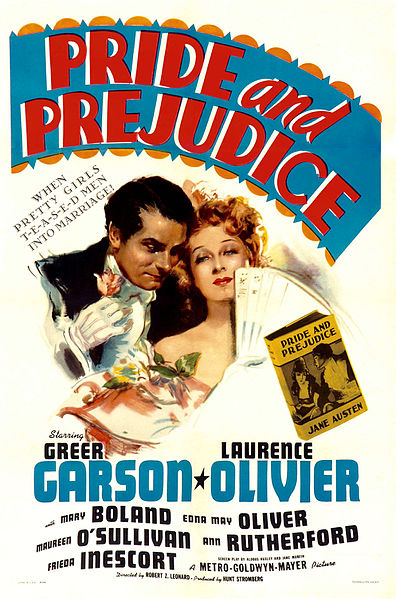
Pride and Prejudice (1940): Laurence Olivier and Greer Garson

Prideandprejudice.jpg

When you grow up with a sister, I imagine most people are aware of books like Pride and Prejudice, Little Women, Anne of Greene Gables, and Little House on The Prairie. However, especially when you’re young, you rarely appreciate them fully or comprehend how notable they are as cultural artifacts.

It’s my ever-growing esteem for Jane Austen’s Pride & Prejudice that makes me hold any adaptation to a higher standard. Otherwise, it would be easy enough to settle. But the coloring of the characters, their tete-a-tetes, the comic orchestrations, and the explorations of themes inherent in British society, make the material that much more sacrosanct. As time grows older, her works seem to draw more audiences, not less.

Thus, I’ve found myself not so much a stickler for out and out faithfulness to the source, although if it’s not broke, why fix it? Still, I desire these adaptations to stay true to the essence of what the author created.

It’s true Hollywood has always had an affection for its literary adaptations, and it was little different in the olden days of the studio system. Because what any book or intellectual property essentially guarantees is some kind of preformed fanbase to pull from. However, these attempts to capitalize always come with widely varied results. This MGM version, helmed by the all but forgotten Robert Z. Leonard, falls somewhere in the middle. It’s hardly forgettable and yet it lacks the required magic to send it in to the pantheon of Austen cinematic transcendence.

For those left unawares, Pride and Prejudice is a story of the Bennett family, consisting of five sisters, their benevolent father, and a hyperbolic mother looking for every opportunity to marry her daughters off to the man with the largest inheritance.

When two eligible young men, a kind-faced Mr. Bingley (Bruce Lester) and the rather more curt and severe Mr. Darcy (Laurence Olivier), rent the grand estate of Netherfield, along with a haughty sister, Ms. Bingley (Frieda Inescourt), it causes quite the stir in town.

The matriarch, Mrs. Bennet (Mary Boland), is the epitome of a fussy busybody who, nevertheless, has draped about her a certain maternal charm. Edmund Gwenn calmly uses his bright-eyed wit to upstage his wife’s blustering. They make a formidable pair of comics.

Among their children, Jane (Maureen O’Sullivan) is the perfectly docile beauty with the richest prospects of marriage. Elizabeth (Greer Garson) is proud and passionate. Mary (Marsha Hunt) is bespectacled and depicted as a bit of an oddball. The two youngest, Lydia (Ann Rutherford) and Kitty (Heather Angel) are tittering adolescents swayed by a dashing manner and a handsome uniform.

The story is conveniently recontextualized for the Victorian-era and the main purpose served is in the costuming department. Not only could the studio save money by repurposing some of their wardrobes, but they could also lean into a greater level of opulence that would not have been available in the actual day of the Bennetts. Except for absolute purists, I see no way in which this historical inaccuracy harms the success of the picture.

It is also the opening ball reinforcing the ensuing conflict by introducing Elizabeth’s genuine distaste that she harbors for Mr. Darcy, perceiving him to be a total supercilious snob. What’s more, her feelings are not entirely unwarranted. This dissension is borne in the title itself: The pride of Elizabeth and the prejudice of someone bearing the breeding of Mr. Darcy. For that matter, it could be the other way around, Elizabeth’s prejudice toward the upper echelon and his own inbred pride.

Every successive encounter between them, Elizabeth does everything to confirm her assumptions about him. It means they are never on amicable terms with one another, no matter the words that might leave their lips. She is hardly reticent about airing her contempt for the man.

Every slight dispensed by those purported to be above her in status is further internationalized and often finds its way out in a barbed attack on Mr. Darcy since he proves to be the easiest target of ridicule. Even as Darcy’s romantic advances continue in earnest, Elizabeth has great relish in embarrassing him over a bout of archery. The consequence is understood, but somehow it feels a bit foreign to the propriety of Austen’s universe.

In parallel and, ultimately, intertwined romances, Jane and Mr. Bingley incur and off and on relationship defined not so much by grating behavior between the two of them but the forces of inertia working around them.

Following her own flight of fancy, Kitty winds up running off with a soldier named Mr. Wickham, who seems charming enough. However, it conveniently shrouds a past of ill-repute that Darcy holds against the man while Elizabeth gives Wickham the benefit of the doubt. It’s yet another grievance she can hold against the stuffy aristocrat.

These paces are all Austen, but similar to the numerous versions of Little Women, it’s the performers who really mold it into their own. I love Greer Garson to death, and she does an amiable job but it’s hard to dismiss her predetermined disposition. She is always one of the most vivacious screen personalities and though she gets to shine in the final act, up to that point, she’s meant to be proud and brazenly forthright in the mode of her literary counterpart. It doesn’t feel quite like her temperament.

On his part, Olivier does well enough as Darcy; he certainly has a presence about him and the repute to make it seem viable. However, the romance is not as vibrant as it might have been. It feels a bit stunted, and it cannot be conveniently attributed to the social context.

Like its successor Jane Eyre (1943), it’s also rather jolting to see Aldous Huxley’s name in the screen credits. My high school days of reading A Brave New World make any period piece feel like a blatant anachronism on his repertoire. Still, this alone can hardly stand as a substantive piece of criticism.

It does feel some of the best and most well-regarded lines are not emphasized enough within the structure of the scenes and while there are certainly considerable elements of the original story, they are never done too many favors.

Mr. Collins feels like a miserable sot and a bore of a man and with the screwball caricature of Melville Cooper, it feels all the more like miscasting. Meanwhile, Mrs. Bingely has a lacerating post to maintain as the picture’s snide gossip. It appears her only function in the plot is to be churlish, making Darcy incrementally more tolerable.

Edna May Oliver for one is always prepared to play a no-nonsense patroness, in this case, Lady Catherine, who orchestrates events so her dear nephew might test the waters of romance.  Because Mr. Darcy and Ms. Bennett are meant to be together and they are both able to cast aside their own issues to recognize just how much they care for one another.

Finally watching Olivier and Garson in a passionate embrace is a dream come true but, as for myself, I couldn’t help but get distracted by fond memories of Wuthering Heights and Random Harvest. How I wish I could same the same of this movie. Still, I’m clouded by my own blind spots and personal hangups. You must make your own judgment.

3.5/5 Stars

The Music Man (1962): 76 Trombones and Robert Preston

In my youth, Robert Preston always struck me as a Hollywood superstar because he so lithely and unequivocally commands the center of this grand production. There is no movie without him, and he pretty much captures the imagination of the audience.

As I’ve grown older, logged more movies, it always surprises me that Preston was never a more prominent star, at least in the movies. Instead, you see him in the periphery in films like Beau Geste or This Gun for Hire, then later in his career in Victor/Victoria, but it’s never as much as I would expect, given his obvious talents used so effectively here.

We find him hop, skipping, and jumping through the movie with a winning vitality. Set aside his occupation for a moment, strip that away, and the performance itself is a thing of beauty indeed. There is no movie (or stage production) without his engine to drive the story and charm the audience. He has the task of making us like a cad, and he does it from the very first moment he steps off the train in River City, Iowa.

The first thing he does when he gets into the new town is meet an old friend (Buddy Hackett), then, right after that, he drums up the publicity for his latest scheme. He’s perfected it to a tee going from town to town. He’s confident it will work here as well as anywhere else. The youth of River City obviously need their own marching band — complete with instruments, uniforms, and all the trimmings. He’s going to give it to them.

As a side note, The Music Man plays as an oddly complementary piece to Elmer Gantry (also featuring Shirley Jones) if only to have con men try and peddle their trades to small, unsuspecting communities. Obviously, there’s not much nuance in this observation, and it fails to take into account the breadth of genres. This is what sets the pictures apart and allows them to excel.

If you wanted to simplify the story down to its essence, this is really what it’s about as Harold Hill convinces the mayor, his easily-flattered wife, and a whole host of others that their kids are all up-and-coming prodigies. For those already familiar with this classic from Meredith Wilson, the key is how Hill’s scheme turns into a source of joy and excitement throughout the town.

Their invisible performance of “76 Trombones” in the school auditorium is the movie at its best, showcasing this kind of “Emperor’s New Clothes” theme to its fullest. Meanwhile, I had all forgotten a crucial number like “Ya Got Trouble,” which sets Preston off on his whirlwind performance, tipping off all the mothers and fathers that pool tables spell the end of decent and upstanding living for their youth.

If Hill is able to distract, butter up, and pull the wool over on the general populous, Marianne Paroo (Shirley Jones), is the one person who is not about to be taken in by him. He makes a habit of ingratiating himself to librarians as part of his business model, and yet she’s not about to cave to his advances. They’re played up to their most marvelous extreme in “Marian The Librarian” as he cavorts and climbs all over, much to her chagrin.

But as she slowly watches her young brother (Ronnie Howard) gain a newfound confidence in himself and the whole town subsequently becomes reinvigorated and alive, she comes to realize that for all his put-ons, Harold really does have a knack for bringing people together. She comes to appreciate him and by proxy also fall in love with him.

Their grand moment comes during the summer sociable, hidden away at the secluded footbridge, where they share an embrace and Jones sings one of the most iconic tunes “Til There Was You.” Alas, it is the beginning of the end for Harold. He’s about to be ousted by another traveling salesman as a fraud, but instead of fleeing for the next train out of town, he vows to stay and stand trial. With Marianne in his corner, the final moments give us the kind of euphoric comfort and fantasia only musicals can offer up.

The Music Man runs at a hefty 2 hours and 35 minutes, and it’s true the musical genre often falls under criticism for being bloated or uncinematic. But at their best, they are characterized by passages of joy we can all appreciate as they swallow us up and allow us to become lost in the pure theatrics. This holds true after all these years as my youthful memories come flooding back in the wake of “Gary, Indiana” and several other tunes.

The show’s original director Morton DaCosta does an admirable job in translating the material to the screen without losing all the magic, and with a veteran cinematographer like Robert Burks, it’s hard to go wrong with the Technicolor.

For some, this might seem like a superfluous aside, but I am also indebted to this picture for what it did in the career of a little band from Liverpool. It’s true The Beatles recorded the ballad “Til There Was You” and as a counterpoint to their other material, it became crucial to them being signed to a record deal. They even performed it quite prominently on The Ed Sullivan Show along with more overt hits like “I Want to Hold Your Hand.” And we would have had none of their wonderful music if not for a flim-flam man stopping off in Iowa. At least, that’s what I like to think.

4/5 Stars

Divorce American Style (1967): Debbie and Dick Get Divorced

Divorce American Style starts out as a symphony of marital nagging, and it looks to build off this cacophony to make some sense of the current state of affairs in 1960s America. While the title doesn’t capture the same milieu of its Italian counterpart, it fits for a plethora of other reasons. It’s satire in the American mode and Norman Lear, who would become renowned for his brand of socially conscious comedy, is hard at work. In order to go about it, he hones in on one couple in particular: Richard and Barbara Harmon.

Off the top, it’s an important distinction to make. Creatively, it seems like a stroke of genius to cast Dick Van Dyke and Debbie Reynolds as this bickering couple slowly tearing apart at the seams. I say this purely from the likability factor. Their entire career trajectory thus far from sunshiny MGM musicals to crowd-pleasing family sitcoms all banks on their likability quotient.

Here is a picture that tests all of that built-up reservoir of goodwill and fuzzy feelings we have for them. If you only accept them as the picture of Cathy Seldon in Singing in the Rain or Rob Petrie in Dick Van Dyke, there’s a reason to vehemently oppose what Lear has done with them here.

While it’s not my favorite pastime to see two such actors put each other through such hell, some part of me understands why they wanted to take a stab at it. Because it’s not safe, and it challenges the status quo and how we accept them as performers. To their credit, in stretching themselves, it’s an attempt to get past one-note characterizations.

True to form, their first full scene starts with a fight. It’s postponed due to the party they are throwing only to reconvene after all the friends have shuffled out the front door. They can drop the veneer and all pretense is cast off again.

She bemoans the fact he’s critical of everything, and he just doesn’t understand her anymore. He’s frustrated that when they finally get some of the things they always dreamed about, his wife seemed to turn unhappy, and he can’t figure it out. It was another picture from 1967 that famously acknowledged a failure to communicate. This one gives it a whole new domestic context.

We see their bedtime rituals and there’s something almost mechanical to them because there’s no intimacy between them even in this highly intimate space as they open cupboards, plug in razors, and do their bits of business…without a word and still somehow in perfect cadence.

By day, Barbara continues seeing a psychologist and Richard begrudgingly gives it a try, although he’s uncomfortable sharing his feelings with a stranger; the way he was brought up it just isn’t done. If we wanted to add something else to their marital complications, it’s their kids. Normally, their two boys would be trapped in the middle, but there’s a pollyanna-like understanding about them. They are so easy-going and well-adjusted as their own parents continue to go down the tubes.

One call to a lawyer and all of a sudden it’s like the trip wires have been set off on both sides. There are trips to joint bank accounts and friends on both sides supply their two cents worth, not to mention their respective legal counsel. It’s not a new phenomenon, but we are reminded how these things can escalate; this is divorce taken to outrageous proportions.

They sit at a table in the law office as their lawyers casually settle their case, mixing in chit-chat about their latest golf games and shared business associates. Then, Richard is taken under the wing of Nelson (Jason Robards), a fellow divorcee, who gives him advice about alimony and how to survive. His life is fairly abysmal and pretty soon Richard is going down the same path moving into his new digs and trying to find romantic direction.

Meanwhile, Barbara tries to make her own way with an oft-married family man (Tom Bosley), getting to know all his children. It devolves into another madcap orchestration, reminiscent of the opening prelude. This time we have the notes of parents and step-parents, kids and step-kids all being assembled for a day out.

With the robust cast, it’s rather curious the film was not better known in its day because it gradually introduces other familiar faces including Joe Flynn, Lee Grant, Robards, Jean Simmons, and Van Johnson.

In the epochal year of 66-67, it does make sense Divorce American Style never received the same plaudits as Whose Afraid of Virginia Woolf, The Graduate or Two for the Road. If not altogether a sitcom episode, it’s the American counterpart to its more high profile continental brethren starring Audrey Hepburn and Albert Finney.

Again, there is the sense of the middle-class malaise where things and stuff and cars are in one sense inconsequential compared to the relationship. And yet they mean everything when it comes to comfort and status.

To the very last frame, there’s something subversive about seeing sweet Debbie Reynolds and lovable Dyke Van Dyke as divorcees with a marriage hitting the skids. But if this is true, there might also be a kind of catharsis for Reynolds when a hypnotist puts her under on a stage in front of a whole host of people. She’s been through so much and there she is throwing off the shackles of all our preconceived notions. She heads off stage and goes to give Van Dyke a big ol’ kiss, effectively rekindling their romance.

The film hasn’t aged particularly well, but then again, what better way for it to remain as a testament to the social mores of the times and the prevalent anxieties? It’s probably better for it. Because all the fracturing, recoupling, and suburbanization of society definitely created a new kind of landscape.

It’s all there in the later scenes as all the stars couple up uneasily. Van Dyke is with Simmons who was Robards’s former spouse. He’s trying to marry her off so the alimony doesn’t break his back. Then, Robards and Simmons try and set up Reynolds with Johnson — a genial used car salesman — because that makes Van Dyke even more unattached.

I tried to make this all needlessly convoluted but hopefully, the point has been made. Love is strange. Love is messy. Love is complicated. If that’s true of love American style, then it’s true of divorce even more so.

3/5 Stars

The Courtship of Eddie’s Father (1963): A Father and Son Story

The Courtship of Eddie’s Father gives off all the signs of a light and frothy romantic comedy. You might envision it already: a widower-about-town with his son playing matchmaker as he tries to navigate the plethora of pretty girls who just happen to orbit around him.

But we must make some distinctions. This is also a film about a little boy and his father after the death of someone very precious to both of them. A wife and a mother. You cannot easily laugh this plot point away, and the movie never does.

It’s equally important to note who our director is. No one would wager this is the artistic height of Vicente Minnelli, but it’s not a throwaway rom-com either; no matter what contemporary audiences might have been led to believe. I’m thinking most specifically of the scene early on where Ron Howard erupts, bawling over his pet goldfish now floating upside down in the tank. His father storms out of the room to go find his bottle and glass as his little boy is comforted by their neighbor from across the hall (Shirley Jones).

Does Minnelli dare include this scene? It risks feeling overwrought, and it absolutely kills any of the convivial feelings the movie looked to engender. But there are plenty more of those to come, and here we get something actually grasping for some kind of meaning; it’s an attempt to make sense of real-life issues, albeit through the Hollywood guise of gorgeous Panavision Metrocolor. This is Minnelli at his best with substance breaking through his usual lavish photography and expert set dressing.

And yet here is some of the quintessential essence of the picture, daring to be more than meets the eye. We are reminded grief is okay and it is natural — they will both miss “Mommy” — and instead of holding in their feelings, they must be open with one another. It’s the only way they can hope to cope. The whole film is a progression along this theme. Lest anyone get the wrong idea, this is really a father and son picture.

While I won’t say Glenn Ford is as obvious a father figure as Andy Griffith, he still manages the necessary rapport with Ron Howard, and I always do marvel at Howard’s poise for such a young actor. They often tell the stories of child actors who had an expiration date because once their cuteness wore off they didn’t have the acting chops to make it.

Although Howard has transitioned to the director’s chair, I watch him in individual episodes of Andy Griffith or a movie like this, and it does feel like he was capable of range beyond his years. Yes, he’s cute. That’s the easy part, but he also navigates his way through the more labored scenes where there are other emotions. The picture’s always able to fall back on that core relationship.

However, before I overcompensate, The Courtship of Eddie’s Father has plenty of the kind of goofy, at times cringe-worthy, rom-com moments of a certain era. It allows the movie to remain innocent at heart even as it courts other issues.

Take one evening where the two bachelors stop off at an arcade only to make the acquaintance of bodacious Dollye Daly (Stella Stevens). They meet when she asks to borrow Tom’s son for a couple of minutes to ward off the local mashers as she tries to build up her self-confidence. Then, there’s Ford’s colleague at work. Jerry Van Dyke’s flirty radio personality has a habit of proposing dinner dates on the air.

Dina Merrill is a career woman who knows what she wants, and her brand of quiet and mature sophistication is rightfully attractive to Tom. She’s looking for a man to love her on equal terms and despite what her aloof elegance might say against her, she’s another deeply sympathetic figure.

A movie that looks to be about a man and three women actually is at the same time simplified and made vastly more complicated. Dollye and Norman fall in together over bowling. So Eddie’s first choice of partners for his dad falls through. Now to the nitty-gritty. The main tension is between a boy’s feelings and his father’s.

Elizabeth is familiar and comfortable; both a good friend to their deceased mother/wife and an ever-present figure across the hall. She’s a cinematic creation and the kind of person brimming with well-meaning affection. Tom’s feelings for her are complicated. Eddie’s are simple. He feels safe in her presence. There’s a kind of maternal understanding and trust between them already.

Although it’s never stated explicitly, Rita, on the other hand, is attractive because she is so different. When Tom looks at her and spends time with her, he’s rarely reminded of his wife. With Elizabeth, he can’t help but see her. For his boy this is security and for him, it’s a kind of crippling torture. He cannot bear it.

Like any bright kid, Eddie’s extremely observant and precocious in many ways. He asks all the innocently probing questions about how babies are made etc. For him, differentiating cartoon villains from the good guys is a matter of round eyes and thin eyes (along with other salient features).

In one scene, he gives a comical appraisal of Ride the High Country. Meanwhile, for a few brief moments, his father falls asleep to Mogambo‘s screen passion playing out between Clark Gable and the much younger Grace Kelly. I’m not sure if it’s a subconscious reflection of Tom’s own yearning to have the love and affection back in his life. If anything, it’s a striking portent.

His jovial housekeeper (Roberta Sherwood) warns him of such a woman looking to take advantage of what he has to offer. Graciously, there aren’t any such women found in the frames of this picture. A New Years’ party with Rita is lovely, and he comes home late at night in a mild euphoria only to bump into Elizabeth. She had a night out with the same old successful doctor; it’s hardly love.

Later, they hold a frenzied birthday party for Eddie that’s chaos personified with all the little kiddies running around. Elizabeth is right in the middle of the adolescent maelstrom and Rita is absent. Then, as his father grows more serious and Eddie has his heartbroken at summer camp, he makes an irrevocable decision. He runs away and seeks refuge with the one person who makes him feel safe — his maternal rock of Gibraltar. If you follow the dramatic arc, there’s only one place the romance can lead.

Yes, it’s rom-com wish-fulfillment, but I’d like to think there’s also a sense of clarity with the movie resorting back to where we needed it to go. What a lovely admission it is that the women are not the easily caricatured heroes and villains of Eddie’s comic book imagination, nor are they completely trivialized down to their appearance. If anything, we get past the superficiality promoted by marketing campaigns.

It’s a father and son movie, first and foremost, and yet we end up admiring all of them. What a lovely person Shirley Jones is. Stella Stevens brims with unparalleled intelligence, and Dina Merill is blessed with poise. Jerry Van Dyke’s not completely repulsive. If he’s the weakest link, then there are worse prices to pay.

3.5/5 Stars

Merrily We Go to Hell (1932): Directed by Dorothy Arzner

merrily we roll to hell.png

Bubbly is flowing and the gaiety abounds. Alcohol is not an evil, just a tonic to loosen morals, tongues, and dour countenances. When Joan Prentice encounters Jerry Corbett for the first time at a party, she’s immediately taken with him. He’s a few drinks in and has let the merriment overtake him. It comes off charming if a bit dopey.

Merrily We Go to Hell feels like a provocative title, and it’s true this alcohol-drenched drama is a predecessor to the likes of The Lost Weekend and Days of Wine and Roses.

Sylvia Sidney is about as winsomely sweet as she ever was and ever could be playing a socialite at a party. Frederic March has momentary glimpses of warmth and allure, though it’s hardly his finest hour on the screen. However, it is a testament to how phenomenal his career was at points, and even a picture like this seems to suggest how often he is an underappreciated star of Classic Holldywood.

There’s also a third far more surprising presence in the movie filling what might be considered a minor bit part. Cary Grant is all there, but it’s a bit like seeing John Wayne in Baby Face or James Stewart in Wife vs. Secretary. We’re there but not quite there when it comes to their career trajectory. He still needed to meet Mae West and then Leo McCarey to really get the wheels rolling, thus entering the stratosphere of quintessential screwball suavity.

As it settles in, Dorothy Arzner’s picture is all for hitting the journalistic beats contemporary to the day and age. It’s a perfect arena for modern, capitalistic America. An arena of vocation, class, and in this case, alcohol. One easily recalls Platinum Blonde though March, despite all his able acting prowess somehow cannot muster the same fitting charisma Robert Williams managed as a newshound. The former performer lent almost a screwball sensibility to Frank Capra’s picture.

It’s the same kind of affable charm that made Jack Lemmon so effective even as he dipped into similar depths of hell in Days of Wine and Roses. But back to Platinum Blonde. It’s hard not to see the earlier movie’s imprint being reworked within this material (even unconsciously) with less handsome results. Because some of the same dynamics are present. We have a lead infatuated by a platinum blonde (Adrienne Allen) and then opposite him is the endearing “other girl” we know full well will actually win out his heart. At least, in theory.

And if that isn’t enough, both newsmen dabble in playwriting, suggesting the menial pavement-pounding, all for the sake of making a buck, giving way to a higher calling of art and patronage. It handily reflects rungs in the social ladder to mirror contemporary society, as the film’s of the Depression-era all have a habit of doing. Obviously, they can’t help it. This is their world.

However, in Merrily We Go To Hell, playwriting holds a more substantial role aside from being a narrative device for the sake of parallelism. It brings Jerry Corbett the highs and lows of such a career while throwing him back together with his former flame, the glamorous thespian Claire Hempstead. The scenario feels rudimentary and mediocre going through these typical dramatic progressions.

Before it becomes complicated, the film is a basic love story of the lowly working stiff smitten with the heiress, although not for money’s sake. As it predictably dips into drunken stupors, strained relations, and infidelity, the film actually loses some ground. Corbett rounds up his chums, partakes of some merriment, and resigns himself to the platinum blonde rival. In an act of preservation more than rebellion, his wife deflects by digging up her own beau (hence Cary Grant) in an attempt to be equally “modern.”

What resonates most fundamentally are some of the more curious shot selections by Arzner. She certainly manipulates the camera and the images in such a way we are aware of them as an audience, whether through early forms of product placement or a curious rear-view of two men sauntering through a mansion. It feels sporadically alive with invention and a very particular vision, even as it spirals toward an unimaginative soap opera denouement. The accompanying  Pre-Code elements are there, but the picture doesn’t entirely douse itself and drown in the melodrama.

This proves to be a key because any such digression could have been its final death. Instead, the sense of restraint and understatement proves a far more powerful tool of storytelling. It subtly undermines stock Pre-Code sordidness for something nominally more intriguing. This nor the actors, totally save the movie, but they keep it from completely sinking. More people are finally starting to talk about Arzner, and Merry We Go to Hell feels like a worthy touchstone in her career.

3/5 Stars

Merrily We Live! (1938): My Man Godfrey Redux

merrily we live

What a harebrained movie this is in all the best ways. The origins of Merrily We Live themselves are a tad murky or, at the very least, convoluted. It’s purportedly based on the novel The Dark Chapter, which subsequently received a Broadway adaptation, They All Want Something. There was a film in 1930, What a Man, with a similar vignette about a chauffeur falling in love with a woman. But for the classic film aficionado, basic similarities to My Man Godfrey are obvious enough to warrant some amount of comparison.

It is a shame ensuing generations have mostly forgotten Constance Bennett. (I must admit to paying more attention to her sister Joan.) Our leading man and amiable Englishman Brian Adherne is obliging if generally uninteresting. Certainly, we don’t have the pinpoint comic delivery of William Powell or the sheer frenzied force of comedic fury that is Carole Lombard so in this regard, Merrily We Live is a lesser effort, but that does not mean it can’t offer up its own mercurial delights.

We trade out a supporting cast of Alice Brady, Eugene Pallette, and Gail Patrick with one arguably just as good calling on the talents of Billie Burke, Clarence Kolb, and Bonita Granville. Alan Mowbray is one of the lone holdouts from the earlier picture. Thus, there is barely a drop in quality, which leads one to marvel at the sheer prolific nature of these character actors. It really was the heyday of the bit roles with actors building up such robust catalogues of appearances and seamlessly sliding into role after role.

The help, headed by Grosvenor (Mowbray), is constantly in disarray as the vexed valet threatens to walk out on his duties time and time again for all the egregious infractions he has to put up with. The latest affront was an unseen tramp named Ambrose (these character names are gold) who ran off with the family silver.

The breakfast table is an arena and a convenient microcosm for the wacky family dynamics to play out in farcical fashion. This particular morning, since there is a sudden lack of silverware in the house, the family must make do with any amount of ladles, chisels, and hammers. It’s highly irregular, but they are no normal menage.

merrily we live 3

We are blessed with another ridiculously rich and dysfunctional family of bickering oddballs. Constance Bennett, as the eldest daughter Geraldine “Jerry,” has a grand old time being mildly amused by the utter chaos that makes up their day-to-day in the lap of luxury and excess. She’s not quite as high-strung as Lombard before her, but bouncing off her family members is entertainment enough.

Baby sister Marion (Bonita Granville) is ready to whine and prank her way into getting funds for her latest scheme. She’s part whiny brat and certainly a budding comedienne. One need only remember her chilling turn in These Three to realize how starkly different she is. Then, their brother’s always bickering and complaining about the siblings he’s been saddled with.

Billie Burke is at her most ditsy-headed cycling through absent-minded hilarity and bubble-brained insufferableness. What’s not to like? She even holds a dinner party a la Dinner at Eight. Consequently, she’s also the source of some of this constant disarray with her most recent hobby of collecting “forgotten men” and bringing them on as servants. Ambrose was her latest pet project and also the most recent disaster.

Clarence Kolb is at his most physically brilliant given more than a mere scene or two to flex his comic talents. He doesn’t disappoint alongside his wacky costars. I’ve never been so delighted with his characterization while attempting to eat his breakfast or taking a cab home after becoming completely wasted.

The family is rounded out by their two absurdly named pooches “Get Off The Rug” and “You Too,” not to mention Mrs. Kilbourne’s pride and joys “Fishy Wishy.” It’s not so much pure spastic energy but the off-the-cuff remarks and sudden jolts of absurdity and slapstick carrying the film to its conclusion. These elements are what drag the story along its merry path of craziness with or without major plot points.

Of course, we would be remiss not to mention Rawlins (Adherne), the most important new piece in the screwball equation, acting as a bit of a willing catalyst for all the mayhem inside the mansion’s walls. There has to be one normal lout, and so he conveniently fits the bill as the resident straight man.

It begins when his car goes hurtling over the side of the road. He’s an author with no means of communication. His only recourse is to find a telephone. His attire and Mrs. Kilbourne’s dull-headed insistence pull him into the house quite by accident.

All he wants is to make his phone call, but he good-naturedly acquiesces when Mrs. brings him on to work as their new chauffeur. It’s a bit of good fun. This is the key. He gladly enables their quirkiness playing along with their daily madcap rituals.

merrily we live 2

One moment he’s assisting a fawning Jerry into the first-floor window after her flirtatious solicitation. Then, he’s covering for Mr. Kilbourne when he comes home from a bender with his buddies, as a cabbie tries to take advantage of him. The list of duties could go on and on, and very few of them have to do with his recently acquired occupation.

One of my personal high points from the movie includes Grosvenor repeatedly clunking into the chimes in the dining room, matched by the breakfast chatter. It’s not highbrow, but somehow I find this tromping around and people falling to the ground faint uproariously funny, in the right circumstances.

Merrily We Live is just the film, though one must admit it ends far too abruptly to do itself any favors. It’s a movie that’s never about the story anyway; it’s the brief instances of near serendipitous comic verve seemingly bottled more by accident than any amount of scripting. These are the interludes to truly relish and they just might be worth another viewing — once my blood pressure has settled down again.

3.5/5 Stars