Lady on a Train (1945): A Pleasing Blend of Screwball and Noir

lady on a train 1.png

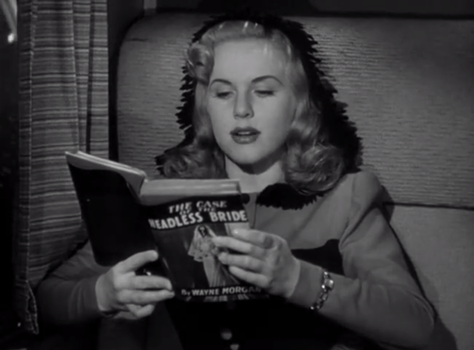
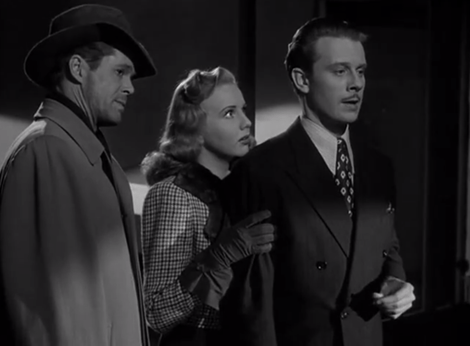
The ever effervescent Deanna Durbin is sprawled out on the seat of a train car feverishly reading the pages of her thrilling mystery novel aloud. She happens to glance out the window only to stop and see a man bludgeoned to death with a crowbar! It was through the window shade, and we don’t see any blood, conveniently, but we do have a story.

Although it’s a corny hook, Lady on a Train goes with it full throttle. She’s left her loving daddy behind in San Francisco for the streets of New York City. H.G. has entrusted her to one of his most accomplished underlings, Haskell of the New York office. That’s all well and good, but the best part is the typically befuddled, huffing, stuttering shtick of the every reliable Edward Everett Horton.

Durbin brings her chipper energy into all sorts of scenarios beginning with her leaving her oblivious minder in the dust as she looks to get the word on the murder she witnessed. The police station is manned by an officer (William Frawley) who finds her story pretty thin and how could you blame him? It’s utterly ludicrous.

But always the fix-it girl, Nicki Collins goes sleuthing on her own, with a little qualified help that is. She resolves to track down the mystery writer of her new favorite page-turner, Wayne Morgan (David Bruce), accosting him at work and following him and his put-upon fiancee (Patricia Morrison) to the theater, bugging him even more.

All these elements feel like well-trod screwball paces, which they are. Surely, this is the man who will fall for her persistent charms — eventually. Thankfully Lady on The Train is a mash-up, leveraging all of its assets. Because we never forget this is a mystery and yet set during the Christmas holiday as it is, we have dashes of yuletide cheer sprinkled in.  Of course, Durbin has quite the pair of pipes so we have to have a few token tunes thrown in. It always keeps us entertained.

However, it’s at the very same newsreel she crashes, Nicki realizes the man she saw murdered — Josiah Warring — shipping magnate and newsreel star. What else is there to do but go traipsing around the frozen grounds of the deceased in her heels — of course. She somehow wanders in on the reading of the will and finds herself conveniently dawning an alias as Margo Martin who just so happened to be the fiancee and rich new heir to the dearly departed.

His two dear nephews are present (Dan Duryea and Ralph Bellamy) as well as the scandalized Aunt Charlotte. She cannot stand such a harlot in her presence. Of course, other menacing characters are working behind the scenes. A thick-jawed chauffeur (Allan Jenkins) and a dubious man with glasses (George Colouris) always stroking his cat sinisterly, run things in the creaky old manor. Somehow Nicki gets out of quite the jam and even makes quite a convincing chair as well. Lucille Ball would be proud.

The music mentioned in passing arrives. It brings the story to a standstill with a version of “Silent Night” relayed over the phone to her father, melodious but completely out of left field. When you have Deanna Durbin it’s a must to have her sing. She does it later as well giving a knockout floorshow to keep her cover, conveniently locking her alter ego in a closet and getting everyone else to keep mum.
lady on a train 2.png

The movie is continually piled high with bits of mischief comical and otherwise. Her mystery-writing partner-in-crime gets in a wine cellar fistfight as she looks to evade the men in pursuit of her. She conveniently holds the plot’s MacGuffin in her possession — a pair of bloody slippers — while also turning his girlfriend off for good. The final act keeps up the shenanigans as the murder plot is revealed in a pleasing fashion.

It’s true The Lady on a Train finds itself an agreeable niche between screwball and mystery drama. As such, it just might be about the perfect vehicle for Deanna Durbin’s talents, although she, regrettably, would leave Hollywood for good soon thereafter. The story is not afraid to get a little crazy — leaning into its wonkiness outright — and yet there are interludes of definite intrigue.

It comes down to the actors. Horton and Bellamy come off as screwball mainstays. The likes of Duryea and Coulouris couldn’t be more noir if they tried, with archetypes literally inbred into their character DNA. It’s Deanna Durbin’s charm that allows the picture to carve out its rambunctious path. She spearheads the wild ride with all sorts of plates spinning and bits of thread getting tangled, representing all the people and things she finds herself caught up in.

To its credit, what could have been a jumbled mess endears itself as a mixed-bag of all sorts of fun. It’s one of Durbin’s finest outings. Pleasant surprises, however small, are sometimes the most enjoyable.

3.5/5 Stars
Human Desire (1954): Fritz Lang vs. Jean Renoir

human desire 3.png

Edgar Buchanan always annoyed me endlessly on Green Acres reruns, and it’s affected me for a long time. Because only recently have I begun to realize just how broad and robust his body of film work is. He can be categorized with a breed of movie actor that is generally lost in today’s industry.

These were studio workhorses with filmographies so abundant it almost becomes second nature for them to don certain roles. It happens so easily and with such regularity, there’s rarely a need for explanation. It’s all right there in the character and the countless other pictures he’s popped up in before. His part is small but it doesn’t matter.

Because he is the kind of actor only Hollywood of a certain era would have utilized to his full potential. Why does any of this relate to the discussion of this film? My best explanation is the fact Human Desire is not a standalone entry. It comes from a lineage boasting Emile Zola and Jean Renoir’s Le Bete Humaine. And yet Human Desire can be viewed as nothing less than noir cranked out of the salt mines of Hollywood.

The traditions of Michel Carne and Jean Renoir, themselves in the late 30s, coalesced with the early works of Fritz Lang, like M (1931), to form a sturdy foundation to this American iteration of crime cinema. There’s no doubt Lang and Renoir were aware of each other. An obvious point of reference is the fact Lang would adapt La Chienne into a film of his own — Scarlet Street.

Human Desire is his second go at the eminent Frenchman’s filmography, albeit less to his liking. Lang’s railroad imagery isn’t quite on par with the evocative ever smoky grittiness of Renoir’s earlier effort and part of it must be chalked up to interiors which strip away much of the rail tie reality.

In even brief interludes there could be overlap with the work of the Frenchman’s father or other famed realist artists of generations before and there are quite a few lighter, brighter tones, although Le Bete Humaine is still a notable precursor to noir cinematography.

But then it gets dicey because Lang himself came out of the other tradition which all but berthed the dark genre, German Expression, with films like M or American pictures like Fury and You Only Live Once, unmistakable for their equally brooding imagery.

Renoir has an appreciation for the everyman’s daily life as it pertains to this world of grunge and brutality. There manages to be something real, this animal magnetism — a literal madness that somehow feels more authentic.

Lang picks up solely on the total bleakness of a canvas bathed in black. It’s suffocating in that sense. He also functions better within the facades and inherent artificiality of the Hollywood system. Renoir tried it too, and it proved more stifling than productive. Lang, perhaps out of necessity, used the resources more to his advantage.

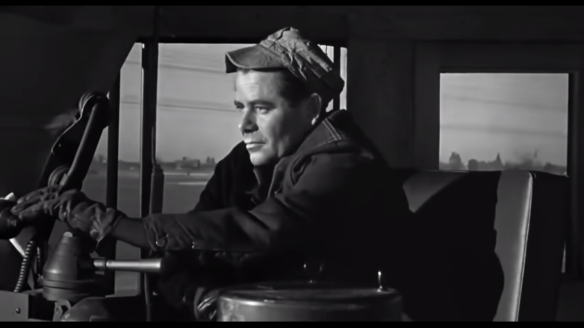
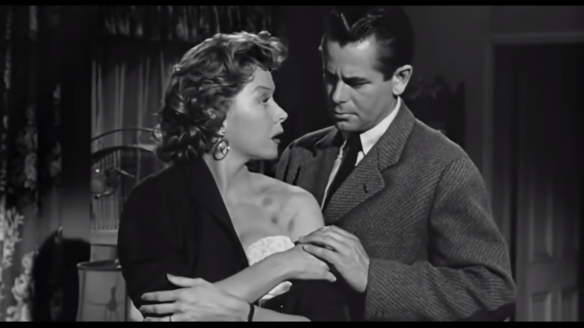
After the stirring success of The Big Heat, he comes back with his two stars in Glenn Ford and Gloria Grahame to do it again. It’s unfairly overshadowed even as Grahame turns in a blistering, merciless performance as a conniving wife. But as with all black widows, the exterior begins demure and innocent enough. It only evolves and becomes more malevolently deadly as time marches on.

human desire 1

The newfound lens of a returning soldier fits into the context of the era. Because Human Desire is a story revamped for 1950s America, and it translates itself easily enough. Jeff Warren (Ford) is coming home from the army with ideals of a steady job, fishing on weekends, and nights at the movies with a pretty girl. It presents this fresh exterior just waiting to be dragged through the mire.

Because the conventions of American-grade noir, in particular, make for a compelling tale of lust and sleaze. Not that they were entirely absent in Renoir’s picture but they have a different effect.

Human Desire throws together a femme fatale and a formerly clean-cut veteran whose eyes bulge out of his sockets the first time he snatches a glance at the girl. They are not perpetrators of murder by they are implicated in the following courtroom proceedings with Warren complicit in a cover-up. There is a streamlined love triangle between Ford, Grahame, and Broderick Crawford that rarely feels interesting on its own merits.

At its best, it lives out its existence on the screen as a low-grade railway riff on Double Indemnity or The Postman Always Rings Twice. There are obvious antecedents in its French predecessor but somehow in this context, it seems applicable to canonize it as noir. Emile Zola never felt closer to James M. Cain.

I could only consider the very concrete plot points, not the literary styles themselves. Because Human Desire, of course, is not literary at all — or if it, it is only in the pulpy seediness such entertainment engendered.

Renoir could actually claim some basis in Zola’s literature, not simply by his pedigree but also by evoking the words themselves. Regardless, the two creatures have their distinct appeals for two diverse camps. There’s no question the two helmsmen were a pair of phenomenal craftsman deserving individual repute. The differences in them are as beguiling as the similarities. The same might be said of Human Desire and its forefather. Choose your poison and my guess is you won’t be disappointed either way.

3.5/5 Stars

The Blue Gardenia (1953): Anne Baxter a Victim of Noir

blue gardenia 1.png

The Blue Gardenia chooses to establish its characters and allow ample time for the audience to get acquainted with all the players. It’s genuinely a pleasure as we have a number of affable people to grow accustomed to over the course of the story.

There’s local journalist Casey Mayo (Richard Conte) and then pin-up artist Harry Prebble (Raymond Burr), giving a momentary glimpse of a Burr character who is not looking to murder someone or force himself on a woman. The fact that he’s a mere womanizer feels almost tame, showing the desensitization he is capable of instilling.

He, as well as Mayo, can be found wandering around the Los Angeles’ switchboard ward, constantly bustling with activity, call transfers and busy signals galore. The real reason for them to be hanging around are all the pretty working girls. I’m not sure it’s a great reason, but they hang around nonetheless.  The male cast is also rounded out by one of my genre favorites — Richard Erdman, as the ubiquitous cameraman, always lounging on the couch.

It’s with the female talent where Blue Gardenia samples the close-knit camaraderie of such movies as Gold Diggers of 1933 where you have a gaggle of girls living together balancing a career, a love life, and a few laughs. Crystal Carpenter (Ann Sothern) is the wise one who has lived life, maintained her looks, and currently spends evenings with her former husband the homely Homer. Sally (Ms. Jeff Donnell) is her exact antithesis as the young and unattached gal whose idea of a quality evening are dime-store crime romances.

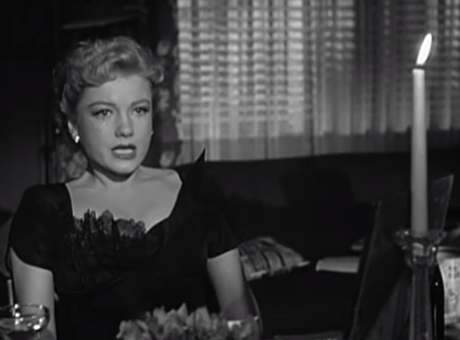
Somewhere in the middle falls Norah (Anne Baxter), the amiable, even-tempered lady who is waiting devotedly for her man to come back from Korea (the war that is). By all accounts, they are madly in love, she has remained eternally faithful to him, and waits upon his return with exuberant expectations. Instead of spending her time out on the town, she imagines romantic meals together by candlelight with roast and champagne.

The Blue Gardenia punches up the melodrama with the disclosure of a fateful letter. It turns out her man has found true love in Tokyo, and Norah has been left adrift with her whole romantic outlook compromised. What is she to do now?

On a whim, she takes up an invitation from Mr. Prebble that was meant to be extended to one of her other roommates. She gets to the Blue Gardenia on Vine, right off of Hollywood, and soaks in the laid-back Polynesian vibe. She’s a bit unsteady, unsure of how to proceed, but she’s there. The main attraction on the floor is none other than the velvety vocals of Nat “King” Cole. His song subsequently haunts the rest of the picture as the story begins to unravel.

Because as hinted at before, Raymond Burr had a certain pedigree, before his days as whip-smart attorney Perry Mason. For lack of a better term, he was always a lascivious cad. We know what his mind is thinking because it’s always blatantly obvious from the expression on his face. Sure enough, a trip to his apartment follows, Norah gets herself more and more intoxicated — a confused and helpless victim in his lair.

He forces himself on her, and she fights him off with a fire poker. Like Philip Marlowe, she enters into a swirling pool of disorientation. It’s this bit of ambiguity laced with terror that the whole plot relies on. Equally crucial is how a victim turns herself into a culprit.

It becomes an uneasy metaphor for the way society is built around men and women are the ones blamed and villainized in certain contexts. This goes back deep into human tradition to the days when a woman’s testimony was not even considered valid in court. Implicitly, it’s as if the burden of proof is on them to prove they are innocent from the very beginning. Norah has every reason to be frightened.

blue gardenia 2.png

Because news of Prebble’s death comes out and the paper and the police are looking for the lady who left her shoes behind — this murderess who fled the scene of the crime. Here Mayo comes back into view as he promises to tell the woman’s story if only she would come forward to his paper. However, his intentions seem more driven by circulation goals than an actual charitable heart. Everyone is a wolf out for himself.

This makes it even more tragic that this woman feels so isolated and debilitated she is incapable of going to her best friends and the women around her, as they would be the ones most ready to help her. The other wrinkle is how the newshound unwittingly starts to fall for the girl he’s been looking for. It’s the height of irony even as Norah finally gets implicated in the murder.

Throughout Fritz Lang suffuses the drama with style captured not only in the most traumatic moments but also in the extensive use of tracking shots within the narrative. Still, the dramatic situation is lacking because it is hard to share the same convictions as our lead. It’s not that we don’t sympathize with her.

It’s the fact she should have nothing to be ashamed of or to be fearful about. If there was more time to isolate its themes and hone in, Blue Gardenia would be very much about the recovery process of an individual going through so much trauma. The heart and soul of the picture could be found there, but as is, there simply is not enough time to tease out these ideas.

The penultimate twist is a fine addition although it’s not as if the story can really be salvaged in one instant — happy ending notwithstanding. Despite the talent all around, the mechanisms of the storytelling alone make it apparent this was a genre quickie made with only mild regard for the material. Lang and Nicholas Musuraca are still integral to what we know as film noir — and this film is no exception — but it certainly is a less engaging effort. Probably because we know the illustrious heights they are both capable of.

3/5 Stars

Days of Wine and Roses (1962): Alcoholics Anonymous

days of wine and roses 1.png

I had always heard Days of Wine and Roses was shown to members of AA. It’s no small coincidence the co-founder Bill Wilson served as a technical advisor. But I never realized how integral it is to the very integrity of the plot.

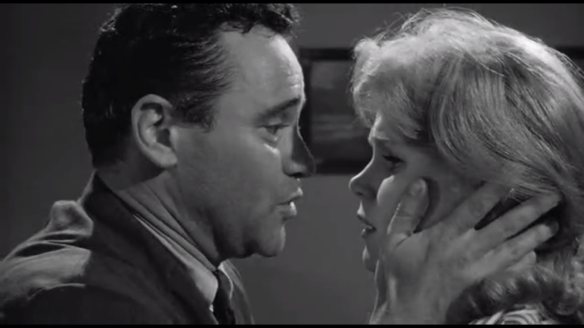
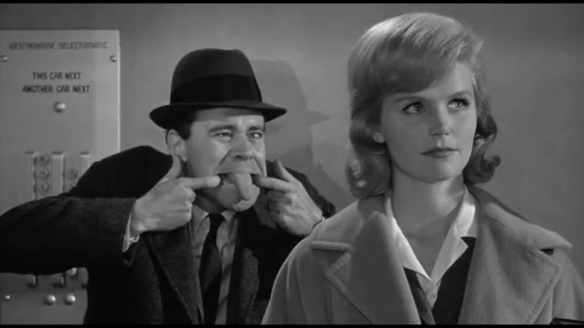
Jack Lemmon had the penchant for playing lovable losers — the corporate schmucks who are a bit sleazy but have just enough charm to make them relatively endearing. In this one, he’s Joe Clay, a public relations man who nevertheless finds himself to be “a eunuch in a harem” and a glorified pimp for businessmen.

To some, he may feel reminiscent to C.C. Baxter who was an ambitious fellow with a similar conundrum. Because he has a conscience in this callous corporate jungle. Clay likewise, is a character with a decent streak. He feels uncomfortable with certain duties thrust upon them.

He gets off on the wrong foot with the bosses secretary Kirst Armeson (Lee Remick), followed up by rejected peanut brittle offerings in an attempt to make amends. Though ultimately his persistence and a certain amount of candor straighten things out between him.

Getting along is not their main problem anyway. The issue which will become most troubling is his penchant for a little merriment after hours. In other words, he likes to drink. “Booze makes you feel good,” he says. Something to let off a bit of steam like any extracurricular. In a way, it’s kind of endearing when they’re standing on the water’s edge reminiscing together, Joe’s a bit tipsy.

From these moments onward, Days of Wine and Roses is capable of contending with some of Wilder’s comedies like The Apartment and The Fortune Cookie while being superior to Edward’s Breakfast at Tiffany’s, despite being less well-known. It’s hardly going out on the limb to say this offering is his best work. Because whatever his plethora of comedies might say about him, beloved as they are, Days of Wine and Roses shows a capacity for completely different material. He does it justice juggling tones.

Maybe it’s a matter of how she carries herself or her hairstyle but Lee Remick never felt more mature and self-assured than in Days of Wine and Roses. It’s as if she has aged — still beautiful and alive — but there is something more to her now.

days of wine and roses 4.png

She lives in “The Roach Kingdom” and begins a romance with Clay, which ends with marriage on the fly. She takes him home to her daddy (Charles Bickford) and he doesn’t approve exactly but he gives them the benefit of the doubt. They seem happy.

But you don’t cease to be your old self and suddenly become someone new once marriage is decided upon. As is the case in all scenarios, you bring your baggage along with you and it can either make you a more steadfast couple or be the millstone around your neck drowning you mercilessly.

If he is a flawed husband than he is a flawed father as well. Alcohol-fueled giggle fits are endearing at first but when they turn heated and verge on the uncontrollably violent the destructiveness of alcoholism becomes overpowering

Their daughter feels like a casualty as their parenting suffers. First, Joe comes home swacked one evening and wakes the baby in a fit. Then, slowly Kirst gets pulled down with him. Her own dive toward alcohol dependence ends in a house fire of her own creation.

The effectiveness of the storytelling has to do with the alcohol not being front and center as it insidiously moves in on a man’s life. Here are a man and a woman. This is a love story. But it goes horribly awry.

What follows is a horrifying cut to Jack Lemmon in a straitjacket. Grimace-inducing. We have gone far beyond a mere mealy-mouthed drama. We have reached the point of positively no return. No film thus far, not even The Lost Weekend has managed this low before, so it seems.

Unfortunately, it’s a result of countless appreciative viewings of  Some Like it Hot and The Odd Couple that causes me to often label Jack Lemmon a comedian rather than a “real” actor. But what an oversight that is. He is absolutely phenomenal without a shadow of a doubt. Like Peter Sellers, Robin Williams, and Jim Carrey, it does seem funnymen are often capable of extraordinary dramatic performances because it’s so true there is an inherent polarity between comedy and tragedy. Yet they are so closely tied together.

Jack Klugman (another future Odd Couple veteran) appears as an AA man who acts as Joe’s anchored lifeline providing tough love with pragmatic advice. “Just one more” is a lie. And assuming that we have enough willpower to overcome it is equally pernicious. Pretty soon we’re content to live in spiraling cycles.

days of wine and roses 2.png

Meanwhile, Kirsten balks about joining AA. She doesn’t want to degrade herself in front of a group of people. She deems herself better than that and goes on living the lie, getting by on willpower.

There comes a time in everyone’s life where the bottle is God. Joe is finally made to realize that but now his wife is so tainted. He pleads with her, “There’s just room for you and me, no threesome.” His wife proceeds to go out the door.

He looks out the window and watches her disappear into the night. Then, he looks out the window again and the street’s empty. The only thing there is a neon “Bar” sign flashing in the night. He looks at it grimly knowing that it took his wife away from him.

In a manner of speaking, they were unfaithful to one another. No, not with another person but another thing — an obsession that ripped apart their marriage with a canker that cannot be easily eradicated. Days of Wine and Roses manages to document it all with a harrowing lucidity hardly pulling a gut punch. It also conveniently forgets to tack on a happy ending.

Is it any wonder that Blake Edwards, Jack Lemmon, and Lee Remick, who had all struggled with excess alcoholism at a time, eventually all quit the habit? There is no more potent indicator. If it does its job, there will be at least several moments where your insides will squirm and you will be repulsed. For people so amiable, Jack Lemmon and Lee Remick do an astonishing job.

4.5/5 Stars

Splendor in the Grass (1961): Natalie Wood and Warren Beatty

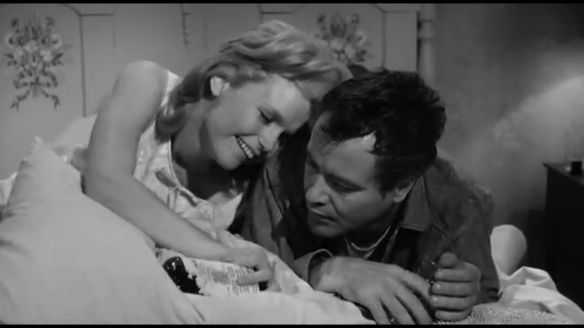
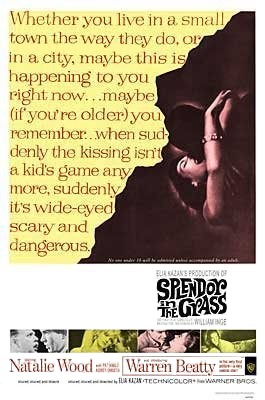
Splendor_Sheet_ALike William Inge’s earlier piece, Picnic, or some of Tennessee Williams’ most substantial work, Splendor in the Grass seems to hinge on the fact its content is in some way pushing the envelope as far as social issues and subsequent taboos go. It’s no surprise Elia Kazan was often drawn to such content over the course of his career on stage and screen. Hence his numerous collaborations with some of the landmark playwrights of the mid-20th century.

But again, in spite of being a Depression-era period piece, Splendor in the Grass comes off as a bit dated for how it’s trying to grapple with its contemporary moment — at least to begin with.

Our protagonists Norma Dean (Natalie Wood) and Bud (Warren Beatty) are coming of age in a society with a curious way of making sense of sexual mores. They are so confusing and no one seems willing to talk about them. When they do their advice only complicates matters.

Because the two teens look into each other’s eyes lovingly in the hallways at school. The affection is palpable and they want to do it right. They believe that the other is probably the “One.” Norma Dean has a Bud triptych up in her bedroom. Her devotion verging on obsession. Bud tells his boisterous father (Pat Hingle) he’s bent on marrying the girl.

They want to have intimacy but no one seems capable of dispelling the myths for them. Mrs. Loomis is quick to make sure her daughter hasn’t gone too far with her beau. She doesn’t want her daughter to be one of those girls — easy pickings with no respectability. It’s like a death sentence in a small town like theirs.

Kazan also captures the almost incoherent whisperings of bystanders whether concerned parents, students, neighbors, or partygoers. Because it’s true every slight tilt toward something “abnormal” gets the whole community talking. There’s a stigma attached to so many things.

The perfect example is Bud’s own sister, a prototypical floozie named Ginny (Barbara Loden), who is used to a good time and cavorts with nearly any man who will take her. Her father tries to keep a rein on her and Bud begs his sister to pull herself together. You can tell he’s genuinely worried about what she is willfully doing to herself.

Whereas Norma Dean’s mother preaches chastity to her little girl, Bud’s own father encourages him to find another type of girl — a girl in fact not unlike his daughter — someone who is easy. He preaches a gospel of sowing his wild oats before settling down to a life of prosperity and a Yale education. Bud eventually takes the advice and generally finds it lacking, though he still winds up terminating his relationship with Deanie. His experiences in college aren’t much better as he’s always maintained humbler aspirations.

Already so devoted to him, Deanie is emotionally torn apart by the separation, going so far as to teeter on the edge of a nervous breakdown. Her mother encourages her to court another boy named Toots (Gary Lockhart) who comes a calling, but it literally drives Deanie to the brink where she looks to jump off and save herself any future heartache.

When she enters her home and her parents seem oblivious to her feelings, bombarding her with happiness, it somehow feels like a precursor to Benjamin Braddock’s suffocation. It’s not simply that we begin to take on Deanie’s point of view, but there’s such a relational disconnect. Parents have no idea what their kids are going through and they seem hardly capable of empathizing with them.

So they go it alone. Natalie Wood soaking in the bathtub. Her voice gets more airy and unsettled by the minute. She’s the epitome of fragility. Bud struggling away from home and looking for understanding in another girl (Zohra Lampert) or a benevolent school official who actually chooses to listen to him, unlike his father.

However, far from demonizing parents, we realize just how much pressure there is on them, so many mistakes to be made, ways you treat your kids, which unwittingly affect them in their future. It’s just the way it is. Art Stamper cares so much about the success of his kids and he’s put his entire life into setting up their good fortune. Where does it get him in the end? Likewise, Mrs. Loomis dotes incessantly over her daughter confessing she did her best as a mother, afraid Norma Dean holds past failings against her.

Then, her parents make the heady decision to send her away for therapy and things begin to reach an equilibrium. The plot feels like vague fragments rather than a fully cohesive narrative from start to finish, but it gives us hints and contours of our main characters trying to decipher their lives.

As times passes, there’s less and less of Kazan’s more dramaturgical entries and more of Wild River another Depression-era drama, which was equally blessed with understatement in its most crucial moments. I think Splendor in The Grass does well to ditch drama for a near wistful milieu feeling at home in the poetic romanticism of William Wordsworth. Regardless, it proves a healthier place to wind up.

It’s a more hopeful rendition of Umbrellas of Cherbourg. The romance we thought would be something — even marred by scandal — was nothing of the sort. It just dissipated and with the passage of time two people found others and it seemed right.

When Bud and Deanie meet again, in the end, they muse how strangely things work out sometimes. Neither of them would have foreseen things this way. He’s a farmer now, with a kindly wife, and a boy with another child on the way. She’s to marry a successful doctor whom she met while she was in the care facility. It really is a satisfying denouement.

Instead of thinking about happiness, they take what comes and find contentment wherever life leads them. For people so young, they seem to have a fairly clear handle on doing precisely that.

With his debut, Warren Beatty readily became another protege of Elia Kazan gleaning anything he could, serving him well in a diverse career as an actor, producer, and director that is still going to this day. Meanwhile, Natalie Wood benefited as well in a performance that though it borders on the spastic, nevertheless seems to cull depths of emotional instability yet untouched in her career.

Now we cannot immediately label those the hallmarks of a great performance. Yet maybe the vulnerability brought on makes it so. The film is at its best in its innocence and transparency finally giving way to a newfound maturity. The old maxim manages to ring true; time heals all wounds.

3.5/5 Stars

Wild River (1960): Elia Kazan and Monty Clift

wild river 1.png

“You’re getting awful human aren’t you Chuck?” ~ Lee Remick as Carol

“I was always human, wasn’t I?” ~ Montgomery Clift as Chuck

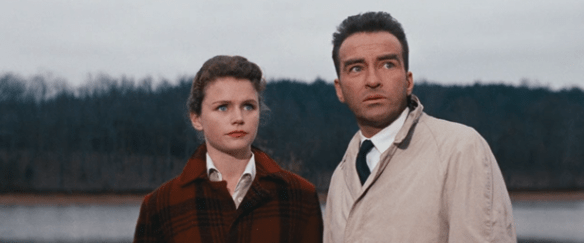
With the mention of the Tennessee Valley Authority and what feels like Depression newsreel footage suggesting the work they are looking to do in the face of poverty, it becomes immediately apparent Elia Kazan’s Wild River feels very much like a docudrama.

Despite the raging water in the title, this is a surprisingly subdued picture especially given Kazan’s credentials. But there you have a dose of its enticement as a film that all but flies under the radar because it cannot be so easily attributed to the Method due to theatrics like a Streetcar Named Desire or East of Eden.

And yet there is no doubting the capabilities of a now weathered Montgomery Clift in this latter stage of his career. Fitting, as his name is linked, deservingly so, with the Brandos and the Deans for the jolt of newfound authenticity and masculinity they helped usher in within the Hollywood community.

However, unlike his compatriots, Clift was not a rising star partnering his talents with Kazan’s own intuitive handling of actors. He was a highly established and ceaselessly ingenious talent already. Clift never seems prone to histrionics but more crucially proves invested in emotional authenticity.

In this case, he is a man with an obvious task at hand. With a new TVA dam going in to provide electricity for the surrounding community, Chuck Glover is called upon to clear the area of all its occupants so the river valley can be completely flooded. The area has been all but vetted except for one lifelong unwavering inhabitant, Ella Garth (Jo Van Fleet) who lives on a solitary island with her grown sons and granddaughter.

She’s not too favorable toward TVA men and Glover’s predecessor gave up, finding the old lady unyielding. Still, the new man’s got to at least try because the Tenessee Valley Authority is intent on moving forward with progress.

As she showcased in everything from East of Eden and Cool Hand Luke, Jo Van Fleet could be a scene-stealer in her own right and she was consequently an adherent to a “Method” style, gelling with her director. Hence Kazan’s eagerness to cast her again. She doesn’t disappoint with her 45 years all but disappearing behind her performance filled with a resolute obstinacy, which is neither wholly bitter or overly pious.

One could situate Wild River as a Grapes of Wrath story from a sympathetic perspective.  The wheels of progress are more of a benevolent aid to the public rather than an unfeeling force bulldozing the old for the new. The delineation is purposeful even as it leads to obviously divergent conclusions.

Chuck does not want to use force and he is looking to understand the local inhabitants so he can help them the best he can. Though the eldest Garth rejects his initial inquiries, he does find a sympathetic spirit in Carol Garth Baldwin (Lee Remick) who raises two children following the premature death of her husband. As the story progresses and Chuck keeps on plugging away in his mission, he and Carol slowly grow closer even as their worlds seem so far apart. There’s a glint of Norma Rae in how they come together. What matters is people’s convictions rather than their environment.

But to a slightly lesser degree, there’s the racial element as it seems like it would be ill-advised to draw up a story such as this without a certain enmity. Chuck just wants his job done and he’s ready to use black labor to do it. All the local southern white folks aren’t about that, much less equal wages.

He meets particular pushback from a local cotton plantation owner named Bailey (Albert Salmi) who doesn’t look on his presence too kindly. The same might be said of Walter Clark (Frank Overton) who has been Carol’s beau for some time. And yet their characters could not more starkly different. We get to understand them more deeply in due time.

wild river 2.png

One of the greatest pleasures of Wild River is the opportunity to study the faces of our leads in-depth. Lee Remick’s performance alone abounds with the unspoken feelings behind her eyes.  It’s as if her eyes are the windows into her every emotion. Bright blue, at times pleading, other times aloof with a sadness we can only attempt to understand. But the film is made by its warmth and its subtleties, far more than any amount of blundering brutal magnetism. It comes out aging like a fine wine compared to some of its hothouse contemporaries.

The galvanizing moment comes when the local yokels try to scare Chuck off and have themselves a time goosestepping on the roof and ramming a truck into the side of a house; a shotgun even gets brought to the proceedings. The sheriff observes from a measured distance with mild amusement.

And yet when Chuck wanders out to face his perpetrators, there’s a resolve in his eyes. Surrounded by all these folks, he goes up to the spiteful man who is behind it all and proceeds to get wailed on. It’s almost pitiful. Our hero goes flailing, his girl starts climbing and clawing over the guy only to wind up in the mud right next to her lover.

It’s hardly a cinematic moment but it feels like a real one and the fact that our hero, Monty Clift, winds up so pitifully is a testament to this story. For the record, I’ve never gotten into a fist-fight. I’m a very flighty non-confrontational fellow but regardless, there’s something honest about how this one goes down.

One of the final shots is an equally fitting testament of what we have just witnessed. A solitary house on an island is set ablaze surrounded by water with an American flag dancing in the breeze. Maybe others feel the same emotion but the flag all but suggests this nation of ours has a complex relationship with progress. Where we must let go of the old to make way for the new. However, we must also reconcile each with the other.

Is it simply a part of life — the inevitable — or are there truly righteous and detrimental ways to go about it? The film is not forthcoming with its own answers. All we can do is sit back and ruminate. With a smile on our faces looking forward but nevertheless a lingering wistfulness for the past we left behind.

4/5 Stars


To Each His Own (1946): Olivia de Havilland Does Melodrama Well

To Each His Own 1.png

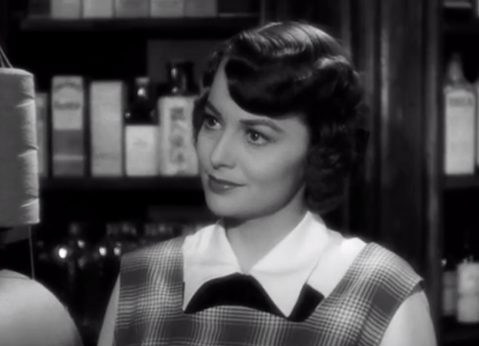
Ginger Rogers purportedly passed over the script for To Each His Own because, at first glance, it’s hardly a glamorous role; but for the right person, it could be something unquestionably special. That actor was Olivia de Havilland.

Certainly, the production is bolstered by Mitchell Leisen, a mostly forgotten director who made a string of highly memorable comedies and romantic pictures during the 30s and 40s. It’s no different here. And then you have Charles Brackett, formerly half of the lucrative writing partnership with Billy Wilder before alighting on his own as a producer. None of that can be discounted nor a handily-played dual debut by John Lund. But we must return to Olivia de Havilland.

In the opening interludes, she comes off as acerbic and curt, a forlorn type of person. No relationships or community or people to worry about or to worry about her. She’s joined by another middle-aged man named Desham (Roland Culver) and they make quite the pairing, taking on the night watch duty over the holidays so others might celebrate.

He coolly makes the observation that people like themselves are alone for one of two reasons — not caring enough for other people or caring far too much. Though Ms. Norris divulges little, we instantly gather she fits into the latter category. This is what starts us on the journey through her past, which led her to a man named Bart Cosgrove (John Lund).

But before their fateful meeting, the flashback sets up the world of Pierson Falls, familiar to anyone who has glimpsed It’s a Wonderful Life with its parochial atmosphere and local drugstore. Match that with the jingoism out of Hail the Conquering Hero and you have a slice of life in this little town during WWI.

John Lund is sour and far harsher than I recall in say The Mating Season and it serves him quite well. He and his co-pilot (the always reliable Frank Faylen) are the two jaded flyers who get the hardiest of welcomes from the townsfolk. However, this is their umpteenth stop on an endless bond tour. They’ve become overly familiar with people like Bernadock Clinton (Arthur Loft) the asinine town cryer making a continual bother of himself ushering the flyers around like prized sideshow attractions. And it would be more of the same if not for the meeting of the flyer with the town’s most eligible gal.

To Each His Own 2.png

The heightened emotion of wartime uncertainty swirls around them and they share a rapturous, if whirlwind, romance that Captain Cosgrove was never expecting. All too soon, he’s off again leaving his newfound love behind and to use euphemistic vernacular, they’ve created a ticking time bomb.

Here To Each His Own enters its scandalous phase where Jody must confess to her father that she’s had a child out of wedlock. The old man (Griff Barnett), with the steady voice, sounds uncannily like Will Geer and spouts unassuming wisdom, “We don’t judge each other. We love each other.” But small towns are not usually as forgiving and so lest people talk, Jody decides to leave her child on a doorstep. Hoping to pick her child up later and “adopt him.”

Instead, a couple who’ve been tragically hit with a miscarriage are thankful for this second chance at cultivating life and they take the child. Of course, the couple is one of Jody’s old beaus and another peer. They got married because Jody rejected him. The dramatic situation is clear enough.

When the mechanizations of the plot become clear, it also becomes clear just how awful the circumstances are — just horrible. They’re apt to tear your guts out. After the passing of her father, Jody, who needs a job, proposes coming on as a nursemaid, but there is no compassion there. She gets pushed out of the scenario thanks to a jealous wife and a husband who still holds a boyhood crush.

She has no choice to move on and, being a go-getter, she takes charge of a bootlegging business and turns its front, Lady Windemere’s, into a legitimate international operation proving highly successful. Whenever she has a free moment, Jody does her best to manufacture chance encounters just so she can glimpse a few minutes with her son who is growing in knowledge and stature. But she knows deep down, with each passing year, little Gregory is less and less her son.

Melodramas or so-called “women’s pictures” can be hit or miss depending on how thick they lay it on and how much the music swells at the exact moments of deepest impact. But in full consideration, To Each His Own might be one of the finest such pictures to come out of the 1940s, and it’s no small coincidence that it shares that distinction with the thematically similar Stella Dallas.

When it’s all said in done, it’s about heartwrenching relationships between mothers and their children and when the mothers are portrayed by such stalwart titans as Barabra Stanwyck and, in this case, Olivia de Havilland; the drama enters territory that can easily pierce the heart to the core.

To Each His Own is also somehow akin to Random Harvest with dramatic irony being integral to the plot — one character knowing something that deeply affects how they live their life — except the person they care about knows nothing about it. This is by no means a criticism either but simply an acknowledgment that these stories can tug at the heartstrings with great fervor.

Again, it comes down to the players as much as the scenario. They must be people that we are capable of feeling great pathos for. Certainly Stanwyck, Greer Garson, and Ronald Colman and even Olivia de Havilland. Maybe she’s known for being difficult or a perfectionist or what have you, but that has nothing or maybe everything to do with her as an actress.

She makes us care about her as she moves from every stage of her life. And I say life because it feels less and less like a performance and more like real life. She, like Stanwyck before her, is able to carry the weight of youthful exuberance and maternal toil equally well.

Far from being unglamorous for winding up being mother to a grown son, I think a film like To Each His Own makes you appreciate the beauty of de Havilland even more. Because there’s a realness and a depth there that you would have never gotten in a career of roles opposite Errol Flynn. You just wouldn’t.

That’s part of what makes it special. And like the other previously mentioned titles, it goes out with a few tears but also espousing dreams. We can question the final moment — the rationality; the catering to the audience — or we can just enjoy it like a wedding feast with the ones we love.

4/5 Stars

The Sea Hawk (1940): Errol Flynn Against The Spanish Armada

sea hawk 1940.png

Anyone who knows even a smidgeon about historical dates knows what the big to-do with 1588 is. If anything, 1588 automatically means the sinking of the Spanish Armada by Queen Elizabeth’s forces. So when a film opens in Spain in 1585 we already have a good idea of where we might be going. It’s the voyage to get there which matters most.

I can’t quite help but see the parallels between Spain and the Nazis aspirations for world domination. Because in the year 1585 there is a King in Spain named Phillip II who not unlike an incumbent dictator in 1940 was looking to conquer all of Europe with England being a priority.

With this historical backdrop, Warner Bros. gathers another classic ensemble anchored by Errol Flynn and director Michael Curtiz along with the steady support of Alan Hale. Following his debut as a film composer in Captain Blood (1935), Erich Wolfgang Korngold returns to similar waters to provide the scoring once more.

The film does feel empty without Olivia de Havilland but she was by this point fed up with playing second or third fiddle in swashbucklers. Be that as it may, Brenda Marshall (the future Mrs. William Holden). with a shining countenance, fills in swimmingly in one of her most prominent performances.

Leading his pride and joy The Albatross in the service of her majesty Queen Elizabeth, English captain Geoffrey Thorpe (Errol Flynn) makes a glorious conquest of an enemy ship. The thrilling surf soaked cannonball-filled action picks up right in the same waters as Captain Blood.

He just happens to commandeer the boat carrying the Spanish ambassador (Claude Rains) across the English channels. It is the conniving man’s mission to ingratiate himself with the queen and being the two-faced scoundrel that he is, he finds Thorpe to be an incorrigible scoundrel.

Though he makes a monkey of court and her closest advisor Lord Wolfingham who seems quite sympathetic toward the Spaniards on a whole, Elizabeth is fond of Thorpe’s patriotic brand of cheekiness. Envisioning vast spoils at the hands of the Spanish, he takes on a clandestine mission off the record albeit with the Queen’s permission behind closed chamber doors.

Cloak and dagger countermeasures ensue as Don Jose looks to ensure that his mortal enemy will be cut off before he has any chance to do anything. Although initially turned off by the scoundrel, his daughter soon becomes enchanted by his chivalry even as she fails to intercept him in time. They are riding off into a trap.

They set out through the sepia-toned world of Panama in search of vast treasures to be plundered from their enemies. Instead, they get brutally ambushed and pushed back into the mosquito-infested swampland by the waiting conquistadors.

Whereas Captain Blood found Flynn starting at the bottom in The Sea Hawk he is brought down into the pits of despair once taken prisoner. He and all his men are imprisoned aboard a Spanish ship, oarsmen chained to their places and beaten mercilessly. They grind it out and take the torture while biding their time behind the oars.

It takes time but eventually, a chance is created culminating in a brazen escape attempt. The midnight mutiny is aided exquisitely moment by moment by Korngold’s score put on full display and nearly urging the men on in their quest while instigating an underlying tension.

The final burst of drama comes when Thorpe returns to shore, reunited with his love in her carriage making amends and sneaking back to the queen’s castle cloaked by night. Making it to the queen proves a nearly insurmountable task with all the guards on high alert and Wolfingham waiting to intercept him for one final duel. But Flynn could never be outdone and Henry Daniell is certainly no Basil Rathbone. The Queen gets the news and vows to battle the Spanish Armada. We know the rest of the story.

While not quite eclipsing the jaunty heights of Captain Blood, this worthy successor nevertheless has its own share of thrills and fine action with Flynn maintaining high form. Perhaps it’s partially a testament to how captivatingly the film opens because it’s difficult for any picture to maintain that kind of vigor all the way through. But with a valiant effort led by its charming rapscallion and his crew, they wade through any slow passages to bring us back around to the grade-A entertainment of a quality swashbuckler.

The production thriftily saved on funds by repurposing the exquisite period costuming from The Private Lives of Elizabeth and Essex from the prior year. They become a perfect extension of the storyline to match Flora Robson’s formidable turn as the Queen. Meanwhile, Claude Rains is transformed into a dark-haired Machiavellian villain which he pulls off with the required amount of duplicity. This time around, Flynn’s character is based on the legendary Sir Francis Drake and yet like Robin Hood before, the Australian falls into the part and makes it his own through magnetism, athleticism, and wit. It’s another sterling achievement.

Queen Elizabeth gives one final stirring message that again can be taken in its time as a veiled indictment of Hitler’s belligerent aspirations. America had yet to enter the war and yet in over a year’s time, they would be right by England’s side. It wasn’t quite the surprise defeat of the Spanish Armada but it would take long hard years of waves of sacrifice and hard toil against the enemy. Winston Churchill is said to have admired this picture immensely and it’s hardly difficult to see why. It sums up his guiding sentiments exactly. After all, he is the man who famously said:

“We shall fight on the beaches, we shall fight on the landing grounds, we shall fight in the fields and in the streets, we shall fight in the hills; we shall never surrender.”

4/5 Stars

Note: I watched the original restored uncut version of the film that clocks in at 127 minutes.


Captain Blood (1935) Starring Flynn and De Havilland

Olivia_de_Havilland_and_Errol_Flynn_in_Captain_Blood_trailer

To a certain stratum of society — namely classic movie fans — it’s nearly impossible to imagine Errol Flynn and Olivia de Havilland not being paired together or not being box office draws, for that matter. However, on both accounts, in 1935, the studio was taking quite the risk, still undoubtedly reeling from the heart of the Depression Years and shelling a hefty sum of money for a vehicle essentially starring two unknowns.

Sometimes you catch lightning in a bottle, and it remains for all posterity. Scoring, again and again, is quite another matter entirely. The pair would be placed together in an astounding 8 films in total!

This initial entry opens in England in 1685 and a band of patriotic rebels has taken it upon themselves to depose the current tyrant James II. Though he chooses to forego involving himself in the fighting, physician Peter Blood nevertheless goes with them in spirit and is ready and willing to operate on a fugitive who is mortally wounded. However, in the process of attending to the man, the king’s guards burst in upon him and all involved are arrested.

Their future is decided in a trial of pomp, circumstance, and unyielding justice. There are few figures in the legions of contenders as charismatic as Errol Flynn, beginning with his attempt to exonerate himself and extol his own noble profession. Even that fails to keep him from the executioner though the king fancies himself a humanitarian and decides to send the lot of traitors on slave ships to the West Indies instead.

There is a blatant irony in the depictions of white slavery while the deep wounds of black slavery were still being felt in our country through the oppression of Jim Crow Laws and racial injustice. This continues on the island plantation prison where the lads find themselves.

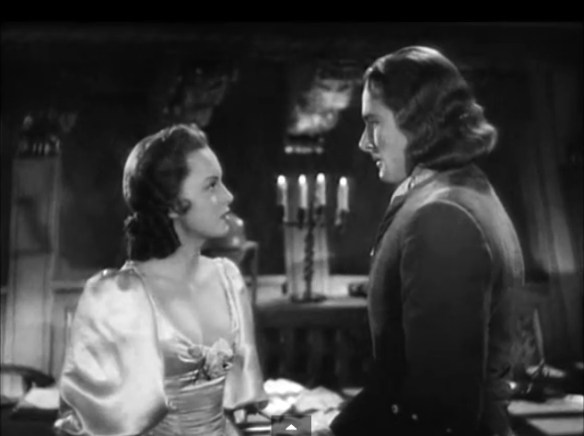
There they are sold on the auction blocks like chattel though much to his shame, Blood finds himself indebted to a pretty matron Arabella Bishop (Olivia De Havilland) who bought him for 10 pounds. Their relationship begins on the rockiest of soil and life thereafter is hard. Though eventually, Dr. Blood gains favor when he cures the hissy hypochondriac governor of his gout, earning himself greater freedom.

And with that the good doctor bides his time, planning an escape to coincide with a timely interruption on the outpost by Spanish Pirates. In the drunken escapades that follow, Blood gathers his men together, switching places with the invaders and a new band of pirates is born. They are a hardy lot including Blood’s faithful pilot and friend Jeremy Pitt (Ross Alexander), the sturdy gunner Hagthorpe (Guy Kibbee), and one Bible-spouting mate who has a bit of scripture for every occasion (And then the whale came and the whale swallowed Jonah. I hope!).

Their acclaim grows to such an extent that they fall into the company of a band of French Buccaneers led by a salty lady’s man named Levasseur (Basil Rathbone). He and Blood draw up a loose pact which quickly falls apart as they quarrel and end up dueling for the company of their esteemed “guest” Ms. Bishop. Laguna Beach, California ends up filling in for the Caribbean as they have it out in stirring fashion. Flynn and Rathbone were the best of foes when it came to crossing swords, even when they were purportedly allies.

In the final act, the outlaws are redeemed (like Robin Hood anyone?) taking up the banner of the new king William of Orange to fight a valorous battle for the glory of Merry Ol’ England. Thus, in spite of the tumultuous path he traversed, Captain Blood and his boys reach the pinnacle. He’s a hero and, of course, he gets the girl. There’s nothing her indignant uncle can do about it now as he’s been replaced by a far more benevolent governor.

I would be remiss if I didn’t ruefully admit how much I yearn for the epic swashbucklers of old. Captain Blood was the beginning of great successes to come and the type of Hollywood entertainment that is sorely missed today.

Although I hardly can remember their lips even touching, nevertheless, Flynn and de Havilland are fire together, all but cementing a screen partnership that would continue for many more. Even in the final scene together what becomes apparent is this genuinely contagious brand of fun. If anything they make it seem like a blast for the audience.

There’s a splendidly pulsating finale at sea where it’s convenient enough to cast inconsistencies overboard and instead be overwhelmed by the sheer mayhem of 2500 extras called on to do battle and make a show of it. They take to it handily clashing their cudgels, swinging from the yardarms, and falling into the drink, casualties of pistol fire.

Captain Blood is blessed with laughter as much as action and romance. The tenets of quality adventure filmmaking mean the picture enthralls us as much today as in its day because it knows what it means to have a good time. The seriousness can be shed for the sake of light-hearted, invigorating, no holds barred entertainment.

Because in the assured hands of Michael Curtiz, with a dashing new screen idol in Errol Flynn, Captain Blood never loses sight of what makes movies communal and thoroughly gratifying. Movies of old had a habit of being all things to all people, and it’s true this one has it all, I’m delighted to say.

The final testament is a smile imprinted on the face of the viewer as big as Flynn’s jaunty grin. Oh, what we wouldn’t give to be on the deck of that ship brandishing our cutlass and romancing a pretty young maiden just like he does. Maybe that’s my boyhood imagination speaking, but he really is the ideal action hero.

4.5/5 Stars

Rancho Notorious (1952): Chug-a-Lug

Rancho-Notorious-poster.jpgThe legend goes that the ever-meddling megalomaniac of RKO Pictures, Howard Hughes, insisted the film’s title be changed to Rancho Notorious because European audiences wouldn’t know what a “Chug-a-Lug” was. Director Fritz Lang, who was himself a European emigre, snidely replied they definitely knew what a “Rancho Notorious” was.

Regardless, Rancho Notorious doesn’t miss a beat with an opening close-up of a couple’s tender embrace. The lovers are pried apart reluctantly as Vern Haskell (Arthur Kennedy) goes back to work as a ranch hand, leaving his best girl, Beth (Gloria Henry), to mind her mercantile store.

As he leaves, two strangers ride into town scowling around and leering at the pretty gal waving her love off on his way. One of the two thugs enters the shop to inquire about the contents of the safe, glowering over her lecherously as she reveals its contents. It doesn’t take much to extrapolate what’s next. You can fill in the blanks.

This sequence alone is a testament to the fact that the menace of Fritz Lang can even encroach on the colored palette of the western through music and foreboding shadow. With a woman now ruthlessly ravaged and murdered, it sets her man off on the trail seeking vengeance. But being the snake in the grass that he is, one of the marauders shoots his accomplice in the back before absconding with their cache.

Haskell makes it to their encampment just soon enough to induce the dying man to let out his final breath. The only tidbit he has to go on is the phrase, “Chug-a-Lug” so he goes on the trail again sticking his nose anywhere and everywhere people might have a lead.

More often than not it leads to a near-mythical lady named Alter Kean (Marlene Dietrich), tall tales of her exploits being spread all across the territory. Everyone from neighborly townfolk to old acquaintances gladly spin myths and regale the interested passerby with their recollections. Because while he’s interested, so is the moviegoing audience.

There were her days as a saloon floozie, racing with all the other gals on the backs of eligible young men and she had the pick of them all. In those days she worked for Baldy Gunner (William Frawley) though her employment was terminated prematurely. She was too rough on the customers and they were too fresh so she got the boot.

But not before running off with most of Baldy’s money thanks to the even-keeled strong-armed tactics of Frenchy Fairmont (Mel Ferrer) who holds that often touted distinction of being “The Fastest Gun in the West.” He, like Alter, could easily be cast as a mythical figure. Everyone wants to see him and take him down. He just wants to be left alone instead of having to shoot his way out of every town he wanders into. Their reputations precede both of them and in that regard, they are kindred spirits. They seemingly understand each other. Romance might be in the air as well.

Why does this matter in Vern’s quest? For that, we must look to the Election Day taking place in a wild and wooly western town where Frenchy is currently being held along with a trio of crooked politicians. The three men are all set to be hung the very same day if their political party gets overturned. The trills of democracy haven’t really reached this far west yet. Anyway, Vern gets brought in on some minor charge to get close to this outlaw and gain his confidence.

Finally, his assiduousness pays off, and he follows Frenchy to an oasis for wanted thieves, lascivious vagabonds, and societal outcasts. He makes it to Chug-a-Lug, an isolated horse ranch now run by none other than Alter Kean, in all her glory.

He now has a group of men to begin whittling down because, if his suspicions are correct, then his culprit is undoubtedly among them. For now, it’s just Marlene and the boys of the range and she whips them pretty darn good, around the card table and otherwise.

Theatrically, Rancho Notorious has the relatively unique distinction of being an interior western. Certainly, there are exterior shots but due to budgeting at RKO and what he was given to work with, Lang is forced to go the cheaper route. However, he leverages that handicap which does often give way to a fake and garish looking mise en scène to nevertheless create an unnerving world of tension and claustrophobia.

The space is crowded with thugs just ready to go off like sticks of dynamite. They just need a match to light them off and Arthur Kennedy is precisely that. Of course, Dietrich is quite the firecracker in her own right and always the focal point.

The main themes highlighted in the title song of “Hate, Murder, and Revenge” would be returned to time and time again throughout the western canon but they also tie nicely into Lang’s own filmography.

One moment that Lang’s camera brings these themes to light most blatantly occurs when Kennedy spies the broach he gave his dead girlfriend on another woman. His gaze jumps down the gallery of leering thugs (maybe they’re only grinning) all around him with each successive cut. It’s jarring and also makes it supremely evident what Vern thinks of each and every one of them. The rage burns red hot. But he keeps it under wraps for now.

For now, the only progression that seems evident is Vern slowly moving in on Frenchy’s turf. Relations all down the line get continually testy. What follows is a contentious bank job that suggests there is no honor among thieves. Meanwhile, Alter is selling her ranch and ready to pick up and leave the territory. The end is nigh. We must have the Gunfight at Rancho Notorious or better yet The Gunfight at Chug-a-Lug to wrap up all the loose ends.

While not quite on par with Johnny Guitar, Dietrich, like Joan Crawford, more than holds her own, still strikingly alluring and fiercely independent. She also earns herself an ending that evokes and, in some ways, surpasses Destry Rides Again (1939).

In full disclosure, I rather like the title Rancho Notorious because not only is it slightly provocative but it gives some indication of the people who reside right at its heart. People driven by vice, rage, greed, jealousy, and passion. Because regardless of the location or the genre or the characters, Lang’s pictures were always about these intense emotions and innate urges at the core of human beings.

One of them is a purportedly good man who turns callous. Thus, we must question if the very same proclivities don’t rise up within ourselves. Could it be we’re all capable of a little notoriety? We all require a place to hide out one time or another and we all desire a second shot at redemption. Of course, the Chug-a-Lug wheel of fate is not always so forgiving.

4/5 Stars