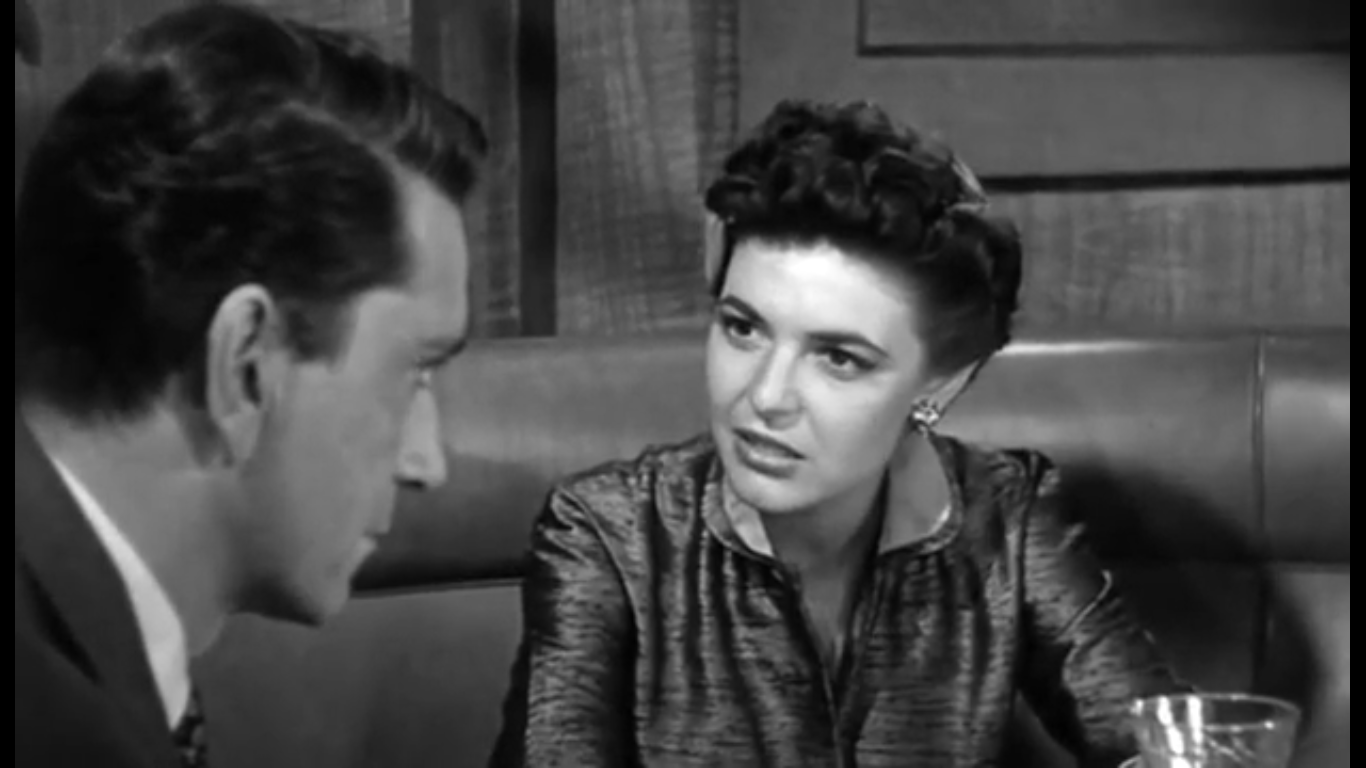
Born to Be Bad (1950)

“When you came here that first day, I fell flat on my face over your suitcase. I never really got up.” – Joan Leslie as Donna

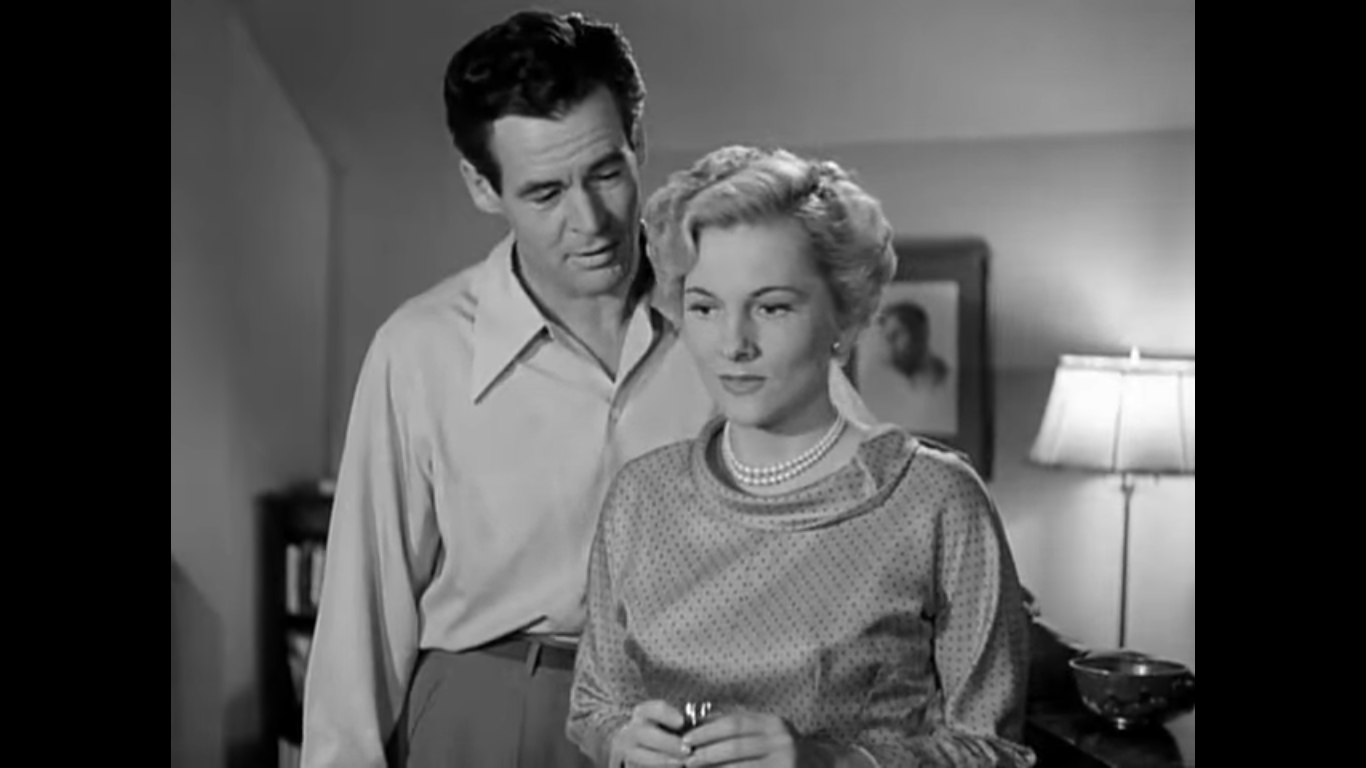
Born to Be Bad is not high-grade stuff. Its trashy exploitive title says as much, but it’s also worthwhile for exactly these reasons. Nicholas Ray would make a name for himself in Technicolor — not black and white — capturing a bevy of emotive performances from the likes of James Mason and James Dean. But it’s easy to forget some of his earlier films are equally stirring. Bogart in In a Lonely Place or Robert Ryan in On Dangerous Ground.

There’s something lighter, more convivial about the performances in Born to Be Bad, but straight down the line, it offers up a thoroughly intriguing cast. It has to do with how they can play off one another and couple up with various character dynamics forming between them.

We have a disorientating beginning because we don’t see Joan Fontaine, but someone who turns out to be Joan Leslie. She’s older now, mature, assured, and still more ebullient than I ever remembered her before in the early Warner Bros. days.

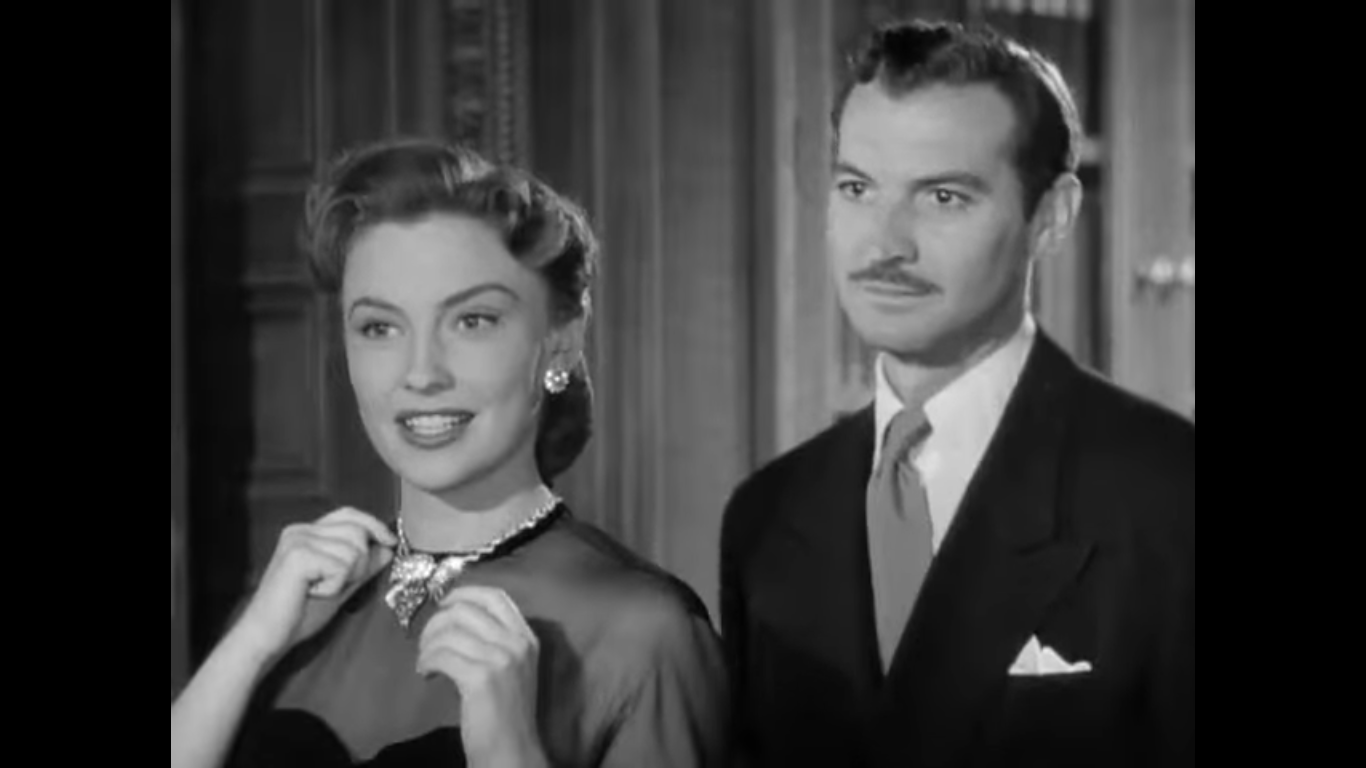
Within the context of the picture, she has reason to be. She’s deliriously happy, about to marry the love of her life, a rich moneybags (Zachary Scott), and yet she still finds time for a job and other wisecracking male companions. One’s a painter (Mel Ferrer), the other a purported novelist (Robert Ryan). There’s a happy-go-lucky familiarity to it all. We almost forget what the movie is meant to be about.

Then, Joan Leslie trips over a suitcase, her hair tossed violently askew, and she looks up to see the soft features of none other than Joan Fontaine perched on a couch. The unassuming beauty is her usual diffident self. However, this iteration of her screen image holds a manipulative underbelly.

As Cristabel ingratiates herself into Donna’s good graces and initiates designs on her man, it’s almost easy enough to dismiss her actions as first. She wheedles her way bit by bit until it’s more and more evident her ingenue from Rebecca or Suspicion has gone sour and self-serving.

Even when he’s partially a victim, Zachary Scott manages to give off a smarmy veneer. Robert Ryan has his own curious introduction, berating Cristabel when she’s on the phone, but it’s not a party line. He’s in the house and she wanders into the kitchen to see the stranger raiding the icebox. At first, she’s indignant. Then she starts to fall for his blunt charms.

Ryan would join forces again with Ray in On Dangerous Ground, and he seems like the kind of actor the director can use well. There’s a raw incisiveness to him that can function durably without sacrificing certain levels of emotional honesty. Because he has an unsparing frankness about him that one can either appreciate or become royally turned off by. Very rarely does Ryan elicit an apathetic response.

Fontaine does her part beautifully — her eyes constantly flittering around. In one particular conversation between Scott and Ferrer, she casually listens as she takes in the scene around her, just happy to be in such a place. She manages to be so helpful and so helpless getting everything she wants as a result.

Donna’s preparing to storm off to London, her relationship with Curtis torn asunder. Her pointed remarks to her rival have a delightful sting: “Somebody should have told the birds and the bees about you.” I don’t know what to make of it, but there’s something in Joan Leslie’s eyes when she’s been slighted that’s reminiscent of Marsha Hunt — a glint that Fontaine never owned. Leslie provides her a fine foil as we continue to explore a variation on the All About Eve dynamic.

Two exemplary shots of juxtaposition happen in adjacent scenes with Fontaine’s sparkling features framed on the chest of her man as she reposes there and, of course, there are two of them. She’s so good at flitting back and forth between two men. They both speak to her in different ways or rather, they both offer something unique that she can benefit from.

The jilted lovers, Leslie and Ryan, fall in together as friends and business associates if not romantic partners because there is something more in the works. Cristabel finally gets caught in her lies, though Born To Be Bad has a fairly lightweight ending. No one gets tragically wounded and everyone seems to laugh it off or get their wrist slapped. It’s not noir, nor is it effectively weighty, but it’s an intermittent pleasure to watch if you’re fond of the players. It more than lives up to its title.

3.5/5 Stars

His Motorbike, Her Island (1986) and The Rocking Horsemen (1992)

His Motorbike, Her Island (1986)

There’s an immediate aesthetic artifice to His Motorbike, Her Island. Our hero is cool and simultaneously cruel representing a husky-voiced, brusque masculinity that feels no doubt appealing and equally toxic. He recounts his life’s observations through voiceover — the monochrome dreams making up his memories — and as such the movie slaloms easily between black & white and color.

It feels perfectly at home in its moment as part ’80s biker movie full of style. Some of this no doubt comes from director Nobuhiko Obayashi who always seems to have a propensity for commercial pop culture imagery. I would hesitate to call him a technician, and yet since he both edited and directed many of his films, maybe I don’t want to use the label because it sounds too austere.

His films are suffused with a vibrant energy and although the comparison misses the mark, the only reference I could think of was Richard Lester. I’d be interested in hearing who others bring up.

The movie’s premise is quite simple. Koh Hashimoto (Riki Takeuchi) runs errands on his motorcycle part time. His idle hours are taken up with a docile beauty name Fuyumi. He even gets in a duel with the girl’s older brother, who’s worried for her honor. Whether the outcome impacts his view of her or not, Koh, breaks it off. By his estimation, she’s boring (all she knows is crying and cooking).

Koh is looking for the Japanese version of the aloof dream girl, and he finds it in Miiyo. She captivates him with her confident vivacity, taking pictures of him, chatting in the onsen, and ultimately taking up his first love of motorcycles.

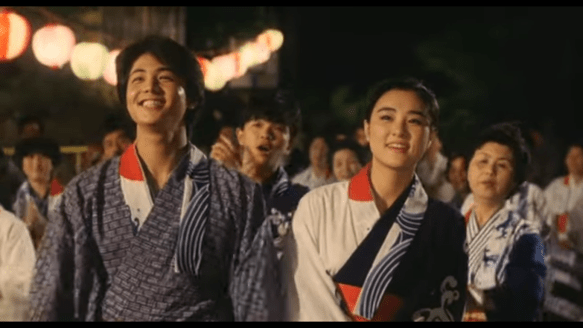
Their relationship blossoms when he visits her hometown out in the country during Obon, and we witness how the summer holiday is rooted in both a veneration and a celebration of dead loved ones. Koh’s captivated watching Miiyo dance during the festival proceedings. It’s something about her spirit he finds so attractive.

It also signals the film’s dangerous edges. Because if I wanted to distill His Motorbike, Her Island, down to its essence, we would need to talk about the intoxicating and reckless abandon of youth. It’s mesmerizing when it’s projected up on the screen in all its glory existing without worldly consequence of any kind.

Miiyo follows Koh and becomes infatuated by his singular passion: a 750cc Kawasaki. But it’s not just a supercharged motorcycle, and it’s not so much about an object made of chrome and an engine. It’s the adrenaline hit and emotional high of riding a motorcycle and riding it fast. It’s almost a dare for life to come at you head-on. For them, living life on on the edge like this is an obvious antidote to the malaise.

It’s both what attracts them to one another and threatens their ultimate undoing. Live fast, die young, has a poetic inevitably to it. I feel like I will need to watch the movie again down the road sometime, but there’s a pervasive sense that this motorbike, this island, this young man and this young woman take on a kind of mythic proportion.

Just like I never caught onto a perceptible rhythm of the monochrome and color, what we witness is not always an objective, tangible world. It exists in the hinterlands of memory, love, passion, and emotions just out of reach. The irony is obvious.

Sometimes, to feel alive, people need to get as close to death as possible. I’m not sure if this star-crossed, high-octane hedonism is still en vogue, but it’s easy to understand how it could seem attractive albeit misguided. There’s a hubris to it.

3.5/5 Stars
The Rocking Horseman (1992)

When I lived in Japan, I was flabbergasted to learn that there was a group that was bigger in Japan during the ’60s than the Beatles. It was The Ventures! This instrumental act kicked off the “Eleki Boom” as their iconic onomatopoeic glissandos (deke-deke-deke) captivated a generation of youth. These teenagers subsequently rushed out to buy their electric guitars and start their own bands during the “Group Sounds” explosion.

Although I didn’t think about it at the time, I’m a sucker for a good musical coming-of-age movie, and this landscape was ripe for such a story. Recently, when I came upon The Rocking Horsemen, I realized a void in the cinematic landscape had been filled thanks to Nobuhiko Obayashi

Fujiwara (Yasufumi Hayashi) feels like the most innocent and congenial of Obayashi’s boy heroes, a Ferris Bueller-type who instantly takes us into his confidence by not only providing voiceover but speaking directly to us.

OB’s films are easily placed in this provincial milieu outside the hustle and bustle of the big city. This gives them a kind of comfortable intimacy, and it’s only a small jump to place them in the past. In this case, Japan during the 1960s. I already mentioned that the movie covers a subgenre I have a private preoccupation with: form-a-band origin stories. That includes That Thing You Do! and Sing Street to The Commitments, Nowhere Boy, and School of Rock. What sets this one apart is the unique context and cultural moment.

Now I’ve been inculcated from an early age that the Beatles had the greatest music, but Fujiwara is coming of age with an ear raised to the admonitions of his elders. Pop music is puerile entertainment, cultural dregs compared to the sophistication of classical music. The Beatles included.

Then, his radio played “Pipeline” and he is changed forever. Any kind of snobbery quickly dissipates. The new sound assaults him as he reclines in his bedroom. There’s no escaping its force, and he converted for good, caught up in the same boom I read about. It was electric liberation.

Since a rock musician can’t look like a Buddhist acolyte, the first course of action was to grow out his hair. It occurs to me that one of the reasons I find these movies compelling is it involves some kind of youthful industry. When you’re young you don’t need to be told the odds. If you want to start a band, and that’s you’re impetus, you can go ahead and do it. No permission is necessary (parents notwithstanding).

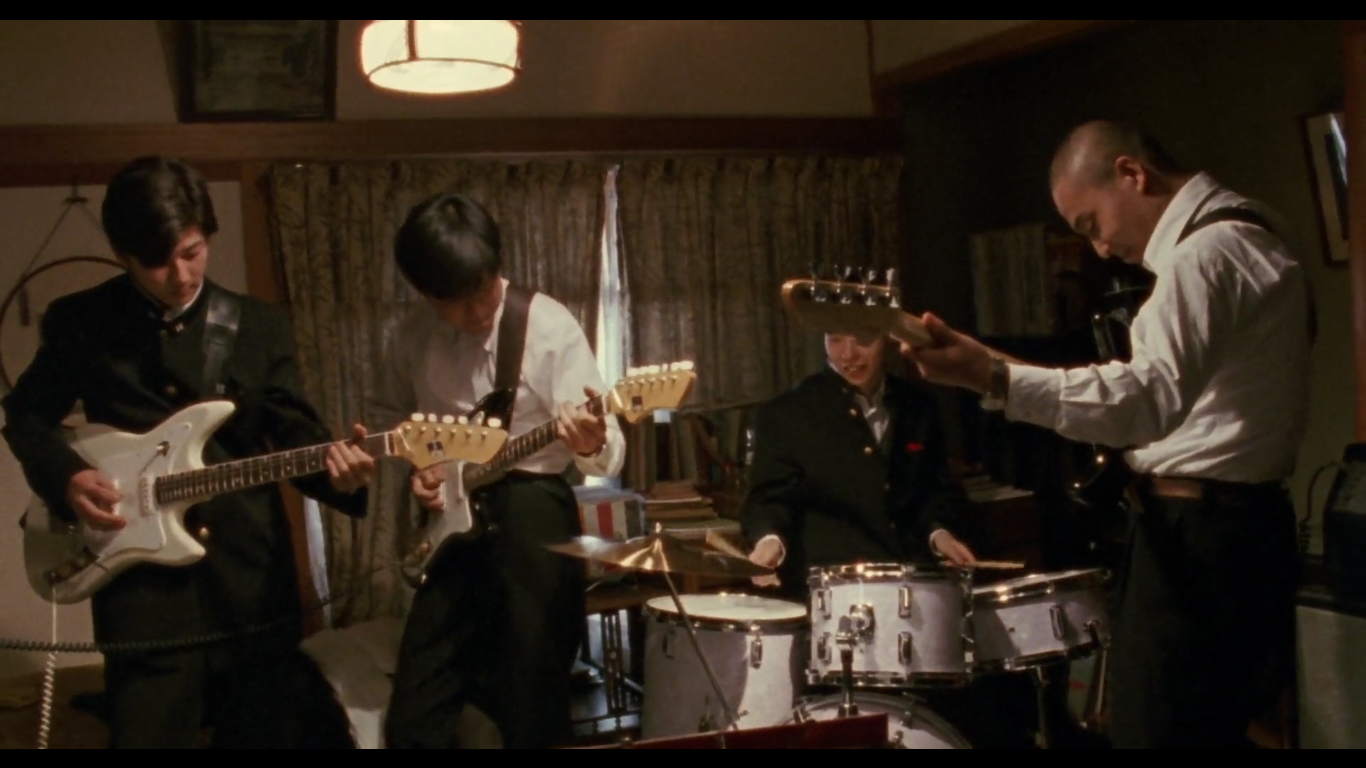
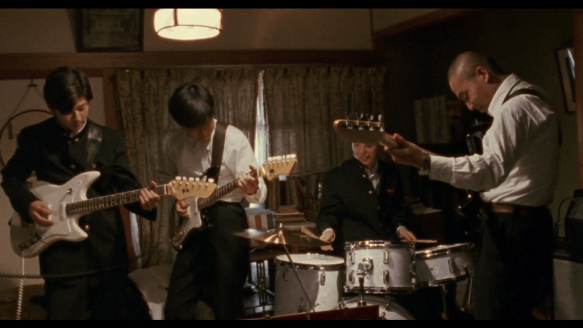
In this way, Fujiwara meets his future bandmates. The first shares his interest in rock and turns his back on the more traditional setlist the school club follows. The rest of the members include a priest’s son, who’s the band’s source of worldly wisdom, and then a gawky dork who gets coerced into playing the drums for them.

If initially they fall together organically enough, they also premeditate how to best go about their business. In the end, they resolve to get summer jobs at a local manufacturing plant to save up to buy their instruments. These scenes are mostly transitory — only an end to the means — but as “Woolly Bully” plays over their assembly line, there’s a sense of optimism. They’re getting closer to their goal.

Ittoku Kishibe shows up again after Lonely Heart as a good-natured teacher who supplies American lyrics and ultimately offers to become their club advisor. It’s a small addition, but his tacit affirmation of their endeavors speaks volumes.

I’m fascinated by how pop culture can infiltrate and suffuse through the cracks of a society, especially in an international context. I met Japanese folks with very specified knowledge about Korn or Olivia Newton-John, Sam Cooke, Jazz or Punk music. Or think of the two teens in Mystery Train who go on a pilgrimage to Memphis in search of The King. Where does this come from?

While I wouldn’t call the general Japanese populous particularly aware of world culture, you do find these hyperspecialized niches of expertise. These boys glean their inspirations thanks to radio and import records, even older siblings who pass down a love of Nat King Cole.

A perfect example is Jan and Dean’s “Little Old Lady from Pasadena” played as our hero rides his bike through his neighborhood. It’s a totally different context from the California surf culture I was born and bred in. But it still reaches them on the other side of the world. The same might be said of The Animals, “Don’t Let Me Be Misunderstood.”

It doesn’t feel like a mistake that the first time the new band convenes and brandishes their new name — The Rocking Horsemen — they start playing, and it’s a flawless rendition of “Pipeline” (exactly like the Ventures recording). They make their debut at a show during Christmas with mixed results, but they disregard the critics and play their hearts out. What’s more, they gel and become galvanized as a group. How can you not under the circumstances?

But as school comes to a close, their journey together winds down too. Their first and last big show comes at the annual school cultural festival and with a set list including “I Feel Fine” and “Johnny B. Goode,” they can’t miss. We’ve seen this moment before in many a movie so it’s a kind of expected wish-fulfillment watching them go out.

When you’re an adolescent these are the kind of memories that stay with you. And in a final act of solidarity, Fujiwara now listless and despondent over the future, has his newfound brotherhood to come around him. They christen him their “Bandleader for Life.” So even as their journey as a band might have met its logical conclusion more than an impasse (not many make it like The Beatles), The Rocking Horsemen do have some amount of closure. The music and those relationships will never leave them.

4/5 Stars
Lonely Heart (1985)

Lonely Heart is a film bathed in the golden hues of nostalgia (“natsukashii” in Japanese). It also boasts a rural landscape with a topography that’s the utter antithesis of Tokyo’s urban skyline. This in itself already evokes a certain quaintness, regardless of the story being told almost 40 years ago.

Hiroki (Toshinori Omi) envisions his world through the shutter of his camera — though he rarely has actual film to use — and so he imagines what he might capture. After school, he can be found scampering through the village streets in his school uniform with his two best friends doing backflips and cracking all manner of jokes. They have a youthful ingenuity that’s clever when it’s not getting them in trouble.

For instance, their use of Bunsen burners, forceps, and various pieces of lab equipment to cook up a delectable meal is inspired. Then, Hiroki’s friends razz him about following his father’s footsteps to be a Buddhist monk — he must give up meat lest he goes to hell for cutting corners on the road to enlightenment — and they’ll gladly eat his portion.

The next moment, they’re ushered off to the principal’s office to clean as a minor punishment. Instead, they teach vulgarities to the principal’s prized parrot and their mothers have the ignominy of coming into school to atone for their indiscretions. Hiroki’s mother is your typical portrait of a Japanese parent, at the very least because she’s always on her son to study more and pick up his grades. Their underlining failure to communicate is a universal adolescent struggle.

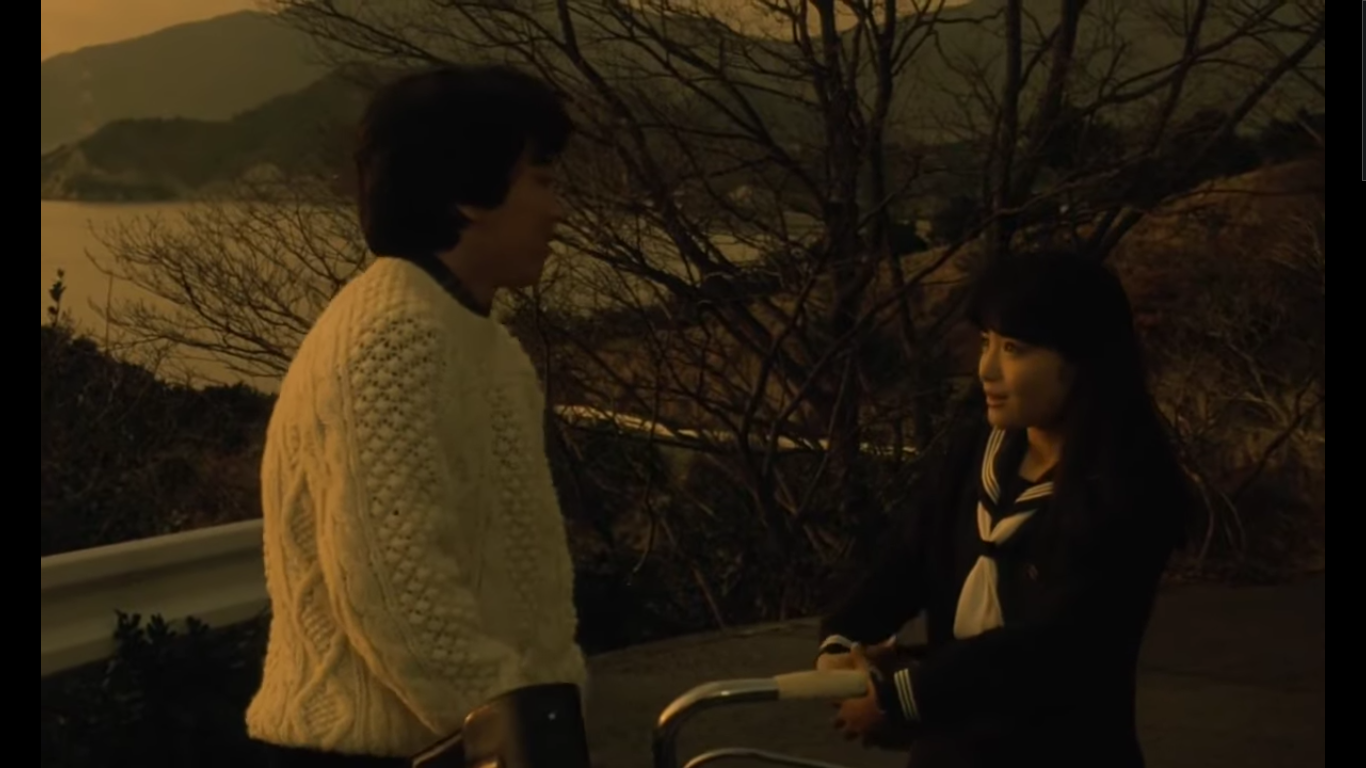
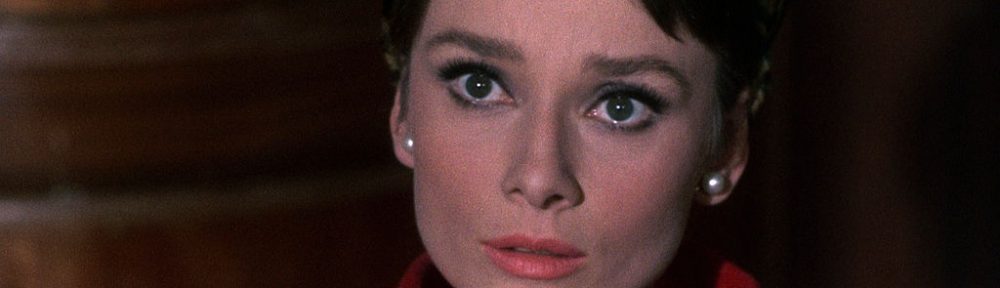
But his life stage is also about love, something that still feels naïve and untarnished by regrets and ample experience. He often looks through his camera viewfinder at the mystery girl, “Lonely Heart,” as she plays the piano, rides her bike, and takes the ferry home. If this was all it was, Lonely Heart might be a fairly rudimentary exploration of youth — another boyish awakening where the girl is cast as an object rather than a human being with a unique inner life.

Some of this happens in the movie with the ethereal Yasuko Tomita, but there’s also a parallel tale leaning into these themes in a more profound way. In fact, it takes them a step further. Hiroki receives a visitation from an impish ghost of a girl who materializes on numerous occasions even going so far as berating his mother and toying with her.

This seems like a curious development, but then Japanese culture has a greater tolerance for ghosts. If you’ve seen some of Miyazaki’s movies (arguably Japan’s most beloved cinematic export), you already know there’s a kind of acceptance of these things. They aren’t so much supernatural and if she’s labeled as “weird,” she’s also more or less accepted as fact.  Just as magical realism and surrealism can often permeate Japanese cinema.

This is easier to accept as I often have trouble with Japanese humor because it feels broad (whatever that means). The film is full of juvenile shenanigans and adult caricatures who overwhelm the screen from time to time blindsiding us with absurdity.

However, in juxtaposition, there are these instances of sensitivity playing out in Lonely Heart’s more pensive parts, personifying what Hiroki grapples with all throughout the film. It’s this long-lost love — the deep longing within all of us — resigning us to be these lonely creatures.

In Japanese culture, there’s also something innately beautiful about this sacrificial melancholy for the sake of some greater good or greater call. If I didn’t get my cultural signals crossed, it ties into the essence of “mono no aware” — an impermanence or transience of things. I’m not sure if Japanese culture would speak about love with these same terms, but please allow me to, even if only momentarily.

I’ve gotten to a juncture in my film-viewing life where, if I haven’t quite matured, I’m willing to take things on their own terms. Lonely Heart does not function within our western logic. If you asked me to explain everything away I’d be hard-pressed to say all the whys and wherefores. And yet something about this movie, mixed in with all its various forms and flights of fancies, left me with an indelible sense or feeling that will remain with me.

Somehow it reminded me of the more recent gem Petite Mamman. It has to do with honing in on a magical and poignant connection between parents and children. It developed differently than what I was expecting — the fantasy has a unique kind of functionality — and so by the time the movie’s over it has done work on us.

It’s offered up a quiet epiphany that we might tuck away for later enjoyment. Hopefully, if you get the chance to watch the film you’ll understand exactly what I mean. However, I wouldn’t dream of divulging that here.

3.5/5 Stars

La Piscine (1969): Alain Delon & Romy Schneider

On a superficial even subliminal level, La Piscine (The Swimming Pool in English) shares some nominal similarities with The Swimmer and The Graduate. Certainly, drawing the connections isn’t too difficult.

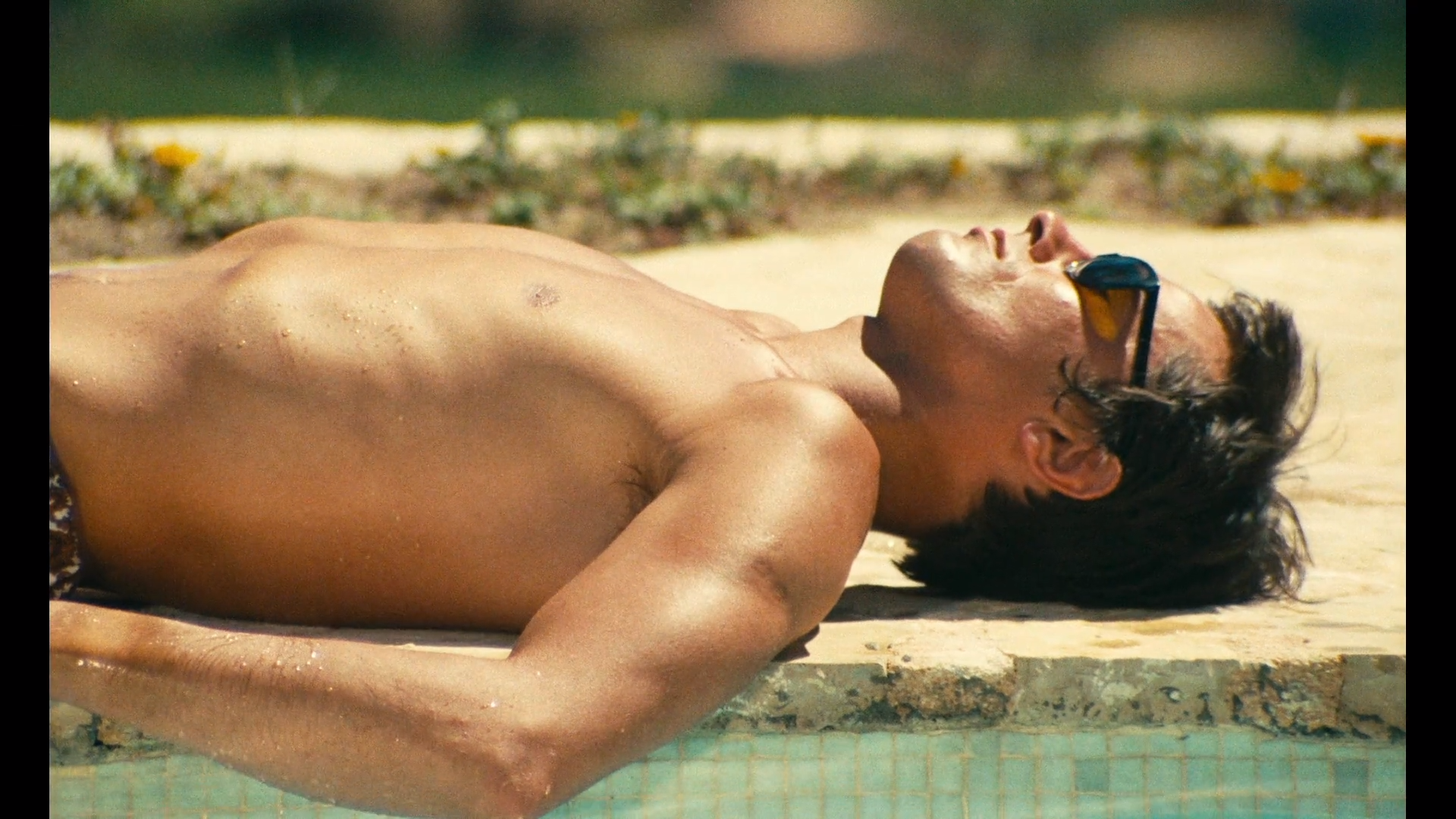
It’s a mood and a feeling as much as it is subject matter. We open on a rural villa in the French countryside with a veranda and a swimming pool. Perfect for lounging. There we find France’s great Adonis-turned-action hero Alain Delon.

He already gave his audience a taste in glimmering fare like Purple Noon, but he’s the personification of disaffected cool, and it’s little different in Jacques Deray’s film.

What’s developed in the first idle moments of the movie is this splendorous sun-soaked aesthetic. It’s akin to Benjamin Braddock floating in his parent’s pool or Burt Lancaster in his short cutoffs journeying from pool to pool in East Coast WASP country.

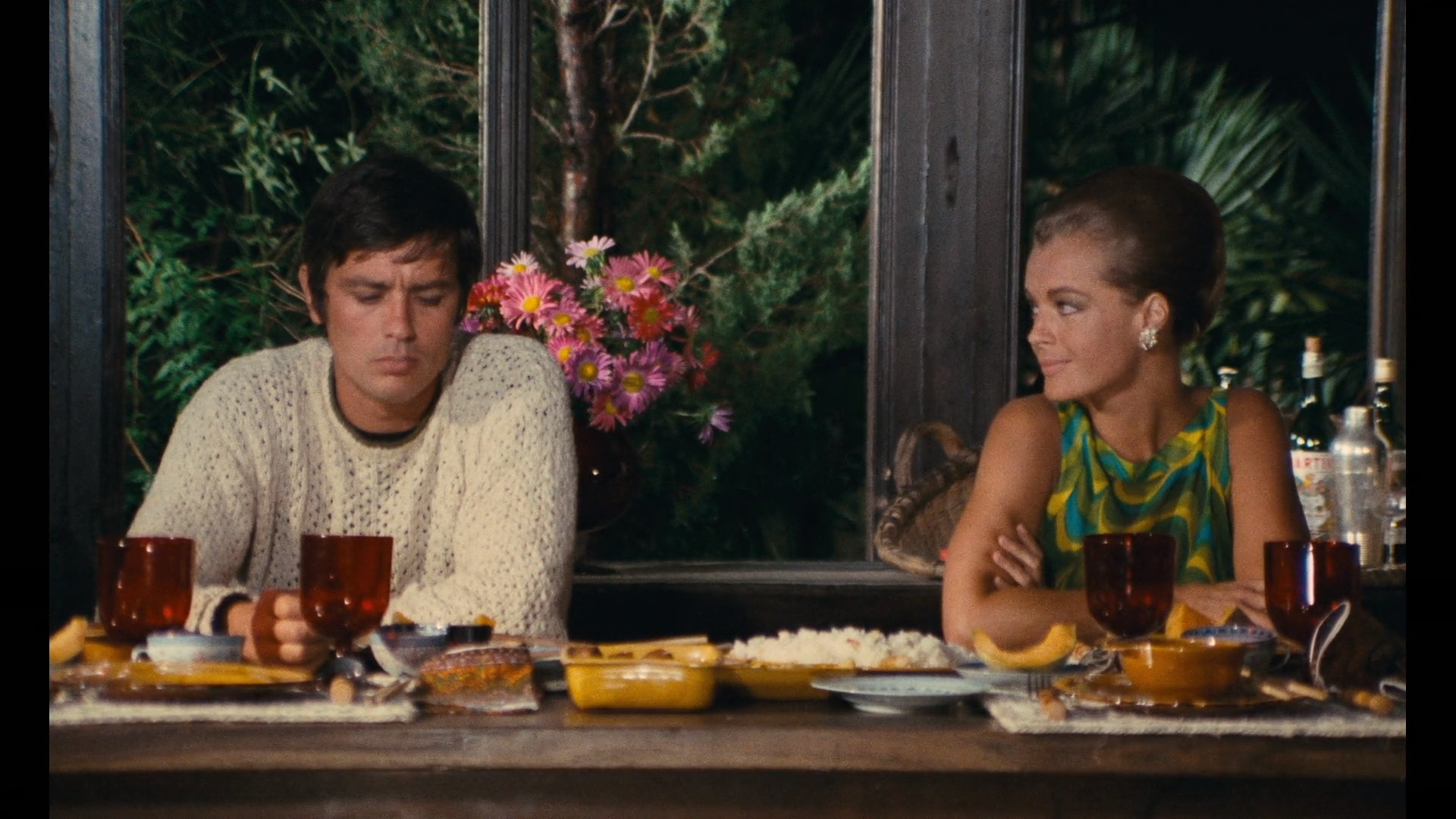
Jean-Paul (Delon) is at the tranquil getaway with his current lover Marianne (Romy Schneider), and it’s apparent they are in the frisky honeymoon stage full of delirium and amour. Viewed from the outside, the two stars feel like a European “It” couple though they hadn’t been officially together since the beginning of the decade.

Their auras are too big not to still associate their scintillating stardom. The movie relies on it heavily, and it’s quite effective. Because they are effective as the definition of intercontinental movie stars. You’d be hard-pressed to find two more photogenic people than Delon and Schneider.

Within the film, there’s no sense of how they came to own this property, but it’s a non-factor in the story. We come to accept their idleness, the fact that their housekeeper brings them breakfast on trays, and they have the complete freedom of the place be it sleeping in, languishing in the noonday sun, and really doing whatever they please. It’s a state of mind for the movie.

In such a space it becomes a question of what can happen and what will upend and break through the reverie. Our first signs of life come in the form of an old friend named Harry (Maurice Ronet) who makes an auspicious entrance.

He’s a bit of a ne’er-do-well, likable, but roguish, and difficult to pin down. He hardly seems the domestic type, and there’s a sense that he’s always on the run, chasing after the next adventure and fling.  Maintaining his personal freedom at whatever the cost. What’s the most surprising is he’s brought his aloof teenage daughter Penelope (Jane Birkin) along.

As someone always trying to hang onto the capriciousness of youth, he’s not the kind of person you expect to have a child; there’s some mention of her mother being a British girl he had relations with, but he’s not so much a parental influence as he is a companion. Mostly he just seems proud that she’s beautiful, and it’s fun to brag to his friends about her.

Critical to the film, he also had a past relationship with Marianne. How could he not, but then again, that was many years ago, and she’s now in love with Jean-Paul. It doesn’t take radar to recognize what might conceivably happen since it’s the ’60s and beautiful people are involved. It’s no coincidence Bob & Carol & Ted & Alice came out the same year.

True to form, Harry is the life of the party, and he always races off in his Maserati and comes back whenever he pleases; one night he comes with a gang of young bohemians in tow. He terms them his “bosom buddies,” and they dance the night away.

It becomes a point of friction watching who everyone spends most of the night with.  We see potential trouble from a mile away as they link up and an inkling of jealousy begins to seethe under the surface.

What a strange little family they make. One evening they sit down for a dinner of Chinese food of all things. Marianne and Harry went to town together — a perfectly romantic getaway — and Jean-Paul took Pen away to the sea.

Whether or not it’s an act of retaliation or not, it’s easy to perceive it as such. They sit around working their chopsticks, fidgeting, and trading glances. If the movie is about something it would be this. The elephant in the room as it were.

However, there is a lack of an interior when you break the film open and that’s part of what puts it below its contemporaries, at least in my estimation. There are gorgeous exteriors with gorgeous people, fabulous sartorial style, and not much else.

It’s a testament to the performers and their innate charisma because they make it compelling. But it lacks the kind of commentary or wit of The Graduate or even the fabular qualities of The Swimmer.

The final act of La Piscine takes it into the territory of a true thriller. For the first time, something happens that might have its place in a Henri-Georges Clouzot picture or even Jean-Pierre Melville. Until this dramatic inflection point, it’s a work of latent psychology and desire. I’m not sure if the shift is warranted or not.

However, there is something else worth noting. As of 2024, Alain Delon was still with us, but all his primary scene partners are all gone. Birkin died most recently in 2023, and both his friends, Romy Schneider and Maurice Ronet, were lost to us too soon.

This realization adds a different kind of knowing austerity to the proceedings, though it’s hardly required. Even without this insider information, we leave the film mostly empty, and it’s difficult to know whether this is a statement or merely a formalistic reality.

3.5/5 Stars

Note: This review was written before Alain Delon’s passing on August 18, 2024. 

George Sanders: The Picture of Dorian Gray, The Ghost and Mrs. Muir, Ivanhoe

We’ve been doing a rather casual retrospective on the films of George Sanders and as part of the series, we thought it would be fitting to highlight three more of his performances. They run the gamut of literary adaptations, fantasy romances, and medieval yarns. Sanders remains his incorrigible self through them all, and we wouldn’t have him any other way.

Picture of Dorian Gray (1945)

“Lead us not into temptation, forgive us our sins, wash away our iniquities”

Whether you say he cornered the market or simply got pigeonholed, George Sanders could always be called upon to play snooty Brits bubbling with wry wit and aristocracy. His Lord Henry Wotton is certainly wanton — an incorrigible influence on many a man — and his latest acquaintance becomes Dorian Gray.

Hurd Hatfield is the picture of handsome youthfulness, dark and aloof, though his piano playing leaves much to be desired.  His reputation must precede him and perhaps an actor with greater gravitas could have done more with the part. Hatfield feels generally inert and uninteresting. Over time, it’s hard to confuse his distance with inscrutable mystery.

The primary object of his desire begins with Angela Lansbury, an entrancing tavern singer with an equally gorgeous voice to go with it. Lansbury and then Donna Reed (his second flame) both deserved better, at least in their romantic lead if not the roles they were given.

It’s a quite loquacious film thanks in part to Sanders, who always has a cynical word for every situation and thus lays the groundwork for Dorian’s total immersion into hedonism.

The movie must work in mood and tone because there isn’t much in the realm of intemperate drama, and for some reason I found myself crying out for something more substantive than elliptical filmmaking. Whether it was merely to assuage the production codes or not, so much takes place outside the frame, which can be done artfully, and yet the distance doesn’t always help here.

The impartial narrator discloses Gray’s internal psychology to the audience as he’s perplexed by his evolving portrait — the lips now more prominently cruel than before. The ideas are intriguing in novel form in the hands of Oscar Wilde. Here it’s all rather tepid and not overtly cinematic watching a man traipse around his home tormented by his own inner demons.

It’s easy to contrast them, for their exploration of warring psyches and the duality of man’s morality, but this is not Jekyll and Hyde. However, on a fundamental level, I must consider my own criticisms because this is a story about pride, narcissism, and the selfish roots of evil in the human heart. They can be unnerving as we consider the portrait that might be staring back at us.

I find it a drolling, monotone movie other than the inserted shots of color that shock us into some knee-jerk reaction. It’s made obvious there’s a moral leprosy eating away at Dorian and the ending showcases much the same, doing just enough to hammer home the core themes of the story in a rousing fashion. Though your sins be as scarlet, I will wash them white as snow. It’s possible for the portrait to be remedied, though not without consequence.

3.5/5 Stars

The Ghost and Mrs. Muir (1947)

“Haunted. How perfectly fascinating!”

If you don’t love Gene Tierney before The Ghost and Mrs. Muir, surely you must adore her afterward. She’s totally her own person; strong but not unpleasant thanks to her ever-congenial manner. She has immaculate poise and knows precisely what she wants.

Even in her mourner’s outfit in honor of her late husband, she has a regality drawn about her, vowing to leave his family and take her daughter (Natalie Wood) and their housekeeper Martha (Edna Best) to carve out a life of their own.

The film has a score from Bernard Herrmann post-Citizen Kane and pre-Vertigo that’s warm, majestic, jaunty, and frantic all at the precise moment to counterpoint Joseph L. Mankiewicz’s rather peculiar take on a romance film.

I realized an appeal for the picture I had never considered before. I find old haunted house movies, aside from those played for comedic effect, mostly overwrought and uninteresting. And yet even this early on in the lineage, The Ghost and Mrs. Muir effectively subverts the expected conventions.

Instead of merely being frightened off by the specters in an old seaside haunt of a deceased sea captain (Rex Harrison), it becomes her pet project. She’s intent on making it her home because she’s an obstinate woman — a descriptor she takes as the highest of compliments.

It’s pleasant how their immediate distaste and ill-will soften into something vaguely like friendship (and affection). They take on a literary voyage of their own as she helps transcribe his memoirs and vows to get them published for him.

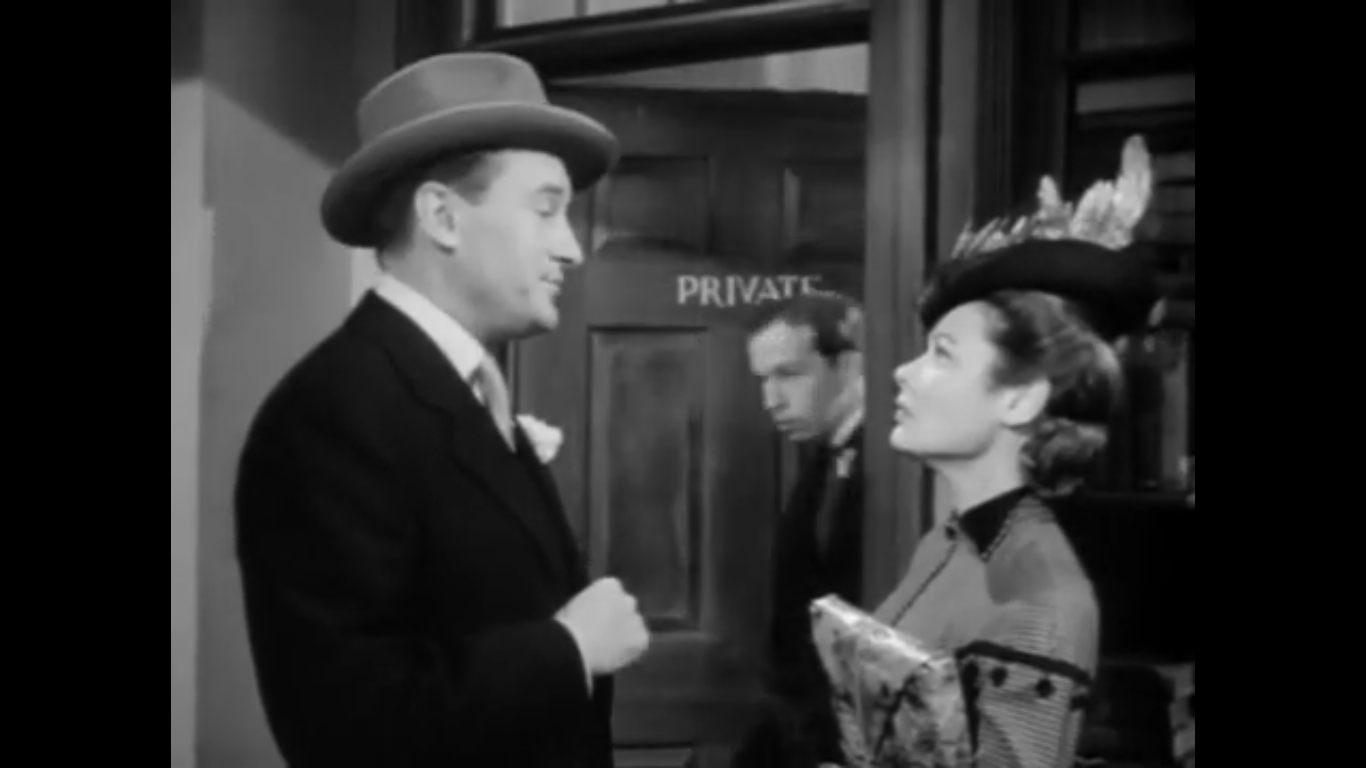
George Sanders — always the opportunistic ladies’ man — shows up with his brand of leering, if generally good-natured impudence. In this case, he’s living a double life under the beloved pen name of Children’s book author Uncle Neddy. If his introduction seems sudden, its purposes quickly become evident. He is a real man of flesh and blood. It only seems right that Mrs. Muir makes a life for herself with him…

It’s curious how both men evaporate around the same time: one out of sacrifice, seeing her happy in reality, and not wanting to complicate her life more. The other’s gone because, well, he’s a cad. For those fond of Rex Harrison, it’s rather a shame he is absent from much of the picture, but this is by design because it is his very absence — this perceptible passage of time developed within the movie — that allows for such a meaningful conclusion.

It’s what the entire film builds to and between the rapturous scoring of Hermann and the simple but efficient special effects, it allows them to walk out together arm in arm as they were always meant to be. If they are apparitions, then at the very least they are together again no longer separated by chemistry, mortality, or anything else. These themes have been melded together innumerable times before but rarely have they coalesced so agreeably.

4/5 Stars

Ivanhoe (1952)

As a child, Sir Walter Scott’s Ivanhoe always lived in the shadow of Robin Hood. The same might be said of this movie and The Merry Adventures of Robin Hood from years prior. By now Ivanhoe is both a feared and beloved mountebank and although late-period Robert Taylor is a bit old for the part and removed from his matinee idol days, it’s easy enough to dismiss.

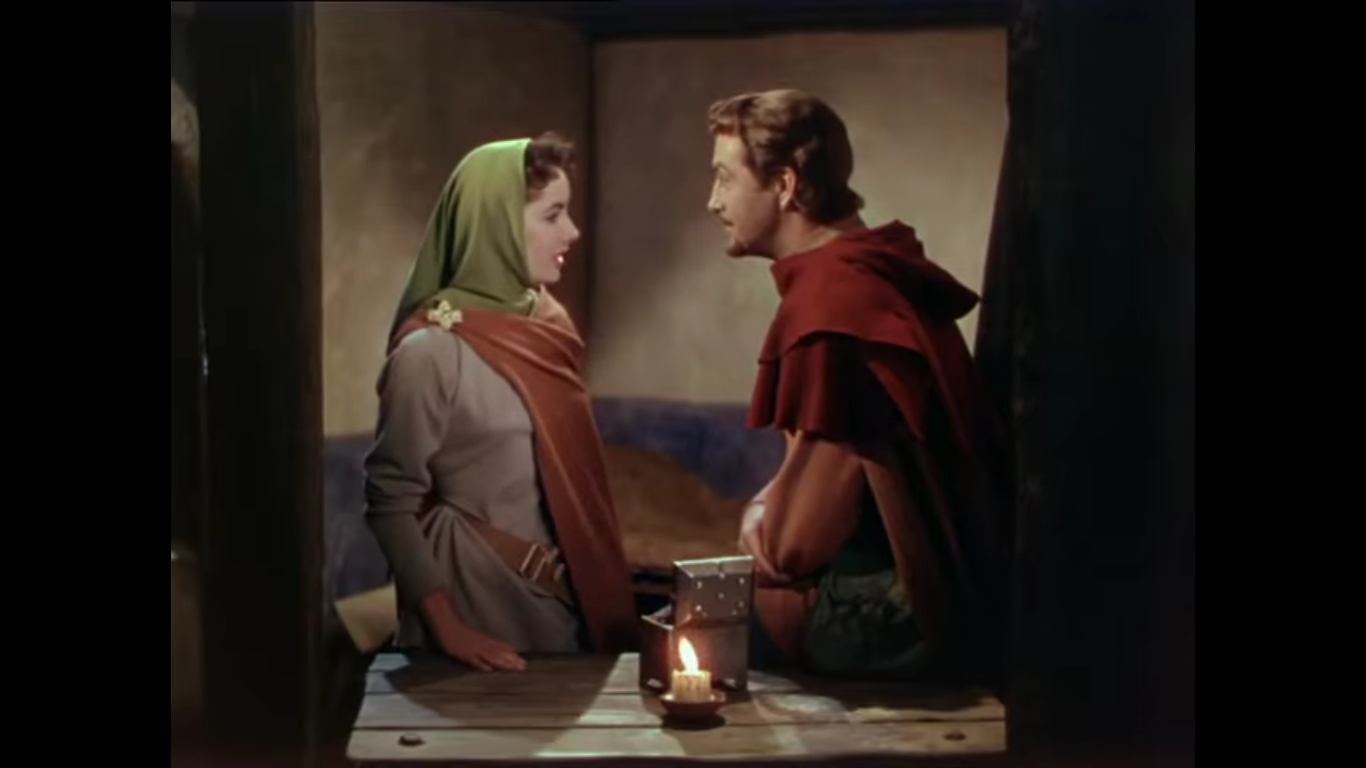
Taylor and Errol Flynn were both heartthrobs around the same time. Now a generation later he looks a little weathered and threadbare for his tunic though he proves stout-hearted enough. Joan Fontaine also effectively replaces her own sister as the guiltless romantic interest.

However, there are some other intriguing elements I would have not expected of the film. It becomes a fairly robust dialogue on anti-Semitism and the relationship between the Jews and the Gentiles. We always think of British history or this particular period as a war merely between the Saxons and the Normans. Here we are met with a bit more complication.

Ivanhoe must play the rebel in the absence of his beloved King Richard, but he is also called upon to be a friend to the downtrodden even those of a different religious faith. In the moments where he’s called upon, he’s an unadulterated hero, and it’s all good fun watching him bowl over his rival knights like a row of five bowling pins. However, this is pretty much expected. It gets far better when he’s faced with mortal wounds in the wake of a duel (with George Sanders of all people).

Both Elizabeth Taylor and Joan Fontaine stand by ready to dote over him. The ambush by the Normans sets up a rousing finale every lad dreams about. Because my old friend Robin of Locksley comes to their aid prepared to lay siege to the enemy’s castle. Meanwhile, Ivanhoe leads a rebellion on the inside, freeing his friends and stoking a fire to smoke them out into the open.

Watching the choreographed craziness full of arrows and swords, shields, and utter chaos, I couldn’t help relishing the moment because we feel the magnitude of it all being done up for our own amusement. And it is a blast. Regardless, of the romantic outcomes, it’s a fairly satiating treat; I do miss the age of Medieval potboilers.

3.5/5 Stars

Swamp Water (1941): Jean Renoir in Okefenokee

A place with a name like Okefenokee feels immanently American and this is an inherently American story though expatriate Jean Renoir feels sympathetic to these types of folks. He wasn’t a working-class filmmaker but in movies from his home country like Toni or La Bete Humaine, you see his concern for people in this station of life. They work in the fields, on the trains, making a good honest living, and sometimes their existence gets disrupted.

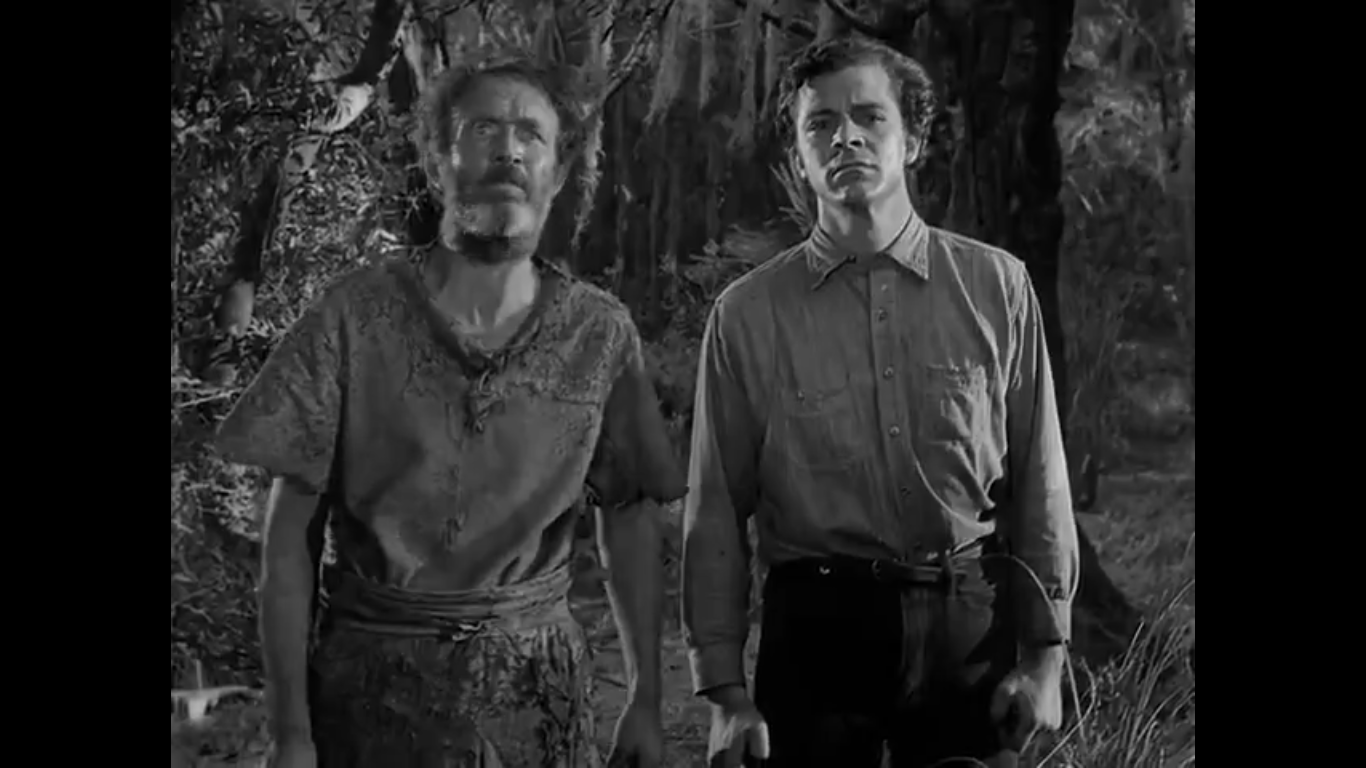
Granted, it’s early in his career trajectory, but it flabbergasted me that Dana Andrews is billed fourth. His Ben Ragan is our most obvious protagonist as an obdurate young man aiming to get his lost bloodhound back from the nearby quagmire of Okefenokee swamp, a cesspool of gators and crosses mounted with skulls. Worse still, it’s said to be the hiding place of wanted mankiller: Tom Keefer (Walter Brennan).

Ben’s father is an ornery old cuss named Thursday (Walter Huston), who remarried a younger woman. She’s a sign that he can be an affectionate man; he just has a difficult time showing it to his son.

Given these origins in a real place, I’m thoroughly intrigued by the world especially because it wasn’t completely fabricated on a studio backlot but was shot on location. This level of mimesis blends actors we know from all the Classic Hollywood projects with something that lends itself to greater authenticity. It’s not stark realism, but it adds a layer of tangible reality to the picture aside from some unfortunate back projections.

When Ben goes in search of “Old Trouble,” he sounds his horn like the Israelites marching around Jericho. Instead, he finds Walter Brennan who comes off like a fugitive mountain man with almost shamanistic qualities. Nothing can bring him down; not even a cottonmouth. But he also carries the film’s core dilemma with his fate. The town wants to string him up for killing a man; he pleads his own innocence, and Ben must for the time being keep his secret.

Swamp Water doesn’t get much press and The Southerner is usually touted as Renoir’s best American offering, but the link between the two pictures seems increasingly evident. The film has some of the same pleasant surprises. Some people are a whole lot better than you think they are and some are a whole lot worse.

The mercantile where Ben sells his furs is full of a gang of actors you relish seeing in these old Hollywood productions. Their prevalence is only surpassed by their instant recognizable character types. I’m talking about the Ward Bonds, Eugene Palletes, and Guinn ‘Big Boy’ Williams.

Whether John Ford got it from Renoir or Renoir got it from Ford, they both seem to have this enchanting preoccupation with dance even if it’s merely on a subconscious level. With The Grapes of Wrath and Swamp Water or The Southerner and Wagon Master we see firsthand how these communal events engender personal connections between the masses.

Except in a small outpost like this, they also bring all the local feuds and all sources of gossip to the surface. Ben’s flirtatious beau (Virginia Gilmore), comes off a bit like a blonde Jane Greer, albeit with a lightweight spitefulness. In contrast, Anne Baxter owns a curious role as a near-mute social pariah thanks to the notoriety of her fugitive father.

Rebuffed by his own girl, Ben vows to bring the ostracized (Baxter), now gussied up and quite presentable, to the gathering. It’s a bustling dance floor of dosey-does which is just as easily replaced by fisticuffs. It doesn’t help that Mr. Ragan is intent on searching out the man who accosted his wife, and he’s not squeamish about making a scene.

But beyond this, the Ford and Renoir connection can be seen in the stable of actors shared between Ford’s usual company and this 20th Century Production. It’s easy to say most of this falls to coincidence. This might be true, but in men like Walter Brennan, Ward Bond, and John Carradine, there’s something intangible we might attribute to the characters at the forefront of both these directors’ works.

When I look at these faces, they do not look the part of movie stars, but they are iconic faces like Jean Gabin or even John Wayne. They can carry the weight of drama, and yet when you look at them, it seems like they’ve already been through drama enough in life. And so when we watch them, we appreciate their struggles and every wrinkle and whisker on their face. Because it’s these things that put them on our level as an audience. They are our fellow human beings.

If the legend holds, I can’t understand how Daryl Zanuck wouldn’t let John Ford remake Le Grand Illusion for fear he would ruin it, and then Zanuck turned right around and meddled in Renoir’s picture. It’s something I would like to learn more about, although it’s possible only the unspoken annals of history can tell us now.

What we have as a mud-caked monument is Swamp Water: A vastly interesting curio imbued with the fractured imprint of Jean Renoir. It proves you don’t have to be born in America to tell a profoundly American story. I’m not surprised Renoir was a naturalized citizen by 1946. If his cinema is any indication, we would gladly consider him one of our brethren because movies know no bounds.

4/5 Stars

The Thing Called Love (1993): River Phoenix and Samantha Mathis

Seeing the Twin Towers on celluloid always brings a bit of a wistful reaction because there presence represents so much. It feels like a line in the sand and there are those who know that far better than me. The last time I recall having this sense was watching Peter Bogdanovich’s They All Laughed, and it’s little surprise The Thing Called Love begins with a very similar visual shorthand.

It says so much in a matter of moments as we watch Miranda Presley (Samantha Mathis) wearing her Yankees baseball cap, ride the greyhound bus with her guitar case by her side. Bogdanovich returns to another salient element of They All Laughed because The Thing Called Love is also a film enmeshed in the country music scene. New York might feel like an unusual mecca, but Nashville is not. That’s where Presley (no relation to Elvis) is heading. She’s got grand aspirations like so many wide-eyed dreamers.

Our hearts drop a little bit when the bus pulls into the parking lot of the Bluebird Cafe. It’s given the start to many fledgling talents and yet the line of eager musicians ready to audition quashes any optimistic expectations. Miranda’s no doubt destined for an arduous journey ahead.

Mathis and her real-life boyfriend at the time, River Phoenix have a meet-cute born out of circumstance. He jumps out of his truck late for the weekly auditions and pulls her into his lie so they can squeeze into the lineup. She doesn’t take kindly to his tactics and let’s him know.

It would be so easy to dismiss or even roll your eyes at these obligatory moments in the script. They feel to clean and conventional, but somehow the metanarrative and the candor of the young performers make it feel worthwhile.

Miranda gets her first rejection only to fall in with a community of her peers. She meets her momentary acquaintance James Wright (Phoenix) when he does a rendition of his tune “Lone Star State of Mind.” The track was actually written by Phoenix himself, an enthusiastic musician in his own right.

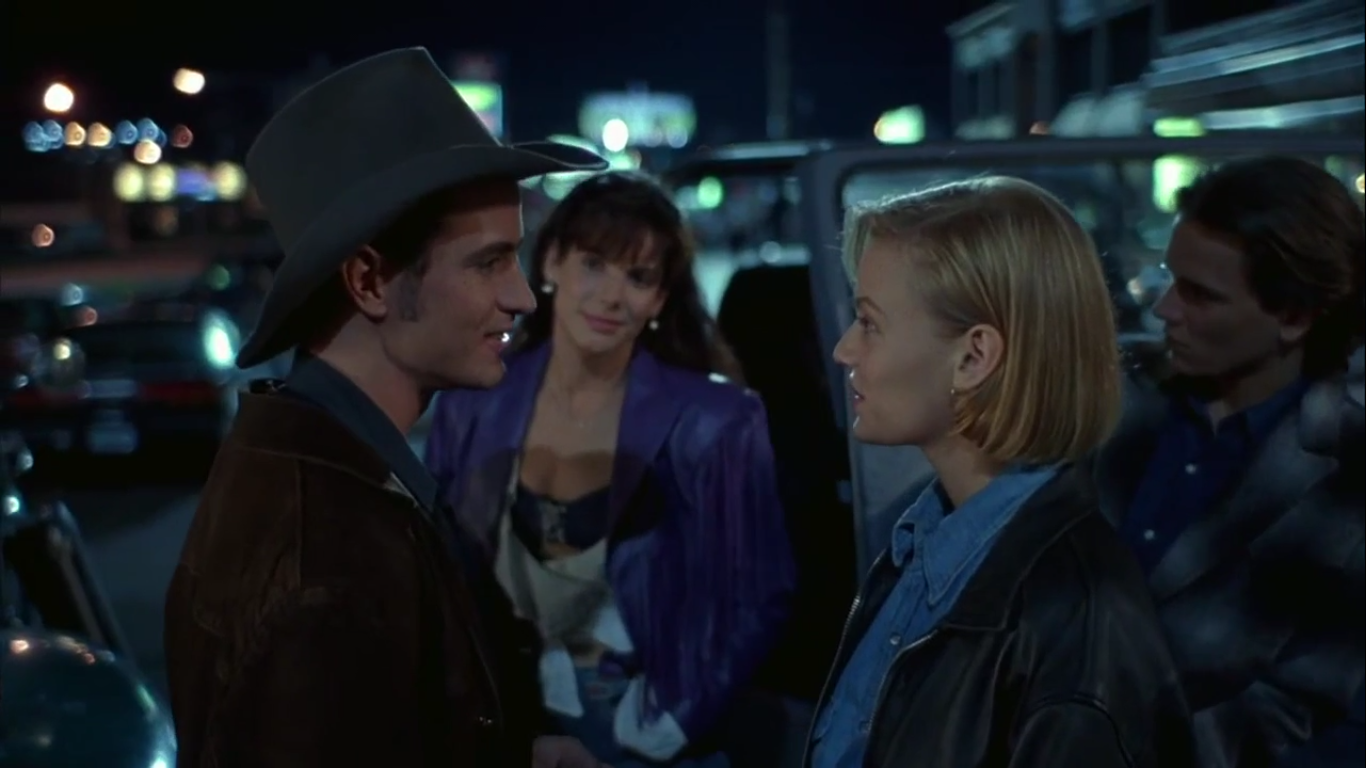
Their relationship is one mostly born of looks and mysterious glances that suggest so much in a way that is tantalizing and hardly anchored. Meanwhile, the Stetson-wearing Kyle (Dermot Mulraney) takes an immediate shine for Miranda, and it reveals itself through candid conversation and encouragement. Perhaps she knows as much as anyone else that he likes her. When you’re feelings are so genuine it’s hard to keep them concealed.

The movie feels need to make it into a love triangle as Miranda resigns to dance with Kyle and settle in a sense. But James is the mercurial artist with a caddish, manipulating charisma. He’s good with the lines to feed her even as he’s good with lyrics to sing in front of an audience and record deals he’s trying to finagle his way into.

There’s no continuity to him, and yet it’s hard to judge his intentions because even with mixed signals, he does seem to be drawn to Miranda. In one scene in the studio, he mostly ignores her and then in the heat of his performance, he pulls her onstage for an impromptu duet in front of the audience. He even takes her to a drive-in screening of The Man Who Shot Liberty Valance, and they write a song together. I suppose the rivalry between John Wayne and James Stewart for the affections of Vera Miles is a Hollywoodized version of our story.

Their trajectory is exemplified by wanderlust and spontaneity. James pulls Miranda away from her new gig waiting tables at the Bluebird so they can make the pilgrimage to pay tribute to the King. They must hold the title for one of the most unconventional wedding ceremonies as they get hitched in a Memphis supermarket, dancing the night away as the rain comes pouring down outside. It’s life without consequence.

However, cohabitation as a married couple is fraught with conflict. They weren’t meant to live this way with their personal dreams pulling them apart, and their marital expectations far from unified. James’s capricious tendencies reassert themselves, and Miranda feels defeated.

In the wake of an argument, she seems all but prepared to leave her dreams behind. She quits her job and hops on a bus back home only to turn right back around with one last mission to accomplish. She holds up in a cafe to pen her latest song, and as anyone who’s tried to conjure the creative muse knows, some ethereal inspiration just comes to her. Out of nothing something is born fully formed.

She plays her song, singing lucid and tender, all colored by her newfound heartache and experience. It’s not for anyone else, only an audience of one, and yet it’s through this creative paradox her songs finally discover an audience.

One of the movie’s most agreeable assets is Sandra Bullock who was still on the way up with Speed and While You Were Sleeping in her near future. She’s not immediately identifiable as a loquacious southern belle — it’s not what we immediately attribute to her persona — but it’s easy enough to like her candor.

And if Linda Lue Linden is a foil for Miranda, then Dermot Mulroney’s portrayal of Kyle fits opposite River Phoenix coming to represent not only a physical juxtaposition but a philosophical one as well. What holds them together is a love of country music even as their friendship is now complicated with the suggested ambiguity of a ménage a trois. Not everything is resolved.

Nashville will always be the ultimate film about the country music industry for how wide-ranging, pointed, and tender a portrait it is in the hands of Robert Altman. I won’t even feign a comparison with The Thing Called Love because it is a movie for a new generation reaching out to realize their dreams. And while it paints in this tangible atmosphere of southern twang and steel guitar, it’s best as a story of close-knit relationship.

I’m not sure if anyone would call me a staunch champion of Peter Bogdanovich’s films. I do like them a lot, and it does feel like a handful of them got a bad rap through faulty marketing and unfortunate circumstances.  If They All Laughed was marred by the Dorothy Stratten tragedy, then, The Thing Called Love carries the specters of River Phoenix’s untimely death.

He was in the company of his siblings, his girlfriend Samantha Mathis, at the club partially owned by Johnny Depp, as they performed some of his songs together. It seems like such an ill-fated conclusion. This isn’t the way life is supposed to end. For fans of River Phoenix, The Thing Called Love stands as a final testament to his talents, and it’s an unmitigated pleasure to see his passions for music and acting blended together. If the movie’s not his best, then it’s still a fine way to remember him.

3.5/5 Stars

Dogfight (1991): River Phoenix and Lilli Taylor

If you’re a bit of a finicky nerd for cultural context like myself, you realize right when we hear Brenton Wood’s “Oogum Boogum Song” wafting down the city street from a car radio, we can carbon-date the scene to around 1967. A marine steps off a bus with a slight limp. He must have been in Nam, but we don’t know what waits in front of him.

Nancy Savoca’s Dogfight gets its name from a particularly uncomfortable ritual where a group of soldiers looks to scrounge up the ugliest girl they can find for an evening to dance and (hopefully) win the crown for finding the hag to rule them all.

The story takes us back to November 1963 on the eve of JFK’s assassination. The Vietnam conflict has yet to escalate and in the youthful age of Camelot, the peace corps, space races, and enduring American exceptionalism, the world still feels very naive indeed.

We are inundated by the rowdy bravado of four youthful marines, led by Eddie Birdlace (River Phoenix), who have a short stopover before heading overseas. The collective group mentality that bonds them fast and fierce also churns up this festering culture of vitriol and misogyny.

It’s probably just as much a part of what will give them a fighting chance to stay alive. Because even their boyish cajoling and catcalls ring with untrained naivete. They have yet to see death in the face, and for now, they feel indestructible.

Birdlace is just one of the boys, bellicose and burning with rage and impudence. Phoenix wears this quality behind his eyes to go with his high-and-tight haircut and the casual profanity permeating every conversation. He’s constantly operating through an economy of fear, payback, and entitlement. That means a snooty waiter gets dressed down with such a pointed outburst that not even Ferris Bueller could have conceived.

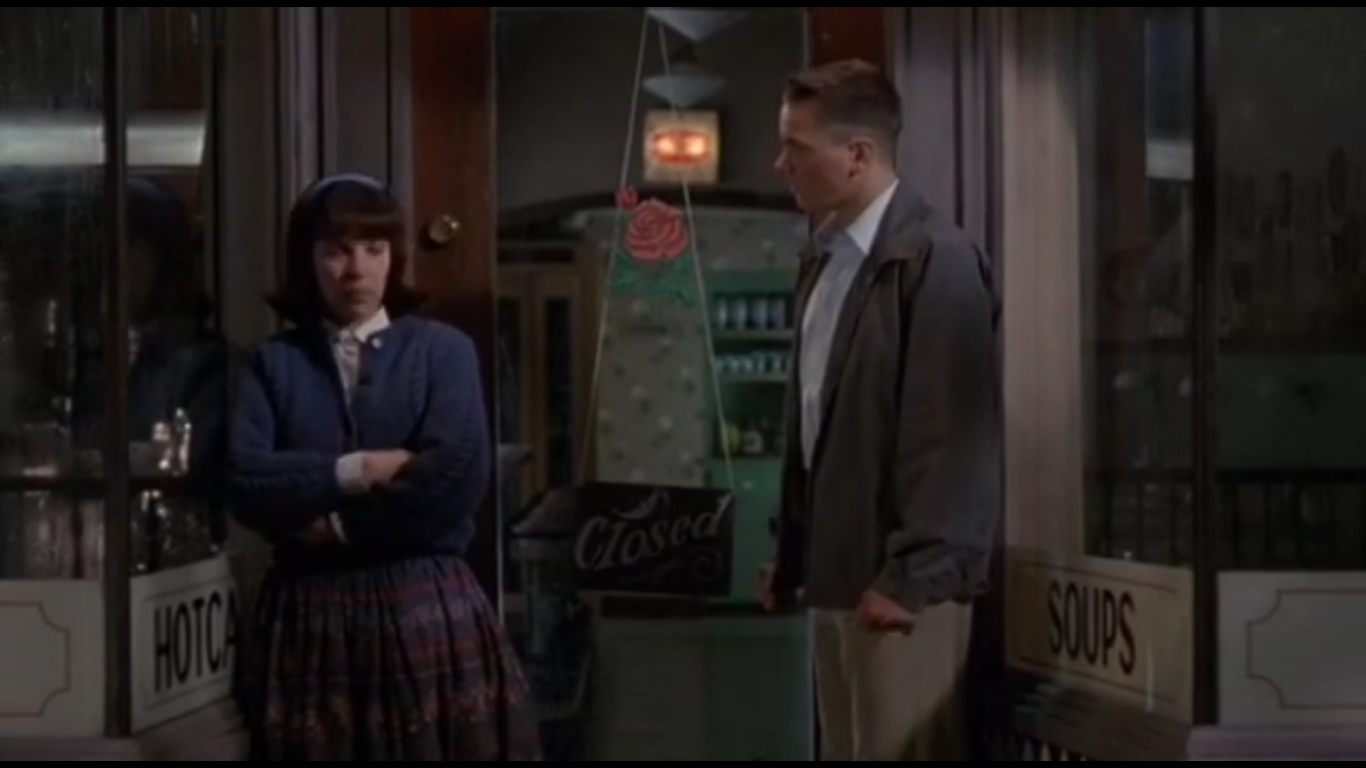
But he also knows how to turn on the charisma in a smarmy sort of way. It sets the stage for their competition as he winds up in a late night coffee shop trying to romance the young woman working the after hour shift.

Lilli Taylor transforms from a moody rocker in Say Anything or even her animated turn in Mystic Pizza, in a change involving more than a poofier hairstyle. Her entire constitution is different. She falls quite easily into her role as a sensitive waitress with dreams of folk singing and maybe meeting a boy to love. We believe that she might just fall for him. He could make her fall for him. But she’s also not a moron. She’s sincere and sees through the insensitive game.

It makes for an uncomfortable evolution as we sympathize with her compromising position and also watch Birdlace grow increasingly conflicted. This girl is a lot more than he assumed (and it’s not just about her looks).

The most compelling comparison I could offer is The Clock starring Judy Garland and Robert Walker. They’re both films about capturing a moment in time with a relationship that has a defined, even finite, beginning and end lending this heightened sense of meaning to every interaction.

Dogfight‘s vulgar and much more a movie for the ’90s even as it’s a film for the Vietnam era so different than the WWII reality Vincente Minnelli developed decades earlier. There’s often something a bit twee about these period efforts partially because we’re accustomed to experiencing the world through the nostalgia of black and white.

Dogfight also provides a more cathartic resolution. I’m not sure if it’s too rushed or what it adds exactly, and yet as an audience member, it gives us some form of wish fulfillment seeing two people reunited in a changed world. It makes the ambiguity of the prologue a bit clearer. There’s a purpose to the time jumps.

It can be summed up in an image: Birdlace is the one who’s come back from the shores of Vietnam 4 years later. He finds that same cafe and limps in. There she is. Surely she wasn’t waiting all this time? And yet they share an embrace in that cafe that’s long and awkward — extended out. The way Phoenix hunches over on her shoulder almost feels like the posture of a little boy. That’s it. We want to believe that these kinds of small, intimate connections are in fact possible in the unknowable chaos of the world at-large. It’s a vein of hope in a tumultuous world.

Phoenix’s career was always morphing and maturing in all manner of ways. In hindsight, we can watch how he took early nebbish roles like Explorers and Family Ties guest spots only for Stand by Me to be a stepping stone to a varied future. Running on Empty garnered critical acclaim, but then he zigzagged his way through an array of projects as diverse as I Love You to DeathDogfight, My Own Private Idaho, The Thing Called Love, and yes, even Indiana Jones and The Last Crusade.

He never seems to be duplicating himself, and it makes for a mostly enthralling viewing experience. Because here is a performer who seems locked in and totally engaged with not only his craft but the poetry of moviemaking and at such a formative age too. Dogfight is an imperfect film built out of period artifice, but it also has these pockets of magic thanks in part to Phoenix and Taylor.

3.5/5 Stars

La Otra (1946): Dolores Del Rio and Her Doppelganger

Recently some coworkers were waxing about what they would do if they won the power ball. How they would spend the money, where they would go, and also the drawbacks that come in the wake of what seems like a purely golden opportunity.

I’ve never much thought about it, but I do admit for those who are trapped in life (or at least with active imaginations), it’s easy to make the mental leap. I couldn’t get these conversations out of my head while watching Roberto Gavaldón’s La Otra.

It is a movie about a manicurist. Her work is menial and she takes no joy in it, doting over cosseted businessmen with lecherous intentions. It’s a way to survive though her prospects feel like a dead-end apart from her burgeoning romance with an earnest policeman. All throughout the workday before she runs off to spend an evening with her man (José Baviera), the garish lights above her workspace blare with the National lottery: 5 million! Almost as if to taunt her.

La Otra is built out of a premise not unfamiliar to noir. If you read production notes, it sounds like the picture was potentially slated for an English-language release with Bette Davis, though it was deemed too similar to one of her other recent projects. She would end up remaking it a generation later as Dead Ringers.

Because La Otra actually opens with a funeral. María Méndez rushes onto the scene late, and public perception is one of contempt. How improper of her to show up late to a funeral while her twin sister, Magdalena mourns the death of her husband. Although the widow is masked by her veil, we learn soon enough, Dolores Del Rio stars in both roles. Hence, La Otra.

The doppelganger is not a new phenomenon used in all sorts of mistaken identity comedies and certainly in melodrama. Here it feels like it serves a utility to the story, but there’s also something else. The movie plays with the dichotomy and preconceived notions between Mary, the Madonna, and Mary Magdalene, a sinful woman. The movie casts Del Rio in both of these rolls, and they continually shift and evolve over this muddied canvas of morality.

Tension (1949) with Richard Basehart worked the doppelganger angle thanks to hard contact lenses and Del Rio pulls it off by wearing glasses to play her manicurist self. Still, these are only the visual features. It does not consider personality changes.

Meanwhile, we realize in the wake of her husband’s death, Magdalena has come into a great sum of money. She chides her sister while she walks into her lavish closet, “You haven’t learned to face the world with the same weapons it uses.” Namely, cunning, cynicism, hypocrisy…crime.

Soon enough, María does learn what it takes to get ahead in noir, although she must also live with the consequences. Passages of the film feel quite literally like a silent movie, and then with dialogue the scenes come alive played against the otherworldly whirring modulations of the theremin.

La Otra hits its stride with its first twist cut against the chaotic pinata-infused celebration in the city square. María has the opportunity to take over her sister’s life and commandeers it using all the aforementioned weapons at her disposal. Going so far as to scald herself so her signature won’t be disputed.

Still, she is trapped in a life she was not expecting. Because her rash decision only considered the upside — not the tragedy hanging over her head. Instantly, she gains wealth and repute, leaving her life of destitution behind, but she also must give up her man lest she implicate herself in the new life she takes up in its stead.

But also a dashing suitor (Víctor Junco) slinks back into her life — a mysterious man from her sister’s own shrouded past. She’s more implicated than even she realized, and the film is imbued with this sense of Catholic penance. We watched men like James Cagney be sent to the electric chair for their sins, and this woman is resigned to her own fate…

What’s fascinating to me is how this film could have been made in Hollywood — with Bette Davis no less. However, it was made in Mexico and as a result Dolores Del Rio was given unadulterated star treatment. The way she’s dressed, lit, and given full reign over the movie, augments her regality but also her abilities as a screen personality. She owns the movie both in its moments of drama and pathos.

And although it was shot below the border in Mexico City with many actors we aren’t aware of, it functions like a stunning system in parallel with Hollywood. There’s a technical prowess and a commitment to classical storytelling. There’s gorgeous light and shadow, a commitment to the semiotic nature of visual narrative, and also a daring sense of invention.

It feels alive and emotive like all the greatest classic melodramas. Analogous endings could be cropped out of other movies, but as a dutiful policeman, now disaffected in his duties, wanders off into the night, the woman stares back at him through the bars confining her. Her face settles in such a way, first, we see the luminous contours of her eyes before she drops down and they are enveloped in an abyss of shadow.

These are the kind of moments that not necessary for telling a story, and yet somehow it feels elegant and imperative because this final image articulates so much of the journey of this movie and so much of the duality in many of these great melodramas of old. I never tire of them, and it’s always a pleasure to find a new addition to the canon regardless of where it originates from.

4/5 Stars

Russell Rouse: Wicked Woman (1953) and New York Confidential (1954)

Wicked Woman (1953)

There’s some instant shorthand at play as the titular woman takes a bus into town to set down some roots for awhile. It’s apropos given the salacious title and the opening ballad looking to capitalize on the first impression.

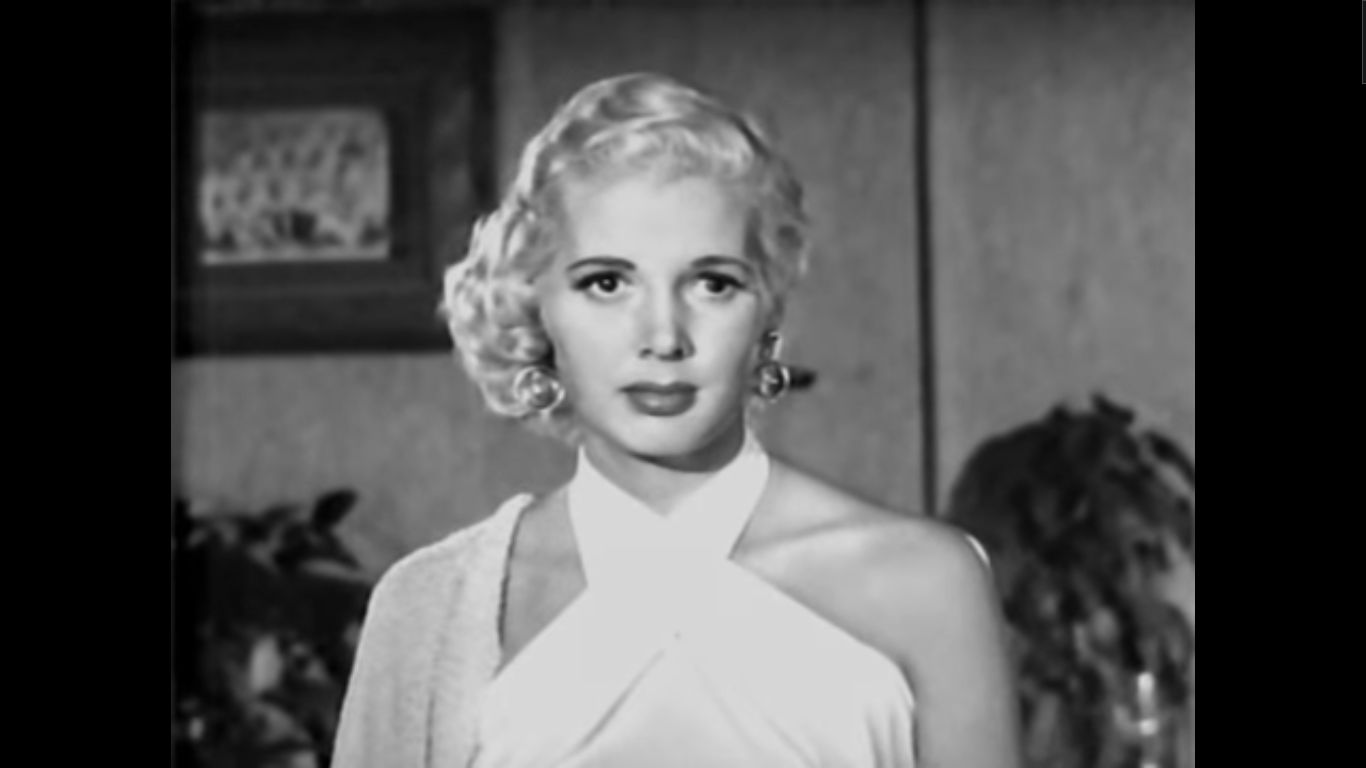
Beverly Michaels steps into view and does the rest, more than holding up her end of the bargain as the eye-catching platinum blonde, Billie Nash, a name made for this kind of trashy downbeat drama.

In truth, she comes out of the heyday of platinum blondes: the Monroes, Mansfields, Van Dorens and all their ilk. Still, there’s little chance of confusing Michaels with the others. For one thing, she only has a sliver of their fame, but also she’s such an individual beauty. Svelte with eyes that are dark at times almost sad and sleepy. They serve her performance well.

She checks into a local dump and with her payroll she’s can’t be too picky about her accommodations so she shovels out the dough to keep a roof over her head. It’s the kind of place where someone as pretty as her turns the heads of all the men. Across the hall is the small-time pipsqueak Charlie (Percy Helton) anxious to make her acquaintance. If she even deigned to address him, it would make his miserable day.

If you’re like me, you remember Helton for a cameo in White Christmas, maybe a stray episode of Get Smart, and of course, that wonderfully iconic hoarse voice of his. It’s almost like taking Mickey Rooney and putting him in Drive the Crooked Road, except this guy was always a bit player. Here he gets one of his biggest showings as a tiny, dismal runt of a man, and even he has pride and desires in life.

If there was any initial reluctance, Wicked Woman more than fits the bill offering up hot jazz and a wily woman who knows how to play the opposite sex like an instrument. It earns her a free meal and a laundry list of other favors. She doesn’t mind because this is the way the world operates. A girl’s got to get ahead any way she knows how.

It happens again when she signs on as a hostess at a local joint. She’s always sashaying and slinking around burning up the local establishments and street corners like red-hot coals. The first moment she sets sights on Matt Bannister (Richard Egan), she gives him the eyes. He runs the place with his hag of a wife. Already we know their marriage is instantly in jeopardy when Billie lands the job.

Later, during business hours, Egan lights a cigarette, takes a puff, and sets it down in her general vicinity. She gets the idea and takes a drag. In Hollywood terms, if this were a geometric proof, it’s basically the transitive property in action. It’s easy enough to put two and two together.

Like Brad Dexter, Egan has a bit of the physique and the piercing eyes perfect for an sleazy drama like this. It borrows liberally from the convention blending shades of Postman Always Rings Twice and Scarlet Street mashed together and made tantalizing thanks to Beverly Michaels.

The man and woman are soon caught up in a plot together and their mark is easy — her faculties all but deluded by alcohol — and she’s getting worse.  All they have to do is cash out on the business without her knowledge, and they can run off below the border, just the two of them.

But these kinds of sordid affairs always ratchet up the tension. That’s part of the expectation — part of the fun — and I wouldn’t dare spoil that. It strikes me that while most of the scenes have a clandestine intimacy, one of the film’s biggest moments turns confrontation into a public affair because everyone is in everyone else’s business. It goes with the communal showers and the nosy landlady.

These are pretty much the expectations of the world. It can only end the way it began with this sultry siren taking the same bus out of town with a one-way ticket to wherever. And the cycle begins again.

On a different note, the film’s star, Michaels, and writer-director, Russell Rouse, would get married soon thereafter and remained so until Rouse’s death. Fortunately, life didn’t imitate art in this regard.

3.5/5 Stars

New York Confidential (1954)

New York Confidential provides a bird’s eye view of the world of “the syndicate.” It’s a Naked City-type perspective with an impartial Voice of God providing us the context of the crime world calling the shots in the urban jungle. It’s not exactly a fresh premise since the decade engendered many such pictures.

What makes it mildly interesting derives wholly from the performances and there are some actors worthy of note. Although the movie itself always feels like it’s playing at a gangster movie — a narrative we’ve seen umpteen times before it was tackled so definitively by The Godfather.

Here we have Broderick Crawford and Mike Mazurki, even J. Carrol Naish, all playing their respective types in this world we’re probably already familiar with. It’s the milieu of the syndicate where organized crime and legitimate business have coalesced with the culture of the old country. Meanwhile, hits are carried out with merciless precision. It’s just another less sentimental side of the business.

When Richard Conte shows up there’s some real promise. The way he so smoothly mows down some thugs at the bar. It’s casual and self-assured for the era. It’s like no one can touch him.

Even as gang wars run rampant in the city, he’s too cool and calculated to get dirtied in the fray. He goes about his business, does his job well, and gains the trust of his superiors because he’s smart and charismatic. He also rebuffs the come-ons of his boss’s moll (a mostly underused Marilyn Maxwell). It’s yet another act of self-preservation.

Then, Anne Bancroft shows up. She’s still an ingenue with breeding but also the spirit capable of clashing against her father’s own notoriety. He can never quite become respectable, and she must reconcile her affections for him while still loathing his brand of business.

Piety, decency, and legitimacy. These are the terms the movie must deal in because this is the world at stake. Father and daughter quibbling over blood money and splitting at the seams. Meanwhile, we sit by watching the story escalate. The paces feel mostly rote and all but inevitable. Again, the onus of the film falls on Conte, Crawford, and Bancroft as their dynamics give a human face and motive to a movie that otherwise feels mostly clinical in nature.

3.5/5 Stars