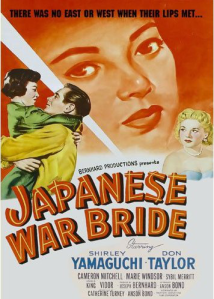
 Much like Sam Fuller’s Crimson Kimono (1959), Japanese War Bride’s title carries certain negative stereotypes, however, its central romance similarly feels groundbreaking, allowing it to exceed expectations.
The film opens during the waning days of the Korean War. A man lies incapacitated in a hospital bed, but he couldn’t be happier because he’s met the love of his life. Maybe it’s war fatigue or something else, but he simply cannot take his eyes off the pretty young nurse Ms. Shimuzu (Shirley Yamaguchi).
And although prospects don’t necessarily look that promising, since duty calls, Jim leaves that hospital bent on getting that girl for his wife. He’s serious. So serious in fact that he goes straight away to convene with Tae’s grandfather (Philip Ahn) that he might persuade him for Tae’s hand in marriage. Although warning that the road ahead will be a difficult one, the sagacious man, relents, reluctant to stand in the way of this blossoming love.
It’s after the happy couple is picked up at the train station by family and settle into the old family home, that it becomes obvious that things aren’t quite the same. They’ll be more difficult than they first appeared.
Jim’s parents and brother are welcoming enough, but there is still a necessary period of gelling as they get used to their new family member. Even Jim encourages his petite young wife to be more assertive and embrace American culture fully. She does her best.
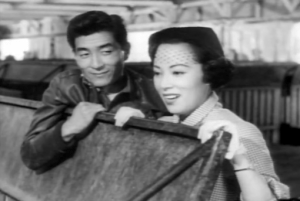 Jim looks to build up a happy life with her as he looks to take some of his father’s land to keep a home of his own and raise crops. Tae begins to acclimate to her new life and gains the respect of the Taylor family while making a few friends including the kindly Hasagawa siblings (Lane Nakano and May Takasugi) who work at a factory nearby. The icing on the cake is when Tae announces she’s pregnant and Jim could not be more ecstatic.
Still, what crops up are the subtleties of racism through slight snubs and bits of insensitivity. First, the skeptical sister-in-law (Marie Windsor) drops pointed remarks towards Tae. At first, they are so veiled, they seem only a passing wisp of a word, hardly worth acknowledging. But following one of the neighbors confessing how much she hates all the Japanese, it becomes evident that all is not right in Monterrey.
One moment Tae is getting accosted by a drunken merrymaker at a party who jokingly calls her a geisha girl. Then the family is scared, rightfully so, when Mr. Taylor receives a threatening letter. It voices the opinion of an unnamed “friend” about the fact that there are rumors floating around that Tae’s baby looks fully Japanese and she has been spending time with Shiro Hasagawa. A scandal of this kind will ruin Mr. Taylor’s reputation among his fellow growers. It will ruin him period.
But most important to this story, it infuriates Jim with a fiery rage. He’s angry at all the narrow-minded folks he used to call friends. He’s mad at his family and most of all Fran for her part in Tae’s distress. It’s in these most tenuous moments that Tae decides to take her baby and seek asylum somewhere else to get away from the cultural chasm that has formed. Of course, they are reunited and there is a version of a happy ending, but it does not take away from the bottom line. They’ll still have to struggle against societal pressures and flat-out bigotry. However, if you’re in love, there are many rivers you are willing to ford and the same goes for Jim and Tae.
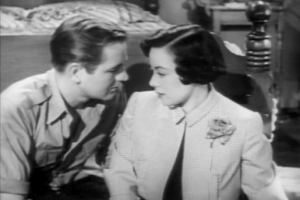 Japanese War Bride is continuously fascinating for the presence of Japanese within its frames. First, we have a rather groundbreaking and relatively unheard of interracial romance between the always personable average everyman Don Taylor and stunning newcomer Shirley Yamaguchi. Their scenes are tender and hold a great deal of emotional impact. It’s the kind of drama that has the power to make us mentally distraught but also imbue us with joy.
The film carries even more sobering underlying tension given the relative freshness of World War II. Mothers are still bitter about the deaths of their sons and that righteous anger is not discriminating between people. It only sees race. Meanwhile, Shiro and his sister reflect the times as Nisei, who were affected by internment and increased amounts of prejudice. While Shiro was imprisoned in Japan during the war, his family was interned at Tulare near Sacramento and his resentful father nearly had all of his land taken. Many other Japanese farmers were not so lucky.
For her part Marie Windsor plays her prime role as the antagonistic woman to the tee, effectively embodying all the small-minded, underhanded folks out there that live life without a genuine kindness for their fellow man. Poisoning other people’s mind just as they are poisoned, and it’s this type of rancor that leads to fear and bigotry. A breeding ground for hatred. In some shape and form, it still rears its ugly head to this day. What makes this film special is how it reflects the realities as it pertains to Japanese and Japanese-Americans. Veteran director King Vidor’s effort is a generally authentic and nuanced tale that pays his subjects the ultimate respect even in its more melodramatic moments.
3.5/5 Stars
 The opening notes of Joan Jett hollering “Bad Reputation” made me grow wistfully nostalgic for Freaks & Geeks reruns. The hope budded that maybe 10 Things I Hate About You would be the same tour de force narrative brimming with the same type of candor. It is not. Not at all. But that’s okay. It has its own amount of charms that forgive the obvious chinks in the armor of this very loose adaptation.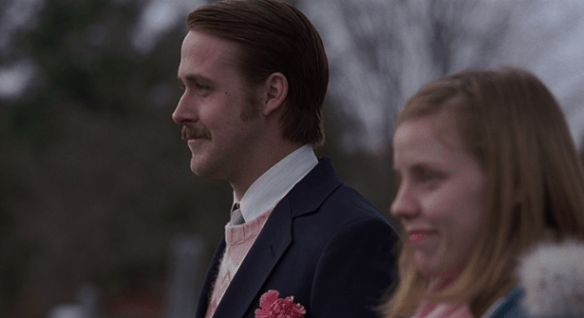
 Where to start with Liberal Arts? It’s one of those deep blue funk movies. Zach Braff tackled this issue in Garden State, and Josh Radnor does a similar thing here. Because the reality is that we live in a generation of early onset midlife crises. In the opening moments, 35-year-old Jesse Fisher (Radnor) has nearly every article of clothing he has aside from the shirt off his back stolen from a local laundromat when his back is turned. We can easily surmise that this single event epitomizes his life right now, and this is hammered home rather obviously when his unnamed girlfriend clears her belongings out of his flat. There’s no better symbol of isolation and alienation than a break-up.
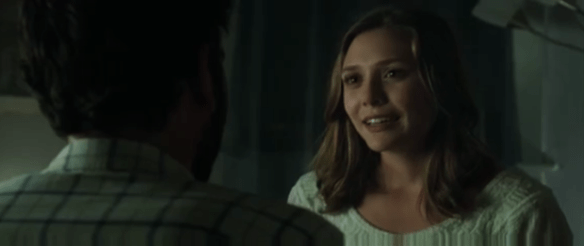 It’s crucial to note that at this juncture nothing substantive builds between these two acquaintances romantically, but they do foster an immense connection. While Jesse is taken by Zibby’s personality, she, in turn, is discontent with a contemporary culture where no one dates–everybody’s casual about relationships. She feels unequivocally millennial and yet she readily admits these areas of old-fashionedness.
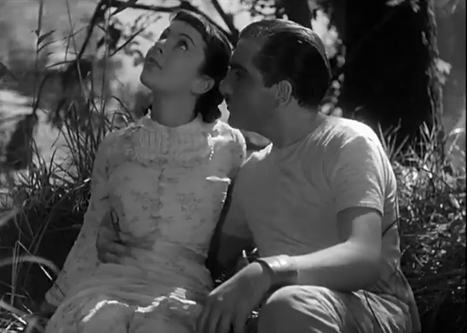 It’s only 40 minutes — hardly a feature film and more of a featurette, but Jean Renoir’s truncated work, A Day in the Country, is nonetheless still worth the time. Admittedly, I still have yet to venture to France and I hope to do that someday soon, but this film propagates marvelous visions of the countryside that resonate with all of us no matter where we hail from. Those quiet jaunts out in nature. Sunny days perfectly suited for a lazy afternoon picnic. Peacefully gliding down the river as men fish on the bank contentedly.
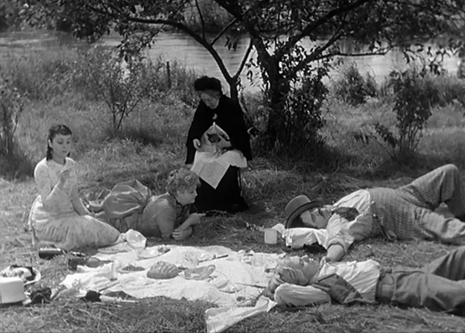 As always these characters set up Renoir’s juxtaposition of luscious extravagance with the earthier lifestyle of the lower classes. However, there is a geniality pulsing through this film, with Mrs. Dufour exclaiming how polite these young men are–they must be of good stock, obviously not tradesmen. Even Mr. Dufour is a good-natured old boy who gets fed up with the elderly grandmother, but he willingly takes the boys charity and advice when it comes to the prime fishing holes.
 We get the essence of what is there and we can still thoroughly enjoy Renoir’s composition. His is a fascination in naturalistic beauty where he nevertheless stages his narrative to unfold in time. But really this mise-en-scene created by the woods, and meadows, trees, and rivers really function as another character altogether. And when all the players interact it truly not only elicits tremendous joy but an appreciation for Renoir’s so-called Poetic Realism. Whether he’s capturing a woman swinging jubilantly on a swing or framing a shot within the trees, we cannot help but tip our hat to his artistic vision. If his father Auguste was one of the great painters of the impressionist era, then Jean was certainly one of the most prodigious filmmakers of his generation, crafting his own pieces of impressionistic realism. In fact, with father and son, you can see exactly how art forms can overlap on canvas and celluloid. They truly share a fascination in some of the same subjects. Universal things like nature and human figures interacting in the expanses of such environments. It’s beautiful really, even in its pure simplicity.
 “Two people shouldn’t know each other too well if they want to fall in love. But, then, maybe they shouldn’t fall in love at all.” – Vittoria
 The initial scene in the stock exchange is gloriously tumultuous and it never lets up. This is the dashing young Piero’s (Alain Delon) domain that he rushes through with lithe business savvy. What this arena becomes is the quintessential Italian marketplace, a hectic theater of business made up of all kinds, involved parties and observers alike. Vittoria (Vitti) is one of those who looks on with mild interest and really throughout the entire film she is a keen observer as much as she is a person of action.
 And the narrative becomes perhaps even more tantalizing than love because it’s the prospect of romance that keeps it going. But it never seems fully realized. It’s frustrating, unfulfilling in a sense, like most of his films. Whether it’s an unsolved mystery or the most perplexing conundrum mankind has ever faced romantic attraction, he always leaves us an open-ended denouement.
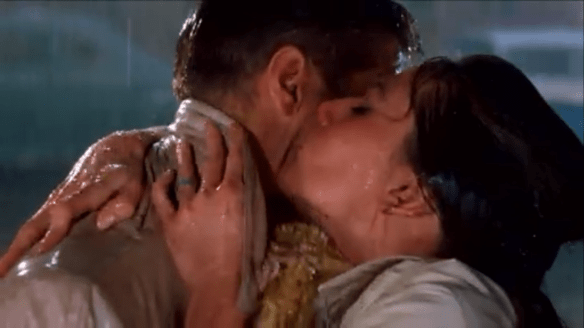
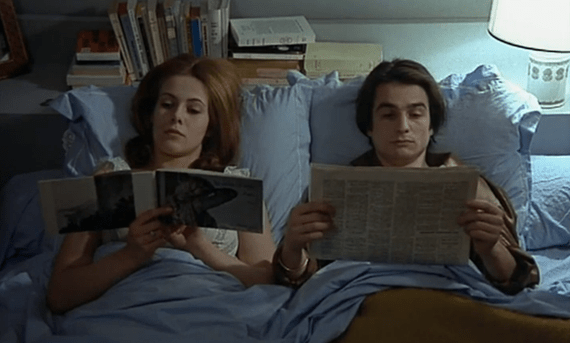 Arguably the greatest French comic was Jacques Tati and like Chaplin or Keaton he seemed to have an impeccable handle on physical comedy, combining the human body with the visual landscape to develop truly wonderful bits of humor. Bed and Board is a hardly a comparable film, but it pays some homage to the likes of Mon Oncle and Playtime. There’s a Hulot doppelganger at the train station, while Antoine also ends up getting hired by an American Hydraulics company led by a loud-mouthed American (Billy Kearns) who closely resembles one of Hulot’s pals from Playtime. Furthermore, there are supporting cast members with a plethora of comic quirks. The man who won’t leave his second story apartment until Petain is dead and buried at Verdun. No one seems to have told him that the old warhorse has been dead nearly 20 years. The couple next door that is constantly running late, the husband pacing in the hallway as his wife rushes to make it to his opera in time. There’s the local strangler who is kept at arm’s length until the locals learn something about him. The rest is a smattering of characters who pop up here and there at no particular moment. Their purpose is anyone’s guess, and yet they certainly do entertain.
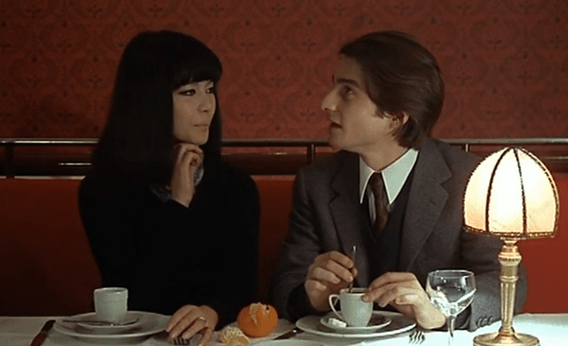 But as Truffaut usually does, he digs into his character’s flaws that suspiciously look like they might be his own. Antoine easily gets swayed by the demure attractiveness of a Japanese beauty (Hiroko Berghauer), and he begins spending more time with her. Thus the marital turbulence sets in thanks in part to Antoine’s needless infidelity –revealed to Christine through a troubling bouquet of flowers. It’s hard to keep up pretenses when the parent’s come over again and Doinel even ends up calling on a prostitute one more. It’s as if he always reverts back to the same self-destructive habits. He never quite learns.
 Charles Trenet’s airy melody “I Wish You Love” is our romantic introduction into this comedy-drama. However, amid the constant humorous touches of Truffaut’s film, he makes light of youthful visions of romance, while simultaneously reveling in them. Because there is something about being young that is truly extraordinary. The continued saga of Truffaut’s Antoine Doinel is a perfect place to examine this beautiful conundrum.
 In fact, all in all, if we look at Doinel he doesn’t seem like much. He’s out of the army, obsessed with sex, can’t do anything, and really is a jerk sometimes. Still, he manages to maintain an amicable relationship with the parents of the innocent, wide-eyed beauty Christine (Claude Jade in her spectacular debut). Theirs is an interesting relationship full of turbulence. We don’t know the whole story, but they’ve had a past, and it’s ambiguous whether or not they really are a couple. They’re in the “friend zone” most of the film and really never spend any significant scenes together. Doinel is either busy tailing some arbitrary individual or fleeing pell-mell from the bosses wife who he has a crush on.
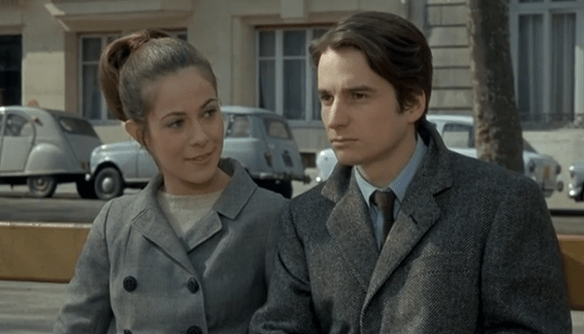
 By the time he’s given up the shoe trade and taken up tv repair he’s already visited another hooker, but Christine isn’t done with him yet. She sets up the perfect meet-cute and the two young lovers finally have the type of connection that we have been expecting. When we look at them in this light, sitting at breakfast, or on a bench, or walking in the park they really do seem made for each other. Their height perfectly suited. Her face glowing with joy, his innately serious. Their steps in pleasant cadence with each other. The hesitant gazes of puppy love.
 We are definitely in the age of the well-wrought period piece and Brooklyn has all the trappings you could want. Adapted from Colm Toibin’s novel the film showcases a pure, noble heroine in Eillis Lacy who like many others makes the journey from her homeland of Ireland to the golden-paved streets of New York.
