Something’s Got to Give (1962)

e3ac1-somethings-got-to-giveWell, this is a first for me, if my memory serves me right. I have yet to do a write up for a film without having a rating to go with it. Something’s Got to Give eventually and now it has.

I honestly was surprised that this “film” even existed. I knew about Marilyn Monroe’s last film project which ultimately was unfinished thanks to her tragic death. I assumed the project was ditched and never thought about again. I certainly did not give it a second thought then. Then, quite by accident I came upon it in all its 37 minutes of glory. Apparently others had given it a second glance and we have them to thank for this unfinished addition to Montroe’s filmography.

It looks like production quality with a few missing parts and quite the cliffhanger ending. We do not even quite know the extent of the cliff yet.
However, it was an interesting look at Marilyn Monroe in her final days. You also had a fun cast of handpicked players including Dean Martin, Cyd Charisse, Phil Silvers and Wally Cox. Not to mention one of Hollywood’s prominent directors in George Cukor. It seems likes all the makings for a light ’60s romantic comedy.

This certainly was not going to be a masterpiece (It was actually a remake of My Favorite Wife (1940) and was given a face lift for Move Over Darling). That’s okay. It is a interesting piece of history in its own way.

Rating: N/A

Review: Roman Holiday (1953)

Joe: Today’s gonna be a holiday.
Princess Ann: But you want to do a lot of silly things?
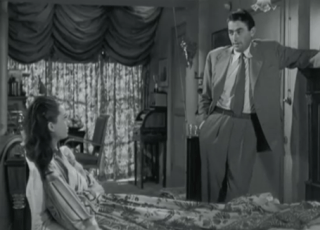
The answer is yes, yes we would!! That is the beauty of this film, which plays out as a lovely jaunt through Italy with two favorites in Audrey Hepburn and Gregory Peck. With Hepburn being practically unknown at this point in time, it made her a wonderful choice to play Princess Ann. She was someone without any prior identifying roles making her young princess seem plausible. William Wyler took a chance on an unknown and he certainly hit the jackpot.
Gregory Peck on his part was always a strong leading man and an All-American type, perfect to play Joe Bradley. However, he also exuded gentlemanliness,s so despite the fact that the princess spent the night in his apartment we know nothing went on.  He had no ulterior motives bringing her to his apartment and even when he arranges to get an article out of her we know that is not who he is.
The film itself consists of wonderfully connected vignettes incorporating the Roman culture and landscape. Princess Ann leaves behind the hospitality of Joe in order to explore a bit before she goes back to her real life. In order to get that major scoop, he tails her and finally invites himself to tag along, so beginning the real fun. Princess Ann gets her beautiful locks cut by a friendly barber and buys some gelato from a street vendor.
 
Soon she takes her first puff of a cigarette, takes in the glory of the Coliseum, rides a Vespa through the hectic streets of Rome, and winds up in police headquarters with some explaining to do.They finish up their afternoon on a more thoughtful note at a wall of wishes originating during World War II.
 
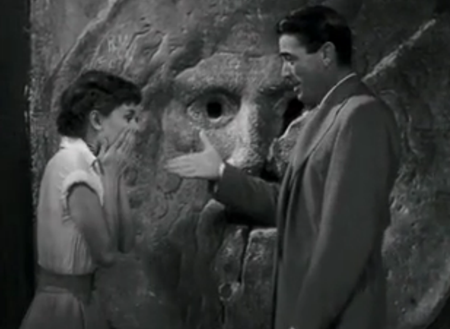
One of the best moments occurs at the mouth of truth, a great stone statue, which you are supposed to stick your hand in before it eats it up. In a moment of sheer fear Princess Ann or Audrey Hepburn, I’m not quite sure who looks on in horror as a screaming Bradley removes his arm and his hand is gone. Up comes the hand from the coat sleeves and the jokes on her. It has absolutely no bearing on the plot but it makes us love Peck and Hepburn even more.
 

To finish off the evening the two companions and Irving (Eddie Albert) cause a ruckus at a dance aboard a barge before swimming away to safety. There Ann finds love and a soaking wet kiss to go with it. But it is at that moment when the laughs stop and the romance begins that everything becomes all too clear. This wonderful day cannot last forever. There is a moment, after one final embrace, when they have to say goodbye for good.

This is not one of those “love at first sight” stories, but it is a different sort of fairy tale where two individuals share an enchanting day together and fall in love. Every Cinderella story must end and so does this one (Anna: At midnight I’ll turn into a pumpkin and drive away in my glass slipper). They must eventually come back down to reality with Princess Ann fulfilling his duties and Joe moving on with his career.
 
Joe’s major newsflash is not a thing anymore. The whole day means too much to him and being the buddy he is, good ol’ Irving understands that. Speaking of Irving, he deserves some discussion. Eddie Albert’s character is spilled on, stepped on, knocked over, tripped, and through it all remains the perfect buddy for Gregory Peck.  Even his little car is a riot, not to mention his inconspicuous tiny cigarette camera and his sly efforts at photography in every type of circumstance. Irving shares a great deal of double talk with Joe which somehow gets past the unsuspecting princess. However, by the end of the film, the princess is also a cohort in their memorable adventure with commemorative photos included! 
 
When Joe Bradley walks out of the grand palace he leaves content knowing that he shared something special. No one else needs to know (aside from Irving) about the fairy tale they shared and that is the beauty of it all. It is just their little secret, their Roman Holiday
 
5/5 Stars

Holiday (1938)

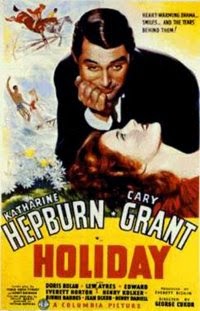
2c3de-holiday_posterJohnny Case (Cary Grant) is a happy go lucky fellow who is crazy in love with the girl of his dreams. He returns to town telling his friends the Potters that he has plans to marry this girl he met 10 days ago at Lake Placid! He is ecstatic and not afraid to show it.

However, he must become acclimated with her family and their lifestyle. Most important is gaining the approval of her sometimes stuffy and always money-minded banking father. Julia Sefton is by all accounts a lovely girl who seems to truly return Johnny’s affection. Honestly, though he is not quite used to her type of society. He makes his entrance by arriving through the servant’s door and wanders around the stately manor marveling at all the trappings. Doing the rounds he runs into her drunken but genuine brother Ned (Lew Ayres). Then, there is sister Linda (Katharine Hepburn), the so-called black sheep of the family, although her only fault is being an energetic free-spirit.

Immediately she and Johnny hit if off, and she soon realizes that her sister has a real catch on her hands. The wedding is finally agreed upon by Mr. Seton, and a big New Year’s Eve Party is thrown much to Linda’s chagrin. The night of the big to do there are two parties that take place. Downstairs all the snobs and high society mingle with Julia parading Johnny around. Upstairs is a different matter where the quarantined Linda is eventually joined by the Potters,  Ned and even Johnny.

The little gathering gets quashed and that is not all. Father and daughter are adamant that Johnny works at the bank and make money because that’s what any respectful husband would do. They take little heed of Johnny’s dream to take a holiday once he has raised enough money to live off of. He just wants to live life free of distractions for awhile, but they just do not understand. Finally, Johnny is feeling too restricted by all the obligations to bear it any longer, because he simply cannot live that way. Again, both father and daughter do not understand. But Julia does, and she finally realizes what she must do. It’s time to take a holiday.

Here is a formidable trio in Cary Grant, Katharine Hepburn, and director George Cukor. It makes me beg the question, how this film has become so overshadowed by Bringing up Baby and The Philadelphia Story? Johnny Case is a wonderfully vibrant role for Grant, and his acrobatics alone are worthwhile viewing. Hepburn on her part plays an equally spirited individual but without the scatter-brained or feisty edge that she often carried. Instead, she is just wonderfully footloose and fancy-free. Edward Everett Horton and Jean Dixon are an absolute riot, and I would love to have friends like them. Lew Ayres role was rather an odd one, but both Doris Nolan and Henry Kolker had an adequate amount of stuffiness to pull off their parts. That juxtaposition was necessary for the film to work and it did.

4/5 Stars

To Have and Have Not (1944)

1b537-to_have_and_have_not_1944_film_posterStarring Humphrey Bogart, Lauren Bacall, Walter Brennan, Hoagy Carmichael, and with director Howard Hawks, this film is very reminiscent of Casablanca. On the small Vichy-controlled island of Martinique, a hardened seaman spends his days steering his boat and his nights at the local hotel. The French resistance stir up his life by asking for his help but he refuses. Everything changes however when he meets a mysterious young woman (Bacall). Their playful banter eventually leads them to a mutual affection. Wanting to help his new found girl get home, Harry Morgan finally does agree to help the French and in the process he shows his true colors. Cementing Bogey and Bacall as a star couple, and immortalizing a certain line about how to whistle, this film is a good one. It has everything you come to expect with Bogart and it gives you something special in Bacall.

4/5 Stars

In honor of Lauren Bacall

The Big Sleep (1946) – Film-Noir

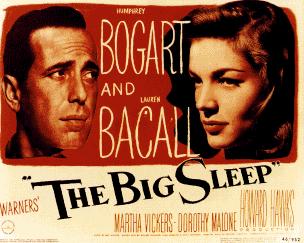
e3d1f-bigsleep2This noir, crime-drama starring Bogey and Bacall with director Howard Hawks, follows private eye Phillip Marlowe (Bogart) in Los Angeles. His difficult and ever changing case has him interrogating every one under the sun and following every lead. In typical Bogart fashion, Marlowe is a tough guy who does not shy away from danger and he has the eye of many a woman. What starts off as a normal case quickly turns deadly, setting the plot off. The constant twists and new characters complicate Marlowe’s case and get him in numerous messes. However, thanks to his grit and wit he comes out on top, falling for the girl, and overcoming his adversary. One word that sums up this film is incomprehensible. Despite the confusion with the plot, this film is very enjoyable and seems to work itself out.

4.5/5 Stars

In honor of Lauren Bacall

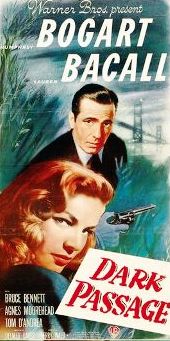
Dark Passage (1947) – Film-Noir

74b1d-dark_passage_film_posterStarring Humprey Bogart and Lauren Bacall, the film opens with a man escaping San Quentin prion for supposedly killing his wife. Along the way he is helped by a sympathetic young artist, a friendly cabbie, and a plastic surgeon. He must evade the police while getting mixed up with another murder and some nosy people. Ultimately, he does find the actual killer but he has no way of proving it. He flees to South America where he is finally reunited with his love. This film is memorable for being shot from Bogart’s perspective early on. It makes good use of San Francisco scenery and some of the supporting characters are enjoyable to watch. However, the film’s ending seemed anticlimactic and abrupt without any real closure.

3.5/5 Stars

In honor of Lauren Bacall

Review: The Spectacular Now (2013)

Looking back a year later…

The moment Aimee Finicky appears onscreen is perhaps the most remarkable instant out of many great moments in this film. The light must have been exactly perfect and everything seems calm and serene. The only thing we focus on is the initial meeting between two individuals, and that’s all that matters. That anxious face obscured by the light. That voice tinged with worry and relief. As an audience, we have our first encounter with the girl that the same Sutter who is sprawled on the ground, will fall for over the course of the film. However, right now he can’t remember who she is. There could not have been a better meet cute.

Fast forward to the ending of The Spectacular Now. So much has taken place in a short span of 90 minutes, it’s hard to keep track of it all. Just like much of the high school experience. Aimee and Sutter have been on an emotional roller coaster which Sutter has succeeded in derailing, but he has a new resolve and he will not waste this opportunity in the now.

There she is walking down the steps of her new college. Pleasant looking as always, undoubtedly with thoughts of academia swirling around pushing her past memories into the back of her mind. Then, all of a sudden they’re all right in front of her again in the form of Sutter.

There is a look on her face that is almost indescribable and it seems apparent that words are about to form on her lips, and the film cuts away. It is absolutely maddening as an audience who has become so invested in the story of these two high schoolers.

For some reason, this final shot of Aimee reminds me of The Tramp’s final reaction in City Lights. It might be a stretch but in both situations, there is a tinge of hope, but there is still this uncomfortable feeling of the unknown. And yet if we had known the resolution both these films would have lost some of their allure and City Lights is Chaplin’s masterpiece. As of right now The Spectacular Now is a little blimp on the radar in 2013. Shailene Woodley and Miles Teller might change that with the rate they are going. They certainly do not have the weight of the one and only Charlie Chaplin, but I am sure both of them are destined for numerous other great performances.

4.5/5 Stars

Review: City Lights (1931)

 86b16-charliechaplincitylights2A comedy romance in pantomime. That’s just exactly what City Lights is, because, despite the fact that talkies had been around for approximately 4 years, Chaplin was hesitant to transition his Tramp over to sound. In many ways, I can understand why since the universality of his character would be gone and Chaplin’s own voice would give a very different feel to the little man. With his great popularity and artistic control, Chaplin made this film and Modern Times without dialogue. All he used were synchronized sounds and musical scores. As audiences can attest to, it worked out just fine for him.

This film opens with the Tramp in all his glory sleeping on a statue during its public unveiling. He is rudely awakened and shooed off on his way. He drifts down the boulevards finally meeting a lowly flower girl, showing her kindness before moving on. Although I am partial to Paulette Goddard, Virginia Cherrill plays the blind girl believably and she is a wonderful love interest for Chaplin’s character.

His next acquaintance is a drunken millionaire (Harry Myers) bent on committing suicide. His attempt is unsuccessful partially in thanks to the Tramp. He even gives the man a few positive words as is his custom (Tomorrow the birds will sing, be brave, face life!).

And there you have it. Chaplin introduced his audience to the two people who would be closest to the little man. The two new chums head to a high society hang out where they nearly get in a fight over everything from a bottle of seltzer to a chair, and even the floor show.

The Tramp goes back to the girl, and as another act of kindness he purchases her whole basket of flowers for $10 and continues to masquerade as a high society swinger. As the next title card reads, the sober dawn awakens a different man. Thus, The Tramp is initially rejected by his friend from before, but the drunken millionaire gets reincarnated once again and they begin a wild rager. The next morning the cycle begins again with the Tramp being thrown out.

The Little Man has taken it upon himself to be somewhat of a guardian angel for the blind girl who has become his love. Money is needed if she wants to have a home, and despite getting fired from his job, he resolves to get the funds the next best way. In a boxing match. This is where my favorite sequence, which plays out in the ring, comes to fruition.

The Tramp is seemingly outgunned, but that does not stop him from duking it out. He uses the referee, hugs, and anything else at his disposal to try and not get clobbered. The scene had to be choreographed extensively because at moments it looks just like a dance perfectly synchronized between the three characters. The so-called dance becomes even more uproarious when he begins to tackle his opponent and then unknowingly takes out the ref next. The fight seems even with each man falling down repetitiously as the ref tries to say the count. Unfortunately, the little man cannot hold out and he loses the pot.

One final time he runs into his millionaire friend just back from Europe, and he gets the much-needed money for his girl. Matters are complicated by burglars and a misunderstanding with the police. All works out in the end and the flower girl has her home and enough over to get a surgery to allow her to regain her sight.

Chaplin’s character pays the cost though, winding up in jail because of the “stolen” funds. When he gets on the outside he is more destitute than ever, but the girl’s business is now flourishing.

He runs into her and eyes her happily. Little does she know who this man is. This is not the debonair gentlemen she was expecting. She laughingly proclaims, “I’ve made a conquest.”

Only when she touches his hand by chance, reverting back to her old self, does she comprehend who this really is. This is her savior, the one person who radically changed her entire life. He is dressed in tatters and barely has a penny to his name. But he did have kindness and compassion for her.

A lot has been said about the final moments of the film where she has her “aha” moment, and he responds accordingly. What strikes me is how Chaplin so effectively reveals the nervous charm of his character. His fingers are constantly near his mouth, flower in hand. He states the obvious (You can see now). Then, the film closes with his face lit up with another nervous smile, fingers still in mouth.

It is hard to say where the story goes from this point. That’s not the important part here, though. The important part is that in both of The Tramp’s relationships his two friends cannot see who he truly is. The girl is physically blind and the millionaire is blinded by his stupor. They easily accept him in certain circumstances and yet they truly do not know him.

He, on the other hand, seems to accept them no matter the person they are at that moment. He is faithful and compassionate to them in all circumstances. It seems that perhaps the Tramp truly knows them because he is not blinded like they are. Again, I marvel about how so much can be pondered thanks to the actions of an unassuming vagabond. He is a remarkable little man with a very big heart.

5/5 Stars
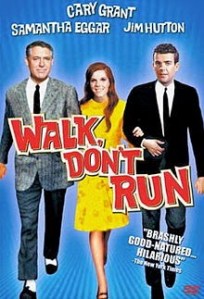
Walk, Don’t Run (1966)

a64da-walk_donThis was the last screen performance of legendary actor Cary Grant and for once he is not the one getting the girl. This time he is the matchmaker in this adaption of the earlier classic The More the Merrier. Grant’s character finds himself in Tokyo during the 1964 Olympics and the only room he can get is from a young English girl. This causes some difficulty but they make it work. It gets even more complicated after Grant meets a young American architect who is competing in a mysterious event in the Games. Sir William Rutland secretly puts the two young people together. It seems doomed from the beginning but through a wacky conclusion somehow it all works out in the end. Not a great film, but a decent swan song for Grant and it is certainly fun to have the film set in Tokyo.

3.5/5 Stars
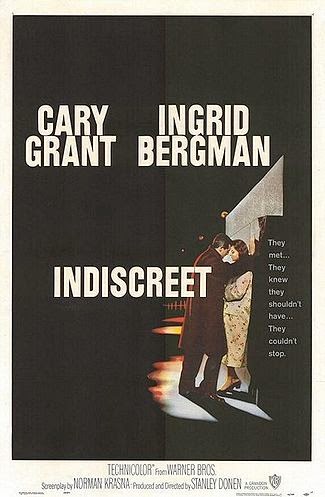
Indiscreet (1958)

020ac-indiscreetThis is a solid romantic comedy which pairs the legendary Cary Grant and Ingrid Bergman one last time. Bergman is a well-known actress who has success, but has never experienced true love. Then she meets Philip Adams, a man who literally walks up to her door since he is a friend of her brother-in-law. They become acquainted and they turn into fast friends. Bergman finally feels she has found the one and their love grows. However, the only problem is that he is married and estranged from his wife. Little does she know what is really going on and yet when she does it throws their whole relationship into jeopardy.  She has one final plan to get back at Grant and it really backfires, but in the end the two lovers get back together.

In this film it was nice to see two more middle aged stars paired. I enjoy Cary Grant with Audrey Hepburn or Grace Kelly, but I think Ingrid Bergman is more his contemporary. Some of the best sequences had to be during the ball. Here Grant shows he still has the physical comedy ability because at this time he had fell almost completely into the debonair gentleman persona. This is not a great romantic comedy but still a respectable piece from Stanley Donen.

3.5/5 Stars