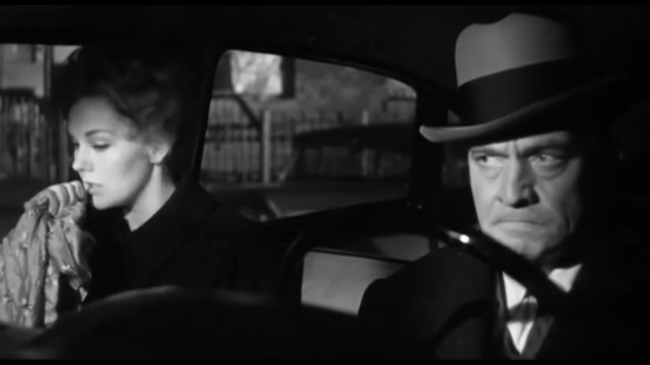
The Uninvited (1944) and Stella by Starlight

To place my cards on the table, next to the ouija boards and ghost catchers, I’m not always fond of haunted house movies because how many truly original iterations can you have out of one premise? Granted, there are lots of houses in the world, but how do you make each one stand out among the crowd? If it’s not obvious already I’m already originating from a place of skepticism and apathy. There you have it.

There is some good news. Although The Uninvited won’t exactly make a convert out of me, it is freed up by the fact it was the instigator of many of the archetypes the genre holds onto even to this day. Since this is a movie from the 1940s, the onus is not on the picture to be pop-out scary; instead, it uses its assets of music, mood, and atmosphere to project an inedible impression.

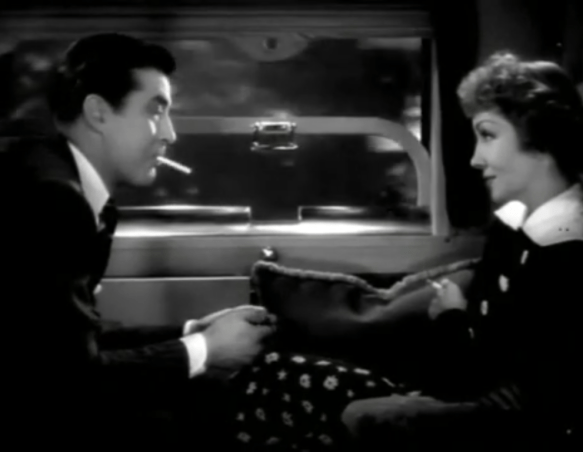
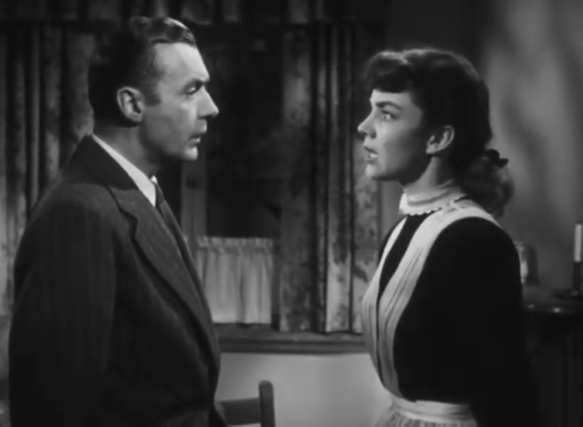
The brother-sister relationship between Ray Milland and Ruth Hussey on the screen is not so common in movies, and you could easily see them playing romantic partners in another movie. The novelty is agreeable enough as they gayly happen upon an old house in Cornwall that they are just thrilled to see since it reminds them of warm childhood memories.

So they walk in of their own accord — their yippy dog scurrying after a squirrel in a fairly spectacular bit of choreography — waltzing around the place just as if they own the place. They have no misgivings until they walk up to an eery room overlooking the cliffside. Just being there makes them heavy and already we have a portent of things to come.

As it turns out, the siblings get an opportunity to buy Windward House and at a real steal too. The owner, a somber commander named Beech (Donald Crisp), is more than happy to get rid of it even as his earnest granddaughter (Gail Russell) can’t bear to see the place leave their possession. You might say she has an attachment, even a compulsion to be there. The old man goes so far as to say the house is filled with malignity against the girl.

Still, brother and sister get their wish, moving in, setting up their housekeeper, and trying to get acclimated. What the sibling dynamic does tease out are other romantic interests. Roderick, for one, is fascinated by the “sleeping beauty magic” about the girl Stella, even as they got off on a bit of a wrong foot.

When they finally do make amends, there’s a conviviality born between them. As a musician and one-time music critic, he plays her quite the tribute: none other than “Stella by Starlight.” It’s an immortal tune, and it also, coincidentally, was composed by Victor Young just for this picture. It becomes a haunting song of lament and romance on par with the entrancing theme from Laura also released the same year. It’s yet another case of music having such a mesmerizing grip on a movie.

If the aura around Laura is one adaptable touchstone, another closely related one is the unnerving ambiance of Rebecca. Daphne du Maurier’s novel, turned into the well-remembered Hitchcock drama, played with this same spectral sense of the otherwordly. The house, Manderley, became a character in its own right, and the deceased first Mrs. De Winter effectively made it into her eternal haunt. As an embodiment of obsessive devotion, Mrs. Danvers played so forebodingly by Judith Anderson, knows few equals.

Much of The Uninvited is about set-up and even the delay tactics bringing us to the point of release. It rarely confronts us only inhabiting the corners and peripheries of the story and milking Charles Lang’s delicious cinematography for every drop of darkness it’s worth. It has a lot to offer.

For instance, there are wailing and moaning noises in the middle of the night. Word of some apparition. Smells of mimosa that flood the air on other occasions. At a later date, their housekeeper raves about a crawling mist upstairs. It’s all very peculiar.

Alan Napier comes into the story as a voice of refined observation — a local physician who partners with them. He effectively brings clarity to the situation by disclosing some of the local history. You see, Stella’s mother died on the edge of the cliffs many years before under tragic circumstances.

If anything, it gives the Fitzgeralds more reason to worry about Stella’s well-being. They somehow decide the best option is to face the spirit head-on with a séance. It’s taken for granted that something exists; this is not a total figment of their overactive imaginations.

And it’s true, something fills up the room. There’s a look in the girl’s eyes of terrible happiness, a possessed euphoria. She’s resolute throughout the entire film; if they destroy that house, they’ll be destroying her. In some unexplainable way, it is a sanctuary for her.

Ultimately, the captain sends her away to a sanitarium run by a local plaster saint, Miss Holloway. Her reputation proceeds her; she’s renowned around town for her charity and stately benevolence. However, up close and personal, it’s only too evident there’s something suspect about her. She obviously still harbors a deep affection for the deceased Mrs. Meredith, championing her memory for future generations. It lends the movie yet another level of subtext.

From thenceforward we deal in ghosts, twists of exposition, and jumps in internal logic that must be parsed through. I’m often not a stickler for plot details, but it felt like The Uninvited ultimately relies on them too much. There are some genuine instances of dread or at the very least intrigue, but I’m more enamored with the Lauras and Rebeccas of the world. Their mystery manages to linger over me.

With The Uninvited my greatest takeaway was “Stella by Starlight” and the starring turn for Gail Russell. She, of course, would remain a bright hopeful in Hollywood for a few more years until alcoholism crippled her career and her personal life. However, within the frames of this movie, she is still brimming with the buoyancy of youth. It’s a pleasure to see her in such a place. If nothing else, I consider this a victory. “Stella by Starlight” might as well be a eulogy to a shooting star that burned out far too quickly.

3.5/5 Stars

Arise, My Love (1940): Milland and Colbert

arise my love milland and colbert

“Arise, my fair love and come away” – Song of Solomon 2:13

The screenplays of Charles Brackett and Billy Wilder are often literal master classes in hooking the audience. They understand intuitively the construction necessary to bring us into a story so we’re invested. Take the opening of Arise, My Love. Yes, there’s some throw-away text about the Spanish Civil War in the summer of 1939. It’s in the aftermath, but then we’re introduced to a telling scene.

One of these soldiers of fortune, American Tom Martin (Ray Milland) sits in confinement as a father (Frank Puglia) from the local monastery pays him a visit. The firing squads right outside his annex make it painfully clear the hour of his own execution is imminent. Those aren’t rubber bullets. The man of faith feels some urgency to ask the prisoner if he even feels penitent — if he needs to clear his chest of anything.

All this sounds rote so far. Anyone could write this scene like so. Then, individuality sets in. Instead of contrition, he bemoans the fact he didn’t get into the action with Chamberlain and Hitler nor has he gotten a chance to take potshots at Nazis. It has the vitriolic gallows wit of Wilder setting up the gag.

Here’s the kicker. The inevitable is whisked right out from under Martin by the most unexpected of Providences. He’s been granted a pardon! It came through the pleading of his wife! It’s an obvious punchline if I know Wilder (and Brackett): he has no wife!

This plucky mystery woman (Claudette Colbert) is a reporter out for a story and boy does she has a way of making a doozy of a spread. They get out of the scenario thanks to her charm, his flying, and a bit of luck.

We are reminded the movie is planted squarely in its moment from the headlines about the Yankees in the World Series and the hunt for Scarlet O’Hara finally being over. Tom was among three American flyboys, who are a group of idealistic interventionists siding with the little guys against the big boys.

Paris, the city of amour, is still free from Nazi influence, and the pilot does his best to channel what’s already in the air. “Gusto” rebuffs him — albeit good-naturedly — because she’s an all-or-nothing gal. She knows if she says “yes” she’ll be head over heels. There’s nothing wrong with that per se. But she’s a career woman.

Now Claudette Colbert doesn’t quite strike me as a typewriter-plunking type like Rosalind Russell or Barbara Stanwyck — one of the boys as it were — but she comes off as deliriously happy. Because it feels like she’s in her element again in this world, whether or not it’s totally manufactured by Hollywood. As her slighted suitor sits in the Cafe Magenta just betting she’ll walk over from her hotel, she looks to climb the journalistic ladder.

She’s dropped with quite the gig: Special Berlin Correspondent. The previous correspondent was kindly asked to leave by the Nazis. Among other infractions, he went to a reception for Herr von Ribbentropp and yelled “Gefilte Fish!”

The agitated editor (Walter Abel) is a long-running trope, but here it works as well as it did anywhere else in that he provides yet another antagonistic force to push against our heroine. Although, given the state of the world, she hardly needs it. He more likely serves as a bit of comic relief.

Because while Tom decides to go off to Warsaw, Poland to fly with his buddies (“I’ve always wanted to drop something on Hamburg after I got ptomaine from that hamburger”), while simultaneously stealing a few more hours with Gusto, Hitler rudely kicks off WWII. They plan to get out of town on the fated S.S. Athenia. No one told them the battle for the Atlantic has already geared up. Though hit hard, they are luckier than most. At the end of the day, Tom and Gusto are still together (and alive)…

Screenshot 2020-03-30 at 81502 PM

If you humor me for only a moment, there is a habit that can get me into trouble. Reading other people’s reviews. I’m as insecure as the next fellow about my writing. I could never do it as well as so-and-so or why didn’t I think of that? That’s all that comparison gets you. Worse yet it can start infecting your own point of view if you consider other voices. Usually, I hold off until after my words are set in cement.

However, in a rare instance, I happened upon a contemporary review of Bosley Crowther, and it gave birth to some thoughts. He ends his piece on Arise, My Love in this manner:

“It is simply a synthetic picture which attempts to give consequence to a pleasant April-in-Paris romance by involving it in the realities of war — but a war which is patently conceived by someone who has been reading headlines in California. Miss Colbert and Mr. Milland are very charming when tête-tête. But, with Europe going up in flames around them, they are, paradoxically, not so hot. Same goes for the film.”

While I understand where Crowther is coming from, I will politely dissent, armed with hindsight as I most conveniently am. I’m often of the mind Hollywood folks are too self-important. How much influence do they really have? And yet even to look back at cinema in 1940 there is a sense there was real social importance in the movies being made — at least the ones that were truly aware of the cultural moment.

I am reminded Hitler was a cinema nut and Goebbels (derided briefly in this film) was deeply engaged in harnessing film for propagandistic purposes. Hitler even had a special prize for capturing Clark Gable. They really could be taken down a few pegs by the medium they too seemed to admire in spite of all their dementedness, and it’s quite a fitting mode of attack.

Think of Chaplin’s lampoon. Think of the various contours of Nazi menace explored in the likes of The Night Train to Munich, Foreign Correspondent, and The Mortal Storm from both inside and out. Hold Back The Dawn shows the implications on the American home front. Even the passing remark from Cary Grant in His Girl Friday to stick Hitler on the funny pages brandishes something momentarily powerful.

If Billy Wilder is not considered to be an integral part of this company, he deserves to be. Because Arise, My Love taps into the same immediacy available only in those uncertain months. He gladly sticks his nose out to be bitten and whether it was from the relative comfort of California, Wilder was not a stranger to personal heartache. He lost loved ones at the hands of the Nazis. It’s a personal context I doubt Crowther could have been aware of. Arise, My Love was promoted as a romance that could only happen in 1940, which is a key to its resonance; it’s effectively encased in the amber of the times.

The final interludes are in a forest, a pasture, as Colbert stands on her soapbox, as it were, in a lasting embrace with her love. It’s not as stunning as Joel McCrea’s delivery of Ben Hecht’s prose in Foreign Correspondent, nor is it Wilder/Brackett’s finest hour. But that’s just it.

For an effort that’s not even that well-remembered in Classic movie circles, Arise, My Love is a charming picture. The word proves apt for much of Mitchell Leisen’s filmography. And yet there is the undeniable wit and sophistication of its writers. Right down to its title. The full passage reads like this:

My beloved speaks and says to me:
“Arise, my love, my beautiful one,
and come away,
11 for behold, the winter is past;
the rain is over and gone.
12 The flowers appear on the earth,
the time of singing has come,
and the voice of the turtledove
is heard in our land.
13 The fig tree ripens its figs,
and the vines are in blossom;
they give forth fragrance.
Arise, my love, my beautiful one,
and come away.

So you see, it’s not only an inflection of passionate love but also naturalistic hope.

3.5/5 Stars

It Happened One Night (1934): Carrots and The Walls of Jericho

it happened one night 1934

When I was growing up we had a VHS of Warner Bros. Bugs Bunny cartoons and like any lad my age, he was an immediate sensation. Casual, mischievous, and yet generally good-natured and out-and-out hilarious. I had no concept of cartoon logic and what made him so memorable as a cartoon character; you didn’t have to tell me. I knew he was because he made me laugh.

Well, it turns out I must attribute some of this childhood entertainment to It Happened One Night because, without the inspiration of its own fanciful whimsy, Bugs Bunny as we know him might never have been born.

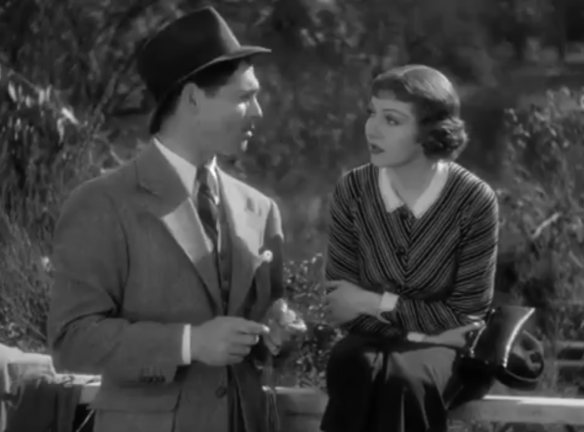
But let us rewind for a moment. The movie itself is conceived with one of the great screwball openings as spoiled Ellie Andrews (Claudette Colbert) quarrels with her protective father (Walter Connolly) about being held against her will on his yacht. Not to be outdone, she dives off the side of the boat and swims away ready to join her suitor.

Meanwhile, Clark Gable is Peter Warne, a man of the people — drunkards, vagabonds, and newspapermen — recently fired from his paper and looking for a way to get back in his editor’s good graces.

There’s a sense he would not have gotten this kind of rounded, contoured part at MGM, which was more intent on casting him as their ever-reliable, hard-edged he-man keeping all the hearts of their leading ladies palpating. It has to do with audience supply and demand. It Happened One Night allows him to live a little — to burst out of the mold created for him at his home studio — and the results are a divine departure.

Today the night bus circuit feels like an antiquated or at least a bygone segment of society. Not that Greyhounds don’t exist, but the world’s been proliferated with commercial air travel made available to the economy classes over the past 80 years.

In It Happened One Night, it’s a convenience only to be utilized by those affluent enough to afford such luxury. Hence, the reason Ellie’s father goes searching for her by aeroplane.

What the road trip becomes is a kind of universal equalizer where everyone is on the same playing field, low on money and just getting by. As an audience, for the majority of time, we are resigned to view life from the cheap seats with everyone else. It breeds this kind of communal rapport that only builds over time. Because, of course, two of our co-passengers wind up being Colbert and Gable.

So we have an element of class injected into the action as Ellie is forced off her high-horse. She gets a reality check of how real people live and what life’s like with moderate inconveniences and discomforts. These are sensations she has never experienced. They are foreign to her world. She’s also an easy target getting her suitcase swiped from under her nose.

Being on the lam, it’s not like she can wire dear old dad for more funds. Likewise, lowlifes like the skeezy Roscoe Karns, one-on-the-side Shapely, with an accent on fun, are on the prowl for a pretty dame to annoy. However, it’s Karns portrayal giving the world one of its other foremost cultural icons. That’s right, doc. Bug Bunny!

In the end, Gable dreams up a farfetched gangster plot to keep him quiet sending the spineless sot fleeing for his life. Because this is the role of Peter. He’s a real person; he’s seen the world and knows how to take care of himself. So despite their initial antagonism, Ellie sheds her ignorance and grows to appreciate the man’s watchful eye verging on moments of brusque thoughtfulness.

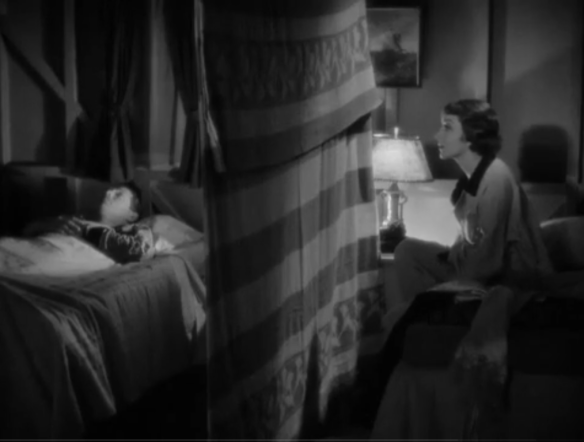
He sets them up with two separate beds at Dyke’s auto camp when they are forced to take a rainy evening detour. For Ellie, she has the unpleasant sensation of playing his wife, and it adds the tension to the preempted romance.

Gable dominates the evening when he strips down to his bare chest and supposedly helped increase the mortality rates of male undershirts all across the country. You can’t say people didn’t notice, Ellie included. So she joins the Israelites on the other side of “The Walls of Jericho,” the blanket keeping them at a respectable distance.

This scene is a lynchpin moment based on what happens the following morning. Ellie wakes up, and it’s like a switch has gone off. She meets the day disgustingly cheerful as if a screwball dame has replaced her formerly socialite self. We’ve entered the role reversal.

Screenshot 2020-03-27 at 90331 PM

At first, it’s all fun and games as we witness the utter lunacy of their escapades, maintaining the charade for a couple of detectives nosing around for dear old dad. Peter teaches his travel companion about a real piggyback ride — a pastime for the humble and the poor. Low on money, they hitchhike and gnaw on raw carrots by the roadside (like a certain looney tune).

It turns into the Indianapolis speedway as he attempts unsuccessfully to hail a ride. His thumb proves ineffective. Claudette Colbert has a far more viable solution. It’s yet another turn in the story — from helpless waif to resourceful daytripper.

The joy of the movie is how there is a pace to it because we all know intuitively we need to get to New York with Claudette. Capra mimics the continual movement of the film from town to town with his camera set on a crane to follow his couple on their road together. And yet as she begins to soften and warm to her co-companion, some of the urgency is lost but not the delight of the film.

Because we’ve already had time to grow with the characters, appreciate what they’ve drummed up together, and desire to spend the rest of our time with them. Anything else would feel like an early and highly disagreeable end to our time together. What’s marvelous is how Claudette doesn’t want it to end either. The three hours to New York never felt more infinitesimal.

Peter’s exclusive story feels immaterial; he’s certainly not taking any notes to develop copy, and the nightly rituals, The Walls of Jericho et al. feel rote at this point. Where might they go from here? It calls for some kind of emotional response.

Colbert obliges. The love is there. He just needs to respond — to understand there really is something fundamentally different about who she is as a person. Still, fate gets in the way as it always has a habit of doing in rom-coms. There would be no final act otherwise.

The most glorious discovery is not solely our leads but Walter Connolly who is granted a change of heart, one that the final act requires, I might add. Suddenly, we have a new screwball wrinkle: a father who is benevolent and understanding nudging his daughter on to ditch convention and the foregone wedding march for someone she really loves.

Why does this change happen you ask? Much like Colbert’s evolution, I’m not sure we can pinpoint it specifically, nor do we care. The only thing that matters is the inevitable: The Walls of Jericho come tumbling down. Ellie and Peter are finally allowed to know one another in the Biblical sense.

5/5 Stars

Letty Lynton (1932): A Hidden Classic

Letty Lynton is one of those hidden movies cinephiles look to unearth from the sands of time. In this case, it’s namely because it’s notoriously difficult to view after a court case in 1936 deemed it was too close in plot to the play Unfaithful Woman, which, coincidentally was made into a later movie with Hedy Lamarr.

It’s rather astounding, as we near a century later, the film is still fairly hard to come by though not entirely obsolete. Could it be that this plays mostly into its mystique as a forgotten classic? Partially, yes. But it’s yet another stellar showcase for Joan Crawford’s unparalleled stardom in the 1930s even as it highlights the perils and burden of womanhood.

Letty (Crawford) is a gorgeous socialite who has all the men fawning over her and why not? She’s Joan Crawford draped in luxuriant furs and the immaculate creations of Adrian. However, one of her suitors, Emille (Nils Aster) is particularly persistent. She’s made a habit of leaving him only to return for more passionate romance. This time she’s ready to end it for good.

It’s not healthy for her and so she and her faithful maid prepare to run to another far-off destination by ocean liner never to be seen by Emille again. This is of primary concern. It just happens she is birthed across from Robert Montgomery and you hardly have to tell him twice when he’s caught a pretty girl in his sights. He makes a note of it until the right moment…

Still, two can play the game. They’re both intent on making each other’s acquaintance, and so it is arranged. They spend a jaunty evening cavorting until the wee hours of the morning, being chased around the decks by the crew of sailors washing it down for the night. Their rapport builds fast and easily.

Crawford is a modern girl with her puffed sleeves as decadent as can be. It seems obvious that you need a certain amount of confidence or, dare I say, audacity, to pull off such a look, and Crawford was nothing if not audacious. It helps to cement her legacy in the annals of cinematic fashion.

Christmas comes with streamers and ice sculptures. Despite the gaiety, she has a few bittersweet tears, and he does everything to cheer her up. There they are in her cabin, their feet kicked up on the furniture, and he proposes marriage with a glance as he holds a lit cigarette.

Letty is incredulous, even mesmerized by him. He’s a different sort of man. In a world swimming with men all clawing to get their hands on her, Jerry’s not like that at all. He never tries to kiss her or hold her hand or any of that. He’s not looking to get fresh because his character is genuine.

It wins her over. And then we remember it’s still Christmas, and they are deliriously happy banging on every cabin door as they stroll down the corridor madly in love and rousing the deck with some late-night yuletide cheer. For the first time in her life, she’s going straight and sincere, and Letty’s never felt better.

But it’s inevitable. The boat docks and waiting on the other side stands Emille. It’s wishful thinking to assume he would leave her be. She’s faced with a problem: there are two men in her life. One she doesn’t want to lose and the other she wants desperately to get rid of.

Not taking “no” for an answer, Emille pulls her in his arms and kisses her — trying to seduce her — and she rears back to slap him.”I’ve never had anything in my life I’ve loathed like that,” she says.

In a world hopefully far more aware of the burden of proof thrust upon women, Letty Lynton hardly feels dated. The import of its core drama is here with us today, despite the obvious notes of theatricality. It’s all spelled out through the crazed expression on Crawford’s face, a mix of relish and abject horror at what she’s witnessing.

Because she was prepared to end her life with poison rather than be forced to be blackmailed by her former lover, but she never has the chance to drink her medicine. In a development analogous to future dramas like Blue Gardenia, she becomes both a victim and the accused simultaneously.

Again, she looks to delay the repercussions and kick the can down the line. There’s the obligatory meeting with Jerry’s parents. They are decent, down-to-earth folks who welcome her in, thankful their son has settled on such a fine woman.

Imagine the embarrassment when a police detective shows up to take Letty in for questioning as she is closely implicated in a crime. Her fiancé stays by her side as they go before the judge (Lewis Stone) in the privacy of his office as he deliberates on whether or not to bring the case to court. It doesn’t look good.

In her state of hopeless helplessness, Letty receives some steadfast aid from all sides. The ending is too pat — with looming consequences of perjury — but they insinuate the theme of the movie: happiness is tenable when we surround ourselves with loved ones who will loyally intercede on our behalf. So often relationships are tossed by the waves or racked with tension. What a wonderful thing it is to find the kind of renewed stability Letty installs in her own life.

The movie employs a bit of a cornball ending, but between the amiable chemistry of Montgomery and Crawford, and the redemptive arc, for such a hard-sought picture, Letty Lynton is a worthwhile film to seek out.

3.5/5 Stars

Together Again (1944): Boyer and Dunne

The film’s title couldn’t be more true as Irene Dunne and Charles Boyer pooled their talents for a third go-around, and what a pleasant experience it is. If it wasn’t evidenced by the soaring romance and light comedy of Love Affair and When Tomorrow Comes, they share that thing that is so often conveniently distilled into the word “chemistry.” You can’t bottle it, and it’s rarely a given. Still, on the screen together, something tangible happens.

In this regard, the plot almost feels of secondary importance though Together Again begins with a quirky and, frankly, intriguing premise. One of the most prominent landmarks in the town of Brookhaven, is a giant statue to the late Mayor Crandall.

After his sudden departure from this mortal coil, his wife Anne (Dunne) was quick to shoulder the responsibility. Now she lives in their home with her curmudgeonly father-in-law (Charles Coburn) and a histrionic daughter (Mona Freeman), who is beside herself with hysteria. You see, the head of her beloved father is knocked clean off his body by a stray lightning bolt.

Being the faithful civil servant that she is, the mayor sets aside her day-to-day duties post haste in order to enlist the services of a sculptor. She takes a day trip to the city in order to requisition the new statue, but the artist she calls upon is hardly who she was expecting. Then again, George Corday (Boyer) was hardly expecting to meet such a beautiful mayor. Every mayor he’s ever known was a stodgy old man. They’re both taken aback.

Despite her misgivings, she manages to get talked into going to a quiet little club only to renege their partnership. He’s not the kind of innocuous creative type she had in mind to do justice to their sleepy little town. Obviously, Boyer smolders too much with latent passion and charisma. He unnerves her.

Could the movie be over? She wanders off to the powder room. She looks curiously like the showgirl providing the floorshow. Then, the attendant offers to iron her dress with a wet spot. Minutes later, a raid and someone running off with her garment, means she’s caught in a compromising position when the police waltz in. If we see it coming from a mile away, the beauty of the character is how she walks into it all so innocently.

Anne flees her hotel before Corday can catch her, and she tries to ignore her obscured face on the scandal sheets. It’s all a horrible misunderstanding that she tries to dismiss. When she returns home, a new extravagant hat in tow (she can’t seem to misplace it), she’s practically jumping out of her shoes.

The evolution of Dunne in the picture might be familiar to those who’ve witnessed her about-face in Theodora Goes Wild. There’s this sense of propriety that all a sudden is besieged with all the fits and giggles, quirks, and foibles one comes to expect in a screwy brand of comedy. As her daughter observes, she’s become a little “leapy.”

As mayor, she’s supposed to “keep her shirt on,” but she’s concerned what happened on her little excursion will come out and, of course, it does. This time it’s not Melvyn Douglas but Charles Boyer catching her in her “lie” so to speak. She’s traded out a salacious novel-writing career for a wild night of accidental indiscretion that might rattle her upright standing as mayor of her small town. Her beau even winds up sleeping on the premises much in the same manner of Douglas before him.

It doesn’t offer too much in the realm of invention, but the ongoing rapport of Dunne and Boyer keeps things convivial enough as they get caught up in your typical entanglements. Upon meeting him for the first time, Diana swoons and young love sweeps over her as she tries to dress the part and act more cultured, spending extra time plonking away at the piano. Why she even addresses him in French, when heading off to school, dropping a refined “Bonsoir” bright and early in the morning.

As her daughter tries to impress upon this gentleman her newfound womanhood, Anne unwittingly shows off a bit of her youth, with a becoming new hairstyle and a less fastidious demeanor. As Diana’s main beau, the lanky Gilbert “Good Night” Parker (Jerome Courtland), finds himself more and more scorned; his spirits are lifted by a show of kindness from Mrs. Crandall. He simultaneously alights on his own amorous advances.

There’s nothing particularly inspired in these beats. It’s Dunne and Boyer who continue to make it amicable. Under the circumstances, it’s difficult to consider any two people we would rather see together in the scenario. Coburn for one is tickled pink to finally see his daughter-in-law going in with another eligible man.

The denouement of the movie does provide some mixed signals. Granted, they feel like the status quo dichotomy in 1944. It seems Anne must make a choice between love and duty — her job as mayor or a life away from the stifling town — they are presented as mutually exclusive.

Boyer plays a bit of the cad in the final act when it seems almost laughable that she might have to choose. He draws a comparison between himself and that hat she tried to hide away on the top shelf of her closet. It doesn’t seem quite fair. There’s not much to spoil, but I won’t divulge what happens next.

Instead, my mind drifts once more to Charles Coburn; he was made for these types of supporting roles: crotchety yet secretly good-natured matchmakers. Surely he could deliver on them in his sleep.

Although it’s not quite as stellar as Theodora in the comedy department, Dunne still shows her usual aplomb, and out of personal preference, I fancy Charles Boyer over Melvyn Douglas on most occasions. This one is little different. Forgive my impudence. It’s just so good to have Boyer and Dunne together again.

3.5/5 Stars

When Tomorrow Comes (1939) and Romantic Shelter From The Storm

Screenshot 2020-03-22 at 61849 PM

Waitresses bustle about on their beats passing along the news like busy bees: eight o’clock tonight unity hall! It caused quite a stir in the ranks and the girls are currently walking on eggshells afraid to get canned. A few of the gals are especially jumpy including poor Lulu who drops a whole tray laden with plates.

So when a Frenchmen sits down during the dinner rush it’s how do you say, disconcerting. He’s not rude by any means. His manners are fine. But he’s a foreigner and he asks for things outside of her comfort zone like bouillabaisse for instance (I had to look up the spelling just now). For instance, we can’t hold it against her when she says “To me all foreigners are spies until I learn different.”

The prevailing thought is he might be with the management to check them out. So they put their most level-headed colleague on the assignment. It’s none other than Irene Dunne. He has no malicious intentions at all. In fact, it’s quite the contrary. After making the acquaintance of such a charming lady, he wishes to see her again.

Irene Dunne feels like the original Norma Rae. She has spirit — the kind of spirit that stands up against injustice and will not allow others to be bullied into submission. But this is grounded by a charitable heart and a sense of decency. It’s what makes people get up and take note within the clamor. Because there’s genuine substance to her words. We believe them to be true.

Amid the host of admirers is one very special one. He’s attended in hopes of seeing her, a man oozing with names (and the Boyer charm). What might have been a chance encounter in real-life, in turn breaths life into an entire movie romance. The humid streets of New York don’t exactly scream love nest, but the man is so taken with his company, he doesn’t mind if he has to meet half the city just to be with her.

There are other interludes in this budding relationship, though we might as well focus on the focal point. It comes during the onslaught of a tropical storm. The man, she now learns is the famed pianist, and he welcomes her into his home to get out of the elements. Far from feeling surreptitious, it seems like an oasis from the world outside.

She walks around one of the bedrooms scanning around, leafing through an album of pictures, trying to glean more about the man downstairs. What follows is an enchanting zoom mimicking Dunne’s gaze as she returns from freshening up. She’s brought down the stairs by the sound of his playing. There’s a forceful authority to it to, matching the gale raging outside the windows. On her face, we see the love brooding right in front of us.

The dramatic situation is made plain by the inclement weather (that’s an understatement) and falling trees overhead. Blaring coast guard bullhorns warn of waters rising. They must find high ground.

Screenshot 2020-03-22 at 65009 PM

Rest assured, this is hardly a survival film. The scenario itself is ripe with more intimate pleasures as Helen and Philip seek asylum in a church during the brunt of the storm. After the crowded, liveliness of the city, the actors are contented in one another’s company, and it provides an understated satisfaction.

They light candles, she raises a prayer to the unnamed Providence for getting them to safety. He has the subtle tact to take her up into the balcony to the organ as the water starts to flood inside. It’s a thoughtful act, and they continue their genial conversation unencumbered. As she sits, listening to him quietly play “Fur Elise,” she thanks him. Because she saw what he did too.

What a lovely digression it is for those willing to partake of the solace. The gentle hospitality of the minister and church organist is yet another touch of decency in a picture ripe with such encounters.

If this sounds blase, rest assured, it plays to the rhythms we might attribute to a Stahl melodrama. They somehow bend away from the brunt of drama and pierce our hearts far deeper. Like Tay Garnett’s One Way Passage, there’s the sense of a destined love of the highest most ethereal kind — a love that can never be — it can never fully acted upon.

Because if it’s not evident already, they are people of principle and conscience. It goes unspoken for so long — the impediment between then. But she knows. He is not free. He is married to someone else, albeit loosely, as Mrs. Chagal (Barbara O’Neil) is a sick woman.

When Helen’s roommate notes it looks like she’s been away for 20 years like Rip Van Winkle upon her return, there’s some truth in the words. Even an evening can feel like a lifetime under the circumstances.

She eventually meets his catatonic wife and lovely mother-in-law. There’s no malice or ill-will, only a bit of sadness on her part to see what his life really is. She feels obligated to leave him behind — to not make this any more difficult for either of them. So she goes back to her picketing and wins the victory she helped champion. The film has gone too far though. It is no longer about unions or these type of ideals. At the very least it is about romantic ones.

There is another scene where she answers a caller at the door. It’s the wife, out on the street, as if she’s perfectly fine, and she might very well be. The scene has been written many times before: A wife confronts the other woman. We’ve seen the scene play out in so many stories it’s mind-boggling. Here it’s different. You almost don’t realize what is upon you.

There is a curious energy about it. Quieter and yet not unsure. Forthright and devastating in its very simplicity. What could be incisive and vindictive feels blunted and equally delicate in the hands of Stahl, and I believe this is quite purposeful. The main characters pull back, compelled by their sense of good and decent feelings. The “villain” in actuality is a helpless victim.

In another film the ending of When Tomorrow Comes would feel uncomfortably abrupt. Here it somehow works for me and not because the swelling music is cued. It’s because we know there is a foregone finality. It might not be today or tomorrow exactly, but it will have to end, going their separate ways and holding onto the love they had and what could have been. That is all.

Because unrequited love is not the most tragic form; it is the uninitiated followed closely by the unfulfilled romances that sear the most. If you are inclined, this is a tender drama more than capable of inducing a few misty eyes. I’ll never get over the grace of Irene Dunne, the adroitness of her reactions, touching on each and every emotion. Boyer has never been more gentlemanly. Together they feel sublime.

If my praise sounds too effusive, I’ll admit I haven’t seen Love Affair for some time. Have I simply forgotten what their chemistry was like? I’d like to believe Stahl brings something of his own to the material as well.

3.5/5 Stars

Cluny Brown (1946): Nuts to The Squirrels

cluny brown

The title card introduces our time and place. It’s a lazy Sunday afternoon in England. The year: 1938. Nothing particularly important is going on except a cocktail party and that’s only important to the host, one Mr. Hilary Ames (Reginald Gardiner).

You wouldn’t call this much of a dramatic situation aside from the minor detail: his stopped sink is about to put a catastrophic wrench into his fast-approaching party. The guests will be coming soon! What will they say?

If this feels like an inane dilemma, then you already have a heart and pulse for what Ernst Lubitsch will be doing over the next hour and a half. Because this is his brand of continental comedy of manners, taking particular aim at the British classes.

However, he’s in need of some conduits and they arrive at Mr. Ames’s door in the form of Adam Belinski (Charles Boyer) and Cluny Brown (Jennifer Jones). They couldn’t be more disparate figures.

He is an esteemed professor wanted by Hitler for some abstruse reason that’s never explained. Nevertheless, all the social elites pay him the highest amount of deference. Cluny is one of the lower classes — a chipper young lass — with an affinity for plumbing. Fixing pipes that is. She comes to repair the sink of Mr. Ames on behalf of her surly uncle. Although a crisis is averted, the bubbly girl is soon sent off to the country to be a housemaid — a position of propriety for a girl as herself.

Meanwhile, the party finally commences, and it’s what we expect, full of pretentious, huffy party guests. A trio of stultified mischief seekers, Peter Lawford, Helen Walker, and Michael Dyne are on the hunt for something to bring them out of the doldrums. They finally happen upon something arcane enough to pique their interests — a man sleeping on a bed tucked away in a back room.

What’s hilarious about Boyer is how he’s quite literally an anti-scandal maker. Lawford recognizes him as the esteemed thinker and immediately extends him the highest degree of repute. He’s falling over backward to take him wherever he needs to go and shoveling out pound notes to support his cause against the miserable Nazis.

Boyer doesn’t take advantage of these good graces as he meekly deflects most and then folds to a few. The biggest offer is a place to stay at Andrew’s parents — a lovely estate out in the countryside: Friars Carmel Manor. The very same place our plumbing prodigy is taking up residence.

However, the vivacious Cluny starts off her first day on the job on a dubious foot. She actually makes small-talk with the Lord and Mistress of the manor going so far as to drink tea and eat crumpets in their company! This will never do as far as the other staff is concerned. Her catchphrase of choice, “nuts to the squirrels” is tantamount to public indecency.

The key observation is how she never intends to bawdy; she never is. Her spirit simply sparkles brighter than any of them dare to. Because there is an intrinsic bounce in her step and a winsome demeanor burgeoning with innocence and goodwill. It feels totally at odds with the world she’s gone and got herself immersed in. But she makes a bright-eyed go of it all the same. She knows no other way to tackle life.

It’s easy to view this as a riff off the upstairs-downstairs dramas of Jean Renoir — Diary of a Chambermaid for instance — though this does have a Lubitsch twist. He, like the eminent Frenchmen, is readily poking a wry bit of fun at the lunacy of rigid class structures.

In other words, once it becomes evident who you are, people start treating you with respect or lack thereof. The good professor gets royal treatment. Cluny Brown receives the cold shoulder. And of course, they are the most crucial figures as two people totally out of place in the prim and proper hierarchy of the English countryside.

On her day off, Cluny goes prancing off to the chemist, swinging her purse, and wearing a garden on her head. She shares tea with the punctilious Mr. Wilson (Richard Haydn) and his grunting mother, then treated to harmonium music as the man of the house proudly acknowledges his position in the volunteer fire brigade. A walk in the countryside afterward sounds more rewarding. Mostly because they bump into Mr. Belinski; his candor can more than break up the turgidness of the bespectacled chemist.

On another evening, it’s the birthday celebration for Mrs. Wilson, which becomes a telling proofing ground for why this romance of opposites was destined for failure. As the candles are lit and snooty-voiced Mr. Wilson pontificates once more, the plumbing goes haywire. Cluny Brown does what comes naturally to her; she jumps into action, banging away at the pipes right then and there! It’s immaterial whether she succeeds or not. She has trampled over what is considered sacrosanct in these circles. A female plumber! It just isn’t done, and the party dissolves unceremoniously.

Thankfully, there is more to the story. The movie is blessed by these immaculately arranged character parts placed throughout for the likes of Reginald Gardiner, C. Aubrey Smith, Una O’Connor, and still others.

But the most sublime of the surprises, aside from Jones’s sheer ebullience, is how Boyer constantly feints away from his dashing leading man persona. I’m not sure if other moviegoers assumed the same, but one cannot help think that Boyer hearkens back to Maurice Chevalier in all those saucy operettas from the 20s and 30s. For many, Boyer was heir apparent as the only other cinematic Frenchmen they might have known and a dashing one at that.

In other words, we think he’ll do something — act the rapscallion in such a prim society — but this is never his flaw (or his charm). Instead, he takes a genuine interest in others. He feels more like a matchmaker and a fix-it-man making his way through the story with a perceptive eye. And yet Lubitsch is good enough to give him a moment of romance for the sake of the audience since he sees the light in Cluny no one else appreciates.

Likewise, I don’t think I’ve ever appreciated him a role so much, for the very reason he was allowed to be far more than the stereotypical reputation that proceeds him. This extends to him a power — a new kind of novel flexibility — to be something he was rarely granted the opportunity to be before.

He and Cluny make a fine pair of kindred spirits and resident outsiders. In fact, they take to English society like squirrels take to nuts — a bit baffled but good-willed — adding a strain of much-needed gaiety to otherwise stuffy lives. Bless them.

3.5/5 Stars

Bluebeard’s Eighth Wife (1938): Coop and Colbert

Screenshot 2020-03-21 at 31856 PM

The whole glorious entangled mess of the story feels like an obvious antecedent to Billy Wilder’s Love in the Afternoon (1957), which is one of his lesser films (even with the redeeming presence of both Hepburn and Chevalier). It seems like a fairly obvious observation to make because Wilder deeply admired  Ernst Lubitsch. Love in The Afternoon was an ode to his hero. Although it didn’t quite come off.

I have similar feelings about the screwball comedy Bluebeard’s Eighth Wife (1938). It doesn’t quite gel. But first let’s turn our attention to the illustrious opening gambit which, like many of the great Lubitsch beginnings, is too exquisite to pass up as the dramatic situation is brought to the fore.

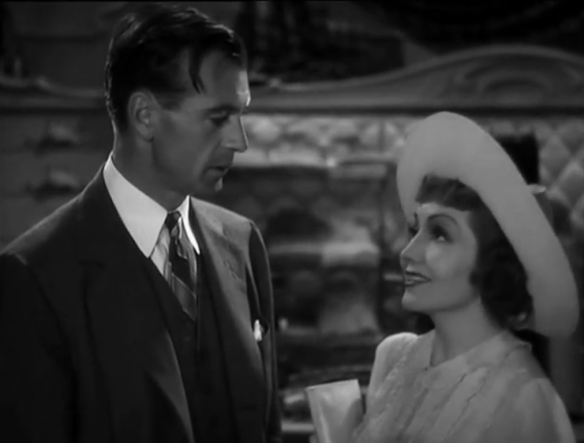
Gary Cooper staves off the sales floor spiel of the pertinacious shopkeeper with a touch of Parisian charm. All he wants are pajama tops. No bottoms. But in France, this simply is not done. It’s unheard of. The chain reaction is set off from clerk to head clerk — rushing up the stairs to the manager, regional manager…all the way up the president! In a moment of incredulity, the disgruntled fellow rushes out of bed at the words. He yells, “Communism!” only to reveal he has no bottoms. And we’re hoodwinked from the outset as only Lubitsch could do.

It all amounts to a national calamity. You can just imagine the papers printing up a nice spread on the scandal. But none of this happens thanks to a most propitious solution in the form of a woman; she only requires bottoms for her man. If it’s not apparent already, Billy Wilder and Charles Brackett’s script might as well have written the book on the rom-com meet-cute.

They’ve piqued our interest and pricked up our ears. If nothing else, thanks to some talk of “Czechoslovakia” in the dark. Far from being risque, it’s supposed to be a handy antidote to insomnia.  The man is obliged to the woman, and they go their separate ways.

The story too moves on from a department store to a hotel hallway where Gary Cooper is still being hustled and harried, this time by none other than the perennial Classic Hollywood hotel clerk Franklin Pangborn.

Better still is Edward Everett Horton, the Marquis de Loiselle, a man squatting in the hotel with rent backdated for months. He’s trying to pawn off anything he can to anyone who will bite including Mr. Brandon (Cooper). He’s also connected with the same pair of PJs in another winking Lubitsch touch before the conversation suddenly switches to bathtubs.

If you want to get technical, the pajamas spell it out for him. It’s the reason why he’ll buy the man’s bathtub, already preemptively planning a honeymoon in Czechoslovakia. It’s Lubitsch shorthand for wedding bells. You see, Coop is intent with getting together with Claudette if at all possible, and it is. She’s the marquis’s daughter.

These elements are wonderfully conceived and textbook Lubitsch execution making the most of the script. However, I failed to feel the same way about the entire movie. If you’ll permit me a digression, I recently saw Paris When it Sizzles and there’s no doubt Lubitsch’s film is head and shoulders above the later picture — more lithe and clever at any rate — but there is the same problem at its core.

It ‘s almost counterintuitive to acknowledge this. The premise in each case feels almost too inventive for the story’s own good. However, it’s rather like we are following the mechanisms of a clever bit of story structure instead of really getting to enjoy the out-and-out thrills of romance, be they comedic or overly dramatic.

We never get past the stage of logline, hook, or gimmick into truly uncharted territory where the two characters are allowed space to breathe and do things that feel, well, natural.

The remaining elements are intriguing enough. She finds out he’s been married so often. Thus, Nicole’s ready to call the whole thing off. Instead, she decides to make him suffer. No divorce, just prolonged separation. It galls him to be so close to his wife and yet so far. He mounts an offensive inspired by Shakespeare.

What follows is a barrage of slaps, spankings, and iodine for bite marks. Colbert is able to out duel him with her onion breath — his fatal flaw is that he positively abhors the miserable vegetable. It’s all potentially brilliant stuff and a lot of it truly diverting with David Niven and a private investigator thrown into the mix. However, the pieces somehow don’t fit together in a manner constituting a decisive story, beyond some hilarious premises and snappy dialogue. Rest assured the film has both.

If we’re able to consider where it goes wrong, we can look to Gary Cooper and Claudette Colbert sharing the screen together. There’s no clear antagonism between them per se. Instead of antipathy, they have a kind of anti-chemistry. That is, they’re meant to be opposites. But there must be a sneaking suspicion on the part of the audience that they do really have feelings for one another. At least, this is what all the great screwball comedies of remarriage banked on.

Coop and Colbert never manage the same kind of underlying inertia. I never feel like I’m sitting back and having a grand ol’ time gallivanting through escapades with them. In other words, it’s not quite screwball. That was never the Lubitsch calling card. That’s not what his Touch is about.

Admittedly, I had a similar issue with Design for Living (1933) a film that was quite good on paper (and even in technical conception. The acting talents are to die for. The director one of the greats of visually intuitive comedy. Here we even have a script from Billy Wilder and Charles Brackett.  It all comes to naught if the parts don’t completely mesh.

One idea I would like to court has to do with the point of view of the story. Obviously, Gary Cooper’s our lead, and he’s far from a virtuoso comedic wit. He is a movie star. Still, what is the essence of the story?

Is it about a woman winning her man over under the most absurd circumstances? The Lady Eve did that quite well: Barbara Stanwyck taking in Henry Fonda. But that will never do with Coop (Then, again there is Ball of Fire). He began as our focal point, and he’s the main focus until the end. Even with a straitjacket gag, he gets the final kiss.

Really this should be Colbert’s movie to win over, where we get to cheer her on and relish her amorous conniving. Heaven forbid our leading man be upstaged (Then, again there is Midnight). Instead, Claudette felt like the enemy, a bit annoying, and because Gary’s strung out a laundry list of wives and meets everyone with a scowl and a brusque dismissal, there’s not much to like about him either.

Maybe the film’s take is too modern or my sensibilities not modern enough, but I couldn’t help feeling letdown. I’m not sure if doing a more thorough anatomy of the screenplay will change this, and I’m okay with that. It’s only a shame I don’t like this movie more. I wanted to. At least I know Gary and Claudette won’t hold it against me.

3/5 Stars

Hands Across The Table (1935): MacMurray and Lombard

Screenshot 2020-03-21 at 72315 AM

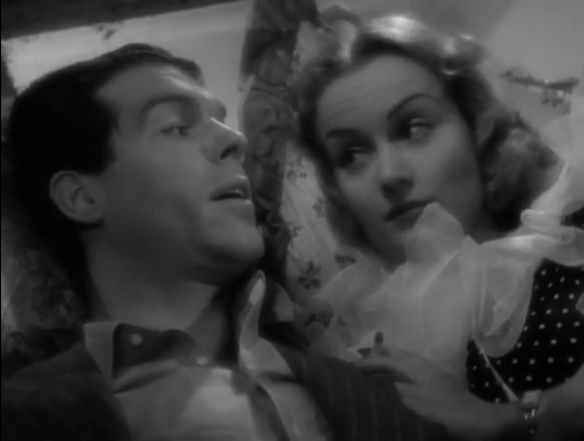
Regi Allen (the inimitable Carole Lombard) is a manicurist schlubbing along, working away at people’s cuticles, and jamming away on the subway two times a day. She’s looking for a major catch to grab hold of. Ralph Bellamy is a charming man with money, albeit resigned to a wheelchair.

This could be the perfect start of a rom-com right here. However, in the year 1935, the thought of such a romantic “couple” might have been too startling for conventional Hollywood hegemony. There must be another, and he’s soon introduced.

They meet as he plays indoor hopscotch like a weirdo right outside Mr. Macklyn’s apartment. The face belongs to the most boyish-looking Fred MacMurray I have ever seen. Because again, if you’re doing the math it’s 1935; Disney professorship and My Three Sons fatherhood would be decades in the making.

For the sake of this story, it’s fortuitous he too is another affluent moneybags or at the very least his family name has enough numerals after it to suggest he is a long-time member of the “vieux riche.”

Being an unabashed gold digger, she looks to seek him out even if he is a bit on the odd side. What matters to her is the bottom line. Namely, money. Of course, the perceptive viewer might have already guessed something is amiss here somewhere. There must be a catch or a gag or a complication of some sort.

To put it bluntly, he’s as much of a high roller as she is. Because The Crash conveniently took all his family’s fortunes in its wake. He now might as well be a member of the “new poor” though he still spends money like it grows on trees. To put a positive spin on it, he is radically generous with his capital.

They have a formal dinner date with an entree of the hiccups and onion soup. And their shenanigans continue even as she begrudgingly allows her new confidante to crash on her couch.

Fred is game now because they are actually quite alike — birds of a feather you might say. He does his most uncomfortable impression of a Japanese manservant as he becomes Ms. Allen’s live-in cook trying rather unsuccessfully to whip up dinner.

Imagine my surprise when William Demarest shows up behind the door as a new suitor for Regi. Ted has a ball of a time masquerading as her demonstrative husband scaring off the hapless chap from the adjoining room. Surely neither knew they would be reunited one day on the small screen. It’s a coincidental piece of happenstance only available in hindsight.

In turn, he tells Regi he’s supposed to be in Bermuda by now with his fiancee — an heiress of a pineapple empire — so they pay her a giggly prank call long distance. The way Lombard and MacMurray warm to one another is in one sense lovely but also a bit of a disappointment.

The best sorts of screwball, are the fall apart come back together passionately type of rom-coms involving red hot tension. All the elements are here, even the romantic foils, but for whatever reason, because the characters are so charming — no fault of their own I might add — it winds up being a lightweight iteration of the genre.

It’s funny in starts and spurts but never to the point of fever pitch or raucous absurdity. It’s never really prepared to go the extra mile off the deep end beyond hopscotch, hiccups, and heat lamps. Again, it’s a minor shame, but you also can’t take away from Lombard and MacMurray.

If you’re already a fan, it’s a delightful trifle courtesy of Mitchell Leisen who’s skill with this kind of material is often underrated. For their part, the Lombard-MacMurray partnership birthed three more pictures in rapid succession to meet the public demand.

If you’re like me, you pity Ralph Bellamy as he graciously contents himself playing the matchmaker for the two lovebirds running off into the street looking for the coin they flipped. Heads means they’ll get married. Tails they go out to lunch. The giddy couple instigates a traffic jam just to find out and wouldn’t you know it, the coin stands on end in a manhole cover. Ah, love. How sweet it is.

3.5/5 Stars

Middle of the Night (1959): Chayefsky Does May-December Romance

Screenshot 2020-02-14 at 7.56.31 PM

Middle of The Night proves instantly placeable thanks to its black-and-white, New York streets aesthetic. Although the name Paddy Chayefsky, emblazoned over the credits, gives us as much of an inclination of the story we are about to experience.

Because to this day, his name carries with it a hallowed note of reverence and a few distinctives. Not only did he garner the unprecedented acclaim of The Academy, his films were also always centered on characters in their individual spaces and mundane lives. His prose propelled the script into a place of primacy and his words were a form of gospel to center the story around.

While he did time in the nascent days of television where the lines between stage, screen, and theater were relatively thin, he ultimately propelled himself into the movies by maintaining his personal ethos and letting his words speak for themselves.

You might term them kitchen sink dramas, but whatever the phrase, they tackle issues of life as they happen in unfiltered ways. Analogous examples might be Marty, A Catered Affair, even a non-Chayesfy piece like Love With The Proper Stranger.

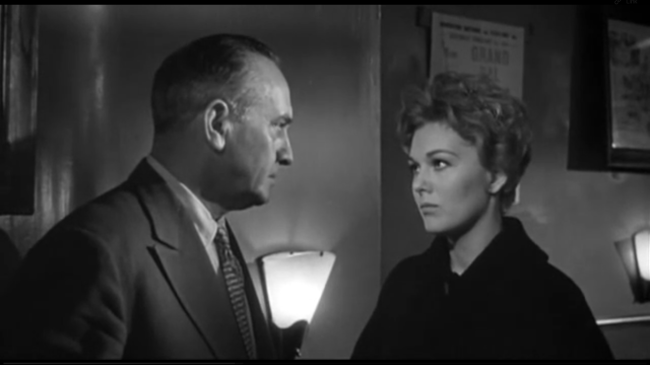
These roles were delivered on the stage by stalwarts E.G. Marshall and Eva Marie Saint, then another illustrious pair: Edward G. Robinson and Gena Rowlands. In the film, they fall to Frederic March and Kim Novak. Who you like most might fall to personal preference.

Far from having ice in her veins, Novak is nervous and skittish in all circumstances. It almost takes some getting used to and yet when you do, she feels more relatable than any other point in her career. Because she’s given up her self-assured cool and husky tones for a voice of a far more timorous nature.

March is always a splendid performer — he has a likability and an innate honesty to his characterizations. In principle, the same can be said of his overall performance here, but the element getting in the way at times is his lapses into an ethnic patois. Authentic backstory or not, it doesn’t quite suit him nor does he need it. But then my feelings started to evolve.

Because I became aware he seems to change how he speaks depending on who he’s talking to. After all, it’s not too farfetched as I have friends who lapse back into shorthand and slang to accommodate certain friends or family from a certain cultural subset. Whether or not this holds true in Middle of The Night, it hints at the complicated patchwork of interpersonal relationships human beings are constantly grappling with.

Recently I watched another Kim Novak romance, Strangers When We Meet, and its strengths fall to its extravagant Technicolor and a certain Hollywood opulence augmenting the middle-class romantic drama burning between Novak and Kirk Douglas. It is a West Coast counterpart to Middle of The Night because they are poles apart, both thematically and in the environments they take time depicting.

Here our main tension builds out of a May-December romance between an aging widower (March) and his beautiful young secretary (Novak). But while it gives the pretense of a superficial affair on the page, the brilliance of Chayefsky’s script is how he’s able to tease out the warm and tentative love budding between two people.

Lee Grant and Martin Balsam’s screen time might only accumulate to a few scenes each. However, even on the outskirts of the drama like they are, they still manage to leave a lasting impact on the story. It’s a testament to the scripting and the veteran caliber of the performers.

One scene, in particular, feels like a masterclass in stringing conversations together through overlapping ideas, cut-off sentences, and the types of asides that dot real-life conversation. Jack (Balsam) is talking about getting a sitter so they can take a vacation before tax season hits him. His wife Marilyn (Grant) — Jerry’s daughter — is preoccupied with her father’s romances. They are mismatched and going off on their own separate tangents.

Jerry doesn’t want to end up like his contemporary, the ostentatious shell-of a man (Albert Dekker), who talks a big talk about his romantic exploits while feeling generally regretful of the life he’s led. Jerry’s far from envious, especially as his live-in sister constantly tries to subtly influence his love life in unwanted ways.

Despite their mutual affinity, the disparate couple has their share of reservations. Because for the here and now, they are happy; they need each other and they love each other. But they can’t help but consider the obvious barriers around them.

If I’m remembering the underlying themes of Marty, the same elements hold true here too: the imprint of family and related peer pressure shape our decisions and ultimately our happiness. Since the days of Romeo & Juliet oftentimes family influence only serves to make matters all the more confusing. If romance happened in a vacuum, it might be a lot more manageable.

Because Betty and Jerry get away together and have a grand ol’ time at a rambunctious New Year’s party where everyone and their wife seems to be their new best friend. The age gap feels inconsequential when you’re full up on bubbly and at the top of the world.

Screenshot 2020-02-14 at 8.51.02 PM

Still, they must return home to reality and with their mutual feelings not quite sorted out. They tell themselves the only thing that matters is them, and yet that’s a fallacy because there are so many strings attached. It’s a reminder of how serious relationships make those involved come to terms with everything. Because every person brings with them a plethora of familial relationships they must navigate.

Mother raises hell yelling down the stairwell at her daughter’s suitor with all her nosy neighbors crammed in the hallway to get a good look at Betty’s Spencer Tracy. And that’s not the end of it. Everyone else is agitated and high-strung, compounded by their own problems, and it’s these prolonged scenes providing a platform for the talents of Grant and Balsam.

My heart really breaks for Novak when her scuzzy ex-husband stops by from the Vegas circuit to try and win her back along with the “half hours” she used to give him. But she’s tired of it. Tired of being desired or more exactly objectified in this manner. She deserves better.

With Jerry momentarily out of the picture, it gives us the time and space to realize the gravity of her individual predicament and the struggles of her own life. She desperately needs Jerry. Constantly clinging to him, wringing her hands, biting her thumb as signs of her constant uncertainty and distress. Because there has never been any type of stability in her life.

Meanwhile, he’s continually obsessed with her but also about how others perceive her — jealous of any younger man who might have eyes for her. His fits of temper become exacerbated over time as he’s overcome by chippiness on the turn of a dime. It’s inconsequential until it totally blinds him, almost crippling their relationship. You could call these neuroses or you could simply acknowledge them as traits of two frightened little people.

Later, they share a fateful exchange in the snow. It looks like what they have has finally imploded. Can it be salvaged? We can’t be sure. He says, “It’s a lousy kind of love.” She replies tearfully, “It’s the only kind I know.” It’s pitiful and real and honest. Sometimes I feel like Chayefsky is on a soapbox — in a movie like The Americanization of Emily — here he just seems human.

This sums it up, doesn’t it? None of us are perfect at love. We have our own hangups, issues, and idiosyncrasies getting in the way of loving our spouses and the significant people in our lives well. Whatever the outcome of The Middle of The Night, surely we can agree it intersects with all of us on some primeval level. This is the brilliance of Chayesky at his best. Because the humble origins allow him to shine through.

3.5.5 Stars