Girl with a Suitcase (1961): Claudia Cardinale Shines

Screenshot 2020-07-12 at 1.19.51 PM

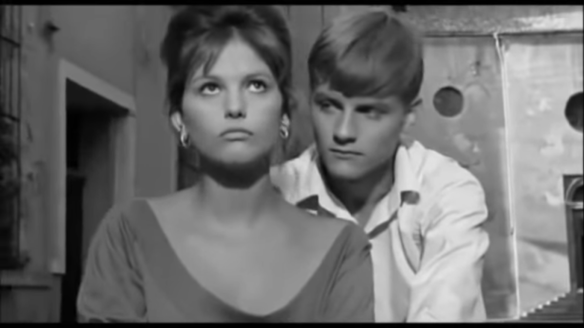
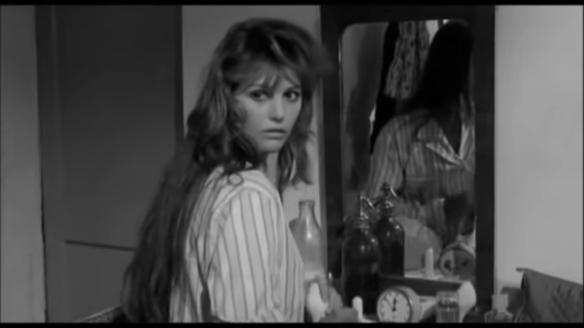
It’s a slippery slope when you begin to consider the attractiveness of women in films because the conversation can get needlessly superficial. All I will say about Claudia Cardinale is that God was very good to her. But beyond her immaculate beauty, the joyous discovery of Girl with a Suitcase is unearthing a character underneath.

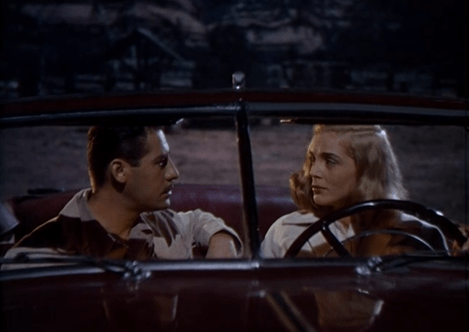
No, she is not playing herself, but in the figure of Aida is someone we can readily empathize with. We meet her and she’s riding in a fancy convertible with a suave young, smart-aleck named Marcello Fainardi (Corrado Pani). We watch them, and they make a handsome pair, but all the while it’s a matter of deciphering the nature of their relationship.

When he ditches her suitcase and flees back to his family mansion inhabited by his younger brother and protective aunt, it becomes all too clear. She’s been duped and he led her on, boasting about some business connection of his. It was all a ruse.

As our dramatic scenario becomes more clear, A Girl with a Suitcase suggests a premise not too far removed from Milos Forman’s Loves of a Blonde, both about women who seem to be victims, whether it’s of love or, more broadly, society on the whole.

Forman plays up the comedy to make his story into something, more and the same might be said of Valerio Zurlini’s earlier film. Marcello all but disappears from his movie, and it becomes framed as one of those coming-of-age stories through the eyes of a young impressionable boy. In this case, the eyes belong to Marcello’s younger brother Lorenzo (Jacques Perrin).

He vows to cover for his sibling, although he doesn’t realize the extent of it until Aida shows up on their steps, armed with her suitcase, looking for someone. Instantly he’s conflicted between his initial agreement and the pity he feels for this woman.

In one passing moment, he asks his tutor, a local priest, whether we are responsible for what our relatives do. His mathematics teacher ironically seems generally incapable when it comes to answering questions of morality. In an effort to extend the man some grace, maybe he believes a boy’s problems are never as big as they seem. It takes some perspective, and perhaps he’s right.

However, he also misinterprets the thoughts that occupy his youthful pupil’s mind. There’s an importance and a candor behind his inquiries. You can see the gears turning in his mind because he is a creature of compassion. Youth often knows no other way.

Soon he becomes Aida’s benefactor and confidante. He provides her a loan, invites her to take a bath in their mansion. What’s comforting is how there are no ulterior motives between them and so they relax and come to appreciate one another as equals and as friends.
2020-07-12 at 1.12.31 PM

She in turn tells him of her unofficial fiancee. Sometimes she loves him madly. Sometimes she wants to strangle him for his ego and selfishness. She’s a singer he’s a musician, but he holds antiquated views about a woman’s place; he wants to clip her wings. She says “In art, couples don’t work,” She bemoans the men in her life. One robs me, another dumps me. Only Lorenzo extends her common decency.

I’m no musical savant but the soundtrack is a fine extension of the world with this almost tinny harpsichord quality we often associate with 18th-century drawing rooms. It’s cultured and yet set against the conversations still manages to be intimate.

She becomes more and more loquacious as he eagerly listens to everything she has to say. In the kitchen, they eat eggs and she finishes up the dishes, regaling him with her travails with a troupe of dancers. They frequented the cruddiest hotels on their circuit with nights full of conversations about hopes and dreams, careers, and future husbands. These are the most intimate of things and Lorenzo is let in. They feel a connection.

If there is anything like drama in the movie it’s generally subtle. Aida takes advantage of a big shot and dances with him at the hotel. Lorenzo watches jealous and angry with her for being so phony. Then, her boyfriend returns and it stings a bit more.

Lorenzo’s never had so many conflicted feelings welling up inside of him and so he tells Aida a white lie that might wind up hurting her. There’s a lovely moment on the steps of some museum. She is waiting in good faith. Instead, the father shows up to question her and get to the bottom of what is going on between them. Lorenzo is disconsolate. He came home drunk. Won’t study. He lies.

What can it be but something more than friendship tearing him apart? The movie does well to highlight what an ambiguous task it is to begin making sense of relational boundaries. In one sense it makes sense we do have marriage and dating to try and make sense of romance and feelings. To help us understand our emotions in a manageable context. Still, when you’re in love (and even when you get older), it is such a bewitching force.

How do we describe it? Yes, there is love between them. Is it romantic? Possibly. But there is a level of concern there proving far more genuine than we are normally used to seeing. Because youth often takes people as they are and sees the best in them when others are either dismissive or manipulative. While this is a beautiful thing, it can also lead to heartbreak. Sometimes it happens by accident.

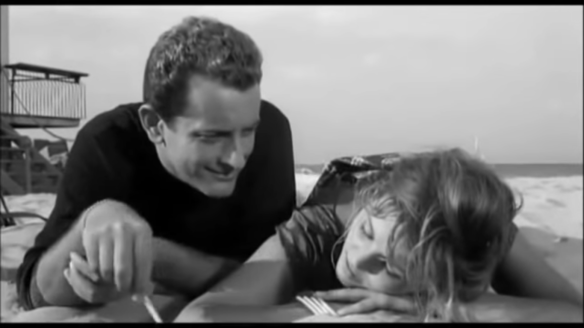
For a good portion of the movie we almost forget about Lorenzo following Aida to the beach as she returns to her lover and then quickly finds a new one. They’re dancing in the cafe and then lounging on the beach together. She’s both obliging but not quite ready to give herself over to him. Then, Lorenzo returns and for the first time in his life, he’s prepared to make a stand to win her.
Screenshot 2020-07-12 at 2.52.19 PM

In everything from The Leopard to The Pink Panther or even Once Upon a Time in the West, Cardinale feels more like a dressing — one element of an ensemble. She does quite well and leaves a lasting impression, but in Girl With a Suitcase, she shines all the brighter.

There’s none of the money or pretentiousness that comes with bigger productions. Granted, there’s nothing wrong with any of the aforementioned movies. I like each one of them, but here it’s different. It’s intimate and alive in its characterizations in ways those other films were never meant to be. That was not their function.

Those were always about Marcello’s story or Alain Delon’s story, Burt Lancaster’s or David Niven’s stories. This is mostly hers. By the time it’s done, we know full well she’s not just a pretty face, but a lovely personality with a beating heart.

To my knowledge, it’s the finest showcase of Claudia Cardinale’s individual talents, and she deserves to be remembered in her own right: As a supernal, full-bodied beauty, yes, but also a tender, joyous personality. She is more than a pretty face. With that beating heart come fears and desires bubbling up through her character. And she’s beautiful inside just as she is broken. They are not mutually exclusive. In fact, they might even be interconnected.

Lorenzo learns this truth even as he grapples with his own affections and desires. Because the ending of the movie is reasonably dismal. If you’ll pardon the liberty, I’m reminded of a phrase: Foxes have holes, birds have nests, but the girl with the suitcase has no place to lay her head. In her case, it might be partially self-inflicted though not all her own doing. The society around her exacerbates her struggles.

I’m not sure if I know an Aida personally, but I can imagine her. A woman who is used or taken advantage of, who wanders or has no one who truly wants them or loves them, so they keep on looking, keep on searching, and continue getting hurt. It’s a downbeat cycle — totally futile — and yet in the youth of Lorenzo is still a resilient hope and a prevailing decency. This is what we must cling to for the future. Otherwise, there is no possible response other than despair.

4/5 Stars
The Shop Around The Corner (1940): A Christmas Love Story

The_Shop_Around_the_Corner_trailer

The Shop Around The Corner samples a Hollywood-style Hungary that nevertheless establishes it as a much humbler, quieter picture than seasoned Lubitsch aficionados might be accustomed to. It’s subsequently one of his best efforts for this very reason. There’s an intimacy to it, recalling his own upbringing working in his father’s tailor shop based out of Berlin, during his youth.

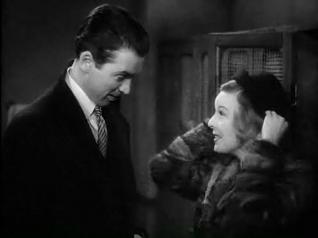
Initially, it feels like curious casting — James Stewart playing a Hungarian is absurd and he makes no attempt at an accent — and yet Lubitsch had the foresight to understand his appeal. He lacks all the suavity and urbanity normally associated with the director’s creations. In fact, for an American audience beginning to grow used to Stewart’s own steadily rising star, they connected with his disposition since it was very much the antithesis of stereotypical Hollywood or the highbrow of 1930s Lubitsch pictures. But it is the tone that matters most.

Because, again, this is not Hungary in the flesh — it is out of the mind of Lubitsch, a creation of nostalgia, warmth, and sentimentality — and on its streets, Stewart is more than at home. He fits the spirit of what The Shop Around The Corner cordially represents.

It is not a place right in front of us but just out of reach in the near-beyond of our memories and our imaginations. It represents our hopes and high ideals, even the sentiments of hope wrapped up in the Christmas season. Stewart as a figure — a token — is somehow able to stand in for so many things.

But there is more to it. Stewart delivers something a bit more substantial than his “aww shucks” persona, which was continually teased out leading up to the days of Mr. Smtih Goes to Washington. There’s also a stern assertiveness present, ready to come out; it just needs a spark, some point of instigation.

Enter Margaret Sullavan, his perfect counterpart and sparring partner. Her breathy delivery is quiet and understated, while still somehow implying this spunky resilience residing inside her character. This is what Sullivan brings to the part herself, earning a reputation as a demanding and “difficult” performer who sent shivers down the spines of major studio magnates, knowing full-well what she wanted. As a result, she found initial success though she’s mostly forgotten today.

Accordingly, her Klara Novak turns out to be a crackerjack saleswoman, at first pleading for a job, then proving Mr. Kralik’s rebuttals wrong by turning right around and earning employment. This sets the stage for their prevailing antagonism from which a love story must bloom. 

But that comes a bit later. The movie opens with all the staff of Matuschek and Co. congregating outside before the workday commences waiting for the front door to be opened by their employer.

Frank Morgan is Mr. Mathuchek, a blustering and a demanding fellow who can never quite make up his mind about the shop’s inventory. For that, he trusts his most faithful and pragmatic right-hand man Kralik (James Stewart), who has been the company’s longest-serving employee. If there are any decisions to be made, he’s the man to make them.

Felix Bressart is a fine family man and friend who always has a habit of fleeing the scene when the boss is requesting personal opinions. What he provides is quiet stability and an encouraging ear to Kralik.

Among the other current employees is the brownnoser with fine threads Vadas and the precocious errand boy Pepi (William Tracy) who does everything in his power to get ahead. With their communal workspace, a number of things come to pass. The relationship between Kralik and Ms. Novak continues turbulently as she manages to sell one of their useless purchases to an unsuspecting customer — a cigarette box that plays “Ochi Chernye.”

Simultaneously, Mr. Kralik is maintaining letter correspondence with an unknown paramour who engages his intellect on ideas of art, culture, and literature. One is reminded how The Shop Around The Corner extrapolates the axiom of not judging a book by its cover. Closely related is the fallacy of getting caught up in books such that you fail to see and comprehend the reality playing out right in front of your nose.

You read Anna Karenina, Madame Bovary, Dostoevsky, only to realize the people living and breathing right beside you are not only more than what’s meets the eye — they are simultaneously writing their own stories. We can’t always mold them to fit the narratives we know. Both Ms. Novak and Mr. Kralik seem to know these issues intimately without realizing it.

Because this is a Lubitsch picture, irony comes into play quite early; although it’s difficult to know if Stewart or the audience come up with the answers first. Maybe it hits us at the same time. If you don’t already know what it is, I’m not licensed to say. Allow it to happen to you.

Meanwhile, for some unseen reason, Mr. Matuschek grows cold and distant — going so far as relieving Kralik of his post in an uncharacteristic move. It’s the film at one of its lowest points. This was the fountain of all Kralik’s joy until he is so unceremoniously plucked from his position. Because we realize this job is his life, these people his extended family. Even Ms. Novak feels sorry that they must say goodbye, though patching things together might be altogether too little too late.

Sampson Raphaelson’s story kindly reconciles this conflict as Kralik and Mr. Mathuschak smooth out the situation. What still remains is the meeting with his mysterious correspondent. The Christmas season is upon the shop, and they work tirelessly to have the biggest sales in Christmas Eve history. They succeed. It’s punctuated by holiday bonuses for everyone, a soft powdering of snow, and genial celebrations all around — even for lonely Mr. Matchuchek.

This could be the end, but of course, we cannot forget the main reason Lubitsch has cast his eye on this inauspicious shop. Among many other things, it’s to unpack themes of love. The lights are low in the backroom, and Kralik is trying to get the words out, playing up the piece of jewelry he bought for his unseen beau.

Ms. Novak tries to accept her own fate with fortitude as her former rival tramples over her dreams with a reality check. Their words meet midsentence as she recites the recitations from her own dream suitor:

“True love is to be two, and yet one.”

“A man and a woman blended as angels.”Heaven itself.” That’s Victor Hugo. He stole that.”

“I thought I was the inspiration for all those beautiful thoughts. Now I find he was just copying words out of a book. He probably didn’t mean a single one of them.”

“I’m sorry you feel this way about it.”

She’s been led to believe he’s a balding, chubby fellow playing at a great romantic. As it turns out, he’s lanky and bowlegged, but not without his charms; he meant every single word. He says to her, “Take your key and open the post office box and take me out of my envelope and kiss me.” His proclamation of love stops her cold as the recognition comes over her face. She follows suit soon enough, and there you have it…

No more fanfare is necessary. We have the cathartic moment as a romantic tree-topper that Stewart and Sullavan more than earn. Even right here, it’s the same old Lubitsch with an unequivocal knack for finding the most satisfying conclusion, whether in drawing room comedy or backroom romance.

4.5/5 Stars

Note: I wrote this in conjunction with a series of reviews on the films of Margaret Sullavan released earlier this year.

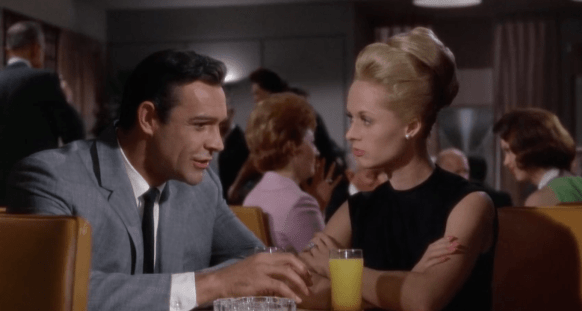
Marnie (1964): An Inflection Point in Hitchcock’s Career

marnie red

“You don’t love me. You just think I’m some kind of animal you trapped.”

Forgive me if you disagree, but Marnie has wrapped around it the full confidence of Alfred Hitchcock with all his trick and thematic ideas. Its use of visuals to cue the action. The intensity of both color and the swirling score of Bernard Hermann (indeed, his final with Hitch), creating this almost obsessive fever dream.

Tippie Hedren returns as an icy, calculated blonde more like Vertigo than The Birds, and it feels like with the talents at his disposal and his harnessing of all the studio system has to offer, he’s able to make it sing like a finely wrought orchestra. While not his best film, it stands proud and tall next to his most identifiable works.

If we are to tinker with the auteur theory, we must also acknowledge cinematographer Robert Burks, who had worked on over a dozen Hitchcock pictures. This would be his last. Then, editor George Tomasini, who had a stellar run with “The Master of Suspense” in his own right, would die in 1964. One could see how you could easily situate Marnie as the end of one of the most fertile periods of filmmaking and also the most terrifying.

These words are chosen purposefully. Because Marnie is not another man on the run thriller or even a game of romantic cat-and-mouse like To Catch a Thief. It fits into the lineage of the Vertigos and Psychos where it feels like Hitchcock is dipping into perturbing territory, partially because it feels self-reflexive, and it deals in the potentially grotesque and unseemly sides of humanity.

Marnie opens on a bag. The back of a woman walking to a train station. We don’t see a face before we cut to a man who bemoans a bank robbery. His secretary ran off with some of his funds.

Eventually, we learn this woman is prone to such behavior. She’s taken many such jobs and undoubtedly committed many such infractions under different aliases. However, her true name is Marnie and like a dutiful daughter, she turns up on her invalid mother’s doorstep to check in on her, give her gifts, and try to earn more of her affection.

Because it becomes immediately apparent this woman has attachment and mother issues; she’s an independent woman yes, who is also independent of men, but she hangs onto her mother’s love. Even covets after it and clings to it jealously when maternal affections are directed towards a neighbor’s little girl. And then, she leaves as quickly as she arrives.

marnie connery and hedren

Her cycle begins again when she’s up for a new job at Rutland & Co. The exchange during her interview would be banal if not for a certain undercurrent, the dissonance at the core of the entire picture. They’ve done business with her former employer, but she has no way of knowing that.

The one man who knows her secret is there too. His name is Mark Rutland (Sean Connery). He looks on rather bemusedly as she explains her backstory to her interviewer. Something about a deceased husband and leaving Pittsburgh behind for more demanding, interesting work. As Rutland watches her, it serves a kind of dual-purpose, giving rise to our conflict while also highlighting this kind of queasy sexism in the workplace. Where women are hired as objects and often viewed as such.

He knows and still hires her out of curiosity — is that the case? However, there’s something more — a kind of kleptomania — and Hitchcock funnels the entire movie through Marnie’s private obsessions. So as a secretary drones on about some HR forms, we are busy watching the office manager pull out his key and unlock the safe. We vicariously take on the obsessions of Marnie — caught in the same vortex thanks to Hitchcock’s camera — a camera that enters a fevered frenzy whenever she sees the color red. It’s akin to Jimmy Stewart’s Vertigo in how it totally usurps the picture in an instant.

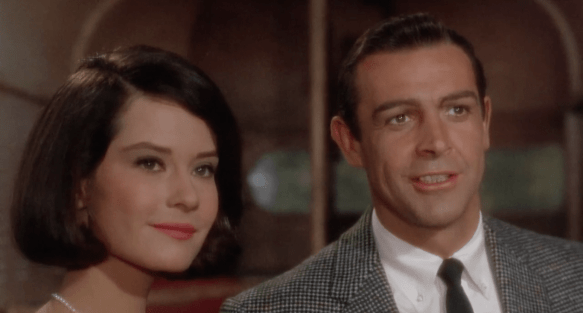
On a very different note, it’s always a pleasure to see Mariette Hartley, a personal favorite in TV reruns, and assuredly in Ride The High Country. But it is Diane Baker who might be the unsung hero of the movie and Hitchcock, if anything, sets her up as an integral figure to cement the film’s core drama. She is Marnie’s foil and ready to protect Mark even as she’s intent on winning him over.

But the relationship between Rutland and Ms. Edgar continues to vacillate, exemplified by very pointed snatches of dialogue. Take for instance, Rutland’s training in Zoological science or as he puts it “instinctual behavior.” He likens predators out on the Sahara to “the criminal class of the animal world,” and he’s as fascinated by Marnie as he is passionate about her.

They go to the races and then to see his father’s stables maintaining these implicit themes of husbandry and animalistic desires raging through Marnie’s core. She cannot help these impulses.

It’s true the film boasts some phenomenal wide shots: The first I’m thinking of is inside the stable before cutting to a close-up to the passionate embrace of our romantic leads. The second is an exercise in irony. Marnie is in the midst of her first burgle of the company safe. She snuck out of a bathroom stall after hours. Just around the partition, the night cleaning lady goes about her duties. To each her own.

For several minutes it is a silent movie. No music. I don’t think Hedren makes a sound. Because of course, Hitchcock is milking the moment only to magnify it seconds later. It reminds us how marvelous he was at punctuating the drama, lest his filmmaking ever be mistaken for realism.

Marnie continues in its duplicity as Rutland first accuses his employee of her theft and then comes right back around with the proposal of marriage. It drudges up the unseemly realities of sexual harassment and powerlessness as Marnie cries out about how she can’t bear to be handled by men. She doesn’t want to get married. It’s degrading. Even animal.

“You say no thanks to one of them and then bingo, you’re a candidate for the funny farm.” It breaks my heart even as I feel implicated in the issues. No, I wasn’t born then, but the indiscretions against women have not totally been expunged at least while men still have lust in their hearts. Hitch is part of the problem. I am part of the problem by any sin of omission or even passivity.

Before there was a mystery plot to hang its hat on in Vertigo or the money propelling Psycho. With Marnie, it hardly feels as if there’s a pretense to the often demented predilections of humanity. Husband and wife are “playing doctor” and free association with Marnie feeling as if she’s continually being needled by her spouse’s callous analysis. Is this love or torture?

diane baker and sean connery marnie

We mentioned Diane Baker before and it’s worth acknowledging her again. She is slightly impetuous and a bit impish — ready to go to war for her man. Hitchcock even gives her a line to mirror Norman Bates from Psycho as she offers observation on Marnie (A girl’s best friend is her mother). But she also eavesdrops because it’s this that allows her to know the film’s main secret and look to bring it to the surface.

The next sequence opens with that unmistakable Hitchcock high angle, at the party. It’s Notorious rehashed and yet instead of a key in the hand, it is the front door because through it will come a very important person: Someone who can implicate Marnie and unravel the stasis Mark has willingly corroborated for her. They must find a way to get out of this, to come to a mutual agreement, or else Marnie is sunk.

I must admit, this and the sense of suspense anticipated by the climax, are of the most intriguing since the psychology the final flashback relies upon feels too convenient. Maybe Hitchcock does not really care about any of this. It is a bit like Spellbound, but now it feels even more antiquated, whereas the moments leading up to the reveal of the trauma are contorted and alive, horrifying and convicting all at once.

Others could do it better, but I would be remiss not to mention the storyline of Hedren and Hitchcock, who harassed her all through the shoot. It’s an unsettling reminder of how he would control women and beyond that, how toxic masculinity has fueled our society and industries like Hollywood. It reveals the underlining brokenness in many of us that come out compulsively. It’s almost like we do what we do not want to do or we give ourselves over to them entirely. And what a nightmare that is.

Psychology cannot completely dispel our fears nor does it warrant a society and social spheres where men take advantage of women and where women feel fearful and scandalized. Forget his films. Hitchcock himself is emblematic of problematic fissures in society. That’s a great deal of what makes his film’s so disconcerting.

However, just as he tanked Tippi Hedren’s career, Hitchcock would never quite be the same. Not because of this mind you, unless there was some force of karma working against him I’m unaware of. Instead, the industry was changing and also the structures around him that he had to work with.

Torn Curtain and Topaz are passable films with glimpses of his cinematic eye, but they never amount to the same kind of intoxicating, bewitching drama we would see during his high point during the 1950s and early 60s. Of course, Frenzy was what some called a return to form, but it was, again, back in his native England so it’s obviously laced with a different flavor. His final film was in 1976 — Family Plot — and if it wasn’t evident already the industry had changed.

By then, he was a revered master but more of a relic than an up-and-coming auteur. No, Marnie feels like an inflection point as if it’s catching his very particular genius in a moment in time. It’s also a startling caveat to the career of one of the most lauded directors Hollywood has ever known. We cannot fully speak about one without reflecting on the other.

3.5/5 Stars

True Confession (1937) Carole Lombard, Fibber Extraordinaire

true confession

“Must we submit to this three-ringed circus in the guise of drama?” – Porter Hall

Carole Lombard is a comedienne of unequivocal talents. My guess is that it lies in that extra special dial she had. Yes, she was a Hollywood glamour girl and stylist of the 1930s — married to the King of Hollywood himself — but she also was totally at ease being absurdly silly. She would become frenzied and unhinged in a manner that feels rather groundbreaking for her generation. She was a very special performer.

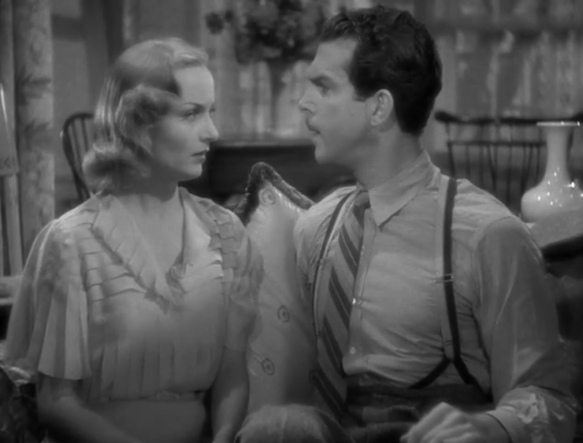
True Confession deserves to be acknowledged as a truly satisfying screwball for how it uses Lombard’s talents. Because, you see, her Helen Bartlett is a woman plagued by tall tales. Her fibs take on outrageous proportions. She’s the girl who cries wolf. Quite literally, tongue in cheek. We see it in full effect early on where she tells a string of increasingly wacky fibs to keep a man from impounding her typewriter.

However, the movie wouldn’t stand up if not for her husband. Ken Bartlett (Fred MacMurray) is tirelessly honest which, in the lawyering racket, isn’t always the most lucrative. He won’t represent anyone who’s guilty and that includes the referral of their local butcher who swiped some hams.

But he has that aching desire to exert his manhood and be the sole breadwinner of the house. He wouldn’t dream of having his wife work. No, she spends her days plinking away at the typewriter trying to finish her latest story. She’s got the personality but perhaps not the prose to be a successful writer.

So she conspires with her best friend Daisy (Una Merkel) over what she might do. Her plan is to take a job as a secretary. What of it that she’s never done shorthand or that her husband will have a fit? These are small potatoes and so she takes the job. Unfortunately, sleazy Mr. Krayler is a serial philanderer and as she skips and back peddles to avoid his advances, Helen realizes she has to get out of the secretarial racket.

This might very well be the end of it. But True Confession is forever altered by what happens next. Depending on the outcome it would end up a mystery drama. Thankfully for us, it remains a comedy.

Because she returns to the office to pick up a forgotten handbag only to find the dead weight of Krayler sprawled on the carpet. Soon the police are on the scene — their bald, hoodwinked leader (Edgar Kennedy) suspects her instantly. After all, she has motive. Soon they’ve drummed up a whole story supposin’ how she fled the crime scene.

But we know she is innocent so if the wheels of justice are actually just, there shouldn’t be a problem. A happy ending is easy enough to foresee. Instead, proceedings get strung out. Helen ends in prison suspected of murder and there’s an ensuing trial in front of a judge. Her husband is going to defend her.

Here’s the real screwball wrinkle. Wait for it. She decides to plead guilty. It’s the biggest lie she’s ever told, but if it pays off, then her hubby will be the talk of the town in the courts with a fledgling career to boot. She wants to give him his biggest stage to prove his acumen even if she has to risk perjury to do it. If it doesn’t work, well, the movie never really makes us consider the alternative.

We’ve alluded to the majority of the players, but one would be remiss not to mention two more. Porter Hall is one of the mainstays of Classic Hollywood entertainment and here he turns in a fine performance as a bellicose prosecutor on the prowl.

Then, who can forget John Barrymore hitting the eccentric heights of his career (and also the skids)? Because “The Great Profile” and titan of the great acting family, was now more of a caricature.

As Charley Jasper, he’s giggling maniacally with his ready collection of balloons, his hair rather unkempt, like a mad professor in the courtroom. Why is he here anyway? Why does the story need him? It seems quite thin. I would never dare spoil this little untouched secret.

Instead, the floorshow takes center stage. Mr. and Mrs. Barlett reenact events for the courtroom crowd in a highly irregular manner, but there is something giddy and glib watching Lombard and Macmurray break into playacting in the middle of the trial. It won’t let us forget for a moment this is a comedy, and it stays true to its roots.

I have to admit there’s an unsettling irony in the comedy’s main conceit: a white woman fighting to plead not guilty for a murder that everyone assumes she committed (though she hasn’t). Of course, there’s a historical precedent in antiquity for a woman’s testimony would not be taken.

Even watching something recently like Just Mercy, a different kind of courtroom drama in tone and content, it’s a reminder of how many people, whether black or marginalized in some way, find themselves in much the same predicament, and in their cases, there’s rarely a screwball plotline to conveniently spring them out of their misfortunes.

Social critiques aside, True Confessions is an underrated screwball gem, and it does itself a service thanks to Lombard and Kennedy, Merkel, and Barrymore. However, in our current context, as we seek a renewed sense of justice in the civil space, it must also give us pause.

3.5/5 Stars

Notes: This post was originally written in June 2020

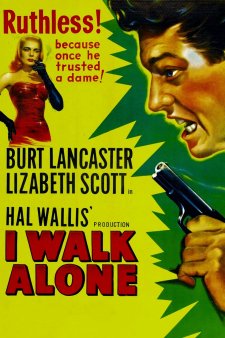
I Walk Alone (1948) with Lancaster and Douglas

i walk alone

“All the songs sound alike these days.”

The title of this movie inadvertently made me think of the Dinah Shore number “I’ll Walk Alone.” Granted, the title is slightly different, and it was birthed out of the WWII context where soldiers left their sweethearts behind to wait it out.

I Walk Alone could have easily made a play for this type of story. Instead, it replaces traumatic military experience with a long stint in prison and so our protagonist comes back to the outside world with a slightly different mentality. So there’s really no connection out all, and yet somehow music holds a crucial place in this movie because it comes to represent something about the characters. We hear, among other standards “Isn’t It Romantic?” and “Heart and Soul.”

Each of these classics plays as odd counter music to an otherwise rough and tumble story that might yield descriptions ripe with gangsters and noir imagery. When Dave meets Frankie at the train station, we understand the score instantly: 14 years behind bars and now he’s on the outside. Lancaster and Corey are holdovers from the previous year’s Desert Fury (along with Lizabeth Scott).

Ill-will has built up over the same period because back in the days of prohibition, Dave (Lancaster) used to be in cahoots as a rum runner with Noll “Dink” Turner (Kirk Douglas), who has now made a name for himself on the outside. After taking the rap, Dave feels slighted by his old partner, and true to form, his partner is trying to feel him out so he might know how to counteract him. It’s an instant conflict.

Coincidentally, it’s the first crossing of the dynamic wills belonging to Lancaster and Douglas who would continue a storied cinematic partnership over seven pictures. Even at this early date, they have fire in their bellies to drive their dramatic inclinations.

Having the two of them together is a singular delight in a way Desert Fury from the previous year could never deliver. Because in a sense they are on equal footing in terms of cinematic clout and charisma. Not that they’re the same person by any means, but it’s rather like Mitchum and Douglas sparring in Out of The Past. It makes for a far more absorbing picture.

Before he won the privilege to be an irascible hero, Douglas excels at being the cool and calculating criminal type. His voice is almost high-pitched and strung tight giving him an unnerving quality with pointed fury behind his eyes — as dark as ever. Still, he gladly maintains the pretense of friendship; it’s good for business.

When Frankie makes his way to the Regent club, he sees all the old crowd is still around, Dan the hulking doorman, then Ben behind the bar. It’s a bit like old times, but times have changed.

The veiled threats in their first meeting are an extraordinary barrage from the opening warning “Don’t move,” to the insinuations about his health on the outside, and the final flash of flame from a cigarette lighter. Intensions are made very clear.

True to form, Dink uses every resource at his advantage to defuse and exploit his old friend if possible. He’s the consummate businessman even when it comes to women. Lisabeth Scott, the club’s resident torch singer, is a whole-hearted sentimentalist who believes in love and in people — the fact they just don’t make songs like they used to. In this regard, she shares a conviction with Frankie. But she’s supposed to be Dink’s girl; at least she works for him.

However, there’s also Alexis Richardson (Kristine Miller) a refined beauty with a name “spelled in capital letters” and a cigarette pinched between her feminine fingers. She’s also filthy rich and she doesn’t mind her men philandering; for her romance is as much a business transaction as it is for Dink.

The script has its moments of lively snappiness especially leaving the lips of Lancaster who exerts himself as the brusque, no-nonsense tough operator. He’s not about to let other’s knock him off balance or get too far into his confidences.

However, I Walk Alone charts the changes that went into organized crime while Frankie was in the slammer. Whereas he represents the brawn of the old days, Dink is an emblem of the wily business practices necessary to get ahead currently. He’s able to cast off his old partner’s stake in the company with a convenient signature on a piece of paper.

What has developed is an age where big business steamrolled the olden days of hoods and backstreet gangsters calling the shots. Where three corporations can only be understood and operated through board meetings, diagrams, and dizzying bureaucracy. This web feels like a conspiracy to Frankie while only reiterating the helplessness found in a story like The Grapes of Wrath where modernity has overwhelmed the old ways.

He piles into his old buddy’s office with a posse of thugs including the smart-mouthed Skinner (Mickey Knox), the heavy Tiger (Freddie Steele), and the ubiquitous Dewey Robinson. What he realizes only too late is it’s not a matter of bringing knives to a gunfight. They are mostly outdated tokens just like him. As the brassy one quips he’s “swimming in it.”

What happens next is not unforeseen. There’s a manhunt and the man finds himself a woman who brims with his same spirit; someone who stands by the standards and sentiments of the past. To coin a paradox, they can walk alone together.

Beginning to end, what truly holds I Walk Alone together is the slimy impudence of Kirk Douglas struggling for dominance over Lancaster’s inherent tenacity. Without them, and then everyone else, including Scott, ably orbiting around them, it feels like the story might fall apart. Still, film noir aficionados should have more than enough to gorge themselves on.

3.5/5 Stars

Desert Fury (1947): Small Town Melodrama in Technicolor

desert fury 1.png

The draw to Desert Fury must begin with its intriguing cast running the range of personalities. John Hodiak and Wendell Corey (in his film debut) are driving into town. There’s this sense that their relationship is familiar but they feel like out-of-towners, somehow bringing a ting of noirish sentiment into what might otherwise be a straight-laced picture from director Lewis Allen.

The town was doubled by Piru in Ventura County and the colors of Charles Lang are grand if a tad on the campy side. All the better to serve the visual melody of the film. Burt Lancaster is Tom Hanson, the sheriff in the small town where he happens upon Lizabeth Scott on Main Street, a rambunctious creature of trouble nosing around for romance in her wood-paneled Chrysler New Yorker Town and Country. He warns Paula Haller to watch herself, which she easily laughs off before driving home.

Part of her disposition must be genetic because while they couldn’t seem different, her mother is a very independent-thinking, straight-talker who lays it out like she sees it. Fritzi feels like the toughest dame Mary Astor has ever played — the cocksure proprietor of the local gambling joint — used to throwing around money and being on top of everything, and well-liked by everyone if she can help it.

That being said, she’s hardly the maternal type — in fact, she hardly feels like a mother at all — even as she’s vehemently against Paula following in her footsteps. Because hers is a tough life doing her best to shield the impressionable girl from the same trajectory. Surely, that must be it…

The Purple Sage proves its own self-contained world for the characters to lose themselves in. Our primary players are thrown together again and it never ceases until the final exhale.

Because out of everything Desert Fury can possibly offer, the relational dynamics are one reason to latch onto the film and stick around just to feel out what’s going on and where it possibly could be heading with each character exerting their own pressures on the story.

desert fury 4

Lizabeth Scott could be simpering but with her smoky voice and youthful looks, she always managed to be an enigma. Not always the most engaging performer but somehow she fits the curious makeup of a picture like this. As her mother observes with an inflection of eros, she’s “nice and fresh and alive.”

John Hodiak is generally curt, with an abrupt delivery and whether it’s his performance or his own nature seeping into the part, there’s no nuance or finesse to what he puts out. But as Eddie, he’s allowed the benefit of a past — a past that makes Fritzie wary of any advances on her daughter. It attributes menace to him regardless of what he is capable of offering.

Johnny is his lifelong companion since their youth, protective of him, even jealous for his affections playing as an inversion of Fritzie — as both housekeeper and bodyguard to his longtime associate. But the secrets run deeper still.

What A.I. Bezzerides and Robert Rossen’s script evolves into is this kind of tug-of-war with Paula acting as both the object of desire and the token with which to play out these feuds and affections. She gladly honks and smiles her way into all sorts of conflicts, driving her town car with a cavalier daring from the very beginning. Her sheer impetuousness propels the story.

She’s drawn to Hodiak, and he’s enchanted by her, showing her the door in another instance only to instantly revert back again to his charmed infatuation. It’s a tumultuous if moderately intriguing bedrock for romance.

Because Lancaster is invested in her too, warning against association with such a character. Whether it’s on account of her personal safety or his own guarded affections feels immaterial. Even as Fritzie offers a pact — land for the hand of her daughter — the proud lawman balks at the offer because he wants romance on his own terms.

desert fury 2

Fritzie knows where he stands but even she doesn’t get it. One evening Lancaster walks into her office searching and yet keeping his cards close to his chest. It’s as if he’s letting her try and figure it out.

Meanwhile, Paula and Johnny have their own strange war playing out over Eddie colored with its share of passionate kisses, flying fists, and slaps of disdain. The incendiary couple ignites most of it.

However, what’s even more important is what is alluded to not simply off-screen but from each individual’s past personal dosier and shared history. They know one another out of the confines of this hour and a half. The ensuing array of heightened dramatics and supposed revelations are nothing unusual or unforeseen on their own.

It’s the observable action speaking in the final stretch (along with the theatrical Miklós Rózsa accompaniment) with cars barreling down the desert highway in hot pursuit of one another.

It’s a Hollywood denouement — hardly a reinvention of themes from love triangles to shadowy pasts — but the melange of performances and the slight subversions teased out speak to something. Where the final kiss is not between Lizabeth Scott and her alpha male but with her mother.

While not a moral tale,  it’s a movie voicing the tangled, clouded, dysfunctional relationships plaguing a small town — and the world at large. The guise of  Technicolor melodrama is a fitting pretense.

3/5 Stars

The Locket (1946): Laraine Day and Splintering Psychology

the locket 1.png

“Have you ever done this before?” – Robert Mitchum as Norman Clyde

“No. I’ve never stolen anything in my life.” – Laraine Day as Nancy

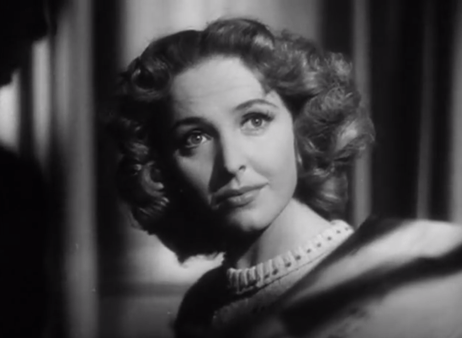
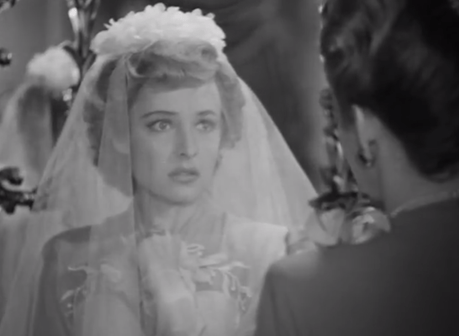
We’re met by a wedding with all the trimmings. It’s a well-to-do affair and Laraine Day looks quite dazzling. Her groom (Gene Raymond) is high on his good fortune in finding such a spectacular bride, introducing her to the aunts and uncles. Taken at face value, it’s a suitable development for a drawing-room comedy.

However, the perceptive viewer will note the presence of two very telling names in the opening credits. They are director John Brahm (The Lodger & Hangover Square) along with Nicholas Musuraca, who helped define the shadowy compositions of RKO Studios all throughout the 40s.

If anything, it suggests that what we’ve seen up to this point is mere pretense, an ebullient calm before the storm, until the past comes crashing through to wreak havoc. Sure enough, a grim, well-spoken psychiatrist (Brian Aherne) walks into the man’s study for a quick word. He’s comes bearing some doom to drop on the deliriously happy groom’s lap.

It lends the injection of noir sentiment we’ve been waiting for with bated breath supplying a flashback to go with it. Dr. Harry Blair recounts how, in his distant more jovial past, he wound up crashing bicycles with Nancy (Day). From then on, they were all but destined to be lovers.

It’s in these interludes where it becomes apparent Nancy is not altogether unlike Laura (Gene Tierney’s character) not because of her mental state so much as this perfectly bewitching aura she is allowed to cast over the frames of the film. Although this makes it sound too manicured; still, it’s true between the scoring, photography, and Day’s own vibrant, fully alluring performance, it’s difficult not to be swayed by the captivating energy.

The cute buoyancy carrying the opening replicates itself in this prelude as Nancy and the good doctor plan a deliriously happy future together. And yet screenwriter Sheridan Gibney brazenly interrupts the gaiety again. This time it is none other than Robert Mitchum interrupting the matrimonial euphoria with his own futile warning — yet another couched deja vu moment to follow the others.

As a matter of fact, in a spectacular move, The Locket utilizes no less than three couched flashbacks involving the three men, layered on top of one another, and each making the same mistakes as the man before them, caught in a deadly cycle…I wouldn’t recommend it to budding screenwriters, but here the commitment’s rather impressive.

This is one of the first great Mitchum performances establishing his world-wearied embodiment of the noir hero — smoking a cigarette, coat upturned in the falling snow — and he’s only one of the supporting figureheads.

the locket 3

Norman Clyde (Mitchum) is a fairly successful artist, not a sterling success but talented and proud; he’s not about to take flak from anyone. After he gets off on the wrong foot with a woman in his studio, he starts obsessing over the girl. He can’t get her out of his head and wouldn’t you know, she’s holed up in the same Italian restaurant he always frequents. They make amends, of course, and their resulting relationship looks eerily similar to the glimpses we’ve already been granted. Nancy’s deliriously happy with her man of choice. There are no visible blemishes in sight.

However, the fragments and wisps of story keep on fading into one another. It’s so exquisitely rendered by the camera, in particular, when Mitchum and Day go into the recesses of their own personal recollections.

The striking similarities with Laura or even Woman in the Window become even more obvious due to the art angle — the enchanting portrait of a woman — because it does create this meta sense of the woman in the art both painted and photographed on celluloid. It allows her this sense of being out of body — almost otherworldly to the viewer — existing in this illusory state we must come to terms with. In one sense, it’s hard to shake the image of her. Nancy is no different.

One turning point is at a fancy dinner party. Shots ring out and Clyde sees Nancy exit a room frantically. A maid comes, and they hide down the hallway slinking away. Musuruca captures the instantaneous decisions with a fluid ease. We don’t realize it at the time, but it’s a crucial moment teasing out a bit more about Nancy — about her past secrets — and who she is as a person.

My only qualm is with Mitchum’s exit. It serves the story best, otherwise, he would continue to steal the show, but it certainly does not gel with his soon-to-be cultivated image. Alas, it is what it is.

Next, remember the doctor also had his chance with Nancy. They go off to England to stay at a stately manor to get away from the intensity of the Blitz. However, the accusations he’s heard about his wife start to burrow into his mind, so much so he can’t get rid of them.

Surely the rumors can’t be true! Because Nancy is so warm and genial, hardly begrudging or showing malice toward any of her past suitors. In fact, she downplays every interaction she’s ever had with any of them. As if they were nothing. As if the man she’s with right now is the only man she’s ever loved.

the locket 5

The extraordinary nature of Day’s character is how she is not a femme fatale — at least not in the traditional sense. They’re always two-timing and deceitful. With Nancy, at face value, you get none of that, and yet it’s not to say she’s not without her flaws. In a strange way, there are two sides to her as well.

She calls others out for being guarded, cynical, and suspicious, and yet she can often be found doubting everyone else’s motives even as she’s retroactively smoothing over her own. There’s the convenient compartmentalization of all the prior relationships into their individual spaces and the projecting of her issues onto others. It hints at something. Still, there must be a tipping point.

Then, we’re whipped back to the present. The wedding march in all its pomp becomes offset and infiltrated by the tinkling of a music box, like the memories slowly overtaking Nancy’s psyche. These latter moments turn into some of the most evocative sequences of montage in recent memory with all the weight of memory, trauma, and guilt flooding Nancy in the form of all the people she knew. There is no space to keep them apart and so they crush her under the weight, her mind totally fractured as she tumbles to the floor.

In a fit of irony, I couldn’t help but continually be reminded of the contemporary Frank Sinatra tune, “Nancy (With the Laughing Face).” It’s a startling juxtaposition with what we’ve just witnessed, a swelling, unnerving, engrossing exhibition in splintering psychology.

Laraine Day gives an absolutely unforgettable performance — easily the best of her career — and Brahm continues his run of moody melodramas with suffocating environs. The Locket doesn’t hold an instant appeal from the outside looking in, but once you get inside, it’s a bedeviling little gem of a film — as tantalizing as the trinkets so enrapturing to Nancy. There’s one major difference: we can enjoy this one without debilitating consequences.

4/5 Stars

Swing Shift (1984): Underrated Classic with Caveats

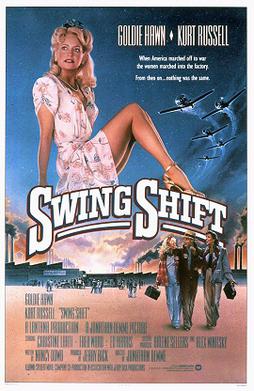
Swing_shiftAside from films actually produced during the war years, I’m not sure if I can think of a film that highlights the homefront to the degree of Swing Shift. The soundtrack is also perfectly antiquated (sans Carly Simon) fitting the era and mood to add another definite dimension. It effectively takes us back with the auditory cues of Glenn Miller, Hoagy Carmichael, and the rest.
We read in our history books about Rosie the Riveter and women gaining a newfound freedom as they fell into work formerly held only by men. But here this reality is put into practice in a manner that makes tangible sense.

The events of the war happen to them as they walk along the pier, sit in their living rooms, or do their work. Instantly they become current events.

We understand the certain amount of independence women would have been allowed in this time, where they were given a part to play in the struggle against the Axis powers. War can simultaneously cause deep wells of tragedy and bring us the greatest joys.

Our relationships become entrenched with a profound camaraderie and yet we can hurt the ones we love. We change and they change. Things very rarely remain the same after something so cataclysmic.

There are several intentional and formative relational dynamics in Swing Shift. It is about two working women: Goldie Hawn and Christine Lathi. They are by each other’s side through the thick and thin of friendship. Putting in a solid day’s work and then getting dolled up to go out on the town. They’re inseparable. However, sometimes it’s relationships like these that can suffer the most.

It is about a husband (Ed Harris) and a wife (Hawn): one going off to war and the other staying behind — prepared to walk alone. This isn’t what they were planning, but it’s happened and they move forward through the paces of it the best they can. And yet life gets in the way — where time and space separates them — and makes the waiting and the worry all the more difficult.

It’s about a woman and a man who cannot contain the genuine feelings they foster for one another (In real life Kirk Russell and Goldie Hawn fell in love and never looked back). Because he is present, in the flesh, good-natured and available in a way her husband never was — even when he was around. And yet Lucky (Russell), when he’s not riding his motorbike or playing the trumpet, is a wounded soul in his own right. War only works to exacerbate the clouded emotions of the day and that goes for all these relationships. They are interconnected issues.

But I think this is the best compliment that can be paid to the story. Because sometimes it looks a bit like a TV soap, and the story doesn’t always fall together, and yet there is a broader sense of what this movie is and what the focal points must be. This I believe we can attribute to Jonathan Demme. It’s meant to be more than conventional romance and we get tastes of that.

I say tastes because Swing Shift also has to be one of the most notorious cases of artistic tampering, right up there with The Magnificent Ambersons or Terminal Station. Warner Bros., at the behest of Goldie Hawn, edited the movie and reconstructed the story after Demme had finished principal photography.

Aside from story or continuity questions causing a few head scratches, the issues seem to go deeper still. I am by no means an insider, but from what I can gather, Hawn’s version tried to center the story around her and Russell. There’s an obvious reason for this. They have more than chemistry. They have romance. However, it also attempted to simplify her image and rectify any conflict we might have with her character. In essence, the goal was to make her more likable.

It causes her to maintain some sense of moral dignity and still the movie ends on an unfulfilling, empty note. It’s as if some kind of greater catharsis was possible, and we are robbed of it all with a final tear and a whimper. The resolution is not quite a cop-out as it is an exercise in indecision. The picture dissolves when something more complex, something more evocative, was probably called for and just waiting to be excavated.

Someday I hope the Demme version might go back into circulation, not just so we can see the movie as it was meant to be seen, from the untarnished vantage point of its creator. That’s part of it. But there’s also a sense Demme attempted to develop something more full-bodied and well-contoured.

Hollywood is always obsessed with primary action — the characters at the center of the story — but so often what is most interesting is what remains on the periphery. The supporting characters or the elements of the world that make it come off the screen and feel real.

One is reminded of the moment a smartly dressed soldier boy comes up to one of the swing shift members (Holly Hunter). He’s there to give her the horrible news, and she knows it before the words leave his lips. She falls onto him and he apologizes — he’s never done this before. How horrible and pitiful and lovely it is because it feels so innocent and honest.

Moments like these are a testament to a movie with so much to offer, bubbling up under the surface. It’s a shame it was so badly mangled. We must be thankful for what we have and hold out that someday we might get to see the cut that kept to Demme’s vision. Here’s to hoping. For what, it’s worth, Swing Shift might well be an underrated classic with a couple substantial caveats to include.

3.5/5 Stars

The Young Philadelphians (1959): Paul Newman Takes on Family Skeletons

young phil

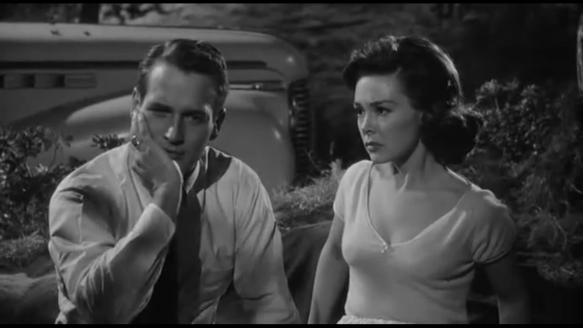
What’s most intriguing about The Young Philadelphians is how it manages to be a composite of several standalone genres. It’s a rags-to-riches tale. There’s romance. Stunning courtroom drama. But the sinew holding it together are sudsy soap opera tendencies.

Like most any life, our story begins before our main character, Tony Lawrence (Paul Newman), was ever born. Back in the old days, his mother (Diane Brewster) was to have a church wedding with William Lawrence III, a man who was desirable solely due to his family name. Being attentive to such things, Kate is happy to marry him — leaving behind a lifelong friend Mike Flannagan (Robert Keith) to drown his sorrows.

What unravels in a matter of seconds is the kind of juicy drama offering up Adam “Batman” West himself in a blink-or-you’ll-miss-it debut, though he does have a crucial role in the ensuing tale. There are implied sordid details that need not be parsed through now. Regardless, Kate is left as a widow and looks to raise up her infant son to bear the reputable name of Lawrence. He doesn’t know his protective mother is sitting on a stick of dynamite for the sake of her son.

Tony grows up to be a fine, strapping young man of substance. The instant magnetism of Paul Newman is on full display. Not animal magnetism but the kind of charisma that would keep him a beloved figure long after many of his peers from the Actors Studio had mostly dissolved and given way to younger talent. The intensity comes later.

For now, he’s a Princeton boy working in construction because it pays the bills, though his ambitions are to pursue law — all in due time. What follows at the worksite is a contrived meet-cute but no less delightful do to the instant charm of Paul Newman and Barbara Rush. Not only are they beautiful people, but they have a playful rapport to back it up.

Later, he attends a high society party — his mother hopes he can make some invaluable social contacts — but he consorts with Chester Gwyn (Robert Vaughan), a prodigal rich boy with greased back hair and a penchant for getting plastered. His relatives, who run his trust fund, heartily disapprove of his carrying on even as Tony impresses them.

The other person of interest is the same debutant, Joan Dickinson (Rush), who tells them all her classmates are married to very nice young fellows, cautious prudent young men with button-down families. All and all, they are representative of the idle and affluent segment of society looking to find a nice life for themselves complete with a fine salary, a gorgeous wife, and an equally gorgeous home to boot. For those who haven’t had to work like Tony, it sounds like utter drudgery. It’s a lifestyle that has eaten many people like Chet and Joan alive as it molds them into their assigned conventions.

In their own way, Tony and Joan look to pursue their own happiness which — although it fits within the confines of society — still has a hint of the reckless, impetuousness of youth. They still have enough fervor and passion in their chests to see the world as an idealistic space meant to be conquered. However, their parents have other plans for them…

In mere moments, the entire story careens in another direction with twists and turns worthy of a soap opera. Suddenly, the romance burning between them is snuffed out and sullied by insinuations. Tony learns the rules of the game the hard way. Society, as they know it, is built on the bedrock of backroom deals, saving face, and family reputations.

He resorts to making the connections, climbing the social ladder, and running into some old acquaintances. It’s in these crucial interludes where Newman channels his youthful intensity by ripping off the band-aid of a broken relationship and charging forward with a newfound tenacity. Under the circumstances, he foregoes the law firm of the reputable Mr. Dickinson (John Williams) and makes a name for himself in the service of someone else. He lands a big fish by swiping one of his largest clients (played by the perennially bubbly Billie Burke), who literally wanders into his office.

Even as he’s driven by his own private ambitions, Lawrence never completely sheds his conscience. He rebuffs the advances of his boss’s sex-crazed wife (Alexis Smith), stomping out an affair before it can begin.

With the passage of time, we are led to ponder how these lives could have ended differently if given the chance? Tony is still unmarried. Joan found a rich money bags, who unfortunately died fighting in Korea. The war also took Chet’s arm leaving him a crippled and degenerate drunk.

In fact, Vaughan gives the final act all he has, and he is one of the film’s unsung heroes; he provides some outward manifestation of the myriad of issues conveniently swept under the rug by the city’s foremost families. When he hits the papers with a murder rap pinned on him, it rattles all the skeletons buried in the closets. His patriarch, the esteemed Dr. Shippen Stearns even says, “individuals are less important than the whole.” What matters is coming out of the mess without a scandal.

I do adore Billie Burke particularly because we never saw enough of her in this later period of her career, and she still brings the same genial energy she always had in her golden years. She’s another outlier in the film’s stuffy landscape.

However, it’s also a test of Tony’s true character as he juggles his own reservations and allegiances to people like his mother and Chet. Joan reopens wounds, now a decade old, going to the core of who they are as human beings — their ambitions and the ways that they have been changed due to the hotbed of the surrounding society.

It’s the kind of scene I wanted to playback because it feels like it comes at us out of nowhere. She wants to hire another lawyer to take him out of the grinder — fearing he may have sold out again — and he proceeds to bristle knowing he never meant to sell out. At least not really. Their fight, if we can call it that, is what spurs him on in the courtroom. However, there is something else.

We remember where this story began. His mother is forced to tell him something about his untold life and what happened before he was born. Suddenly, this isn’t just a matter of someone else’s life — that would be enough — but this holds implications for his reputation and that of his mother’s. Everything hangs in the balance.

So when he gets to the courtroom the stakes are heady. But he comes at the case with a level of acumen and genuine discernment (although the judge does seem to be giving him far more favor than the prosecutor receives). This observation is mostly immaterial. He puts the key witness, George Archibald (Richard Deacon), up on the stand and does everything he’s been training his whole life to do.

Somehow he’s never spoken a truer word when he says, “I’m not as good as I hoped I could be, but I’m not as bad as I thought I was.” Let them sink in for a moment. As we look on, we see a man who has found his happy medium as he’s slowly learned to be contented with the life put before him without any regrets. He can walk out of that courtroom, his best girl in hand, confident that his reputation is intact, but most importantly his moral conscience is as well. And we are right there with him.

3.5/5 Stars

Bhowani Junction (1956) and Racial Identity

Bhowani_Junction

“It’s about time the Lord started making all human beings the same on the outside as well as the same on the inside.” – Stewart Granger as Col. Rodney Savage

“They’d only change it back again, the moment his back was turned.” – Ava Gardner as Victoria Jones

Some will easily take offense with Bhowani Junction for its portrayals. To be sure, it’s working in terms of imperialism, British-Indian relations, and biracial identity. Oftentimes Westerners, and Hollywood in particular, are suspect of taking an oversimplified, superficial perspective when we represent other cultures. It could be the “White Man’s Burden,” The Nobel Savage archetype, or even “The Tragic Mulatto.”

Certainly, a lot of these stereotypes — now decades later — aren’t only indicative of a skewed or misguided sense of portrayal. Rather they get maintained through prolonged underrepresentation. It starts with ignorance and the kind of clumsy cultural shorthand that tries to make sense of other people who are different than ourselves. However, its continued pervasiveness lasts partially because it’s never fleshed out or totally dismantled by a flood of new portrayals. In many cases, we’re still getting over this very same hump in the 21st century.

For this reason alone, Bhowani Junction makes an admirable go at offering a slightly different perspective. It’s hard to say the Indian characters get to reclaim their own story because this narrative is still dominated by colonialism like its predecessors.

Granted, we must also still court issues of whitewashing (if not simply with Ava Gardner). You have both Bill Travers and Francis Matthews playing a mixed-race and a native Indian respectively. It feels especially regrettable since an actor like Sabu was passed over for a role.

Likewise, there is something convenient about Gardner ending up with the strapping white man (her fellow Anglo-Indian dies a sacrificial death). Meanwhile, the kindly Sikh she nearly marries out of gratitude is forgotten in the wake of ensuing drama. Still, these are only a few qualms.

The backdrop of the story is of vital importance in order to contextualize what’s going on. The British Empire’s foothold in India is crumbling. You have the peaceful protests of Gandhi sweeping the country. Meanwhile, more militant riots are being instigated by a local troublemaker named Davay (Peter Illing). Deciphering the socio-political climate is hardly easy and that’s why the conquerors usually got it wrong wherever they wind up.

The curious thing is how Bhowani Junction is not about holding the empire together. One of its main representatives, Colonel Rodney Savage (Stewart Granger), knows it’s only a matter of time before it crumbles. What gains importance is the process of leaving well. The primary objective is based on creating stability and relinquishing power honorably with as little bloodshed and animosity as possible.

It’s people like Victoria (Gardner) and her childhood friend Patrick Taylor (Bill Travers) who must figure out where they fit into this narrative. However, it’s noteworthy that the dissociation going on inside her own being goes beyond existing as a mere social pariah. Far from being an outcast, she’s a respected member of the British military and not completely rejected by the local Indian population.

Still, she is different than both. It’s reality and she must come to terms with it. What presents itself is a surprisingly unique perspective for 1950s Hollywood and even if it is imperfect, it proves willing to grapple with history in an altogether different manner. Thus, Bhowani Junction is a welcomed contour of 1950s Hollywood filling in and shading a cross-section of society we very rarely see.

Subsequently, what the film does is offer up a case study of racial identity with Gardner caught between three men representative of the three “cultures” tugging at her very being. Because Victoria Jones, half-English, half-Indian, has her affections and allegiances split threefold.

However, Bhowani Junction adds a bit more nuance when it comes to the representation of biracial characters. I will dance around these lines gingerly as I know some might vehemently disagree. I can only speak from my own experience as someone who grew up with a similar background. Even if I am rarely accustomed to this kind of racism or private dissonance, questions of my own identity still creep into my mind from time to time. It’s only natural.

Yes, the romance with Granger and the melodramatics might fall within the realm of accepted convention, but under Cukor’s sympathetic eye, Gardner comes at the part with a ferocity — giving it her all. One particularly scarring moment involves a devastating rape scene.

Far from being a mere lynchpin of the narrative, it’s actually suffused with the terror and concern it should rightfully engender. What a horrible experience to be privy to as Gardner struggles for her life by the local train tracks. In truth, it left the actress so affected she had to make peace with her onscreen aggressor (Lionel Jeffries) off-camera. It’s graphic in movement and emotion and that’s terrifying enough.

Amid the foreseeable beats, there is a far more intimate and engaging story attempting to court themes of a far more personal nature. The hubbub and crowded train depots are momentarily diverting, but they are not Cukor’s prime concern nor his forte. He’s no Demille or David Lean. Give him the relationships, person-to-person, and on this scale, he is a wonderful handler.

Cukor also remains vindicated by history. Because the epiphany that his original structure was ruthlessly bastardized by the studio, through hastily constructed voiceover and other such shortcuts, gives me greater faith in the man. It’s only a shame we cannot see his personal cut of the movie. Not only does the thrown-together bookend narration kill the climax, it feels stilted, wrecking the basic integrity of our story. Alas, what could have been.

3.5/5 Stars