Ida (2013)

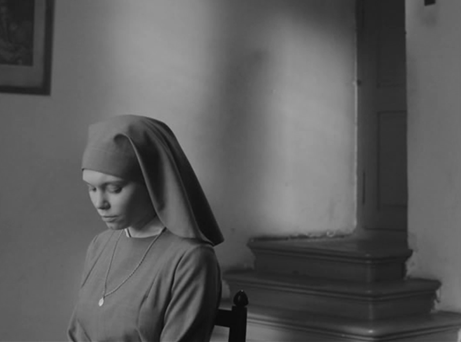
28ceb-ida1At hardly an hour and 20 minutes, you would think Ida has very little to offer, but that just is not the truth whatsoever. Polish director Pawel Pawlikowski blessed us with a nuanced film full of power and strangely pleasing visuals. It’s stark, yet crisp, black and white cinematography did not have to be that way, but it looks absolutely beautiful.

In the opening sequence, we see a young nun carving a statue and then carrying it to the grounds outside. We realize it depicts Christ and it feels rather reminiscent of La Dolce Vita and yet this film has a note of reverence.

We have been transposed to Poland during the 1960s where novice nun Ida lives a simple and disciplined lifestyle within a convent. The meager plot follows her pilgrimage to meet her only relative before taking her vows. It’s the aunt who refused to take her in after Ida’s parents passed. They have never met before now.

There doesn’t seem to be much to say. In fact, what can you say? Ida has taken up a religious calling and her aunt, a former judge named Wanda Gruz, lives life the way she pleases. Men, alcohol, and smoking are all a part of that lifestyle.

Thus, they have little in common until the moment when Gruz discloses the truth to Ida. Her real name is Ida Lebenstein. She is Jewish. Her parents were killed during the War, but the details are not too clear. They can probably guess how it happened.

Ida’s whole identity is rocked because she is now a Jew within a convent which seems like a gross incongruity. Ida’s resolve is to find her parents’ resting place and so the unlikely pair set off looking for answers.

That’s about all the film’s plot right there, and though it does not sound like much, it is far more engrossing than a lot of the other fair we come across. There are moments when it feels like we are watching something from Robert Bresson. It’s simple. There are not frills but it is chock full of humanity and seemingly real characters with real emotions.

Ida is very rarely in the center of the frame, more often than not her eyes are averted, looking away from the camera. Pawlikowski also has a curious habit of focusing on one character during a scene of dialogue. It seems to denote how isolated and confused many of these characters are. It’s one of those films that leaves us with more questions than answers and that lends itself to a truly insightful viewing experience.

4.5/5 Stars

This Jesus of yours adored people like me” ~ Wanda Gruz

Shadowlands (1993)

2bfce-shadowlands_ver2Starring Anthony Hopkins and Debra Winger with direction by Richard Attenborough, this film chronicles the romance of famed Christian professor and author, C.S. “Jack” Lewis with the American poet Joy Gresham. Jack is by now a respected professor at Oxford and a widely acclaimed lecturer who often speaks on the issue of human suffering. In his personal life, he is rather reserved. He lives with his older brother Warnie and spends times with his colleagues discussing topics of all sorts at the local pub in the evenings. 

It is not until he receives a letter from an American admirer named Joy Gresham that his life seemingly begins to change. He first accepts to meet her only to be gracious, but soon their relationship develops into a close bond. Jack meets Joy’s son Douglas who is enthralled by Narnia. He even offers them a place to stay during the Christmas season, since they have nowhere else to go. Lewis and Gresham are very different people, to say the least. He is a quiet intellectual with the sensibilities of an Englishman, while she is a plain -speaking American who does not mince words. However, these differences bring them closer together because they help each other to view the world in a radically new light.  Jack learns how Gresham’s marriage is going badly and he settles to marry her in a practical union so she and Douglas can stay in England. They do not speak of it much and it hardly seems real. Joy calls him on it realizing for herself that he allows no one to challenge him. There is no vulnerability to him whatsoever.

However, then Joy is diagnosed with bone cancer and slowly but surely she begins to deteriorate. For the second time in his lif,e Lewis understands the anguish that comes when a loved one is suffering. Because, the fact is, he most definitely loves Joy, and it simply took a tragedy to make him realize it. As with any inexplicable suffering, Lewis is tested in his faith, and the reality human suffering has new meaning to him. It is no longer just lecture material, becoming a far more personal process.

Although this film is not so much focused on C.S. Lewis as a Christian theologian or apologist, I think Anthony Hopkins does a wonderful job of portraying him as a kindly and gentle man of faith. He struggles with doubts and fears like every human, but he found something wonderful in his love for Joy which ultimately changed him.

Debra Winger must also be commended because she played well off of Hopkins and even though I have no picture of the real Gresham, Winger seemed to embody her. In some ways, I found her most beautiful when she was bedridden, absent of all makeup and seemingly so pure. It positively tears your heart out watching her son say a tearful goodnight or to look on as Jack stays up with her. This is a better picture of real, unadulterated love than most films can hope to manage because it very rarely becomes a sappy melodrama instead resorting to more deliberate means. As Jack says we live in the “Shadowlands,” but amidst the pain and suffering, love seems to shine through even brighter.

This was such an enlightening film for me because I always envision C.S. Lewis as a scholar and rational thinker, which he was. But he also had a vulnerable human side and this film, as well as A Grief Observed (written after Joy’s death), prove that point. It’s hard not to feel for him and that’s part of the beauty of this story.

4.5/5 Stars

Amazing Grace (2006)

e09ee-amazinggraceposterBased on the life of Christian activist and British parliament member William Wilberforce, Amazing Grace is a very important and powerful film. Wilberforce is a unique and remarkably extraordinary man, to say the least.

The story opens as a dreadfully sick Wilberforce (Ioan Gruffud) takes a holiday at the home of some close friends. They introduce him to his future wife Barbara Spooner (Romola Garai), however, to begin with, they resist any romantic involvement and remain friends. He relates his story to her about how he became an Evangelical Christian while also a popular member of the British Parliament.

He had considered leaving politics for theological studies, however, he is persuaded by friends, including William Pitt (Benedict Cumberbatch), to continue in parliament. He is asked to tackle the highly unpopular issue of slavery, and after a visit to his aging mentor John Newton (Albert Finney), Wilberforce’ fervor increases. Due to his own regrets about formerly being a slave trader, Newton is hounded by guilt and urges Wilberforce to end the trade.

Soon William Pitt becomes prime minister, and Wilberforce gets ready to bring a bill outlawing slavery to the house. He gets some unexpected support, but his popularity dwindles, and he is strongly opposed by a coalition with a large stake in the trade. His bill is ultimately beaten outright, but William continues the cause for numerous years still to no avail.

Now back in the present, Wilberforce is sickly and dejected, but Barbara encourages him to push on. They get married soon after and the fight continues without much progress. However, finally William devises a clever plan to cripple the slave trade, and he gains some new allies. His colleague and friend Pitt is slowly dying, but he supports Wilberforce. After many years of tireless struggle, a bill is passed in parliament that effectively ends the slave trade in 1807.

Wilberforce is one of those often unsung heroes who truly did something amazing. Pun intended. With the release of Lincoln more recently, there are definite connections that could be made between the films. Like Lincoln, Wilberforce worked for more than political clout, because he knew what was good and right, and so he fought for those principles. That is the sign of a truly great man just like Abraham Lincoln. Much like Wilberforce himself, this film is less heralded than Lincoln, but I would wager that it is no less important as a historical drama.

4/5 Stars

A Man For All Seasons (1966)

a4d49-a_man_for_all_seasonsSir Thomas More had the misfortune of getting in the way of perhaps one of the most notorious kings in history, and it proved costly. It is the early 1500s in England, and the Reformation has shaken the world but Henry VIII (Robert Shaw) has his own plans for the church in his country. He is bent on getting his marriage annulled by the pop,e because young Anne Boleyn will be much more likely to give a healthy heir to the throne.

A Man For All Seasons focuses on the position of More who at the time was Lord Chancellor of England. First, in talking with Cardinal Wolsey, More resolves not to sign the letter to the pope on the king’s behalf, because it goes against his conscience. Later, in his dealings with Thomas Cromwell, More resigns rather than to sign an oath making Henry VIII the supreme leader of the church in England.

Except there is more to it than that. More certainly was not a dissident or a rebellious political figure. Far from it. At least in the film, he is portrayed by Paul Scofield as a constantly even-keeled and gracious man in all circumstances. When a young man named Rich (John Hurt) sold More out for a high title, in a Christ-like response More has only pity for the fellow. Selling his soul for the world is worse enough, but Rich did it for Wales.

Not even the pleading of his newly-wedded daughter (Susannah York), or his strong-willed wife (Wendy Hiller) can change More’s conviction as he wastes away in the Tower of London. Sir Thomas went calmly to his death confident that his faith in his Lord would give him eternal peace. He died there for a seemingly trivial reason at the hands of men who used to be his friends. But he died with his conscience intact.

As I acknowledged, Paul Scofield is such a serene force during the storm of this film. The portly Orson Welles and Leo McKern seem to fit their roles well, and Robert Shaw has enough bluster to pull off Henry VIII. A young John Hurt turns in a fine performance as the Judas of the film and Nigel Davenport is commendable as More’s exasperated friend the Duke.

Adapted from a stage play, here is another highly acclaimed film from director Fred Zinnemann. Perhaps it is the period drama, but this film strikes me as very English and it did very well for itself. I suppose because it’s a tale that is universal and audiences love to identify with men such as Sir Thomas More. Zinnemann was always superb at capturing the inner struggles that humanity is often forced to confront, and he did it once again here.

4/5 Stars

The Nun’s Story (1959)

b2aa8-nun_storyFrom director Fred Zinnemann and starring Audrey Hepburn, here comes a very unique film indeed. Hepburn is Gaby also known as Sister Luke, who makes it her life mission to become a Nun. She leaves behind her loving father (Dean Jagger), young love, and siblings to lead a life of solitude and sacrifice.

She learns and is disciplined at the convent, finding out what it means to “die to self.” However, it is by no means easy, because as with any human being pride and other struggles impede her progress.

Quickly she shows her skill as a nurse, and yet she is challenged to act with more humility. Sister Luke winds up not in her desired location of the Congo, but in Europe to continue to grow spiritually.

Finally, she is rewarded for her patience and goes to the Congo only to fall into her element. There she is beloved by the natives and nuns alike, while also gaining the respect of the local practicing doctor (Peter Finch) who is not a believer.

He however rightly concludes that Sister Luke is not your typical nun, because she has too much self-determination and individuality. As a good sister she tries to block out his words, but after she is sent back to the convent she must face this reality head on. World War II has erupted and the Sisters are called not to intercede on either side, but after personal tragedy Sister Luke realizes she must give up the life of the nun.

After so much loving service to her fellow man while wearing the robes, she is forced to shed them on her own accord. It is a solemn moment as Gaby once again removes her ring of commitment and walks off into the unknown world plagued by war. It is an unsatisfying conclusion but a moving ending nonetheless.

Zinnemann is often interested in the inner struggles of his protagonists and that is on display again in this film. Furthermore, his on location shooting in the Congo adds a sense of authenticity to the story. I am convinced that no actress other than Audrey Hepburn could possibly have done justice to this role, or at least no one else could have played it so wonderfully. She exudes such a sweetness and innocence it is difficult to see how anyone could every get annoyed with her. Her Sister Luke is seemingly spot on, and the lengthy film would have certainly faltered without her.

4/5 Stars

The Tree of Life (2011)

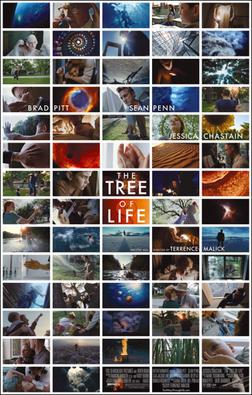
9f8e8-thetreeoflifeposterDirected by Terence Malick and starring Brad Pitt, Jessica Chastain, and Sean Penn, this film is a grand and audacious piece of cinema that intertwines images of the creation of the world with the life of a young boy in 1950s Texas. 

When I say daring, I mean that you will either find it fascinating or very, very dull. There does not seem to be much middle ground here. The film begins with a biblical allusion to Job and depicts a flickering golden light. Over these images are whispered words urging the listener to follow either grace or nature in life. 

Then, both Mr. and Mrs. O’Brien (Jessica Chastain and Brad Pitt) find out separately that one of the sons has died, and the reason is not explained. In the present, one of their sons (Sean Penn) who is now an architect contemplates his life while trying to get through his day. Then, we witness the breathtaking formation of creation, with the creation of the planets, sea, and life itself.
Back in 1950s Waco Texas, a young couple has had their first baby boy, and then two more follow in the ensuing years. Most of their life is focused on the conflict inside of the young boys, Jack. He must struggle with a mother who is gentle and loving, and a father who is authoritarian and even abusive. After one friend dies and another is burned, Jack begins to grow more disillusioned with the world and his parents. During a summer, their father goes away and during that same time, Jack becomes even more rebellious. Then their father is in trouble of losing his job, and he questions how he has lived his life to deserve such a fate. Back in the present, Jack has a fantastical vision seeing his younger self, as well as his family and others walking on the beach and the film, ends soon after. 

The closest movie that I can think of with the same thought-provoking intentions as The Tree of Life is probably 2001: A Space Odyssey. However, I think I surprisingly appreciated Tree of Life a little more, because it focused more on the human aspect instead of the fact that humans are insignificant and primitive in the realm of outer space. Furthermore, the ending of this film somehow seemed reminiscent of La Dolce Vita, since both had rather cryptic conclusions taking place on expansive beaches.
 
4.5/5 Stars

The Virgin Spring (1960)

19cfc-jungfrukc3a4llanDirected by Ingmar Bergman and adapted from a Swedish ballad, this film revolves around a Christian Medieval family. Their only child is a beautiful, care free girl who they cherish. They sned her off to church with a maid servant. Along the way the two of them must pass through the forest. The girl leaves her servant behind to rest and then she goes on, meeting some herdsman on her way. She shows them hospitality by sharing her food, but the two men brutally rape and kill her. Ironically, that night they seek shelter with the girl’s family unknowingly. By accident the parents discover what became of their daughter and they must then decide what action to take. Bergman’s films certainly bring up questions about morals, religious faith, and evil. None of the characters were perfect but instead human, because they all make mistakes and must ask for God’s forgiveness

4/5 Stars

The Night of the Hunter (1955)

83767-nightofthehunterposterDirected by Charles Laugton and starring Robert Mitchum, Lillian Gish, with Shelley Winters, the film tells the story of a preacher who epitomizes a wolf in sheep’s clothing. While serving a short sentence in jail, this “preacher” (Mitchum) learns from another man who is to be hanged that he hid $10,000 near his home. Intent on finding it, the fanatical man slithers his way into the life of the man’s widow (Winters) hoping to find the money by using her kids. They are adamant to not tell where it is and they soon discover what kind of man he is. After he murders their mother, the two children flee down the river. There they are taken in by a hospitable Christian woman (Gish) who has other orphans. They grow to love and trust her as their own mother. However, the sly preacher is bent on taking them away along with the money. Gish realizes his evil and has none of it. In the final scenes it is proved that love always wins over hate. This movie is certainly chilling, and disconcerting but the latter half I found especially good. Laughton deserves credit and the acting was good as well.

4.5/5 Stars

The Seventh Seal (1957)

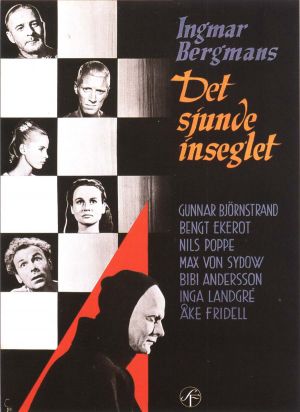
Starring Max Von Sydow and directed by Ingmar Bergman, this Swedish film revolves around a knight who returns from the Crusades with his squire. He begins a chess match with Death which parallels his travels across a land infested with the Black Death. Along the way he is joined by a pair of married actors and a blacksmith. However, he is tired and disillusioned with his life. To make matters worse he witnesses some terrible things and finally loses his game against Death. He returns to his wife with some of his friends and they face their fate when the time comes. This film was an interesting blending of a Medieval setting and modern disillusionment. Besides being very metaphorical, the cinematography is stark, while the title alludes to the events in the biblical book of Revelation.

5/5 Stars

Inherit the Wind (1960)

Starring two battling greats in Spencer Tracy and Frederic March, with Gene Kelly as well, the film chronicles a fictitious version of the controversial Scopes Monkey Trial which acted as an allegory for the McCarthy era. March is the prestigious prosecutor on the side of Creationism and Tracy is the famed defense attorney fighting for a young schoolteacher (Dick York). The two spar back and forth on the touchy subject while staying friends outside the courtroom. The whole town backs Brady, condemning Cates and Drummond as evil. However, despite all that is against them, Drumond saves the case by bringing Brady to the stand. The two stars have commendable performances if not their best. Gene Kelly proves he can be a serious actor, playing the cynical newspaper man. The cast is rounded out nicely by Harry Morgan and Claude Akins. Here Stanley Kramer puts together a respectable movie version of the stage play.

4/5 Stars