M (1931)

mfilm1Peter Lorre has a face that will forever live in cinematic infamy, and it started with M. In truth, Fritz Lang’s drama involving a serial killer feels fresh and engaging even after all these years, maybe because humanity hasn’t changed all that much. We still murder, we still kill, we still seek justice, we still give into our base desires, and there’s not a perfect person among of us. Each one of us has our faults — our own personal downfalls.

The film begins with a rash of disappearances across the city and the boulevards are plastered with Wanted posters for the mysterious culprit. The day that Elsie Beckmann disappears sets the community off, especially when the perpetrator sends a handwritten letter to the local newspaper. The media frenzy begins as every man, woman, and child begins to suspect their neighbor of being a child murderer. The mob mentality looks to overrun the scales of justice. Meanwhile, the police force looks to use empirical methods as well as frequent raids to drudge up answers. They’re far from popular in the underworld and the force is being run ragged in an effort to get to the bottom of the case. Everyone expects a resolution quickly, but real solutions are hard to come by.

Things have gotten so dire for the local mob bosses that they call a meeting, resolving to do the dirty work on their own. They begin their own search for the man who is single-handedly ruining their rackets because he’s no good. Now the chase is really on for Hans Beckert, because everyone is on high alert, in all spheres of society. The question becomes not if he will be caught, but when, because it is only a matter of time.

It’s in these latter moments that the longstanding mystery behind the film’s title finally is revealed and it is a fitting twist. Everything begins to fall into place, but the strangest thing is that Lang actually begins to make us empathize with his killer. True, we want him to receive justice, but the men on the other side of the law seem little better than he — in fact, many of them are criminals themselves.

M has a fascinating juxtaposition of silence and sound, acting as a bridge between both. Beckert’s whistling of “In the Hall of the Mountain King” is certainly integral to the plot. It’s those exact notes that trigger the memories of a blind beggar selling balloons. However, it is these hollow sounds of the whistling that feel strange ominous and distant in vast areas of open space  There’s as much tension in the lulls of silence as there is in the most tumultuous notes.

Although Lorre doesn’t say much, we get enough clues just dwelling for long spells on his face. Those big eyes full of crazed fear and psychological torment. His mind plagued by paranoia and torn apart by schizophrenic bouts of conscience. It suggests the perverse nature of man given that this story was taken from real life accounts of a German child murderer. But also the tragic nature of mankind that we are often drawn to do evil in a sense. Our flesh is too weak and we give into our animalistic urges. Of course, Lang reveals the flip side of the indiscriminate as well, that seems just as questionable including mob rule and a sort of vigilante justice that functions outside of the accepted modes of law enforcement.

It brings up questions on the cycle of crime and the rehabilitation of the criminal. Questions that still get hotly debated and thrown about even to this day. M became the measuring stick for all of the subsequent crime thrillers Lang would churn out so efficiently following his move to the United States. You could argue that although he came close numerous times, he never quite topped this crowning jewel of a crime drama.

5/5 Star

Review: Shadow of a Doubt (1943)

Teresa_Wright_and_Joseph_Cotten_in_Shadow_of_a_Doubt_trailerIt is well documented that Shadow of a Doubt was Hitchcock’s personal favorite of his own films. That’s quite a telling statement when you do a quick scroll through some of the titles up for contention. Vertigo, Psycho, Rear Window, North by Northwest, Notorious, even The Birds. And yet the famed “Master of Suspense” chose the often glossed over Shadow of a Doubt.  If we take a slightly closer look it makes a great deal of sense as the film follows through with one of Hitch’s most prominent credos, “There is no terror in the bang, only in the anticipation of it.”

That’s, in fact, a great deal of what Shadow of a Doubt is. It’s the cringe-inducing anticipation for what is bound to happen. The inevitable that is plain as day, except not everyone sees it so clearly. But that’s enough ambiguity.

The story opens in a depressed urban city with Charles Oakley (Joseph Cotten) laid out pensively on his bed. Dollar bills are scattered haphazardly across his floor. Soon he learns two men want to talk with him, and he’s not about to get acquainted so he gives them the slip and heads to the one decent place he can think of. Santa Rosa, California, the peaceful abode of his older sister Emma and her family.

What we learn over time is that Charlie is known at large as the “Merry Widow Murderer,” because he has strangled three such women and taken their valuables. Hitchcock playfully alludes to the fact by opening his film with the “Merry Widow Waltz” and it will pop up throughout the entire story if you’re paying attention.

shadow-of-a-doubt-trainHis train comes barreling towards town with smoke spewing ominously. For now, his oblivious family is just happy to see his face, especially his oldest niece and namesake Charlie (Teresa Wright) who is ecstatic to have something to shake the family out of their funk of normalcy. At this point, there is little to be uneasy about, because Uncle Charlie is not about to do anything rash, but there are a few moments where he gets uneasy. Covering up a paper headline and doing his best to avoid two men taking photos for a national survey. Charlie doesn’t think much of it at first, and it feels just like old times with uncle giving gifts and receiving the royal treatment.
Except the ring he presents to Charlie is plundered jewelry with a mysterious pair of initials engraved on it. Of course, the men interviewing the Newton household are actually trailing Uncle Charlie, and Detective Graham fills Charlie in while also becoming fond of her. But it’s not the kind of news she’s willing to accept. How can she? It’s a late night visit to the local library that finally confirms all her deepest fears. Soon, the telltale signs become more apparent to the audacious girl, and Charlie simultaneously notices the changes in her as well.

This is where the film becomes fidget-inducing because it’s out in the open. Uncle Charlie knows that she knows, and still he remains in their home, in quiet little Santa Rosa, as if nothing has changed. For most of the family, nothing has, but Charlie’s demeanor is completely different. She just wants her uncle gone, away from her family, and then there’s the impending threat that her own life might be in danger. In truth, Uncle Charlie doesn’t want her around, even though it looks like he might get off scotch free.  His mind is already so twisted — so far gone — that he coolly attempts to get rid of Charlie, right under the very noses of their family.

It turns into a psychological mind game between uncle and niece, Charlie vs. Charlie. There’s no detective to save her now because he’s already left town and there’s no other direction to turn. She finally does succeed in getting dear uncle to leave town, and it looks like the living suburban nightmare is coming to a close. Then, in a final instant on the outbound train, Hitchcock’s lets off a BANG! The film’s culmination arrives and is just as quickly passed over. It’s done just like that, but it’s not really what was important. All that nerve-wracking build-up — the meat and potatoes of the drama was what was paramount.

Thus, Hitchcock delivers us a shocking nightmare of a film. It’s not anything like Psycho, existing in a far more mundane world. But Shadow of the Doubt brazenly suggests that murder can reach us even in our homes, even in the places that feel the safest. Hitch exhibits his wicked sense of humor with two characters who love to talk murder in Mr. Newton (Henry Travers) and the next door neighbor Herb (Hume Cronyn). They obsess over crime fiction and discussing ways to get away with murder. Little do they know that the man in their midst is trying to do just that.

Teresa Wright is certainly one of my favorite actresses and her role as Charlie is one of her bests highlighting her cordial charm, while also revealing her adeptness in the role of a tortured heroine. We want her to succeed more than anything, and as an audience, we worry for her well-being the entire film. Meanwhile, Joseph Cotten generally plays laconic types, but still, they usually have more goodness than baseness in their souls. Uncle Charlie is a fine role for him because he’s so sweetly cunning and at the same time sadistically twisted.

Shadow of a Doubt pic 3Unfortunately, the role of Detective Saunders feels rather shallow, but that’s hardly something to get stuck on. If that were the case, we could easily point to Charlie’s parents who seem way too old. But they are perfectly average, ordinary folks, as played by Henry Travers and Patricia Collinge. The script work of the preeminent Thorton Wilder (Our Town) and the on-location shooting in the Everytown of  Santa Rosa lend a universality to this thriller’s impending dread.
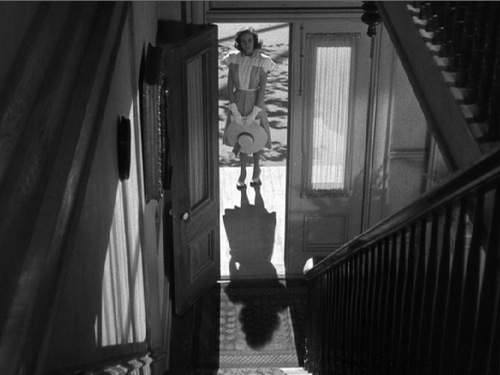
Dimitri Tiomkin heightens the film with his usually stirring, pulse-pounding approach to scoring. Hitchcock’s camera, while in black and white, is nevertheless noticeably dynamic. He always emphasizes the necessary focal points, and extreme close-ups and high angles only accentuate the drama. His use of the stairwells in the house is absolutely marvelous, implying both distance and foreboding in numerous shots. For every shot that Cotten looks menacing, there is an equal number highlighting the pure innocence of Wright. It’s the perfect juxtaposition of character, in a film that is really only your typical see-sawing struggle of good versus evil. Except it takes place in our own backyards.

5/5 Stars

In Bruges (2007)

In_Bruges_PosterNear the end of the film, one of our main characters questions whether or not being stuck in Bruges is the equivalent to being in Hell. However, far from badmouthing the Flemish city, director Martin McDonagh actually makes it a fascinating backdrop for a film. It’s a city full of history, romanticism, mystery, and even peril. It just depends on how you look at it, with eyes of reverence or general disdain.

In Bruges, the film, only happens because two men have to make a quick getaway after knocking off a target in London. That is the life of a hit man. Quick work and then long periods of waiting. That is the majority of what we witness, following the existences of Ray (Colin Farrell) and Ken (Brendan Gleeson). Ray is a bit of a jerk sometimes and to him, Bruges is a living nightmare. Completely and utterly dull. But then he happens upon a fantastical film set starring a dwarf. There a beautiful woman Chloe (Clemence Poesy) catches his eye and then Bruges doesn’t seem so bad after all. At least for now.

Then there’s Ken. He’s not looking for casual companionship or booze. He has respect for the arts, the places of worship and the culture around him. Both men share foul Irish mouths and a general jadedness about their profession. After all, being a hitman is a living, but as Ray finds out it’s not without its stress. Shooting a little boy on accident takes its toll, and Ray must contemplate the entire framework of his morality. Meanwhile, Ken sticks by the phone and gets a call from their fiery boss Harry (Ralph Fiennes). He gets an order, and it catches him off guard. He already has his next assignment, but now he must attempt to reconcile orders with personal conviction. These are hitmen with a conscience.

Scum of the earth, yes, rough around the edges, maybe, yet somehow they still reveal their humanity. The miracle is that through the violence, we still find common ground to relate with them. We become thoroughly involved in this tale that, while darkly funny, is most certainly moving. When all the shots are fired, what we’re left with feels like a Shakespearian tragedy sprinkled with the absurdity of Bosch. Place all of this in front of the quaint Flemish setting and you have a rewarding adventure. I also recently saw Hot Fuzz and it seems that these films could almost be watched in tandem. Aside from both being British productions, they both have action, violence, and dark humor, but perhaps, more importantly, they exhibit genuine heart. That’s something not to be taken too lightly these days.

3.5/5 Stars

Hot Fuzz (2007)

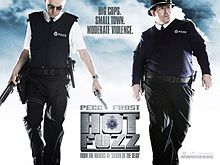
220px-HotFuzzUKposterWhen we go to see the latest action movie are we consciously thinking about what we are ingesting, what the motives of the characters are, or even the film’s title? More often than not the answer is no, because we want to be entertained, like Romans attending gladiator battles. We want thrills above content, without considering what we are being fed. In the line of these types of films are Lethal Weapon, Point Break, and now Britain’s addition Hot Fuzz.

It’s the story of probably, the most industrious, skilled, highly-trained policeman you could imagine. His name is Nick Angel (Simon Pegg) and he’s a butt-kicking, paperwork-completing sergeant, who is making the rest of the force look bad. He has the potential to be a great action hero. Enter in Martin Freeman, Steve Coogan, and Bill Nighy, and they agree to reassign him to the sleepy of village of Sanford, and all his dreams are kaput. Ambition will lead him nowhere in such a town, and it feels more like Mayberry than the locale for a great action flick.

But being as diligent as he is, Angel makes strides even before he starts his first day. Among one of his arrests at the local pub is fellow police officer Danny Butterman (Nick Frost), who also happens to be the son of the police inspector. It’s rather a strange introduction, but of course, the two of them are partners. Nick simply tries to tolerate all those around him, but it proves difficult, and he’s a little taken aback by the geniality of the locals. They all seem to know his name.

However, when a string of grisly murders takes place successively around town, Angel has what he wants, something to investigate. Again, everyone around him says it’s all been a line of unpleasant accidents. They aren’t willing to face the reality that their sleepy little town might have a murderer on the loose.

As you might expect Angel and Buttermann actually begin to build some rapport despite how different they are. However, Hot Fuzz also has a major twist that frames this entire story in a different light. And although the film does exhibit its share of violence, it also has a wickedly funny streak running through it. At times that means laugh-out-loud antics, courtesy of Nick Frost, or maybe uneasy giggles when someone bites the dust in an outrageous manner.

Edgar Wright’s film is also noticeable for its rapid editing, involving quick cuts, flying transitions, and slicing and dicing. It keeps the story at breakneck speed and yet there is a great pathos built around its characters. We actually begin to care for Nick and Danny, which is often not the case in superficial action flicks. But that’s just it. Hot Fuzz is a satirical homage to all the cop/buddy movies out there and it has its share of action, and yet there’s more to it. In other words, action films are not just skin deep. Hot Fuzz proves that resoundingly. It’s a throwaway title maybe, but not a throwaway film.

4/5 Stars

The Shining (1980)

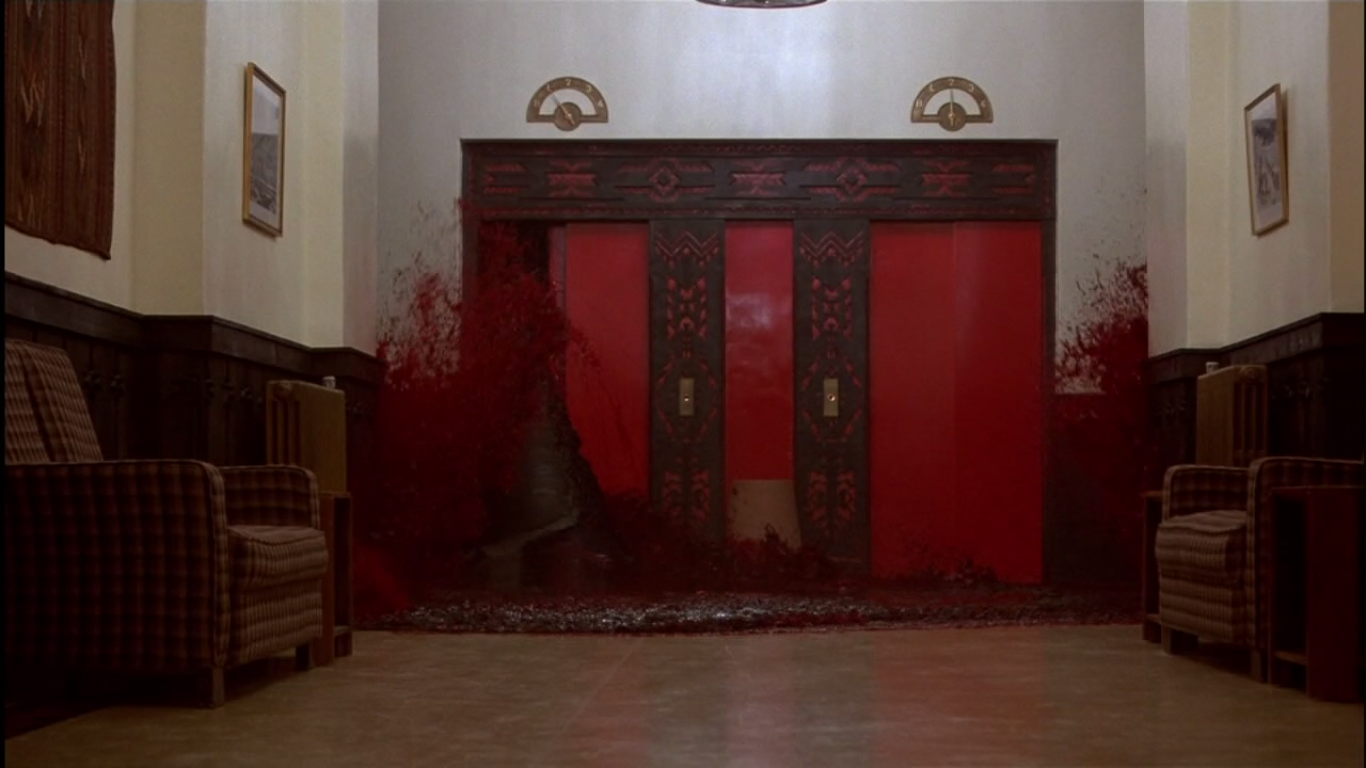
theshining3Stanley Kubrick is not generally known as a horror film director. His impact was far broader than solely one genre. How is it then that he made one of the enduring canonical films in the horror genre? It’s been over 30 years and people are still talking about The Shining — still using it in every kind of parody and homage imaginable. Like a Hitchcock or a Spielberg, he’s one of those directors with an eye for what’s thrilling as far cinema is concerned, but perhaps more so Kubrick deals in complexities. Ambiguity is his friend as much as the beautifully shot interiors of The Shining. He builds and constructs the perfect scaffold to work off of, and it’s full of tension and shock value, but it leaves the audience with questions. I watched Nosferatu recently and what I came out of it with was a conviction that it was not your typical horror film — it seems to follow you and haunt your thoughts in a sense. The Shining is a little more like a modern horror with frightening images, and yet it shares that same quality. You cannot help but ruminate over it or think about what you just saw and what it really means. Truth be told, I don’t know what to think about the cryptic ending and, in all honesty, I don’t care too much, although it makes for interesting discussion.

theshining1This film found its source in Stephen King’s novel (which I have not read). For the life of me, I had never thought of the significance of the title, but Scatman Crother’s character explains it in the same way that his mama had before him. “Shining” is being able to talk without your mouths. The little boy Danny Torrance has such an ability, and it proves to be the entry point into this film’s conceit. Not only is he able to say things without talking, but he sees things, horrible things, that other’s cannot — rather like The Sixth Sense (1999).

His father Jack (Jack Nicholson) and mother Wendy (Shelley Duvall) take him to a Colorado mountain getaway for 5 months of isolation, because it seems like a good deal. After all, Jack wants to get some work done on his book and he could use the unbroken solitude,  but of course, there’s an underlying tension that slowly builds as their time alone draws nearer. It’s done through the foreshadowing of cryptic images, violent tales of local folklore, and of course, a score that is constantly ringing in our ears. That’s the best way I can describe it. We know something is up.

So what does Room 237 mean? What about Grady and the bartender who serves Jack his drinks at the bar? They’re just as perplexing as Danny’s ability or the sudden change that seems to come over Jack. There are these perplexing moments that are difficult to account for whether it’s the initial introduction of the Chief (Scatman Crothers) and Danny, who he telepathically communicates with. Then, Jack Nicholson carries such a genial quality, and yet underlining all those Cheshire cat smiles is something deeply troubling.

theshining4Amidst the dreams and haunting images that blur the line between fantasy and reality, past and present, there is a strange fascination that develops for The Shining. Almost a morbid fascination, because we know something is wrong, but we keep watching anyway. We want to know what happens and furthermore, Kubrick’s visuals are often mesmerizing, although they remain indoors for the most part. His camera often trailing characters as if they are prey.

He pays his audience the final respect of not giving us everything and not tying up all the loose ends. We are left with images and photos ingrained in our mind’s eyes. Admittedly, Shelley Duvall is not an actress I usually pay great attention to, and certainly, this is Nicholson’s film along with Kubrick. He was made for such a twisted, layered role, that overflows with a certain level of affability and then becomes completely psychotic. It makes him far creepier than any villain clothed in black because Jack Torrance will openly kill you with a sing-song voice. That’s pure evil.

4/5/5 Stars

The Naked Kiss (1964)

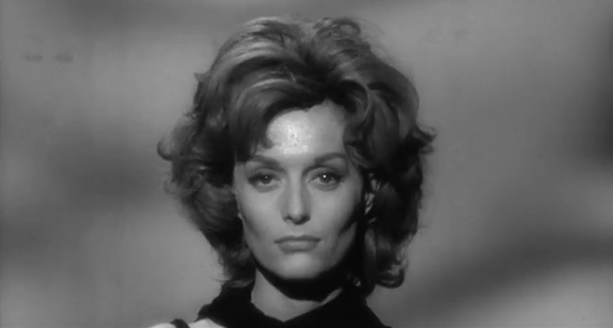
thenakedkiss1If you’re not at least mildly prepared for it, The Naked Kiss comes at you like a ton of bricks. A woman comes at the camera menacingly beating up a man, for a reason we don’t know. Then her hair comes flying off and there she is still swinging at him completely bald. It’s frightening, frenetic, and completely engrossing. From thence on, Sam Fuller has us in the grips of his story, even if we don’t quite know what it’s about yet. His hook has grabbed us.

It turns out the women we were so brutally introduced to is named Kelly (Constance Towers). A couple years down the road she looks strikingly different, with no sign of turmoil. Instead, she’s a sleek beauty working the streets of Grantville.

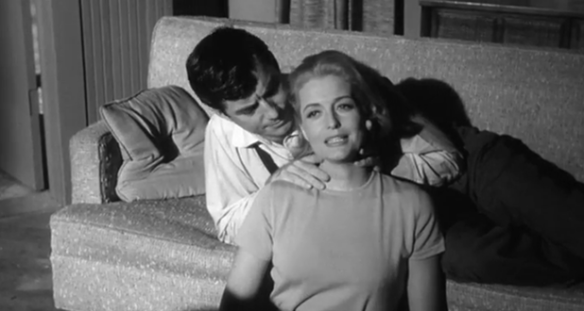
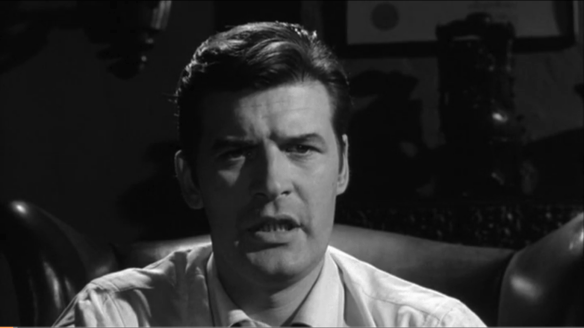
thenakedkiss2Of course, her first customer happens to be a police chief named Griff (Anthony  Eisley), who advises her to skedaddle out of town as quick as possible. He gives her the details on a cozy joint across the border known for their Bonbon girls. He thinks he’s got her pegged, but Kelly goes and does something even he wouldn’t expect.
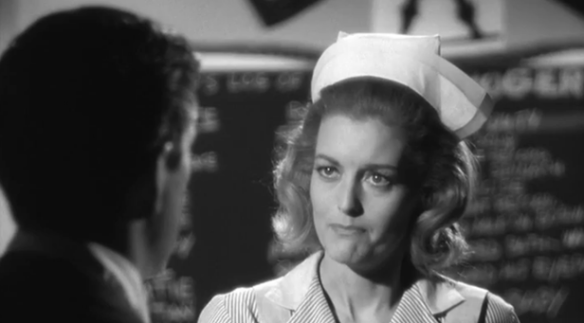
She acquires a job at an orthopedic hospital for disabled children and quickly becomes a favorite in the ward. All the kids love her dearly, and she cares for them faithfully. But Griff still thinks she’s working an angle. His mind is closed off, looking for every opportunity to dredge up Kelly’s guilt. He wants to confirm everything he already knows about her, even if it’s not true.

Kelly’s stellar performance catches the eye of town millionaire J.L. Grant, who also happens to be a good friend of Griff’s. She and Grant hit it off on topics such as Lord Byron and Beethoven. Their time together turns into romantic dreamscapes of Venetian waterways.

At the same time, Kelly is extremely sympathetic to her fellow workers supplying money for a woman so she can keep her baby instead of getting an abortion. To naive young Buff, she warns of selling herself out and becoming a Bonbon (“You’ll be every man’s wife-in-law, and no man’s wife. Why, your world with Candy will become so warped that you’ll hate all men. And you’ll hate yourself! Because you’ll become a social problem, a medical problem, a MENTAL problem!… And a despicable failure as a woman”). It’s in these candid moments where Kelly reveals her scruples, although she’s not above vigilante justice, whether it involves her old pimp or the morally questionable proprietress Candy.

There are strangely peaceful lulls that only make the climactic moments in the film all the more dramatic. Fuller utilizes the children’s song from the hospital wonderfully with the hollow images he juxtaposes on screen. The song reverberates several times as a haunting marker of what Kelly has seen between a little girl and her soon-to-be husband. But that’s over with now. Kelly has deeper troubles to worry about afterward.

The Naked Kiss is a pulpy delight as only Fuller can deliver with twisted natures and deep-seated brokenness. He makes glorified trash which is often times far more engaging than the most polished blockbuster Hollywood can churn out. The seedy exterior almost always gives way to great depth. Even when you step back for a moment, it becomes obvious how implausible this story is. How does Griff not know about his best friend? Yet Fuller plays the drama so well we are completely engrossed.

thenakedkiss3The social commentary is there. The characters are interesting. Meanwhile, Fuller slices and dices through taboo subjects that would have horrified censors and yet he brings them to the forefront in such a way that hardly glorifies them, but actually gets them out in the open. Every detail isn’t written out, but Fuller throws us into the narrative and allows us to track with him. He puts a little faith in his audience.
Constance Towers’ performance looms large in this film and she reminds me a great deal of Gena Rowlands. Her turn as Kelly is multifaceted and dynamic. Her look of genial charm just as easily turns into an icy gaze of contempt. Furthermore, she, much like Fuller, is willing to go to the streets and acknowledge all the dirt and grime there. She wants to clean it up, and she truly is the hooker with the heart of gold. Only such an easy categorization should not take away from Towers’ role at all. There’s more to her than a look, or a wig, or a body.  To paraphrase Grant, she’s the most interesting contradiction I’ve met in some time.

4/5 Stars

Shock Corridor (1963)

shockcorridor1“This long corridor is the magic highway to the Pulitzer Prize” – Johnny Barrett
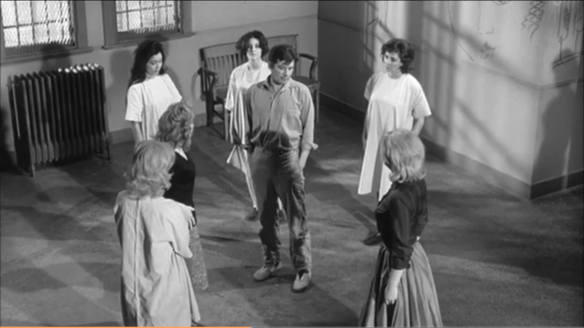
Being a jack of all trades, producer, director, screenwriter extraordinaire Sam Fuller also had a stint as a journalist. Therein lies his obvious stake in Shock Corridor, a film that looks frightening on paper, and is even more eye-opening in execution. True, this is not an altogether realistic film, but that’s what makes it such a stirring portrayal. It dives into the darkened recesses of a sanitarium showing us things we don’t want to believe. They probably weren’t all true, but there’s still that shred of doubt. We’ve seen enough One Flew of the Cuckoo’s Nest and read enough horror stories to know better. Fuller plays off that fear which intrigues us as much as it alarms.

Investigative journalist Johnny Barrett (Peter Breck) can see it now. If he infiltrates a mental institution he can dig up the truth on a murder case that occurred behind closed doors and was quickly hushed up. Such a piece of detective work could earn him the Pulitzer Prize easily, and the tantalizing prospect is too good to resist. His girlfriend played by Constance Towers pleads with him to back out, because she wants no part of the plan.

But he teams up with his editor Swannee and Psychiatrist Dr. Fong to cook up a backstory the people in charge will buy. Barrett gets coached in how to act and respond to every question. It’s a potential long shot, but just like that, they buy his sordid story of obsession with his sister thanks to a performance by Cathy. He’s in.

shockcorridor3Behind the pearly gates, there are brawls galore and noisy neighbors riddled with all sorts of neurosis, quirks, and ticks. There are the good cop and bad cop who help care for the patients and keep them at bay. Johnny even begins to have hallucinations of his girlfriend drifting through his dreams. He gets introduced to hydrotherapy, dance therapy, and even faces a traumatizing experience at the hands of women in the female ward.
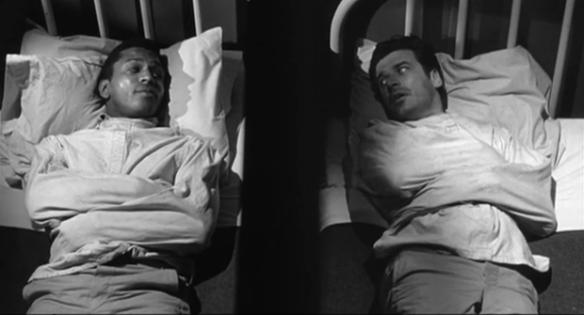
All the while, he is sniffing around for any information on the man named Sloan who was killed with a knife by a man in white pants. He makes his rounds questioning three different witnesses and amid their idiosyncrasies, they give him bits and pieces of fact. However, their own mental capabilities are clouded by traumatic war experiences, racist ramblings, and fear of impending nuclear war.

shockcorridor2The boisterous, tumultuous chaos of the ward does almost become maddening, even to the viewer. Johnny has a few angry outbursts of his own as the strain of the facility gets to him more and more every day. Electric shock therapy among the other treatments leaves him mixed-up, confused, and overtly paranoid. He’s hardly the man we met in that office so many days ago and even if he got the scoop he was looking for, at what cost? Shock Corridor has a thunderously disconcerting ending worthy of a Fuller production.

From casting Philip Ahn as a knowledgeable psychiatrist to the absurdity of an African-American obsessed with the KKK and Pro-White sentiment, Fuller once again does a lot on the racial front. He manages to represents Asians in a positive light and the character of Wilkes points to the still inherently twisted nature of southern white supremacists, even after the advent of such legislation as Brown v. Board.  Thus, once more he gives us a sensationalized story with a surprising amount of depth to it. No doubt he had a soft spot for journalism since that’s what he made his living off of at one time. But Shock Corridor implies that there is such a thing as crossing the line. It’s the utter extreme, but it’s cautionary nonetheless.

3.5/5 Stars

Ex Machina (2015)

Ex-machina-uk-posterThe film industry needs films like Ex Machina. They’re smaller productions, but that usually means they’re more audacious and oftentimes far more interesting. First time director and veteran screenwriter Alex Garland delivers up a story that takes place in an isolated, ultra-modern getaway that’s a helicopter ride away from civilization. Caleb (Domhnall Gleeson) gets dropped into this little piece of paradise thinking he’s won a huge honor, and in truth, he has hit the jackpot. He makes his way to this isolated locale and comes face to face with Nathan (Oscar Isaac), the mastermind behind his little company. We don’t quite understand why Caleb was called in or what the following hours will look like exactly.

Nathan quickly clears up any ambiguity with one pointed question: “So do you know what the Turing Test is?”That begins the jumping off point for the entire narrative which is compartmentalized into different sessions of observations. It’s Caleb’s job to interview the one and only Ava (Alicia Vikander) over the course of a couple days to decipher whether or not she can pass the Turing Test. Yes, Ava is a highly intelligent A.I., but just how intelligent we’ll find out over the course of the story.

This is most of the film, but there are a lot of oddities that plant themselves in back of our minds. Who is Kyoko the maid? Is Nathan to be trusted? After all, Ava induces powercuts so she can talk with Caleb in confidence. Because she knows we act differently when unobserved — when all the eyes aren’t watching us.

Ava is strikingly metallic, mechanical, and still somehow incredibly lifelike. Nathan has developed her in such a way that she has attraction down to a science. She somehow exudes a robotic sexuality.  The trick is finding the perfect algorithm for action that is not automatic. Getting the precise equilibrium of nature vs. nurture.

The mind games delve ever deeper as Caleb tries to maintain a balance between his intellect and his own insecurities. Ava asks to question him, and the tables are quickly turned. Caleb is manipulated constantly and he himself manipulates. But he realizes too late that he served one function, only to be quickly discarded.

Ex Machina is fascinating as it spirals deeper and deeper into an abyss of deception and disorientation. It exists in that terrifying realm of the not so distant future, and while we are not there yet, it feels like we may be on the cusp of such a world. It brings up questions of man’s desire to be God and the dichotomy that arises between the creators and the created. The history of computer science arguably extends all the way back to Alan Turing, and it certainly has opened grand avenues of exploration. But with such power, including Artificial Intelligence, Search Engine Optimization, and the like, we are opened up to a far more perilous world. A world, where if we’re not careful we can lose all grasp of reality and all confidence in our fellow man.

4/5 Star

Review: The Silence of the Lambs (1991)

silenceof1The Silence Lamb is a horror film at times, a thriller at others, and most definitely a character study in its entirety. It features two wonderfully different figures in budding young FBI agent-to-be Clarice Starling and incarcerated serial killer Hannibal Lecter played so impeccably by Jodie Foster and Anthony Hopkins respectively.

It begins as a hunt for a serial killer named Buffalo Bill (Ted Levine), who for some reason kidnaps his victims, kills them, and skins them like some kind of perverse trophy. This in itself makes for an interesting albeit grisly storyline. The race is on to find this man before he murders his latest victim who happens to be the daughter of a prominent senator. Thus, there is an immediate need to get inside his head and figure out what the next logical steps should be. That’s when Agent Jack Crawford (Scott Glenn) of the Behavioral Science Unit calls on Starling to help him out.

The narrative of Silence of the Lambs is twofold because this larger manhunt becomes the backdrop for an arguably far more interesting development. The initial meeting and budding relationship, if we can call it that, between agent Starling and cannibalistic psychopath Dr. Lecter is deliciously intriguing. He just might be the key to unlock this case, but it’s not without peril.

silenceof2As the saying goes, “Quid pro quo.” Lecter is rather intrigued by Starling, so different and far franker than any of the other people who get thrown his direction. So he agrees to help her only asking in return that she open up about herself. It seems like a dangerous proposition with Lecter constantly playing mind games. He’s skilled at probing, dissecting, teasing, and prodding. But Starling willingly goes through his questioning to get help with the case. After all, who better to catch a serial killer than another serial killer?

They touch on the death of Starling’s father, a town Marshall, and her horror in seeing the slaughter of newborn lambs. In return, he tells her that all the information she needs is in the case files. But antagonistic Dr. Chilton is more a hindrance than a help to Starling’s case, and she must figure out the rest on her own.

Going through the files she finally makes some headway in her search for Buffalo Bill, but an FBI tactical unit already has sights on his location. Then there’s a surprising about-face in the case, not to mention that Lecter escapes his cell, kills his guards and is on the lam. Starling is not in danger from him, but he is looking to have an old friend for dinner instead.

Ultimately the plucky young agent comes through big in her case and in the academy. The film ends on a high note for her, but with it comes a titillating call from Dr. Lecter. He pays his respects for her recent graduation then goes off after his newest victim. Such a conscientious killer to offer up his congratulations like that.

How does one go about playing a man so evil and yet intricately interesting on so many levels? Hopkins said himself that he copied a friend who never blinked because it always makes people on edge. He likened his voice to an amalgamation of Katharine Hepburn and Truman Capote if that even makes sense. Finally, he saw parallels to another famed movie villain, the computer HAL in 2001: A Space Odyssey.  Both so intelligent, so unfeeling and ultimately so deadly. What might put Lecter a trifle above HAL are his chilling unflinching facial expressions that are sure to send shivers down the spine of any normal person. A face like that just doesn’t leave you.

4.5/5 Stars

A Most Wanted Man (2013)

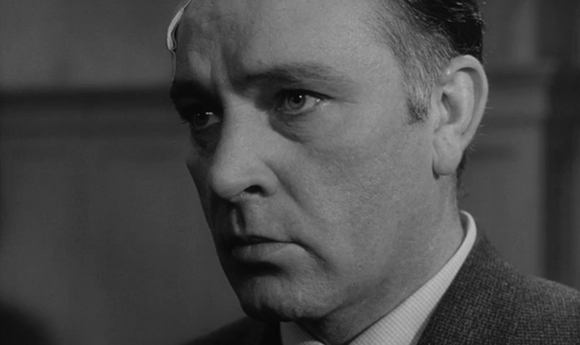
mostwantedman1A Most Wanted Man gained some notability as one of the last works of Philip Seymour Hoffman, and it must be acknowledged that he gives a truly worthwhile performance. No surprise there.

He’s Gunther Bachmann, the German head of a covert team that is looking to undermine potential threats from Islamic terrorist organizations in a post-9/11 society. The film features cinematography that can be best described as sullen and pale, fitting the mood of a, at times, dismal Hamburg, Germany. It looks to be everything a spy thriller is supposed to be, boasting an international cast including the likes of Rachel McAdams, Willem Dafoe, Daniel Bruhl, Nina Hoss, and Robin Wright, who are all intriguing to see in action.

But it is Hoffman with his team that commands the most attention, as they try and monitor an escaped political prisoner from Chechnya, who is seeking refuge but is also suspected of terrorist affiliations. He is contacted by a compassionate lawyer  (McAdams) who wishes to help him, but they get caught up in Gunther’s plan and try and flee from his prying eyes. It doesn’t exactly work. But really they are both part of a bigger ploy to pin down a wealthy Muslim philanthropist who could be in it even deeper with terrorist organizations. They just have to catch him with the help of some insiders and a banker (Dafoe), so Dr. Abdullah can be put away unequivocally. But Gunther also has his superiors and the American diplomat (Robin Wright) continually questioning his plans and mistrusting his motives. After all, he works for a, technically, unconstitutional organization that’s supposed to be off the radar.

mostwantedman2What A Most Wanted Man becomes is a brooding game of watching and waiting interspersed with a few moments that get the heartbeat up. But honestly, it’s mostly waiting, and it does serve to build the tension. There is one final turn that we could probably expect, and overall this is not a film of high volumes of action. In fact, there is barely any. Except by the time it ends, we are left with the same hopelessness and moroseness that seems to float over these characters in a haze. We are constantly wondering, “Where do their allegiances lie?” or “Why are they doing this?” and in the end, it doesn’t seem to matter. This is by no means Chinatown in its intricacy or otherwise, but you do get that same sense of futility.

I must admit I was a little surprised to see Rachel McAdams playing a German, but ultimately I was able to accept it. And although my knowledge of German film is limited, it was exciting to see two talented actors like Nina Hoss and Daniel Bruhl be featured, but they regrettably were relegated to smaller, hardly interesting turns. We might have to simply content ourselves with their other roles. Because this is most certainly Philip Seymour Hoffman’s show first and last. And it would, unfortunately, end up being his last. However, he left us as jaded and distraught as ever, and that’s a compliment to the actor he was.

3.5/5 Stars