
 When put up against more sophisticated brands of humor and satirical wit, it would be easy to call the likes of Laurel & Hardy the lowest form of comedy. It sounds degrading but it’s also quite true. Their pictures are short. They’re for all intent and purposes plotless aside from one broad overarching objective. Their gags are simple. Pratfalls. Mannerism. Foibles. Visual gimmicks. More pratfalls and mayhem. It’s not brain science. It’s not reinventing the wheel. So, yes, it might be the simplest brand of comedy but it also might just be the funniest and most universal comedy out there.
People crashing through floorboards and chasing after each other frantically, laughing hysterically is hardly revolutionary but at the same time, most everyone can enjoy that at a visceral level. That’s why as a young man I loved Laurel & Hardy and I still love them to this day. You would be hard-pressed to find a greater, more timeless, more idiosyncratic comic duo than the two of them.
And it really is their dynamic that is at the core of all their comedy. It’s their close relationship that while antagonistic and full of bickering and manhandling has something also very sincere underneath it. Visually they’re so apparently different. Each man has his own look and routine.
Stan Laurel is the pencil-thin Brit with a bowler to match a pair of squinting eyes and a penchant for high shrieking laughter and sniveling. His tuft of hair is iconic. His nonchalant execution of supernatural feats unparalleled (ie. lighting his thumb).
Meanwhile Oliver Hardy is the rotund fellow. The dominant personality who is always leaning on his counterpart both figuratively and literally. He’s also the one that believes he has the brains and the manners to help them pass as normal in their contemporary society. Of course, the key to all the comedy is that they’re both buffoons. Playing with their hats. Fussing with their ties. Awkwardly undressing to complete a business transaction.
They’re really made for each other. They’re inseparable. A perfect reflection of this being the very comical moment when they both go to sit down in a drawing room. Ollie rests his legs and Stan promptly props himself on his companion’s knee only to get brushed away to another chair. They really are conjoined at the hip despite how visually disparate they are.
But of course, none of this talks about Way Out West in particular and although there seems little need to talk about the film because the film is Laurel & Hardy, here’s a bit of definition all the same. Brushwood Gulch embodies all the western tropes you could possibly imagine. Bars, stagecoaches, floozies, and locals who hang around the avenues ready to break out into a western ballad at a moment’s notice.
Stan and Ollie’s arch nemesis James Finnalyson is also planted in the town as the opportunistic bar proprietor who looks to snatch away the deed to a mine that our intrepid yet idiotic heroes are meant to bestow upon the meek Mary Roberts. The ornery Irishman’s raised eyebrow shtick is in constant demand as he gets thwarted by Laurel and Hardy’s bungling at nearly every turn. Although they still find time to make an utter shambles of the whole situation, getting chased out of town only to sneak back in to get the deed back so it can be delivered to its rightful owner.
Over the course of an hour, we get the joys of watching our two heroes do the oddest choreographed dance routine you’ve ever seen, seeing Stan eat a bowler hat, and having Ollie get synched up to a second story landing with the most disastrous results involving a pack mule. Any chance at a stealthy entrance goes out the window in a matter of seconds. That and the fact that they’re theme song tips everyone in the audience that trouble is afoot. Because there’s no pair that can make a fine mess of things as beautifully wonderfully chaotic as Laurel & Hardy. They’re imbeciles of the highest order and subsequently eternally endearing. Bless their souls.
4/5 Stars
 Well, here’s another fine mess you’ve gotten me into.
 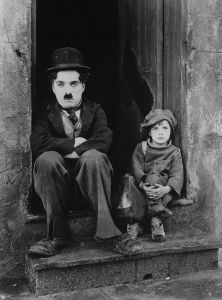 “A picture with a smile — and perhaps, a tear…”
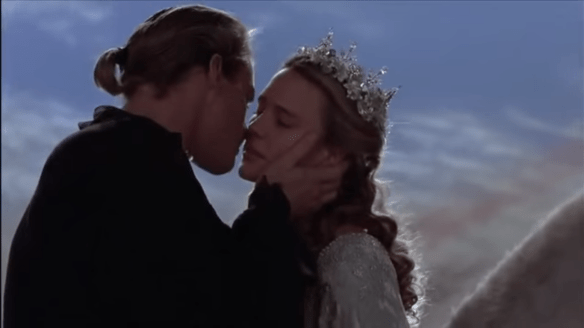
 Though it’s easy to be a proponent of
 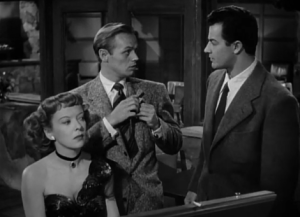 “Doesn’t it ever enter a man’s head that a woman can do without him?” ~ Ida Lupino as Lily Stevens
 In Manchester by the Sea, you can distinctly see Kenneth Lonergan once more translating some of his skills as a playwright and stage director into his film. There’s a very inherent understanding of two-dimensional space and how images can be framed in a very linear way as they would be seen by an audience taking in a stage production. But even more noteworthy than that is his dialogue which functions in remarkably realistic ways. Some will easily write this film off as the sheer doldrums because it’s fairly fearless in its pacing.
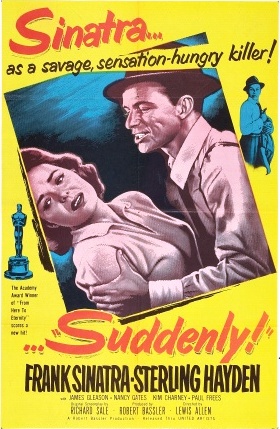 In some ways, the sleepy town of Suddenly feels like it could have easily been the prototype for Mayberry (Willis Bouchey’s appearance acting as the one actual tie-in to The Andy Griffith Show). The sheriff wanders around lazily. He knows everyone by name and they probably haven’t had anything exciting actually happen for 20 or 30 years at least. But then they go and have something bigger than Mayberry ever dreamed. No filling station robberies, or shipments of gold, or even a group of out of towners trying to case the bank. This is big. It involves the President of the United States and Frank Sinatra or rather Johnny Baron, the man who`s looking for a big payday from assassinating the commander in chief. But people generally liked Ike and so the Secret Service roll in to take the necessary precautions including cueing in the local sheriff on the particulars and shutting down the town.
