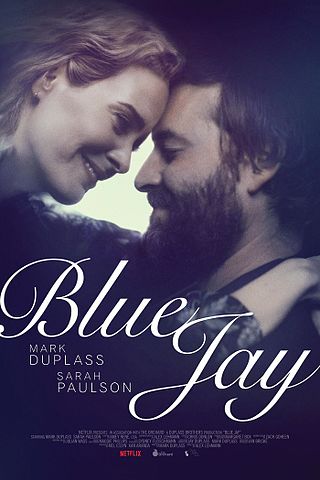
Blue Jay (2016)

Blue_Jay_film_poster.jpgAre you leaving room for Jesus?~Amanda
You know it. Catholic school forever.~Jim

Is it true that nostalgia always feels like it should be in black and white? If that sentiment is true there’s a rooted purpose in Blue Jay’s muted black and white tones that run deep. So often we consider it as a gimmick in the modern film spectrum but here it works.

This is a story of boy meets girl again. Now they are both 20 years older no longer naive high school sweethearts and he’s lost his mother and she’s now married to a man many years her senior. They’ve moved on you might say as is customary with those living life. But this day they run into each other at the local market. The stage is set for a fulfilling reunion.

However, in the opening interludes, we don’t know anything about either of them. Jim (Mark Duplass) with his scruffy ensemble and Amanda (Sarah Paulson) with her knit cap. For us, both of them have a clean slate but for the two of them meeting again is a mixed bag of emotions.

In these moments, it seems like all parties involved with the film are trying to make everything as unbearably awkward as possible. Is this the way movies work? A script must always acknowledge the sheer awkwardness of it all, creating certain pretenses, and piddling around with what characters are actually thinking. Is it simply a mean trick of a screenwriter to try and pull us into his story, in this case, Mark Duplass, or is there actually some truth to it all?

Are people actually this awkward in real life? Heaven forbid we actually act like this when we’re together or worse yet with someone we have a crush on. I can answer that rhetorical question almost instantly as a multitude of cringe-worthy moments surge to the fore. So yes, there’s probably some truth here and yes, Duplass is drawing us in. Of course, the final joke is that the film utilized no script at all only simple character arcs to arrive at its conclusions.

Still, these moments are only the setup. It’s not Blue Jay at its best. The film comes into its own as time progresses and the contours of the two characters become more evident with every memory they manage to conjure up and every little thing they do together that takes them through their old routines. They stop at the local liquor store and the proprietor (Clu Gulager) with his cowboy hat welcomes them in like old times. Whether or not they know his unassuming roots in western television lore is another thing altogether.

Then, they make the rounds of Jim’s old family home, the house of his deceased mother which is left pretty as it was when he was still a teenager. Piled high with treasures, clothing, trinkets, romance novels, and other artifacts from that long bygone era known as the 1990s.

They let the nostalgia waft over them as they reminisce together, playing their admittedly dorky version of “House” as Mr. and Mrs. Henderson and exhibiting the funkiest ’90s dancing as two of the whitest kids you know. But they accept their quirks and how dorky they are. That’s the fun part as they remember their younger days.

It’s in these wistful and yet still somehow carefree moments that the film recalls one of my favorite lyrics,

Here’s to the twilight
here’s to the memories
these are my souvenirs
my mental pictures of everything
Here’s to the late nights
here’s to the firelight
these are my souvenirs
my souvenirs

I close my eyes and go back in time
I can see you’re smiling, you’re so alive
we were so young, we had no fear
we were so young, we had no idea
that life was just happening
life was just happening

In the final stretch there some big reveals, there’s some of the drama we were expecting, some of the histrionics that we were wary of from a film such as this. After all, they’re in a confined space together with so many emotions still dwelling inside. You wonder about the old dichotomy that men and woman can either be married or unmarried. They’re never just friends because the boundaries become too difficult to maintain. The self-restraint too difficult to manage even in the most self-controlled of us all. After all, metaphorically speaking, a man can’t scoop burning coals into his lap without burning himself.

But we’ve come to care about the characters enough that’s there no sense that this is some shallow attempt to play with our emotions and get a rise out of us. Somehow it feels like a less flawed iteration of Your Sister’s Sister because it’s frank but never purposely crass and more than its predecessor Blue Jay feels true blue and sincere. It’s a more intimate even heartfelt drama that wins its audience over.

These characters deservedly earn our respect and even in the modicum amount of time they do well to build a rapport with their audience. They do the heavy lifting by opening up and we are called to respond accordingly. The tears and the laughter are intermingled. The regrets with the reality. The way we perceived things would look farther down the road and how they look now. I guess you could say that it’s the blue jay way–reflected precisely by the path this film takes.

It’s the memories and the dashed hopes it starts to pull out of the closets back out into the open. It’s joy. It’s laughter. It’s pain. It’s heartbreak. And as is usually the case with life the ending is unwritten. That’s why they’re still making films like this, now until the end of time.

3.5/5 Stars

Roman Holiday (1953): Escapism and Why That’s Okay Sometimes

Audrey_Hepburn_and_Gregory_Peck_on_Vespa_in_Roman_Holiday_trailer.jpg

I’ve made a point of suggesting that the reason that I return to movies, again and again, is not because I go to them as an outlet of escapism but for the fact that films give us a little bit more insight into the lives we lead as human beings. In some ways, you could say I’ve even vehemently warned against films functioning in such a way if that’s their sole purpose. In other words, I’m not a proponent of turning on a movie and tuning out all the periphery. It sounds a little too much like Timothy Leary for my tastes.

And yet I return to Roman Holiday time after time.  This story that literally functions as a fairy tale, a vignette-filled journey that perfectly encapsulates a day on the town. And we get the pleasure of returning to it again and again along with Gregory Peck and Audrey Hepburn. I will qualify why this all still makes sense but first, a little background is in order.

From the first time I saw it, on a plane flight to England, I was enamored by the whole adventure and the individuals involved. Hepburn has remained unequivocally my favorite actress of all time period. Gregory Peck’s lasting screen presence keeps him among the greats as far as film stars go.

They make Roman Holiday work so impeccably, but the major key to director William Wyler’s success is the very fact that he took his film on location — something that was still a fairly new phenomenon. So instead of getting some artificial Italian world conjured up on the Paramount backlot, we got a far more realistic experience that is almost palpable with its authentic flourishes.

They’re the kind of iconic panoramas that you cannot try and fake without them turning out ridiculously corny. But Roman Holiday is the real deal and that shines through its crisp black and white imagery and successfully turns Rome into the third major player in this romance.

I think it’s telling that Roman Holiday is a fairy tale in itself. It’s the story of Princess Ann’s little bit of escapism. It’s a bit of bliss that she gets to share with someone very special. But does she wrap herself in it forever and never return to reality and the responsibilities she has? No, she goes back to them. And there’s a reluctance and as an audience, it’s certainly bittersweet.

But look at Ann in the end and we see that she has truly grown up in that short span of time. If she had not, she would have undoubtedly been content with a life living out her little fantasy and forgetting everything else around her of substance. That’s so easy to desire after all. However, in doing what she did, she not only grew immeasurably but, in the end, she has a magical experience to hold onto and remember fondly. The fact that it cannot last forever only makes it that much more special.

There’s nothing wrong with vacation — a day of rest and relaxation is necessary for all of us. It’s no coincidence that we have a weekend built into our daily rhythms. That’s why I enjoy returning to Roman Holiday every few years because it’s alright to have that guilty pleasure every once and a while. In fact, it’s not a guilty pleasure at all. You could make a case that stories like this are even necessary. But the important distinction to make is that escapism is fine — I’m not against it completely — but it needs to be in moderation.

We can return back to earth after the fun of the fairy tale and simultaneously our lives are made better and we have the good times to look back on. I will continue returning to Roman Holiday for years to come and without the least bit of hesitation. A little bit of fantasy can be a very good thing. I’ll try and remember that.

5/5 Stars

Review: 8 1/2 (1963)

8.5 1.png

Is the subject of this film a religious one? – A Religious Leader 

Yes, well, in a manner of speaking. – Guido

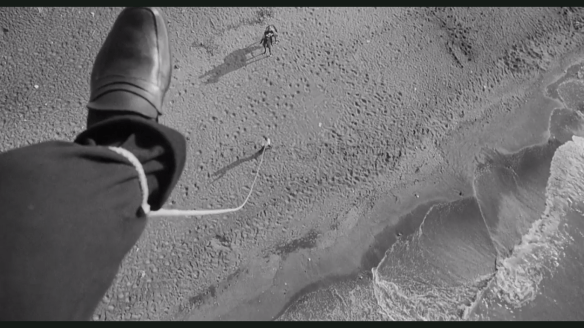
It famously opens with a dream. Our main character stuck in a silent traffic jam, completely disillusioned by the scene around him until he’s able to escape everything inhibiting him and soar into the upper echelons of the atmosphere. But it hardly lasts. Soon he finds himself tethered, being brought back down to earth.

8.5 2.png

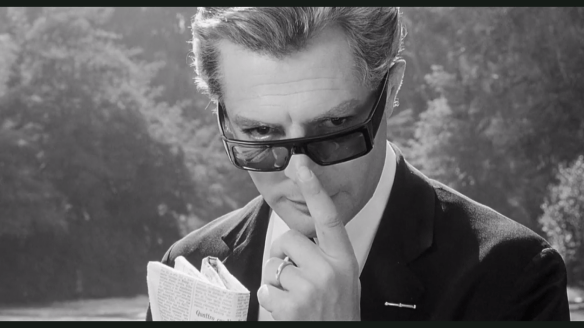
Our protagonist of sorts turns out to be Guido (the famed Italian icon Marcello Mastroianni), a film director who is going through a spell of director’s block. His most recent activities include an extended stay at a luxury spa at the behest of his doctors. It’s also early on in the film that someone asks him if his next film is also going to be one devoid of hope. It’s a very quick statement but in some sense, it sets the groundwork for Fellini’s entire film.

And it is a very personal film and a fascinating exploration of the art of filmmaking — the thing making it the most compelling is the strange suspicion that parts of Fellini himself dwell inside of Guido. Perhaps Guido shares a bit of his philosophy and stance or more precisely Fellini is like his main character.

The film within a film soon becomes evident and in that sense, it’s also a personal picture. Its title being derived from the number of pictures the Maestro had directed thus far. And numerous meta qualities come to the fore, most obviously when Guido is going through the screen tests his producer (Guido Alberti) and wife Luisa (Anouk Aimee) among those viewing the proceedings.

But going back to that issue of hope, the film’s finale has always been striking to me but I realized that it takes on new meaning put in the context of higher issues altogether. In some respects, Guido or Fellini, whichever you prefer, is trying to derive some sort of higher meaning, whatever that means to him.

8.5 4.png

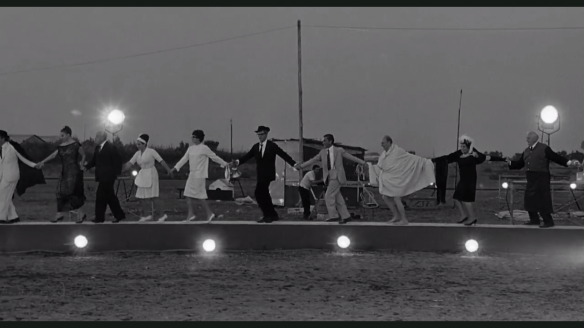
That’s in part why he has his legions of characters join hands in an almost communal dance of absurdity. Simultaneously, a journalist can be heard throwing his questions out, “Are you for or against eroticism?” and in the same breath, “Do you believe in God?” Because this is Fellini’s answer — the solution he has drawn up for himself. There is a sense of grandiose absurdity that is full of dreamscapes — where the distinction between reality and fantasy hardly means anything. Because in the eye of the beholder they are hardly different.

On purely a level of spectacle, it’s indubitably a fascinating set-up. Fellini is known for his quintessential style. To be Felliniesque is to be wrapped up in the surreal and the fantastic. But the philosophical conclusions that go hand in hand with such a provocative approach to film are rather disheartening. If this is part of what Fellini is trying to grapple with as it pertains to love and ultimate truth then 8 1/2 does fall back on a rather dismal ending.

As Guido explains to the man of the cloth, he is looking for some flash of understanding, some obvious moment of truth, like Saul at Damascus. He, like all his peers, carries the foundations of a Catholic upbringing. The religious authorities tell them that there is no salvation outside the church. His strict Catholic school told him what was wrong. Likewise, Guido plans to have a spaceship in his next film — humanities “new Noah’s Ark.” And it’s true that space exploration has been the final frontier, a beacon of potential hopes and truths. You see that in later works like 2001 and Solaris.  However, Noah’s Ark was also a vessel to escape destruction as much as it was a ship of exploration.

In drawing other cinematic comparisons, Fellini’s film revolves around a pointless MacGuffin (the phrase Asa Nisi Masa) rather like Welles famed Rosebud. Truthfully, this is a comedy in the same way perhaps Citizen Kane is a comedy. In a similar way, Guido seems isolated, but his mind, in particular, is twisted up with fantasies.

The most divisive scene in the film is yet another fantasy conjured up by Guido that is either extraordinary humorous or sadly indicative of his state of being depending on how you view it. He dreams himself in the stead of all the women he has crossed paths with thus far, all ready and waiting on his whim — his personal harem of sorts — totally and completely objectified for his pleasure. Again, it’s played for truly comic effect but what are the implications?

8.5 3.png

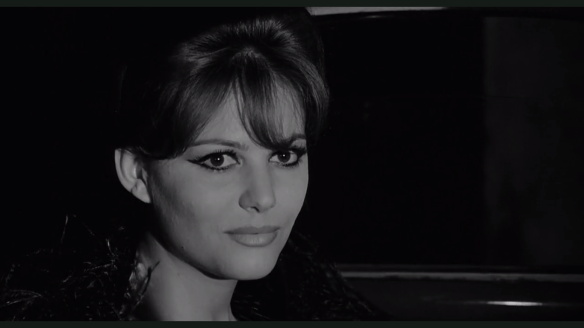
As the eternal beauty Claudia (Claudia Cardinale) notes, “He doesn’t know how to love.” She speaks of Guido’s protagonist but as the meta-ness suggests, this protagonist is Guido himself and going down even a layer further maybe even Fellini too. It’s precisely these problems that tie back into Guido’s disillusionment. “There’s no part in the film. And there’s no film. There’s nothing anywhere,” he says to Claudia.

Chaos and nothingness. True perfection is nothingness. His final conclusion? Life is a celebration. Let’s live it together. In essence, it’s true but the carnival showmanship and parlor tricks cannot obscure the bottom line here. As Francis Schaeffer once noted someone like Fellini “has no way to distinguish between right and wrong, or even between what is objectively true as opposed to illusion or fantasy.” That’s a terrifying world to come to terms with. During filming, Fellini supposedly kept a note on his camera to remind himself that this was a comedy film. But much like Citizen Kane, perhaps there’s a need to label it a tragicomedy. You cannot deal with such issues without elation being matched with some amount of melancholy.

5/5 Stars

Platoon (1986)

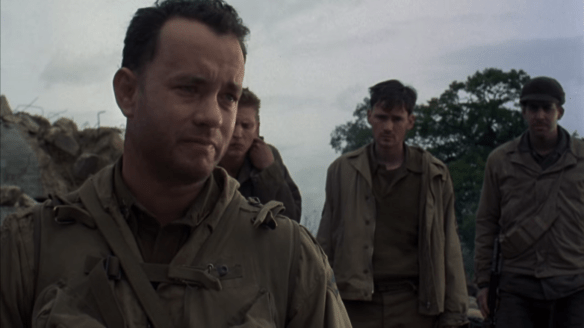
platoon_posters_86It’s a rather interesting parallel that Charlie Sheen is playing much the same role his father did in Apocalypse Now. At least in the sense that they become our entry point into the mire of war, specifically in Vietnam. But where Apocalypse seemed to belong more so to Brando or even Duvall, Platoon is really Willem Dafoe’s film. At least he’s the one who makes it what it is. His final moment is emblematic of the entire narrative.

But it is also striking that the film opens with an excerpt from Ecclesiastes as follows, “Rejoice young man in your youth…” But the latter half of that same verse has major implications that will come into play later.

For now, these soldiers muddle their way through their tours of duty the best they can. Smoke, beer, and Smokey Robinson is the perfect way to combat the insanity and humidity right outside your tent.

Oliver Stone conjures up themes of politics and government conspiracies. The first word is uttered several times throughout Platoon but in the general sense. When you get a group of people together vying for positions and attention there’s bound to be politics. As for government conspiracy, Stone doesn’t quite scrape that barrel, although to be sure as a Vietnam veteran himself perhaps he has a lot to be disgruntled about.

Instead, he has a cast of characters who get to reflect all the angst and disillusionment for him and it’s a fairly impressive bunch. Aside from Sheen and Dafoe, John Bergener, Keith David, John McGinley, Forrest Whitaker, and even Johnny Depp make appearance wading their way through Vietnam.

It’s been far too long since I’ve seen Apocalypse Now to draw too many comparisons. However, although Platoon is a perturbing film it’s not the same type of expansive labyrinth that I recall from Coppola’s epic.  Charlie Sheen’s voiceovers attempt to add an introspective tinge to the entire narrative, but that is not where the strength of the film lies.

Platoon also has its share of pyrotechnics, in fact, it succumbs to them too often but that’s not the reason the film is affecting either. It’s the aftermath of those explosions. The carnage that is left in the wake of the barrages of RPGs. The bodies maimed and the images that haunt these young men.

And as audience members, it’s hard not to feel something. Repulsed. Angry. Frustrated. Confused. Perhaps that is the film working — giving even a zenith of the taste of what it was to be in the jungles of Vietnam back in 1967. This is one of those experiences I cannot take too often because it’s almost too much.

My initial hope was that Stone would not inject this film with his own brand or message and I will say that when I watch Platoon I am not left with the feeling that I am listening to Oliver Stone but instead I am watching something terribly volatile unfold. That’s certainly a testament to this film. In the end, Platoon is bolstered by its sheer intensity.

But back to Ecclesiastes, the earlier verse ends “and let your heart be pleasant during the days of young manhood. And follow the impulses of your heart and the desires of your eyes. Yet know that God will bring you to judgment for all these things.” And it’s this final bit that is important in suggesting that young men are laid low due to their joy. But it’s hard to make that type of assertion. If anything, a film such as Platoon is perplexing because the answers are unclear and the reasons the world works the ways it does are not known to us.

Young men will continue to walk through life naively and he will struggle through life questioning the presence of God as much as this seemingly apathetic indifference towards the suffering in the world. Whether Stone was grappling with those same questions is up for contention but the beauty of film is that it very rarely works on a singular level. It can mean many things to many people. So it is with Platoon.

4/5 Stars

Purple Rose of Cairo (1985)

purple rose of cairo 1.png

“How many times is a man so taken with a woman that he walks off the screen just to get her?”

This line spoken by one of Jeff Daniels’ characters is really the key to opening up the fantasy that is Purple Rose of Cairo. Here is a film where Woody Allen most blatantly gets to parade his love for the movies and it revolves around the Depression, a love story, and a movie theater. Cecilia (Mia Farrow) is a woman who gets by working in a diner with a bum of a husband (Danny Aiello) who beats her more than he loves her. Her one getaway is the escapist thrills derived from the weekly romances and melodramas found at the local theater. She’s one of the most faithful attendees making it out to the movies religiously and she goes back out into the world reciting all that she has seen to anyone who is willing to listen.

And there is a bit of Buster Keaton’s Sherlock Jr. here as well. It’s not as inventive visually but several scenes that include the firing off of dialogue between the screen and reality work to great effect.  That’s something Keaton could not do in a silent picture, have his movie characters and audience members interact so directly.

It’s striking that the scenes that have been constructed as “film” really do look like films of old. There’s an attention to the craft rather than the shoddy caricature of grainy black and white that we’re often accustomed to. Even the striking resemblance of Edward Hermann to Edward Everett Horton as well as the makeup work complete with black eyeshadow lends itself to the whole charade.

And Purple Rose of Cairo is literally about a man coming off the silver screen to interact with one of his viewers — one of the people who is devoted to him — and he loves her. The woman is, of course, Cecilia, and the man off the celluloid is Tom Baxter (Jeff Daniels the first time around) a man who was written as a supporting character, an archaeologist.

That in itself might be enough to play with but Allen takes his story a step further so it’s not simply about this unlikely romance of worlds colliding. But it gets even more intriguing when the famed actor who plays Tom in “real life,” the man Gil Sheppard (Jeff Daniels again) crosses paths with Cecilia. At first, he’s interested in her because she has a way to assist him in his predicament since she knows his unruly alter ego. However, over time it turns into a certain amount of awe because she is devoted to his characters and by a certain amount of transference, him as well. The question that is then raised rather obviously is, do you take the perfectly constructed fantasy man or do you go with reality? That which is right in front of you, both living and breathing and fully human.

It’s also a commentary on the rigid conventions that storytellers are often forced to adhere to. Aside from “art-house,” there can be little to no films with people talking or dealing with philosophical issues. That’s too mundane. Of course, Allen is notably one who matches his comedic delivery with his own philosophical quibblings. And this film is light but it still raises some of the questions he is often preoccupied with. Whether or not he comes to a satisfying conclusion is for only the viewer to decide, and if the film itself is any indication they are the ones who must decide. The viewer, in this case, has great agency. They are the focal point of this film, again, in the literal sense.

As is Woody Allen’s penchant, the film opens with an old standard, in this case, the crooning voice of Fred Astaire knocking off a few bars of “Cheek to Cheek.” And the story ends with Astaire & Rogers dancing the night away. While Purple Rose of Cairo cannot quite top Top Hat, it’s a bittersweet dose of 30s nostalgia all the same. It shows once more that Woody Allen truly does love movies with a passion. That’s one thing that’s difficult to take away from him, but it does beg the question, can movies really be your be all, end all?

Some of the implications are rather troubling as we leave Cecilia completely immersed in a film, her real life completely ripped to shreds without a marriage or a job or really anything else. But she has a movie. Except movies can only go so far in how they emulate reality. They cannot replace it or perfectly replicate what is real. They can only help us understand it better. That is why, while movies can and should be entertainment at times, they should not only be pure escapism. Because the reality is that life is still right outside our door. We cannot get rid of it or lose sight of our role in it — both in good times and bad.

We are probably all just as messed up as the next person and perhaps little better than Woody Allen in some ways, still, if we don’t simply love movies but hope to glean a little from them about life then we are better off. They cannot be the ultimate thing in life but they can direct us towards the important things.

3.5/5 Stars

La La Land (2016)

La_La_Land_Poster.jpgAfter watching this film two things become astoundingly obvious. Damien Chazelle has an equally unquenchable passion for film and for jazz. He’s also extremely bold, going all the way when it comes to choices as a director with everything from camera set-ups, lighting, staging, even casting. In fact, let’s start right there.

Emma Stone and Ryan Gosling do not initially pop as performers. They’re not song and dance entertainers equal to the likes of Astaire & Rogers or Gene Kelly or Judy Garland. There’s no contest. But the brilliance of this decision is the very fact that these two beloved stars are one of the few remnants of the bygone Hollywood era where romantic stars were paired up together for more than one movie. Bogey & Bacall, Tracy & Hepburn, Loy & Powell, yes even Fred & Ginger.

And in a generation that’s often lacking that kind of history, Emma Stone and Ryan Gosling still have a bit of that cinematic romance tying them together not just in one film but in multiple allowing the audience an even greater connection with them.

It makes the musical thoroughly modern and yet most certainly takes cues from the past and the rich tradition that it was born out of. The film’s knockout opening sequence is a far grander more audacious riff off of The Young Girls of Rochefort’ while the film’s ending reflects Chazelle’s deep affection for Umbrellas of Cherbourg wedded with the fantasy scapes of An American in Paris.

But sandwiched in between those obvious touchstones is a film that’s at moments mesmerizing, beautiful, and engaging on its own merits. Chazelle’s sheer boldness behind the camera is thoroughly impressive because he commits to telling his story in the most extraordinary way possible. It dares to dream, succumbing to the glories of the movie musical, taking risks that generally pay off in a big way. Like Jacque Demy he plants his film in the real world, in this case, contemporary Los Angeles, but he also stylizes it through elements such as production design, color, and lighting.

Beginning with the extended artistry of the initial traffic number, cinematographer Linus Sandgren’s camera is about as fluid as they come, even overtly so, bringing such attention to itself that in many respects it becomes another figure, shaping how we view every one of these environments. Its conspicuous ways generally help to turn dance sequences and musical numbers into dynamic spectacles but there are individual moments where we might still question if a more static perspective is in order.

Still, it’s easy enough to disregard this as the camera is constantly casting its gaze on the world painted with the vibrant tones that brighten Los Angeles and allow it to enter a stylized awe-evoking state of eye-popping energy. Likewise, the storyline mixes and matches real-life locales with the artistic and the magical. It succeeds in becoming a diverse patchwork of lights and staging that sets the tone for every moment our stars are on the screen as everything from the backdrops to the very clothing that the actors wear is an extension of their current state.

Emma Stone is a real winner, genuinely hilarious and cute while still being overwhelmingly compelling as she struggles through her acting career balancing her “real job” as a barista with her true aspirations as an actress. And to his credit, although I wasn’t all that sure about Ryan Gosling in this film, with Stone by his side somehow it works rather magically superseding any other objection we might have about his performance. Like Astaire & Rogers, the song and dance routines become the galvanizing moments in the film as they should be. True, they hardly have the same caliber but their chemistry is what it holds it all together.

The minor influences of The Band Wagon can also be seen when they dance together in the night air overlooking Los Angeles. Meanwhile there gravity-defying routine at Griffith Observatory leaves behind simple references to Rebel Without a Cause and becomes its own spectacle entirely.

In all the other nooks and crannies you see the affection for film. The Killers poster on the wall, Ingrid Bergman’s face plastered up in the bedroom, and movie nights watching Bringing up Baby and Notorious with Grandma. But that’s only matched by the infatuation with jazz that similarly surges through the narrative. In this case, Sebastian is the vehicle for this passion. As far as criticisms the only one that I have heard voiced and I too can call into question is the very fact that a Caucasian male wants to resurrect jazz in its purest sense.

If nothing else it’s highly ironic because tradition says that this is an African-American art founded in those roots. That’s not to say that others cannot take the mantle necessarily but in some ways, Sebastian seems to think that people like Keith (John Legend) have sold out on their culture. I suppose that issue is still up for debate long after the credits roll.

Although “City of Stars” might be the most noted number developed by Justin Hurtwitz and Chazelle for this film, I must admit my personal favorite had to be “Audition” because Emma Stone delivers the song with such an earnestness that it’s mesmerizing to watch as all else disappears and we are left to watch her sing in empty space. Perhaps the film is often lacking the minimalistic moments and the juxtaposition of a scene such as this becomes especially striking. It’s so simple.

The final question to be asked is, what is La La Land or closer yet, what is Chazelle trying to say about fame and pursuing your dreams? Because in the end, it feels like a mixed message. The film is constantly a seesaw back and forth of following your passion, versus just making ends meet, to selling out or turning to alternative paths entirely. And when it’s all said and done and the movie has wrapped up we don’t know quite what we think.

We leave both characters in a place where they are undoubtedly better off than we found them in some respects. Still, there’s a wistfulness that hangs in the air, a bittersweet quality that lingers a moment longer and that gives La La Land a certain power that feels more complex than a simple musical fairy tale. That is yet another thing Chazelle borrows from Demy that works so well.

In some ways, it’s a very “un-Hollywood” ending and though the film does spend a lot of its time infatuated with that very industry, that doesn’t mean it can’t still be conflicted in the same breath.  In fact, that’s probably the most honest conclusion it could have arrived at. Dreams are good, the world can be a magical place if we let it be, but that does not mean for one instant that we will not be met with heartbreak or difficulties along the way.

I found myself unconsciously asking myself, What does the title La La Land even mean? I had not fully considered the implications of the phrase. Yes, it’s having your heads in the clouds, maybe even existing in an ethereal world of fanciful dreamscapes as much as it is a moniker for those who live the Hollywood lifestyle.  And it’s in both these places where the film dwells. Partially in the magical realms of dreams but also in those extremely human moments of confusion and failure. That is La La Land in a nutshell.

4.5/5 Stars

Fallen Idol (1948)

fallen-idol-poster-1948Fallen Idol is a fascinating film for how it develops inner turmoil. It’s earnestly interested in the point of view of a child and as such, it functions on multiple levels –that of both kids and adults. Philippe’s (Bobby Henrey) home is the embassy as his father is a French ambassador who is always away on the job. So Phil’s a little boy who is perpetually in the care of servants. Namely the authoritarian Mrs. Baines (Sonia Dresdel) and her good-natured husband (Ralph Richardson).

It seems like he has a fairly cushy life, able to have his run of the embassy, play all the time, and eat three square meals a day. He diverts himself with numerous trifles like any good little boy would, including an affinity for his pet snake McGregor. Meanwhile, Mrs. Baines is constantly pestering and prodding him to behave. Simultaneously Mr. Baines continually affirms his boyish nature. It’s no secret which one Philippe likes better.

This triangular relationship is vital to the film but it’s only the beginning. Because Mr. Baines, rather understandably, is unhappy in his marriage. It’s not working out for him and he has met another woman (Michele Morgan) who he dearly loves and who loves him. Of course, the one moment he goes off to meet her in confidence, the mischievous, prying eyes of Phillip find them, but he does not fully comprehend what he is seeing — what they are talking about in hushed voices — as he nibbles away at tea cakes and pastries.

The nuances of the events at hand are earnest between two deeply concerned adults who fear never being able to be together. But again, as a young boy, Philippe doesn’t quite understand the subtext of all that is going on. How could he? And Carol Reed does a wonderful job of conveying this through some simple camerawork throughout the story. It always seems like Philippe’s point of view is either from the distant staircase looking down at the figures below or he is looking up at the adults who stand above him. There’s always a pronounced distance, a gap that must be forged. And all of this suggests just how far removed he is from the events swirling around him.

At this juncture, Mr. Baines asks him to keep their secret and they go on an escapade to the zoo together. Philippe is happy with the reptile house and other animals, while Mr. Baines is soaking up his final moments with Julie before she goes away. She can’t bear to not be with him. Still, Phil is uninterested in the whole business.

But later, when some words slip out, Mrs. Baines puts two and two together. Now she is asking Phillip to keep their own little secret. He’s been asked to hold onto two conflicting secrets now and he doesn’t quite know how to respond. His mind’s convictions about lying and truth-telling are tied up in knots and they remain that way for the entire film.

The final act is even tenser as Baines must cope with the tragic aftermath of his wife’s death. She was confronting him about his love but that’s hardly the most interesting part. At this point, Phil thinks he knows what he saw and he doesn’t want to tell on Baines. In his eyes, Baines killed someone, but he likes Baines. There’s this troubling moral dichotomy that’s created in his little head. When the police inspector comes in digging around for the truth, the boy’s no help and Baines’ story is highly suspect at best.

Everything young Philippe does in an attempt to help only serves a hindrance for the man he idolizes. His allegiances were manipulated and by the end, his cries to be listened to are all but disregarded. When all is done he scampers down to his returning mother joyously. Completely ignorant of the bullet that Baines has dodged. It’s the perfect ending, summing up a film about a child embroiled in something far above what he can even fathom.

He doesn’t quite understand that Julie is not Mr. Baines niece. He doesn’t know what Mr. Baines meant when he was bickering with his wife about his freedom. Or even that the lady that he clings so closely to in the police station is a woman of the street. That’s what makes the performance that Reed teases out of his actor that much more impressive because it gets that obliviousness and confusion across perfectly.

In truth, Reed’s film brings to mind two other classics of the 1940s from British masters.   The first is Rebecca with Mrs. Baines asserting her domestic dominance rather like the unnerving Mrs. Danvers played by Judith Anderson. Furthermore, the heartbreaking nature of infidelity in this film also calls to mind David Lean’s heart-wrenching work with Brief Encounter. However, again, what sets Fallen Idol apart is the perspective of a child. It’s an innocent way of trying to make sense of the world. A world that is so often confused, ambiguous, and complex.  The beauty of being young is that same naivete. So much has gone on and Phil has seen and done so much. Yet when his mother is home, he cannot help but be happy to see her. All else fades away. That innocence remains to the end.

4.5/5 Stars

Review: Rio Bravo (1959)

howard_hawksrio_bravo_trailer_39

During the 1930s and 40s, Howard Hawks was an unstoppable force of nature churning out a string of classics year after year: Only Angels Have Wings, His Girl Friday, Sergeant York, Balls of Fire, To Have and Have Not, The Big Sleep, and Red River. All these titles stand as a collective testament to his prowess.

Over a decade later, Rio Bravo is a film that reflects something of the mastery Howard Hawks still held as a filmmaker making his way through every interlude with impeccable skill. It showcases his ability to string together scenes in a perfect rhythm, balancing humor with tension, romance with conflict, and making the western into a thoroughly entertaining experience once more. To say Rio Bravo is Hawks’ greatest films is not too far off the truth. He makes it so easy, the way he constantly tracks with his characters in space — often just talking — sometimes serious others times not, and it’s all so fluid, natural, and fun. It’s what makes the film, that’s over two hours, run seamlessly like the sweetest of liqueurs.

The script courtesy of Leigh Bracket and Jules Furthman is a bounty of inspiration and amusement. One such moment includes the perfect meet-cute between John T. Chance (John Wayne) and Feathers (Angie Dickinson) when she catches him in a compromising position with a pair of red bloomers. From that point on their dynamic is constantly churning with energy.

Dimitri Tiomkin’s score takes some cues from his earlier work Red River (also with Hawks) including the addition of the hauntingly sorrowful notes of “El Deguello.” With such talent as Dean Martin and Ricky Nelson, it also makes the prospect of a song a rich opportunity and Hawks finds ways to weave a musical aside into his film, showcasing the especially memorable tune, “My Rifle, My Pony, and Me.”

Howard_Hawks'Rio_Bravo_trailer_(31).jpg

Meanwhile, Hawks builds on this almost cartoonish mythology of the West where every person of interest lives life with a nickname spending as much time jawing and bickering as they do gunslinging. A great deal of that vibrancy is provided by the actors themselves with John Wayne as our anchor. Walter Brennan and Ward Bond prove to be his wizened counterparts while Dean Martin, as well as newcomers Ricky Nelson and Angie Dickinson, hold their own against the old vets.  It’s great fun to watch Dickinson spar with Wayne and Nelson lends his matinee idol looks to a laconic role as young gun “Colorado.” In an inspired bit of casting, Dean Martin plays a drunk and Brennan takes up his post in the jailhouse as a crotchety old man. It all fits nicely together.

But the question many engaged viewers might ask is whether or not Rio Bravo is a response to the earlier western High Noon. The concise answer is “yes” but that probably is not enough. It’s up to the viewer to discern which example is more truthful and honest in its portrayal of humanity. And High Noon certainly is a somber portrait full of doubt and inner turmoil. However, Rio Bravo is probably just as compelling because of its relational dynamics. John Chance is the sheriff, and as sheriff, he has a certain obligation to uphold the law. That means keeping murderer Joe Burdette (Claude Akins) behind bars. He’s the no-nonsense harbinger of justice that we expect and because he’s John Wayne he’s also tough as nails.

howard_hawksrio_bravo_trailer_26

But that’s what makes the first scene of the film so crucial. It’s notable because it begins with no dialogue, opening up on the town drunk in a saloon that also gets a visit from sheriff John T. Chance. Whether it’s an act of charity or disdain Chance saves El Borrachon’s self-respect only to get bashed over the head in return.

However, this moment is vital in how it sets up Chance’s character. Yes, he maintains a rough even grouchy exterior but looking closer, you see something else. He holds onto his friendships pretty tightly, namely old reliable Stumpy (Brennan) who he bickers with like an old married couple. Then his pal Wheeler (Bond) who comes into the bottled up Texas town with a load of supplies.

And they’re not the only ones. Chance looks to turn away a woman who’s got her face plastered on wanted posters, but slowly shows an affinity towards her. He certainly would not admit it at first but he ultimately does care for her deeply. Also, one of his most faithful allies is the spirited hotel owner Carlos (Pedro Gonzalez-Gonzalez) who is always ready to come to the sheriff’s aid while simultaneously talking his ear off.

Lastly, we go back to the Borrachon who was once Chance’s deputy but lost his sobriety in pursuit of a girl. Honestly, many people would not blame Chance for giving up on this man as a lost cause, and at several junctures, it looks like he has. But the bottom line is that he never does and in his own ornery way, he sticks by his old compadre — never deserting him or doubting him in crucial moments.

Thus, when we put High Noon up against Rio Bravo it’s not a weak sheriff versus a stalwart sheriff in the conventional sense as Hawks and Wayne might have supposed. However, what makes Chance strong are the people he surrounds himself with. In a way, when he is weak, then he is strong because he’s surrounded by people who are faithful and beholden to him. Yes, he’s still John Wayne and he’s one deadly man to cross, but he’s a lot more lethal with friends guarding his back. And that’s a testament to the people he surrounds himself with and also the ones who gravitate towards him. You get the sense that these are not fickle relationships — even in the cinematic sense. The characters can spend as much time ribbing each other as they do toting a gun through town. And perhaps the most telling part is that as an audience we grow to cherish these characters in a similar way. They’re fun to spend time with and that makes Rio Bravo a true gem.

5/5 Stars

Invasion of the Body Snatchers (1956)

film1956-invasionofthebodysnatchers-originalposterBody Snatchers works seamlessly and efficiently on multiple fronts, both as science fiction and social commentary. Don Siegel helms this film with his typical dynamic ease putting every minute of running time to good use. The screenwriter, Daniel Manwaring, put together perhaps one of the greatest political allegories ever penned and, on the whole, it’s a  taut thriller combining sci-fi and horror to a tee.

It’s a wonderful bit of ethos that our main hero Miles Bennet (Kevin McCarthy) is a well-respected doctor, a genuine guy who over time gets transformed into a blubbering paranoid mess. It begs the question. What would evoke such a change in this man? Because it’s true. When he starts out he seems immeasurably chipper. Shrugging off a euphemistic “trip to Reno” and the subsequent alimony as if it were nothing. His practice is well-respected and his old beau, the beautifully elegant Becky Driscol (Dana Wynter) has returned to their idyllic town of Santa Mira, California.

The film’s amiable leads are able to suggest chemistry in only a matter of minutes. And though Wynter hardly seems indicative of a small town girl, it’s strangely of little consequence. While their relationship is integral to the narrative it’s only suggestive of the broader issue at hand — this epidemic of mass hysteria that slowly ingratiates itself on the small town.

It’s a systematic takeover — a silent killer– that runs city deep from the farmers to the police and everyone else in between. It comes slowly at first, only evident from a few seemingly incidental cases of psychological duress and odd coincidence. Dr. Bennet has sick patients leave messages with him frantically asking for help, only to reverse their pleas for help later. Then Wilma insists her Uncle Ira isn’t the same. There’s something different about him that she can’t quite put a finger on. The same goes for a young boy who repeatedly runs away from home insisting his mother isn’t his mother.

Once more Dr. Bennet finds the behavior odd but isn’t ready to come to a conclusion on it. But the epidemic continues and pretty soon Miles and Becky are horrified to find a faceless body at the residence of their close friends. It’s at this point where the full-blown hysteria begins to deluge them as well.

They must fight to stay awake as they try and get to the bottom of this nefarious scheme. But that’s precisely it. These alien lifeforms are using human seed pods to duplicate and replace people. For all intent and purposes, they look, move, and talk exactly the same. But perhaps the most telling human characteristic is absent. Their sense of feeling. Their emotions.

And as Miles and his girl frantically flee the invasion it continues to become more and more obvious that this paranoia-filled chiller is putting a voice to the anxiety of the age. Both in Hollywood and elsewhere. Both because of the Red Scare and the backlash caused by Joseph McCarthy’s witch hunts. Because that was the fear. That the Communists were infiltrating us. We couldn’t see them. We couldn’t weed them out because they were too well concealed. But another horror brought up by this film are the implications of having those you know and love turn against you and betray you.

All of that is in this film whether you want to acknowledge or not. But on a more cursory level, it certainly delivers on the horror and it’s the best kind of horror that’s not so much popping out at us. In those cases, the scare soon dies. It’s gone. But in the case of Body Snatchers, the horror is much more insidious as it burrows further and further into our brains. It has us unsettled from the first frame and it does not subside really until the film is over. Even with a “happy” ending, that cannot fully neutralize the impact of this 50s classic.

4.5/5 Stars


Review: The 400 Blows (1959)

400 blows 1.png

Being a great believer in context,  it was a wonderful thing watching 400 Blows once more because I felt like I knew this man behind the camera so much better and I knew this character Antoine (Jean-Pierre Leaud) even better than he knew himself. After all, he was just coming into his own in this initial film.  I was also aware of some cameos including Francois Truffaut himself, Jean-Pierre Brialy and of course Jeanne Moreau, all important forces in the French New Wave movement.

However, one the most powerful things is the degree of foresight we gain about Antoine Doinel. All the things that make up his life at this juncture in time have repercussions later on that Truffaut continued to examine as he matured. We can see the gears turning as the boy develops as an adolescent. He skips out on class to go to the cinema and the carnival. He purloins a bottle of milk out of thirst, steals little trinkets from the ladies room and finally a typewriter from his father’s work. He receives the ire of his teacher and goes home to the cramped conditions and turbulence of his home life. His mother and step-father are constantly bickering. His mother is having an affair. It’s not a very happy life or a firm foundation for a boy to grow up in. And it shows.

In many of these moments, the autobiographical aspects come to the fore. Before Antoine’s story was simply a depiction of realism but as time goes on it becomes more obvious that Truffaut is being very transparent in showing bits and pieces of his own experiences. What’s striking is that this is hardly a bitter film. Somber and melancholy, yes, but it hardly ever seems to cast blame. It shows the brief moments of reverie along with the pain and that’s why I am a great admirer of Truffaut. He’s a deeply heartfelt and personal filmmaker, no more evident than in The 400 Blows.

400 blows 4.png

Antoine Doinel is a vagrant and pretty dismal kid, getting in all sorts of trouble and yet Truffaut makes us sympathize with him and to an extent we see the director’s point of view too. He’s the one trying to fall asleep while his parents bicker about what to do with him. He runs away from home and relies on the charity of a friend. He’s being locked up in a jail cell on his way to juvenile detention. He talks to a psychologist candidly about his parents never trusting him. All those moments have the power to move.

And the film is so easy to watch, so simple and wonderful and honest and unassuming, it’s almost hard to remember how influential this film was for not only jump-starting the French New Wave but for rejuvenating cinema in general. Hollywood didn’t make movies like this. That’s all I had ever seen for the longest time. But the likes of Truffaut, Godard and even Renoir, De Sica and Rossellini revealed to me that there are numerous ways to make an impassioned cinematic experience.

400 blows 3.png

As always, my mind returns to the climatic freeze frame of The 400 Blows. It remains with me and part of its iconic status is undoubtedly due to how it sums up this boy so perfectly. There’s a sadness in the eyes that without saying anything denotes all that we have already seen. It’s the perfect summation of his story thus far and with that look, it’s difficult to forget his hardships–his flaws too. Perhaps it allows us to extend grace to him because we can see firsthand that he’s in dire need of some. He has not been offered much his entire life with true love and affection being traded for punishment and biting remarks. True, his story does not end here but it’s a telling chapter of his life. Arguably the most formative years for the rest of his existence.

Within the storyline, Truffaut includes passing references for his love of the cinema and even suggests his promise with his writing composition though his teacher accuses him of plagiarism. But from these troubled roots came a man who loved movies to an extent that few others could claim. He was passionate both as a critic, champion, and creator.

Thus, it makes perfect sense that this film was dedicated to the memory of Andre Bazin, the noted founder of Cahiers du Cinema. Truffaut undoubtedly owed a tremendous debt to the magazine and its editor but he also elevated it with his own amount of passion. That same passion comes out in The 400 Blows and really all the subsequent films he made before his death. His movies are wonderful because each one shows that he genuinely cares about the material on its own individual merit. That is the kind of director that I want to watch.

5/5 Stars