
 The film opens with a dead end drifter being ushered off a bus in the little every town of Walton, wedged somewhere between LA and SF. Although in actuality it was shot partially on location in Orange, California, serving up a perfect representation of quaint Middle America. You can almost hear Paul Simon singing from the future (Got off a greyhound to look for America) as Dana Andrews gets off the bus. Except he winds up at Pop’s instead. There he sizes up the town and gets his first eyeful of the alluring waitress Stella (Linda Darnell).
He’s dead broke but he also has a brain on his shoulders and that gets him far with a pair of traveling fortune tellers who he is able to promote throughout town, despite the wariness of the townsfolk. This moral crusade is led by Clara Mills (Anne Revere) who is suspicious of such goings-on. It’s her sister, the righteous Ms. June Mills (Alice Faye) who ascertains, “Are we to judge?” She obviously is acquainted with the Beatitudes. And what she says is true but this whole issue made out of a couple of no-name mystics seems like a strange place to try and develop a film-noir.
It’s a curious portrait. Here we have small town America, a wily drifter, two women, and a fortune teller putting on a Seance. But this is only a pretense to get to the dark heart of this film. Eric Stanton is bent on marrying Stella and he tells her as much. They’ve got something (When they lock eyes the cash register clangs). But the underlying problem is that he has no dough, no money to make anything of a marriage. Stella’s not a dumb girl. She’s just opportunistic and she wants some assurance at the end of a proposal.
As Darnell’s character notes several times, she likes the way Andrews talks and he is a real talker, he’d probably make a grand used car salesman. As the story progresses it’s easier to get a line on his train of thought and the way he thinks is insidious indeed.
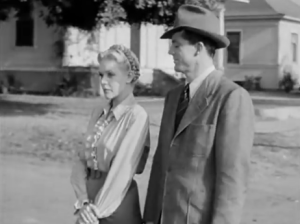 Being blessed with a certain amount of charm, Stanton strikes up a relationship with the untouchable gal, the churchgoer, the book reader, the generally good human being, June. He knows how to pull her out of her shell. Catering to her necessity to get out and live life (All the things you look down on are the things that make up life. Little things, like a game of bowling..or a swim at night, or a dance, a kiss, stuff that bubbles). It works and she begins to be swayed. Conveniently she also has a great deal of money. The outcome seems obvious and yet the story twists in unexpected ways.
Linda Darnell certainly steals the beginning of the story as the beautiful brunette that every man in town is batty over. The list of interested suitors is quite long but it doesn’t matter much. The latter half of the film is Alice Faye’s and as she was supposed to be the star of this picture it’s only fair that she should get her due.
Except, understandably, she felt slighted by Daryl Zanuck who lobbied for his sweetheart Darnell and as a result, a great deal of Faye’s dramatic performance was left on the cutting room floor. What’s left as a testament of her performance, might pale in comparison to her counterparts Andrews and Darnell but it’s often true that it takes that virtuous character to juxtapose with the seedier qualities of those around them.
 Fallen Angel undoubtedly gets a bad rap because it does not reach the rapturous, beguiling heights of Laura (1944) from the year prior, but it deserves to be seen in its own light. It’s true that both films are murder mysteries but while Fallen Angel isn’t all that interesting in that regard it has a surprisingly sharp script in other ways. Preminger works through his story with a certain dynamic assurance and like its predecessor, it’s the characters that are by far the most fascinating. Laura was a superior mystery, character study, etc., but Fallen Angel gleams brightly thanks in part to its classical chiaroscuro cinematography and an engaging menagerie of locals including Charles Bickford, Percy Kilbride, Bruce Cabot, and John Carradine.
Dana Andrews thrives in his element as the laconic drifter who nevertheless knows how to play people. Every time I caught a glimpse of Darnell’s hair decorated with a flower all I could hear were the refrains of Scott Mckenzie’s “San Francisco” ringing in my ears. And although Faye would not make another film until 1962, hers was not a bad performance. Above all, Otto Preminger deserves a break because Fallen Angel is still a minor noir classic.
3.5/5 Stars
 In his noted Crisis of Confidence Speech, incumbent president Jimmy Carter urged America that they were at a turning point in history: The path that leads to fragmentation and self-interest, down that road lies a mistaken idea of freedom. It is a certain route to failure.
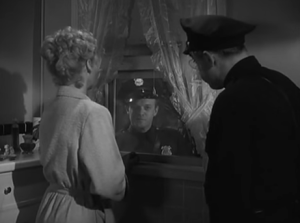 The whole thing turned on a freak accident. You’ve got to believe that Susan.
 If you know what you want in life be sure of it and you can’t miss. I found that out early. ~ Lawrence Tierney as Sam Wilde
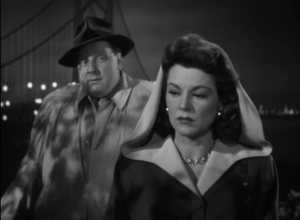 However, evil always looks to catch up with the guilty party and a private investigator is poking around in all the places he can to find the culprit behind an egregious crime. Walter Slezak’s Albert Arnett is a witty sleazeball with the lowest scruples imaginable when money is concerned. But he also happens to be decent at his occupation bringing him to San Francisco in pursuit of answers.
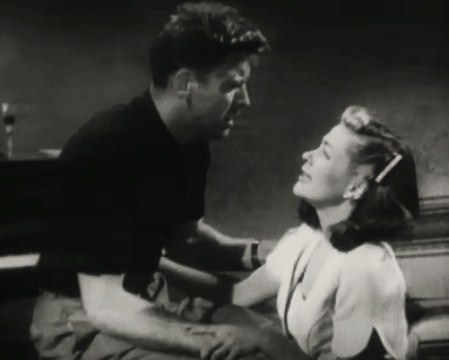 Aesthetically, Robert Siodmak’s roots in German Expressionism are crucial to the formation of the film-noir world as we know it today and Criss Cross has to be one of the most diverting additions to his repertoire. Once more he’s paired with his star from The Killers (1946) Burt Lancaster with another raging score from Miklos Rozsa and yet again there is a heist involved.
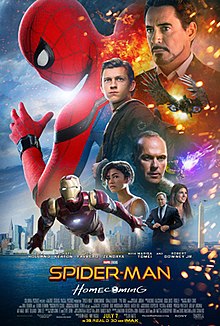 This was yet another pleasant surprise. Just when I think I’ve finally washed by hands of superhero movies the cineplexes are blessed by two pictures like Wonder Woman and then Spiderman: Homecoming. And they couldn’t be more different. Still, as much as Wonder Woman was invested in its heroine, you get the sense that the crew behind this film care some about Peter Parker too.
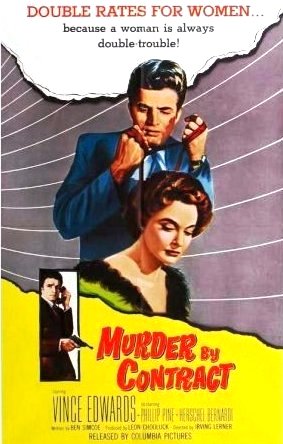 Every once and awhile when you dig through the treasure trove of cinema which includes the B film you can wade through the refuse and come upon something truly special — elevating itself from all the lesser offerings of the past decades. Murder by Contract is such a film.
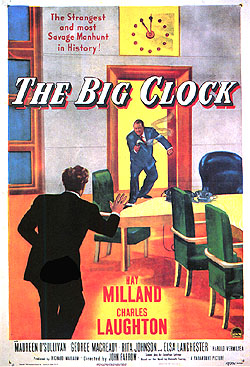 With its rather dreary title aside, The Big Clock is actually an enjoyable thriller that works like well-oiled clockwork. It’s true that oftentimes the most relatable noir heroes are not the hardboiled detectives, although they might be tougher and grittier, it’s the hapless everymen who we can more easily empathize with. Bogart, Powell, and Mitchum are great but sometimes it’s equally enjoyable to have someone who doesn’t quite fit the elusive parameters that we unwittingly draw up for film-noir. Ray Milland is a handsome actor and he was at home in both screwball comedies (Easy Living) and biting drama (The Lost Weekend). He’s not quite what you would describe as a prototypical noir hero.
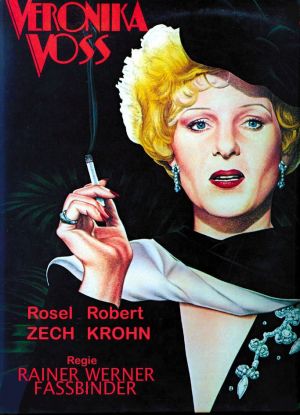 You get a sense that if they had ever met, Norma Desmond and Veronika Voss might have been good friends. Either that or they would have hated each other’s guts. And the reason for that is quite clear. They share so many similarities. Both are fading stars, prima donnas, who used to be big shots and now not so much and that seems to scare them so much so that they try and cover their insecurities with delusions of grandeur. Having to look at your near reflection would be utterly unnerving.
 Edgar Wright has a reverence for movies, he knows his movies, and when he makes his own movies there’s always an inherent understanding of the cinematic landscape–taking what’s already been done and proceeding to add his own affectionate spin on it.
