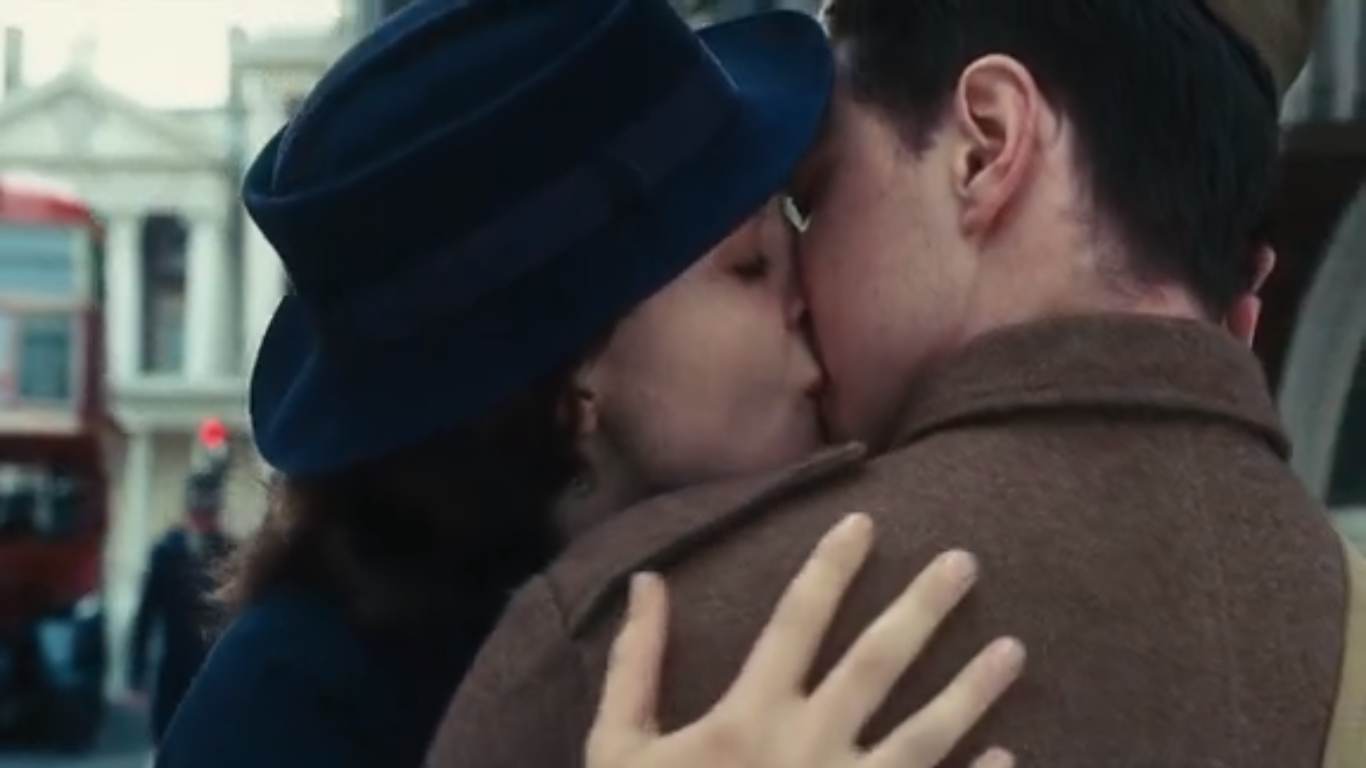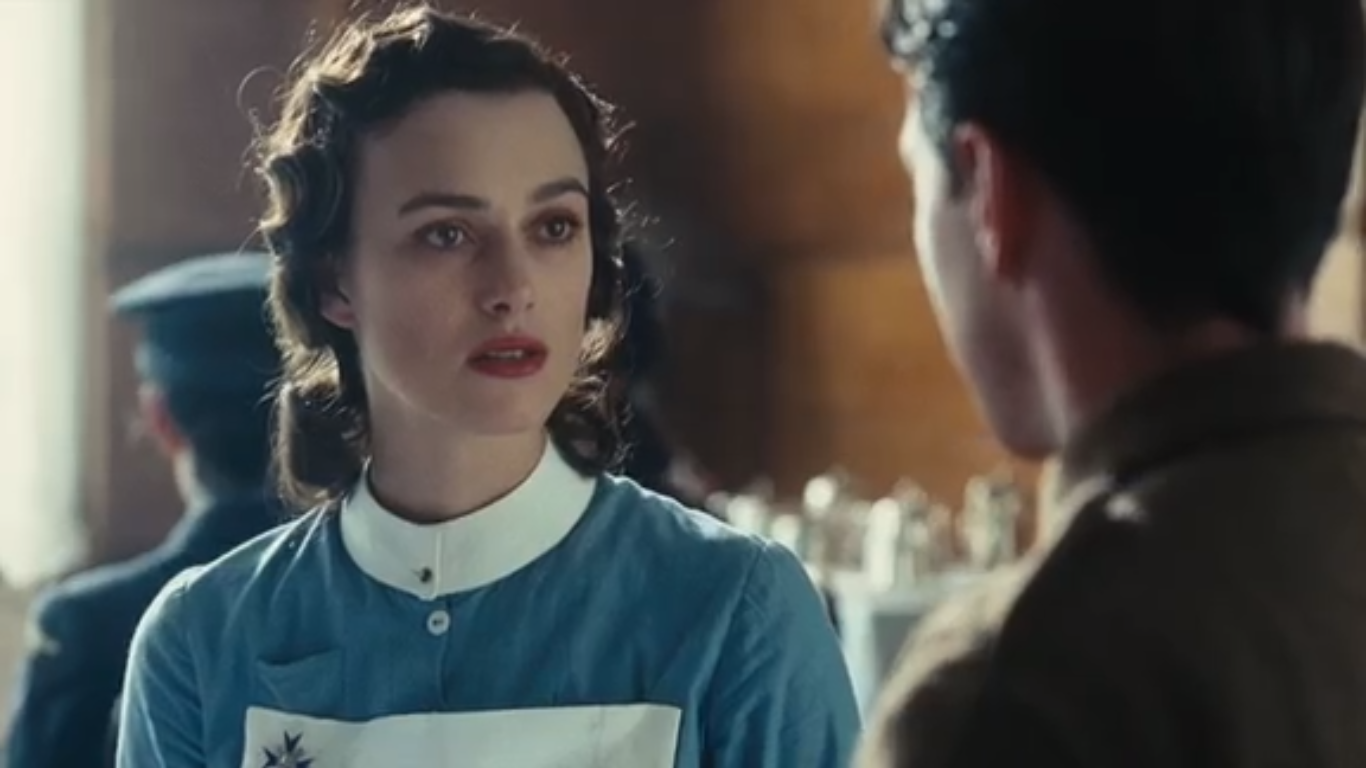
Drive (2011)

drive1You always think of the man in the getaway car as the wimp. Why else is he supposed to keep the engine running instead of helping with the job? Well, not anymore. Ryan Gosling completely demolishes that myth with Drive. It’s a neo-noir of sorts, but don’t get the wrong idea. This isn’t your conventional Hollywood action flick. Albert Brook’s corrupt thug sans eyebrows says he used to back sexy European action films and that’s ironically enough what Drive is. There’s a new age electronic score to match the stylized action. Silky smooth slo-mo mixed with golden illumination of the characters and the L.A. nightscape.

Although he’s really a stunt driver and spends his spare time working as a mechanic for the shop owner (Bryan Cranston), the Kid (Gosling) works jobs on the side as a getaway car driver, and he’s the best of the best. He proves it in the opening minutes, perfectly timing his escape with the conclusion of a Clippers game. It makes disappearing into the night that much easier.

He keeps things in check, keeps his cards close to his body, and at times reminds me of Alain Delon in Le Samourai. He’s not quite so icy cool, almost serene, and yet that can disappear in a flash. So still, so slight of word and movement, and yet behind the wheel, he has so much purpose. He doesn’t use a gun. His methods are more brutal, and he only uses them when absolutely necessary. Such a role gives me a newfound respect for Ryan Gosling. He really does seem to have the true ability to take on some interesting roles of varying degrees and intensities.

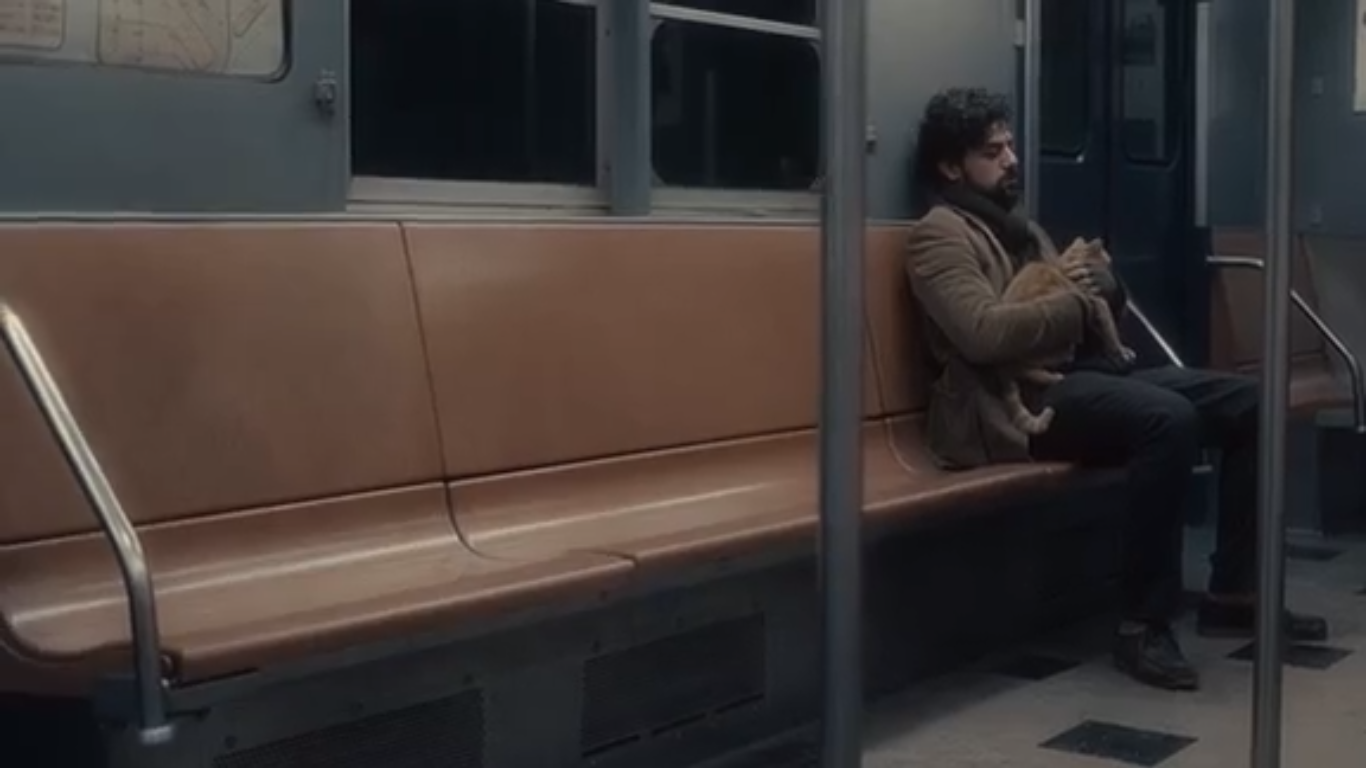
drive2All the characters around him are not necessarily fully developed entities on their own, but they function as more of an essence, developing this stylized world. Carey Mulligan is the aloof woman next door with the far-off gaze and quiet demeanor. There is an aura around her much like the Driver, maybe because they don’t talk much. There’s a mystery to them. Oscar Isaac and Christina Hendricks have relatively short screen time, but they play pivotal roles in the film and they lend credence to the story because even if they’re no good, we have at least a little empathy towards them. And then Albert Brooks and Ron Perlman are real crud of the earth who we don’t mind seeing suffer. It may not be a nice thing to say, but it’s undoubtedly the truth. The Driver seems outside of this fray at first, but he ends up getting involved in it whether it’s because of Irene or her husband’s botched robbery attempt. It becomes his business and it proves cataclysmic.

Aside from Le Samourai, there’s a bit of Bullitt here thanks to the ultra sleek car chases, and maybe even some Point Blank, another film that functions as a dreamy, unconventional thriller. We never see the inside of whatever jobs are being pulled, but it actually builds the tension as we sit on the outside waiting with the driver. He’s all business as the audience sits sweating it.

drive3What this film has and what I am not necessarily a proponent of, is the brutality and stylized gore. It fits the overall tone of Drive, but it does rub against me rather abrasively in a way that seems to make a spectacle of violence. That’s something that I don’t want. But then what is that saying about me? Do I find violence more palatable when it looks like an ugly and vile act? Yes, certainly, but I think I like it best when it is implied because that in itself seems perhaps even more stylized, and far less offensive.

But nevertheless, this story that parallels the fable of the scorpion and the frog is an engaging, albeit jarring ride.  You can help someone, you can want no part of them, but they will come right back and sting you because it’s in their nature. This is a story of relationships, of destruction, and a man who kicks it into high gear.

4/5 Stars

Fargo (1996)

fargo1The Coen Brothers have always been an interesting case for me. I admit that there are still a lot of their films that I wish and need to see. Films like True Grit and Fargo I find thoroughly enjoyable or at least passable, but they do not completely resonate with me. However, I certainly respect them as writers, directors, and auteurs, because they know the lineage of film as a medium and they have their own unique way of approaching movies. It’s often clever, unique, and carries a wickedly funny tone no matter their subject matter.

Fargo is arguably their greatest work, following a kidnapping and murder investigation that involves Fargo, North Dakota and Minneapolis. William H. Macy is your standard Midwestern dupe Jerry Lundegaard, who makes an honest living selling cars. However, there’s another area of his life that’s not so honest. He’s in desperate need of money; we don’t know the reason, but he has resolved to hire two men to kidnap his wife. It doesn’t make much sense to the audience or the easily agitated crony Carl (Steve Buscemi). However, Jerry has a rich father in law with the necessary funds to bail out his daughter. And so it goes.

Except after the deed is done Carl and his taciturn accomplice Gaear get stopped by a highway patrolman and things are downhill from there. Murder, and blood, and more murder, all on a snowy Minneapolis evening.

The next morning pregnant cop Marge Gunderson (Frances McDormand) leaves her hubby and heads to the scene of the crime where she quickly pieces together the turn of the events. The search is on for the vehicle, and she questions a couple of prostitutes who aren’t much help except pointing out one of the men was “funny looking.”

Meanwhile, everything is falling apart on Jerry’s end with his father in law and he even gets paid a visit by Gunderson. When the drop finally does take place, Carl is livid when he is met by Wade instead of Jerry. He’s not messing around and neither is Jerry. Crime scene number 2 is set up. Carl finds a snowy locale to bury the payoff and heads back to the cabin, but he’s about had it with Gaear and the feelings are mutual.

Meanwhile, after a disturbing meeting with an old high school classmate Mike Yanagita (a rather troubling performance by Steve Park), Marge decides to question Jerry once again, and this time she gets somewhere. The reunion with Mike sets something off in her head.  Another tip eventually leads her to Gaear and his friendly neighborhood wood chipper. Being the pro-cop that she is, Marge subdues the culprit and gets an ABP out on Jerry which leads to his arrest. After a successful day at the office, it’s back to fast food and tv in bed with her loving husband Norm.

Fargo, to its credit, exudes a Midwestern charm thanks to all its colloquial “You betchas, darn tootin’s, heyas”, and so on. Perhaps most effectively it mixes the mundane and the violently shockingly in one pot of inspiration. The two-pronged story following two very different worlds somehow meets in the middle amidst all the improbability. The Coens start the film off labeling it as “based on a true story” and that opening statement had many people tricked. I myself was taken in the first time I saw it because however outrageous the following events are we trust the words of the filmmakers guiding us. And in the characters of Marge, Jerry, and most everyone else there is a charm or normalcy that feels so familiar. Thus, the Coens could get away with such outrageous plotting, because it so often felt grounded in truth.

4/5 Stars

Bridge to the Sun: An Analysis of a Cross-Cultural Romance (2015)

bridgetothesun shigeta baker 7Bridge to the Sun is one of those films that was ahead of its time. Its main actors are hardly remembered by modern audiences. The top-billed leading lady, Carroll Baker, was probably more notorious for her controversial persona in films like Tennessee’s Williams’ Baby Doll than she was famous. James Shigeta was a pioneering Japanese-American actor, who was once told, “If you were white, you’d be a hell of a big star” (The Slanted Screen). He aged gracefully but was slowly relegated from leading roles to bit parts. Belgium director Etienne Perier was only a slight blip on the Hollywood radar. When it came out in 1961, its narrative based on the memoir of Gwen Terasaki ended up being an abysmal flop. Honestly, it’s not all that surprising, because the public was not ready for such a film, and its candid depiction of interracial marriage. Now, with a fresh pair of eyes in the 21st century, Bridge to the Sun looks quite extraordinary. Certainly, this is a love story, but under very different circumstances, in a very different world. Although it was made in the classical Hollywood mode, it still manages to groundbreaking, not necessarily due to its form, but thanks to its content. Because Bridge to the Sun places an Asian man and a Caucasian woman together, as they navigate two starkly different cultures both tottering on the brink of war.

bridgetothesun6In truth, this film does not shy away from showing their affection, even though it undoubtedly made some viewers squeamish at the time. More than once Gwen and Terry embrace in intimate moments that signify the deep-rooted love that holds them together. Sometimes it’s far from easy. For instance, when they first travel to Japan, Gwen finds it difficult living in a culture where women are meant to be wholly subservient to their husbands. She’s fine with the bowing and the taking off of shoes even, but not being allowed to speak her mind is about the limit.

This sentiment is reflected perfectly in a sequence right after some guests solemnly file out of Terry and Gwen’s home after a dinner party. Gwen is dressed in traditional garb with an annoyed look plastered on her face, and her husband silently glowers behind her. Their home is quiet and still, the light all but gone from the dark interiors. Finally, she turns around and breaks the silence by voicing her annoyance.

What follows is a single medium shot that frames both our protagonists and then a classic shot-reverse shot paradigm perfectly captures the ensuing quarrel between the married couple. It’s seamless, hardly extravagant, and it allows all the focus to fall on the verbal blows being dealt during their marital tiff. There is also great irony in how Gwen is dressed in a kimono and wig, while at the same time pushing back against the cultural expectations.  The intonations of her voice are high-pitched and enraged while Terry’s retorts are low and authoritative in juxtaposition.

One of the most telling lines comes when Gwen positively erupts after Terry chides her to keep her mouth shut, “according to custom.” The major distinction is that this is his custom and not her own. A cultural gap has developed. One set of customs feels antiquated, the other modern. One set seems honorable, the other blunt. There is this obvious dissonance between them, and in many ways, these two individuals are a perfect embodiment of the chafing that is going on globally. Except the important difference is that Terasakis manage to compromise, while the world around them plunges ever deeper into conflict.

bridgetothesun3Gwen and Terry cannot stay mad forever, especially with the birth of their little girl Mako. In fact, it is actually in a moment when their family is in danger of being pulled apart that Gwen shows her true resilience and loyalty as a wife. Pearl Harbor has just blown up and that means there is a freeze on all Japanese aliens. Terry is stuck at the embassy about to be deported, and an FBI agent advises Gwen that she would be much better off staying in the states. But as she converses with him you can see the determination in her eyes. She knows what it means to go to Japan. Her daughter as a child of mix race will be scorned, and Gwen herself will be looked down upon if not endangered by her status as an American citizen.

Her blubbering aunt implores her not to go, but in one of the film’s most impactful close-ups, Gwen tells Aunt Peggy off. She is not about to be split up from her husband – not after all they have gone through. It is in this other high intensity moment that we see her for who she truly is. She’s not about to be constrained by the cultural expectations placed upon her, and it goes both ways whether they are Japanese or American.

Mrs. Terasaki traverses the gauntlet of jeering crowds with all the other Japanese wives. She’s an easy target in the sea of Japanese, and the racist slurs are aimed just as scurrilously at her as anyone else, perhaps even more so. A noose hangs around the neck of a grotesque caricature of Tojo outside the fence, and still Gwen goes bravely on, covering her daughter’s ears, and comforting Mako the best she can in the hateful tumult. In this moment, we have yet another fascinating intersection of cultures. Gwen, a Caucasian woman from Tennessee is being transported along with alien immigrants back across the ocean like one of “the enemy.” She willingly gives up her status, her comfort, and even her very safety to hold her family together.

Of course, the situation in Japan is not ideal either, and the Terasaki’s have it rough. When they arrive abroad there is the same discrimination and the myriad of strange looks. Terry’s loyalty is questioned as he tries to mediate between the two warring nations. The ethnicity of his wife doesn’t help, and the fire bombs raining down from up above don’t exactly calm their nerves. But again and again, Terry and Gwen prove to be a resilient couple.

With the war in high gear, the Terasaki’s eke out an existence, while Terry does his best to avoid imprisonment from his own government. Meanwhile, the bullets and bombs continue to rain down, even in the countryside where the family now resides. On one such occasion, Mako is scampering through town with a friend and “the enemy” strikes. To his credit, Perier convincingly pieces together aerial footage with what is occurring down below. Airplane motors whirr menacingly. The Terasakis race towards town frantic to find their daughter. The planes begin their descent followed by waves of bullets as Japanese soldiers get in position to fight back. It’s utter chaos with smoke, fires, overturned vehicles, fleeing people, and finally dead bodies. The death toll includes soldiers and a little child. Mako lives, but her best friend perishes trying to salvage a doll. It’s in this climatic moment that all the Terasakis are huddled together after both parents rush to protect their girl and give aid to the dying friend. The fighting persists and both look up. First, Terry yells out something almost completely stifled by the noise, and then with Mako cradled in her arms, Gwen screams, “No More!” at the top of her lungs in exasperation.

Miracubridgetothe4lously these individuals salvaged their marriage and preserved their family. Meanwhile, the world around them would not make the necessary concessions. It allowed cultural differences to define relationships, and ultimately increase the void between nations. The rubble of WWII was eventually cleared and new hope was built upon that foundation. In reality, the chronicles of the Terasakis was an emblem of that hope. Inherent in their story is the possibility that two people and two nations really, can be reconciled and even thrive together. Perhaps the United States was not ready for such a message to come out of Hollywood, even as late as the 1960s, but nevertheless, it seems like a message we can certainly take to heart today.

The Strange Love of Martha Ivers (1946)

strangelove1“I don’t like anybody pushing me around. I don’t like anybody pushing you around. I don’t like anybody getting pushed around.”  Van Heflin as Sam Masterson

Lewis Milestone never quite eclipsed the heights of All Quiet on the Western Front. Still, The Strange Love of Martha Ivers is brimming with some engaging performances. Although it is, at times, more of a  melodrama than noir, there is still merit in Robert Rossen’s script. When it does not falter with didacticism, the film has a certain twisted, deep-seated emotion that runs through it. Barbara Stanwyck is the one at the center of it all, as the title suggests.

The film begins in 1928 with three children. The assumption is that these three individuals will become of greater importance later on. After that fateful evening, one would be left without any family, one would leave for good, and one would be left in the perfect position to rise up the ranks. These opening moments boasts spiraling staircases, thunder, the pounding orchestration of Miklos Rozsa, and a complete gothic set-up.

strangelove317 or 18  years later a full-grown Sam Masterson (Van Heflin) decides to return to his old stomping grounds, Iverstown, on a whim. He’s surprised to learn that the “little scared boy on Sycamore street” is now District Attorney (Kirk Douglas). And he’s now married to Martha Ivers (Stanwyck). She and Sam had something going long ago, but he’s all but forgotten it by now. He’s made a living as a gambler who has a pretty handy dandy coin trick, but really Heflin’s character could be anything.

He meets a sultry, smoky-voiced Lizabeth Scott with the pouting face. For those unfamiliar, I would liken her to a Lauren Bacall-type, although she was less well-known and ultimately got typecast in noir roles. Here Scott’s “Toni” Marachek is an often despondent woman who just got out on probation.

strangelove2We don’t actually see Barbara Stanwyck’s face until 30 minutes into the film, but it doesn’t matter. She as well as Kirk Douglas (in his screen debut), leave an impression right off the bat. They are a married couple alright, but she seems to hold the keys to the kingdom, so to speak. All her power is propping him up as he makes his political rise. Perhaps there’s more going on here, however.

From its outset, Martha Ivers looks to be a tale with two threads that slowly begin to intertwine, bringing together some old pals and acquainting some new ones. When Sam wanders into the lives of Martha and Walter O’Neil, it’s putting it lightly that they’re taken aback. The district attorney is good at putting on a face for an old boyhood chum. His wife, on the other hand, is not about to hide her excitement in seeing her old flame.

However, they both think he has an agenda, misreading the twinkle in his eye as intent to blackmail, for a payoff after what he saw all those years ago. But that’s just it. Only we know that he didn’t see anything. Martha Ivers slips up, caught between love, hate, and a suffocating life. She has so much power and yet so little. So much affection and yet so much bitterness.

strangelove5Honestly, although Stanwyck is our leading lady, it’s quite difficult to decide whose film this really is. Van Heflin and Barbara Stanwyck are at its core, but then again, Scott and Douglas do a fine job trying to upstage them. There’s a polarity in the main players, meaning Stanwyck and Heflin have the power, and the other two are the subservient man and woman respectively. However, the film really becomes a constant tug-of-war. Douglas is not just a spineless alcoholic. There’s an edge to him. Scott seems like a softy and yet there’s an incongruity between her persona and that prison rap that hangs over her. Heflin seems like the one relatively straight arrow because as we find out, Stanwyck is fairly disturbed. She’s no Phyllis Dietrichson and that becomes evident in yet another climatic conflict involving a gun. But she’s still demented, just in a different way.

3.5/5 Stars

Never Let Me Go (2010)

neverletmego1The film is adapted from the novel of  British author Kazuo Ishiguro, who also penned The Remains of the Day. Having not read the source material, I was obliged to take this material on its own merit and so here it goes. This is a numbing, wistful, sorrowful film and the dystopia is set in England circa 1978 in a boarding school. That’s where we first meet the students at Hailsham, who are special individuals with an important purpose in society. They will grow up to be “Carers” and “Donors” in society so that others might be given life. Although it’s an important role it ultimately means a shorter life expectancy compared to normal individuals and they are completely isolated from the outside world until their adult years.

The main people of interest are Kathy, who quickly befriends Tommy, a boy who is often made fun of, and she is secretly smitten. But as time passes one of her closest companions Ruth steals him away from her despite constantly making fun of him initially. Now as they get ready to move onto the next stage of their lives at The Cottage, Kathy (Carey Mulligan) is noticeably still hurt that Tommy (Andrew Garfield) is with Ruth (Keira Knightley) and not her. That plagues her and tears her apart inside. You can see it in her eyes and body language, although she never says it explicitly. It’s there.

I must admit, not having read the novel, I have a feeling I did not grasp all the ins and outs of this world, but I did understand what this love triangle meant for those involved. Also, in the back of their minds, they know life as they know it will be ending soon enough. After years pass Kathy is now a “Carer” and is reconnected with both her old friends, who look a lot more gaunt than they ever did before. Ruth admits she should never have come between the other two and they do get together, but it seems far too late for another love story.

neverletmego2Never Let Me Go speaks to the transience of life, the limited time we have on this earth because in the case of these characters life is even shorter. It got to me with its melancholy and I don’t mean that it simply saddened my mood, but by the denouement, I felt deeply affected. Keira Knightley’s role seemed rather unextraordinary although necessary. The real interest for me was watching the relationship form between Carey Mulligan and Andrew Garfield before being quickly taken away. Then hearing the narration of Mulligan as she tries to make sense of this story and what has happened. On a lighter note, the hairstyles in the film are quite impressive with the bangs and whatever Garfield has going on there near the beginning.

3.5/5 Stars

Begin Again (2013)

beginagain1Unfortunately, John Carney’s Begin Again loses the unassuming charm of his earlier musical effort Once, with higher production values, bigger names, and a more crafted sound. However, it still rides easily on the charisma of its big-name stars Keira Knightley and Mark Ruffalo. They are two individuals who have their lives wrecked and this crazy, fractured mess of a city becomes the perfect backdrop for two equally broken lives.

The film opens with differing perspectives on one point in time at a bar in New York. Dan Mulligan used to be a big recorder label exec maybe 10 or 15 years ago, but now his partner has pushed him out because he hasn’t acquired any new clients in ages. He’s all washed up and his family life isn’t much better. He’s estranged from his wife (Catherine Keener) and hardly sees his teenage daughter (Hailee Steinfeld). Given the situation, he heads to the bar to drown his sorrows after an awful day in and out of the office.

beginagain4Meanwhile, Gretta James (Keira Knightley) arrived at that same nightclub by very different circumstances. She is the girlfriend of up-and-coming pop singer Dave Kohl (Adam Levine), but she has a penchant for songwriting on the side. It’s nothing major and yet she certainly has a passion for it. However, with increasing busyness and the fame going to his head, Kohl and Gretta have a falling out. The first place she can turn is her old friend (James Corden) and he invites her to a night of music which she reluctantly agrees to.

That’s how she ends up in front of the microphone playing one of her personal tunes for the mildly interested audience. And yet one man is very interested. Dan is almost pulled out of his stupor by the song’s beauty and he immediately goes over to sign her. She thinks it’s a joke or at least she’s not at all interested in the fame. She independent and she wants to keep her work her own.

But he’s eventually able to cajole her into a unique musical endeavor. They won’t record her songs in your typical studio, but instead, all of New York will be theirs for the using. Thus, the joy of music brings a ragtag group of musicians and aficionados together to make something special and ultimately beautiful.

beginagain5Gretta is able to straighten things out with her boyfriend content with where she leaves them. As for Dave, he gets back with his wife and there is a newfound connection forming with his daughter thanks in part to his new friend’s undue influence. In some sense, this film has a Lost in Translation type friendship. Two very different people in two very different life stages, but they have one important connection. In this case music, and it could be made into something romantic, but it doesn’t force its characters into that.

I’m a bit doubtful that they had splitters back when Ruffalo was first with his wife, but what do I know? No matter, it makes for a fun jaunt through New York listening to the tunes of Sinatra, Wonder, and Casablanca. If you are a lover of music, Begin Again is a thoroughly enjoyable film. It begs the question, what do you do the music for? What’s at the heart of it? Is it about the money, the fame, or the pure joy that comes with creating and sharing your craft with those who you hold most dear?

3.5/5 Stars

Review: Top Hat (1935)

tophat1Perhaps Astaire and Rogers most famous film together, Top Hat has them in top form once more, seemingly defying gravity at the full peak of their powers. The beauty of their partnership is that they’re able to tell the progression of a love story through dance, but they do it with such ease and grace it looks like so much fun. For a brief moment, you almost forget what the plot line of the movie is even about. It doesn’t seem to matter. All that matters is these two harmonious beings in perfect unison with each other.

But for those who take some interest in the plot, it is once more a simple screwball story of mistaken identity and romantic entanglements. Jerry Travers is supposed to perform in the show of one Horace Hardwicke, played impeccably by the stuttering Edward Everett Horton. However, Jerry gets smitten with the girl downstairs, but she gets the wrong idea. After all, he is staying in Horace’s suite. They rendezvous in Italy at a lavish gondola getaway where they meet up with Horace’s wife Madge, the always entertaining Helen Broderick. She’s playing matchmaker for Jerry because he has a girl named Dale Tremont (Rogers), who she wants him to meet. Of course, they already know each other, but again she mistakenly believes he’s Horace.

It’s all very awkward, however, all Travers knows is that he’s infatuated with this girl so he goes headlong after her. She’s aloof with him and eventually tries to marry the overly-honorable Alberto Beddini as a defense. Horace over the entire course of the film is bickering with his butler Bates (Eric Blore) and it seems like he’s constantly getting thrown under the bus. But this time Bates does something that makes everyone happy. All that matter is that Astaire and Rogers are back together because in their universe anything else would be unthinkable.

Astaire’s opening number “Fancy Free” is especially lively setting the tone of the story, while “Isn’t a Lovely Day” taking place under the gazebo in the rain is an important starting point for the love story. “Top Hat, White Tie, and Tails” honestly is not one of my favorite numbers, but it is worth it alone to see Astaire twirl around with his stick using it to develop rhythm and act as almost a third leg.

An American classic from Irving Berlin, “Cheek to Cheek” is undoubtedly the apex of this film, because by now our stars are in love and in this dance they have entered almost a suspended state of bliss personified by their floating forms. All the other players fade away and the dynamic dancing duo gracefully glides into heaven together.

The final number “The Piccolino” is rather decadently extravagant to match the flamboyant set, but again when all else fades away and we are left with only Astaire and Rogers, that’s when the scene truly feels magical. It’s as if within all the noise there is once again a moment of beautiful intimacy. But intimate in the sense of two wonderful performers being seemingly so connected in their art form. They hold the sinews of the screwball romance together if only through their exquisite dances.

Most opinion on film is essentially subjective, and in my opinion Swing Time (1936) from the following year is a stronger picture. It has a few more memorable numbers and it is perhaps a little more well balanced all around. Although you do lose Edward Everett Horton for Victor Moore, a lot of the other players remain the same. Also, Top Hat‘s script feels a little weaker, not that it’s of great importance. Because after all, most people don’t go into a film like this ready to analyze the script. We want to be dazzled by two of the great icons of Hollywood, as much now as during the Depression years, and they certainly do that to perfection.

4.5/5 Stars

Review: Swing Time (1936)

swingtime1I wondered to myself, after watching Swing Time once again, if anyone else might have easily taken Fred Astaire and Ginger Rogers’ places as films greatest dancing couple, and then I quickly discarded this heretical idea. They appeared in 10 films together with this film directed by George Stevens being there six pairing. By now they’re a well-oiled, beautifully elegant dancing machine.

As with many of their films the genre is a hybrid of a screwball comedy and a musical which of course most importantly showcases their legendary dancing prowess.

Astaire is the carefree gambler and hoofer “Lucky” Garnett who gets duped out of his marriage by his buddies and must head to New York to prove himself to his fiancees’ father. He goes off with his faithful friend “Pop” (Victor Moore), who also has a penchant for card tricks. They have nary a penny in their pockets and he meets a pretty young dance teacher (Ginger Rogers) over a stolen quarter.

From her point of view, he just won’t stop leaving her alone and he just wants to get the chance to dance with her. Astaire and Rogers’ first number together, “Pick Yourself Up,” is a peppy piece that sets the bar for the rest of the film. They swivel, glide, and sway, perfectly in sync, orbiting one another. And for the rest of the film whenever they dance together they never seem to lose that innate connection.

As far as the screwball aspect goes, Lucky is tight on money resorting to gambling for some new duds, but his chance to dance with Penny is his big break. They just need an orchestra to accompany them. The only problem is someone else owns the orchestra and the orchestra leader Ricardo is also madly in love with Penny. In a shady set-up all across the board they draw cards for the contract and “Lucky” wins. He and Penny have a growing connection, but he still feels guilt based on his attachment to his fiancee Margaret. And of course his life catches up with him and Penny finds out while simultaneously the orchestra is taken away from him.

It must happen this way so they can realize how much they mean to each other and share one final dance together. Out of all the misunderstandings comes a lot of big laughs and in the end, everybody thinks it’s funny. Since Ricardo loses his pants, Penny decides to marry Lucky after all and everything is right in the world of Astaire and Rogers.

You don’t necessarily watch a film like this for the acting, but thanks undoubtedly to the studio system we have a colorful supporting cast including the two-timing but lovable Pop, Mabel is a wisecracking riot in her own right, and although his screen time is short, Eric Blore is enjoyable as the hissy dance studio boss Mr. Gordon.

“The Way You Look Tonight” is an absolute crooner classic and aside from the initial number it can be heard throughout the film in refrains. The same goes for “A Fine Romance” which feels antiquated, but it still manages to be thoroughly enjoyable in all of its reprises. But the main attraction is, of course, the dancing, from the personified joy of “Waltz in Swing Time” to the graceful gliding of “Never Gonna Dance.” If you set aside the unfortunate blackface for a moment the Bojangles shadow dance is a stroke of creative genius that gives off an amazing result while showcasing Astaire’s individual skill.

From someone with two left feet, this film makes me want to at least attempt to dance because Fred Astaire and Ginger Rogers turn dancing into an almost mystical experience. How does he prance and twirl so effortless on the floor? How does she do it equally as beautifully and in heels no less? It looks like they’re having so much fun and yet, in reality, they practiced for hours upon hours to get it right.  Amazing stuff.

4.5/5 Stars

Review: Shop Around the Corner (1940)

Shop-Around-the-CornerA quaint, unassuming film, especially up against other more lavish Ernst Lubitsch works like Trouble in Paradise and Heaven can WaitShop Around the Corner still manages to be in the upper crust of romantic comedies — even to this day.

The story revolves around a little shop in Budapest run by the often curmudgeon and excitable owner Mr. Matuchek (Frank Morgan). Every morning he comes to open up shop and nearly every day he has something to complain about whether it’s his workers or the lack of business. His right-hand man is Alfred Kralik (James Stewart) who has been a diligent clerk in the store for well nigh nine years now.

He confides in his older colleague and friend Mr. Pirovich (Felix Bressart) that he has begun correspondence with a mysterious lady friend who was looking for a partner with whom to discuss culture and all the higher forms of art. Kralik is intrigued as he wants to expand his mind and he seems to have found his perfect match.

Meanwhile, the status quo gets shook up a bit when a Ms. Novak comes into the shop. At first, she gives off the sense of a flustered shopper, but in a matter of moments, she proves herself as a shop girl, acquiring a position even without a vacancy.

Over time, his relationship with Ms. Novak becomes increasingly more antagonistic, to begin with, because she wears a blouse unsuitable for the workplace. The prospect of his first meeting with his secret correspondent has Kralik on edge in expectation, but when he cannot sneak a peak, Pirovich looks for him and delivers a stunning revelation. It is, of course, Ms. Novak.

In such a way the dramatic irony begins as Kralik understands just who this girl is, and she continues to brush him off as the stiff, bowlegged man from the shop around the corner. Mr. Matuchek has unspoken problems of his own that cause him to abruptly fire Kralik, his most faithful counterpart. But their relationship is patched up and the crackerjack clerk gets his position back and then some.

There’s still the matter of Ms. Novak because he truly does feel something for her, even showing up at her home to see how she is getting on after calling in sick. It’s in this moment that she reads one of the letters in front of him. One of his letters.

Then, right before Christmas everything his bustling and busy in the little shop. All seems right as Mr. Matuchek is in good spirits with a Scrooge-like transformation for the holidays. He even winds up with someone to share a festive holiday meal with. It seems that Kralik has a fiancee and so does Ms. Novak. As it is Christmas they both try to leave the other on a positive note, and Klara goes so far as to mention her initial crush on her colleague. This then becomes the critical moment for Kralik as he still knows something she doesn’t. He frightens her stiff about her mystery man and then reveals him to be her pen pal. All it takes is a carnation in the lapel. She gets it right then. They embrace and share a kiss.

Although Stewart is far from a Hungarian clerk, he does exude a pleasant commonness, better than any other actor of his era. As such, he has the perfect demeanor and presence to portray Kralik, a man who seems altogether ordinary, although he certainly is more than meets the eye. Margaret Sullavan seems a generally forgotten leading lady, but there is an airy, almost ethereal quality to her. In real life, she proved to be difficult at times, but here she somehow fits rather remarkably with Stewart. The two leads prove to be adept sparring partners in Lubitsch’s altogether effortless romantic comedy.  It truly reconciles the lines between ideals and reality which allow two people, such as these, to fall in love for real.

4.5/5 Stars

Klara Novak: All my knowledge came from books, and I’d just finished a novel about a glamorous French actress from the Comedie Francaise. That’s the theater in France. When she wanted to arouse a man’s interest, she treated him like a dog.

Kralik: Yes, well, you treated me like a dog.

Klara Novak: Yes, but intead of licking my hand you barked.


Man in the Moon (1991)

maninthe1Robert Mulligan is an unassuming film director. Man in the Moon would be his last film in a career that was not so much illustrious as it was respectable. In truth, I’ve only had the pleasure of seeing one of his other films — his crowning achievement To Kill a Mockingbird.

There are in fact some similar threads running through these two films, starting with the Deep South nostalgia and close analysis of adolescence. Both these films take the point of view of a young girl. Their narratives hope to shed at least a little bit of light on that intricate stage of life. This time a 14-year-old Reese Witherspoon is our lead, playing the Elvis-loving, gum-chewing, spunky dynamo named Dani. She and Scout share a lot in common because as young people there’s an inherent tendency to mope, question, and disregard. They have not quite grabbed a hold of the mature world of their parents. After all, they still have a great deal to experience. That’s what makes these film arcs necessary.

Man in the Moon starts with Dani, but there’s a whole family unit around her. A father (Sam Waterson) who is a decent, down-to-earth-man, and he would rather commune with nature in his fishing boat than go to typical church. A mother (Tess Harper) who loves her husband and daughters dearly, knowing when to trade tough love for hugs. Maureen (Emily Warfield) is Dani’s oldest sister and her idol, along with the object of every local boy’s desire. She’s beautiful and yet what’s more extraordinary is her good nature. She doesn’t deserve the creepy father and son duo eyeing her in the local town.

maninthe2Arguably, the next most important character in Dani’s story is Court (Jason London). They have your typical terse meet-cute that signifies only one thing. They must fall in love. It turns out he’s the eldest son of an old friend of Mrs. Trant. Soon things change for young Dani because she’s never known someone like Court, much less liked a boy.

Their relationship is one of those complicated entanglements. He’s a few years older and is the man of the house. He has to grow up quickly and views Dani as a child. But their friendship blossoms with frolicking afternoon swims. Dani is ready for something more. She thinks she’s in love. Now if Court was one of the other boys, he could easily take advantage of the situation — this fawning girl who is madly in love with him. But he’s not like that. Dani can’t quite get that through her head. It just doesn’t make sense. They enter friend territory and Dani’s heart is still aflutter, but she’s happy again.

maninthe3The second half of the film enters melodramatic territory that first hits the Trant’s with familial turmoil, and then Court. Dani for the first time in her life is faced with the full brunt of tribulation. What makes matter worse is her feelings are all mixed up. She loves her sister. She hates her sister. She cannot bear to see Court. She cannot bear the suffering. It’s in these moments that uncomfortable feeling well up in the pit of your stomach.

Man in the Moon like many of the great coming-of-age movies is really about adolescents coming out of their innocence and being inundated with the often frightening realities of life. It reminds even the youngest of us that more often than not life is unmerciful. It’s how we pick ourselves up out of that fatality that matters. It’s hard but that pain is often how we grow and mature — learning how to cope with the way things are. That’s what makes the people around us so integral to existence. They can be our lifeline that keeps us afloat. Thus, Dani’s friendship with Court matters so much. That’s why Dani’s relationship with Marie matters too.

Perhaps the drama is laid on rather thick, but nevertheless, it’s difficult not to get behind this film. Reese Witherspoon’s perkiness is wonderfully disarming, and Jason London plays a decent young man. These are characters I want to watch and emulate. Not quite Scout and Atticus, but they are still definitely worth the time.

4/5 Stars

You’ve got a right to grieve, Dani. You got a right to be hurt. But if you get so wrapped up in your own pain that you can’t see anyone else’s, then you might just as well dig yourself a hole and pull the dirt in on top of you, because you’re never going to be much use to yourself or anyone else. ~ Mr. Trant 

Note: This review previously said Marie (Gail Strickland) instead of Maureen (Emily Warfield)