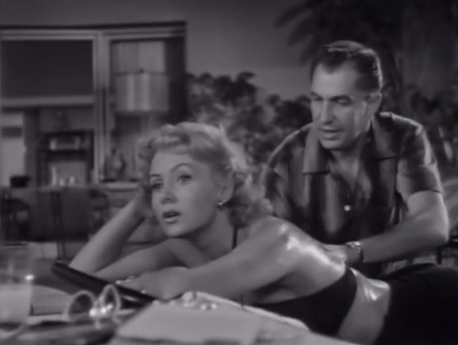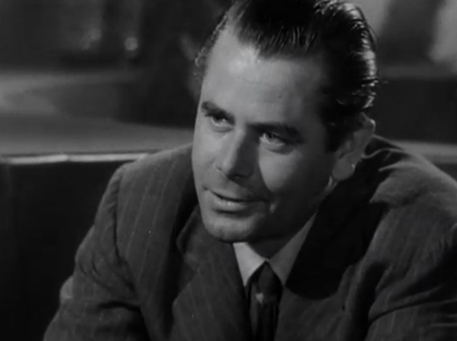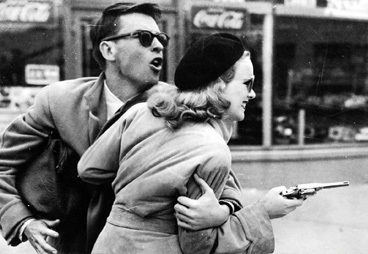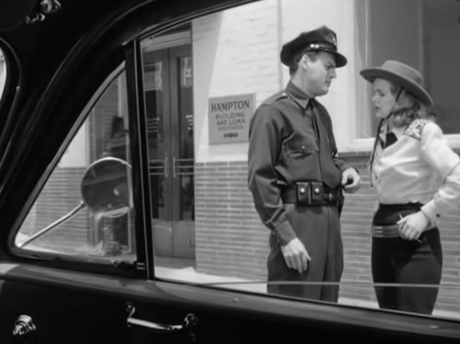
Kiss me Deadly (1955)

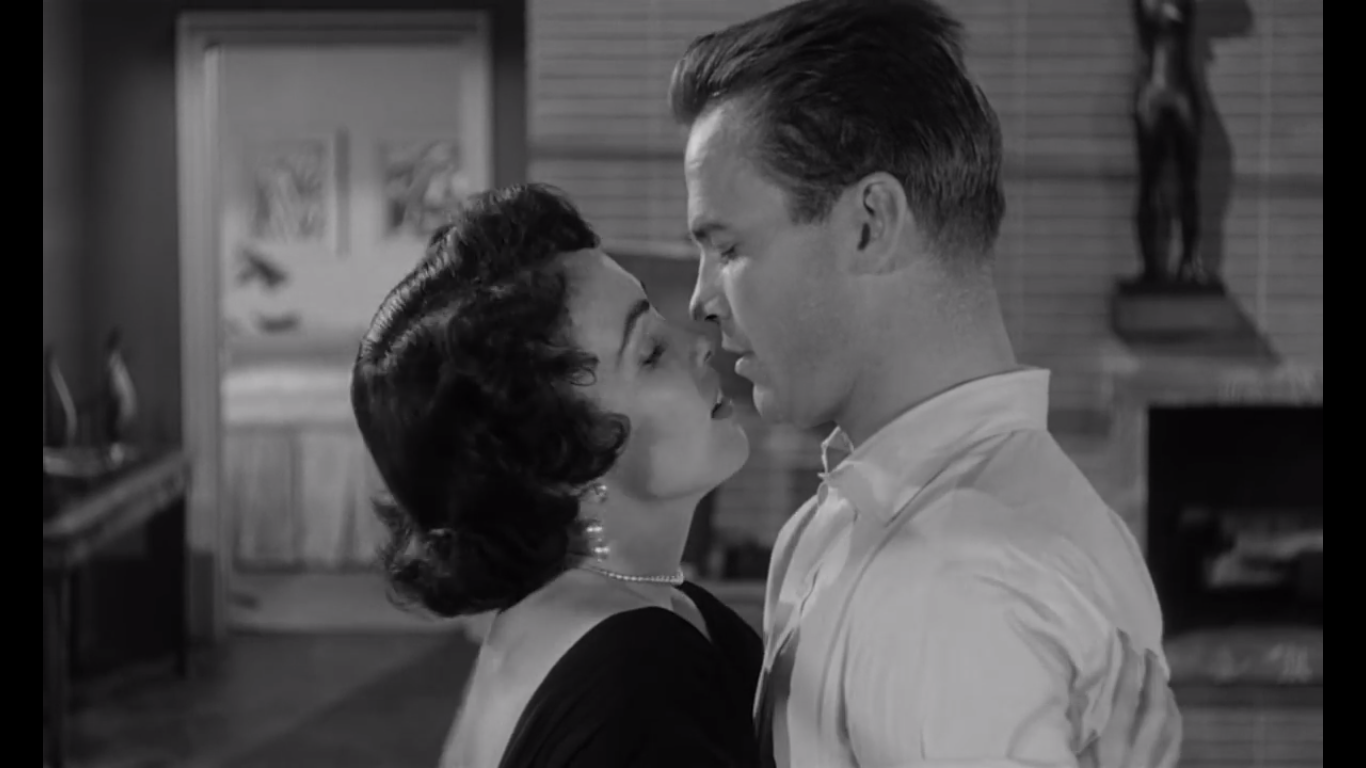
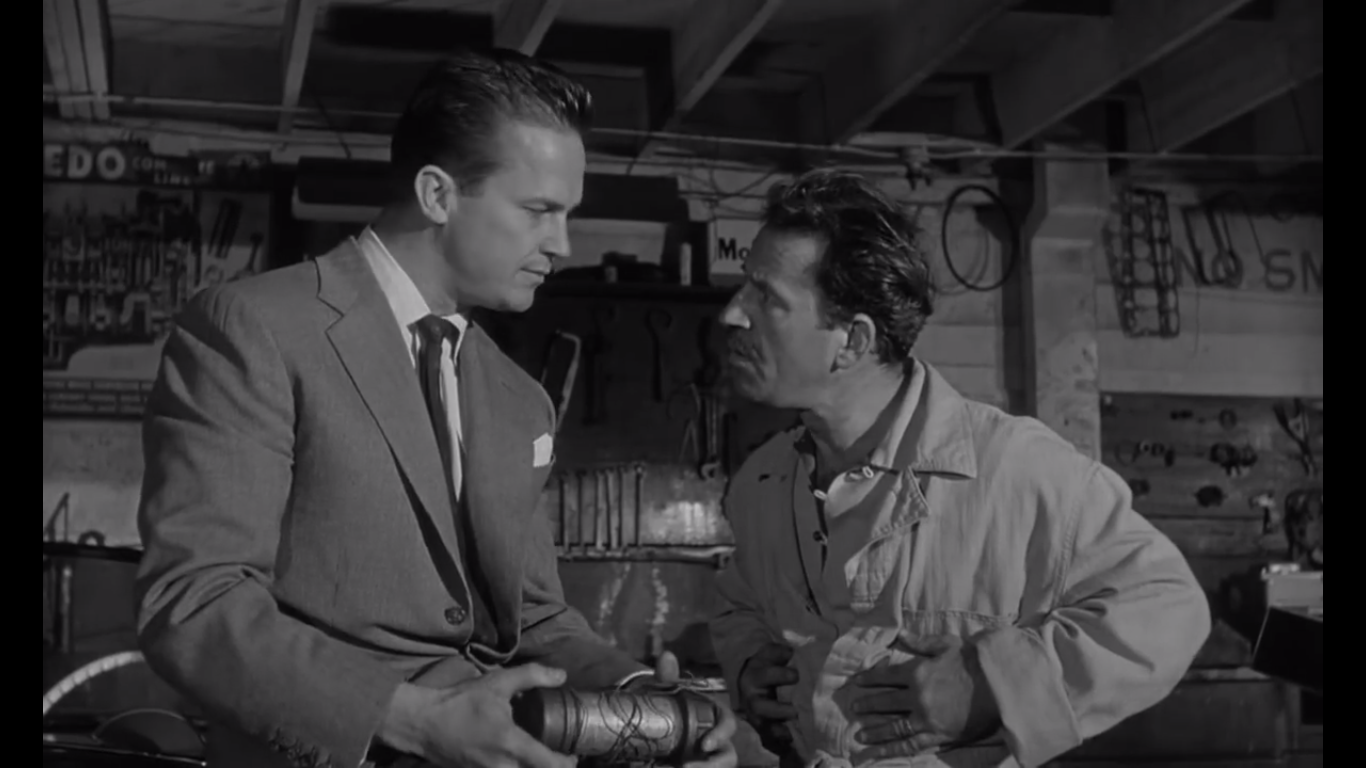
kissmedeadly1Set in L.A., the film stars Ralph Meeker as the callous and often corrupt P.I. Mike Hammer, adapted from the Mickey Spillane novels. One night while driving, Hammer picks up a frightened woman who begs him to remember her. They are forced off the road by thugs and the girl is eventually killed. Hammer wakes up in the hospital to his secretary girlfriend Velda (Maxime Cooper). He makes it his priority to find out what the mysterious woman was talking about. He meets up with opposition and a femme fatale, but Hammer keeps on going using strong-armed tactics. He finally tracks down a mysterious whats-it but then discovers that Velda was kidnapped. In the final confrontation, he finally learns who he was looking for and he finds out the consequences of the Pandora’s box in the hands of a deadly female.

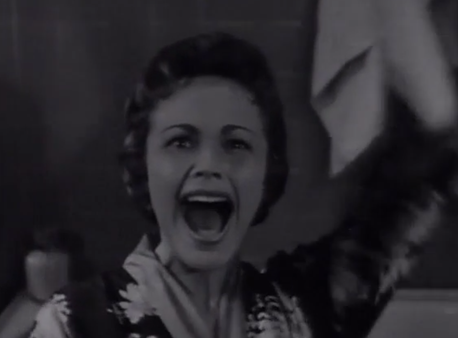
Out of most of the prominent works in the canon, Kiss Me Deadly is probably the pulpiest of L.A. Noir. The images are rather like a historical time capsule of 1950’s Los Angeles with locations on Wilshire Blvd., Sunset Blvd, and even near Angels Flight. It has crisp black and white cinematography with many noticeably low angles underlying the sleekness, but also the paranoia wrapped up in this story. It arguably has the queerest cold open and ending of any noir, which I cannot help but remember.kissmedeadly2Ralph Meeker plays’s Mickey Spillane’s P.I. Mike Hammer to a tee. His husky voice perfectly fits the bravado of Hammer, a misogynistic brute prone to coercive action. Out of all the private gumshoes we’ve met, Hammer is probably the lowest — he’s a real scuzzball.

 Hammer throws women around like playthings and even his girl Velda has a double purpose. Yes, she is a lover, but she also makes a keen asset for business. As a P.I. specializing in divorce cases and marital problems, he’s not below giving business a little help. Velda willingly works on the husbands for him and he’s not above playing around with their wives. It’s a cozy little set-up.

kissmedeadly8That’s Hammer’s level and so when he gets caught up in the story of the mysterious girl Christina (Cloris Leachman), he has no idea what he gotten himself into. It’s a lot bigger than him and when the authorities throw around words like the Manhattan Project, Los Alamos, and Trinity he finally understands what its all about, but not really. In essence, Kiss Me Deadly is the quintessential film of paranoia in the Cold War nuclear age. We have a MacGuffin in the form of the mysterious Whats-it, but aside from that, we get few answers. Only a few deaths and some mighty destruction.

kissmedeadly4

Kiss Me Deadly has some great characters aside from Hammer and Velma. The thugs are played by the perpetually cross-eyed Jack Elam and the glowering Jack Lambert which turns out to be great casting. Also, the lively Greek-American Nick (Nick Dennis) is a great deal of fun with his enthusiasm and a lot of “Vavavoom!”

It’s an interesting dilemma because I have never loved Kiss Me Deadly, but director Robert Aldrich developed a film that is so persistently interesting. It was a film that was supposed to ruin young viewers for its moral depravity, sensuality and who knows what else. This film literally screams “Remember Me” and honestly I will not be forgetting about it anytime soon.

3.5/5 Stars

Christina: You have only one real lasting love.

Hammer: Now who could that be?

Christina: You. You’re one of those self-indulgent males who thinks about nothing but his clothes, his car, himself. Bet you do push-ups every morning just to keep your belly hard. 

The Crimson Kimono: An Analysis of Noir Realism and Race (2015)

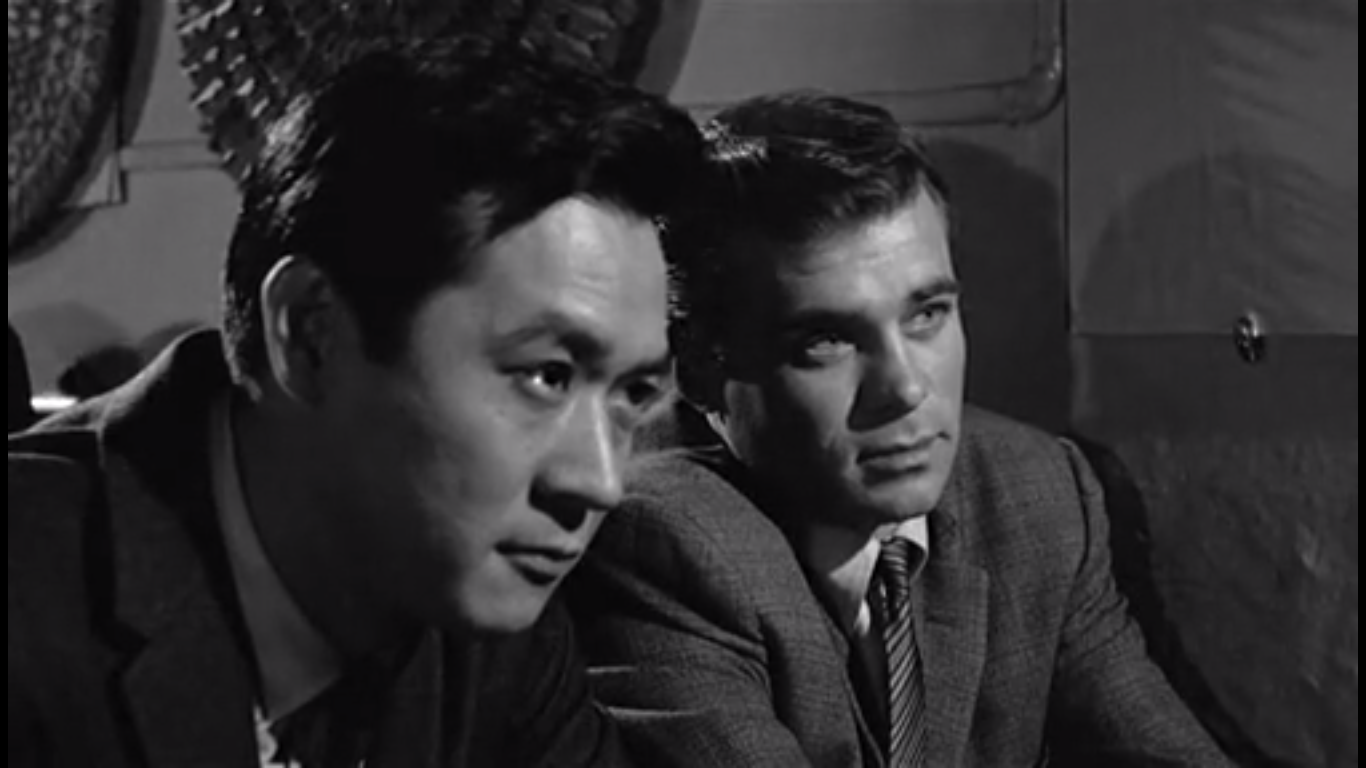
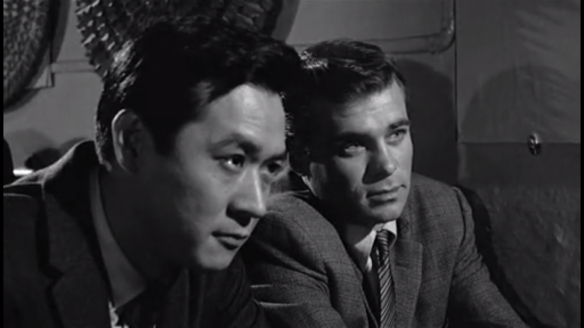
crimson kimono 1 shigeta corbettWhat makes Film-Noir intriguing is not simply the crime aspect but the fact that they are films with worldviews that are often weighed down by cynicism. Film-Noir depicts the harsh realities of human nature that few other films would ever dare to acknowledge onscreen. People are broken at their core; continually led to their own devices whether it’s greed or their own personal insecurities. These films give us a fascinating microscope by which to examine all the pain and prejudices that abound within the human condition.  Samuel Fuller’s The Crimson Kimono (1959) shares some of these qualities, acting as a realistic procedural that employs cinematography and setting to say something about the world we live in. Furthermore, it has a remarkable stance on race relations, specifically for Japanese-Americans, that was ahead of its time and has hardly ever been matched.

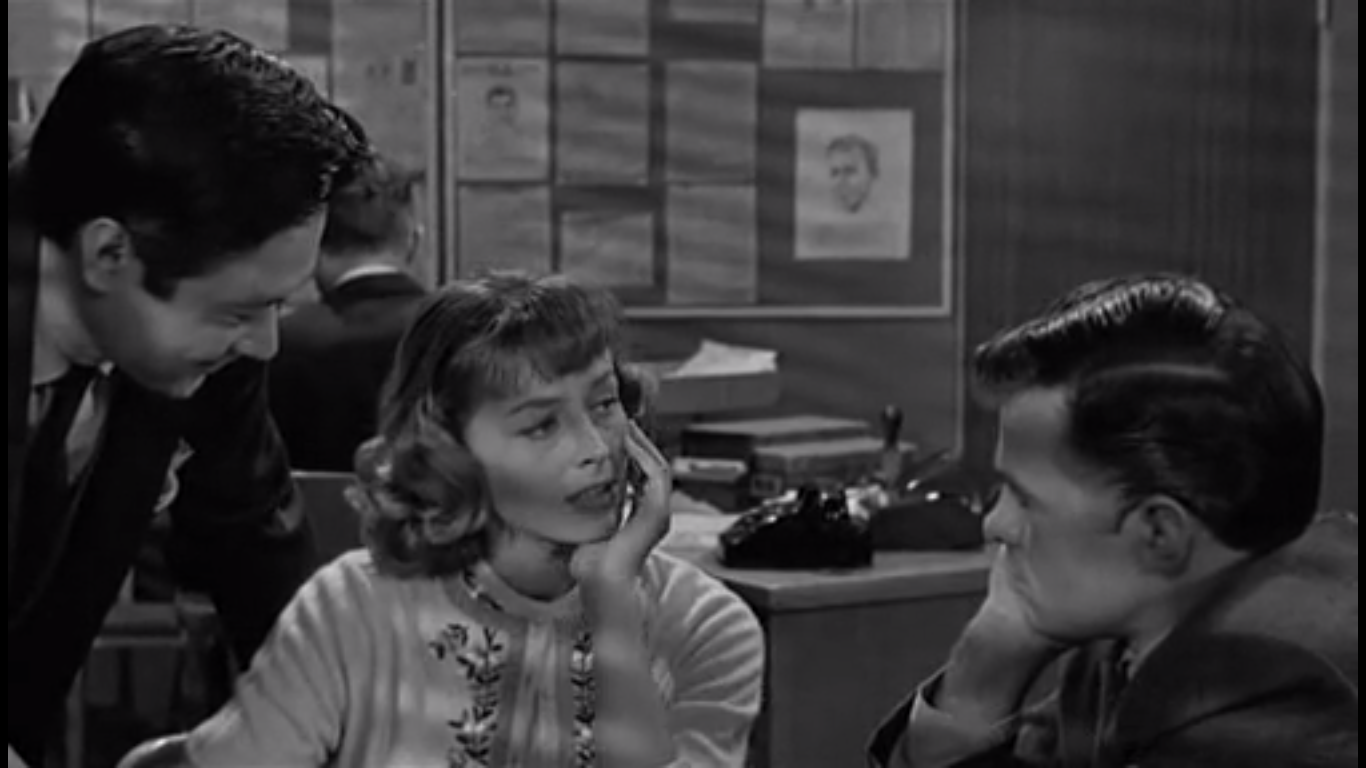
Through an analysis of The Crimson Kimono it becomes obvious that it is a striking film in the noir tradition, blessed with an urban realism that brings 1950s Los Angeles to life for us. As Samuel Fuller himself points out, “The thing that is most noir about Crimson Kimono…is how [he] shot it.” He was “in Little Tokyo and lots of other actual locations downtown, with cameras hiding in trucks, shooting at night with fast film because [he] could not put out lights” and as a result, the film has “a hard, gritty realistic look” (Film Noir Reader 3). When the action heads to the streets and hooker Sugar Torch is fleeing from an unseen assailant, it definitely has the gritty, atmospheric realism that Fuller was alluding to. This is a real place where we could be. These will be the same streets that Joe and Charlie will soon be hitting on their beat. Ironically, when Fuller shot the scene live he noted that he didn’t really “get much dramatic reaction.” Despite the fact that “An almost naked, six-foot-tall blonde is running for her life down the street,” nobody seemed to care and nobody looked (Film Noir Reader 3). That is the world of Los Angeles, full of indifferent masses that could care less whether something looks real or is real. It makes no difference to them because it fails to affect their existence. It is a dismal worldview, very representative of noir, but the odd thing is that Charlie and Joe are not like this at first. They are heroic, honest individuals with the duty of weighing through this noir world as part of their vocation. Thus, they oblige out of necessity and only then does it get to them. Even so, there is an argument that it is not the world, but their personal hang-ups that tear them apart.

Their investigation leads them to “Little Tokyo,” which becomes an integral locale within the context of the film and Fuller uses it effectively. For instance, in one scene Joe walks the streets with a Mr. Yoshinaga after meeting him at a cemetery. It’s a highly mundane moment and yet Fuller still manages to make it interesting. It is also less austere than the earlier scene of Sugar’s murder since banners are flying and locals are milling about the storefronts. That’s why it becomes an interesting setting for a chase sequence, taking the everyday environment and turning it into a point of drama. It reinforces the fact that Fuller seems to be more interested in the realism of common incidences compared to high drama. It’s almost as if he’s a journalist again trying to get a juicy feature story. It’s ordinary, real and it meets people where they are at.

One of the most significant moments occurs later on during the kendo match where Joe and Charlie are supposed to face off as part of the Nisei Week Festival. It’s a big deal and flyers are plastered all over the town so people will turn out for the event. Within the context of the film, it matters on several levels. The fact that Charlie is Joe’s equal suggests that martial arts are not just stereotypically Asian, but they can be universal. Perhaps most importantly their bout reveals the descent of Joe into utter resentment because he disregards all the traditions of Kendo and begins to go after his friend with a vengeance. It’s the turning point that Charlie cannot forgive Joe for and for good reason. The sequence plays out as quick cuts between masked faces, swords, dancing feet, and exuberant onlookers. Practically before we know what has happened Joe begins beating Charlie over the head and lays him out. It is such a rapid about-face that is underlined by Joe’s own insecurities, which we will get to delve into later.

The culmination of the film occurs during the festivities, with music, dancing, banners, lanterns, and girls in kimonos. It seems fitting that Fuller’s entire story leads us to this point at such a public place full of your usual bystanders. It’s theatrical while still maintaining a sense of the real world. Here again, we have a third chase scene except this time Fuller does something especially interesting with the music. During the pursuit there is a symphony of conflicting tunes going on between the bands: “One plays classic music, one plays Japanese music, one plays hot music, and so on. Whenever [Fuller] cut from the killer to the pursuer, the music changed. That gave [him] the discordant and chaotic note” that was desired (The Director’s Event). It seems like such a simple detail and yet it truly is clever in conception, because it adds another layer of realism to the scene while simultaneously utilizing diegetic sound for dramatic effect. It could be implied that the music also reflects Joe and Charlie’s own feelings of confusion and friction, which injured their friendship and Charlie’s ego. It’s ultimately Joe who has to parse through all the noise and commotion ultimately finding the truth. It’s no small coincidence that once again we find ourselves on the urban streets at night just like when Sugar Torch was gunned down. Fuller parallels that earlier scene and yet so much has changed. This time around there is a hint of hope, but a sour taste is still left in the mouth. It suggests that you cannot fully escape the darkness and anxieties that seem to engulf us because this world can never truly have a perfect ending.

crimson kimono 2

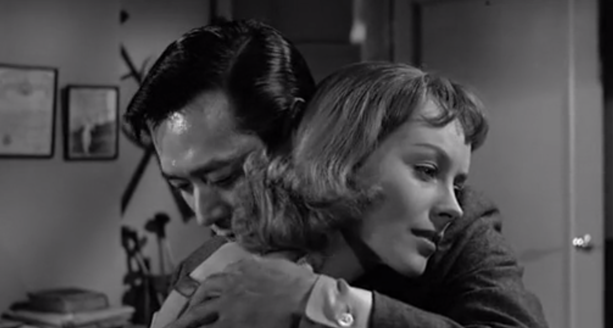
Fuller’s film has murder attempts, gunshots, fist fights, etc. However, he knows how to simplify scenes getting only the necessary elements out of them. When Sugar Torch crumples to the ground we hear the shot and that’s all we need. When an attempt is taken on Chris’s life we see the gun pointed ominously and again we hear the shot but that’s all. There’s a cut to a new scene and Fuller gives us all the details we need to know.  In a sense, it’s about an economy of images that allow this film to be short, at only 78 minutes, and still, pack a punch. It definitely was out of necessity that Fuller did many of these things which would have saved time and money, but it also undoubtedly caused him to come up with creative solutions. The Crimson Kimono like many of Fuller’s films is hardly sleek or polished and that is part of the allure. It is the opposite of typical Hollywood and it fits film-noir so beautifully. It has the same harshness as one of Fuller’s other works Pickup on South Street (1953). What it lacks in a femme fatale or Cold War sentiment, The Crimson Kimono makes up for in how it tackles romance and the job of a policeman with a subtle touch. For this reason, it may be less of a film-noir than Pickup and perhaps a lesser film, but there is still power in its story and the racial lines that it willfully challenged. It also seems necessary to acknowledge a bit of Samuel Fuller’s background, because it further influenced his filmmaking. He came from a Jewish family in New York and dropped out of school to write for a newspaper along with penning pulp fiction novels. He served during WWII and when he came back he began a storied career as a writer and director of frequently subversive “B pictures.” His versatility is especially remarkable, cycling through all types of films from westerns, to crime films to war dramas, elevating them above “B” quality. Part of the reason is that he never gave into conventions and his genuine depictions of race in films like The Steel Helmet (1951), Run the Arrow (1957) and The Crimson Kimono were ahead of their time.crimson kimono 3The Crimson Kimono is an extraordinary film historically because it depicts something that we very rarely see, especially for 1959. The late, great actor James Shigeta portrayed the straight-laced policeman and former Korean War hero named Joe Kojaku. He’s a sympathetic figure and hardly a caricature. His best friend is the Caucasian Charlie Bancroft (Glenn Corbett), who is on the LAPD with Joe and a war buddy. They are inseparable and they share a flat. Above all, the most amazing thing is that Joe gets the girl over his friend! That might be a small victory, but I have seen a lot of films to know that the Asian guy never gets the girl, especially if she is Caucasian. Sam Fuller subverts the norm and it is a major statement on interracial romance in an age when many would have scoffed at it. However, Fuller also takes immense care to look at both sides of the equation, and he allows both men the benefit of the doubt. Joe must figure out his own identity even acknowledging, “I was born here. I’m American but what am I? Japanese, Japanese American, Nisei? What label do I live under?” The question is not an easy one and it is one that he struggles with over the course of the entire film, navigating his feelings towards Charlie and then the beautiful artist Chris (Victoria Shaw).

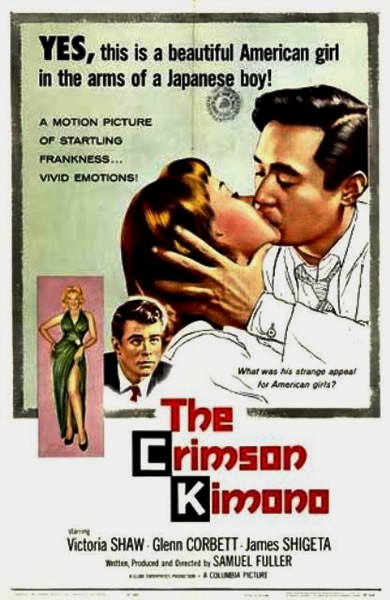
The-crimson-kimono-1959_posterRegrettably, posters for this film were highly shallow and sensational reflecting the age with taglines like “Yes, this is a beautiful American girl in the arms of a Japanese boy!” or “What was his strange appeal for American girls?” It places this character in the typical category of an exotic lover. He’s not a real man, only an enticing mysterious foreigner with strange appeal. Likewise, the title Crimson Kimono itself brings to mind oriental exoticism involving strange dress and foreign culture. This could have just as easily been a dated film of yellowface and Asian stereotypes, but it’s superfluous to judge this film by its posters and title alone. When you actually watch Fuller’s work these are not the focal points at all. As Fuller later said himself, “The whole idea of [his] picture is that both men are good cops and good citizens. The girl just happens to fall in love with the Nisei. They’ve got chemistry” (A Third Face). Chris likes Joe because he is a genuine hero, not because the other man is not. Joe is sweet and shares a love of art (piano and painting) like her. She could care less that he’s Asian just like Charlie could care less. Those are the kind of people they are.

Fuller’s depiction goes both ways, however, because while he never sells Kojaku short, he also suggests that Joe might be part of the problem. Fuller notes that he “was trying to make an unconventional triangular love story, laced with reverse racism, a kind of narrow-mindedness that is just as deplorable as outright bigotry. [He] wanted to show that whites aren’t the only ones susceptible to racist thoughts” (A Third Face). This ends up happening with Joe since he gets so caught up in prejudice, his own prejudice, that it wrecks his relationships with his friend. Charlie is not angry because Joe, an Asian, stole his girl. Charlie is understandably irritated because his best friend took the girl who he really liked without telling Charlie his true feelings. Joe makes the mistake of attributing this to a question of race, but Charlie, like Fuller, is not that shallow. His reaction is purely a human reaction that develops in any romance when two men who are equals go after one girl and only one can come out on top. It hurts no matter what race, color or creed they are. That’s just the reality and that’s the lesson that Joe does not understand at first. He seems to care too much about the race question and potentially even his identity. It ultimately damages his relationship with Charlie and we cannot know for sure if it will ever be repaired, even if we would like them to patch things up. Thus, Fuller combats racism from both angles, including minorities who might take on the role of a victim too quickly. Because the reality is, issues of race almost always get blown way out of proportion with both sides being hypersensitive. Fuller seems to have the right handle on the situation, not stooping to unwarranted stereotypes and not heaping all the blame on the majority. Sometimes everybody is at fault at least a little bit. That’s simply how life is and that’s how it gets depicted in The Crimson Kimono, with a sensitive, albeit, realistic touch. Furthermore, one could argue that it is a typical noir ending because although Joe still gets the girl it came at a steep cost.crimsonk4The Crimson Kimono is riveting from the beginning because it is such a groundbreaking and rare piece of film history. It presented on film something that we never see or very rarely see: a relationship between an Asian man and Caucasian woman. In the hands of Samuel Fuller, this unique but still mundane tale is kept thoroughly engaging. He infused his screenplay with visuals of Los Angeles and realism that makes his characters all the more believable. His camera is able to take the everyday and make it dramatic while we continue to invest in these people. It seems fitting to end the discussion with a quote from the man himself. He affirmed that “One film never really gives me complete satisfaction. Nor should it. All creative people must learn how to deal with the imperfect and the incomplete. There is no end in art. Every accomplishment is the dawn of the next challenge.” That’s what makes the films of Samuel Fuller meaningful. No one film can ever have everything. The Crimson Kimono does not have every answer on race and it certainly does not have every convention of film-noir. It’s imperfect, but it is a jumping off point for future endeavors and dialogue.

You Only Live Once (1937)

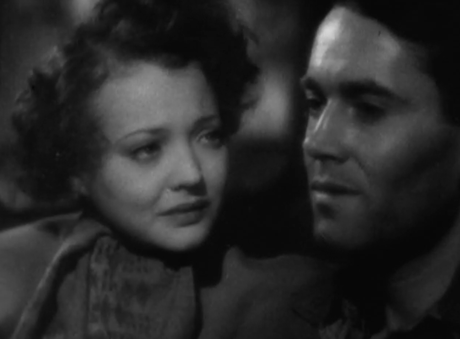
youonlylive1There are two types of lover-on-the-run narratives. There’s the Bonnie and Clyde/Gun Crazy extravaganza full of shoot-outs and bloodshed. Then you have the more sensitive approach of a film like They Drive By Night. You Only Live Once fits this second category thanks to two bolstering performances by Henry Fonda and Sylvia Sydney. Fonda is forever known for his plain, naturalistic delivery full of humanity. He has that quality as 3-time loser Eddie Taylor certainly, but he also injects the role with a somewhat uncharacteristic rage. In many ways, he has a right to be angry at a world that so easily writes him off and is so quick to pronounce guilt. There is very little attempt to rehabilitate the reprobate and Taylor is an indictment of that.

youonlylive2Secretary Jo Graham (Sylvia Sydney) is positively beaming the day they are releasing her boyfriend Taylor because he is finally getting the second chance he deserves. A glorious marriage follows soon after until reality breaks into the lovers’ paradise. Few people aside from Father Dolan and a few forward thinkers are willing to give Taylor grace. He is prematurely fired from his job and has no way to make the payments on the house that his wife has been sprucing up for him. Adding insult to injury, a brazen bank robbery is committed which he is wrongly accused of. It’s back to the clink and then the electric chair.

Jo is beside herself and Taylor is angered at the way the law deals with him. This justice is the most unjust imaginable, and he is about to pay the price. But Jo desperately gets him help and he tries to make a break for it.

youonlylive4That’s what makes a wire proclaiming his innocence all the more ironic because he will have none of it. He takes a man’s life and now his acquittal goes down the drain as quickly as he got it since he has a murder to his name. Eddie and Jo go off on the road together, looting banks and surviving the best they can with their newborn son. This is not two joyriding youngsters trying to get rich without an honest day’s work. Fritz Lang develops a more complex story with people who tried to live by the rules and found they were dealt an unfair hand.

As one of Lang’s earliest works in America, you can see some remnants of German Expressionism exported here with foggy clouds of mist engulfing the screen at times. His tale also has an interesting ambiguity suggesting that crime is not always black and white. Perhaps it has less to say about the moral degenerates or corrupt individuals in our society and more about the faulty structures that our justice system often get built around. It’s mind-boggling to think that this film came soon after the Depression meaning the bitter taste of those years was still fresh in peoples’ mouths. Nevertheless, this film is an interesting crime-filled character study.

4/5 Stars

All That Heaven Allows (1955)

allthatheaven4When I first saw the work of Douglas Sirk, I was immediately struck by how well it seemed to personify 1950s Hollywood. All That Heaven Allows (1955) is little different in its opulence and superficial soap opera tonalities. Except for this one, at times, feels a little like it should be a part of a Norman Rockwell Saturday Evening Post cover. Perhaps it glides a slightly more interesting line between high society country club members and quintessential middle America.

The two alternatives are contrasted in our screen couple played by Jane Wyman and Rock Hudson.

Cary Scott (Wyman) is a well to do, middle-aged widow with two grown kids off at school. She is often lonely and always sensible when it comes to the life decisions she makes. After all, she doesn’t want the local gossip blabbing about her life to all their society friends.

That changes rather gradually thanks to her seasonal gardener and professional tree-trimmer Ron Kirby (Hudson). He is a different sort of spirit who seems to be content with nature and his place in it as nurturer. Their acquaintance begins over a harmless cup of coffee and turns into an excursion to his humble abode. Over time, Cary is introduced to Ron’s brand of friends, all charming, down-to-earth folk who live life to the fullest without worrying about wealth or societal pressures. This is what she has been looking for, and he is the man she needs. So when Ron proposes marriage she readily accepts.

Now comes the task of putting it before the kids and then showing Ron to the local snarks. The socialites are no different with their sniggering and pointed remarks. There is no mercy for Cary and Ron. In fact, they are appalled by such a scandalous romance. The children who normally are rational and kind, do not mince words with their mother. Ned talks about the family honor, the legacy of their father, and their home. He cannot bear for his mother to supposedly throw all that away. Kay, on her part, is always getting caught up in psychoanalysis, but this time all rationale goes out the window after her boyfriend breaks up with her.  Under this built-in pressure, Cary reluctantly breaks off their marriage, mostly for the sake of the children.

allthatheaven2Except she is never quite the same and never feels like she did with Ron. Cary is resigned to staying in her lavish home, while reluctantly accepting the newest form of modern entertainment — a television. Christmas time is especially hard when she runs into Ron, but then the kids come home. That’s when she realizes her grave error and what comes next is exactly what you expect, with a few small diversions. Cary turns back to Ron, who has been in a funk of his own. Following an accident that was induced by Cary’s presence, Ron is bedridden and Cary rushes to his aid. This is the life she was meant for no matter what society says of her.

It’s pretty mushy, weepy stuff in a sense. That’s the superficial level of second-rate romance and picture-perfect technicolor. In fact, All That Heaven Allows is visually beautiful in a sickening sort of way. The town is too pristine, the seasons too perfect, the snow too puffy. And yet it all seems to be an impeccable supplement to Sirk’s moral drama. Ironically, this is not a moral tale about unbridled love between a woman and her younger lover. That would make complete sense. Instead, Sirk subverts that wonderfully, by suggesting the weight of the blame is on society and the peer pressure that permeates the upper crust.

Even if this film is a little too syrupy in its sweetness, I can manage a spoonful or two because there is a greater meaning to this frivolity. All That Heaven Allows is certainly an acquired taste, but it’s worth taking a chance on.

4/5 Stars

While the City Sleeps (1956)

whilethecity1While the City Sleeps has a brilliant cold open followed by a pounding title sequence, courtesy of Fritz Lang, that brings to mind a bit of Diabolique and Psycho. The rest of the film turns into a case to find the wanted lipstick murderer (based on a real killer), but that only holds part of our attention.

When newspaper magnate Mr. Kyne dies suddenly, his begrudging son Walter (Vincent Price) takes over intent on shaking up the status quo and putting his mark on the company. He soon turns three men against each other as they desperately fight for the new position of executive director. The first is veteran newspaper editor John Day Griffith (played by the always memorable character actor Thomas Mitchell). The second candidate is chief of the wire service Mark Loving (George Sanders) who is Griffith’s main competitor. Finally, in the third spot is Harry Kritzer who happens to have a secret ace in the hole. Each of them is tasked with finding out the real scoop about the serial killer, and it turns into a real tooth and claw ordeal. Within the glass cubicles, everything can be seen, but not everything is heard and that’s where the secrets get disclosed.

On the outside looking in, so to speak, is star TV reporter Edward Mobley (Dana Andrew), who agrees to help his friend Griffith by doing a little digging around about the murderer. He gets some tips from a cop friend Lt. Kaufmann (Howard Duff), and Mobley tries to smoke the killer out on air. However, it leads to the potential endangerment of his fiancée Nancy, who also happens to be Loving’s secretary. Loving has his love directed towards a female reporter named Mildred Donner (Ida Lupino), who attempts to needle Mobley for info. At the same time, the killer is on the move once more, with Nancy being an obvious target. Mr. Kritzer’s own romantic entanglements get him in trouble because he is seeing Kyne’s beautiful but detached wife Dorothy (Rhonda Fleming). Mildred finds out about them and they have some talking to do. Mobley also has some making up to do with Nancy after she finds out Mildred came to see him. It’s a big mess.

whilethecity3Mobley juggles everything from his love life to the big scoop and they apprehend the killer, but things at Kyne’s don’t wind up exactly the way they expected. Mobley looks to move on from the paper with Nancy, but even he cannot get away that easily.

While the City Sleeps is an underrated tale from Lang that is positively stacked with big names. Its pacing can be deliberate at times, but it is just as much an indictment of journalism as it is a thriller. The office is a web of deception with so many interconnections between these work factions. Those you would normally expect to be scrupulous seem to give up their honor in the face of this new promotion. In a sense, Mobley seems to be outside of this fray and yet he cannot help but get involved in it. It doesn’t help that nothing turns out the way it’s supposed to. Everybody seems to gain something, but nobody really wins the game.

I must say it was great to see Dana Andrews in one of these leading roles again and although their roles were smaller, Ida Lupino and George Sanders still were a deliciously stuffy and corrupt pair. I was never really a fan of Vincent Price due to the roles he normally plays, but I was inclined to like Howard Duff (Lupino’s real-life husband) in his turn as the policemen. It goes without saying that Rhonda Fleming is positively beautiful, but she also cannot be trusted. I guess that applies to about every character in this film. It’s certainly a cynical world out there that Lang paints, where the killer might be caught, but corruption is never fully quelled.

4/5 Stars

Review: The Big Heat (1953)

bigheat2The Big Heat is not a noir where the darkness comes from the shadowy visuals, but from within its characters themselves. In fact, some of these individuals are so subtle in their corruption that it easily gets overshadowed. Homicide cop Dave Bannion is, rather ironically, the straight-arrow trying to do what is right, and he becomes the most vengeful character in Fritz Lang’s film. It’s a subversion of the typical noir arc because his greatest help ultimately comes from the former femme fatale. That’s not how it’s supposed to happen, but then again a lot of things happen a little differently in The Big Heat.

The film opens and within a second a man has shot himself and left a confession on his desk. The cues tell us that he’s a cop and he’s just committed suicide. His wife comes downstairs strangely composed and shuffles through the pages he has written. She goes to the phone, not to call the police, but she talks to a third party. We quickly forget what’s she’s done, but the fact is Mrs. Duncan represents the corruption that reigns supreme in this film. She’s used a juicy piece of blackmail to receive large payoffs from someone and she’s not the only sellout.

Bannion (Glenn Ford) is a cop by day and a family man at night with a loving wife and a beautiful little girl. By convention, he is supposed to be the moral compass of this film — the emblem of good conquering evil. He takes on the straightforward case of Officer Duncan’s death, but it gets convoluted when a B-girl named Lucy Chapman calls him up to say she knew the deceased, and he would never kill himself. Initially, Bannion takes little heed of this girl, because she is hardly as respectable as Mrs. Duncan, or so society says.

He gets pressure from his superior Wilks to lay off, but Bannion is discontent with loose ends, especially when he receives news that the Chapman girl has been brutally murdered. This can’t all be all coincidence, and he begins sniffing out the truth like a bloodhound. Bannion leads us into the home of this empire of crime literally. He confronts local businessman/crime boss Mike Laganna, who he accuses of involvement in the corruption. Things are beginning to heat up, and they start to infiltrate the sanctity of his home life. The dark recesses of the noir world can never be subdued, and Bannion dives deeper into the labyrinth that is created by his own obsessive vendetta. He has no tolerance for his colleagues who don’t take a stand, in favor of their pensions. He can’t stand tight-lipped locals who give him no help and most of all he hates Laganna’s guts.

bigheat3At the local shady nightclub “The Retreat,” Bannion has his first run-in with the hired thug Vince Stone (Lee Marvin). Afterward Vince’s girl Debby is genuinely impressed by Bannion’s methods, but he will not give her the time of day. He expects her to be the same superficially ditsy dame that we have all seen before. Hardly a femme fatale, but still there is the potential to be deadly. The one character who seems to conform to the stereotype is Stone, and yet he is even more brutal than most, burning girls with cigarette butts and splashing scalding coffee on Debby’s face.

Bannion gets to one of the other hired guns named Larry and both Stone and Laganna decide that something must be done to stop Bannion in his tracks. The obvious target is his little girl, but this time the family life prevails over the noir world. His family and colleagues rally around him and yet Bannion is not done with his obsession.

In fact, it is Debby who actually finishes off Bannion’s work by paying a visit to Mrs. Chapman and then Vince. Bannion arrives soon after to reprimand Vince, but Debby has already done the dirty work. The nightmare is over and everything that is good and right comes to the forefront. Debby proves her allegiance, the criminals are put away, and Bannion gets a new position with the homicide department. But underlying this seemingly happy ending is still a sense of tension. The film ends as Bannion heads out on a new homicide case with the cycle continuing and it seems like he will never be free of it.

The world will continue ripping away the ones he loves. Before he knows it, he will be left with only his personal vengeance to drive his future. Bannion very easily could cross the line between righteousness and corruption. He already almost strangled two characters and was not opposed to slugging it out with others. It’s only a matter of time before he totally blows his cool and collected exterior. It’s a dark assumption, but then again that is a lot of what film-noir is. Fritz Lang seems to get this and that’s what makes his characters here so powerful because he knows that the root of all evil can be in everyone.

4.5/5 Stars

Review: Gun Crazy (1950)

guncrazy2

Bart has an intense obsession with guns. It’s what his life revolves around. It’s the only thing he wants to do as a boy and the only things he seems to think about. It becomes a problem when he breaks a store window, but during the following hearing, his sister and friends vouch for his character. He would never take a human life or kill. That’s not in his nature.

No matter, it is decided Bart should be sent off to a special preparatory school, and he only returns years later as a grown man recently off a stint in the army.  He’s back in his hometown not quite sure what his future plans will be, but his buddies are glad to see him. They shoot some, drink a few beers, and decide to take a jaunt to the carnival for a night of fun.

Their Bart meets the girls of his dreams. There’s a quality to John Dall that makes Bart into a pure victim of his circumstances. He’s quickly infatuated with the gun slinging and sensuous Peggy, who seems to share his one love. A goofy smile is plastered on his face as he faces off against her in an act of skill. He makes her uneasy and ultimately beats her. 

He gets a job with the carnival and spends as much time as he can with her when he’s not shooting guns. They are fed up with their boss and leave the migrant life behind. Marriage is on their radar, and they live it up with the money they have. But Peggy wants more and she wants to keep living the high life. 

She wants to rob a gas station. It’s one little idea that soon blows way out of proportion. They are holding up banks, gas stations, and any place with money that they can lay their hands on. The pair is fugitives with exploits plastered all over the front pages and roadblocks waiting to stop them up. All the while Bart makes Peggy promise not to shoot anything because he still is totally opposed to killing people. 

It seems like things might end peaceably, except once again the gun-toting lovers are nearly flat broke so Peggy coaxes Bart into one last job to end all jobs. For the first time, despite their planning, just enough goes wrong to nearly botch their mission. Bart drives off and Peggy shoots a guard. He’s not the only one. 

 guncrazy1When Bart finds out, after the fact, he realizes they have just stepped up a level with murder stuck on them. The game is winding down and the only place Bart can turn is his hometown where his sister is. For good reason, she cannot stand Bart or Peggy who she sees as poisoning her brother. And it’s true. Bart seems different now, so paralyzed by fear that he even pulls a gun on his old friends.

The last ditch effort of Bart and Peggy is to literally head for the hills. The dragnet is sent out and the hounds are let loose. They hardly have a chance before dropping from exhaustion in a swamp. They’re trapped and a crazed Peggy looks to shoot it out to the death. But for once Bart breaks with her remembering his friends. It doesn’t help him much.

Gun Crazy is a B-film and yet it is easy to forget because the way Joseph H. Lewis constructed this film is so impressive in its economy. One scene that reflects this so beautifully is the long take from the back seat of the car. The camera does not change positioning and so we see a bank job from the outside, and it only helps to build up greater tension.

 We also have enough time to care about certain characters. We have enough time to see Peggy is really no good. Yet with her keen marksmanship, she is a different shade of femme-fatale who is still as deadly as any of her contemporaries. Along with They Live by Night (1948), this is one of the archetypal Bonnie and Clyde-esque films. Thank goodness this film’s title was changed from Deadly is the Female to the more apt Gun Crazy. That it is. 

4/5 Stars

The Spiral Staircase (1945)

spiral5The Spiral Staircase plays out like an Agatha Christie murder mystery with a moody, old mansion acting as the backdrop and numerous individuals filling out the cast. It seems to be some type of gothic-noir hybrid, with its ghostly interiors, torrential thunderstorms, and creaky shutters. However, with director Robert Siodmak at the helm, I am inclined to call it noir, not just because of his pedigree, but it certainly has the atmosphere and dim interiors that are expected of the genre.

The action opens at a movie hall after a woman is murdered by an unseen killer. But most of the actual drama takes place in the before mentioned mansion of the sickly Mrs. Warren (Ethel Barrymore). She resides with her son Steven and step-son Professor Albert Warren (George Brent) who never see eye to eye. Nearly on her deathbed, Mrs. Warren distrusts her nurse and only allows the mute girl Helen (Dorothy McGuire) to even help her. The rest of the cast is rounded out by servants, a secretary named Blanche (Rhonda Fleming) who Steven loves, and the constable and a young doctor who cares about Helen. It’s a wide array of figures and we quickly begin to analyze them for any hint of killer tendencies.

spiral3In fact, Helen is our main character and we experience much of the film from her perspective. The truth of the matter is that all the girls who were killed had some sort of defect, so the line of reasoning is that Helen might be next in line. It seems all too possible with a pair of mysterious eyes constantly watching from the shadows, but Helen does not heed Mrs. Warren’s advice to flee.

The film ultimately spirals into darkness as the killer takes one victim and looks for another. Helen must protect herself, while also confronting her past where the source of her muteness lies. Although simple in conception, The Spiral Staircase is no less an engaging mystery. It is not the best from Siodmak either, but Dorothy McGuire gives an expressive performance that deliverers so much heart and feeling without the use of words.

However, the film does ultimately allow her to find her inner voice in the midst of all the silence. She finally conquers the fear in the moment when it is most harrowing. Although her role is rather minor, Rhonda Fleming is as strikingly beautiful as ever. It’s a rather expected resolution, but there are enough quirks and twists to makes things enjoyable to the end. It goes without saying that gothic noir most definitely should be a thing if it isn’t already.

4/5 Stars

Late Spring (1949)

latespring1Late Spring is a film that I found in some ways more rewarding than Tokyo Story, another acclaimed classic from Yasujiro Ozu. Both films share a few of his trademarks. They are home dramas with basic, everyday plots, termed Shomin-geki. Also exhibited are a stationary camera and low camera angles that Ozu often used to focus on his characters while sitting. In this way, he invented the quintessentially Japanese viewpoint known as the “tatami shot.” We see it most certainly in Late Spring as the daughter Noriko interacts with her widowed father or when they have friends over in their home. It may look somewhat similar to Tokyo Story, but it does differ in subject matter.

Late Spring is a film about fathers and daughters. Marriage and divorce. All the things that make up a life that remain the same whether you’re in modern America or post-war Japan. Noriko is a pretty young woman who is devoted to her aging father through thick and thin. He likes having her around and she likes being there for him.

It’s the culture, namely aunts and friends, who tell Norkio that she must get married. She’s 27 years old, and she needs to find a husband before it’s too late. Her father won’t be around forever. She’ll need to make a new life for herself. But Noriko is content with not listening to the voices trying to sway her. Only when her father talks to her about marriage does she finally begin to listen. He makes conversation about getting remarried and encourages her to think about an arranged marriage that her aunt has waiting for her.

We never meet this man who supposedly looks like Gary Cooper, but Noriko seems to genuinely like him. And yet there still is something that isn’t quite right. In Japan there is great importance in “reading the air,” and it seems like some of the characters in Ozu’s film fail at this or they see only what they want to see.

latespring3In the end, Noriko gets married and it should be no surprise because it was what was ultimately expected of her. Her father, on the other hand, acknowledges to a friend that he had no intention of getting remarried, it was only to prompt Noriko. Professor Somiya took on a great sacrifice in the eyes of society and goes home alone.

This is a bittersweet tale that is surprisingly funny on many occasions, but it is also topped off with human tragedy. Not death or dying, but something potentially worse in loneliness and discontentment. It is only a thought, but it seems like Noriko and her father would have both been happy with the status quo. However, their sensibilities and society said otherwise, so they acted as they were expected to. From this simple drama comes one of the most powerful films on father-daughter relationships ever.

I must admit, at first, I really was not fond of Chishu Ryu’s character, but over the course of the story, he grew on me. As for Setsuko Hara, she is an amazing example of kindness and servility, but also the undisputed muse of Yasujiro Ozu.  Late Spring also plays off the conflict between the old and new not to mention the traditional Japan and western culture. It’s not a blatant presence, but the allusion to Coca-Cola and Gary Cooper reminds us that this is a post-war Japan still recuperating from an awful war. That’s the backdrop of this film and its part of what makes Ozu’s human drama all the more striking. Despite, where it is situated in the historical context, Late Spring is a timeless film giving calculated insight into human relationships.

4.5/5 Stars

Inside Out (2015)

Inside_Out_(2015_film)_posterIn a generation often bloated with unoriginal ideas, Pixar has been one of the most prominent fountains of creative inspiration. Pete Docter has always been a master class storyteller (“Monster’s Inc.” and “UP”), but “Inside Out” finds him at perhaps his most innovative yet if you can believe it. Not everyone would be audacious enough to make their latest animated film on the inner workings of the human psyche. A film following a girl and her emotions could easily be insensitive or some downer emo tale at best.

However, Inside Out ends up being a wonderful and heartfelt film that comments on a difficult time in life without making the parents flat out buffoons or the children complete jerks. It finds a great deal of its substance in the personified emotions, positive and negative, that course through a young 11-year-old girl on a daily basis. Joy, Sadness, Fear, Anger, and most certainly Disgust.

From the get go it looked to be a veritable field day for stars like Amy Poehler, Mindy Kalig, Bill Hader, Lewis Black, and Phyllis Smith. In other words, the casting was impeccable and everyone delivers the goods.

As Pixar so often does, the characters are wonderful and the writing develops a tirelessly inventive world full of creative entities for the main players to bounce off of. Our two main settings are essentially San Francisco and the mind, and both come off pretty well, although by default the mind becomes the visual playground of abstraction that lends itself to the most mirthful moments as well as touching enlightenment. San Francisco is the city that ruined pizza. That’s pretty bad.

Above all, I think Inside Out makes a powerful suggestion to its audience. Going in we have a certain set of presuppositions. We live in a society that says joy is good. Sadness is bad. Among other things. However, this film dares to point out that all emotions have their places. All of them are meaningful and there is a season for each. Because as it turns out, without Sadness, you really would not be able to know what true Joy feels like. And that is a beautiful thing. Overall, this is not the best of Pixar, but it is a wholly memorable outing, especially when we are allowed to get inside the heads of each character. That’s when the story is at its creative best. Those jingles in commercials are really annoying too. They really struck a chord with that.

4.5/5 Stars