1. The Godfather (Francis Ford Coppola, 1972)
2. Raiders of the Lost Ark (Steven Spielberg, 1981)
3. Star Wars Episode V: Empire Strikes Back (Irvin Kershner, 1980)
4. Shawshank Redemption (Frank Darabont, 1994)
5. Jaws (Steven Spielberg, 1975)
6. GoodFellas (Martin Scorsese, 1990)
7. Apocalypse Now (Francis Ford Coppola, 1979)
8. Singin’ in the Rain (Stanley Donen, Gene Kelly, 1952)
9. Pulp Fiction (Quentin Tarantino, 1994)
10. Fight Club (David Fincher, 1999)
11. Raging Bull (Martin Scorsese, 1980)
12. The Apartment (Billy Wilder, 1960)
13. Chinatown (Roman Polanski, 1974)
14. Once Upon a Time in the West (Sergio Leone, 1968)
15. The Dark Knight (Christopher Nolan, 2008)
16. 2001: A Space Odyssey (Stanley Kubrick, 1968)
17. Taxi Driver (Martin Scorsese, 1976)
18. Casablanca (Michael Curtiz, 1942)
19. The Godfather Part II (Francis Ford Coppola, 1974)
20. Blade Runner (Ridley Scott, 1982)
21. The Third Man (Carol Reed, 1949)
22. Star Wars Episode IV: A New Hope (George Lucas, 1977)
23. Back to the Future (Robert Zemeckis, 1985)
24. The Lord of the Rings: The Fellowship of the Ring (Peter Jackson, 2001)
25. The Good, the Bad and the Ugly (Sergio Leone, 1967)
26. Dr. Strangelove Or: How I Learned to Stop Worrying and Love the Bomb(Stanley Kubrick, 1964)
27. Some Like It Hot (Billy Wilder, 1959)
28. Citizen Kane (Orson Welles, 1941)
29. Die Hard (John McTiernan, 1988)
30. Aliens (James Cameron, 1986)
31. Gone with the Wind (Victor Fleming, George Cukor, Sam Wood)
32. Butch Cassidy and the Sundance Kid (George Roy Hill, 1969)
33. Alien (Ridley Scott, 1979)
34. The Lord of the Rings: The Return of the King (Peter Jackson, 2003)
35. Terminator 2: Judgment Day (James Cameron, 1991)
36. Andrei Rublev (Andrei Tarkovsky, 1969)
37. A Clockwork Orange (Stanley Kubrick, 1971)
38. Heat (Michael Mann, 1995)
39. The Matrix (Andy & Larry Wachowski, 1999)
40. Vertigo (Alfred Hitchcock, 1958)
41. The 400 Blows (François Truffaut, 1959)
42. Kind Hearts and Coronets (Robert Hamer, 1949)
43. The Big Lebowski (Joel & Ethan Coen, 1998)
44. Schindler’s List (Steven Spielberg, 1993)
45. Psycho (Alfred Hitchcock, 1960)
46. On the Waterfront (Elia Kazan, 1954)
47. E.T. The Extra-Terrestrial (Steven Spielberg, 1982)
48. This Is Spinal Tap (Rob Reiner, 1984)
49. Evil Dead (Sam Raimi, 1987)
50. Seven Samurai (Akira Kurosawa, 1954)
51. 8 ½ (Federico Fellini, 1963)
52. The Shining (Stanley Kubrick, 1980)
53. Donnie Darko (Richard Kelly, 2001)
54. The Lord of the Rings: Two Towers (Peter Jackson, 2002)
55. La Dolce Vita (Federico Fellini, 1960)
56. Casino Royale (Martin Campbell, 2006)
57. Lawrence of Arabia (David Lean, 1962)
58. His Girl Friday (Howard Hawks, 1940)
59. Close Encounters of the Third Kind (Steven Spielberg, 1977)
60. Come and See (Elem Klimov, 1985)
61. The Usual Suspects (Bryan Singer, 1995)
62. The Graduate (Mike Nichols, 1967)
63. Sunset Boulevard (Billy Wilder, 1950)
64. Oldboy (Park Chan-wook, 2003)
65. Harold and Maude (Hal Ashby, 1971)
66. Edward Scissorhands (Tim Burton, 1990)
67. Tokyo Story (Yasujiro Ozu, 1953)
68. Annie Hall (Woody Allen, 1977)
69. Three Colours Red (Krzysztof Kieslowski, 1994)
70. Stand by Me (Rob Reiner, 1986)
71. The Night of the Hunter (Charles Laughton, 1955)
72. 12 Angry Men (Sidney Lumet, 1957)
73. Eternal Sunshine of the Spotless Mind (Michel Gondry, 2004)
74. The Treasure of Sierra Madre (John Huston, 1948)
75. A Matter of Life and Death (Michael Powell, Emeric Pressburger, 1946)
76. Manhattan (Woody Allen, 1979)
77. Spartacus (Stanley Kubrick, 1960)
78. Rosemary’s Baby (Roman Polanski, 1968)
79. The Thin Red Line (Terrence Malick, 1998)
80. The Life and Death of Colonel Blimp (Michael Powell, Emeric Pressburger, 1943)
81. Batman Begins (Christopher Nolan, 2005)
82. The Great Escape (John Sturges, 1963)
83. Brazil (Terry Gilliam, 1985)
84. L.A. Confidential (Curtis Hanson, 1997)
85. Blue Velvet (David Lynch, 1986)
86. Carrie (Brian De Palma, 1976)
87. The King of Comedy (Martin Scorsese, 1983)
88. Ferris Bueller’s Day off (John Hughes, 1986)
89. Magnolia (Paul Thomas Anderson, 1999)
90. When Harry Met Sally (Rob Reiner, 1989)
91. Star Wars Episode VI: Return of the Jedi (Richard Marquand, 1983)
92. Once Upon a Time in America (Sergio Leone, 1984)
93. Spirit of the Beehive (Victor Erice, 1973)
94. The Wild Bunch (Sam Peckinpah, 1969)
95. Yojimbo (Akira Kurosawa, 1961)
96. American Beauty (Sam Mendes, 1999)
97. Reservoir Dogs (Quentin Tarantino, 1992)
98. North by Northwest (Alfred Hitchcock, 1959)
99. Toy Story (John Lasseter, 1995)
100. Network (Sidney Lumet, 1976)
101. Raising Arizona (Joel & Ethan Coen, 1987)
102. The Hustler (Robert Rossen, 1961)
103. Rear Window (Alfred Hitchcock, 1954)
104. The Rules of the Game (Jean Renoir, 1939)
105. One Flew Over the Cuckoo’s Nest (Milos Forman, 1975)
106. A Man for All Seasons (Fred Zinnemann, 1966)
107. An American Werewolf in London (John Landis, 1981)
108. The Tree of Wooden Clogs (Ermanno Olmi, 1978)
109. Touch of Evil (Orson Welles, 1958)
110. Before Sunset (Richard Linklater, 2004)
111. Fitzcarraldo (Werner Herzog, 1982)
112. I Am Cuba (Alexander Payne, 1964)
113. Anchorman: The Legend of Ron Burgundy (Adam McKay, 2004)
114. The Conversation (Francis Ford Coppola, 1974)
115. Blazing Saddles (Mel Brooks, 1974)
116. Rio Bravo (Howard Hawks, 1959)
117. Miller’s Crossing (Joel & Ethan Coen, 1990)
118. Withnail and I (Bruce Robinson, 1987)
119. The Wages of Fear (Henri-Georges Clouzot, 1953)
120. The Battle of Algiers (Gillo Pontecorvo, 1966)
121. Los Olvidados (Luis Buñuel, 1950)
122. The Princess Bride (Rob Reiner, 1987)
123. A Woman Under the Influence (John Cassavetes, 1974)
124. The Silence of the Lambs (Jonathan Demme, 1991)
125. A Bout de souffle (Jean-Luc Godard, 1960)
126. Pat Garrett and Billy the Kid (Sam Peckinpah, 1973)
127. The Sting (George Roy Hill, 1973)
128. Lost in Translation (Sofia Coppola, 2003)
129. Harvey (Henry Koster, 1950)
130. The Man Who Would Be King (John Huston, 1975)
131. The Last of the Mohicans (Michael Mann, 1992)
132. Pan’s Labyrinth (Guillermo del Toro, 2006)
133. Double Indemnity (Billy Wilder, 1944)
134. Seven (David Fincher, 1995)
135. Duck Soup (Leo McCarey, 1933)
136. Amadeus (Milos Forman, 1984)
137. Dances with Wolves (Kevin Costner, 1990)
138. Cool Hand Luke (Stuart Rosenberg, 1967)
139. Blow Out (Brian De Palma, 1981)
140. As Good as It Gets (James L. Brooks, 1997)
141. Snow White and the Seven Dwarfs (David Hand, 1937)
142. Almost Famous (Cameron Crowe, 2000)
143. Cyrano De Bergerac (Jean-Paul Rappeneau, 1991)
144. There Will Be Blood (Paul Thomas Anderson, 2007)
145. Sophie’s Choice (Alan J. Pakula, 1982)
146. Shampoo (Hal Ashby, 1975)
147. Notorious (Alfred Hitchcock, 1946)
148. Z (Costa-Gavras, 1969)
149. The Red Shoes (Michael Powell, Emeric Pressburger, 1948)
150. The French Connection (William Friedkin, 1971)
151. Gladiator (Ridley Scott, 2000)
152. Boogie Nights (Paul Thomas Anderson, 1997)
153. The Innocents (Jack Clayton, 1961)
154. Betty Blue (Jean-Jacques Beineix, 1986)
155. Badlands (Terrence Malick, 1973)
156. Saving Private Ryan (Steven Spielberg, 1998)
157. True Romance (Tony Scott, 1993)
158. Unforgiven (Clint Eastwood, 1992)
159. The Royal Tenenbaums (Wes Anderson, 2001)
160. Being There (Hal Ashby, 1979)
161. The Year of Living Dangerously (Peter Weir, 1982)
162. A Nightmare on Elm Street (Wes Craven, 1984)
163. The Bridge on the River Kwai (David Lean, 1957)
164. The Searchers (John Ford, 1956)
165. Partie de campagne (Jean Renoir, 1936)
166. Goldfinger (Guy Hamilton, 1964)
167. Don’t Look Now (Nic Roeg, 1973)
168. Tootsie (Sydney Pollack, 1982)
169. Viridiana (Luis Buñuel, 1961)
170. La Haine (Mathieu Kassovitz, 1995)
171. Brief Encounter (David Lean, 1945)
172. The Wizard of Oz (Victor Fleming, 1939)
173. Memento (Christopher Nolan, 2000)
174. Superman the Movie (Richard Donner, 1978)
175. Rushmore (Wes Anderson, 1998)
176. A Canterbury Tale (Michael Powell, Emeric Pressburger, 1944)
177. City of God (Fernando Meirelles, Kátia Lund, 2002)
178. Hellzapoppin’ (H.C. Potter, 1941)
179. Toy Story 2 (John Lasseter, 1999)
180. To Kill a Mockingbird (Robert Mulligan, 1962)
181. Beyond the Valley of the Dolls (Russ Meyer, 1970)
182. Performance (Donald Cammell, Nic Roeg, 1970)
183. Le Samourai (Jean-Pierre Melville, 1967)
184. Dirty Harry (Don Siegel, 1971)
185. Paths of Glory (Stanley Kubrick, 1957)
186. United 93 (Paul Greengrass, 2006)
187. The Big Country (William Wyler, 1958)
188. School of Rock (Richard Linklater, 2003)
189. Ghostbusters (Ivan Reitman, 1984)
190. Big (Penny Marshall, 1988)
191. Brokeback Mountain (Ang Lee, 2005)
192. Eraserhead (David Lynch, 1977)
193. Ed Wood (Tim Burton, 1994)
194. Bicycle Thieves (Vittorio De Sica, 1948)
195. It’s a Wonderful Life (Frank Capra, 1946)
196. Amélie (Jean-Pierre Jeunet, 1999)
197. Point Break (Kathryn Bigelow, 1991)
198. Fargo (Joel & Ethan Coen, 1996)
199. The Texas Chain Saw Massacre (Tobe Hooper, 1974)
200. Before Sunrise (Richard Linklater, 1995)
201. JFK (Oliver Stone, 1991)
202. The Killer (John Woo, 1989)
203. Life of Brian (Terry Jones, 1979)
204. The Bride of Frankenstein (James Whale, 1935)
205. The Addiction (Abel Ferrara, 1995)
206. The Exorcist (William Friedkin, 1973)
207. The Misfits (John Huston, 1961)
208. The Departed (Martin Scorsese, 2006)
209. Local Hero (Billy Forsyth, 1983)
210. Platoon (Oliver Stone, 1986)
211. Moulin Rouge! (Baz Luhrmann, 2001)
212. M (Fritz Lang, 1931)
213. Songs from the Second Floor (Roy Andersson, 2000)
214. Army of Shadows (Jean-Pierre Melville, 1969)
215. Jackie Brown (Quentin Tarantino, 1997)
216. Sunday Bloody Sunday (John Schlesinger, 1971)
217. The Magnificent Seven (John Sturges, 1960)
218. Mr. Hulot’s Holiday (Jacques Tati, 1953)
219. The Outlaw Josey Wales (Clint Eastwood, 1976)
220. Far From Heaven (Todd Haynes, 2002)
221. McCabe & Mrs Miller (Robert Altman, 1971)
222. Mother and Son (Aleksandr Sokurov, 1997)
223. Safe (Todd Haynes, 1995)
224. Distant Voices, Still Lives (Terence Davies, 1988)
225. Get Carter (Mike Hodges, 1971)
226. Romeo + Juliet (Baz Luhrmann, 1996)
227. Léon (Luc Besson, 1994)
228. No Country for Old Men (Joel & Ethan Coen, 2007)
229. Festen (Thomas Vinterberg, 1998)
230. Howl’s Moving Castle (Hayao Miyazaki, 2004)
231. Shaun of the Dead (Edgar Wright, 2004)
232. Jurassic Park (Steven Spielberg, 1993)
233. Indiana Jones and the Temple of Doom (Steven Spielberg, 1984)
234. The Bourne Ultimatum (Paul Greengrass, 2007)
235. Battle Royale (Kinji Fukasaku, 2000)
236. Black Narcissus (Michael Powell, Emeric Pressburger, 1947)
237. Delicatessen (Jean-Pierre Jeunet, Marc Caro, 1991)
238. Requiem for a Dream (Darren Aronofsky, 2000)
239. Cinema Paradiso (Giuseppe Tornatore, 1988)
240. Forrest Gump (Robert Zemeckis, 1994)
241. Brighton Rock (John Boulting, 1947)
242. King Kong (Merian C. Cooper, Ernest B. Schoedsack, 1933)
243. Heimat (Edgar Reitz, 1984)
244. Dazed and Confused (Richard Linklater, 1993)
245. Downfall (Oliver Hirschbiegel, 2004)
246. The Philadelphia Story (George Cukor, 1940)
247. All That Jazz (Bob Fosse, 1979)
248. Pandora’s Box (Georg Wilhelm Pabst, 1929)
249. My Darling Clementine (John Ford, 1946)
250. Sunrise (F.W. Murnau, 1927)
251. Darling (John Schlesinger, 1965)
252. The Leopard (Luchino Visconti, 1980)
253. First Blood (Ted Kotcheff, 1982)
254. The Verdict (Sidney Lumet, 1982)
255. Ninotchka (Ernst Lubitsch, 1939)
256. Le Quai des brumes (Marcel Carné, 1938)
257. The Black Cat (Edgar G. Ulmer, 1934)
258. The Blues Brothers (John Landis, 1980)
259. Groundhog Day (Harold Ramis, 1993)
260. Field of Dreams (Phil Alden Robisnon, 1989)
261. Roman Holiday (William Wyler, 1953)
262. The Virgin Suicides (Sofia Coppola, 1999)
263. Das Boot (Wolfgang Petersen, 1981)
264. American Graffiti (George Lucas, 1973)
265. A.I. Artificial Intelligence (Steven Spielberg, 2001)
266. Ghost World (Terry Zwigoff, 2001)
267. Crimes and Misdemeanors (Woody Allen, 1989)
268. The Lady Vanishes (Alfred Hitchcock, 1938)
269. A Place in the Sun (George Stevens, 1951)
270. The Death of Mr. Lazarescu (Cristi Puiu, 2005)
271. Pee-Wee’s Big Adventure (Tim Burton, 1985)
272. The Bird with the Crystal Plumage (Dario Argento, 1970)
273. The Maltese Falcon (John Huston, 1941)
274. Sin City (Robert Rodriguez, Frank Miller, 2005)
275. My Neighbour Totoro (Hayao Miyazaki, 1988)
276. Layer Cake (Matthew Vaughn, 2004)
277. On the Town (Stanley Donen, Gene Kelly, 1949)
278. Carlito’s Way (Brian De Palma, 1993)
279. National Lampoon’s Animal House (John Landis, 1978)
280. Mad Max 2 (George Miller, 1982)
281. Interview with the Vampire (Neil Jordan, 1994)
282. The Godfather Part III (Francis Ford Coppola, 1990)
283. Ran (Akira Kurosawa, 1985)
284. Scarface (Brian De Palma, 1983)
285. Solaris (Andrei Tarkovsky, 1972)
286. L’avventura (Michelangelo Antonioni, 1960)
287. Secrets and Lies (Mike Leigh, 1996)
288. Who Framed Roger Rabbit (Robert Zemeckis, 1988)
289. John Carpenter’s The Thing (John Carpenter, 1982)
290. Rashomon (Akira Kurosawa, 1950)
291. Rocco and His Brothers (Luchino Visconti, 1960)
292. Le belle et la bête (Jean Cocteau, 1946)
293. La maman et la putain (Jean Eustache, 1973)
294. The Red Balloon (Albert Lamorisse, 1956)
295. The Untouchables (Brian De Palma, 1987)
296. All the President’s Men (Alan J. Pakula, 1976)
297. It Happened One Night (Frank Capra, 1934)
298. Le cercle rouge (Jean-Pierre Melville, 1970)
299. The Palm Beach Story (Preston Sturges, 1942)
300. Sawdust and Tinsel (Ingmar Bergman, 1953)
301. Love and Death (Woody Allen, 1975)
302. The Best Years of Our Lives (William Wyler, 1946)
303. Together (Lukas Moodyson, 2000)
304. Radio Days (Woody Allen, 1987)
305. The Prestige (Christopher Nolan, 2006)
306. Indiana Jones and the Last Crusade (Steven Spielberg, 1989)
307. Midnight Cowboy (John Schlesinger, 1969)
308. The Terminator (James Cameron, 1984)
309. Transformers (Michael Bay, 2007)
310. Gremlins (Joe Dante, 1984)
311. American History X (Tony Kaye, 1998)
312. Suspiria (Dario Argento, 1977)
313. Battleship Potemkin (Sergei Eisenstein, 1925)
314. Sweet Smell of Success (Alexander Mackendrick, 1957)
315. Sense and Sensibility (Ang Lee, 1995)
316. Trainspotting (Danny Boyle, 1996)
317. Midnight Run (Martin Brest, 1988)
318. Rebecca (Alfred Hitchcock, 1940)
319. The Lion King (Roger Allers, Rob Minkoff, 1994)
320. Braveheart (Mel Gibson, 1995)
321. Funny Face (Stanley Donen, 1957)
322. Aladdin (Ron Clements, John Musker, 1992)
323. The Last Seduction (John Dahl, 1994)
324. Lone Star (John Sayles, 1996)
325. Kill Bill Vol. 1 (Quentin Tarantino, 2003)
326. Out of Sight (Steven Soderbergh, 1998)
327. The Nightmare Before Christmas (Henry Selick, 1993)
328. The Truman Show (Peter Weir, 1998)
329. The Lives of Others (Florian Henckel von Donnersmarck, 2006)
330. Star Wars Episode III: Revenge of the Sith (George Lucas, 2005)
331. The Green Mile (Frank Darabont, 1999)
332. The Sixth Sense (M. Night Shyamalan, 1999)
333. Grease (Randal Kleiser, 1978)
334. The Magnificent Ambersons (Orson Welles, 1942)
335. The Seventh Seal (Ingmar Bergman, 1957)
336. Titanic (James Cameron, 1997)
337. 300 (Zack Snyder, 2006)
338. Jules et Jim (François Truffaut, 1962)
339. Spirited Away (Hayao Miyazaki, 2001)
340. High and Low (Akira Kurosawa, 1963)
341. The Passenger (Michelangelo Antonioni, 1975)
342. The Gold Rush (Charlie Chaplin, 1925)
343. Monsters, Inc. (Pete Docter, 2001)
344. The Last Waltz (Martin Scorsese, 1978)
345. Fatal Attraction (Adrian Lyne, 1987)
346. Leave Her to Heaven (John M. Stahl, 1945)
347. All About Eve (Joseph L. Mankiewicz, 1950)
348. Au hasard Balthazar (Robert Bresson, 1966)
349. Arthur (Steve Gordon, 1981)
350. Planet of the Apes (Franklin J. Schaffner, 1968)
351. Zulu (Cy Endfield, 1964)
352. Unfaithfully Yours (Preston Sturges, 1948)
353. Bugsy Malone (Alan Parker, 1976)
354. Un chien andalou (Luis Buñuel, 1929)
355. Sunshine (Danny Boyle, 2007)
356. Napoléon (Abel Gance, 1927)
357. The Long Goodbye (Robert Altman, 1973)
358. Russian Ark (Aleksandr Sokurov, 2002)
359. The Lady Eve (Preston Sturges, 1941)
360. The Return (Andrei Zvyagintsev, 2003)
361. Clerks (Kevin Smith, 1994)
362. The Elephant Man (David Lynch, 1980)
363. Good Morning, Vietnam (Barry Levinson, 1987)
364. Natural Born Killers (Oliver Stone, 1994)
365. The Bourne Identity (Doug Liman, 2002)
366. Predator (John McTiernan, 1987)
367. Cabaret (Bob Fosse, 1972)
368. Airplane! (Jim Abrahams, David Zucker, Jerry Zucker, 1980)
369. The Breakfast Club (John Hughes, 1985)
370. Rocky (John G. Avildsen, 1976)
371. Pirates of the Caribbean: The Curse of the Black Pearl (Gore Verbinski, 2003)
372. Army of Darkness (Sam Raimi, 1992)
373. Wall-E (Andrew Stanton, 2008)
374. Hot Fuzz (Edgar Wright, 2007)
375. Four Weddings and a Funeral (Mike Newell, 1994)
376. Zodiac (David Fincher, 2007)
377. Mean Streets (Martin Scorsese, 1973)
378. The Goonies (Richard Donner, 1985)
379. Ratatouille (Brad Bird, 2007)
380. Children of Men (Alfondo Cuarón, 2006)
381. Monty Python and the Holy Grail (Terry Jones, Terry Gilliam, 1975)
382. Caché (Michael Haneke, 2005)
383. Serenity (Joss Whedon, 2005)
384. The Shop Around the Corner (Ernst Lubitsch, 1940)
385. Ace in the Hole (Billy Wilder, 1951)
386. The Great Silence (Sergio Corbucci, 1968)
387. Rain Man (Barry Levinson, 1988)
388. The English Patient (Anthony Minghella, 1996)
389. Election (Alexander Payne, 1999)
390. 2 Days in Paris (Julie Delpy, 2007)
391. Mulholland Drive (David Lynch, 2001)
392. Paris, Texas (Wim Wenders, 1984)
393. Garden State (Zach Braff, 2004)
394. Cloverfield (Matt Reeves, 2008)
395. Casino (Martin Scorsese, 1995)
396. The Assassination of Jesse James by the Coward Robert Ford (Andrew Dominik, 2007)
397. Night of the Living Dead (George A. Romero, 1968)
398. Killer of Sheep (Charless Burnett, 1977)
399. Greed (Erich von Stroheim, 1924)
400. The Incredibles (Brad Bird, 2004)
401. Batman Returns (Tim Burton, 1992)
402. Little Miss Sunshine (Jonathan Dayton, Valerie Faris, 2006)
403. Do the Right Thing (Spike Lee, 1989)
404. RoboCop (Paul Verhoeven, 1987)
405. Dirty Dancing (Emile Ardolino, 1987)
406. Iron Man (Jon Favreau, 2008)
407. The Jungle Book (Wolfgang Reitherman, 1967)
408. Zelig (Woody Allen, 1983)
409. Men in Black (Barry Sonnenfeld, 1997)
410. A Hard Day’s Night (Richard Lester, 1964)
411. Spider-Man 2 (Sam Raimi, 2004)
412. Heathers (Michael Lehmann, 1989)
413. Finding Nemo (Andrew Stanton, 2003)
414. The Double Life of Véronique (Krzysztof Kieslowski, 1991)
415. Dawn of the Dead (George A. Romero, 1978)
416. Bad Taste (Peter Jackson, 1987)
417. Lords of Dogtown (Catherine Hardwicke, 2005)
418. V for Vendetta (James McTeigue, 2005)
419. Days of Heaven (Terrence Malick, 1978)
420. Jerry Maguire (Cameron Crowe, 1996)
421. Lethal Weapon (Richard Donner, 1987)
422. A Man Escaped (Robert Bresson, 1956)
423. Kill Bill Vol. 2 (Quentin Tarantino, 2004)
424. To Have and Have Not (Howard Hawks, 1944)
425. Wonder Boys (Curtis Hanson, 2000)
426. Enduring Love (Roger Michell, 2004)
427. Spring in a Small Town (Mu Fei, 1948)
428. The Enigma of Kaspar Hauser (Werner Herzog, 1974)
429. Danger: Diabolik (Mario Bava, 1968)
430. Big Trouble in Little China (John Carpenter, 1986)
431. Electra Glide in Blue (James William Guercio, 1973)
432. X-Men 2 (Bryan Singer, 2003)
433. Good Will Hunting (Gus Van Sant, 1997)
434. The Cat Concerto (William Hanna, Joseph Barbera, 1947)
435. American Psycho (Mary Harron, 2000)
436. Beauty and the Beast (Gary Trousdale, Kirk Wise, 1991)
437. Spider-Man (Sam Raimi, 2002)
438. The Lost Boys (Joel Schumacher, 1987)
439. Grosse Pointe Blank (George Armitage, 1997)
440. Akira (Katsuhiro Otomo, 1988)
441. Being John Malkovich (Spike Jonze, 1999)
442. Atonement (Joe Wright, 2007)
443. Dog Day Afternoon (Sidney Lumet, 1975)
444. Hairspray (John Waters, 1988)
445. Dumb and Dumber (Peter and Bobby Farrelly, 1994)
446. High Fidelity (Stephen Frears, 2000)
447. Ten (Abbas Kiarostami, 2002)
448. A History of Violence (David Cronenberg, 2005)
449. Star Wars Episode I: The Phantom Menace (George Lucas, 1999)
450. King Kong (Peter Jackson, 2005)
451. Speed (Jan De Bont, 1994)
452. Unbreakable (M. Night Shyamalan, 2000)
453. Indiana Jones and the Kingdom of the Crystal Skull (Steven Spielberg, 2008)
454. The Bourne Supremacy (Paul Greengrass, 2004)
455. Top Gun (Tony Scott, 1986)
456. 28 Days Later (Danny Boyle, 2002)
457. Full Metal Jacket (Stanley Kubrick, 1987)
458. Batman (Tim Burton, 1989)
459. Ikiru (Akira Kurosawa, 1952)
460. Crash (Paul Haggis, 2004)
461. Halloween (John Carpenter, 1978)
462. Dead Man’s Shoes (Shane Meadows, 2004)
463. Juno (Jason Reitman, 2007)
464. Seven Brides for Seven Brothers (Stanley Donen, 1954)
465. 12 Monkeys (Terry Gilliam, 1995)
466. Snatch (Guy Ritchie, 2000)
467. The Deer Hunter (Michael Cimino, 1978)
468. The Crow (Alex Proyas, 1994)
469. Fear and Loathing in Las Vegas (Terry Gilliam, 1998)
470. Glengarry Glen Ross (James Foley, 1992)
471. Harry Potter and the Prisoner of Azkaban (Alfonso Cuarón, 2004)
472. Le Doulos (Jean-Pierre Melville, 1962)
473. Into the Wild (Sean Penn, 2007)
474. Enter the Dragon (Robert Clouse, 1973)
475. Pirates of the Caribbean: Dead Man’s Chest (Gore Verbinski, 2006)
476. Santa Sangre (Alejandro Jodorowsky, 1989)
477. Rebel Without a Cause (Nicholas Ray, 1955)
478. Flesh (Paul Morrissey, 1968)
479. The Secret Life of Walter Mitty (Norman Z. McLeod, 1947)
480. The Son’s Room (Nanni Moretti, 2001)
481. Topsy-Turvy (Mike Leigh, 1999)
482. Scream (Wes Craven, 1996)
483. The Big Red One (Samuel Fuller, 1980)
484. The Fountain (Darren Aronofsky, 2006)
485. The Wicker Man (Robin Hardy, 1973)
486. Breakfast at Tiffany’s (Blake Edwards, 1961)
487. Superbad (Greg Mottola, 2007)
488. Princess Mononoke (Hayao Miyazaki, 1997)
489. Brick (Rian Johnson, 2005)
490. Sweeney Todd: The Demon Barber of Fleet Street (Tim Burton, 2007)
491. Ben-Hur (William Wyler, 1959)
492. Amores Perros (Alejandro González Iñárritu, 2000)
493. In the Company of Men (Neil LaBute, 1997)
494. Sideways (Alexander Payne, 2004)
495. Jailhouse Rock (Richard Thorpe, 1957)
496. Superman Returns (Bryan Singer, 2006)
497. Crouching Tiger, Hidden Dragon (Ang Lee, 2000)
498. Back to the Future Part II (Robert Zemeckis, 1989)
499. Saw (James Wan, 2004)
500. Ocean’s Eleven (Steven Soderbergh, 2001)
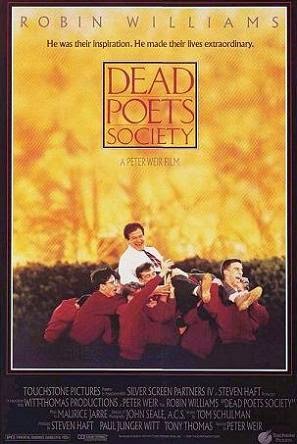 Directed by Peter Weir and starring Robin Williams in a career-defining role, the film opens with the commencement of a prestigious all-boys school. There the boys say tearful goodbyes to their parents and get reacquainted with their chums. The strict and disciplined class regiment soon starts and everything is business as usual for these driven boys.
  ck a year later…