Enter The Dragon (1973)

Turner Classic Movies came out with a podcast to give Pam Grier her plaudits and bring her out of the shadows so she might regain her rightful place as one of the unsung icons of the 1970s.

It occurs to me Bruce Lee occupies a similar cultural place. Because among his devoted fanbase, he’s revered and there is a cult following around him. Still, it’s hard to know if he’s totally understood beyond a superficial appreciation as a martial artist and thrilling symbol of Asian masculinity.

Both stars were either relegated to the periphery of mainstream entertainment or given the lead in the kind of potboilers that would never garner any critical acclaim. And still over the years, they have maintained a steady audience. What they have in common is a kind of “It Factor” born of charisma and an incomparable presence on screen.

Bruce Lee, for one, became the image of the Asian to the broader world with his prowess in martial arts and hint of religious mysticism. This is no fault of his own but rather indicative of a culture that did not totally allow for the proliferation of Asian talents in the ’60s and onward.

He became one of the token archetypes of Asianhood and although the vehicles he was given were not always the best, somehow, like Grier, he seemed capable of wholly transcending the form. It’s easy to be transfixed by his every move.

Previously I didn’t have the vocabulary to recognize how similar Enter The Dragon is to the concurrent Blaxploitation movement of the ’70s. In giving the cinema screen a broader cross-section of society for a new type of action hero, the films nevertheless lean into all the accepted stereotypes one could imagine.

What’s evident is how the movie coalesced as a cauldron of martial arts movies, James Bond influences, and Blaxploitation. It relies on a plot that’s an obvious Bond movie knockoff as Lee is sent to take part in a prestigious martial arts competition on a remote island as a pretense to snoop around the base of a man named Han.

The only other things you need are shoddy dialogue, obvious dubbing, and pretty girls with a lot of punching, kicking, and general brutality. Enter The Dragon has them all. Some of it gets especially gruesome as the story progresses and the stakes rise. The score cycles between Bond-like guitar riffs, blaxploitation funk, and the stringed twangs of “orientalism.”

Lee is not the only man who is invited to the prestigious affair. It might feel like token casting, but it also makes the ride a lot more engrossing. Jim Kelly with his afro and imposing build showcases a prowess in martial arts as an emblem of what black power can look like on the screen. Cool, disaffected, and a ready-made hero.

Former matinee idol John Saxon does well in a role that feels made to evoke a B-grade Burt Reynolds or Sean Connery. He brings some wry good humor to the movie to go with his many appetites and preeminent abilities in the ring. He also loves to gamble on anything. While he might be mercenary, he’s not entirely heartless.

They all make the ferry ride across to Han’s private stronghold. He’s a martial artist in his own right and the perilous embodiment of Fu Manchu villainy replete with a claw for a hand and courts full of all the exotic Asian diversions one might imagine. He’s flanked by a row of shuriken-throwing maidens and a ready-made army including the hulking O’Hara. Han even strokes his cats with the self-assured menace of Blowfeld.

Now that we have the pretense for their introduction, it’s a joy to get down to business watching Bruce Lee take on the whole island after he surreptitiously climbs around the base looking for answers. The scenery and the sets seem totally disposable but that makes it all the better for beating up baddies and tossing them every which way.

To the very last sequence, as he’s bare-chested and sliced up, Lee’s still ready to vanquish his enemy whatever it takes. The production does well to pinch Lady from Shanghai‘s stylish hall of mirrors sequence for some easy atmosphere and a kaleidoscopic showdown.

I had the pleasure of seeing the film in a packed house in celebration of 50 years of the film. Enter The Dragon is clunkier than I remember around the edges. People in front of me looked a bit befuddled with the dubbing, then laughed at some of the primal screams from the heat of battle.

But the whole theater erupted with every showing of Lee’s inimitable dominance. If anyone entered that theater looking only for a cheap action flick, I think they came out appreciating one of the great action heroes of the 20th century.

Given the limited resources at his disposal, it’s still amazing to consider the headway Lee made in the cultural consciousness. I’m not from Hong Kong (he was actually born in California too), but I am quick to claim Bruce Lee as a star who changed the perceptions of what Asians could be.

4/5 Stars

A Big Hand for The Little Lady (1966)

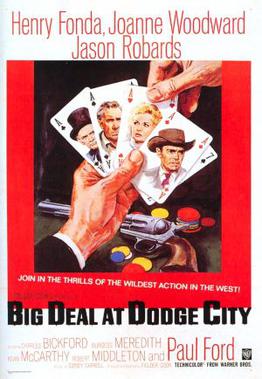
A Big Hand for The Little Lady is not something we see anymore: It’s a big, sprawling western brimming with comedy and a dash of intrigue. There’s a romping score from David Raksin and a frenzied opening as we watch the assembling of our secondary stars. And they are quite formidable from the grizzled Charles Bickford, Kevin McCarthy as a rapscallion with a glint in his eye, and the always irascible Jason Robards. They’re coming together, not for a showdown or a hanging, but for something far more momentous: a once-a-year poker game with astronomical stakes.

It’s mostly a contained western within the town and not just within the town, but within the local hotel and the backroom where only the richest and wealthiest are allowed a seat at the table. There’s little doubt that they could hold down a movie themselves, but they feel more like the entrée than the primary attraction.

For a time as an audience we are kept outside just wondering what’s happening between these rarefied few and then Henry Fonda, Joanne Woodward, and their son enter the scene.

Coming out as it did in 1966, A Big Hand for The Little Lady is one of those films that so easily melds with the TV age because it feels like a family movie and it was something that came of age originally on the stage courtesy of Fielder Cook.

What sets it apart as a movie are these stars, and they dole out. Fonda is his late period affable self and all his roles come off so seamlessly. Joanne Woodward may have been superseded finally by her super star husband Paul Newman, but this picture is a fine reminder of what a jubilant talent she was.

They come into town on their way to 40 acres of farm. They need some repairs on their wagon and they look to spend the night before heading on their way. It’s simple enough. Bu there must always be complications. Meredith (Fonda) proves himself to be a reformed gambler, but the temptation of a poker game is too great for him.

Kevin McCarthy has eyes for his radiant wife or sees a walking stooge before him. For whatever reason he vouches for the man and allows him in despite the remonstrations of his compatriots. They’re not accustomed to such interruptions to their yearly ritual.

Based on the facts that rules have never been bent for anyone, all of this feels like a very unprecedented development — not to mention a compromising of the rules. But Fonda goes to his hotel room to retrieve some of their life savings to front the $1,000 needed to just sit at the table.

What follows is a bizarre even absurd scenario as Fonda gets in too deep with all their funds, and he’s not left with enough collateral to stay in the game. They’ve bullied him out even as he has a killer hand of cards.

He proceeds to keel over on the spot into the loving arms of his wife, only for her to take up his mantle at the poker table as he gets attention from the local doc (Burgess Meredith). This, again, is highly irregular. They look down their noses at womenfolk, especially ones who have never played before.

After she learns the general premise of the game, she vows to put it on hold as she speaks with the bank manager. They go traipsing to the bank single file to meet Mr. Ballinger (Paul Ford), another irregular turn. While he won’t initially give her any help, once seeing her hand (another dubious red flag), he agrees to back her. What follows next is not something that needs writing about.

I’m not much for playing poker, but as a narrative device it’s one of my favorites because there’s always two levels to the game. It provides a concrete reason for a varied assortment of characters to sit down together — The Odd Couple is a favorite example — and there are usually stakes of another kind too.

However, here the movie almost feels like it reaches a premature climax with Joanne Woodward carrying a sway with the men that she hardly has time to build since most of the minutes beforehand she was away watching their wagon.

The film’s saving grace is it’s final abrupt revelation — I’m not sure if there are warning signs of any kind — but it’s a twist nonetheless. It’s also difficult not to see how Woodward’s acumen presages Paul Newman’s first-class showing and antics trying to agitate Robert Shaw in cards during The Sting.

The beauty of this movie is how it gives the actress the reins, and she proves herself to be the consummate performer. What’s more the cast is loaded with old pros who all seem game for a good time.

3/5 Stars

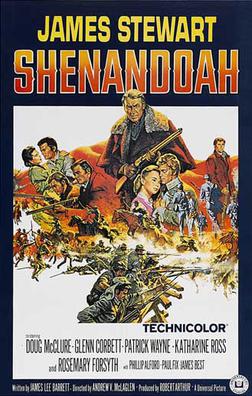
Shenandoah (1965)

Shenandoah is a curious movie on multiple accounts. It’s not unreasonable to think that large families like the Anderson’s existed in real life for mere practicality sake. More children means more farmhands to put in a day’s work and keep things running. It’s a survival tactic.

However, this is a Hollywood family loaded to the hilt with handsome young men and pretty women who crowd around the dinner table as their father blesses the food. He believes in hard work and not relying on anyone for anything. That’s why you have so many kids. He also happens to be played by Jimmy Stewart.

His faith is rudimentary. He prays to God and wanders into church conspicuously late on Sundays at the behest of his late wife, but he’s a self-made man who believes in the effectiveness of his own sweat and toil.

The movie also happens to be released near the centennial of the Civil War’s end in 1865. 100 years have passed and there’s still an uneasiness about it. There’s a brand of nobility between a certain class of white man represented especially by George Kennedy in a brief but memorable cameo. These are good men caught up in an ugly conflict, slavery and racism notwithstanding.

But in the same context, there’s only one black man of note and he’s a childhood friend of Anderson’s youngest boy (Phillip Alford most known for To Kill a Mockingbird). Otherwise, Shenandoah doesn’t have much dialogue about the scourge of slavery; perhaps we can be generous and say this not the film’s primary focus. It’s content focusing on its Southern heroes as they attempt to stay out of the fray. It just happens to be against this particular landscape, but its aims are smaller.

Charlie Anderson and his family continue keeping to themselves and working their land. But their Virginia territory is being surrounded by skirmishing Confederate and Union soldiers. It’s inevitable they’re going to have to get involved; they won’t be allowed to sit it out. That’s not how humanity functions. It will affect them in some way.

Although we can see it happening a mile away when the youngest Anderson lad picks up a rebel hat in a stream and starts to wear it around, it’s a necessary choice. He and his buddy Gabriel (Eugene Jackson Jr.) are ambushed near a pond, and he’s taken away as a prisoner of war. In spite of his father’s best efforts, he’s forced to grow up fast and become a man.

While it’s not quite The Searchers, Charlie vows to get him back and he’s intent on finding him even if conditions seem dire. It gives the movie its drive and he and his sons (as well as his daughter played by Rosemary Forsyth) must navigate a treacherous world inflamed by war.

He leaves behind his son (Patrick Wayne) and daughter-in-law (Katharine Ross) to watch over their estate, and we know deep down in the recesses of our beings that no good can come of this. This intuition proves to be correct.

It’s a credit to James Stewart as an actor how he takes a painful if inevitable moment and makes it into something so gut-wrenching. He and the rest of his kids have gone searching for his youngest boy to no avail and they come back empty-handed.

Watching the road on their return is a young Rebel soldier of only 16 and his first reaction is to fire. Jacob Anderson (Glenn Corbett) is instantly killed, slumped in his saddle.

The boy is shocked and Stewart comes upon him with the seething rage pent up from all his Anthony Mann pictures. He’s going to kill the boy for what he’s done. He’s got him in his grips and for a split second he’s choking him to death in a surreal out-of-body experience. The emotion has overtaken him.

Then, he realizes what he’s doing and with anger still smoldering and tears almost welling in his eyes, he tells the boy he wants him to grow up and have children so that one day when someone kills one of them, he’ll know what it feels like.

Stewart elevates this scene into this galling interaction between two people that’s somehow vindictive and still heartbreaking. Because it’s the rage Stewart was always capable of in his Westerns, but this time he’s a father with the unconditional love that comes with such a distinction. He loves his children so deeply just as he loved his wife. It’s the root of all his fury.

When they sit down before the table to pray again, it’s a far more somber and scarce occasion. Half the bench is empty and it just doesn’t feel right. It’s their new reality. This is what war does. But on Sunday at the church service, something very special happens, and it makes Charlie’s shattered heart full once more.

Because of the time period of its release, I feel like Shenandoah functions better on this more universal gradient as a story about a father, one who just happens to live during the Civil War.

It’s hard not to watch the film and also place it up against the current events of the Vietnam conflict which was still in its relative infancy, at least based on U.S. involvement.

James Stewart was of course known to be a more conservative man and even flew a bombing mission over Vietnam on February 20, 1966. By the end of his military career, he would end with the rank of brigadier general. It’s necessary to come to grips with the ambiguity of this.

Because whether he recognized the implications or not — and he was hardly a dummy — Shenandoah does become a kind of antiwar statement running parallel to the Vietnam conflict. And this is while it still remains firmly entrenched in the kind of old Hollywood depicted in family westerns like The Rifleman or The Big Valley.

It’s not like you’re going to see hippie haircuts, acid trips, or postmodernist revisionism. It’s resolutely clean-cut. Within this framework, the pacifist inclinations are still clear in the tradition of William Wyler’s Friendly Persuasion (1956).

I was ruminating over this idea that while Stewart was an obvious patriot who was an avid pilot and served with honor during World War II, I’m not sure if he could be considered a war hawk. They aren’t quite the same thing.

Of course, you could have an entire sidebar about how the Vietnamese in the 20th century or the Blacks during the Civil War weren’t given the same considerations and dignity as whites, but I’m an optimist.

When I watch this film it makes me want to fight for family, something far greater than any political or personal agenda. It’s something worth living and even dying for. Of course, when you bring it into modernity and it butts up against current events, the issue becomes a lot more tangible and equally murky. It’s easier when you can take ideas in a theoretical context and they aren’t staring you right in the face.

3.5/5 Stars

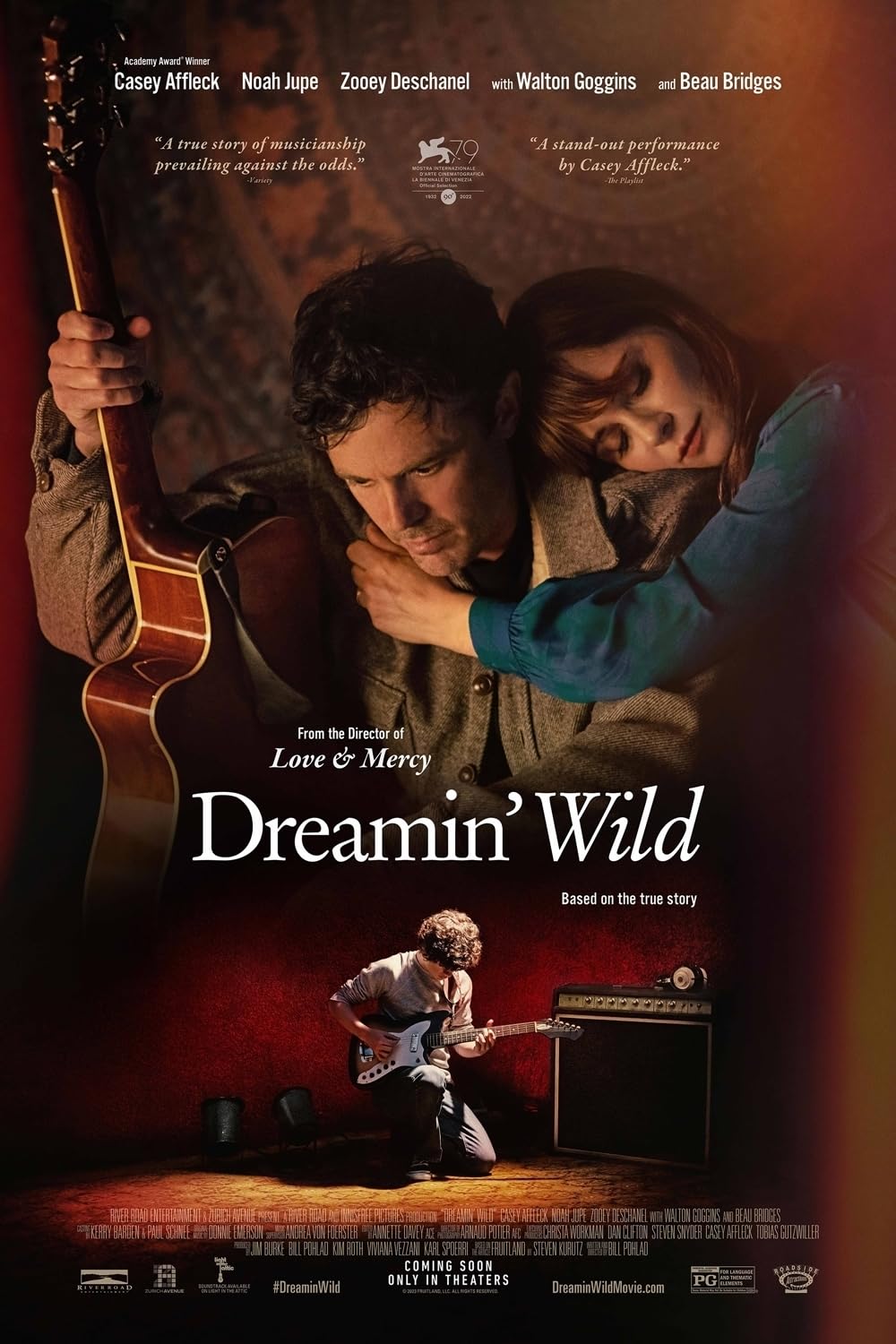
Dreamin’ Wild (2022)

I’m a sucker for a good jukebox biopic and Dreamin’ Wild is one of the films that might fly under the radar just like its subjects. And yet when you actually come face to face with it you find something tender and sentimental in the most endearing of ways.

There’s something to be said of a contemporary movie that unabashedly focuses on a close-knit family that loves each other dearly and celebrates them. For whatever reason, contemporary cinematic culture almost feels averse to certain topics because they feel staid and formulaic. Subversion and cynicism win the day on most occasions.

Dreamin’ Wild almost feels radical because the film is buoyed by so much goodness and it’s part of what makes this adaptation of the Emerson brothers’ story worth felling. The fact that these teenagers made music, and it only made a dent 30 years after its release is astounding. In the same breath, it feels like something worth championing without a lot of fabricated drama — at least in the beginning.

The ascension and the celebration of the success in itself is the kind of underdog story that still can grip us as human beings. Dreamin’ Wild reminds us why. Matt Sullivan (Chris Messina) has been trying to find them because he wants to reissue their work on his record label. There’s a sincerity to him that’s disarming and genial. You can tell he’s genuinely glad to be brought into this family’s orbit and do this for them.

Donnie (Casey Affleck) and Joe (Walton Goggins) find out the internet is blowing up about their record. Pitchfork gives them a fantastic review and The New York Times comes out to do a profile on the family. Matt says there’s high demand for some concerts to get them out there in front of fans. The upward trajectory is rapid and yet so thrilling to watch unfold because we get to live vicariously through the brothers’ joy deferred after so many years.

In the face of this overnight stardom, Affleck does his trademark mopey, despondent role, but in all fairness, he does it quite well. We wonder what it is buried in his past that might conceivably get in the way, but it’s a story engaged with the artist and the creative genius coming up against familial obligation. And in this regard, it seems pertinent to highlight the movie’s writer and director.

Bill Pohlad’s other most prominent project as a director was Love & Mercy about Brian Wilson, and it’s easy enough to try and thread these stories together. They share similar architecture with two contrasting timelines. This one throws us back into Donnie and Joe’s boyhood with small swatches of time and interactions reverberating into the present.

You begin to see what might have drawn the writer-director to this pair of stories because they examine someone with such an uncompromising creative vision, but for whatever reason this single-mindedness can somehow derail the relationships you hold most dear. Things around you suffer for the sake of the art.

And whereas Brian was struggling against his own demons and the authoritarian presence of his father, Dreamin’ Wild almost has the answer to that. Donnie’s father as played so compassionately by Beau Bridges is the picture of generosity and unconditional love. So much so it almost crushes Donnie with his own guilt and shame — the inadequacies he feels with his failed music career thus far. He’s dealing with some issues analogous to Brian in some ways, but they develop in a very different kind of creative environment.

Joe (Goggins) is such a pleasant person and it becomes evident he’s always been a champion for Donnie, his creativity and his talent. They’re close-knit and always ready to  support one another. And Joe knows he’s not going to be some great artist and he’s contented in that; Joe takes each new develop with a wonder and genuine appreciation. He’s pretty much happy to be along for the ride, but he’s present through it all.  His younger brother struggles to do the same because he’s terrified about making the most of his opportunity and with it comes debilitating angst.

In a movie enveloped and incubated in so much goodness, it’s ultimately this that threatens to derail the whole uplifting narrative. One crucial scene involves the rehearsal process. Joe is just getting back into it. He’s rusty, and so to compensate Donnie brings in some back up musicians including his talented wife Nancy (Zooey Deschanel).

Donnie’s tormented perfectionism will not condone his brother’s mediocre playing and so he lashes out. It’s true maybe he’s not John Bonham, but something has been lost and the magic of the moment is in danger of evaporating amid this kind of creative tyranny.

Joe feels awkward; he can’t defend himself and so Nancy stands up for him and calls out her husband for his distorted expectations. What is this big triumphal success, this grand rediscovery if Donnie cannot enjoy it with his brother playing drums by his side? It would feel hollow any other way. Those of us who are not musical savants understand intuitively.

It’s about being present and appreciating the moment. Sometimes less than perfect is okay if it means getting the most out of what’s in front of you and being fully present with the people you love. Because what does perfection profit you? We always fall short. Still, if you have family in your corner who know and love you in spite of your faults, that is a supreme a gift.

The movie’s most fundamental themes are about brothers, fathers and sons, and so more that I resonate with. I won’t try to put words to them all so that you might be able to experience them of your own accord. Even a momentary prayer before a big show feels emblematic of a quiet revolution.

Ultimately the boys do reconcile and they have one final performance. It’s not a big triumphant show (like before), and although I enjoyed hearing the music again I questioned the necessity of the moment.

Then Pohlad did something I wasn’t expecting; it took my breath away. He shows his two actors. They’re on guitar, drums, and singing.  The audience, including their parents, looks on, and then when he cuts back. Now staring back at us are the real Emerson brothers in the flesh.

I can’t quite articulate it, but there’s something so powerful about this subtle shift as the make-believe of the movies becomes reality, and we see those people there making music together and enjoying one another’s company with their real parents looking on. It’s a full-circle culmination of everything we could desire.

I think it’s the intimacy I appreciate it. You can tell the people making this movie — just like Chris Messina’s character — are doing it because they are captivated by this story. It moves them. I feel the same way, and for whatever the flaws or tropes of Dreamin’ Wild, I was immediately rooting for it. Of course, the first thing I did after the credits rolled was to search out this little record from 1979 by two rural teenagers. Pretty remarkable.

3.5/5 Stars

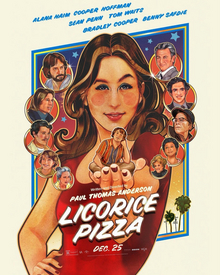
Licorice Pizza (2021)

It’s apparent Paul Thomas Anderson lovingly pinches his opening shot from American Graffiti as his boyish hero Gary Valentine (Cooper Hoffman in his debut) primps in front of a bathroom mirror, a toilet all but exploding behind him. The whole movie is born out of a chance meeting at a school picture day, but it would come to nothing if Alana Kane (Alana Haim also in her debut) does not take him up on the proposition to meet at a local watering hole. Why does she do it? She’s 25, at least. He’s 15.

It seems suspect, and the film never tries to explain. It feels like a bit of nostalgic, rose-colored wish fulfillment, and yet we come to understand Alana doesn’t know what she’s doing with her life. Perhaps it’s Gary’s charisma that draws her in. He’s got a lot of nerve, but he also knows how to hustle and people gravitate toward him. She acts as his chaperone on a press junket back east for one of his adolescent TV credits.

They get into the water bed business, and there are the expected hijinks involving deliveries; Gary even gets arrested momentarily. It’s the 1970s. Gasoline shortages have been hitting everyone hard. Although Anderson draws early comparisons to Graffiti, his film lacks the same fated structure. Graffiti is roving and far-ranging, yes, and yet it’s focused on one night in one town. Once it’s over, we know each of our characters will have changed in very specific ways. The moment is gone forever.  

Licorice Pizza looks deceptively disorganized and free-flowing. It continually combs in these vignettes bringing in other personalities like Sean Penn, Tom Waits, Bradley Cooper, and Benny Safdie. Here it’s no longer solely about our leading “couple” and comfortably pushes their relationship to the periphery to play out against this wacky, narcissistic, and sometimes tragic world around them. It’s a world that Anderson waxes nostalgic about because it effectively resurrects the periphery of his childhood and old Hollywood haunts. 

As time passes, it feels more and more like a Hal Ashby flick – a filmmaker who remains emblematic of the seventies – whether the politics, the music, or even for providing a precursor to our somewhat cringe-worthy leading couple. There’s also the hint of political intrigue along with the menace of Taxi Driver that suggests the paranoia of the contemporary moment.

Still, what prevails is the mimetic tableau and the warmer tones. Anderson’s film is also bathed in the glorious golden hues of the bygone decade. As Licorice Pizza progresses (or digresses), at times I felt like it had lost me. Where was our denouement and where was this serpentine trail leading us beyond its impressive display of period dressings?

Even Quentin Tarrantino’s somewhat analogous Once Upon a Time in Hollywood… has an inevitable ending that we know is coming like Graffiti before it. In Anderson’s film we do get something…eventually. It involves a lot of running, pinball machines, and our two leads reunited again.

Given the turns by Haim and Hoffman, it’s a testament to what they’re able to accomplish together that we do feel like we have some form of resolution. Boy oh boy, is this a casual movie and that’s generally a compliment. Thankfully our two leads are full of so much winsome charm and good-natured antagonism to make it mostly enjoyable.

The movie relies heavily on a killer soundtrack, and the era-appropriate humor feels uncomfortable at best. I like John Michael Higgins as much as the next guy. However, even if his oafish Japanese restaurateur with his revolving door of Japanese wives is based on a real entrepreneur in the valley, it doesn’t mean the casual racism doesn’t still feel queasy.

Especially when you can’t discern if the audience is laughing at him or with him. Because the implicit punchline could easily be misconstrued to be that Japanese culture feels foreign and weird without appreciating the cultural subtext of these scenes. 

Still, there are ample moments to appreciate the film and cheer for Gary and Alana. We need their charisma and they more than come through. I will say that Blood, Sweat, and Tears’ “Lisa, Listen To Me” might be my favorite deep cut of the year. It’s so good, in fact, that Anderson uses it twice. 

4/5 Stars

Note: This review was originally from 2022

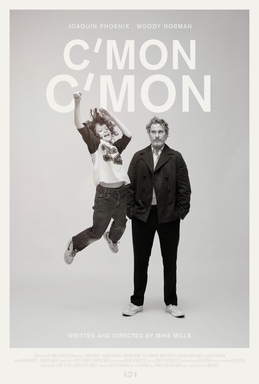
C’mon C’mon (2021)

I was thinking about how although Joaquin Phoenix has steadily become one of the most admired actors at work in film today, I don’t necessarily enjoy him or closer still I’ve never felt a kinship for him when he’s onscreen. Ethan Hawke, Andrew Garfield, Adam Driver, even Leonardo DiCaprio have offered performances where I sense their humanity and empathize with them.

I forget Phoenix’s capable of the kind of mundane naturalism that also defines a certain mode of acting. C’mon, C’mon is a reminder he can be a rudimentary person, a normal human being, and when he’s playing Joker or Napoleon, it’s not better just different (Why does everyone have to be eccentric? It’s okay to be normal too).

Mike Mills’ stylized black and white movie follows a radio journalist named Johnny (Phoenix) who is enlisted by his sister (Gaby Hoffman) to watch over her 9-year-old son Jesse (Woody Norman) as she attends to a family emergency. He’s an unattached working professional who’s hardly equipped to be a caregiver, but who is?

It’s a learning experience for both uncle and nephew as they get used to each other in Los Angeles. The movie takes them all across the country as Johnny conducts interview with youth across the country. Jesse becomes his boom man learning what it is to do sound.

Those of a certain generation will know about Art Linkletter and “Kids Say the Darndest Things.” Johnny and his team seem to give us an update on this; sometimes adolescents have a wisdom we would all do well to tap into for simple, clear-sighted lucidity about the future. From time to time, sans the coarser language from the adults, it’s a Mr. Rogers movie. There’s a mild sense of wonderment and an appreciation of what the younger generations can teach us.

They have ways of asking the most searching and honest questions. Jesse questions why his mom is away. Johnny explains she had to check in on his father (he’s a composer going through a nervous breakdown). Why does his dad need help? It’s not an easy answer that’s cut and dry. And suddenly you appreciate the tightrope walk it is to be a parent and also the unprepossessing honesty kids maintain.

Adults are fractured and imperfect often hurting the ones we love. Divorce, the problem of evil, why bad things happen to good people, adults struggle with these issues for most of their lives. Kids are not immune to any of this and are affected by it all.

C’mon C’mon is not so much a road movie as it is about impressions and impressions in particular about familial relationships. Brother and sister hold a two-way conversation for most of the picture from different states keeping a dialogue going. It provides a very loose framework.

With The Velvet Underground acting as an auditory transition the story shifts to New York. It’s more Noah Baumbach than Woody Allen but the West Coast, East Coast juxtaposition is real, and it plays well in the movies. Meanwhile, New Orleans offers up its own unprecedented aesthetic to the patchwork.

Otherwise, the film takes an observational approach as uncle and nephew experience life together. It’s not a raw-raw, grab-life-by-the-horns pump-up piece; it’s smaller, from the ground up about moments and the kind of trifles you catch if you stop long enough to appreciate them.

I’m still trying to decipher if there is enough here for a conventional movie, but of course, I answered my own question because this is not a movie you get every day. It just needs to find the right audience and Mike Mills no doubt has a tribe of followers ready and waiting.

In a particular interview, a young man is asked what happens to us when we die. He offers up that he and his mother are Baptist so he believes in heaven. Pressed further he says he imagines it as a meadow with one big tree where you lay on the grass with the flowers and stare up at the sun relaxing; it wouldn’t be too hot.

The interviewer marvels that it sounds beautiful. Yes, it does. There’s no agenda or politics or vanity. The response feels so genuine. Does anyone remember what Keanu Reeves said in response to the question of what happens when we die? After a pause, he answered, The people who love us will miss us very much…I feel like we’re all searching for those shards of wisdom.

One of my favorite bands actually has a deep cut that’s called “C’mon, C’mon” and the lyrics go like this:

So c’mon, c’mon, c’monLets not be our parentsOh, c’mon, c’mon, c’monLets follow this throughOh, c’mon, c’mon, c’monEverything’s waitingWe will rise with the wings of the dawnWhen everything’s new

These words don’t speak to Mike Mills’ movie precisely, but in an impressionistic way, I can tie them together in my mind. There’s something generational about it — this youthful sense of wonder and optimism — and the desire to spur others on.

When I hear the phrase C’mon, C’mon, there’s a playfulness welcoming someone else in, whether it be into a kind of life or an uncertain future, even a game of tag or a bit of make-believe. C’mon, C’mon is an open hand. I want this kind of posture.

Because there is a not-so-subtle difference between childish and childlike. I want the latter for my life. Actors, directors, writers, creatives, I feel like they never quite lose this spirit at their very best, and it’s something worth fighting to hold onto. Sometimes our youngest members can give us so much if we have the humility to learn from their example.

3.5/5 Stars

Tokyo Pop (1988)

Since my time living in Tokyo, I’ve continued to be fascinated with how Japanese culture will create these hyper-specific niches of popular fandom. Japanese people take their hobbies very seriously and they go all in. You often meet teenagers or straight-laced salarymen who can barely string together sentences in English, only to discover they have some unique knowledge about American culture, especially in the realm of music.

There was a businessman who loved Olivia Newton-John; his go-to English-language Karaoke song was “Physical.” There was a student who jammed out to Korn, or one of my fellow teachers who shared a love of Sam Cooke and taught me about jazz musicians like John Coltrane and Charlie Parker.

Japanese popular culture was arguably at its height during the 1980s. You had the economic miracle or the “bubble,” which led to unprecedented prosperity in the country and with it greater disposable income and thriving youth subcultures.

Tokyo Pop feels like a perfect time capsule for this precise moment. There are evocations of pop culture that blend Japanese tradition with Western influence. Front and center are a Mickey Mouse ryokan in Iidabashi, then iconic brands like KFC, McDonalds, and Dunkin Donuts.

There were even a couple of times I sat up in my seat because I felt like I knew where a storefront or restaurant might be below the neon lights of the city. However, some of the most famous landmarks are unmistakable. We get views of Shibuya near the Hachiko statue or greasers and punks hanging out in Harajuku near Yoyogi Park.

I don’t need much plot to enjoy the movie, but here it is. Wendy Reed (Carrie Hamilton) isn’t having much luck on the music circuit in America. When she receives a postcard from a friend, plastered with Mount Fuji on the front, she makes the impetuous decision to make the trip. However, she arrives only to realize her girlfriend has already moved on.

So she’s left high and dry bumming around Tokyo like a helpless baby who doesn’t know the culture, can’t speak the language, and is quickly running out of money. Hiro Yamaguchi (Diamond Yukai) spies her at a street vendor where he’s eating late at night with his buddies, and they bet him that he can’t get lucky with her. He takes them on. It’s a trifle, a cliché-filled scenario, but it’s easy to excuse the film based on what it excels at.

Carrie Hamilton and Yutaka “Diamond” Yukai try and go through the paces of antagonism, however, it’s their genuine camaraderie and shared appreciation of music that really shines through. In one sequence he serenades his American flame with an acoustic rendition of “You Make Me Feel Like a Natural Woman.”

Meanwhile, his band spends their time trying to get to a prominent Tokyo tastemaker named Doda who can make or break their careers. When all their ploys fail, Wendy finally takes the very direct approach waltzing into his office and commanding the room.

Eventually they make it big playing poppy covers of “Blue Suede Shoes” and “Do You Believe in Magic.” We see their rapid ascension as media personalities and global sensations, but at what cost? The couple’s able to get their own apartment and they should be happy, but their art suffers. They’ve pigeonholed themselves doing something that isn’t life-giving. They want to rock out.

Tokyo Pop‘s alive with so much youthful energy and, I would argue it has an even more perceptive viewpoint than later works like Lost in Translation. Although it has an entry point for American audiences, so much of it feels attuned to aspects of Japanese culture; they’re the type of moments I see and totally recognize, not as foreign and other, but authentic.

Japanese lavishing effusive praise on their fellow countrymen for any nominal use of English. Shoes taken off at the entryway. Every taxi driver’s fear of foreigners. Karaoke and alcohol as one of the most beloved forms of socialization, and the kindness of elderly men and women who will walk you where you need to go in spite of any language barrier.

In its day, Fran Rubel Kuzui’s movie was quite a success at Cannes only to fall away thanks to a distributor that went defunct. For a film that’s so perfectly in my wheelhouse, it’s a joy to see it resurrected from obscurity in a fancy new print that does wonders in making the images of the 1980s explode off the screen. There’s a tactile sense that we are there in the moment.

During an interview, the director acknowledged, only years later when friends told her, that she and her Japanese husband Kaz Kuzui were basically Wendy and Hiro. If not in actuality, then certainly it mirrors how their relationship crossed cultural bounds.

It’s also easy to draw parallels between Tokyo Pop and Lost in Translation for how they capture a moment in time (and coincidentally they both feature Diamond Yukai). Although the former film is more upbeat, and lacks much of the alienation of Coppola’s work, you do still see the darker, lonelier edges of Tokyo on the fringes.

From passionless love hotels to getting lost in the masses of humanity, and the crippling societal expectations of Japan, it’s still present. Because while Lost in Translation is always about the western perspective incubated in Tokyo’s fast-paced modernity, it seems like Kuzui’s international marriage gives her a more perceptive and localized understanding of Japan.

I’ve long been a fan of John Carney and there’s some of that energy here where music is so integral in constructing the story. No matter how humble the means, the production of the music functions as a platform and a showcase for the performers in such an authentic way. By the end, we appreciate the music and by extension the characters as well. But they both work in tandem to supersede the plot.

Some of the songs feel like absolute knockouts like “Hiro’s Song,” which can stand on its own two feet. They leave the film on a feel-good high that extends beyond the credits. With the latest reissue of the film for its 25th anniversary in 2023, it seems ripe for rediscovery by a new audience.

3.5/5 Stars

Oh Lucy! (2017)

As an American who made my home in Japan for several years, the transcontinental cultural space between the two nations fascinates me to no end. It occurs to me that Oh Lucy is a film that navigates the disparities between these two worlds.

One element is American culture and the linguistic differences between the English-speaking world and Japan. There are many, and they come into play in director Atsuko Hirayanagi’s adaptation of her eponymous short film. She comes at this subject matter from the other side. Namely, she was an exchange student in the U.S., who now makes her home here. It’s easy for me to appreciate the point of view she brings to the movie.

Something like the office environment is familiar to anyone who has worked in Japan. There are many salient features: the rows of desks, the paperwork, the stamps, and the gossip, which always has a way of coming out when people are stone-cold drunk after hours.

Setsuko (Shinobu Terajima) is our protagonist, a Japanese office lady who faithfully serves her company quietly and without much passion. She’s a cog in the machine. She also has a drawer in her desk full of “omiyage” (that is, treats and little souvenirs that people bring back from their vacations for the sole purpose of not feeling shame).

It’s a ritualistic action of altruism so ingrained in the culture that most everyone provides them to everyone else. Of course, this is resoundingly cynical, but there’s also some collective truth in this. Is Lucy’s uneaten stockpile an act of rebellion?

It speaks to something of her character. Maybe she’s one of those nails sticking out as the old proverb (or kotowaza) says. Eventually, she will be hammered back into place. However, if this is a silent act of nonconformity, her next leap of faith comes with agreeing to an English school that her spunky niece pleads her to join.

She goes to a trial lesson in a building that looks more dubious than its rather innocuous interiors. It’s in her first meeting with John (Josh Hartnett) that Setsuko is christened with a new name “Lucy,” and in a whirlwind of American forwardness, she learns how to awkwardly hug and enlist a more rounded pronunciation with a ping pong ball wedged in her mouth.

It’s the strangest English curriculum I’ve ever seen, but there’s also something disarming about it. “Lucy” wants more and she wants to see more of John too. Although she’s still contained in her shell and hesitant with English, she’s drawn to this world so different than her own. Here we have the core of all the cultural contrasts.

Without transcribing all the turn of events, Oh Lucy has a few surprises, fashioning itself into a lightweight take on the American road trip movie. It’s not quite Paris, Texas, but it does become a sort of outsider’s tale of what America represents even as our heroine comes to terms with what she wants out of life.

If you sit thinking about what this story is about, it’s easy for the pieces to fall apart, but if you just let the story happen, you can learn much about this space in-between. Disparate cultures with relatives chafing, one against the other.

In some ways, I have a great appreciation for Josh Hartnett’s character. He starts out as the most cartoonish American caricature (He might easily have his own NHK segment). I have very little context with him as a matinee idol, but since the years have passed, it feeds into his portrayal. John feels like a bit of an adult in neutral. He’s never grown up and never managed to get his life together.

As such, there are decisions he makes and aspects of him that feel wholly unsympathetic. He’s everything other people envy about Americans on the outside — on the first impression — and if you’re American, he reflects much of what we might be ashamed of in ourselves.

Still, he’s also something of a cultural mediator. Bridging the gap between Japanese folks who have the wrong perception of America and then Americans who have little patience for anyone or anything different than themselves. Helping Lucy and her nagging sister order food at a diner is only one example. Earlier they also share a genial conversation with a fellow passenger (Megan Mullaly in a cameo).

I know these moments well on both sides of the pond. The movie continually exists in these spaces I often frequented and without being too dialogue-heavy, it strives for some kind of mutual understanding since differences and barriers always crop up. Somehow there are still universal aspects that draw us to one another and cause us to reach out of our comfort zones.

One old friend who makes a welcomed appearance is Koji Yakusho as a fellow English learner. He strived for a similar kind of self-expression in Shall We Dance?, which feels a bit like a modern classic now.

Rather unfortunately, Oh Lucy makes several violent lunges at melodrama that don’t quite suit it. This is to its detriment. It functions best acknowledging quirks in opposition to the predisposed understatement of Japanese culture. So while these are my misgivings about the movie, a hug on a train platform does feel like a resounding thunderclap and a radical act.

In a culture where you can simultaneously be crammed together in a train and yet never have any meaningful physical contact of any kind, I certainly found myself starved for it at times. There are laughs and a decent amount of heartbreak and animosity strung throughout before we finally have some solace.

Lucy comes home to find a silent rebel not unlike herself, quietly revolting against the status quo, and sometimes that is a very healthy thing. It does each of us good to open up our worlds.

3/5 Stars

Bitter Victory (1957)

“He and you and I will become a part of history — of its futility” – Richard Burton as Jim Leith

Bitter Victory is a curious confluence of talents and material. Nicholas Ray was earmarked to helm this British war movie with French-American backing. Aside from the primary leads, the rest of the cast was purportedly decided by lottery.

The film’s aesthetic is somehow impeccably represented by the wide array of combat dummies shot in black in white accentuating the muted tones of a rational military drama. It’s instigated by a secret mission behind enemy lines in Benghazi. This is North Africa during WWII.

There are two men being considered to lead the excursion: A curt, lifelong soldier Major Brand (Curd Jurgens). He’s by the book and adamant no one see his weakness. Then, a young, handsome fellow named Captain Leigh (Richard Burton) with a certain no-nonsense perspicuity and a background in ancient artifacts, not the mechanisms of war. He’s volunteered to serve his country. Whatever that means.

There are some pleasantries, and they take off to the club for the enlisted, a momentary calm before the work at hand. Thrown into the narrative as we are, it becomes apparent these are characters with some kind of overlapping history in a broad sense, and we become aware of their subtext involving a woman (Ruth Roman).

At first, it isn’t so engaging. The soldier with the sound effects and pyrotechnics at the bar seems to do more with his inebriated histrionics than them. Still, Ray ends the mounting sequence with a kiss in a carriage. Except before we see it in full, the carriage whisks away in this brilliant bit of kinetic energy playing out on the screen.

Roman is more mature and less delicate than we’ve ever seen her, partially thanks to the military garb but also due to the men she’s kept in her life. They’ve toughened her even as they grapple with romance.

It’s hardly a movie of jingoism as Burton represents a kind of jaundiced pessimism that would be his closest companion in The Spy Who Came in From The Cold as well. He’s hardly an adherent to wartime hero worship. And if Jurgens is beholden to the strictures of military protocol, he certainly doesn’t allow them to make him a joyful spirit. He’s constantly living life dictated by honor, fear, and his own inadequacies in command.

But we must remember there is a task at hand. They gather their company of recruits. Their plans are relayed through a model in a control room and curiously everyone seems to laugh off what might happen if their transportation a la humpback camel doesn’t make it to their rendezvous.

Soon they’ve become robed infiltrators cloaked by night loitering around the streets under Nazi occupation. Murder in the dark is silent though no less traumatic when it comes, even when it involves taking the life of an enemy in the line of duty.

These mission scenes have a clean and efficient luster, hardly dawdling when it comes to the action and as they disappear into the night and fight a skirmish over the sand dunes, it’s another perfect encapsulation of their clandestine task.

But the futility rushes back to Captain Leigh when it comes to the wounded. An enterprising soldier suggests getting a stretcher for a fallen comrade — but the pragmatist notes they would bleed to death in an hour — so the soldier goes down to offer a cigarette as a final consolation. He has an inherent human kindness and there’s something in Burton’s eyes as he watches. Is it regret or helplessness? Such decent showings of goodwill don’t come easily to him.

For some explicable reason, he stays behind as the others move forward. It might have been an order, but it might as well be to spite his superior. Whatever the reason, it’s hardly as baffling as Jurgens being cast as an Allied soldier. It feels like a gross mischaracterization no fault of his own.

Bitter Victory does continue to tease out a version of the love triangle involving  David and Bathsheba where the man in the position of power is jealous for another man’s wife. Here the tables are turned. At the same time, the movie does feel like the antithesis of many “men on a mission” movies because it rarely feels bloated by pace, set pieces, and bits of narrative exposition and execution.

The character conflict becomes of greater interest than the actual task at hand. This is the movie’s wellspring because Burton and Jergens cultivate a mutual distaste throughout the entire movie. It continuously simmers and reaches the extremes of venomous vitriol. It’s more poisonous than the Germans, or even scorpions up a pant leg.

Burton bemusedly admits, “I kill the living and I save the dead,” and yet he still manages to scoff at his superior. “You have the Christian decency that forbids killing the dying man, but approves the work of a sharpshooter.” War so often seems to operate in baffling hypocrisies. It doesn’t make sense nor are the outcomes of war particularly equitable. They never have been.

When Roman clings to the arm of one of the barracks mannequins for support, her innate tenderness makes it feel like a totem for the man who didn’t come back. Again, it’s this dissonance of conflicting moods and emotions — what the military exonerates and exults in the service of duty and what the present company of soldiers standing by knows to be actually true.

The visual metaphor becomes even more overt when the same dummy is pinned with a medal. It comes to represent the core dilemma of the movie caught between duty, heroism, and the very manner in which we express and memorialize our sense of wartime. There are no easy answers. By the time Burton and Ray are done with us, they’ve blistered us to our core. You know a war picture has probably succeeded when it galls you and leaves you even momentarily disconsolate.

3.5/5 Stars

Run for Cover (1955)

Run for Cover is rarely talked about in conversations of westerns, but there’s something fascinating about getting a James Cagney-led sagebrusher.  Like seeing Edward G. Robinson in The Violent Men, it’s hard not to read his entire history of gangster pictures into his backstory because although it’s a different decade, genre pictures still hold a place in the viewing public’s hearts.

Before they broke out with the likes of Hud, Harriet Frank Jr. and Irving Ravetch penned the story this movie was based on. Although it hardly has the pedigree of Nicholas Ray’s Johnny Guitar, the images of the picture are still stunning in their own right shot on location in Aztec, New Mexico.

The opening premise is frankly pretty corny. Cagney meets John Derek at a watering hole very conveniently. They ride on together with no apparent purpose except to get to the nearby town. Then, in a freak misunderstanding, while they’re shooting some scavengers out of the sky, the two men are mistaken for train robbers, and they have a bag full of cash literally dropped in their laps.

The locomotive heaps on the coal to race back to town to sound the alarm after their close scrape with the “outlaws.” Realizing what has happened, Cagney, always the level-headed one, looks to follow behind and return the money. They have nothing to hide. Still, there’s only one way this might end.

The mountains in the background are towering — truly awesome to look at — but there are more pressing matters at hand. It’s rather foreboding. It’s been some time between viewings, but there definitely are elements of The Ox-Bow Incident and Johnny Guitar here where the lynch-mob mentality takes over the local populations driven mostly by fear and traumatic experience.

However, this is all a false start, a way of developing the scenario ahead of us. It’s about that same man played by Cagney — now the town marshal — and his young companion who’s stricken with a life-altering injury. They must figure out what it means to live their lives.

Cagney rarely got a lot of late-period credit. There’s White Heat and then One, Two, Three comes to mind — these are marvelous showcases for his tenacious talents. Run for Cover is rarely talked about, whether it’s in the context of ’50s westerns, the career of Nicholas Ray, or that of Cagney himself.

But it does feel like another picture to buttress his legacy with. Not because it’s some grand masterpiece; he proves that he can make a slighter, quieter picture like this sing. Because his talents were not always purely bellicose or irascible. He has a more general charisma even later in his career.

He’s summed up so beautifully in a crucial scene. The doctor says Derek will never walk again. Cagney won’t hear of it, and he walks into the adjoining room as the boy lies on the floor crying out that he can’t get up. As their kindly Swedish benefactor (Viveca Lindfors) attends to him, Cagney simply beseeches him to “get up.”

There’s an authority in his words that feels almost Christ-like. It might seem like it comes out of a place of callousness, but really there is so much concern there. He doesn’t want the boy to give in and waste his life. In some manner, he is a miracle maker, a man of faith looking to bring the best out of this boy.

it’s a fairly slow-paced, straightforward western and this means much of the brunt of the movie must be carried by the merit of the performances — the relationships cultivated between them.

John Derek feels like little more than a pretty face, and the young actor might have said as much, but Cagney seems generous to him just as his character is generous to his young companion enlisting him as his deputy. He gives him credence and importance in this movie that he wouldn’t get otherwise without such a consummate professional to partner with.

There is some menace in the picture. Ernest Borgnine represents one — a shifty outlaw — and later some godless out-of-towners come tumbling into church mid “Christ The Lord is Risen Today” prepared to raid the bank.

What Run for Cover has to its advantage is how it turns all manner of dynamics on its head. The sheriff lambasts the townsfolk who are so righteous, so willing to condemn others, even as they are supposed to represent civilized society.

Then his one protégé becomes the film’s final and most crucial point of conflict, and this is not just like the Searchers, the ornery old man budding heads with the impetuous youth.

It’s a different kind of complication as they must face off against one another and come to terms with who they are down to their very core.  There’s a clear-cut emotional intensity that can only be resolved in one telling act. It’s tragedy and redemption all rolled up into one, and here we have something that feels distinctly of Nicholas Ray.

3.5/5 Stars