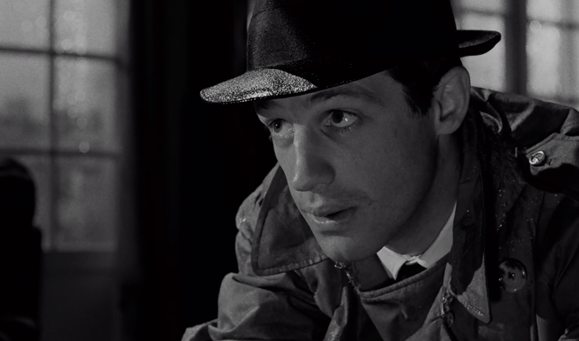
Le Doulos (1962): Belmondo Plays Bogart

le doulos.png

“In this job you either end up poor or riddled with bullets.” – Jean-Paul Belmondo

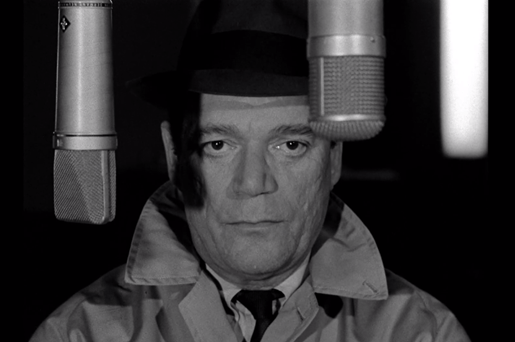
Director Jean-Pierre Melville has an impeccable gift for taking the most mundane actions and behaviors and making them so compelling. In the opening notes of Le Doulos, we have an ordinary man strolling across a sidewalk, under an overpass, feet clacking on the pavement. The music rages behind him, as he’s enveloped in shadow and the title credits.

Melville readily leans into his penchant for gangsterism and Hollywood pulp introducing this man with a fedora and trenchcoat. They are an extension of each of his players. Just as each frame is equally tinged with the somber detachment readily available in any of his films. Because the characters are always products of their environment, incubated and cultivated by the writer-director, in the same way; their dress is an extension of their identity.

Le Doulos itself derives from a slang term for a type of “hat,” a police informant. The stoolie, of course, is one of the age-old cretins right up there with traitors and child molesters. No one has any pity for such a miserable excuse for a human being. Conventional wisdom dictates they deserve to be kicked out into the gutter or locked away with the rest of the animals.

Except in some sense, Melville’s picture isn’t making this sort of ready-made statement. There is more to his small-time criminal types, facilitated by a complex plot and nuanced characters. It comes down to the old quandary of honor among thieves. What does human nature have to tell us when wealth and women are involved?

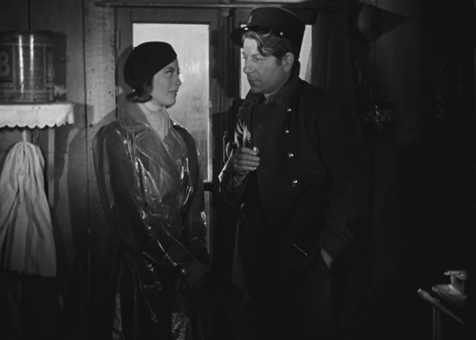
In this particular story, Maurice is a recently paroled thief and as is often the case, he’s already got his next crime in the works. It’s a safe-cracking job involving a former accomplice named Silien (Jean-Paul Belmondo) and one other party.

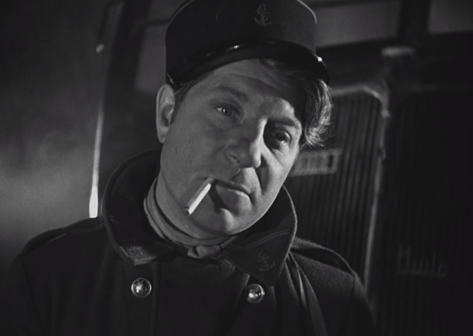
For being the lead, Belmondo takes some time to integrate into the story, eventually paying a house call on Maurice and his lady friend Therese. And yet from his first entrance, he takes to the environment like a fish to water. If Alain Delon helped develop the aesthetic of Melville, Belmondo deserves a prominent place as well. They both make compelling criminals because their charisma is irrefutable.

For me, a defining moment for the Belmondo persona was standing outside the movie house mimicking the tough guy iconography of Humphrey Bogart in Breathless (1960) because for French cinema he was at home in the same world and thus, there was hardly a more suitable partner in crime, as it were, than Melville.

One cannot say he’s carved out of the same block as Bogey. He’s impudent even a bit scrawny, but there’s nevertheless, a rogue charm to him. Handsome in a way that assumes the complete antithesis of a classical matinee idol.

I couldn’t help but think how quaint and simple petty theft was to commit in the old days. That is, until it isn’t. There’s nothing elaborate about the blue-collar crime, in fact, it’s a banal safe cracking job. We know not if there’s even any payoff worth noting. However, even this scenario gets botched when other gangsters come on the scene.

One cannot help but think of Band a Parte – made the following year — as Godard famously counted Melville among his idols, even giving him a small role in Breathless. He subsequently took his advice on how to edit the picture, hence the birth of his famous jump cuts.

At first, I assumed this latest wrinkle was the police being tipped off, but that would make our title too easy. This is not Melville. We must constantly revise our opinions of our central protagonists.  As is, it feels as if the film might be climaxing about an hour too early. How will there ever be a story out of what’s left to talk about? And yet Le Doulos stays true to form by analyzing such a stooge in his natural habitat.

Instead, he lets one criminal bleed out and another one get it in the gut from Maurice’s pistol. All of a sudden, more prison time seems an all-too-likely possibility as he sweats it out. This is where Belmondo shines, playing all sides, as a perceptive wheeler-dealer working both angles on the cops and robbers.
le doulos 2.png

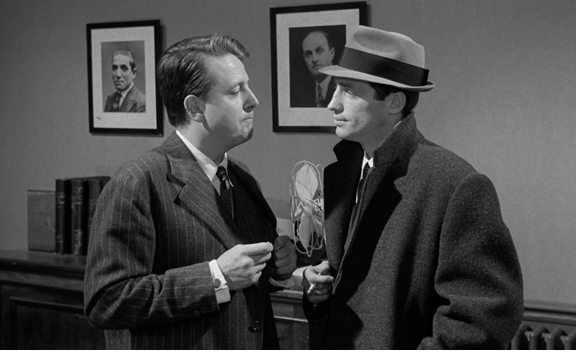
Silien is openly accommodating to the police, including their hard-bitten chief (Jean Desailly). When they look to question him at the station — a wonderfully blocked sequence with nary a cut — a normally bland and subpar scenario we have to live with, is made far more compelling.

The informant begins his obligatory rounds including a visit to a gambling house. It’s a quintessential Melville moment as he follows the fedora through hatcheck as one of the blatant symbols at the core of his picture, as worn by Belmondo, in particular. It is his marker just as guns and trench coats are also some of Melville’s directorial calling cards.

Then Michel Piccoli walks through the side-door of the nightclub. Perhaps he’s the key. And yet it’s not him, just as it’s not the three female characters who are all pawns — not only compliant accomplices to the male lovers in their lives — but mechanisms of the director to move the story.

It would sound overly harsh if most, if not all, of Melville’s characters were not also relayed to us in this fashion. Even this severity somehow fits the world and conveniently functions for the sake of the story.

What becomes evident is just how convoluted Le Doulos is, which is especially surprising for a French film but, of course, this is another fitting hallmark borrowed from American noir. Melville employs several expositional scenes and even some flashbacks, in order to fill in some ambiguities in the story thus far.

By the time we reach the finale and the final steps of this picture, there is a satisfying if fatalistic weight to the dramatic situation. The abysmally rain-drenched ending is also immersive cinema at its finest.

Because what is a gangster picture if not marred by some dark current of tragedy? Belmondo is not what we believed him to be and yet in the natural order, he cannot be allowed to exist. Fate has not allowed for it. Fittingly, his final act is to straighten his fedora in the mirror one last time. Bogart would have been proud. He went out an unequivocal anti-hero.

4/5 Stars
8 Underrated Screwball Comedies

theodora goes wild

Screwball comedies, like film noir, have a fairly devoted following and although they were very much of their time, they still have descendants and influences on the movies coming out today.

Many of the heavy hitters from the 30s and 40s are household names, but I thought it would be fun to highlight a few titles that fewer people might think about in conversations surrounding screwball comedies. Let me know what you think!

Theodora Goes Wild (1936)

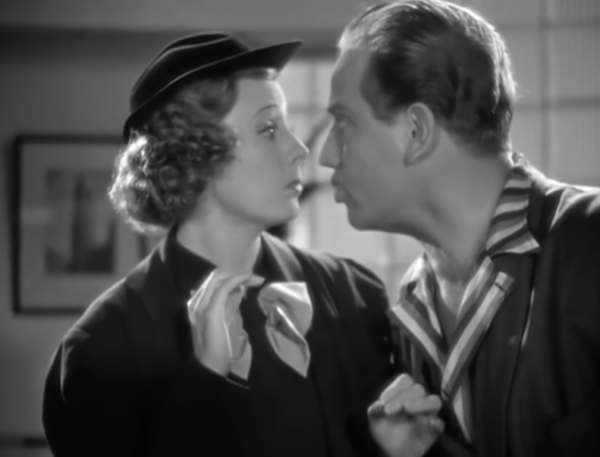
Irene Dunne is a great person to start this list off with because I always enjoy her films and yet she oftentimes feels woefully forgotten. In this zany vehicle, she is the eponymous title character who, while living a life of propriety in a small town, actually moonlights as quite the titillating author. Her life gets flipped upside down when one of the city slickers (Mervyn Douglas) finds out her secret.

Easy Living (1937)

It’s true a whole movie can be born out of a fur coat dropping from the sky, and it builds into a wonderfully raucous narrative thanks to the wonky scripting of Preston Sturges. Jean Arthur and Edward Arnold make a fine pair and send the town into a tizzy when rumors start circulating about the extent of their relationship. Ray Milland also proves why he was a much sought after rom-com lead.

It’s Love I’m After (1937)

It’s a dream cast with Leslie Howard, Bette Davis, and Olivia de Havilland in a dream scenario: a love triangle dressed up with Shakespearean theatricality. What better bedfellow for screwball comedy as Howard puts on a performance to rebuff a starstruck fan girl and earn back his jealous co-star. Eric Blore is stupendous as per usual.

True Confession (1937)

It’s courtroom drama meets screwball romance with Carole Lombard giving one of her most frenzied performances as a serial fibber who pleads guilty to an egregious crime so she can drum up some publicity for her husband (Fred MacMurray), a struggling lawyer in need of a big case. Una Merkel and John Barrymore show up to supply some added character.

Merrily We Live (1938)

Here is a movie that’s good-naturedly built out of the mode of My Man Godfrey. It’s about a family of idle rich: Constance Bennett, Billie Burke, Clarence Kolb, and Bonita Granville, of all people! They’re a constant whirlwind of ditzy entertainment around the breakfast table, and they quite unwittingly pull a passerby (Brian Aherne) into their comic vortex. Chaos ensues.

Vivacious Lady (1938)

Ginger Rogers and Jimmy Stewart have a glowing chemistry. However, their recent marriage has a wrench thrown into it when they head home to meet the parents. The word never got to them, and Charles Coburn, in one of his most obstinate performances, will never approve. Ginger uses all her tricks to woo her husband’s family over and fight off any rivals with her unparalleled catfighting skills. It’s as delightful as it sounds.

The Rage of Paris (1938)

Spunky Danielle Darrieux and Douglas Fairbanks Jr. spar across social lines with your typical screwball romance riddled with conflict transplanted to Paris and the French countryside. What Henry Koster brings is his usual heart-warming tone, and with support from the likes of Helen Broderick and Misca Auer, the material receives a dose of extra comedic oomph.

The Devil and Miss Jones (1941)

Here is the original undercover boss with the always cantankerous Charles Coburn slinking around his own department store. Not only does he come to understand his employees’ dissatisfaction with their work, through the eyes of Jean Arthur and Robert Cummings, he also learns what real friendship is. The movie is blessed with that wonderful one-two combo of uproarious antics and genuine heart.

Let me know what screwball comedies you would include!

Two For The Road (1967): A Rom-Com for a New Era

two for the road 2.png

“If there’s one thing I despise it’s an indispensable woman.” – Albert Finney

The world seemed a very different place in 1967. It had changed and with it, love and the romantic comedy underwent a transformation of its own. Because, in some sense, humanity had reached a new tipping point. It’s easy to make assumptions: to cite Vietnam, social unrest, student protests, racial violence, any number of issues. There was this underlying implication the 50s and the early 60s (before November 22nd, 1963) were a time of hope and promise — surplus naivete.

Even the films had changed. Just look to Who’s Afraid of Virginia Woolf?, The Graduate, Bonnie and Clyde. Then, there was a new batch of progressive works like In The Heat of The Night and Guess Who’s Coming to Dinner?

Two for The Road must fit into this puzzle as well, though it’s place is more difficult to explain and thus, we might wager a guess why it’s not often voiced in the same company. It doesn’t necessarily have to do with it being a weaker movie. Still, because it doesn’t capture the “moment” as much, it cannot easily be rewarded for being cutting-edge.

And yet, in its own way, it was of its time and representative of this ongoing form of change. Because it is a mature romance. Audrey Hepburn — the movie-watching world’s darling — has had her heart broken, been trampled on, and done some irreparable damage of her own.

This was not just make-believe, mind you. Reality and the theatrical overlap closer than we probably realize (Hepburn’s marriage to Mel Ferrer was sadly on a fast decline). However, Stanley Donen, coming from his pedigree as a musical maestro, never quite lost the sense of romanticism — his belief in magical things.

You could say Audrey Hepburn was one of the perfect embodiments of his beliefs because she was so sweet, demure, and beautiful. We can all imagine her at the center of romances galore — she was in some of the most iconic, after all. And yet amidst the lingering illusions of Hollywood, there is this sense of something more heart-wrenching and hard.

Albert Finney might be the finest vehicle to acts as an opposite force of nature — larger-than-life, barrel-chested, and in many ways the utter antithesis of Audrey. He came of age in the resurgence of Britain’s gritty kitchen sink dramas. He was by no means a counter-cultural figure, but he has the gusto of a Brando and his disciples — a bit of the cocky bravado that’s nevertheless disarming. In no small way, they make the perfect couple in cinematic terms, sitting at the crossroads of the decade. Somehow they’ve met and found themselves on near equal footing.

The story itself, by Frederic Raphael, is ambitious as it skips and jumps through a love story, a constant exercise in cuts and whip-fast transitions. In fact, you might say Two For the Road is won in the editing room even more so than most films because it builds peaks and valleys with both a frenetic pace and constant changing snapshots of life. It resonates on these levels without ever feeling turgid. If it does turn on a dime, then it gives the freedom — the necessary space — for leeway and visual connections between past and present.

two for the road 1

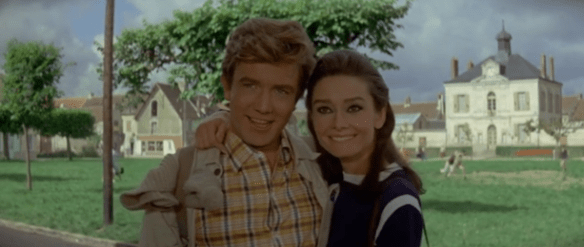
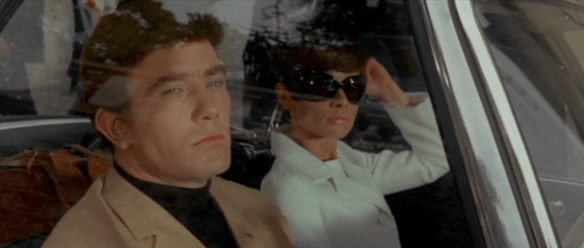
It commences at the beginning of the end. The husband and wife slump in a car, watching cynically as a pair of newlyweds walk out of a church. They see their youth reflected back at them. But there were happier times once, what now seems like many eons ago.

The adolescent days full of sun-soaked afternoons and equally idyllic intentions. The French countryside was ripe with promise. Open-air automobiles and “thou” was all that necessitated a contented life. Of course, those were the days when “thou” meant a happy companion. Riding in the MG with a persistent “donk” in the engine only facilitated moments to look back on and laugh.

Finney is constantly mislaying his passport, chomping through apple scruff, and doing his Bogart impressions. One of his finest hours is strolling into a ritzy hotel that they can’t afford, his coat bulging with the edible spoils from the outside — only to drop them all over the lobby.

two for the road 4.png

Hepburn is clothed in red, hair free, and alive on so many levels. Picking up a ride as a hitchhiker a la Claudette Colbert. Seeking shelter from the rain or frolicking in the shallows without a care in the world. It’s an extension of her earlier personas from Roman Holiday and Funny Face.

Then come the spirals charting the bitter dissolution of a marriage as it crumbles into fractured pieces of apathy. Affairs follow on both sides, involving a cajoling lady motorist and a supremely confident French romantic. We cannot help but feel they are pale imitations of the real thing. They are only a momentary antidote. They cannot truly satisfy and repair the wounds.

The paradoxical aspect of love is evident with time. Yes, the honeymoon is over, the nagging begins, the arguments, raised voices, life gets in the way. And yet somehow it seems true that you often only know you love somebody else after the speed bumps and roadblocks. Closer still, you love them in spite of them.

Henry Mancini’s score is one of his most lastingly melancholy, striking the notes back and forth between a whirly gig warmth of summer carnivals and then the summers after when you’ve fallen out of love. The repeating string motif continually reinforces this feeling even as he reaches out for lingering bits of nostalgia.

Because there’s a playfulness dancing within the frames just as there is elegance. How can it not be with Audrey Hepburn? So, while we have a sense these are movie stars — glamorous, richly-attired, all the superlatives — their love affair is besieged with the slings and arrows aimed at each of us.

Petty squabbles. Tedium. Poor communication. Evaporating memories. Jobs and families. Reprioritized lives. Most important of all, falling back in love — even if it’s only the hint of a spark — sometimes it’s enough. So have Audrey and Donen grown into a new decade? We must admit they are different, wiser, wounded even, but the great gift is how Two for The Road still leaves some space for love to exist.

In the midst of a myriad of distractions and messy lives between flawed people, it really is a miracle. It is romance coming to terms with changing times and yet not quite giving up on the ideals of romantic commitment.

4/5 Stars

Indiscreet (1958): In Honor of Stanley Donen

indiscreet 1.png

Note: This post was written soon after the passing of Stanley Donen.

Cary Grant and Ingrid Bergman on adjacent title cards is all you should need to watch the movie. Although I came for an entirely different name because this past spring we lost Stanley Donen — the last remnant of Hollywood’s Golden age — and it seemed necessary to pay him the highest tribute I can. It’s not with words, no, but by actually sitting down and enjoying one of his films.

Ingrid Bergman is one of the sweetest screen stars. She’s not altogether impervious to vengeful thoughts, but you never see her taking it too far.  We always want the best for her, and it’s little different here. Her preexisting life is utter humdrum. Everything about it is just too immaculate.

As a well-to-do, internationally acclaimed actress, she is, nevertheless, a woman who comes back from a tour abroad totally dissatisfied with the men she’s been able to come across. It’s not that they aren’t handsome, rich, good dancers, or the like. But she wants someone interesting, an intellectual equal, and a little old-fashioned charm wouldn’t hurt. Her usual circles don’t appear to be a ready breeding ground for such types.

Anna’s emotionally involved sister — married to a high-ranking official — questions why she has never settled on a man. Perhaps her standards are just too high (don’t listen to her Ingrid!). No matter, it looks to be another dull evening out on the town at a foreign dinner. The speaker is no doubt a snooty new candidate for NATO. It’s a high-class bore.

However, the stuffy ordeal all of a sudden gets a lot more swoon-worthy for everyone involved when Cary Grant walks through the front door. We’ve all but been guaranteed a diverting evening. So Margaret, ever prying into her sister’s affairs, gets set to play a bit of a matchmaker, relishing the setup, and the predictable outcomes. We have our story. Grant being charming and Bergman enjoying his company while still remaining aloof. He’s almost too good to be true. What of skeletons in his closet?

Dare I say, it’s all inconsequential, lest you get the wrong impression? Because there’s no doubt about it. The plot is facile. The conflict is thin. On the other hand, the tete-a-tete is most agreeable. One would habit a guess, without our stars, the picture would be quite flat. With them, all of a sudden, characters and the subsequent story is given texture. Their chemistry is present before the picture begins, and it exits with them after the final curtain. This is one of the keys.

Stanley Donen doesn’t have to do too much touch-up around his already spectacular talent, but he does utilize a split-screen to conveniently mollify the production codes, with the two lovers sharing a telephone conversation in their respective beds. Nora Ephron purportedly loved this movie thus, When Harry Met Sally got much the same treatment. It can be seen as another homage just as Sleeping in Seattle came out of the tradition of An Affair to Remember.

In Indiscreet they occupy themselves talking about the mundane things from the weather, to playing the violin, elder statesmen, and lamb chops. We don’t care all that much because the bottom line is spending time with Cary and Ingrid. There is Grant’s mild reveal. He’s got a big secret. Well, it’s not too big, but I’ll avoid spoiling it all the same.

If Fred Astaire’s dancing is immaculate, then Grant’s is equally so for entirely different reasons.  It’s not from any amount of meticulous choreography, but his spry and innumerable graces. He always walked this phenomenal thin line between suavity and comic pratfalls, no doubt learned in his early days as an acrobat.

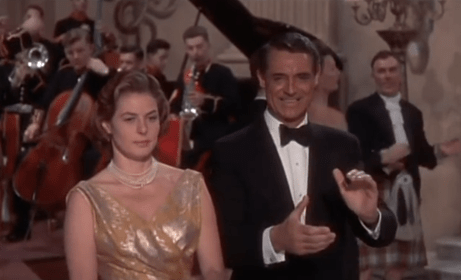
His physical prowess hasn’t atrophied, aiding him splendidly on the dance floor in Indiscreet, through every step of his flailing, jumping jig. What’s more, Bergman, eyeing him with an unfettered look of disdain, is equally important. There’s no question it’s a defining scene in an unassuming trifle of a rom-com.

The final act is consumed with Anna’s attempt at a bit of friendly revenge. She puts on a pitiful charade to get back at her masquerading lover, engaging the services of her in-house help. The final punchline is a genuine amount of sincerity coming over the man as the clock strikes 12. Why you ask? Because we want a happy ending.

It’s a strange sensation to see Cary Grant’s profile in an embrace, with Ingrid’s head nestled on his shoulder, smiling off past the camera. I felt like I’ve seen this all before somewhere. Was it in Notorious, An Affair to Remember, North by Northwest, Charade? Maybe it was all of the above. It never gets old. When the greats get together, it’s not always perfection; sometimes all we’re looking for is diverting entertainment.

It seems apt to call upon a line Cary Grant sneaks into the end of the film. He’s harried. It seems like he’s being laughed at for being vulnerable. He hasn’t understood the underlying joke.

So pacing around in front of his giddy romantic partner, he surmises men are the true romanticists. I cannot corroborate if this is true or not, but there’s a sneaking suspicion that Stanley Donen might believe this as well. It’s hard to dispute when you watch his movies, as buoyant and propelled by romantic fancy as they are. Indiscreet is little different. It’s a fitting testament to one of the unsung greats. He will be dearly missed.

3.5/5 Stars

Alphaville (1965) and Godard The Humanist?

alphaville 1.png

“That’s always how it is. You never understand anything and, in the end, it kills you.”

As a simple rule of thumb — a heuristic if you will — you can learn much about a person based on what camp they fall into when it comes to the Nouvelle Vague. For simplicity’s sake, let’s suggests we have Jean-Luc Godard, Francois Truffaut, and “Other” (We’ll unfairly stuff Rohmer, Chabrol, Rivette, The Left Bank, and all the rest here).

Many probably wouldn’t need this scenario. All it takes is a one-word, guttural response: “Godard” or “Truffaut” For me, it’s Truffaut. It’s as if the wavelength he operates on so often connects with me. Whereas with Godard it’s always more a matter of admiration for his prolific creative powers and the intellect buried in each of his projects. I appreciate him from an analytical distance.

From the outset, Alphaville epitomizes the dichotomy of Godard: both the brilliance and what can make him utterly maddening at times. He’s the perpetual visionary iconoclast and artistic maverick like few others before or after (and he’s still at it!).

We’re met with a blinking light, like an interrogation lamp, shining down on the audience. The opening voiceover relates, “Sometimes reality can be too complex to be conveyed by spoken word. Legend remolds it into a form that can be spread all across the world.” This is our introduction to the computerized brain and technological chimera: Alpha 60.

Godard’s protagonist functions a bit like a world-wearied Buster Keaton in his later years. Lines covering his stone face are perfect for suggesting that he’s seen the world. This alone makes him sufficient, but expatriate Eddy Considine was also known in France for his long connection with the serialized crime detective Lemmy Caution. Here he is tasked with missions, but as should be expected with noir storytelling, each successive leg feels more befuddling than the last.

Godard took Caution to the extreme, totally untethered out in his devised limbo of clunky Parisian sci-fi. It’s the profundity of taking the labels of the future (my labels, not his) and making them feel mundane, like the contemporary moment. Still, it’s hardly a stretch to call Alphaville a forerunner to HAL,  Blade Runner, or even Altman’s Long Goodbye, a film where you have a dissonance between worlds and time frames.

There is one moment when the all-knowing voice says something to the effect that there is never the past or the future. There is only the present — where we can exist right now. So, really, there is not an issue of incongruity because everything we see is accepted as it is, functioning in this landscape as one.

Godard, working with his famed collaborator Raoul Coutard, initially doesn’t even bother with chiaroscuro, but instead an utterly binary palette. Horizontal slats of darkness above strips of light or vice versa. A cigarette and gun in Caution’s hand are both visible, while his entire face is literally pitch black.

Getting to Alphaville and a hotel in the heart of this metropolis is a trip. The lobby feels conventional enough. This is a mere extension of the Parisian landscape. And yet he gets led to his room by a lady who looks suspiciously like a lady of a night (especially when her clothes start coming off), and Godard adds another lovely non-sequitur when a thug all of the sudden materializes in the bathroom leading to a stylized struggle.

Our tough guy runs for his gun on the bed and shots ring out through the room. He makes the agitated but lucid observation moments later, “Everything weird is normal” in this town. He’s never been more correct.

We get a suggestion of what Godard is playing with — the conventions and ideas he wants to tinker around with — as both an artistic and intellectual exercise. Beatrice, the first of several femme fatales, we find out, is a level-three seductress. It’s all too apparent the misogynism has not evaporated in this alternate world.

alphaville 2.png

Anna Karina appears next as the daughter of a high-ranking official with intimate knowledge of Alpha 60. Caution christens her a “pretty sphinx,” and she is an unsuspecting product of the disconcerting sci-fi dystopia that has overtaken society. Ironically, it comes packaged a lot like Paris in the 1960s run by capitalists.

As far as gadgets go, Caution employs a portable lighter-intercom slightly less ostentatious than Maxwell Smart’s shoe phone. There are government-sanctioned executions for those showing sentimentality, where the festivities are made into a bit of a water aerobics showcase. Another popular form of entertainment is theater executions — the electric chair in more diverting circumstances.

Logic is law. Tears and love are among those things outlawed. No one comprehends what “conscience” means anymore. I even made the initial assumption the books in the hotel rooms were Gideon Bibles. However, it turns out, “The Bible” is not theological but linguistic, in the form of a dictionary, as delivered by Jean-Pierre Leaud in a blink of a cameo. When words get eradicated from the cultural lexicon new editions are published and disseminated to the public.

As the tenets of society get more and more perplexing, Caution’s mission begins to spiral into chaos, toward the final destruction of the mechanical beast. Godard chops up cinematic reality with disruptive negative images that do feel otherworldly. There are car chases, murders, and corpses of those asphyxiated splayed on the floor. It seems Alphaville really is crumbling from the inside out.

The movie itself is full of these deconstructions, clever amalgams of Godard’s cultural proclivities, and his own personal wizardry. But if we are to fall back on my totally unessential litmus test, he rarely touches me to the degree Truffaut is capable of. There’s never the same laughter or warmth emanating from his characters.

Yes, in Breathless (1960) and Vivre sa Vie (1962) they come the closest and there are extended periods that speak to me, momentarily touching my heart and my soul, if I can be so transparent. But at a certain point, they end because Godard is not in the business of humanity as much as he is in the business of the mechanisms of cinema itself. He is the great artist. Truffaut the great humanist. In turn, each affinity made them into two of the most passionate filmmakers the world has ever known.

Both very avid, opinionated, obsessive cineastes. It even drove a wedge between them in later years after their catalytic collaborations in the early 60s. It’s not all that unsurprising. Arguably their most similar films conceptually, are vastly different in both vision and execution.

Consider Contempt (1963) and Day for Night (1973) or even Shoot The Piano Player (1961) and Alphaville (1965). The first pair act as two entirely singular odes to the art of filmmaking. The latter two are indebted to the glories of film noir and other cheap genre fare.

But again, it feels like Truffaut is far more capable of humanity. You never get the same sense of transparency from Godard. There is even a feeling he relishes his status as this cryptic figure — a reputation, I might add, he has maintained for most of his career.

And yet even Godard, with all his enigmatic stylings, can continually surprise me like so many others. This is his ability to morph with the times and take on new forms like a Bob Dylan — to make a flawed musical comparison. For me, it was the final line of his movie — all but forcing me to eat my words — forcing me to feel empathy.

Natascha remembers how to say “I love you” as they drive away from the hysteria of Alphaville back to the Outer Countries. For Godard, this is a heady statement, the height of sentimentality even. It’s unexpected but fitting, his constant muse throughout the 60s, Anna Karina, emblematic of his most fertile creative period, it’s her words that ultimately define Alphaville. I love you. Maybe Godard is a humanist after all. At the very least, Karina in all her affection helps to humanize him.

4/5 Stars

Note: Since writing this piece, Anna Karina passed away on December 14th, 2019. R.I.P. to a legend. 

Port of Shadows (1938) and The Face of Jean Gabin

port of shadows 1.png

“Like the movies. I see you. I like you. Love at first sight.” – Jean Gabin

Jean Gabin has one of the great visages of the cinema. But in making such a statement you immediately run the risk of giving the wrong impression. To actually see him on the big screen is to know what I mean. He is not classically handsome in the Hollywood sense, fitting somewhere in between Spencer Tracy, Bogart, and Fonda when Hank had a chip on his shoulder. And yet set off in black and white as Gabin always was during his most prolific periods, there is something unmistakable about his face.

It is worn with the grooves, contours, and the residual sadness that come with life. He gives the impression of seeing the world, having his heart ripped out, being battered and bruised, while still choosing to press on anyway. You could say he has the entire French experience of the early 20th century on his brow. He’s simultaneously a projection of their best self in the face of hardship.

Historically, the cultural mood and the looming world war to come were ill-omens, as far as the release of the film was concerned. It was far too portentous to be met without some amount of resistance

In Port of Shadows, Gabin fittingly plays a jaded soldier who catches a lift to the nearby port town of Le Havre. In an opening act of clemency, he keeps his truck-driving benefactor from quashing a mutt masked by the billows of fog. It’s an instant flag. We know this man. His emotions are not obvious, but they are there; he concerns himself with the well-being of others. There is a heart under there somewhere. Scene after scene his constant companion is the runty little dog, a continual reminder of who he is as a man.

Along with setting up its star, we soon learn director Marcel Carne cares about his characters and takes care of them. Not that the environments are unimportant. Between the pitch darkness of the highway or the smoky and garish interiors of the club, there’s atmosphere aplenty. But Carne is focused on his players; their faces and distinct movements, allowing them to be focal points of scenes in a generally clean, uninterrupted fashion.

Between the instantly palpable world and the menagerie of players cycling in and out, Port of Shadows cannot help but feel like a prototype for everything from Casablanca to the entire film noir movement with its smoky brand of realism.

I don’t know much about the time frame of when the picture takes place. In all honesty, I’m not all that concerned with that so much because instantly you are pulled into a world’s depth of field with its shadow and fascinating figures. There’s a compulsion to fall into the story and be as fully involved as possible.

He’s in town, flat broke, and there’s an unspoken understanding he’s not looking to get noticed by the local gendarmerie — most obviously a deserter. This is one of those picturesque places where you can fall in with drunken vagabonds and find yourself on the receiving end of neighborliness.

As is, everyone who is down-and-out or in trouble seems to go to Panama’s, though it serves as little more than an old shack with a couple of rooms.  A sorry excuse for a hangout and yet it has far more life than the fancy club in town. It’s the people there who truly make it worthwhile.

port of shadows 2.png

Jean (Gabin) is given a meal by the ragged proprietor, gets some fancy talk from an amiable artist, before meeting the most important person: Nelly (Michele Morgan). She’s young but precocious, mature beyond her years. The same might be said of Morgan who assuredly holds her own against all her male costars. She’s thoroughly outnumbered yet she handles it poise.

It’s a testament to the strength and varied colorfulness of the characters that the illustrious Michel Simon almost becomes of less interest as Nelly’s despicable godfather, especially compared to the peculiar sots he was tasked with portraying in Boudu and L’Atalante. His big scenes come near the end of the picture anyway.

Mostly this is a love story. In a rare moment of self-reflexity, Jean mentions how theirs is a movie romance. It’s this heightened sense of romantic reality. If we put it up against anything we experientially know to be true, it’s poppycock, but between the eyes and embraces of Morgan and Gabin, it just feels right.

We also learn more about Jean. Not only is he capable of deep measures of love, but he has no tolerance for lowlifes and scum — those lacking a sense of honor or principle. You have it out with a man face-to-face with fists, not from behind. One of his main targets is the local gangster Lucien who is nothing more than an arrogant rich kid with too much time on his hands. He wants his hands on Nelly. Jean is having none of it. He cuts directly through the artifice, slapping him around for his impudence.

The story comes to a head on the docks and again, of all places, at the bumper cars in the middle of a carnival. You do not mess around with Jean Gabin when a girl is involved. This could be the movie’s ending; the romance would be the euphoric and the hero would remain triumphant. However, it is a movie and so a greater, darker, more wistful avenue of drama is in order.

Because Jean knows he is not safe, though he has gratefully taken another man’s identity. It is better for him to leave on the latest vessel shipping out to Venezuela the following day. His love for Nelly is great, but there is a need to move on, to let her be while also keeping her away from the trouble that would come from knowing him. He does the selfish or heroic thing (depending on how you look at it), in cinematic terms, and he doesn’t tell her. He holds off as long as possible.

One fine sequence is at the waterfront bar with kegs of alcohol lodged right outside the door. There’s a conversation at the bar between the bartender and an old acquaintance we’ve already met. At a distant table, our protagonist, with his new identity bequeathed him by the philosophizing painter, charts his course for Venezuela aboard the freighter now sitting in the harbor.

These seem like mundane enough scenarios, but instead of a normal cut, Carne rides an extra with his camera, acting like the seamless segue between the two conversations. It’s a classy and efficient way to keep the scenarios fluid even in a seemingly sedentary state.

These lulls lead up to what can only be seen as the film’s inevitable tragedy. Like the most sublime expressions of cinema, Port of Shadows is a visceral, emotive experience capable of so many things. It’s a piece of art: humorous, tragic, brooding, and searingly romantic. In short, a sheer pleasure to take part in.

4.5/5 Stars

Floating Clouds (1955): Capturing Japan’s Post-War Zeitgeist

floating clouds 1.png

The Odyssey to finally get to Mikio Naruse has been a long and arduous one. I must admit, like many before me, his name carries none of the recognition we commonly lavish upon Kurosawa, Ozu, Mizoguchi, and a select few. So, for the longest time, there was no pursuit. His name was totally unknown.

However, as you begin to familiarize yourself with Japanese cinema (and I must admit to still being a relative novice), there are certain names that you keep coming back to. Masaki Kobayashi and Kon Ichikawa fall right behind the illustrious trifecta. Certainly, you have the Japanese New Wave directors like Shohei Imamura, Nagisa Oshima, Masahiro Shinoda, and Hiroshi Teshigahara.

However, for some reason, I just could not stop thinking about Mikio Naruse. It seemed like I was always being reminded of him. Whether it was Kurosawa praising his writing or Hirokazu Kore-eda saying his style was more akin to the lineage of Naruse and not Ozu. Again, it reflects an oversight on many film aficionados. We do not pay Naruse much respect because, frankly, there’s not much access to his work in America.

In fact, because I am so fortunate to come of age as a cinema lover in a world that is so globalized, with content so accessible, it is not a form of helplessness that I have felt too often. It’s not simply a matter of his film’s being hard to come by; it felt like only a few were readily available.

This absence of his work made it all the more imperative to reach him. Finally, I can attest to dipping into his filmography and finding myself deeply fortunate to have made his acquaintance. If it’s allowable to use a German word to describe a Japanese condition, Floating Clouds captures the zeitgeist of Japan in the aftermath of WWII.

The film’s structure feels as fluid as its title. It trusts the audience to follow along without voiceover cues of any kind, drifting in and out of the present and flashbacks set before the war had ended. This is the fashion in which we get to know our two “destitute expatriates” now reunited in 1946.

They met for the first time in Indochina. It’s a world we can contrast with another romance like Red Dust. An outpost out in the forests of Asian proves a far more bearable place to pass the war.  If you recall, the earlier film is made by the red hot chemistry between Clark Gable and Jean Harlow (and with Mary Astor).

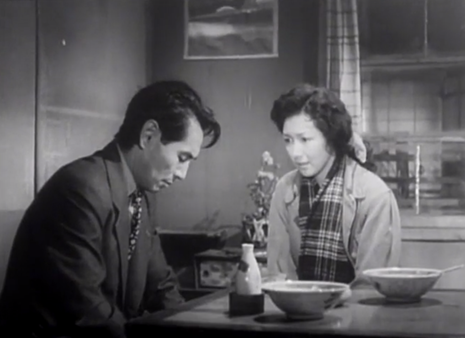
Except in such a patriarchal society, like Japan, it always seems to be the man who has the say. Tomioka (Masayuki Mori) begins his acquaintance with Yukiko (Hideko Takamine) with slight jabs at her, all but solidifying his gruff character for the entirety of the film. These rocky foundations give way to passionate romance and Naruse does something dynamic by cutting right between a kiss in the past to one in the present. So much has changed and yet nothing at all. Much of Floating Clouds is about this reconciling this past with the present.

The pensive serenity is one of the unifying hallmarks of the picture. This is another point of departure with a Hollywood romance like Red Dust. This, paradoxically, feels like a grand statement — choosing a tranquil path in a medium that is so often filled with noise and a world full of constant turbulence.

Even in considering his countrymen, Kurosawa is often more dynamic in composition and action. Thus, it seems most obvious to contrast Naruse with Ozu. However, whereas Ozu heralds his presence within the frames through the meticulous craftsmanship and attention to detail, you do not necessarily see this to the same degree in Floating Clouds.

It is stripped down to a near Verite approach, which still cannot be mistaken for shoddy work. In fact, it boasts beautiful interludes between two people on par with a picture like Late Spring. It’s not a perfectly ordered fabrication of reality where human drama plays out. The spaces feel rich with the impoverished and worn layers of Japan as it lay. The people are much the same, unadorned yet imbued with truth.

Hideko Takamine is extraordinary for how she is able to manage a spectrum of emotions — exuding an inner strength and individuality — while still giving way to honest feelings of regret. She can be the adulterer, the nagging lover, the broken heart, all of the above , as they cycle through time.

No less important is Masayuki Mori as he acts as her perfect counterpoint. He gives her nothing, or at least very little. Every potentially thoughtful action is dismissed and any form of commitment is avoided doggedly. There is even so much about their preferred temperaments putting them at odds. It seems like circumstance and they’re own interactions together all but destined them to part ways and move on with life. He returns to his wife “nobly,” while she is supported by the brother-in-law who formerly took advantage of her. Every relationship is riddled with these personal dilemmas.

There is another brief snapshot that resonated with me — both in its mild humor and how it proved indicative of the times — when Yukiko is walking down a street alone. In the periphery, we see what looks to be a Japanese woman with an American G.I. He seems to be at least a head taller than everyone else. Then, almost on cue there comes a voice, speaking my native tongue: English.

It’s a second G.I. looking for a date, and he affably asks her in broken, bastardized Japanese (rather like what I’m capable of speaking), if she’s alone and where she’s going. She simply smiles and moves on, either to brush him off or resign herself to a superficial evening of companionship. He exists as more of an archetype than a fully defined character even given that his name is “Joe.”

However, what it provides is a fascinating counterpoint to what we are used to in our little universe, where everything commonly revolves around the western world, if not America. Pictures like House of Bamboo, Sayonara, Teahouse of the August Moon, they all give us a very specific and tailored experience.

It’s somewhat strange and fascinating to feel like the “other.” The soldier here is the sailor in Lola (1961) or the soldier in The Marriage of Maria Braun (1979). In fact, they all serve much the same function. They come to represent a different type of relationship and with it a diverging life, even if it’s only meant to be a momentary fleeting fancy. 

This is not a picture where we see the chaos and the bloodshed. After all, these two were the “lucky ones” stationed in Indochina. And yet we see the shadowy imprint of a former life involving suffering, poverty, and the ignominy of surrender. It doesn’t seem too farfetched to claim Floating Clouds somehow channeled the thoughts and feelings of a generation. The Best Years of Our Lives might be similar to a generation of Americans.

Consequently, as a viewer in this contemporary moment and an American on top of that, there is a realization of how much I take for granted in this story. I am more like the American soldier than I am this couple. It proves a humbling observation, carving a path toward some sense of empathy.

floating clouds 2.png

 Eventually, her lover turns up again — still as brusque and egocentric as ever, looking around at her plain surroundings and commenting on how well she’s doing. These types of evasive, indirect proclamations are all she ever gets. So she’s hanging on his words, getting whisked this way and that with partial promises and empty hopes, never going anywhere. Later on, he has his eyes on the pretty young wife (Mariko Okada) of an acquaintance (even soaking in the public bath together). After all, in superficial terms, she is much more “desirable.”

To consider the American soldier again, he was on leave for two months before shipping home. Even in the short amount of time, he was overflowing with geniality. If we take Floating Clouds as indicative of all of Japanese society, it proves a telling portrait. There is no affection or sense of vulnerability within men. Endemic to the society and more so a holdover of the war. It’s not simply about women being overly emotional, though this is often the cultural expectation. More emphatically so, the men lack any type of emotion. They are ingrained with this stoic (sho ga nai) mentality.

There are numerous walk-and-talks, and the scenery and setup might as well be interchangeable, but the subtext and junctures in their lives are starkly different each time. So we have all these snippets wedged in between their life events as they orbit in and out of each other’s lives.

It’s easy enough to juxtapose it with Citizen Kanes dinner table scene where a relationship is seen crumbling in a matter of minutes. Stretched out as it is, within Floating Clouds, these walks continue this metaphor of progression. It is the progress of life, of a relationship, and of the world existing around us. Because while the steps might remain the same, the circumstances are different around every bend. Time marches on with each footfall.

It’s not about being ships in the night either — that they missed out on one another’s company — simply put, they are abrasive together. Their traits and identities are constantly causing them to attract and repel each other again and again.

The lasting image is a bent head, but this is not one of Ozu’s quiet forlorn scenes where a father has just made the honorable decision to give up his daughter. These are ugly, bitter tears. He is weeping. And this man, for the first time in his life, is providing physical acknowledgment of how much another individual human being meant to him. In a Hollywood picture, the action would be meaningful, but not unprecedented. In this movie, it feels heart-wrenching because we have yet to anything so transparent.

It’s an evocative final note in a work rarely prone to this kind of overt outpouring. It’s the cathartic release in a bittersweet tragedy. All we can do is bemoan the fact this man was never vulnerable enough to admit the depths of his love during life. Unfortunately, in this particular life, there is no resurrection.

4.5/5 Stars

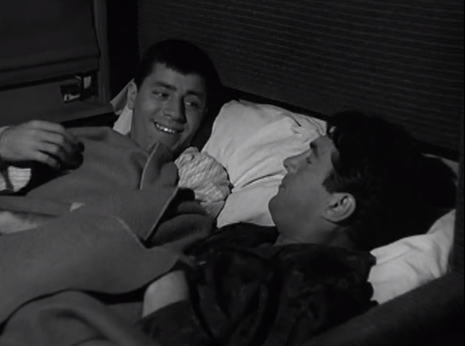
The Stooge (1952): A Martin & Lewis Biopic?

the stooge 1.png

If the story holds, Jerry Lewis named The Stooge among his favorites of the work he did during his famed partnership with Dean Martin. This was the sole reason for watching it and this is probably the most effective lens in considering what to make of it.

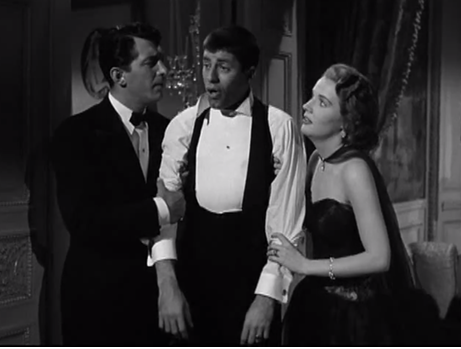
The plot itself follows a show business narrative and draws up a fictitious story about how they needed each other or how they managed to perfectly complement one another’s talents. Except that’s not entirely right because it’s really about how Bill Miller (Martin) is a bit of an arrogant control freak, using someone else’s talents to bolster his own career. He somehow carries this dissonant belief Ted Rogers (Lewis) is the secret weapon of his act and still of secondary importance. He, Bill Miller, is the real draw.

To provide some context, Miller has recently wed his best girl (Polly Bergen), who foregoes her own career as a performer to sit in the cheering section of her husband, so he can make a go at the big time. It’s the all-absorbing preoccupation of his entire life as he works with his agent (Leo Lyman) to become a star. Despite others giving him advice to the contrary, he wants to be a single. And even when he finds his missing piece, he still considers himself a solo act.

Lewis gets his opening in a hash house giving the man behind the counter real grief. Then, he pays off a cynical cabby with crumpled up bills hidden all across his person. It only gets more outrageous.

Obviously, it’s toying with the dynamic integral to the Lewis & Martin formula with Lewis making a racket from the balcony in his attempt at song, only to start up the patter between Dean down on the stage with his skimmer and accordion. It feels like they were meant to do together. The perfect counterpoints to each other’s images and strengths.

However, there are all these perfectly manufactured moments and thus nothing feels truly spontaneous, like catching lightning in the bottle. With the gags being set up, we have a sense of what is going to happen before they actually occur. One exception and somehow an immaculately hilarious image (not that it was ad-libbed,) is Martin bouncing Lewis continuously on the bedspread like a human pogo stick. The mental picture it conjures up is enough.

the stooge 2.png

It’s true Dino does feel like a bit of a tyrant. One can only surmise the picture was held out of circulation for a time so he could build an initial rapport with the audience. They released two other features before sending The Stooge off the assembly line.

All told, the most gratifying moment might be right at the end for the simple reason the picture no longer has to make a pretense of the drama because it’s just been resolved. The one zany off-the-wall man-child runs his crazy interference while Martin looks on with mild befuddlement, and they find some wry equilibrium in there somewhere. There’s no element of Miller’s colossal ego getting in the way so we go to straight to the heart of what made Martin and Lewis a lasting comedy team.

It’s a shame the film was plagued by a plot gumming up their routines. Not only was Dean Martin intermittently unlikable, it really dices up the film. The saccharine moments of applied drama are mostly throwaway. The comedy works slightly better. Though I must admit my personal preference for Dean over Jerry.

As a very subjective observer, I am drawn to consider The Caddy instead. Not only does the premise feel more conducive to gags, but the chemistry also allowed for our stars, as characters, to feel richer. They are part of a close-knit community and when their world includes Donna Reed and a snappy rendition of “That’s Amore,” it’s hard to ask for much more with already meager expectations in place. It’s the simple pleasures and, for me, The Caddy offers more of them.

In hindsight, The Stooge feels harrowingly close to loose biography. This is not to suggest the two men were their characters, but we have Dean’s drunkenness and Lewis’s own persona upstaging any and every bit of Martin’s talent. We could even wager a guess these are portentous moments, given their own eventual breakup. Certainly being the insane energizer bunny bouncing all over the stage has its drawbacks, but you do get a great deal of attention.

Most of the other Martin and Lewis pictures during their prolific run brought genre and camaraderie together. This was their charm bottled up so easily and then delivered to the masses. The Stooge doesn’t always employ the same brand of simplistic comedic commoditization, probably to its detriment.

In truth, it suggests my own reluctance to parse through the reality of the men behind the characterizations. A typical Paramount vehicle for the pair might be the perfect portrait of 1950s idyllic America on the outside and yet underneath there were festering issues. The country’s most beloved comedy duo was plagued by discord just like everyone else.  No fabricated sitcom setup can completely smooth over reality.

3/5 Stars

The Nutty Professor (1963): Jerry Lewis is Jekyll and Hyde

the nutty professor.png

I can bemusedly remember more than a few trips out to the high school football fields as our designated evacuation point for fire drills. The other times we ended up out there was more likely than not due to the chemistry department setting them off with some supernal explosion of their own devising. You can only imagine it being a giddy badge of honor among these grown-up nerds.

In full disclosure, I must admit being indebted to Disney’s Absent-Minded Professor for creating my paradigm for the mad scientist. Jerry Lewis takes this readily available archetype to set up an analogous comic cocktail — albeit to the utmost extremes — marrying it with one of his own creations: Julius Kelp.

The Nutty Professor‘s gloriously campy color schemes are all the better for this wonky Jekyll and Hyde riff. Rooms look like they’re all but made out of cardboard and as such, every interior and visible prop feels expendable. School officials (Del Moore) and secretaries (Kathleen Freeman) are either high-strung or chatty cartoon characters.

In one exemplary moment, Lewis all but railroads the usually fastidious chancellor into doing an impromptu rendition of Hamlet on his office table. A modicum amount of ego-schmoozing effectively makes a complete mockery of the man with typical Lewis lampoonery.

Likewise, the interminable supply of handsomely-clothed, virile male co-eds all look like they either play quarterback or shooting guard for their respective sports teams. And all the pert young women are a similar picture of All-American, bright-eyed ideals.

Considering these elements, The Nutty Professor is derived mostly from performances more than being gag-driven; the jokes come organically out of character. I’ll fall back on my normal diagnosis of Lewis comedies, namely, the plot too often gets in the way.

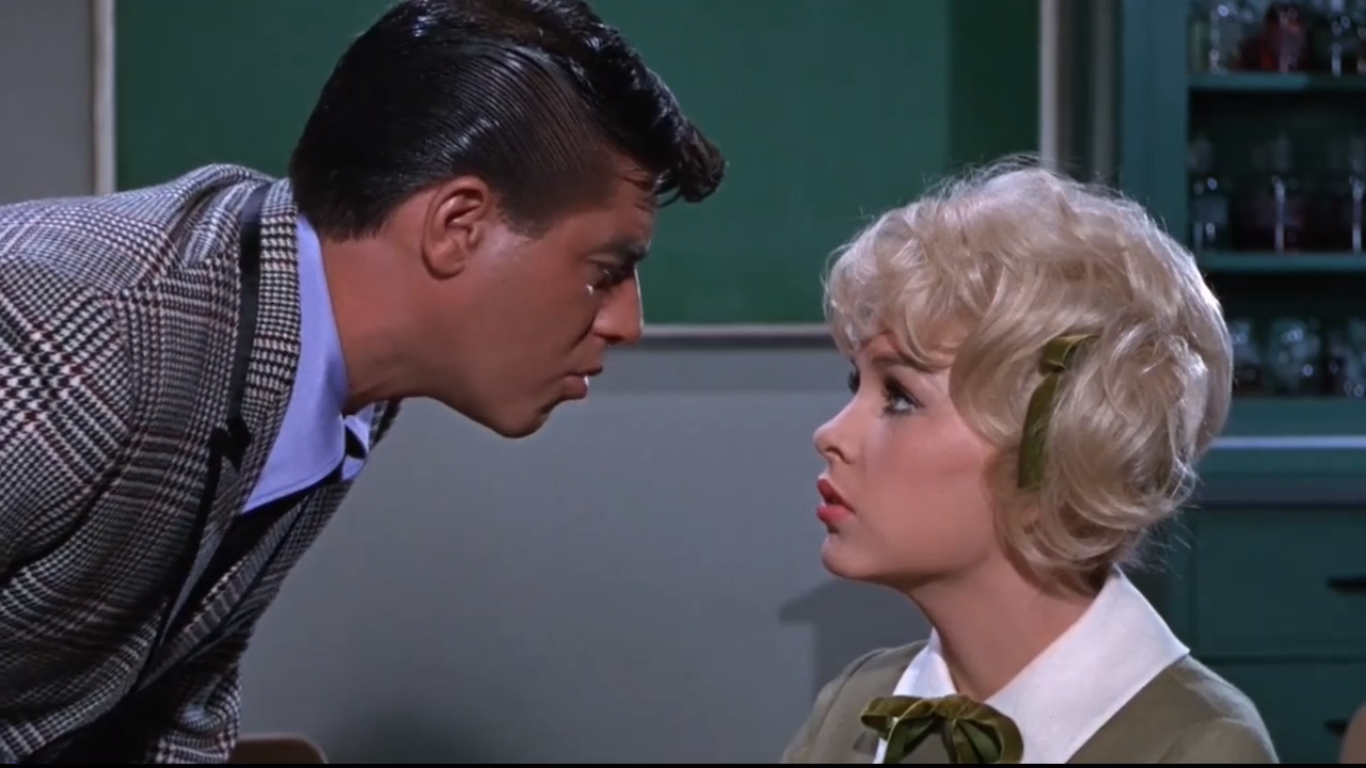
Kelp is a walking stereotype, but he’s also an endearing Jerry Lewis creation, complete with outrageous buck-teeth, googly glasses, a lexical vault full of spoonerisms, and probably the worst excuse for a haircut in the history of the movies. If we can risk being facetious momentarily, these are all very calculated decisions. It’s a visual statement made all too obvious; this man is a loser.

The childishly simple premise digs into these same themes. Although there might only be one or two isolated occurrences we can think of, Kelp attempts to combat a bully in his class who pushes him around. Since it’s not altogether overwhelming conflict, we must consider this to be partially his own inferiority complex speaking.

It doesn’t help a pretty student like Stella Purdy (Stella Stevens) simply reinforces all of his inadequacies. Because she is yet another paradigm with her hairbows and schoolgirl charms.  She is caught between the dorky loser and the vain, devilishly handsome lady killer. The question remains: Where do her values lie?

the nutty professor 2.png

If I haven’t spoiled the punchline already, there is an obvious road the zany tale must traverse. Around his new fitness regimen, Julius acquires a carload of books from the library; his results spawn a most curious potion. One would think he’s transforming into a werewolf or something. Actually, it’s far worse: Enter Buddy Love (also played by Lewis).

If you don’t hear the imaginary notes of “Love Potion No. 9” performed by The Coasters or The Searchers (depending on your preference), then your brain isn’t as formulaic as mine.

Regardless, Kelp’s alter ego soon finds himself waltzing into the local collegiate watering hole, the aptly christened Purple Pit. There Buddy Love makes his self-assured debut, hair plastered down, smoking a cigarette, and owning his outrageous duds. He catches everyone gawking on the street, and it’s much the same on the inside — showcasing a Lewis POV shot allowing us inside his conceited head.

It’s easy to consider The Nutty Professor a vanity project on a cursory level. Because Jerry Lewis is always at the center of this universe. Take the moment he’s supposed to be the devilishly handsome Love and literally, the whole club comes to the standstill. It’s absolute absurdity.

But in some ways, this perspective just doesn’t take because although Lewis is at the center of everything, he’s willing to look like a dorky, bumbling, idiot just as much if not more so. Someone who can do that has to be at least somewhat comfortable in their skin or at least content with putting on the charade of an utter doofus.

It relies completely on his dual role and Lewis’s own capacity — having the world constantly revolve around him — self-promoting himself and simultaneously tearing himself down. The tightrope walk is a compelling one.

Some have posited Buddy Love is a not-too-subtle shot at Dean Martin as the former compadres were still broken up after a fairly acrimonious split. Lewis instead denied these assertions by suggesting it was a knock on all the vainglorious phonies he had met on his long stint in show business. It seems just as likely The Nutty Professor could even function as a dialectic to examine Lewis’s own persona.

One can only imagine, in some outrageous universe, where the fulcrum between Lewis’s own worst and best selves would fall along the spectrum of his two cinematic creations. On one side, he has this image as a klutzy uncouth man-child and yet we must reconcile this with his authoritative vision as a director and a subsequent product of the same show business machine.

He was the one who could brazenly claim so much fame, success, and accomplishment at such an early age. It’s difficult to envision a world where circumstances didn’t go to his head even a little bit. And if there is not already a piece of Love in him, then at least we can acknowledge there is a risk of such a persona cropping up.

If The Bellboy had a family-friendly moral tacked on at the end, then The Nutty Professor is much the same with a few more lines devoted to a theme. Because the inevitable happens and the worlds collide — Jerry or Love or Kelp is ousted as his true self, after masquerading in front of all these people. What a horrible ordeal to slog through.

However, he finds some words. They go like this: “You might as well like yourself. Just think about all the time you’re gonna have to spend with you. If you don’t think too much of yourself, how do you expect others to?”

It’s a compelling message even if the preceding content is all over the spectrum. Along with the science-fiction, we have the audience-appointed fairy tale ending with the guy getting the girl. There need not be more explanation. The Nutty Professor rumbles through all our expectations.

I do find it strangely compelling having all the main players bow in the end credits. It’s like the curtain call in a play where everything is far more intimate. Of course, Jerry Lewis puts his lasting mark on this one by falling into the camera and shattering it. We would expect nothing less.

3/5 Stars

It’s Love I’m After (1937): In Honor of Olivia De Havilland

Screenshot 2020-07-01 at 8.42.44 PM

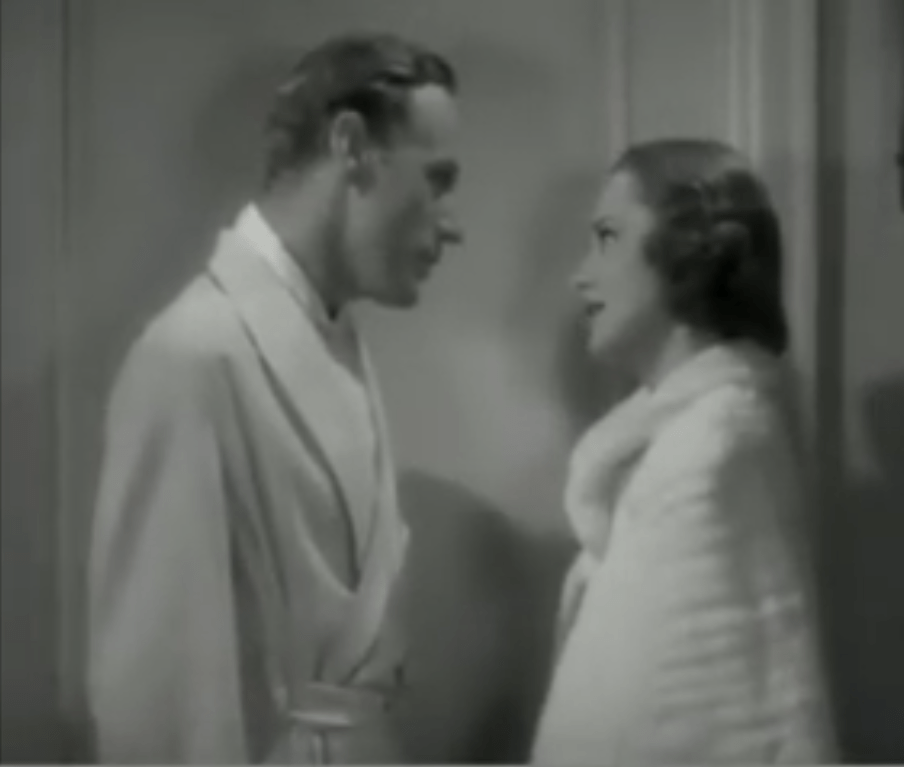
There is a very significant reason to be watching It’s Love I’m After at this time. Her name is Olivia de Havilland, and by some brilliant piece of Providence, she has just recently turned 104 years old! She, of course, was in her early 20s when this movie came out and what a charmer it is.

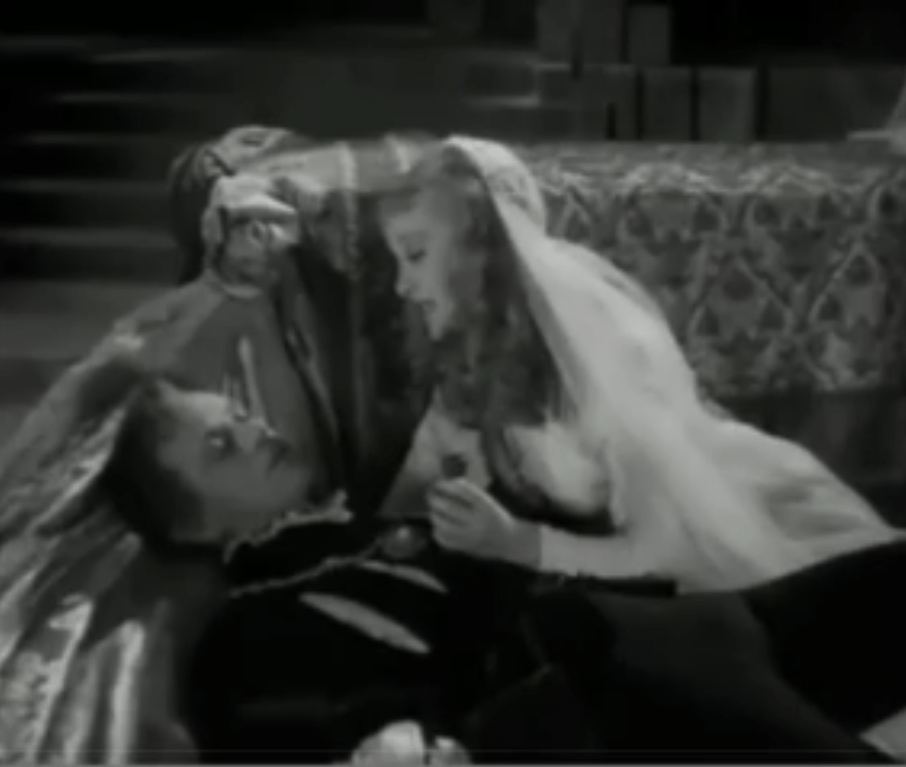
A few years before To Be or Not To Be, here is another movie hamming up Shakespeare on the stage. This time it’s Leslie Howard and Bette Davis as they act out their version of Romeo and Juliet for a rapt audience. What makes the sequence is the dueling couple whispering snide asides to one another mid-performance. Barbs about garlic breath and upstaging come out because they’re both conceited and jealously in love.

But where is Olivia in all of this? She’s up in the balcony swooning over the sublime eye candy down on the stage. She’s seen all of his performances and is positively devoted to his very essence. Her boyfriend (Patric Knowles) looks on with frustration as he’s having to compete with a rival who has never even met his girl before.

This is soon remedied when she promptly goes backstage to pay her respects. It’s all quite innocent. Basil and Joyce continue their incessant bickering from their adjoining dressing rooms, still at each other’s throats, despite the wall between them.

Then, Marcia West presents herself positively agog by the image of her idol thoroughly in the flesh before her. He’s flattered but he hardly knows what he’s doing when he accepts her compliments. Worse still, Joyce sees the young woman on her way out. Harmless or not, it adds further fuel to their relational fires.

What a delight it is to see such beloved thespians and titans of dramaturgy like Howard and Davis doing comedy, of all things, and doing it quite well in the screwball vein. After all, this would be their third picture together following Of Human Bondage and Petrified Forest. There’s no comparison.

The movie is totally overtaken by bipolar swings in fortune. First lovers’ quarrels — it’s the worst New Year’s Eve ever — then there are marriage proposals, and finally, Basil resolves to help a young fellow out.

They do have some handy support. There were few better in this department than Eric Blore, and he has a readily available supply of birdcalls and advice on his master’s matrimonial habits on the “precipice,” as it were.

Being your typically theatrical, philandering type, Basil resolves to shirk his impulses and pursue his own moral salvation. In this case, his good deed is for a lovesick fellow whose best girl is smitten with the stagebound Romeo. The actor doesn’t know it’s the same girl. How can he? No one in these movies ever stops to compare notes.

Screenshot 2020-07-01 at 8.46.48 PM

Still, he resolves to turn up on her doorstep and rudely ruffle her illusion of him. He and his man Digges (Blore) pay a late-night housecall to the West residence. Their shouts of “ire” soon become “fire” and brief pandemonium sets in as an impromptu round of “We’re here because we’re here” comes out sounding a lot like “Auld Lang Syne.”

He schmoozes his way into the house, making himself at home in the company of the avuncular father, befuddled mother, and a gossiping sister (Bonita Granville) always peeping through keyholes. But in Marcia’s eyes, he can still do no wrong. Now he’s got quite the prompting audience, and he’s all but ready to do his part.

His bit of showmanship has him playing up his image as an egotistical malcontent tearing through the guests and their breakfast table with ferocity (and some help from the Bard). Digges does his best to complain about the lack of kippers and other inadequacies. None of it congeals as they were hoping, in fact, it has an adverse effect. Marcia agrees with his every word.

As someone fed on a steady diet of P.G. Wodehouse and Jeeves and Wooster, there’s something familiar and comforting about the picture’s comic situation. Basil is no Bertie Wooster. Digges is no Jeeves, but they are stuck in the same madcap realm of romantic entanglement mixed with comedic hijinks.

Whatever Basil tries is quite unsuccessful in quelling the ardor or the affection of Ms. West. The best-laid plans all too quickly go awry and poor Digges can do little to stop the inevitable. Joyce makes her reappearance at precisely the most inopportune time. She catches her man in the arm of another. The jealous boyfriend feels affronted as he watches his girl be ripped away from him, albeit unwittingly.

The story couldn’t look bleaker and further from its agreed-upon happy ending and yet, eventually, it comes, like any good rom-com. Don’t ask me how it happens. Maybe it’s the youthful fickleness of De Havilland’s ingenue. Perhaps cinematic serendipity gets in the way. Regardless, the partners shuffle around only to get back together with their ordained.

Leslie Howard and Bette Davis are, again, madly in love, then yelling and screaming and pushing each other across the room. Digges is busy packing the suitcases only for the contents to come tumbling out as future husband and wife make up and share a passionate embrace. What light through yonder window breaks? It is the East and Juliet is the sun! End scene.

3.5/5 Stars