Sounder (1972): A Family and Their Dog

sounder 1.png

In adolescence, you are inundated with stories about dogs. The Red Fern Grows, Shiloh, Homeward Bound, Ginger Pie, Marmaduke, Lassie, Rin Tin Tin, Air Bud, Snoopy, and Old Yeller. And that’s just the tip of the iceberg, off the top of my head. Sounder belongs to the same storied tradition based on humanity’s infatuation with canines which is certainly well-founded.

Except some will be surprised to find that this Depression-era tale brought to us by Martin Ritt is hardly about a dog at all. True, we are met with the eponymous hound dog right off the bat. What greets our ears is the bouncy staccato harmonica-twanging behind the visuals of a frantic tear through the underbrush that goes with the territory of a coon hunt. It’s an instantly recognizable image to introduce our characters.

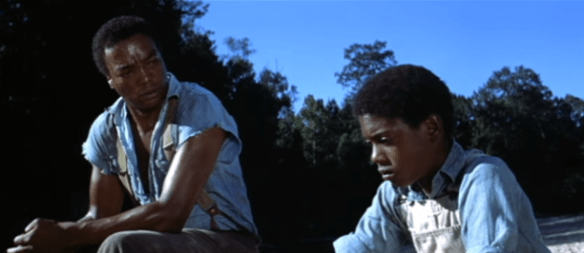
Not just Sounder but a boy named Henry Lee and his father, the jovial but hardpressed Nathan. The year is 1933 and we’re in Lousiana in the midst of the Depression. With society sectioned off as it is, as a black family, the Lee’s have been forced to scuttle through by sharecropping for a white farmer. It’s the fate faced many African-American families of the day.

They’re perpetually in debt, have trouble keeping food on the table, and live with the most meager means possible. All in all, with two parents, Nathan and his wife Rebecca (Cicely Tyson in a fiercely unvarnished performance), there are also three kids, and of course, Sounder.  Writer Lonne Elder III takes this atmosphere, the environment, and the family living within it and builds the framework of a story with great care and concern for their everyday reality. The plights and the joy that they still manage to have.

Taj Mahal, while also providing the film’s music, does a fair number in front of the camera as well as the energetic neighbor named Ike who drifts in and out of the story as he pleases. There are baseball games where Nathan Lee comes out the hero striking out his last opponent with runners in scoring position. From the local church, you can hear Gospel spirituals like “Old Time Religion” ringing out with fervor.

But in the same community, there’s a segregated schoolhouse and Nathan gets jailed and sent away for a year of hard labor for what seems like a trivial infraction. White men, including the local sheriff and the shopkeeper, will hardly budge an inch for a black man. That’s what seems so pernicious. Sometimes it’s not even outright violence but it’s this inability to change or have any amount of grace or understanding. There is no clemency to be had based on this rigid narrowmindedness.

When you begin watching more movies sometimes you fail to acknowledge those that are unpretentious and good-natured — the kind of stories that are meant for the whole family and wholly uplifting to the soul. Sounder is one of those movies. Surely there was a social hierarchy in place of oppression and de facto segregation. And yet around the nucleus of the family, there is a decency that pervades the picture and ultimately lifts it up. While it doesn’t completely eradicate ill-will, it does push it to the fringes of the frame.

Family reunions have never been so poignant — considering the moment where Nathan finally comes home after innumerable trials and his family has toiled and sweated day after day to hold onto their land. What they have in that instant is a small slice of heaven. It’s written over every face as the space between them rapidly fades away and they meet in an embrace that brings their world back together as it was meant to be.

But Sounder also manages to be a tale of empowerment for one lad in particular, young Henry Lee. The movie places people in his life who are willing to give him a leg up. There’s old Mrs. Boatright who is one of the few whites who will take any kind of stand — even a slight one — and she blesses him with things like The Three Musketeers.

It’s these people and books and knowledge that give a glimpse to a world of greater freedom and opportunity. An avenue to a life where people cannot keep you down no matter how hard they try because with ideas comes a power to think and to be your own person, set on improving yourself and the world as you go forward.

Yet another woman, a schoolteacher, takes an interest in Henry Lees improvement since she perceives the quiet wisdom that can be cultivated into something fully-realized. Her gift to him comes through education and elucidating him about figures like Harriet Tubman, Crispus Attucks, and W.E.B. Dubois — people who were shapers of history big and small — just as he has the opportunity to be.

Granted, it does feel as if the family’s pet is pushed to the periphery for much of the film, but in a way, it feels like a realistic depiction. He doesn’t need to be front and center. By their nature, if dogs are really man’s best friend, what makes them so meaningful has to do with their loyalty — they are always there — consistently reliable.

Because the life of an impoverished family like the Lees is the epitome of hardship. They need all the stability they can get. You will come to realize it is not really about a dog at all and certainly not one of those family-friendly films marketed as such because they feature some extraordinary, nearly superhuman animal.

No, Sounder is for the family because it takes care in documenting the realities of this particular family in a way that is thoroughly candid. It might still stand as faulty advertising but for the plethora of folks who are moved by the movie, they probably won’t be complaining when the credits roll. What we get is far better than a run-of-the-mill boy and his dog narrative. What I am reminded of is one subtle parallel. Sounder is winged by a shotgun when Nathan is taken away. He doesn’t come back for a long time. But when his wounds are healed, he returns good as new. There’s a startling resilience present in both the canine and the family.

4/5 Stars

Paris Blues (1961)

paris blues 1.png

I’m the first to admit I’m no jazz connoisseur but I dig it. In this age that we now live in of shuffling and song roulette — where the single has surged passed a cohesive album in terms of singular importance — there has been some small amount of education going on for me.

Awareness of some of the classics is starting to set in. There’s recognition of a few of the heavy hitters like Miles Davis, John Coltrane, Bill Evans, Dave Brubeck, Count Basie, and of course Duke Ellington. When we hear even the briefest interludes of “Take The A Train” we will grab a hold of it. Ellington provided the score for Paris Blues including some of his beloved classics and they couldn’t be more fitting.

Because Martin Ritt’s film is hot when it comes to jazz — you can feel it wafting through the air and giving an added layer of sensuality to the already romantic milieu of the Parisian streets. This is a propitious factor married with the fact the picture also takes its shoot right to the streets of Paris, even filling out the cast with a few native supporting players.

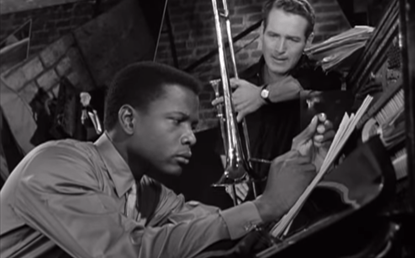
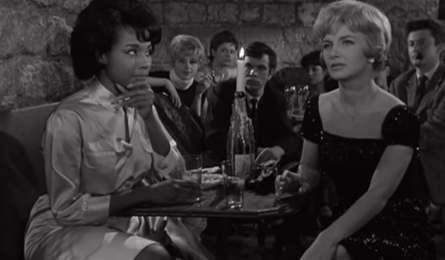
Less than a decade before, we had Roman Holiday (1953) and now we have something that might just do the same for France, except with an extra flavoring of brass and a rhythm section. The cast couldn’t be better with two of Ritt’s former students from their Actor’s Studio days, power couple Paul Newman and Joanne Woodward. Equally compelling is another legendary leading man in Sidney Poitier and Diahann Carroll as beautiful and sophisticated as ever. I admire them all.

paris blues 2.png

However, in translating the source material to the silver screen, you could easily say the story lost most of its clout. Harold Flender’s original novel was about two interracial romances between two vacationing Americans and two expatriate jazz musicians working in Paris. However, this was Hollywood in 1961. Although the script teases the original storyline when Ram Bowen (Newman) comes onto Connie Lampson (Carroll) on an inbound train, it was not meant to be — quickly brushed off for more conventional demarcations.

Believing the public was still not ready for such portrayals, the studio got cold feet and smoothed things out by making sure everyone ended up with their “kind.” It’s Lillian Corning (Woodward) who gets starstruck with the trombone player and her friend eventually softens to the handsome saxophonist Eddie Cook (Poitier).

Acknowledging this grievance, the only thing that makes me mildly okay with the change is that the husband and wife duo of Newman and Woodward get paired opposite each other so we see real-life romance partially channeled into the movie. While the four leads look great together and there’s indubitable chemistry, somehow it still feels like something is missing.

paris blues 3.png

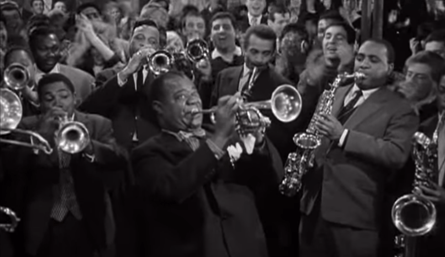
Louis Armstrong leading a parade of brass into the jazz club is a shining moment full of uninhibited synergy that fills up the underground space in the most joyous of fashions. As he always does, Wild Man Moore brings down the house. But the real issue is the lack of pizzazz outside these performances.

The story meanders without creating enough interludes ripe with meaning. They’re either cutesy momentary snapshots of lovebirds in Paris or understated pieces of human drama. Not by any means bad but what the picture might have used were some sustained sequences of action in places where it floundered. Most vividly I can recall the Vespa ride through the streets or even the party which is raided by the local police which helped make Roman Holiday a landmark.

There is nothing so memorable here. Instead, some characters leave on the train they arrived on and others stay behind. Musical aspirations and romance are continuously being weighed. Whether we care that deeply about any of it is up for debate.

Worst of all, these issues are only exasperated by the fact that the story no longer has one of Martin Ritt’s finest attributes, a theme of social importance. Because in a Pre-Civil Rights age, Paris Blues could have been a much more moving statement; instead, it’s a middling love story.

Poitier gets one conversation with Carroll where he candidly vocalizes that in Paris he’s a man or he’s a musician. To borrow someone else’s words, “he’s judged not by the color of his skin but by the content of his character” and even more so by his artistry. It spawns a minor spat but the opportunity to make a statement — a statement without the utterance of words even — was lost before it even began. Perhaps the wasted potential hurts more than anything. Like the musicians at its core, Paris Blues is ultimately a lightweight.

3/5 Stars

No Down Payment (1957)

No_Down_Payment_-_poster.jpg

When a film seems to materialize in front of you coming out of nowhere and subsequently moves you, it seems worthy to try and champion it to others who might also be pleasantly surprised. But first, I believe an acknowledgment of director Martin Ritt is in order because I’m not sure how much adulation he usually gets amid the myriad of prominent Hollywood workhorses out there.

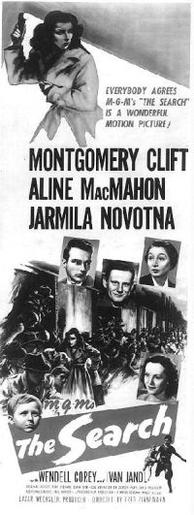
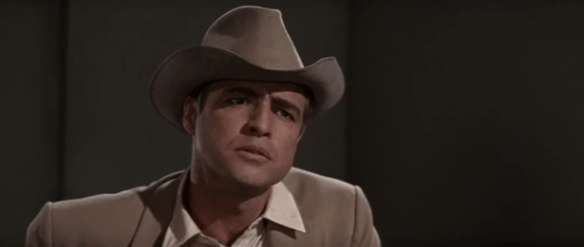
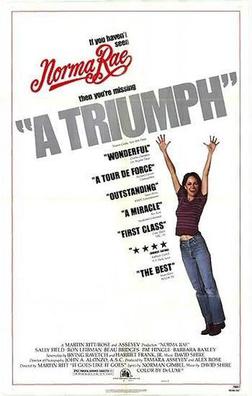
Though he first started out in the theater and then television during The Red Scare years, Ritt ultimately transitioned to movies with a body of work full of variety that has all but stood the test of time on numerous accounts. Highlights include a six-film collaboration with Paul Newman including the likes of The Long, Hot Summer (1958), Paris Blues (1961), Hud (1963, and Hombre (1967). Other noteworthy successes many will know are The Spy Who Came in From The Cold (1965), Sounder (1972), and Norma Rae (1979).

He is most definitely an adherent to progressive, socially conscious filmmaking that, while never flashy in formalistic aspects, is nevertheless, chock full of depth for its commitment to humanist storytelling. It’s meant to ring true and touch on subjects that pertain to real people and the world-at-large captured through a lens of stark realism. To his credit, Ritt would never claim the title “Auteur” because he himself spent time as an actor and understood how collaborative such an art form is.

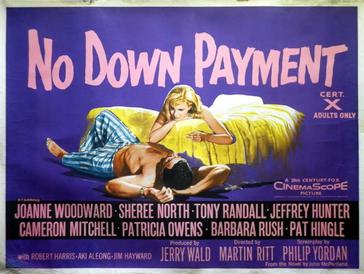
That brings us to the picture at hand, No Down Payment, which while being one of his earlier directorial efforts for film, already has his sensibilities in place. There’s nothing flashy about the picture per se but it readily digs into issues that feel uncommon and cutting edge for the very fact that we rarely see them portrayed in the 1950s. This film provides a very special opportunity and I was more than happy to oblige.

To put it succinctly, our story takes place in the residential neighborhood of Sunrise Hills. What we get is a disillusioning portrait of 1950s suburbia specifically in Los Angeles, that beacon of post-war middle-class living, observing the overlapping existence of four couples.

I enjoy how everything seems to be underlined by party chatter, Cowboys and Indians on the television, and groovy rockability — all integral parts of the ubiquitous soundtrack of the suburbs. But there’s also a veneer with two layers. The outward-facing street view with white picket fences and barbeques with the neighbors and then what’s actually going on, either when the doors are closed or when you can’t contain it anymore and rancor slowly asserts itself. Underneath we also soon realize that everybody is afraid of something.

A young couple just moving in is brought into the fold of the community. The husband (Jefferey Hunter) works as an up-and-coming electrical engineer while his pretty wife (Patricia Owens) urges him to get in a more lucrative field like sales so they can grow their social status.

If your image of Tony Randall is a nice guy or a hypochondriac, try on a philandering day drunk car salesman for size. Jerry Flagg constantly has his wife Isabelle (Sheree North) exasperated because he’s always strapped for cash and never dependable, with aspirations that keep him constantly flocking to the next big idea. Of course, he’s never able to see any of them to fruition.

Arguably, the least done up of any of the husbands is Troy (Cameron Mitchell), a war hero and Tennessee native who currently works as a car mechanic but soon hopes to be brought on as the local police chief. In fact, he’s banking on it. His wife, Leola Boone (Joanne Woodward) is intent on it as well since he’s promised they can have a child once he has greater job stability. She’s tried to bury painful memories of the baby she was once forced to give away. They too are plagued by marital bickering and late night alcohol consumption.

Last of all is Herman Kreitzer (prolific TV actor Pat Hingle) and his wife Betty (Barbara Rush). While she takes the children to church on Sunday, he stays at home and washes his car out on the street. Otherwise, there’s little discord in the house as he’s a loving husband and father who runs an appliance store and is a member of the local homeowner’s board.

Ritt’s picture, with yet another script fronted by Philip Yordan and actually written by Ben Maddow, has innumerable topics of interest. However, two that were the most intriguing to me had to do with the Kreitzers. Because it just so happens that Herman’s best employee, a man named Iko (Japanese-American though played by Aki Aleong), requested help in getting his family a home in a predominantly white neighborhood. As is, he currently has a taxing commute to work every day.

And though Herman is a good man, he’s hesitant to get involved knowing full well that housing developments have long been run by de facto laws of segregation. L.A. was like any other area where African-Americans were in places like Watts and Japanese-Americans were concentrated in Little Tokyo and even Boyle Heights for a time. That’s just the way it was. You stayed with your kind.

People wouldn’t like it one bit. Off the top of his head, he knows Troy, who fought in the Pacific, wouldn’t be too keen on a “Japanese” living in the neighborhood. So Herman ultimately brings the conversation to his church-going wife who voices similar apprehension (“Do you think you’re ready to have a Japanese as a neighbor?”). It’s this conversation over the kitchen table that causes him to reconsider. Because you see we already know he’s not a churchgoer and part of the reason we can guess has to do with the hypocrisy that is often so easy to find fault with.

That brings us back to Iko and his family. As Herman sees it, what good is a church if it doesn’t lend a helping hand to someone who needs it. How can you say you’re a “Good Christian” and not do anything to help these people? The issue is hardly resolved then and there but it’s a start. At least, in this case, we get the hint of closure in the end. Other threads aren’t nearly as sanguine.

It’s fitting that we return to an establishing shot of that perfect piece of the suburbs and all our main players are at church the following Sunday. Except for one, it means a long drive in a taxi cab to who knows where. While the others will make a go of trying to preserve their dreams, this lonely individual’s exodus is a reminder of how quickly our aspirations can crumble.

4/5 Stars

Footlight Parade (1933)

footlight parade 1.png

Though it still came out in the middle of The Depression, there is a sense that Footlight Parade does not confront the contemporary issues head-on and maybe that causes it to lose some potential power. Because, in a sense, it’s a period piece even if that period is only a few years prior when talking pictures were taking the world by storm. Of course, many audiences will be far more acquainted with Singin’ in the Rain (1952), which arguably did much the same and even a better job in its homage than this effort.

Likewise, a bigger bankroll for the movies at Warner Bros. meant they got longer, which wasn’t necessarily all that advantageous. As far as stories go, this one is pretty much on par with its predecessors (42nd Street and Gold Diggers of 1933) though, rather surprisingly, the cast doesn’t run as deep.

Now we have James Cagney, of course, and what makes Footlight Parade deserving of a special side note is the fact that it would serve as the Warner Bros. gangsters first chance to hoof on screen. Because he wanted to prove that he was more than a thug and boy was he ever, even if the picture never really stretches him. Above all, he’s Jimmy Cagney, through and through.

John Wayne makes a picture-within-a-picture cameo in The Telegraph Trail which is shown to Chester as a demonstration of the imminent reality. Silent pictures are totally on the way out and this new attraction will grab audiences away from the stage. With the changing industry goes Chester’s livelihood. His galling wife isn’t too understanding calling for a divorce rather than wait around for him to be completely destitute.

However, Cagney’s able to capitalize on his newest doozie of an idea that comes to him after a mundane visit to his local drugstore. He translates it to talking pictures. He pitches it to his two boob bosses and they bite on his vision to develop live “prologues” that can then be showcased in movie theaters all around, making them lots of money. It’s a good idea but their closest rival Gladstone has already jumped on the wagon. It’s no small coincidence that Chester’s longtime assistant jumps ship and conveniently leaves behind another parasite to swipe ideas.

The one person who stands by him through everything is his loyal and lovestruck secretary Nan Prescott (Joan Blondell), who nevertheless uses her acumen and street smarts to keep the utter insanity of his current work life tolerable. With the wolves primed to devour him, she’s just as feisty, out to protect his interests (and hers as well).

In the end, Chester smells a rat and puts the studio on lockdown as they race against the clock to churn out the three numbers they need to showcase to their potential backer, Mr. Apolinaris, who, despite ongoing indigestion, is a generally agreeable audience.

footlight parade 2.png

Ruby Keeler is hidden behind a pair of specks to play up unwarranted stereotypes in a generally uninteresting role. Meanwhile, Dick Powell and his huffy patron have little to do. You understand why Powell wanted a different career trajectory because there’s nothing to stretch him.

His patron’s bubble-headed brother, played by Hugh Herbert calls to mind later types paraded in front of the screen by Billy Gilbert. He relies on her sway, otherwise, he wouldn’t be able to hold onto his position as the resident content watchdog who constantly badgers Chester only to get the brush. Frank McHugh cultivates his gray hairs exasperated as the dance choreographer continually bombarded by incoming stressors on the eve of the big performances. He’s teetering dangerously on the verge of a nervous breakdown.

When the first line of an audition is, “show me your legs” and obviously it’s only for the gals, it just rubs the wrong way. There’s also an inherent sense that there needed to be more dancing and less plot, as much as I would follow James Cagney to the moon and back, figuratively speaking. Even “Honeymoon Hotel’s” repetitive cadence gets tedious and it feels more cutesy than a prime showing of Berkeley’s usual visual inventiveness. It’s the same issue I had with earlier numbers like “Pettin’ in the Park.”

However, the subsequent waterfall number gets us back to his element, by some unimaginable feat, we end up at a lavish pool gilded with finery. In an instant synchronized swimming was born (or at least promoted) and for some inexplicable reason, those overhead shots capturing the unified motion and shapes of the swimmers still blow my mind even today like a huge crowd creating shapes at a football game. What we receive is sensory overload of gestalt principles executed beyond what could possibly be imagined in terms of meticulous intricacy.

With “Shanghai Lil” Cagney gets in an excuse for a choreographed brawl which he handles ably and we do see him dance. It’s difficult to put into words completely but it seems a very sturdy approach with his feet working hard while his torso remains all but inert. It’s like there’s business on top and a party going on down below which gives him a fairly unique mechanic on the floor, resurrected from his earlier days in vaudeville.

What comes last is an ending meant to rival Gold Diggers fo 1933, still impressive but not nearly as meaningful. The “Shanghai Lil” trades out the stirring nationalism and triumph of the human spirit to cater to a number about a Chinese streetwalker played by Ruby Keeler in yellow face. Even with a turn toward the patriotic, it just can’t quite compete. But as always, it’s hard not to simply fall back on Cagney and praise him for guiding the picture with that surehanded tenacity of his that sees us through to the end.

4/5 Stars

Gold Diggers of 1933 (1933)

gold diggers of 1933.png

With the opening number “We’re In The Money,” this musical sticks it to The Great Depression and gives their audience a respite from the poverty waiting outside the theater doors. The tone is set as Ginger Rogers, surrounded by rows of scantily clad coin-covered women, sings out one of the song’s lines in Pig Latin. It’s one in a million.

Like its predecessor, the smash hit 42nd Street (1933), this is yet another hybrid of backstage drama and semi-extravagant production numbers. An incoming rapid-fire line of close-ups featuring Joan Blondell, Aline MacMahon, and Ginger Rogers all giving the camera a mouthful is a delightful portent of all that it to come from this bevy of talent. The sass meter goes through the roof.

But we never forget that it’s the Depression, though it would be an unnecessary reminder for audiences already living through the reality. As Carol quips when she hears the timeliness of their newest project, “We won’t have to rehearse that.” Because they’ve been living through it along with everyone else.

It means that they share a measly flat together. Get by from swiping milk bottles from the upstairs neighbors and fighting over clothes to make at least one of them look presentable for the prospect of an audition. There’s a lightness to it all as much as there is a camaraderie. They’re all in it together and that allows the picture to work. Otherwise, it would be too depressing. There needs to be that assurance and resolve driving our characters. They never get too low.

Ruby Keeler has time to fall for Dick Powell yet again, this time by simply sticking her head out the window to swoon over his piano ballads. Of course, things hit the pits when they find out that despite a swell idea, their backer and potential savior Barry (Ned Sparks), still is broke and so his visions of a showstopping triumph are all for naught. The insouciant joking of Powell has everyone a little hurt until he actually comes through in shelling out $15,000 just like that. He was never more serious.

So there we have it. Another stage production is in the works. Everything is coming together dandily but in a role reversal of 42nd Street, it is Powell’s Brad who is called upon to fill a void in the production when he’s needed most.

gold diggers of 1933 2.png

The original juvenile lead is not able to make the cut due to lumbago and so despite his continuous rejection of the part, he finally folds realizing so many folks are counting on him. We’ve already said it and we’ll say it again. The show must go on!

Their first number, “Pettin’ in the Park” is a near-surreal exhibition in sauciness utilizing a midget dressed as a baby, a studio orchestrated rainstorm, and women donning metal garb to foil their male suitors. Weird but it’s an unequivocal smash.

So big in fact that news gets out. Brad’s family hears he’s been moonlighting in the theater and is appalled. Because you see, he comes from a well-to-do family. Such a line of work would never do. Cavorting with chorus girls and acting is out of the question. He returns home but to no avail as his older brother Lawrence (Warren William) and the family’s lawyer Fanueal H. Peabody (Guy Kibbee) agree to come out to put an end to Brad’s career — not to mention his romance. After all, showgirls are reputed to be parasites, chiselers, gold diggers…

They get far more than they bargained for when a bit of mistaken identity causes them to get whirled away by the streetwise sauciness of Carol and Trixie who have these rich boys pegged and know exactly how to capitalize. It’s like taking candy from two stuffy, overgrown babies.

Beyond being Fred Astaire’s supremely talented collaborator on taps, it’s easy to rate Ginger Rogers as a first-rate comedienne even in this earlier juncture of her career. However, it’s Aline MacMahon with the juiciest part and the greatest showing which ultimately upstages Rogers and gives the picture its greatest buoyancy of sing-songy opportunism.

gold diggers of 1933 3.png

Joan Blondell does herself proud in her own right romancing Warren William. For the first time, I actually feel sympathetic toward the poor fellow. He’s got no defenses. Peabody is simply putty in the hands of a woman — especially someone as delightfully conniving as Trixie. But remember it’s all for a good cause as Brad and Polly are able to stay together and that’s just the beginning…

It’s almost a misnomer to call Gold Diggers of 1933 a musical outright. The way that Warner Bros. ran things, there were two units one for the romantic drama led by Mervyn LeRoy and then another headed by Berkeley for the choreography of his decadent visions. So what we have is the quintessential Depression-era drama filled in with some song & dance routines. It could be completely disjointed in its execution. But on both fronts there or moments of undoubted noteworthiness. It begins with a cast that does oh so much and the baton constantly gets passed between players who readily play their part one after another.

Then, the rest is pure Berkeley first taking his dreams and turning them into a reality. “In The Shadows” in an exquisite gift to the audience showcasing swirling hula hoop dresses with showgirls gracefully flitting this way and that. Then the lights go out leaving behind the contours of violins dressed with fluorescent light,s which make for another entrancing dance of shape and light. Here we have art where the result is so much more than a mere sum of its parts.

Once again it makes the pretense of a stage performance but right away Berkeley throws off those shackles and lets his camera fly to whatever vantage point it wants proving itself essentially unencumbered and subsequently reworking how musicals could and would be staged.

gold diggers 4.png

But in truth, it’s a back-to-back show stopper and Berkeley sees the film to its crescendo by completely changing his tune with the help of composer and lyricist duo Harry Warren and Al Dubin. They all come through to deliver what can only be considered a timely eulogy to the universal figure alluded to in its title.

“The Forgotten Man” is emblematic of this entire picture and Gold Diggers of 1933 is very much an offering of thanks to the everyday American. The men who stand in breadlines scrimping over cigarettes. The men who fought in the Great War. The women who maintained the diligence and rectitude with which the country could battle poverty. The same people who line up to go see movies every day.

In the end, the movie pulls off this startling balancing act — a tightrope walk of comedy, tragedy, and above all pathos. Gold Diggers is the real deal and I cannot begrudge anyone who would deem it the pinnacle of the Hollywood dream factory sent to reach those in the throes of desperate times. Granted, some might question the merits of fantastical escapism but this effort looks to be more than a diversion — moving beyond that to be a hardy rallying cry of hope.

4.5/5 Stars

42nd Street (1933)

42nd street

“Sawyer, you’re going out a youngster but you’ve got to come back a star!” – Warner Baxter to Ruby Keeler

42nd Street essentially feels like hallowed ground even today because it single-handedly gave an entire generation of films plentiful ammunition for tropes while jumpstarting Warner Bros.’s cottage industry of musicals. These included Footlight Parade, Dames, and a whole slew of Gold Digger movies among many others. Not to mention many heirs apparent from Stage Door (1937) to Cabaret (1972).

There are several angles from which to approach this film. One of them has to do with Julian Marsh (Warner Baxter), an acclaimed theater director who is nevertheless broke thanks to The Crash and warned by his doctor that the undue stress of such a rigorous career is taking a toll on his health. He knows the clock is ticking for him and he deems that this will be his last Broadway show and it will his best even if it kills him. It probably will.

Meanwhile, the shining star of the forthcoming production Pretty Lady is one Dorothy Brock (Bebe Daniels) who keeps the picture’s lascivious financial backer (Guy Kibbee) onboard while never letting him get too familiar with her. Because you see, she has a secret romance going on the side with a young man (George Brent) who used to work with her in vaudeville. Now he’s jobless.

With all his reputation and finances dependent on the show’s success, Mr. Marsh quickly turns into a berating taskmaster, first, in casting calls and then through the grueling rehearsal regimen.

Three girls who manage to finagle their way into the show through some insider influence are Lorraine (Una Merkel), Anytime Annie (Ginger Rogers) and the wholesome newcomer Peggy Sawyer (Ruby Keeler). She knows next to nothing about the tooth and nail competition and so the two old pros gladly take her under their wing.

It just happens that she finds a romantic interest in the baby-faced crooner Billy Lawler (Dick Powell) as they both have parts to play. Meanwhile, the higher-ups catch wind of Dorothy’s male friend Pat (Brent) and he soon is paid a meeting with an influencer — someone to rough him up a bit and keep him from gumming up the show. To a degree, it works as he heads off to Philadelphia and Marsh continues to drive his stock company mercilessly. He doesn’t just want it good, he wants absolute perfection, and despite his greatest efforts, he’ll never be completely satisfied.

42nd street 2.png

The first number we’re acquainted with is “Getting to Be a Habit with Me” and with it soon comes the opening strains of Busby Berkeley’s kaleidoscope choreography — a mere taster of all the fine abstractions to come. But there must be a quarrel to further ignite the already bumpy proceedings. It starts when Dorothy gives it to the biggest sucker Abner Dillon (Kibbee) who is about as insufferable as they come, a buffoon as only Kibbee can play.

But the same night, in the process of blowing off steam, Dorothy is stricken with a fracture the day before her big debut. Things couldn’t be any worse with the pompous buffoon threatening to pull out his funding and Marsh is sunk without his leading lady. However, if you’ve seen any of the movies that this musical inspired, you already are well acquainted with the fact that “The show must go on!”

That same timorous yet sprightly chorus girl, Peggy has her chance at the big stage. Marsh drives her mercilessly through song, dance, and dialogue. Never praises her and essentially tells her that the entire weight of the hopes and dreams of all the cast is on her shoulders. Her quivering shoulders must carry the brunt of the production. That’s a terrible amount of pressure to place on one human being but the true miracle is that, of course, the new starlet manages brilliantly. The crowds want to love her and when she’s through with them they do.

In the latter half of 42nd Street, the dramatic elements give way to the actual musical numbers. “Shuffle Off to Buffalo” is a fine introduction full of romance and cheeky innuendo, spearheaded by Merkel and Rogers consorting in a compartment, chomping away on fruit. The camera is on the move as well, scanning across the train facade between faces hidden behind curtains and the shoes that ultimately get left out for the porter.

42nd street 1.png

Then, Dick Powell takes the lead in “Young and Healthy” opposite a nameless platinum blonde (Toby Wing in a memorable bit role) which is elevated by more novel shot selections. Namely, the fact that the bench our two performers are romancing on promptly sinks into the floor with them now sprawled out together. We get a signature Berkeley pirouette right after that which still never ceases to amaze me, followed by a tracking shot through a tunnel of legs. It succeeds in being far more cinematic than stagebound and that’s the key.

“42nd Street” is the tip-toppest number of them all by breaking away from any confinement with the sheer scale and mass of humanity that it puts forth. Only a few camera setups in and one realizes we are no longer a theater audience, unless we transition from sitting in the balcony to the ground level, and finally end up in the rafters looking down on the entertainment with the most impeccable of overhead views.

The final extravaganza is great fun to behold with a plethora of dancers performing in what feels like all but perfect cadence, constructing a cutout city of their own by turning around in unison. Then, they pull away and the camera gives us this wonderfully curious illusion that we are looking up the full length of the Empire State building, our two beaming starlets popping up at the top of the towering heights. The asbestos curtain drops and they have all but sealed the success of their show and the film.

While the musical ends on a rather inconclusive note, it in no way neutralizes the effervescent numbers and performances that bloom out of an otherwise theatrical backstage drama. 42nd Street is still important to us because it is the origin of so many musical traditions but it subsequently still manages to enrapture with even a few feats of artistic ingenuity. It deserves its place among the seminal musicals even if its staying power is moot.

4/5 Stars

Crazy Rich Asians (2018)

Crazy_Rich_Asians_poster.pngThe opening gambit of Crazy Rich Asians feels like the scene some Asian moviegoers have been waiting for all their lives. We’re in a stuffy hotel lobby with the snooty staff looking to deny service to Eleanor Sung-Young (Michelle Yeoh) and by the end of the conversation she winds up mopping the floor with them. It’s satisfying to get some sweet revenge but short of being malicious, it’s rewarding, setting the tone for the rest of the experience to come.

No one can understate just how impactful Crazy Rich Asians is for the Asian film community. Images speak volumes in this saturated world of ours and they are a meaningful reflection of the lives we lead every day. Thus, it means so much when they are able to reach out and resonate with a wide audience in a totally satisfying way.

Because doing a cursory look back over the past decades, the last times we had anything close to this in mainstream Hollywood would be The Joy Luck Club and then Flower Drum Song decades earlier and yet these movies were like once-in-a-lifetime opportunities. Hopefully, those days — when such films feel like noteworthy outliers — will soon be left behind us.

However, the beauty is that this is not just about Asian-Americans but Asians across the world from all different backgrounds. It is a stepping stone to greater representation and I believe that is all we can ask for. It cannot be the perfect film but it can lead to more opportunities in the future for Asian stars. If the box office returns are any indication, we’re on an encouraging road in this regard. This is a landmark picture for Asian audiences and they have shown their support.

It must be stressed above all else, this is not simply a showcase for Asian representation around a lifeless shell of a movie. This is universal, quality entertainment that can reach out and be relished by everyone. Because it starts with a leading couple who are warm and witty with the chemistry to tie a picture like this together nearly effortlessly.

Constance Wu is Rachel Chu, an Economics professor, smart, pretty, funny — all the superlatives of a rom-com heroine — and she is in love with a seemingly great guy. His name is Nick Young (Henry Goulding) and he’s a handsome stud full of warmth and thoughtfulness.

The most pleasant surprise about our central romantic relationship is how it’s forged between two people who genuinely love each other and treat each other well. It does not rely on contrived misunderstandings or sudden swings in character, making mountains out of molehills for the sake of the story.

Everything that threatens to destroy their relationship is the results of outside stressors. Specifically, because they are having to face Nick’s family together for the first time and the expectations that come in such circles. In his romancing of Rachel, Nick never flaunted the affluence he was born into. Growing up in Singapore his family was not just rich, their lives are absolutely overflowing with decadence. Right here, the film (based off Kevin Kwan’s book) earns its title; they are CRAZY rich.

While they are not the core sources of strife, Rachel and Nick are nonetheless taxed and forced to come to terms with who they really are and what their main priorities will be. It delivers a wonderfully satisfying result. We have this cross-cultural chafing between Rachel who was born of an immigrant mother in America. She’s worked hard to get where she is. Whereas Nick is culturally Singaporean and he is part of a rich tradition that cherishes the good of the family name above all else.

Michelle Yeoh proves a venerable and worthy adversary because she is one of the most authentic kind, a conflicted antagonist who has genuine concerns and capacities for immense affection. The key is a devotion to family duty and loving her son. It’s a very real issue that plagues her and the age-old dynamic when her boy brings a new girl to meet the parents. It just so happens they’re really, really rich.

Many viewers with only a nominal interest will probably be engrossed in this world of complete and total excess. You have opulent clothing, jewels, sprawling mansions, and almost unimaginable riches. It will give a view of Singapore — a place many Americans might be unfamiliar with — that we can probably somewhat call into question. Again, it’s important to stress this is not a blanket representation of the entire country but it does give us some sumptuous sights to enjoy.

You have private islands for bachelorette parties, bazookas going off on gigantic yachts, and any amount of other luxuries. True to form, I was most enraptured by the food. Thankfully, this is not a completely hollow world because we are given a road into this space through the vast array of players. The film is especially rich in vibrant secondary characters who breath humorous and touching life into this tale of family and cultural identity.

There are the catty women looking to tear Jessica down because she had the good fortune to catch Nick instead of them; they even go so far as to leave a bloody, dead fish on top of her bed in an act of vengeance. Then, the gossipy old women can’t help but get distracted during their bible study, sharing the latest tidbits and watching Jessica like a hawk when she makes her first appearance. It’s true everything seems to exist inside this magnified petri dish where every action is being monitored and everyone is just waiting for the wheels to come off.

The men are little better, obsessed with money, personal reputations, and their own perceived masculinity. Nick’s closest cousin Astrid (Gemma Chan) is saddled with such a relationship. This B story is not as strong nor as beneficial to the full arc of this narrative but for those who have not read the books (like me), there’s an inclination it is setting up future arcs. Regardless, Gemma Chan is a sympathetic figure and she tries to navigate her own guilt about coming from money and concerns over feeling like she’s emasculating her wet-noodle of a husband.

The true standouts are the showstopping trio of Awkquafina in her blonde wig, Ken Jeong as her CSU Fullerton-graduated father, and Nico Santos as Cousin Oliver the one with the family fashion sense and enough covert gumption to help Rachel stand up to his Auntie.

The final glowing jewel of the movie has to be Lisa Lu who plays Nick’s grandmother. Though a smaller part, she is no less crucial as the family’s oldest matriarch. Lu acts as not only a connection point to the last major landmark of Hollywood Asian-American cinema, The Joy Luck Club, her career also had ties to less heralded but no less historically fascinating work like The Mountain Road where she co-starred with Jimmy Stewart.

Right up until the final shot of  John Chu’s blockbuster romance, I am happily reminded this is an unabashed fairy tale. The wedding scenes have license to feel magical and it’s not merely gaudy decadence anymore but real, sincere fairy dust floating over the moment that makes them feel innately special. Kina Grannis lends her gossamer voice to the moment and even Harry Shun Jr. makes an enigmatic cameo (her costar from Wong Fu’s Single at 30).

I was also somehow strangely entranced by Katherine Ho’s cover of “Yellow” which felt like a perfect capstone. The best movies are an experience and Crazy Rich Asians certainly fits the bill.

4/5 Stars

Mission Impossible: Fallout (2018)

MI_–_Fallout.jpgTom Cruise is the closest thing we have to a modern marvel on the current cinema landscape. Despite being over 50 years old, it seems like he continues to redefine what it means to be an action hero in the 21st century. A lot of his brilliance stems from taking a page out of the playbook from generations gone by.

He is by no means Buster Keaton but he channels that same fearless energy that makes the movies feel like an arena of adrenaline-filled possibility. The important distinction is the very fact his films do not shy away from CGI and yet they find this perfect medium between real and practical stunts, paired with the limitless canvas current technology allows for.

Despite the obvious implications, it’s hard not to think of the double meaning of Fallout as Cruise finds himself skydiving, fighting, chasing, leaping, and bounding his way through his mission. He hangs suspended from an escaping helicopter in one perilous stunt that looks deserving of our trepidation.

There’s the noted seismic jump that literally leads to him breaking his leg because his convincing flailing momentum took him right into the side of a building — clinging to its edge — instead of lifting him over. Any number of toils and sacrifices he takes for the movie pay heavy dividends. As an audience, we can see his effort and applaud him for it.

Like Keaton before him, there is something attractive about a hero who is implacable. Nothing can stop them. Cruise even gets a motorcycle chase of his own no doubt worthy of Steve McQueen, if not even better (I can’t believe I said that).

It’s always a pleasure to admit a film has some stellar twists and Fallout more than delivers in this regard. Some are easily foreseeable and a couple might catch just about everyone off guard. As it should be. However, at the end of the day, it doesn’t matter because the story does not put all its eggs in this single basket. Once the twists are done with, there are still so many other reasons to stay engaged.

If we are to believe Hitchcock, it is not about these sudden payoffs but this maintained sense of constant tension and impending doom. Fallout grabs us in its opening scene and will not dare let up. Writer-director Christoper McQuarrie is in such a unique position because, with the aid of Cruise, he has created his own personal sandbox to work with, while running with Ethan Hunt and the Mission Impossible universe that has been bequeathed to him.

He feels more than comfortable with these characters and the world and this allows him to employ a certain amount of torque and elasticity to stretch it to its utter limit. This is far from Bruce Geller’s franchise headlined by Peter Graves in the 1960s. MI has been cross-pollinated with Bond, Bourne, and anything else you can imagine from Jackie Chan to the plethora of modern spy TV programs on the airwaves.

What sets it apart is the specificity of this world and this we can attribute back to McQuarrie. Vagueness, austere execution, and bland beats will get you nowhere in this day and age. Sure, we have the overarching MacGuffin. There are the three plutonium cores being bandied about for the life of Ethan Hunt’s nemesis Solomon Lane, underlined by the threat of mercenary terrorists operating based on his influence across the globe.

A plethora of covert organizations all have a hand in these international affairs. One of them is MIA headed by Alec Baldwin, another the CIA with Angela Basset. She has brought in her own man (Henry Cavill) to finish up business. In her eyes, Ethan Hunt has already jeopardized the job; he cannot be trusted to see it to completion. If these organizations are purportedly on the same team (along with MI6), one can only imagine what happens when they cross paths with their real enemies mixed in with social terrorists and opportunists like White Widow (Vanessa Kirby). But every antagonistic, tension-filled dynamic is all crucial for there to be a story of any conflict and consequence.

However, the meaning is aggregated because of what our hero is up against. Stakes of a personal nature are almost imperative because they take these broad social issues with heady implications and place them right in the wheelhouse of a hero. It’s no coincidence Ethan Hunt is touted for caring for individual people around him because this influences how he saves the world. It’s full of humanity. It also complicates his life like nothing else.

Not only is Lane still on the loose, conducting a mission of not simply anarchy but out and out revenge, he’s after Ethan and those close to him. Because the friendships of Luther and Benji run thick and deep. He will do just about anything to protect his buddies. The same goes for Ilsa Faust (Rebecca Ferguson) who inevitably ties into the action. In my estimation, Ferguson remains one of my favorite action heroes, full of resiliency, wit, and most important of all, a believable amount of humanity.

In this particular story, their relationship is plagued by the hazards of such an occupation, making excruciating choices, and finding people you care about on the other end of a kill list. But to Hunt, the important differentiation is that these are not liabilities (although they might seem to be), as much as they are what sets him apart. And if you thought the connections end there, you’d be very much mistaken. Someone else very important to him (Michelle Monahan) turns up again.

This film is constantly twisting and turning, bursting with movement and setpieces galore but it simultaneously builds to a genuinely satisfying crescendo. This would not be possible without the legitimate character dynamics built over the years. Even someone like me — a relative latecomer to the franchise — can feel the gravitational pull between these people. There is a weight to the relationships even within this context of cloak and dagger danger.

In the end, the final act feels like a textbook example of cross-cutting because we have three strands that we’re constantly invested in. We care about the characters in peril but also about their objectives. Each one ties into this greater mission and the ultimate resolution of our story.

Disarming a bomb is a staple and alone it would seem trite. It’s reinforced by the other parties tracking down the second plutonium core conveniently stationed with a clandestine Lane, now in hiding.

Simultaneously Hunt fearlessly tracks a helicopter carrying the prop that must be retrieved if all the other tasks are not to be for naught. It’s a throwaway object really but what makes up for it is the continued tenacity of Cruise to take on the stunts and make the action sequences compelling — that and special effects, of course. But we don’t feel completely bloated by them. There is enough personal interaction to make it feel accessible even on this harrowing scale.

We finally reach the peak and just as it seems we’ll either be blasted to oblivion or tossed over the cliffside, the release valve is hit with ultimate satisfaction. This is without a doubt one of the most exhilarating rushes available over the past summer. There’s little left to do but be flabbergasted by Tom Cruise. Top Gun was so long ago. Even the original Mission Impossible is now over 20 years old. Yet he remains as a lucrative action star and for the time being, he isn’t going anywhere.

4/5 Stars

Review: Nightmare Alley (1947)

nightmare alley 2.png

Tyrone Power was a handsome fellow and it led to a meteoric rise among Hollywood’s elite. But as often is the case, a pretty face can be your undoing as people only see a movie idol and not an actor. Daryl Zanuck for one saw one of his biggest box office draws in Tyrone Power and he was protective of that image even after coming back from the war.

However, to his credit, in Nightmare Alley Power persistently went after a role that put his talents on full display by wickedly subverting his longheld screen persona. Zanuck was undoubtedly horrified by the results and pulled the picture out of circulation as quickly as he possibly could while giving it little publicity. And yet thank goodness this picture remains today — a testament to the peculiar oddities that managed to come out of Hollywood — for one an A-list picture where one of the biggest names in the business plays an opportunistic sleazebag.

Stan Carlisle (Power) is an up-and-comer in a trashy traveling carnival that brings in the hordes of local yokums through sleight of hand, mysticism, and outright exploitation. One of their biggest acts is the dubiously named “Geek” show while Stan does his bit with “Madame Zeena” (Joan Blondell) and her alcoholic has-been husband.

Meanwhile, the young man’s charismatic qualities aid him in talking up hick sheriffs trying to close down the establishment and run them out of town. He seamlessly spouts off the gospel he learned in an orphanage to captivate his audience noting foxily, “Boy how I went for salvation. It’s kind of handy when you’re in a jam.” He can spin just about anything to get what he wants.

Though Pete is all dried up, Zeena still has it and the ever-industrious Stan convinces her to teach him the secret code that they used to utilize in the old days to completely captivate the crowds with feats of extrasensory perception. Ever the carnival showman he soon rebrands himself as a mentalist extraordinaire “The Great Stanton” taking his adoring carnival cohort Molly (Coleen Gray) along with him following a shotgun wedding demanded by the resident strongman (Mike Mazurksy). Zeena and the other carnival nobodies get left behind without a note of gratitude.

nightmare alley 3.png

There are innumerable intricacies found throughout Nightmare Alley but the overarching themes revolve around the three women in Stan’s life who ultimately shape his existence. Zeena is the veteran who gets him his foot up while her deck of tarot cards including a hangman remain a harbinger of future misgivings.

Only now do I realize that Colleen Gray’s demure qualities are rather reminiscent of Joan Fontaine and she remains a textbook guardian angel figure. In later years she would devote herself to numerous charities including Chuck Colson’s Prison Fellowship. What so easily gets forgotten, in the midst of Power’s disingenuous portrayal, is Helen Walker as the equally unscrupulous psychoanalyst who in many ways bests him in a very unconventional femme fatale role.

However, with Molly’s assistance, they’re initially able to begin to realize his dreams of the big time where they take their shows into swankier places with more respectable audiences who they are nevertheless still able to dazzle. And yet the recurring attribute of a man such as Carlisle is that he can never be satisfied. There must always be another greater success to follow up every previous exploit.

He unwittingly finds his next access point when crossing paths with the dubious analyst named Ms. Ritter (Walker) with extensive records on numerous influential people. She and her new accomplice go in cahoots and Carlise soon realizes his next aspiration that of a spook act. But far from just being a gimmick to get money, it becomes a form of spiritual comfort to people. In many ways, it seems like he is playing with fire. He hardly knows who he is dealing with in Lillith Ritter and he keeps the entire arrangement conveniently hidden from his wife.

Instead, he tries to use her in one last payoff with Molly masquerading as the specter of an old man’s long-lost beau. But she is so unlike Stan. She cannot manipulate a man in such a way and she’s equally afraid. She confronts her husband, “You make it sound so sacred and holy when all the time it’s just a gag with you…You’re just laughing your head off at these chumps. You think God’s going to stand for that?”

nightmare alley 5.png

Not only is Nightmare Alley a carnival noir with the dark palette courtesy of veteran Lee Garmes but thematically, we also take a cynical nosedive into ominous even sacrilegious territory. It’s an heir apparent to such 1930s films like Blue Angel (1930), Freaks (1932), and Miracle Woman (1931). Fundamentally it charts the rise and fall of a single man who used religious clout and chicanery only to end up as an ostracized carnival commodity. He went from using others to being used because he winds up a good-for-nothing. So the story predictably comes full circle.

The film is good enough not to give us a happy ending. Yes, it cuts the dramatic arc short but that only saves us from the foregone conclusion. Molly clings to a now paranoid and wasted Stan — a shell of the whip-smart punk he used to be — promising to take care of him. Zeena made that promise before to her husband too and look what happened to him.

There was no reemergence or getting back to the way things used to be. What’s to make us think that this version will be any different? In fact, it’s probably even more haunting than actually knowing definitively what will happen because we are forced to leave the movie in the shadowy ambiguities. What isn’t ambiguous is Tyrone Power in the most duplicitous and simultaneously most devastating showing of his career.

4/5 Stars

The Black Swan (1942)

the black swan 1.png

If you make your way to this swashbuckler you’ll find a movie set in The Spanish Main as England has just brokered a peace treaty with their imperialistic competitors. As you probably already surmised, you might as well leave your textbooks on maritime history at home because there’s no need to reference them here. Actually, I stand corrected. Captain Henry Morgan was a real person. Everything else is an excuse for pillaging gold and adventure on the high seas.

As someone educated on Tintin serials (ie. The Secret of the Unicorn) and “The Pirates Who Don’t Do Anything,” enjoying such a picture from perennial Hollywood journeyman Henry King is hardly a chore taken for what it is.

In the opening moments, we have coastal marauders who overrun a city to loot it and run off with pretty girls. They’ve even stretched a conceited official on the wrack for good measure. Except a counterattack by the local militia ensues and soon we learn from the reformed pirate, Henry Morgan himself (Laird Cregar), things have changed.

He has been made Magistrate of Jamaica in return for his loyalty and he calls his faithful scallywags to join him in a bit of respectability on the right side of the law. His longtime right-hand man, Jamie Waring (Tyrone Power), agrees to it, though some of the others led by treacherous Billy Leech (George Sanders) look to try their luck on the seas like always.

The pictures finest asset is a cast as thick as thieves. A particularly cheeky Tyrone Power is at the top his of game, looking like he’s having a swell time of it, being a bit of a dashing scoundrel right up there with Errol Flynn. Cregar is memorable yet again as the formidable blaggard with many a plume. He and “Jamie Boy” share a particularly humorous reunion when Power dumps a purportedly unconscious Maureen O’Hara like a sack of potatoes to give his old buddy, Captain Morgan, a warm welcome.

Meanwhile, George Sanders is almost unrecognizable as a mangy red beard. It’s one of those makeover jobs where you have to do a double take to try and differentiate that familiar voice hiding behind a very unfamiliar visage.

Following up his villainous turn opposite Power in Son of Fury (1942), Sanders is back and even better. Though not seemingly the athletic type or a swordsman for that matter, he lends the right amount of licentiousness and folly to his turn as Captain Leech.

Thomas Mitchell, a man who could play a character part in his sleep, colors in his role as the quintessential boisterous, bandanna-wearing sea hand who’s right by Jamie’s side whenever he’s needed. There’s even Anthony Quinn with an eye patch, though woefully underused and Maureen O’Hara, the most desirable “wench” there ever was on the Caribbean, as our only leading lady.

It must be acknowledged however the script all but wastes her talents as she hardly fits the archetype of your normative “damsel in distress” role, though her beauty in Technicolor is admittedly unsurpassed. While hampered by an unimaginative part, she still manages a few fiery exchanges with Power after his character kidnaps her as his bride-to-be and they subsequently build some kind of rapport out of the sparks in a mere scene or two.

The picture follows Jamie Boy as he scours the ocean for his old shipmate, Billy Leech, who is up to his old plundering ways, terrorizing the seas and ruining the tranquility of the two world powers. Though reformed, Morgan is under fire from a council that finds his position suspect as he was once in cahoots with the wanton criminal. The authorities at hand call for impeachment even as one among their ranks sows discord.

What else is expected except a final shootout on the seas complete with a barrage of cannons? Jamie is held prisoner by the man he was sworn to apprehend while other forces look to hang him for perceived insubordination. But Tyrone Power is more than up to the task of swinging through the yardarms to victory and getting the girl for good measure.

To this end, The Black Swan is wartime swashbuckling escapism, both fanciful and fairly lean in running time and resources. These, of course, were in part an effort toward wartime conservation but the reduced length does not keep it from being fulfilling. Perhaps it’s for the best they don’t make pictures like this anymore but, for its day, it’s an ebullient rollick worthy of the pirates within its frames. Maybe not its lady…

3.5/5 Stars