

There’s a key moment in My Man Godrey where the ditzy Irene Bullock (Carole Lombard) giddily announces to her mother, “Godfrey loves me. He put me in the shower!” Her mother’s response could best be described as one of indignance but it’s a barrel of laughs for the audience. Because this film is full of off-the-wall remarks which taken out of context are so peculiar you don’t even want to attempt to understand.
That’s the beauty of this screwball comedy from the often underrated Gregory La Cava, best known for this picture and the following year’s Stage Door. Otherwise, the script is courtesy of Morrie Ryskind a veteran of some of the Marx Brothers’ comedies.
It opens as a biting satire of the affluent masses occupied by inane decadence and a multitude of frivolous diversions from scavenger hunts to parading livestock around in front of their friends. The screenwriter’s efforts were well worth it no doubt but the cast indubitably breaths incredible gales of life into the material with each battling for laugh after laugh.
The following interludes repeatedly exhibit perhaps the wackiest, most melodramatic family of comedy from most any decade. It comes from having too much time on their hands, too much money, and not enough sense. They’re a real screwy bunch. We meet the two Bullock daughters (Lombard and Gail Patrick) as they try and outdo each other in the middle of the previously mentioned scavenger hunt, searching out “a forgotten man.” They have no concern for who he is and how he lives. Only that he might win them the game.
Still, the said man plays along and somehow finds himself hired on by young Irene as the family’s latest butler to not only spite her older sister but also so that she might have a protege and maybe due to an inkling of a girlish crush. It makes little sense, only to say her mother’s protege is a musician named Carlo (Mischa Auer) who is good for very little except offering up the pretense of culture and eating them out of the house.
But Godfrey proves to be just about the best butler that the Bullock’s ever could muster, navigating their morning routines of hangovers and playing straight-man to the incessant chaos that constantly swarms around him. On their part, they are so self-absorbed and oblivious, they never seem to question how perfectly he has transformed into a butler. Surely, he cannot actually have been “a forgotten man” from off a trash heap? But no, they don’t concern themselves with such things. It goes unnoticed.
It seems like each member of the family has their special calling card. They are a bunch of bubbleheads and Carole Lombard is the queen of them all, though mother (Alice Brady) is equally effervescent and a tad asinine. That’s a part of her charm. She also flatters very easily.
Meanwhile, the other daughter Cornelia (Patrick) is more acidic, purring like a feline ready to pounce and make her sister pay for whatever trivial affront she’s perpetrated. Because, truthfully, they’re just a whole clan of boorish rich people who have no idea what’s happening to the world on the outside — if that point has not already been asserted enough. They’ve probably never heard of The Great Depression much less felt its true effects.
Mr. Bullock (Eugene Pallette) probably has it the worst as the long-suffering father — the nearest thing to a sane individual in the entire family. Still, you can’t live in a house of such madness and not have a few unhinged moments of your own. He’s constantly finding himself piping up amid the bedlam his gravelly voice trying to secure even a moments peace. He rarely succeeds.
Again, Godfrey is the calming force that brings a modicum amount of stability to such a place. He along with the veteran maid Molly (Jean Dixon) navigate the choppy waters of melodrama every day as Irene becomes increasingly infatuated, her emotional outbursts becoming more frequent, and Cornelia looking for any way to possibly make his life miserable to get him fired. Still, he goes about his duties.
And that’s part of the joke at the core of this film. The “forgotten man,” this tramp coming up against their own upper-class sensibilities and coming out looking like the true human being with brains and class and culture. Except it’s really a joke within a joke because maybe Godfrey is more than we first perceived him to be. In fact, he’s a lot more.
Pair such a raucous cast with some top tier comic patter that sizzles with wit and you’ve just happened upon the most wonderful mess imaginable. There might be other screwball comedies I enjoy more, but few are as hairbrained as My Man Godfrey and that is a grand word of praise for this brand of comedy. If it’s not stark raving bonkers it can hardly claim the name screwball honestly. No such problem exists here.
William Powell is a natural in this role showcasing that typical dry wit of his that effortlessly pokes fun at these people but also seems to appreciate them for all their shortcomings even finding time to truly respect them in the sincerest of ways. As per usual, Carole Lombard is so over the top to the nth degree with her sniveling zaniness spilling over into every scene.
In the past, I mistook her performances as a sheer annoyance but now I see how perfect she is for such a part. There’s an overwhelming commitment to the craziness that pays heavy dividends and by the film’s end, she’s overrun everyone with her energy — even Godfrey. He has no rebuttal.
For a time she was the greatest screwball actress though over the subsequent years the likes of Katharine Hepburn, Jean Arthur, Rosalind Russell, and Barbara Stanwyck gave her a run for her money. Still, there’s something undeniable about being the first and, in many ways, she was that woman.
If there were any residual ill feelings between Powell and Lombard now three years out from their divorce, there’s no visible animosity and together they succeed in forging My Man Godfrey into a classic screwball through and through.
4.5/5 Stars

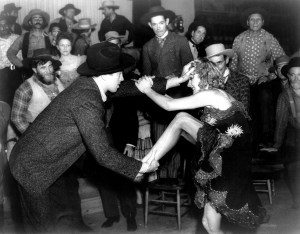 Destry Rides Again is integral to the tradition of comedy westerns–a storied lineage that includes the likes of Way Out West, Blazing Saddles, and Support Your Local Sheriff. It takes a bit of the long maintained western lore and gives it a screwy comic twist courtesy of classic Hollywood.
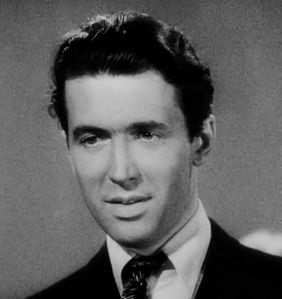 The opening credits roll and recognition comes with each name that pops on the screen. Jean Arthur, James Stewart, Claude Rains, Edward Arnold, Guy Kibbee, Thomas Mitchell, Eugene Palette, Beulah Bondi, H.B. Warner, Harry Carey, Porter Hall, Charles Lane, William Demarest, Jack Carson, and of course, Frank Capra himself.
 “He could never fit in with our distorted viewpoint, because he’s honest, and sincere, and good. If that man’s crazy, Your Honor, the rest of us belong in straitjackets!” ~ Jean Arthur as Babe Bennett
 “Let the past die.” – Adam Driver as Kylo Ren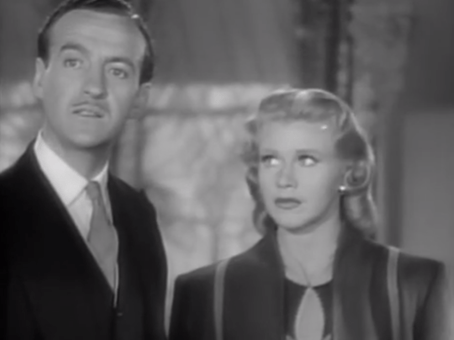
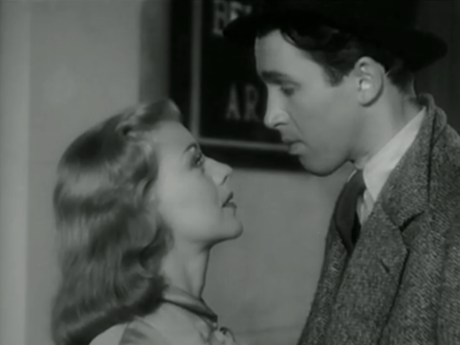
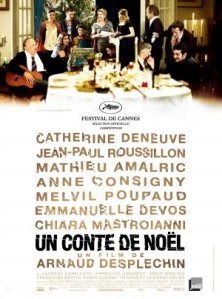 The initial inclination for seeing Arnaud Desplechin’s sprawling family drama was the presence of the estimable Catherine Deneuve. And she’s truly wonderful giving a shining, nuanced performance that makes the audience respect her, sympathize with her, and even dislike her a little bit. But the same goes for her entire family. The best word to describe them is messy. Dysfunctional is too sterile. Messy fits what they are. If you think your family is bad around the holidays, the Vuillards have a lot of their own issues to cull through.
 4 Star Films