James Whale: The Old Dark House (1932) and The Invisible Man (1933)

The Old Dark House (1932)

The Old Dark House has a disarming levity that broadsided me at first. James Whale, the man who famously gave us Frankenstein, has all of his notable features with the tinges of horror on hand for another ghastly delight, and then he goes and pokes fun at the whole setup. Raymond Massey is instantly pegged as a slightly stuffy husband. His wife, dazzling Gloria Stuart, a young ingenue has signed up for more than she bargained for with the outrageous downpour dousing them in the dead of night.

Then, there’s old reliable Melvyn Douglas playing his quintessential character type, always good for a wisecrack, with his feet kicked up, and his pipe tucked in his mouth as they proceed to get hopelessly lost. And of course, he can’t help but whistle a few fractured bars of “Singing in the Rain” when their waterlogged buggy has no recourse but become semi-amphibious.

Oftentimes bathos is used as a kind of criticism — this idea of anticlimax or a break of the mood — because it’s too jokey and therefore undermines all the groundwork put down before it. However, Whale seems to be doing something different.

At any rate, it’s not an out-and-out drama and so while somehow deconstructing his tropes and suggesting to his audience he knows precisely what he’s doing, we reap the benefit of the humor and the chills in ample measure. This is the underlying success of the film in a nutshell. It carries off both and becomes invariably more intriguing in the process.

Because The Old Dark House fits seamlessly into the tradition of Cat and the Canary, Hold That Ghost, House on Haunted Hill et al. A dark and stormy night is a genre given, but the abode itself must bring with it the unnerving idiosyncrasies to make the audience ill at ease. Rest assured. It does.

The proprietors include a white-haired gentleman trembling with timidity and his eternally deaf and priggish sister who condemns all blasphemers en masse. Their valet (Boris Karloff) might as well be a grunting prototype for the wolf man. All of this doesn’t quite suggest a warm and amicable atmosphere. It screams something else. But that’s just the beginning of the festivities…

If I’m to be terribly honest, it seems like an utter waste of Karloff’s talents, especially because I was barely aware he was playing the part. He gets partially overshadowed by the more verbal characters. Charles Laughton, for one, comes tottering through the front door soaked through as gregarious Sir William accompanied by his playful and rather giddy companion (Lilian Bond). Her lithe spirit mirrors Douglas, and they gel nicely. The night quickly turns them into an item. In fact, all the guests hang together.

One could wager it comes out of necessity. It’s a ghoulish space filled with funhouse angles and other parlor tricks. Locked upstairs is a decrepit patriarch and behind another closed door is crazy Saul, who makes a cameo appearance spouting the story of King Saul and David. You know the one, where malevolence came over Saul and he proceeded to spear the other man to death.

He finds a knife and brandishes it with a kind of giddy insanity we don’t know how to respond to. He could do anything. Douglas, the picture of casual confidence and charm for most of the picture, finds his own veneer unseated filling in for David. It’s these kinds of digressions that we never expected, and somehow they make the picture by leaving the audience totally nonplussed.

By the time The Old Dark House is wrapped up, it feels like the gold standard of this brand of haunted house movie because it’s just as much about being a mood piece — finding humor in these outlandish scenarios — and Whale does all of the above with assured aplomb.

4/5 Stars
The Invisible Man (1933)

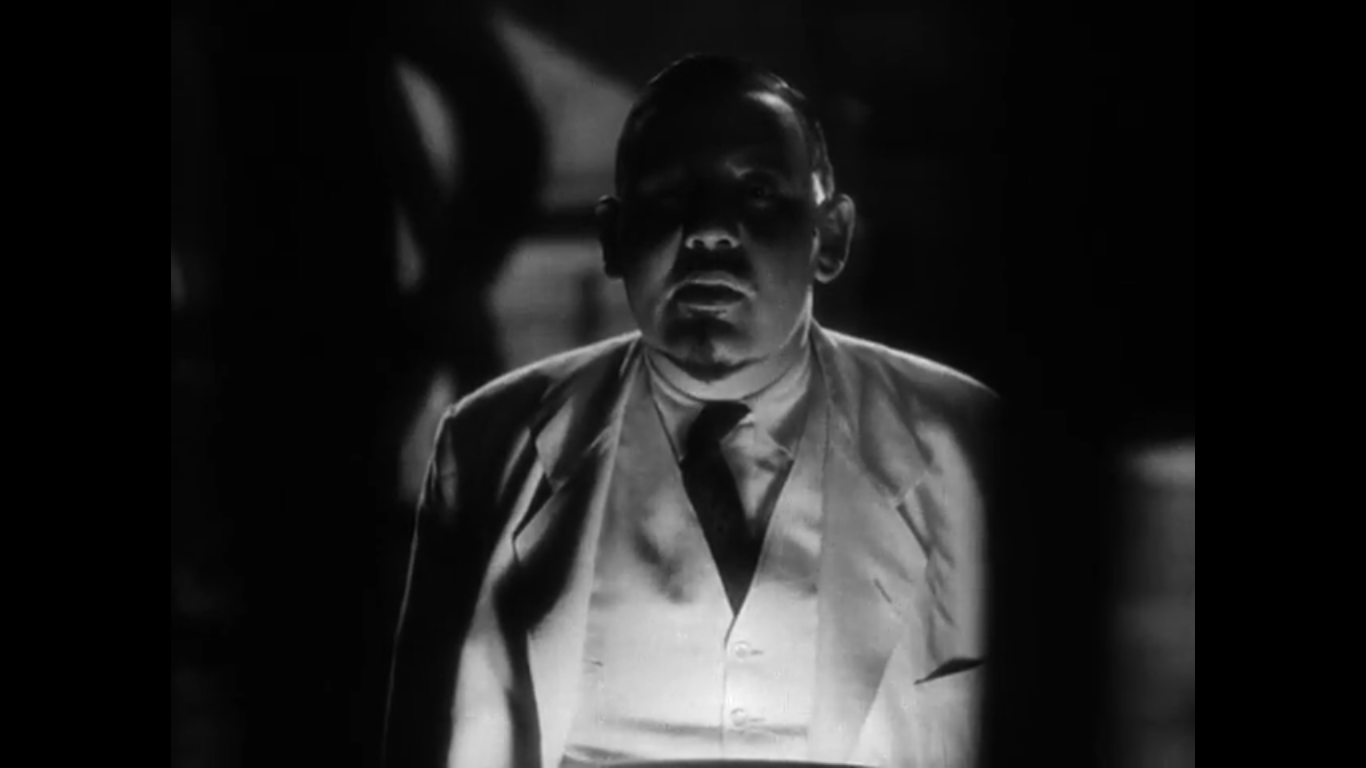
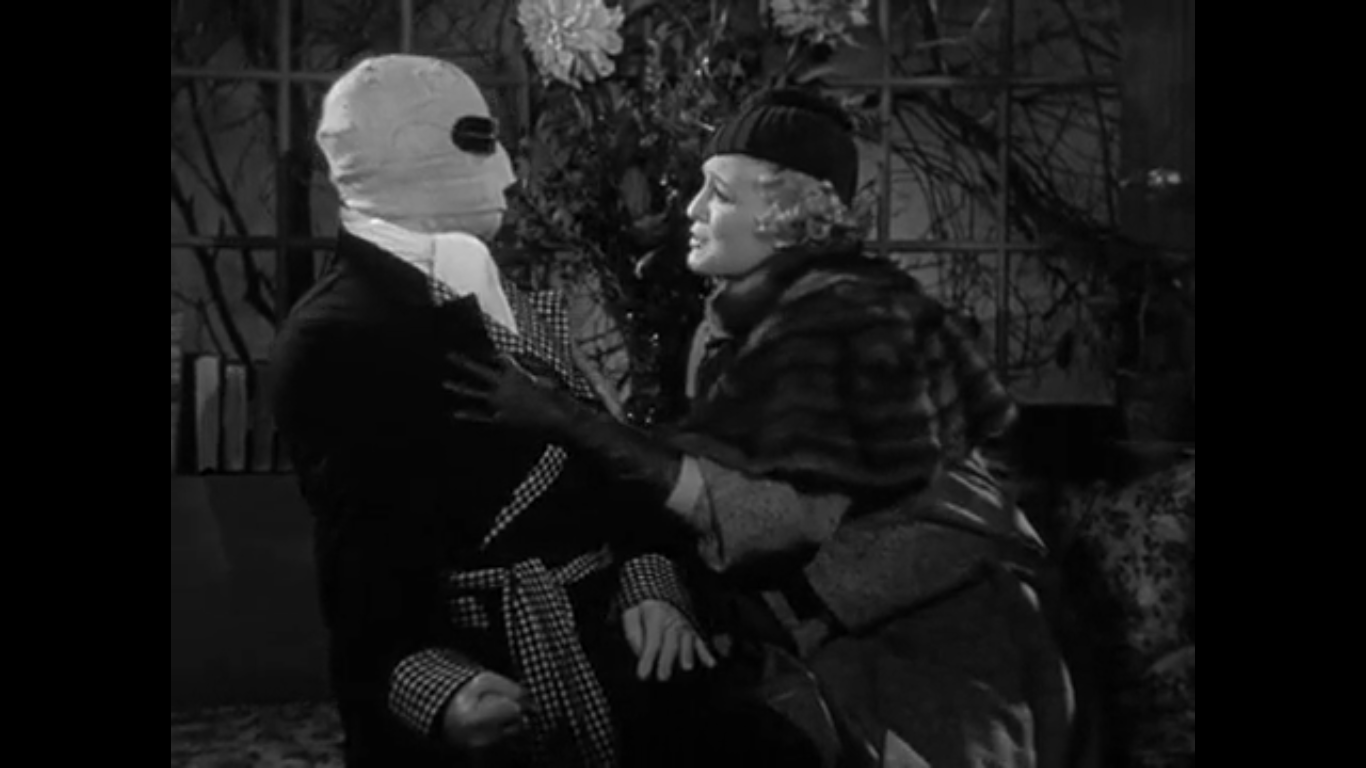
I always thought about The Invisible Man as a scientific marvel, but now I understand how he’s firmly planted in the realm of horror with added superhuman abilities. There’s something that feels somehow modern about Claude Rains’ portrayal of the eponymous character. It’s almost as if he’s the precursor to some enigmatic alien creature from Star Wars.

He’s unique and out of step with this more traditional setting of a bar and lowly establishment as local folks chew the fat and the incomparable Una O’Connor runs the place. One feels quintessentially British, albeit through the prism of the Hollywood dream factory. Rains is totally a movie machination born of smoke, mirrors, and special effects.

But it’s also as if this camouflage provided Rains the means to give one of his most ballistic and volatile performances. It’s not that he couldn’t play, wry, sly, or even bad-tempered, but his typical onscreen disposition was one of regality. He commands the room but in a very different way.

He’s seething one moment and then hysterical the next. The local constable rightly asserts, “He’s invisible. He gets those clothes off and we’ll never catch him for a thousand years!” It makes the stakes obvious. Soon thereafter the maniacal doctor commences a reign of terror making good on his threats by committing murders and diverting trains off their rails. He makes it clear he has the power to make the world grovel at his feet.

If it’s not obvious already, he’s taken on the mantle of a violent “Superman” cut out of the cloth of Dostoevsky’s Raskolnikov. What’s worse, there seems to be no one capable of stopping him.

What’s most fascinating is how the film builds the legitimacy of the Invisible Man. It’s not merely a sitcom-like trope where the invisible are given the freedom to pull practical jokes or take on a Groundhog Day-type disregard of worldly conventions. This is part of it, yes, until it becomes something more.

It turns into a story of fear and broader social implications broadcasted over the news and through every small town by word of mouth. He’s continually left unchecked and the drug he’s taking pumps him full of delusions of grandeur. It’s a drug and addiction of a different sort. Not even the affection of his former girlfriend (Gloria Stuart) can change his mind. He’s too far gone.

The special effects and the choreography get better and better as a crowd of bobbies forms a human dragnet to converge on him in the dead of night. He skips away with a policeman’s trousers sowing chaos and discord wherever he goes. But before anyone gets the idea The Invisible Man is a mere lark, we’re quickly shocked back to reality.

It has a jagged edge of vindictiveness which the production codes would make sure soon enough would never see the light of day (at least for a good many years). For now, it feels like a chilling, compact drama chock full of ideas, invention, and not a wasted minute of running time. It’s also without a doubt Rains’ finest entrance in a movie: It happens in the final frame.

4.5/5 Stars

Reviews: The Mummy, Island of Lost Souls, The Black Cat

The Mummy (1932)

There’s something deeply prescient about The Mummy beginning with an archeological expedition for The British Museum. If it’s not evident from the outset, the film is firmly planted in the reality of 1922 when Howard Carter famously discovered the tomb of Tutankhamun. This is only one historical example, but even I remember hearing about the exploits of this modern discovery.

Now we live in a world in dialogue with the history of colonialism from the cultural tension over the Elgin Marbles to the very idea of ancient antiquities being housed in museums themselves. Even if it’s mostly to capitalize on something the contemporary audience might be aware of, The Mummy makes it plain, this kind of potential cultural desecration is not a totally new idea from our “enlightened” age. It has deeply entrenched traditions.

The British expeditioners come from two different camps, and they must mediate the pull between doing their methodical work of cataloging and then following the finds that will gain the most press. Those who are fully committed know they are working for the cause of science and not for loot.

It begins with a young man who will not heed the terrible curse on a casket, and he awakens a creature from eons before. It is Imhotep (Boris Karloff), who enters back into the world fully prepared to take back what is rightfully his and reunite himself with his long-lost love by any means at his disposal.

The Mummy starts out promising, but it never quite nails down the extent of its mythology and everything feels far too convenient with the re-animated mummy capable of doing anything he pleases to serve his purposes (and the plot). He’s well-versed in mind control, he has what looks like a shortwave television, and he’s all but indestructible to human hands.

The flashback sequences of Egypt hearken back to the expressionistic imagery of silent cinema and here is where our director, Karl Freund, seems to show his origins as the fantastic cinematographer for revered works like Fritz Lang’s Metropolis.

The film’s other compelling theme involves a woman of Egyptian blood (Zita Johann), who almost functions as a doppelganger through time. One man falls in love with her in the present (David Manners) and another man loved her in the past. She’s effectively trapped between two worlds — one distantly remembered — and yet now dwelling in the body of a young woman, breathing and alive.

She is not prepared to make the kind of sacrifice asked of her and only the supernatural can save her. Karloff is expectedly chilling, but the pieces around him aren’t quite as enjoyable as his greatest monster movies.

3.5/5 Stars

Island of Lost Souls (1932)

“Mr. Parker, do you know what it means to feel like god?” – Dr. Moreau

Island of Lost Souls is the kind of movie that all but disappeared with the more stringent implementation of the production codes in 1934. It begins with an uneasy mood as a castaway is rescued by a not-too-genial sea captain, who’s anxious about dumping him at the first sign of land.

This is how our protagonist Richard Parker (Edward Arlen) catches a ride to shore on the Island of Dr. Moreau. There’s something rather uneasy about the whole setup and the movie frequents a landscape and a world not so foreign from The Most Dangerous Game. It’s as if an island conveniently eschews all traditional rules of law and order.

While the earlier film is harrowing, subjecting Joel McCrea and Fay Wray to a grueling game of high-stakes cat and mouse, this one is more thematically rich. This might be entirely thanks to H.G. Wells. He is the man who originally conceived of Dr. Moreau. However, something else must be attributed to Charles Laughton.

There’s a level of devilish forethought to Laughton’s performance. Although he’s not an entirely imposing figure, there’s something mischievous about him. Sometimes he comes off gleefully boyish even as he takes on these calculated and totally premeditated social experiments on his self-made ecosystem.

Parker knows nothing about the world he’s wandered into, but he is our stand-in representing everything inherently decent about humanity. And there is something deeper to this since he is white in the age of colonialism. While he might not necessarily bear the “white man’s burden,” certainly he’s aware of his place in the social hierarchy. He’s a benevolent figure. Dr. Moreau is this privileged mentality gone astray.

Judeo-Christian society would look back to Genesis, and the parallel imagery is made plain fairly quickly. There’s a specific order to the world, a created dichotomy between humans and beasts. Because Moreau has installed himself as god on his own private world. However, he has somehow perverted what is good in strange and troubling ways.

These themes get murkier when you start considering ideas of eugenics and even how the aforementioned production codes forbade the outright depiction of miscegenation or the mixing of races in romance. These are not synonymous terms when it comes to humans and beasts living on the island, but it’s hard not to see how predominantly white audiences at the time might conflate the two.

Because Moreau’s rudimentary imitation of creation has elements to mirror what we already know intuitively. His creatures live by basic laws shouted out by their de facto leader (Bela Lugosi), and they realize through roundabout means certain tenets. He has taught them what pain is, and he’s molded some like his prized creation Lota (Kathleen Burke) into his own human image.

If the Christian origin story hinges on a Fall from grace where Adam and Eve were deceived by the serpent and ate from the forbidden tree of knowledge of good and evil, then Island of Lost Souls has its own paradigm. Suddenly, these indigenous monstrosities of his realize their creator is mortal or at the very least they can rebel against him. The law is no more and it’s been disproven. There is no longer anyone willing to uphold or live by it. Namely, because they realize it’s fallacious.

Parker is mostly uninteresting as we watch his repugnance grow, and he looks to be reunited with his innocent love (Gloria Stuart). Meanwhile, the doctor toys with him and tries to set him up with Lota. Lota fits crucially into this deeply human narrative because there’s a suggestion of her “evolution” within the arc of the film even if it’s not in purely Darwinian terms. Because she has come to understand what sacrificial love is: laying one’s life down for one’s friends.

If nothing else, surely this shows her not to be a creature without reason or logic but predetermined with something deeper and more primal inside of her. I find it impressive how something that feels deeply exploitive could still come down on some deeply philosophical ideas without ever forfeiting its obligation to a paying audience. It’s the kind of genre film capable of triggering all sorts of ancillary conversations, and I’m all the more curious to return to Wells’s source work.

4/5 Stars

The Black Cat (1934)

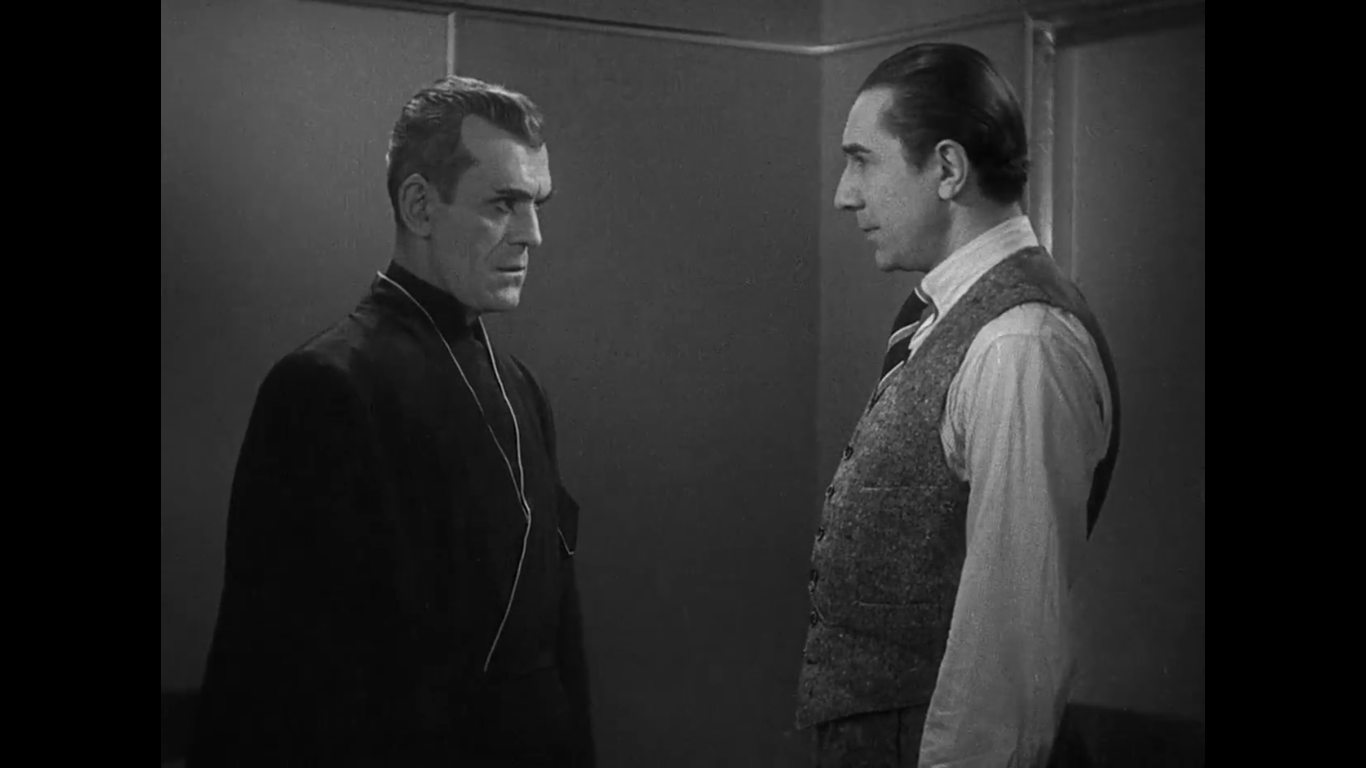
Each lineage of horror movies must have its own in-house aesthetic and stable of performers matched with specific technicians who come to exemplify a studio and their body of work. The Black Cat brings together much of what made Universal Pictures horror so lucrative from the studio, and it gathers together two of their most iconic stars: Bela Lugosi and Boris Karloff.

Although we’re not in Transylvania, the story picks up aboard a train traveling through Hungary, a typically foreign locale for a hometown audience. We meet a newlywed couple (David Manners and Julie Bishop) on their honeymoon only to have their compartment’s marital bliss disrupted by Lugosi’s Dr. Vitus Werdegast. He looks nice enough, but there’s always something menacing behind his eyes (even when he’s playing pleasant).

Inclement weather leads to a devasting crash and the couple and their newest acquaintance show up on the doorstep of one of his old friends, although I use the word friend loosely. Hjalmar Poe is a famed Austrian architect, and his abode lives up to his reputation. We must expect nothing less as we are welcomed into the home of the always foreboding Karloff.

For the rest of the picture, The Black Cat feels like an oblique tour throughout the art deco space with a subtle game of death going on between Karloff and Lugosi. Because instead of bringing two unsuspecting victims into their lair, this is much more a grudge match with two unsuspecting parties caught in the middle.

It becomes a world modulating between the polls of the supernatural and baloney. With a rogue gallery of Lugosi and Karloff, we know better, and as the good doctor demures, “There are many things under the sun.” His evocation of Ecliasstes has very ominous underpinnings.

But that’s not the only source of disquiet. The way the two actors lurk around the corridors, the very way they interact around the woman is unnerving. Karloff always seems to be leering and ogling even if that’s how his face is predisposed. Then, moments later, he’s caressing a chess piece in a disturbing manner. Or is it only our imaginations playing tricks on us?

There were lulls that I wouldn’t mistake for tension, and yet there is so much to be said about the architecture of that house even when the architecture of the film seems to fail. Because this aspect of the mise en scene embodies something that fits so perfectly with the personas of Karloff and Lugosi. Somehow always incongruous and ill at ease.

And the film never feels pulse-pounding; it’s outrageous, yes, but it also builds to these harrowing moments. They’re sinister and escalate into a final descent into the pit of Hades further accentuated by the lines of the architecture.

The ending nearly balks on the entire movie. It’s a wink and a joke that dares us to tell others about what we just saw. They’d never believe it because this is the apex of outlandish storytelling. The Black Cat‘s not great, nor is it mediocre; instead, it feels deeply alive with something probably more indebted to Edgar G. Ulmer than Allan Poe.

3.5/5 Stars

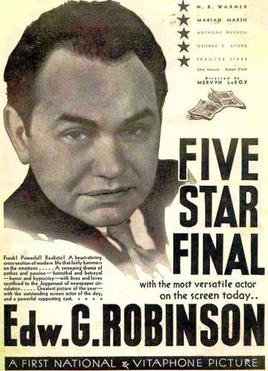
Five Star Final (1931): Edward G. Robinson and Yellow Journalism

Five_Star_Final_1931_poster

Five Star Final has its place among a bevy of real-world Journalism movies as perpetuated by Hollywood in the Pre-Code era. Probably equally important is director Mervyn Leroy, who at this point in his career was about to be tackling some of his most pointed material including I Am a Fugitive From a Chang Gang and Three on a Match, which if not totally vying for social realism, certainly blended it liberally with melodrama to instill a social message.

It should be noted before the war over Citizen Kane, famed magnate William Randolph Hearst took offense at this movie, whether or not it was outrightly aimed at him or not. Regardless, it hit close to home. I’ll let you be the judge.

This paper happens to be called the Evening Gazette and it’s anchored by editor Joseph Randall (Edward G. Robinson), though he’s not introduced for several minutes, remaining an unseen figure. Instead, we are given a clear sense of the rest of the framework built around him.

One of his story peddlers Ziggie (George E. Stone) has a perfect name to go with his line of work. His latest shenanigan involves taxi races through downtown, a cinch to drum up some surefire news.

Aline MacMahon is Robinson’s world-wearied social conscience. In other words, his secretary, who is secretly devoted to him even as the paper goes to seed. Full disclosure, I’ve always maintained a lingering affinity for MacMahon based on her general affability and her prowess in both comedy and affecting drama. Here she strikes a steady medium.

It’s true the modern newspaper game is all about mass circulation and with it all sorts of gimmicks and salacious material to grab people’s eyes. Sensationalism is the name of the game to go with lady models buried in the back of the papers. It might be vulgar, but it works wonders. Mr. Hearst was probably well-aware of it.

This is what Randall is fighting against. At first, we have the sense he’s trying to run a tight outfit — he’s a grade-A journalist — but the pressure from upstairs makes him cave and play the way they want it.

The top man, Mr. Hinchecliffe, doesn’t want their editorial integrity to suffer in so many words, but he wants to position themselves to capture more readers. It’s the old game. Sensationalism and smut sell. It takes a lot less effort and integrity than honest, human-centered journalism, and it’s more profitable.

In a sense, Robinson is at home wheeling and dealing, bustling around amid the chaos, getting on the horn and chomping on his cigars as people come in and out. He thrives on the energy. We come to understand his favorite words to fill out a story are “blah, blah, blah.”

The world itself is engaging — the characters who inhabit it in the office and walking the beat — but the film strays in its moralizing plotline. They’re looking to drudge up a story now 20 years old by getting people interested in the crucifixion of a woman.

By coincidence, the woman (Frances Starr) — now terribly respectable and married to an affectionate man (H.B. Warner) — watches her vivacious young daughter prepare to wed the man of her dreams. Everyone is deliriously happy though a land mine from the newspapers looks to totally decimate her salvaged life.

It’s Randall who set it off at the behest of his superiors because when he wants to be, he has a wily acumen, stooping to every trick in the book. One of his handy stooges is the marvelously-named Isopod. No man is right for the role but Boris Karloff — a once aspiring minister who was summarily booted out and ended up in the paper racket instead. Now he uses his religious training to get into people’s confidence.

It works much the same for Mr. and Mrs. Townsend. There’s something about his formidable voice where his sinister tone becomes unctuous in the company of his callers. He is ready to wheedle them for information, and they oblige, completely vulnerable in the fangs of such an insidious wolf in minster’s clothing.

When the Five Star Final edition comes out at 11:30 one night, the obvious trajectory of their story is sealed. In a world still reeling in the wake of the stock market, the character assassination they are assailed with seems just as hopeless. It’s not something the paper can redact or recant nor do they plan to. It’s lucrative news even at the expense of human lives.

In the final moments, there’s another meeting of the minds. Mr. Hincheclife is flanked by his Yes Men with Randall behind his desk. They are all complicit. A bitter daughter bursts in on them lambasting them for the irreparable harm they’ve caused. She beseeches the omnipotent cowards — all the cogs in the system — to conduct an act of God, by raising the dead. Of course, they can’t. They can only look on ruefully. Totally implicated and utterly guilty. The indictment is fierce and wind-ranging.

Robinson’s the one man who seems to acknowledge his part in it. While he can’t repair this mess, he vows never to become a slave to circulation again as he and his best girl shake off the dust of the crummy establishment. It’s swelling with this sentiment, but the point has been made. Five Star Final is not always elegant but between the lively characterizations and the mordant subject matter, it’s difficult to ask for more from the movie.

3.5/5 Stars

The Lost Patrol (1934): A Tale of Survival

Screenshot 2020-07-03 at 11.12.23 PM

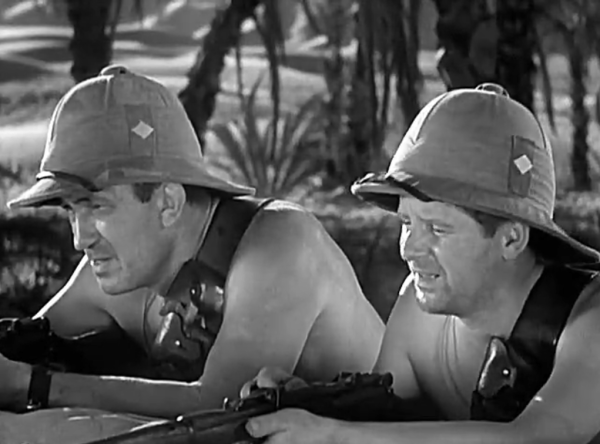
The Lost Patrol comes out of the colonialist traditions of the era with the white soldiers in Mesopotamia doing battle with an Arab enemy who strike like ghosts. They are phantoms and rarely seen in the flesh. It’s an unwitting bit of commentary but it also simultaneously becomes one of the story’s most unnerving assets. There’s a tension born in an adversary who is all but invisible and still has a deadly sway on the story.

The film’s opening images are telling in establishing setting and the man behind the camera. Because this is a John Ford movie. It’s a fairly early offering, but there are elements that feel unmistakably relevant to his oeuvre. There’s the shadow of horses trotting across the sand, and then a line of riders snaking their way across the wide-open vistas of the dunes. It’s a variance on the western form or at the very least a transplant.

During this journey, their thick-skulled commanding officer is knocked off unceremoniously. He also never thought it prudent to tell his second-in-command what their orders were. With him gone, the remaining contingent is left wandering through the desert wasteland without any kind of direction.

The Lost Patrol is an expeditious drama with little time to waste and so survival becomes its primary focus. It’s not searching out a destination or looking to vanquish the foe as much as it’s about these men living to fight another day. It’s a windswept character piece more than anything.

We see Victor McLagen at his most restrained and sensible. His wealth of experience has taught him to keep his head, and he makes darn sure that all his men stay on high alert. Take, for instance, the euphoric scene where the mirage is real, and they finally settle on a spring of water. The men are satiated by a cool drink — a lifeline in the midst of such an arid and desolate terrain — and they fall into it with joyous elation. Their Sergeant is the one man who holds back, chiding them to take care of their steeds.

If McLagen is one of the stalwarts, Boris Karloff is uncharacteristic as Sanders, a jittery and spiritually inclined fellow clinging to his belief although he seems ever ready to spout off jeremiads. For him, their latest discovery is tantamount to The Garden of Eden.

It is an oasis, but they’re also stuck there. Instead of being excommunicated, they might as well die where they stand if they can’t get support. Much of the film at this juncture comes from digging in and waiting it out. We get to know the band of men and at the time same are brought into the tension of their prolonged campaign of survival.

A young lad, wet behind the ears, is crazy about Kipling and the glories of war. Whereas he’s woefully ignorant of the tough side of the life he’s chosen. Morelli (Wallace Ford) is a bit more jocular blowing off some steam with his harmonica even as he brushes off his own bad luck, calling himself the Jonah of their expedition. Still, their leader doesn’t see fit in tossing him overboard. They’re only going to prevail if they stick together.

Because this is a Ford picture, there also have to be a couple token Irish old boys to round out the company. They’ve seen much of the world thus far, and they have more or less willed themselves to fight another day. It’s baked into their stock.

By far the most intriguing has to be Boris Karloff as he’s taken over by his religious fanaticism. And he’s not the only one to totter toward the precipice of insanity or unrest. There are others. In fact, how does one not lose their mind under such dire circumstances?

Their situation is laden with the kind of dread of a who-done-it murder mystery. Men get knocked off or become lost to the elements, one by one, until their mighty group is dwindling with the unseen enemies still lurking just beyond the sand dunes.
Though the parameters of the drama come out of a bygone era that we have left far behind, somehow Ford’s film maintains some amount of its mystique. He’s already well-versed in capturing the panoramas around him in striking relief. He’s actually aided even more by hardly showing his villain at all. Time honors this decision because it falls away, and we forget the stereotypes as much as we feel the specters hanging over the patrol.

To the very end, McLaglen is a stalwart and you can see how Ford is able to fashion him into a reputable even idealized champion. He’s not unlike a John Wayne or other figureheads Ford found ways to fashion into his personal visions of inimitable manhood. There’s something admirable about them — found in their mettle and loyalty — even as they exude a persistently evident humanity.

3.5/5 Stars

The Criminal Code (1931): Howard Hawks in The Big House

Screenshot 2020-07-03 at 4.26.44 PM

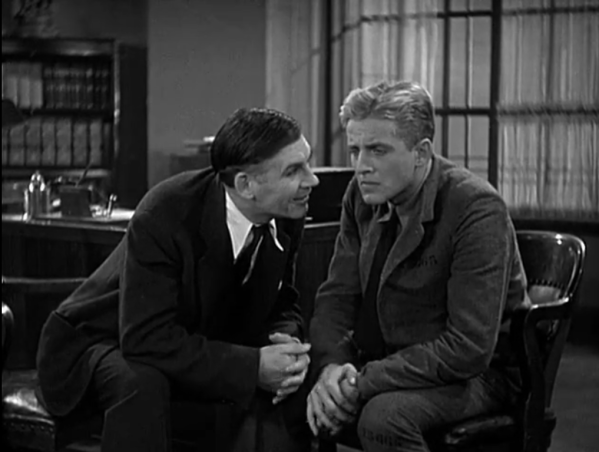
Although this is still a very early talkie, you can already see Howard Hawks developing a more intricate sense of dialogue which he would be known for in his pictures — most notably His Girl Friday. In the opening scene at the police station, we have dialogue piled on top of each other between pinochle and the lastest crime being called in over the telephone.

It’s a wonderful melding of both character and exposition being delivered fluidly in a manner that supplies us so much in such a short amount of time. Soon the two quarreling cops are on the scene at a nightclub where a fellow was knocked off.

The by-the-book incumbent district attorney, Mr. Brady (Walter Huston), sees an open and shut case, although it’s a rotten break involving a kid and a girl, and another man is dead. He concedes this and yet the law is his Bible — an eye for an eye, somebody’s gotta pay mentality — going back as far as the precepts of Hammurabi in ancient times. He’s not willing to budge an inch.

He unceremoniously consigns a young man (Philips Holmes) to 10 years in prison as penance for his wrongdoings. Even it if was only one false step, the law says he has to pay for his deeds. There is no other recourse. Time passes and prison life has gotten to him, left him stir-crazy and ragged. He’s no longer the fresh-faced kid he once was and news of his dear mother’s passing is yet another blow.

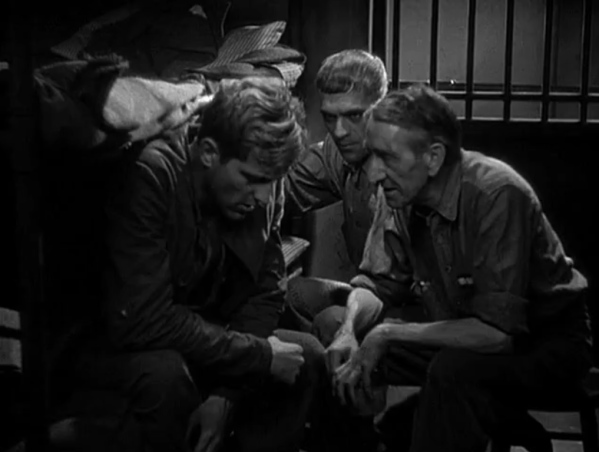
His bunkmates try and watch out for him and settle his nerves, but they’re not totally sympathetic. How can they be? Some of the men put in there by Brady feel duped. There’s this pervasive sense of restlessness and unease.

This prevailing mood only grows worse when Brady takes on the role of the new warden in the prison. The incarcerated mob ignites with yammering in the jail yard because the new man has come to town, and he was instrumental in putting so many of them away.

Brutal law and order are maintained by Gleason, the paunchy head prison guard, who’s not above threats and psychological intimation. There’s one in every big house, and he has a standing appointment with Boris Karloff’s Galloway.

In fact, Galloway is loaded with the kind of menace Karloff thrived on throughout his career, and he becomes a stellar conduit throughout the movie even as Gleason represents all that’s wrong with authoritarian power trips. They have a mental duel going on that takes a while to come to fruition.

One bright light is Constance Cummings, a genial countenance of stylish propriety and beauty. Her very presence comes to represent so much in the movie, and it’s true she represents both a beacon and a sliver of hope for Robert. If nothing else, he wants to be in her presence — just to see her and talk with her — because she makes him feel human again.

Screenshot 2020-07-03 at 3.52.46 PM

The narrative wouldn’t be complete without a botched escape attempt, but what’s more intriguing are the consequences. Because the stool pigeon, a sniveling squealer named Runch gains the ire of the entire compound and there are rumblings of unrest. Retribution is brewing in some form.

Robert does his best to stay out of it, but he’s also not prepared to help the canary. In the resulting drama, he’s implicated while maintaining his innocence. It also puts him wholly at odds with the warden who looks to get him parole. Still, he’s beholden to the law in all things. It’s guided his entire life, his entire career. Leniency is not in his vocabulary.

Whereas Robert has become beholden to the other side and the honor among thieves, if we can call it that. You don’t rat and you keep promises because what good is it if you can’t keep your word? It shows his personal integrity. For his reluctance to speak he’s put in “the hole” and subjected to the malevolence of Gleason.

Although there is a standoff and the kind of finale we expect, the crux of the story — all its thematic ideas — come in this earlier portion. Because Mary returns from her time away and what it does is provide perspective. She loves this man, Robert, even though he’s never said it outright. She knows he is the one, and it causes her to confront her father with the truth.

Father and daughter have it out in civil discourse in the first moment where they aren’t pals and actually stand up for their personal prerogatives and what they believe to be right. While it’s not exactly Scarface, Hawks does a stellar job of grounding a tale of crime and punishment once again with a familial relationship. Phillips Holmes isn’t a particularly enthralling actor, but between the likes of Huston, Karloff, and Cummings, there’s a fine array of color. It more than deserves a spot as an unsung Howard Hawks picture.

3.5/5 Stars

Boris Karloff at RKO: Body Snatcher, Isle of The Dead, Bedlam

In our current climate, it almost seems like an oxymoron to have a shoestring-budget period piece, but many of Val Lewton’s best movies were founded on this formula.

His three-film partnership was beneficial for all parties involved and we would like to consider how he was able to fashion Karloff into a new kind of monster.

In honor of the spooky season, let’s talk about Karloff at RKO:

The Body Snatcher (1945)

Robert Louis Stevenson is an auspicious literary figure for anyone raised up on fiction like Dr. Jeykll, Treasure Island, or Kidnapped. Much of this might have come from any of their many adaptations. Thus, it seems fitting to know his work also received the Val Lewton treatment in the form of his short story, “The Body Snatcher.”

The year is 1831 in Edinburgh, Scotland, a place I reminisce about fondly. This is not a world of invading pod people; it’s actually a much more arcane movie with a gothic mood and style of the Victorian Age.

There’s a practicality to its premise and the origin of the horror. Not unlike Doctor Frankenstein, these doctors need cadavers — specimens on which to learn their trade. They have a bit of a silent agreement with a local coachman named Gray (his eminence, Boris Karloff), who is also a “Resurrection Man” by night. In other words, he digs up dead bodies.

The Doctor Macfarlane (Henry Daniell) has an empty callousness in his face and voice, like a shell of a former man who probably had ideals in his youth. Now he’s shackled by something, either vocational obsessions or something far more sinister.

The character dynamics are mostly intriguing as it’s hinted that “Toddy” and Gray shared a slightly sordid past together long before their current business arrangement. The Doctor’s housekeeper is also closer than she appears, chiding him to let the past go and with it the callow boy he’s brought on as his assistant.

Russell Wade is perfect as the naive Fettes, who only sees the altruistic good in their profession and his mentor. The young student vows to a pretty young mother that her invalid daughter might walk again if only the doctor might operate on her. Macfarlane’s less inclined to make such a rash promise.

Because of these clouded histories, much of the movie is about the specters of the past with Gray constantly at the ready to hound the man of reputation. He aims to keep their lucrative partnership going by any means necessary.

One of the film’s most visually arresting scenes is in the dead of night. There’s a haunting street singer done up in a shawl with a small bowl for alms. Her gorgeous brogue pierces through the evening lamplight and the all but silent cobblestone streets as she sings “When Ye Gang Awa Jamie.” Soon even she goes quiet…

Another definitive moment comes later upon entering the cabby’s quarters with the camera turning right into his horse resulting in a genuine jump scare. Bela Lugosi feels almost unrecognizable to me and by that I mean he hardly speaks, mostly slinking about in the periphery of the story. When he finally does speak that’s the giveaway.

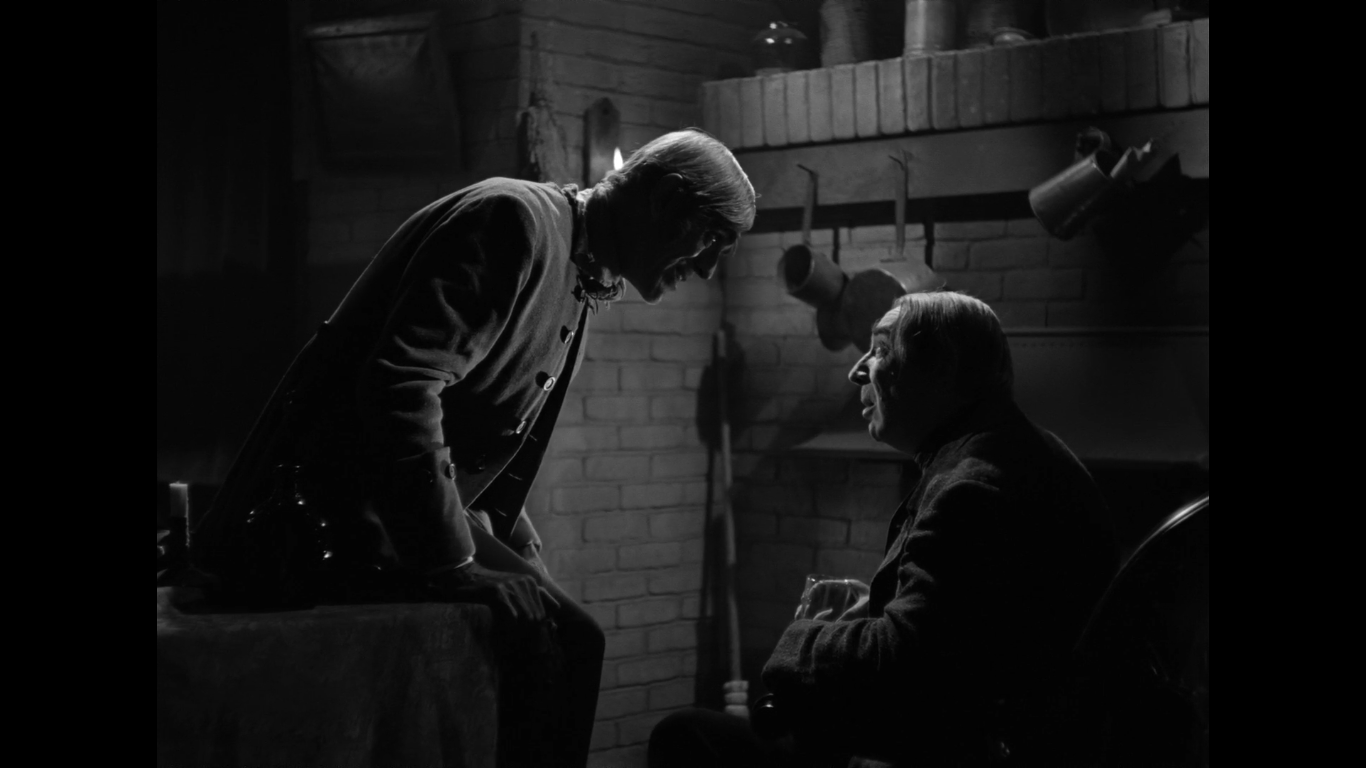
Joseph pays a visit to gray with a mind to blackmail, but he’s not half as cunning. They share a drink in the firelight. Karloff’s propped on the table grinning lasciviously as he leans over the oblivious man. Who’s in control of the situation is plainly apparent, and it’s such a stunning composition honoring two of the greatest horror showcases Universal ever had.

Now they are with RKO, certainly older, but Val Lewton pays them his utmost respects. Although Karloff’s the biggest name, this is a new generation of films removed from his earlier persona. Lewton effectively allows him to rebrand himself as a new kind of villain, a new kind of monster to be feared. The extraordinary thing is how it’s hardly makeup or special effects-driven but performative in nature. It’s also chilling.

There’s a jolt of ambiguity into the ending of the movie as the Doctor is haunted by his sins, but Karloff’s just as agonizing. Maybe it’s because he seems to represent past sins reincarnated. I’m curious if contemporary critics hailed it as a return to form for Karloff. Even with the passage of time, it seems to show a startling range I’ve appreciated more with time. He gets to show another side of himself.

4/5 Stars

Isle of The Dead (1945)

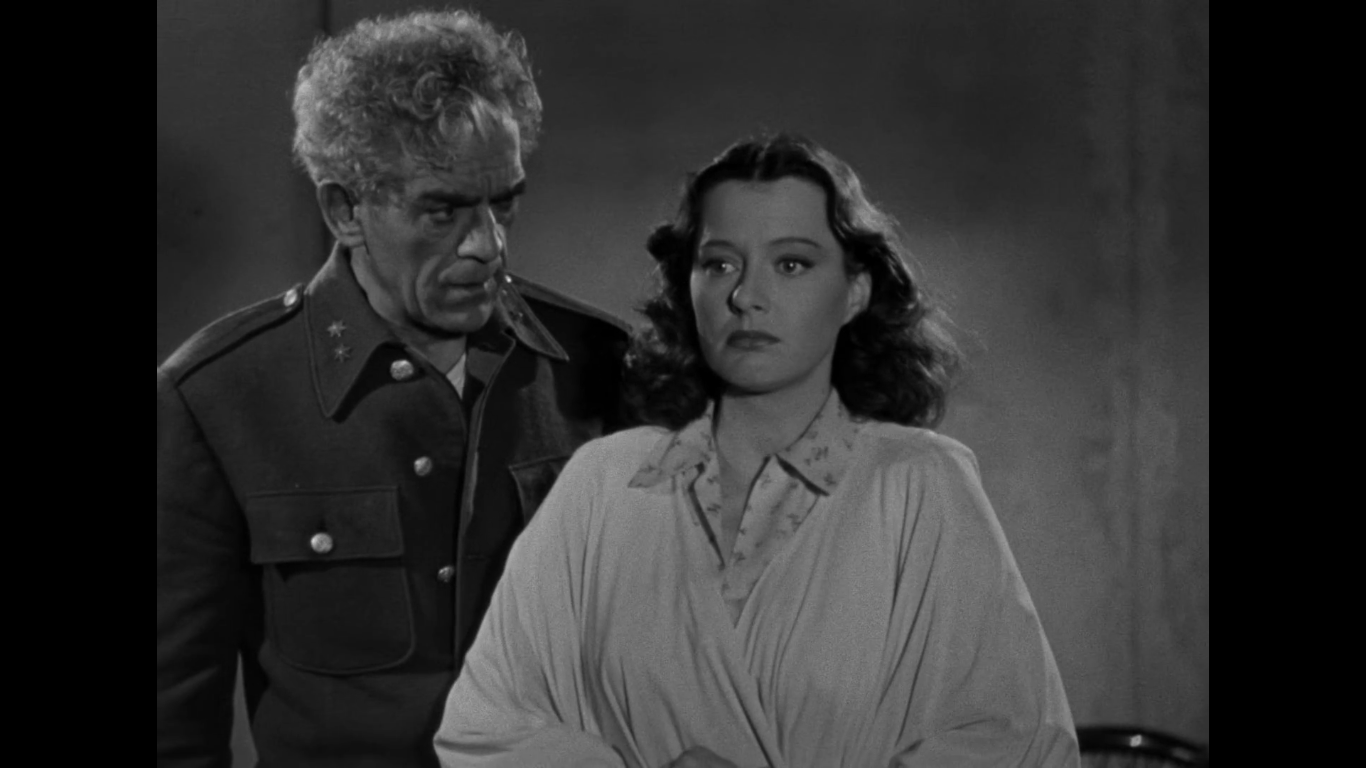
Isle of The Dead begins with an unbelievable scenario with no forewarning as Karloff’s General intimates for a disgraced officer to commit suicide in order to maintain the company’s reputation. Minutes later he takes a journalist (Marc Kramer) for an amble through no man’s land in the First Balkans War as if nothing has happened.

There’s something uncanny and manufactured about how this General brings this other man along with him as he goes to visit his wife’s crypt on a nearby deserted island. Just saying it now sounds outlandish. But this is what happens. I’m not saying it’s naturalistic, but that’s hardly the reason for watching this movie. It’s as if we have entered this transitory world that operates outside of our accepted logic.

It is a bit of a surprise because Lewton normally worked very hard to create the baseline world and the logic of his stories, so we might be fully committed as an audience. Although this might be partially lacking in Isle of The Dead, what’s not absent is his signature sense of foreboding atmosphere adding a shroud of horror-worthy darkness to all his pictures. Their eeriness cannot be shaken off easily.

Then, again perhaps I spoke too soon. The story still works in ample amounts of mythology including Vrykolakas: undead, vampire-like creatures that haunt the living. Some believe they have been sent as punishment by the gods, there are pagan rituals to Hermes, prayers are sent up regularly, and belief is a powerful force.

Although the opening premise is suspect, it’s this added context creating the foundation for the rest of the movie as it sends Karloff deeper into this Grecian abyss of darkness and shadow. In no moment is this more clear than the glorious sequence when Ellen Drew walks the hallways at night, candle in hand. It encapsulates the entire movie in a few successive shots of stylized pitch-blackness.

Our protagonist says, “I put my faith in what I can feel and know and see,” and yet his rationality must do war with the steady barrage of wind and shadow. Many of the island’s inhabitants are stricken with the plague. It seems like a silent killer born out of voices calling out from the night and a fleeting apparition in white.

Lewton hasn’t lost his touch in conjuring up such mysterious environs to assault our senses. It’s never about out and out shock value, but this pervasive sense of the inevitable. This must all come to some end. We all die be it from war, plague, or something equally as sinister.

3.5/5 Stars

Bedlam (1946)

It’s curious and rather extraordinary that two of Karloff’s films with RKO were inspired by paintings. Bedlam came out of William Hogarth’s series A Rake’s Progress. It occupies itself with Bethlehem Asylum in 18th century London. Although this is the so-called “Age of Reason,” treatment of the mentally ill is hardly benevolent.

All the “loonies” are kept in their cages like sideshow attractions for the public to gawk at for a tuppence fare. We’re privy to one of its present tragedies: a man falling to his death from the asylum rooftops with a little assistance. If we want to get to the bottom of the callous hell hole, we must look no further than Master George Sims.

There he is: Boris Karloff done up in a wig and the attire of the age. Here’s another joyous occasion to see him take on yet another century of English history through the period lens of Hollywood. It’s a deliciously unctuous performance, and he proves himself just as skeevy as he’s ever been.

He’s called in for a stern talking to — the corpulent Lord Mortimer (Billy House) and his lady protege (Anna Lee) have some words for him. He’s taken mild dissatisfaction on losing some of their entertainment.

Always quick to ingratiate himself and despite having sent Mortimer’s poet to his demise, he vows to put on a frivolous performance to tickle the patron’s fancy. It’s so easy for him to use and degrade his tenants for monetary gain because what worth are they to the world outside?

The moment Anna Lee enters the inner sanctum of the asylum and sees the tenants in their own world she’s momentarily surprised even moved by their fate. Though she tries to mask it on the outside with words and a riding crop, she does harbor pity for them.

It is a perceptive quaker (Richard Fraser) who notices her reaction and rouses her to some form of Christian action. She is more sympathetic than the rest of the idle masses because she is self-made. Without the luxury of personal wealth or power, she knows intuitively how hard it is to find self-preservation in an often heartless world.

In some way, it feels like a call for tolerance and sympathy by reaching into the past to inform the present. Because although it is a story in the guise of 18th-century horror — Karloff’s presence makes sure of that — there is something more to the picture.

Like all Lewton’s work, there’s a deceptive depth and substance to Bedlam that is at one time both intriguing and generally commendable. Because he doesn’t just make entertainment. It entertains, yes, but you can watch the RKO films and there are supplementary thematic interests to them.

Karloff is the standout in all three pictures — no one else comes close — though I am fond of Lee here because she actually has spirit and stands for something. She’s willing to do battle with him. It’s a collision of dueling philosophies.

He snarls that men are not brothers — they are not good and kind — but savages that must be ruled by force and his worldview plays out in how he governs Bedlam. With the saintly quaker speaking into her life, she looks to reform the asylum as she is trapped on the inside vowing not to give in and cave to Sims’s merciless conception of the world.

Karloff obviously relishes his subtle insinuations and well-placed comments to stir pots and get what he wants while pushing back against those who wronged him. Namely, gaining the good graces of Lord Mortimer and spurning the impudent, proud lady.

Is he evil? Not exactly — at least not at first — but he has a steady mean streak which proves to be utterly Machiavellian and maniacal. It’s villainy at its finest because it slinks so easily under the radar of societal convention. He’s despicable and still oddly droll making for a fine antagonist.

4/5 Stars

Targets (1968): Orlok Makes You Scream

targets karloff bogdanovich

The story goes Peter Bogdanovich met Roger Corman sitting in a screening of Bay of Angels (1963). What came out of that was an apprenticeship of sorts on Wild Angels (1966) in the Corman Film School where Bogdanovich did everything you could possibly imagine from script doctoring to location scouting etc. What he got for his troubles was hands-on experience but also the chance to direct his first feature…with a couple stipulations.

Corman gave him full control of his own movie as long as he reused some footage from an earlier Boris Karloff picture, The Terror, as well as utilizing the veteran actor’s two days of service he still owed Corman. There you have the birth of Targets, which manages to amount to far more than these contrived beginnings might suggest.

Because Bogdanovich found a way to make these haphazard pieces work — where it feels more like a meditation than a constraint — and the movie uses this to its advantage. It’s like a ’60s rendition of the poverty row pictures of the ’40s where necessity is truly the mother of invention. Sometimes you get a diamond in the rough.

The irony is while the big pictures were giving us entertainment that would become emblematic of the times like The Graduate, Bonnie & Clyde, or 2001: A Space Odyssey, it’s a movie like Targets placing us in the times themselves. In this way, it functions more like contemporary television.

What we are provided is a very concrete sense of Reseda in 67-68. There’s the “Real” Don Steele on the radio waves. Otto Preminger’s Anatomy of a Murder is a modern classic featured as the Saturday night movie on channel 7. A family sits down in the evening together to take in Joey Bishop and sidekick Regis Philbin. And, of course, there are drive-ins.

If this sets the stage and places Bobby Thompson (No, not the ballplayer) in a vaguely familiar landscape, the movie itself comes flowing out of the persona Boris Karloff provides free of charge.

Looking at them without context, there are so many elements of Targets that might leave one mystified. For instance, this white-haired gent with the booming voice. If you put the movie in a time capsule, those who find it probably wouldn’t know this is Boris Karloff. His Byron Orlok isn’t an anagram, but it feels like one.

Although he’s an acclaimed name, he’s resigned himself to a sorry fate. In his own words, “I’m an antique, out of date — an anachronism. The world belongs to the young. Make way for them, let them have it.” He might have seen Bonnie and Clyde and The Graduate too.

Still, he’s continually in dialogue with his own personal legacy and very aware of it. Just as he watches a version of himself on TV. His character recalls a tagline from his heyday, “The Marx Brothers make you laugh. Garbo makes you swoon. Orlok makes you scream.” It’s all part of this persona closely mirroring Karloff’s past.

Likewise, Sammy — that guy’s not much of an actor — although it changes instantly if we know this is Bogdanovich himself. The young screenwriter walks in, sees the TV, and right on the nose says, “It’s Criminal Code. I saw this at the Museum of Modern Art. Howard Hawks directed this. He really knows how to tell a story.”

They become these dueling pawns, partly fiction, partly reality, as Orlok bemoans the fact he has become high camp; he can hardly play it straight anymore, and Sammy coaxes him that the role is something he can do (Targets?). Otherwise, he’ll offer it to Vincent Price.

It’s as if the director beat Orson Welles to the punch with this kind of intratextual dialogue between the medium and its real-life players. Surely history helped out because Targets was just his beginning followed by a whole slew of classics, albeit disrupted and undermined by his own turbulence and troubles replicating his most supernal successes. All these things and more are what make Targets so riveting when it has little right to be.

Targets Boris Karloff and Nancy Hseuh

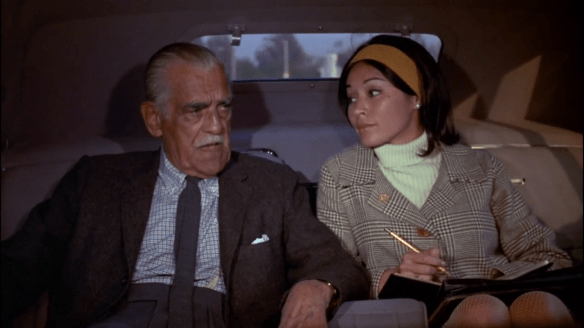
Orlok’s secretary Jenny (Nancy Hsueh in a charming role) is romantically attached to Sammy, but also has a staunch devotion to Orlok. She doesn’t want the old man to just give up and she feels slighted when he lashes out at her — one of the few people who genuinely cares for his well-being.

He’s ready to turn his back on it all only to reluctantly agree to make a public appearance. He’s fallen to the low of the Drive-in Theater circuit, living off the residual celebrity of his waning fame.

Meanwhile, Bobby has gone through his daily paces. He seems like an All-American boy. He’s married but lives with his parents. He likes guns, and he’s been taught a healthy (or unhealthy) sense of competition. There’s an underlying angst supplied by this deceptively pristine life.

He stakes out on top of an oil well, brown bag and a soda pop in hand, as he sets up overlooking the freeway, prepared to pick some people off. Bogdanovich captures the evolving sequence with a Sam Fuller sense of grab-and-go photography, on the side of the freeway, with a brazen even outlandish sense of drama.

This is real traffic and real places and the director plucks out his shots from these pregnant moments of simulated reality. Between the crosshairs, gunshots, swerving vehicles, and flailing bodies. The scene evokes the Texas tower shooting of 1966 where killing becomes this indiscriminate force of violence.

The Sniper (1952), from over a decade prior, was a picture that, no matter its effectiveness, was meant to elicit a social response. Stanley Kramer’s movies can be strongly identified by this sense of responsibility toward the viewer. Targets hardly feels like a political statement of any kind, but its themes are no less intriguing — probably because it never feels like it’s preaching something. Instead, it allows us to consider its various digressions and still be gripped.

The drive-in finale actually does a solid job of reconciling the two disparate story strands. Bogdanovich had watched enough Hitchcock, heck, he’d interviewed the Master of Suspense, and put in this position calling for such a set piece, he seems to know intuitively what he has to do.

What’s more, it signaled the young director’s ascension as a New Hollywood darling. What’s so striking is how it marries Classic Hollywood with the contemporary climate and does it with a startling sense of command. If you needed a picture to try and sum up Bogdanovich himself, then there is no better lodestone.

He wants to revel in the days of Karloff and Hawks of old — when violence meant monsters and gangsters — and yet he brings it into the 60s. Because violence still existed but in a different form. In the age of social tumult and assassinations, the landscape of the 1960s feels a lot more futile and incomprehensible.

And the images make you shutter as we are implicated in this alongside a killer even as we sympathize with Orlok trying to bow out gracefully. I’m not sure which aspect is more telling. The power is that we need not pick between them. We are presented horror in its various forms, old versus new, and the person who unifies them so evocatively for us is Peter Bogdanovich. It’s quite a stunning feat of ingenuity.

4/5 Stars

Lured (1947)

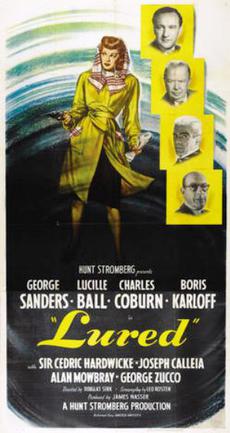
LuredPoster.jpg

Herein is a slightly off-kilter serial killer, mystery-thriller and early American film in the career of German emigre Douglas Sirk. Of course, the action is actually set in England. It’s a film that builds a paranoid framework like The Lodger (1944), I Wake Up Screaming (1941) or other like-minded films. However, it goes through the normal paces only to lurch forward in the most curious directions.

The parties involved include a Scotland Yard guided by that industrious Brit for a day Charles Coburn. Other people of interest include a street-smart nightclub dancer (Lucille Ball) who saw one of her co-workers go missing after a rendezvous with a mystery man. In fact, a rash of disappearances of young attractive women has overtaken the city.

Thus, upon finding Ms. Carpenter to be a plucky and intelligent young woman the inspector calls upon her services to force their elusive perpetrator out in the open acting as the tantalizing bait. She begins to respond to advertisements in the paper — his calling card — to lure victims into his clutches.

The only problem is figuring out who the man might be because numerous candidates roam the streets and many people circa 1947 placed postings in the paper. It’s common practice. Among people she gets caught up with are a delusional fashion designer who became unstable after years of criticism. The one and only Charles van Druten is played by none other than Boris Karloff in one of the film’s many digressions.

Likewise, Ms. Carpenter answers a call for a position as a maid, though the prospective employer’s intentions prove to be far more insidious involving some dealings in South America and too-good-to-be-true promises of advancement. Once more Scotland Yard puts an end to the criminal activities but is no closer to their murderer.

One of the more prominent people of interest is Robert Fleming (George Sanders) a man of vast influence and a stage producer who finds classical music tepid and most of the upper echelons of the society’s elite even worse. He goes about it all with the playful disdain that can only be attributed to George Sanders at his best.

In fact, his manner is off-putting to Sandra as well but their prickly beginnings cannot completely derail romantic feelings. In those respects, both Ball and Sanders prove to be adequate romantic leads propelled by their wry comedic proclivities. That’s far more rewarding than any romance. The only problem is that he might not be who he claims to be and at any rate, a great deal of circumstantial evidence is piled up against him. A final push for justice must be made.

Lured isn’t an instant classic as the tension while there is never altogether sweltering. But simultaneously the screen is crammed with quality performers and just enough idiosyncratic moments and bits of humor to keep the film from being absolutely conventional. George Zucco is by far the most amusing of the many supporting characters as the crossword puzzle-loving officer H.R. Bartlett who acts as Sandra’s guardian angel while simultaneously coming upon many of his solutions through simple eavesdropping.

This is also a telling film that should make us uncomfortable and it’s not so much that things feel overwhelmingly misogynistic and objectifying of women, it’s the even more sobering fact that things have not changed as much as we would like to believe.

What is the root of most serial killing? Surely we can see familial issues or mental instabilities but oftentimes it’s tied in with a distorted sense of love wrapped up in perverse fantasies hidden from view.

Our killer is obsessed with the poetry of Baudelaire and uses it to realize the fantasies that he never seems able to act out on. The man’s interest is in destroying beauty instead of making love to paraphrase Coburn’s character. When he finally is revealed I’m not sure it’s a surprise but then need we be surprised? Many “normal” men are capable of great evil. They’re simply good at covering it up.

3.5/5 Stars

Scarface: The Shame of a Nation (1932)

Ga220px-Scar2ngsters, prohibition, Al Capone, the St. Valentine Day’s Massacre. It all sounds like some distant piece of folklore that by now is far removed from our modern day sensibilities. But when films like The Public Enemy, Little Caesar, and of course Scarface came out, these things were at the forefront of the national conscience. In fact, it seems like these films have seeped into our culture, making it hard to pull the legends and cinematic stereotypes away from the cold hard facts that have now dissipated with time.

Like the other gangster dramas, Howard Hawks‘ effort makes it blatantly obvious with its introductory title card that it is a story condemning the rise and fall of the gangsters. Much like many modern films, there is a great deal of screen time given to corrupt characters, but in this case, there is meant to be less ambiguity. The audience is directed to the fact that this is not a glorification, but an indictment. That didn’t mean controversy was not stirred up since Scarface’s immense amount of violence got it held up by the censors. But it did finally make it past in 1932.

What follows is what we would expect: The rise and fall of one ambitious mobster Tony “Scarface” Carmona. He starts out as an enforcer and tough guy who is ready to make his way up the ranks and he’s not going to allow any Tom, Dick, or Giuseppe get in his way. He often incurs the displeasure of his worried mother, and he is often distraught with his baby sister (Ann Dvorak) since she will not keep away from the boys.

Pretty soon Tony is made second in command, and his boss is looking into taking over the South Side after the previous big shot was knocked off. The little men cannot do much about Johnny and his crew moving in on the territory, but of course Tony’s not satisfied. Along with making a pass at the bosses girl, he starts taking it to rival mobsters on the North Side even when Johnny told him to lay off.

Retaliation follows with a vengeance and the cops are also taking an increasing interest in nailing Tony since he’s such a smug hotshot. But Scarface’s new best friend is the Tommy Gun. Tony only increases his ambitions by countering the rival mobsters, ambushing and gunning them down all across town. There’s no mercy and he even annihilates the rival boss Gaffney (Boris Karloff) at a bowling alley. Tony even manages to escape a hit put on him by Johnny and pretty soon old Scarface is running the show like he always wanted.

Every rise is always followed by a crushing fall, and Tony is no different. He is enraged to find his buddy and perpetual coin flipper Little Boy (George Raft) calling on his sister. Tony literally loses his mind gunning his friend down in cold blood and thus unwittingly setting himself up for an undisputed murder wrap. He deliriously holds himself up in his barricaded flat, but the hourglass is slowly running out. The game is up as quickly as it began.

Paul Muni is a fairly captivating lead who pulls off the gruff Italian tough guy pretty well. His supporting cast including the glowering George Raft and his hapless “secretary” (Vince Barnett). Although Ann Dvorak felt like a girl miscast. Otherwise, this pre-code film has its fair share of bullets flying and sirens blaring. It’s a film full of grit and shadowy avenues that are sometimes swimming with beer and sometimes blood. It is extraordinary to think of where Hawks went from this film, one of his earlier works because he really was one of the most adaptable and successful directors I can think of. His films do not always reflect his own personal style per se, but they are more often than not engaging, self-assured, and dynamic. Scarface is little different. An early classic from one of the great American visionaries of film.

4.5/5 Stars

Frankenstein (1931)

e7a7f-frankenstein13Starring Colin Clive and Boris Karloff, this archetypal horror film is loosely based on the novel written by Mary Shelley. Frankenstein is a man intent on creating life. However, his creation is made out of corpses and then comes the fateful day that he brings his Creature to life. Once it is alive his own life will never be the same. Soon it begins to cause havoc by killing a little girl and scaring others. It even attacks Frankenstein and his wife on their wedding day. In the end the Creature meets his demise in a burning barn and Frankenstein seemingly escapes utter disaster. This became the perfect set up for the Bride of Frankenstein (1935).
4/5 Stars