 Being a history aficionado I pored over American Prometheus by Kai Bird and Martin Sherwin, which provided the inspiration for Christopher Nolan’s latest film on J. Robert Oppenheimer.
So many ideas were swirling around my brain when I entered the theater, but the first is obvious and it’s where Nolan begins: In Greek mythology, Prometheus took fire from Zeus, gifted it to humanity, and then was castigated for it.
Obviously, it’s easy to cast Oppenheimer as one of the most important figures of the 20th century since he was the “Father of the Atomic Bomb,” but he was also one of its greatest tragedies. There’s a scale and scope to this narrative woven right into the very fabric of history.
My other thought is a far more intimate detail but equally telling. Although he spent much of his time teaching at Berkeley and Cal Tech, Robert had a deep abiding love for the wide-open New Mexico territory where he kept a ranch and often went horseback riding. It was the first time I realized that Los Alamos and the outpost for the Manhattan Project was not some arbitrary place chosen by the government. It held such deep ties to who he was as a human being and what he held dear.
American Prometheus is a vivid and fascinating historical tome, but one can imagine the difficulties in adapting such a massive work. Nolan comes at it ferociously turning the historical details laid out before him, into something unequivocally cinematic.
A whole movie could be borne on Cillian Murphy’s face and it is. Between his vivid eyes, gaunt contour, the porkpie hat, and pipe, there’s something instantly iconic about him. He’s haunted and profound even before he says or does much of anything.
It’s dizzying watching Nolan develop the rich world around Oppenheimer packed with substance — a real world of real people and events we get to experience firsthand. This immediacy is key and although I’ve read the book, I don’t think you’re required to keep it in your back pocket.
The movie creates a complex constellation of relationships. These include important people in his life personally like Jean Tatlock (Florence Pugh) and his future wife Kitty (Emily Blunt) or his intellectual heroes such as Niels Bohr (Kenneth Branagh) living before us. I appreciated how we are thrown into his existence without true introductions or pretense.
He also punctuates the drama with mid to minor cameo parts taken on by notable actors like Josh Hartnett, Casey Affleck, Gary Oldman, and Rami Malek. This punch of celebrity does yeoman’s work in creating recognition in his audience regardless of historical knowledge.
Oppenheimer’s early life comes whizzing by us with so many stimuli and swirling jumps in location and setting that it feels like the cross between a globetrotting action movie and the roaming panoramas of late-period Terrence Malick. Nolan trusts the audience and expects them to pick up the pieces.
What differentiates Nolan’s work from his source material partially comes down to the visual flourishes at his disposal but also the ingrained structure he uses to mold it to his own vision. He effectively creates a narrative tension between fusion and fission as denoted by the alternating scenes of color and black & white framed by the two contrasting hearings.
The director has noted Amadeus (1984) among his reference points for his latest project because it is a character study functioning in a kind of duality. Mozart’s exasperating genius is framed by the point of view of his rival Salieri. Albeit our “Mozart” feels far more sympathetic, and our “Salieri,” well, you must make up your own mind.
Nolan does something narratively brilliant by providing us Strauss’s perspective juxtaposed with our protagonist. Lewis Strauss was a member of the U.S. Atomic Energy Commission and played a crucial role in Oppenheimer’s government clearance being stripped in 1954.
I read the book and despised Strauss as well as the prosecutor Robb (Jason Clarke) because of what they had done to Oppenheimer. But Nolan for a time strings me along even with this pre-existing knowledge so I begin to empathize and even get inside the interior life of this man. The doubts set in. Perhaps I misconstrued the facts as I remember them. He’s not all bad.
And yet when the vindictive pettiness that was there the whole time comes out again, it was somehow a shock and also an affirmation of everything I thought this man to be. Still, Nolan was able to encapsulate and still obfuscate this strange dynamic between these two men.
Robert Downey Jr. also must be given credit in a role that relies on his acting chops more than his wry charisma. I’m not always a fan of actors aging into roles like this, but I’m sure he’s going to surprise more than a few folks in the audience.
As the movie hurtles toward the apex of the Trinity test with the race against the Nazis at full tilt and Oppenheimer shouldering this massive project alongside General Leslie Groves (Matt Damon), we all know innately where we are going. These moments speak for themselves. I wouldn’t dream of trying to distill this suspended moment in time with a few inadequate lines. You must contend with it yourself.
However, with all that happens in Oppenheimer, I’m still trying to figure out if the structure works exactly because we spike with the Trinity test and still must witness the hearings and Oppenheimer’s gradual martyrdom.
It certainly maintains a breakneck pace that kind of overwhelms you in a way that’s never boring. The lengths of scenes, the cross-cutting, and the non-linear jumps through time and space are probably the writer-directors greatest attributes.
Ultimately the meeting between Einstein and Oppenheimer that Strauss only caught the tail-end of becomes a kind of lynchpin moment plucked out of time. In some ways, it does feel like a continuation of Dunkirk and Nolan’s deep commitment to the manipulation of time. Chronologically this is relatively early in the story and yet he somehow builds it to be the beginning of the end exploding into our current modernity.
There they stand on Princeton’s campus together meeting again. Oppenheimer reminds his elder of his biggest fear: That the construction of the bomb would conceivably set off a chain reaction destroying the world.
“What of it?” Einstein asks.
Oppenheimer responds, “I believe we did.”
It’s a sobering ending as nuclear imagery engulfs the screen once more. Because as an audience in the 21st century, we must reckon with a changed future imparted to us by Oppenheimer and his colleagues. Although the atomic bomb didn’t actually blow up the world as some feared, it birthed a reality in the wake of The Cold War and McCarthyism hysteria we are still coming to terms with today.
The film feels more grotesque and shocking than I’m accustomed to in Nolan’s oeuvre or perhaps I just blocked out the grimmer corners of his work. He’s certainly not squeamish about the darkness.
When “Oppie” is beset by a gymnasium full of cheering people and the horrors building up around him or he faces interrogation and his intimate trysts with Jean Tatlock merge and all but play out for everyone to see, I was perplexed, even disturbed. I didn’t want this and I go so far as to say I didn’t need the explicit nature, though Nolan probably has his reasons.
I’m not sure if it can be hailed as his magnum opus, but in some ways, Nolan has done the unthinkable by making a potentially stodgy historical piece into a gripping blockbuster. In the age of superhero movies, studios have mostly assumed historical genres are dead. Likewise, by shaking up a prosaic biopic form, the director alights on something that’s narratively audacious even when it falters.
That’s why he’s remained one of our most beloved filmmakers over the last decades. He makes big movies for thinking people, and if nothing else, I hope Oppenheimer acts as a clarion call for more thoughtful tentpoles in the industry. The audience seems to be more than rewarding his efforts.
4/5 Stars



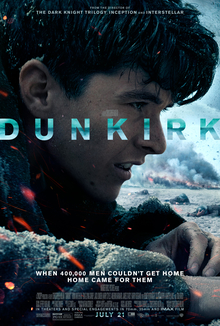 Upon being thrown headlong into Christopher Nolan’s immersive wartime drama Dunkirk, it becomes obvious that it is hardly a narrative film like any of the director’s previous efforts because it has a singular objective set out.
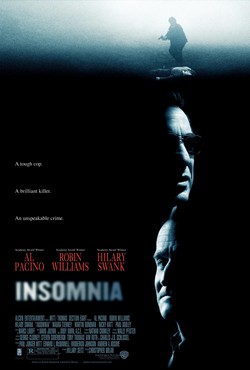 “You and I share a secret. We know how easy it is to kill somebody.” – Robin Williams as Walter Finch

 4 Star Films