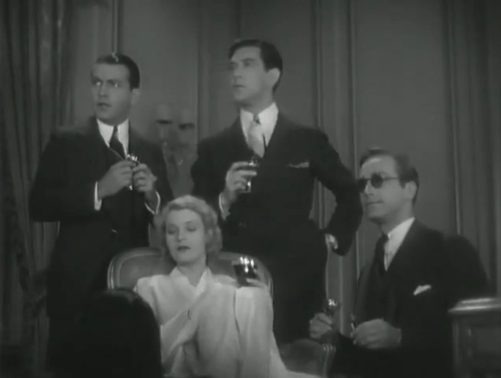
Dracula (1931): Starring Bela Lugosi

As the story behind Universal’s Dracula unfolds, it’s a joy to pinpoint all the elements helping to intensify the dread and solidify it among the studio’s emerging array of horror classics.

There has to be a kind of mythology and lore that the scares can be built out of. The protection of the cross is that of a powerful talisman capable of warding off evil.  Superstition and religion intermingle seamlessly like many of the horror films of the day.

Likewise, there must be a visual palette to help the world manifest Bram Stoker’s famed character. He already received a dose of notoriety in F.W. Murnau’s unauthorized adaptation, but now Nosferatu returns in the guise of Bela Lugosi’s now-paradigmatic Dracula. He definitively ate up and defined all future tropes for years to come.

The tale opens in a carriage when a callow young man named Renfield (Dwight Frye) disregards the warnings of the local population and ventures to the castle of Count Dracula on some proposed business. I watch Dracula and I’m immediately taken by the gaunt Transylvanian atmosphere.

Far from feeling corny, there’s an eerie spareness that’s to the credit of the picture introduced in the bleakness of night. The count’s ominous castle proves itself to be both a foreboding space and one falling apart with decay. Working with director Tod Browning, the incomparable Karl Freund translates his cinematography from Europe to become the epitome of Hollywood genre filmmaking at its finest.

The second portion of the story is born when a schooner, the Vesta, is found drifting into Whitby harbor with all the crew having perished aside from one raving madman. He’s put under lock in key in Seward Sanitarium, all but prepared to do his master’s bidding. Because of course, Renfield is now beholden to his master Dracula — by his blood.

In this new locale, Dracula borrows liberally not only from the traditions of Bram Stoker but the menacing Jack the Ripper, Jekyll & Hyde-type atmosphere of foggy London streets weighed down with gloom. It’s in this milieu one evening that Count Dracula makes the acquaintance of Doctor Seward (Herbert Bunston) as well as his daughter Mina. They are perfectly oblivious to who he really is. But, of course, he’s hardly looking for a romantic partner. Rather, he’s on the prowl for another unsuspecting human to provide him their life’s blood.

Meanwhile, a Professor Van Helsing (Edward Van Sloan) takes a particular interest in Renfield’s peculiar tendencies. When he starts making claims about the undead, Nosferatu, and vampires, this is yet another dose of necessary logos to explain the movie’s scares. Wolfbane is another tried and true vanguard against this unknowable evil.

As such, even as others remain skeptical, Professor Van Helsing becomes the film’s main advocate and certainly fits the mantle of a detective, prepared to deduce the answers and go head-to-head with Count Dracula. The man has no reflection and when he’s found out, he gets desperate like a caged beast.

The Professor and The Count have a standoff in the study — a literal crossing of wills — although Dracula manages to get to Mina and fuse with her blood. It remains to be seen if she (or Renfield) can be saved from their sorrowful fate.

Most of the movie’s horrific power is born in the face of Lugosi — how he is lit, the fire in his eyes — it’s indelible imagery. The rest is illusion borne in the space between what we see on the screen and the cut away. This is what makes it quite effective even generations later. Because it’s not about hokey gore or any such dated method of special effects.

It relies on us and the frights we can conjure up within our own imaginations. The movie supplies the building blocks of terror, but we must put them together for ourselves. Even 90 years later there’s something deeply powerful in this cumulative effect.

This might be an unpopular observation, but somehow, having a movie unaccompanied by music somehow augments this sense of piercing dread. There’s something direct and unembellished about it — it’s starkly beautiful — and yet it pierces like a stake through the heart.

The story is expeditious, but these quick strokes are so heartily effective until the very last heartbeat. Dracula does everything we should require from a horror movie, and it remains a timelessly perturbing experience.

Like so many of the horror greats, Bela Lugosi would forever be typecast by the part. It’s the curse of an actor but the glory of a screen icon. He’s unforgettable and people never have forgotten him even those who have never seen the movie. He lives on purely through our cultural consciousness.

4/5 Stars
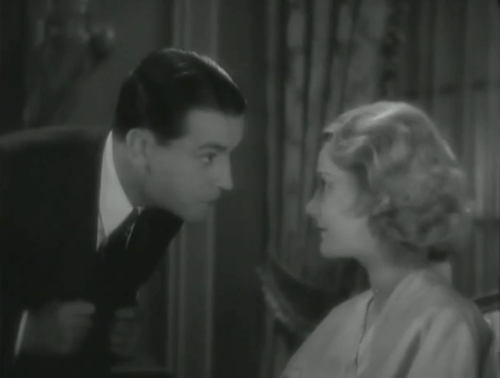
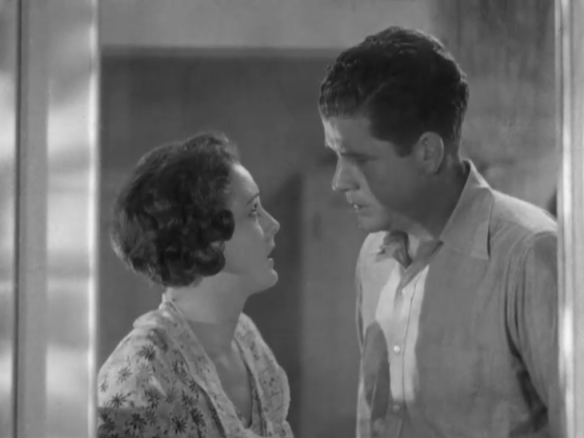
The Last Flight (1931) and The Lost Generation

the last flight

The Last Flight could conceivably be tacked onto the end of The Dawn Patrol. Although there is only one full scene of aerial combat, it informs everything that’s to follow because this shared experience colors the lives of the men who pushed through it. Some of them have been pushed through irreparable change. They are men with PTSD before we ever had a diagnosis.

As two of them (Richard Barthelmess and David Manners) are ushered out of the hospital there is a sense of foreboding. The physician and the audience seem equally aware of it. The doctor likens them to a pair of fine Swiss watches crushed on the pavement. The question remains how do you assimilate them back into society? As he grows didactic or at least waxes poetic, he marks them as spent bullets; his prognosis comes very near to the sobering Korean drama Aimless Bullet a couple generations later.

In fact, The Last Flight could be an equally heavy and laborious affair given the context. These are men who must face something even more difficult than war. War is something they were trained for. Life afterward is uncharted territory. It’s not something that can easily be prepared for; it’s more daunting and laden with consequences.

This is another installment in the men returning from war sub-genre, and it’s no less striking every time I see it done well or at least in a new manner. Under the circumstances, the normal response is to seek to delay the future for as long as possible. These fellows take it to the extreme.

From a technical standpoint, talkies still feel new, and the dialogue is initially a bit stunted and awkward pushing the obvious wounds of its characters. This could be tepid going. Instead, The Last Flight bubbles with its own brand of lithe and breezy effervescence. This is the mood accorded by its main players because they are looking for a life far away from their war-torn experiences up in the air. Trauma is best remedied by drink and trivial conversation so they set flight for Paris.

By entertaining all the frivolous diversions they can manage and hardly acknowledging the war again, the film says so much about these characters (as does their idle talk). Their evening progress full of drinking, dancing, and more drinking.

One of the people they happen upon and make a part of their entourage is Nikki (Helen Chandler). She’s a ditzy girl and a bit like a forlorn little puppy so they absorb her into their group. She’s got money and doesn’t quite know how to take care of herself. They take it upon themselves to do just that, which includes guarding her against the advances of a conceited nincompoop (Walter Byron).

There’s not a whole lot to it, but it comes into its own spilling out of the confines of your typical fare much like the drinks they’re constantly consuming. They let their inhibitions go giving way to a giddy even laissez-faire attitude.

Among other diversions, Cary tells Nikki the tale of the world’s most famous lovers Héloïse and Abelard, and starts to fall for her, only to have his feelings hurt over a misunderstanding. Because she’s an unwitting girl who couldn’t hurt a fly. And so the gang and Nikki follow Cary to his train to Lisbon and cram into his compartment.  They’ve stayed together thus far, and there’s no reason for breaking up the team.

If you’re waiting for the bottom line of the movie, know that it never comes. Not really. There’s hardly a point to it, but then again that’s the point right there. It encapsulates the very existence of these men. One of their buddies gets mixed up in the bullfighting ring, another gets into a skirmish at a carnival shooting gallery. In both accounts, there are lasting consequences.

the last flight

All Quiet on The Western Front might be chosen as the emblematic film in considering the plight of WWI and how war is such a futile endeavor. It strips men of their youth, of their vitality, and of their very lives. And numerous films of different eras reiterated these themes with their own nuances. Take The Eagle and The Hawk as another fine example or even La Grande Illusion, or the aforementioned Dawn Patrol (also with Bartholmess).

However, The Last Flight might stand in what seems like a class of its own. It’s not about how men die in the morass of the battlefield or how they get crippled by the gross delusions of war. Because the whole film is built out of the interim period, the delay of going home. This reading of The Last Flight is so crucial to appreciate what it is. Most post-war films are about the return and coming to terms with life and transition.

These men never get that far. They make it to a kind of purgatory — they get out on the other side — and yet this is never a movie about acclimating back to home. It’s built out of the peregrinations and distractions of men who are completely listless.  They are the so-called “lost generation” of Hemingway and Fitzgerald.

For some, it’s almost a merciful end not having to touch down on American soil. Hence, this being their last flight together as comrades-in-arms. There was never a life for them outside of what they had already experienced, and they could never return home and hope to be the same people they were before. It’s just not possible.

If we’re instilled with anything, it is that The Last Flight is a film of brotherhood and a shared experience above all else. Simultaneously, its brand of freeform, invariably crude narrative is rather invigorating, since it cuts against the accepted grain of the times. It plays as a very singular time capsule speaking to the age like few other films I can think of.

3.5/5 Stars

Other Men’s Women (1931): Moving Pictures are Alive

mary astor grant withers

There’s an underlying sense that The Other Men’s Women was a primitive picture and yet it has a plucky energy as if it doesn’t know any better. Warner Bros. was at the cutting edge of talking pictures and Vitaphone wasn’t exactly old hat. The medium was still in its relatively latent stages.

Given this backdrop, William Wellman seems to take to the amount of freedom he has with a maximum amount of relish. The camera already feels slightly more versatile. With the shackles gone and a new amount of mobility, he moves his camera all over the place conducting dialogue scenes in any manner of places we would normally take for granted.

But he also slices the conventional 180-degree line to smithereens. It’s off-putting given our filmgoing sensibilities, and yet there’s something equally raw and frenetic about it that gives it a very appealing flavor. His camera is atop trains or out in the garden by the sweet peas. Moving pictures are alive!

Part of this may have been out of necessity because in 1931 alone Wild Bill churned out 6 movies for Warner Bros! That’s an insane amount of output. But this same rapid-fire outpouring of movies included the likes of Public Enemy, Night Nurse, and Safe in Hell, just for starters.

If we were to scour this movie for a conventional throughline, it would start with our protagonist, a cheeky railroad hand (Grant Withers), bright-eyed and generally contented with the life he leads. His best friend in the engine room is Jack (Regis Toomey), and they have an inseparable camaraderie together. In what world is Toomey lifted out of the periphery and promoted to a primary role? Here he is as living proof.

He brings his good friend home to his wife Lily (Mary Astor). She’s playful and warm. There’s a lovely affability filling up the spaces and planted in the gardens with the flowers. Their next-door neighbor is a kindly man with a peg leg, and they have built for themselves a fine slice of tranquility. It’s innocent until it’s not. In the kitchen Withers and Astor alone. And they don’t realize it until it’s too late.

They look and they kiss — almost on accident it seems — but they love each other. It’s irrevocable. There’s no taking it back, and it pains them both. If this is the film’s menage a trois, it’s the most devastating of outcomes. They never meant to hurt anyone. But then nobody ever does.

The two friends wind up slugging it out on their locomotive overturning their friendship and livelihood in one fell swoop. A stake is forever driven between them. But there’s more. Jack’s life is beset with personal tragedy. Bill is ridden with the ensuing guilt. He never wants to see either of them ever again. It’s too much to take, looking them in the face — especially knowing he can never have Lily.

Whereas the amended title looks to capitalize on the more scandalous element, the original title: The Steel Highway might fit the picture equally well. These are before the days of Le Bete Humaine or Human Desire, but there’s something elemental about a man and the railroad. Like the western, there’s a mythos attached — a historical shorthand — evoking something of expansion and progress.

As such it flits back and forth between its two spheres. That of the man’s working world out on the rails where life feels itinerant. There’s a danger but also a freedom and a mystique about it. The home life is sweet and domestic until it’s not.

The picture also boasts some of the best rain sequences I remember in recent memory. They are worth mentioning in how they augment Wellman’s film in its latter stages. It becomes expressionistic not merely through the illusions of light and dark, smoke and shadow, but the sheets of raindrops showering down. It adds yet another contour, another layer of emotional atmosphere to this film’s final act.

Jack sloshes around in the downpour helplessly as Bill hurtles toward his resolved conclusion. The climax is fated and fittingly catastrophic. Then, days later, he’s back in the old haunts, sitting at the same cafe pit stop, with a different waitress behind the counter, only to cross paths with an old friend…They share a smile, a few words. Does it really matter for us to have this? I don’t think so. It’s spelled out on their eyes.

Then, Jack does something unexpected. He hops back on his train and begins sprinting over the top. Where is he going? He’s got to get to the engine room — to bring it to a halt. We never see it, but we know he’s staying put. My thoughts linger on Wellman again with his camera perched in such a place where he captures his hero sprinting off into the distance. Yes, movies are alive thanks to people like him.

What a curious wrinkle it is to have James Cagney and Joan Blondell off-center with supporting assignments. That very same year they would be spotted together as leads but such is the studio system they could pull duties in a 70-minute railroad thriller like this. Cagney showing off his dancing and that swell-guy charisma of his. Blondell’s got that spark and spunk in spades. They’re equally delightful, and this isn’t even their movie. They provide yet another reason to enjoy the fundamental pleasures of Other Men’s Women.

3.5/5 Stars