Barbary Coast (1936)

barbary coast 1.png

The production itself was fraught with some turbulence thanks to the contentious relationship between Miriam Hopkins and Edward G. Robinson. The latter actor was irritated how his costar was constantly trying to increase her part and keep him off balance with frequent dialogue changes. Regardless, the talent is too wonderful to resist outright.

How Howard Hawks ended up directing Barbary Coast is anyone’s guess, somehow getting involved as a favor to his screenwriting buddies Ben Hecht and Charles MacArthur who spent numerous rewrites crafting something that the production codes might actually condone, overhauling the original novel’s plot points immensely.

Hawks has no major stake in the production and as such it hardly stands up with his most engaging works. Still, it does hold some merit demonstrating from the outset it’s a fast-moving, thick-on-atmosphere, period adventure set out in 49ers era California. That environment is enough to make a generally engaging yarn even if the narrative threads run fairly thin.

But the world is fully animated. Alive with honky-tonk pianos, crooked roulette wheels, and hazy city streets paved in mud. Just about what you envision gold country to be like, at least viewed through the inspired dream factory of old Hollywood. The blending of genre is a fine attribute as the picture is a mixture of historical drama, romance, comedy, adventure, and western themes sharing some relation to San Francisco (1936) and The Sea Wolf (1940), along with the lawless towns in Destry Rides Again (1939) or even The Far Country (1954).

A ship lands in the notorious San Francisco Bay, among its passengers a strangely out of place lady (Miriam Hopkins) and a gentlemanly journalist, Marcus Aurelius Cobb (Frank Craven). They are met with quite the reception committee of local undesirables.

Walter Brennan is a standout as the scrounging, toothless, eyepatch-wearing Old Atrocity preying on unsuspecting outsiders who happen to make their way to the streets of San Fransisco. Mary Rutledge is in town to join her fiancee who messaged her to come out and meet him as he’s struck it rich. She promptly finds out her man is dead, no doubt knocked off by the crooked Louis Chamalis (Edward G. Robinson).

With his restaurant the Bella Donna and adjoining gambling house, the ruthless businessman rakes in the profits by robbing prospectors of their hard-earned caches and getting tough when they object to his dirty practices.

Miriam Hopkins, both radiant and sharp, isn’t about to snivel about her lost prospects and heads straight away to the Bella Donna to see what business she can dig up for herself. There’s little question she causes quite the stir because everyone is taken with this newly arrived white woman — including Louis. As Robinson’s character puts it, she has a pretty way of holding her head, high falutin but smart. That’s her in a nutshell as she earns the moniker “Swan” and becomes the queenly attraction of the roulette wheels.

It’s there, an ornery and sloshed Irishman (Donald Meek in an uncharacteristic blustering role) gets robbed blind and causes a big stink. Louis snaps his figures and his ever-present saloon heavy Knuckles (Brian Donlevy) makes sure things settle down.

He’s sent off to do other jobs as well. In one such case, he shoots someone in the back but with a mere Chinaman as an eyewitness in a kangaroo court presided over by a drunk judge, there is little to no chance for legitimate justice. Then there’s the manhandling of free speech by forcibly intimating Mr. Cobb in his journalistic endeavors and nearly demolishing his printing press for publishing defamatory remarks about the local despot. Swan is able to intercede on his behalf as Cobb resigns himself to print droll rubbish and it seems Louis has won out yet again.

barbary coast 2.png

Joel McCrea has what feels like minuscule screentime and achieves third billing with a role casting him as the romantic alternative, a good guy and yakety prospector from back east who is as much of an outsider as Ms. Rutledge. He’s eloquent and strangely philosophical for such a grungy place. He’s also surprisingly congenial. It catches just about everyone off guard. First, striking up a serendipitous friendship with the woman and gaining some amount of rapport with Chamalis for his way of conversing.

Though the picture stalls in the latter half and loses a clear focus, the performances are nonetheless gratifying as Robinson begins to get undermined. Vigilantes finally get organized using the press to disseminate the word about Louis and simultaneously battle his own monopoly with an assault of their own.

One man must die for the right of freedom of speech to be exercised while another man is strung up like an animal. Our two lovebirds get over the lies they told each other looking to flee the ever-extending reach of a jealous lover. Chamalis is not about to let them see happiness together. The question remains if they can be rescued in time from his tyrannical clutches. The dramatic beats may well be familiar but Barbara Coast still manages to be diverting entertainment for the accommodating viewer.

3.5/5 Stars
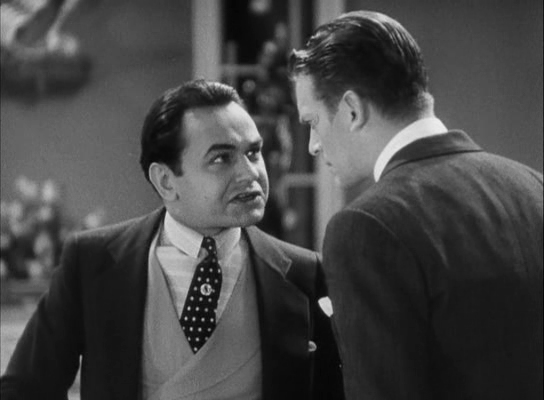
Little Caesar (1931)

Little_Caesar.JPG

When I was a kid we had an old VHS of Bugs Bunny shorts and one of the caricatures in a gangster-themed storyline — although I didn’t know it at the time — was undoubtedly Edward G. Robinson. That voice. That mug. That smug self-assuredness. They’re inimitable. Even then I knew the image without knowing who this garbled-mouthed gangster actually was. Watch Little Caesar and it’s all right there. In fact, without Little Caesar, one could step out on a limb and say that Bugs Bunny cartoon would never have been made. Though, Robinson was an indomitable personality. One way or another he would have broken through.

As it was, Robinson made a lasting impression in his big break, the picture that would make him a star just as its contemporary The Public Enemy (1931) did the same for James Cagney also at Warner Bros. True, it served as both a blessing and a curse typecasting the stars with their audiences. Still, both men led impressive careers which, at least on occasion, allowed them to break out of the mold and really show who they were as actors. And the beauty of their successes had nothing to do with an imposing physical frame but rather a sturdiness and commanding tenacity that made them into electric performers full of captivating stage presence.

With an opening quotation from Matthew, “All who take the sword will perish by the sword,” we are immediately tipped off this will be a moral tale right from the outset, an act of condemnation not glorification. However, that cannot completely neutralize the unadulterated gangsterism of Litte Caesar. Far from it.

With all these early Warner Bros. crime films we can define the arc of the story by an ambitious lug who’s willing to do whatever it takes to rise to the top, showcasing both guts and gats when necessary. It takes both to get ahead. Rico (Robinson) is a little guy who’s not content with his lot in life so he resolves to change things. He heads to Chicago with his buddy Joe (Douglas Fairbanks Jr.) to see what they can make of themselves.

Already they are on diverging paths as Joe looks to return to his first love of dancing, even finding a capable ally and love interest at a local club. Olga (Glenda Farrel) makes a new lease on life possible for him. But such a life would never do for Rico. He’s already set his sights on big-time crime, moving up the ranks with local mobster Sam Vettori.

Joe is roped in for a job as the inside man and reluctantly he goes along with it. But on the same night, New Year’s Eve, Rico guns down the crime commissioner during an otherwise straightforward hold up of the Bronze Peacock. It has heady implications as the local authorities look to clamp down.

As best as I can describe it, there is a stripped-down unsentimental bent to the action line going through the movie. The talking pictures still feel like a new phenomenon recorded on Vitaphone — a bit rigid and visually unimaginative — but in some respects, it aids in the characterization of the gangster underworld. It’s hard-edged, lacking any sense of freedom of movement or ideals. They play by a “you’re either with us or against us” mentality and they are not about to let you forget who your friends are. Rico and Joe provide the diverging alternative lifestyles available as one tries to go straight and the other becomes more crooked by the hour.

The character of Tony is another convenient case study for the movie as the local mob’s getaway driver who begins to lose his nerve and have remorse for his part in it all. It is his saintly mother who not offers him spaghetti but tries to remind him of his former life when he was a good boy. Convicted to the very core of his being, he goes to the priest for confession. But Rico will have none of this blubbering. His retribution is sure and swift as it’s always been, culminating in an OG drive-by shooting.

A gang war erupts when a failed hit is instigated on Rico. Instead, he and The Big Boy are able to consolidate power and he continues to rise up the ranks. All throughout his ascension, Rico lives by streetwise slogans like, “I ain’t afraid of nobody.” “The resident bosses are getting so they can dish it out but can’t take it anymore.” And of course, “the bigger a man becomes, the harder he falls.” It’s all but inevitable.

His words are prophetic because at some time Rico’s got to face the music and he does. Like The Public Enemy and Scarface, what sets these pictures apart is not necessarily that they glorified crime because you can make the case each tries to hammer home the moral crime doesn’t pay. And yet with the exhibitions in violence and the uninhibited pursuit of power by antiheroes like Cagney, Muni, and Robinson, the public latched onto them and propelled them into being big stars. Without the pre-code era, we would lack some of the legendary mystique of Rico.

In the end, riddled with Tommy gun fire, he looks up into the heavens, exclaiming those now immortal lines, “Mother of Mercy, is this the end of Rico?” With that, he breathes his last. But the miracle of celluloid means that now 85 years onward Edward G. Robinson’s performance lives on.

3.5/5 Stars

The Whole Town’s Talking (1935)

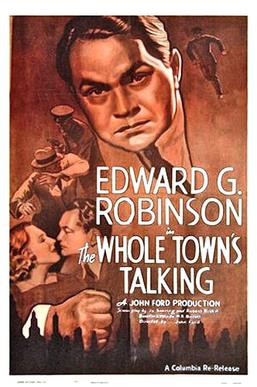
the_whole_towns_talking_1935_posterComic mayhem was always supercharged in the films of the 1930s because the buzz is palpable, the actors are always endowed with certain oddities, and the corkscrew plotlines run rampant with absurdities of their own.  Penned by a pair of titans in Jo Swerling and Robert Riskin, The Whole Town’s Talking opens with an inciting incident that’s a true comedic conundrum.
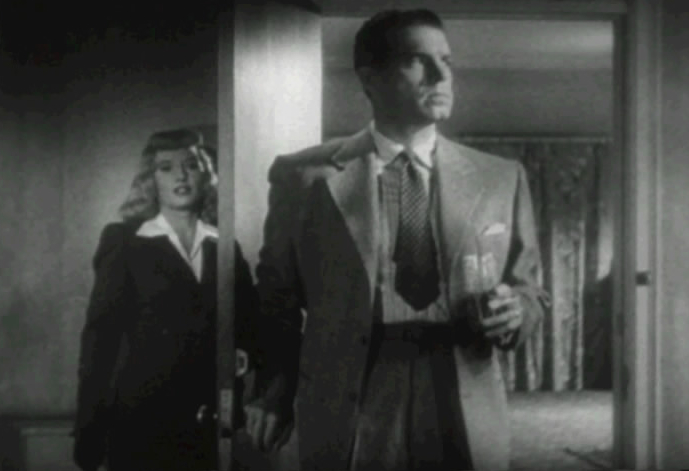
Bald and beady-eyed Mr. Seaver is called upon to fire the next employee who comes in late to work. A tough proposition to begin with but it gets worse.  Arthur Ferguson Jones has not been late to work in 8 years and of course, today’s the day his alarm clock doesn’t work. Although he gets a reprieve. Still, the next person walking in isn’t so lucky. The hardy, wisecracking Miss Clark (Jean Arthur). And that’s our introduction to our main players.

But the real wrench comes from an age-old device that’s easy to scoff at initially. There’s a doppelganger. Yes, the same upstanding, timid Arthur Ferguson Jones is cut in the spitting image of Public Enemy No. 1, Killer Mannion. But before you check out, consider what this does for this ruckus of a story. It ties it up in knots.

Jones is the talk of the town. Exploding flashbulbs. Cover stories. Tumult. Back in the glory days when the press ran in a pack like hyenas.  His boss invites him to dinner, wants an autograph for his boy. He’s being ribbed by his coworkers and Miss Jones takes an interest in his literary endeavors. This leads to a gig ghostwriting the gangster’s life story in the local paper.

Meanwhile, the police argue about what to do about him. They finally decide to give him a special passport. It says he’s not Killer Mannion. And hapless little Mr. Seaver still badgers his employee to finish up his waiting caseload. What no one expects is that Mannion will sneak into Jones’ home and sets up camp.

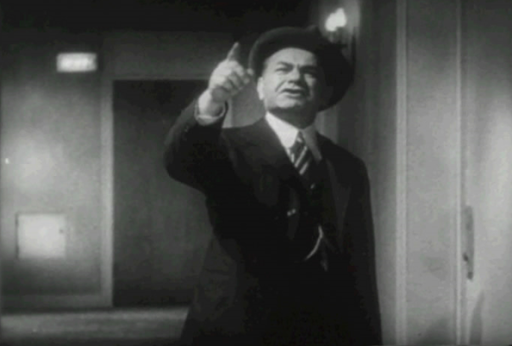
And from that point on, everything gets confused. Robinson gets a chance at a great deal of range sometimes having his two diverging roles playing off each other in the same frame. All you need to know is the gangster is looking to leave his new benefactor holding the bag for his numerous crimes. Whether it works out or not is quite another story.

This a particularly odd film for the talent assembled. It doesn’t especially feel like a John Ford film and not simply because it’s not a Western. But at this point in his career, his stock company isn’t even assembled.

Edward G. Robinson will always be identified with gangster pics and it’s true he was tired of that association. Here he’s playing comedy. He has one foot in his usual wheelhouse but the other seems utterly alien to his usual persona. As such it’s great fun.  And his timid common man isn’t even a tragic figure like Chris Cross (Scarlet Street). The comedy is far more apparent and that in part stems from Arthur.

She shows up late to work, gets fired, and still has quips coming out of her ears. She plays all the journalists trying to pump her for facts and at the same time falls for this dope who has her picture framed by his bedside. Perhaps better than anyone she perfected how to be cheeky but still wholesome and caring. Arthur feels most at home in this film more than anyone else, given her comedic pedigree but she and Robinson bounce off each other well.

In a few years she would play a Miss Jones but for right now she’s content calling her colleague by the pet name “Jonesie” and (tiny spoiler) she does become Mrs. Jones. So an oddball romantic pair they might be, but that doesn’t make the partnering of Robinson and Arthur any less amusing. They’re both on their A-game in The Whole Town’s Talking and thankfully there would be many more arresting performances to come.

4/5 Stars

Review: Double Indemnity (1944)

Double_indemnity_screenshot_8It was a hot afternoon, and I can still remember the smell of honeysuckle all along that street. How could I have known murder can sometimes smell like honeysuckle?” – Walter Neff

I can’t say this enough. Double Indemnity is so deliciously enticing each and every time I see it. Maybe it’s the A-grade script from Billy Wilder and crime novelist Raymond Chandler with its noir cynicism and memorable phraseology. Maybe it’s the shadowy, low-key interiors or L.A. exteriors. The monotonous beating score of Miklos Rozsa, mourning impending doom. Maybe it’s the plain, laconic way of Walter Neff or his bloodhound buddy Keyes. Is it the innocent Lola who gives the film morality? Or the artificial wig and the silky smooth purring of Phyllis Dietrichson?

In fact, I named many, if not all, of the many facets of this film, because I want to attempt to acknowledge all of them before I forget. But the reality is I love Double Indemnity at its most basic level as a piece of prime American cinema. Yes, it is film-noir and yes, it came from a European director, but it is very much a product of 1940s sentiment as the war years waned.

The story is pulled right from some pulp fiction sleaze by James M. Cain and cemented itself as a noir classic in its own right with all the trappings that are called for.

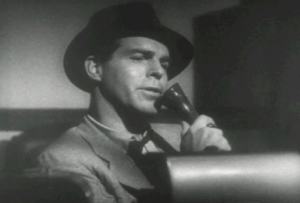
It opens with the beginnings of Rozsa’s score reverberating in our ears and it very rarely lets up. A car blazes wildly down the street and winds up in front of an insurance agency. Out stumbles our protagonist Walter Neff (Fred MacMurray) and for the rest of the film, he relates the recent happenings over the Dictaphone of his colleague Barton Keyes (Edward G. Robinson). It goes something like this:

During his first visit to the home of a Mr. Dietrichson, he instead has his first encounter with the man’s sensual wife, and his heart goes pitter-patter from then on. His motivation is no longer insurance. Now he just wants the chance to see her more. He gets his chance to advise her on a plan, and it all seems playful enough until she insinuates that she wants to knock off her ol’ hubby. At least that’s how Neff reads it. However, he cannot get her out of his head as he has fallen into her web. There’s no turning back.

They think of everything and Neff has everything figured out to a tee. As he suggests, it’s like having the perfect odds on the roulette wheel, you just need an accomplice to spin and Phyllis is just that person. From then it’s just straight down the line. They corroborate on all the details at local Jerry’s Market, Walter sets up his alibi, and he does the devilish deed as Phyllis stares with cool satisfaction at the road ahead.

They set it all up like an accident as the last touch, because as Neff knows all too well if it looks like Mr. Dietrichson was killed from riding a train the Double Indemnity clause of the insurance will mean double the payoff due to how unlikely the occurrence is.

 Double Indemnity (1944) - UpdatedHis only fear is the inquisitive nose of Keyes and the “little man” inside the claims investigator’s stomach, who warns him of the first sign of anything fishy. He gets close to the truth but not quite there. Neff is too close for him to see it. However, as things begin to heat up Phyllis and Neff must separate.

As Neff tries to console Lola Dietrichson over the death of her father, he quickly finds out what the naive girl has to say about her step-mother. It puts a little light on the subject, and Neff realizes what he’s been taken for. He wants to remedy things while he can, patching Lola up with her boyfriend, and going to confront Phyllis one last time.

It’s the perfect set-up. Darkened rooms with curtains drawn. Phyllis reclined in an armchair with evil intentions on her mind. In walks Walter and they have it out. Shots are fired, literally. Phyllis will never let up with her ploys until Walter gives her a little help for the final time. I’m sure the Hays Codes loved this one. I certainly did.

Back in the office Keyes finally overhears the end of Walter’s “confession” as his friend bleeds to death. In one last touching moment, Keyes returns the favor and lights the cigarette like Walter has been obliging to do the entire film.

Walter: “Know why you couldn’t figure this one, Keyes? I’ll tell ya. ‘Cause the guy you were looking for was too close. Right across the desk from ya.”
Keyes: “Closer than that, Walter.”
Walter: “I love you too”

Billy Wilder traded longtime partner Charles Brackett for Raymond Chandler, and despite a rocky partnership, they ended up with one of the greatest scripts, chock full of memorable bits of dialogue. You know you have an impressive cast when Edward G. Robinson is your third lead and each character is playing against type. It’s great casting, in a quintessential American drama solidified by great cinematography and storytelling.

It doesn’t get much better than this and it certainly does not need to. You know Double Indemnity is good when I’ve seen it multiple times and each time the bullets still keep me on the edge of my seat. Thank you, Billy Wilder, for teaching us murder sometimes smells like honeysuckle. That’s absolutely beautiful.

Phyllis: “No, I never loved you, Walter, not you or anybody else. I’m rotten to the heart. I used you just as you said. That’s all you ever meant to me. Until a minute ago, when I couldn’t fire that second shot. I never thought that could happen to me.”
Walter: “Sorry, baby, I’m not buying”
Phyllis: “I’m not asking you to buy. Just hold me close.
Walter: “Good-bye baby.”

5/5 Stars

The Best Films of Edward G. Robinson

1. Scarlet Street
2. Key Largo
3. Little Caesar
4. The Woman in the Window
5. Double Indemnity
6. The Stranger
7. The Sea Wolf
8. The Ten Commandments
9. The Whole Town’s Talking
10. The Cincinnati Kid
11. Our Vines have Tender Grapes
12. All My Sons
13. Five Star Final
14. Soylent Green
15. Barbary Coast

The Stranger (1946)

f6c39-the_stranger_filmIn a whirlwind, the film goes from a moody foreign locale to a quaint American town called Harper, but it never ceases to be a gripping film noir. Considered Orson Welles‘ weakest project thus far, The Stranger is still thoroughly enjoyable thanks to the performances of Edward G. Robinson, Loretta Young and Welles himself. Much like Shadow of a Doubt, this film shows that noir thrillers can still take place in middle America, and they can be pulse-pounders all the same. Also, an evil man can easily exist in a mundane environment and still be evil.

The reason we end up in Harper of all towns has to do with an “escaped” Nazi war criminal. He was allowed to escape and investigator Mr. Wilson (Robinson) follows him. It’s an idyllic little town and one of its most respected members is professor Charles Rankin (Welles), who is soon to be wed to pretty Mary Longstreet (Young). Little does she know that he is former Nazi war criminal Franz Kindler, and he is the man the escaped Konrad Meinike is looking for. Mr. Wilson is very interested in his whereabouts too.

Meinike soon disappears but not before deterring Wilson. However, not one to shy away from his duty, Wilson soon ingratiates himself with the local people, especially the newly married Mary and her kindly family. He is eager to learn more about the professor and at first, the gentleman seems above reproach, but something lurks underneath his calm exterior. Soon the beloved family dog Red is killed, an increasingly manic Rankin confesses his predicament to his wife and conveniently leaves out a few facts. Now constantly paranoid, Mary’s life is in far more peril than she realizes, and Wilson takes all the precautions he can. The clanging of the newly refurbished clock becomes a point of major contention, and it also serves as the perfect locale for a final climatic showdown (Put aside the absurdity and just watch it).

The whole town turns out for the show and finally after getting conked on the head and nearly killed during the case, Mr. Wilson finally has time to relax. Welles is not quite as memorable as Harry Lime here but still a sophisticated villain of sorts.  Likewise, Barton Keyes is a bit more memorable but Edward G. Robinson still brings his personality, iconic voice, and memorable mug to the table. Loretta Young has a radiant face and eyes like always. In other words, they do what they do. It works in making The Stranger a worthwhile thriller with the expected melodramatic music and shadowy facades of a film-noir. This is undoubtedly an oversimplification, but  then again, Orson Welles needs no introduction, and he certainly does not need me to vouch for creative genius.

4/5 Stars

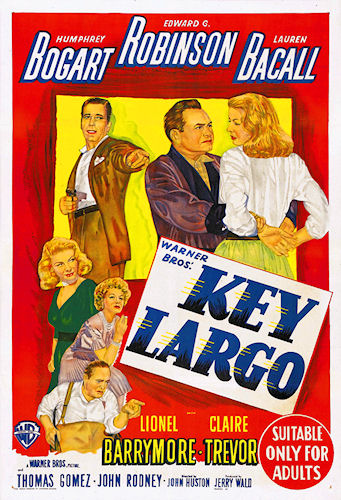
Key Largo (1948) – Film-Noir

5b446-key_largo432Starring Humphrey Bogart, Edward G. Robinson, Lauren Bacall,  with director John Huston, the film takes place on a sweltering day during the hurricane season. Bogart is passing through Florida to say hello to the relations of a dead war buddy. In the process he and the others at the hotel are held hostage by the mobster Johnny Rocco (Robinson). Bogart seems to back away from conflict but he is only biding his time with the villainous gangster. Through a series of events the war veteran is supposed to pilot the mobsters to Cuba, however he ultimately turns on them and brings justice. This is a fairly good film with Lionel Barrymore, Claire Trevor, and Jay Silverheels in support. It must be mentioned that this was the final film pairing of Bogey and Bacall. Get ready to sweat it out in Key Largo.

4/5 Stars

In honor of Lauren Bacall

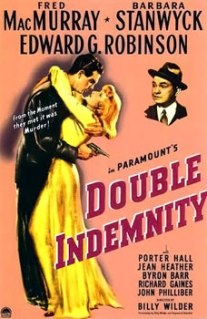
Double Indemnity (1944) – Film-Noir

If the Maltese Falcon was the first great film-noir then this film has to be a refining and improvement of the genre. Billy Wilder put together a crime film that is still intriguing today with its femme fatale and other techniques in storytelling and cinematography.

*May Contain Spoilers

Starring Fred MacMurray, Barbara Stanwyck, and Edward G. Robinson, this is a classic film-noir. Walter Neff is your average American insurance salesman. However while trying to sell some accident insurance he falls for a woman who is married to a former widower. Together they plot and carry out a murder on her irritable husband trying to cash in on a double indemnity clause. Although everything goes as clockwork the two of them must stay apart and Neff’s colleague is hot on their trail. Through a series of visits with Deitrichson’s depressed step-daughter, Neff himself finds out Phyllis was seeing someone else. In their final confrontation he figures out she killed her husband’s first wife . Then she preceded to use Neff for her own purposes.Following their confrontation Neff feels guilt and so he records all he knows for his colleague Keyes to hear later. This movie was definitely full of suspense as well as great characters. Directer Wilder utilizes the voice over with flashback very effectively to tell the story.

5/5 Stars


Scarlet Street (1945) – Film-Noir

Similar to Woman in the Window, this film-noir was directed by Fritz Lang and it stars Edward G. Robinson, Joan Bennett, and Dan Duryea. Chris Cross is a shy employee who has been working for the same man 25 years. While walking home Chris rescues a beautiful woman from an assailant, not knowing it is her brutish boyfriend. Amused Kitty agrees to have coffee and Chris who is an amateur artist, begins talking art, but Kitty gets the idea he is a wealthy painter. Because Chris is stuck in a hopeless marriage he becomes infatuated with kitty and she takes full advantage. Chris scrounges for money to pay Kitty’s rent and unbeknownst to him, Kitty’s boyfriend tries to sell the artist’s work. A critic is impressed and so Kitty masquerades as the artist. Chris finds out eventually and confronts her but the conniving femme fatale manipulates him again. Chris is delighted his work is appreciated and he is content with Kitty continuing to take the credit. An unexpected turn of events mean he can leave his wife and marry Kitty finally. However, he finds her with Johnny and after his genuine proposal she belittles him.An enraged Chris commits murder but it is pinned on Johnny. A miserable wanders the streets without a job or recognition for his art. Furthermore, he must live with his guilty conscience tormenting him until the end of his days. Woman in the Window is good but this film is more biting and powerful when it is all said and done.

4/5 Stars

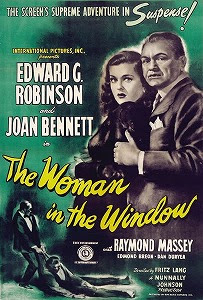
The Woman in the Window (1944) – Film-Noir

Starring Edward G. Robinson and Joan Bennett, this film-noir involves an ordinary psychology professor and a beautiful woman. The story begins at the club where the professor and his friends begin to discuss an enchanting portrait of a woman in a store window. He stays behind for a while longer and before he leaves he takes one last look at the painting. And there he meets the woman herself who then invites him over for a drink. However, her angry boyfriend comes by and he is left dead after a scuffle. Now the two perpetrators must cover up their murder and dispose of the body. That task goes to the professor and he naively dumps it out in the country leaving behind numerous clues. One of the professor’s friends is the district attorney and so he finds himself invited back to the scene of the crime. The professor is not suspected but the woman is blackmailed by a low life ex-cop who threatens to expose them if he doesn’t get his money. Much to the woman’s relief the blackmailer is killed but it comes too late for the professor. Or does it? This noir directed by Fritz Lang focuses on a mysterious woman and psychology. It also has one of the most abrupt, out of the blue endings. Every movie should not be resolved this way but I rather liked it one time around.

4/5 Stars