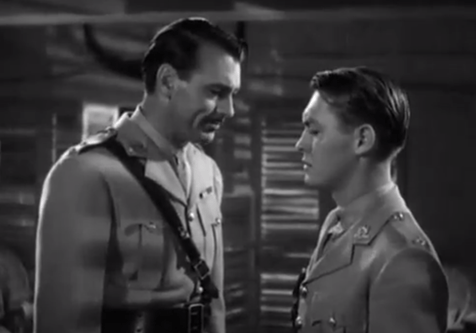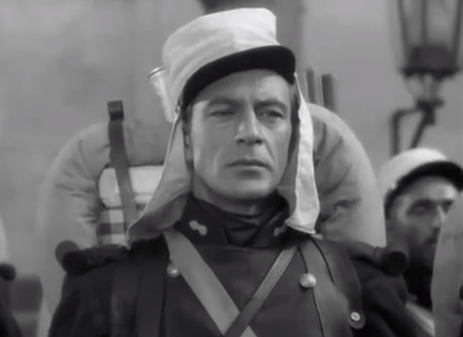
Beau Geste (1939): Brotherly Love in The French Legion

beau geste 1.png

“The love of a man for a woman waxes and wanes like the moon…but the love of brother for brother is steadfast as the stars, and endures like the word of the prophet.” ~ Arabian Proverb

No matter what Joseph Von Sternberg thought of such a proclamation, we can concede his Morrocco was a film concerned with the former. Von Sternberg’s dalliances with Marlene Dietrich behind the scenes and then Dietrich and Cooper in front of the camera are a living testament.

Beau Geste stakes its claim early to being a film of undying brotherly love. It brings to mind the words of scholar and author C.S. Lewis when talking about philia as a “side by side, shoulder to shoulder” appreciative love. It comes not by looking at each other but having a vision of something in front of us.

“Every step of the common journey tests his metal; and the tests are tests we fully understand because we are undergoing them ourselves. Hence, as rings true time after time, our reliance, our respect and our admiration blossom into an Appreciative love of a singularly robust and well-informed kind.”

I think this is a perfect illustration to begin to understand why Beau Geste is an initially compelling hero’s journey because it relies on a joint adventure to bring out expressions of deep-rooted love.

Admittedly, William A Wellman’s film is a close remake of the 1926 silent Ronald Colman vehicle. One element this film borrows from its predecessor are intertitles, and they’re too many of them for a talking picture.

But soon enough a cold open places us within the ranks of some French Legionnaires who come upon a fortress only to find the stronghold littered with the bodies of their comrades propped up against the walls. Something dreadful must have happened to them. For now, we get no more explanation as the story quickly fades back into the past, 15 years prior.

There we meet five children, three of them named Geste, one of them named Isobel, and the fifth a bespectacled killjoy named Augustus. You see, the others are still enraptured with adolescent imaginations that find them gallivanting around on the most glorious adventures as soldiers or possibly members of King Arthur’s court.

Their exploits are to be remembered with a Viking’s funeral with a dog lying at their feet. The beauty of their temperaments is the fact they hold on to a bit of their youthful exuberance when they grow into young men.

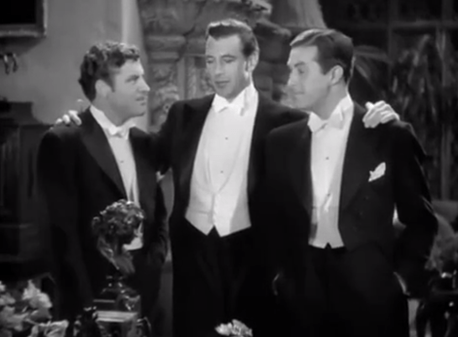
It always is a bit of a start when you jump from child actors to their corresponding adult selves. In the picture, I couldn’t quite make the jump seamlessly but no matter. All I know is I do have an appreciation for our leads — that is the three Geste brothers. They really are rather like the three Musketeers with Gary Cooper, Ray Milland, and Robert Preston making a jocund company.

Also, on a side note, this is too perturbing for me not to mention. I double-checked records multiple times and our three stars were born in 1901, 1907, and 1918 respectively. I’m still trying to figure out why Robert Preston hardly looks any younger than his costars or at least Milland. Maybe it’s his mustache. At any rate, age differences aside, the chemistry is present.

What is not present is the priceless jewel “The Blue Water” that was stolen one evening from the home of their adopted aunt Lady Patricia. The same evening Beau runs off to the Foreign Legion followed soon thereafter by Digby (Preston) and finally John (Milland) who gives one parting embrace to Isobel (Susan Hayward) before leaving on the grand adventure. Hayward is exquisitely beautiful and though her ingenue role is in no way groundbreaking, we have the solace of many meaty performances to come.

The film’s true standout is Brian Donlevy as an unscrupulous tyrant in charge of new recruits. He eventually finds himself commanding the entire outpost with the whole outfit threatening insubordination. His hunger for power verges on the deranged.

My expectations were more of the rip-roaring adventure variety but as the previous commander’s remarks on his deathbed, “Soldiers die as much from fevers as they do battles.” Meanwhile, Digby is unceremoniously pulled away from his brothers on a work detail and subsequently, misses out on most of the final act.
beau geste 2.png

I would say wholeheartedly the film is salvaged in its last push as we are granted the spectacle we have been waiting for as the remaining men hold down the fort against incoming marauders. It makes one nearly cry out “Remember The Alamo!” The sentiment is there anyway.

It seems a horrible thing to say, but Cooper affected me more when he was on the verge of death than when he was alive. The all but wordless finale plays particularly cryptically as Digby sneaks around the compound to carry out his oldest brother’s wishes.

I must admit to dismissing Beau Geste‘s storytelling prematurely as it evoked greater complexities than I would have expected. The mechanisms of the opening and overlapping moments are more intricate than I might have given them credit for. The mysterious words spoken once upon a time, while Beau was hiding in the suit of armor, come to fruition as do the opening moments, neatly folding back into the tale.

The reunion of John with Isobel and his Aunt arrives in the nick of time to satiate audience wish-fulfillment. It almost elevates the film wholeheartedly, but the pacing and where the story chooses to focus its efforts feel scattered. Had they come together more succinctly we might be hailing Beau Geste one of the great actioners.

While Gary Cooper in a foreign legion kepi is nonetheless iconic, I am apt to remember him more so for Morocco (even if that picture belonged to Dietrich). Although if one is sentimental enough to forgive the faults, it’s painless enough to say Beau Geste belongs to three devoted brothers. Coop, Milland, and Preston maintain a spirited solidarity throughout.

3.5/5 Stars

The Lives of Bengal Lancers (1935): Colonial Camaraderie Sullied by Hitler

the lives of a bengal lancer 1.png

In the imperialist traditions of the likes of Tarzan The Ape Man (1932), Gunga Din (1939) and even Lawrence of Arabia (1962) comes The Lives of Bengal Lancers. We cannot take the era or the colonial sentiments for granted like the contemporary viewer did since we must reconcile with the complicated filter hindsight lends.

It’s a bit like an old Cowboy and Indians picture except instead we have lancers and Indians. In theory, our allegiances lie solely with the dominant sides, and the rebels have our ire because revisionist filmmaking had yet to be created. This is the victor’s myth.

Director Henry Hathaway in later years would be remembered as a veteran of both crime pictures and classic John Wayne westerns including True Grit. The Lives of Bengal Lancers was his first formidable success, and the action and adventure itself are frankly quite thrilling.

Gary Cooper, as one of American’s dashing action heroes of the day, plays our protagonist MacGregor, a rough-edged soldier who nevertheless conceals the age-old heart of gold. A prime example comes when he makes up some excuse to send a new recruit to call on his father so they can talk in confidence. The boy has yet to see his flesh and blood face-to-face without constant rules and regulations getting between them.

Actually, we have two new recruits who come aboard: Forsythe (Franchot Tone) a glib sportsman who finds great relish in crossing wills with MacGregor and then dashing Lieutenant Stone (Richard Cromwell) still wet behind the ears. His father is the commander of the entire outpost. A journeyman soldier, “Old Ramrod” Stone (Guy Stander) is an incorrigible stickler for duty and discipline.

the lives of a bengal lancer 2

But the task at hand is the apprehending of a charismatic gunrunner and local outlaw Ahmad Khan (Douglass Dumbrille), who subsequently holds great power over the territory. The favored sport of “Pig Sticking” provides a handy cover for snooping around.

Most delightful of all is the one-upmanship fostered between our two manly specimens played by Cooper and Tone. The constant friendly competition between the blunt Canadian straight-arrow and the more polished and tempered “Blues Man” brought up in Britain is one of the film’s finer assets.

But of course, the inevitable happens and our heroes get captured by Khan. The famed line misstated on numerous occasions is actually, “We have ways to make men talk.” However, it feels anticlimactic considering.

It’s also difficult to decide if it’s to the film’s credit or not, but the villain, played by the white actor Douglas Dumbrille, is not trying to hide it. He is educated and resists playing up some savage image. He leaves that to all his underlings who do his every bidding.

While imprisoned, our heroes spend their idle time, outside of being tortured, playing at cockroach races and letting their stubble grow out. Once again, it represents the very best of the film instilled by the performances of Cooper and Tone opposite one other. Because everyone else we can easily see in any of these old adventure epics. It feels like standard stuff. They are not.

Certainly, the story teases out this issue between the duties of a soldier and the scruples of a man with inbred common decency. Should the family be sacrificed for the sake of the outfit? Is a man who has poured everything into his military career because he believes in regulation fit to be praised and venerated? The commander’s appreciative colleague (C. Aubrey Smith) lauds his actions acknowledging, “Love or death won’t get in the way of his duty.” Whether that is an entirely good thing remains to be seen.

Of course, we see analogous themes in even some of John Ford’s pictures like Fort Apache and specifically Rio Grande. The latter film has the same father-son dynamic playing out, except inside of conveniently killing off the spouse to streamline the conflict, that film actually digs into the themes more definitively. Anyone who has seen the film will agree Wayne and Maureen O’Hara’s relationship is the most interesting dynamic. A close second is the camaraderie of the soldiers.

In The Lives of Bengal Lancers, again, we have no such relationship, so the film is at its best with the soldiers sharing their lives together. One must note while the western might be dead, these old adventure yarns feel even more archaic. This brings up a host of other issues to parse through.

Watching the film unfold we cannot know for sure if we are on the right side of a righteous or unjust war; the underlying problem is the film does not leave it open. It’s already accepted who the conquers and heroes will be. I have nothing against the likes of Gary Cooper and Franchot Tone. I rather like them. But I can’t help but feel their team is playing a bit unfairly. The deck is stacked in their favor.

This ties into another notable caveat to make the viewer wary because Lives of a Bengal Lancer was purportedly a favorite of Hitler. In its digressions, he saw agreeable conclusions to inspire his own empire — the Third Reich — namely an unswerving duty to country along with elements of racial superiority.

Because it is these Brits with their bravery and know-how who are able to hold off the hordes of enemies. Their valor in itself is not an issue but placed up against their enemy, it is slightly troubling. The fact Hitler made it compulsory viewing to members of the SS is another level of bone-chilling. It’s hard to look at the picture in the same light after such a revelation.

3.5/5 Stars

Design For Living (1933): An Atypical Lubitsch Comedy

design for living 2.png

“Immorality may be fun but it’s not fun enough to take the place of virtue and three square meals a day.” 

All director Ernst Lubitsch has at his disposal is a train compartment and three actors. Yet the opening scene of Design for Living positions itself as one of the most delightful moments in this entire picture. It’s a pure testament to bold visual filmmaking with nary a word spoken for at least 4 or 5 minutes. Few modern filmmakers would have the gumption to attempt it.

Lubitsch knows exactly what to do with such situations, and he was bred not only in sophistication but silent comedy. Because you see, the ultimate joke is when they actually start conversing with one another these three very familiar faces open their mouths and French comes out (Gary Cooper apparently was fluent).

Simultaneously, the director has also set up the relational dynamic of the film without a peep of dialogue. It really is a superb opener. However, this opening scene is almost too delectable for its own good. The film cannot possibly sustain such a  level of perfection. But more on that later.

When the three expatriates finally switch over to their native tongue, we have an uproarious discussion on art versus commercialism, Napoleon wearing a coat, and Lady Godiva riding a bicycle. Don’t ask for any explanation. In the parry and thrust of their conversation, we find out one is a painter (Cooper), the other is a playwright (Fredric March), and both are failures for the time being.

We are instantly reminded by a certain level of sauciness this is the Pre-Code era, though we are on the cusp of harsher censoring to come. For now, the picture is able to nonchalantly hang its hat on a central plot point involving our leading lady (Miriam Hopkins) and her two men embroiled in a menage a trois — a so-called “Gentlemen’s Agreement.” Her conundrum is very male and libertine in nature. She has different men to try and she likens them to hats she wants to put on.

Yes, there is innuendo and some contemporary audiences might have shuddered at the admission they mention the word “sex” out loud on multiple occasions. And yet none of this titillating attraction speaks to much of the underlying allure of this picture.

design for living 3.png

Look at who we have assembled on top of the acting talent. It sounds too good to be true. If the name Noel Coward doesn’t carry emphatic weight in your life, you might as well cross it out and consider this a Ben Hecht picture. He was, of course, one of the great purveyors of Americana through aphorisms and pervasive wit.

He famously scrapped all of Coward’s play aside from a single line of dialogue. Leaving a mark on the material in a way that was far more suitable to not only Lubitsch but an American audience.

All the gloriously tantalizing pieces are in place but the question remains, Is comedic cohesion possible? Understandably, Hopkins and Edward Everett Horton take up their allotted positions with ease invariably suiting them. Though their own personas aren’t on par with Chevalier or Herbert Marshall, the two American lads do their darnedest. The fact Cooper always feels so awkward in comedy somehow even plays a bit to his favor.

Unfortunately, it just doesn’t take. Again, we are putting it up rather unfairly against the likes of Trouble in Paradise or even The Smiling Lieutenant. Those are high benchmarks indeed. Put simply, the buoyancy is not there frequently enough.

Instead, we have a residual wistful melancholy that feels atypical for your usual Lubitsch drawing-room comedy. Cooper and March become a pair of “Gloomy Gusses” as Hopkins winds up marrying Horton to save them all grief. Even before that, the trio has their share of disagreements simply sorting out their inevitably complicated relationship.

If anything, it suggests in more rational terms that such an existence, as bohemian and open-minded as it may be, also becomes one of the most emotionally taxing. Not to mention relationally murky. In real life that is.

But when you expect something effervescent and gay, Design for Living is a bit of a letdown as a movie. After such a strong charge out of the starting gates, the storyline feels wanting in the middle, sluggishly rolling into the final act. One could wager whether or not plucking more out of Coward’s play might have been the most prudent choice. It’s possible it might have made the setup even droller. I can’t say.

Then again, maybe my own comic proclivities range toward screwball and the overtly visual far too much. It is true it often takes finer sensibilities to appreciate ironies and an astute sense of perception to read between the lines. An appreciation for wit and not solely physical comedy is key.

At least in my estimation, the movie is aided by a final party crashing in an attempt to get their girl. These bookends at the front and back half of the picture are vitalized by our stars being brought together. In such close quarters, there’s this inherent possibility for inspiration.

Lubitsch or not, if you have Gary Cooper, Miriam Hopkins, Fredric March, and Edward Everett Horton together in a room, it’s infinitely better than watching grass grow. The same might be said of Design for Living because if it speaks to anything, the final notes impart a lightness of camaraderie and lithe romance rather than any morose confusions. As it should be. Though it winds up being too little too late.

3/5 Stars

Man of the West (1958)

220px-Motw1958The proverbial stranger rides into town looking for a place to wash up and grab a bite to eat. We get the sense he might be sticking around. Except, soon enough, he turns right back around and buys a ticket on the first train out of town. Because he has business to attend to.

The train gets ambushed but subverts expectations again by evading the bandits in time; one of the outlaws gets winged as the rest ride off to live another day. The only people left are three travelers thrown together by circumstance. We have reformed gunman Link Jones (Gary Cooper), the incessant chatterbox Sam Beasley (Arthur OConnell), and saloon songstress Billie Ellis (Julie London).

They must make it by foot and find some way to subsist off the land. But it’s precisely this predicament that causes our protagonist to fully revisit his past in the most direct way possible.

We get some hint of it the way a man at the train station looks him over and asks if they’ve ever met before. We receive our confirmation when he walks into an old cabin only to be confronted with the same outlaws who held up the train. Their leader, a veteran rogue named Dock Tobin (Lee J. Cobb), walks in and so begins the family reunion.

This used to be the place Jones called home working under his uncle and training to be a killer and a thief. He gave up that life long ago. But now he’s back out of necessity pretending he sought out his uncle purposefully. Meanwhile, the old man bemoans the fact nothing has been the same since Link left.

Lee J. Cobb, God bless him, is poorly cast. He is probably too young in spite of the makeup job. Just as Coop is slightly too old, in the final stages of his illustrious career, to be playing such a character. And yet with those minor qualms aside, their performances in most other aspects could not be better. Because they both remain fine talents who elevate the picture.

The cronies are played by a scruffy gun-crazed Jack Lord with Royal Dano as a mute sidekick, and prolific television actor John Dehner as Link’s cousin who warns him he should have never come back. London is our lone female character and her position is perfectly encapsulated by a single line, “Every man thinks he has the right to put their hands on me. All those lonely people looking for some special thrill.”

The prominence of the mise en scene becomes strikingly evident first in the interiors of the cabin in one particular sequence when a knife is held to Link’s throat as his girl is forced to undress. Then, the outdoor scenes are interspersed with close-ups bursting with color set against the backdrop of the prairie at large with deep blue skies. No more boldly then when Cooper and Lord go at each other’s throats and he returns the favor to the sniveling thug by stripping off his clothes as they both flail around bruised and bloodied.

Dock’s ultimate job to rob the bank in Lassoo is our obvious objective and Link agrees to be the one to ride in first to case the area. But imagine our surprise when the town and its bank turns out to be nothing more than an abandoned outpost with next to nothing to suggest civilization. In our heart of hearts, we knew this was never about a bank robbery or the heist. It’s no mistake the opening attempt is botched and the final outing is a far cry from what was expected. Lassoo is a bank robber’s Mecca that never existed. Maybe in the old days but alas not anymore.

Both these outcomes allow the action to be funneled right back to our characters. Because it is the events in question rousing our hero to act, even if it is against his wishes. To put people in danger and resort to violence become necessary choices. It leads to a resoundingly well-executed shootout on par with the best of the genre, both stylish and jolted with trademark tension from Mann. An obvious precursor to some of Leone’s finest rendered gunfights.

But once more, like The Far Country (1954), the western has been rewritten yet again to dwell in the dirt and the dust of the noonday sun. Violence is only an outcropping of some psychological turmoil that must be dealt with and met with some form of resolution.

What becomes crystal clear with Man of the West is how isolating the frontier is as an entity. Though we start in a big city, aboard trains, and look to end in what’s purported to be a bustling bank town, we are slowly diverted away from those spaces.

The film plays out with a small band of figures caught in interplay fraught with an undercurrent of volatility. The fact there are fewer people only seems to magnify this conflict. Because it is man-to-man they must face each other. There’s little white noise or distraction and Mann has staged everything so it’s clear and boldly laid out before us.

Certainly, if it’s about a handful of characters then at its core is a protagonist who must grapple with something crucial to this entire narrative of regression and decay. Where a man must resort to his old ways — dive back into the hell fury of his past — only to come out on the other side of the maelstrom to prove to himself he is no longer that man. In one sense, it’s playing with fire but it’s also a story that calls for a secondary redemption.

Cooper proves himself in the Town of Good Hope, a town we will never see and a town that acts more like an idea than a tangible place. Lassoo is very much the same — this ghost town that manifests itself as an open-air graveyard — an arena for our climactic showdown. They are points of departure imbued with thematic meaning just as the rundown homestead Jones used to frequent represents a part of his old life. He must throw them off once and for all.

Thus, the final wagon ride off into the wild blue yonder is not just a pretty picture. Yes, Anthony Mann has demonstrated a mastery for capturing the scope of the West here yet again but moreover, his hero is riding back toward the straight and narrow leading to redemption. He has seen the other side and comes back out a man of integrity again.

Whereas High Noon (1952) is a picture easy to admire and enjoy thoroughly straight away, Man of The West is arguably no less brilliant, especially rewarding for those who linger over it. Though strained relations meant James Stewart lost out on working with Anthony Mann again, there’s little doubt Gary Cooper was one of the great western heroes and it’s providential he was furnished this opportunity to ride tall in the saddle once more.

4/5 Stars

The Virginian (1929)

220px-Poster_-_Virginian,_The_(1929)_01.jpgThough the image quality of the print I saw hardly stands the test of time, there’s something almost modern about The Virginian’s characterizations or at least what it deems interesting to show.
There’s actually a layering of tones and a fluctuation in the moral dilemma at its core that feel a great deal more nuanced than a cut-and-dry shoot ’em up western beholden to the stereotypes that the genre was founded on.

In Victor Fleming’s hands, The Virginian was not only a western but an early talkie extending the possibilities of the medium. It’s true that at this point there was a lot of pioneering still to do in film as there had been in the West.

One aspect this picture took advantage of in particular was exterior shooting which gives the West an almost palpable nature because we see the dust swirling up from the feet of the cattle, we hear the constant chorus of animal sounds, and the expanse of the prairie is daunting but also starkly majestic.

Beyond genre conventions, it’s indubitably a seminal picture since we get the overwhelming sense that we are seeing a persona coming into his own — the crystallized image of stalwart Americana — Gary Cooper. Although he was a minor star and this was not only his first starring role in a western but also his first talkie, soon enough he would be one of the most beloved actors of his day.

True, he also made many pictures outside the genre of considerable repute in their own right, and yet there’s no underselling how important the western was in further instilling Cooper’s legacy for generations of faithful fans. His eponymous character in The Virginian is an early marker of the mythology of western masculinity that would stretch all the way to High Noon (1952) and Man of the West (1958). In fact, at times this picture, featuring an imminent showdown, looks eerily similar to its future brethren from two decades later.

His cattle foreman character is a man’s man. He’s a plain-speaking, straight-talking man of few words (Yes ma’am, No ma’am), who nevertheless cares deeply about honor and personal integrity. Yet he still gives off the homely qualities of a man of the West. And it’s true that much of this film adaptation of Owen Wister’s novel and subsequent play is concerned with the butting of heads that comes with the clashing cultures between West and East.

On one side you have the Virginian and the rest of the townsfolk and on the other is the new schoolmarm, Molly Stark Wood (Mary Brian), who causes quite a stir among the men in town and is a welcomed bit of civility to everyone else.

There is a sense that she can help tame this uncivilized world that lacks manners, education, and law and order. The themes would crop again and again most notably in Ford’s own moody rumination The Man Who Shot Liberty Valance (1962). But here there’s an oddly good-natured comedy streak. It’s not all horse opera.

The Virginian and his old pal Steve have a fine time switching the babies about to be christened by the parson which causes quite the hubbub. But the two men also jockey for the new gal’s affection in all matter of things. Looking to carry her bags or get a dance with her at the community gathering.

The Virginian and Molly even conduct a discourse on Romeo and Juliet which proves to be an enlightening distillation of their two differing perspectives. All of this is fine and dandy. Even the swapping of infants like a pair of regular cow rustlers feels innocent enough. But there’s another side of this world as well.

The main antagonist named Trampas (Walter Huston) wears black and yet he’s more of a cunning thief than an ornery devil, all guns a blazing. He’s more apt to shoot a man in the back when he’s not looking like a coward than actually face him man to man.

He also happens to be a cattle rustler himself and he’s pulled Steve in with him because it’s a pretty easy business. Lots of reward for little risk. Except if and when you get caught there are no two ways about it. The law of the land says you’ll be strung up even if you’re a friend.

And so The Virginian doesn’t shy away from the harsher realities of this lifestyle whether it be hangings or the prevalence of gun duels. It’s a part of the life but also so at odds with what is considered respectable in other parts of the world. Thus, not only the schoolmarm, but the audience, and really everyone else involved must grapple with what is right and what is wrong and how we reconcile those perceived differences.

4/5 Stars

“When you call me that, smile!” – The Virginian

A Farewell to Arms (1932)

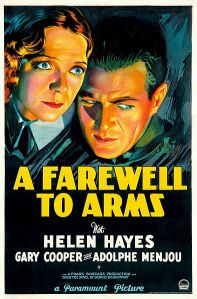
394px-Poster_-_A_Farewell_to_Arms_(1932)_01Again, I must confess that I have not read yet another revered American Classic. I have not read A Farewell to Arms…But from the admittedly minor things I know about Hemingway’s prose and general tone, this film adaptation is certainly not a perfectly faithful translation of its source material. Not by any stretch of the imagination.

However, I do know at least a little something about Frank Borzage a filmmaker that time has been less kind to, though he contributed some quality pictures during the silent era and during the ensuing generation of talkies — even a couple of reputed classics. And yet watching A Farewell to Arms you can see his philosophies working themselves into the story line — the very themes that he would repeat again and again in many of his movies.

It soon becomes apparent that Borzage’s film is not about a war at all though WWI is a major plot point. He would examine an analogous idea with The Mortal Storm. Its his predilection not to focus so much on the carnage or alienation of war and more so on the effects that such a cataclysmic event has on the lives of those thrust into the middle of it. So his narrative borrows from Hemingway but hinges on this idea of lovers battling against the wiles of the world through the sheer euphoria of their romantic fling and yet it proves to be more than transient.

There’s without question a verisimilitude and a candor to the portrayals of Gary Cooper and Helen Hayes as said lovers — an ambulance driver and a nurse. Two seemingly unextraordinary individuals who nevertheless become extraordinary in each other’s arms. They will go to such great lengths to remain together despite the obstacles hindering them on every side. Perhaps it’s heightened by the times but still, there is this general belief in what they do on the part of the audience — that they can actually fall in love and will do whatever it takes to stay together.

Even if it’s not wholly plausible, they lend that needed credence to the parts. Their emotions feel genuine even as their romance gets crippled by the very circumstances they find themselves in. Where years are sped up into days and marriage must be forged in the most humble of moments. There’s no time or space for a normal life with a normal love affair even if that’s what both parties desire. It cannot be so.

Gary Cooper exudes a gentle tenderness in the majority of his scenes and he manages to be as vulnerable as we’ve ever seen him in the part because this romance tears him apart. Helen Hayes is an actress that I, unfortunately, know very little about but she strikes me as a beauty like Claudette Colbert and yet I find an easier time liking her and by some form of transference, the same goes for the character that she plays. It’s also crucial to note the splendorous black & white cinematography of Charles Lang which paints the contours of this love affair with expressionistic shades while never quite allowing us to forget the war at hand.

Though we can compare Borzage’s film with the original novel it seems equally compelling to juxtapose this cinematic adaptation of A Farewell to Arms with Joseph von Sternberg’s romance, Morocco, of only two years prior also starring Gary Cooper and Adolphe Menjou with von Sternberg’s muse Marlene Dietrich. Hayes doesn’t have the same gravitas or allure of Dietrich but that actually serves her better in this film with what Borzage is trying to accomplish.

Because this story is a tragedy as much as it is a romance of faithful devotion. Whereas von Sternberg seems most interested in the locality and the depictions of his stars — allowing them to have looser morals, you could make the argument that Borzage film holds a greater stake in its thematics and what such a romance can represent in such a turbulent world. The Great War is only an unfortunate backdrop to play the action against and it’s unfortunate because love is a rapturous thing. But it’s the many evils of the world that tear it asunder. The kind of troubles that force two people to bid each other a tearful adieu even if it’s the last thing they want in the world.

3.5/5 Stars

Review: Mr. Deeds Goes to Town (1936)

Gary_Cooper_in_Mr._Deeds_Goes_to_Town_trailer“He could never fit in with our distorted viewpoint, because he’s honest, and sincere, and good. If that man’s crazy, Your Honor, the rest of us belong in straitjackets!” ~ Jean Arthur as Babe Bennett

Mr. Deeds Goes to Town is a true treasure of idealism and Americana. People, especially now, may have many quibbles with the films of Frank Capra because he was the undisputed champion of feel good cinema that revelled in happy endings, stalwart honesty, and the little guy being permitted a fighting chance.

It’s no wonder that he made such good use of the likes of Gary Cooper and James Stewart because they embodied common, everyday American decency like few other actors could ever claim. Admittedly it’s easy to belittle his pictures as saccharine and sentimental to the nth degree but beyond that Capra always seemed to have an inherent sense of what America stood for or at least what he believed it could and still can stand for.

Every man deserves a certain amount of respect. You might call them inalienable rights like life, liberty, and the pursuit of happiness. And any force that tries to impede that is in simple terms an affront to all humanity. Because though we might all think we’re different, we share a lot more similarities than we often want to concede. It’s easy for us to forget that and that’s what happens here.

Longfellow Deeds (Cooper) becomes the overnight talk of the town because his rich uncle dies in a horrible car crash and bequeaths his wealth to his unsuspecting nephew. It’s the kind of good fortune that others drool over but in Deeds’ hands, he takes it in stride. He comes off as a real Yokum from the one horse town of Mandrake Falls but if anything Deeds is incredibly smart. He realizes he can have contentment out of the limelight and with very little. He enjoys quiet days oftentimes filling idle hours with his prized tuba and poetry that he writes for postcards.

But his new status as a millionaire forces him into the life that he doesn’t much want. Mansions and butlers, folks looking for handouts, ravenous newspapermen (and women) and conniving lawyers. Front and center is Mr. Cedar (Douglass Dumbrille). It’s these very individuals who see Deeds as a ridiculous outsider to be belittled and taken advantage of.

The brilliance of Capra’s movie is that he makes his hero, while simple and practical, still very astute. He may have his many quirks but there’s a surprising amount of business acumen and common sense flowing through his veins that consequently sends everyone else for a loop. He spies phonies from a mile of away and he looks to reform the local opera while finding ways to spend his newfound fortune sagaciously.

The only thing he’s not watching out for is a pretty girl, journalist Louise “Babe” Bennett (Jean Arthur) is ready to nab him, capturing his heart and simultaneously giving the whole city a front row seat to his exploits about town from quarrels with a snooty circle of poets to an evening jaunt ending on a fire engine. She’s a pro at spinning the tale into one of a first class boob, christening him the “Cinderella Man” that the whole world laughs at. They eat it up and they want to see him fall–this idiotic nobody suddenly being scrutinized by society for his good fortune. It’s all rather unfair but oftentimes that’s the way the world turns. It’s a cruel and sometimes curious place.

Because while Deeds grows fed up with this whole lifestyle, ready to leave it all behind him, Babe finds herself truly falling for her project since he models something she rarely sees in a man — real honest to goodness integrity that guides his every action. There’s never a false pretense or a veiled intention. What you see is what you get. Ironically enough, in this land of fakes, she’s the only “real” person he thinks he’s met. And she knows what’s been going on, going so far as to tell her editor that she’s quitting. There’s no way she can keep up the charade only injuring the character of the one she loves more and more.

But of course, everything dives into the depths of despair when Deeds is sent to trial calling into question his sanity after he resolves to use $18,000,000 to portion off acres of land to destitute farmers to work for him. It’s utter lunacy, isn’t it? The workers line up around the block leading into his home as he offers them a chance at a real life without starving children and food lines every day. This is what Cedar, Cedar, Cedar, and Blumenfeld are bringing him to court for or is it the fact that they want a portion of his fortune? Yes, that just might be it.

Anyways, far worse than that fate is the fact that he thinks his girl has betrayed him and she has in a sense, but she’s also devoted to him by now. She watches helplessly as her man gets railroaded. She began as the one to crucify him in the tabloids and now she prepares to watch him get crucified in the courtroom. In these moments, he does take on a Christ-like post watching all the proceedings without a word. He never makes any effort to defend himself after accusation after accusation is thrown his direction.

But the bottom line is that he does not have to let himself be destroyed. Being the martyr, in this case, is not his job and Capra lifts him out of the pit and resurrects him. The fact that Louise fights for him and numerous others including his cynical right-hand man Cornelius Cobb (Lionel Stander) and the local newspaper editor (George Bancroft), not to mention a legion of grateful farmers. So Mr. Deeds ends with a tumultuous courtroom finale befitting one of Capra’s finest pictures. It brims with goodness and bubbles over with humor that constantly underlines this feel good classic.

Though Gary Cooper represents Capra’s love of the every man with common decency and common sense, Jean Arthur remains equally crucial to the worlds that he creates. It has to do with her quality as an actor that allows her to play the snappy, witty, world-wearied types. Because she represents all the many people with that very same cynical streak and yet the very fact that her heart can be melted and her whole mindset can be changed suggests that there might be hope for all of us. That hope burgeons up from Mr. Deeds and leaves us with a warm feeling indeed.

4.5/5 Stars

Morocco (1930)

Gary_Cooper_and_Marlene_Dietrich_in_Morocco_trailer_2.jpgBefore the exoticism of Casablanca, Algiers, or even Road to Morroco, there was Josef Von Sternberg’s just plain Morocco but it’s hardly a run-of-the-mill romance. Far from it.
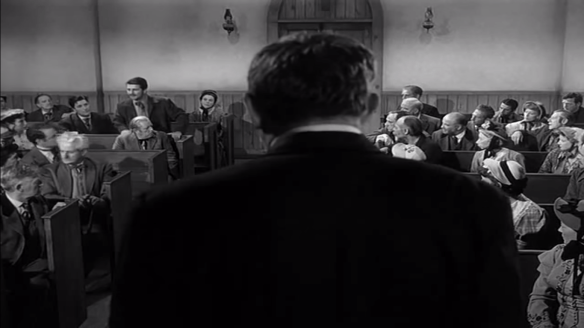
Although it involves soldiers, it’s also hardly a war film but instead set against a backdrop that presents an exotic love affair as only Sternberg could. With a sultry Marlene Dietrich matched with a particularly cheeky Gary Cooper, it instantly looks to be an interesting dynamic because they couldn’t be more different.

She, a radiant German beauty with an evocative pair of eyes to go with a somewhat sullen demeanor. He, America’s ruggedly handsome ideal of what a man should be. And it in Sternberg’s film neither of them is what we’re used to.

He’s a renegade soldier in the French Foreign Legion. She’s a cabaret singer (that hasn’t changed) but she also manages to be French, not German. Somehow it’s easy enough to disregard because it’s not necessary to get caught up on the particulars.

All that matters is that they both find themselves in Morocco. He is traipsing through town with his division and spends some free time taking in her floor show along with the rest of the rowdy masses. Neither one of them has found someone good enough for them — they’re equal of sorts. He’s a gentleman cad if you will and she’s hardly an upstanding woman, making a living in a dance hall but there’s more to her. It’s hinted that she once had love, perhaps.

It takes so long for them to actually speak to each other but they’re flirting from the first moment they lay eyes on each other. They say so much through simple expressions all throughout the cabaret show. Things proceed like so. She slips him a flower, then an apple, and finally a key. At this point, he gets the drift and we do too.

Later that evening he winds up at her flat and they spend their most substantial time together. It’s full of odd exchanges, meandering conversations that run the risk of sounding aloof. In fact, their entire relationship is replete with oddities.

Another man (Adolph Menjou) is smitten with Amy but he’s never driven to jealousy. He’s good-natured and generous in all circumstances. People like him must only drift through the high societies.

She holds onto some wistful longing for the tall dashing Legionnaire who drifted through her life. But she’s slow to act. Meanwhile, he hardly seems to take it as a blow to his love life when she resigns to stay behind. After all, he’s quite the ladies’ man. He probably doesn’t need another woman. He’s always got several draped over each arm.

Morocco is a film interesting for the spaces that it creates and not necessarily for the story it develops. Visually, by the hands of the director and then simultaneously by Cooper and Dietrich as they work through their scenes both together and apart. Though it might in some ways lack emotional heft, its stars are still two invariably compelling romantic stars of the cinema.

Somehow it still manages to be quite lithe and risque when put up next to its contemporaries. It exudes a certain mischievousness of the Pre-Code Era. It’s not so much licentiousness and debauchery but it wishes to suggest as much. It can be implied without actually going through all the trouble of showing it.

Dietrich sums it up perfectly in her little diddy about Eve (What am I bid for my apple/ the truth that made Adam so wise? On the historic night/ when he took a bite/ they discovered a new paradise). In essence, the world got a lot more exciting when sex and deceit were brought into the equation. Maybe she misses the implications the Fall of Man but that’s precisely the point. Still more Pre-Code sauciness case and point.

In the final moments, where Dietrich abandons her heels and goes slinking across the sand chasing after her man, it feels less like a romantic crescendo or even a tragic turn and more like a ploy by the director to make his leading lady the focal point of his story one last time. She is granted the final bit of limelight. Because in many ways Gary Cooper could not win when it came to upstaging Marlene Dietrich orchestrated by her devoted partner/director Sternberg. Thus, Morocco turns out to be a rather curious love story different than some of the more typical Hollywood fare.

4/5 Stars

Review: High Noon (1952)

highnoon1Drums softly beating. A voice mournfully bellowing,”Do not forsake me, oh, my darlin‘.” It can only mean one thing, the beginning of High Noon, a western that has grown near and dear to my heart in the recent years. And yet how can a western of under 90 minutes mesmerize and cause goose bumps to form time after time? That opening ballad sung so wonderfully and folksy by Tex Ritter is one great reason. It’s a mournful dirge of a song which nevertheless draws us into this film, and personally, I cannot help but belt out a few lines now and then (I’m unashamed to say I know the whole song). After all, it’s this song that reflects the story of our main character Marshall Will Kane (Gary Cooper) and reiterations of the tune can be heard throughout for the following hour as we all wait for the noon train.

The song makes it clear that Ben Miller is coming after Kane for sending him to prison. He’s got revenge on the mind and three of his buddies, including his brother, are waiting for his arrival, along with everybody else in town. Meanwhile, the Marshall is about to hang up his badge as it were, because he’s gotten hitched to a pretty young quaker (the estimable Grace Kelly), and they look to settle down with a store in some sleepy town. He’s well-deserving of it after all he’s done and the town stands behind him.

But the news of Miller’s return is no way to start the honeymoon. Still, the couple sets off, but Kane turns around realizing he cannot run (I do not know what fate awaits me. I only know I must be brave. For I must face a man who hates me, Or lie a coward, a craven coward; Or lie a coward in my grave).

highnoon4

This is the backdrop that he’s trying to scrounge up a posse with. Others getting out of town, some telling him he should get out of town too, and a general commotion about what they should do about the whole mess. There are numerous cross-sections and enclaves all with different motives and most importantly excuses. They all turn down a chance to help Kane for one reason or another (even his closest friends). It seems so easy to pass judgment, but then again what would we do in such a situation? In fact, it brings to mind the Hollywood Blacklist which this story was supposed to be an allegory for. This is not just some fictionalized parable, it was mirroring real life to some extent.

What really resonates about this film is the resolve of one man, because when it comes down to it, Kane did not need to stay, he did not need to do what he did, but he stood by his guns, literally, when no one else would stand with him. It’s easy to conform, easy to go with the crowd. It takes real courage to walk out on your own — although the Marshall did have a little help. So whether or not John Wayne thought this film was wholly “Un-American” or not, I think I would have to disagree with him on this one. Maybe what Kane has is reluctant courage, and I could see how the Duke would be disgusted by such a “spineless” individual. But for me, he’s all the more relatable played so aptly by Gary Cooper.

highnoon7It continues to amaze me that a film of this length can have so many wonderful characters who leave an indelible mark on the story. Certainly, you have the hero and the villains, but then we have character actors such as Thomas Mitchell, Harry Morgan, and Lon Chaney Jr. playing some of Kane’s buddies. There’s the gang at the bar and the hotel clerk, who are no friends of the Marshall. There’s his former flame Helen Ramirez (Katy Jurado) and his hot-headed deputy (Beau Bridges). The rest are filled out by men, woman, children, town drunks, and churchgoers. Zinnemann does a wonderful thing aside from just using the clock as a plot device and tension builder. He also calls back all these many characters as the noon train comes in with smoke billowing black. The audience and all these people know what that shrill whistle means. Things are going down, and Kane is going to face it all alone.highnoon2The isolation is so wonderfully conveyed by an aerial shot where the camera moves up to show the stoic Marshall standing in the middle of a ghost town. No people around and no one showing their faces. Then of course, when it’s all over, the floodgates open and all the folks rush into the center of town. Fittingly,  Kane drops his tin star in the dirt in disgust as the refrains of Tex Ritter’s ballad continue.

Put High Noon up against other films and it could be criticized as nothing more than a western, but perhaps that’s why I like it. I cannot help but gravitate towards it. In some ways, it reminds me of growing up and it allows me to forget about any sort of deeper meaning for an instant so I can be fully enraptured with this story, this song, and these characters. It’s a worthy incarnation of the mythic west, that also leaves a little space for some humanity.

People gotta talk themselves into law and order before they do anything about it. Maybe because down deep they don’t care. They just don’t care.” – Martin Howe (Lon Chaney Jr.)

5/5 Stars

Review: Sullivan’s Travels (1941)

Veronica_Lake_and_Joel_McCrea_in_Sullivan's_TravelsIf Preston Sturges was a comic wordsmith then Sullivan’s Travels was his magnum opus. It has so many pieces worth talking about, despite it only running a meager 90 minutes. It is the kind of comedy that director John L. Sullivan (Joel McCrea) would want to make, and it’s a message movie against message movies. It’s a film about filmmaking (including mentions of Capra and Lubitsch). There’s even a scene where an ecstatic actress goes racing around the studio lot, completely disregarding the period piece she is acting in. The script has the undeniable frenetic poetry of Sturges and even takes time to wax philosophical at times. Sullivan opens the film with some very grandiose vision of what film can mean for the everyday filmgoer (I want this picture to be a commentary on modern conditions. Stark realism. The problems that confront the average man!).

Sturges’ film is scatterbrained and insane in its pacing at times. Take the opening speeding sequence as a newly bedraggled Sullivan tries to shake his caravan so he can really get a feel for the common man’s plight. It almost gives you a heart attack as they blitz down the road, people and everything imaginable flying every which way. It’s faster than most modern action sequences could achieve.

However, although Sturges is undoubtedly known for the strength of his scripts, it’s important to note that Sullivan’s Travels has some wonderful visual sequences. Many of them lack his typical lightning dialogue and instead rely on music and images to develop scenes. Sometimes it’s the plight of the homeless on the road as Sullivan and his companion make their way across country. I would have never thought of this comparison before, but sometimes his heroes elicit the same type of empathy that would be given to Charlie Chaplin or the Gamine (Paulette Goddard) in Modern Times. In that same way, this film so beautifully fluctuates between comedy and heartfelt drama.

Another beautiful thing about Sullivan’s Travels is the cast. Our star is Joel McCrea, who is sometimes known as the poor man’s Gary Cooper, but that is rather unfair because he’s a compelling actor in his own right. Just look at this film to prove his case. Also, he and Veronica Lake (Ms. Peekaboo Haircut herself) have a fun relationship going from the beginning when they first meet in a diner. You might say the shoe’s on the other foot since she thinks she’s doing a good deed for this down on his luck nobody. She has no idea that her “big boy” is actually a big shot movie director. However, it makes no difference, because in some ways she feels responsible for him, and so she takes part in his noble experiment even afterward. That’s where we build respect for them, and she, in turn, falls for him. It’s what we want as an audience. And we finally get it when Sullivan beats his death and a chain gain to return to civilization. His nagging wife has married some other boob, so Sullivan gets his girl.

Sometimes I feel like a broken record, but it definitely seems like they don’t make character actors like they used to. It helps that Sturges has a stock company of sorts and the studio system probably helped in propagating certain actors. However, there’s no doubt that players like William Demarest and Porter Hall are so memorable. Their voices. Their look. There’s no escaping them and there are numerous other faces that you get deja vu with. We’ve seen them before somewhere and just cannot place it.

Within this whole story of comedy, romance, and a heroes journey, there is, of course, a moral. However, I don’t mind Sturges and his simple didacticism. Because he ditches high rhetoric or sickening idealism for a simple conclusion (There’s a lot to be said for making people laugh). A Pluto cartoon short that brings a few giggles can be just as impactful in this world of ours compared to the next big Oscar drama. That’s what Sullivan’s Travels led to. A change in perspective through a hilarious itinerary.

5/5 Stars