Three Colors: Red (1994)

 3a286-threecolorsred3Kieslowski’s films are mostly character driven and yet he often uses high drama to create a far more complex lens to observe his subjects. In Blue, the inciting incident was a deadly car accident. It seems only fitting that he would end this story with the catastrophic sinking of a ferry. He takes the same bleak, no-nonsense approach with little fanfare that he used before. It’s his way.

In fact Three Colors: Red as a whole is another simplistic film in plot, and yet the irony is that the film is chock full of complexity because its major point of interest is interpersonal relationships (as suggested by the intertwining phone lines shown early on). There is nothing more tangled and intricate about humanity than our relationships.

As such, this final installment is in many ways a story about love, romance, and friendship, and yet Kieslowski does not find it necessary to preach to us. He is better and more thoughtful than that, laying out the story for us to ponder and mull over. This is the story or better yet the parable he created.

Valentine (Irene Jacob) is a young student and model who is constantly an innocent and sympathetic figure with a pair of doe eyes. She is often shown in profile which continually reveals her youthful and even sullen beauty. She is even the somber poster girl of a gum campaign plastered around town. There’s a boyfriend in her life who she desires the affection of, and then there’s a brother who is hooked on drugs. In other words, life is far from rosy and secure.

One day she accidentally runs over a dog that she takes to the owner (Jean-Louis Trintignant,) who seems surprisingly unconcerned by the event. She does the only thing she can do with a clear conscious which is taking the dog to the vet and then taking care of it herself. Soon after, Valentine finds herself walking the dog by the old man’s house once more and she discovers what he does all day. It turns out he is a retired judge, and he spends his solitary existence eavesdropping on the conversations of others (including Valentine’s neighbor Auguste).

Later, through the grapevine, she finds out that a retired judge had a suit filed against him, and she rushes to his house to assure him she had no part. He already knows because he was the one who turned himself in.
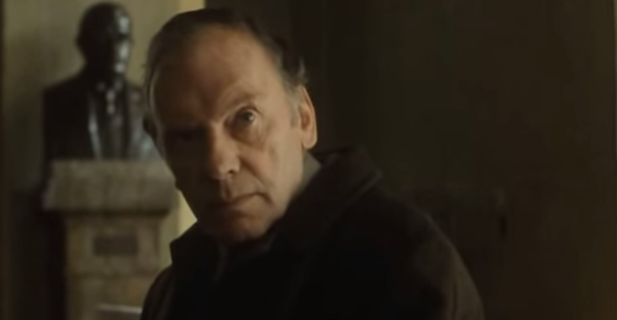
Over the next days, Valentine begins to empathize more and more with Mr. Kern’s existence. As a former judge, he was forced to make decisions far more difficult than most. In fact, why do people follow laws? Is it out of goodness or purely self-serving? Is morality all relative? What really is good and bad, because how would we act in the other man’s shoes? By this point, we see Kern’s struggle a little better.

Finally, Valentine invites her new found friend to her last fashion show before she heads to England for a few weeks. It’s a touching moment when he pays her a visit after the show, but it also reveals the pain in the old man’s past. It may be a lucky guess but all we know is that Valentine figures him out. It just shows that you cannot judge others by first impressions.

So as it goes, Auguste’s life practically mirrors that of a younger Kern, and thus, so many parallels become evident. Aside from the obvious, I only figured it out after the film was done, but they are both judges, struggle in love and the like. At the end of the film when Kern sees the news about the ferry with Valentine and Auguste aboard, the only thing we know for sure is that there were seven survivors (guess who!). In a somewhat subtle way, the trilogy is connected and Kieslowski ends his tale on a fitting note. It freezes and just like that the career of one man was done for good. A couple years later he would already be gone. But he went out on top and Three Colors cemented his legacy. I always loved the color red the best. Here’s yet another reason why.

4.5/5 Stars

Three Colors: Blue (1993)

b0ad4-threecolorsblue“Now I only have one thing left to do: Nothing. I don’t want any belongings, any memories. No friends, no love. Those are all traps.”

I once thought that Before Sunrise was the type of movie that I would want to make. Three Colors: Blue is another concept that I have often envisioned without even knowing it. In fact, I had seen The Descendants, a film with a somewhat similar story arc told from a different perspective. Except whereas Clooney’s film is full of blatant drama and intense familial moments in Hawaii, Blue is far more nuanced.

The Descendants might be a more gripping drama, but Blue has the sort of complex depiction that seems to more closely mirror reality. The grieving process involves isolation, solemness, and at times few words. The easiest way to grieve is not to feel, not to fully embrace the pain. Sometimes that is the simplest if not the healthiest way to deal with it for Julie. It’s a real world approach to the scenario, and it’s no less painful to watch — perhaps even more so.

Julie’s husband Patrice de Courcy was a famous composer who was commissioned to arrange a grand piece to be performed at concerts for the Unification of Europe. It is a great honor and we quickly learn that Patrice is quite a big deal. However, after a car accident, Patrice and his 5-year-old daughter perish in the crash and only Julie gets away alive. It is a stark, unsentimental picture, and it succeeds in changing Julie’s life forever.

After being released from the hospital she soon sells all her possessions and moves out of her family apartment to take up residence somewhere far removed from any acquaintances, including a man named Olivier who is in love with her. She has a new home and begins to sever ties to her old life. The unfinished work of her husband (and her) is trashed and that’s the end of that. In her new Parisian home, she has a rodent problem and becomes the hesitant confidant of a local exotic dancer. Furthermore, she rejects the necklace that a young man pulled out of the wreckage. Her times of solitude are spent swimming laps alone in the local pool, submerged and half-covered in shadow. Grandiose symphonies reverberate through her mind haunting her. In such moments, Kieslowski will often black out the screen in the middle of the scene, effectively interrupting the action for a few seconds before bringing us back.

Words are few and far between for Julie and when she does speak it is often brief and reserved. We are, therefore, forced to observe her without the aid of dialogue. She is certainly detached but there is a provocative side to her. Something is mystifying about her soft features, dark eyes, and short hair. She is a wonderful woman of mystery and beauty because the reality of it is, we do not know a whole lot about her. We must discover more bit by bit and she does not readily disclose information.

It is when pictures of her life literally flash before her eyes on a TV screen that the story takes its next turn. Julie learns soon enough that her husband had a mistress that he was with for a few years. In the hands of Hollywood, this would be high drama. In the hands of Kieslowski, it is far from it. Julie is still the same aloof individual she always was and even a confrontation with the mistress does not change that. She is civil and generous through it all.

Finally, she returns to her husband’s composition which she learns Olivier has started to rewrite. They agree that he will make his own work and Julie must accept it for what it is. Faces from the film float across the screen and a still solemn Julie lets out a few silent tears. The anti-tragedy is complete, a subdued, intriguing piece of cinema. Not for those with short attention spans but, I am interested to see Red and White. Kieslowski intrigues me with his thought provoking films somehow reminiscent of the likes of Bergman or Bunuel.

4.5/5 Stars

The Kid with a Bike (2011)

fe148-kidwithabikeTo say this is an affecting film would be an understatement, because if you want, to be honest, it is truly heart wrenching and painful to watch. From the beginning moments, this film brought to mind a modern-day hybrid of The 400 Blows with a bit of The Bicycle Thief mixed in. However, comparisons are always unfair, because this film will never be either of those and that is fine.

Cyril (Thomas Doret) is a young red-headed boy whose most prize possession is his bicycle. Now his mother is non-existent (either dead or gone) and his father might as well be. The boy lives at a foster home, but he is an unruly occupant who is prone to flee. The reason being is that Cyril clings to the hope that his father will come and get him or that his father will call him soon. It never happens.
On one such escape attempt, Cyril clings to a lady hairdresser (Cecile de France)  as his caretakers pry him away. Soon she comes to see him and brings his prized bike which had been stolen. Next, she graciously agrees to take him for the weekends after he asks her. However, he is far from a perfect child, often detached, prone to disobey, and can even be violent at times. Things get worse when Cyril goes with Samantha to talk to his father. It’s a happy moment for Cyril until his father reluctantly tells him to his face that he will not take him back. He had initially asked Samantha to do it showing his lack of a spine and self-respect. You cannot much blame Cyril, but he gets worse before he gets better. He spends time with a local thug who ingratiates himself to Cyril with bike repairs, Assassins Creed, and soda. The motive being he needs a new accomplice to take part in a small-time robbery. The worst part is Cyril does it after Samantha specifically tells him not to hang out with the guy.
Without getting into all the gory details Cyril runs into more problems, Samantha gives up her boyfriend, and there are more repercussions for his actions. However, unlike The 400 Blows, this film ends on perhaps a more positive, although altogether odd, note. We can only hope that Cyril and Samantha gel even more because they deserve to be happy, but that is a story for another film. Or maybe it is better not knowing.
I had yet to see anything from the Dardenne Brothers, but I can see why their type of film-making is so popular. It’s “European film” at its best with simple storylines, realistic and humble camerawork that is brought to life by complex characters. There is a lot of raw emotion and character traits that must be parsed through. Motives and actions must always be questioned since we cannot understand everything. We just know they happen. That is a beautiful thing I suppose because these characters are not often two dimensional and that is a service to the audience. These are the type of films people deserve to watch whether they know it or not. If all we see are summer blockbusters and Oscar contenders we would be missing out on a whole different niche of film entirely. Give it a chance and just maybe you’ll like it.
4.5/5 Stars

Serpico (1973)

acd89-serp2“Come on Frank. Let’s face it. Who can trust a cop who don’t take money?”

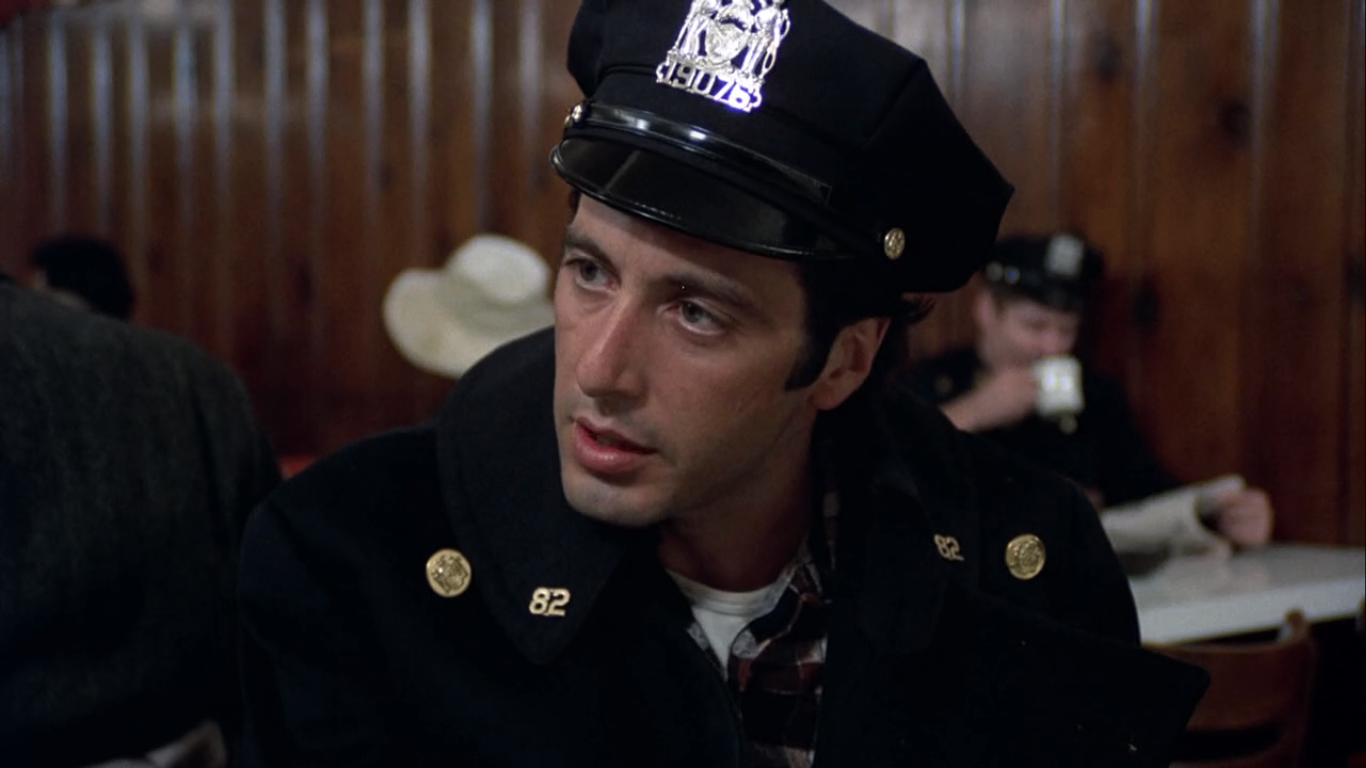
This is the state of affairs in the police department that green police academy grad Frank Serpico (Al Pacino) finds himself thrown into. At first, he is unaware of it all as he moves up the ranks as a young uniformed cop. In fact, he looks exactly like a post-war Michael Corleone at this point. His new role seems like an honorable life of camaraderie, duty, and public service. The corrupt is obvious and distinct from the good. Soon his brash, forthright style creates waves, but it soon becomes apparent that he is not one to care about hurting egos.

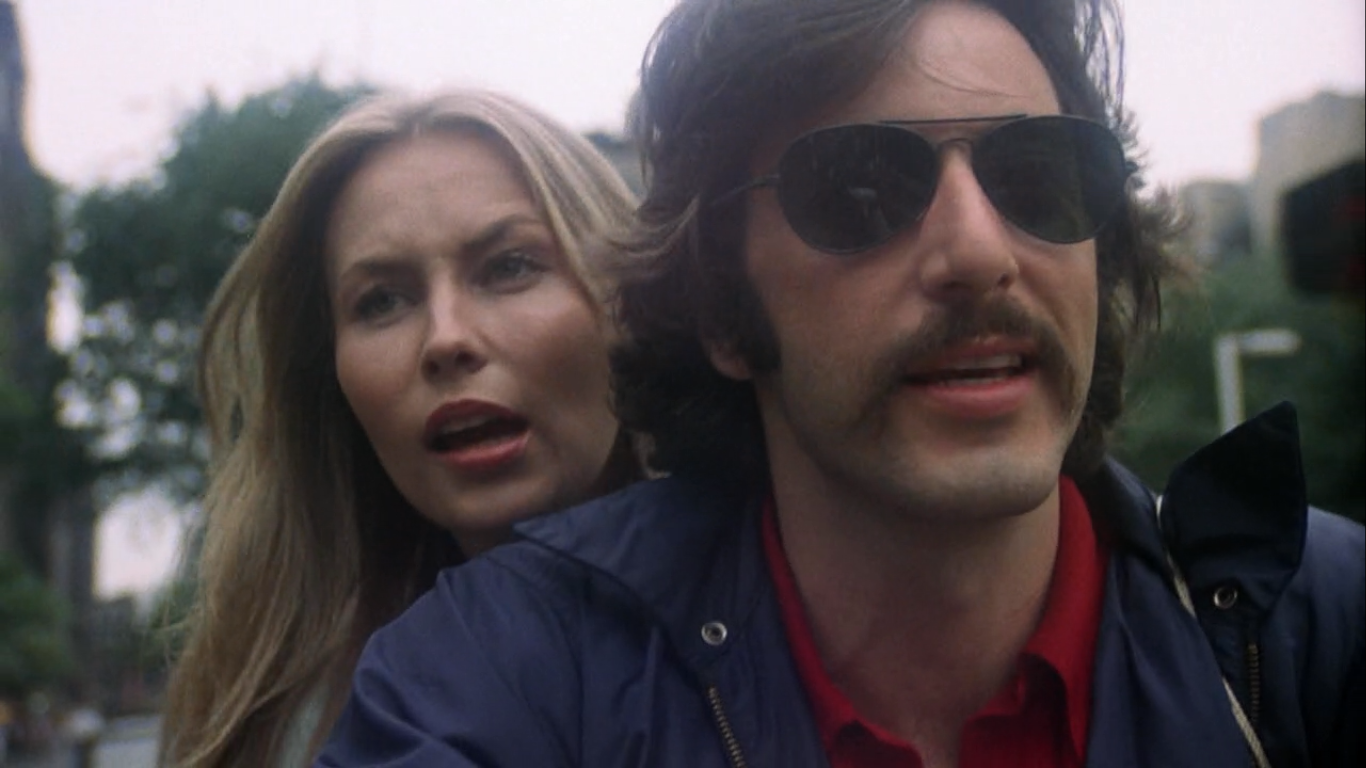
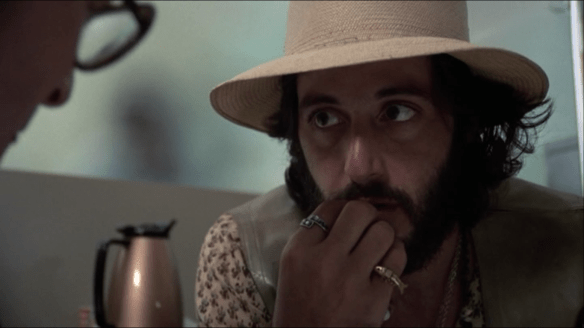
39dd2-serp2b3He moves on with his career working in plainclothes and getting a new apartment followed by a new dog. His appearance begins to change as well as he starts wearing a thick bushy beard and wearing hippy garb. It suits him fine in his work and outside he meets a pretty girl named Leslie Lane, but it’s not meant to be.

Serpico corroborates with colleague Bob Blair (Tony Roberts) trying to figure out how to bring attention to the bribes he has 60789-serp2b4been offered. But honest help is hard to find especially from someone who makes it stick. The higher ups care more about the reputation of the department over corruption, making progress difficult to come by. He continually bounces around from division to division and nobody seems to want him, or trust him for that matter. There are only a few honest Joes around and they are few and far between. Serpico gets transferred this time to the “upright” 7th division and begins seeing his next door neighbor named Laurie. Too soon he learns that one of his acquaintances is instrumental in the extortion that takes place department-wide. By now Frank is feared, hated, and despised because he will not take money under any circumstances. It takes its toll to be all alone in the force, and he lashes out at Laurie who leaves him for good. Now he truly is alone.
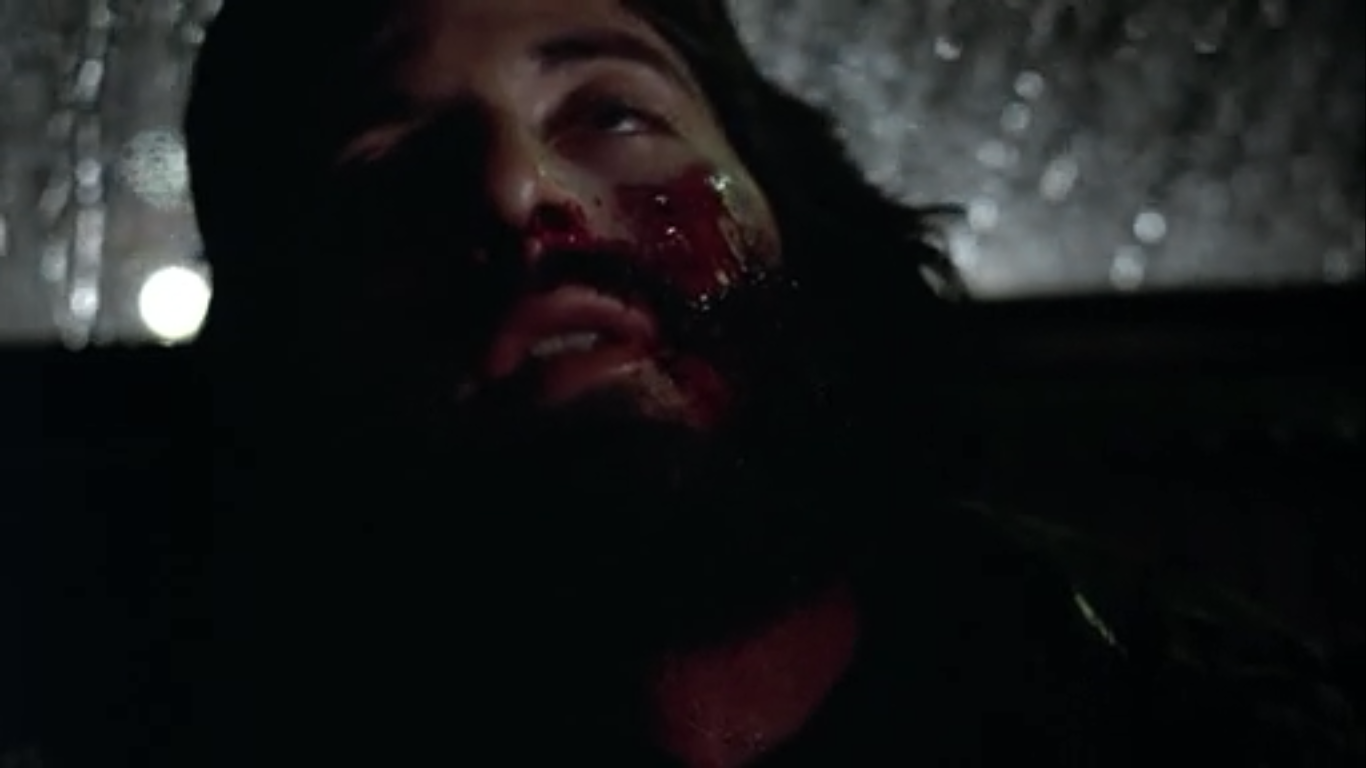
He becomes increasingly combative and paranoid as he gets ready to testify before the grand jury. Another case of bribes comes out and when Serpico and his upright partner try and report it nothing is done. As a last resort, Frank goes to The New York Times and they blow the cover right off. He soon receives an ominous death threat and gets shot when trying to bust someone.

He lays in the hospital recuperating asking for his guards to be relieved and watching the hate mail pile up. His badge is returned to him, but he rejects it in disgust, soon resigning from the police and waiting for a slow boat to Switzerland. That’s as far from New York as he could get.

It seems like there are so very many close-ups of Frank Serpico, and thus, over the course of the film we get the opportunity to truly study his face, or rather the face of Pacino as he embodies this character. His cold, aloof eyes, his facial hair that goes under several transformations, but that is only the outward appearance. It is his inner transformation that is most important because that is where his conscience lies, to guide him each and everyday on the beat.

My New York geography leaves something to be desired but that’s not the problem of native New Yorker Sidney Lumet. This is a story that takes place in New York, made for New York, and fit perfectly with its director. It seems like he knew the streets of the New York like the back of his hand, really creating an authentic atmosphere for this police biopic. It has a touch of The French Connection and yet it is a far more personal look at the life of Serpico himself.


This is also extraordinary because the story of Serpico was so fresh, still only a year or two old at most. Furthermore, the film has the same disillusioning and depressing tone of other dramas that came out of the 1970s. Back in the 1950s films like 12 Angry Men (Lumet’s debut) still had an air of idealism. That had mostly dissipated in the New Hollywood period, because the good guys aren’t black and white. Serpico is not the greatest guy around, but the one thing he has going for him is that he is not crooked and that’s saying a lot in the corrupt world he exists in. This is his story told with all the blemishes, personal troubles, and drama that went with it. The greatest service to him is that his story got told and hopefully truthfully enough.

4.5/5 Stars

Cinema Paradiso (1988)

58390-cinemaparadisoTo the casual viewer, Cinema Paradiso can seem like a plodding film, but this pacing is almost necessary since it reflects the passing of the years for one individual. It has been 30 years since Toto left his hometown as a young man never to return. Now he gets a call from the mother he never talks to, with the message that Alfredo has passed away.

The memories become coming back from when he was a young boy in the post-war years. He had a knack for getting into trouble, falling asleep as an altar boy, and getting scolded by his mother. She was especially displeased with his obsession with the movies played at the local theater called Cinema Paradiso. It is there where Toto has his first encounters with the great legends of film, but also perhaps more importantly, the projectionist Alfredo. Initially, the middle-aged man finds the boy a nuisance but slowly a close bond forms between the two. Alfredo teaches little Toto the tricks of the trade and the movie hall flourishes with packed houses all the time. You see, it was the age when movies were a family affair, and the whole town showed up to be entertained. They were the perfect escape from disillusioned post-war years. However, there still is a local priest who censors all kissing in film because after all, that’s highly objectionable. Very racy indeed.

One such night a near fatal accident occurs when the projector overheats then burns the film setting the whole projection room ablaze. Toto barely pulls out Alfredo alive and he is permanently left without sight. From that day on his young prodigy takes over the job but never forgets his mentor and friend. The boy is soon turning into a man and it means young love and a stint in the army, and still Alfredo is around for him. He is always ready to give a bit of homespun wisdom from a movie or do a simple favor. However, finally on the advice of his old friend Toto left town and never returned in order to make something of his life. 

Now he finally returns to pay his respects and the old has passed away. Some familiar faces still inhabit the town but the Cinema Paradiso is about to be demolished and the end of an era has arrived. The days of cinema halls are waning as videos and the like grow bigger. As a gift to his friend Alfredo left Toto (now Salvatore Di Vita) one last reel of film containing a montage of big screen kisses. It is less a lesson in Italian and American classics and more of a lesson in life. Our relationships matter. More on that later. 

 Cinema Paradiso made me crave watching films with a big audience because that is something modern moviegoers often do not experience. Movies were initially meant for the masses (ie. Sullivan’s Travels) and they were meant to be enjoyed in community with one another. That’s part of their magic I suppose. 

This is also a highly sentimental, highly nostalgic look at film, but as I alluded to before, it is less about film and more about the people. I tried to recognize actors and films while I saw bits and pieces of old black and white footage, but then I realized it was arbitrary because the audience members are what really mattered. As Alfredo points out in one of his last chats with Toto, “Life isn’t like in the movies. Life…is much harder.” However, the reward of living life is great despite the risk involved, and so it is necessary to leave the movie theater, television, or your laptop behind at times. Life and the relationships that fill it are the most paramount of all and although nostalgia is wonderful there is something to be said for living in the present. That is some of what Cinema Paradiso teaches us and it is a message to take to heart.

4.5/5 Stars

City of God (2002)

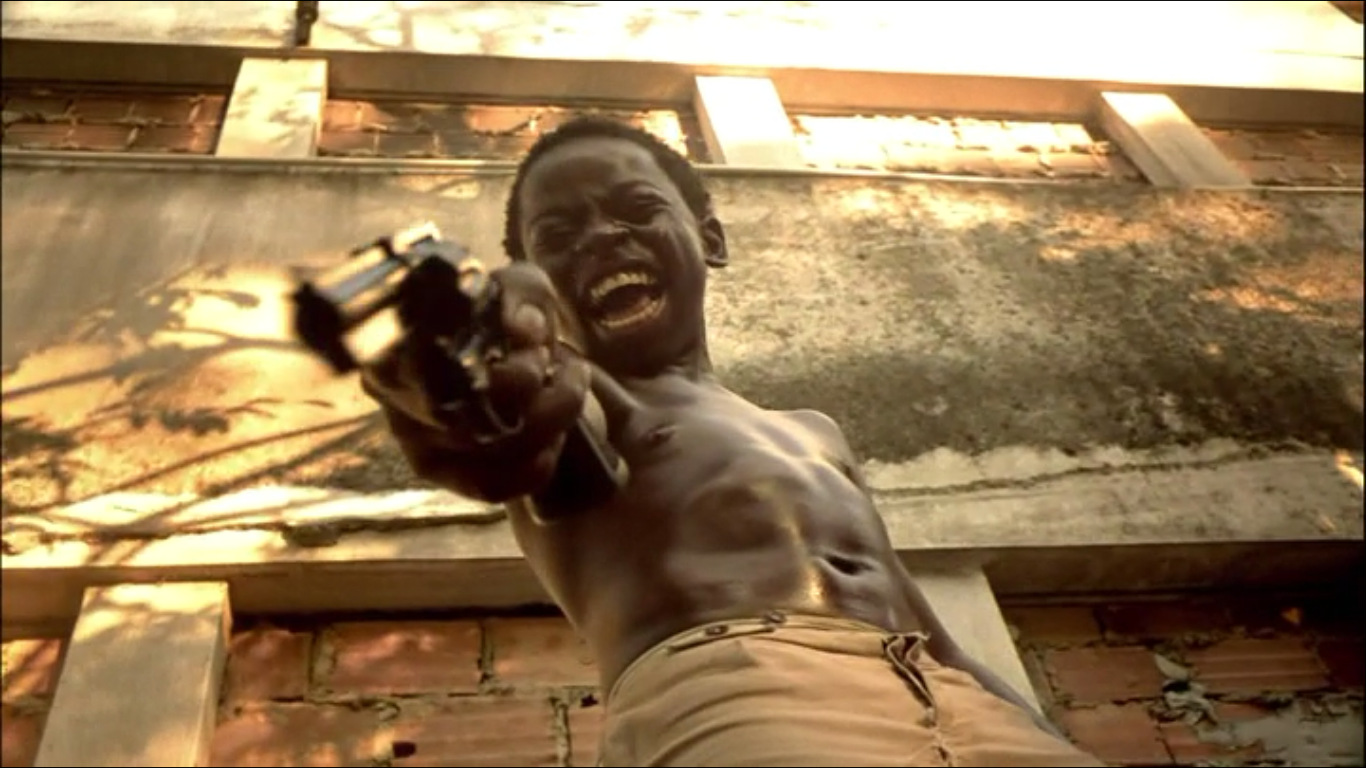
6e6f8-cityofgod1The slash of a sharpened knife grabs our attention and from that point on there is no turning away from City of God. The story is fed to us by Rocket, a character we initially know very little about except he will help us make sense of all that follows. The setting of the story is the slums of Brazil during the 60s and 70s. People are poor, crime is rampant, and adolescents wave guns around like they were toys.

Rocket’s older brother Goose was a part of The Tender Trio along with teenagers Shaggy and Clipper. They have a lucrative revenue stream robbing businesses and gasoline trucks and they share the profits with the people of the town in return for protection. Then a little twerp named Li’l Dice convinces them to rob a hotel and the job pays off big. But soon after begin the police raids and the trio is split up for good. Clipper joins the church, Shaggy is shot by the cops, and Li’l Dice knocks off Rocket’s brother. From that point, the drug trade slowly grew, and ultimately was left in the hands of a young thug named Carrot.

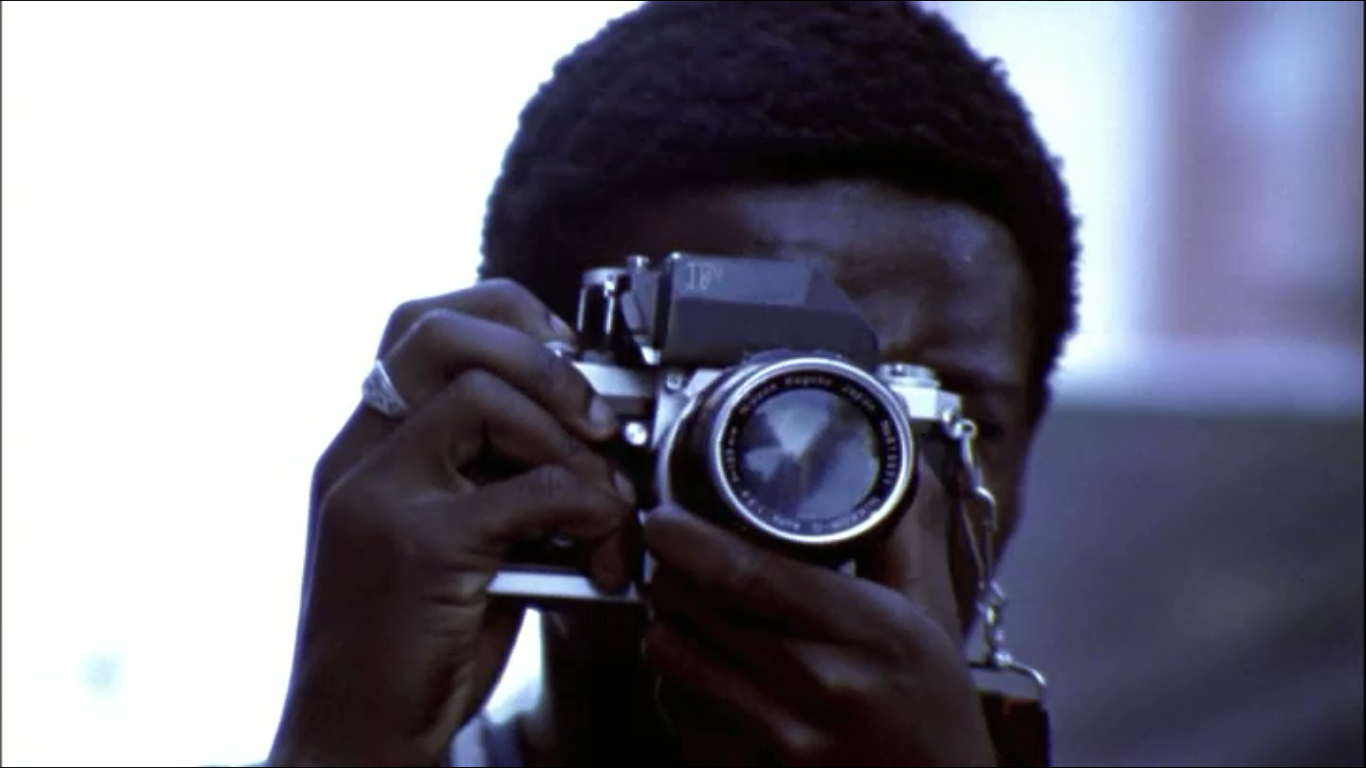
Now it’s the 1970s and Rocket cultivates a love for photography while hanging out with his hippie friends. Meanwhile, Li’l Dice now known as Li’l Z has taken over the drug trade and pushed almost everyone out except Carrot. He is obsessed with being the boss and ironically under his rule, the City of God remains in relative peace. Z’s childhood friend Benny is a relaxed guy who keeps his buddy at bay and earns the admiration of everyone even Rocket.

But the “good times” must come to an end as Benny decides to skip out on the slums with his girlfriend because he does not want the life of a drug lord anymore. At a giant bash tragedy strikes, and Li’l Z is looking for blood. His target is Knockout Ned and the man’s girlfriend. After a night of turmoil, Li’l Z is never at peace again, because there is now a man with a personal vendetta bent on making him pay.

Carrot uses this new ally to his advantage and thus begins the drug war to end all drug wars. Carrot and Ned vs. Li’l Z. Both sides bring anyone and everyone into the fray and load up on guns, guns, ammunition, and more guns. It’s at this time that Rocket’s dreams become realized. He gets a job as a lowly paper boy and ultimately snags some photos of Z and his thugs making it big with the local paper. Soon his photography is in high demand and he’s even on Li’l Z’s good side.

Thus begins the beginning of the end as the rival forces meet in one last skirmish. In the aftermath Ned is shot by a vengeful boy, Li’l Z is jailed then shot, and Carrot is fodder for the papers. The little Runts now plan to run the streets and Rocket becomes famous for his photography. The film holds onto one last secret until the end before it is revealed. As we guessed this film is based on a real story and his name is not Rocket but Wilson Rodrigues.

City of God is an ironic name for such a godless place and likewise, I haven’t felt so squeamish in a film recently and perhaps ever. There is so much violence and crime in this film but we do not seem to get numb to it. It feels like we become more aware of the reality and the vicious cycle that continues its cyclical path. These young thugs are products of their environment and so how they end up is truly saddening. Even such a despicable, sadistic man such as Li’l Z knows what friendship is (ie. Benny), but ultimately even Benny cannot help him. That’s what makes the success of Rocket so extraordinary. In many ways, he is the perfect narrator, first because he survived, but also because he has a view into everything from varying angles and different perspectives.

As far as the film goes, the non-linear story line and multiple points of view made for an engaging story. This piece of storytelling keeps us begging for more crumbs as we attempt to connect the pieces as they are fed to us. Maybe it is a bit of morbid curiosity that keeps us interested or a desire to know if justice is dealt. The quick editing can be disconcerting at times and the often bobbing camera can sometimes get annoying but it fits the style of the whole film. It is part On the Waterfront, part The Godfather, but set in Brazil and a whole lot grittier. City of God reflects the hierarchy of the drug trade that permeates all areas of life and governs an entire community. Rocket was one of the lucky ones.

4.5/5 Stars

Review: Blade Runner (1982) – Final Cut

edd47-bladerunner1“Too bad she won’t live but then again who does?”

It’s the year 2019 in Los Angeles but this is a far cry from the world we are used to as you will soon see. Blade Runner is a hybrid neo-noir, dystopian, and sci-fi film. The Tyrell Corporation has successfully created humanoids called replicants that are near perfect copies of humans except at one point some went rogue and special policemen called Blade Runners were called in. Their services are still required to get rid of a few remnants

Unlike your typical Noir, the film is not in black and white but it still is faded, dank, and dreary. It’s a world-weary L.A. that doesn’t see the light of day anymore. The sterile environment is filled with unnaturally bluish light, old technology, and spaceships coupled with neon lights. The 1980s aesthetic actually adds to the atmosphere which fills all the more dilapidated and old by modern standards. It is weirdly sci-fi while also being time worn. On the ground, it has the appearance of a Chinatown where it is perpetually raining. There is a melding of cultures, time, and place. The ultimate melting pot.

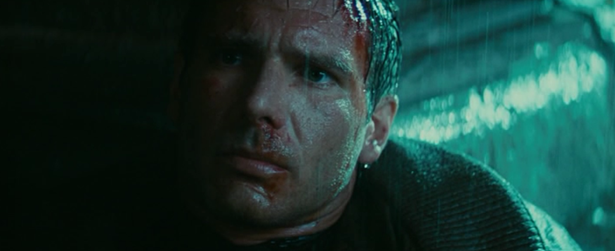
This is the strangely foreign earth that four replicants escape to. One of the fugitives soon blows away a Blade Runner and thus, the best man for the job is brought in: Rick Deckard (Harrison Ford). Finding 4 so called “Skin jobs” is like finding needles in the proverbial haystack. But Deckard has the experience.

Initially, he pays a visit to replicant mastermind Dr. Elden Tyrell and does a test on the woman Rachael (who appears to be a replicant but without any knowledge of it). Deckard proves his skill to Tyrell and heads off on his investigation. Meanwhile, two of the replicants Roy Batty and Leon interrogate a replicant eye manufacturer (James Hong) who points them to one J. F. Sebastian. Another replicant Pris pays a visit to the hapless man named Sebastian and he invites her into his home.

Deckard’s search leads him to snake scales and his first target. He gets to Zhora by putting on an act as a dweeby member from the American Federation of Variety Artists (reminiscent of Bogart in The Big Sleep). She has none of his pitiful guise but he soon pops her. One down. But Leon sees what happens and is ready to make Deckard pay for his deeds. Luckily the Blade Runner gets some much-needed help. Two down. Two to go.

The leader of the replicants, Roy Batty goes with Sebastian to the lair of Tyrell. Batty meets his maker literally and they trade some choice words. In a strangely horrifying instance, he gives his father a kiss before proceeding to cave his head in. A modern reincarnation of Frankenstein and his creature. Except Batty cannot take his life yet.

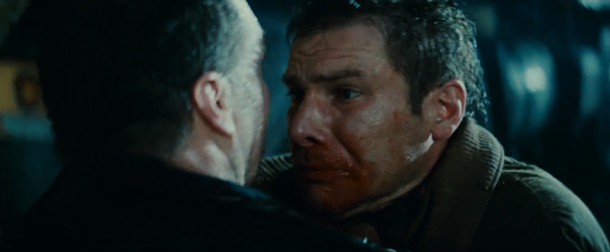
Deckard finds his third replicant and barely notches his third kill. Now it’s only Roy and Rick left to duel it out. What ensues is a game of cat and mouse where a frantic Deckard is playfully stalked by a seemingly deranged Batty. At times both men seem inhuman (I thought you were supposed to be good. Aren’t you the “good” man?), but it is ultimately Batty who remains the unfeeling one. That’s what makes his quiet death all that surprising. Deckard is left looking on bewildered as Batty’s dripping head hangs limp. Four down.

Deckard returns one last time for Rachael. He has fallen for a replicant, but he could care less. Then again, she might not be the only one left. If Gaff’s origami unicorn and Deckard’s dream mean anything at all. The identity of Deckard is one of the many ambiguities that is left for the audience to mull over. That is the beauty of Blade Runner because, with the many different versions, there are various interpretations that can be made. You be the judge of which one is correct. I still say they should have kept the name “Do Androids Dream of Electric Sheep,” but then again what do I know? Blade Runner will continue to befuddle me as well as others and that’s probably a good thing. If all movie mysteries were solved and tied up nicely with a big bow they would all but lose their allure. Not so with this one.

4.5/5 Stars

Beauty and the Beast (1991)

7bdf2-beautybeastposterMy affinity the past decade has gradually turned from the classical Disney formula to the seemingly more inventive storytelling of Pixar. However, Beauty and the Beast certainly has all the makings of a great Disney film, and it is perhaps one of the last classics to come out of the canon.

As per usual, the story gets its inspiration from books and fairy tales. This time from France. Of course, any good fairy tale must have a prince and this specific prince was unfortunately turned into a great ugly beast by an old woman-turned-beautiful enchantress who he insulted. After that trauma, he is resigned to that awful fate until he learns what true love is. Until then he lives locked away in an enchanted castle with no human contact and only a magic mirror to gaze into.

Belle is the most beautiful girl in her little French village where she devours book after book and deflects the increasing advances of the handsome yet conceited Gaston. She lives with her quirky father who has a knack for crazy inventions. One such contraption actually works and he rides off to show it off, but on the way he gets lost out in the wilderness. Lo and behold he ends up at the Beast’s fortress and is soon imprisoned. His daughter goes after him and receives a warm welcome from the enchanted staff of the castle, but the Beast will only let her father go if she stays. So she tearfully agrees. The drama is heightening.

It is slow at first, but over time the Beast’s timid side is revealed, and he begins to fall for Belle. The breaking of the spell seems imminent and yet he reluctantly lets the homesick Belle go see her father again. However, Gaston has been working in the shadows and riles up a mob to lock Maurice away and then go after the child-killing Beast. Humanity must be saved from such a villainous creature after all.

In typical Disney fashion, the final act is a wholly entertaining conclusion with an often uproarious skirmish between the villagers and the enchanted inhabitants of the castle. Top that off with a necessary final showdown, some passionate kisses, and some sumptuous final sequences, and everyone is happy. Disney has always been adept at making films with a wide range of appeal and they do it again here with their foolproof formula. They take a universal story and fill it with mellifluous music and absorbing visuals. The animation is often inventive and fun while the characters fill all the necessary spots. You have your villain, your beautiful girl, your anti-hero, a bickering clock and candle, along with a kindly teapot. What more could you want?

I must say I am curious to watch the original French version La Belle et la Bete (1946) by Jean Cocteau to see how this version varies. Until then I am happily content with this film. This is the type of animated film audiences deserve to see and hopefully they will. Bonjour and Be Our Guest!

4.5/5 Stars

Review: Forrest Gump (1994)

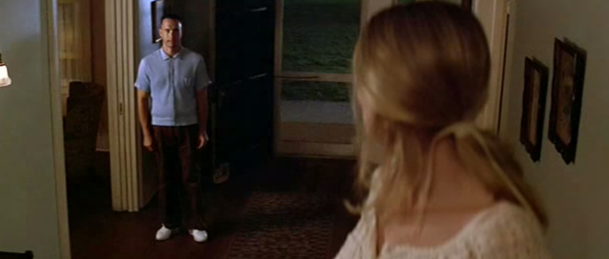
950b6-forrestgump1If you want to start out on the broadest level possible, the film is a lesson in 20th century American History. It charts the turbulent course of mankind including assassinations, counter-culture, Vietnam, Anti-War Rallies, The Cold War, Watergate and much much more. The substantial soundtrack dials back the clock to fully immerse the audience in that time and place.

It is the dream movie for pop culture fanatics and history aficionados. That’s why I enjoy it. However, much like the feather that flutters in the breeze drifting this way and that, Forrest Gump is a character who floats through history as it is made. It begins with his leg braces which give inspiration to the Elvis phenomenon. Ultimately, he plays football for Alabama, sees the school desegregated, and becomes an All-American who meets JFK.

Soon it’s off to Vietnam, followed by a Medal of Honor, and a trip back home thanks to a million dollar wound. Forrest gets a taste of the nation’s capital and soon becomes an accomplished ping pong player, makes it big in the shrimping business, and heads home back to Alabama once more after buying Apple stock. All these moments are absorbing to be sure, but that alone would make the film just okay as a historical drama.

Tom Hanks‘ Forrest Gump is the important piece in the entire equation because of the people that gravitate towards him. Forrest himself only has an IQ of 75, but he is so unlike many of the characters we are used to. Not because he is “simple” so to speak, because he is far from it. Perhaps it’s the fact that he is wholly genuine, loyal, and innocent. That’s almost unheard of these days. He seems to stand at complete odds with the history that is happening all around. Sometimes it looks very different from his eyes or he is completely oblivious to what is happening.

However, in some ways, he seems to have things figured out better than most. He loves those close to him, does what he loves, and never loses his positive spirit. His observations on life might be plain, but they are nonetheless powerful to those around him. To Hank’s credit, he infuses the character with a slow-witted charm and gives him a deep southern drawl. He’s Forrest, Forrest Gump. That’s all he needs to be.

Sally Field has a relatively short screen appearance, which is still extremely important because Forrest’s mother is the one who helps guide his whole outlook on life. She encourages him to make the best of what God has given him and to realize he is no different than other “normal” people. Her love, cultivation, and homespun knowledge is what seemingly allows Forrest to lead a full life, though pithy sayings only go so far, at some point you just have to live.

Jenny (Robin Wright) is another character who is perhaps a greater drifter than Forrest himself. She is constantly trying to find her way through the turbulent times while Forrest’s feet always seem firmly planted on the ground (Rather ironic since he is always running). She is a prodigal and always prone to return to Forrest who always welcomes her back with open arms no matter the circumstances. It might be a stint in a nightclub, living the hippie life, joining the Black Panther Party, or being with other men. Forrest is forever loyal and protective of her. She cannot always handle having him in her life, and she wishes to find her own way. He is always there for her, though, even up to the point of taking care of a son.

Bubba and Lieutenant Dan are Forrest’s best good friends and both men are greatly impacted by Vietnam. Bubba dies and Lt. Dan loses his legs (not to mention his self-respect). Forrest is fiercely loyal to both comrades, starting up Bubba Gumps Shrimping in honor of his late friend and giving work to Lt. Dan when he needs it most. He is a friend for the ages and he takes the title seriously.

Calling Forrest Gump just a historical drama or even sentimental tripe might be partially accurate and yet it cohesively adds up to more than its parts. 20 years have gone by, true, and some of the luster may have gone away, but certainly not all of it.  Though it might be far from perfect, it is a story that is worth any shortcomings, because it has heart and a fantastical telling of American history that is still worth watching.

4.5/5 Stars


A Letter from an Unknown Woman (1948)

8cc43-letter_from_an_unknown_woman_posterThe place is Austria. The time around 1900. This tearful romance is framed by a lovely plot device in the form of a circular narrative. As the title suggests a woman writes a letter to the man who she has always loved. As she relates their story, he slowly pieces it all together.
Lisa was a shy and timid girl. She becomes acquainted with dashing piano prodigy Stefan Brand (Louis Jourdan) from afar as he has moved in next door to her mother’s home. She is a quiet observer of all he does, sharing in each one of his musical triumphs and seeing his friends (mostly women). Lisa even goes so far as to attend dancing school, so that she might learn good manners to impress him someday. Most of all his playing enchants her each and every evening as she silently listens to his gifted hands.
Thursdays were rug beating day and on one such day, she got her chance. She met Stefan’s kindly mute servant and secretly enters the shrine of her love for one blissful moment. However, things quickly change as Lisa’s widowed mother has a beau who wants them to come and live in Linz. So they move away from the oblivious Brand, but the wistful Lisa takes one last visit to her old home.
Soon she is introduced to the stately Liet. Leopold and as time passes he graciously asks for her hand. Taken aback, Lisa balks and mentions another in Vienna who her parents do not know of (and who does not know her). No one understands the reason why, only she does, and she is not one to tell. Lisa, however, moves forward and begins to model dresses for rich clientele. Finally, as a grown woman she has her first true face-to-face encounter with the man whom she worships.

Thus, begins their enchanted time together. He does not quite understand the gravity of the situation, but she is content in just being with him. That is enough. No explanations need to be made. Their evenings are spent eating lobster, walking through the streets, taking a train ride all over the world, and munching on caramel apples. Top it off with a passionate embrace followed by a kiss and the fairy tale ending seems to be imminent. But as we already suspected, it is not that easy, and a train rapidly takes him out of her life.

As time passes, she has a son who is Stefan’s boy, but she resolves not to tell him and raise him by herself. For a while, it is a struggle, but she gets remarried and she seems happy enough with a comfortable lifestyle, a gentlemanly husband, and a cute son. Stefan Brand is now a washed up has-been who used to have a wealth of talent 10 years ago. At the opera, he happens to cross paths with Lisa, a strangely familiar figure, and she realizes that she must go to him. She is absolutely ecstatic to be reunited with her first love, but all too soon it becomes evident he cannot remember her. He is fascinated by her the same way he was 10 years ago, but he has forgotten. Unrequited love hurts too much and a broken marriage is already upon her. As her son before her, Lisa’s life is taken by Typhus and all that is left of her is this letter for Stefan.
 
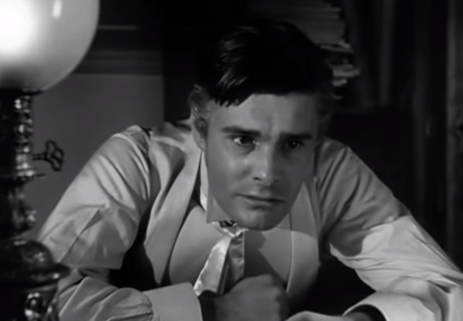
All that’s left for him to do is hit his head in despair. He let her slip through his fingers, if only he had known. If only his servant had not been mute, because he knew who the girl was. Brand has new resolve, however, and instead of running away he faces an unpleasant fate with honor. 
Joan Fontaine is as sweetly demure as ever, and she fits this role so beautifully with her narration being a wonderful guiding hand to the film’s story. Her character slowly grows and matures in front of us, and yet one thing remains unchanged, her love of Stefan Brand. In some ways, the label of a “woman’s picture” has a negative connotation, but really all it refers to is a film that takes the point of view of a woman, or it focuses specifically on women. These stories crafted by men during the 40s and 50s were meant to be weepy tales for women audiences. Looking back now, however, they can resonant with all audiences and in this case some of that is due to the direction of Max Ophuls. 
Ophuls camera is hardly ever stagnant, following Joan Fontaine as she moves, with gracefully smooth sweeps and tracking shots. Give him a staircase and it becomes almost a playground for him to move about as he sees fit. What we are left with is an elegant look, because the movement does not take away from the elegance but actually accentuates it. No one could accuse the camera of being hurky-jerky, and it makes the impact of the stationary camera that more potent.
At an approximately 86 minute running time, A Letter from an Unknown Woman is a marvel because it is laced with character development, romance, and drama that builds steadily and reaches a teary crescendo.
 
4.5/5 Stars