City of God (2002)

6e6f8-cityofgod1The slash of a sharpened knife grabs our attention and from that point on there is no turning away from City of God. The story is fed to us by Rocket, a character we initially know very little about except he will help us make sense of all that follows. The setting of the story is the slums of Brazil during the 60s and 70s. People are poor, crime is rampant, and adolescents wave guns around like they were toys.

Rocket’s older brother Goose was a part of The Tender Trio along with teenagers Shaggy and Clipper. They have a lucrative revenue stream robbing businesses and gasoline trucks and they share the profits with the people of the town in return for protection. Then a little twerp named Li’l Dice convinces them to rob a hotel and the job pays off big. But soon after begin the police raids and the trio is split up for good. Clipper joins the church, Shaggy is shot by the cops, and Li’l Dice knocks off Rocket’s brother. From that point, the drug trade slowly grew, and ultimately was left in the hands of a young thug named Carrot.
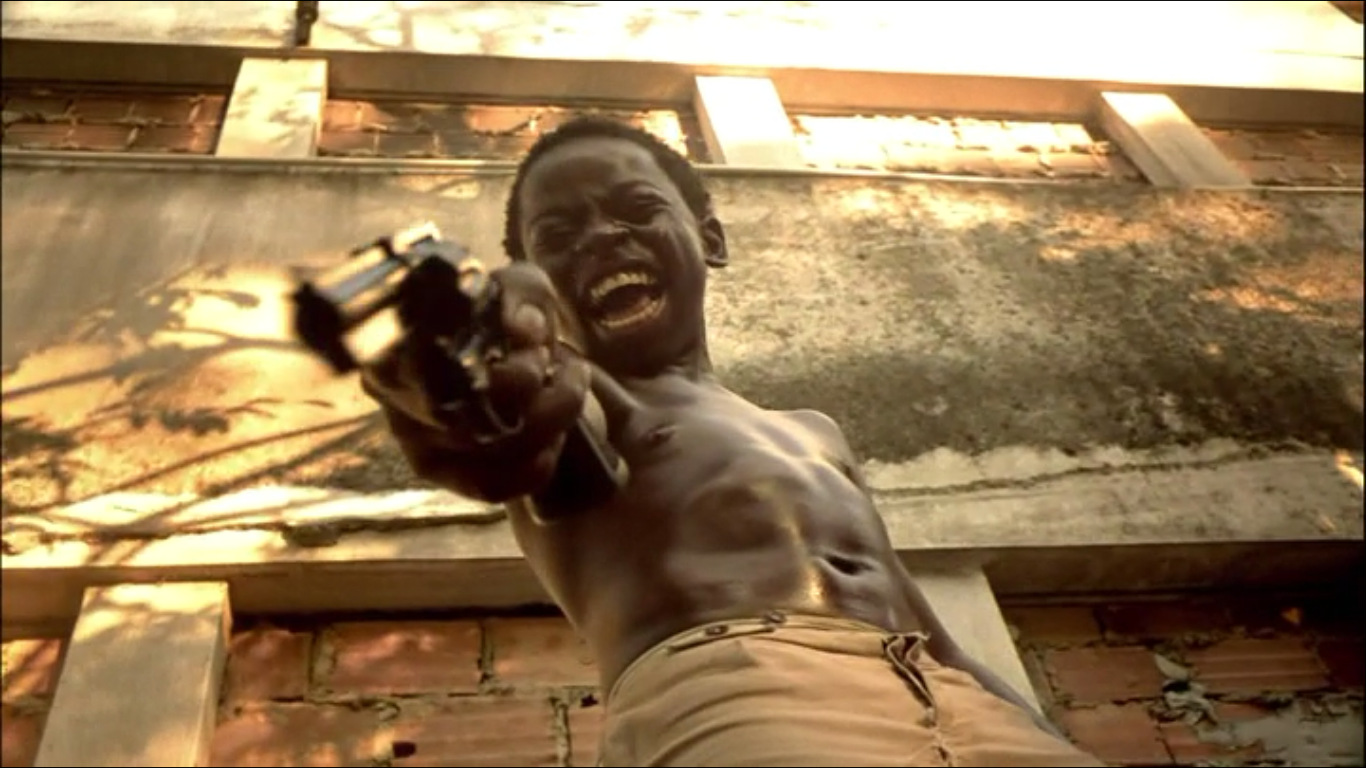
Now it’s the 1970s and Rocket cultivates a love for photography while hanging out with his hippie friends. Meanwhile, Li’l Dice now known as Li’l Z has taken over the drug trade and pushed almost everyone out except Carrot. He is obsessed with being the boss and ironically under his rule, the City of God remains in relative peace. Z’s childhood friend Benny is a relaxed guy who keeps his buddy at bay and earns the admiration of everyone even Rocket.

But the “good times” must come to an end as Benny decides to skip out on the slums with his girlfriend because he does not want the life of a drug lord anymore. At a giant bash tragedy strikes, and Li’l Z is looking for blood. His target is Knockout Ned and the man’s girlfriend. After a night of turmoil, Li’l Z is never at peace again, because there is now a man with a personal vendetta bent on making him pay.

Carrot uses this new ally to his advantage and thus begins the drug war to end all drug wars. Carrot and Ned vs. Li’l Z. Both sides bring anyone and everyone into the fray and load up on guns, guns, ammunition, and more guns. It’s at this time that Rocket’s dreams become realized. He gets a job as a lowly paper boy and ultimately snags some photos of Z and his thugs making it big with the local paper. Soon his photography is in high demand and he’s even on Li’l Z’s good side.
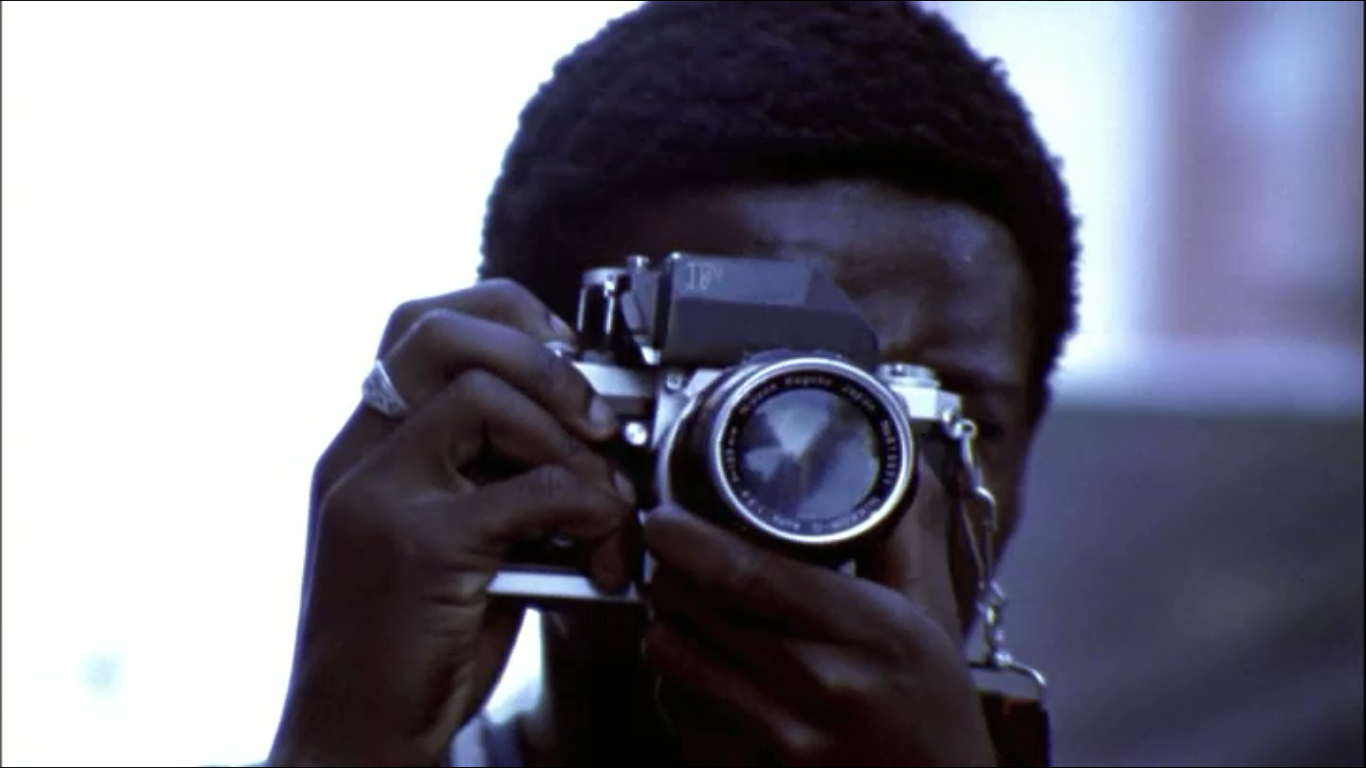
Thus begins the beginning of the end as the rival forces meet in one last skirmish. In the aftermath Ned is shot by a vengeful boy, Li’l Z is jailed then shot, and Carrot is fodder for the papers. The little Runts now plan to run the streets and Rocket becomes famous for his photography. The film holds onto one last secret until the end before it is revealed. As we guessed this film is based on a real story and his name is not Rocket but Wilson Rodrigues.

City of God is an ironic name for such a godless place and likewise, I haven’t felt so squeamish in a film recently and perhaps ever. There is so much violence and crime in this film but we do not seem to get numb to it. It feels like we become more aware of the reality and the vicious cycle that continues its cyclical path. These young thugs are products of their environment and so how they end up is truly saddening. Even such a despicable, sadistic man such as Li’l Z knows what friendship is (ie. Benny), but ultimately even Benny cannot help him. That’s what makes the success of Rocket so extraordinary. In many ways, he is the perfect narrator, first because he survived, but also because he has a view into everything from varying angles and different perspectives.

As far as the film goes, the non-linear story line and multiple points of view made for an engaging story. This piece of storytelling keeps us begging for more crumbs as we attempt to connect the pieces as they are fed to us. Maybe it is a bit of morbid curiosity that keeps us interested or a desire to know if justice is dealt. The quick editing can be disconcerting at times and the often bobbing camera can sometimes get annoying but it fits the style of the whole film. It is part On the Waterfront, part The Godfather, but set in Brazil and a whole lot grittier. City of God reflects the hierarchy of the drug trade that permeates all areas of life and governs an entire community. Rocket was one of the lucky ones.

4.5/5 Stars
Diabolique (1954)

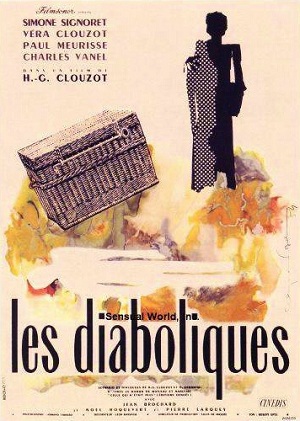
3bb85-lesdiaboliquesposterThis French thriller begins at a small boarding school for boys. The principal is a difficult man who is married to a wealthy but frail teacher, and his mistress is another one of the teachers. Because he has been awful and abusive to both of the they befriend each other and devise a plan to kill him. They lure him away from school and eventually drown him in a bathtub. They go back to the school and dispose of the body in the murky pool. The deed is done and they are both apprehensive, especially the frail wife. When the pool is finally drained there is no body! This and other strange occurrences further frighten the wife and she becomes sickly. However, she could never expect what she saw one night that led her to die of fright. The twist at the end of the film is good. It is rumored that Hitchcock tried to get the rights to this story. He would just have to settle for making Psycho instead. What a shame.
 
4.5/5 Stars

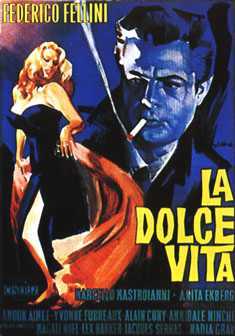
La Dolce Vita (1960)

bc0c3-la_dolce_vita_1960_film_coverartStarring Marcello Mastroianni and directed by Federico Fellini, this Italian film set in Rome follows a tabloid reporter named Marcello. If he is not finding a scoop with other ravenous reporters, he spends time with his wary girlfriend, falls for an American bombshell, talks with a cultured family man, or spends time with his good natured father who he does not really know. All the while he witnesses the lives of the rich and has many romantic relations. The underlining theme of it all is boredom,  unhappiness, and superficial lifestyles. This film is not really about a main plot but rather Marcello’s many different episodes and experiences. Some are funny and others maddening, but he muddles his way through. This film, much like Breathless, is international and chic. The cinematography and score are both effective in helping to create this feel.

5/5 Stars

Cleo from 5 to 7 (1962)

This Left-Bank French film starring Corinne Marchand, follows a young singer in a real time as she waits to get back the results which will prove if she has cancer or not. The film has a unique color opening where the superstitious Cleo has her future foretold. The rest of the film follows her as she anxiously waits on her results. To pass the time she buys a new hat, rides in a taxi through Paris with her housekeeper, and also goes to a café. Returning to her flat, we see how privileged and spoiled Cleo is, first being visited by her busy boyfriend and then her joking composters. However, all the while she is constantly being reminded of what she is waiting for and what her fate might be. Cleo then meets with a friend who models and they drive through Paris together. Finally, she ends up at a park and in a quiet spot she becomes involved with a talkative soldier on leave from Algeria. They eventually take the bus to the hospital and she frantically tires to hear her results. Then, abruptly everything is okay and Cleo or Florence as we now know her, can continue living her life in relative peace. This film has many aspects of the New Wave with its often Chic Parisian atmosphere and a camera that constantly seems to be on the move. A memorable moment includes the silent picture starring Jean Luc Godard with Anna Karina.

4.5/5 Stars

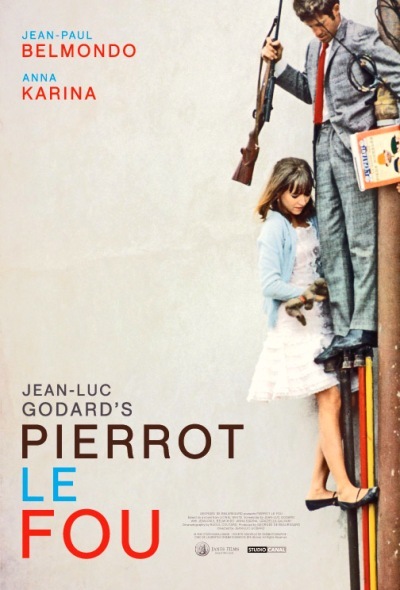
Pierrot Le Fou (1965)

Directed by Jean-Luc Godard and starring Jean Paul Belmondo and Anna Karina, this film is chock full of poetic musings, literary allusions, pop culture images, and so on. Belmondo is a Frenchman who is unhappy with his life and marriage. When a young woman he is already acquainted with comes to watch his child, they eventually elope together. Ferdinand goes with Marianne to her apartment only to find a corpse and they must flee the scene from two gangsters. Now on the run, the two lovebirds are intent on living life and making their own Hollywood inspired movie that they can both star in. Their aspirations lead them to live a wild life on the move, but finally they settle down for a awhile in the French Riviera. Ferdinand is content with a quiet life of philosophizing but Marianne is discontent with this life right out of a Robert Louis Stevenson novel. They finally move on and stop at a night club where they face one of their pursuers. After some mishaps Ferdinand and his girl get separated. Finally they are reunited only to have Marianne turn on “Pierrot” for her real boyfriend. The final moments are filled with gunfire, a suitcase full of money, blue paint, and dynamite. You could say that everything blew up in Ferdinand’s face, and you would be quite correct.

4/5 Stars

Band of Outsiders (1964)

Directed by Jean-Luc Godard, this film follows a young woman who meets two  crooks in an English language class. Through narration we learn that she told them about a cache of money she knows of and so they get her to help them swipe it. They both fight for her affection and ultimately the thug Arthur wins out. Despite Odile’s apprehension at taking the money from her aunt’s home, they continue to get the plan ready. Arthur’s uncle now wants in and then the plan changes again because the owner of the money is gone a day earlier. From this point everything begins to go wrong and after a horrible botched attempt the three culprits flee the scene with little to show for their caper. Arthur makes up an excuse to return and Odile and Franz drive off but they return when trouble seems imminent. Back at the house Arthur is confronted by his uncle and there is more bloodshed. Afterwards Odile and Franz again flee heading to South America while the narrator promises a sequel in the near future. This film unabashedly proclaims to be Nouvelle wave even going so far as having it printed on a store banner. Again, Godard combines his love of American pulp fiction and artistic experimentation to create yet another tragic tale. The film gives a nod to Hollywood crime films and also features several famous sequences. Some high points include the moment of silence, the spontaneous dance in the café, and of course the run through the Louvre. In my mind, Pulp Fiction owes at least something to Godard right here.


4/5 Stars

Contempt (1963)

Directed by Jean Luc Godard and starring an international cast including Brigitte Bardot, Michel Piccoli, Jack Palance, and Fritz Lang, this film within a film is Godard’s personal examination of the cinematic world. It opens with the shooting of a scene only to have the camera turn to face on the audience. Then begins a story where a screenwriter married to a beautiful woman is called upon to write a new screenplay for an adaption of the Odyssey. The producer is a vain and loud mouthed American who quickly has his eyes on the producer’s wife. Other members in this production are the real life legendary director Fritz Lang as well as the producer’s personal female assistant. Things begin to turn for the writer after he leaves his wife with the American playboy. She begins to become distant and she finally acknowledges that she no longer loves him. One of the famous extended sequences focuses on the argument they have inside their residence. In the course of the scene their relationship begins to crumble and finally goes beyond repair. This turn of events is very obviously paralleled in the Odyssey by Odysseus and Penelope. In the end the wife leaves with the producer and screenwriter is left in Italy to help finish up the film alone. Little does he know what has happened. Fellini’s 8 ½ may be a greater film about a filmmaker and his art, but I think “Contempt” is important because Godard focuses a great deal on the conflict between the commercial films of Hollywood and the art films of Europe. His film is more about each individual person who together make a film production possible, and he brings it to the screen with one of his best casts.

4.5/5 Stars

Vivre Sa Vie (1962)

ef6de-vivresavieposterDirected by Jean-Luc Godard and starring Anna Karina, this French film shot like a documentary begins up close and personal in the life of a 22 year old woman named Nana. In 12 separate scenes we slowly are given a view into her life. She goes from leaving her husband, trying to get into the movies, and then finally begins prostituting herself for easy money. All the while this beautiful young lady struggles with men. Here interactions sometimes leave her somber and other times light-hearted. Through it all she tries to live her life the way she sees fit. She might be playing pinball, working in a record shop, viewing a movie, or attempting to pick someone up. She is so alluring in a quiet sort of way and as observers we begin to feel pity for her more than anything. In the end tragedy strikes and all of a sudden it is no longer her life to live. This film had moments where it became talkie however the narrative divided into 12 sequences and the constantly swiveling camera were major attributes. Furthermore, this film appears as if it will be an in depth character study and yet by the time it abruptly ends we hardly know much of anything about Nana besides what is on the outside. In real life Anna Karina would be Godard’s wife for a time and he used her in many of his works.

4.5/5 Stars

Breathless (1960)

5cad1-c380_bout_de_souffle_movie_posterThe debut of Jean-Luc Godard and starring Jean-Paul Belmondo with Jean Seberg, this film was influential in helping to jump start the French New Wave. The story begins with a small-time thief named Michel stealing a car and then killing a policeman  Quickly, he becomes a fugitive in need of money. This brings him in contact with an American journalism student he had met before. They spend time together with Michel professing his love and Patricia still feeling unsure whether or not she truly loves him back. In a final act of reassurance Patricia betrays Michel and he is chased down by the authorities. He is a far cry from the American movie stars and crime films he idolizes. With its jazzy score, bilingual dialogue, jump cuts, and Parisian scenery, this film is chic and cool. It paid homage to Hollywood but it also paved the way for a new era of films starting in the 60s. The film is perhaps not as impressive to today’s audiences but it certainly has a look that you have to appreciate. Godard was ahead of his time because he went against all conventions that had been set up for cinema and he thereby revolutionized the film world.

4.5/5 Stars

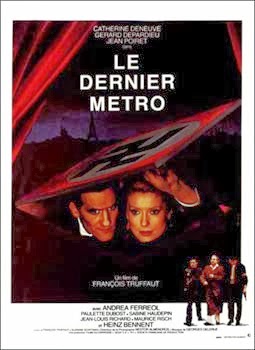
The Last Metro (1980)

Directed by Francois Truffaut and starring Catherine Denueve and Gerard Depardieu, the film opens with the very French-sounding love song “Mon amant de Sant Jean” playing over the credits. We find ourselves in occupied France during WWII where a little theater is struggling to stay open. The  famed Jewish director Lucas Steiner has been forced to flee from the Nazis although in reality he is actually hiding in the cellar of the theater. In his absence his wife Marion has taken up his role of running the theater while also continuing to act. Early on we are introduced to the young actor Bernard who is chosen to play one of the new roles in the upcoming production. At the same time Marion must try and acquire the permit to stay open from a man whom she despises, the art critic Daxiat, who has anti-Semitic beliefs. They do stay open however, and with the director’s notes of Lucas they prepare their show and open to great success. Many of the French come to their shows as an escape before they take the Last Metro home. However, at their performance Daxiat gives them a harsh review and it angers Bernard. His actions ultimately jeopardize the theater and as a result his relations with Marion become strained. As if that were not enough some Gestapo come to the theater searching for Lucas and they must rush to hide him. Needless to say the film ends on a positive note but the film is not so much about resistance against the Nazis compared to the struggles of a theater to survive. Denueve gives a moving performance and although this is not Truffaut’s best, it is admirable. As the audience, not only do we watch a movie, but we watch the play within the movie and then the drama behind the play, so Truffaut  takes us a little deeper.

4/5 Stars