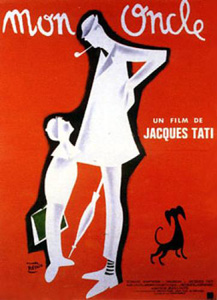
Mon Oncle (1958)

32cfb-mononcle_posterStarring and directed by Jacques Tati, the film revolves around the bumbling but kind-hearted Monsieur Hulot, as he interacts with his relations and young nephew. We follow Hulot as he navigates through his life in France. His sister and brother-in-law live in an ultra modern home complete with automated machines, a fish-shaped fountain, and cold-looking furniture. In contrast, there’s the carefree Hulot whose only possessions seem to be his ever present pipe and umbrella. He struggles to cope with everything modern and bungles in his brother-in-law’s factory. However, most importantly he seems to enjoy life and he is liked by all including Gerard, his nephew. This film is enjoyable because of the little things. You have the often repeated theme that brings to mind Parisian cafes. There is satire, odd architecture, little dogs, the use of or the lack of sound, many caricatures, and most importantly of all Hulot himself. It would seem to me he bridged the gap between Chaplin and Keaton with Mr. Bean. Too bad more people do not know about him.

4.5/5 Stars

Mr. Hulot’s Holiday (1953)

01c54-les_vacances_de_m_hulotDirected by and starring Jacques Tati, this is the original film that introduced the bumbling but kindly Mr. Hulot. He finds himself staying at a beach side hotel full of various different tourists. The film is not so much about plot but instead it focuses mostly on Hulot’s many antics. Whether he is paddling a kayak, playing tennis, changing a tire on his beat up car, trying to mount a horse, or accidentally setting off fireworks, Hulot is bound to cause laughs. This film is unique because as with Tati’s other works the pacing is not fast. That means we are able to relax and enjoy this vacation along with Mr. Hulot. We can take in the many sounds and images while we also watch this likable bumbler. Maybe Tati did not know it at the time but he created a memorable persona in Hulot who has his own distinct movement and attire. Without talking at all he leaves such a tremendous mark. If there was ever an influence on Mr. Bean I think the origins would definitely start with Monsieur Hulot.

4/5 Stars

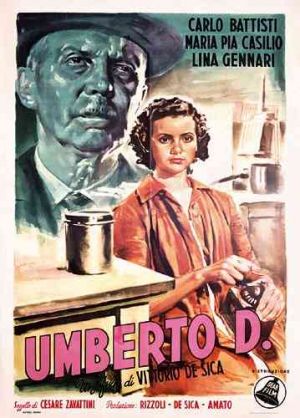
Umberto D (1952)

ed3e0-umbertod

This Italian neo-realist film directed by Vittorio De Sica, with many untrained actors, is about an elderly man scraping by off his pension. His landlady wants to evict him and his only real friends are a maid and his dog Flike. Much of the movie follows him as he tries to pawn belongings for money. He is a very proud man with a respectable past, but now times are tough. We watch as he goes to the hospital, has his home taken out from under him, and then he tries to give away his beloved dog. This film at times can be very bleak but Mr. Umberto is resilient to the end.

4/5 Stars

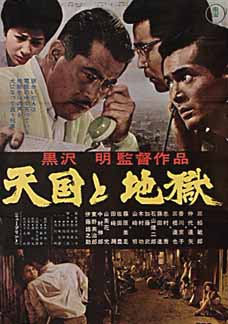
High and Low (1963)

Directed by Akira Kurosawa and starring Toshiro Mifune, the film opens with a wealthy shoe company executive as he tries to struggle for control of the company. He makes a big gamble, waging everything he has to try and succeed. However, things take a bad turn when he believes his son has been kidnapped and the culprit wants an enormous payoff. It turns out that the son of Mr. Gondo’s chauffeur was taken but that makes no difference to the kidnapper. Mr. Gondo finally resolves to make the payoff and then the police who have been advising him take it from there. They work diligently to gather all the evidence they can and the net slowly begins to close  The police finally find the culprit, catch him in the act, and recover most of the money. However, in a meeting with Mr. Gondo the man who is about to die wants no pity at all. Despite the relatively long length of this film, it held my interest. All I had seen of Kurosawa before this were samurai films and so this gave me a different look at his work.

4.5/5 Stars

The Bicycle Thief (1948)

This Italian post-war neo-realist film, directed by Vittorio De Sica, is about a man who has his bicycle stolen and then must find it in order to continue working. Antonio Ricci is a man desperate for a job and he is fortunate enough to get an opportunity. However, he needs a bike and he sold his trying to provide for his family. He gets enough money to buy it back and he starts his days work pasting posters up in Rome. While his back is turned his bicycle is stolen and the culprit gets away. Because it is his livelihood Antonio desperately searches first with his friends and then with his son Bruno. After much looking he believes he has found the thief but with no proof the boy gets off. As the day ends Antonio chooses the one option left with no avail. This film is wonderfully simple and beautifully realistic. You feel deeply for this man who is by no means perfect, in fact he has many faults. But he is simply human. In a sense we are left with a cliffhanger ending that leaves us anxious for him.

5/5 Stars

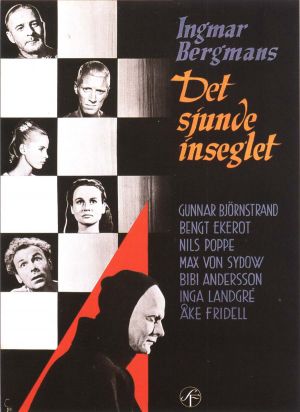
The Seventh Seal (1957)

Starring Max Von Sydow and directed by Ingmar Bergman, this Swedish film revolves around a knight who returns from the Crusades with his squire. He begins a chess match with Death which parallels his travels across a land infested with the Black Death. Along the way he is joined by a pair of married actors and a blacksmith. However, he is tired and disillusioned with his life. To make matters worse he witnesses some terrible things and finally loses his game against Death. He returns to his wife with some of his friends and they face their fate when the time comes. This film was an interesting blending of a Medieval setting and modern disillusionment. Besides being very metaphorical, the cinematography is stark, while the title alludes to the events in the biblical book of Revelation.

5/5 Stars

Seven Samurai (1954)

fde86-seven_samurai_movie_posterDirected by Akira Kurosawa, this is often considered one of the greatest films of all time. The story begins in a small Japanese village that is constantly being tormented by marauders. The bandits are about to strike again but decide to return after the harvest. The village elder advises the people to find some samurai in the time they have. Although they have no money, several men go to a town to look for help. There they witness the skill of an experienced samurai. He agrees to help them and also gathers five other skilled men who have no allegiance. They are followed by a seventh, wild samurai. The rest of the film follows the difficult relations between the anxious villagers and their protectors. The samurai fortify the village and also train the farmers for combat. Three samurai make a raid on the enemy and then later the bandits attack. They are hindered by the fortifications but still wreak havoc. The following day the climatic battle takes place. After the showdown, the village is safe but only 3 of the 7 are still alive.

4.5/5 Stars

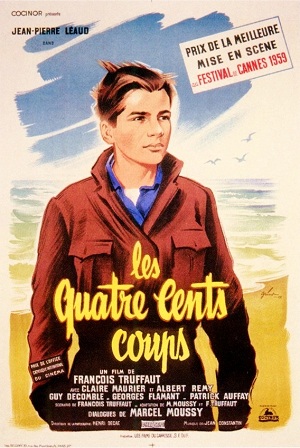
The 400 Blows (1959)

This French New Wave film directed by Francois Truffaut, more aptly titled The Wild One or Raising Hell, is about a young boy named Antoine. He comes from a working class family and his parents are struggling and frustrated. In school he gets poor grades and his teacher often punishes him. Annoyed with his life, he runs off for a time committing petty crimes and exploring the streets with a friend. That ends when he is caught stealing his father’s typewriter. Fed up for the last time his parents send him away to an observation center for boys. After he arrives Antoine escapes and runs to the ocean a sight he has never seen. With that the camera zooms in and we clearly see the face of this troubled, young boy. It is easy to appreciated this film because it does not glamorize the situation but tries to deal with it sensitively. Truffaut made a very good one here reflecting on his own experiences.

5/5 Stars

The Rules of the Game (1939)

bcb9f-la_regle_du_jeuThis French film directed by Jean Renoir is a light comedy that turns into a critique of the Upper classes. The film involves the superficial events and racy love affairs as only the French can have. It opens as a famous aviator lands his plane only to be disappointed that his married lover did not come to see him. Soon we learn that her husband has a mistress of his own. Put these four together,  Renoir in his jolly role of Octave, all the other guests, then the many servants, and soon you have a major spectacle. They dine, hunt, gossip, put on a show, quarrel, and above all fall in love. It is all fun and games however until someone gets hurt. Although this film is not what we may be accustomed to in our present generation, it is easy to appreciate the satire, cinematography, and ensemble cast. Kudos to Renoir for making a very intriguing film.

4.5/5 Stars

Tokyo Story (1953)

42390-tokyo_story_posterThis critically acclaimed Japanese film directed by Yasujiro Ozu has a relatively simple plot having to do with a kind elderly couple going to Tokyo to visit their adult children and extended family. They are excited to see the big city but it is not quite like they had expected. Furthermore, all their relatives and family have very busy lives making it difficult for them to spend time with the couple. The eldest son who is a doctor and then a daughter who owns a salon decide to send their parents off to a spa. Unhappy, the elderly couple return to Tokyo but they feel like they are imposing. Finally, the two of them head home and there the wife becomes ill. Because she is dying, her children do decide to visit. However, after she has passed away it seems they all too soon forget her and go on with life. This film is an interesting study of the void between generations. It also uses realism and focuses on the manners of the Japanese without fully criticizing them.

4.5/5 Stars