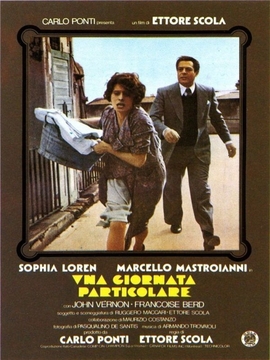
A Special Day (1977) with Loren & Mastroianni

a special day.jpgThe film opens with newsreel footage delivered to us in an undoctored format effectively presenting us a view into the past. It is the momentous (some would say fateful) day Adolf Hitler made his triumphant visit to see Benito Mussolini in Italy.

The year is 1938. And it has all the pomp, circumstance, military exhibitions, and blind nationalism one comes to expect with such historical depictions. Director-screenwriter Ettore Scola elects to give us the past instead of totally constructing a version of it. Because that is not what his film is about.

Even to consider Fellini’s farcical take on fascism in Amarcord, complete with swooning beauties and talking Mussolini faces in flowers, A Special Day couldn’t be more divergent. It works and operates in a much smaller more confined space, serving its purposes just fine. As the movie itself opens, we are immediately met with the most confounding of palettes — an ugly clay-colored hue — hardly the best for drawing on fond memories. In fact, it’s utterly unappealing.

This is not a criticism, mind you, because the pervading drabness is another calculated creative decision. What it provides is a very concrete articulation of the world. Furthermore, without committing to the broader context, Scola is able to focus his attentions on one building.

So yes, there is this huge cultural event with a gravitational pull dragging everyone out of the house in droves to celebrate with patriotic fervor. Everyone wants to see the Fuhrer and Il Duce for themselves. But this is all pretense, again, serving the smaller, more intimate scale of the film. It’s for the best.

Not totally unlike Hitchcock’s Rear Window, the housing complex becomes a limiting factor, but also a creative asset. The architecture and space evolve into something worth examining in itself. Within its confines, our two protagonists are thrown together thanks to an escaped myna bird. One is a long-suffering housewife (Sophia Loren) forced to stay at home while her family enjoys the festivities. She’s a middle-aged Cinderella with all the youthful beauty sucked out of her.

Her husband (an oddly cast and dubbed John Vernon) is an arrogant party supporter and all her six children are either brats or too young to know any better. Her station as a mother and wife feels totally underappreciated, even dismissed.

The other forgotten person she happens to meet is a radio broadcaster (Marcello Mastroianni), unwittingly diverting him from an attempt at suicide. Because the current regime has no place for subversive naysayers like him on the national airwaves.

There’s a questioning of whether or not there’s enough for a film to develop. Can it hold on and keep us on board for over an hour? Given everything so far, it’s a no-frills scenario. There’s not much to work with, and success in itself seems like a tall order. Thank goodness we have the likes of Sophia Loren and Marcello Mastroianni. The promise of having them together is a worthy proposition and in this case, it hardly disappoints.

If you’ve only seen them in their star-studded, glamorized roles, prepare to be astounded. Loren could never look completely dowdy, but there’s definitely something forlorn about her. She carries it off quite well. Likewise, Marcello, normally a suave fellow, still has his prevailing moments of charm, but he too is equally subtle.

At least in the case of Loren, it seems like Hollywood only ever saw her as a screen goddess with an accent, and thus cast her in roles catering to that predetermined persona. And yet in her native Italy, in a movie like Two Women (1961) or here in A Special Day, it’s as if they gave her the freedom and the trust to stretch herself and really prove who she was as a bona fide actress.

The little doses of magic they drum up together carry scenes and if you’ve ever seen any of their movies, the intuitive chemistry coursing between them is, by now, almost second nature. Dancing steps of the rhumba to the cutouts on the floor. For one single moment, a saucy tune drowns out the choruses of a fascist regime.

Later she tries to quickly style her hair in the bathroom as he bungles grinding the coffee and sweeps it under the rug like a sheepish schoolboy. Or he makes his valiant attempt at fixing the lamp over the kitchen table that always leaves Antonietta bumping her head. These are the lighter notes.

But if these are the distinct instances of near frivolity, then A Special Day is about so much more on a broader scale. It casts an eye on a society that deems women as totally auxiliary in both intelligence and importance.

Likewise, one is reminded about the institutionalized hatred including vitriolic prejudice against homosexuals. Where people have lost their image and are merely cogs in a political, faux-religion of the state. Not everyone fits in. Gabriele even exhibits a touch of mild insurrection to the state by not abstaining from using the banned “lei” instead of “voi” when addressing others, as the former was seen as too effeminate by Italy’s fearless leader.

If not totally radical, the relationship at the core of this movie feels countercultural, even as it probably taps into the basic longings of many. In some strange, miraculous way they understand one another, unlike anyone they ever have before.

It’s how the film is able to be an empathetic portrait of humanity. Never has it been more evident that understanding can exist anywhere and between anyone in the most unusual of circumstances. So by the time the day’s festivities are winding down and the crowds rumble back in, the two kindred souls part ways to their separate ends of the courtyard, and yet there’s no way not to think about one another.

Gabriele starts packing up to be shipped off and deported because Mussolini’s regime is no place for a man like him. Antonietta puts together dinner for her family — all the normal duties required of her — existing once more as the silent life force behind the entire household. Her mind can’t help but wander to the only person who seems to know her, just as one’s eyes can help but glance at the light he helped fix only hours before.

He takes one final survey of his apartment, his room goes dark, and he’s escorted out of the courtyard, quietly, without any fanfare. The wide void between their apartments has never felt greater. It is the antithesis of a Rear Window ending.

After a few moments of leafing through The Three Musketeers — the book he gifted her — she wanders off to bed and follows suit by turning out the light. Darkness overtaking the day in the never-ending rhythms of life.

If it wasn’t apparent already “a special day” is meant to elicit two connotations. The state would have you believe the sights of Hitler, Mussolini, and grand feats of military might are the type of memories you won’t soon forget. Perhaps they’re even worthy of telling your children about someday.

However, for others, “a special day” means something far more. It has to do with empathy and truly knowing someone and being known like you’ve never been known before. For isolated people in a callous and lonely world of monotone, it’s so much more than all the bells and whistles at a parade. In its own unassuming way, A Special Day is a heart-wrenching love story to the nth degree.

4/5 Stars

Amarcord (1973): Life is a Carnival

Amarcord.jpg

The most magical moments of Federico Fellini’s Amarcord occur at the very beginning and near the end. First, when the puffballs flutter through the air as a sign of spring and then, later, when a soft layer of powder signifies the advent of winter.

It’s a reminder of nature, of seasons, of how life is made up of rhythms, from beginning to end. If you live in California you miss out on that kind of tangible expression of life. You cannot capture the lyrical quality as the Italian maestro captures them over his vignette-driven spectacle with the aid of editor Ruggero Mastroianni.

Part of the reason I loved living abroad — in Japan specifically — there was some sense of the seasons, the utter sereneness of new-fallen snow, and a word to describe the wistfulness that often goes along with nostalgia and the lasting impression of memories (“Natsukashii”).

Fittingly, “Amarcord” is a provincial Italian expression for “I remember,” and this film is full up on quaffs of nostalgia and playful observation from the always lively creative reservoirs of Fellini. You cannot acknowledge the satire of his film without appreciating the affection embedded within it. They are closely related. Because even as you see all the faults and foibles, you cannot help but cast a sympathetic eye on these imbeciles — at least the lovable ones.

If someone else did it, you would get the sense of something mean-spirited, but when it’s your own people and your own way of life, somehow it comes off as not only humorous and perceptive but surprisingly warm.

The pacing is free; the scenes as loose as can be. Our only real markers of change are the aforementioned seasons. Around them, we get to know people. Spring means puffballs but also the local burning of an effigy on a giant bonfire to bring in the new season, complete with firecrackers and festivities.

School life is a lark full of windbags and crotchety oddballs who obliviously try to impart knowledge to their pupils on the highest arts. Their study regimen includes Greek, mathematics, the frescoes of Giotto, ancient history, the relation between church and state in Mussolini’s society, and so on. Each is a lost cause.

Around the dinner table, Mama and Papa Biondi have raging fits in what we might deem typical Italian fashion. They’re constantly bickering and scolding the bambinos for every infraction. In some upside-down manner, it’s a sign of their love and concern.

It’s true the town’s adolescent population, including their son Titta, get up to all sorts of dirty tricks, languishing in their fantasies, and going to confession only out of duty to their parents. There’s nothing contrite about it. Perhaps they don’t know any better.

You can make this argument judging from more general observation. Through Fellini’s lens, a fascist nation under Mussolini is often ridiculous. Flirtatious “Bellas” like the town hairdresser Gradisca (Magli Noel) swoon with nationalistic fervor at rallies, races, Grand Hotels, and the triumphant passage of the SS Rex — a vessel of national pride. That is until it capsizes all the beaming onlookers in their dingies.

One is reminded life is simpler and full of everyday peculiarities. Take Uncle Teo who gets a day on the town, outside of the mental institution, only to spend most of it barricaded up a tree, proclaiming how he wants a woman. One can only imagine it must be a lonely, dreary place on the inside. Then, there are snowball fights in the streets with the paths carved out of the snowpack and Gradisca a perfect target for all the gamely youth.

Nino Rota’s score accentuates so much mood, so much atmosphere, adding to the visual carnival, like a jaunty march and it is, taking us through time and sending us to places all over the little town.

On this grand scale, I’m inclined to like the idea of Fellini’s carousel of images, at least more than the particulars. This whirling, lively, rendition of life in its march of time speaks to so much about existence itself. The themes of looking back at the old ways — with nostalgia — but then also picking apart where we’ve come from to see the flaws and the idiosyncrasies. Some worthwhile, others worth stripping away and dismissing.

One of the most alarming takeaways is just how bawdy Italian culture is. Now it’s nothing new, but we are reminded of uncomfortable truths. Like the fact, Gradica is the ravishing eye-candy for every leering male in town, young and old. It speaks to so much about the male heart and mind, obsessed as it seems to be with women as commodities.

Eventually, Gradisca finds a man, her “Gary Cooper,” and we don’t have much inclination if he’s worthy of her or not. Still, it signals a change. Her wedding is a joyous Italian affair, but it also signs the beginning of the end. It’s as if, when she goes, along with her goes all the trimmings of their youth.

I am reminded of one moment when Grandpa is wandering around aimlessly in the fog. He’s not exactly a saint either. Regardless, he loses his way and laments the fact there are no trees, no people, no birds, no wine. If this is death, he’s not one for it. The situation solves itself easily enough when a carriage rattles by, and he’s found to be right outside his house.

Could this be Fellini’s way to comment on the situation and then temper it so quickly? Because a lot of the characters in Amarcord seem to be caught in this oblivious sort of fog. The greatest tools at Fellini’s disposal are merriment, humor, and even vulgarity to try and defuse situations, whether about love, death, politics, religion, whatever it is. And it’s a relatively effective form of satire a lot of the time.

However, every once in a while you remember it can only get us so far. The “eat, drink, and be merry for tomorrow we die” mentality, doesn’t quite fill one up with assurance. At least it’s not lasting. Because whether we like it or not, time is always high-stepping onward regardless of whether we’ve made peace with it or not. The turning of the seasons signify life and also death. No one feels that more than Titta. That’s what he’ll remember. Only time will tell if it gets any easier.

3.5/5 Stars

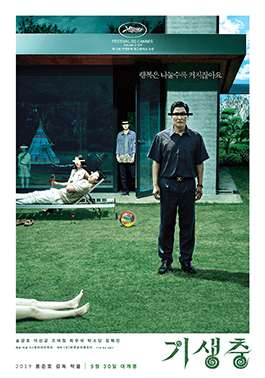
Parasite (2019): Bong Joon-ho’s Household Thriller

Parasite_(2019_film)

I heard in an interview director Bong Joon-ho had the idea for Parasite percolating in his mind for a long time, and it was born out of the most curious forms of inspiration. In college, he used to tutor English for the child of a rich family. From that point of disembarkation, he started asking “what if…” and all of a sudden his latest thriller was born.

Whether this story is completely true or not, it gets at what I relish about screenwriting and the inception of ideas in any form. Oftentimes they come straight out of real-life experiences only to be morphed and molded, burnished and extrapolated upon until they take on an existence entirely their own.

In some ways, Parasite feels very much related to the previous year’s Cannes darling Shoplifters, directed by Hirokazu Koreeda. In both cases, a story about an impoverished family becomes a handy jumping-off point for social commentary. But that’s just it. The premise provides a jumping-off point and there’s little else we can compare because the stories take drastically different turns simply adjudging from their creators.

Because the Kim family live crowded in a shoddy basement-dwelling leeching off the wi-fi of those who live around them, somewhat contented or at least resigned to their vagrant lifestyle. However, one day their teenage son, Ki-woo is enlisted by a friend to fill his position tutoring the daughter of a rich family.

His family helps him with the con using their skills of photoshop, composition, and dramaturgy to pull off the masquerade and ingratiate themselves. It helps that their mark is a simple-minded, trusting, and generally kind matriarch. There’s a touch of Luis Bunuel in the depiction of this rather naive and vacuous bourgeoisie family getting overrun by the lower classes.

And yet a distinction must be made here too because Bong does not altogether mock them. There is the inkling of affection for all his ensemble even as he teases them. This is one of the keys to the movie’s success. The message is not hammered home at the expense of the characters. 

One thing leads to another and the household vacancies begin filling up. First, an English tutor, then an art therapy instructor, next a new chauffeur, and finally a housekeeper. If the early dynamic is a tad like Shoplifters, as Parasite gears up, I couldn’t help but feel this same pervading unease experienced throughout Jordan Peele’s Get Out. While it might seem like a curious touchstone, what both films fashion are compelling thrillers carved out of the home.

The domicile and symbol of social capital, stability, even the family unit, is turned into this perturbing space that can be easily sabotaged and infested. It doesn’t matter if the main thematic element is race or class. They can both function in an insidious manner as a source of tension throughout the picture, seeping in through the cracks. Where you can live life from the heights of privilege or sunken in the subterranean void below. 

While the cat’s away the mice will play, and it’s at this point we ponder where we could possibly be headed. The Kims succeed in totally taking over the house and lounging in all its decadent luxuries. This could be the end of the story. Thankfully, we are in the hands of someone who knows full-well what they are looking to accomplish. 

Part of the ingenuity of the film comes in how form follows function in this very tangible way. Because the visual and environmental disparity trickles down through the story until it emphatically erupts. The metaphor takes on a very real and concrete form throughout the picture. But for the time being, it’s all about building the mounting suspense to a crescendo.

Bong is a disciple of Hitchcock, and thus he’s taken to heart the pervasive power of dramatic irony. He can both manipulate the audience while implicating us and making us totally invested in the charade at hand.

Though Parasite does have twists — one particularly harrowing in nature — it is built out of this maintained sense of dread and tension. It only works because the director has taken us into his confidence and we know something other characters do not.

The film is also built and developed out of not only its architecture but the sound design helping to create a distinct space and also a rhythm conducive to the action. A chaotic scramble to neutralize, not a gun, but a phone with social media capabilities is the centerpiece of one memorable scene full of struggling bodies, flailing arms, and the like, choreographed to perfection.

There are certain scenes like this one where they cease to be bits of exposition and dialogue, and they feel more and more like they’re verging on visual symphony as we watch images and actions flash by with a very particular cadence. They have the force to carry us away in the moment — cutting to the music — like many of the greats have done, from Hitchcock to Scorsese. 

When the Kim family is finally at their lowest point, sleeping on a gymnasium floor, their patriarch utters the film’s one line which feels like some kind of worldview tucked into a movie that otherwise functions only as a satire, if not an out-and-out black comedy. He says the best plan is no plan because nothing works out the way you mean for it to anyway. It doesn’t matter if you kill someone or commit treason. Nothing matters. Nihilism is alive and well.

Still, the beauty of this is even while Mr. Kim says these things, there is a director behind him — an artistic creator — who has more than a vision for where he will end up. There is a purpose to everything that is happening to him. 

If the majority of the movie is an exhibition in Hithcockian manipulation, then the ending is suitably macabre for someone totally versed in the Master of Suspense. Bong somehow manages to be playful, shocking, thrilling, and a tad somber all in the course of the final hour. The film is lengthy; we don’t always know where it will wind up, and yet it ends up in places that continually lead to further questions.  You cannot unsee it or quite forget about what we have witnessed. 

Parasite has an undisputed climax and still the story continues allowing itself to sink back into a newfound despondency and the original status quo. I still cannot decide if this suits everything we have been subjected too thus far.

Although another joy of screenwriting is narrative symmetry when we can take a movie back to where it began. Because so much has happened. We have weathered so much as an audience, watching and in some perverse way, rooting for this family, only for it to end up back the way it was, under very different circumstances.

All I know is that this is one of the most wickedly sharp and ingeniously pulse-pounding movies I’ve seen in quite some time. It irks me and yet in the same instance, I cannot quite turn away.

If there is any more fruit, broader still, it will come from the phenomenal press the film has received, and in an age where acclaim still guides public opinion, like Bong said himself, maybe this can be the film to help the general public conquer their fear of subtitles. Because if Parasite‘s any indication, it wields the power to open people up to expansive avenues of cinema. This is only the tip of the iceberg.

The joy of making the leap is the realization that you are not being pulled further away from what you know. More often than not, you’re getting closer — closer to the things that feel universal — the human predilections connecting us on an intimate scale. Both the parasitic and the hospitable, the good and the evil. 

Although they couldn’t be a more diverse company, you see it in Hitchcock (a Brit), Koreeda (a Japanese), Bunuel (a Spaniard), Bong (a South Korean), and many others. Go watch them if you have the chance. My hope is you will be glad you did. 

4.5/5 Stars

Transit (2018): Casablanca in The Modern Day

Transit_(2018_film)Ever since the days of his James Cain-infused Jerichow, it’s been apparent German writer-director Christian Petzold is indebted to the written word when it comes to his brand of filmmaking. However, this time around he takes an oddly unnerving stroke of brilliance by setting his usual period piece in a version of the present, or is it a version of the present trapped in the past? Regardless, outside police cars — sounding eerily similar to Gestapo automobiles — rush through the streets while a pair of men have a hushed conference at a bar.

The scenario could nearly be mistaken for a dystopia if it weren’t for the cold hard facts the story was adapted from Anna Seghers eponymous wartime novel from 1944. What drives it forward is this compelling simplicity in the manner Petzold always seems so capable of. It’s part of the reason it’s so easy to be drawn into his films once you’re accustomed to the cadence.

The men bandy about talk of a letter and papers giving the hush-hush feel of a Casablanca, but Transit has the same restraint as Barbara (2012) and the wartime malaise of Phoenix (2014), albeit without the inimitable Nina Hoss. Georg (an unadorned yet haunting Franz Rogowski) is our protagonist, and we surmise soon enough he is on the lam from the authorities. Like many others, he has experienced the unknowable horrors of mechanized oppression.

He lives in a constant state of police-fueled paranoia brought on by the occupation, the details of which are kept purposefully murky. What we note are the resulting factors. The hotels are crammed with displaced folks trying to get out of the country, clinging to the faint wisp of hope in escaping to some far off place: the port of Marsellaise then Mexico or maybe America.

He is one of the displaced even as he’s aided in fleeing by cattle car and has a wounded colleague huddled next to him. It gives rise to the kind of pulse-pounding life or death scenarios reliant on both ingenuity and bouts of good fortune. It’s also perturbing to watch them unfold in the present.

His flight leads him to an abandoned roadside where he’s nevertheless invited to play football (soccer) with a precocious neighborhood kid named Driss. They build an instant rapport and their connections run deeper still, as we soon find out.

Whenever Georg stays within the confines of the city limits, he’s subject to the related police raids casing each room. If you don’t have your papers, you’re unceremoniously dragged away. By now it’s a daily occurrence. What becomes apparent is the rising sense of shame among the onlookers who watch and do nothing. What power do they have in such a world?

Georg lends a reluctant ear to fellow sojourners telling him their stories. Everyone seems weighed down by worries and troubles brought on by the tribulations of the times. They’re surprisingly forthcoming or rather they seem vociferous compared to individuals in Petzold’s previous movies. Although another distinction must be made.

His hero is fairly guarded as are a couple of the other central figures. It is the supporting characters who gladly use them as sounding boards to cast their thoughts on in this restless age. Even the narrator — an uncommon device for Petzold’s brand of restrained observational filmmaking — has his own insights to bring to the events.

The key again is how those central characters carry a bit of this pervasive despondency — this enigmatic nature holding us off but not completely alienating us. On the contrary, we want to know more about them as viewers transfixed by the fateful decisions they make and the encounters that befall them.

To begin with, Georg falls into a bit of luck donning the identity of a deceased writer and with it, the coveted opportunity at transit out of the country. The deceased man’s wife (Paula Beer) is a woman who drifts uncannily through his life throwing him glances as she motors on about her dutiful pursuits. What they are we have no idea. Although, with time, it’s easy enough to imagine.

That’s just it. Petzold is always toying with the arcane both in plot and characters because it’s in the ambiguities where his stories seem to come alive. It could be the first glance of the smartly dressed young woman on the street who touches Georg’s shoulder when the whole rest of the passing world seems not to pay him any heed. He’s invisible. And yet for some inexplicable reason — some cinematic kismet — she reaches out to him.

True, for the majority of the picture, it feels like she spends the movie walking in and out of places to build this air of mystique. Is she more of an object than a person? It’s easy to cry foul if only for the comfort of Petzold’s earlier collaborations with Nina Hoss. A mystifying woman put front and center can still stump us. What’s more, in the final act Marie becomes a living, breathing human being of fears and passions that turn strikingly palpable.

After she lost contact with her husband, she never gave up hope checking the consulate every day for any sign of news. Along the road, she was given a kind turn by an altruistic physician (Godehard Giese), and in a bedeviling world, they looked to one another for some amount of solace.

Their Rick’s Cafe becomes a corner pizzeria. Georg would always eat a Margherita there and find Marie stopping by. Later it becomes a meeting place with Richard — so mundane and typical, and yet it fits the context of the story.

As we find out, noble decisions aren’t so cut and dry here; they’re not capable of making our heart swell in the same romantic manner of Casablanca. We are constantly left questioning. What if the matrimonial ties aren’t so strong and beholden to the Hays Codes? What if Ilsa or Laszlo decided to stay behind at the last minute, making a grand sacrificial act null and void. What if the plane crashed en route? After all, the very thing happened to Glenn Miller over the English channel in 1944…

Speaking of music, it’s been so very long since I’ve seen Phoenix. Aside from the Vertiginous thematic elements and this same lingering sense of malaise, it seems I remember very little. It’s the impression that lasts and one scene — the scene where Nina Hoss sings “Speak Low” to her husband — imbued with so much subtext and bewitching power.

Down the road, years from now, the same lapses might happen with Transit. But I will remember the mood, this very concrete Casablanca-like mentality, and then another song. In a similar manner, the normally delphic Georg has a breach in character and shares the lullaby his mother used to sing to him. Hearing it on the radio brings the memory flooding back.

Or perhaps I will recall the other moment when, impersonating another man, he tells the consulate officer he’s done writing after all he’s seen. He wrote too many essays in school about vacations, holidays, and experiences to totally quash and trivialize everything substantive about those times.

To write about the atrocities he faced would be akin to that same sin. He’s not about to write another school essay. Even as the lines are spoken under an assumed identity, the words once more ring with an underlying resonance to denote a shared world.

The chilling edge of Transit is how it brings these obvious markers of the Holocaust into this out of body representation of our certain present. They feel poles apart until that creeping voice whispers doubts in the back of our minds. This is what I will remember. This is what will stay with me.

4/5 Stars

Two Women (1961): Sophia Loren in Her Mother Tongue

Two Women (1961): Sophia Loren in Her Mother Tongue

Sophia Loren is an extraordinary treasure of the cinema. We know her from numerous Hollywood pictures but there’s something especially gratifying about hearing her in her mother tongue. It’s not that she is necessarily less herself in a picture like Houseboat, speaking English dialogue, but we can take it in the opposite way.

Seeing her in a film like this, with such a reputable director like Vittorio De Sica, in her native Italy, adeptly pulls us into the searing drama. It feels like we are seeing more of her. Because the beauty of emotions through cinema is the very fact they can speak to anyone from any nation, regardless of time or place. So it is with Two Women.

Though quite young to play a mother, Loren is, nevertheless, more than up to the task, emotionally exuding a fierce maternal strength in the face of everything. She’s not afraid about calling out certain men as pigs for their leering ways and forward behavior.  In fact, it seems highly prevalent behavior, troubling as it is to admit. Along the road, the relationship between mother and daughter is paramount and it evolves as they are burnished together. Eleanora Brown is only 11 years of age and yet she too, like her onscreen mother, is endowed with a maturity, a presence, far beyond her years. They carry the screen together.

However, Vittorio De Sica’s film is simultaneously a portrait of Italy during the war with Cesira (Loren) trying to eke by a living with her daughter Rosetta, away from Rome. They make the trek to the countryside to escape the destructive onslaught of Allied bombs. We begin to see war with a human face where goodness is maintained in the face of evil. For instance, she relents and gives aid to two stranded Englishmen, sharing a meal and a bottle of wine together cordially. They reciprocate some of the hospitality that has been extended to them by local families.

From all I know of Jean-Paul Belmondo as an unorthodox anti-hero for Godard and Melville, he seems somehow miscast for this role, completely disregarding the fact he’s not Italian. His Michelle is an enlightened man of intellect denoted by spectacles. He welcomes the change coming in the waning days of war and rebukes the people for being more dead than Lazarus. Not even Jesus Christ can resuscitate them he says. It seems a harsh indictment.

We can also hear Cesira counting sins and trying to decipher how children fit into the insanity of war. Because there’s little doubt war is exactly that. Planes continually dropping bombs from the skies overhead. Emaciated German soldiers demanding food at gunpoint and a hostage guide to lead them toward freedom. Finally, American forces move in with their liberation party riding in on their tanks and the mood lifts.

Thus, it’s a war film with soldiers of all different stripes and allegiances, but vastly more importantly it regards the lives of the laypeople and folks affected by the outcomes of such a global conflict. It is their homes and their families that are torn asunder. Their bodies are in need of nourishment. They are the ones in constant danger of becoming collateral damage.

It’s a disheartening form of whiplash sending us into so many conflicting fits of emotion. From the highest elation down to the mundane and finally heightened senses of fear and suffering. Humans should not be subjected to such extremes.

Two Women (1961): Sophia Loren in Her Mother Tongue

Then, comes the scene you hear whispers of when anyone mentions Two Women and it’s true there is certainly a “before” and “after” effect from such a life-altering experience. All we can do is look on helplessly as the two travelers are overpowered by soldiers looking on lecherously, almost giddy with delight. The rest we understand implicitly. In the moment, it almost feels comical and ghoulish; it’s bitterly ironic these egregious acts are committed in a deserted church building of all places.

What is most piercing is the immediate aftermath because there is no way to disregard or forget what has just occurred. It is apparent in the eyes, the overwhelming despondency — the broken spirits of both mother and daughter.

They are left behind clinging to their bodies, clothes torn to shreds. There is no classical element like the Rape of the Sabine Women. It is all a facade, a galling lie. Rosetta becomes almost catatonic due to the horrible shock. Again, so much dwells within their eyes, going unspoken, hidden behind their glazed expressions. It is deeply unfeeling to simply label them two more casualties of an unjust war. Instead of putting words to it, the greatest form of agency is to allow us the opportunity to try and sympathize with them as closely as possible.

Sophia Loren is a reverred sex symbol and yet we cannot observe her in this light without also acknowledging the brokenness found widespread across culture. Where women are objectified, ogled, and desired. Where something sacrosanct like romantic love is trampled over for something cheaper, easier, and completely licentious.

Surely it’s within the context of war where these unspeakable things happen but still there is no excuse. The way the women are treated in this film is painfully devastating. Yes, Michele is lost, families are torn apart, and so much more, but this one incident is emblematic of it all. It’s one sign of so many other underlying issues with humanity.

The beauty of De Sica is the fact he never seems to be trying to capitalize on any amount of drama. He was a master of steeping us in very real emotions so we can better understand the plight of others not so different than ourselves.

I spoke earlier of a classical painting and somehow when the camera slowly pulls away from a mother with her child cradled in her arms, this unmoving portrait evoked the Pieta for me.  Fitting for a tradition steeped in religious imagery of the crucifixion. But it goes beyond the love of a mother for her child. Anyone familiar with the story knows that it revolves around a purportedly perfect individual’s undying love for the imperfect.

Michelle chides the townsfolk for being more dead than Lazarus. Perhaps even his own death cannot shock them back to reality but that does not mean there cannot be some semblance of hope left over. Love and resurrection; these things are still possible for those with hope and faith.

4/5 Stars

Loves of a Blonde (1965)

loves of a blonde 1.png

We lost the inimitable Milos Forman not too long ago and it was a minor embarrassment I had yet to watch one of his earlier works from his native Czechoslovakia where he was an integral member of what is now termed The Czech New Wave.

He was, of course, best remembered in the U.S. for a pair of films, One Flew Over the Cuckoo’s Nest (1975) and Amadeus (1984). However, looking at a picture like Loves of a Blonde oftentimes proves more elucidating because with smaller more intimate stories you sometimes are able to glean more about the director and gain a better sense of who they are.

True, those in the mainstream might find Loves of a Blonde‘s plot too featherweight and arthouse aficionados might be surprised to find how humorous it is. It’s hardly self-absorbed with its own importance. But if the right viewer finds it, they’ll surely be delighted.

The title track is the Czech equivalent to sex, drugs, and rock n’ roll, signifying a story that took full advantage of the temporary thawing of censorship behind the Iron Curtain. In this regard alone Loves of a Blonde is a remarkable relic.

In the opening moments, a girl in a dormitory tells her friend about an encounter she once had with a soldier. They shared talk of deer and how animals don’t have obligations like people. They only come together during mating season. There you apparently have nature’s argument for free love. Except for geese. They sometimes stay together for upwards of 120 years.

Simultaneously, a local factory supervisor — an older gentleman — looking to somehow boost the morale of the local female population, because all the resident males have been conscripted, strikes up a deal with a military man to ship in some men.

The People’s Army is welcomed into the town with all the trimmings. It’s the scene straight out of Hail The Conquering Hero (1944), albeit played realistically with men piling off the train to the sound of a brass band and fanfare. Girls waiting to view the smartly dressed men wander by in their uniforms. The destination in question: A dance.

Forman in such a document is willing to take his time on people who normally would not carry the screen, at least in a Hollywood picture. That in itself is refreshing and brazenly real or at least as real as it can be creating this lovely blending of professional and untrained actors all together.

loves of a blonde 2.png

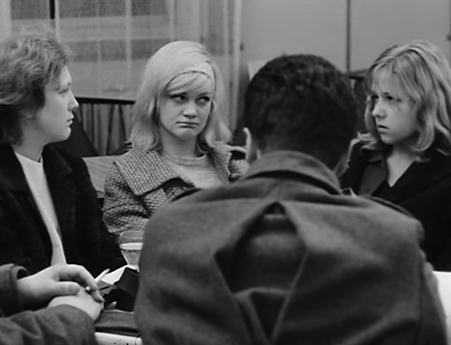
We settle in on a scenario that is reminiscent of a Middle School dance in America. Totally inept and awkward, as a trio of older men looks to catch the eye of three young gals — except these fellows are no Don Juans. Even the one who fancies himself the leader doesn’t know what he’s doing.

First, the waiter botches it all by dropping the expensive bottle of wine they bought off at the wrong table. They receive the inquisitive gazes of the women on the receiving end. It only gets worse when the waiter proceeds to remove said bottle and take it to the next table to rectify his error. They have made contact but it’s the ugliest of executions. Meanwhile, the girls who’ve caught them looking, again and again, aren’t quite sure if they’re flattered or not.

Then the normative rituals commence with the men bringing the girls over for a drink and the girls oblige almost as a nicety rather than for any want or desire. A ring rolls under the table which one of the bespectacled bumblers struggles to recover. The whole extended mishap features some of the most cringe-worthy comedic moments that I can recently recall. Only for bickering to ensue as the evening falls apart entirely. First, one man decides to go to bed and then the girls follow suit.

Andulla (Hana Brejchova) goes up to the room of a pianist warily, where he tries to teach her self-defense tactics. The inevitable happens and they wind up in bed together though he struggles to get the blinds in his hotel room down.

Afterward, he gives her the most peculiar compliment. She’s angular like a Piccaso guitar. And he’s generally kind but we know this is just a minor thing to him. Not that he’s trying to take advantage of the girl per se but it doesn’t carry much weight for him. There were other girls in other places. And yet for her, it’s possible that she’s never felt so close to someone before. For her, this is love or at least something close to what she is searching for. He vaguely invites her to come see him sometime and she resolves to take him up on the offer.

loves of a blonde 3.png

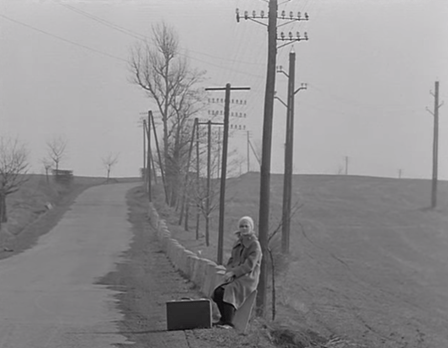
There are these moments that follow where it feels like we are watching a screwball comedy. She meets the parents, suitcase in hand, asking for their son. And they have no good answer for where he is. They’re even more confused about what she’s doing there and why.

Father just wants to watch TV and mind his own business. He thinks his nagging wife is nuts but not as nuts as his son. Bless her soul, but the mother is a certified worrywart thrown in a tizzy about just about everything. I’m sure most of us know the type played to the extreme here.

Son arrives home and his disapproving mother makes him join the parents in bed. She’s not about to let him sleep in the same room as the girl. They’re like the three bears crammed into a bed together, bickering and saying that the girl should have never come in the first place.

It fascinates me how one seemingly ephemeral idea that might only be a quick flash of an image or a concept can lay the foundation for an entire picture. Forman was himself a child forced into migration at an early age by the Holocaust and in his young adult days witnessed a girl lugging her suitcase around the big city without anywhere to go. He gave her a lift and heard her story.  She had been invited by a man she’d met who really had no intention of having her at all. It’s just what you say. It’s the etiquette of it all but it doesn’t really mean anything. At least not to most people. There we have the story’s defining motif.

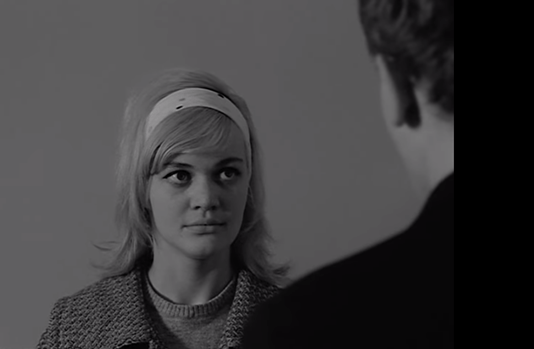
There’s an innocence that radiates from Hana Brejchova’s eyes; she’s so very youthful and still trying to figure out her life. In dismissive terms, we’d call her a dumb blonde but this film suggests something more — a person who is trusting and wants real love.

So due to a temporary relaxation of censorship, Forman’s film could be broken down to frank depictions of romance and free love but that is not its end goal. Because even in those forms of expression, we find a surprising amount of, not only astute observational humor about humanity but an equally telling melancholy. Loves of a Blonde is a testament to both.

4/5 Stars

Summer 1993 (2017)

summer 1993 2.png

Summer 1993 is a testament to subtleties which can make a film into something imbued with deeper meanings than what we might initially realize. It begins with the title immediately asserting this is a period piece and also implicitly we have the suggestion of the autobiographical. The postcript dedication is the final confirmation.

Otherwise, the film does not project a sense of self-awareness nor does it continually remind us what we are watching. Instead, it works in terms of intimacy and nuanced beats which lay out a world of the past that is piercing for the very transparency it projects. The personal becomes obvious in the ways it is handled with grace and an emotional candor.

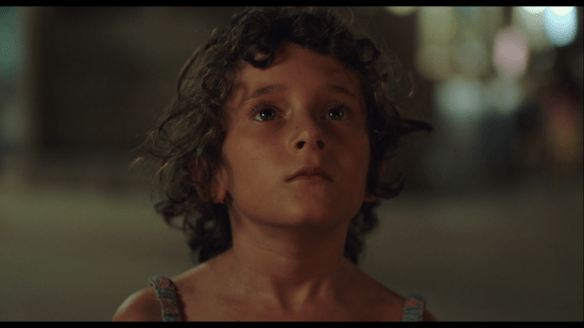
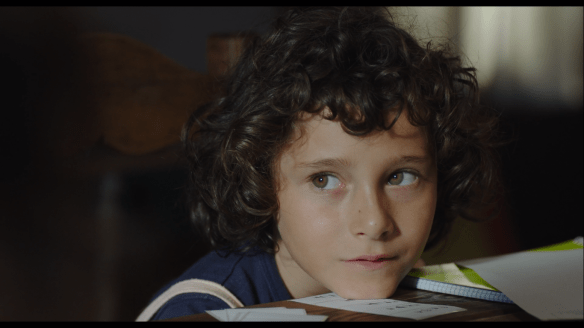
This is a story of a small girl named Frida. She owns a pair of beautifully expressive brown eyes. Her hair is curled like a perfect little cherub and she is introduced in the midst of tragedy though we know very little about it. Being a child, she cannot quite understand the circumstances either. Much of the film occupies her head-space and point of view. Conversations waft over her. Things she cannot understand the gravity of. All we know is she has been affected. But even that rarely comes out of her.

She is defined mostly by pensive and measured actions. Her grandma teaches her the words necessary for her first communion. She repeats them obediently. Then, comes the move out of her family home with her new parents — an uncle and aunt — who have agreed to take her to live with their baby daughter.

They are caring and yet as with any change, there is a difficulty in adapting — a disconnect because she must become acclimated to a new life and even as the familiar has been replaced with something novel, we question how the transition will go.

Her doll collection is most important to her — and she plays house with her baby cousin — taking on the persona of the emotionally-detached mother even smoking a make-believe cigarette through her garish mascara. In town, she joins in a game of tag with the local kids and like it always goes — being the one new person — she gets shouldered with the task of being “It.”

She scrapes her knee scampering about and one mother becomes frantic that her child might be infected.  It’s an overreaction but it gives a hint to Frida’s past — the very reason her parents are no longer present in her life. Later there is a solemn conversation held over the kitchen table with all the extended family discussing her as she sits docilely by.

At night she’s lying in bed, saying her prayers and the barely audible notes of a marital argument can be heard between two people who nevertheless seem kind and in love. Life has a way of weighing on our hearts and minds. It is never an easy road to traverse.

When the baby daughter gets lost in the woods, injuring her hand, there is another change. Husband and wife, with prodding from the wife, in particular, agree limits must be put in place for Frida. She can hardly be trusted to look after her sister in this state.

summer 1993.png

Even against this backdrop, Summer 1993 is a reminder of the beauty and inquisitiveness of children. Their hands so meticulous, their eyes searching and innocent. In many ways, they are not jaded and troubled by many things as we often are as adults. Still, they are capable of selfish acts, defiance, and naughtiness. They do not understand how their actions affect others besides themselves. What ties us all together is the very fact we all have feelings and emotions. These do not change. They are the universal connector between us all.

The greatest pleasure is that the film very rarely — if ever — feels like artifice. There is such a measured and sensitive eye at work here to be able to capture a moment in childhood and do it without unheeded histrionics.

Better yet are the sweet refrains like the whole family snuggling up in bed together. Double-fisting ice cream as a reward for another successful doctor’s appointment after a whole slew of tests. I was there once as well except it was always Cheetos and strawberry kiwi Snapple.

The other moments are just as real. Frida watches her baby sister tumble into the water and watches wide-eyed as her father jumps in after her. She is scolded for her inaction in the face of the helpless cries for help. Then she drops her grandma’s gift nightdress in the dirt — ungrateful and jealous of her baby sister’s — even spilling milk on it. Her mother tells her to go wash it even as Grandma tries and make concessions.

She likens her plight to that of a Catalan Cinderella but then again for all kids childhood is a bit of a fairy tale even the bad parts. It feels like the whole world is against her. Of course, it couldn’t be farther from the truth but she is blinded by her own childish narcissism.

The fact her adopted parents are so loving, understanding, and have her best interest in mind makes it all the more striking. How can she view the world in that way? One evening she finally gathers her meager belongs, all but prepared to go off on her own, loading her bag with all the necessities including fruit from the kitchen table.

Her baby sister tells Frida she “loves” her and she reciprocates by leaving behind the doll she had packed. It’s undertaken with the sincerity of youth and that’s what makes it so sweetly affecting. There is this gravity to the proceedings even as this innocent girl does not understand all the intricacies of her situation.

summer 1993 4

A fitting final scene comes over the kitchen table again. Frida finally seems happier, at least she is getting used to life, but then out of the blue, she asks her new mother how her first mother died? Then, what follows are a row of very honest questions.

Her new mother fields them calmly in a reassuring way so her daughter can comprehend but you also sense there’s a touch of relief as Frida is opening up and willing to talk about the things she’s been aching to know. It’s a moment of deep personal connection. The impact is heady because it is hidden inside something seemingly so mundane in nature. But to those involved, it means the world. It is the beginning of greater understanding, moving them closer and closer to a whole family.

Getting ready for bed Frida spontaneously breaks into tears. For the whole film she has kept it in — remaining surprisingly unemotional — and yet now she can let her guard down. She doesn’t know why she is crying but we have some inclination. Could that be an eye getting misty? Not unlikely.

It recalls one lovely summer I spent living overseas because it is the one and only time in my life where I have lived on the edge of nature where you can hear and see the wildlife and walk around in it. It truly becomes your backyard. But it was in such a paradise where I had to rebound from personal grief as well.

It was not in the Catalan countryside but I was going through the same sense of isolation. Being a bit older I tried to cope in a different manner. What I realized is there is a need to gravitate more toward others opposed to falling away. But even as an adult it is difficult to do. It goes against our impulses in such moments where solitude is our greatest friend. Ultimately, Frida got there and I did too; it simply takes time. What a beautiful elegy to a childhood, to a mother, and, ultimately, the rebirth of a young life in the midst of tragedy.

4/5 Stars

The Only Son (1936)

the only son 1

Tragedy in life starts with the bondage of parents and children.

The film opens with a single extended scene with the title card reading: Shinshu, Central Japan 1923. Ozu guides us in with his pillow shots framing the story’s sequences with images of his locales which neither serve the narrative nor reveal anything about our characters at hand. But he more than many directors is well aware of his environment and basking in its very contours.

The opening premise has to do with a young middle school-aged boy and his mother. The problem is whether or not he will go onto high school. You see, his father is dead and his mother must eke by a living. They don’t have much money. School costs money.

There are two stories going around. The one he told his mother saying he would not continue his schooling and then the one he told his teacher. His mother only finds out when the man comes by to acknowledge how happy he is for the boy.

Though distraught at first, from that day forward the mother vows to pay for her son to have schooling, first high school and then college. Likewise, he vows dutifully to become a great man so her maternal sacrifice is not in vain.

Flashforward to the present and the now elderly mother decides to pay a visit to her son in the big city of Tokyo. He’s grown now and has a job. But it turns out that things are not as she might have hoped.

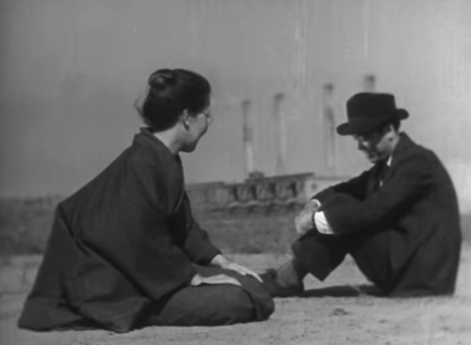
First off, he has a couple of surprises for her. He got married and already has a baby son. Also, their home is fairly run-down and humble because his salary as a night school teacher is meager at best. So much for being a great man. It turns out such aspirations are difficult, especially in a metropolis like Tokyo. Look no further than his old teacher who has turned to running a butcher shop just to provide for his family.

However, despite these circumstances, the son throws out all the stops to make a lavish showing of hospitality for his mother’s benefit. After all, he can’t possibly let on how things are actually going. Because that would break her heart. He would have failed her.

So he buys extra chicken, offers small trinkets, and they attend the picture show. Things he probably never would have done if she were not present. Slowly he’s sinking under the surface, borrowing money from everyone who might oblige.

But of course, the truth always finds its way out. She worked so hard to get him to college and the hope of his successes kept her going. The revelation of his current situation pains her heart and she’s forthright in telling him precisely that. She is utterly ashamed as he explains how difficult it is to become a big man in Tokyo. Hard work does not always cut it.

This could be the end of their relationship right there and yet there is another moment. After a horrible accident, he gives all the money they have left to help a single mother pay for her son’s medical bills. It’s a meaningful gesture and right before she leaves, the mother tells her son that she’s proud of his integrity.

All he can think about is how unsatisfied she must be and how much he didn’t want her to come to begin with. His wife concurs he’s lucky to have such a good mother, because by the standards of Japan, she made her child her all so that he might succeed.

Meanwhile, the mother regales her solitary friend back home about her son who has become a great man and his lovely wife and how she can die now without any regrets. All the while we know the full truth but she must save face and so she makes up the most satisfying story she can. Hidden away from view her head is downcast in grief and shame.

What’s striking to the very last frame of The Only Son is the conflicting feelings it provides. It constantly flits back and forth between this false sense of security and contentment to moments of deepest regret.

It never quite allows you to rest on a single one of these emotions but instead requires you to cope with them in equal measures as the scenes are layered one on top of another. First, the mother is happy, then the son is anxious, then the mother is ashamed, then proud. Her son is regretful and finally spurred on to make another go of being a great man. So there’s this lingering sweetness, this not uncertain hope, and yet his mother is in the backroom head bowed, saddened by where she left her boy.

There is no easy answer. There is no definite category. There’s no way to siphon off this person’s emotions from that person’s because they all remain interconnected. That’s what allows this film to make sense and have such an emotional impact as it quietly whiplashes us back and forth between mother and son. We feel for both of them even if their hopes and aspirations seem somewhat misplaced. It’s a film that pains the heart of anyone who hates to see lives in utter distress.

I must confess that I racked my brain for the reason Ozu might spend so much time cutting to shots of the hanging laundry — a recurring motif throughout the film. Surely, there’s some intricacy that I am missing or some subtle symbolism. While that is undoubtedly true, I realized even more clearly that Ozu did not require an overt reason for his shot choices.

Just as our eyes stray to observe the world around us so his camera turns its lens in such a way. It is attracted to faces, rooms, and maybe even the mundane qualities of hanging shirts as the wind softly swirls past. There need not be more than this.

Likewise, I kept on staring at the image of the glamorous movie star up on the wall of their humble home. I was trying to decide if it was Joan Crawford or some German actress I am not aware of. Someone else might be able to distill my ignorance but I realized, again, it did not matter as long as I enjoyed the overall experience.

Ozu can be cast much in the way of the famed woodblock printer Katsushika Hokusai most famous for his “36 views of Mount Fuji.” Likewise, the Japanese director took similar forms and topics and unearthed the intricacies of temperament and interrelations which he subsequently revisited again and again.

If you notice, he has simply reversed his normal dynamic of father with daughter and it has become mother and son. Relatively similar origins and yet the outcomes are no less enlightening. So it’s not necessarily about the novel. There can be just as much relish in taking something that we are so used to, like parent-children relations, and recasting them in such a way that we recognize the situations with greater lucidity. Therein lies a space for growth and understanding.

Surely Ozu takes some getting used to. However, eventually his style will age on you and you will come to find the same fascinations he does until your tastes meld and it becomes second nature to see the empathy and beauty in his subject matter just as he seems to. Pretty soon it feels as if you are looking alongside him. If you let him, it can become a thoroughly symbiotic relationship between filmmaker and audience.

4.5/5 Stars

Arigato-san (1936)

arigato san.png

The translated English title of Mr. Thank You somehow comes off insincere as if it’s making fun but there’s nothing of this kind of sentiment in this picture from director Hiroshi Shumizu. It proves to be a cordial exploration of human nature and human kindness played out in the most organic fashion possible. In turn, it’s blessed by extensive on location shooting as well as a wide-ranging cast of players.

What it promises is a charming road film like few I’ve ever seen; self-contained and yet freely spilling out over the roads with meandering ease guided by our eponymous hero. The driver of the bus traversing the road from the rural area of Iku to the big city in Tokyo is known to everyone as “Arigato-san” because when you hear a polite ‘Honk’ followed by an “Arigato,” he’s more than made his presence known.

People appreciate his continuous gratitude and also the courteous favors he does for them along his route. It might be picking up pop records for girls in the hills so they can have quality entertainment. Or for someone else promising to place water and flowers at a deceased father’s grave. He obliges graciously and constantly makes necessary pit stops to accommodate everyone.

The rhythm becomes second nature to us as an audience as well and we gladly follow any diversion the story takes. By the end, we’re so used to the film’s continual visual motif of point-of-view shots followed by an “Arigato” and a rear view of the pedestrians making way and waving our travelers on.

Peppy scoring right out of a Hollywood silent reel comedy does wonders to develop a certain mood on the road. In one respect it matches the jovial demeanor of our protagonist but at the same time, there are slight nuances of more solemn issues merely touched upon. Because it’s a bus that brings together quite the gathering of folks from all walks of life.

If our bus driver is a lovely character full of cheerfulness then his passengers are certainly just as colorful. He can be seen almost like a benevolent symbol of modernity and in some respects, his cohort is one too. She takes the seat right behind him and we gather at first that it’s simply to flirt. But as the story unfolds and we see more interactions those initial preconceptions give way to a more complex reading. She reflects a different sort of progressiveness. A woman who speaks her mind, drinks with the boys, and calls others out for their improprieties. You get the innate sense that she is worldly wise but generally kind-hearted.

The rest of the core group includes an impoverished mother and her daughter who is going to Tokyo for the sake of her family; it’s further implied that she will be forced to take on the ignominious life of a prostitute. Next, is a phony businessman with a handlebar mustache and a penchant for ogling pretty girls. The passengers are rounded out by earthy but nevertheless amiable folks and momentary travelers attending weddings and wakes. Each has a unique destination. Arigato-san transports them all.

For a director as prolific as he was — Shimizu had over 160 screen credits — it’s astounding that he has very little recognition among audiences now, at home or abroad. Yasujiro Ozu, one of his contemporaries and colleagues in their days at Shochiku Studio is of course revered the world over. Some might actually find Arigato-san more accessible in some respects and it’s definitely deserving of more acknowledgment.

Because what it offers up is not only a genial portrait of Japan and its humanity but also some of the inherent plight of the common man in rural Japan. In fact, the film is so affable that some of its undertones easily slip by. There’s a wide range of depth going from humor to surprisingly delicate commentary.

All the while we come to relish the time spent with each one of these individual passengers and especially Arigato-san. When they exit the bus upon arriving at their appointed destination it means something because in such a short time it does feel like we’ve built some sort of rapport with them. That’s one of the joys of travel felt most readily when you make the concerted effort to get to know those around you.

In this particular instance, the film provides deeper cross-cultural understanding and there is the realization that economic depressions were not centered solely around the U.S. Japan had similar if not worse conditions for its populous. And if anything, it makes you realize how the nationalistic movement in Germany or imperialistic ambitions in Japan took root. It comes from people who are weary from economic and social deprivation. They want something better.

For his part, I deeply admire the character of Arigato-san because his purpose is a noble one planted in humility. It seems like he genuinely cares for his neighbors and he readily goes out of his way to increase their joy. On a large scale, things might well seem hopeless but the micro-level shows that Japan was made up of many considerate people. While that cannot alleviate all the suffering of the impoverished it certainly is a jumping off point to instigate human flourishing.

4/5 Stars

The Burmese Harp (1956)

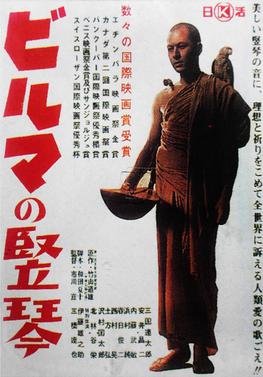
The_Burmese_Harp_Nikkatsu_1956_poster.jpgPut in juxtaposition with Kon Ichikawa’s later rumination on WWII, The Burmese Harp is a romanticized even simplistic account of the Japanese perspective of the war. However,  this is not to discount the mesmerizing nature of the story that is woven nor the overarching truth that seems to linger over its frames.

If anything, it humanizes the Japanese point of view and, rather remarkably, it does this so soon after the war’s conclusion. They were a nation deeply concerned with honor and the only way to get past such an egregious defeat was to frame it in such a way that empowered them for the future.

Because the men who came out of the war unscathed would be the shoulders on which to build a new democracy. You see that even in Ichikawa’s portrayal of the “enemy,” in this case, the English. There is no obvious ill-will. In fact, you could even consider it surprisingly laudatory. Because The Burmese Harp is not concerned with any types of residual politics or long-harbored injustices.

One could make the case it’s a far more universal and a far more moving portrait of the wartime landscape. The story, adapted from a Japanese children’s tale, plays out rather like a parable.

In the waning days of the Burma campaigns, a Japanese Captain named Inouye (Rentaro Mikuni), with a background in music teaches his group of men chorale arrangements which they sing to maintain their morale while they march and during their idle hours. One of their company, Private Mizushima (Shoji Yasui), quickly picks it up and becomes especially skilled at playing the harp to accompany their songs.

One evening they find their position in a local village surrounded by British soldiers in the night. The tense scene is diffused by music in a mutual connection reminiscent of the Christmas cheer in Joyeux Noel.

They learn that Japan has officially surrendered and so they lay down their arms peaceably. Although fearful and demoralized by months of struggle, they resolve to weather it all together. But one of their members is called upon to try and get some of their comrades to stand down before the British blast them to smithereens.

Mizushima volunteers to be the one to undertake this initial task as a liaison to try and avoid the needless loss of more countrymen. It is not to be. Even as the war is already over, it’s this event that proves to be galvanizing in the private’s new position as a missionary of mercy.  After being rehabilitated by a monk, he takes on their dress and shaves his head compelled to give a decent burial to all his fallen comrades.

Moved by the memorial hymn sung over the dead Japanese soldiers at the British Hospital, he realizes what his final calling must be. It’s easy to wager that the film’s most poignant moments occur in conjunction with song. In many of the best interludes, we hear the voices ringing out amid nature whether it’s the shade of the forest or the cleared terrain of a military encampment you can sense the notes rising up into the heavens with the strains of angelic melodiousness.

The same songs lift the spirits of our characters, comforts their souls,  and gives them the resolve to push onward for the greater good.  It has to do with an unswerving belief that each individual life holds dignity. Despite their many spiritual differences, there’s no doubt that this is a conclusion arrived at by both Buddhism and Christianity. Yes, the ugliness is unavoidable. But just as prevalent are immense reservoirs of beauty.

Mizushima is compelled in the inter most catacombs of his being to rescue the bodies of his brothers-in-arms that their spirits might rest in peace for posterity. It seems like such a small even insignificant act especially in response to such a cataclysmic war. But it’s one man’s calling. It is not for a mere man to know the answers to all the plaguing questions. All we can do is ease the suffering. For him, it is something. For him, it is enough.

What lends urgency to the story is the very fact that Mizushima’s entire company is frantically trying to obtain news of his whereabouts as they are getting ready to be shipped home. One of their most faithful messengers is a kindly old lady who learned some Japanese dialect. She can only give them small morsels but they cling to some hope. First, they think he’s been killed. Then, they think they’ve passed him on a bridge. Finally, they get their closure.

The candor is nearly startling especially put in relief with Ichikawa’s later work Fires on The Plain which paints a starkly different picture (or a very different side of the same picture). Likewise, this movie is aided by a script penned by his wife and close collaborator Natto Wada.

What we are left with are clear resounding strains of pacifism but by no means does it feel belligerent. What is conveyed is the sheer meaninglessness of war. However, it’s done through different avenues than his later work.

The film is bookended by the phrase, “The soil of Burma is red and so are its rocks.” The mind quickly flies to the pints of blood that were spilled across this terrain. It’s a grim reminder and yet The Burmese Harp, despite being a bittersweet tale, does boast hope. In the wake of war, such hopefulness is indispensable. You cannot progress without it.

4/5 Stars