Review: Shane (1953)

shane1Jackson Hole, Wyoming and the looming Tetons lend the same iconic majesty to this western that Monument Valley does for many of Ford’s best pictures. But then again, George Stevens was another master and he too was changed by the war, coming back with a different tone and an “American Trilogy” that included some of his best work. Shot in Technicolor, this picture boasts more than wide open spaces and raw Midwestern imagery. Stevens has some wonderfully constructed sequences and there are a number of great characters to inhabit them.

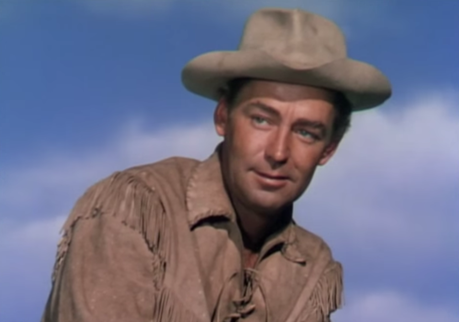
Shane is the eponymous gunman who is content to linger in the background while others become the focal point. Namely, Joe Starrett (Van Heflin), a man who came to the untamed land due to the Homestead Act and won’t let the rancher Stryker muscle them off the land that he believes is rightfully theirs. Despite this being her final film — and a favor to her previous collaborator Stevens — Jean Arthur is as wonderful as ever. The character Marian is brimming with goodness and a sensitivity that is hard to discount. It’s a part very different than her earlier work and yet she plays it so wonderfully. As for newcomer Brandon De Wilde, he’s an astute little actor and we really see this world through his eyes, so he does wonders to hold the story together.

Grafton’s general store and saloon become a wonderful arena of conflict within the film because it is rather like Ryker’s stomping ground since he and his men can always be found lounging around there when they aren’t terrorizing some poor sodbuster. After he agrees to work for Starrett, Shane goes into town for new duds, leaving his gun behind, and he quickly learns what he’s in for. It’s in such a scene that we learn who this man really is. He’s not a hot-head and he initially takes the abuse of Stryker’s guns, who call him out for purchasing soda pop. It’s for the boy Joey, but he doesn’t have to say that, because he needs not prove himself, at least not yet. Also, the relationship between Shane and Marian might be troubling to some — will they fall for each other — but when Ryker makes insinuations about Starrett’s wife, Shane is quick to shut him up. He’s not that kind of man. When Shane does return to the store, he’s prepared this time for retaliation and although it might not have been the smartest thing, it sure is gratifying for him and for the audience. He and Starrett make a killer team, after all, beaten and bruised as they end up.
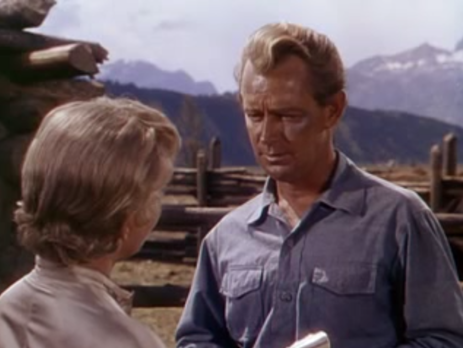
shane2What follows is retribution from Stryker as he tries to buy out, threaten, and continually lean on the sodbusters, but Starrett remains resolute in keeping his friends together. In fact, there’s still time to share a wonderful Fourth of July dance with all the neighbors and it shows signs of a brighter, happier time that could be possible. With neighbors joining together in simple community and sharing life together. Shane feels somewhat out of place in this type of environment, and maybe deep down he knows it too, but he seems oddly content.

This happy time is juxtaposed with the funeral of ornery “Stonewall” (Elisha Cook Jr.), who was gunned down near the saloon by hired gun Jack Wilson (Jack Palance). His death is making some of the others jumpy, but once again Starrett keeps his group together, by first giving their former friend a proper burial and banding together once more. But by this point, they’re barely hanging on. Stryker’s got them on the run and Joe knows he needs to have it out with his arch-nemesis once and for all if things are ever going to return to the status quo. His dreams of ending this whole thing are ludicrous because there is no way he can get out alive. His wife knows it. He knows it, but it doesn’t stop him and his American Dream.

shane3It’s interesting how Shane at first does not try to stop him, but then he gets tipped off to what awaits Joe, and he decides to go in his place. This is his arena after all. The gun we all fawn over is finally getting put to use as Shane rides into town for the final showdown to have it out with the men in the saloon. However, although the shootout is intense it ends very quickly. Thus, what is really interesting are the moments beforehand where friend is literally fighting friend. Both doing what they think is right. However, since Joey only thinks in absolutes, when he sees Shane hit his father over the back of the head, he initially reacts with hatred towards his fallen hero. He doesn’t understand why all this is necessary. But as time goes on and he sees events unfold, he gets it.

As Shane rides off into the night, Joey yells after him to come back, he cannot bear for this idolized man to ride off. It makes me wonder if young Joey grew up with the image of Shane, the hero of his childhood. The doer of good and the ultimate champion of the oppressed.

The cast was rounded out nicely by some solid supporting players like Palance, Ben Johnson, Edgar Buchanan, Elisha Cook Jr., and down to Ellen Corby and even Nancy Kulp. It’s astounding to think that this film could have starred Monty Clift and William Holden potentially with Katharine Hepburn as well. Because, after all, the casting of Shane feels just right. Clift would have brought depth and emotional chops to the role, as a wonderfully impassioned actor. Just look at George Stevens’ A Place in the Sun (1951) for proof of that. However, what Alan Ladd has is a serenity and simple goodness that still somehow suggests something under the surface. It begs the question, how can someone so upright make a living packing a six-shooter? No doubt I like Holden better as an actor, but Heflin has the scruffy outdoors-man look, while still reflecting high ideals. Hepburn just does not seem to fit a western. This is one of the instances when all the pieces seemed to fit into place and we were blessed by a western classic that never seems to lose its luster. In a sense, we become boys again like Joey, completely in awe of Shane. Let us revel in that feeling, that moment of innocence once more.

5/5 Stars

Review: The Philadelphia Story (1940)

philadelphiastory1If there ever was a benchmark for the sophisticated, high-society brand of comedy, The Philadelphia Story is most certainly it. It’s less screwball because instead of Howard Hawks, George Cukor takes the helm and injects the film with his more refined sensibilities. It’s still very much hilarious and impeccably witty, but it’s not quite as scatterbrained as it could have been. Once more you have the iconic pairing of Cary Grant with Katharine Hepburn. Previously they had been in two other Cukor pictures (Sylvia Scarlett and Holiday) and of course Hawks’ romp Bringing up Baby. However, this time they’re joined by another cinematic titan in James Stewart and it proves to be a wonderful battle for command of the screen. The story ends up being a wonderful clash of classes and culture that also manages to illuminate a few bits and pieces of truth.

C.K. Dexter Haven (Cary Grant) had it out rather acrimoniously with his wife Tracy Lord (Katharine Hepburn) and now two years down the line, she is set to marry someone else. She couldn’t be happier to be rid of him and all his faults. Her new husband is a real “man of the people,” the wooden George Kittredge (John Howard), and he got his money doing an honest day’s work. In other words, he’s everything Haven isn’t when it comes to class and manners, but he’s also quite different than Tracy. But she doesn’t seem to mind. She’s on cloud nine to be rid of Haven.

Although Cary Grant does take a back seat at times, it’s only so he can manipulate and connive in the background, because he most certainly has an agenda. It’s great fun to watch. First, he brings in the folks from Spy magazine to do a full spread on the big wedding. There’s belligerent journalist Macaulay Connor (James Stewart) scoffing at all the opulence around him and then photographer Ms. Eilzabeth Imbre (Ruth Hussey), who has something complicated going on with her colleague.

They’re all here because the editor of Spy has a nice juicy expose piece on Tracy’s father and so C.K. advises her to go along with it. She suspects her old spouse has something to do with it, and it’s true, he didn’t put up much a protest when it came to taking part. However, Tracy’s not ready to let him ruin what she’s got going. She and her younger sister the crack-up Dinah (Virginia Weidler), put on a good show of upper-class snobbery to utterly bewilder their guests.

The funny thing is that while Tracy detests C.K. with the vehemence of the plague, her mother and sister quickly welcome the old gentleman back into their home with open arms. After all, what kind of trouble could he cause a couple days before the wedding, and Dinah is always game for a little chaos. She and C.K. have a mutual affection for each other. They’re both serial troublemakers.

After the surprise of Dexter wears off, the next person Tracy clashes horns with is the brusque newsman Connor, who is as turned off by her as she is annoyed by him. As she sees it, he’s invading her house as part of the paper’s plan to make her life miserable and steal away all her privacy. For him, she’s a stuck-up brat, who has had everything served to her on a silver platter in the west drawing-room. He thumbs his nose at the whole set-up. But a chance encounter at the library no less opens up a different side to these characters. Mike Connor is actually an accomplished poet far more skilled than his lousy journalistic pursuits would suggest. He learns just how perfectly imperfect she is.

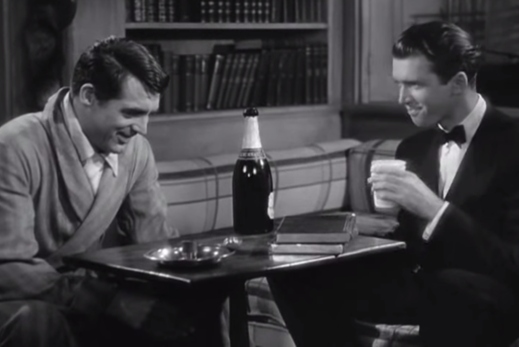
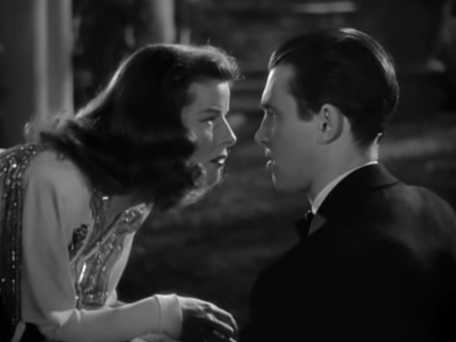
philadelphiastory2It’s at a party the night before the big day that things get particularly interesting. A lot happens when you fill people up with a little bubbly, some wine, and some early morning gaiety. Tracy is absolutely swimming in exuberance partially thanks to alcohol, partially because of the dancing, and maybe in expectancy of tomorrow’s high. But when things come a little loose around the edges, things happen that you regret. As it turns out Tracy doesn’t remember quite what happened that night, but Dinah saw all the good parts from her balcony. It involved a drunken Mike taking a jaunt to Dexter’s home at a godforsaken hour followed by Ms. Imbrie with an inebriated Tracy in tow. What this sets up is a wonderful little sequence where a hiccuping Stewart helps Grant orchestrate a plot to get back at Spy magazine editor Sidney Kidd. Then, Connor gets to spend the wee hours of the morning rambling on and on. It’s innocent enough, but quite the evening no less. It makes Kittridge quite distraught finding his bride to be in the arms of a man who is singing “Somewhere Over the Rainbow.” And of course, with such an unfortunate moment so close to the wedding it looks like things will be called off. But Kittridge is willing to make amends. It’s Tracy who realizes she has to break things off because ironically this man is too good for her.

philadelphiastory3It looks like Haven has won, but in a split second Connor is proposing marriage and ready to tie the knot with Tracy to save the wedding. Once again Tracy makes a sagacious decision (which is surprising given her earlier condition). Hangovers on your wedding day are not usually a good thing. In this moment everything falls back into place as it should and as we want it to. These are characters that we grow to care about, despite their misgivings and class differences.

When reading up on this film I was astounded to hear that the film supposedly had no outtakes. Everything we see was as it was when it was first shot and that has to be a testament to the strength of these actors and maybe a little luck. It’s true that the film sometimes enters territory that feels unscripted and loose. That’s when it really gets fun. Stewart and Hepburn. Grant throwing a quick retort here and there. Imagine, this could have been a vehicle for Hepburn paired with Clark Gable and Spencer Tracy. I’m sure that would have been great, but the whole dynamic would be very different.

So who is the winner in this film? Grant as C.K. Dexter Haven? Hepburn as “Red?” Stewart as the “Professor?” The Philadelphia Story is a real winner for the audience. What more could you want in terms of high-brow comedy bursting with legendary star power?

5/5 Stars

Review: Bringing up Baby (1938)


bringingup2“Our relationship has been a series of misadventures from beginning to end, so if you don’t mind, I’ll see Mr. Peabody alone and unarmed.” –
David Huxley

Bringing up Baby is really and truly one of a kind, almost headache-inducing with its sure energy and dizzying with its scatterbrained tracks, but nonetheless it is a screwball masterpiece. From Hollywood master Howard Hawks comes arguably one of his greatest films, boasting the rat-ta-tat-tat of some killer dialogue, some fantastic comedic sequences, and a number of memorable performances.  Honestly, if I learned anything from this film, you can’t watch it just once, because you’re bound to get bowled over, and afterward you probably won’t realize half of what you saw. For instance, there’s so much talking you hardly realize that there’s not much of a score.

Young Katharine Hepburn is at her most radiant and almost smothering with her constant barrage of words. You either love her or hate her. There’s no way to ignore her performance here because it’s completely out there. It’s hard to believe she was a novice when she came into comedy. There’s no inhibition whatsoever. Not in the least.

Cary Grant is the bookish paleontologist who is content with constructing the skeleton of his prized Brontosaurus and then marrying his admiring, no-nonsense sweetheart Ms. Swallow. It sounds like a pleasant albeit mundane lot in life. In an effort to gather a $1 million in funding, he goes out to the golf course ready to do a little business on the side with Mr. Peabody. That’s when hell strikes in the form of one scatterbrained lady extraordinaire Susan Vance (Katharine Hepburn). First, she swipes his golf ball (quite certain it is her’s), then she batters up his car (sure it is her’s again), and to top it all off she causes him to sit on his hat when they cross paths again at a club. Poor Dr. Huxley doesn’t know what’s hit him. He just wants to get away from her and all the fury that comes in her wake.

Good luck with that Cary, because she’s a force of nature! She misunderstands everything, and he gets endlessly caught in her web of miscommunication.  Susan initially roped him into coming along with her, thinking he was a zoologist who could help her take care of “Baby.” Of course, it turns out to be a tame leopard that they must get to her aunt’s home out in Connecticut (Only in a screwball comedy). By now he’s bothered. She’s falling in love.

So she does what any resourceful girl would. She keeps him occupied. First, she swipes his clothes. Then the dog George runs off with his prized possession, the intercostal clavicle. Initially, they want to get rid of the leopard. Then they want to keep it. Auntie comes home along with her gentleman friend Major Horace Applegate. A not so friendly leopard escapes from a carnival. The police get involved led by their bumbling leader Constable Slocum.

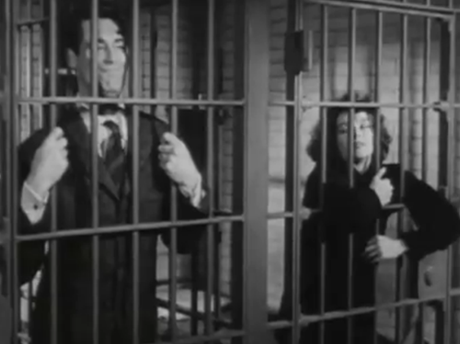
bringingup1It’s a doozy of a masquerade and most everything and everyone is utterly confused. It’s as if everything that enters the world of Susan Vance is further complicated. To her, it’s simply a day in the life and Huxley begins as an outsider, but despite all the madness, he becomes accustomed to it.  Running after the dog, getting soaking wet, tripping, falling, fending off a leopard, getting thrown into the clink. Dr. Huxley realizes that he’s never been happier and it ends pretty much as it began. Never a dull moment.

This has to be one of Hepburn’s greatest performances earlier in her career because she has everyone in a tizzy. Although he’s literally getting the run around from Hepburn, Grant is her perfect comedic foil. He dons the glasses at first and carries the sensibility that goes with them. However, he is equally equipped to go without them as a scatterbrained gentleman ready for all the pratfalls, quips, and escapades that ensue. And they are surrounded by a solid set of character actors including a drunken Barry Fitzgerald, the easily distracted Walter Catlett, the big game aficionado Charles Ruggles, and the peppy dog Asta (of Thin Man fame) among others.

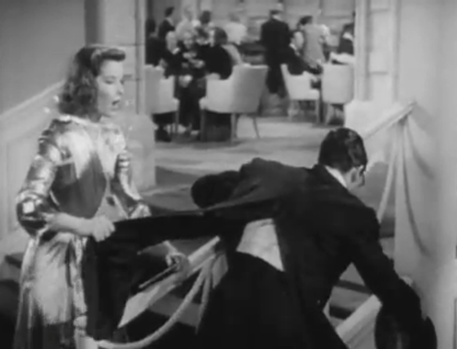
Howard Hawks once said that “a good movie is three good scenes and no bad scenes.” In Bringing up Baby some of the memorable moments include the fateful meet cute at the golf course, the chuckle-worthy encounter at the club, and of course the sequence leading up to jail. But it’s also the little comedic moments wedged in between. Maybe Hepburn’s parked in front of a fire hydrant and trying to pull the wool over the policeman’s eyes. Or perhaps Grant dons the only piece of clothing, a frilly bathrobe, and is forced to answer the front door. It’s utterly absurd. It’s become classic and it shows the ability of Hawks behind the camera to make the action flow so organically.

It’s amazing that this film was a flop, Hepburn was labeled “Box Office Poison” by this point, and Cary Grant had yet to become an established star. Oh, how things changed. Because this film, in a sense, was the beginning of something truly wonderful. When two of the greatest stars aligned with one of the great directors.

5/5 Stars

Stage Door (1937)

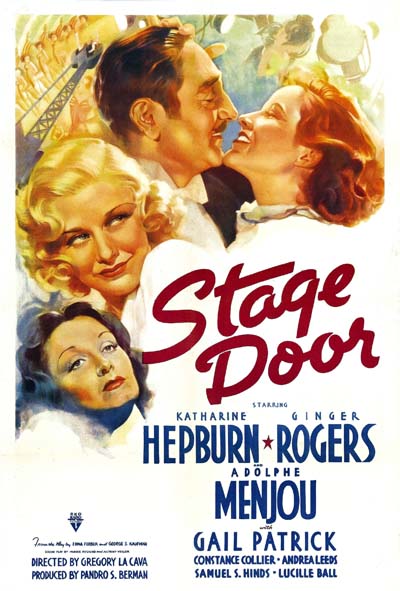
Stage_Door_(1937)Watching Stage Door illustrates one of the pleasures of film because it’s an unassuming classic that very easily could be overshadowed by other films. Its main stars are Ginger Rogers and Katharine Hepburn, who both have numerous films more well known than this one.

However, this story about a boarding house for aspiring stage actresses is a light piece of sassy fun while still finding moments for poignancy. Rogers is a cynical dancer named Jean, and she is not too pleased to be getting a new roommate. The last one moved elsewhere after constant fighting. But the new girl, Terry Randall (Hepburn), is different. She is from a well to do family, but she is pursuing a career in acting so that she might stretch herself.

The other girls look on with an air of contempt thanks to her fine clothes and pristine manners. She doesn’t fit the mold of many of the other struggling actresses looking for their big break. Many spend their evenings trying to grab hold of a sugar daddy such as famed theatrical producer Anthony Powell (Adolph Menjou). Several of the girls have their eyes on him as they try and land a role in his next big production.

Kay Hamilton is the most well-liked girl in the house and arguably one of the most gifted performers. She opened the year before in a production that won her rave reviews, however, a year later she has yet to get another break, and she is running out of funds. Powell’s show is her last big chance. Thus, when Powell cancels her audition last minute for a trivial reason, Kay faints and an irate Terry bursts into his office to confront him. He is initially turned off, but then he chooses her for the lead role of the upcoming Enchanted April.

Although the girls were beginning to warm to Terry, Jean has trouble forgiving her as tragedy strikes. In fact, Terry almost refuses to go on stage altogether, and yet she goes out and gives an emotional performance that is hailed by critics. In the end, Terry and Jean are reconciled which is far more important than any type of fanfare.

In many ways, Gregory La Cava’s Stage Door feels similar to The Women (1939). Both films have casts with women in the primary roles and the stories are at times volatile, with so much drama and many zinging comebacks. Some of this was courtesy of the supporting cast which included such legendary comediennes as Lucille Ball and Eve Arden. Ann Miller is even present, but at its core Stage Door is Ginger and Katharine’s film. Pardon my curiosity, but did Fred and Spencer ever do a film like this?

4/5 Stars

Holiday (1938)

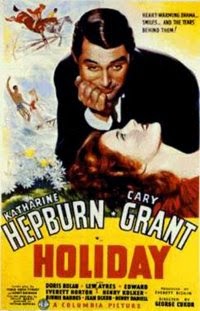
2c3de-holiday_posterJohnny Case (Cary Grant) is a happy go lucky fellow who is crazy in love with the girl of his dreams. He returns to town telling his friends the Potters that he has plans to marry this girl he met 10 days ago at Lake Placid! He is ecstatic and not afraid to show it.

However, he must become acclimated with her family and their lifestyle. Most important is gaining the approval of her sometimes stuffy and always money-minded banking father. Julia Sefton is by all accounts a lovely girl who seems to truly return Johnny’s affection. Honestly, though he is not quite used to her type of society. He makes his entrance by arriving through the servant’s door and wanders around the stately manor marveling at all the trappings. Doing the rounds he runs into her drunken but genuine brother Ned (Lew Ayres). Then, there is sister Linda (Katharine Hepburn), the so-called black sheep of the family, although her only fault is being an energetic free-spirit.

Immediately she and Johnny hit if off, and she soon realizes that her sister has a real catch on her hands. The wedding is finally agreed upon by Mr. Seton, and a big New Year’s Eve Party is thrown much to Linda’s chagrin. The night of the big to do there are two parties that take place. Downstairs all the snobs and high society mingle with Julia parading Johnny around. Upstairs is a different matter where the quarantined Linda is eventually joined by the Potters,  Ned and even Johnny.

The little gathering gets quashed and that is not all. Father and daughter are adamant that Johnny works at the bank and make money because that’s what any respectful husband would do. They take little heed of Johnny’s dream to take a holiday once he has raised enough money to live off of. He just wants to live life free of distractions for awhile, but they just do not understand. Finally, Johnny is feeling too restricted by all the obligations to bear it any longer, because he simply cannot live that way. Again, both father and daughter do not understand. But Julia does, and she finally realizes what she must do. It’s time to take a holiday.

Here is a formidable trio in Cary Grant, Katharine Hepburn, and director George Cukor. It makes me beg the question, how this film has become so overshadowed by Bringing up Baby and The Philadelphia Story? Johnny Case is a wonderfully vibrant role for Grant, and his acrobatics alone are worthwhile viewing. Hepburn on her part plays an equally spirited individual but without the scatter-brained or feisty edge that she often carried. Instead, she is just wonderfully footloose and fancy-free. Edward Everett Horton and Jean Dixon are an absolute riot, and I would love to have friends like them. Lew Ayres role was rather an odd one, but both Doris Nolan and Henry Kolker had an adequate amount of stuffiness to pull off their parts. That juxtaposition was necessary for the film to work and it did.

4/5 Stars

The Lion in Winter (1968)

ae367-lion_in_winter1The year is 1183 and the castle of King Henry II is a dark and dank place during the winter months. You would not think so by the opening moments where an energetic King (Peter O’Toole) duels his young boy John (Nigel Terry). His mistress takes in the scene from afar. On first glance, this whole scenario seems pleasant enough, but that would be far from the truth.

Young John is the King’s favorite, but his aged yet cunning wife Eleanor (Katharine Hepburn) has a special affection for the eldest brother Richard (Anthony Hopkins), who she desires to take the throne. Stuck between the two favorites is middle child Geoffrey (John Castle), who has plans of his own. Bring the French King Phillip II (Timothy Dalton) into the equation and the situation becomes even messier than before. What follows is an elaborate web of lies, deceptions, side deals, false motives, eavesdropping, and of course backstabbing. Henry and Eleanor constantly battle back and forth as their sons bicker among themselves. One big unhappy family to be sure.
Henry tries to marry off his mistress (Jane Merrow) to Richard to satisfy King Phillip, but his son will not have it. Next, Henry tries to compromise with Phillip only to learn that his sons were planning to gang up against him. Now he cannot trust any of them, and they find themselves in the dungeon. He makes a new plan to get remarried to his mistress so that he might have another son to be king, but his other sons will be a threat so long as they live. His dilemma is evident, but he cannot bear to kill them. Things seem to go back to the way they always were with Eleanor going back behind bars and Henry playfully barking at her. All’s well that ends well perhaps.

Peter O’Toole and Katharine Hepburn were certainly two titans in this film. O’Toole, whether he is roaring or confiding in his former love, does everything with purpose and bravado. He does show his soft, vulnerable underbelly at times, though, as a man advanced in years. Hepburn on her part is absolutely acerbic, oftentimes governing the tone of the film with her barbs and snide comments. And yet with her, there is also at least a few instances of true humanity. She and Henry seem to be made for each other and their boys are seemingly just as loathsome and underhanded.

4/5 Stars


The Best Films of Katharine Hepburn

1. The African Queen
2. The Philadelphia Story
3. Bringing up Baby
4. Guess Who’s Coming to Dinner
5. Holiday
6. The Lion of Winter
7. Adam’s Rib
8. Long Day’s Journey Into the Night
9. Stage Door
10. Woman of the Year
11. On Golden Pond
12. Summertime
13. Alice Adams
14. Little Women
15. Pat and Mike
16. Desk Set

Guess Who’s Coming to Dinner (1967)

ff836-guess_who27s_coming_to_dinner_posterThis film directed by Stanley Kramer, has a relatively simple story line revolving around a major issue. Joanna Drayton has fallen in love with a doctor she met only 10 days before and wishes to get married. Obviously, her parents played by Spencer Tracy and Katharine Hepburn, are startled by this whirlwind event. They are even more dismayed when they discover he is a black man. Hepburn’s character lightens to the idea while her husband is adamantly against it. Soon everything becomes even more complicated when the man’s parents are invited to dinner, only to be equally startled. Eventually giving it more thought, Tracy does condone the marriage realizing how much his daughter is in love. This would be Tracy’s final film and he would die only a couple weeks after shooting ended. He and Hepburn do a wonderful job with Sidney Poitier and Katharine Hougton as well. This movie is good and also monumental for the racial issue it covered.

4/5 Stars

The African Queen (1951)

1c3a0-the-african-queen-1With the ultimate pairing of Humphrey Bogart and Katharine Hepburn, this film throws together two starkly different people in extraordinary circumstances. Hepburn is a prim and proper missionary in Africa whose brother dies after a confrontation with German soldiers. Bogart is the rough-edged pilot of an old steamboat christened The African Queen. Together they take on the dangerous task of going down the river in order to sink a German ship. At first they are both at odds with each other and struggle to cope with their situation. However, with no one else to turn to, over time, they become close. Their bond is so great that they are willing to die rather than to be separated. This is truly a heartwarming story of love and loyalty with two legends who literally light up the screen.

5/5 Stars

The Philadelphia Story (1940)

Headlined by Katharine Hepburn, Cary Grant, and Jimmy Stewart, The Philadelphia Story  tells a comical tale of a divorced socialite who is about to be remarried. Tracy Lord is an arrogant socialite who divorced her equally fiery husband C.K. Dexter Haven. Now it is the day before her wedding to another man. However, Haven returns and brings a long two magazine reporters to get a scoop they were forced into. After a lavish party and many drinks the reporter (Stewart) and Tracy Lord find themselves spending an inebriated night talking and swimming. Haven manipulates the situation and the future husband Kittridge, who catches the tail end, believes something bad is happening. The next morning the wedding is in jeopardy and Hepburn and Stewart are oblivious. Although nothing happened, Lord agrees to terminate the wedding and Mike (Stewart) tries to save her embarrassment by proposing marriage. However, she realizes it is not meant to be and goes to Haven while Mike returns to the camera woman who loves him. It all ends well but the joke is still on them in the end. This romantic comedy has a lot of star power and it is actually pretty good.

4.5/5 Stars