Daddy Long Legs (1955)

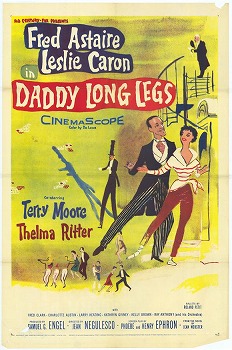
The movie opens with a snooty art docent bloviating to a rapt audience about the various paintings within the Pendleton family collection from Renoir to Whistler. The joke is that the latest member of the family, Jervis Pendleton III, has gone a bit off the rails. It’s reflected in his portrait and by the fact he bangs away on his drums in the next room over like the eccentric, happy-go-luck magnate that he is.

The action quickly gets transposed from New York to France. The reason doesn’t matter much. However, the aforementioned Mr. Jervis happens to wander onto the premises of a local orphanage in search of a telephone. Instead, he discovers a young woman named Julie Andre (Leslie Caron) from a respectable distance.

He notices the rapport she has with the kids in her care and learns she, too, is an orphan without family or prospects. Right on the spot, he feels moved to do something. He gets back to his grousing second-in-command, Griggs — the man managing his assets — and vows to sponsor her (since adoption is out of the question).

If it’s not apparent already, it’s a fluffy little fairy tale, a bit too thick in the middle, but soon enough Leslie Caron finds herself off to America! Our French Cinderella travels to New York to begin university thanks to her mysterious benefactor.

Daddy Long Legs becomes a kind of collegiate musical having more in common with the worlds of Good News or Take Care of My Little Girl than it does An American in Paris (or even the cross-cultural Silk Stockings), though she is a Frenchwoman in America if you will. It’s a not-so-subtle twist on the formula as Caron receives her room, two new roommates (including a perky Terry Moore), and some light hazing from the upperclassmen. Two trunks also arrive at her doorstep, laden with the most exquisite of clothes.

Fred Astaire disappears for a while, and it becomes Caron’s movie by design. Her absent sponsor forgets about her, running off to do who knows what, as is his nature. He’s a creature of caprice. She’s left melancholy and teary-eyed as she writes to her pen pal, “Daddy Long Legs,” who never writes her back.

That doesn’t mean no one’s reading her heartfelt messages. Namely, the company secretary played by the pitch-perfect Thelma Ritter (one could watch her all day). She’s a closet romantic who grows misty with each subsequent letter added to the growing dossier. In her eyes, this is cruel and unusual punishment; someone needs to respond to the girl! She has a point.

Fred Clark plays his curmudgeonly corporate sui,t who has no time for sentiments. He has enough grief keeping the boss’s affairs in order while he’s off gallivanting around.

One of the first standout musical numbers has Caron conjuring up her dream benefactor. The movie quite vividly brings her dreams to life about who he might be, from a Stetson-wearing moneybags to a suave playboy in a top hat and tails, and finally a guardian angel. This last incarnation is one of the most enchanting, bringing our two stars together in a bit of a fantasy where Astaire effectively guides her steps like an angelic shadow, though they very rarely touch.

Eventually, Astaire does respawn in the flesh, and being such a good-natured fellow, he decides to pay a visit to his college girl under a pretense. You see, his niece (Terry Moore) conveniently is Julie’s roommate, so he goes down to the school with his sister-in-law while actually wanting to catch a glimpse of his orphan, who has come into her own with campus life.

It’s no small effort to try and disregard the universe where Astaire going to a college dance is not cringey, especially when there’s a comment made about his leering at co-eds and how very young they are. Perhaps Daddy Long Legs is more self-aware of the disparity between its stars than most of its contemporaries.

It gets a bit more tolerable with Astaire hamming it up on the dance floor with a full dance card, all while feigning ignorance (he only knows the box step). And of course, all the students want to be hospitable to Linda’s elderly uncle.

When it’s their turn, Caron and Astaire set up court near the statue of his dear grandfather, and she divulges to him about her relationship with “Daddy Long Legs.” The movie tried to kickstart its own dance craze, the “Slewfoot,” and I gather it didn’t catch on. Although watching Astaire and Caron do anything together feels spectacular in itself. It need not be more.

Astaire is also still a stellar interpreter of song. Here it takes the form of “Something’s Gotta Give,” but it also foregrounds the uncomfortable undercurrents of this relationship inching toward romance. It doesn’t help when Jervis’s indignant friend (Larry Keating), eavesdropping next door, makes an unflattering comparison between him and King David of biblical times, even if it is only a misunderstanding.

Thus, it’s easiest to talk about the film on the plane of performance and the brand of physicality where romance is implied on the dance floor. Though he does sneak a quick kiss, Astaire was always best in this kind of Classical Hollywood’s coded distillation of passion, most memorably achieved with Ginger Rogers. There’s an elegance to the metaphor and two people being connected and knowing one another through dance.

Astaire and Caron match each other step to step and grace for grace. The way they move down to their hands and the tilt of their heads each represent the complete epitome and essence of elegance. It’s like there’s a giant tractor beam drawing us in.

The final opportunity for Caron to do some ballet would feel like a missed opportunity otherwise, but the ensuing Hong Kong Cafe segment feels a bit queasy, like she’s cast as her own diminutive version of a sensual Cyd Charisse, and it doesn’t fit with Caron’s image, especially for such a young woman.

But despite whatever misgivings the plot might engender, Leslie Caron and Fred Astaire are able to transcend these pitfalls with bits of movie magic. What’s more, at such a precocious age, Caron had the distinction of dancing opposite the two greatest movie dancers of all time (There are six women in the coveted club). And she is hardly an ancillary addition. This must be stated outright.

The partnership only works if both parties are up to it. With her rigorous training as a ballerina, she more than holds her own and blesses the audience in the process.

In fact, although Fred would continue to be visible in That’s Entertainment extravaganzas and TV specials with Barrie Chase, he was in the twilight years of his film career. Although she ascended early, Caron still had much further to go; she was just beginning as a star.

3.5/5 Stars
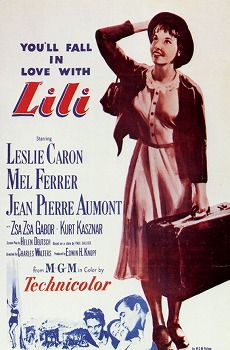
Lili (1953)

“She’s like a little bell who gives off a pure sound.”

Leslie Caron always cast an image of a sweet young gamine presaging Audrey Hepburn, and thus, early in her career, it’s a masterstroke to cast her in the role of a destitute orphan with nowhere to go.

Set in provincial Hollywood — somewhere vague and still distinctly French, Lili (Caron) shows up in a small town with an address and a name. Her father is dead, she has no relatives, and the acquaintance she meant to inquire about has since moved away. She has no leads, no food, no shelter.

A shopkeeper next door hears her sad story and is prepared to take advantage of her. She flees his abode and follows a troupe of performers like a little lost puppy. They feel sorry for her, and so they try and do her a favor.

Their world is a cornucopia of colors. The story itself is a trifle. Magician Marc is such a charismatic fellow. Lili is quickly devoted to him and taken by his lifestyle, mesmerizing people with his illusions. She, too, falls under his spell, smitten with her first crush. She’s so taken in fact she quickly gets fired from a temp job as a waitress. She was too invested in the floor show to keep up with her work.

While Ferrer is the biggest name, he somehow flies under the radar until we become aware he’s in love with this girl. He cuts a gaunt figure, mostly agitated and repressed as he nurses his wounds and bruised ego since he can no longer dance after being maimed in the war. He masks his feelings by treating Lili gruffly and pushing her away.

However, because he and his compatriot are puppeteers, Ferrer uses his alter ego to form a bond with her. There’s a fine line here for them to walk, and somehow it comes off because of Caron’s clear-eyed belief. Each interaction feels real and genuine. I liken it to the authenticity I always felt in the human-to-puppet interactions in childhood episodes of Mr. Rogers’ Neighborhood of Make-Believe. There’s no condescension, and everything seems to be taken with true sincerity.

Lili expands on their performance because she imbues the puppets with meaning and attributes personality to them just with her gaze and a total commitment to their words. She believes they are real, and it becomes one of the enchanted conceits of the movie.

Otherwise, it would fall apart and feel disingenuous. Within the story itself, her interplay draws in an audience and helps their little trio grow a following. She, in turn, is given a stake in their profits and a small place to stay. For the time being, she has a home.

The meta conversations with the puppets become more pointed when they ask her, under the veil of performance, what she wants in life and how she feels about her love potentially leaving her. What’s special about her is that there is no compartmentalizing of fantasy and reality; she keeps them both together so they remain one and the same. The curtain between Lili and Paul makes it all the more intriguing. Because there is some kind of shroud mediating them.

Although Audrey Hepburn has already been mentioned, there is also a shared affinity between Lili’s performance on the green and the Punch and Judy Show in Charade. It might feel like reaching, but because of the connection between Hepburn and Mel Ferrer, it’s difficult not to intertwine them in my mind.

A turning point in Lili’s maturity is not so much one of passion or romance, but recognizing there is cruelty in the world, and it is something to buttress yourself against. We see Marc in a different light. He’s a married man and free spirit who plays up his bachelorhood for the sake of their show and perhaps his own desire to live the life of an uninhibited bon vivant. Fidelity is not one of his highest priorities.

Zsa Zsa Gabor is poised as the blonde “other woman” or rival for Marc’s affections, and yet she is given a more sympathetic position once we realize Marc is actually her husband. She has every right to be protective of him.

It occurs to me, just like how Lili says she was living in a dream like a little girl, this movie is like a fairy tale. As C.S. Lewis pointed out in close conjunction with his friend J.R.R. Tolkien, these tales can be a kind of safe space to explore topics of evil and suffering while eliciting responses like wonder and joy.

When Mel Ferrer pulls back the curtains and makes his pronouncements about his character, a bit of something is lost, but not enough to look down upon the movie. Lili had me charmed, and it doesn’t outstay its welcome. It’s slight and enchanting in a way children can appreciate, and adults so often dismiss. You must come to it with a childlike heart.

It’s possible to be prejudiced against musicals that only have songs. Dance is something that taps into the visual medium in other ways. No pun intended. Caron, of course, made a name for herself as a ballerina, and although her opportunities here are minor, there’s a lithe elegance with which she carries herself that serves her well.

The ending evokes Dorothy on the Yellow Brick Road with all her friends. And yet, for her, as the puppets become living, breathing beings in her dreams, it signals the end of something, not the beginning of the journey.

With each representing some part of Paul, their absence is too much for her to bear. Like all the great musical interludes, it’s almost wordless, but the confluence of movement and melody conjures up all the emotions we require between Caron and Ferrer to make their parting and reunification mean something.

Because of the child-like outlook of the movie, it brings to mind the words written by journalist Francis Church to a young girl named Virginia. He said:

“You may tear apart the baby’s rattle and see what makes the noise inside, but there is a veil covering the unseen world which not the strongest man, nor even the united strength of all the strongest men that ever lived, could tear apart. Only faith, fancy, poetry, love, romance, can push aside that curtain and view and picture the supernal beauty and glory beyond.”

The magic of Lili is how its own veil is torn in two, and still the movie maintains the semblance of a fairy tale. When the divide is breached, it brings more supernal beauty and not less. Again, it’s a lovely paradox wrapped up in an often overshadowed MGM musical. Perhaps this is the eucatastrophe Tolkien talked about.

3.5/5 Stars

Vincente Minnelli Films (1958-62)

Gigi (1958)

Lerner & Loewe’s adaptation of Colette’s Gigi is a picture accentuating the France of Hollywood’s most opulent dreams and confections frequented by the consummate French people of the movies: Maurice Chevalier, Leslie Caron, and Louis Jordan.

Whether it’s Ernst Lubitsch or Billy Wilder or Vicente Minnelli, Chevalier doesn’t change much. He’s convivial with the audience existing just on the other side of the camera. He gives off his usual cheeky, harmless charm that doesn’t always play the best seeing as his first tune is about the litters of girls who will grow up to be married and unmarried young women in the future.

Gigi (Caron) is one of their ilk, a carefree gamine who lives under the auspices of her Grandmama’s house, a startling domicile touched by Minnelli’s charmed palette of deep red.

In some manner, Gigi seems to represent the worst of Minnelli. Yes, it was wildly popular in its day, but all of its manicured embellishment and immaculate set dressings feel mostly fatuous and merely for their own sake. While one can easily appreciate the pure spectacle of the thing, the director’s best pictures show a deep affection for characters.

Here all manner of songs and tête-à-têtes are cheery and bright, while never amounting to something more substantive. It’s easy to suggest the movie revels in its own frivolity. Gaston (Jordan) is a ridiculously wealthy young man and Eva Gabor is his companion, though the gossips get ahold of them. They’re not in love.

Another primary reservation with the picture is how Leslie Caron is summarily stripped of most of her powers. At times, dubbing feels like an accepted evil of these studio-era musicals or a stylistic choice of European maestros. However, in Caron’s case, not only is she not allowed to sing, she can’t talk for herself either (dubbed by the cutesy Betty Wand). I might be missing something, but this seems like a grave misfortune.

You can add to this fact the further grievance she never really has a traditional dance routine, and there’s nothing that can be appreciated about the picture in comparison to the crowning achievements of An American in Paris. All that’s left is to admire is her posture and how she traipses across the canvasses Minnelli has devised for the picture. This alone is hers to control, and she just about makes it enough.

My favorite scene was relatively simple. Gigi and Gaston are at the table playing cards, and they exude a free-and-easy camaraderie. If it’s love, then it’s more like brother and sister or fast friends who like to tease one another. It isn’t yet treacly with romance. Instead, they break out into a rousing rendition of “The Night They Invented Champagne,” which distills its point through an exuberant melody.

The lingering power of the film is how it does its work and grows on me over time. It considers this not totally original idea of trying to become who you are not in order to please others. Gigi must learn the breeding and the etiquette, acquire the clothes, and in short, turn herself inside out in order to fit into rarefied society.

Gaston doesn’t want her to be like that, attempting to replace all the elements of her character that make her who she is. This is what he likes about her. If it never turns to eros, then at the very least, it’s shared affection. Caron and Jordan make their auspicious entrance at Maxim’s and, it feels like a precursor to Audrey Hepburn’s introduction in My Fair Lady. It’s not a bad comparison since most of the film is filtered through speak-singing.

Does it have a happy ending? In a word, yes, but Chevalier singing about little girls doesn’t make me any less squeamish the second go around. Thankfully, Minnelli is no less of a technical master with Gigi. Still, film was not meant to live on formalistic techniques alone.

3/5 Stars

Bells Are Ringing (1960)

The title credits are so gay and cheery with so many admirable names flashing by on the screen, it almost negates the sorry realization that this is the last go-around for the famed Arthur Freed Unit at MGM. Pick out any of the names and there’s a history.

Say Adolph Green or Betty Comden for instance; they were the architects of some of the era’s finest. Anyone for Singin’ in the Rain or The Band Wagon? The movie spells the end of the era, though there would be a few later holdouts.

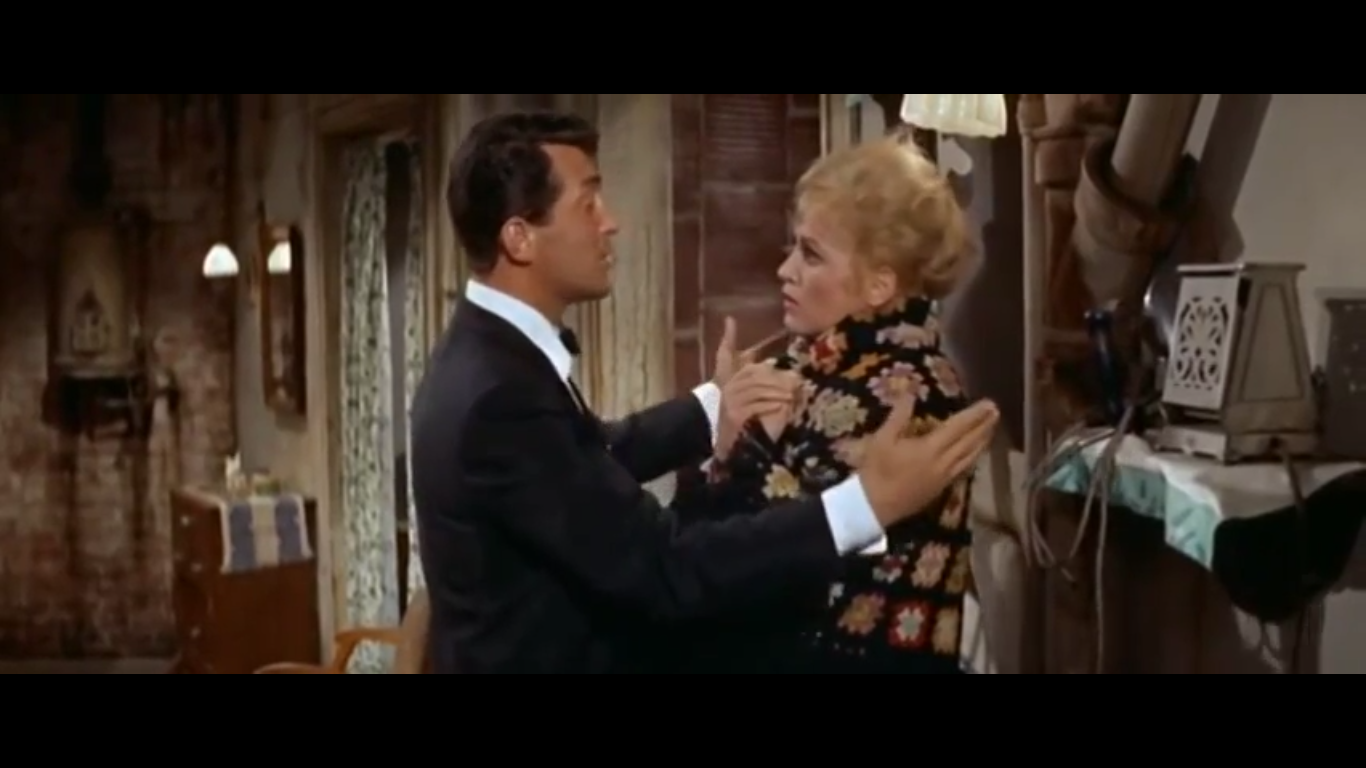
Like It’s Always Fair Weather, Will Success Spoil Rock Hunter?, or Pillow Talk, Bells Are Ringing is well aware of its cultural moment, and so it reminds us about the necessity of telephone answering services. Actually, one in particular called Susanswerphone.

It’s easy to love Judy Holliday from the outset as she’s playing crazy gymnastics on the telephone lines because automation hasn’t been created yet. Originally, she was a comedienne best remembered for a squeaky voice and a ditsy brain. Bells Are Ringing, which she originated on the stage, allows us to see a different contour of her movie personality, one that might as well hewn closer to the real person.

She does her work ably only to suffer through a dinner date from hell (with her real-life boyfriend Gerry Mulligan). However, we couldn’t have a movie without a dramatic situation.

The staff are forewarned never to cross the line to “service” their clients. But she breaks the cardinal rule, overstepping the bounds of a passive telephone operator and becoming invested in the lives of those people she communicates with over the wires. Not least among them, one Jeffrey Moss (Dean Martin).

She’s just about lovesick over his voice. It’s no mistake that she puts on her lipstick before ringing him up to remind him about a pressing engagement, as if he can take in her appearance intravenously. Alexander Graham Bell never quite figured out the science behind that.

It’s not much of a mystery to us what Moss looks like. Because if you read the marquee, you know it’s Dino. But she doesn’t know that and scampers up to his room to save him. Surely there’s a Greek tragedy trapped in here somewhere. If it’s not about falling in love with a reflection or her own work of art, then it’s about the sound of a man’s voice. She wants to help him gain confidence in his own abilities as a writer.

But first please allow me one self-indulgent aside. Dean Martin had a point in unhitching himself from Jerry Lewis. Sure, Lewis had a groundbreaking career as an actor-director, but Dino was so much more than The Rat Pack and his TV program.

The string of movies he took on throughout the 50s and 60s never ceases to intrigue me. He could go from The Young Lions, Some Came Running, and Rio Bravo to pictures like Bells Are Ringing and Kiss Me Stupid. For someone with such a distinct professional image, he managed a steady array of parts.

The number “Just in Time” in the park is made by Holliday in striking red and Dino crooning through the night air. There’s a goofy brand of showmanship between them that we were lucky to see in many of the old MGM pictures. It’s their own rendition to complement Astaire and Charisse from Band Wagon showcasing Minnelli at his best and brightest as we are brought into a moment of fluid inspiration where all facets of the production look to be working on high cylinders.

At the nearby party, Holliday becomes overwhelmed by the Hollywood glamour scene, as all the folks jump out of the woodwork and start smooching as Martin descends down a spiral staircase. This only happens in the movies, and yet it’s a summation of her blatant otherness. She doesn’t fit in this crowd where everyone is on first name basis with the biggest names in the business (“Drop That Name”). It seems like their worlds are slowly drifting apart as her secret life is about to totally unravel.

However, Martin joins forces with a musical dentist and Mr. impressionist himself, Frank Gorshin, who puts on his best Brando impression as they bring the movie to a striking conclusion. The same woman has changed all their lives for the better. Now they want tot return the favor. Moral of the story, get yourself an answering service, especially one with someone who cares like Judy Holliday.

3.5/5 Stars

Two Weeks in Another Town (1962)

It might play as unwanted hyperbole, but when I look at Two Weeks in Another Town, it almost feels like a generational predecessor to Heaven’s Gate. Although Vincente Minnelli’s picture is well aware of the old hat and the emerging trends of cinema, it’s raging against the dying of the light, as it were. He subsequently bombed at the box office, and we witnessed the cinematic death knell of an era.

The director makes the transition from b&w to color well enough as you would expect nothing less from him. Kirk Douglas has what feels like a standard-issue role seething with rage thanks to a career hitting the skids. He’s bailed out of his sanitarium by a collaborator from the old days and shipped on-location to Rome.

There we get our first taste of a demonstrative Edward G. Robinson playing the tyrannical old cuss Maurice Kruger. He’s right off the set of the latest Cinecitta Studios big screen epic with George Hamilton, an Italian screen goddess, and Vito Scotti working the action.

But Two Weeks in Another Country is just as much about what is going on behind the scenes of the production. Robinson and Claire Trevor together again have a far from congenial reunion after Key Largo generations before. They’re part of Hollywood’s fading classes, though they’re far from relics.

Minnelli takes the personal nature of the material a step further. In a screening room watching The Bad and The Beautiful, the self-reflexivity has come full tilt as Douglas wrestles with his image onscreen from a decade before.

Meanwhile, Cyd Charisse makes her entrance on a jam-packed road flaunting herself in the traffic. She’s charged with playing Carlotta — Jack’s former wife — she’s bad and if her turn in Singin’ in the Rain is any indication, she’s fairly accomplished in this department. It’s almost a novelty role because she’s rarely the focus of the drama, only a sordid accent.

The pieces are there for a truly enrapturing experience as only the olden days of Hollywood can offer. I’m thinking of the days of Roman Holiday, sword and sandal epics, and La Dolce Vita. The movie is a reaction to all of them in the flourishing TV age with its glossy romance in beautiful cars, glorious rotundas, and luscious beaches.

It’s not bad per se, and yet it seems to reflect the very generational chasm it’s readily trying to comment on. George Hamilton utters the movie’s title and it’s all right there — utterly temporal and disposable in nature.

These moments and themes feel mostly empty and, again, while this might be precisely the point, it goes against our human desires. Either that or the movie is begging the audience to connect the dots. We want the critique wedded with entertainment. Because most of us are not trained to watch movies from a objective distance. Our mental wiring does not work like that especially when it comes to epics.

Jack is taken by a young starlet (Dalia Lavi) he meets by chance, thanks to her proximity to the troubled production. His and Veronica’s relationship becomes one of the focal points and one of the few deeply human connections in the picture.

Later, Jack’s bellicose benefactor, Maurice, falls ill. The added melodrama is to be expected along with raucous slap fights and the scramble to get the picture in under budget before the foreign backers try and pull out. The old has-been comes alive again — momentarily he has a purpose and companionship — until he’s besieged by new pressures.

Although it was purportedly edited down, it’s not too difficult to observe Minnelli doing his own version of Fellini’s earlier movie from 1960 with the dazed-out remnants of an orgy and a young Leslie Uggams singing her torch songs.

The apogee of the entire picture has to be Douglas and Charisse tearing through Rome in a mad fury. It’s the craziest, most chaotic car ride that can only be conceived in Hollywood; it’s so undisciplined and wrenched free of any of the constraints of realism. The back projections up to this point are totally expressionistic.

And as the car lurches and jerks around we realize we are seeing the film crossover: What we see behind the scenes and on the screen are one and the same, merely facades, and little more. It’s the kind of unbridled moment that could easily earn derisive laughter or genuine disbelief. There’s no way to eclipse the moment.

Instead, what follows is a cheery denouement out of a goofball comedy. Jack resolves to put his life back on track opting to leave behind his young leading man on the tarmac with a girl until they meet again. Hollywood, as is, was not totally dead — there was still some light in the tunnel — but if the box office receipts are any indication, tastes were changing.

3/5 Stars

Review: An American in Paris (1951): Gene Kelly’s Love Letter to France

an american in paris 3.png

It’s no secret that Gene Kelly had a deep, abiding affection for France. He was fluent in the language also becoming the first American ever bestowed the honor of arranging a show for the Paris Opera. He would be honored with the Chevalier of the Legion d’Honneur in 1960 and, of course, made a memorable appearance in Jacques Demy’s Young Girls of Rochefort (1967).

Without deep knowledge of his life, I cannot attest to whether or not this affection has roots in An American in Paris or sprouted earlier. But watching the film, it’s easy to surmise it captures the unrealized dreams of Kelly’s heart. No, he was never a painter named Jerry Mulligan, but in his lifetime, he was an artist.

When we first hear his instantly placeable voice, providing genial narration, it’s not difficult to believe. Images of Parisian romance are brought to the screen, and he recounts how he, Jerry Mulligan, went from being a G.I. to a struggling painter in love with France. He’s not the only one, as his pianist friend (Oscar Levant) is in much the same boat, though a little less jovial.

There’s an incessantly bouncy theme playing intermittently at any time our protagonist walks down an avenue with a spring in his step. Does it get a bit tiresome? Emphatically so. Still, we are reminded that Kelly is constantly on the move like a giddy schoolboy.

However, it’s a woman named Milo (as in Venus duh) who spots his work out on the street and takes an immediate liking in it. He’s not quite buying what she’s selling. First of all, no one’s ever given him a break before, and secondly, she proceeds to invite him to a party that winds up being a very cozy affair: just the two of them. It’s not the type of patronage Jerry was hoping for, but her money is real enough, and he needs it.

And yet in this Parisian backlot, as evoked by director Vincente Minnelli, it’s easy to envy such a carefree life full of benevolent locals, lazy cafes, and a plethora of song and dance to brighten any day. If hardship is spoken of, it’s very rarely seen in the flesh. People speak flippantly of their lack of funds or food because they always seem to get by. There’s an agreeableness to the facade.

an american in paris 2.png

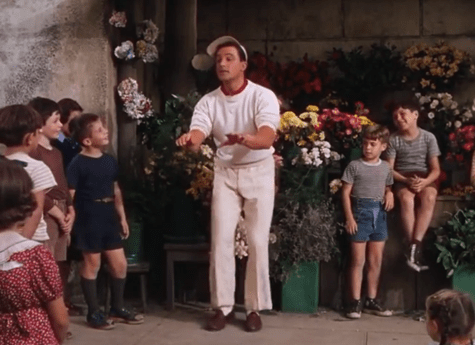
Gene Kelly with the kiddos is priceless. He becomes their impromptu English teacher, playing a game of “Repeat After Me,” which is in the toolkit of anyone who has ever taught a language. His pupils are eager and so what’s next but introduce an American song: “I Got…Rhythm.” Though the Gershwin tune wasn’t born in An American in Paris, it became fully rejuvenated in the hands of Kelly — arguably reaching a new apex.

He makes it more than a song — a malleable plaything for him and the kids to have a bit of fun with — goofing off and prancing about like cowboys and soldiers, then swirling like airplanes for good measure. The most important artistic movement in the picture might be its finale, but the most delightful one is found right here. Because we feel our own childhood antics rushing back.

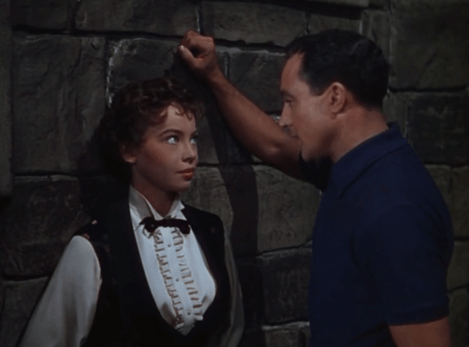
As his relationship progresses with Milo (Nina Foch), it becomes more complicated since he’s not about to be a live-in companion even as the prevailing need for money remains in the front of his mind. One evening, in particular, he spies the most beautiful girl he’s ever seen (Leslie Caron), an enchanting vision, and immediately drums up some pretense to dance with her. He comes off too strong and alienates her in the process. Not to mention the lady he came with.

One might gather that in the real world, Mulligan would be rather problematic and yet Kelly’s characters never seem to exist in the real world, and so his romantic diversions are easy to dismiss. That irascible Kelly charm comes in handy.

Meanwhile, we have the stunning paradox of Leslie Caron, that talented waif-like creature with the cherub face. Effervescently youthful in one moment and yet composed with an undoubted maturity about her even as Kelly comes off as the boyish suitor. She is initially showcased in a sequence meant to describe the contours of her personality as a ballerina, and each moment fittingly paints her in contradictory shades and subjects. She is all things and then none of them.

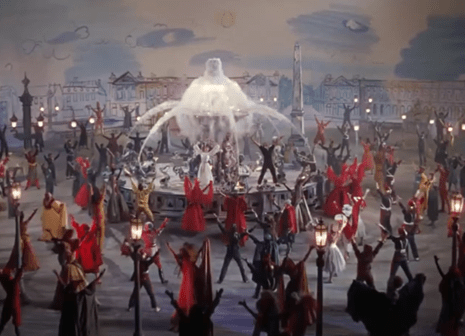
The most formative number, in terms of the blossoming of their love, is the Gershwin classic “Our Love is Here to Stay” danced gracefully at the water’s edge of the Seine, soaked in soft lamplight. But alas, it was not meant to be. There are too many obstacles in the way, and Mulligan fades into his fantasies — Kelly’s pride and joy — a 17-minute extravaganza.

an american in paris 4.png

Minnelli’s roving camera is in tandem with Kelly’s choreography. An apt illustration of how much Kelly’s work differs decidely from Fred Astaire. Ballet takes precedent in his work as much as inflections of jazz, and he was not averse to such cross-pollination, as it were.

The sets are brimming with constant kinetic energy, splashes of color, and elaborate costuming with tones inspired by French masters. It devolves into a dazzling cornucopia carousel of dance, freely flowing against Gershwin’s title composition. All efforts are to elicit the French landscape with cafes, fountains, and chambers full of mirrors.

But it’s not simply a substantial musical routine dashed off or cut together from various interludes. Or if it is, then we can concede there is a certain purpose to its ebb and flow, like a dream existing in some ethereal world both of love and bittersweet uncertainty.

Kelly’s greatest gift to us as an audience is probably putting some form of physical expression to very human emotions, and he did it in a way that feels genuine and to a small degree, attainable for all of us. The love story onscreen is a fairy tale, but he is just the man capable of suspending our disbelief and charming us into fully enjoying the experience.

Perhaps he tries too hard in An American in Paris. How can you not like him? Perhaps Minnelli’s camera dances too much and Kelly and Caron, not enough. I’m not sure. But there are specific instances exceeding the constraints of straightforward narrative fluff. When it enters into the momentarily euphoric, mirthful, or even the deeply regretful. Those emotions stay with me indelibly and this is what the most earnest, most evocative movies are capable of at their best.

4/5 Stars

Classic Movie Beginner’s Guide: Gene Kelly

As the site takes a look at some of Classic Hollywood’s most prominent musicals, it seemed like an auspicious occasion to focus on some of the most well-regarded performers of the era.

For our latest beginner’s guide, we look at Gene Kelly, the man who combined his muscular athleticism with graceful hoofing to transform the movie musical like never before. He would become the greatest hoofer since Fred Astaire and then ultimately enter movie immortality alongside his idol. Here are some of his greatest films well-worth checking out.

On The Town (1949)

Image result for on the town gene kelly

While Gene Kelly isn’t quite calling the shots, he’s front and center in this MGM extravaganza alongside the likes of Frank Sinatra, Vera-Ellen, and Ann Miller, just to name a few. Regardless, it’s an exuberant offering showcasing much of the magic and music that made the studio’s musicals so popular.

An American in Paris (1951)

Image result for an american in paris 1951

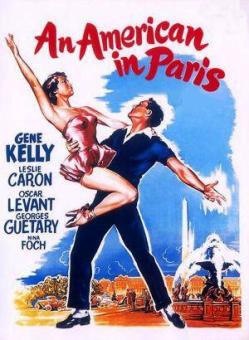
Paired with the glorious mise en scene of Vincente Minnelli, Gene Kelly tapped his affections for France and showcased the waifish talents of Leslie Caron to envision one of the finest achievements of his career. Between the music of the Gershwins and his top-class dancing, he makes the dreamy final third of An American in Paris into pure cinema.

Singin in The Rain (1952)

Image result for singin in the rain gene kelly imdb

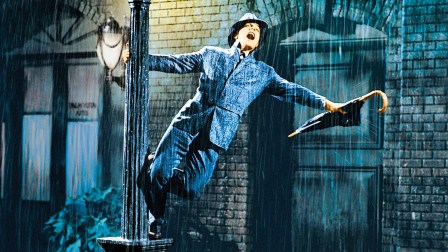
If there was ever a benchmark for what the Hollywood movie musical could be, it’s encapsulated by Singin’ in the Rain. It boasts so much quality from Debbie Reynolds and Donald O’Connor to commentary on the silent era to sterling direction by Stanley Donen. All you need is Kelly’s tour de force in the rain to understand what makes this movie transcendent. It’s emotion personified.

Always Fair Weather (1955)

Image result for it's always fair weather gene kelly

This one is a bit of an oddity reflecting signs of the changing film landscape. Yet Gene Kelly still shows his prowess with a particularly thrilling dance on roller skates. Likewise, the story blends a post-war commentary with a satire of modern media which proves surprisingly lucid. Regardless, it was the beginning of the end of the musical’s golden years.

Worth Watching

For Me and My Gal, Cover Girl, Anchors Aweigh, The Three Musketeers, Take Me Out To The Ballgame, Summer Stock, Brigadoon, Les Girls, Inherit The Wind, The Young Girls of Rochefort, and more.

An American in Paris (1951)

18e5b-an_american_in_paris_posterStarring Gene Kelly and Leslie Caron with director Vincente Minneli, this musical follows an American painter in Paris (Kelly) as he struggles with life and love. Jerry Mulligan is a painter who loves Paris and has made friends with many of the locals. The only problem is that he has no money. That all changes when a rich patron begins to sponsor him and his luck begins to change. Soon he becomes enchanted with a French girl (Caron) and after initial conflict they try to meet up whenever they can. At the same time Jerry is tied up with his patron and Lisa is engaged to a kind Frenchman who Jerry knows. When Jerry learns this he is devastated, however in the end he does get the girl. Although the final dance sequence seemed out of place, awkward, and too long, much of the rest of the musical is enjoyable. I Got Rhythm and The American in Paris Theme are catchy Gershwin tunes that Gene Kelly performs to perfection.

4.5/5 Stars